Those who read my blog regularly will know that I am far from being an unalloyed fan of Jeremy Corbyn. I think him wooden and not a genuine political thinker, someone who is stuck somewhere between the crypto-Communism of the Michael Foot era and the ideological madness of the contemporary self-described “Left” (I myself never use terms such as “Right”, “Left” as useful descriptors), the crazies who have rushed in to fill the vacuum left by the collapse of old-style socialism in and after 1989.
You get the idea.
Corbyn is, in short, a bit of a joke. I have blogged about him, and what I call Corbyn-Labour, in the recent past. He and his party are also in favour of, or not opposed to, mass immigration and the “multikulti” society.
I have little time for Corbyn as a political leader, as such. His poor intellectual level and Lego-brick level of understanding of society and international politics and geopolitics give little confidence.
On the other hand, there is or was something not entirely unpleasantly familiar about Corbyn. As I have blogged and (before I was expelled from Twitter) tweeted about him, he is a recognizable 20th century English type: the bearded “socialist” from the provinces (in Corbyn’s case, transplanted aged about 22 to London), wearing his Lenin cap, reading the Morning Star, Tribune and the Guardian, protesting against 1980s South African apartheid or Israeli West Bank settlements etc, supporting Castro-Cuba, “revolutionary” 1980s Nicaragua, “socialist” Venezuela etc.
Corbyn’s type, with variations, could be observed from around the time of the First World War, and up to the present day, in its “natural surroundings”: the Durham Miners’ Gala, the Tolpuddle Martyrs annual event, the conferences of the Labour Party and TUC, local constituency Labour parties, CND marches, steam rallies, heritage railways, allotments. So much of a “type” is Corbyn that he could easily be imagined included in a series of “English types” in the Edwardian cartoon tradition, complete with outsize head and a little descriptive caption.
Corbyn’s elevation to the Labour leadership was, as I have also blogged, little short of miraculous. Since 2015, Corbyn has also managed to fight off repeated Jew-Zionist attempts to unseat him. What do “they” want? They want Corbyn gone so that Jew-Zionists, lobbyists and placemen can once again control Labour. “They” already control the misnamed “Conservative” Party and have done since at least the end of the Thatcher era; until Corbyn’s accession, “they” controlled Labour too. They want that control back.
We have seen recently how some of Corbyn’s enemies in the Commons started to capitulate and leave the Parliamentary Labour Party, committing political hara-kiri
At the same time, however, Corbyn-Labour has made the mistake of trying to conciliate, making concessions to the Jew-Zionist element. It did that before, when it surrendered to “them” over the so-called “international” “definition” of “antisemitism” (in fact, adopted by fewer than 40 states out of about 200). Now Corbyn-Labour has given in on Chris Williamson MP and has suspended him.
Chris Williamson MP occasionally (maybe two or three times only) retweeted my tweets when I still had a Twitter account. However, when the Jew-Zionists noticed that fact, they criticized him for it, after which he stopped retweeting me and may have (I forget) blocked my account. Weak. It showed weakness in relation to the Jews. I have not forgotten that.
Now Corbyn, John McDonnell and some of their closest allies (as well as swathes of “useful idiots”) in Labour labour under the same cognitive dissonance problem: Corbyn and many of his supporters see what the Jewish-Zionist lobby is trying to do, want to fight against it, but at the same time tie their own hands behind their collective back by saying that they oppose “antisemitism” and are only against Israeli depredations and behaviour rather than being in any way hostile to Jew-Zionist lobby activity in the UK (or France etc).
Corbyn and most of Labour also go along with the largely-debunked “holocaust” narrative as well. It all just plays into the hands of the Zionist lobby, which controls or near-controls many Labour MPs. Yes, some have left (Luciana Berger, Joan Ryan, Angela Smith, Ian Austin, Chuka Fathead) and their political careers are finished. However, there are many like them still in place and reporting back: Stella Creasy is just one example. Mary Creagh, Rachel Reeves and Liz Kendall also come to mind, inter alia, as do the outright Jewish Zionists such as Margaret Hodge.
Since Chris Williamson was suspended, the whole Jewish “claque” on Twitter and in the Press (in fact, in the msm generally) has gone mad again about Corbyn, “anti-Semitism” in Labour etc. It’s odd: we are told constantly that there is no “Jewish lobby”, and that individual Jews tweet or scribble purely as individuals, yet when something like this crops up, they all go the same way instantly, like a shoal of fish.
Corbyn-Labour, for all its flaws, is the only game in town right now for striking against the enemies of our British and European future. It can pave the way for social-nationalism down the road.
This is a crisis for Corbyn and his allies. They must either fight back against the encroaching, whining, pleading, manipulating and angrily-demanding Zionist lobby, or be “cribbed, cabined and confined”, imprisoned in a Zionist-constructed box made out of “antisemitism” allegations, “holocaust” fakery and a raft of trickster-drafted “definitions”, “regulations” and inhibition of free speech. Just say no!
Here we see the Jewish anti-Corbyn “claque-storm” in its “tweetstorm” mode, exemplified by this tweet, in which a Jewish woman wants the Labour Party to either disenfranchise its Sheffield Hallam branch (by putting it into “special measures”, i.e. ruling it from London), or to remove (or remove the rights of) the 40 members who voted for a statement (only 1 person voted against). You see the problem: the 40 English people count for less than the one Jewish or pro-Jewish one…If Labour did that across the country, it would be left without active members, the footsoldiers that win elections.
A good typical example of how, if you give “them” an inch, (((they))) take a mile: the Jew-Zionist lobby gets what it wants re. Chris Williamson, but then whines or blusters about how it is too little too late. Their next demand will soon be uttered…
Fiona Sharpe, spokesman for @LabourAgainstAS, said: ‘The decision of Labour's NEC ruling body not to allow Chris Williamson to stand as the Labour candidate for Derby North is too late in coming and totally inadequate. 3/6
When I wrote the above article, I thought that 30 or 35 states had “adopted” the “IHRA” definition of “antisemitism”. In fact, and as I now know, the true figure is only about 15, out of 200 states.
On 4 April 2019, a by-election will be held at Newport West, the former seat of Labour MP Paul Flynn, who died recently.
Paul Flynn was generally well-regarded, except by the Jew-Zionists, who deplored his principled opposition to Israel and to, in 2013, (the then) H.M. Ambassador to Israel appointed despite being a Jew and admitted Zionist (and so perhaps having dual or conflicted loyalties: see Notes, below). Flynn retweeted my tweets once or twice, I think, when I still had a Twitter account, but also criticized me once. Well, de mortuis nihil nisi bonum, so we’ll say no more of that.
Newport West
The constituency was created in 1983. It was won that year by the Conservatives, who received 38% of votes cast (Labour 36.6%, Liberal Party 24.2%, and Plaid Cymru 1.2%). That result turned out to be anomalous, in that Paul Flynn won for Labour in 1987 and held the seat until his recent death.
This is a Lab-Con marginal. The Liberal Democrats peaked in 2005 at 17.9% (third place), plateaued at a similar figure in 2010, slumped to 3.9% in 2015 (fifth place) and collapsed further (to 2.2%, again fifth-placed) in 2017.
Plaid Cymru is irrelevant here, peaking at 7.2% in 2001 but usually found at or near the bottom of the poll at under 2% (and sometimes under 1%).
UKIP peaked here in 2015 at 15.2% (third) and again achieved a third place in 2017, but on a miserable 2.5%.
Other candidates have stood occasionally over the years (Green, Referendum Party, BNP and Independents), but are not even marginally significant (BNP 3% in 2010, beating UKIP).
As to the only significant contenders, Labour and Conservative, Labour’s vote peaked in 1997 at 60.5%; its lowest ebb (apart from 1983) was in 2015 (41.2%). So much for the “personal vote”. After Corbyn replaced Miliband as Labour Leader, Labour’s vote increased, in 2017, to 52.3%.
The Conservative Party vote stood lowest in 1997 (24.4%) and highest in 1987 (40.1%). Its 2017 vote, at 39.3%, was the Con best since 1987, though the Con vote has held up above 30% (perhaps surprisingly so) since 2010.
Opinion
There are several reasons to think that the Labour vote will sink back: a new and untested candidate, the death of a fairly popular longstanding MP, Labour’s perceived pro-mass-immigration stance. Also, the fact that Labour is sending out mixed messages about Brexit in a constituency which voted Leave more heavily than the UK average (nearly 54%). The “Corbyn factor” seems, so far, to have been a positive rather than a negative.
If I were putting money on this, I should probably still back Labour to win, though the Conservative candidate may do well and might just do it. As to the others, they can probably all easily be written off. The interesting side-bet will be how high or low UKIP scores. My guess? Under 5%, anyway (if UKIP stands at all; if not, the Con candidate will be boosted, probably).
Notes
The 2016 EU Referendum results were not directly voted for or collated by constituency, and in Wales the vote was arranged by reference to local authority boundaries, in this case designated as “Newport”, not “Newport West”. I have taken the Leave vote relating to Newport West as standing at or about 54%, but other estimates have it as about 56%.
Candidates have not yet declared. It is unknown whether any candidates of a broadly “nationalist” character will stand. UKIP is a possible but not inevitable contender. What would be significant would be anyone standing for the “Independent Group” of MPs. That group is not yet registered as a party (and may never be); until it is, it cannot put up candidates under “Independent Group”, but only as “Independent”. Having said that, if a candidate were to be endorsed on TV etc by the rebel MPs as the candidate, in effect, of the Group, then that would have an effect. It would split the Labour vote and almost certainly let in the Conservative candidate, though it is just on the fringe of possibility that, in a 3-way split of main candidates, the (in effect) IG candidate might just win. Hard to see it happening but not totally impossible.
My guess is that the “Independent Group” will not put up a quasi-IG candidate, because
voters would not know what his/her policy views might be (except pro-EU Remain, which is the minority view in Newport West);
there would be little time in which to select a candidate and, because of the disorganized way in which IG has been established (step up, Chuka Umunna…), there are no selection procedures in place;
any IG candidate (in all but name) would be likely to go down in flames, so this is a battle that the IG MPs will probably sidestep.
Update, 4 March 2019
The candidature listing is still open. So far, 6 candidates have declared: Conservative, Labour, Plaid Cymru, Green, and two wild cards, “Renew” and “Abolish the Welsh Assembly”. The obvious non-declarers, so far, are the LibDems, UKIP and anyone adherent to the “Independent Group”. However, as stated, there is still time in which to declare.
Abolish the Welsh Assembly Party – Richard Suchorzewski
Renew – June Davies
SDP – Ian McLean
The For Britain Movement – Hugh Nicklin
Democrats and Veterans Party – Phillip Taylor
I see no reason to alter my view of the contest as expressed in the blog.
Update, 30 March 2019
I was just considering to what extent, if any, the meltdown of the House of Commons over and around Brexit will affect this by-election. The obvious protest vote would be for UKIP, which as noted above only scored 2.5% in 2017, though it managed 15.2% at its 2015 peak. Both were 3rd places. To win, UKIP has to beat both main System parties. On paper, that is near-impossible, but we are in interesting times.
The result was that Labour won with nearly 40% of the vote, but less than 38% of those eligible could be bothered to vote. Labour’s candidate was thus endorsed by only about 15% of those eligible.
The Conservatives came a fairly but not very close second. UKIP came third (again). “For Britain Movement” got less than 1% and came right at the bottom of the list of 11 candidates.
I interrupt other blog writing to address an immediate issue. The activist known as Tommy Robinson has now been banned from Facebook, he having already been barred from Twitter. That news highlights again something that I have been writing about, blogging about, speaking about (at the London Forum in 2017) and tweeting about —before I myself was banned or rather expelled from Twitter in 2018— for years, the privatization of public space.
In past ages and, indeed, until about 20 years ago, public space was literally that: the agora of ancient Athens, the forum of ancient Rome, the barricades of revolutionary France, the brief outbursts of free speech in the Russia of 1917 or the early 1990s, and Speakers’ Corner by Hyde Park in London, where a youthful Millard (aged about 21) spoke to fickle crowds a few times in the late 1970s.
Today, the traditional fora of free speech, eg in the UK, are very restricted. Jez Turner (Jeremy Bedford-Turner) made a speech in Whitehall in 2015. He mentioned Jews a few times. That alone was enough (triggered by the malicious Jewish Zionists who denounced him, the supine police who are now so often in the Zionist pocket, the wet CPS who are not sufficiently resistant to the Zionists’ endless whining demands, a Zionist-controlled System-political milieu, and a Bar and judiciary which are frightened of their own shadows and even more of those of the Zionists) to have Jez Turner imprisoned for a year. He served 6 months and was only recently released to live for months more under considerable restriction.
The “public space” which is now most significant is online space. Twitter, Facebook, blogging platforms etc.
I myself was expelled from Twitter last year. I had been the target of both the Jew-Zionists and mindless “antifa” (aka “useful idiots” for Zionism) for about 8 years. I have also had my freedom of expression taken away in other ways, as well as having been interrogated by the police (again at the instigation of malicious Jew-Zionists) for having posted entirely lawful comments on Twitter. I was also disbarred, quite wrongly, for similar reasons.
Alison Chabloz was persecuted, prosecuted and convicted for singing satirical songs in the manner of 1920s Berlin. She is appealing her conviction and the result of her first-stage appeal. She has also been expelled from Twitter (as well as being made subject to a court ban from social media, which bars her from posting until mid-2019).
If Twitter or Facebook ban you, you may have some limited right of appeal, if they so choose to extend it to you. You have no legal right to stay on Twitter or Facebook despite the fact that, in real terms, they are near-monopolies. Yes, I am now on GAB, but GAB has only 500,000 users, if that, whereas Twitter has perhaps 500 million! The fact that, as I believe, Twitter is largely a waste of time, is beside the point.
The point is that, beyond your very limited contractual or other rights qua customer, you have no rights in respect of Twitter or Facebook (etc). Qua citizen, you have no rights at all. You have no right to post, and if the owners or executives of those companies decide to bump you off, off you go, whether you have 50 followers, 3,000 (as I did) or a million.
The Blair law of 1998 [nb: 1998 = 666 x 3…], requiring political parties in the UK to be registered, all but killed any semblance of real political-party democracy in the UK. Now, free speech both online and offline is being, on the one hand, criminalized or subjected to other State repression (at the instigation of the Jewish-Zionist lobby), and on the other hand choked off at source, by companies (under Zionist control or influence) barring dissidents or known activists from even posting dissenting or radical views online.
As to Tommy Robinson, I am not personally one of his supporters, and I deplore his attempt to play the sycophant for Israel and Zionism, but he has some views which are valid, in my opinion.
In any case, freedom of expression is indivisible. It is facile to make arbitrary distinction between some free speech, calling it “hate speech” and so unacceptable, and other speech which is labelled “acceptable” (politically approved) speech. That is mainly hypocrisy. Even my own relatively mild postings are and always have been targeted by the enemies of freedom, of which the Zionists are the worst.
So we have, not only in England but elsewhere (eg in France, under Rothschilds cipher Macron) the same repressive tendency. Sajid Javid, Amber Rudd, Theresa May, others, are enemies of the British people and enemies of freedom of expression. They seem to want to ban all political activity and all political or socio-political expression which does not support the existing System. It is immaterial whether you call it that or “ZOG”.
The System in the UK, in France seems to think that it can slowly turn the screw on repression, controlling the political parties (or setting up “controlled” new ones, as with Macron in France and, perhaps, the “Independent Group” in the UK), preventing free speech by putting the fix into Twitter, Facebook etc, only having controlled news on or in the msm (controlled mass media outlets).
The Soviet Union tried a less subtle form of all that, and it still collapsed in the end. What the System politicians, msm faces and voices etc, fail to see is that a head of steam is building up in the UK (and France) and, if bottled up by the State and those behind the curtain, will eventually explode.
Another example, taken almost at random from Twitter:
As well as censoring our content over the past few weeks, Twitter have now deleted all the people we were following, which in turn means we have lost a ton of followers
Please RT and follow if you’re still right behind us – we have no idea why Twitter is doing this pic.twitter.com/opwxMMr6fX
Another example. A typical pseudonymous Jew-Zionist tweeter (troll), below, exults that a very prominent pro-Corbyn Twitter account, “Rachael Swindon”, has been “suspended” (probably, like me, expelled):
In fact, Rachael Swindon has been reinstated, though only after Twitter’s vice-President for Europe intervened. Why should such people control the online public space? Again, why should the police barge in with large boots and interfere with free speech when no threats are involved? It’s all wrong.
The pro-Jewish lobby freeloader and careerist Tom Watson MP, https://en.wikipedia.org/wiki/Tom_Watson_(Labour_politician) who has wormed his way to becoming Deputy Leader of the Labour Party (with his eyes on Corbyn’s purple day and night), has attacked Tommy Robinson in the House of Commons and asked YouTube to take down Tommy Robinson’s YouTube channel, which is his last online platform of any importance.
The excuse for Watson’s actions and statement has been the apparent fact that Robinson came to the house of one Mike Stuchbery, a failed (and sacked) supply teacher who poses as both “historian” and “journalist” online, and whose main activity seems to be online advocacy of opposition (including violence, though he usually uses weasel words) to any form of British or other European nationalism. Tommy Robinson has exposed the apparent fact that Stuchbery colluded with others to visit Robinson’s wife or ex-wife at her home. Robinson’s response seems to have been to do something similar to Stuchbery. Tom Watson, in his Commons statement, referred to Stuchbery as “journalist”, based presumably on Stuchbery’s politically-tendentious scribbles for HuffPost and other, smaller, online outlets.
In the end, if someone is prevented from making socio-political expression, that person can either subside into silence, or take other action. That other action might be peaceful, it might not be. When the repressed individual is a public figure with many thousands of supporters, those supporters may also take other action. That might include, potentially, and in the French term, “action directe” somewhere down the line.
Those (of various types: Jew Zionists, the politically correct, “antifa idiots etc) in our society, who crow at shutting down the freedom of others to make socio-political expression should, in the well-worn (Chinese?) phrase “be careful what they wish for”. The Spanish also have a phrase, a proverb in fact: “Do what you will, and pay for it.” Repression of views, not “allowing” people a public platform (and anyway, who is, for example, a blot like Tom Watson to decide who should or should not be allowed to speak?) can only lead to upheaval in the end.
It will be interesting to observe the UK political scene in the coming months and years.
A few tweets seen
A tweet with a few examples of the frequent passive but malicious incitement of violence against white people by “antifa” bastard Mike Stuchbery of Luton:
@MikeStuchbery_ is the coward who Doxxed #TommyRobinson's wife and children accompanied by the Media and a Crackhead. He is a Far Left Antifa Thug who needs exposing to the Whole country.
Below: self-described (fake) “journalist” and “historian” (failed supply teacher and house-husband) Mike Stuchbery inciting serious political violence but trying to deny it…
Below: fake “historian” and “journalist” Mike Stuchbery threatens minor Northern Ireland politico David Vance with a lawsuit. Does he have any idea how much a defamation action (for example) costs? He must have got the idea of constantly threatening to “sue” from the Jewish Zionists and their useful idiots on Twitter, who are always threatening legal action, and who often invoke the “sainted” name of Israel-based “Mark Lewis Lawyer” in this regard. In reality, Lewis is a wheelchair-bound blowhard fake, recently fined by a Solicitors Disciplinary Tribunal for his behaviour. At the Tribunal, he admitted that he often had no idea what he was doing because of his intake of prescription drugs. Oh…and Lewis’s own Counsel said that “he has no assets” and that “his sole possessions are his clothes and a mobility scooter”! See:https://ianrmillard.wordpress.com/?s=mark+lewis
This individual has been proven to be an unhinged, hate-filled extremist, who has whipped-up his followers to engage in violent acts. this pathetic weasel should be charged with incitement to commit a hate crime on this evidence – pic.twitter.com/Ec2Yr9AAMM
Something called “Press Gazette” also refers to grifter Stuchbery as a “journalist” (does he have an NUJ card? I suppose that, these days, any wannabee can scribble for peanuts or for free in the HuffPost, silly little online “news” agencies, or for the (now often semi-literate) online msm “newspapers”, and then to call himself “journalist”…and in Stuchbery’s case, “historian”, too!…)
The more serious point here is that “Culture Secretary” Jeremy Wright MP thinks that he is entitled to ask YouTube to take down Tommy Robinson’s videos, Tom Watson MP having already demanded the same. Freedom? Free speech? Free country? Hardy ha ha…
Update, 11 March 2019
and still the tweets keep coming…
You are my favourite tweet thus far. Mike is just an observer? Excuse me for hooting with laughter. Mike is an extremist. It’s documented all over Twitter. He earns a living from incitement not observation. Yet he refuses to take ownership of the effect he has on others.
and Stuchbery has hit back with the piece below, posted on yet another of the plethora of new “news and comment” websites that pose as quasi-newspapers, in this case calling itself the Byline Times
Stuchbery (and many others on Twitter etc) really should refrain from using legal terms wrongly or pointlessly, eg, in that piece averring that Tommy Robinson defamed him. Well, that may or may not be the case, in the lay sense, but any actionable defamation requires publication. I have no idea whether in this case, Robinson published (meaning said or wrote to third parties) any of the allegedly defamatory material via video streaming etc. It seems not. Then there are all the other factors, such as the defences, one of which is that the statements, even if defamatory on their face, are true…
In any case, it costs vast amounts to sue for defamation, though in some open and shut cases it may be possible to find “no win, no fee” lawyers (in the old American parlance, “ambulance-chasers”) willing to take it on, with the help of specialized legal “insurance” (which in my view comes close to champerty, in the old Common Law sense)
…and here we see some supposed “comedian” (comedienne? Never heard of her), by name Janey Godley https://en.wikipedia.org/wiki/Janey_Godley , saying that those exposing Stuchbery are “a danger to free speech”:
In fact, I also must have missed seeing any support from Janey Godley for Jez Turner, imprisoned for making, in Whitehall, a humorous speech mentioning Jews and their history in England; neither did I notice the aforesaid Janey Godley (I had never heard of her in any regard until today) tweet anything in support of satirical singer-songwriter Alison Chabloz, persecuted by Jewish Zionists, then privately prosecuted by them before being prosecuted by the CPS (under pressure to take over the matter…) and then convicted, in effect, of singing songs.
An example, below, of the muddled thinking of many on Twitter and elsewhere: this idiot, calling himself/herself “66ALW88” (what?) thinks that the way to preserve free speech online is for the online platform companies to “crack down” on, er, free speech online…
Below, a tweet not at all significant in itself (there are literally thousands of unthinking, purselipped nobodies like this Irish “academic”, one Fergal Lenehan, around, all waiting for the chance to denounce people, to “report” to Twitter, Facebook or police, or wanting to ban the free speech of others not signed-up to the System/ZOG mental straitjacket). It is the trend, the existence of a large bloc of such nasty idiots that is of importance.
and here (below) is a well-funded basically Jew-Zionist organization which admits that it wants, inter alia, to stop the historian David Irving from conducting lecture tours. I think the reverse: that those who oppose freedom of speech on political, social and historical topics should themselves be stopped…
The fact that Irving has done this before does not mean that we should allow him to do it again. We have plenty of advance notice to prevent it this time.
Let’s try & stop this grotesque event from happening ever again.
— Anti-Fascism & Far Right 🥤 (@FFRAFAction) March 17, 2019
Update, 18 March 2019
Now the cowardly and mentally-disturbed grifter, Stuchbery, continues to try to claim the moral high ground, which is laughable (and note the support from a political cretin, “Leftwing Revolt”, in the thread below, who is a member or supporter of “Resisting Hate” and sees nothing wrong with someone he might disagree with being attacked with an axe! Resisting hate? You could not make it up…). I might not “support” Tommy Robinson, but I prefer him a hundred times over to Stuchbery and the “useful idiots” of “antifa”!
and (below), another little shit like Stuchbery, this time a New Zealander, who positively welcomes censorship and repression (and he is, wait for it…a “writer/director” of film and theater”!). One of the weird aspects of the present time is that those most eager to see censorship and ideological repression are “creative industries” drones, writers, film and TV people etc, and journalists.
and he retweets, approvingly, this (below) announcement of New Zealand governmental censorship. I personally have no wish to see footage of the recent New Zealand massacre, but that should be my choice, not the New Zealand (ZOG) government’s.
Chief Censor David Shanks has officially classified the full 17 minute video of the fatal Christchurch shootings as objectionable.
It is illegal for anyone in New Zealand to view, possess or distribute this material in any form, including via social media platforms.
and…again: the same little shit, one Andrew Todd, does not want the accused to be allowed to defend himself in case he says something the New Zealand government (ZOG) does not want people to hear…
Not everyone on Twitter agrees with the idea of censoring views and people being found guilty as soon as they are accused, however:
So you believe in a system where your proven guilty before your convicted by a judge and group of your piers. Let me give examples of places this has happened: Nazi Germany, Soviet Union, Cuba, Venezuela, and Uganda during the rule Idi Amin.
Here’s another one, below, a New Zealand journalist positively gagging for censorship (I had no idea that NZ was so ZOG-occupied):
FYI, more useful detail on how the big tech companies are failing to weed out hate speech videos and how they missed out on white supremacist videos https://t.co/lYdO10D2Nr
and yet another virtue-signalling “journalist” who is, it seems, an enemy of both freedom of expression and of the future of the European peoples…
I spent a good part of 2 years reporting on ISIS internet and how the group uses social media — in 2019 it's mind-boggling to me how well the coordinated cross-platform effort to remove them from the internet worked and how there hasn't been a similar one for white supremacists.
The grifter actually makes a joke out of his begging and scavenging!
It's been a challenging – and expensive(!) – couple of weeks, so if you enjoy the written pieces, the history threads, or whatever, you can always make a small tip through my Ko-Fi… https://t.co/Xd2iEmxucQpic.twitter.com/OJ7UGuAzPr
Tommy Robinson has now been banned from Twitter (welcome to the club…) despite (because of?) his being a candidate in the European elections (North West England).
“Those who make peaceful revolution impossible will make violent revolution inevitable.” [John F. Kennedy]
Update, 5 June 20199
Another random example of how the quasi-monopolies of youtube, Twitter, Facebook etc have arrogated to themselves the right to censor and banish: [Update, 22 July 2022: the tweets etc noted have now been completely deleted]
Update, 18 June 2019
More…
A Dr Who writer @OldRoberts953 is expunged from a book by the BBC because he won’t conform to the latest transgender ideology. His views on transgenderism are probably shared by 90%+ of Brits but he’s now a Non-Person for the BBC. The net tightens around free speech. Please share https://t.co/G9fM2BK1e4
Grifter, “antifa” supporter, fake “journalist” and “historian” Mike Stuchbery is desperate to close down free speech for those with whom he disagrees politically. See his recent tweets, below. This is one of the worst enemies of freedom of expression in the UK.
YouTube shut down four major US white supremacist channels in the last 24 hours.
If they're serious about reversing the spread of radicalisation, here's four accounts in the UK they could shutter today… https://t.co/nNG4sk938a
The latest news is that some odd woman tied up with both “antifa” nonsense and Jew-Zionists has created a GoFundMe appeal on behalf of Stuchbery, supposedly so that he can sue the political activist known as Tommy Robinson.
I prefer not to comment on the proposed legal claim until I read more about the foundations for such claim. I presume that Stuchbery is doing this (the woman mentioned above may be raising funds for him but only Stuchbery himself can actually sue) because:
he knows or believes that Tommy Robinson has assets sufficient to satisfy any successful claim;
he has seen that others are already suing Tommy Robinson;
he thinks, perhaps, that a civil legal action will damage Tommy Robinson by starving him of funds;
if successful, Stuchbery will make a great deal more money than he gets at present via online begging or his part-time work in Stuttgart, where he now resides.
Were I the defendant, and leaving aside the potential substantive issues that might be in issue in the proposed case, I suppose that I should focus firstly on the fact that Stuchbery is
resident outside the strict jurisdiction (albeit still in the EU);
is a foreign national (as I understand, an Australian citizen);
has no real or other property in England and Wales;
has no means with which to satisfy any judgment on costs or in respect of any counterclaim or setoff that might be claimed by Tommy Robinson, should the Court decide against Stuchbery on one or more issues or otherwise.
I doubt that this claim will get off the ground. I certainly doubt that it will clear the probable first hurdle, as explained above, but we shall see. It appears, however, that plenty of mugs are donating to the said GoFundMe appeal at present.
Update, 25 November 2019
Stuchbery’s solicitors, Eve Solicitors (the firm is a limited company in fact, possibly in effect a one-man operation), are operating out of a rundown Victorian terrace in Bradford; several other small legal and other firms are operating nearby. The operation has only been in operation since 20 May 2019, at earliest:
The “firm” has only been at its present address since 28 September 2019, before which, i.e. from its incorporation in May until September 2019, it operated out of a tiny Victorian terraced house in a “Coronation Street” lookalike, Hudswell Street, Wakefield (Yorkshire).
The principal (and only named) solicitor is one Waseem Ahmed.
Where the name “Eve” came from, God knows. My only guess is “Adam and Eve”, as in the Cockney rhyming slang, “you wouldn’t Adam and Eve it!”
Only joking.
Having said that, when I was a practising barrister in London in the early-mid 1990s, I knew of Pakistani and other ethnic-minority solicitors (in London, in Luton and elsewhere) who used “English”-sounding names for their small firms. Some of them still owe me money! (Unpaid fees). I am sure that Stuchbery’s solicitor is not like that.
I looked earlier at the GoFundMe appeal set up to collect money for Stuchbery’s proposed legal claim against Tommy Robinson. So far, 262 mugs have donated a total (as of time and date of writing) of £5,209 to start the claim. I wonder whether they or others will donate the rest of the £15,000 asked for? Frankly, I doubt it, though the amount so far raised has been raised in only three days.
I doubt that the proposed lawsuit will either launch or get anywhere.
Further thoughts
The woman who is fundraising for Stuchbery, and who seems to have all day to tweet etc, has tweeted that “As many of you know, Mike Stuchbery is about to sue #TommyRobinson for harassment. He is backed by #ResistingHate and a full legal team.“
A “full legal team”? So that would be someone called Waseem Ahmed and…?
I do not say that “Eve Solicitors” (i.e. Mr. Ahmed) is a one-man-band (though it certainly seems to be), and I cannot say that there are no legal people offering advice etc from the sidelines (what used to be known at the Bar as “cocktail party advice”), but I do know, having been at one time a practising barrister who (in the 1990s) regularly appeared (weekly, at least) in the High Court, as well as in County Courts, and more occasionally other types of court and tribunal (both then and in the 2002-2008 period), that GoFundMe £20,000 will only serve to kick off such a case and claim, if I have understood its likely nature properly. Costs rapidly escalate.
Solicitors vary in their fees, barristers likewise. Simply to issue proceedings in a High Court action (which I suppose the proposed case would probably be) would be several hundred pounds as a minimum, and many thousands of pounds in some cases:
As a rule of thumb, a barrister will get anywhere from (as minimum) £500 a day on a small civil matter in the County Court, up to many thousands of pounds per day for almost any High Court matter, though there is no “limit” as such, and some barristers, eg the top commercial silks (QCs) will be on £10,000 a day or more. The spectrum is very wide.
As those who enjoyed Rumpole of the Bailey will know, a barrister usually gets a “brief fee” (to cover all preparation and the first day, if any, in court), then daily “refreshers”. How much are they? How long is a piece of string?
One of my own last few cases was a County Court commercial matter involving a large amount of cattle feed. Now that it is long ago since I last appeared in court (December 2007; this case was not long before that), I think that I can reveal, by way of illustration, that I was paid, that time, £5,000 as a brief fee and £1,000 a day for refreshers (in fact there were no refreshers, because the matter settled on the first day in court).
I have no real idea how much the case of Stuchbery v. Robinson might cost Stuchbery in legal fees if it is ever pursued to court, but my semi-educated guess (“semi” because I have not been involved with the Bar for over a decade) is that whoever presents it in court (unless doing it for free or on the cheap) will probably want a brief fee of perhaps £5,000 (at least) and (at minimum) £500 per day refreshers. Maybe £10,000 and £1,000 per day. It can be seen that, even at the lower estimate, a 2-week hearing (10 days in court, which this well might be) is going to cost £9,500 for Counsel’s fees alone.
Solicitors’ fees also vary widely. When I myself worked (overseas) for law firms (as an employed lawyer), the firms charged for my work at anything up to USD $500 (or about £400) an hour (I myself didn’t get that, sadly, the firms did); and that was over 20 years ago. I suppose that Stuchbery’s solicitors will not be very expensive, but will probably still charge maybe £50 an hour at absolute minimum. Solicitor case preparation might take hundreds of hours. 100 hours @ £50 p.h. = £5,000.
Then there are what solicitors term “disbursements”, i.e. the expenses of the case such as issue fees, witness expenses, whatever.
You can see how £20,000 can be quickly exhausted…
However, even if Stuchbery’s solicitors (solicitor?) can launch the proposed matter and fund a couple of weeks in court (and don’t forget that the solicitor, if in attendance, will also be charging for his time there), there is the matter of what happens if Stuchbery loses. No, that is not left to chance. The lawyers for the proposed defendant, Robinson, will in that event have to have their costs covered too. Even if they only come to the same level as Stuchbery’s (which I doubt), that puts Stuchbery (and possibly others who have funded the claim) £20,000+ in the hole. It could be a great deal more. Maybe even hundreds of thousands.
Stuchbery is an Australian citizen, maybe also a German one now (I do not know). He has no real property in the UK or, as far as I know, even in Germany, where he now lives. He has no, or no substantial, monies in the UK (or anywhere?). He does not have a substantial income or a full-time job.
On the above facts, and if Robinson applies in court for that, Stuchbery is almost certain to have to provide “security for costs”, i.e. [see above] monies “paid into court” (into a court-controlled account) to cover Robinson’s costs should Stuchbery lose his case. Likewise, on the above facts, that would almost certainly have to be the whole of Robinson’s likely outlay in defending the case. Certainly tens of thousands of pounds. Possibly over £100,000.
If Robinson applies for security for costs, if the court agrees with the application, but then Stuchbery cannot come up with whatever sum is demanded (I cannot think that it would be lower than £20,000; probably far far more), then the claim (the case) will be struck out, possibly with costs awarded to Robinson.
Stuchbery will probably have to raise £40,000+ even to start his case.
I think that my readers will understand better now why I think that Stuchbery has no chance of success regardless of the merits of his case (if any).
Presumably, Stuchbery does understand that, in a case like this, witnesses (he himself, Robinson, others) will have to give evidence, be cross-examined on that, all the while with Stuchbery staying in the UK, perhaps for weeks or even a month or more.
Once again, I am deflected from my slow and peaceful writing of a piece about my several years in Cornwall and Devon, and particularly those spent at Polapit Tamar [below, pictured in the 1940s], and which has an interesting history of its own,
by the need to write about contemporary political events. Still, duty calls…
Social Nationalism is stalled in the UK, but waking from a dormant state…
In other blog posts, I have criticized Corbyn-Labour-supporting Aaron Bastani, Ash Sarkar etc, but Bastani is surely right in tweeting that “The space for a successful far-right party in the UK is massive.” The label “far-right” I disparage, of course, but in essence I agree with him. The difference is that he opposes the birth of such a movement, whereas I support it!
The space for a successful far-right party in the UK is massive. We are fortunate that both the BNP & UKIP failed to fill it.
The fact that much of the establishment still thinks a 'centrist' politics is even remotely possible shows they either don't know this or don't care >
I have recently blogged about the “Independent Group” non-party, about how it will struggle even to get to a 2015-UKIP level of support (see Notes, below), both for “technical” reasons (FPTP voting, a likely even level of support nationwide, so insufficient to create a winning concentration of votes, a Schwerpunkt, in any one constituency etc) and because the voters are moving to the falsely so-called “extreme”. I examined also the Social Democrat Party of the early 1980s.
There is however also the point that Bastani raises in the tweet shown above (does he read my blog?): the fact that people generally are getting frustrated, and many angry, very angry, with smug, “centrist” MPs and MEPs complacently making hay for themselves as people struggle and, in not a few cases, literally starve to death in the UK (thanks to policies such as the “welfare” “reforms” which were imposed by political rats such as Iain Dunce Duncan Smith, Esther McVey, the Jew “lord” Freud and many others).
The roads are potholed, the trains are expensive and don’t even run much of the time, mass immigration has, taking the effect overall, trashed our European society, legal services, local services etc have been cut or destroyed, housing has not only become completely inadequate (mass immigration, millions of births to backward aliens, private profiteering) but threatens to become even less adequate.
The British people want and increasingly will want concrete results. The Westminster game of using the corrupt electoral system to win over the “moderate” voters in the 50-100 most marginal constituencies to a “same-old” pseudo-democratic con-game is seen as the rigged system that it is.
A few years down the line, the choice will be stark: European civilization and social nationalism against “multikulti” neo or pseudo-Marxism and also against Zionist-controlled private profiteering and fake “conservatism”.
When the right time comes, our society will be changed in the right way, keeping what should be preserved, creating what is new and worthwhile, but destroying the inferior with the flame of justice.
I interrupted writing a longer article to write this brief piece. I am in fact unsure whether it is worth the effort, but I should regret not saying something about this typical piece of propaganda presented as documentary film.
I made the mistake of watching what passed for a documentary, presented by Alice Levine, a Jewish woman who has apparently (I had not previously heard of her) presented a number of TV and radio shows. Wikipedia says this about her:
I wasted an hour watching this. In the film, London-based Jewish media person Alice Levine spent a week, or at least a few days, living at the house of Jack Sen, a British nationalist activist. The house is in Southport, Lancashire.
I do not know Jack Sen, though I have heard of him. I believe that we exchanged a couple of tweets several years ago, when I still had a Twitter account. He stood as UKIP candidate in West Lancashire in 2015 and, despite being disowned by UKIP after he tweeted something of a critical nature to then Labour Party MP for Liverpool Wavertree, the Zionist Jewess Luciana Berger, achieved an honourable 6,058 votes (12.2%), and thus retained his deposit.
I have to say that I myself would never invite a Jewish (or even non-Jewish) media person into my home, let alone agree to that person staying for days. I can only assume that either Jack Sen is one of those who thinks that “no publicity is bad publicity”, or he received a fee for his participation. I cannot imagine any other motivation.
The film introduced Jack Sen’s mother (also resident there) and his charming Ukrainian wife and little daughter.
The Alice Levine person, when in bed in the room she was allocated, seemed to wear several layers of clothing. Whether that was because the house was cold, or because she did not want Sen to take “sleeping with the far right” too literally, must remain a puzzle!
There was, of course, no attempt to let Jack Sen properly explain his socio-political outlook. One of the problems with this kind of show, for the subject (“victim”), is that not only does the interviewee not know what will be raised by the interviewer, but also what will be left out of the finished product.
I found Jack Sen to be somewhat eccentric, though that was obviously deliberately amplified by the programme-makers. This was, after all, a week compressed into an hour. He seems to be a basically decent person, to my mind, at least on the personal level. I am unwilling to speculate that he is not. “The soul of another is a dark wood” (Russian proverb), in the end. I am aware that many distrust him and his motives, but I cannot comment either way.
At one point, Alice Levine “discovers” from Sen’s mother (I would bet that her researchers discovered the fact well before she ever arrived at Sen’s house) that his original name was Dilip Sengupta, Sen’s father having been either Indian or half-Indian, a fact mentioned by Sen himself to Ms. Levine. The mention of the name(s) to Sen made him angry. He did not present himself well at that point. He allowed the Jewess to provoke him. Later, she tried to give the impression that she was afraid of Sen, which I very much doubt was the case.
It was obvious that Alice Levine had no idea of life outside her comfortable careerist bubble. She went from a comfortable childhood in Nottinghamshire to the University of Leeds and straight into TV and radio. Jack Sen’s background (not much explored in the film) has obviously been more difficult.
Sen did not (out of politeness, or hospitality?) put Alice Levine on the spot about her Jewish origins, beliefs, attitudes etc. Having said that, I was surprised that she was offered pork by Jack Sen (even I found that rather insensitive!) and even more surprised that she apparently ate it.
At any rate, Alice Levine obviously lives in a bubble where everyone thinks and feels much as she does. In a word, biased. She evidently found it challenging even to think that many do not share her multikulti views. She was unwilling to be challenged on Skype or similar by Nick Griffin.
I had to laugh at it all. If Alice Levine thinks Jack Sen “extreme”, what would she make of me, I wonder?
This attempt to copy Louis Theroux was a waste of time, unenlightening. It is the sort of “documentary” that taxpayer-subsidized Channel 4 does. Dull, really.
Three Conservative Party MPs, Anna Soubry, Heidi Allen and Sarah Wollaston, have defected to the Independent Group. All three have cited “no-deal” Brexit (which they oppose) as the triggering fact.
I have blogged twice already about IG in the past few days and also blogged recently about possible splits in both main System parties:
The three apparently intend to sit as Independents. They could have done that without pledging allegiance to IG, so presumably they look forward to IG becoming a registered political party, so that they can fight under its banner with a greater chance of retaining their seats in the House of Commons.
Heidi Allen
I start with the least experienced but also (the one I take to be) the best of the three. Heidi Allen has shown, in her stance on social security/welfare issues, that she has a social conscience lacking in most Conservative MPs (though her actual voting record has been patchy); in other areas she has shown a certain shallowness (she seems to favour so-called “refugees”). In other areas yet, I also disagree with her views: she is pro-EU and pro-abortion.
Her constituency, South Cambridgeshire, is safe Con territory, which she has made more safe: in her 2 elections, she has garnered 51.1% and 51.8% of the votes cast, whereas Andrew Lansley, her predecesssor, only got between 42% and 48% in his 4 elections (1997-2010).
How many votes will follow Heidi Allen, I have no idea. At one time, the Liberal Democrats showed strongly in South Cambridgeshire: their vote did not collapse in 2015, despite being at half of its 2010 level, and recovered slightly to 18.6% in 2017. Labour got 27.2% in 2017.
If Heidi Allen faces a new Conservative candidate, she will probably go down unless a large number of former LibDem and Labour voters switch to her. An uphill struggle though not impossible.
Anna Soubry
The oldest (62) and best-known of the three: a former local TV face, mainly in the East Midlands region. She was a TV reporter and presenter from age 25 to age 39 (1995), after which, having graduated in Law in the 1970s, she became a barrister, doing criminal cases. As far as I know, she was in the lower ranks even of the criminal Bar, but practised for about 12-13 years until elected to Parliament in 2010.
Anna Soubry seems to be one of the “fiscally conservative, socially liberal” crowd (anathema to me, of course): eg she favours both fracking and “equal marriage” (marriage of gays and lesbians).
Accused by many —and more than once— of having been drunk at Westminster (she denied the allegations), she threatened on Twitter (before I was expelled), to sue me, for referring to her as “the MP for Plymouth and Angostura”! That threat never materialized. Perhaps it was just the drink talking…
Anna Soubry is known for her rudeness of speech and for her opposition to what she is pleased to call “xenophobia”, i.e. she either supports or does not oppose mass immigration into the UK.
Broxtowe, Anna Soubry’s constituency, is a Con-Lab marginal, held by Labour 1997-2010. Anna Soubry scored 48.6% in 2017, perhaps helped by her numerous TV appearances on BBC Question Time etc. The Labour vote was 45.3%. Majority: 863. The other parties are of no importance. Anna Soubry might be able to get enough votes to win through, but the more likely result is that Labour takes the seat next time.
Sarah Wollaston
The most independent, superficially, of the three, Sarah Wollaston was selected as candidate following an “open primary” election held by her local Conservative Party branch. She was helped to election by her former occupation as a doctor (general practitioner), the profession consistently rated as “most trusted” in opinion polls.
Like the other two examined here, Sarah Wollaston is another one who is “fiscally conservative, socially liberal”, favouring “choice” (ie pro-abortion), not opposing mass immigration, supporting “equal marriage” etc (and calling its opponents “bigots”). Indeed, she is rather intolerant of opposing views: she blocked me on Twitter, without my ever having tweeted to her, but I cannot now recall whether her intolerance was triggered by my opposition to mass immigration or whether it had something to do with the “holocaust” mythus.
Sarah Wollaston is not as strongly pro-EU as the other two MPs, but seems to oppose mainly the “no deal” or “WTO” exit/Brexit path.
Sarah Wollaston’s carefully-crafted “liberalism” does not seem to extend to the poor or those in receipt of State benefits. She mostly voted for the punitive measures introduced by Iain Dunce Duncan Smith and his cohorts (eg bedroom tax, eg removal of lifetime tenancies of council housing).
Sarah Wollaston’s constituency, Totnes, is the only one of the three which I know personally. I appeared in 2006 as Counsel in the small magistrates’ court there several times (on behalf of South West Water, the utility company, which stood accused of minor corporate offences), and have many times visited the town. Totnes could be described as a town for affluent, well-educated (many bookshops, a Rudolf Steiner school nearby) and somewhat liberal-minded people.
Politically, Totnes has been Conservative since 1923 (though the present seat was only created in 1997, the previous one having been expunged in 1981), with the Liberals and then Liberal Democrats coming in strongly in second place until 2015. The LibDem vote collapsed then and did not much recover in 2017. In 2015, UKIP took second place with 14% of the vote (LibDems last out of five), while in 2017, Labour was second on 26.8% (LibDems third).
Sarah Wollaston’s vote has been consistently higher than scored by the previous Conservative MP, Anthony Steen (his father changed name from Stein), a rich Jew who had to resign during the pre-2010 expenses scandal.
Sarah Wollaston has the best chance, out of the three defector MPs, of retaining her seat. She is a truly local candidate (has lived there since the early 1990s), reflects the socio-political attitudes of many locals, and will probably be able to rely on many former LibDem and Labour tactical votes when opposed by a new Conservative candidate. However, in what could be a fairly tight 4-way split, anything is possible.
Final thoughts
These three MPs will sit as Independents until or unless the Independent Group becomes a registered party. The only one I would put any money on to retain her seat would be Sarah Wollaston. In any case, all three have a fallback position: Heidi Allen’s family has a successful motorbike paint company, Anna Soubry’s personal “partner” is a director of the Morrison’s supermarket business, while Sarah Wollaston remains a doctor (though non-practising since 2010) and her husband is an NHS psychiatrist.
The fact that the absurd, leaderless, policy-free “Independent Group” is now already running at 14% in the opinion polls tells me that the British people are getting desperate for change, perhaps any change. Social nationalism is now in with a real chance.
Twitter reaction
🧨 BREAKING: Times/YouGov voter intention poll
Con 38 Lab 26 *TIG 14* LD 7 SNP/Plaid 5 Other 11
(Weighted by likelihood to vote, excluding would not vote and don’t knows) https://t.co/3TfImvFDv4
#IsItOK#TheLastLeg have got #AnnaSoubry back on AGAIN, after her last appearance when they only questioned her about welfare reform after a Twitter outcry?
Soubry, who voted:
51x times to cut benefits 14x for the Bedroom Tax 23x to reduce corporation tax
Jeez Anna, it's not about MPs – It's only about the masses and their burden of 'austerity' under the 'hostile environment' of tory tyranny – how 'out of touch' can TIG all be ????? – think you're all a funny thingy adrift of our real world …..
— Liverpool4u – Liverpool History. A City in Time. (@liverpool4u) February 23, 2019
Well, much water under bridge in the intervening three and a half years.
As we know, the General Election of 2019 swept away the members of the “Independent Group”, which by then had changed name to “Change UK”: see https://en.wikipedia.org/wiki/Change_UK.
Their chosen identity is the bland “The Independent Group”. Note, “group”, not party. When the SDP was formed in 1981, it quickly adopted a firm identity which everyone in the UK understood. It was a political party, with a firm policy position.
These Jewish and pro-Jewish-Zionist whiners are not a party, even on the face of their own now-public identity. They are just a group of Jewish and/or pro-Zionist MPs, all facing retirement or deselection, and whose main gripe is “anti-Semitism” in the Corbyn-led Labour Party. None of them, at their launch yesterday, actually tried to put forward any thoughts about what is wrong in Britain, let alone what might improve the country. The Jew Zionist Mike Gapes MP was the most honest, talking purely about his hatred for so-called “Anti-Semitism”. As noted, his tribal interest was at least not concealed by some faked concern about the British people.
The mass media are agog at the thought of what might happen in some game of fantasy politics where numbers of disaffected MPs from the traditional “three main parties” all coalesce in a House of Commons bloc to thwart the plans of Corbyn and (if she has any plans) Theresa May. For example, see here below (the tweeter is that little Indian who sometimes presents Channel 4 News):
The Independent Group of seven former Labour MPs could grow – with more Labour, even a couple of Tory and potentially all the Lib Dems – and then become a new party. It would then have to decide who it would and wouldn't go into coalition with.
Corbyn Labour supporters, however, were swift to seize on the group’s weak points:
So 3 hours after Independent Group launch:
No policies. Website crashed. Exposed their registered as a Ltd Co to avoid donor scrutiny. Website registered in Panama tax haven. Received backing from the Far-Right.#ChangePolitics bantz
Just realised Angela Smith is the MP who wrote an article in the Guardian about why water companies shouldn't be nationalised, without disclosing her husband's interests in private water companies! 🤔#LabourSplit#FunnyTinge#independentgroup
Luciana Berger. Rented a flat in London which is owned by a company based in the British Virgin Islands, but didn’t want anyone to know. That’s not Labour. #BlairRichProject
Yesterday's #independentgroup Ltd. launch has changed nothing in the lives of those suffering from the Tories universal credit, austerity, rigged system, or hostile environment.
TIG Ltd are nothing but wreckers. Lets hope they prove to be as incompetent as their record so far.
The above tweets are a selection of the more polite ones criticizing the new not-a-party.
Meanwhile, Chuka Umunna has now broached the “elephant in the room” question, saying that he “hopes” that a new party could be formed “by the end of the year”. Hopes? Could? Imagine Adolf, back in 1919, “hoping” that a new party “could” or might be formed “by the end of the year”! That’s Chuka for you, as seen in the Labour leadership contest: a half-Nigerian fathead, irresolute, shallow, lacking will and force.
Questions about the initial funding of the “Independent Group” of 7 Jewish and/or Zionist MPs are building now. A Labour MP has suggested that the funding may have come (directly or indirectly) from Israel:
It is interesting that the company which owns this “Independent Group” is based in the secretive offshore jurisdiction of Panama, long a favourite of rich Jews connected with Israel and/or MOSSAD. “Robert Maxwell” for one.
My thoughts so far
As ever, the msm Westminster Bubblers are getting it wrong. Polls have been produced to show that the public would be “more likely to vote for” the Independent Group MPs than Labour. Really? What would those poor sheep be voting for? There is no point in asking the “Independent Group”, for their own website is as innocent of policy (even in the broadest of broad brush terms) as were the brief statements made by the seven defectors at yesterday’s launch (media event). Their published statement of intent could have been produced by almost any political party, tendency, or even religion.
My own view is that, yes, most UK voters, certainly most English and Welsh voters are thoroughly sick of pseudo-democratic politics in the UK, they do want a new direction and would be willing to embrace a new party, but that party is not this party.
In fact, of course, the Independent Group is not (yet) a party anyway. It is not (yet) registered as such with the Electoral Commission, does not say that it is going to become a political party, and, as noted already, not only has no policy, but has not even any locus standi in the sense of where it stands, beyond a vague and implied “Centrism”.
If further Labour defections happen (rumours abound about 20-30 MPs, with a few wild msm assertions that 100 might go) then the new party (if it becomes a party) might have traction in the short term. I still doubt that any “centrist” party could get anywhere in the medium term (i.e. beyond 2022), let alone have any greater durability.
What strikes me but does not shock me is the sheer ineptitude of the defectors: they had three years in which to get this together, to recruit more cohorts, to organize things. Needless to say, I am not surprised to see that fathead Chuka was unable to organize anything more than an evening in one of the expensive and decadent nightclubs which he is said to patronize.
What a difference it would have made, had yesterday’s launch announced that a new party had been founded or was about to be registered, and if the Independent Group had actually managed to organize a decent website (to digress: my own website, http://ianrmillard.com/, is amateur, yes, because I did it myself as best I could, and spent almost nothing on it; one expects something more professional from a group of individuals with plenty of money, wealthy Jewish backers, and who are hoping to soon form a major party). Above all, it would have made a huge difference had the defectors been able to say yesterday: “We are 100 [or even 30] Labour MPs who have now left Labour, are forming a new party, and invite applications for membership and candidature.” The new party would then have been in a position to recruit members and candidates for office.
Any new party [even if] based on the “7 defectors”, and which fields hundreds of candidates in a general election, would have to be taken seriously, though the experience of both the 1980s SDP and, more recently, UKIP shows that even a party capable of fielding hundreds of candidates might well end up with no MPs under the FPTP system.
As it is, we have 7 MPs who seem to be wanting mainly to make Jewish-Zionist propaganda against Corbyn-Labour, and who now have no party, no obvious policy, and no way yet of building a party organization in a situation where there might be a general election this year. Such an election would wipe out the defector cabal at once. No question.
It is interesting to note that even long-time anti-Corbyn plotters such as pro-Zionists Liz Kendall MP and John Woodcock MP, the sex-pest depressive, have not pledged allegiance so far. In Woodcock’s case, he might have been warned off as just too toxic, but Liz Kendall must have other reasons, maybe the wish not to risk that easy lucrative job as MP, with the £75,000 salary, the huge expenses, the opportunities for “nice little earners” on the side etc. Not to mention, down the line, the possibility of getting a nice little fake “peerage”, and so £300+ per day taxfree for merely turning up and signing a register!
I should imagine that there was jubilation at Corbyn HQ yesterday. They may even have popped open a few bottles of vintage Soviet “champagne”. The hard core of opposition to Corbyn has just committed hara-kiri.
Interesting: the “Independent Group” launched yesterday, 18 February 2019. Today, as I have been writing and looking at Twitter, I noticed that, as I thought and wrote, there were 38 tweets under hashtag #IndependentGroup in a period of one hour. Over an hour later, another 35. Twitter is not the world, or even the UK, but the low interest shown tells me much. The “Independent Group” now has over 80,000 followers on Twitter, but Twitter followers are not members, donors or even necessarily going to vote for the new party (if it ever emerges).
My guess is that this new non-party is going to fail. If there is no general election this year and if the Independent Group can recruit at least another couple of dozen MPs and a small army of candidates and foot-soldiers, then it might just about have a run in it. I doubt even that, though.
An earlier Survation poll seemed to indicate that people would prefer to vote for the “Independent Group” as compared to Labour, but a Sky poll now puts “support” for the IG at only 10%. Admittedly, not bad for a party which is not yet a party and which has no policies! All the same, in itself, that only puts IG firmly in “UKIP” territory, i.e. “good also-ran”…UKIP still had no MPs after its 2015 General Election peak of about 12%.
It will be noted that the percentages add up to 87%, meaning, I suppose that 13% are “Don’t Know”. It seems, and assuming (I am skeptical) that IG can organize itself as a party before the next general election, that there will be a crowded field: Con and Lab jostling for position with IG, LibDems, UKIP and Greens, as well as smaller parties and the usual independents. IG will have to have at least some broad policies before it tries to contest elections, though. Oh…and a leader…
Update, 19 February 2019
Joan Ryan MP has now also joined the “Independent Group”. Though not Jewish (nor even part- or crypto-), she is or until today was a member, like the other members of IG, of Labour Friends of Israel, chairing the Zionist organization in 2015.
Thousands of tweets attacking Joan Ryan this evening. One that caught my eye:
Good job, will you be claiming any more expenses, or paying back those you claimed incorrectly? You are great, I have to take my own rubbish out, but luckily for @UKLabour the rubbish is taking itself out! Marvellous. #JC4PM@ToryFibs
That one really made me “laugh out loud” in the now-superseded Twitter/text phrase!
In fact, Enfield North is a Lab-Con marginal seat, so if Joan Ryan contests it (as an IG candidate rather than as simply “Independent”) at a general election, there is every chance that a Conservative will win the seat. In the recent past, Nick de Bois, who was one of the better MPs on the Conservative side, held the seat (2010-2015)
And why would you believe one word that Joan Ryan says? Given she’s a proven expenses fraud, voted to keep MPs expenses secret, and was filmed being offered £1 million by Shia Masot, the same Israeli official who conspired to ‘take down’ Sir Alan Duncan!
The fact that the absurd, leaderless, policy-free “Independent Group” is now already running at 14% in the opinion polls tells me that the British people are getting desperate for change, perhaps any change. Social nationalism is now in with a real chance.
🧨 BREAKING: Times/YouGov voter intention poll
Con 38 Lab 26 *TIG 14* LD 7 SNP/Plaid 5 Other 11
(Weighted by likelihood to vote, excluding would not vote and don’t knows) https://t.co/3TfImvFDv4
Another tweet from today, attacking fathead Chuka and his combination of hypocrisy and stupidity (Chuka’s tweet is from two and a half years ago, when he was still being puffed by the msm as a “senior” Labour MP…):
It is absolutely infuriating the MSM fails to mention the vital fact that Ian Austin is a serial fraudster. Should have been forced out of the Party long ago. https://t.co/A6dtrPZghH
Seems now that Ian Austin MP is in fact not joining the “Independent Group”, though he is leaving Labour with immediate effect. He is not stepping down as MP for Dudley North and is not expected to repay any of his inflated expenses.
As to Austin leaving Labour, it means that he has probably committed political suicide, like most of the defectors from Con and Lab in the past week.
More Twitter comment…
Would anyone care to guess how long my BTL comment on the Guardian website Politics Live stream will last? pic.twitter.com/uzqx88QJoJ
In other blog posts, I have criticized Aaron Bastani, Ash Sarkar etc, but Bastani is surely right in tweeting that “The space for a successful far-right party in the UK is massive.” The label “far-right” I disparage, of course, but in essence I agree with him. The difference is that he opposes it, I support it!
The space for a successful far-right party in the UK is massive. We are fortunate that both the BNP & UKIP failed to fill it.
The fact that much of the establishment still thinks a 'centrist' politics is even remotely possible shows they either don't know this or don't care >
Here is a good example of a Westminster bubbler unable (perhaps) to distinguish between people noticing a news item and the same people supporting a political group, or the same people actually voting for a new political party a year or three in the future…Those in and around the Westminster bubble are probably often rather well-paid, but are they worth their salt?
How much cut-through has the @TheIndGroup had beyond the bubble? 19% spontaneously mentioned it to Populus as their number one most noticed news story. For those of you not familiar with this series, that's A LOT. https://t.co/lU4mipHapp
Fathead Chuka announces that the Independent Group is now a registered party: “Change UK”. Not “The Independent Party”? That would have sounded odd, but then the USA had the “Tea Party”. Anyway, “Change” it is. Loose change? Small change? Am I being unkind?
BREAKING: We have been overwhelmed by the public support for @TheIndGroup since we were established last month, with tens of thousands or people all over the country signing up as supporters. Today we've announced we have applied to become a political party – Change UK. (1)
“The Independent Group for Change, also known as Change UK, was a British centrist, pro-European Union political party, founded in February 2019 and dissolved ten months later, shortly after all its MPs lost their seats in the 2019 general election.”
Today, seven Jewish, Zionist or pro-Zionist MPs left the Labour Party, though so far all are remaining as MPs in order to hang on to their pay and expenses (one, Angela Smith MP, also “employs” her own husband on her Parliamentary expenses, at a salary of about £50,000).
I have only recently blogged about the possibility that something like this might happen:
I was wrong about Luciana Berger being unlikely to leave Labour. She has resigned from Labour (though not as MP), alongside useless creature Chuka Umunna, Angela Smith, Ann Coffey, Chris Leslie, Mike Gapes and Gavin Shuker. Out of the seven, two or three Jewish, two or three maybe part or “crypto”. The others anyway doormats for Zionism.
A few points:
Mike Gapes MP, a Zionist Jew (who blocked me on Twitter without my ever having tweeted to him);
Chuka Umunna MP (see the link above) and: “In August 2018, The Guardian reported that “Umunna and fellow Labour MP Chris Leslie, are widely believed to be laying the groundwork for the creation of a new [political] party although both have denied this.”[68] In October 2018, it was announced that Umunna would serve as the chairman of a new centrist think tank called Progressive Centre UK. It was revealed that he would be earning £65,000 a year for his work on the advisory board” [Wikipedia]; and “Umunna is associated with the Labour Friends of Israel; along with Liam Byrne, he made an official visit to Israel in October 2012 as part of the LFI’s UK-Israel Economic Dialogue group” [Wikipedia];
Angela Smith MP: pro-Zionist, very very interested in money (an expenses cheat)…“[Angela Smith] is one of 98 MPs who voted unsuccessfully to keep their expense details secret in 2007. She defended her vote on the grounds that it would help member-constituent confidentiality, and to help prevent the private addresses of MP’s being readily available to the public.[18]In 2009, Smith was one of the MPs whose expenses were highlighted by The Daily Telegraph during the Parliamentary expenses scandal, as she had submitted expenses claims for four beds for a one bedroom flat in London.[19]Smith employs her husband as her Senior Parliamentary Assistant on a salary up to £40,000 [now £50,000].[20] The practice of MPs employing family members has been criticised by some sections of the media on the lines that it promotes nepotism.[21][22] Although MPs who were first elected in 2017 have been banned from employing family members, the restriction is not retrospective – meaning that Smith’s employment of her husband is lawful.” [Wikipedia];
Gavin Shuker MP, a pro-Zionist of Jewish or part-Jewish origins, though he was also apparently a “pastor” of some small Christian sect in Luton at one time;
Ann Coffey MP: pro-Zionist. “During the expenses scandal of 2009 it was revealed that Anne Coffey claimed £1000 per month for the interest on the mortgage of her London home and £160 per month for a cleaner.[8][9] In addition to her salary of £60,000 in 2007 she claimed £150,000 for staff salaries and office costs plus reimbursable expenses” [Wikipedia];
Luciana Berger MP: prominent Zionist Jewess;
Chris Leslie MP: careerist Blair-Brown drone and pro-Zionist.
Thoughts about the effect of the resignations:
The seven MPs were almost all living on borrowed time. Luciana Berger faced a (withdrawn) vote of no-confidence only recently. Mike Gapes is 66 (only 4 years older than me, but he looks about 20 years older). Ann Coffey is 72. The others were facing possible deselection. Chris Leslie, a typical bland careerist, obviously saw that his career in Parliament had ground to a halt, with no possibility of ministerial preferment even if Labour can form some sort of ramshackle government.
This is a Zionist group mass media event rather than a Labour “split”. Labour still has 241 MPs. The 7 departees will all lose their seats at the next general election, if they even stand for election. They have not formed a party, not as yet anyway, and, as I blogged previously, would have no chance of success if they did.
Are hearts really in this? Berger accidentally introduced herself as a Labour MP. Chuka's twitter handle still says "Labour MP". If you do this, you have to commit. You can't lightly dabble in full blown act of leaving your party!
It really would be great if the Zionists and doormats for Zionism, at least on the Labour side, were to be deselected or otherwise removed. Yvette Cooper would be my favourite to go. That virtue-signalling, moneygrasping, expenses-blodging hypocrite, who wants to swamp the UK even more than it has already been swamped by immigrants of all kinds, including the (fake) “refugees” who seem to be her obsession. She and her husband, ex-MP and moneygrubbing “anti-fascist”, pro-Israel drone Ed Balls, live far from the consequences of mass immigration and their own actions, in the luxury bought by their business activities and the money they have squeezed out of their years in Parliament: salaries, “expenses” (including fraudulent or near-fraudulent claims), “consultancies” etc.
“In May 2009, it was revealed that together with her husband Ed Balls they changed the designation of their second home three times in a 24-month period. Following a referral to the parliamentary sleaze watchdog, they were exonerated by John Lyon, the Standards Commissioner. He said that they had paid capital gains tax on their homes and were not motivated by profit.[16] Cooper and Balls bought a four-bedroom house in Stoke Newington, North London, and registered this as their second home (rather than their home in Castleford, West Yorkshire); this qualified them for up to £44,000 a year to subsidise a reported £438,000 mortgage under the Commons Additional Costs Allowance, of which they claimed £24,400.[17] An investigation in MPs’ expenses by Sir Thomas Legg found that Cooper and her husband had both received overpayments of £1,363 in relation to their mortgage. He ordered them to repay the money.” [Wikipedia] (A real Parliamentary whitewash!).
In a Twitter Tiggernut nutshell (she replying to disgraced Jew Zionist lawyer Mark Lewis, who now resides in his beloved Israel but who, like so many Jews there, cannot resist interfering in UK affairs…):
Now look! (see below): so it’s my fault that the 7 defectors defected?!
Back then a small number of people catalogued them and tackled their lies: @Rattus2384 @SSilvUK@AntiNazisUnited. There were worrying signs of infiltration into the Left: Labour members regularly engaged with Neo-Nazis like Ian Millard and Chabloz but not the deluge of today
Their chosen identity is the bland The Independent Group. Note, “group”, not party. When the SDP was formed in 1981, it quickly adopted a firm identity which everyone in the UK understood. It was a political party, with a firm policy position.
These Jewish and pro-Jewish-Zionist whiners are not a party, even on the face of their own now-public identity. They are just a group of MPs, all facing retirement or deselection, and whose main gripe is “anti-Semitism” in the Corbyn-led Labour Party. None of them actually tried to put forward any thoughts about what is wrong in Britain, let alone what might improve the country. The Jew Zionist Mike Gapes was the most honest, talking purely about his hatred for so-called “Anti-Semitism”. As noted, his tribal interest was at least not concealed by some faked concern about the British people.
More Twitter comment…
Would anyone care to guess how long my BTL comment on the Guardian website Politics Live stream will last? pic.twitter.com/uzqx88QJoJ
The defectors grew to 11 in the end, 3 being “Conservatives” Heidi Allen, Sarah Wollaston and Anna (hic, gurgle) Soubry. This group called itself Change UK and is fighting seats in the EU elections (23 May 2019) and (when called) the next UK general election. So far, the new party has not done well, despite favourable news (puffing) in the msm, some of whom have joined Change UK (eg Gavin Esler, the Jewish journalist who once presented BBC Dateline London).
See below: massive Brexit Party rally in Peterborough; same day, tiny Change UK meeting “starring” Anna Soubry MP.
The UK has, famously or infamously, a First Past The Post [FPTP] electoral system. Winner takes all. There was some logic supporting such a system in, say, the 1950s, when over 90% of the electorate of the UK voted Conservative, Labour or Liberal, and in fact almost entirely for the first two. In the 1950 General Election, nearly 97% of those who voted voted for the “three main parties”. At that time, the FPTP system provided stability and a certainty of result in most general elections. Indeed, most UK adults were actually members of those parties. Even as late as 1983, 65% of UK adults belonged to a political party, mostly the “big three” and in fact mostly the “big two”. That contrasts with somewhere between 0.5% and 1.5% now, in 2019.
The figures are not entirely what they seem, of course: millions were inducted into the Labour Party by default, via their trade union membership (itself then compulsory in many industries and occupations); the Conservative Party was also packed by people who joined at least partly because they wanted to belong to Conservative clubs, i.e. social clubs (with bars). Labour also had social clubs: as it might be, the Toytown Working Man’s Club or Labour Club. Millions also belonged to the Young Conservatives (a mainly social organization and, unofficially, dating forum).
The above reflected the relative homogeneity of the UK population at the time. That homogeneity and cohesion has been shattered by social and demographic changes. We see now that FPTP voting does not reflect even the votes cast, let alone wider opinion. The chart below, for example, shows the votes cast in the South East of England, vis a vis Westminster seats won, in the 2015 General Election. Even that chart does not tell the full story, leaving out the views of those who had to compromise because there was no party which reflected their true views standing in the particular constituency: they therefore voted for the nearest party to them, ideologically, or just refused to vote (33.6% of those eligible to vote did not vote! I wonder what kind of party might capture that more-than-a-third of eligible voters?)
Also, we see that the way in which constituencies are sliced-up is a fairly arbitrary one:
The Boundary Commissions for the four UK countries delineate the constituency boundaries in such a way as to preserve a notional “balance”, a completely outdated one, based on that 1950s paradigm. So we see that some constituencies are “safe” Conservative or Labour and that a few are or were in the past Liberal Democrat/Liberal . A minority of seats are designed to be “marginal”, whether Con-Lab, Con-LibDem, LibDem-Lab.
The result of the above system is that, at time of writing, 80% of voters do not think that any party speaks for their views or for them.
To put it another way, there is a battle between anger and apathy.
Obviously, there should be a more responsive electoral system, based on one of the proportional voting systems already in use in many countries. However, FPTP is still the voting system in use in the UK for Westminster elections. That being so, tactical voting is the only way in which the ordinary voter can influence the result.
Take a fairly random example, Chesterfield, the constituency of Tony Benn for many years. Chesterfield, first contested in the 1880s, has been regarded as a safe Labour seat for most of that time. The Conservatives won it only once, in 1931, when the Liberals, who had won the seat several times previously, declined to stand. The Liberal Democrats won in 2001 and 2005, after the retirement of Tony Benn. Labour won again in 2010, 2015 and 2017.
The point here is that Labour has in most Chesterfield elections won, when it has won, because the anti-Labour vote was split, usually between Liberal Democrat and Conservative, in the past between Liberal and Conservative, and once only (2015) among LibDem, Conservative and UKIP (which attained a strong 3rd place).
Tactical voting could, at times, in fact quite often, have prevented Labour from winning Chesterfield. The same is true in many Lab or Con seats across the country.
The sting in the tail is that, yes, the voter can vote tactically, but all that does, usually, is to replace one System dummy with another, and one label with another. In a situation where 80% of voters think that no System party represents them or speaks for them, that is cold comfort.
We hear rumblings about Labour and possibly the Conservatives splitting and thus engendering a new “Centrist” party, possibly even two new parties. If that were to happen, it would of course be good from the social-national viewpoint. We need the political monolith to crumble and to fracture.
We see from the latest polling that, when asked who would be better as Prime Minister of the UK, 39% answer Theresa May, 19% prefer Jeremy Corbyn, but 40% say Don’t Know. This is perhaps a clearer picture of the real state of public opinion than “which party will you vote for at the next general election?”, which, at present, polls as seen below:
The variations in “main party” support show uncertainty but also dissatisfaction. That is surely the mood today: a useless and unpleasant Government, a useless and half-crazed Opposition, and no other party with the support or credibility to present an alternative. Another very recent poll indicated that nearly 80% of voters say that none of the “main parties” speak for them or represent them (I am assuming that the LibDems are also still taken to be a “main party” despite the obvious fact that the LDs are totally washed-up)..
We are told that there may be splintering, with MPs from both of the (real) main System parties ready to jump ship.
Labour Party
I have blogged previously (see my WordPress archive) about how I feel that supernatural forces (yes, sounds weird, but look at what happened, in detail…) put Corbyn –who in himself is entirely unfitted– into office as Labour leader. Looked at with cold objectivity, Corbyn is lucky to be an MP, let alone the leader of his party: his school career was an abject failure, and his tertiary education (at a poor polytechnic, reading Trade Union Studies, a real Mickey Mouse degree), lasted only a year before he dropped out. His work history before he became an MP was likewise risible: he spent a few weeks as a reporter for a rural local newspaper in Shropshire, the Newport and Market Drayton Advertiser (does anything really ever happen in such bucolic surroundings?) before, at age 19, spending 2 years or so overseas, firstly –for 1 year– as a youth worker and teacher of geography in Jamaica for the VSO aid organization (volunteers get flights, accommodation and pocket money); he then toured Brazil, Argentina, Chile and Uruguay.
To digress a little into the speculative, was this relatively early exposure to the women of Jamaica and South America a factor in Corbyn’s later sexual interest in blacks and Latinas? He had, famously, an affair with Diane Abbott, and later married a Chilean political dissident, with whom he had two children.
After returning to the UK, Corbyn embarked on his “Trade Union Studies” Mickey Mouse degree, but, as noted, dropped out after one year. He then became a trade union organizer, mostly for NUPE, the union which mainly consisted of lower-paid public sector workers, such as hospital cleaners. That seems to have lasted months rather than years.
Incredibly, despite his very poor academic and work background, he was appointed a member of a district health authority at the age of 23 or 24. He also became a Labour councillor. He was elected to Parliament nearly a decade later, at age 33, in 1983.
Corbyn has never organized anything effectively beyond, arguably, a few small demonstrations and marches. The recent revelations from his former wives and associates to that effect and in respect of his scarcely ever reading a book, or even bits and pieces (not even Marxist theory etc), certainly chime with my view, formed mostly over the past few years (though I was aware of him since the 1980s), that he is intellectually poor, no great thinker, and not even passably interested in ideas (that was where I felt that Corbyn’s predecessor, Ed Miliband, scored to some extent, albeit that of course I would never in any way “endorse” a Jew as a UK political leader).
It is clear that Corbyn, and so Corbyn-Labour, has few policy ideas beyond what amount to a rehash of the Labour Party policies of the 1970s and 1980s, though refreshed slightly via books such as The Spirit Level and theoretical policies such as Basic Income (not that I myself oppose those, as far as they go).
One funny aspect of the Corbyn/Labour debate is that many “Corbynists” or “Corbynites” spend much time decrying the “racism” of (real/white) British people, yet think that the fact that Corbyn is always surrounded by blacks and browns (both in and outside Parliament) will have no effect on whether voters will decide to support Labour at the next General Election! A word to the wise….it will.
The Jew-Zionist element of course “has it in for” Corbyn and so Labour. Most of the MPs who are anti-Corbyn most actively are Jews and/or are pro-Jew, pro-Israel and/or have received monies from Israel or Israeli sources in the past (or still do). There have been repeated attempts to unseat Corbyn as Labour leader. These have all failed, but have obviously damaged Labour’s standing among the voters. Now there is persistent media chatter about the formation of a breakaway party. The Zionist or pro-Zionist MPs are in the forefront. How many will actually leave Labour is doubtful. Four or five are regularly mentioned in the msm, always including half-Nigerian fathead Chuka Umunna, who was so overwhelmed by scrutiny of his private life when he stood for the Labour leadership in 2015 that he burst into tears and withdrew, only 3 days in. Very impressive…
It has to be doubted whether even the most anti-Corbyn MPs, such as Zionist Luciana Berger, will abandon the Labour label, when push comes to shove. I am sure that she and others will have noted the fate that overtook teen-girl-spanking Simon Danczuk after he was deselected: as Labour candidate in 2015, he received 20,961 votes, but as Independent in 2017, only 883. Danczuk came 5th out of 6 candidates and, with a vote-share of only 1.8%, lost his deposit. Danczuk now seems to tweet about Bangladesh, so is presumably being paid to promote Bangladeshi things somehow, while his ridiculous ex-wife, Karen, has lost her well-paid fake job as Danczuk’s “assistant” and is either living on the dole or subsisting off occasional “z-list celeb” tabloid stories about her grisly sex life, romances, exercise routine etc. No wonder that the “redtop” Press is sliding to oblivion!
It may be that only MPs who have already been chucked out of Labour, or who face deselection, or who jumped before they were pushed (such as pro-Israel sex-pest John Woodcock), will take the shilling (or shekel). [for more about Woodcock, see Notes, below]
I doubt that many if any Labour MPs in safe-ish Labour seats will jump ship`to stand as candidates for a new “Centrist” party, especially if it is mainly Jewish in MPs and membership (thus creating the impression of being a doomed political ghetto). It could only succeed if at least a significant minority of MPs were to join; say 30. Fewer than that and the new party would have no credibility with the electorate. In any event, in few constituencies would such a party have a chance of success. More likely, the new party would open up the contest, allowing unexpected candidates to win. In some cases, the winner will be the Conservative candidate.
Many older people (like me now, I suppose!) recall the SDP and its swift demise: in 1981, the SDP had 29 MPs, all except one owing their “SDP” seats to having been elected under the Labour banner (the one exception was a Conservative). In the first general electoral test, in 1983, the 29 were whittled down to 6, then again to 5 in 1987.
Conservative Party
One reliable fact to hang on to in respect of the misnamed Conservative Party is that most of its MPs are, and have long been, spineless. Not for nothing was Mrs Thatcher described as “the only man in the Cabinet”. Few will throw away safe seats with majorities of thousands (in some cases tens of thousands) in order to protest about Brexit (whether from a Remain or Leave direction). One of the few might be Anna Soubry, who with her small majority of 869 may have little to lose. Still, one has to ask whether she would really join with even pro-Zionist “Labour” “centrists” in a new party, especially if few (or no) other Conservative Party MPs join her. The Member for Broxtowe (or, as I prefer, “the Member for Plymouth and Angostura”) has little incentive to jump, really, at the age of 62. Still, you never know.
Conclusion
This is not going to happen. If I am wrong on that and it does happen, the MP contingent will be all or almost all from Labour. The SDP all over again.
One aspect which I think will sink the supposed “centrists” is that people are starting to get very angry in the UK, especially England, about immigration and its negative consequences, about Jew-Zionist influence and control over mass media, politics, law etc, about Brexit and how the 2016 Referendum result has been betrayed, and about how this rotten “Conservative” government has failed to organize anything in respect of it; also about how the government and politicized police are allowing serious crime to flourish while at the same time persecuting people who make speeches (Jez Turner) or sing satirical songs (Alison Chabloz) or even post silly Internet jokes (“Count Dankula”). People are sick of potholed roads, of public transport both expensive and packed (often with non-whites), of being ripped off by utility companies, banks, you name it.
In other words, people want solutions, even “extreme” ones, not another version of what already exists. In the next few years will arrive the best chance for social nationalism since the 1930s.
Well, it seems that I was wrong about Luciana Berger being unlikely to leave Labour. She has resigned from Labour (though not as MP), alongside useless creature Chuka Umunna, Angela Smith, Ann Coffey, Chris Leslie, Mike Gapes and Gavin Shuker. Out of the seven, three Jewish, one or two maybe part or “crypto”. The others are all doormats for Zionist cabals.
I shall post a separate blog post about this now, but I note a few points:
Mike Gapes MP, a Zionist Jew (who blocked me on Twitter without my ever having tweeted to him);
Chuka Umunna MP (see post above) and: “In August 2018, The Guardian reported that “Umunna and fellow Labour MP Chris Leslie, are widely believed to be laying the groundwork for the creation of a new [political] party although both have denied this.”[68] In October 2018, it was announced that Umunna would serve as the chairman of a new centrist think tank called Progressive Centre UK. It was revealed that he would be earning £65,000 a year for his work on the advisory board” [Wikipedia]; and “Umunna is associated with the Labour Friends of Israel; along with Liam Byrne, he made an official visit to Israel in October 2012 as part of the LFI’s UK-Israel Economic Dialogue group” [Wikipedia];
Angela Smith MP: pro-Zionist, very very interested in money (an expenses cheat)…“[Angela Smith] is one of 98 MPs who voted unsuccessfully to keep their expense details secret in 2007. She defended her vote on the grounds that it would help member-constituent confidentiality, and to help prevent the private addresses of MP’s being readily available to the public.[18]In 2009, Smith was one of the MPs whose expenses were highlighted by The Daily Telegraph during the Parliamentary expenses scandal, as she had submitted expenses claims for four beds for a one bedroom flat in London.[19]
Smith employs her husband as her Senior Parliamentary Assistant on a salary up to £40,000 [now £50,000].[20] The practice of MPs employing family members has been criticised by some sections of the media on the lines that it promotes nepotism.[21][22] Although MPs who were first elected in 2017 have been banned from employing family members, the restriction is not retrospective – meaning that Smith’s employment of her husband is lawful.” [Wikipedia];
Gavin Shuker MP, a pro-Zionist of Jewish or part-Jewish origins, though he was also apparently a “pastor” of some small Christian sect in Luton at one time;
Ann Coffey MP: pro-Zionist. “During the expenses scandal of 2009 it was revealed that Anne Coffey claimed £1000 per month for the interest on the mortgage of her London home and £160 per month for a cleaner.[8][9] In addition to her salary of £60,000 in 2007 she claimed £150,000 for staff salaries and office costs plus reimbursable expenses” [Wikipedia];
Luciana Berger MP: prominent Zionist Jewess;
Chris Leslie MP: careerist Blair-Brown drone and pro-Zionist.
Thoughts about the resignations:
The seven MPs were almost all living on borrowed time. Luciana Berger faced a (withdrawn) vote of no-confidence only recently. Mike Gapes is 66 (only 4 years older than me, but he looks about 20 years older). Ann Coffey is 72. The others were facing possible deselection. Chris Leslie, a typical bland careerist, obviously saw that his career in Parliament had ground to a halt, with no possibility of ministerial preferment even in a Labour government.
This is a Zionist group mass media event rather than a Labour “split”. Labour still has 241 MPs. The 7 departees will all lose their seats at the next general election. They have not formed a party, as yet anyway, and, as I blogged, would have no chance of success if they did.

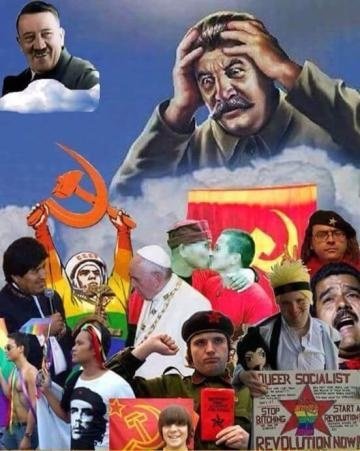
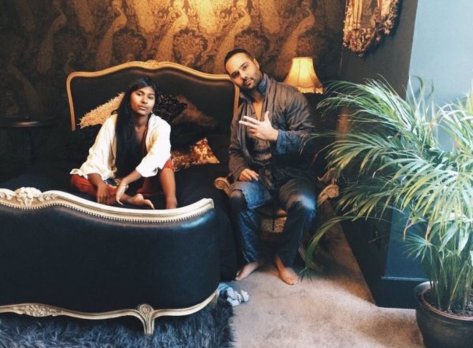

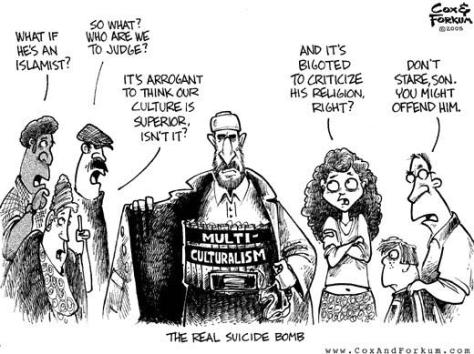
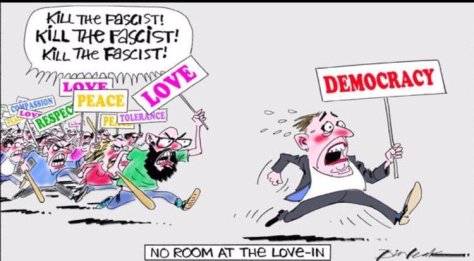



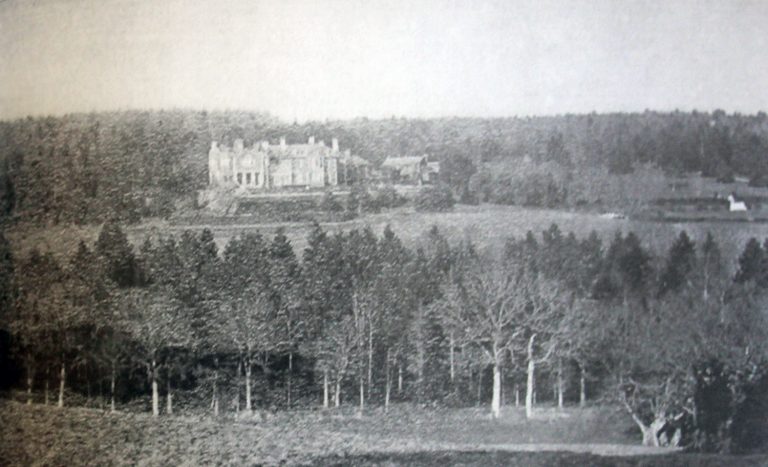

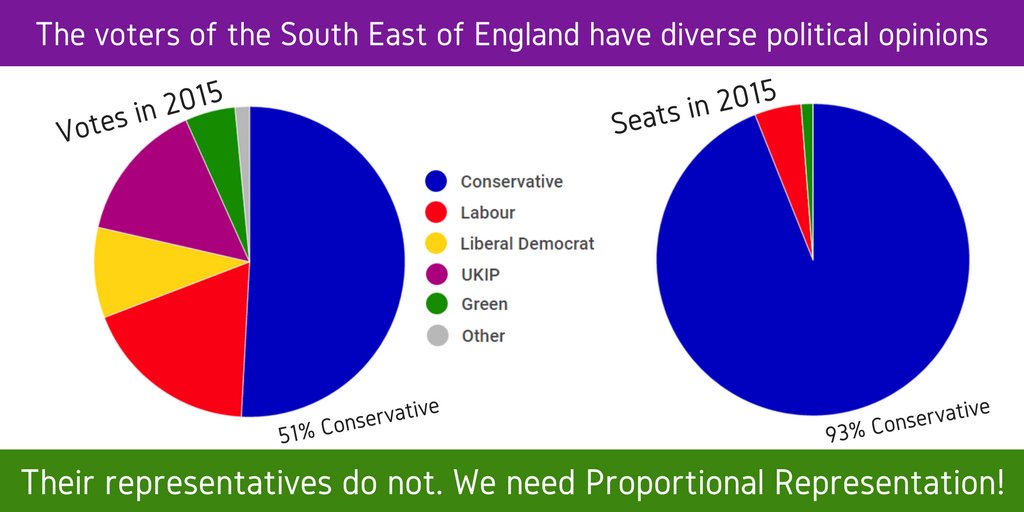
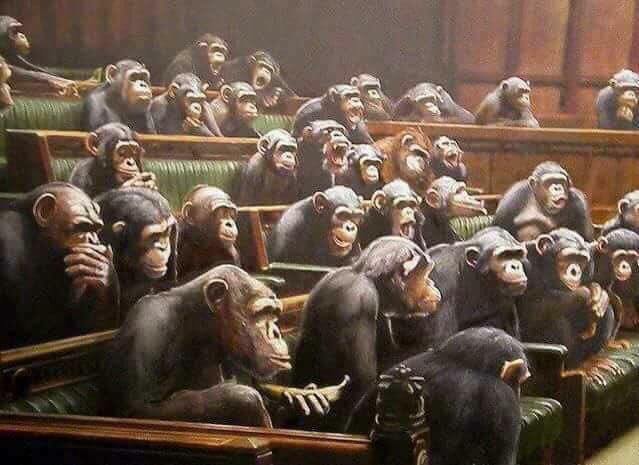
 Ian Robert Millard