Tag Archives: social nationalism; safe zones; ethnostate

What Do People Need?

On rereading Andrei Amalrik’s Involuntary Journey To Siberia of 1970, all sorts of impressions were received, most not at all new: the lack of freedom in the Soviet Union, the Kafka-esque Soviet legal system, the primitive life lived by Russian kolkozhniki (collective farm inhabitants) in Siberia etc.

However, at the end of the book, the author’s sentence for being a “social parasite” (5 years internal exile –2.5 years of which to be hard labour on a collective farm or elsewhere–) is quashed on appeal, Amalrik returns to Moscow with the wife whom he in fact married in Moscow and during his exile (because he was allowed compassionate leave from the collective farm or kolkhoz to visit his unwell father). He applies to the housing people in his district and, after some difficulty when he has to share with others, is given a flat with a decent bathroom and telephone.

Now, we are often told and quite rightly that Soviet people generally lived poorly, had to share, in many cases, their accommodation by living in communal flats or kommunalki (usually large flats expropriated from affluent persons during and after the Revolution of 1917 and the subsequent Civil War, though in fact some such shared apartments pre-dated Bolshevism), sharing kitchens and bathrooms etc and given, at best,one room per person (it was usually worked out, in theory, at so many square metres per person or family).

All of the above is true, but when one looks at the situation in 2018 Britain, many are not much better off, and some are worse off. Would a prisoner released from incarceration in the UK be given a flat, even a small one? The most he could expect would be B&B accommodation of a markedly poor sort, and to be put on a local authority waiting list, probably behind a horde of “refugees”, “asylum-seekers” and other riff-raff.

In fact, look at how many British people with full-time jobs live! Many in shared houses and flats, or in bedsit rooms. No better off than Soviet citizens! How many “hardworking” (the label of the past few years) people are living in not very nice shared accommodation in the UK, living off pot noodles and the like?

To go off at a tangent, this “hardworking” thing has become a joke: for example, school students all deserve (increasingly meaningless) “A” “grades” in exams because “they have all worked so hard”. Doesn’t matter if they are thick as two short planks and know only force-fed “facts” (often incorrect, as in the case of “holocaust” “history” etc). They are “hardworking” and so are the “deserving” academic poor. They therefore “deserve” to attend a “uni” where they will also “work hard” to “achieve” an almost meaningless “degree” (an equally-meaningless “First”, in half the cases) before –for many–getting a minimum wage (or not much better) job…

The above thoughts should impel us to think about what people need in a basic way, about what should, arguably, be the State-provided or guaranteed minimum.

Ideally, everyone should live in a decent house or flat, free of worries, with pleasant neighbours if any, while doing work which benefits society. That of course is a counsel of perfection, but that fact should not stop us from aiming at a higher and better form of living for all citizens.

For me, everyone should at least have a home, preferably one where there is reasonable space, reasonable peace, reasonable access to green gardens or wider Nature. Living space should be regarded as a human right, not as a way for buy to let parasites to make profits from the need of others. Everyone should have access to telephone and Internet. Everyone should have access to cheap or free public transport, at least in the local area and arguably within a 20-mile radius of home. Everyone should have (up to a determined cap) free water, electricity, heating. Beyond that, everyone should also have a “basic income”, even if only (in today’s money) £20 a week.

We can move to a society where the basics are provided. When people have the basics, they can work to get more, or to improve aspects of society in other ways.

Notes

https://en.wikipedia.org/wiki/Basic_income

https://en.wikipedia.org/wiki/Andrei_Amalrik

https://en.wikipedia.org/wiki/Communal_apartment

https://www.amazon.co.uk/Involuntary-Journey-Siberia-Andrei-Amalrik/dp/0156453932#customerReviews
https://www.amazon.co.uk/s/ref=dp_byline_sr_book_1?ie=UTF8&text=Andrei+Amalrik&search-alias=books-uk&field-author=Andrei+Amalrik&sort=relevancerank


How Would the Safe Zone Become A Germinal Ethnostate?

I have previously blogged about various aspects of the proposed “safe zone” or zones which might become the hub of social national activity in the UK. I have explained how the “safe zone” might be created, perhaps most likely by one person, couple or family buying an estate, farm, house, business or whatever in the selected geographical area, then other people gravitating to the same part of the country.

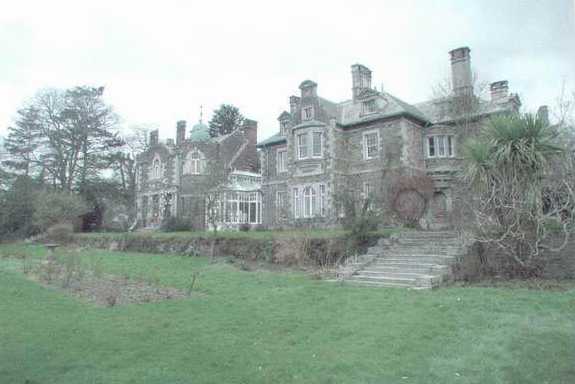
The ideal would be an estate which might include a main house, ancillary or secondary accomodation, houses, cottages, agricultural land, perhaps a separate business such as a garden centre, hotel or whatever (which might give employment to some of those supportive of the safe zone project). For example, I once had a lease of this house in Cornwall:Polapit Tamar House

carriageentrancePolapit
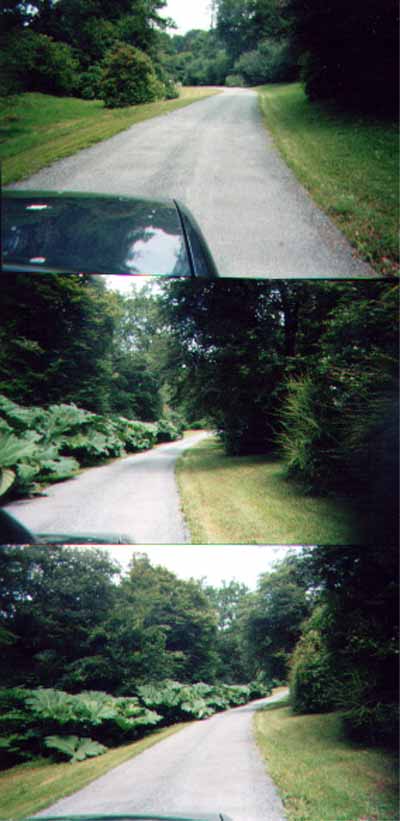
drive1

That house, a mid-19thC construction, originally (certainly by 1900) had a 5,000 acre estate, which by the time I lived there (2002 and 2003) had reduced to about 100 acres, most of which was woodland inhabited by reclusive deer. My own lease included only 4 acres (gardens and woodland) and did not include the secondary accomodation such as the North and South Lodges at the ends of the (more than 1 mile long) private road or driveway, 2 detached houses, and a few flats within or over the stable block.

It can be seen that such a house would be a fine hub for the safe zone project. The original relocators could live in that house, with supporters employed on whatever land surrounded it or in the nearby town (in that case, the nearest town was about 4 miles away) and living in the secondary accomodation or elsewhere nearby.

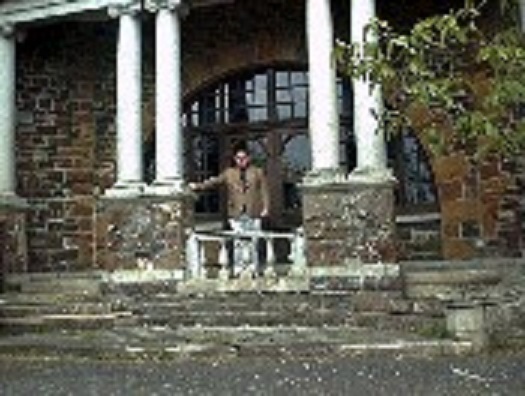
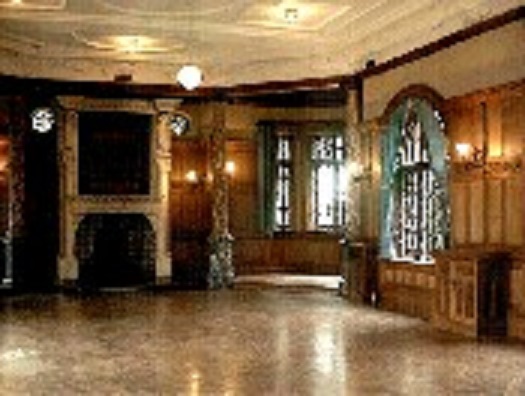
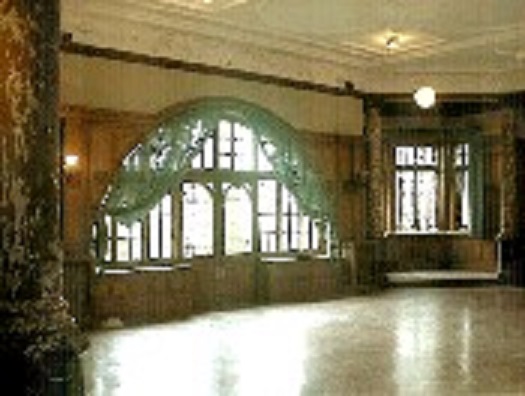
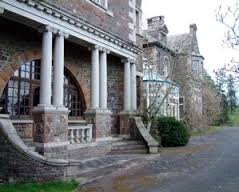
Such a house has the space to host meetings: the photos show the exterior colonnaded entrance to, and the interior of, the ballroom, which was itself larger than the whole of my present humble home…).

t_BallroomEntrance
t_Ballroom1
t_Ballroom2

As suggested above, such rural areas sometimes have businesses available which require staff: garden centres, nurseries, motels, hotels, pubs etc; there might be scope in the nearby villages and towns too. It might not be very long before a thriving hub of social nationalism exists. Suitably-qualified people might get jobs in local schools or local government, even in the police, NHS facilities, or in the fire brigade.

Once the safe zone has progressed that far, it is likely that other land can be bought, other estates or farms. Compare it to a painting-by-numbers set: one by one, the blank bits are filled in.

Naturally, a considerable amount of money is required to start such a project. The hub (estate, farm or at least smallholding) would cost (in Devon or Cornwall) anything from £1M upward, depending partly on the acreage. Agricultural land is valued at present in the range £5,000 to £15,000 an acre, so a house with even 100 acres will probably cost at least a million pounds and quite possibly as much as five millions.

Realistically, several million pounds would be needed to initiate the safe zone project.

However, once operating, the safe zone will thrive. All supporters would “tithe”, as happens commonly in religious organizations etc. If even 100 people are sacrificing a tenth of their (net) income and even if their average income is only £30,000 a year gross (maybe £20,000 net), that still gives the project an annual income of £200,000 at a fairly early stage.

Once more than a few dozen people are involved in the project and resident in its territory, thought can be given to taking over local councils. From there, in electoral terms, the local and regional objective would be to get rid of existing System MPs and replacing them with social national candidates, whether overtly or covertly.

There is more. As the reputation of the safe zone spreads, the trickle of relocators will become a flood. At that point, the safe zone mutates into the germinal ethnostate.

Update, 29 September 2019

https://www.kn-online.de/Nachrichten/Hamburg/Voelkische-Siedler-Die-Bio-Nazis-von-nebenan

Update, 26 July 2020

Saw this… https://www.independent.co.uk/news/world/europe/neo-nazis-plot-to-win-over-small-villages-in-germany-through-settlers-10162589.html

Update, 3 May 2021