Category Archives: Party Politics

Copeland By-Election: Watershed?

Three weeks ago, I wrote a preliminary blog post about the upcoming Copeland by-election

https://ianrmillard.wordpress.com/2017/01/02/the-copeland-by-election-the-blog-before-the-blog/

in which I examined the history of the constituency. I also took a look at the factors influencing the present by-election. The time has now come to attempt a prediction with reference to wider political trends.

The Copeland constituency has been in existence on its current boundaries since 1983. The previous constituency, Whitehaven (created during the electoral reform of 1832), was rock-solid Labour (often over 60%) from 1935 until the boundaries were changed in 1983

https://en.wikipedia.org/wiki/Whitehaven_(UK_Parliament_constituency)

The Copeland constituency has continued Labour since its creation: the Labour vote reached its high-water mark in 1997, in the Tony Blair landslide. In that year, the Labour candidate achieved a vote of over 58%:

https://en.wikipedia.org/wiki/Copeland_(UK_Parliament_constituency)#Elections_in_the_1990s.

His successor, Jamie Reed, started off in 2005 with a Labour vote of 50.5%. However, the Labour vote share has steadily declined since then, most recently to 42% in 2015

https://en.wikipedia.org/wiki/Copeland_(UK_Parliament_constituency)#Elections_in_the_2010s

The Conservative vote has been more volatile, ranging in various elections from 29% to 43%. The Conservatives achieved nearly 36% in 2015, only one point down on their 2010 showing.

The UKIP vote in Copeland has mirrored in a modest way that of much of the country: 2.2% in 2005, 2.3% (beaten by the BNP, which got 3.4%) in 2010, jumping to 15.5% in 2015.

The Liberal Democrats have never done very well in Copeland, their vote share flickering around the 10% mark, not exceeding that in 2010 (one point down from their 2005 showing in fact), then crashing to 3.5% in the 2015 debacle.

In 2010, the Green Party stood for the first time since 1987 but received a vote of less than 1%. That improved to 3% in 2015.

There are several factors which do not bode well for Labour:

  • Jamie Reed may be seen as a “rat leaving the sinking ship”, having taken a potentially lucrative position with the company which operates the constituency’s largest employing entity (by far), the Sellafield nuclear plant. That may seep into perceptions of Labour MPs as a whole;
  • recent polling shows Labour nationally as having the support of only 25% of voters;
  • the same polling shows that Jeremy Corbyn is seen as a potential Prime Minister by only 16% of voters;
  • Copeland voted heavily for Leave in the EU Referendum;
  • Copeland is believed to be hostile to the mass immigration which Labour and its embattled leader seem unwilling to criticize, let alone promise to halt.

Labour has now selected as candidate a local councillor, Gillian Troughton, a former medical doctor and supporter of the nuclear industry, in which her husband works. That may help Labour’s campaign, as will her support for the NHS and the local hospital, but Labour’s problems locally stem from its general decline nationally and its generally pro-EU, pro-mass immigration positions.

Traditionally, the Conservative vote in Copeland comes from particular communities along the coast and inland and that vote seems to be rather solid. There is no reason to suppose that the Conservative vote will not hold up fairly well, bearing in mind Theresa May’s recent stance on Brexit and also the immigration question.

Recently-stagnating UKIP can probably expect a surge in its vote, though it seems that the party will probably not be able to do well enough to win, which would require its 2015 vote to increase by at least 50% and probably more. However, UKIP will probably be able to garner votes from disaffected 2010 and 2015 Labour voters.

Turnout is key. In 2015, the Labour vote was 16,750, the Conservatives received 14,186, but UKIP’s vote was only 6,148. It is quite likely that former Labour voters will not so much vote Conservative or even UKIP, but simply stay at home and refuse to support Labour. If turnout slumps, particularly among those former Labour voters, then the Conservatives might well pull ahead of Labour , especially if the UKIP vote increases .

Prediction

Conservatives to win Copeland, with UKIP second and Labour third.

Effect

Only once in 35 years and twice in 60 years has a by-election seat been lost by the official Opposition party. If that happens in Copeland (even leaving aside the result of the simultaneous by-election at Stoke-on-Trent Central), Labour will go into a tailspin.  If Labour is pushed into third place, that effect will be magnified immeasurably.

Corbyn has made it clear that he will not resign whatever happens. Failure at Copeland would lead either to a second attempt to depose Corbyn via leadership challenge or (more likely) to a mass exodus of anti-Corbyn careerists, Blairites, Brownites and Zionists following Jamie Reed and Tristram Hunt out of the House of Commons and possibly out of the Labour Party. If that exodus, in turn, leads to the loss of further Labour seats, then it is hard to see Labour recovering. Ever.

We may be seeing the death of one of the two major (i.e. long-established, sometimes governing) political parties, something that has not occurred since the collapse of the Liberal Party in the 1920s.

Update, 3 March 2019

Well, two years on, looking at the article and its predicted result, I can feel content that I did OK. The Conservative Party candidate, Trudy Harrison, did win, as I thought at the time she would, getting a 43.3% vote. Labour’s candidate, Gillian Troughton, came second on 37.3%. A major factor was the collapse in the UKIP vote, from 15.5% to 6.5%. The vast majority of those votes probably went to the Conservatives.

The Green Party got a 1.7% vote at the by-election, the two Independent candidates 2.6% and 0.4%; none stood at the 2017 General Election.

The contest was reprised only 4 months later, at that 2017 General Election. The “main” (LibLabCon) or System parties ran the same candidates with a similar result: the Con vote increased to 49.1%; the Lab vote however also increased considerably, to 45.1%. The LibDem vote slumped, from 7.2% at the by-election to 3.3% at the General Election. UKIP’s vote slumped too, from 6.5% to 2.5%.

Copeland is now a fairly tight Con-Lab marginal. It could go either way next time.

Update, 5 June 2020

Well, since the last update, there has been another general election, the General Election of December 2019. In that election, the sitting Conservative Party MP, Trudy Harrison, retained her seat, and increased her vote-share to 53.7% (from 49.1% in the 2017 General Election). The Labour Party vote fell back by over 5 points. The other two candidates (LibDem and Green) both scored under 5% of the total vote; both lost their deposits. https://en.wikipedia.org/wiki/Copeland_(UK_Parliament_constituency)#Elections_in_the_2010s

Notes

https://en.wikipedia.org/wiki/Copeland_(UK_Parliament_constituency)

https://en.wikipedia.org/wiki/Copeland_(UK_Parliament_constituency)#Elections_in_the_2010s

https://en.wikipedia.org/wiki/Trudy_Harrison

Stoke-on-Trent Central: Preview

I shall blog in more detail about the upcoming by-election at Stoke-on-Trent Central when the runners and riders are fixed. This is merely an advance viewing of the contest based on the background.

Tristram Hunt, the Labour Party MP, was never very popular in his own constituency, though London TV studios loved him. He made no bones about despising the leader of his own party, tried and failed to formulate policy of his own and was surprisingly bad (for someone of his background and education) at arguing his points when (as so often) being interviewed on TV.

Hunt stepped down as MP in order to take a job as Director of the Victoria and Albert Museum. MP pay is £74,000 (plus generous expenses); the V&A Director presently gets a package worth £230,000. Hunt may be getting more. No wonder he said that “the V&A offer was too good to refuse.” So much for political conviction, vocation and, indeed, loyalty (whether to party or constituents). Stoke Central is well rid of him.

The Stoke Central constituency has existed since 1950 and the Labour Party has won every election since then. Until Hunt appeared in 2010, the Labour vote varied between 48% and 68%. Hunt’s votes have been 38.8% (2010) and 39.3% (2015). Stoke Central has moved from being a Labour safe seat to one which can be regarded as marginal:

https://en.wikipedia.org/wiki/Stoke-on-Trent_Central_(UK_Parliament_constituency)#Elections

The Labour vote in 2015 was about 12,000, that of both UKIP and Conservatives about 7,000. The LibDems, until 2015 the second party, crashed to fifth place (behind an Independent) with 1,296 votes. In fact, the LibDem vote in 2010 was 7,000, the same as the UKIP 2015 vote, perhaps a sign that the “protest vote” bloc at Stoke Central is around 7,000 or so. Arguende.

The Conservatives have not even been the second party at Stoke Central since 2001. This by-election is one which will be decided between Labour and UKIP. The recent Theresa May Brexit speech may well have shot UKIP’s fox overall, but at Stoke Central no-one is expecting a Conservative win or even a Conservative second.

Can UKIP win? The answer, even at this stage, must be a qualified “yes”. Much will depend on its candidate and that of Labour. If Paul Nuttall, a Northerner, stands, he must have a chance despite his partly-“libertarian” views. UKIP has a steep climb but it is possible. This is a by-election. The result will not affect who governs. People can protest with their votes. Labour is now seen as the pro-mass immigration party, the pro-EU party (to an extent). Stoke Central voted about 65% for Leave in the EU Referendum.

If turnout is low, if the 2015 Labour vote halves to about 6,000, if the 2015 UKIP vote mostly holds up at 7,000 or not much less, then UKIP can win. If.

It is not credible to imagine a win for the Conservatives or LibDems and they will vie for most votes not going to Labour or UKIP, but this is a Labour/UKIP contest. If enough people vote tactically for UKIP, UKIP has a good chance. On the other hand, 2015 LibDem or Green voters may also vote tactically for Labour.

Unemployment is high, immigration is high and having had Labour MPs for 66 years has not prevented either.

Labour must still be odds-on to win Stoke Central at this point, but UKIP has a serious chance.

Update, 27 November 2020

Looking at this post nearly 4 years on, I have to say that my prediction was accurate. The Labour Party won convincingly at the 2017 by-election, with 37.1% of votes cast. UKIP came in second with 24.7%, narrowly ahead of the Conservative Party on 24.3%. LibDems 4th-placed, with 9.8% of the vote.

The less-serious candidates all captured less than 2% of the vote; indeed, all except the Green Party got less than 1%: two Independent candidates, BNP, Christian People’s Alliance and the Monster Raving Loony (who actually beat the BNP, CPA and one of the Independents). https://en.wikipedia.org/wiki/Stoke-on-Trent_Central_(UK_Parliament_constituency)#Elections_in_the_2010s.

The Conservative Party candidate, Jack Brereton, did not stand again at Stoke Central but was adopted by the Conservatives at Stoke South, where he was elected at the 2017 General Election and re-elected in 2019.

The 2017 General Election saw the Labour Party MP, Gareth Snell, a seemingly rather unpleasant individual, re-elected with a greatly-increased vote-share (51.5%). However, the 2019 General Election saw Snell lose to Jo Gideon of the Conservative Party in a close result (45.4% to 43.3%).

As for the one-time MP, Tristram Hunt, he is at time of writing still Director of the V&A, still getting that hugely-generous salary and expenses, and has, no doubt, long ago forgotten the people of “his” once-Labour constituency at Stoke-on-Trent…

https://en.wikipedia.org/wiki/Tristram_Hunt

The Copeland By-Election: the blog before the blog

I intend to write in detail about the upcoming Copeland by-election, once the main nominations are announced; this is meant to be a preliminary post containing a few thoughts around the contest.

The Copeland constituency has been in existence on its current boundaries since 1983. The previous constituency, Whitehaven (created during the electoral reform of 1832), was rock-solid Labour (often over 60%) from 1935 until the boundaries were changed in 1983

https://en.wikipedia.org/wiki/Whitehaven_(UK_Parliament_constituency)

The Copeland constituency has continued Labour since its creation: the Labour vote reached its high-water mark in 1997, in the Tony Blair landslide. In that year, the Labour candidate achieved a vote of over 58%

https://en.wikipedia.org/wiki/Copeland_(UK_Parliament_constituency)#Elections_in_the_1990s

and his successor, Jamie Reed, started off in 2005 with a Labour vote of 50.5%. However, the Labour vote share has steadily declined since then, most recently to 42% in 2015

https://en.wikipedia.org/wiki/Copeland_(UK_Parliament_constituency)#Elections_in_the_2010s

The Conservative vote has been more volatile, ranging in various elections from 29% to 43%. The Conservatives achieved nearly 36% in 2015, only one point down on their 2010 showing.

The UKIP vote in Copeland has mirrored in a modest way those in much of the country: 2.2% in 2005, 2.3% (beaten by the BNP on 3.4%) in 2010, jumping to 15.5% in 2015.

The Liberal Democrats have never done very well in Copeland, their vote share flickering around the 10% mark, not exceeding that in 2010 (one point down from their 2005 showing in fact), then crashing to 3.5% in the 2015 debacle.

In 2010, the Green Party stood for the first time since 1987 but received a vote of less than 1%. That improved to 3% in 2015. There has been debate in Green circles about whether they should withdraw, so as to give Labour their small vote share but (leaving aside the question of whether Green voters do actually favour Labour in lieu –some vote UKIP, according to polls–), the Liberal Democrats seem to be unwilling to withdraw, so it seems likely that the Greens will stand. Copeland contains the Sellafield (formerly Windscale) nuclear plant [https://en.wikipedia.org/wiki/Sellafield], which all Labour candidates and MPs to date have backed strongly (it is the biggest –and best-paying–employer by far in the constituency). Indeed, Jamie Reed stood down as MP in order to take up a lucrative (and secure) position at Sellafield.

Jamie Reed was one of the earliest rebels against Jeremy Corbyn, indeed the first to throw down the gauntlet after Corbyn became Labour leader. This is a “rat leaves sinking ship scenario” and very obviously so. Copeland voted Leave in the EU Referendum; Reed is strongly pro-EU. The constituency is also anti-immigration despite having relatively few immigrants and/or non-whites.

Choice of candidate will be key, especially for Labour. Word is that local Labour is not only pro-Sellafield, but anti-Corbyn. If their choice prevails, the candidate will be the same. That might (arguably) help Labour somewhat, but Labour’s generally pro-EU and also pro-mass-immigration stance will not.

Turnout will be very important too. Since the 1980s, turnout has gradually declined from over 83% at one time to not much beyond 60% in recent elections. By-elections usually have far lower turnouts than do general elections. That disadvantages Labour in this case.

Labour has lost the “incumbency factor”, Corbyn is little-regarded by the voting public, Labour is perceived to be pro-EU and pro-mass immigration, as well as disunited and (at least arguably) almost irrelevant. There is also the point that Labour’s Jamie Reed resigned for purely selfish motives (no future as a Labour MP, at least under Corbyn’s leadership; lucrative business career in prospect). These factors will not assist turnout and will not assist Labour.

Jamie Reed’s majority was 2,564 in 2015, 16,750 votes as against 14,186 for the Conservatives (UKIP got 6,148). The Conservatives are tipped by the bookmakers, for what that is worth. Certainly Conservative voters have all to play for here. On the other hand, Labour voters might well be very unenthusiastic. They may not switch votes, but will more likely vote with their feet by staying at home.

If Labour’s vote were to be reduced by about half and the Conservatives’ by about a third, that would leave Labour with (in rough figures) maybe 9,000 votes, the Conservatives with 9,500. This could run very close indeed.

The joker in the pack is, appropriately, UKIP. Even on basis of the above scenario and even if all 2015 UKIP voters vote UKIP this time, it still leaves UKIP with a steep climb. To win, UKIP is going to have to increase its 2015 vote by at least 50%, from 6,000 to (at least) 9,000. On the other hand, it is that kind of shock result that goes down in political history. These things happen. UKIP now has a Northerner as leader. That may help.

So far, UKIP since 2015 has fulfilled my predictions: stagnation (at best) rather than upsurge. Copeland might just provide a (one-off?) breakthrough for UKIP, but only if all the cards were to fall right: a good UKIP candidate, a poor Labour one, helpful headlines around polling day.

This by-election was always going to be close to call. In the absence of nominations, I am not yet ready to call it, but the result will be significant in its effects: the closest by-election since the 2015 General Election. If Labour loses, other Labour MPs may jump ship (the newspapers suggest at least 20). That would of course also be the case, a fortiori, were Labour to come third, which is in fact not impossible, though it would have been unthinkable until recently.

Tipping Points in Politics and Life

We have all heard of the theatrical cliche of the actor who achieves “overnight success”, having in fact worked hard against all the odds for years. The same is often true of writers, painters and other artists. Not forgetting scientists. It was Edison who, on the failure of his (supposedly) 2,000th lightbulb experiment, is said to have said: “I have not failed. I have just discovered the 2,000th way not to invent the incandescent lightbulb.” At a later time, he of course succeeded. Many things follow the pattern: a long period of non-movement, then sudden success (or sudden failure of something, often after long stagnation).

One can call this a tipping-point, or characterize it by some other metaphor. The aircraft which suddenly fails by reason of metal fatigue, the ship which finally turns over after ice has built up on its external structure in Arctic waters, the huge empire which “suddenly” staggers and falls. On the other hand, there is that actor with his “overnight” success, that composer whose works suddenly find favour, the small political group which “suddenly” rises to prominence and power.

The Bolsheviks were a small group of societal rejects mostly living in internal or external exile, or in prison. Many were not even Russian. Jews predominated in their higher councils (despite forming only 10% of the entire membership), but there were also Georgians and others. In fact, the Bolshevik Party only had 8,400 members in 1905 and, though that increased to 46,100 by 1907, by 1910 the numbers had slipped back to about 5,000. Few would then have imagined either that the mighty Russian Empire would collapse or that the tiny faction of Bolsheviks could seize control of what was left. We know the rest: a failing war and an impoverished population, an initial attempt by others at “moderate” revolution and then a coup d’etat by one small group in one corner of a vast empire.

The lesson: a small and marginalized group, disciplined ideologically and practically, can both seize power and institute an entirely new form of society, once that tipping point or crisis point has been reached.

In post-WW1 Bavaria, Adolf Hitler became the 7th member of the German Workers’ Party [DAP], which may also have had an unknown number (estimates vary from mere dozens to as many as 15,000) of loose supporters in the beerhalls of 1919 Munich.

By 1923, this tiny and marginalized group was able to attempt the Beer Hall Putsch [aka Hitler-Ludendorff-Putsch], but it is important to note that, despite the support of Ludendorff and a few other notables, the actual number of putschists involved was small: the main march headed by Hitler was only 2,000-strong (immediately after the putsch failed, 3,000 students from the university also marched in support and to lay wreaths). Indeed, even had the putsch succeeded, Hitler would only have taken power in one city of one region within the German state as a whole.

The membership of the NSDAP grew steadily, reaching 108,000 by 1928. Electorally, however, the NSDAP was doing worse in 1928 (receiving only 2.6% of the national vote) than it had done in 1924, no doubt a reflection of the growing prosperity in the intervening years (i.e. since the infamous hyperinflation finished in 1924). Despite that poor showing, once the Great Depression started to affect Germany after 1929, the NSDAP was able to gain the trust of ever-more voters: the vote in 1932 was 37% and then 33% (in the two elections of that year), growing to 44% in 1933. Adolf Hitler then took full power, having been appointed Chancellor in 1932.

A different example: UKIP grew from a few people in a pub in 1991 to a peak in the 2012-2015 period, but has not the ideological discipline or revolutionary intent to “seize power” even by electoral means. It missed its chance and will probably not get any further. Still, its growth, in the UK context, is interesting. Its founder, Alan Sked, was a former Liberal candidate who stood as “Anti-Federalist” candidate for the seat of Bath in 1992 (i.e. after UKIP had been formed), receiving 117 votes [0.2%].

UKIP had virtually no members until the late 1990s, though by 2015 the membership had grown to nearly 50,000 (now 30,000). As for its vote share, that grew to nearly 13% by 2015, but the UK’s unfair “First Past The Post” [FPTP] electoral system meant no gains.

FPTP voting itself illustrates the “tipping point” idea, as happened in Scotland: the SNP had fairly good support for decades, but few MPs until the tipping point was reached. Now it has 50% support, but almost 100% of Westminster seats. Why was the tipping point reached? Cultural identity rising, living standards falling, entrenched Labour failing. The point was reached–and the Labour vote collapsed.

UKIP has the same problem. So long as it has only 10% or even 15% of votes, it cannot get more than one or two MPs. Were it to get to 25% support, the situation would tip and UKIP would have perhaps 100 MPs. Except that that will probably not happen…

In fact, the Bath constituency mentioned above is instructive: Alan Sked got only 117 votes (0.2%) in 1992; in 2015 the UKIP candidate received nearly 3,000 votes (over 6%), but was still only 5th (Sked came in 6th in 1992)

https://en.wikipedia.org/wiki/Bath_(UK_Parliament_constituency)#Elections_in_the_2010s

The difference between UKIP’s situation and that of the Bolsheviks or NSDAP is that UKIP has no really firm ideological or organizational structure. Even if society came to a political tipping point, UKIP might well be unable to take advantage of that.

A new and properly-run social nationalist party could take most of the votes of UKIP as well as those which formerly went to the BNP and others. That however, could only ever be a foundation for electoral success. That success itself would depend on the rising star of the new party meeting the fading star of the old parties. It is a question of timing and of Fate. The tipping point for the whole society would be key.

What Are the Prospects for a Social Nationalist Party in the UK?

Start with the following proposition: the UK has no social nationalist party. All across Europe, social nationalism is rising and has political expression both in parties such as the Front National and in the political discourse generally. In the UK, the latter has started to occur, but not the former. Britain needs a social national party.

Traditionally, the UK has been resistant to social nationalism, the two bits having been severed: the “Conservatives” (mainly) took the national and “Labour” (mainly) took the social. The one waved the Union Jack, the other brandished a poll card in the left hand and a National Insurance card in the right.

After 1945, the Welfare State mainly initiated by Liberals (and even some Conservatives) was taken up and vastly expanded by the Labour Party. That Labour Party was socialist enough to keep its core vote happy most of the time, while never abandoning totally the patriotic background, at least as a theme.

The Thatcher era changed much and one of the things it changed beyond recognition was the Labour Party, which at first lurched toward an anti-national but more “socialist” model under Michael Foot, then a stagnant period under Neil Kinnock, before abandoning socialism altogether and “rebranding” (significant vocabulary) itself as the vaguely “social” and vaguely “national” New Labour. Under New Labour, you could be a Pakistani Muslim, a Jew Zionist, an EU economic migrant, whatever. You were part of the New Labour “British” club.

What New Labour forgot was most of the real British people, left behind in decaying end-of-pier seaside towns, in the post-industrial wastelands of the North (and Scotland) and in many another setting. They lost both their jobs (at least, the decently-paid ones) and their nation, submerged under the waves of mass immigration which were not only tolerated by the Tony Blair/Gordon Brown regime, but actively encouraged (specifically, to destroy the British and especially English national character and culture), though the full extent of the treason did not come to light for several years. Not only politicians were guilty, but also TV talking heads, Andrew Marr being one obvious example.

Scroll on a decade and 2017 is about to dawn. The BNP had two MEPs elected in 2009, then disappeared forever. UKIP rose on the back of social nationalist feeling, had a number of MEPs elected but failed, in 2015, to break through the moat of the First Past The Post electoral system at Westminster: 4 million votes (nearly 13% of the total) and only 1 MP (and that one a Conservative by any other name). No wonder so many people protest by simply not voting. As for UKIP, it has stagnated because it failed to follow the Front National of France into social nationalism. Instead, it espouses a mixed-message of silly “libertarianism” mixed with flag-waving and occasional lip-service in favour of the NHS and public transport. Result? Failure.

The situation now is that Britain has a notionally economically-conservative party which tries to make “national” noises (despite being in the pocket of Jewish-Zionist cosmopolitans) against a Labour Party which has split noisily between the Blair-Brown rump  (including most of its MPs) and a socialist but anti-nationalist membership insurgency led by “accidental” leader Jeremy Corbyn. Former Labour voters are voting with their feet (failing to vote at all) or voting for other parties. There is, also, the Liberal Democrat Party, but that was mortally wounded in 2015 and is now seen as merely a refuge for votes against other parties rather than as a “destination-vote” party voted for in its own right.

The conclusion I draw is that there is a political vacuum. There is a place for a social nationalist party. However, that party does not yet exist. In the next few years, conditions will be perfect for its launch.

The Labour Vote and the Effects of Insecurity and Mass Psychology in UK Politics Today

At present, across the advanced world, there is starting a political ferment. In the UK, attention has been focussed on the EU Referendum, Brexit, mass immigration and the economy. The backdrop for all that has been the decline of popular support for System parties in general and the Labour Party in particular.

There have been two contrasting by-elections recently: Richmond Park; Sleaford and North Hykeham. One, a very pro-Remain constituency which has only ever had Liberal Democrat or (one, Zac Goldsmith) Conservative MPs; in the other, Leave captured 62% of the Referendum vote in a constituency which has never had anything other than Conservative MPs. In both of these by-elections, the Labour vote bombed.

I have blogged about the results of both by-elections: Richmond Park

https://ianrmillard.wordpress.com/2016/12/02/thoughts-on-the-richmond-park-by-election/;

Sleaford and North Hykeham

https://ianrmillard.wordpress.com/2016/12/09/the-sleaford-by-election-post-poll-view/.

We hear various reasons put forward as to why the UK Labour Party is not gaining or regaining the support of the people. Some blame Corbyn and his ideology and connections; others make the valid point that Labour support was sliding even before Corbyn became leader. Labour did poorly in both 2010 and 2015 General Elections.

I should like to put forward the following idea: that Labour is sliding in public esteem and support for a more basic reason than ideology or even perceived competence. Labour is sliding because the people generally have no faith in its power or even willingness to protect them.

A primary function of the State, which predates even the State itself as we now know it, is the ability and willingness to protect the people from external danger. This primary function was, over time, added to. The State was expected not only to defend against other states and rampaging bands, but also to keep order within its own borders, to promote justice and fairness; also, eventually and in general, to keep the people fed and housed, their children educated, the national culture protected and promoted. These incidents of State functioning are now basic, even in those states which operate on a more or less laissez-faire ur-ideology.

The protective functions of the State are also transferred to or expected to be carried out by the ruling political parties, both those actually in government and those which aspire to government.

Apply the above to the Liberal Democrat Party. For decades, it had built up a respectable support base. It proclaimed all sorts of virtuous policies, said it would protect people in every way, acquired 62 MPs by 2005, yet was all but wiped out in the 2015 General Election after having engaged for 5 years in the “Con Coalition”. Why? It was because people expected the LibDems to protect their interests against the more savage manifestations of Conservative government: spending cuts, callousness toward the poor, unemployed, disabled etc. The LibDems (despite protests) did not, overall, do that. Their punishment was condign: to be reduced to a rump of 8 MPs (now 9, by reason of the special circumstances of the Richmond Park by-election), with effectively no hope of recovery.

Now we look at Labour.

Welfare State

The Labour reaction to the attack on the Welfare State which an earlier Labour Party had done so much to support was to join in the “me-too” mass media and Conservative Party onslaughts on the disabled, on the unemployed, on all those dependent on State assistance (except the Royal Family, the subsidized farmers and the increasing swamp-floods of immigrants). Time after time, Labour MPs, especially those who had been ministers or who were shadow ministers, supported the most callous “reforms” to the social security system. Many Labour MPs either supported the Conservatives in the Commons (even more so after the 2015 General Election) or failed to oppose measures such as the Bedroom Tax. Indeed, it was Alastair Darling, James Purnell, Stephen Timms etc (all Labour ministers) who brought in the dreaded, hated and incompetent ATOS organization in the first place.

Conclusion: Labour failed, both in Government and in Opposition, to protect those most dependent on the Welfare State. Reaction? Those people deserted Labour in droves, either going to (at first) BNP, then (later) UKIP, or dropping out of voting altogether. They will not vote Labour now, despite Corbyn’s support for them, because they have no faith in his (in effect) being elected as PM and because most Labour MPs are still a rabble of pro-neoliberal, anti-Welfare State me-too-ers and fakes.

Pay and Living Standards

In government, Labour under Tony Blair and Gordon Brown advanced the interests of the wealthy or affluent above those of the rest of the population, in the hope of general improvement of the economy. A pathetic version of trickle-down theory. Income and capital inequality soared. Gordon Brown’s Working Tax Credits and other tax credits ameliorated this to some degree, though at the cost of taxes and taxpayers subsidizing, in effect, low-paying businesses–and on a huge scale. Welfare for Business. Mad.

Pay has continued to decline or stagnate for most people, but Labour has no answer for that problem and is judged on its record. There is no sense that Labour stands with the poor working people (or middling people who are becoming poor).b-cisxdiqaa7qj_-jpg-large

Another factor in this is the continuing rise in rents as against pay. When the cost of rent in the private sector is added in, pay has slumped almost as much as has the Labour vote.

Result? Voters have no confidence either that Labour pay policy works or even that Labour is somehow “on their side”. This belief in the uselessness or untruthfulness of Labour has led many either to prefer Conservative policy on the economy as well as (if, arguably, bizarrely) on pay, or to cease bothering to vote at all.

The proletariat scarcely exists now in the UK and has been replaced by a more volatile “precariat”, without loyalty to the former certainties of class, background, region, or even race and culture.

Mass Immigration

Here Labour has no cards to play.  It deliberately imported millions of immigrants, (mainly non-European, i.e. non-white) under Tony Blair and then Gordon Brown, not only to provide big business with cheap labour and more consumers but also to destroy British (especially English) race and culture [see Tom Bower, Broken Vows: Tony Blair — The Tragedy of Power]. Whistleblowers exposed this treason far too late and, it has to be said, the swamping has continued under the misnamed “Conservatives”, right up to today.

Those behind the Labour Government’s immigrant-importation were and are traitors and include, among many others, these two then ministers:

https://en.wikipedia.org/wiki/Barbara_Roche

https://en.wikipedia.org/wiki/Phil_Woolas

The Jewish Zionist Barbara Roche was particularly culpable. The voters of her once-safe Labour constituency realized (years before Tom Bower’s book came out) that she hated English (and all European) race and culture– they voted her out in 2005 and she has never returned to Parliament, despite lobbying hard for either another Labour candidacy or a peerage. She had inherited a 20,000+ Labour majority in 1992. Straw in the wind?

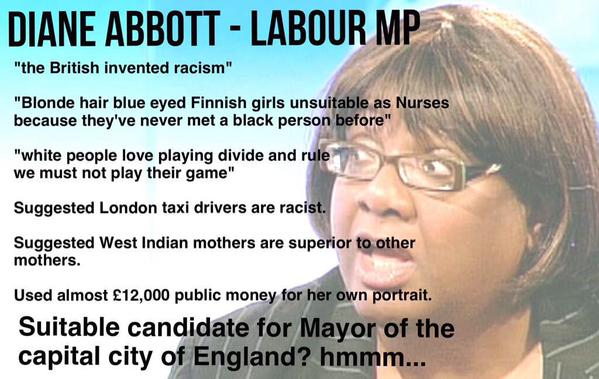
Labour MPs are still lobbying for more immigration! Even those, such as Yvette Cooper, now belatedly paying lip-service to “having a discussion” about it (as the hordes break down the gates!) are “refugees welcome” dimwits and promoters. Most Labour MPs are not even interested in talking about mass immigration, let alone actually doing anything about it. Corbyn and his absurd or joke “front bench” will never even talk about the swamping of England, except to support it. Angela Rayner and the freeloading moneygrasper Diane Abbott are two names that come to mind.

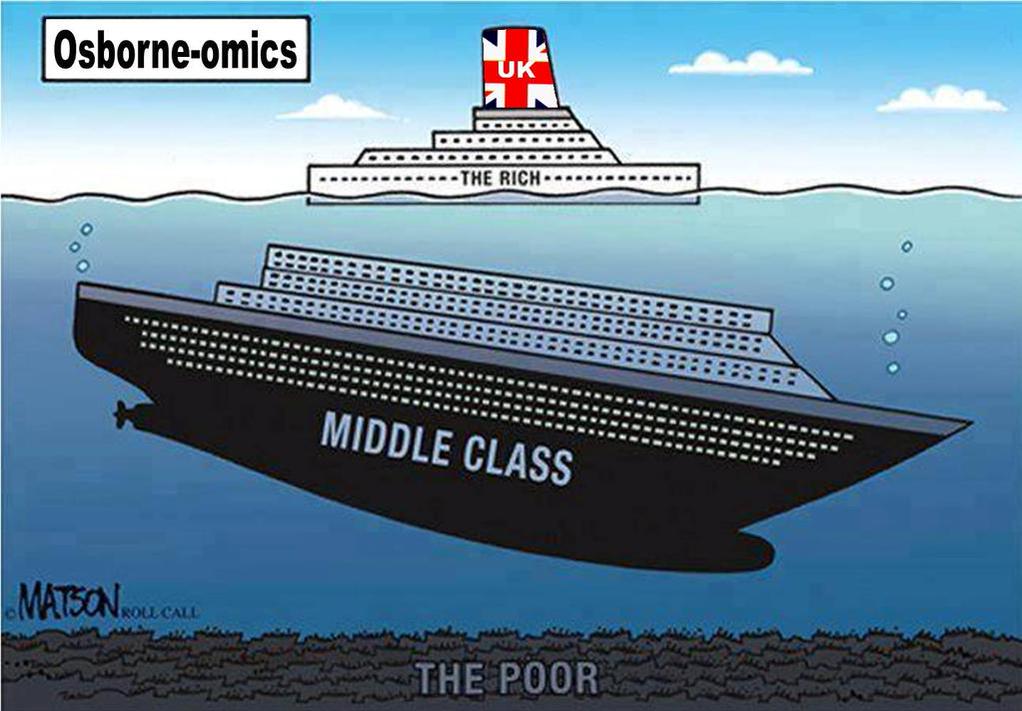
The cartoonists have hit upon Labour’s immigration madness many times, yet all Labour MPs say is that the people need to have the “benefits” of immigration “explained” to them. Patronizing and wrongheaded.

161214-matt-web_3139193a

ctgqcfywiaa6yvr

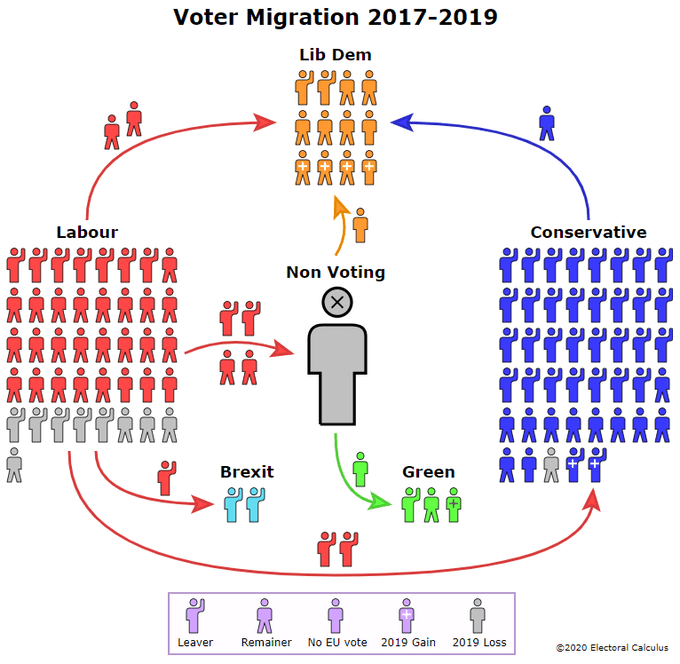
The result of Labour’s immigration non-policy and its attacks (both now and in government) on English and British race and culture? Millions of former Labour voters voting for UKIP, for the Conservatives (who at least pay lip-service to slowing the rate of immigration despite doing nothing much in a practical way) or not bothering to vote at all.

Conclusion

On the big issues for most voters, meaning living standards and social protection generally and immigration (bearing on race, culture, identity, NHS, schools transport, crime etc), Labour is not only NOT protecting the British people, but is still actively against most of what is in the popular interest.

The “instant karma” of all that is that the people withdraw their support and withdraw their votes. Richmond Park and Sleaford were just the start, in fact not even that: Scotland is already a Labour Party-free zone, pretty much (Labour is only 4th in the polls there now, on a pathetic 15%).

One has to wonder what sort of people would now vote Labour. Some ethnic minorities, some public sector workers, some traditionally-minded (older? maybe not: older people have seen the devastation caused by mass immigration over decades) Northern voters. Not much of a mass-support base.

On the basis of the latest polls showing 25% support, Labour would have about 180 seats (out of 650) on present boundaries and only 140 (out of 600) on the proposed new ones.

Labour is on the way out. It has betrayed the trust of the people and deserves to be obliterated. The people rightly feel that they are not protected by Labour.

A new social national party must arise, to protect the people and to create and preserve a new form of State in England and Wales.

cqsbrinweaalitk

Thoughts on the Richmond Park By-Election

I write only a few hours after the Richmond Park by-election result, which saw the Liberal Democrats win an unexpected victory over former Conservative Party MP (standing as Independent) Zac Goldsmith.

I had not taken much interest in the by-election, mainly because the constituency is atypical, full of the sort of affluent self-described liberals who usually vote soft Conservative or Liberal Democrat and who believe in the EU, multicultural/multiracial Britain, “refugees welcome” (though not in Richmond, of course) and whatever helps to support their own comfortable lifestyles.

The result:

https://en.wikipedia.org/wiki/Richmond_Park_(UK_Parliament_constituency)#Election_results

What struck me first of all was the poor showing of Labour, which lost its deposit for the first time since the constituency was created in 1997. Labour achieved a 12% vote in 2015 and managed 5% even in the 2010 General Election which Labour lost. Labour’s 3.7% vote in the by-election was only 9 times that achieved by the Monster Raving Loony.

UKIP did not stand, which perhaps says something in itself. UKIP had climbed from a vote of 0.7% in 2001 to 4.2% in the 2015 General Election.

Zac Goldsmith had increased the Conservative Party vote from around 39% under previous candidates to 50% in 2010 and 58% in 2015. However, his anti-Heathrow-expansion stance was irrelevant in the by-election, because the decision to expand the airport has now been taken. Another factor was the EU: Goldsmith’s pro-Brexit view was at odds with that of most Richmond voters in the most pro-EU constituency in England.

There were minor candidates: Fiona Syms, estranged or ex-wife of the Conservative MP for Poole. She received 173 votes (fewer than the Monster Raving Loony); a sullen Indo-Pak calling himself “Maharaja Jammu and Kashmir” (real name Ankit Love), representing his “One Love” crank party [https://en.wikipedia.org/wiki/One_Love_Party] (which consists, it seems, of 3 or 4 people). The “maharajah” received 67 votes; there were a couple of other candidates.

What can perhaps be said about this by-election? What does it indicate? That Labour is still sliding and that UKIP has (at best) stalled.

What cannot be said about the Richmond Park result? That voters outside Richmond Park (or the few places like it) are anti-Brexit; that the Liberal Democrats are resurgent. In the end, the only practical result of the by-election is that it reduces by 1 the number of Conservative MPs (and so by 2, in effect, the already-small Commons majority of the Theresa May government).

Problems of Finance in Social Nationalist Politics

System political parties in the UK have sources of finance which are well known: wealthy donors, membership dues, fundraising drives, donations from big business or trade unions, as well as “Short money”, i.e. State monies given to parties depending on the number of MPs they have in the House of Commons. Smaller political parties, without many or any MPs, have to rely on trying to get large and smaller donations as well as collecting money from their members via subscriptions, collections and/or sale of items such as newspapers, magazines or, in some cases, memorabilia etc. There is another way.

When I lived in the United States in the early 1990s, I discovered that not only did many suburbs or little townships have countless churches (the names of which were unknown to me, usually), but that most of these churches were replete with cash. I was told that that was because they insisted, often, on the practice of “tithing”, i.e. the members had to give a proportion (usually 10%) of their income (post-tax income, usually) to the church to which they belonged. As a result, these churches had full-time staff, real property, vehicles etc. They were also able to help out members of the church fallen on hard times and had no difficulty raising the funds to print books. Some even owned radio and TV stations!

Returning to UK politics, were a social-national party or movement to operate the same system, the funds would be available for both pure political activity and wider work. A party might have as few as 100 full members, the income of which, after tax, might be only about £20,000 each (approx. UK average), but even that tiny party would, on the premises, have an annual income of £200,000. Small by the standards of the System parties or even UKIP, but still significant. A party with 1,000 members might have an annual income of £2 million. Now you’re talking…Such an income would enable a party to do more than conventional political activity. It could, for example, buy houses and flats wherein some of its members could live. The rents would thus go to the party, not to some buy-to-let parasite. This would also assist morale and esprit de corps.

Another way in which such income can help a political organization is in allowing it to operate a commercial arm and so not only make operational surpluses (“profits”), but also provide employment to members who need jobs.

As in many marriages, difficulties and dissent in political parties often arise out of money troubles. The tithing system is a way of avoiding that. A well-funded party is a credible party in a way that a shoestring organization can never be. An air of serious purpose pervades such a body.

It might be objected that it will be hard to persuade people to give up their (in many cases) hard-earned money. If so, their commitment must be questioned. There are enough “hobby politics” organizations around already. Most will never amount to anything. If someone wants to belong to something as a hobby, then fine, go do it..elsewhere. If, on the other hand, someone wants to belong to a serious movement, with a serious world-view, a serious plan and a serious chance of accomplishing something, then the need for tithing must be apparent and will be accepted by those most able to carry out the objectives set.


A Floor or a Ceiling?

The Front National in France, other broadly social-national parties of the European mainland and (in England and Wales) UKIP are not “ceilings” (end results) but “floors” (starting points). Their function is to disrupt the political status quo and to awaken as far as they can the voting populations of the various European states. Naturally, that is not how they themselves see their role.

The case of UKIP is telling. UKIP came into a political milieu in Britain where (in the 1990s) there were only “three main parties” and a high majority of those who voted voted for them. Below the surface, though, there was growing but unfocussed discontent and alienation. Turnout in general elections, which peaked at 83.9% in 1950, fell (on the wider franchise after 1966) to a low of 59.4% by 2001, though it recovered slightly to 66.1% by 2015. An equally-telling fact is that the proportion of voters who voted and who voted for one of those “three main parties” fell steadily and is still falling. In broad terms, a third of eligible voters did not vote at the 2015 General Election; of those who did vote, about 75% voted for LibLabCon (UK-wide results), with another 12.6% voting for UKIP.

UKIP peaked in 2014, failed to break through in 2015 and is now declining fast in every way. Its 2016 by-election results have been poor, its donors are going and its membership falling. I addressed the UK political vacuum in an earlier blog post. However, UKIP has succeeded in a more major way than did the BNP and not only because UKIP scored 21 MEPs as against the BNP’s 2.

UKIP created an atmosphere across the country in which social nationalism might start to thrive, despite the fact that UKIP, as a party, is not really social-national.

UKIP, despite being now more or less washed-up, is a floor. On that floor a movement can be built. The Front National in France is not at all in decline (au contraire) but is also a basis for a movement, rather than the movement itself. The FN is, however, likely to become or coalesce with such a movement, whereas UKIP will just fade away even if it can score a few election victories in the 2016-2020 period. The importance of both parties, however, is that they have changed the atmosphere. Social nationalism is now not a fringe ideology. It stands ready, once the right vehicles arrive, to take command across Europe. In Britain (specifically England and Wales), there is a crying need for such a social national movement and I believe that it will emerge, will arise and will, eventually, seize power.