Tag Archives: UKIP; Alt-Right; nationalism; British nationalism

UK System Parties Struggle For Relevance

Overview

The next UK general election must be held by mid-2022 at latest. Pundits have suggested every time between Autumn 2018 and that date. I myself incline to the view that the next general election will be in late 2018 or Spring 2019, but I have no great faith either way.

What interest me are the prospects for social nationalism and I assess them, at present, as close to zero, assuming a general election in 2018 or 2019. Why? Primarily because there is not only no credible social national party, but in effect no social national party at all.

UKIP

What is left of UKIP is being pushed as a fake “alternative” by those who have no interest in actually having a social national government in the UK: conservative “nationalists”; “alt-right” “social media” weirdos (who never criticize Israel or the Jewish Zionist lobby, or put forward any policies for a better society) such as “Prison Planet” Watson and “Sargon of Akkad” Benjamin; as well as various others who actually wish to prevent a social national movement developing.

Does UKIP have any chance of resurgence if, for instance, Brexit turns out to be a fraud (as seems likely)? If what is meant by “resurgence” is an increase, perhaps even a doubling or tripling, of its vote percentage, yes; if what is meant is a breakthrough and the election of a bloc of UKIP MPs, no.

At present, after 25 years of activity, UKIP has no Westminster MPs (out of 650), 2 members of the London Assembly (out of 25), and 4 members of the Welsh Assembly (out of 60), as well as 17 MEPs (out of 73 in the British contingent). The last will of course disappear next year even on a nominal Brexit. In 2015, UKIP managed a Westminster vote of 12.6%, which fell back to 1.8% in 2017. In order to get back to the 2015 position, UKIP would have to increase its vote 7-fold (and even then probably be unable to get even one single MP elected).

UKIP has been a winner for the System: it took votes and attention away from the BNP prior to 2010 and has taken the wind out of the sails of social nationalism by, to mix metaphors, diverting the waters of popular discontent angry at mass immigration, the EU, globalism etc. All that popular discontent was diverted into a “safe” channel– not “anti-Semitic” and, in fact, not really even anti-immigration. UKIP after 2010 fielded numbers of ethnic minority candidates. At one point, the favoured candidate to take over the party leadership was one Steven Woolfe MEP, of both Jewish and “African-American” descent. Woolfe had become an MEP in 2014 (UKIP’s peak year) after having come third (with only 13% of the vote) in the North West, which result points to the essentially shallow support that UKIP had even at its peak.

As to the small parties trying to swim in nationalist waters, none has any weight or credibility.

For Britain

“For Britain”, the narcissism vehicle of Irish lesbian ex-secretary Anne Marie Waters, is an anti-Islam one-trick-pony and one, er, woman band, pretty much. Not only has it few members (at an educated guess a hundred or so), but its popular support is effectively non-existent: leader Ms. Waters managed a derisory 1.2% (266 votes) at the Lewisham by-election of 2018, coming 7th in the poll. “For Britain” actually expelled a local election candidate because of alleged links to both National Action and Generation Identity. To make matters worse, that information had come from the partly-Zionist-funded “Hope Not Hate” “antifa” snoop-group. The conclusion is obvious: from every point of view, “For Britain” is a waste of space.

Britain First

Britain First is the most important broadly supposedly nationalist party and is said to have perhaps 1,000 members. It is not, to my mind, credibly social-national, being pro-Israel and expressing support for Jews in the UK. Its leaders are not known for intelligence or cultural depth. Its actions, such as invasion of mosques, throwing bacon at mosques etc are little removed from a Monty Python level of tactics and activity. It has done abysmally in all elections contested to date and in fact has (since 2017) been deregistered as a political party. Another waste of space from an electoral point of view.

Others

All other “nationalist” parties and groups (English Democrats, the rumps of the British National Party and National Front etc) are tiny and not worthy of consideration. One possible exception is Generation Identity, but that is not a political party. Other small but non-nationalist parties and groups are of no importance.

System Parties

It is clear that the next general election will be fought among the long-established System parties. Even UKIP will play only a walk-on role: its likely vote of 1% or 2% is unlikely to make an electoral impression in any but the few most marginal seats.

Conservative Party

The Conservative Party can now be characterized as “donkeys led by donkeys”, with not a lion in sight, unless is included the moth-eaten toy lion called Boris Johnson. The Conservative Party’s best electoral argument is that it is not the Labour Party.

Britain teeters on the brink of social breakdown. The “Conservative” governments since 2010 have slashed spending on police, the legal and justice systems, social security, housing etc. In the past, “law and order” was the Conservative Party’s trump card. Now all that is left is a barrage of empty words.

Who now votes Conservative as a natural thing? The few percent of very wealthy individuals? The –maybe– 25% of the population who are relatively affluent? Buy-to-let parasites? I get a sense that formerly loyal groups —pensioners, ex-military, Brexit supporters, anti-immigration small-c conservatives, suburban homeowners— are deserting the Conservative Party in droves. They may not vote Labour or even LibDem, but are not going to make much effort to vote Conservative. If the Conservatives are only going to get their core 25%-30% vote out, they are in trouble.

Labour

Labour is damaged by being seen (and all the more under Corbyn) as the party of mass immigration, though that is not entirely fair: the Conservatives first triggered the post-1945 immigration trickle that became a flood much later; the Conservatives have presided over enormous volumes of immigration, most obviously since 2010 (despite  –again– empty words against the invasion). In fact, the Labour Party that deliberately imported millions of non-white immigrants was that of Tony Blair, not that of Jeremy Corbyn.

Labour’s strength is that its present policies, such as rail nationalization, utilities regulation, building social housing etc, resonate with a population that has seen living standards fall for a decade.

Labour may lose 30 seats in the 2022 boundary changes, but 2022 seems a long way off at present…

Liberal Democrats

The LibDems were mortally wounded by joining with the Conservatives in the 2010-2015 Con Coalition. At present, their only strength is that some voters in the South of England will vote LibDem rather than Conservative, when they would not vote Labour.

The LibDems presently have 12 MPs, but the boundary changes set for 2022 will cost them as many as 8 seats. The LibDems have been there before, but not for many decades and that was in a political milieu where the typical election in a constituency would be a three-way split; now five or six parties, plus minor and joke candidates, contend. If the LibDems lose 8 seats, that will be close to the end. It was noticeable that their recent Conference was attended almost exclusively by the over-60s and indeed over-70s.

Conclusion

If a general election is held in 2018 or 2019, the likely result is a hung Parliament, probably with Labour as the largest party. If a social national party can be founded within the next two years, it has every chance of attaining power within a decade.

Notes: 

https://en.wikipedia.org/wiki/Steven_Woolfe

https://en.wikipedia.org/wiki/For_Britain

Accept No Imitations: Fake Movements

Introduction

In the past, by which I mean as far back as you want to go, but particularly the 1920s, 1930s etc, the primary method of opposing a political movement or tendency was to do so directly. Political battles on the streets, electoral contests involving propaganda and shows of strength etc; books might be written, too. One thinks perhaps of Trotsky’s book Terrorism and Communism, largely a polemic against the social-democrat Karl Kautsky. That was then. Today, while elements of the former methods still exist, new ones have come to the fore. One of these, applied particularly to (deployed against) the nationalist wing of politics, is the fake party, fake movement, fake tendency (call it what you will).

Fake Movements: example

It may be that the modern “fake movement” tactic had its genesis in the repressions of the Russian Empire in the period before the First World War. The Tsarist secret police, the Okhrana, established agents as “dissident” voices, attracting to those agents genuine dissidents. Thus society had “safety valves” and could blow off steam safely, with no danger of serious damage to the overall society or the government’s hold on the people.

There were many examples. The famous Father Gapon became one such, though it seems that, like his even more famous predecessor, Judas Iscariot, he started off as an “honest dissident” or believer in social justice. Likewise, the assassin of Stolypin was another “double agent” or double player, being both a revolutionary and an agent of the Okhrana.

Fake Movements Today: UKIP and how it was used to beat down the BNP; the Alt-Right fakery now joins with UKIP to prevent the rise of any new and real social-national party…

It is of the essence of a “fake” movement that it starts off or seems to start off as a genuine manifestation of socio-political frustration. UKIP was like that. It started life as the Anti-Federalist League, the brainchild of a lecturer at the London School of Economics, Alan Sked, whose first attempt at electioneering led to a 0.2% vote (117 votes) at Bath in 1992. UKIP itself was created in 1993. At that stage, UKIP’s membership could be fitted into one or two taxis.

By 1997, UKIP was able to field 194 candidates, yet still only achieved 0.3% of the national vote, perhaps equivalent to 1% in each seat actually contested, the same result as had been achieved in the 1994 European elections. In those 1997 contests, the Referendum Party funded by Franco-Jewish financier James Goldsmith was its main rival (beating UKIP in 163 out of 165 seats). The BNP was another rival, on the more radical, social-national side. However, the votes of all three combined would have amounted to only a few percent in any given seat.

It is at this point that an early joiner, Nigel Farage, emerges as leader. Alan Sked left UKIP, fulminating about “racism” and Farage’s meetings with BNP members etc. Farage had been the only UKIP candidate to have saved his deposit in 1997 (getting 5% at Bath, Sked’s old test-bed). Goldsmith died; most of the Referendum Party joined UKIP. “Major donors” emerged too.

In the 1999 European elections, UKIP received 6.5% of the vote; not very impressive, but enough (under the proportional voting system in use) to win 3 seats in the EU Parliament. From that time on, UKIP slowly gathered strength. In the 2001 general election, it still only had 1.5% of the national vote, but 6 of its candidates retained their deposits.

On a personal note, I missed much of UKIP’s rise. I was living out of the UK for much of 1990-1993 (mostly in the USA), again in 1996-97 (in Kazakhstan) and after I left Kazakhstan again spent much time overseas (many places, from North Cyprus to the Caribbean, the USA, the Med, the Canaries and Egypt, among others). In any case, I was not much interested in UK politics at the time. I had lunch with a girl in a pub at Romsey in Hampshire in the Spring of 2000. She told me that most of her time was spent “working on behalf of something called UKIP. Have you heard of it?” Answer no. When it was explained to me, I have to admit that I thought, secretly, that something like that had no chance. I suppose that I was both right and wrong at once.

Now, at the time when UKIP was gaining strength, after 1999, the BNP under its new leader, Nick Griffin, was also gaining strength and –in Westminster elections– doing better overall than UKIP at first. In 2001, it got over 10% of the vote in 3 constituencies (16% in one).  It is important to note here that the BNP was a genuine party, proven as such by the hatred it engendered in the “enemy” camp(s): Jewish Zionists, “antifascists” (many of whom are also Jews, though some are naive non-Jews), and the System (a wide term but certainly including existing MPs, the BBC, the journalistic swamp etc).

The anti-BNP forces were trying constantly to repeat their success in destroying the National Front in the 1970s. It lived on after the 70s, but as a shell. Internal factionalism was aided and abetted by skilled enemies. Akin to cracking marble in Carrara.

Whatever may be said of Nick Griffin (and I am neutral on the subject, though certainly more sympathetic than hostile), it cannot be denied that he gave the BNP its only chance of becoming a semi-mainstream party in the manner of the Front National in France. A strategic thinker, he managed to bring the BNP to the brink of success by 2009.

Within UKIP itself, there were social-national elements as well as what I would call conservative nationalists and others who were really Conservative Party types who, being anti-mass immigration, anti-EU etc, had defected. Two of the last sort later became UKIP’s 2 MPs, both initially elected as Conservatives: Mark Reckless, Douglas Carswell. Their kind of pseudo-“libertarian” “Conservatism” was exactly the wrong position for UKIP to take and positioned UKIP somewhere near but beyond the Conservative Party, when, to really break through, it needed to go social-national.

When the BNP imploded after the disastrous post-Question Time 2010 General Election, UKIP was able to get the votes of most of those who had previously voted BNP, if only fuelled by frustration or desperation, or “better half a loaf than none”.

UKIP beat all other UK parties at the 2014 European elections, getting 27 MEPs. OFCOM then awarded UKIP “major party” status, enabling it to get huge amounts of airtime (and people still talk about Britain’s “free” mainstream media…).

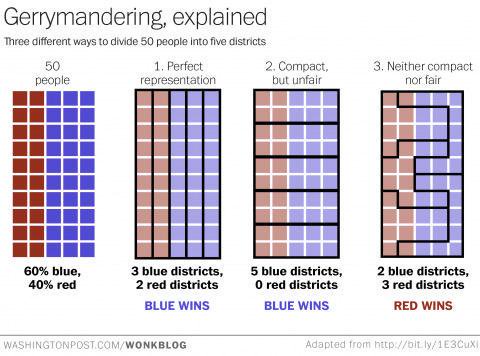
UKIP however, was unable to beat its way through the British fair-seeming (but in fact as good as rigged) “First Past the Post” electoral system at the General Election of 2015. 12.6% of national vote (nearly 4 million votes), but only 1 seat (Carswell’s, at Clacton, Essex). Meanwhile, the BNP vote had collapsed even from its 2010 level (1.9%, 563,743 votes) to effectively zero (1,667 votes).

I myself had already tweeted and blogged from 2014 that UKIP had peaked. I paid virtually no attention to the BNP, which by that time was already yesterday’s news. The 2017 election brought UKIP 1.9%, whereas the BNP bumped along with statistical zero (despite having tripled its individual votes to 4,642).

Douglas Carswell, the “libertarian” Conservative faux-nationalist resigned before UKIP’s 2017 failure to take up lucrative “work” in the City of London. His work with UKIP was done, let us put it that way. As for Farage, he reinvented himself as a touring talking head, while keeping his hand in as a “nationalist” by referring to his concerns about the “US Jewish lobby” (strangely, he failed to mention the Jew lobby in the UK or France…).

Today, in 2018, with neither main System party commanding firm support, we see the System, the Zionists in particular, “concerned” about the “resurgence” of the “far right” (i.e. worried that the British people might awaken and turn to a real alternative).

So what happens? The System “operation” revs up a little: the “Alt-Right” talking heads –who rarely if ever criticize the Jewish Zionist lobby– are now flocking to join UKIP! Milo Yan-whatever-he-is-opolous, “Prison Planet” Watson, “Sargon of Akkad”, “Count Dankula” etc…all the faux-“nationalist” fakes and fuckups are going to UKIP, have in fact gone to UKIP, have all suddenly joined as members of UKIP.

Conclusion

Naturally, all this could be co-incidence, but it is very odd that the events that I have chronicled seem to have happened at just the “right” time:

  • UKIP rising at the same time as the BNP which was, at that time, a rapidly-growing potential threat to the System;
  • Nick Griffin ambushed on BBC TV Question Time;
  • BNP marginalized in msm while UKIP was promoted as a “threat” to LibLabCon;
  • UKIP given endless msm airtime so long as it was “non-racist” (it now has quite a few non-whites as prominent members and is pro-Israel etc…);
  • Conservative Party MPs defecting to UKIP and so (in the absence of any elected UKIP MPs) bound to take leading roles in UKIP and steer it into capitalist, “libertarian” backwaters;
  • as the people look ready to follow any new credible social-national party (were one to emerge a little further down the line), suddenly dead-and-nailed-to-its-perch UKIP gets a boost from those fake “Alt-Right” figures…;
  • Former msm “radical” talking heads such as Paul Mason turn up shouting about the UKIP/Alt-Right convergence as if the SA were marching down Whitehall.

It is just all too convenient.

Still, God moves in mysterious ways. Maybe the System, in its cleverness, will score an “own goal”. After all, that’s what the Okhrana did in pre-revolutionary St. Petersburg…

Notes

https://www.independent.co.uk/news/uk/politics/ukip-alt-right-members-paul-joseph-watson-mark-meechan-carl-benjamin-a8418116.html

https://www.theguardian.com/lifeandstyle/lostinshowbiz/2018/jun/28/neil-hamilton-ukip-supergroup-supremacist-a-team-infowars-breitbart

https://www.newstatesman.com/politics/uk/2018/06/ukip-s-turn-alt-right-warning-sign-we-need-fight-back

https://archive.org/details/storymylifebyfa00gapogoog

https://en.wikipedia.org/wiki/UK_Independence_Party

https://en.wikipedia.org/wiki/British_National_Party

C64bh5XW0AIWYgyhttp://altrightnotright.com/