Category Archives: Reminiscences and Musings

The Political Situation, Social Nationalism and the “Alt-Right”

Preliminary

I write in a condition of profound dissatisfaction with the situation on the broadly nationalist wing of British, European and world politics. Yesterday, someone whom I have only met twice but who has made a favourable impression on me, Jez Turner [Jeremy Bedford-Turner] of the London Forum, was found guilty of incitement to racial hatred under the Public Order Act 1986 after a Crown Court trial, being then sentenced to 12 months imprisonment, meaning that he will be incarcerated for nearly 6 months, all for making a harmless speech about Jews.

Also yesterday, the latest hearing in the Alison Chabloz case took place, legal argument prior to the judgment, which is expected on 25 May.  Most reading this will know that Alison Chabloz is being prosecuted, in effect, for singing songs.

https://alisonchabloz.wordpress.com/

As with the Turner case, that of Alison Chabloz has been promoted by the malicious Jew-Zionist group calling itself the “Campaign Against Anti-Semitism” or “CAA”, which organization has previously (and unsuccessfully) tried to have others, including me (and David Icke, and Al Jazeera TV etc…) prosecuted:

https://ianrmillard.wordpress.com/2017/07/13/when-i-was-a-victim-of-a-malicious-zionist-complaint/

The outcome of the Alison Chabloz trial is of huge importance not only for the future of free speech in terms of socio-political expression, but also in terms of artistic expression. A “guilty” verdict (from the single magistrate) would chill lampooning, making fun of politicians and events and, frankly, would cause the UK to become something pretty close to a police state.

Nick Griffin’s Booklet

I have no particular animus against Nick Griffin (whom I have never met). He did well, alongside Andrew Brons, to get the BNP into the position where it could get two MEPs (Griffin and Brons) elected in 2009, but in my view he underestimated the sheer dishonesty (and determination) of those who opposed him and the BNP. He also seems to have thought that soft-pedalling on the “holocaust” revisionism would mean that the Jew-Zionist element would lay off a little. That was naive, as was assuming that he was invited onto BBC Question Time just like many another guest, when the object of the exercise was to ambush him and trash him and, via him, the BNP.  Having said that, Griffin was one of the outstanding people in a party not over-endowed with the well-educated and reasonably credible.

I mention Griffin here because I was sent, yesterday, a pdf version of a booklet by him:

http://altrightnotright.com/

I found the contents disturbing and challenging. I agreed readily with some of them, indeed the majority; with others, particularly the attack on Jez Turner, I disagreed, though I concede that I am in no special position in terms of inside knowledge.

Griffin’s main arguments against many of the “alt-Right” personalities and entities struck a chord with me. I have from the start been suspicious of any and all “nationalists” who are pro-Israel, loudly “anti-Nazi” (though Griffin himself is guilty of a certain amount of that latter) or who somehow find a way of squaring the circle and reconciling being a “white nationalist” with support for Israel. This pathology is particularly seen in the USA, where it is not seen as odd to be a “nationalist”, a pro-Israel blockhead (“holocaust” belief and all…) and a kind of anti-government “rebel” all in one, mixed in with a bit of Bible study and membership of the National Rifle Association.

Griffin correctly points out the Zionist/System infiltration into nationalism in Europe too: Front National, Geert Wilders etc. In the UK, we have seen the so-called “nationalism” of UKIP and smaller offshoots, of which the one now promoted most widely is the “For Britain” party, headed by an Irish lesbian ex-secretary called Anne Marie Waters. To paraphrase-quote a general in the film Lawrence of Arabia, For Britain is a sideshow of a sideshow, a one-trick pony “party” which has no prospect of mass appeal or electoral success.

Many see the promotion of so-called “kosher nationalists” as a way of diverting the nationalist torrent. My problem with that analysis is that, so far at least, there is no nationalist torrent (in the UK). That may change, but at present the single great fact of British nationalism or, as I prefer, social nationalism, is that its support in the wider population is minimal. Again, that may change: in 1928, the NSDAP received only 2.6% of the national vote in Germany, lower than it had managed several years before; however, by 1932 that vote had become 33% and in 1933 (by which time Hitler was already Chancellor) 44%. In the UK, there have been governments –with working majorities in the House of Commons– which have been elected on less than 30% of the popular vote.

The Alt-Right

I have had no personal contact with the “Alt-Right”, unless there is included my February 2017 talk to the London Forum (which was on YouTube until that organization caved in to Jewish-Zionist pressure and removed the London Forum YouTube channel in its entirety…”long live freedom”…). I find myself in sympathy with much of what Nick Griffin says in his booklet about odd young men with odd lifestyles, swinging (if such be the bon mot) between braindead “libertarianism” and a (sort-of) white nationalism mixed with pro-Israel sympathies. These people set off alarm bells for me. I find it telling that such people are all in favour of “free speech” until it comes to those such as Jez Turner and Alison Chabloz (and me) who are hated by the Jewish Zionists. We are, at best, ignored, even when on trial or in other peril. Big alarm bells…

The Answer

The answer, for me, is straightforward in principle but complex and difficult to put into effect:

  1. A political organization must exist. Voters cannot vote for a party that does not exist. It may be that such a party faces insuperable obstacles in a rigged system, but it must exist. At present, no such party exists;
  2. The social national population must cluster in one or more “safe zone” areas of the UK. I have blogged fairly extensively about this on WordPress.

The present situation is intolerable: Jew-Zionists and “anti-fascists” (often the same) try to shut down even the limited free speech that exists now in the UK. Meanwhile, the major cities are going black-brown, with births to those populations outpacing those to the white northern Europeans. A new way forward must be found.

Some Experiences I Had at the Bar (with reference to a recent book on the justice system in England)

I see that The Secret Barrister: Stories of the Law and How It’s Broken (or, as The Guardian online has it, “Brokem“) is published:

https://www.theguardian.com/books/2018/apr/28/secret-barrister-stories-law-review-justice-system?CMP=share_btn_tw

I have no idea who “Secret Barrister” (apparently a criminal specialist) is; in fact I block him (or her) on Twitter simply because he (or she) seems to be friendly with some Jew-Zionists and others who have proven themselves to be hostile to me. It will be recalled by some that, though I ceased Bar practice in 2008, I was nonetheless disbarred in 2016 (!), after a malicious complaint by a pack of Jews calling themselves “UK Lawyers for Israel”. The main facts can be found here:

https://ianrmillard.wordpress.com/2017/07/09/the-slide-of-the-english-bar-and-uk-society-continues-and-accelerates/

I should add that I have not read the Secret Barrister book.

My Bar pupillage (on-job training year, in my case mostly in 1992), was largely criminal (the rest being mostly civil and public law). Prior to that, I had done –and was only able to do– unpaid “pro bono” work, such as helping an eccentric small publisher to win a libel perpetrated on him by Alexander Solzhenitsyn, the famous Russian author having claimed via innuendo that the plaintiff –now “claimant”– had acted as an agent for the Soviet K.G.B. We won £10,000 and costs; if anyone is interested, the case was Flegon v. Solzhenitsyn and was reported on the front pages of the more serious newspapers.

I did no ordinary criminal cases after the mid-1990s and –as mentioned– ceased Bar practice entirely in 2008, and so have no direct knowledge of the damage done to the justice system in England and Wales by reason of post-2010 “austerity” (that being the subject matter of the Secret Barrister book), but my observations more generally may be of interest.

When I was at the “Bar School” (the Inns of Court School of Law in Gray’s Inn, at the time the only place where the academic part of Bar training, culminating in the Bar Finals Exam, could be undertaken), the legal scene in London was vibrant. The pre-recession late 1980s saw major newspapers ( Times and Independent especially) carrying dozens of display ads weekly for lawyers of all types and levels of seniority. In the private salaried realm, pay for employed lawyers went from perhaps £25,000 for very junior to £100,000 and even £200,000. I knew a Bar student who needed to get a salaried job on Call to the Bar. The Crown Prosecution Service, founded only in 1986, offered him £26,000 a year as starting salary, quite good by the standards of many non-legal employees at the time. I have no specific knowledge about the salary which his equivalent might be offered today, but I doubt that it is much more, despite inflation in the succeeding 30 years.

As to those I knew who went on into private Bar practice, I followed their progress from afar, mostly from the USA. One got into criminal chambers doing fairly heavy criminal (including white collar) crime: fraud, armed robbery, serious violence. The frauds paid especially well and my friend was, by the early 1990s, making well over £100,000 a year as junior Counsel often led by a “silk” (QC). This was, to me, a stunning amount paid to a young man in his mid twenties from a no more than average academic background (a comprehensive school in the North of England, then a law degree from a provincial university) to be making, but in his milieu it was just accepted as the norm. I mention all that because it was at that time that the newspapers started to report on the amounts some barristers were making from legal aid fees. Indeed, it was about then, or not very many years later, that a handful of barristers paid via legal aid were starting to break through the million-pounds-a-year barrier.

As to others I knew, they were doing well too: an appearance in the Mags (magistrates’ court) might only pay a couple of hundred pounds, but that has to be set against the fact that many “ordinary people” were paid that much, or less, for a week of work, as opposed to what might well be, in terms of time in court (leaving aside preparation, waiting, travel) only half an hour or less in some small magistrates’ cases. I joined the throng in 1993 and, though scarcely in the stellar league (much at the Bar depends on the quality of the chambers you are in; chambers supply almost all of your work), made a reasonable living, anyway. I do recall one brief I had, an “old-style” committal for trial in a modestly-large multi-handed (7 or 8 defendants) cheque fraud case, at City of London Mags. It went on for a few days and I remember even now that my fee for that was £5,000, which for me at the time was a windfall very gratefully received (it could not happen now and of course I recall it mainly because of its rarity. I did not get the expected £20,000-£40,000 Old Bailey trial, because the Nigerian solicitor gave “my” trial to a recently-Called young Nigerian woman barrister who just happened to be a daughter of his friend…but that’s another story).

Scroll on a decade or so to the years before the Conservative Party victory of 2010. I had made my last appearance in court in late 2007 and since my return to the practising Bar in 2002 had done only privately-paid civil work, no criminal (except for the odd regulatory violation committed by large companies); in fact, before mid-2002, I had also spent years overseas in various parts of the world, from the Caribbean to Kazakhstan. During that time, legally-aided Bar fees in England had generally not kept pace with inflation. For example, back in about 1993 I had appeared on a Mention at a Crown Court, this being more or less what it sounds like: the matter (an upcoming trial) is listed for Mention, the judge examines any issues arising and makes any directions necessary, then it finishes, about 5 minutes or ten minutes after it started. A silly thing and it paid £46. I heard some time ago that, 25 years later, the fee is still less than £50! It is said that the same is true of many fees for both criminal and family work that is legally-aided.

Apparently, somewhere around 258 courts have actually closed in the past 8 years. This means that parties often have to trek quite far to their cases. Some people are poor, cannot afford fares and may not have a car. Unjust in itself.

It was in the fake “austerity” atmosphere after 2010 (which in fact started before 2010, under the equally “ZOG” Gordon Brown government) that the Jew-Zionist “Conservative” MP Jonathan Djanogly commented, as Parliamentary Under-Secretary (a junior government post for an MP), that the UK justice system was “the most generous in the world” [https://en.wikipedia.org/wiki/Jonathan_Djanoglyhttps://en.wikipedia.org/wiki/Jonathan_Djanogly]. This laid the ground for the Ministry of Justice becoming a prime target for “austerity” cuts. Djanogly himself left government in 2012 and his political career seems to have stalled, probably permanently.

I want to be clear. I have little sympathy for the Bar, meaning barristers, as such (and less for solicitors). I think that those who made good and often very good livings out of legally-aided work (criminal, family and other) were lucky when compared to many people in the UK who work at hard, boring, maybe dirty jobs, often for a pittance. Many at the Bar still are fortunate. Having said that, any decent public service or arm needs to be properly funded, whether it be the Army, Navy, Air Force, SIS, NHS or Ministry of Justice. There are arguments to be had about some aspects of MoJ funding, as about priorities too, but as the book in question seems to be saying (from reviews seen), the justice system (and that includes prisons, probation, forensic science etc, as well as courts and legal services) is now under very serious strain.

July 2018

Since I wrote the above, The Guardian amended its article and, inter alia, cured its spelling error.

The Rise and Fall of the Pseuds

From 2005 through to 2008, I worked as a practising barrister in England, but spent about half my time in Brittany, commuting on a twice or thrice-monthly basis by sea and air. I did not keep in close touch with UK political affairs. I used my TV in France only for DVDs and videos and had no Sky service. The brief triumph of BNP candidates Nick Griffin and Andrew Brons in the European elections was heard by me via BBC World Service and Radio 4 (which can usually be picked up on or near the coast).

In mid-2009, having given up Bar practice in early 2008, I returned to the UK. I started to take great interest in British political life. One aspect surprised me particularly: the rise to –brief– prominence of persons whose connection to politics was slight. Not so much “commentators” (their usual self-styling) as pseudo-commentators and pseudo-“activists”. One of these was a young woman called Alexandra Swann (on Twitter, @alexandralswann, not to be confused with @alexandraswann, an American blogger). She was (for her “15 minutes of fame”) a UKIP spokesperson:

https://www.youtube.com/watch?v=bXEI9-DxJlM

and the msm started to take an interest in her. For a few months she seemed to be on TV constantly, pontificating (albeit risibly) on social welfare, employment, all sorts of things. UKIP gave her 10 minutes in which to speak at its 2012 Conference:

The Guardian –of all outlets!– gave Alexandra Swann op-ed space, calling her “the new face of UKIP”. She was also called, by others,”the future face of UK politics”!

https://www.theguardian.com/commentisfree/2012/mar/06/leaving-tories-ukip-alexandra-swann

In fact, she described herself as “libertarian” and had been an office-holder at one time in “Conservative Future”, the more or less defunct Con youth wing (the Scottish section even had to cancel its conference, when only 6 people applied for tickets!). Like so many youthful “libertarians” (she was 23 years old in 2012), she had a wealthy father to help her out should she be unable to stand on her own two feet in the approved Ayn Rand manner. Indeed, she was, at the time, still a student, working on a politics-oriented PhD at Sussex.

In fact, it was around that time that UKIP started to split internally between the members who were basically pseudo-nationalist Conservatives (fiscal Conservatives who were anti-mass immigration) and the more social-national UKIPpers who might (and did, briefly) appeal to voters in the Labour heartlands of the North.

Two years later, Alexandra Swann had left UKIP:

https://www.independent.co.uk/news/uk/politics/rising-ukip-star-alexandra-swann-protests-her-own-partys-stance-on-immigration-9244746.html

She was so politically-unaware that she thought that UKIP should ditch its anti-immigration stance and become a party of Ayn Rand “libertarians” (liberty for the wealthy and austerity/repression for the poor, as I see it). She was not alone in holding such attitudes: some who held elected positions were not far from her in this; one could mention Daniel Hannan MEP, Douglas Carswell MP etc as “fiscally conservative, socially-liberal”. Those far more seasoned (not to say educated and intelligent) figures likewise at least pretended to think that a “small-state” national conservatism could be popular. Needless to say, the idea is anathema to me.

Since that time, Alexandra Swann has retreated into private life and (her tweets have recounted) has even had a job or two, as well as becoming, presumably on a small scale (via family money? I do not know, but how else?), a buy-to-let parasite or “residential real estate investor” if you prefer. I should add that the lady blocks me on Twitter, though I have never tweeted to her. She must have disagreed with a tweet of mine which was critical of her smug “entitled” attitudes…

What I am writing about here is not this one now-obscure person, Alexandra Swann, as such (she was, in the end, too silly and inconsistent a figure to be taken seriously even in Britain’s decadent political/msm milieu), but as a symptom of a time when the mainstream media promoted almost anyone, especially those thought to be travelling along the “welfare reform”, “austerity” line. A pretty face and youth helped but were not essential. There were others after 2010 who were trying to become media talking heads and/or political stars. Some even became MPs.

There was Louise Mensch, who caught the wave early. David Cameron-Levita-Schlumberger placed her on the “A” List, as a result of which she was briefly an MP, though she resigned for “personal reasons” later, by which time various stories about her behaviour had surfaced, not least the fact that (as she admitted), “hard drugs” had “messed with” her brain…

LouiseMenschDrugging

Louise Mensch could be seen on TV constantly in 2010-2011, supporting the evil policies of the “Conservative” government of Cameron-Levita (and not only on Sky News, but Newsnight, at the time still a programme of some weight).

Since her resignation as MP, Louise Mensch has tried and failed at various commercial social media and Internet activities and was for a few years a columnist for the Sun “newspaper”, until she “left” in 2017. I always wondered why Murdoch paid her (assuming that it was a paid job). It seemed bizarre that a woman who constantly gets basic facts wrong could be a columnist even for the Sun. She still tweets, though: prolifically and sometimes –though unwittingly– funnily. She blocks me on Twitter…

I should add that Louise Mensch has been gunning for me for years on Twitter and elsehow. She loved it when the Jew Zionists managed to get me disbarred in 2016 (I suppose that she thought that I was still in practice and that I would suffer as a consequence) and (together with or parallel to the same Zionists) tweeted directly to me that she was going to get me chucked out of the New York Bar too. She is married to a wealthy Jew. Her desire to extract the “pound of flesh” from me was patent!

For the record, the New York Bar does not police its members’ opinions on politics (there’s this thing called the U.S. Constitution…) and I never heard anything more about the complaint by Louise Mensch against me (if it was ever made) or that supposedly made by some London Jews (eg one Goldberg QC, who threatened me with the same in the newspapers). In fact, I have never practised in New York anyway, and whether I belong to the NY Bar is a matter of supreme unconcern to me.

There were many others around 2010 (in fact from 2009) and in the succeeding years who were to be seen on Sky News and BBC News newspaper reviews, on Question Time and BBC Daily Politics. Some found niche positions in small publications or online, but most have almost faded from view. One is the egregious Caroline Criado-Perez. Like several others of the type now under discussion, she seems to have come from a rather wealthy background, so it scarcely matters to her from an everyday point of view that she dropped out of university in the first year. Her Wikipedia entry –pretty obviously mainly drafted by her– mentions her “working in digital marketing for several years”…well, it may be true…(ha).

It seems that some silly and malicious people emailed or tweeted to Caroline Criado-Perez in a threatening way (three were even convicted), allowing her to claim a kind of pseudo-martyr status for a while. I personally have no objection at all to women of note (no pun intended) being depicted on paper money, but to agitate for that (which had already been done anyway) hardly counts as a career…

Caroline Criado-Perez had an OBE bestowed upon her by David Cameron-Levita for her “activism” in getting Jane Austen on a banknote (though Elizabeth Fry had been on banknotes for years). She has now agitated for a statue of a Suffragist in Parliament Square. She still seems to regard herself as a kind of full-time or other “activist” though her Wikipedia entry says that in 2013 she was “in process of completing” a Master’s degree in Gender Studies. Roll over,  Einstein! I have no idea whether she will now get a CBE for having asked that a statue be erected; maybe not.

I have never tweeted to Caroline Criado-Perez, but she must have seen me criticize her on Twitter or, more likely, not take her seriously on Twitter, because she too blocks me…I have only seen her a couple of times on TV and she seems quite pleasant in her interview manner, but “pleasant” alone just does not cut it in these times. She is a one-trick pony who is just not at all interesting.

What strikes me about the three women above is how adept, at least initially, they were at self-promotion. Also, how, in the end, self-promotion is not enough. 2010 and 2012 were different to 2018. Times are becoming serious. Yes, you could get on TV shows if you were a pretty girl willing to address (however shallowly) important issues; yes, you could maybe become an MP if you had the right help and image; yes, you could get an OBE for something like demanding that a certain type of person be put on a banknote. However, that’s where it finishes. The pretence of gravity is not the same, ultimately, as gravity. If you are shallow, or ignorant, or a one-trick pony, the more serious times will not carry you along but will dump you as irrelevant.

My intention in writing the above was not to criticize those mentioned but to characterize a time, a time that is pretty much gone now. The new time demands serious people with the ability to think and act seriously. This is no longer the time of the dilettante.

Later Note

[Louise] Mensch is diagnosed with attention deficit hyperactivity disorder, which made her realise she was “self medicating” with wine for stress….[103] She has also commented, on BBC Question Time during a debate on calls to decriminalise hard drugs, about taking hard drugs in her 20s; she subsequently told the press: “It is something that I regret incredibly, that, in my youth, I messed with my brain. I said ‘we all do stupid things when we are young’. It’s had long-term mental health effects on me.”

[Wikipedia]

Update, 25 January 2020

Nearly two years have passed since I wrote the above. The times have indeed become serious, but I have been astonished to note that System politics has founds niches for dilettantes almost as absurd as the three mentioned in the article. The Prime Minister is now Boris-idiot, dilettante sans pareil, and his top adviser is Dominic Cummings, another dilettante, who has asked that “weirdos and misfits” apply to “reform” the Civil Service. 35,000 have, we are told, applied. The UK is now going down so fast that it is dizzying.

Labour? Same: Jess Phillips for one, tipped (incredibly) as leader at some point (I doubt it, not if Labour is going to survive).

Update, 17 March 2023

None of the three women mentioned has come back into prominence, except that Louise Mensch has continued to tweet complete rubbish (including anti-Russia propaganda); she has been dumped by her now ex-husband, a wealthy American Jew; she still, it seems, lives in New York. As far as I can see, her tweets about me from years ago have all been deleted, and I myself was expelled from Twitter in 2018 after a long campaign by a pack of Jews.

Use and Abuse of the UK Welfare State

I am in favour of the Welfare State, in principle, but that just begs the question. Even the Iain Dunce Duncan Smiths and Esther McVeys of this world go that far, at least in public utterances. The devil really is in the detail here.

The famous economist, Milton Friedman, once said that you can have open borders, and you can have a welfare state, but you cannot have both. That it is even necessary to posit that shows how far the more socialist-minded people in the UK (and elsewhere in Northern Europe) have travelled from reality. Many “refugees welcome” dimwits actually believe that an almost endless number of “refugees” or others can enter the UK without affecting State benefits and services (as well as road and rail congestion etc). This seems to be based on the idea that the immigrants will work, pay taxes, in short become normal citizens or quasi-citizens. Angela Merkel thought the same, only to find that most “refugees” were

  • incapable of any but the most basic work (such as fruit-picking) because of their linguistic and/or educational levels;
  • unwilling, in many cases, to work, in a situation where the State provides free accommodation, free utilities, free transport for some, free food for some, as well as pocket money on quite a generous level.

CgFqWSRXEAICTlz

The UK does not provide social security (or, in our new Americanized speech, “welfare”) benefits on the generous scale offered by Germany or Scandinavia etc, but the fundamentals are similar.

A personal story: when I was much much younger, in my early twenties, I became acquainted, via a lady I then knew, with a friend of hers (more accurately a woman who had attached herself to her like a limpet). Now this other woman was not British in any sense except that she had married a New Zealander who had (presumably because taken there from the UK as a child) a British passport. The woman was in fact a Jewess from Moscow, who had somehow got to know the New Zealander while he was on a holiday trip to the Soviet Union. We need not examine motives and reasons, but that couple married and went to live in New Zealand. They had two children. After about four or five years, the woman left her husband, left New Zealand and flew to the UK.

When I met the woman in question, I believe that she had been in the UK for a couple of years. She washed-up in Downham, an obscure suburb in South-East London, where the local council provided her with a council flat. I have no exact idea of what other benefits she was granted, but they would have included child benefit and some form of income support. She never had to work, though at first she did a couple of evenings a week teaching Russian at some place or other which I forget (possibly Morley College in Westminster Bridge Road, or the City Literary Institute in Drury Lane, both of which adult education centres I myself frequented at the time).

Scroll on a few years. This “Russian” Jewish woman, with no real connection to the UK at all had been given a quite decent house with gardens in Grove Park, a better part of the same borough. She had been impelled to move, apparently, by a visit from her father, a nuclear scientist (which sounds impressive, but the Soviet Union had legions of them) who had told her that she would have a better flat were she to return to Moscow! Of course, there she would have had to work…anyway, I visited the new house once (out of duty rather than choice)  and so saw it, despite being not much liked by the woman. The woman had been diagnosed with a kidney complaint (though I never saw her looking unwell) and so no doubt managed to claim some form of incapacity or disability benefit; and had also acquired a car (almost certainly also funded by the State). In addition to all of that, the woman and her children also had all the usual UK benefits of free education and health. I do not think that she bothered to do much work after that, maybe a little part-time teaching or occasional low-level interpreting.

Now it might be said, perhaps especially by people more naturally drawn to socialism than capitalism, that she was entitled to these things because lawfully resident in the UK. Perhaps, but look at it from the wider point of view: she had never contributed anything to the UK, just taken. The small part-time jobs here and there can be discounted as having been de minimis. She leeched off the UK’s people since about 1979 and, the last I heard (a couple of years ago), that situation remained unchanged, probably to this day. In fact, she would now be “entitled” to a State pension and Pension Credit. Call it 40 years of being a millstone round the neck of the British Welfare State.

Now multiply the above by millions, the millions of often completely useless people from the backward hordes imported into the UK for decades. For example, it is reported that only 20% of the huge numbers of Somalis in the UK (how? why?) are employed at all.

I repeat, I do favour a decent Welfare State, but it can only exist if

a. the economy can support it;

b. it is not swamped.

The above two conditions really come down to the same thing now, or very nearly so.

For me, the answer to the work and income challenges of robotics, computerization, Internet shopping, AI etc is the Basic Income concept, but Basic Income, like the existing Welfare State, will decline and may fail unless it is restricted to those who are at the very least, genuine citizens.

ClVU6MSWgAAmfK6


What’s in a Name?

Religious and occult literature is replete with learned disquisitions about the sacred power of the Name. We see that, in Genesis, the Bible itself starts with the words “In the beginning was the Word, and the Word was with God, and the Word was God.” In the New Testament, this theme is continued. Jesus Christ renamed some people who had “come over to him”, such as Peter. Others, later, renamed themselves, to mark their “ideological” or spiritual transformation, as when Saul became Paul after his experience on the road to Damascus.

In Rome, Octavius becomes the Emperor Augustus or Caesar Augustus eventually (the style Augustus Princeps was bestowed upon him by the Senate of Rome in 27 B.C., when he was 35).

In early mediaeval Spain, Rodrigo Díaz de Vivar is given the name El Cid (from the Arabic for “lord”, sidi) to crown his mission. Likewise, in the Christian monastic tradition, the postulant chooses or is given a new name, often one referencing a deceased saint. The same is true of religious leaders such as bishops, metropolitans, popes etc. Gandhi is called Mahatma Gandhi, same surname but elevated by the new forename.

In literature, we see that the hero who fights perceived evil, particularly if doing so covertly, takes a new name, a nom de guerre: the Scarlet Pimpernel was an early example, followed by many another, right up to the “superheroes” of the 20th and 21st centuries: Superman, Batman, Spiderman etc.

In the field of espionage too, we see that sometimes a secret agent who becomes a known character is given or takes a name: the White Rabbit, the Welshman etc. Mata Hari…

Politically, the same applies: the anarchist Bruno Traven (itself a pseudonym) was known in early 1920s Germany as der Ziegelbrenner (“the Brickburner”). Better known were the noms de guerre of the Bolshevik leadership: Lenin (V.I Ulyanov), from the river Lena; Stalin (I.V. –or JV– Djugashvili), from “steel”, Trotsky (L.D. Bronstein), a Russification or Polonization of the original Jewish (Yiddish/German-style) name. In fact, most Bolshevik leaders took on longlasting pseudonyms, in a macabre aping of those old religious orders: Scriabin became Molotov (from molot, “hammer”), though he was a rare real ethnic Russian. Most of the Bolsheviks who changed name did so partly to disguise their otherwise all-too-obvious Jewish identity. Having said that, the new names of the leaders also often spelled out the new strong self-image: “Steel”, “Hammer” etc. [Stalin and Molotov were among the few non-Jews].

Though German National Socialists were not generally given to changing name and in fact disapproved on principle, some did so temporarily, while on the run or on special missions. Hitler himself used the nom de guerre “Wolf”, Herr Wolf”, and “Herr Doktor Wolf” while evading State agents in Munich after the failure of the Beer Hall Putsch of 1923. Hitler himself did often say that it was fortuitous that his name was Hitler and not, as it perhaps might have been, Schicklgruber

[https://en.wikipedia.org/wiki/Adolf_Hitler#Ancestry].

“Heil Sch…!” you get my meaning. Names are important. Many a showbusiness personality has achieved fame and fortune only after changing name. Beyond even that, the use of “transformational vocabulary” can change, with the name, the sense, the sense of mission or purpose. Thus, the U.S. combined operation “Desert Shield” of 1990 became “Desert Storm” of 1991, as defence turned to attack.

The use of a particular name for a political party or group can energize it and make it stand out: En Marche!, le Front National, the Angry Brigade, Leave and so on.

An allied aspect is that of the Invocation, a word or form of words designed to link the material with the spiritual, to send up prayer or supplication, and to bring down power to the Earth. “Heil!” is an obvious example. “Heil Hitler!” which eventually (in just a few years) replaced the likes of “Good day” and “goodbye” in, at least official, Germany. Hitler’s speeches are often very well-written, erudite, informed, but the power of Hitler’s oratory was not founded on its content, but on something above and beyond content. Yet that still required words as a basis.

When we consider how to pull the UK and Europe out of the mess into which it is sliding, we must consider the sacred power of the Word and use it.

Notes

https://en.wikipedia.org/wiki/Trotsky_(surname)

Taking the Whole Package

This evening, I watched a show called something like “The Real Marigold Hotel”, in which four elderly once-“celebrities” went to a country (in this case, Cuba) in order to see what facilities might be available for retired people. As such, as a “documentary”, it was very superficial and lacking depth, though entertaining. What interested me was the society in general.

The Cuba –actually just Havana– shown (and I have never been there, though I am quite well acquainted with its history of the past century and, in the manner of Sarah Palin, have glimpsed it from the air and from the sea) was in fact largely the stereotype: old American cars in pastel pink and blue, decrepit but charming colonial mansions, palm trees etc.

The old people went to cultural classes and talked to Cubans in parks. It struck me anew that any society is a package: Cuba has some culture (both European and its own mixture incorporating the Caribbean and African, as well as that of the USA.

The Havana shown was one where the parks were (on the face of it) safe to visit, the people well-educated (one or two Cubans carefully making the point that their good education had been free, as were the classes available to the elderly).

Most people know that the Cuban healthcare system is also very good, both in relative and absolute terms. On the other hand, and as the TV programme noted, the Internet is tightly controlled, requires a card (no doubt traceable..) and is mostly only available in “wi-fi” areas such as certain parks; not so many have home Internet connection.

It is perhaps pointless to reiterate what most of us know in terms of the Cuban police state (which –in all the documentary films I have ever seen– is so pervasive that it is invisible: you never see the hand of the State in plain sight, though it is there all right).

So there you have the Cuban package: low crime rate (supposedly), no obvious disorder, at least some rather polite, cultured citizens, good education and healthcare etc (one Cuban did say that it was better before the supportive Soviet Union collapsed), as well as a certain charm.

As against that, a socialist state which controls the news and Internet tightly, imprisons dissidents for years (not to mention the large number who, in the late 1950s and 1960s, were just shot); a socialized economy which (leaving aside the effect of American embargo) was and largely is hopelessly inefficient at providing consumer goods. Travel restrictions, too.

Let us take a different case. The German Reich in the 1930s was intolerant of dissidents too, though it was far more tolerant than was the Soviet Union under Stalin or, indeed, Cuba under Fidel.

The National Socialist state imprisoned some dissidents or placed them in concentration camps such as Dachau (though few now know that many served short sentences, such as 3 months, there, and were not there indefinitely). Others were encouraged or more or less forced out of the country. There was a generally militarized ethos. How could a state both German and quasi-socialist be anything else?

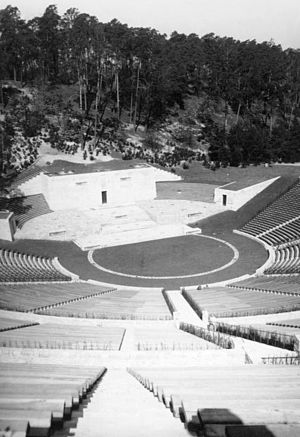
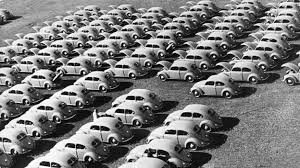
In the Reich, there was state interference in culture (though, again, far less than, say, in the Soviet Union). Consumer production was given a lower priority than rearmament (“Guns Before Butter”), though large projects for the benefit of the people were also pushed into the foreground: the Autobahnen; the VW “people’s car”; the 1936 Olympics; a huge programme of educational and cultural events; the Kraft durch Freude [“Strength through Joy”] programme of Canary Islands cruises and Baltic beach holidays for the people (at a time when, in the UK, most people who had a holiday at all were corralled into poky Blackpool guest houses…); better nutrition for young people, too.

The National Socialist Reich was hugely beneficial for most Germans, certainly compared to what existed in the Weimar period. The Reich solved the inflation problem, the unemployment problem, the decadence problem and, yes, what it termed “the Jewish question”.

In the UK at the same time, there was greater ostensible “freedom”: elections every 5 years, the freedom to eat daily at the Ritz or at the Savoy Grill (if one had the funds..), no obvious book censorship (though, behind the scenes, there was much, not least via the Jewish element, even then). There was official theatre and cinema censorship (via the Lord Chamberlain’s office) and there was also, of course, grinding poverty (especially outside the South East), and a very repressive justice and prison system; not to mention the pervasive class system and its inequities.

No state, no political system is “perfect”. All have flaws, and all (most, at least) have benefits (though what might be the benefits of living in, say, North Korea or the Congo might be disputed). The aim can only be to do the best with what is available at the material time. We take everything as a package, as a whole.

Thoughts about Bitcoin

First Remarks

I am not an economist; neither am I, at least in terms of occupation and/or formal training, an historian. I say that from the outset simply because it may be objected that, especially in terms of economics, I have no intellectual locus standi, despite the fact that most predictions made by economists turn out to be inaccurate. Also, “two economists, three opinions”…

Bitcoin

So, Bitcoin. Bitcoin was invented in 2008, possibly in Japan, by someone (or a group) whose provenance and even real name or names remain unknown:

https://en.wikipedia.org/wiki/Bitcoin

What is Money, in any case?

Money is an almost metaphysical thing. Different societies have used seashells, precious metals etc as money, the key characteristic being the relative rarity of the commodity used. In China (in the 7th Century under the Tang dynasty), paper currency was invented, and later more widely introduced in the 11th Century (Song Dynasty), where it was encountered by Marco Polo and others, who introduced the idea to Europe.

https://en.wikipedia.org/wiki/Banknote

Paper currency was, at first and for a long time, backed or notionally backed by precious metals, notably gold. Paper money only became generally acceptable in Europe a thousand years after its invention in China. The natural scepticism of the people was overcome both by its convenience and by its credibility, that credibility not only bolstered by its supposed convertability into gold or silver but also by the draconian penalties visited upon those who counterfeited the notes.

These factors underpin all money, credibility or popular belief in its value being the core.

Speculative Bubbles

One could go wider and say that credibility and belief underpin all valuation of assets, whether money assets, real property or other property in which the population is impelled to invest. Time and again there have been speculative bubbles: in currencies, in shares, in housing, in undeveloped land, in metals and even in such things as tulip bulbs (17thC Holland).

A good history of these bubbles and other mass events of the sort was penned in 1841 after the South Sea Bubble and was reprinted after the Wall Street Crash of 1929: Extraordinary Popular Delusions and the Madness of Crowds (and reprinted since, eg in the early 1980s)..

https://en.wikipedia.org/wiki/Extraordinary_Popular_Delusions_and_the_Madness_of_Crowds

Since that book came out, since its 1930s reprinting, other bubbles have come and gone. Among the more noteworthy was the “Silver Bears” bubble of the 1970s

https://en.wikipedia.org/wiki/Silver_Thursday

and also many and various real property bubbles across the world.

Bitcoin Goes Viral

At first, back in 2008, Bitcoin was valueless, worth nothing at all. It was just electrical impulses on a machine, effectively. It was still of small value three years later:

“The price of bitcoins has gone through various cycles of appreciation and depreciation referred to by some as bubbles and busts.[129][130] In 2011, the value of one bitcoin rapidly rose from about US$0.30 to US$32 before returning to US$2.[131] In the latter half of 2012 and during the 2012–13 Cypriot financial crisis, the bitcoin price began to rise,[132]reaching a high of US$266 on 10 April 2013, before crashing to around US$50.[133] On 29 November 2013, the cost of one bitcoin rose to a peak of US$1,242.[134] In 2014, the price fell sharply, and as of April remained depressed at little more than half 2013 prices. As of August 2014 it was under US$600.” [Wikipedia]

Wikipedia continues:

“Ponzi scheme and pyramid scheme concerns

Various journalists,[79][144] economists,[145][146] and the central bank of Estonia[147] have voiced concerns that bitcoin is a Ponzi scheme. In 2013, Eric Posner, a law professor at the University of Chicago, stated that “a real Ponzi scheme takes fraud; bitcoin, by contrast, seems more like a collective delusion.”[148] A 2014 report by the World Bank concluded that bitcoin was not a ‘deliberate’ Ponzi scheme, but that it did thus far meet the “standard definition of a speculative bubble”.[149]:7 The Swiss Federal Council[150]:21 examined the concerns that bitcoin might be a pyramid scheme; it concluded that “Since in the case of bitcoin the typical promises of profits are lacking, it cannot be assumed that bitcoin is a pyramid scheme.” In July 2017, billionaire Howard Marks referred to bitcoin as a pyramid scheme.[151]

On 12 September 2017, Jamie Dimon, CEO of JP Morgan Chase, called bitcoin a “fraud” and said he would fire anyone in his firm caught trading it. Zero Hedge claimed that the same day Dimon made his statement, JP Morgan also purchased a large amount of bitcoins for its clients.[152]

Speculative bubble dispute

Bitcoin has been labelled a speculative bubble by many including former Fed Chairman Alan Greenspan[153] and economist John Quiggin.[154] Nobel Memorial Prize laureate Robert Shiller said that bitcoin “exhibited many of the characteristics of a speculative bubble”.[155] Journalist Matthew Boesler in 2013 rejected the speculative bubble label and saw bitcoin’s quick rise in price as nothing more than normal economic forces at work.[156] Timothy B. Lee, in a 2013 piece for The Washington Post pointed out that the observed cycles of appreciation and depreciation don’t correspond to the definition of speculative bubble.[131] On 14 March 2014, the American business magnate Warren Buffett said, “Stay away from it. It’s a mirage, basically.”[157]

Two lead software developers of bitcoin, Gavin Andresen[158] and Mike Hearn,[159] have warned that bubbles may occur. David Andolfatto, a vice president at the Federal Reserve Bank of St. Louis, stated, “Is bitcoin a bubble? Yes, if bubble is defined as a liquidity premium.” According to Andolfatto, the price of bitcoin “consists purely of a bubble,” but he concedes that many assets “have bubble component to their price”.[53]:21 Speculation in bitcoin has been compared to the tulip mania of seventeenth-century Holland. Comparisons have been made by the vice-president of the European Central Bank, Vítor Constâncio, by JPMorgan Chase chief Jamie Dimon,[160] by hedge fund manager Ken Griffin of Citadel,[161] and by former president of the Dutch Central Bank, Nout Wellink.[162] In 2013, Wellink remarked, “This is worse than the tulip mania […] At least then you got a tulip [at the end], now you get nothing.”[163] On 13 September 2017, Jamie Dimon compared bitcoin to a bubble, saying it was only useful for drug dealers and countries like North Korea.[164] On 22 September 2017, a hedge fund named Blockswater subsequently accused JP Morgan of market manipulation and filed a market abuse complaint with Financial Supervisory Authority (Sweden).[165]

The Guardian, CNBC, Forbes and Evening Standard compared bitcoin to bubbles such as the South Sea Bubble, the Wall Street Crash, the sub-prime mortgage crisis and the Dot-com bubble.” [Wikipedia]

Current Situation

Bitcoin started to reach escape velocity in late 2016, going from hundreds of U.S. dollars to thousands. At time of writing (December 2017), a single Bitcoin is valued at over $14,000 [USD], or £10,500 [Pounds Sterling]. People who “invested” less than £100 several years ago have seen their stock suddenly rise to be “worth” as much as £100,000. Those who have risked more (in some cases a million pounds or more) now find themselves in theory able to buy small or even medium-size nation-states lock, stock and barrel.

What Do We Know About Bitcoin?

  • Bitcoin’s origins are obscure, to the extent that journalists and others have researched, investigated and written about the names of possible founders and organizers without having come to a definite conclusion;
  • Bitcoin is almost useless as a popular currency: its explosion in “value” has made it unusable for any transaction not involving, at the least, tens of thousands of pounds;
  • Bitcoin, though supposedly limited in overall amount or number, has seen security breaches which, at the push of a button (putting it simply), have at least briefly increased the supply of Bitcoin.

Conclusion

Bitcoin is a classic speculative bubble or, alternatively and perhaps even better put, pyramid scheme. The people who got in early and stayed in are sitting on mirage-fortunes; those who have “invested” more recently will probably lose everything they put in. At the moment of writing, Bitcoin is probably nearing its peak. When it starts to fall rapidly, the panic will probably wipe it out entirely.

The surely inevitable collapse of Bitcoin will take down more than just Bitcoin itself. It may affect the stability of the economy more generally. Beyond that, if (as Bitcoin proponents and/or “investors” say–and their anger at any criticism is perhaps born of subconscious desperation), Bitcoin is as “credible” as any “ordinary” currency (and that is Bitcoin’s strongest point), then the upcoming crash of Bitcoin could take with it much public confidence in the value of the world’s major currencies too. Our major currencies are no longer backed by gold or silver and have only the value we put upon them. We exchange stones for bread. Our currencies are themselves castles in the air and “such things as dreams are made on”.

We recall the hyperinflation of early 1920s Germany, and I myself saw, on several visits to 1980s Poland, how the slide of the zloty affected that country politically and socially. The fate of Bitcoin is not just about Bitcoin.

Update, 23 November 2018

https://www.independent.co.uk/life-style/gadgets-and-tech/news/bitcoin-price-crash-cryptocurrency-mining-bankrupt-china-bitmain-giga-watt-a8646821.html

Update, 18 February 2019

The course of Bitcoin trading in 2017 is examined (below)

https://www.coindesk.com/900-20000-bitcoins-historic-2017-price-run-revisited

At the time of writing of my own 2017 blog article, a single Bitcoin was “worth”, i.e, valued at, about £10,500 pounds sterling. At time of writing today, 1 Bitcoin is worth just over £2,853 pounds sterling, somewhat above a quarter of the former figure, and only about a sixth of the 2017 peak.

Update, 19 November 2020

I update my post purely because, in the uncertain conditions of 2020, I see that the article is receiving more hits. Sign of the times?

I have nothing to add to the article itself, but as of today, Bitcoin is trading at just under £13,398 (pound sterling) and at USD $17,730.

Update, 26 November 2020

Update, 20 February 2021

Radio 4 Today interviewed an expert in cryptocurrencies, who himself has made tens of millions of pounds from them. He expects a crash. I expected one three years ago. Never happened, though the value did plummet before recovering and climbing further.

As of today, 20th February 2021, 1 Bitcoin is valued at not far short of £40,000!

I notice that Alison Chabloz accepts Bitcoin donations; I hope that she got some before the price rocketed, and still has them. If so, she may have a windfall. https://alisonchabloz.com/how-to-donate/

Update, 8 September 2021

Today, Bitcoin recovered from USD $44,000 to USD $46,000 after having fallen from USD $52,500. An indication of the underlying volatility.

All the same, I am wondering whether, so far from being somehow “anti” the international money system, Bitcoin might not in reality be controlled by it…

Certainly, the genesis of Bitcoin has the feeling of “legend” (in either sense) about it (supposedly created by a Japanese whose identity has never been confirmed. Perhaps…).

Update, 14 December 2021

Update, 14 June 2022

14 June 2022 saw Bitcoin at around USD $22,000.

Update, 20 July 2022

https://www.bbc.co.uk/news/business-62246367

Update, 18 July 2024

Well, I have to admit that my 2017 prediction of a Bitcoin collapse was, though accurate-seeming in 2019 (when the price dropped to a mere sixth of its 2017 peak) wrong in terms of its later rise.

Incredibly, as of today, the price of 1 Bitcoin is £49,700 (Pound Sterling) or USD $64,627!

There is now renewed fevered speculation about the trajectory Bitcoin might take: https://cointelegraph.com/news/analysts-forecast-200k-bitcoin-price-after-btc-s-bullish-momentum-returns.

I can only suppose that the surge in “value” (rather, in price) of Bitcoin reflects the world situation, the instability of the world economy, and therefore the instability of world traditional currencies.

Gold is also at a record high at present.

All the same, if there were a major war, a world war (a fortiori, a nuclear war), and assuming that any human society and economy were to survive, Bitcoin would probably disappear in a flash (literally), as the Internet is destroyed, taking Bitcoin with it.

Human paper currencies would also disappear, at least for a while, in that scenario, but gold would still hold at least some value, presumably. At least you can hold a lump of gold in your hand, or put it in your rucksack…

Update, 7 October 2024

https://www.theguardian.com/business/2024/nov/06/dollar-soars-as-markets-bet-that-trump-has-won-us-election

Bitcoin leapt to USD $75,000 yesterday. £58,000 in pounds sterling.

Update, 21 November 2024

An illustration of the madness:

https://www.dailymail.co.uk/news/article-14109325/Bitcoin-binbag-landfill-Wales-500m.html

Update, 18 November 2025

According to newspapers, Bitcoin is “crashing” [https://www.dailymail.co.uk/money/mailplus/article-15298981/Inside-Bitcoin-apocalypse-Prices-crash-buy-sell-warning.html], but that is only so in relative terms; as of time and date of writing, one Bitcoin is still “worth” or valued at marginally down from £70,000, well up on the price at this time last year.

People are Worth More than Their Opinions

Someone, possibly Auden, remarked once that “people are worth more than their opinions” (in relation to the Comintern/NKVD agents of the 1930s active in the British universities). There is something in that. On Twitter, for example, I have noticed that people bitterly divided politically will often still support, separately, such causes as animal welfare or environmental improvement. Wider than that, I am willing to see that some of those who attack my views (and, often, me personally) are, in some cases –and like me– interested in the welfare of the more downtrodden parts of the population. Sadly, most of those who attack me –and this particularly applies to the Jewish Zionists– are unwilling to see the slightest good in me or my views. I can only assume that to do so would weaken their assertion that anything connected with social nationalism (and, a fortiori, National Socialism) is irredeemably evil and without any good in it at all.

Adolf Hitler was of different mind. He accepted into the ranks of the NSDAP and SA, even into the SS, many who had been his enemies. People, in other words, who wanted a better society but who at first did not accept that National Socialism would create one.

In the Soviet Union, from 1917 onward, many who fought Bolshevism or were at least opposed to it were later shot, imprisoned or exiled as so-called “former people”, others however were allowed to stay as free as anyone could be under Sovietism. Some even became members of the CPSU and/or the officer corps of the Red Army, at least until the purges of the late 1930s. Beria’s own past was full of ambiguities. During the 1941-1945 war, the vast majority of Russians fought and struggled together (whatever one may think of that).

In the UK at present, I can see that many want positive social change and that many (sometimes the same people) want to preserve the better aspects of the existing society. These people belong to Labour (especially the Corbyn wing), the Green Party, the LibDems, UKIP, even the Conservative Party. I trust that, when a real social national movement comes into existence, these people or many of them will feel able to join with me in the rebirth of this country.

The War on Freedom of Expression in the UK, USA and EU States

Introduction

Recent events have sharpened my already-keen interest in freedom of expression. On Twitter, the premier socio-political short-comment website, those regarded in the USA as “alt-right” have had their “blue ticks” removed, signalling that they are not very approved of by whomever decides policy at Twitter. In the UK, several people are currently about to be put on trial for saying or singing things of which the Jewish Zionists disapprove. Also in the UK, David Icke has just (17 November 2017) had his event at the Old Trafford facility owned by Manchester United (itself owned by a clan of American Jew-Zionists) cancelled. In the EU, the already considerable online censorship in Germany, France, Scandinavia has been intensified and new EU rules control online platforms as never before (and behind such restrictions, once again, “them”…).

Many reading this will be aware that, by reason of the activities of a pack of Jew-Zionists, I was disbarred in 2016. I have blogged about that and may do so again. Even before those events, I was prevented, I think in 2011 or 2012, from posting book reviews on Amazon (UK and US) because one (at first only one) obsessed Jew complained to the Jewish Chronicle about me. Other Jews joined in, the original one trolling anyone who liked my reviews (enough liked them to propel me to the top 40 reviewers), leaving stupid and unpleasant comments, many both defamatory and untrue). Once the Jewish Chronicle and other Jew-Zionist organizations piled in, Amazon caved in…

In fact, this censorship, largely exercized by the Jewish-Zionist element, predates the Internet era. I recall trying to advertize a small organization in The Spectator, around 1978. I was advised that I had to supply a precis of its political view. I did that, only to be told that my advertisement would not be printed. Same at that bastion of well-heeled and hypocritical Home Counties free-speech-ism, Private Eye. This at a time when these publications carried both “Conservative” and “socialist”, even Communist adverts!

The Internet opened up a window of freedom of expression, but “they” are rapidly moving to close it. Free speech is being shut down.

USA

The free speech provisions of the US Constitution are as outdated and superseded as those governing arms in private hands and other matters. At present, with certain exceptions, the State (meaning government) will not (there are exceptions) criminalize something said by an individual in the street, on a placard, in print, but that does not prevent that individual losing his job (if an employer dislikes what he has said or written, or where the employer has been pressured by external forces, such as the Jewish Lobby, with its campaigns of boycott etc).  The US Constitution, in other words, cannot save the individual from losing his job, home, family, if his employer decides to penalize him because of his “free expression”.

Likewise, the writer who writes that which is disliked by the Jewish lobby will not be arrested in the USA, but may find that he cannot get books published by mainstream publishing houses. The academic who tries to expand the boundaries may find that tenure is denied, or employment terminated.

Now, in the Internet age of social media, we find that the major platforms for freedom of expression are not properly public, but private organizations, private enterprises, which can decide on almost any basis to prohibit any named individual from posting. Amazon, ebay (which e.g. allows Soviet but not German Third Reich memorabilia), Facebook, Twitter. These organizations are either owned or largely owned or strongly influenced (and staffed) by Jewish Zionists.

I spoke in February 2017 at the London Forum about, inter alia, the “privatization of public space” in this regard. Now, the “alt-right” personality Richard Spencer has echoed me from the United States, talking about how the fora of the past were public, but the (online) “fora” of the present age private, thus able to exclude those whose views are not approved by the owners of the websites (or the commercial advertizers thereon).

UK and EU

The above “privatization of the forum” (or fora) applies not only in the USA, but in the UK and other EU states. The EU has already (in most states) criminalized “holocaust” “denial” (examination and/or revision of that historical narrative). It has also forged ahead (under Jewish-Zionist control or influence) with plans to penalize Twitter, Facebook etc if the “wrong” symbols, cartoons, views are hosted.

In the UK, several people are now facing trial at the instigation of Jewish-Zionists: Alison Chabloz, Jez Turner, others. Whatever happens to them will be of significance for freedom of expression.

We now hear that Twitter is planning further purges, this month (November 2017), and on or about 22 December. Those changes may well mean the end of Twitter as a useful place online on which to exchange ideas. We shall see. I myself am half-expecting to be removed.

In the end, the consolation must be to remember that no revolution or takeover of any state has ever happened via social media, though online propaganda has helped one or two offline campaigns to achieve success. Boots on the ground are what count.

Update, 23 December 2018

I was expelled from Twitter in mid-2018. No reason given (beyond weasel words), no appeal, no clarification. Many others have gone the same way. The only consolation has been the realization of how totally pointless and self-defeating tweeting is!

Update, 13 January 2021

Since my last update, over 2 years ago, the war on freedom of expresson has intensified. See my later blog posts.

Basic Income and the Welfare State– some ideas and reminiscences

Overview

At various times in history, there was either no social welfare system at all, or one which depended on spontaneous or systemized charity: individual alms-giving in the Christian, Muslim, Buddhist, Hindu and other traditions; more organized supply of food, shelter or money as in the ancient Roman dole, Renaissance attempts at poor relief and the cheerless “workhouses” of 19thC England (which in fact continued in places in some form or another until the Second World War and the emergence of the postwar Welfare State).

It is a matter for historical debate whether organized “welfare” in Europe started with the mediaeval Roman Catholic church or in the 19thC with Bismarck, who set up in Prussia and then in the unified Germany a system not unlike those which emerged later in other European countries (eg in the UK under Lloyd George) and further afield: for example, Uruguay had one of the most generous “welfare” (social security) systems in the world until it collapsed in the 1970s under the weight of its expense.

However, the Roman Catholic and other religious and other non-State providers of “welfare” rarely give out money. They supply, variously, food, shelter, often educational and medical help.

The more modern “welfare” systems, eg in the UK, were based on the idea of social insurance: during a working lifetime, you paid in; in periods of unemployment, disability, sickness, old age, you were paid out. In the UK, this has become largely notional. Some tax is still designated as “National Insurance” payment but of course is just an extra type of income tax, fed straight into central funds and not in any way ringfenced.

Some anecdotal evidence

Like many people of my age (b. 1956) in the UK, I had to request State assistance occasionally in the past. This is or was far more common than generally supposed. The writer J.K. Rowling, now supposedly worth £100 million, has described how only the more generous –compared to today– social security of the 1990s enabled her to sit in cafes (partly to keep warm) with her baby, and to write the stories that not much later became Harry Potter. More egregiously, the vampire of Britain’s social security system, Iain Duncan Smith, has admitted that he claimed social security after having left the Army (ignominiously, having only achieved the rank of lieutenant after six years). In fact, Smith, or as he prefers to be known, Duncan Smith (the Duncan not being part of his original surname), claimed social security under false pretences, making him a hypocrite as well as what Australians apparently call a “dole blodger” and (as seen in the scandal of his fake CV and Parliamentary expenses) a fraud.

Certainly, there are those who abuse the social security system. In the past, that was far more common, because the almost Stasi level of control and surveillance that now exists for claimants in Britain had not then been put into place. The system was itself less punitive, less quick to demand impossible levels of enthusiasm for what is now and vulgarly called “jobseeking”.

I knew one woman, a citizen of the Soviet Union, who, having run away from her husband in New Zealand, came to the UK and claimed social security (including disability benefits). How could this happen? Well, her ex-husband, though resident in New Zealand, had a British passport (was British citizen) and had the right to reside in the UK. That meant that his estranged wife could do likewise, even though she had no other connection with the UK and had never even landed there! In fact, that woman never had a job (beyond odd occasional part-time jobs teaching Russian conversation at evening classes). She was supplied with monies for being slightly disabled (kidneys), monies for not having a job, monies for having two children of school age. She was also supplied with free housing. I encountered that person in 1981. She was, I heard, still collecting from the “British taxpayer” in 1996 and is almost certainly still collecting (now State Pension too!) in 2017…All monies legally-obtained, without fraud of any kind.

Another case. A young man (in the mid-1990s), from a very affluent family, who, nonetheless, was “unemployed” and so received whatever unemployment benefit was called then, as well as Housing Benefit for the large flat he occupied in Marylebone, London. In fact, the flat was owned (under cloak of a private company) by the young man’s mother (who lived in Surrey), while the young man had his own freelance work as both a designer and a male model. In this case, there certainly was some kind of dishonesty, both on the part of the young man and his mother. I doubt that they could do the same today, but I last heard of them over 20 years ago, so do not know.

The above two examples seem to show abuse of a system, but here is another case from the 1990s; less obvious, less easy to judge: a single mother of a school-age child, she about 40-y-o, with no relevant educational qualifications. This lady had a small, indeed micro, informal business, making coffee and selling home-made sandwiches to the ladies having their hair done at a large London hairdressing salon. A “Trotter’s Traders” enterprise (“no income tax, no VAT” etc…). About £200 profit on a good week, but more usually less. Not enough to live on, even then, paying Central London rent. That lady was getting State benefits as a single mother; she was getting Housing Benefit too. Now it could be said that she was “defrauding” the State, but her earned income was not enough to live on without State help. Had she given up her private work, the State would have saved nothing, the economy generally would have suffered from her not earning and spending, she and her son would have suffered considerably.

Basic Income

For me, the answer to the above lies in Basic Income, a certain amount paid to every citizen (nb. not to everyone just off the boat, or those who have walked through the Channel Tunnel). The level at which it is set will be, inevitably, contentious. Some will end up with less than under the existing system of State benefits etc. However, it has the merit of certainty. Everyone knows that x-amount will be paid weekly or monthly; those over a certain (to be decided) income can have the Basic Income payment clawed back via the tax system. It may be that everyone should also get free local transport.

The benefits of Basic Income are several. Every citizen will have the basic wherewithal of life: food, shelter, transport etc, without being forced to jump through hoops, without being bullied or snooped upon. The State will save vast amounts on administration, salaries of penpushers, maintenance of useless and expensive buildings such as those called (another vulgarity) “jobcentres”. There will be little scope for fraud and deception, because everyone under a certain income will get the same amount. If society wants to provide the disabled, sick etc with more than the basic amount, then an assessment programme (decent, honest, not cruel, unlike the existing ones) can be put into place for that.

This is obviously the way to go.