Tag Archives: Bolsheviks

Diary Blog, 8 August 2020, including thoughts about the apparent suddenness of revolutions

The above musical fossil, dating from 1977, displays contrived (?) sentiments about “revolution”. As late as 1977, elements of the Soviet state were pretending to be all about proletarian revolution!

I recall commenting to my then girlfriend, about 1982, how the Soviet Union (where I had never been) seemed fossilized; I referred as example to the masthead of Pravda, which showed the cruiser Aurora, the naval vessel which, in October 1917 (old-style), fired the first shot signalling the Bolshevik seizure of power in Petrograd.[https://en.wikipedia.org/wiki/Russian_cruiser_Aurora].
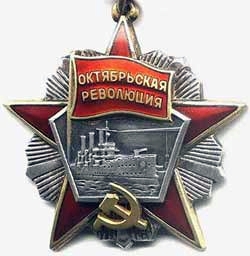
[the cruiser Aurora, as shown on the medal, the Order of the Red Banner; the words say “October Revolution”]

My then girlfriend, though certainly not Communist, disagreed with my analysis (that the Soviet Union was fossilized), and she had in a sense the advantage of me, having lived there for a number of years up to about 1978 or so and knew it, in general, far better than me. Still, I was right and she was wrong. Why?

There is a natural human tendency to accept that tomorrow will be at least similar to today. The daily commuter who goes on the train every day, until he dies unexpectedly overnight, or hits the Lotto.

The “Russian” Revolution seems today to have been almost inevitable, looking back over a century, and perhaps even two centuries (i.e. from the Decembrist revolt of 1825 [https://en.wikipedia.org/wiki/Decembrist_revolt]. Hindsight is always so.

The Russians of 1917, most of them, were taken by surprise when the first (February, old-style) 1917 Revolution happened. [https://en.wikipedia.org/wiki/February_Revolution]. Lenin, in exile, dismissed it as unimportant, or at least not as “the” predicted revolution (once-bitten, twice-shy, perhaps, Lenin having said, inaccurately, in 1905, that the uprising in that year was “the” revolution): https://en.wikipedia.org/wiki/1905_Russian_Revolution

In 1917, having heard of the revolution, Lenin only arrived in revolutionary Petrograd 2 months later! He then started to organize the coup d’etat which occurred 6 months later and which is now known as the “October Revolution” [https://en.wikipedia.org/wiki/October_Revolution].

When Lenin arrived in Petrograd, he had, in all Russia, probably only between 10,000-50,000 members in his Bolshevik faction: https://en.wikipedia.org/wiki/Bolsheviks#Demographics_of_the_two_factions. Lenin prevailed because his faction had discipline, and because he was unwilling to compromise.

My point here, though, is that it is hard to tell when significant and even —perhaps especially— seismic change will occur, in society or in the world as a whole. Lenin managed to seize power in late 1917 mainly because the real revolution, earlier in the year, had not stabilized into a firm and effective government. Lenin was not the creator or instigator of that first event, in fact he was irrelevant in respect of it.

Turning from events in 1917 to those toward the end of the Soviet period, the Soviet Union had given up the idea of revolution decades before: after the death of Stalin in 1953, and arguably since the exile and —1940— death of Trotsky, or even earlier (“Socialism in one country” was mooted as far back as 1924, and put into practice, in part, in the 1930s).

The “revolution” stuff after that was strictly for the naive: foreign fools and, in the Soviet Union itself, mostly Young Pioneers (akin to the Boy Scouts and Girl Guides of Britain) and maybe a few Komsomol members.

Yet the image, right up to the collapse of 1989 and the official dissolution of 1991, both outside the Soviet Union and to some extent, officially, within it, was that the Revolution, in some sense, was still guiding the society, along with the Marxism-Leninism still published and taught everywhere (but in reality ignored and/or privately scorned).

The slow collapse of Sovietism was taken by some influential scribblers and “thinkers” in the West as a signal that Western finance-capitalism and “liberal democracy” had triumphed, forever. The name that stands out is the Japanese-American Francis Fukuyama: https://en.wikipedia.org/wiki/Francis_Fukuyama, and his book, The End of History: https://en.wikipedia.org/wiki/The_End_of_History_and_the_Last_Man.

In my own unpublished work of 1990, I said that Fukuyama was simplistic and wrong. No-one took any notice of course, because the book was never published, and anyway I was an unknown, completely obscure, whereas Fukuyama was (according to System blurbs and drones) a “respected scholar” etc. Yet I was right and he was wrong.

In fact, a few people do seem to have agreed with my view: “Authors like Ralf Dahrendorf argued in 1990 that the essay gave Fukuyama his 15 minutes of fame, which will be followed by a slide into obscurity.[14][15] “[Wikipedia]

The West has the same problem as had the Soviet Union: an inability to accept its own sclerosis.

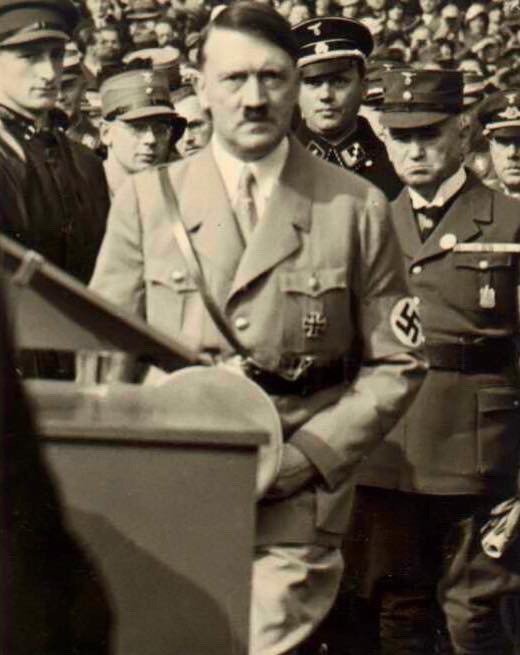
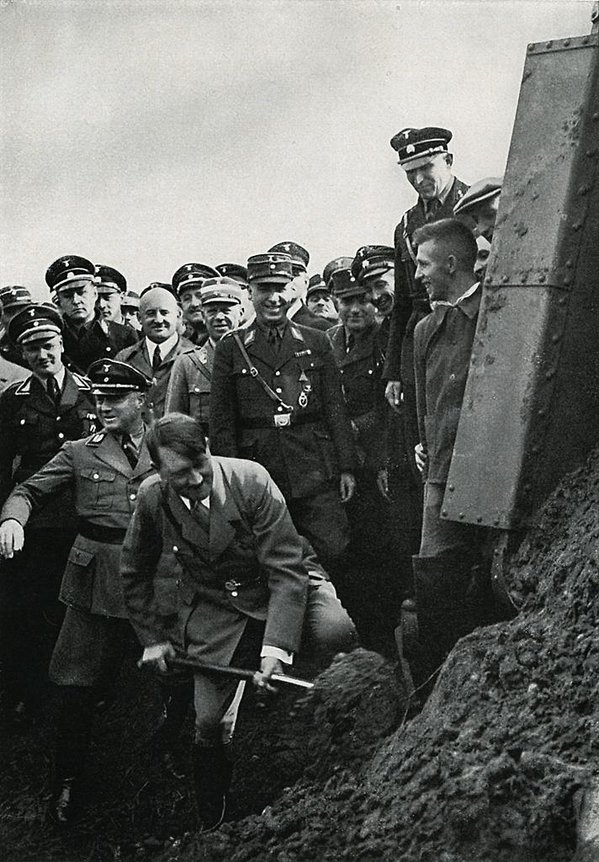
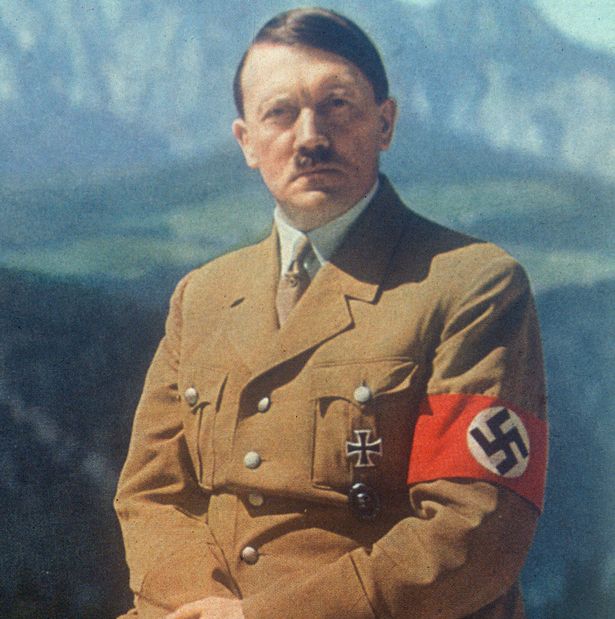
The future is, perhaps ipso facto, unexpected. In 1928, the NSDAP got 2.6% of the national vote in Germany. Hitler was considered a joke by many both in Germany and outside. As he later said, “They were laughing at [me and National Socialism] but they are not laughing now!

What about that 2.6% vote? In 1932, it became 33%, and then, in 1933, 44%. Hitler was Chancellor, unchallenged, and everything changed in Germany and in Europe.

Moving to the UK of 2020, there are parallels. The Coronavirus situation has been blown up out of all proportion, allowing the System (not only in the UK, but across the “West”) to attempt a “Reset” of the Western world. The political sphere in the UK has been frozen. People cannot gather, or even easily talk face to face.

Parliament is not in any real sense sitting; in fact Parliament has been sidelined, unable or unwilling to scrutinize new “laws”, laws passed not by Parliament, but rammed through as secondary legislation, using obscure statutes, and by a would-be despotic government headed by the biggest idiot of the lot, the part-Jew (ex?) public entertainer, Boris Johnson, aka Boris-idiot, sitting on his pediment (of a Conservative Party majority of 80).

In other words, Parliament may still exist but its useful life in its present form has ended. Not just the Commons: the House of Lords now has nearly 800 members. The quantity is a problem, but so is the quality. Boris-idiot has added 38 “peers” just recently. Our “legislators” now include cricketer “lord” Ian Botham, pseudo-intellectual “baroness” Claire Fox of the Brexit Party and the Revolutionary Communist Party (!), and many many other deadheads, such as the failed bra-designer “entrepreneuse”— and so many others that I do not choose to list them all.

What about the Monarchy? It is being held together as a once-respected institution by a public relations effort and by the fact that the Queen is still there. The Queen is a link with the past, with Britain as it was when it was 99% white, and when it however had a global empire etc.

There are efforts being put in to make the public believe that “King Charles III” (already nearly 72) and then “King William V” (now 38) will take the place of the present Queen. On paper, perhaps, but not in terms of mass psychology.

Of course we also have the lesser lights and hangers-on, such as the dim “cuck” Harry and his “Royal Mulatta”, entitled arrogant idiot and doormat for several Jews, Andrew, and theatrical am-drammer Edward; and their stupid spoiled offspring.

Then we have the other pillars of English life, on paper: the Bar, the “free” Press, the Church of England etc. All now facades, mere Potemkin villages.

Will this present society survive the coming years? I think not. True, there is at present little sign of upheaval in the UK, despite the above-mentioned matters, despite mass immigration (migration-invasion), despite Boris-idiot inviting 4 million Chinese to come to live here, despite everything. That may not be the last word, though.

Was there obvious sign of imminent political upheaval in the Germany of 1928? No. In fact, Germany seemed to have finally found stability both economically and politically by 1928. Then came the Wall Street Crash followed by the Great Depression.

Was there obvious sign of upheaval in the Russia of, say, 1916? Some, by reason of the war with the Central Powers, and the consequent poverty and general discontent. However, if you take it back to 1913, there was no such sign.

“Extremist” solutions to Britain’s problems may be unpopular in 2020; by 2022 or 2023, they may be the only ones that seem to make any sense.

Tweets seen

If Israel is eventually defeated, and passes into history, that will still not be the [redacted…]

God, that horrible cruel ape! I have often thought that T.E. Lawrence, “Lawrence of Arabia”, has a lot to answer for. Had Lawrence not fanned the flames of Arab nationalism and indeed Saudi nationalism, the Western states, and in fact maybe even just the European empires, could easily have taken the oil of Arabia and the surrounding region for the use of the advanced part of the world, and without having to give vast sums to any of the Arabs. Most of the wealth of the Arabs has been squandered anyway, one way or the other.

I may dislike (and oppose) the Jews, speaking generally, but I despise most of the Arabs.

A thought out of season

Statistics show that the Chinese have, as a national group, the highest IQ in the world, higher even than Northern Europeans. It is true that some of their achievements, both ancient and modern, are hugely impressive, yet I have to say that (with the arguable exception of a nuclear scientist I once met in the USA), all those that I have met personally or observed have seemed to me to be dimwits. Maybe I have just been unfortunate.

Tweets seen

[https://en.wikipedia.org/wiki/Chris_Bryant]

That little bastard is up to everything: former near-top employee of Common Purpose (so supported by that conspiracy), doormat for the Jewish/Israel lobby (so always supported by “them”); also supported by the gay lobby. https://en.wikipedia.org/wiki/Chris_Bryant#Personal_life.

As the tweet says, he was a major expenses cheat and is still an avid expenses freeloader https://en.wikipedia.org/wiki/Chris_Bryant#Expenses_claims_scandal

The sort of careerist who would be an early casualty in any real reform of Westminster.

Three words: the Great Reset; or if you prefer, the Coudenhove-Kalergi Plan.

Late music

What’s in a Name?

Religious and occult literature is replete with learned disquisitions about the sacred power of the Name. We see that, in Genesis, the Bible itself starts with the words “In the beginning was the Word, and the Word was with God, and the Word was God.” In the New Testament, this theme is continued. Jesus Christ renamed some people who had “come over to him”, such as Peter. Others, later, renamed themselves, to mark their “ideological” or spiritual transformation, as when Saul became Paul after his experience on the road to Damascus.

In Rome, Octavius becomes the Emperor Augustus or Caesar Augustus eventually (the style Augustus Princeps was bestowed upon him by the Senate of Rome in 27 B.C., when he was 35).

In early mediaeval Spain, Rodrigo Díaz de Vivar is given the name El Cid (from the Arabic for “lord”, sidi) to crown his mission. Likewise, in the Christian monastic tradition, the postulant chooses or is given a new name, often one referencing a deceased saint. The same is true of religious leaders such as bishops, metropolitans, popes etc. Gandhi is called Mahatma Gandhi, same surname but elevated by the new forename.

In literature, we see that the hero who fights perceived evil, particularly if doing so covertly, takes a new name, a nom de guerre: the Scarlet Pimpernel was an early example, followed by many another, right up to the “superheroes” of the 20th and 21st centuries: Superman, Batman, Spiderman etc.

In the field of espionage too, we see that sometimes a secret agent who becomes a known character is given or takes a name: the White Rabbit, the Welshman etc. Mata Hari…

Politically, the same applies: the anarchist Bruno Traven (itself a pseudonym) was known in early 1920s Germany as der Ziegelbrenner (“the Brickburner”). Better known were the noms de guerre of the Bolshevik leadership: Lenin (V.I Ulyanov), from the river Lena; Stalin (I.V. –or JV– Djugashvili), from “steel”, Trotsky (L.D. Bronstein), a Russification or Polonization of the original Jewish (Yiddish/German-style) name. In fact, most Bolshevik leaders took on longlasting pseudonyms, in a macabre aping of those old religious orders: Scriabin became Molotov (from molot, “hammer”), though he was a rare real ethnic Russian. Most of the Bolsheviks who changed name did so partly to disguise their otherwise all-too-obvious Jewish identity. Having said that, the new names of the leaders also often spelled out the new strong self-image: “Steel”, “Hammer” etc. [Stalin and Molotov were among the few non-Jews].

Though German National Socialists were not generally given to changing name and in fact disapproved on principle, some did so temporarily, while on the run or on special missions. Hitler himself used the nom de guerre “Wolf”, Herr Wolf”, and “Herr Doktor Wolf” while evading State agents in Munich after the failure of the Beer Hall Putsch of 1923. Hitler himself did often say that it was fortuitous that his name was Hitler and not, as it perhaps might have been, Schicklgruber

[https://en.wikipedia.org/wiki/Adolf_Hitler#Ancestry].

“Heil Sch…!” you get my meaning. Names are important. Many a showbusiness personality has achieved fame and fortune only after changing name. Beyond even that, the use of “transformational vocabulary” can change, with the name, the sense, the sense of mission or purpose. Thus, the U.S. combined operation “Desert Shield” of 1990 became “Desert Storm” of 1991, as defence turned to attack.

The use of a particular name for a political party or group can energize it and make it stand out: En Marche!, le Front National, the Angry Brigade, Leave and so on.

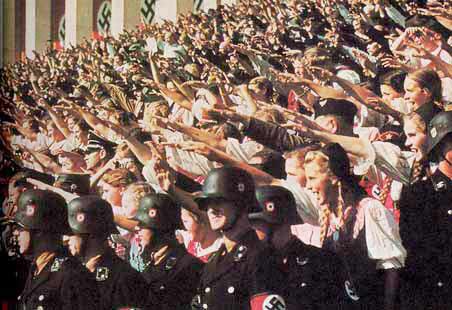
An allied aspect is that of the Invocation, a word or form of words designed to link the material with the spiritual, to send up prayer or supplication, and to bring down power to the Earth. “Heil!” is an obvious example. “Heil Hitler!” which eventually (in just a few years) replaced the likes of “Good day” and “goodbye” in, at least official, Germany. Hitler’s speeches are often very well-written, erudite, informed, but the power of Hitler’s oratory was not founded on its content, but on something above and beyond content. Yet that still required words as a basis.

When we consider how to pull the UK and Europe out of the mess into which it is sliding, we must consider the sacred power of the Word and use it.

Notes

https://en.wikipedia.org/wiki/Trotsky_(surname)

Tipping Points in Politics and Life

We have all heard of the theatrical cliche of the actor who achieves “overnight success”, having in fact worked hard against all the odds for years. The same is often true of writers, painters and other artists. Not forgetting scientists. It was Edison who, on the failure of his (supposedly) 2,000th lightbulb experiment, is said to have said: “I have not failed. I have just discovered the 2,000th way not to invent the incandescent lightbulb.” At a later time, he of course succeeded. Many things follow the pattern: a long period of non-movement, then sudden success (or sudden failure of something, often after long stagnation).

One can call this a tipping-point, or characterize it by some other metaphor. The aircraft which suddenly fails by reason of metal fatigue, the ship which finally turns over after ice has built up on its external structure in Arctic waters, the huge empire which “suddenly” staggers and falls. On the other hand, there is that actor with his “overnight” success, that composer whose works suddenly find favour, the small political group which “suddenly” rises to prominence and power.

The Bolsheviks were a small group of societal rejects mostly living in internal or external exile, or in prison. Many were not even Russian. Jews predominated in their higher councils (despite forming only 10% of the entire membership), but there were also Georgians and others. In fact, the Bolshevik Party only had 8,400 members in 1905 and, though that increased to 46,100 by 1907, by 1910 the numbers had slipped back to about 5,000. Few would then have imagined either that the mighty Russian Empire would collapse or that the tiny faction of Bolsheviks could seize control of what was left. We know the rest: a failing war and an impoverished population, an initial attempt by others at “moderate” revolution and then a coup d’etat by one small group in one corner of a vast empire.

The lesson: a small and marginalized group, disciplined ideologically and practically, can both seize power and institute an entirely new form of society, once that tipping point or crisis point has been reached.

In post-WW1 Bavaria, Adolf Hitler became the 7th member of the German Workers’ Party [DAP], which may also have had an unknown number (estimates vary from mere dozens to as many as 15,000) of loose supporters in the beerhalls of 1919 Munich.

By 1923, this tiny and marginalized group was able to attempt the Beer Hall Putsch [aka Hitler-Ludendorff-Putsch], but it is important to note that, despite the support of Ludendorff and a few other notables, the actual number of putschists involved was small: the main march headed by Hitler was only 2,000-strong (immediately after the putsch failed, 3,000 students from the university also marched in support and to lay wreaths). Indeed, even had the putsch succeeded, Hitler would only have taken power in one city of one region within the German state as a whole.

The membership of the NSDAP grew steadily, reaching 108,000 by 1928. Electorally, however, the NSDAP was doing worse in 1928 (receiving only 2.6% of the national vote) than it had done in 1924, no doubt a reflection of the growing prosperity in the intervening years (i.e. since the infamous hyperinflation finished in 1924). Despite that poor showing, once the Great Depression started to affect Germany after 1929, the NSDAP was able to gain the trust of ever-more voters: the vote in 1932 was 37% and then 33% (in the two elections of that year), growing to 44% in 1933. Adolf Hitler then took full power, having been appointed Chancellor in 1932.

A different example: UKIP grew from a few people in a pub in 1991 to a peak in the 2012-2015 period, but has not the ideological discipline or revolutionary intent to “seize power” even by electoral means. It missed its chance and will probably not get any further. Still, its growth, in the UK context, is interesting. Its founder, Alan Sked, was a former Liberal candidate who stood as “Anti-Federalist” candidate for the seat of Bath in 1992 (i.e. after UKIP had been formed), receiving 117 votes [0.2%].

UKIP had virtually no members until the late 1990s, though by 2015 the membership had grown to nearly 50,000 (now 30,000). As for its vote share, that grew to nearly 13% by 2015, but the UK’s unfair “First Past The Post” [FPTP] electoral system meant no gains.

FPTP voting itself illustrates the “tipping point” idea, as happened in Scotland: the SNP had fairly good support for decades, but few MPs until the tipping point was reached. Now it has 50% support, but almost 100% of Westminster seats. Why was the tipping point reached? Cultural identity rising, living standards falling, entrenched Labour failing. The point was reached–and the Labour vote collapsed.

UKIP has the same problem. So long as it has only 10% or even 15% of votes, it cannot get more than one or two MPs. Were it to get to 25% support, the situation would tip and UKIP would have perhaps 100 MPs. Except that that will probably not happen…

In fact, the Bath constituency mentioned above is instructive: Alan Sked got only 117 votes (0.2%) in 1992; in 2015 the UKIP candidate received nearly 3,000 votes (over 6%), but was still only 5th (Sked came in 6th in 1992)

https://en.wikipedia.org/wiki/Bath_(UK_Parliament_constituency)#Elections_in_the_2010s

The difference between UKIP’s situation and that of the Bolsheviks or NSDAP is that UKIP has no really firm ideological or organizational structure. Even if society came to a political tipping point, UKIP might well be unable to take advantage of that.

A new and properly-run social nationalist party could take most of the votes of UKIP as well as those which formerly went to the BNP and others. That however, could only ever be a foundation for electoral success. That success itself would depend on the rising star of the new party meeting the fading star of the old parties. It is a question of timing and of Fate. The tipping point for the whole society would be key.