
Tag Archives: General Election 2020

Diary Blog, 18 December 2019

Welcome to my diary blog, which will probably be published on a near-daily basis from today. It will contain political and social comment, mainly, but may also include music, art etc.

Anything requiring more length or structure will be put into a separate blog article.

I saw a tweet (see below), which shows how many of those on Twitter are in a relatively small echo-chamber. The tweet contains an “exit poll” taken on the recent Polling Day, and asks for which party the voter voted. The result (of over 68,000 responses): 64% Labour, 20% Conservative, LibDem 7%, 10% Other. So Labour was overvalued at about twice its real national vote-share, Conservative Party undervalued at less than half what it actually received on that day, the LibDems also undervalued at 7% instead of the real figure of 11.6%. As to “Other, 10%”, well Brexit Party got 2% in the actual election, Greens got about 3%, then there were SNP, Plaid, the various Irish parties; so “Other” may have been accurate overall, something which evidently cannot be said of the main Twitter poll.

The lady further below the tweet understands what an “echo-chamber” Twitter is:

This made me smile:

“@mojoss55/Maureen Fitzsimmons” used to follow my Twitter account. “Three degrees of separation”?

“and now for something completely different…”

Labour Party leadership

Rebecca Long-Bailey [Lab, Salford and Eccles] has been put forward as a candidate for Labour leader. She is in the Corbyn camp.

I do not know much about her at present, but what I do like is that the Jews on Twitter etc all seem to hate her. A good sign! Also, I like the fact that she is not one of the many “silver spoon” MPs (both Labour and Conservative): https://en.wikipedia.org/wiki/Rebecca_Long-Bailey#Early_life_and_career

I shall do a separate blog on the Labour leadership contest once all candidates are known.

Musical interlude

Metamorphosen, by Richard Strauss, one of the great composers of the 20th Century and for two years in the 1930s the head of the Reichsmusikkammer. https://en.wikipedia.org/wiki/Metamorphosen


Labour leadership (again)

Just took a look at Oddschecker and it appears that Rebecca Long-Bailey is favourite in the betting market. All the Jew-Zionist claque on Twitter is attacking her. Looking good…(from my perspective). I of course am not a Labour supporter, but their rank and file are at least generally better than the selfish, moneygrubbing “Conservative” ones, with their parasitic buy-to-let investments, inbuilt family life-advantages etc.

So the Jews are attacking Rebecca Long-Bailey, the usual msm drones are attacking her, the System talking-heads too. She must be one of the best candidates…

Of course, these msm talking heads (let alone the Jew element) are scarcely objective. “They” want to retake control of Labour, so that it can be “controlled opposition” again, and if it comes to it, a (((controlled))) government as well.

In fact, all this talk about “would Labour be electable under a socialist Labour leader?” (as distinct from a more “social-democratic”, or even “Con-lite”, one) tends to neglect the fact that:

  • The Labour vote collapsed from 40% to just over 32% at the General Election, true, but that was only a partial collapse. Three-quarters and more of the Labour vote held, despite the years of System and especially Jew-Zionist vilification of Labour and especially Corbyn, which campaign became almost hysterical near Polling Day. Jews, we were told, were sitting on their suitcases, waiting either to make a last despairing bid to get to Tel Aviv or awaiting the knock at the door and the train to the East. Yeah, right… Contrast that with the mostly very soft msm treatment given to Boris-idiot over 20 years. (and I should have thought that, were any of the “Jews are scared of Corbyn” stuff true, it would have encouraged more people to vote Labour!).
  • Statistical work done since the General Election shows that, had only 18-24 year old voters voted, the Conservative Party would not have a single MP anywhere in the UK. That does not necessarily mean that they will vote Labour next time, or that the next wave of 18-24s will, but it does make me think that the coming mainstream of voters will want a more radical agenda than the System preferees such as Keir Starmer or Lisa Nandy are willing to offer.
  • The next general election will not only have all those present 18-24s or most of them voting Labour (probably) but also the next wave of 18-24s (and they might be more inclined to use their vote if Labour has a radical leader).
  • The next general election will have far fewer Conservative voters, as older voters (and most Conservative voters are old) fall victim to “old age, sickness and death” (Buddha’s description of the Primal Karma of humanity).

The recent General Election win for the Conservatives is unlikely to be repeated for the above reasons. This may be partly why they are tightening up on voter registration etc. The boundaries of constituencies are being changed too.
c64bh5xw0aiwygy

Looking at the above, the smart move for Labour, counter-intuitively, might indeed be to have a (younger and) very radical leader. Corbynism without Corbyn. After all, someone such as Rebecca Long-Bailey has no baggage from the 1970s, 1980s and generally; and the Jews can hardly play the “we are all so scared” card again and with a woman aged only 40-something (she is 40 at present).

By the way, Salford and Eccles was previously represented by disgraced expenses cheat fraudster, Blair-Brown acolyte and Labour Friends of Israel drone, Hazel Blears:

https://en.wikipedia.org/wiki/Hazel_Blears#Expenses_scandal

I do not know whether Yvette Cooper will try to become Labour leader. She would be disastrous: pro-Jew, pro-Israel, with a history of formulating and getting passed poorly-drafted legislation, often very repressive legislation too.

Yvette Cooper is a virtue-signalling “refugees welcome” hypocrite and idiot who, with her equally bad-news husband, Ed Balls, pretended that they would be offering their home(s) to migrant invaders, while urging others to do the same (which they never did, of course; cf. Lily Allen). Perhaps she did not understand that most British people do not have several houses. She and Ed Balls made mucho money out of the British taxpayers when they were both MPs. They now have several properties, none occupied by “refugees”.

The family, which includes their three kids, live in a £650,000 terrace house in Hackney, East London. They also own a £900,000 North London house and a property worth £230,000 in Castleford, West Yorkshire. (The Sun & Daily Mail)https://www.spearswms.com/ed-balls-net-worth/

To cap it all, Ed Balls and Yvette Cooper may have been lucky to avoid prosecution for fraud:

https://en.wikipedia.org/wiki/Yvette_Cooper#Allegations_over_expenses

https://en.wikipedia.org/wiki/Ed_Balls#Allegations_over_allowances

Interesting parallel

EU “freedom”

Wars and rumours of wars

Large-scale wars do not start without warning. There are always rumblings from the telluric depths first, sometimes for years.

It would be madness for the UK to fight Russia. Russia may not be the old Soviet Union, but it can still put up to 4 million men (and women) in the field, if need be. That’s including reserve forces. 900,000+ are active; many of those are front-line forces.

Britain’s forces total just over 200,000, of which only a small fraction (perhaps 40,000) are both active (non-reserve) and front-line.

https://en.wikipedia.org/wiki/British_Armed_Forces

https://en.wikipedia.org/wiki/Russian_Armed_Forces

Similar proportions in respect of naval, air, strategic rocket forces etc.

The fact is that, if the UK gets involved in a war with Russia, the UK will be devastated. Glasgow (which is near the Faslane base), London, the major ports etc. There would not be much left. That may be true of some Russian target areas too, but the old Soviet Union was 92x the (geographic) size of the UK, and even the present Russian Federation is about 70x the size.

Before you cut, measure seven times…

https://en.wikipedia.org/wiki/Russia

Jesu Christi!

Just when you thought that Diane Abbott could not do more to destroy Labour with most present UK voters, the stupid monkey comes up with this!

I am convinced that the mere existence of Diane Abbott, at least as Shadow Home Secretary, lost the Labour Party a million votes at the recent General Election.

Can Labour Win A 2019 General Election?

Introduction

Two days ago, I wrote a blog piece entitled “Can The Conservatives Win A General Election (or are they doomed)?

https://ianrmillard.wordpress.com/2019/07/28/can-the-conservatives-win-a-general-election-or-are-they-doomed/

My conclusion was that the Conservatives are unlikely to “win” a general election in the sense of achieving a House of Commons majority, but that it is not unlikely that the Conservative Party might, after a general election in late 2019 or early 2020, still be the largest party, i.e. the party with the largest number of MPs.

Until recently, I thought that Labour would probably be the largest party in the Commons after a 2019/2020 general election; now I am unsure. I still think that Labour might beat the Conservatives in terms of numbers of MPs, but the chances must now be close to 50-50.

I now want to lay out my thoughts about Labour’s chances

Just as the Conservative Party has been running out of rank and file members and also (good) ideas for several decades, the Labour Party, though in recent years, under Corbyn, increasing its membership and activist support base, has at the same time been —-what would be the correct term?–laagering or hunkering-down or being concentrated in ever-fewer loyal constituencies. The membership of the Conservatives is still getting older on average (the majority now being over 51, and almost 50% being 65+ years old), whereas the Labour membership is more evenly-aged and far greater in numbers. The Conservatives can muster, at least on paper, about 160,000, whereas Labour has over 500,000 members or registered supporters. All the same, Labour now has 247 MPs, while the Conservative Party has 311.

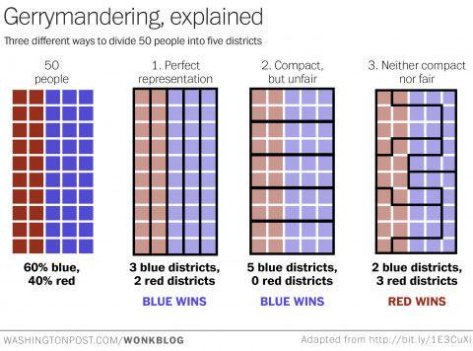
It is a truth universally acknowledged…that it is better to win 2 constituencies barely than it is to win 1 constituency by a huge majority. That in a nutshell is the problem faced by both major System parties but particularly Labour:

Jeremy Corbyn’s Labour party now has the 10 of safest seats [sic] in the UK, according to a new House of Commons analysis of marginal constituencies…The briefing adds that the number of very safe seats – those won by a margin of over 50 per cent – increased by 21 in 2015 to 37 in June’s election. Labour have all of the top 28.” [The Independent]

Piling up votes in safe seats does nothing, or very little, for a political party under the British “First Past The Post” [FPTP] electoral system. Labour is piling up empty votes. The problem is exacerbated by the fact that Labour is now, to a large extent “the party of the blacks and browns” and other ethnic minorities (except Jews). The tendency of the ethnic minorities to huddle in concentrations, whether for historical, economic, cultural or other reasons, has resulted in concentrations of the Labour vote in areas already historically Labour-voting.

Another aspect to the above is the flight of white English people out of areas becoming “diverse” (in reality, changing from white non-diverse to non-white non-diverse), thus concentrating in those “ghetto” constituencies (or particular wards within constituencies) the “ethnic” vote.

Coming to Brexit, Corbyn has managed to sit on the fence so far. More Labour voters voted Remain than voted Leave, but more Labour constituencies voted Leave than voted Remain, another proof of the concentration of the Labour vote.

In one sense, Corbyn’s fence-sitting means that Labour can in theory appeal to both Leave and Remain voters; in practice, it may make Corbyn and so Labour seem undecided and indeed the victim of events, rather than the setter of the agenda.

Beyond all that, though, Labour has a policy message which might appeal to many, if it can be heard: nationalization or more regulation of public utilities and rail transport, curtailment of the excesses in the private-rental housing sector, an end to the demonization, bullying and even quiet killing by neglect of the disabled, sick, unemployed etc.

Even if Labour is the party of “blacks and browns”, that voter bloc, when combined with the votes of public service workers and those dependent on State benefits, must in theory add up to a vote of something like 30%.

Many commentators have said that, after a period of fragmentation, voters are returning to the main two parties. They say that because, in 2017, the main two parties got 89.1% of the popular vote (Conservative Party 48.8%, Labour Party 40.3%). This consolidation, however, was the result of specific factors which no longer apply.

In 2017, the LibDem popular vote slumped further from its post-Con Coalition collapse in 2015: from 7.9% in 2015 to 7.4% in 2017. Likewise, UKIP, having attained 12.6% in 2015, fell back to 1.8% (UKIP contested only 378 seats). In other words, Con and Lab were really the only two games in town in 2017.

The situation today is very different. The LibDems can appeal on several fronts: to Remainers, because the Liberal Democrat Party is the only unalloyed Remain party of any importance; to those who dislike both main System parties; to the “socially liberal” in London and the South of England (mainly). The LibDems are therefore in theory able to draw from the dissatisfied of both Labour and Conservative. It is important to understand that this is not a “LibDem surge”, more a negative vote against the two main System parties and Brexit Party, though also a vote for a clearly pro-EU party, the only one left [in England].

Then we have Brexit Party. Its mere existence, even on 10% or 15% of the nationwide popular vote, means that the Conservative Party can almost certainly not get a Commons majority. If Brexit Party stands (as promised) in 650 seats and gets an average 20%, then Conservative MPs will die like flies as their seats are taken by the LibDems, by Labour and, in a few cases, by Brexit Party itself.

Labour is fighting against the Jewish-Zionist contrived “antisemitism” protest or faked “storm”. That is not too interesting to the general public, but may support a wider narrative about “Corbyn the extremist”, someone supposedly not patriotic, a supporter of radical and in some cases very unpopular causes in the past. There again, there is the public scepticism about whether Corbyn can do the job of Prime Minister. However, it might be said in response that if Boris-idiot can do it, why can Corbyn not do it? That does rather beg the question, though…

Looking at the electoral picture in the round, I think that Labour will be able to mobilize its core vote of maybe 25%, maybe beyond that to 30%. The Conservative vote is tied to Brexit Party. If BP stands in 650 seats and if BP can get 15%, then I cannot see the Conservative Party getting more than about 30%. The LibDems will siphon off quite a few Remainer votes from both Lab and Con; overall that LibDem vote might amount to 15% or even 20%. “Socially-liberal” Jo Swinson is very pro-capitalist and her party might be an option for pro-EU former Conservative voters as well as some pro-EU and anti-Corbyn Labour ones.

The upshot seems to be that any 2019 or early 2020 general election might produce a Commons with Labour as largest party but as many as 60 MPs short of a majority; alternatively, a Conservative bloc far larger than that of Labour but still about 10 short of a majority. In other words, about where things are now.

My conclusion is that Labour might “win” in the sense of becoming the largest party in the Commons, but cannot at present get a majority.

Notes

https://www.independent.co.uk/news/uk/politics/labour-safe-seat-marginal-constituencies-house-of-commons-jeremy-corbyn-theresa-may-a7886571.html

https://en.wikipedia.org/wiki/House_of_Commons_of_the_United_Kingdom

Update, 21 September 2019

This, below, is all too typical of the sort of person now prominent in “Labour” and what is left of the trade unions:

Riccardo La Torre, firefighter and Eastern Region Secretary of the Fire Brigade Union, branded the coast patrol “despicable” and said: “These have-a-go, racist vigilantes have no place in any kind of enforcement or emergency activities and will only serve to make conditions and tensions worse.”

“These groups claim to be the voice of the working class, but now they want to act as an arm of the authorities by patrolling beaches to apprehend struggling working-class people desperately trying to get to safety.” [https://www.independent.co.uk/news/uk/home-news/far-right-britain-first-beach-patrols-calais-dover-anti-migrant-a9113471.html]

So “Riccardo La Torre” (que?), a regional secretary of the Fire Brigade Union, thinks that migrant invaders from Africa and the Middle East are “working class people, trying to get to safety”?!

From, er, France? There you have in a nutshell, the craziness that is much of “Labour” now. Alien migrant-invaders are “working class people” who should be allowed to occupy the UK at will (and be subsidized too)! Note the fag-end “Marxism”, trying to shoehorn the facts into some 1980s polytechnic back-of-postcard Marxism-Leninism.

Update, 23 September 2019

This creature might well be Home Secretary under a Labour government…

https://twitter.com/PaulWal96323461/status/1175921860481036289?s=20

Can The Conservatives Win A General Election? (or are they doomed?)

We are where we are, in the now-ubiquitous phrase. The prime-ministerial chair once occupied by the likes of Pitt, the 1st Duke of Wellington, Gladstone, Lloyd George, Churchill, Attlee, Harold Wilson, Margaret Thatcher etc is now occupied by a public entertainer of mixed ethnic and cultural origins, born in New York City, brought up partly in the USA and Belgium, and until recently a dual passport-holder. A rootless cosmopolitan playing out a performance as an “upper-class” “Englishman” caricature. Am-dram Churchill. Poundland Churchill.

Boris Johnson, Boris-idiot, Boris the clown. More to the immediate point, Boris without a majority, soon. As a child of eight years, Boris Johnson wanted to be “world king” and has for decades schemed and cheated and lied in order to get to the nearest position (outside the monarch’s own ambit) that England allows: the rank of Prime Minister. However, he has not become “King of the World”, but “King for a Day”, the traditional role, in the Revels, of the Jester or Fool (“…for who but a Fool would be King for a Day?”).

The Conservative Party elected Boris Johnson its leader. Conservative MPs voted to reduce the field to two. Conservative Party members, some 140,000 of them, voted and 66% of them, about 92,000, preferred Boris Johnson. It is not my purpose of this article to rail more than en passant against the absurdity that allows a prime minister to resign and for her successor to be, in effect, elected by 92,000 (mostly very elderly, mostly rather well-off financially) Conservative Party members (out of about 50 million voters generally). This article is for the purpose of examining electoral chances.

First of all, we have the Brexit chaos. I favoured Leave. I still favour Brexit. However, the whole process was criminally mishandled by the Conservative government of Theresa May.

How will Brexit affect a general election? I assume that the House of Commons will not allow a WTO or “no deal” Brexit, and so any general election that is then called will see Boris Johnson parking his tanks on the lawn of Brexit Party and trying to go all out for, effectively, the Leave vote of 2016. There are dangers for the Conservative Party in that.

Brexit is not the only issue in a general election. Some more affluent voters may vote Conservative for tax or other reasons even if they oppose Brexit. Also, many in the population will never vote Conservative even if they favour Brexit. Many despise Boris Johnson and will never vote Conservative as long as he is the leader. This is, if chess, three-dimensional chess.

However, now that the Conservatives under Johnson present themselves as the “Leave”/Brexit party, it can be assumed that a sizeable number of former Conservative voters who favour staying in the EU will migrate, at least temporarily, to the only significant Remain-supporting party, the LibDems. Where else can they go? It might be argued that many Conservative MPs favour Remain, and that those MPs will receive a special vote based on that. Don’t count on it. The label is the primary motor, and if Conservative means Leave, many Remain voters will leave…the Conservative Party.

If the next general election is called without the UK having left the EU, or having left on terms dictated by the EU (Brexit In Name Only), then Brexit Party will be waiting to snap up the hard-core Brexit vote.

Brexit Party intends, at present, to contest all 650 seats. Its mere presence ensures that dozens, maybe even beyond a hundred, Conservative MPs will lose their seats, in some cases to Brexit Party, but in more cases to the LibDems or Labour.

There has been talk of a Conservative/Brexit Party electoral pact, but that carries the danger of gifting the Brexit Party a bloc of seats. which might challenge the Conservative Party more strongly later.

Labour, though now called by msm commentators a Remain party, is more nuanced. Corbyn’s fence-sitting tactic, though much criticized, is all that he can do in a circumstance where Labour-held seats were more often (about 60%) Leave-voting, though most Labour voters voted Remain (because, as I blogged recently, Labour votes are increasingly concentrated in fewer and fewer seats).

It may be, anyway, that Labour voters have concerns other than, or as well as, Brexit: low pay, the Conservative attacks on the social welfare and benefits system, the burgeoning crime and disorder problem etc.

The composition of the Boris-idiot Cabinet and government will not attract many former Labour, LibDem or floating voters.

My conclusion is that the Boris Johnson government may struggle to attract the votes of more than 30% nationwide. Recent opinion polls have put the Conservatives at anywhere between 23% and 30%. Labour has been between 18% and 28%. LibDems around 16%-20% and Brexit Party 14%-20%.

If the Conservatives continue to lean towards Brexit strongly, they risk losing many of their pro-EU voters to the LibDems, but if they try to fence-sit or move more towards Remain, many of their previous voters will vote for Brexit Party or stay at home.

There is also the Boris Factor, but we see that, even though there has been a “Boris Bounce”, its effect has been slight. The Conservatives are still polling at or below 30% (as is Labour). Indeed, it could be argued that, for many former Conservative voters, especially in marginal seats, Boris-idiot is not an attraction but a turn-off. I concede that that is a guess, but it is at least an educated one.

I have fed various recent opinion poll results into the Electoral Calculus calculator [see Notes, below], and it is quite hard to come up with a Conservative majority in the Commons. Most results show a hung Parliament with either Lab or Con as largest party. Only one showed a Conservative majority (of one vote). In several cases, both main System parties were as many as 80 MPs short of a majority.

Now we all know that the “glorious uncertainty” of the Turf is carried over to the field of battle of British elections. It is hard to predict elections in Britain and “a week is a long time in British politics”, as Harold Wilson said. Also, Electoral Calculus is a fairly rough guide. Having said that, it seems clear that, at least in the short term, the Conservatives are on the back foot here. Any gamble to increase the Conservative majority in the Commons may well backfire, as in 2017. That would mean the end of The Clown as Prime Minister, but would also mean something of a political and even Constitutional crisis.

These should be fertile days for social nationalism, but we are as yet not even in the game…

Notes

https://www.electoralcalculus.co.uk/userpoll.html

Afterthought, 29 July 2019

David Cameron-Levita as Prime Minister always made sure that the interests of pensioners were prioritized, in particular by introducing the “Triple Lock” on State pensions. Pensions have been one of several issues taking greater prominence over the years by reason of the increasing average age of the population of the UK.

https://en.wikipedia.org/wiki/State_Pension_(United_Kingdom)#Pensions_Act_2007

There were clear practical political reasons for this policy. Support for the Labour Party at elections is fairly even across the half-dozen usual age groups, whereas support for the Conservative Party is concentrated among the old and middle-aged: just under 50% of all Conservative votes are those of persons aged over 65 years. Hardly any young people intend to vote Conservative (in the 18-24 age group, below 4%).

The loyalty of the over 65s has been reinforced by pensioner-friendly policies. There are signs now that the Conservatives intend to, in the oft-seen phrase, “throw the pensioners under a bus”. In 2017 Phillip Hammond wanted to remove part of the Triple Lock, but the DUP insisted on its retention in part-payment for DUP “confidence and supply” support in the Commons.

The Conservative Party is already getting some flak from the elderly for the BBC’s announcement that free TV licences will be withdrawn for those of 75+ years. There are rumblings about bus passes for pensioners. Overall, it is clear that the free market crazies now in the ascendant under Boris-idiot want to target the elderly as they have already done the disabled, sick, unemployed etc.

The Labour Party is now the party of the blacks and browns, those dependent on State benefits, and of the public service workers. The Conservative Party is now the party of the rich, the affluent, the buy-to-let parasites and the like, and (many of) the elderly. If the elderly who are not particularly well-off desert the Conservatives, the Conservative Party is in big trouble, because only about 10%-15% of UK voters can really be described as rich or even affluent, certainly no more than 20%. In 2017, the Conservative vote amounted to 42.4% of votes cast. If half or more of those votes suddenly disappear, the Conservative Party is quite likely to disappear with them.

Further Notes

https://www.ipe.com/countries/uk/peers-call-for-removal-of-triple-lock-on-uk-state-pension/www.ipe.com/countries/uk/peers-call-for-removal-of-triple-lock-on-uk-state-pension/10030786.fullarticle

https://www.theguardian.com/money/2017/apr/27/pensions-triple-lock-questions-answered

https://www.conservativehome.com/platform/2019/04/james-kanagasooriam-the-left-right-age-gap-is-even-worse-for-the-conservatives-than-you-think.html

https://www.mirror.co.uk/news/politics/bbc-over-75s-licence-fee-18335538

Update, 3 February 2023

Well, we all now know that, in December 2019, Boris Johnson and the Conservative Party won a supposed “landslide” at the General Election. In fact, the Conservative Party vote was only 43.6% of votes cast, but Labour’s vote fell to 32.1%, and that decided the matter.

Key was the decision of Nigel Farage to stab in the back his own candidates and supporters by withdrawing Brexit Party from serious contention. That was the key act that ensured a Johnson/Conservative win.

Brexit Party ended up with 2% of the vote nationwide. Had Farage and Brexit Party gone all out to win from the start, Brexit Party might have got 15%, which though giving Brexit Party few if any seats, would have tipped the balance back to hung Parliament territory.

Other factors were the elderly and late middle-age voters sticking with the Conservative Party, and the relentless and mainly Jewish anti-Corbyn campaign in the msm, which helped to crush Labour’s chances.