The British people were told that they and they alone would decide by referendum whether to stay in or leave the EU. Remain or Leave. No nonsense about “the Irish backstop”, no nonsense about “deals” with the EU, no ever-more complex rejigging of the UK-EU relationship, no second vote years after the Referendum (i.e. no “people’s vote”, to be held in 2019, 2020 or even later), no asking to remain in the EU for weeks, months, years after the set departure date.
Yes, the relationship between the EU and the UK is complex, but sometimes, with Gordian Knots, you just have to cut the knot. You can tie new knots later.
As I predicted at the time, Remain would immediately launch a kind of quite long term damage-limitation operation, building on the Operation Fear pre-referendum propaganda. The fear propaganda had a number of aspects:
No-one would be allowed to travel from the UK to EU states;
Before the UK was in the EU, no-one from the UK was allowed to travel to France, Germany, Italy etc without a visa;
No UK people could live or work in, eg, France, Spain, Italy, Germany before 1973;
Anyone voting Leave hates Europe and Europeans;
A vote for Leave is a vote for hate;
A Leave win would reduce most British people to poverty;
This propaganda was fuelled by even more than usually inept and wrong forecasts by hugely well-paid and hugely overvalued “erudite idiots” such as the Governor of the Bank of England, Mark Carney, a globalist Bilderberg participant of probably part-Jewish origins (see Notes, below). Ex-Goldman Sachs and carrying Canadian, British and Irish (and other?) passports, Carney and others claimed that Brexit would immediately shrink the UK economy. In reality, such forecasts did that, by causing fear and uncertainty.
Many young people, meaning loosely anyone under 30 but especially the 16-24 age group, badly let down by their pathetically poor education, really seemed to believe the above bullet-points. They really believed that a Leave result would mean that they would not even be able to visit EU countries without onerous visa requirements. In fact, listening to them (bleat) on BBC radio, one realized that many seriously believed that, if the UK left the EU, they would not be allowed entry to EU countries at all! Yes, those who believed that were/are stupid, ignorant and poorly-educated, but the immediate blame must be placed on the Remain propagandists.
There were reports in the msm and on social media about pathetic teenage girls bleating and crying because “their whole future” had been “destroyed” (by older Leave voters)! Now they would never be international models, pan-EU entrepreneurs etc! In reality, of course, 99% of the young Remain whiners never were going to get well-paid or indeed any jobs “in Europe” (as they always mis-designate the EU). The few who might, always could (I myself once had a girlfriend who, in her 1960s youth, had been on the cover of the French edition of Vogue).
The Remain fightback started immediately. Project Fear was kept going, along with new lines: “the Referendum was not really valid because it was so close” was one. Another was “turnout was only 72%, so the Leave vote was really only about 37%”…
As Leave supporters countered, what if we applied that to General Elections? Or by-elections? We have just had a by-election at Newport West. I blogged about it and later added the result details:
In that by-election, Labour won, with a vote share of 39.6% of votes cast. However, turnout was only 37.6%. In other words, nearly two-thirds of eligible voters, many no doubt disgusted by the charade of “democracy” being played out, refused to or at least did not vote. Should we say that the result is invalid, because Labour was only voted for by about 15% of the eligible electorate?…
The same is true of the vast majority of constituencies where MPs have been “elected” despite having received less than 50% of the votes. Some MPs were “elected” on votes of 30%, the result of 3-way or 4-way splits. In view of the often low turnout in elections, that means that many MPs were voted for by only a fifth or even a tenth of the eligible voters!
People who could not be bothered to vote either way in 2016 must accept the result. Leave.
We should recall that every single referendum region in England, except London, votedLeave, most by very nearly 60%-40%. In fact, in the UK only London, Scotland and Northern Ireland voted Remain.
If you were to take out Scotland, Northern Ireland, London, Gibraltar and all non-white voters, Leave would have won, in England, by something like 75%-25%.
If there were to be another EU/Brexit referendum any time soon, Leave might in fact win all over again:
The point is that a promise was made to the British people and has been broken. Now we see that
The “Conservative” government has badly mishandled the 2-3 years of negotiation with the EU (was that deliberate? was that sabotage?);
An attempt has been made to have a “Brexit In Name Only” via a so-called “deal” which would be actually worse than just staying in the EU officially;
attempt(s) are made to revoke Article 50 and so to stay in the EU;
requests for extensions of time for departure (why?);
a House of Commons “legal coup d’etat” has been made, passing a law to all but outlaw Brexit, and passed by one vote, that of African convict Fiona Onasanya MP, who was recently released from prison and soon will not even be an MP! The Commons coup was arranged between Oliver Letwin MP, a Jew and former Rothschilds employee, and pro-Zionist would-be dictator Yvette Cooper MP.
In fact, the Rothschilds connection is interesting, because puppet President of France, Macron, a complete agent of Zionism, NWO and ZOG, also worked for Rothschilds.
Conclusions
There is effectively no or almost no real democracy in the UK now. People are waking up to that via the Brexit saga;
There is no political party, let alone one which is powerful and/or credible, which speaks for the British people;
Most MPs are useless, not even mediocre, and/or are just freeloading traitors; they are also, most of them, direct enemies of the British people. Many belong to secret groups of cosmopolitan manipulators. Many are pro-Zionist and/or have Jewish-Zionist connections, spouses, sponsors etc.
There must be a new and better society and a better system of government.
Update, 12 April 2019: a few thoughts about the near-future EU and local elections
The Brexit mess, so spectacularly mishandled by Theresa May and the idiotic careerists around her, may save UKIP from immediate collapse as a party, inasmuch as many British voters will want to punish the Conservative Party one way or the other. There may be a “perfect storm” for the Conservative Party, pressured on two fronts by both the Leave and Remain sides.
There will soon be elections for the European Parliament, on 23 May 2019. Recent opinion polling seems to be saying that Labour will have a landslide: initial voting intentions show Labour on 37.8% (up from 24.4% in 2016); Conservatives at 23.1% (unchanged), Brexit Party (Nigel Farage’s new party) 10%, LibDem 8%, UKIP 7.5%, Change UK (the recent Lab/Con defector MPs’ vehicle) around 4%, among others.
One has to be cautious in assuming that the above opinion poll reflects the likely outcome. The same poll seems to indicate that, after discussion, many pro-EU voters prefer Change UK (which would hit Labour and LibDem levels), while anti-EU voters may prefer either UKIP or Brexit Party.
Before the EU elections (in which the UK may not participate at all if the UK leaves the UK before 23 May), there will be local elections, on 2 May 2019. The indications are that, in those elections, Labour may also sweep the poll, with Labour benefiting not only from the “pendulum” or “see-saw” effect of elections in a system using FPTP voting, but also from abstentions by usual Con voters (or by their voting for Brexit Party or UKIP).
As far as the local elections are concerned, Labour starts the campaign with several advantages. The decade of spending cuts has finally impacted even the most true-blue Conservative areas. Labour has a army of local activists, thanks to its membership surge under Corbyn. It also has funds from the same source.
The Conservatives have few local activists now and most are beyond retirement age. The party looks tired. The Brexit mess can only be laid at the door of Theresa May and her Cabinet. The Cons will be lucky to avoid a wipeout in the areas voting on 2 May.
There are also strategic factors. The Conservative Party claims 124,000 members, which seems high (average 200 members per constituency). Most are elderly. Few are active. The median age for Conservative voters has also risen, to 52. Recent polling has shown that only 16% of voters under 35 support the Cons, and only 4% of those under 25 do so.
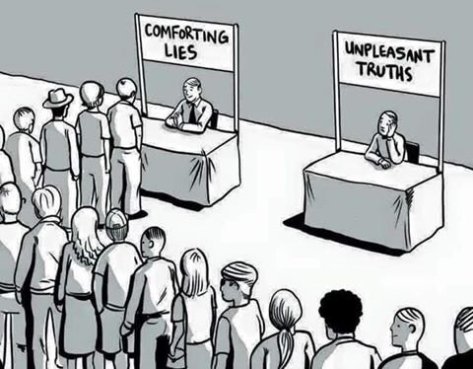
Illusion is something that many prefer to reality, as this cartoon indicates:
“They want not only their daily bread but also their daily illusion.” [Adolf Hitler, talking about many Germans during the decadent Weimar Republic of 1918-1933]
The Green Party
This blog article was prompted by a tweet that I happened to see, tweeted by one Jonathan Bartley, the “co-leader” of the Green Party.
David Davis is wrong on @BBCr4today that all parties are in a worse state than they have been for years. @TheGreenParty membership is growing, we are polling higher than our best ever general election result and have a record number of councillors on a record number of councils.
The Green Party is so large and important now that it has to have not one but two “co-leaders”. Well, jesting aside, there must be some other reason (almost certainly something very very silly) that necessitates two leaders, the other “co-leader” being one Sian Berry.
Bartley seems to have come from an affluent background. He graduated from the LSE aged 23, thereafter floating around Westminster as researcher etc until he founded the think-tank, Ekklesia. He does not seem to have done (or have needed to do) any other work of much substance between the founding of Ekklesia in 2002 and being elected as Green Party co-leader in 2016.
Deputy Leader is 34-year-old Amelia Womack, who was elected to her party position aged 29, having never been elected to any public position (not even as local councillor); neither has she ever had a paid job of any kind, it seems. She is a candidate in the upcoming Newport West by-election:
Now the facts are (i.e. the reality is) that the Green Party of England and Wales, founded 1990, has 1 MP (out of 650), 1 member of the House of Lords (out of 781), 3 MEPs (out of 64 English/Welsh seats), 2 London Assembly members (out of 25), and 178 local councillors (out of 19,023).
The Green Party is polling at somewhere around 5% nationally (it has been as low as 2% in recent years), and only has its one MP by reason of the unusual demographics and the (in 2010, when Caroline Lucas was first elected) 4-way voting split in the constituency of Brighton Pavilion:
In other words, the Green Party is like a tame rat on a wheel. Lots of activity and noise, but nothing really achieved. It’s not that I am opposed to all Green Party policies. I like some of its environmental policies, its support for Basic Income, its concern for animal welfare etc. There has, after all, always been connection between what are now called “green” ideals and social-nationalism. I have even blogged about it:
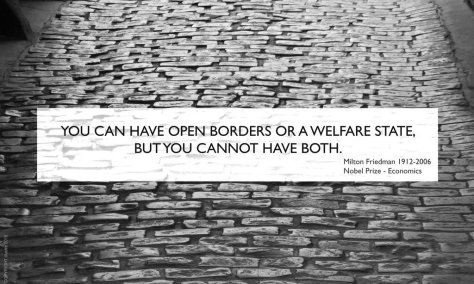
Where I cannot accompany the Green Party is in its apparent belief that open borders are good, mass immigration of inferior peoples into Europe is good, or that the EU is mostly very good for the UK.
I agree with the Greens when they say that FPTP voting is unfair on them (as on, in the past, UKIP, the BNP and the National Front, among others). Even 5% of votes should give the Greens around 30 MPs, whereas they may soon struggle to retain their one (though Caroline Lucas is a known TV face and probably will stay for a while). However, to say that UK political life is unfair is really just a pathetic bleat even if true (which it is).
At some point, reality will have to dawn on the Green Party members (surprisingly, nearly 40,000 of them). Or maybe not. I think that many Green Party members probably like their nursery politics game, which they must know in their hearts can never lead to serious results; but it makes them feel good and virtuous.
The Green Party is not about to get MPs elected or sweep the country in any way. The Green Party will simply continue as it is, a virtue-signalling pressure group pretending to be a political party. However, relatively few British people will vote for a party that supports both mass immigration and UK membership of the EU; neither will voters give credence to a party which has no one clear leader and which seems to be a refuge (even in its top-most ranks) for perpetual students and/or virtue-signalling and hugely self-deluded persons.
The Nationalist Milieu
It is often said that the plethora of food programmes on TV are a kind of “food porn” for people who rarely if ever cook. Well, the so-called “far right” (I myself never use terms such as “Left”, “Right” etc) or nationalist political tendency is rather like that: the Zionists, their “useful idiot” “antifa” offshoots, the msm too, and of course the System apparatchiki such as police, all like to say that there is a huge “danger” from “far right extremism” etc. If only! In reality, what exists at present is a mixture of hobby politics, “I’m the leader!” (of 2.5 people) parties, and politically-tinged 1970s football hooligan groups, together with System politics under nationalist camouflage (as with UKIP).
People of my vintage (b.1956), will recall (the now notorious) Gary Glitter singing “I’m the leader!” in 1973, a psychology characteristic of both “I’m the Leader!” parties and, usually, “hobby parties” (though every successful political party has to have a credible leader).
The English Democrats
I am starting with the English Democrats because they seem to me to epitomize the “hobby politics” sort of party. They claim(ed) to have over 2,000 members (2015), though I daresay that even that was a gross overestimation. I personally only ever heard of one member by name (my mother-in-law’s former neighbour), and he was a very strange man, a retired pilot aged about 70 (c.80, now). I would not be surprised if that man were fairly typical of the English Democrats’ members.
The English Democrats were founded in 2002. Their best electoral result was in the Mayoral race at Doncaster in 2009, which they won. They would also have won in 2013, had the Mayor not resigned from the English Democrats not long before the election. He still stood but as Independent and lost to Labour by only 590 votes, the EDs having put up their own candidate, who received 4,615 votes.
Police and Crime Commissioner elections have been their second best (highest vote-share just over 15%). In local elections, they have reached over 10% here and there, with their leader, Robin Tilbrook, receiving 18.2% of the vote in an election for the Epping Forest District Council. In Westminster elections, all results have been below —far below— 1% (in 2017, about a tenth of 1% in each of the seven seats contested).
The English Democrats have few policies, and those so bland that they could be espoused by several other parties, including System ones. Even the “English Parliament” idea has been mooted by System MPs occasionally.
“[Robin Tilbrook’s] party agitates for anyone living in England. His notion of Englishness is akin to American notions of “Americanness” – that you can be from any ethnic background and still wrap yourself in the flag.” [from an American newspaper interview]. So someone straight off the boat from God knows where is “English”, so long as living in England, according to that idiot! Even his professed “Euroscepticism” is very muted (and is based on the disproportionate amount of EU funding going to non-English parts of the UK).
The English Democrats are the “hobby politics” party par excellence. Mr. Tilbrook will never be blacklisted by the msm, nor targeted seriously by “antifa” or the Jewish lobby. He will never be interrogated by the police. He has in fact been invited onto TV occasionally and given a polite hearing, e.g. on BBC Daily Politics. He is even a Freeman of the City of London (awarded 2011)! Members of the EDs can write letters to the Daily Telegraph and talk at the bar of their golf clubs without let or hindrance. A waste of time worthy of P.G. Wodehouse.
For Britain Movement
I have blogged about “For Britain” previously. This party, though partly on the right track in terms of policy, is basically a one-trick pony. “You can have any colour so long as it is black!” [Henry Ford, re. the Model T car]; with “For Britain”, you can have any policy so long as it is anti-Islamism. Not that I oppose that view, but it is not enough.
For Britain is not exactly a “hobby politics” party, but it is really just a one-man or one-woman band, closely aligned with the policy-free beer-bottle throwers of the English Defence League and their one-time leader, the person usually known as Tommy Robinson.
The leader of For Britain, Irish lesbian former secretary Anne-Marie Waters (“Maria” originally), certainly has some followers, and For Britain has some members, as witness the local election campaign poster linked below, but how many is unclear. Probably fewer than 100. Quite possibly only about 50.
“The party fielded fifteen candidates in the 2018 local elections, none being elected.[11] The party came last in almost all the seats it contested.[12] In June 2018, the party expelled one of its local election candidates after Hope Not Hate linked him to the proscribed neo-Nazi group National Action and the white nationalist group Generation Identity“
[Wikipedia]
So “For Britain” (which says, pathetically, to the Jew-Zionist lobby, “look, we’re pro-Israel!” in the forlorn hope that the Jews will not hate it), sacked someone at least active enough to get up from his chair and stand as a candidate, simply because the unpleasant “Hope Not Hate” crowd fingered him!
As for Anne-Marie Waters, she herself stood in the Lewisham East by-election of 2018, receiving 266 votes (1.2% of votes cast; 7th place, behind Labour, LibDem, Con, Green, Women’s Equality and UKIP, but just ahead of Christian People, Monster Raving Loony, and 5 other minor candidates). “For Britain” is no good even as a protest vote in a by-election!
Sometimes, I wonder whether this or that group, party or movement or “leader” is not a put-up-job by the enemy, but in reality the likelihood is that these people are just deluded, indulging in near-pointless political activity. Having said that, it suits “Hope Not Hate” and the other manipulators of “antifa” idiots to have something to point at and say, “Look! Nazis/neo-Nazis/Fascists!” (etc).
Who, who would join something as one-dimensional, as limited, as “For Britain”? God knows. Not many have joined, anyway.
UKIP
Well, here we are at last out of the “hobby politics” and “I’m the Leader” areas, though plenty of UKIP members are hobby politicos. UKIP, though, is the real thing: a functioning political party, conservative-nationalist, and which at one time had two or three MPs (albeit temporary cast-offs), still has 7 MEPs (out of a possible 73), as well as 1 member of the House of Lords, 3 Welsh Assembly members (out of a possible 60) and 101 local councillors (out of a possible 20,712).
UKIP might have broken through to a measure of power in 2015 but did not, and now never will. It peaked in 2014. A succession of poor leaders (the present one is slightly better than those that followed Farage) crippled already-failing UKIP, whose membership, at one time reaching 50,000, is now somewhere below 23,000. UKIP has always been semi-tolerated by the System (inc. the Jew-Zionist lobby) and has now gone over to a basically one-trick-pony policy position which is not far from the offerings of Tommy Robinson, Anne-Marie Waters and the whole effectively pro-Jew and pro-Israel “alt-Right”/”alt-Lite” crowd (the British ones of prominence have in fact recently joined UKIP: “Prison Planet” Watson, “Count Dankula” Meechan, “Sargon of Akkad” Benjamin. All wastes of space).
To join or support UKIP now, except perhaps as a way of protesting pointlessly in an election, is just silly. It could not get one MP in 27 years (leaving aside the Conservative few who defected briefly), not even in 2015 when it was voted for by 1 out of every 8 voters! The voting system is rigged and flawed, and that suits the System parties very well.
UKIP’s vote in 2015 (nearly 4 million votes) fell to less than a seventh of that in 2017.
UKIP too is in the realm of political unreality, at least as far as elections are concerned.
How to go toward a realistic political viewpoint
The short to medium term future is uncertain and likely to bring revolutionary change to the world. I recently blogged about this:
As far as UK politics is concerned, it is clear that the major urban areas are no-go zones for nationalist parties, at least in respect of getting MPs elected. They can only be viewed as recruitment pools at present.
To pretend that a movement or party can be founded, then play the game of System politics, is otiose. UKIP tried that —and was semi-System anyway— yet failed utterly in any attempt to gain power (though I concede that UKIP did obliquely achieve the holding of and result of the 2016 EU Referendum, which result however is now being cynically betrayed by cosmopolitan conspirators such as the Jew Letwin and the virtue-signalling hypocrite Yvette Cooper… even as I write).
The fast-breeding ethnic minorities, including mixed-race elements, are collectively only a few decades away from becoming the majority in the UK. In some cities and towns, they are already the majority. That fact alone makes ordinary democratic politics a no-win situation for social-nationalism.
A social-national movement must be built from the ground up, and on a basis of reality, even if that reality looks, at present, like the sheerest fantasy.
In fact, UKIP came third, exactly where it was in the previous two general election contests at Newport West, and while its 8.6% of votes looks good vis-a-vis 2017 (2.5%), UKIP got 15.2% in 2015:
This was just a by-election protest vote and a pretty muted one.
The Greens came 6th, with 924 votes (3.9%).
As for “For Britain Movement”, its candidate came last out of the 11 candidates, getting 159 votes (0.7%). This party is wasting the time of its few members.
Update, 9 April 2019
Judicial Review cases are never dealt with in days. We will hear next week what the government has to say in Reply but only then will the High Court list the first hearing. We are applying for the hearing to be "Expedited". We have a strong case that the UK is Out of the EU!
— English Voice 🏴 (@EnglishVoice) April 7, 2019
The EDs are claiming that the UK is already out of the EU and have launched a judicial review application to “prove” the same. Rarely has wish so directly confronted political reality.
Update, 12 April 2019; a few thoughts about the near-future EU and local elections
The Brexit mess, so spectacularly mishandled by Theresa May and the idiotic careerists around her, may save UKIP from immediate collapse as a party, inasmuch as many British voters will want to punish the Conservative Party one way or the other. There may be a “perfect storm” for the Conservative Party, pressured on two fronts by both the Leave and Remain sides.
There will soon be elections for the European Parliament, on 23 May 2019. Recent opinion polling seems to be saying that Labour will have a landslide: initial voting intentions show Labour on 37.8% (up from 24.4% in 2016); Conservatives at 23.1% (unchanged), Brexit Party (Nigel Farage’s new party) 10%, LibDem 8%, UKIP 7.5%, Change UK (the recent Lab/Con defector MPs’ vehicle) around 4%, among others.
One has to be cautious in assuming that the above opinion poll reflects the likely outcome. The same poll seems to indicate that, after discussion, many pro-EU voters prefer Change UK (which would hit Labour and LibDem levels), while anti-EU voters may prefer either UKIP or Brexit Party.
Before the EU elections (in which the UK may not participate at all if the UK leaves the UK before 23 May), there will be local elections, on 2 May 2019. The indications are that, in those elections, Labour may also sweep the poll, with Labour benefiting not only from the “pendulum” or “see-saw” effect of elections in a system using FPTP voting, but also from abstentions by usual Con voters (or by their voting for Brexit Party or UKIP).
As far as the local elections are concerned, Labour starts the campaign with several advantages. The decade of spending cuts has finally impacted even the most true-blue Conservative areas. Labour has a army of local activists, thanks to its membership surge under Corbyn. It also has funds from the same source.
The Conservatives have few local activists now and most are beyond retirement age. The party looks tired. The Brexit mess can only be laid at the door of Theresa May and her Cabinet. The Cons will be lucky to avoid a wipeout in the areas voting on 2 May.
There are also strategic factors. The Conservative Party claims 124,000 members, which seems high (average 200 members per constituency). Most are elderly. Few are active. The median age for Conservative voters has also risen, to 52. Recent polling has shown that only 16% of voters under 35 support the Cons, and only 4% of those under 25 do so.
Returning to UKIP etc, the Brexit Party will obviously have the effect of splitting the Leave/Brexit hard core.
Update, 17 April 2019
The “For Britain” “Movement” (can 50 people be a “movement”?) has posted on GAB that they are not “far right” (whatever that means) and in some ways are no more “extreme” than Margaret Thatcher and not even really “socially conservative”. Oh dear…pretty pathetic.
I don’t know why I am even wasting 10 minutes of my ever-shorter lifespan examining this fake “movement” with its 50 members, especially after its recent (latest) electoral debacle at the Newport West by-election (last-placed out of 11 candidates; 159 votes, which represented 0.7% of votes cast).
Still, it confirms what I wrote in the original blog post, I suppose…
Update, 10 May 2019
Harold Wilson was right: “a week is a long time in British politics”. In the five weeks since the above article was written, at least two matters of importance have occurred
the local elections trashed the Conservatives (who lost over 1,300 seats), but Labour more or less stood still (losing 82 councillors), which was interpreted as failure by many;
Brexit Party burst into life and now has 100,000 members (by any other name).
I was just reading the blog of some Mancunian of whom I was unaware until today. I found his blog interesting despite his (to my mind, rather silly) pro-EU and (evident from his Twitter output) pro-immigration views.
His blog tells of how he and his family were immune from the mass hysteria all around after the death of Princess Diana. I found that interesting, partly because it echoes what I heard from people who were in London when it happened, in 1997 (the actual death was on 31 August 1997). I heard tales of pubs full of blubbing drinkers (days after the actual death), people who did not smile or even look normal in the streets, crowds treating Harrods department store (owned by Mohammed Fayed, the father of the last of Diana’s known lovers, Dodi Fayed) as if it were a shrine, taking flowers there etc.
In fact, I had seen the evidence of that last, because I had been to Harrods to buy a raincoat. I myself was not in England at the time of what I call the Diana Death Hysteria. I was then living in Almaty, Kazakhstan. Only about 70 English/British people lived in Almaty in 1997 (I know that because I had quite close contact with the small British Embassy and in fact visited the Embassy fairly frequently).
I did not have satellite TV and was unaware of the fact that Diana had died until 2 days later, when a colleague told me about it on Monday morning (the death having occurred on the weekend). I was later told that I was pretty much the only British person who had not gone to the Embassy to sign a book of condolence opened by the staff there.
On my return to London a few weeks later, I needed to buy a raincoat (it scarcely ever rains heavily in Almaty), so headed to Harrods in a taxi. When we approached the store, I noticed what seemed to be piles of trash outside Harrods, piled against crowd barriers. I asked the driver what that rubbish was doing there (to me it was reminiscent of the scenes seen during the 1979 “Winter of Discontent”, when rubbish went uncollected) but the driver replied, “that isn’t rubbish, Sir, it’s flower tributes for Princess Diana”. Well…
The phenomenon of mass hysteria or collective grief and/or jubilation has tended to pass me by. I also missed the mass celebrations for the Queen’s Silver Jubilee in 1977 because, again, I was at the time overseas and incommunicado (in Rhodesia). Those who experienced either or both have found it hard to explain what exactly happened to (other) people (I can only assume that my own connections and associates are a hard-bitten lot!).
I am no psychologist (or psychiatrist) but have some tentative theories, revolving around emotional triggers in the population. I have wondered whether such mass emotionalism could be harnessed for the public good in future. In the past, a usually more restrained type of emotionalism bound the British people together. In the 20th Century, that involved devices such as the Union flag, shared “experiences” (even if in reality never actually experienced by many of those emotionally affected), such as the two World Wars, the Poppy Day commemorations, noted historical events and people (such as Nelson, Trafalgar, Wellington and Waterloo, Richard the Lionheart, Florence Nightingale, Robin Hood), music such as “For those in peril on the sea“, the National Anthem, “There’ll Always Be An England” etc. A patriotic and historical pastiche, certainly, neither comprehensive nor even particularly accurate in parts, but true enough and simple enough to bind a people together.
Today, the UK population is so fragmented in terms of race, ethnicity, language, age, (what passes for) “ideology”, culture, even sexual orientation or display, that it is hard to imagine them coming together in collective grief (false or otherwise) or jubilation today. I suppose that some would point to football or cricket games, the Olympics etc, but these are minority interests, despite the large number interested.
If one talks to people, or watches the often incredibly ignorant TV quiz contestants, it is realized that many (and by no means always the “blacks and browns”) know next to nothing of British history, literature, music, or even basic geography. Their world is not even a post-1945 one, but a post-2000 one of X-Factor persons, “soaps”, “celebrities” of whom I at least have never heard, music which is either banal or simply noise.
It may be that the Diana mood of 1997 was an elegiac lament for a Britain —or more accurately an England— which was on the point of disappearing (and now has disappeared).



 Ian Robert Millard