It was, I think, that great genius Rudolf Steiner who first made the point that work in ancient times (meaning here the 4th Post-Atlantean Age which finished in the early 15th Century AD) was a matter, fundamentally, of slavery, or, to put it another way, of bond. The typical worker was a slave or serf, who worked because he or she was forced to work. There was no pay as such, but some form of food, shelter and clothing was provided. Any monetary reward was in the form of discretionary gratuity, not a matter of right. The worker belonged to the owner or master.
Not everyone was a slave, obviously. Apart from the slave-owning classes, there were those who were free citizens or subjects, who worked in various fields and were paid for doing so, but these were a minority.
Over the centuries and particularly since the Renaissance, in our 5th Post-Atlantean Age, the typical form of labour is that of paid work. The worker works and, in return, (i.e. transactionally) is paid money. This did not suddenly change in 1415 (supposedly the notional year of change from 4th to 5th Post-Atlantean Age), but was gradual and in some respects even today is not complete. For example, it was until very recently common in the UK for farm workers to be paid small wages, but to receive free accomodation, tied to the job. The “tied cottage”. Likewise, there have been retrograde movements alongside the general movement forward. The various Communist-inspired societies of the 20th Century were in that sense backward, but found that people would not work or work effectively as slaves. Thus, in the Soviet Union, “War Communism” did not last long and was replaced by the New Economic Policy in the 1920s. Stalinism tried to turn the clock back by collectivizing most agriculture and by having millions literally slaving in the so-called “GULAG Archipelago” of labour camps, but at the same time had to pay most workers at least some form of salary. In the Soviet joke, “we pretend to work and they pretend to pay us.” In some parts of the world (some Caribbean islands etc, parts of Russia too) the slave or serf of the 19th Century was only forced to work for the master’s benefit for part of the week, the rest of the time being free to farm or forage for himself.
The Soviet labour system was of course partly an outcome of previous Russian history. Few now know that serfdom in Russia was actually brought in, in its harshest forms, after 1400; indeed, the strictest forms were introduced after 1600: https://en.wikipedia.org/wiki/Serfdom_in_Russiahttps://en.wikipedia.org/wiki/Serfdom_in_Russia.
In Russia, as in the United States, the problem with slavery, serfdom and similar forms of servitude, was their economic inefficiency and social demerit. In North America, which had had, from its beginnings in British colonial rule, slavery applicable only to blacks, there was, nonetheless, a lesser form of “slavery” or “serfdom” known as “indentured servitude”, which applied to white people (usually English): https://www.encyclopediavirginia.org/Indentured_Servants_in_Colonial_Virginia. This form of forced labour lasted until the end of the 18th Century but had largely died out by the time the USA declared itself independent of Britain. At one time, over half of the white population of Virginia (where the system was probably at its most common), was forced labour. Indentured servitude was finally outlawed by the 13th Amendment to the U.S. Constitution; it continued elsewhere (notably in the Caribbean) until the mid-19th Century.
Even in the late 20th Century, there were attempts here and there to introduce forced labour as an economic model for the whole of a society. The Khmer Rouge “Year Zero” society in “Kampuchea” (Cambodia); North Korea (in part); rebel-held parts of South America. The generality of the world, however, had, by 1989, moved on. Russia and China moved to a typically “Western” pay-for-labour system. Europe had been evolving such a system for many hundreds of years.
The 6th Post-Atlantean Age will bring in, as a general way of life, the system of “work as free gift”. This seems Utopian today, of course. The Greeks and Romans (even their greatest thinkers) could hardly if at all conceive of a society without slavery; neither, it seems, could some of the landowners in the Americas or the Caribbean as late as the early 19th Century. Thomas Jefferson himself struggled with the practicalities of a society without slaves: https://en.wikipedia.org/wiki/Thomas_Jefferson#Slavery.
Now, when we speak of the 6th Post-Atlantean Age, that will not start until about 3500 AD, long in the future. However, just as paid work existed even in Roman times (even in the Roman Republic, some 1500 years before the start of the 5th Post-Atlantean Age), work as free gift can exist in places even today. When people volunteer for work in charity shops, on environmental projects etc, we see small flashes of that future world.
Consciousness is vital: to volunteer for a charity is something of the future; however, to be forced to work in a charity or elsewhere, in order not to have State benefits cut off, as in the policies implemented by Iain Duncan Smith and the Jew “Lord” Freud, is something from the previous Age and can properly be described as evil (being, in the “theological” sense, in error).
“Man cannot live by bread alone”. Profound words which, however, leave out the necessary addendum, “Man needs bread in order to live on Earth”. In the earlier Age, “bread” (i.e. the means of earthly subsistence) was supplied (in principle) by the owner of the work force. In the present Age, “bread” is bought by the work force for money and in return for work. In the future Age, work will be given freely. In return, the society will give freely to supply the necessities of life. Karl Marx had an intimation of this in his famous axiom, “from each according to his ability, to each according to his need”: https://simple.wikipedia.org/wiki/From_each_according_to_his_ability,_to_each_according_to_his_need.
We in the more advanced countries stand in 2017 at a point where computers, robotics, indeed the organization of society generally, lead to a situation where many forms of human labour may very soon not be at all required and will be taken over by inorganic or hybrid machines. What then happens to the huge numbers of people displaced from the labour market? The conventional answer, the “Iain Dunce Duncan Smith” answer is that such people (possibly half the population of the UK by 2050 or even 2030) will be forced to “seek [non-existent] work” or be more or less starved and made homeless.
Not only is the conventional approach unjust, but it will inevitably lead to social and political upheaval on a scale not seen for decades, if ever (at least in the UK). There has to be a social mechanism by which people are supported economically whether they have paid work or not. Here we have, at present, “tax credits” and other forms of social security or “welfare” benefits, including the “unconditional” or “non-judgmental” forms such as Child Benefit and State Pension.
Basic Income must come and eventually will come. It will enable people to exist, at least on –indeed– a basic level without needing to sell their labour in order to survive. Not all will offer work somewhere where it is needed, as a “free gift”. Some, however, will. It is a question, in the individual as in society at large, of the evolution of consciousness. The key point is that Basic Income is a societal and an economic necessity.
Update, 11 March 2019
People generally are now beginning to wake up to both the desirability and the practical possibility of Basic Income:
https://www.theguardian.com/politics/2019/mar/11/scrap-tax-free-personal-allowance-and-pay-everyone-48-a-week

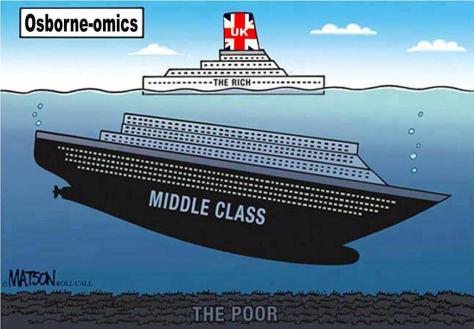
 The next general election will probably favour Labour, though probably not enough for it to win a majority in the House of Commons. After that, one can foresee continuing mass immigration, continuing slide in public services, continuing disparity in wealth. That will be the moment when a social-national party can strike. First of all, one must exist, however.
