Category Archives: basic income

Leadership, Dictatorship and The Need For Effective Government

Dix5gSdWkAAinaz

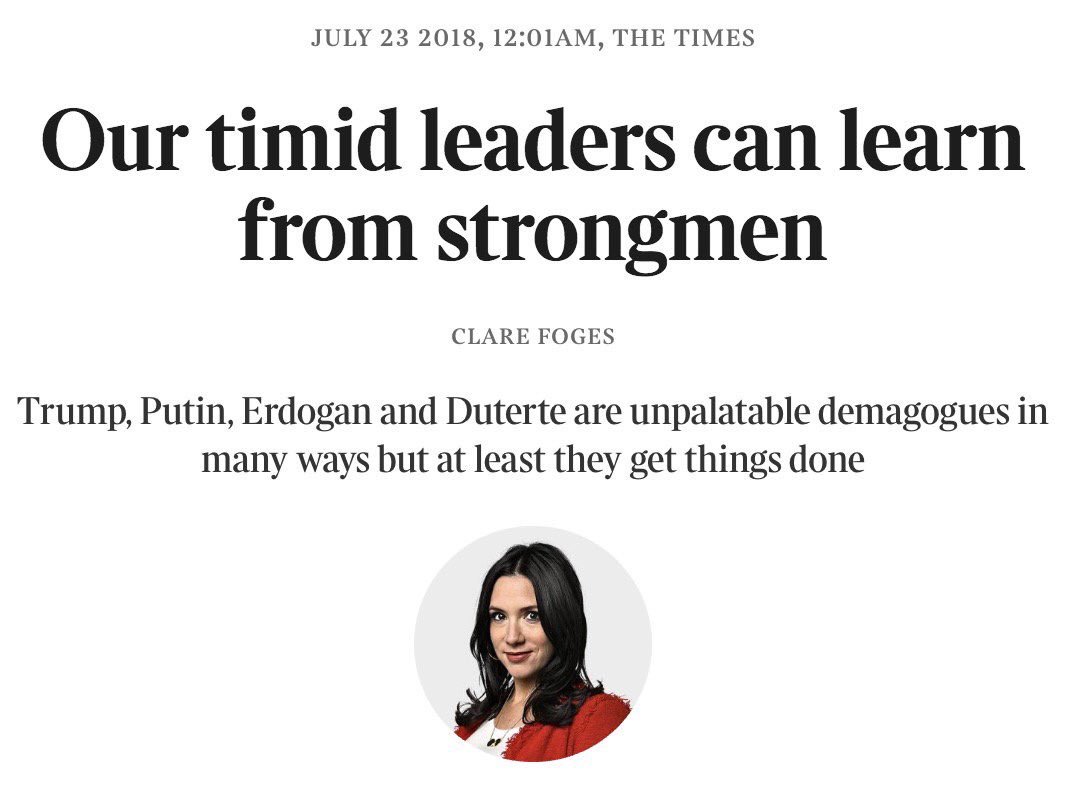
A woman journalist or opinion-writer of whom I had not previously heard, one Clare Foges, has suggested in an article in The Times that the leaders of the UK and Western Europe might learn from political “strongmen” (she cites an eclectic mixture: Trump, Erdogan, Putin, Duterte).

About the Writer

Having not previously heard of the writer, I did a quick Internet search. The surname suggests a Jewish origin, and someone of the same name posted this online in 2000:

https://www.ancestry.co.uk/boards/localities.ceeurope.austria.Prov.vienna/167.588/mb.ashx.

It seems that Clare Foges wrote speeches for David Cameron-Levita and others prior to the 2010 election and immediately after it. She has also written at least one book for small children.

Having now read a little about her, I should say that she seems to have some intelligence, though perhaps not enough, or not enough knowledge, for the matters she discusses in print. Her understanding of society and politics seems shallow. She gave an interview to the Evening Standard in 2015. In it, she proposes, inter alia, better pay (!) for MPs, who “give up well-paid careers” etc. Ha ha! She really should take a look at the collection of misfits, also-rans and chancers who comprise many (not all, admittedly) of the more recent MPs!

https://www.standard.co.uk/lifestyle/london-life/clare-foges-the-woman-who-put-words-in-david-camerons-mouth-10437029.html.

Indeed, in 2017 she herself wanted to become an MP, for the fairly safe Conservative seat of the Isle of Wight, but withdrew after having been shortlisted:

https://www.conservativehome.com/parliament/2017/05/exclusive-foges-joins-fox-in-withdrawing-from-isle-of-wight-selection.html.

In fact, the then-incumbent MP had hardly “given up a well-paid career”, having been a geography teacher in comprehensive schools for most of his life:

https://en.wikipedia.org/wiki/Andrew_Turner_(politician)#Early_life_and_career

and that MP (also an expenses freeloader…) then “stepped down” after having “become a laughing stock” by reason of his quasi-matrimonial situation:

https://www.telegraph.co.uk/news/politics/conservative/11334299/MP-battling-to-save-seat-in-toxic-Tory-rebellion-after-fiancee-moves-in-with-his-aide.html.

In short, my provisional view is that the writer of the article is, at 37 or 38, someone who for whatever reason has fallen between the cracks, who might have become something in the political realm, even perhaps an MP (and after all, her background as pr/”comms” “intern”, sometime children’s book writer, “Conservative” speechwriter, amateur poetess and (?) professional scribbler on politico-social issues is no worse than that of many “Conservative” or “Labour” MPs, and better than some) but has not.

The Issues Raised

What are we to make of this article suggesting that the UK needs leadership informed by “strongmen”? Duterte is the Philippines leader who has presided over a campaign of extra-judicial killing of drug gangsters etc. Erdogan is the political-Muslim Turkish dictator (by any other name) who is dismantling the legacy of Kemal Ataturk. Putin and Trump are too well-known to need any introduction even to those who take little interest in politics.

The main issue, surely, is that government must govern. It must be effective. Ideally, there will be checks and balances: law, due process, civil rights, property rights (within reason); however, in the end, a useless government has no right to exist.

Political leaders (including dictators) emerge for reasons. In broad brush terms, Putin emerged because Russia under Yeltsin had become a chaotic mess. Pensioners and other poor people were starving or dying from cold or lack of food, by the million. Public sector workers were being paid almost nothing. Jew carpetbaggers had flocked to Russia like a cloud of locusts (or vultures) and were stealing and cheating everything, pretty much. “Russian” Jew “oligarchs” ruled from “behind the throne” and had tricked their way into “ownership” of vast oilfields, diamond and gold mines, heavy industries. Putin began to claw back some of that. Pensioners who had been getting (USD) $5 a month under Yeltsin, now (2018) get $400. People are at least paid for work. Chechen and other gangsters have been stamped on and many killed or imprisoned. Russia has flourished compared to the 1990s.

Erdogan is someone for whom I myself have little sympathy, not least because I value the legacy of Kemal Ataturk. However, Erdogan has improved the lot of the poor, we read, while the economy has improved under his rule.

Trump likewise seems an egregious person generally, and even more egregious as a leader of a government and as a head of state. However, his rise (fuelled by his own huge fortune, of course) was not based on nothing. Many people in the USA are living in poverty. I read that 40% of Americans now require US governmental foodstamps! Many jobs (as, increasingly, in the UK and elsewhere) are “McJobs”, precarious and badly-paid. The drug epidemic is out of control. Illegal immigration had run wild since the 1980s. Whether Trump can deal with these problems and others,  with the “separation of powers” American system, is doubtful, but the dispossessed and marginalized, among others, voted for him to try.

The Missing Leaders

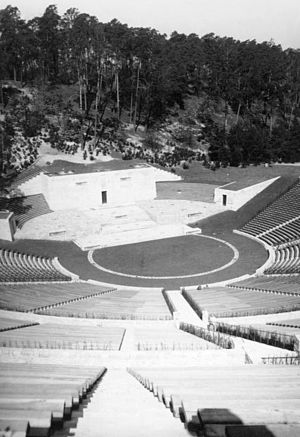
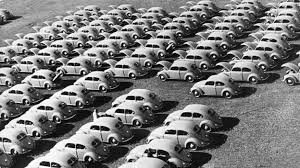
Clare Foges cited Trump, Putin etc, but not the controversial leaders of the 20th Century: Stalin, Hitler, Mussolini, Mao etc. They all took harsh measures but also did a huge amount that was positive. Hitler in particular saved Germany from degradation, removed Jew exploiters from the economy, the professions, the mass media; built autobahns (the first in the world); created air and airship travel routes; vastly improved animal welfare; planned new and better cities and national parks; put Germany to work and (for the first time) gave workers rights such as decent breaks at work, Baltic and other holidays in Germany, and also foreign holidays including cruises. Decent homes were built on a huge scale.

3396AD3500000578-3561575-Hitler_had_lived_in_Munich_just_before_World_War_I_and_remained_-a-1_1461778976380.jpg

an-automobile-on-the-sweeping-curves-everett

Chancellery2DietrichEckartBuhneVW3

Britain could do worse than follow Hitler’s lead, introducing some updated and English/British form of social nationalism.

Stalin was far harsher as a leader and as an individual than Hitler or Mussolini, though Mao might be considered far worse (but of course he was non-European). Stalin however (like Hitler) was put back domestically by war. Stalin did recreate the industrial sector, which was booming before the First World War but which Bolshevism all but wiped out as a thriving economic sector. Stalin’s major mistake (apart from his cruelties and brutalities etc) was to allow the agricultural sector to be ruined via Collectivization, the legacy of which is only now being very slowly erased.

Mussolini did a huge amount for Italy. His posturing on balconies etc is what people now think of when his name is mentioned, but he eliminated the Mafia (until the Americans caused its revival after 1943, releasing the imprisoned leaders and followers), started to get rid of the terrible urban slums (unfortunately more were created as a result of the Anglo-American invasion of 1943); Mussolini also created an advanced scientific and industrial sector, mainly in the North. Famously, he also greatly improved the railways, and “made the trains run on time” (both truth and metaphor). Now, the wartime propaganda of the Western Allies and Stalin is all that most people outside Italy know– Mussolini as clown. Ironic that a real clown (the leader of the Five Star Movement) is now a major political figure in Italy!

https://en.wikipedia.org/wiki/Beppe_Grillo.

Britain 2018

The UK has been pretty much left to rot since 2010. The Blair government, though repressive and in the pocket of the Jewish-Zionist lobby, tried to modernize infrastructure generally. New buildings were constructed: hospitals, libraries, schools. Credit where due.

The David Cameron-Levita-Schlumberger government of idiots was not only the most pro-Jewish/Zionist government Britain has ever had, (until Theresa May became Prime Minister), but also the least-effective of modern times (again, until that of Theresa May?). It not only failed to do anything new and decent, but also failed to maintain that which already existed, in every sector, from libraries and schools to the air force and navy.

The lesson surely is that government must be effective. If it is not, the State stands in peril. The people eventually demand action. They are beginning to demand it now.

The article by Clare Foges is, it seems to me, a sign of the times, or a straw in the wind. The political times in Britain are a changin’…

Notes

http://www.bbc.co.uk/programmes/profiles/3tMvnMp3DFW3z99Zvc7WC3T/clare-foges

https://www.standard.co.uk/lifestyle/london-life/clare-foges-the-woman-who-put-words-in-david-camerons-mouth-10437029.html

A critical article from the New Statesman:

https://www.newstatesman.com/politics/elections/2018/07/sorry-clare-foges-dictatorship-isn-t-just-character-flaw-it-s-crime

Another critique of her views:

https://www.property118.com/clare-foges-anti-landlord-the-times/comment-page-4/

She was desperate to become an MP but no-one wanted her:

https://www.telegraph.co.uk/women/womens-politics/11436355/Sir-Malcolm-Rifkind-resigns-Kensingtons-next-MP-might-be-this-woman.html

Another Clare Foges article. She seems to be very much of her time, meaning 2010-2015, as in this Cameroonesque piece of sort-of social Darwinism. I think that Clare Foges can be written off as a serious commentator.

https://www.thetimes.co.uk/article/put-feckless-patients-at-the-back-of-nhs-queue-5hnlqqstg

https://www.dailymail.co.uk/news/article-2267901/Clare-Foges-The-raven-haired-poet-ice-cream-seller-wrote-PMs-big-speech.html

Further thoughts, 6 December 2018

According to the Daily Mail, Clare Foges is “a devout Christian”. She may still be of part-Jewish ancestry (see above). My other query about the “devout Christian” bit is how does a “devout Christian” want to put IVF couples ahead of people needing NHS treatment for serious conditions just because they drink, smoke etc? Is that “Christian”? Even evil Iain Dunce Duncan Smith is said to be “devoutly Christian”…Yeah, right!

In the end, I suppose that it scarcely matters whether Clare Foges is this or that…and I just noticed that her Daily Mail bio was written by the egregious Andrew Pierce, so we can probably discount it…

Incredibly, she is appointed OBE!

https://www.huffingtonpost.co.uk/entry/labour-blocks-david-cameron-speechwriter-claire-foges-from-joining-party-to-oust-jeremy-corbyn_uk_58d90195e4b03787d35a3d08?guccounter=1&guce_referrer_us=aHR0cHM6Ly93d3cuZ29vZ2xlLmNvLnVrLw&guce_referrer_cs=Y57ohgKaElO9EWmxBHKC1w

Looking at her photos and her behaviour, I think that she is probably at least partly-Jewish.

Her Twitter comments (read the thread):

https://twitter.com/ClareFoges/status/985813260824989696

She has not tweeted since April 2018.

She writes in The Times, but also as freelance pr person…

http://www.finelinelondon.com/

She has certainly written columns in The Times [of London] several times, but is not on that newspaper’s list of its 29 “key” columnists. I have just taken a look on the Internet, and not seen anything online written by her as Times columnist in the past months (since August 2018), though her Linked-In profile avers that she is still a Times columnist. I did see a piece from November 2018 published in The Sun “newspaper”.

https://uk.linkedin.com/in/clare-foges-906a4676

Update, 9 November 2020

I have just seen that Clare Foges has been writing a column for The Times about once per week in recent months. I had not noticed, never now reading that newspaper (does anyone?I suppose some still do).

How Can There Be International Large-Scale Politico-Social Change by 2022?

I have been re-reading Involuntary Journey to Siberia, by Andrei Amalrik [https://en.wikipedia.org/wiki/Andrei_Amalrik], a Soviet dissident better known for his short book Will the Soviet Union Survive Until 1984? (both works were published illegally outside the Soviet Union in 1970, a fact which resulted in a 5-year sentence of hard labour and then internal exile in Kolyma).

Leaving aside the fact that the slowly increasing repression of free speech and free political activity in the UK of 2018 is mirroring (albeit in slightly milder form) that of the Soviet Union of 1970, it occurred to me –not for the first time– how hard it is to predict, accurately, sudden or large-scale socio-political and socio-economic change.

When I read Will the Soviet Union Survive Until 1984?, which was in or about 1980 (the year Amalrik himself died, a result of his own careless driving in Spain), I thought that the thesis was possible but would take far longer, probably 20 years longer. I thought that there would be a gradual collapse. I was wrong; so was Amalrik, but only by 5 years –in reality– or by 7 years (formally). Sovietism and all other forms of old-style socialism across the world died in 1989 in real terms, though in official terms the Soviet Union coughed to a halt only in 1991. This was perhaps appropriate: the Soviet Union was established formally only in 1922, though everyone thinks of it in terms of its having been established de facto in 1917.

It should now be added that all the “experts”, “Sovietologists”, “Kremlinologists”, Foreign Office bods, SIS bods, journalistic scribblers etc (all the ones I ever heard of, anyway) laughed at Amalrik and his book. The “East-West” Cold War set-up seemed set in stone. The Soviet Union was a granite monolith. They had been brought up in it or on it, most of them, most having been born in the 1930s and 1940s: nothing would happen suddenly. They were wrong. A combination of factors brought about not only the swift collapse of Soviet power, as well as the Soviet “empire” worldwide and particularly in Europe, but also that of all forms of ordinary old-style socialism, from the CPSU through to the pre-Kinnock/Blair UK Labour Party.

Lenin thought that the revolution in Russia was upon him in 1905; he discounted the real upheaval in 1917 and very nearly missed the boat. Hitler also thought that his time had come in 1923; when it did arrive, in 1932-33, he was uncertain at times about it.

I happen to believe now that we are in a current of (about, approximately) 33-year history. 1923, 1956, 1989, 2022. If I am right, the year 2022 will bring about another huge change in economics, politics, society, the world order generally. Think of how, say, China has changed since 1989. Russia too. Even the UK has changed hugely since 1989. The finance-capitalist “reforms” under Mrs. Thatcher had not started to affect most people outside the formerly industrialized North of England, South Wales etc. The mercantilism and commercialization that has happened since 1989 has changed the UK profoundly, in most respects in a not-good way, though there have been positive changes as well.

In brief, and without pretending to be comprehensive, one can say that, in the UK since 1989, the professions have largely become businesses, that the State has, at least in part, abandoned many who need help, that the UK (especially England) has largely become a non-white society, that the Jew-Zionist influence over mass media, politics and other areas of life has become pervasive and destructive, that there has been a general coarsening of thought, of cultural life, of behaviour.

UK politics has, since 1989, gone through the changes outlined above with the following results

  • Labour has had a quarter of a century of what amounts to control by New World Order/Zionist Occupation Government NWO/ZOG types: Kinnock, Blair, Brown, before collapsing under Ed Miliband; its MPs are still mostly of that type and Jeremy Corbyn is finding it hard to completely defeat the Jew-Zionist/Israel-First lobby within his own party. The Old Labour members and MPs still exist, but only just. Few now have ever done industrial work; many have never done non-political work at all, unless one includes management consultancy, public relations, “comms”, “organizing” what remains of trade unions, pseudo-academia etc.
  • The Conservative Party is now almost devoid of real members. The average age of members is somewhere around 70 if not 75. The membership figures are now kept secret, but it seems that a party which once had 4 MILLION members (in the 1950s) now has about 20,000. A Potemkin village with no-one living there. A mirage.
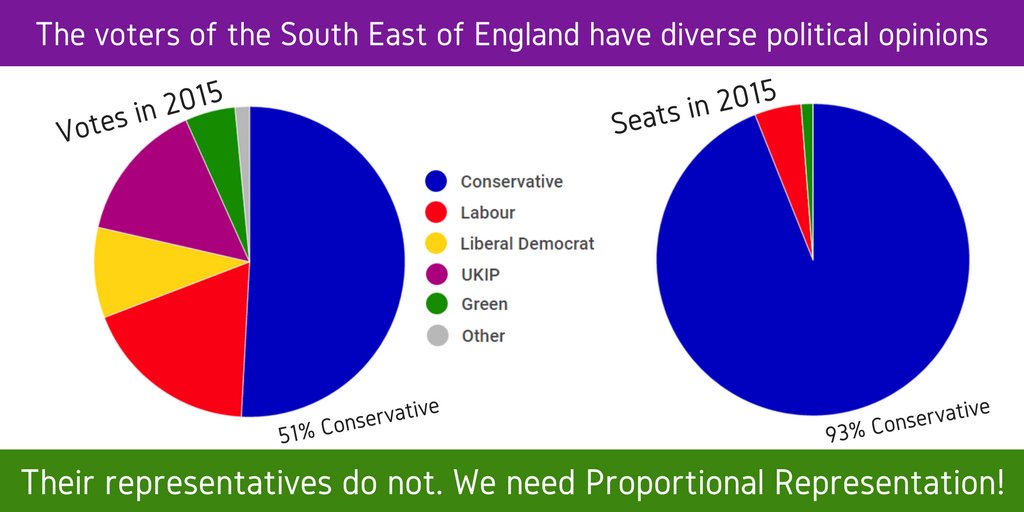
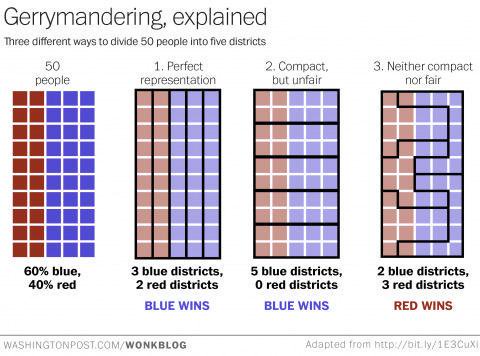
  • Other parties are even worse off. The LibDems have surely had their day except as a tactical vote for discontented voters trapped in “safe seats” occupied by parties they do not like. The graphics explain it.C3l1gk9XAAMHAwF

C64bh5XW0AIWYgy.jpg

  • UKIP was the populist answer to the gulf between governed and governing. However, the totally unjust voting system defeated it (in any case, UKIP had few answers to Britain’s real problems, was pro-ZOG/NWO, and by the time it deflated after 2014, even had non-white candidates! Some called it “kosher nationalism”). UKIP’s 2015 result said it all: 3.8 MILLION votes, 1 MP (former Conservative Douglas Carswell, an entryist, in my view).
  • Real British nationalism of a more social national type has hit rock bottom. The BNP failed in 2010 and collapsed in 2015. There are now only a handful of parties of general “nationalist” type, all of which are jokes, only one of which (Britain First) has more than 500 members.
  • The people are divided into a minority of wealthy and/or affluent who have doubled or tripled their capital over even the past decade, and the rest, many of whom are paying through the nose for poor rented places in which to live, who make rubbish money from jobs which (like their rented homes) are without security; their votes mean almost nothing, their views mean less, and they are just disposable labour units in an unfair society.

It Could Happen

An opinion poll has just been published saying that 24% of UK voters would vote for an “extremist” “far right”, “anti-Islam” and anti-mass immigration party. 38% want a real Brexit and would vote for any new party promising it (credibly, presumably). Leaving the tendentious wording aside, there we have it! The prize is right in front of us!

It could happen that

  • Brexit either happens on WTO terms, or fails to happen, causing massive discontent;
  • Russia and NATO get into actual conflict in Eastern Europe;
  • Corbyn becomes Prime Minister but with no majority; or
  • Some Conservative Party idiot-MP becomes a weak PM; and
  • The people are pushed beyond endurance on real pay, rents etc.
  • Mass immigration is not stopped or even increases.
  • Zionist exploiters are exposed even more than they have been.

In those circumstances, a credible and very radical social national party can take power and start to clear away the rubbish. 2022 and thereafter. Then we can see across Europe removal of the migration-invaders, removal of finance-capitalist parasites, a better society in Europe (inc. UK) with decent work, pay, Basic Income, animal welfare etc.

The prize is before us! 

Use and Abuse of the UK Welfare State

I am in favour of the Welfare State, in principle, but that just begs the question. Even the Iain Dunce Duncan Smiths and Esther McVeys of this world go that far, at least in public utterances. The devil really is in the detail here.

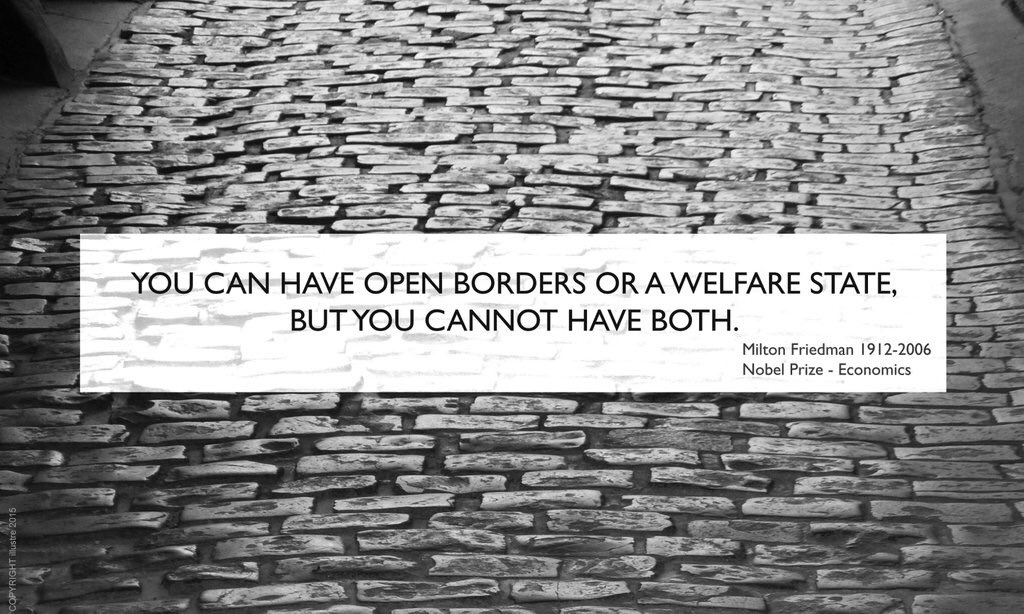
The famous economist, Milton Friedman, once said that you can have open borders, and you can have a welfare state, but you cannot have both. That it is even necessary to posit that shows how far the more socialist-minded people in the UK (and elsewhere in Northern Europe) have travelled from reality. Many “refugees welcome” dimwits actually believe that an almost endless number of “refugees” or others can enter the UK without affecting State benefits and services (as well as road and rail congestion etc). This seems to be based on the idea that the immigrants will work, pay taxes, in short become normal citizens or quasi-citizens. Angela Merkel thought the same, only to find that most “refugees” were

  • incapable of any but the most basic work (such as fruit-picking) because of their linguistic and/or educational levels;
  • unwilling, in many cases, to work, in a situation where the State provides free accommodation, free utilities, free transport for some, free food for some, as well as pocket money on quite a generous level.

CgFqWSRXEAICTlz

The UK does not provide social security (or, in our new Americanized speech, “welfare”) benefits on the generous scale offered by Germany or Scandinavia etc, but the fundamentals are similar.

A personal story: when I was much much younger, in my early twenties, I became acquainted, via a lady I then knew, with a friend of hers (more accurately a woman who had attached herself to her like a limpet). Now this other woman was not British in any sense except that she had married a New Zealander who had (presumably because taken there from the UK as a child) a British passport. The woman was in fact a Jewess from Moscow, who had somehow got to know the New Zealander while he was on a holiday trip to the Soviet Union. We need not examine motives and reasons, but that couple married and went to live in New Zealand. They had two children. After about four or five years, the woman left her husband, left New Zealand and flew to the UK.

When I met the woman in question, I believe that she had been in the UK for a couple of years. She washed-up in Downham, an obscure suburb in South-East London, where the local council provided her with a council flat. I have no exact idea of what other benefits she was granted, but they would have included child benefit and some form of income support. She never had to work, though at first she did a couple of evenings a week teaching Russian at some place or other which I forget (possibly Morley College in Westminster Bridge Road, or the City Literary Institute in Drury Lane, both of which adult education centres I myself frequented at the time).

Scroll on a few years. This “Russian” Jewish woman, with no real connection to the UK at all had been given a quite decent house with gardens in Grove Park, a better part of the same borough. She had been impelled to move, apparently, by a visit from her father, a nuclear scientist (which sounds impressive, but the Soviet Union had legions of them) who had told her that she would have a better flat were she to return to Moscow! Of course, there she would have had to work…anyway, I visited the new house once (out of duty rather than choice)  and so saw it, despite being not much liked by the woman. The woman had been diagnosed with a kidney complaint (though I never saw her looking unwell) and so no doubt managed to claim some form of incapacity or disability benefit; and had also acquired a car (almost certainly also funded by the State). In addition to all of that, the woman and her children also had all the usual UK benefits of free education and health. I do not think that she bothered to do much work after that, maybe a little part-time teaching or occasional low-level interpreting.

Now it might be said, perhaps especially by people more naturally drawn to socialism than capitalism, that she was entitled to these things because lawfully resident in the UK. Perhaps, but look at it from the wider point of view: she had never contributed anything to the UK, just taken. The small part-time jobs here and there can be discounted as having been de minimis. She leeched off the UK’s people since about 1979 and, the last I heard (a couple of years ago), that situation remained unchanged, probably to this day. In fact, she would now be “entitled” to a State pension and Pension Credit. Call it 40 years of being a millstone round the neck of the British Welfare State.

Now multiply the above by millions, the millions of often completely useless people from the backward hordes imported into the UK for decades. For example, it is reported that only 20% of the huge numbers of Somalis in the UK (how? why?) are employed at all.

I repeat, I do favour a decent Welfare State, but it can only exist if

a. the economy can support it;

b. it is not swamped.

The above two conditions really come down to the same thing now, or very nearly so.

For me, the answer to the work and income challenges of robotics, computerization, Internet shopping, AI etc is the Basic Income concept, but Basic Income, like the existing Welfare State, will decline and may fail unless it is restricted to those who are at the very least, genuine citizens.

ClVU6MSWgAAmfK6


The Train is Hitting the Buffers

The UK train is hitting the buffers. The train crash has been slow, long in coming, but it is now starting to happen.

Decades of decadence, mass immigration, political corruption, Zionist takeover of the legal system, cultural sickness in all mass media (fostered by Zionist infiltration at all levels) etc now result in manifestations that are becoming apparent even to the voting public.

The public has little idea, even now, of the causes, but it sees the effects: National Health Service creaking, beginning to fall to pieces; the housing market effectively closed to most of those who wish to buy a house or even an apartment; sky-high rents paid to speculative parasites by employees and others; congested roads and trains; cities full of those of alien race and culture; schools which brainwash children with “multiculti” propaganda and “holocaust” lies.

Those few (including me) who saw this coming as long ago as in the 1970s (in my case) or even 1960s, were and still are marginalized by a mass media system which is thoroughly corrupted. The same is true of the political system and, increasingly, of the professions, where to speak up at all invites expulsion: see

https://ianrmillard.wordpress.com/2017/07/09/the-slide-of-the-english-bar-and-uk-society-continues-and-accelerates/

The Zionists are behind much of this and are now trying to shut down free speech and comment across social media– as happened long ago in the mass media.

https://ianrmillard.wordpress.com/2017/07/13when-i-was-a-victim-of-a-malicious-zionist-complaint/

The question that now has to be asked is what, in the next 4-5 years, will be the political result of the slow but accelerating collapse of British society in all areas?

It is clear that specifically English (leaving aside Scotland, Wales and Northern Ireland) voters are now, in a semi-rigged “First Past The Post” electoral system, voting against parties rather than for them. There is little enthusiasm for any of the System parties, let alone the more or less washed-up UKIP, Liberal Democrats and Greens, but there is determination to block parties by voting tactically for the party most likely to achieve that in any given seat.

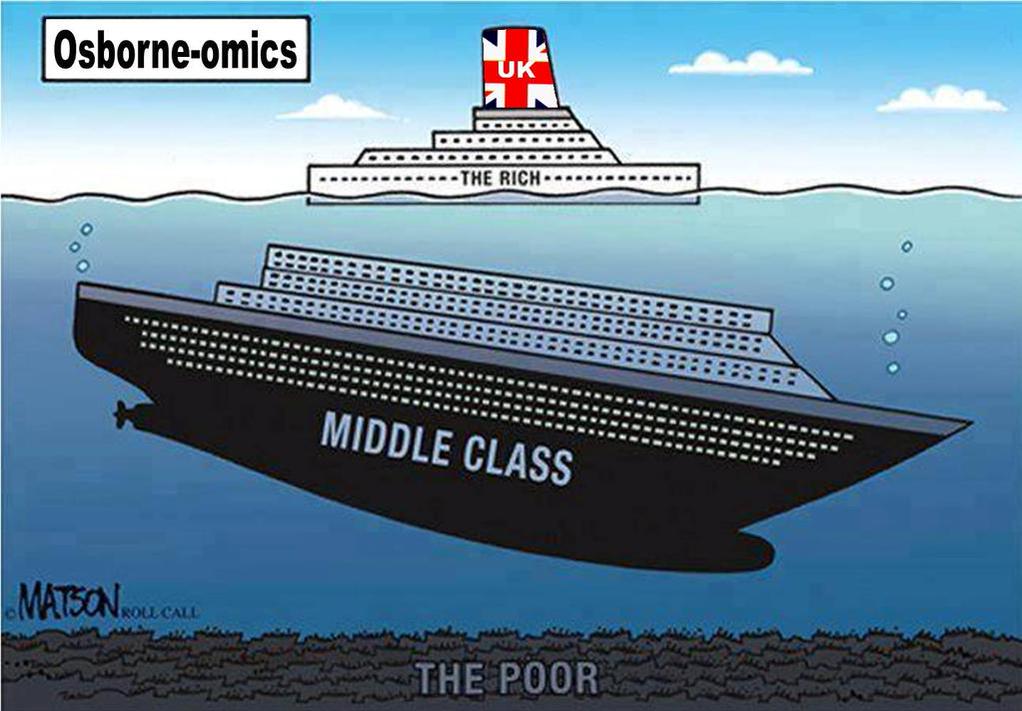
Beyond the wish to block unwanted parties and candidates, there is a general and growing dissatisfaction. Above all, the “Middle Classes” are joining the “workers” and the marginalized at the bottom.

b-cisxdiqaa7qj_-jpg-large

That can only help Labour, despite the misgivings many feel about its MPs and leaders (the obvious example being Diane Abbott). The success of the Corbyn faction and its vanguard, Momentum, may unsettle some voters, but may give rise in others to the feeling that at least Labour is fairly solid ideologically, not a chaotic mess. That is bound to play to Labour’s advantage electorally. Contrast with the Conservatives. This cartoon portrayed the way in which Theresa May achieved office by default:

CnLGOc5XYAALLJdThe next general election will probably favour Labour, though probably not enough for it to win a majority in the House of Commons. After that, one can foresee continuing mass immigration, continuing slide in public services, continuing disparity in wealth. That will be the moment when a social-national party can strike. First of all, one must exist, however.

The General Shape of a Future Society

We should be aiming at a society which contains the good from the present (and, therefore, past) while being oriented toward the future. Humanity is a work in progress. Society is a work in progress.

The basic template for a future society, even in the short-term, can be found in the Threefold Social Order concept:

https://en.wikipedia.org/wiki/Social_threefolding

This is not some castle in the air. Many of the concepts within the overall concept of the Threefold Social Order are already part of UK society to a greater or lesser extent: religious freedom, freedom of thought, equal treatment under the law, the separation of the economic, political/legal and spiritual spheres or realms. Even since, say, 1989 (when old-style socialism died), there has come about a greater acceptance that, for example, the State should not monopolize education, that the State should not directly run business enterprises etc. There have been retrograde aspects too, though: increasing actual slavery, a huge increase in quasi-slavery or economic serfdom (including “welfare-to work” schemes, as well as diminution of employee rights and workplace conditions), the “National Curriculum” in State-run schools etc.

Necessary Changes and Structure

First of all, the migration invasion must be halted and a plan developed to remove as many non-Europeans as possible from the UK and Europe. There can be no decent future for UK citizens unless at least most are of British/European origin and culture. As Milton Friedman said, also, “You can have open borders or you can have a welfare state, but you cannot have both.” The Labour Corbynists have not all, by any means, awoken to this truth.

Special-interest groups, notably the Jewish Zionists, must not be allowed disproportionate influence or power. That applies to politics (eg Westminster seats), the Press and other mainstream media, professions, the ownership of business enterprises.

All citizens should receive a “Basic Income”. Robotics and computerization are advancing to the point where perhaps a third of the jobs in the UK might go. The choice will either be Basic Income or Iain Dunce Duncan Smith-style DWP snooping, bullying and serfdom, i.e. forced “make work” projects run by carpetbagging companies, validating payment of what is now often called “welfare” (social security).

The State will not run business enterprises, in general. However, it may be that the security of the State and of society requires the State to run or at least tightly to regulate some enterprises: railways, water supply, electricity supply. Having said that, technology may lessen those cases, as in individual electrical power generation via solar, wind, hydro.

Private business should not run what are, properly, State functions: prisons, the armed forces, social security provision overall.

There must be freedom of expression on political, social, historical matters.

The State can organize or fund some things without actually owning or, on ground level, running them: a UK-wide wildlife grid (possibly composed of land owned largely by non-State owners) is one example.

There is a necessity for improvement in several everyday areas: housing must be built or rebuilt to give everyone a decent home and garden space. No-one should own several and certainly not dozens or hundreds of dwelling-homes. There must be a minimum per-person amount of space within every new house or flat, a higher level than usually found at present.

Local transport should be free of charge.

Higher education should regain its credibility: standards must be improved. Grants can be given to the best students, but others may have to do without and perhaps not go to university. The corollary is that a university degree should not be necessary for most, perhaps all, occupations. Other means of selection can be worked out.

There should be huge expansion of branch rail lines using light, ultralight, narrow-gauge etc trains, mostly operated by robots.

A grid of new wide canals should be dug, for leisure, environmental and business use (freight and passengers).

The airship or Zeppelin can now come into its own as a UK-wide passenger-carrying form of transport. The tops of some high office buildings in cities such as London can become passenger hubs (while commuting exists as a lifestyle).

A New Society Needs New People

The aim must be to create a new people for the future. People create society; society creates people. It is symbiotic. This can be a “virtuous circle”: a highly-educated, highly-cultured people, which in turn will result in society being improved over time and so again. This is something worth struggling and fighting for.

Basic Income and the Welfare State– some ideas and reminiscences

Overview

At various times in history, there was either no social welfare system at all, or one which depended on spontaneous or systemized charity: individual alms-giving in the Christian, Muslim, Buddhist, Hindu and other traditions; more organized supply of food, shelter or money as in the ancient Roman dole, Renaissance attempts at poor relief and the cheerless “workhouses” of 19thC England (which in fact continued in places in some form or another until the Second World War and the emergence of the postwar Welfare State).

It is a matter for historical debate whether organized “welfare” in Europe started with the mediaeval Roman Catholic church or in the 19thC with Bismarck, who set up in Prussia and then in the unified Germany a system not unlike those which emerged later in other European countries (eg in the UK under Lloyd George) and further afield: for example, Uruguay had one of the most generous “welfare” (social security) systems in the world until it collapsed in the 1970s under the weight of its expense.

However, the Roman Catholic and other religious and other non-State providers of “welfare” rarely give out money. They supply, variously, food, shelter, often educational and medical help.

The more modern “welfare” systems, eg in the UK, were based on the idea of social insurance: during a working lifetime, you paid in; in periods of unemployment, disability, sickness, old age, you were paid out. In the UK, this has become largely notional. Some tax is still designated as “National Insurance” payment but of course is just an extra type of income tax, fed straight into central funds and not in any way ringfenced.

Some anecdotal evidence

Like many people of my age (b. 1956) in the UK, I had to request State assistance occasionally in the past. This is or was far more common than generally supposed. The writer J.K. Rowling, now supposedly worth £100 million, has described how only the more generous –compared to today– social security of the 1990s enabled her to sit in cafes (partly to keep warm) with her baby, and to write the stories that not much later became Harry Potter. More egregiously, the vampire of Britain’s social security system, Iain Duncan Smith, has admitted that he claimed social security after having left the Army (ignominiously, having only achieved the rank of lieutenant after six years). In fact, Smith, or as he prefers to be known, Duncan Smith (the Duncan not being part of his original surname), claimed social security under false pretences, making him a hypocrite as well as what Australians apparently call a “dole blodger” and (as seen in the scandal of his fake CV and Parliamentary expenses) a fraud.

Certainly, there are those who abuse the social security system. In the past, that was far more common, because the almost Stasi level of control and surveillance that now exists for claimants in Britain had not then been put into place. The system was itself less punitive, less quick to demand impossible levels of enthusiasm for what is now and vulgarly called “jobseeking”.

I knew one woman, a citizen of the Soviet Union, who, having run away from her husband in New Zealand, came to the UK and claimed social security (including disability benefits). How could this happen? Well, her ex-husband, though resident in New Zealand, had a British passport (was British citizen) and had the right to reside in the UK. That meant that his estranged wife could do likewise, even though she had no other connection with the UK and had never even landed there! In fact, that woman never had a job (beyond odd occasional part-time jobs teaching Russian conversation at evening classes). She was supplied with monies for being slightly disabled (kidneys), monies for not having a job, monies for having two children of school age. She was also supplied with free housing. I encountered that person in 1981. She was, I heard, still collecting from the “British taxpayer” in 1996 and is almost certainly still collecting (now State Pension too!) in 2017…All monies legally-obtained, without fraud of any kind.

Another case. A young man (in the mid-1990s), from a very affluent family, who, nonetheless, was “unemployed” and so received whatever unemployment benefit was called then, as well as Housing Benefit for the large flat he occupied in Marylebone, London. In fact, the flat was owned (under cloak of a private company) by the young man’s mother (who lived in Surrey), while the young man had his own freelance work as both a designer and a male model. In this case, there certainly was some kind of dishonesty, both on the part of the young man and his mother. I doubt that they could do the same today, but I last heard of them over 20 years ago, so do not know.

The above two examples seem to show abuse of a system, but here is another case from the 1990s; less obvious, less easy to judge: a single mother of a school-age child, she about 40-y-o, with no relevant educational qualifications. This lady had a small, indeed micro, informal business, making coffee and selling home-made sandwiches to the ladies having their hair done at a large London hairdressing salon. A “Trotter’s Traders” enterprise (“no income tax, no VAT” etc…). About £200 profit on a good week, but more usually less. Not enough to live on, even then, paying Central London rent. That lady was getting State benefits as a single mother; she was getting Housing Benefit too. Now it could be said that she was “defrauding” the State, but her earned income was not enough to live on without State help. Had she given up her private work, the State would have saved nothing, the economy generally would have suffered from her not earning and spending, she and her son would have suffered considerably.

Basic Income

For me, the answer to the above lies in Basic Income, a certain amount paid to every citizen (nb. not to everyone just off the boat, or those who have walked through the Channel Tunnel). The level at which it is set will be, inevitably, contentious. Some will end up with less than under the existing system of State benefits etc. However, it has the merit of certainty. Everyone knows that x-amount will be paid weekly or monthly; those over a certain (to be decided) income can have the Basic Income payment clawed back via the tax system. It may be that everyone should also get free local transport.

The benefits of Basic Income are several. Every citizen will have the basic wherewithal of life: food, shelter, transport etc, without being forced to jump through hoops, without being bullied or snooped upon. The State will save vast amounts on administration, salaries of penpushers, maintenance of useless and expensive buildings such as those called (another vulgarity) “jobcentres”. There will be little scope for fraud and deception, because everyone under a certain income will get the same amount. If society wants to provide the disabled, sick etc with more than the basic amount, then an assessment programme (decent, honest, not cruel, unlike the existing ones) can be put into place for that.

This is obviously the way to go.

Priorities in State Funding

Preliminaries

We have, in the UK, been subjected to a so-called “austerity” spending regime for about 7 years now, the burden (in reality) of which has fallen on the poorer citizens, if only because there is an almost irreducible minimum which anyone requires in order to survive in a basic civilized way in our society. It matters not that a statistician may say that the wealthiest have seen their incomes fall more than the poorest, because if a rich man has a discretionary income of, say, a half-million a year (and many have 10x that) and if that is reduced by, say, 20%, he still has hundreds of thousands of pounds beyond what is necessary even on an opulent level of expenditure. The poor man on a net income of, say, £10,000, suffers directly (meaning in terms of food, shelter, transport) if his income is reduced by only 10% or even 1%. The figures for income do not in any case take account of the huge rise in the capital of the UK’s wealthier citizens in the past decade or two.

It can probably be agreed generally that the State has and must have spending priorities, even in less “austere” times. While money is not the fixed or finite amount kept (as the simpler people seem to believe) in a large chest at the Treasury or in the Bank of England, there is, over time, a limit to State expenditure no matter what system of government exists.

The above being so, we should examine what should be the spending priorities of the proposed ethnostate. We already know the priorities of the present “Conservative” government: a reduced social security “welfare” roll, tax breaks for the wealthier citizens, expenditure on Trident submarines, HS2 high-speed train line etc.

The Expenditure Priorities of the Ethnostate

Firstly, the proper defence of the realm. That means defence services under British control (unlike Trident). In the absence of multilateral disarmament, that has to include nuclear weapons, though there are cheaper alternatives to Trident. A Navy which has the capacity to guard the British coasts (rather than those of supposed allies halfway around the world). An Army of suitable size for defence but not one to be used in support of American or Israeli geopolitical aims. The same for the Air Force. Defence in the wider sense too: internal security, meaning a police force which has as its aim the preservation of public peaceful order, rather than enforcement of some decadent pseudo-liberal agenda; also, security agencies focussed on protecting the public.

Secondly, a healthy population (that that population should be fundamentally white European is a given). The health of the population requires clean air and water first. That requires State regulation and supervision. After that, healthy food: State support in various ways for organic and biodynamic agriculture and horticulture; discouragement of unhealthy foodstuffs (eg via taxes, imposts etc). Then there is the question of encouraging the population to take moderate exercise: State funding of, not Olympic athletes and other careerists, but facilities for the generality of the population, meaning health clubs, sport clubs, swimming pools, properly-policed and well-kept parks (for walking exercise as well as general public amenity); National and regional parks, for the same reason. Information services to the public, ranging from general health education through to suitably-healthy food recipes etc.

Thirdly, funding for a health service. The overriding necessity for a healthy population, as well as the impulse to compassion, indicates the necessity for a free-at-point-of-use health service akin to the N.H.S. This blog post is concerned with spending, so here is not the right place to address the great changes that should take place in the N.H.S., both attitudinally and otherwise. Suffice to say that the health service must be properly funded, so that where the preventive health measures are insufficient, medication and surgery are available.

Fourthly, education. Education should be a matter for personal or family choice in terms of curriculum, type of educational philosophy or particular school or university, but the State should only subsidize what is useful for the State as instrument of the people, the nation, the race. Thus private/independent schools must be allowed to exist and (subject only to the welfare of the pupils) free from “national curriculum” and the like, but the State need not subsidize them beyond allowing them tax-free status, which they already enjoy. Likewise, students must be allowed to attend university freely in terms of choice of institution and course taken, but the State can choose which students, which courses, which institutions to subsidize. For example, it may be that the State gives the top 10% of students (however assessed) full tuition and maintenance grants, others less generous provision, still others nothing at all. These others would have to find loans or other funding. Another example: the State might decide to give financial subsidy to certain courses and not others: perhaps to Engineering and Chemistry rather than to American Literature or Gender Studies.

Fifthly, transport. It should not be the business –and certainly not a priority– of the State to fund luxury travel for the few. Concorde was an error, albeit that it was a tremendous technical achievement: State subsidy so that a relatively small number of extremely wealthy persons could save time crossing the Atlantic to New York or Barbados. Subsidy in development, in manufacture and in terms of ticket pricing. Wrongheaded all the way through. HS2 is a less-egregious but similar error. Transport must be improved in the UK, not by “high-speed” rail, but by a web of more ordinary or standard rail lines. These can be supplemented by a further network of branch lines, probably light rail and ultralight or narrow-gauge rail. Technology is moving to the point where these can be unmanned trains, especially on branch lines where safety is not a major issue.

There should be dug a network of very wide canals for freight transport. These will also have environmental benefits and might also be used for passenger transportation.

The possibilities of lighter-than-air travel (Zeppelins) have not been fully explored. This form of transport might have great use for commuter and other passenger transportation. Government may need to help.

Bus travel should be maintained, at least at a basic level, throughout the country. It knits together rural and urban areas and may need subsidy.

There is an argument for local or even regional travel to be free up to a certain radius. Modern technology in terms of ID cards, pay cards etc makes this administratively possible.

Sixthly, though its place in the list might be disputed, Basic Income. The level at which this can be paid depends on the overall economy, but it is now becoming clear that, with advances in robotics and computerization, the nexus between work and pay is loosening. Citizens, whether old, sick, disabled, unemployed or otherwise, all need a basic amount of money in order to exist. A “floor”. The regressive “welfare” “reforms” of recent years are absurd and unreal as well as being unjust. It is time for the State dismantle the huge (and hugely expensive) DWP bureaucracy and to keep only that which pays out money (as well as a core of investigators to deter real large-scale fraud).

The above list should enable the State to promote a healthy, sheltered, fed, clothed and protected population capable of advancing toward a higher level in terms of evolution.

The Future of Work and Pay

It was, I think, that great genius Rudolf Steiner who first made the point that work in ancient times (meaning here the 4th Post-Atlantean Age which finished in the early 15th Century AD) was a matter, fundamentally, of slavery, or, to put it another way, of bond. The typical worker was a slave or serf, who worked because he or she was forced to work. There was no pay as such, but some form of food, shelter and clothing was provided. Any monetary reward was in the form of discretionary gratuity, not a matter of right. The worker belonged to the owner or master.

Not everyone was a slave, obviously. Apart from the slave-owning classes, there were those who were free citizens or subjects, who worked in various fields and were paid for doing so, but these were a minority.

Over the centuries and particularly since the Renaissance, in our 5th Post-Atlantean Age, the typical form of labour is that of paid work. The worker works and, in return, (i.e. transactionally) is paid money. This did not suddenly change in 1415 (supposedly the notional year of change from 4th to 5th Post-Atlantean Age), but was gradual and in some respects even today is not complete. For example, it was until very recently common in the UK for farm workers to be paid small wages, but to receive free accomodation, tied to the job. The “tied cottage”. Likewise, there have been retrograde movements alongside the general movement forward. The various Communist-inspired societies of the 20th Century were in that sense backward, but found that people would not work or work effectively as slaves. Thus, in the Soviet Union, “War Communism” did not last long and was replaced by the New Economic Policy in the 1920s. Stalinism tried to turn the clock back by collectivizing most agriculture and by having millions literally slaving in the so-called “GULAG Archipelago” of labour camps, but at the same time had to pay most workers at least some form of salary. In the Soviet joke, “we pretend to work and they pretend to pay us.” In some parts of the world (some Caribbean islands etc, parts of Russia too) the slave or serf of the 19th Century was only forced to work for the master’s benefit for part of the week, the rest of the time being free to farm or forage for himself.

The Soviet labour system was of course partly an outcome of previous Russian history. Few now know that serfdom in Russia was actually brought in, in its harshest forms, after 1400; indeed, the strictest forms were introduced after 1600: https://en.wikipedia.org/wiki/Serfdom_in_Russiahttps://en.wikipedia.org/wiki/Serfdom_in_Russia.

In Russia, as in the United States, the problem with slavery, serfdom and similar forms of servitude, was their economic inefficiency and social demerit. In North America, which had had, from its beginnings in British colonial rule, slavery applicable only to blacks, there was, nonetheless, a lesser form of “slavery” or “serfdom” known as “indentured servitude”, which applied to white people (usually English): https://www.encyclopediavirginia.org/Indentured_Servants_in_Colonial_Virginia. This form of forced labour lasted until the end of the 18th Century but had largely died out by the time the USA declared itself independent of Britain. At one time, over half of the white population of Virginia (where the system was probably at its most common), was forced labour. Indentured servitude was finally outlawed by the 13th Amendment to the U.S. Constitution; it continued elsewhere (notably in the Caribbean) until the mid-19th Century.

Even in the late 20th Century, there were attempts here and there to introduce forced labour as an economic model for the whole of a society. The Khmer Rouge “Year Zero” society in “Kampuchea” (Cambodia); North Korea (in part); rebel-held parts of South America. The generality of the world, however, had, by 1989, moved on. Russia and China moved to a typically “Western” pay-for-labour system. Europe had been evolving such a system for many hundreds of years.

The 6th Post-Atlantean Age will bring in, as a general way of life, the system of “work as free gift”. This seems Utopian today, of course. The Greeks and Romans (even their greatest thinkers) could hardly if at all conceive of a society without slavery; neither, it seems, could some of the landowners in the Americas or the Caribbean as late as the early 19th Century. Thomas Jefferson himself struggled with the practicalities of a society without slaves: https://en.wikipedia.org/wiki/Thomas_Jefferson#Slavery.

Now, when we speak of the 6th Post-Atlantean Age, that will not start until about 3500 AD, long in the future. However, just as paid work existed even in Roman times (even in the Roman Republic, some 1500 years before the start of the 5th Post-Atlantean Age), work as free gift can exist in places even today. When people volunteer for work in charity shops, on environmental projects etc, we see small flashes of that future world.

Consciousness is vital: to volunteer for a charity is something of the future; however, to be forced to work in a charity or elsewhere, in order not to have State benefits cut off, as in the policies implemented by Iain Duncan Smith and the Jew “Lord” Freud, is something from the previous Age and can properly be described as evil (being, in the “theological” sense, in error).

“Man cannot live by bread alone”. Profound words which, however, leave out the necessary addendum, “Man needs bread in order to live on Earth”. In the earlier Age, “bread” (i.e. the means of earthly subsistence) was supplied (in principle) by the owner of the work force. In the present Age, “bread” is bought by the work force for money and in return for work. In the future Age, work will be given freely. In return, the society will give freely to supply the necessities of life. Karl Marx had an intimation of this in his famous axiom, “from each according to his ability, to each according to his need”: https://simple.wikipedia.org/wiki/From_each_according_to_his_ability,_to_each_according_to_his_need.

We in the more advanced countries stand in 2017 at a point where computers, robotics, indeed the organization of society generally, lead to a situation where many forms of human labour may very soon not be at all required and will be taken over by inorganic or hybrid machines. What then happens to the huge numbers of people displaced from the labour market? The conventional answer, the “Iain Dunce Duncan Smith” answer is that such people (possibly half the population of the UK by 2050 or even 2030) will be forced to “seek [non-existent] work” or be more or less starved and made homeless.

Not only is the conventional approach unjust, but it will inevitably lead to social and political upheaval on a scale not seen for decades, if ever (at least in the UK). There has to be a social mechanism by which people are supported economically whether they have paid work or not. Here we have, at present, “tax credits” and other forms of social security or “welfare” benefits, including the “unconditional” or “non-judgmental” forms such as Child Benefit and State Pension.

Basic Income must come and eventually will come. It will enable people to exist, at least on –indeed– a basic level without needing to sell their labour in order to survive. Not all will offer work somewhere where it is needed, as a “free gift”. Some, however, will. It is a question, in the individual as in society at large, of the evolution of consciousness. The key point is that Basic Income is a societal and an economic necessity.

Update, 11 March 2019

People generally are now beginning to wake up to both the desirability and the practical possibility of Basic Income:

https://www.theguardian.com/politics/2019/mar/11/scrap-tax-free-personal-allowance-and-pay-everyone-48-a-week

Aspects of the New Society

Political and economic organization

The basic template will be taken from the guidance given by the great mind of Rudolf Steiner, in his Threefold Social Order, sometimes called the Threefold Social Organism or simply Social Threefolding: https://en.wikipedia.org/wiki/Social_threefolding.

In other words, the key is finding the right relationship between the functioning of the economy (fundamentally private rather than State-run) and the rights of citizens. That does not mean that a few strategic economic areas or enterprises, or those of direct impact on the population (eg some utility companies, some railways etc) can never be State-owned or at least heavily State-regulated.

Population

An advanced society cannot be built on a backward population. The UK and other European societies of the future can only exist and advance if at least fundamentally European. The mass immigration from outside Europe has been disastrous and has greatly set back (especially Western and Central) Europe and, therefore, the world. However, we are where we are. We cannot say “10% of our population is non-European and so we cannot create a better society”. It has to be admitted that at some level, the non-European population within the general population might be so numerous that society can only decline or collapse. Tipping-points exist. The UK may not be very far from that tipping-point now. Certainly the major cities are close to it. For the purposes of this blog post, though, we must just keep in mind that there is an iron necessity for a (fundamentally) European population.

Education

According to the principles of the Threefold Social Order, education is within the spiritual-cultural sphere. It should be run neither by the State nor for private profit. That is not to say that it should not be regulated or unable to accept private monies via fees etc. It should not be taxed but accepted as having charitable or at least non-profit status.

It might be objected that, in the UK, private education tends to perpetuate social differences. There is some truth in that, but not much. The major drivers of inequality (apart from race and culture) are those of family capital and income. The education of children is rather a red herring in terms of the equality-inequality debate. There is also the point that parents (and children themselves) have the right to choose. The fact that choice may be rationed by available money does not destroy that right, but challenges both the State and society as a whole to make the means available to support educational choice.

The whole concept of the university “degree” should be looked at. This is a mediaeval concept which has probably outlived its usefulness. Bachelor, Master, Doctor, these have more in common with the Europe of Nostradamus than the Europe of 2017. In the UK, the true value of a university degree has been lowered (indeed rendered in some cases valueless) by award inflation and the mere fact that half the population now has some kind of degree.

Methods and conditions of work

The citizen must be protected from exploitation. That is a primary duty of the State. That means that maximum hours must be laid down. There might be flexibility within that, for example by laying down a weekly maximum of hours (say, 40 hours, but it might be 35 or even 30) but permitting the employer/employee to agree how those hours should be fulfilled within the working week: 5 x 8, or 4 x 10, even 3 x 13.33, or a work-week split into different hours on different days.

There is an argument to keep at least one day, traditionally of course Sunday, relatively free from work and commercial activities. There must be a rhythm to the week and a fallow day promotes that. Obviously, there are exceptions which would have to exist.

Basic Income

Robotics, computerization, automation are developments, the advantages of which are going mainly to a few within society. At the same time, they are destroying, for many, work as a way of getting even a basic living (in the UK, this was recognized years ago and led to the introduction of Working Tax Credits etc). The nexus between work and pay is dissolving.

The answer is the introduction of a measure of “basic income” not in any way dependent upon or conditional upon work done, availability for work etc. In that way, most of the expensive bureaucracy around social security or “welfare” can be eliminated: large buildings in every town, huge numbers of low-grade staff doing repetitive work processing applications, snooping  on and monitoring claimants etc. Whether a basic system should have tested aspects added for disability etc is a matter for debate. As to the amount of money given, again a matter for discussion. Perhaps £10,000 or £15,000 per person per year on present values.

In the UK, Basic State Pension is a form of Basic Income which already exists. Child Benefit is another form of Basic Income. Neither are conditional upon the income or capital earned or held by the recipient.

Contrary to what many still believe, basic income has the potential to free “entrepreneurship”, volunteering and ordinary “work more to get more” within the working-age population.

Transport

Here we are hostages to technology. It may be that driverless cars will soon exist in large numbers. It may be that lighter-than-air craft will be brought into service on a scale hitherto unknown. We do not know for sure. As matters stand, it seems clear that new initiatives are required in the field of railways (including driverless, light, ultralight and miniature), as well as wide canals for passenger and freight transport. There are trains in tubes being developed in the USA which may travel at 800 mph. All one can do is keep open to the future of transport while suggesting suitable policy for now.

Religion or spiritual belief

Religion should be (and is, in more advanced parts of the world) a question of individual choice. It is not for the State, or a dominant theocracy, to lay down what a citizen should believe or adhere to. However, that does not mean that the State cannot regulate or ban certain practices of religious groups. Thus toleration of religion as such need not import toleration of backward practices such as genital mutilation.

Conclusion

These few paragraphs are not meant to be a comprehensive manifesto but a springboard for ideas.

The Society of Measure

In the mid-20th century, especially in the 1960s, it was commonplace to see articles or features about the supposed coming “age of leisure” which would be facilitated by machines and advanced industrial techniques. Now (since the 1980s), those predictions are often laughed at, as society (eg in the UK) finds itself enmeshed in the “long hours culture”, the workaholic culture, the low pay economy. Was this inevitable?

The fact is, that the predictions of the past about a future “society of leisure” left out one crucial fact in particular: that the benefits of industrial efficiency and the emerging developments in computing, robotics etc would be taken by the owners of capital, by shareholders and others.

Since the 1970s, real pay (whether absolute or per hour) of most employees has stagnated and indeed even declined across the advanced Western world generally. At the same time, the profit accruing to capital and the remuneration of the upper strata of executives, higher managers and their professional counterparts has rocketed.

The above was true to some extent even in the Soviet Union, except that there, the developments in technology and efficiency were not spread equally across all industrial sectors and the benefits were used mainly for State power and prestige: military and naval upbuilding, space programmes and other large-scale projects such as the BAM railway.

The result (focussing on the West and particularly the UK) is that people have to work ever-longer hours for ever-lessening real pay. If public services, amenities and State benefits are taken into account, the contrast between the optimistic promises and predictions of the 1960s and 1970s on the one hand and the realities of 2016 on the other is even more stark.

There is another factor to be taken into consideration: there are three “work/leisure” faces:

  • work as unwelcome and/or repetitive drudgery, with little free time;
  • leisure as mere absence of work, for whatever reason;
  • creative work, balanced with stimulating leisure or free time

Adolf Hitler was referring, by implication, to the above alternative lifestyles when he noted “the Aryan ideal of creative work“, to be contrasted with (as he saw it) uncreative Jewish profit-making, as well as equally-uncreative paid drudgery [see Adolf Hitler, Mein Kampf 2:7]. In explaining, for example, the symbolism of the red-white-black NSDAP banner, Hitler wrote:

And indeed a symbol it proved to be. Not only because it incorporated those revered colours expressive of our homage to the glorious past and which once brought so much honour to the German nation, but this symbol was also an eloquent expression of the will behind the movement. We National Socialists regarded our flag as being the embodiment of our party programme. The red expressed the social thought underlying the movement. White the national thought. And the swastika signified the mission allotted to us — the struggle for the victory of Aryan mankind and at the same time the triumph of the ideal of creative work which is in itself and always will be anti-Semitic.

In our contemporary society, we see the temporary victory of uncreative work/leisure modes: on the one hand, soul-less profiteering (whether by manipulations on stock and bond markets or by buy-to-let parasitism etc); on the other hand, everyday work becoming less and less interesting for most people. Soul-less economic serfdom. Creativity and a decent work/life balance become the province of the artist, the maverick off-grid person, the creative writer. Most people are excluded.

At the same time, those without paid work and who are under pensionable age cannot even enjoy the one major benefit of being unemployed: leisure! They are harried and chased around by Department of Work and Pensions drones. In other words, in place of actual paid work, there is a ghastly and ghostly simulacrum of work consisting of the tick-box applying for (often non-existent) job vacancies or the attending of pointless “courses”, in return for which the unemployed claimant is paid a shadow version of a very low real salary: State benefits.

It is estimated that, between now and 2030 or so, developments in robotics alone will mean that 20%-30% of UK jobs will disappear, including some presently “professional” ones (eg in the medical and legal fields). The numbers of unemployed, under-employed and poorly-paid will increase. The “precariat” will include ever-more people.

The solution to all of the above is not a “society of leisure” but a “society of measure”:

  • strict limits on hours worked by employees, perhaps 30 hours per week;
  • strict enforcement of break-times within the working day;
  • strict demarcation between work-time and free-time (leisure time);
  • strict limitations or barring of employees being “on call” when at home;
  • payment to all citizens of “Basic Income”
  • more equitable distribution of the fruits of the economy.

Such a society will have time for those important things which have traditionally been part of “leisure time”: home, family, culture, rest, sleep, entertainment, sport. This must be the way to go and will cure many of the ills of the present society.

Text reference link:

http://www.angelfire.com/folk/bigbaldbob88/MeinKampf.pdf