Category Archives: Reminiscences and Musings

Where Are The Limits Of Religious Freedom?

One of the pillars of a future “Threefold Social Order” society will be religious freedom. Such freedom is also said to be a pillar of our existing “Western” model of society.

“We” supposedly all agree with that ideal, meaning of course “we” white Northern Europeans. Of course, once one gets away from Northern Europe and its wider offshoots in North America, Australasia etc, that consensus ends. In the Middle East, much of Africa, South Asia etc, freedom of religion either does not exist, or exists only as a fragile plant.

In Europe, we see that the migration-invasion, and the societal takeover via a high birth rate of, in particular, Muslims, is threatening our fond belief that we have and always will have religious freedom. The pendulum is swinging. Whereas in the Middle Ages, Roman Catholic Christians repressed other religious communities and launched crusades to conquer Muslim lands (a simplification, of course, but let’s leave that aside), today the Muslims are invading Europe, not as armies (as happened several times in the past) but as migrant-invaders (immigrants, “refugees”, “asylum-seekers”, and as babies born in Europe…). If this continues unabated, we can expect to see more attempts to shut down religious freedom for non-Muslims, as shown in this cartoon:

CX9ZsZOWEAAky2e

This process can be seen in the UK. There have in fact been Muslims in the UK for a long time, at least in small numbers. An Islamic centre and cemetery was established on the edge of Woking, Surrey, in the 19thC (it can be seen just before trains enter Woking Station, on the Southern or lefthand side as the train travels from London). However, the political or societal strength has grown in more recent years, along with the numbers.

In the 1970s, the Muslim element rarely displayed itself politically. I myself recall that posters on the Underground in 1976 or 1977, advertizing the Libyan-funded film “Mohammed, Messenger of God” were often defaced, always with the same words: “Islam forbids representations”. That vandalism, along with “community” representation to the UK authorities and the film distributors, resulted in the film being renamed “The Message”.

Now, 40 or so years later, times have moved on. Despite the Muslim population of the UK only being between 5% and 6% (officially), there has been a gradual infiltration (I do not say that it has been particularly organized) into mainstream political parties, in areas where Muslim numbers are significant: parts of the North of England, the Midlands, smaller areas within London and elsewhere. The influence of Sharia law and courts has grown; the Church of England has shown itself craven (as indeed it is when confronted by the aggressive Jewish-Zionist element). In some cases, Christians wishing to display their faith, e.g. by wearing crosses etc, have been given the choice of not doing so or being dismissed.

I repeat, officially the Muslim population of the UK stands at little more than 5% (about 5.1%) so far, but a high birth rate may propel that to 10% in the short term and later to…who knows? What will then be its influence and power?

As to the Jews, in numbers they are small, somewhere between 250,000 to 280,000, though there are also very large numbers of part-Jews, many of whom have little or no day to day connection with Jewish religious practices. Their influence and power comes not from crude numbers, but from concentration in and control of key strategic areas: finance, law, politics, mainstream media and, now, large Internet organizations.

Christians and Muslims accept persons of any race into their communities, at least in principle. Both Christians and Muslims have traditionally accepted it as an article of faith that persons of other religions should be “converted”, whereas Jews do not seek converts (though some modern branches do accept small numbers, e.g. after marriage to Jews). Judaism, therefore, has never launched “crusades” or the like. The Jews do not aim to make the world Jewish, only to be the major influencing, controlling and profiting element in or over the world.

The modern Christian world of the post-Enlightenment has, in principle, accepted that people can be Christian, Muslim or Jew (or whatever else) freely. That is easy enough when it comes to beliefs, ideas, even public worship in particular buildings, though (as mentioned above) it took Europe a long time even to accept those aspects. Much of the world does not go that far.

Where things become more difficult is when the religious practice of a community contravenes the law or morality of the society as a whole. Halal slaughter, kosher slaughter, which revolt the sensibilities of thinking non-Muslims and non-Jews. Male and female genital mutilation by Muslims and Jews. The cries (now electrically amplified) of the muezzin from the minaret of the mosque. These are cases where, in my view, the demands of the society to prevent cruelty, the wish of Europeans not to hear constant mosque noise in their neighbourhood must prevail over the practices of both the Jews and the Muslims.

To take an extreme case: there were societies in the past, Aztecs, Incas, even Europeans of ancient Europe, who engaged in ritual sacrifice of humans. Would we accept such practices today just because “it is part of their religion”? I think not.

There have been problems in the recent past in relation to other religions: the Jehovah’s Witnesses, with their unwillingness to save the lives of their children via blood transfusion; the mental and sometimes physical cruelty to children of some small “Christian” sects such as the Plymouth Brethren; the contrived scam that is Scientology (the British government of the 1960s fought a long battle to suppress Scientology, because of its perceived cultic and controlling behaviour). There could be other examples given.

It might be said that even mainstream Christian religions have done very evil things, e.g. the sex scandals in the Roman Catholic Church, though those involved acts not sanctioned or encouraged by the religion as such.

In the end, society, meaning the political element, must draw the line between the zone where religion holds sway and the zone where group or community religious practice must give way before the general secular law which should protect people and animals.
An Embarrassing Morning in Court

Another in the series of vignettes about my perhaps slightly unusual life at the English Bar. The disaster recounted below occurred in early 1994.

A children’s author called Lemony Snicket wrote a book called A Series of Unfortunate Events. I once represented someone who had suffered a series of such events.

A Nigerian, X, had been born in the UK where his affluent parents had been on holiday. A few weeks after the birth, the family returned to Nigeria, where X went to school. It was then decided to send X to university overseas. An American university, I think in the Midwest, was chosen and X attended that institution for a few years. During that time, X also engaged, like many Nigerians, in business activities of some sort. Unfortunately, as a result of these, he was charged and convicted of a Federal offence of fraud, subsequently serving a one-year sentence in Federal prison.

X had entered the USA on a visa which was invalidated once X was convicted of a Federal offence. Thus, when the year in prison had finished, X was incarcerated in another Federal detention facility as a person facing deportation. X wanted to appeal his conviction and so resisted deportation by filing an appeal against that too. He was moved to a Federal facility in Louisiana. According to his own account, the place was a “concentration camp” amid heat and mosquitos in which place, every day, he was offered the chance to be released if only he would agree to drop his immigration appeal and return to Nigeria. He resisted these invitations for some time, but eventually, worn down by the conditions, conceded.

It was at this point that it was discovered that X had been born in London. The US authorities thenceforth refused to deal with the Nigerian Consulate on his behalf and took him under guard to the UK Consulate in Houston, Texas, apparently the nearest one with authority to deal with the matter. He was issued with a British passport and was then sent to the UK, a country he had only seen as a newborn baby.

X said that he had never been violent, but only argued with the US officials accompanying him, to the effect that he wished to go to Nigeria, not the UK. As a result, X travelled from Houston to Gatwick handcuffed throughout the flight, also forced to wear a weighted leather device attached to one leg, and with two guards guarding him.

X’s travails continued after landing. All other passengers were disembarked, then a police car was driven up to the aircraft and steps brought. X was told to get up but could not, by reason of his leg having gone to sleep. The handcuffs and leg weight were removed. He was then manhandled by the guards and the British police off the aircraft, then literally dragged down the aircraft steps and into the waiting police car. It got worse from there.

Having (according to his own evidence) not wanted to be sent to the UK, X was now held at Gatwick police station and then an immigration detention centre near Portsmouth on the basis that he had no right to be in the UK  and was, notwithstanding the recently-issued British passport, an illegal immigrant! After two weeks in British immigration detention, X was driven back to Gatwick police station, told “OK, you have been checked out and you do have the right to be in the UK”, whereupon he was given the bus fare to Crawley, the nearest town, and released. Thus X found himself in the UK with only pennies in his pocket, nowhere to stay, knowing no-one and nothing.

X eventually managed to get some kind of emergency help with housing from the local council but wanted to move to London. He left Crawley for various reasons and went to London. He applied for housing to seven London boroughs, most of which refused even to consider his request (he claimed). This was the basis for his wish, over a year later, to seek judicial review of the decisions to refuse him and/or the refusal to consider his request(s) at all. I have no idea why his Nigerian family did not help him out with money or air tickets. Maybe the American events had estranged them.

X in person was irritating: an obsessive, fast-talking West African who had obviously decided to stay in the UK and to extract as much benefit as possible. Having said that, I thought that he had been treated very badly both in the US and UK. His case seemed at least arguable. His solicitor was a small Nigerian, almost a pygmy in size, who did not inspire confidence.

On the morning of the “application to apply” of the 2-stage process, I was at the Royal Courts of Justice, my by-then-usual stamping ground, in order to appear before Mr. Justice Laws (later a Lord Justice of Appeal). I had invited an old friend, an elegant European aristocratic lady, to see me in action and then, after my hoped-for initial triumph, to join me at lunch in Hall at nearby Lincoln’s Inn.

Greek tragedy placed hubris as inviting Nemesis. The courtroom was quite crowded with other barristers coming on after me. At first, things went well, despite the fact that, instead of neatly-organized files, the pygmy solicitor’s filing system appeared to be a large black bin-bag. The judge was listening, even perhaps slightly nodding at times (or was that wishful thinking on my part?). Then I struck the reef:

“Mr. Millard, where is the document from each council refusing Mr X?”

“My Lord, there are no such documents. Part of the case of the Applicant is that he requested a written decision in each case and was refused even that.”

“Mr. Millard, I think that I have to see something in writing.”

It was at this point that I felt a tug on my barrister’s black gown. Turning slightly, I saw the pygmy waving a piece of paper excitedly, smiling manically and nodding like a mechanized Victorian toy. Rashly, very rashly, I replied to the judge,

“I in fact appear to be in a position to assist your Lordship”

and only then looked at the paper. Big mistake. It was blank. I turned it over. Blank. I turned it over again, not quite believing this. I must have looked like a character out of a Laurel and Hardy film. I caught, peripherally, the incredulous looks of a couple of the waiting barristers. Sadly, no flying saucer appeared to beam me up and away from it all. I had to say something.

“I regret, my Lord, that in fact I am not in a position to assist your Lordship.”

Thus it was that Mr Justice Laws, later Lord Justice Laws, turned that colour, a mixture of pink, red and purple, that I now call Judicial Livid. His final remarks, in refusing our application, were curt (though not insulting; they did not have to be…).

On the way out of the courtroom and into the corridor, my guest, swathed in furs and jewels, and whom I had hoped would see me achieve a successful result, sympathetically said, “poor Ian”…

Update, 6 April 2020

https://www.dailymail.co.uk/news/article-8190231/Dominic-Cummings-uncle-retired-judge-Sir-John-Laws-dies-coronavirus-diagnosis.html

“All the world’s a stage, And all the men and women merely players. … They have their exits and their entrances, and in his lifetime a man will play many parts, his life separated into seven acts.“

[Shakespeare, As You Like It, Act 2, Scene 7]

Update, 30 August 2023

I see that, since my last update of this blog post, it has received more hits, including a single hit today.

I also saw Laws’ Wikipedia entry: https://en.wikipedia.org/wiki/John_Laws_(judge).

Life is famously short, even when not “nasty” and/or “brutish” [etc], as Hobbes put it in Leviathan. A mere (?) 28 or 29 years ago, there I was, highly embarrassed before the (seemingly) all-powerful and very irritated High Court judge. Now, I am where I am, and that judge is no longer even on the Earth. All things pass…

Incidentally, I only now notice that that judge, Laws, was a mere 11 years older than me, having been born in 1945. I had thought much older. On the sole occasion when I appeared before him, I thought (or would have assumed) that he was at least 20 years older, with his almost circular red (indeed, livid) face surmounted by judicial short wig.

Life is a puzzle, really…

First, Steal A Chicken

This post is one in the line of reminiscences of my life at the English Bar. More exactly, it is another story of my days of pupillage (“on the job training”) as a newly-minted barrister in 1992-93, still under the control of a “pupilmaster” (though, as explained in other posts, my “pupilmaster” was in fact the same age as me, a consequence of my “rolling stone” or “wander-bird” youth). It tells the story of a fairly minor series of thefts, but at the same time says something about UK and even European society generally.

A timeworn joke says that the first line of an old Hungarian recipe for chicken goulash starts, “First, steal a chicken”…Well, in this story there was no chicken but what there was was an Arab Gypsy woman in East London who was expecting a baby. Well, a baby needs all kinds of things and especially clothing, so the family of that woman– a man, a boy of 14, the pregnant woman, our defendant (an exceptionally beautiful girl aged about 18 who was a cousin of the pregnant woman), and another woman– set out one fine morning to steal the requisites. Their chosen emporium was British Home Stores, Ilford, part of East London.

The aforesaid shopping expedition was initially successful, but came to an abrupt end when the “shoppers” were arrested by police as they were getting into their car, laden with their “acquisitions”. A woman store detective had noticed them and had alerted her colleagues and the police.

It is at this point that the story becomes interesting from the “crime and punishment” point of view. The man arrested was not charged, on the basis that he had not entered the store, not handled the goods and had not admitted knowing anything of the thefts. The 14 year old boy, having admitted acting as a look-out (a pretty poor one, as it turned out), received a police caution. The other women admitted theft in the magistrates’ court and were fined £50 each. So that left our defendant, who was called something like Maroush or Marousha.

Now it transpired that Maroush was also going to be sentenced for being part of a gang which had visited towns in Dorset and Somerset and had stolen quite large amounts from shops by distracting the cashiers while the tills were open (in fact, they could somehow get them open, silently and in seconds, even when the tills were closed). Maroush was a minor player in that game but would be sentenced with several others, they like her having pleaded to those offences, after the conclusion of her shoplifting trial.

Now the point was that theft is an either-way offence and Maroush could have pleaded guilty in the “mags”, in which case she would no doubt have received a £50 fine like the others. Why she had decided to elect Crown Court trial, God knows. We only got her case at the Crown Court stage.

So it was that we all appeared at Snaresbrook Crown Court one day. Snaresbrook is a large rambling building near the end of the Central Line in Essex, and which even then had, I believe, 26 courtrooms (Wikipedia says 20, but that was in 1988; trial was in 1992; it’s pretty big, anyway…). One thing that struck me was when pupilmaster and I were provided (by the Crown Counsel) with a copy of a short Home Office report marked “Restricted”, all about Maroush’s clan origins.

It seems that Maroush came out of a clan of Arab Gypsies who lived (no doubt in poverty and on the margins of Arab society) in pre-WW2 Libya. The Second World War dislocated the states and colonies around the Mediterranean. The clan took the opportunity, after the war finished, somehow to get to Italy. They were eventually granted residency, and some, citizenship. The EEC/EC/EU arrived, with its “free movement” provisions. The clan then moved to somewhere where they could live off the host population more easily– the UK. The Home Office report was fairly direct, which perhaps was why it was “Restricted”: one would not want the British people or Press to see the truth…In fact, the report made it clear that few if any of the 5,000 Arab Gypsies of that clan then living in and around London had remunerative work. They all lived from theft, begging and State benefits.

The trial itself should have taken a day, but in fact took three, to the irritation of the judge. Pupilmaster was usually extremely long-winded, almost absurdly so. In fact, because the trial only ended late on the third day, sentence had to be put off to a fourth, because the other “£50 note trick” defs would be sentenced alongside Maroush. In the event, she was –almost inevitably– convicted of the Ilford shoplifting, and was sentenced to, if memory serves, 22 months’ imprisonment, though most of that was for the Dorset/Somerset offences. Still, she would have been better off pleading to the shoplifting, in the mags. She cried in the dock. I felt sad (I was younger and perhaps more sensitive then).

Not sure why that trial has stuck in my mind: the Home Office report? The youth and beauty of the defendant? The manifest silliness of her decision both to fight the shoplifting charge and, far worse, to do so in the Crown Court? All was put to one side over a few beers in the nearby Spread Eagle pub (if I recall the name aright) not long after. Life went on.

Note:

https://en.wikipedia.org/wiki/Snaresbrook_Crown_Court


What Do People Need?

On rereading Andrei Amalrik’s Involuntary Journey To Siberia of 1970, all sorts of impressions were received, most not at all new: the lack of freedom in the Soviet Union, the Kafka-esque Soviet legal system, the primitive life lived by Russian kolkozhniki (collective farm inhabitants) in Siberia etc.

However, at the end of the book, the author’s sentence for being a “social parasite” (5 years internal exile –2.5 years of which to be hard labour on a collective farm or elsewhere–) is quashed on appeal, Amalrik returns to Moscow with the wife whom he in fact married in Moscow and during his exile (because he was allowed compassionate leave from the collective farm or kolkhoz to visit his unwell father). He applies to the housing people in his district and, after some difficulty when he has to share with others, is given a flat with a decent bathroom and telephone.

Now, we are often told and quite rightly that Soviet people generally lived poorly, had to share, in many cases, their accommodation by living in communal flats or kommunalki (usually large flats expropriated from affluent persons during and after the Revolution of 1917 and the subsequent Civil War, though in fact some such shared apartments pre-dated Bolshevism), sharing kitchens and bathrooms etc and given, at best,one room per person (it was usually worked out, in theory, at so many square metres per person or family).

All of the above is true, but when one looks at the situation in 2018 Britain, many are not much better off, and some are worse off. Would a prisoner released from incarceration in the UK be given a flat, even a small one? The most he could expect would be B&B accommodation of a markedly poor sort, and to be put on a local authority waiting list, probably behind a horde of “refugees”, “asylum-seekers” and other riff-raff.

In fact, look at how many British people with full-time jobs live! Many in shared houses and flats, or in bedsit rooms. No better off than Soviet citizens! How many “hardworking” (the label of the past few years) people are living in not very nice shared accommodation in the UK, living off pot noodles and the like?

To go off at a tangent, this “hardworking” thing has become a joke: for example, school students all deserve (increasingly meaningless) “A” “grades” in exams because “they have all worked so hard”. Doesn’t matter if they are thick as two short planks and know only force-fed “facts” (often incorrect, as in the case of “holocaust” “history” etc). They are “hardworking” and so are the “deserving” academic poor. They therefore “deserve” to attend a “uni” where they will also “work hard” to “achieve” an almost meaningless “degree” (an equally-meaningless “First”, in half the cases) before –for many–getting a minimum wage (or not much better) job…

The above thoughts should impel us to think about what people need in a basic way, about what should, arguably, be the State-provided or guaranteed minimum.

Ideally, everyone should live in a decent house or flat, free of worries, with pleasant neighbours if any, while doing work which benefits society. That of course is a counsel of perfection, but that fact should not stop us from aiming at a higher and better form of living for all citizens.

For me, everyone should at least have a home, preferably one where there is reasonable space, reasonable peace, reasonable access to green gardens or wider Nature. Living space should be regarded as a human right, not as a way for buy to let parasites to make profits from the need of others. Everyone should have access to telephone and Internet. Everyone should have access to cheap or free public transport, at least in the local area and arguably within a 20-mile radius of home. Everyone should have (up to a determined cap) free water, electricity, heating. Beyond that, everyone should also have a “basic income”, even if only (in today’s money) £20 a week.

We can move to a society where the basics are provided. When people have the basics, they can work to get more, or to improve aspects of society in other ways.

Notes

https://en.wikipedia.org/wiki/Basic_income

https://en.wikipedia.org/wiki/Andrei_Amalrik

https://en.wikipedia.org/wiki/Communal_apartment

https://www.amazon.co.uk/Involuntary-Journey-Siberia-Andrei-Amalrik/dp/0156453932#customerReviews

https://www.amazon.co.uk/s/ref=dp_byline_sr_book_1?ie=UTF8&text=Andrei+Amalrik&search-alias=books-uk&field-author=Andrei+Amalrik&sort=relevancerank


Leadership, Dictatorship and The Need For Effective Government

Dix5gSdWkAAinaz

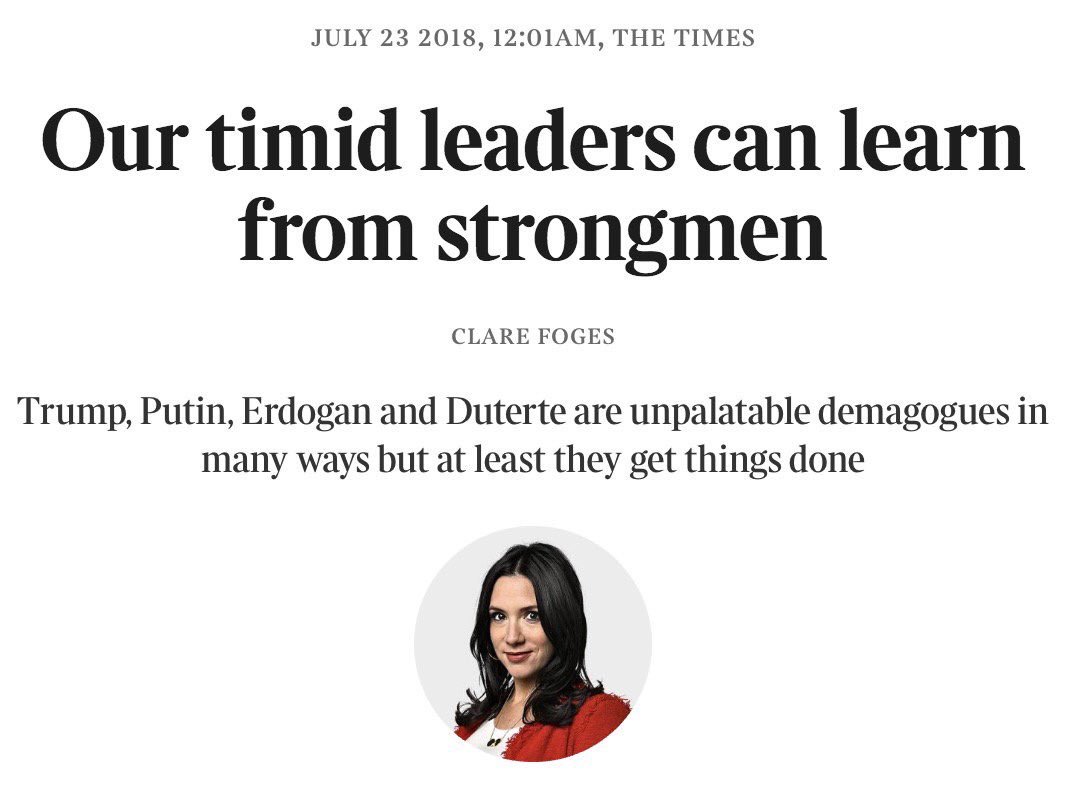
A woman journalist or opinion-writer of whom I had not previously heard, one Clare Foges, has suggested in an article in The Times that the leaders of the UK and Western Europe might learn from political “strongmen” (she cites an eclectic mixture: Trump, Erdogan, Putin, Duterte).

About the Writer

Having not previously heard of the writer, I did a quick Internet search. The surname suggests a Jewish origin, and someone of the same name posted this online in 2000:

https://www.ancestry.co.uk/boards/localities.ceeurope.austria.Prov.vienna/167.588/mb.ashx.

It seems that Clare Foges wrote speeches for David Cameron-Levita and others prior to the 2010 election and immediately after it. She has also written at least one book for small children.

Having now read a little about her, I should say that she seems to have some intelligence, though perhaps not enough, or not enough knowledge, for the matters she discusses in print. Her understanding of society and politics seems shallow. She gave an interview to the Evening Standard in 2015. In it, she proposes, inter alia, better pay (!) for MPs, who “give up well-paid careers” etc. Ha ha! She really should take a look at the collection of misfits, also-rans and chancers who comprise many (not all, admittedly) of the more recent MPs!

https://www.standard.co.uk/lifestyle/london-life/clare-foges-the-woman-who-put-words-in-david-camerons-mouth-10437029.html.

Indeed, in 2017 she herself wanted to become an MP, for the fairly safe Conservative seat of the Isle of Wight, but withdrew after having been shortlisted:

https://www.conservativehome.com/parliament/2017/05/exclusive-foges-joins-fox-in-withdrawing-from-isle-of-wight-selection.html.

In fact, the then-incumbent MP had hardly “given up a well-paid career”, having been a geography teacher in comprehensive schools for most of his life:

https://en.wikipedia.org/wiki/Andrew_Turner_(politician)#Early_life_and_career

and that MP (also an expenses freeloader…) then “stepped down” after having “become a laughing stock” by reason of his quasi-matrimonial situation:

https://www.telegraph.co.uk/news/politics/conservative/11334299/MP-battling-to-save-seat-in-toxic-Tory-rebellion-after-fiancee-moves-in-with-his-aide.html.

In short, my provisional view is that the writer of the article is, at 37 or 38, someone who for whatever reason has fallen between the cracks, who might have become something in the political realm, even perhaps an MP (and after all, her background as pr/”comms” “intern”, sometime children’s book writer, “Conservative” speechwriter, amateur poetess and (?) professional scribbler on politico-social issues is no worse than that of many “Conservative” or “Labour” MPs, and better than some) but has not.

The Issues Raised

What are we to make of this article suggesting that the UK needs leadership informed by “strongmen”? Duterte is the Philippines leader who has presided over a campaign of extra-judicial killing of drug gangsters etc. Erdogan is the political-Muslim Turkish dictator (by any other name) who is dismantling the legacy of Kemal Ataturk. Putin and Trump are too well-known to need any introduction even to those who take little interest in politics.

The main issue, surely, is that government must govern. It must be effective. Ideally, there will be checks and balances: law, due process, civil rights, property rights (within reason); however, in the end, a useless government has no right to exist.

Political leaders (including dictators) emerge for reasons. In broad brush terms, Putin emerged because Russia under Yeltsin had become a chaotic mess. Pensioners and other poor people were starving or dying from cold or lack of food, by the million. Public sector workers were being paid almost nothing. Jew carpetbaggers had flocked to Russia like a cloud of locusts (or vultures) and were stealing and cheating everything, pretty much. “Russian” Jew “oligarchs” ruled from “behind the throne” and had tricked their way into “ownership” of vast oilfields, diamond and gold mines, heavy industries. Putin began to claw back some of that. Pensioners who had been getting (USD) $5 a month under Yeltsin, now (2018) get $400. People are at least paid for work. Chechen and other gangsters have been stamped on and many killed or imprisoned. Russia has flourished compared to the 1990s.

Erdogan is someone for whom I myself have little sympathy, not least because I value the legacy of Kemal Ataturk. However, Erdogan has improved the lot of the poor, we read, while the economy has improved under his rule.

Trump likewise seems an egregious person generally, and even more egregious as a leader of a government and as a head of state. However, his rise (fuelled by his own huge fortune, of course) was not based on nothing. Many people in the USA are living in poverty. I read that 40% of Americans now require US governmental foodstamps! Many jobs (as, increasingly, in the UK and elsewhere) are “McJobs”, precarious and badly-paid. The drug epidemic is out of control. Illegal immigration had run wild since the 1980s. Whether Trump can deal with these problems and others,  with the “separation of powers” American system, is doubtful, but the dispossessed and marginalized, among others, voted for him to try.

The Missing Leaders

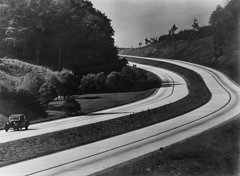
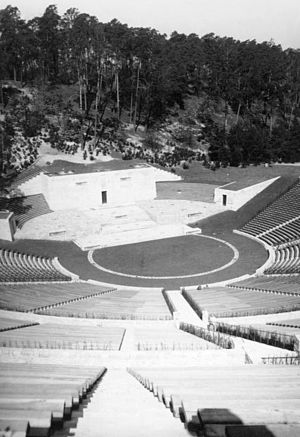
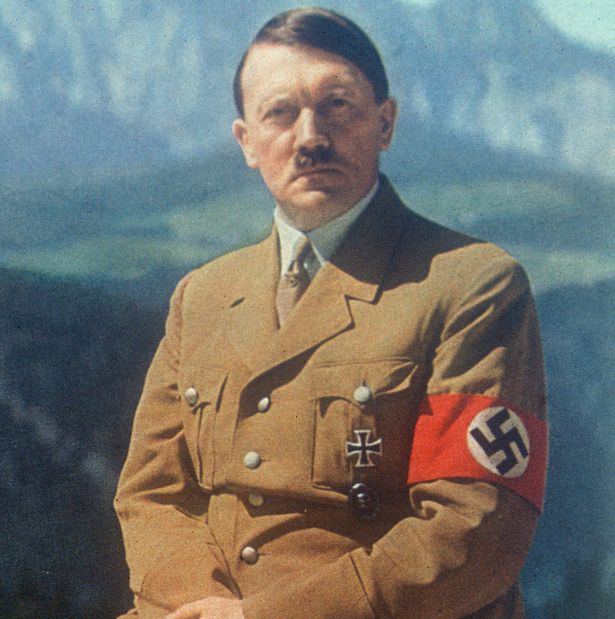
Clare Foges cited Trump, Putin etc, but not the controversial leaders of the 20th Century: Stalin, Hitler, Mussolini, Mao etc. They all took harsh measures but also did a huge amount that was positive. Hitler in particular saved Germany from degradation, removed Jew exploiters from the economy, the professions, the mass media; built autobahns (the first in the world); created air and airship travel routes; vastly improved animal welfare; planned new and better cities and national parks; put Germany to work and (for the first time) gave workers rights such as decent breaks at work, Baltic and other holidays in Germany, and also foreign holidays including cruises. Decent homes were built on a huge scale.

3396AD3500000578-3561575-Hitler_had_lived_in_Munich_just_before_World_War_I_and_remained_-a-1_1461778976380.jpg

an-automobile-on-the-sweeping-curves-everett

Chancellery2DietrichEckartBuhneVW3

Britain could do worse than follow Hitler’s lead, introducing some updated and English/British form of social nationalism.

Stalin was far harsher as a leader and as an individual than Hitler or Mussolini, though Mao might be considered far worse (but of course he was non-European). Stalin however (like Hitler) was put back domestically by war. Stalin did recreate the industrial sector, which was booming before the First World War but which Bolshevism all but wiped out as a thriving economic sector. Stalin’s major mistake (apart from his cruelties and brutalities etc) was to allow the agricultural sector to be ruined via Collectivization, the legacy of which is only now being very slowly erased.

Mussolini did a huge amount for Italy. His posturing on balconies etc is what people now think of when his name is mentioned, but he eliminated the Mafia (until the Americans caused its revival after 1943, releasing the imprisoned leaders and followers), started to get rid of the terrible urban slums (unfortunately more were created as a result of the Anglo-American invasion of 1943); Mussolini also created an advanced scientific and industrial sector, mainly in the North. Famously, he also greatly improved the railways, and “made the trains run on time” (both truth and metaphor). Now, the wartime propaganda of the Western Allies and Stalin is all that most people outside Italy know– Mussolini as clown. Ironic that a real clown (the leader of the Five Star Movement) is now a major political figure in Italy!

https://en.wikipedia.org/wiki/Beppe_Grillo.

Britain 2018

The UK has been pretty much left to rot since 2010. The Blair government, though repressive and in the pocket of the Jewish-Zionist lobby, tried to modernize infrastructure generally. New buildings were constructed: hospitals, libraries, schools. Credit where due.

The David Cameron-Levita-Schlumberger government of idiots was not only the most pro-Jewish/Zionist government Britain has ever had, (until Theresa May became Prime Minister), but also the least-effective of modern times (again, until that of Theresa May?). It not only failed to do anything new and decent, but also failed to maintain that which already existed, in every sector, from libraries and schools to the air force and navy.

The lesson surely is that government must be effective. If it is not, the State stands in peril. The people eventually demand action. They are beginning to demand it now.

The article by Clare Foges is, it seems to me, a sign of the times, or a straw in the wind. The political times in Britain are a changin’…

Notes

http://www.bbc.co.uk/programmes/profiles/3tMvnMp3DFW3z99Zvc7WC3T/clare-foges

https://www.standard.co.uk/lifestyle/london-life/clare-foges-the-woman-who-put-words-in-david-camerons-mouth-10437029.html

A critical article from the New Statesman:

https://www.newstatesman.com/politics/elections/2018/07/sorry-clare-foges-dictatorship-isn-t-just-character-flaw-it-s-crime

Another critique of her views:

https://www.property118.com/clare-foges-anti-landlord-the-times/comment-page-4/

She was desperate to become an MP but no-one wanted her:

https://www.telegraph.co.uk/women/womens-politics/11436355/Sir-Malcolm-Rifkind-resigns-Kensingtons-next-MP-might-be-this-woman.html

Another Clare Foges article. She seems to be very much of her time, meaning 2010-2015, as in this Cameroonesque piece of sort-of social Darwinism. I think that Clare Foges can be written off as a serious commentator.

https://www.thetimes.co.uk/article/put-feckless-patients-at-the-back-of-nhs-queue-5hnlqqstg

https://www.dailymail.co.uk/news/article-2267901/Clare-Foges-The-raven-haired-poet-ice-cream-seller-wrote-PMs-big-speech.html

Further thoughts, 6 December 2018

According to the Daily Mail, Clare Foges is “a devout Christian”. She may still be of part-Jewish ancestry (see above). My other query about the “devout Christian” bit is how does a “devout Christian” want to put IVF couples ahead of people needing NHS treatment for serious conditions just because they drink, smoke etc? Is that “Christian”? Even evil Iain Dunce Duncan Smith is said to be “devoutly Christian”…Yeah, right!

In the end, I suppose that it scarcely matters whether Clare Foges is this or that…and I just noticed that her Daily Mail bio was written by the egregious Andrew Pierce, so we can probably discount it…

Incredibly, she is appointed OBE!

https://www.huffingtonpost.co.uk/entry/labour-blocks-david-cameron-speechwriter-claire-foges-from-joining-party-to-oust-jeremy-corbyn_uk_58d90195e4b03787d35a3d08?guccounter=1&guce_referrer_us=aHR0cHM6Ly93d3cuZ29vZ2xlLmNvLnVrLw&guce_referrer_cs=Y57ohgKaElO9EWmxBHKC1w

Looking at her photos and her behaviour, I think that she is probably at least partly-Jewish.

Her Twitter comments (read the thread):

https://twitter.com/ClareFoges/status/985813260824989696

She has not tweeted since April 2018.

She writes in The Times, but also as freelance pr person…

http://www.finelinelondon.com/

She has certainly written columns in The Times [of London] several times, but is not on that newspaper’s list of its 29 “key” columnists. I have just taken a look on the Internet, and not seen anything online written by her as Times columnist in the past months (since August 2018), though her Linked-In profile avers that she is still a Times columnist. I did see a piece from November 2018 published in The Sun “newspaper”.

https://uk.linkedin.com/in/clare-foges-906a4676

Update, 9 November 2020

I have just seen that Clare Foges has been writing a column for The Times about once per week in recent months. I had not noticed, never now reading that newspaper (does anyone?I suppose some still do).

The 20th of July

I cannot let the 20th of July pass by without a few words. On 20 July 1944, discontented officers tried to kill Adolf Hitler. Transposed (arguably pointlessly) to a British context, that would be equivalent to discontented British officers trying to kill Winston Churchill and the King (Hitler being both head of government and head of state). In fact, it is at least arguable that both the UK and mainland Europe would have been better had that happened (in 1940, when Germany offered honourable armistice between the Reich and the British Empire but was refused by Churchill and his circle). There would then have been no devastation throughout Europe, certainly in Western Europe, no carpet bombing of German and other cities (eg some French ones, largely destroyed by Allied bombing and shelling: Brest, Le Havre etc).

https://www.telegraph.co.uk/history/world-war-two/10877137/D-Day-French-torn-over-criminal-British-and-American-D-Day-bombings-of-Caen.html

Above all, Stalinism might well have been destroyed or at least contained. Sovietism would not have been allowed to invade the East and Centre of Europe.

Do not imagine that there were no British senior officers who despised and hated Churchill. Lord Alanbrooke, Chief of the Imperial General Staff and (from 1944) Field Marshal makes his distaste for Churchill’s charlatanry clear in his diary.  However, officers such as he were imbued with automatic-reflex loyalty to, not the head of government, but the King as head of state. They probably never thought of mutiny, still less assassination.

On the German side, most of the senior officers plotting against Hitler were content to do his bidding while the German forces were in the ascendant; when Germany started to fail, though, they thought in terms of surrendering on the Western Front, at the same time as holding on on the Eastern Front, thus saving Germany and much of the rest of Europe from what actually later happened, the savagery and barbarism of the Red Army engaged in wholesale murder, rape and looting, followed by the icy grip of Soviet socialism.

Those “disloyal” senior officers of the Wehrmacht (and some others, such as Canaris) were not motivated solely or even mainly by self-interest or their class-interest as aristocrats (not all were aristocrats; among the middle-class ones were Rommel and Canaris), but by a concern for what they conceived to be the ultimate focus of their loyalties– the future of the German state and German people, as well as, beyond that, European culture and civilization generally, threatened by Sovietism which, at that time, was Stalinism.

History is not black and white. National Socialism was a very fine movement overall, but not without flaw. The General Staff and other plotters likewise cannot simply be written off as “traitors” even though, from one point of view, they were. Their point of view, i.e. that Germany was losing the war on at least two fronts, was accurate to that extent. Where they went wrong was in assuming that the USA and UK (and their dependent entities, as well as hangers-on such as de Gaulle) would in fact conclude a separate peace, separate from the Soviet Union. That was pie-in-the-sky thinking. The Allies had already proclaimed, at Casablanca, that only “unconditional surrender” would be acceptable,

https://en.wikipedia.org/wiki/Casablanca_Conference

so the plotters would have had to throw themselves entirely on the mercies of the Western Allies and Stalin, were they to have eliminated Hitler. Even so, it is arguable that that might have been a better result for Germany and the rest of Europe than what actually transpired in 1945. However, that is to look with the benefit of what is now known. At the time, things must have looked very different, especially in Germany itself.

Hitler might have won out, even at the last moment, in terms of the conventional battlefield. The new jet fighters might have turned the tide, had they existed in sufficient numbers; new tanks were outclassing Soviet and Western models; above all, the East-West tension that blew up as soon as Germany was defeated in 1945 might have, in that final year, spelled the end of the alliance between the West and the Soviet Union and given Germany what is now called wriggle-room.

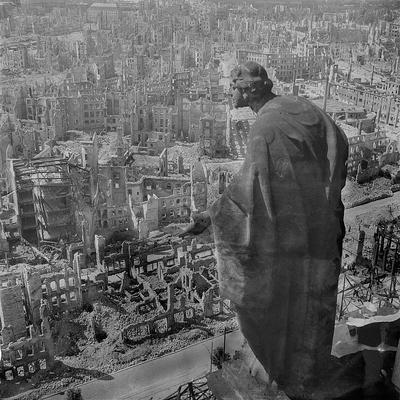
Having said all that, Germany would have been devastated to an even greater extent had it continued to fight after, at latest, the Summer of 1945. The Jewish scientists who created the atom bomb did so on the basis that it would be used against Germany, not, primarily, Japan. Had Germany started to defeat the Western Allies and Soviet forces on the ground and in the air in mid-1945, Berlin and other cities would have been attacked by atom bombs and destroyed; admittedly, in the case of Berlin, Hamburg etc, let alone Dresden, the difference might have been only academic:

Dresden1945

[Dresden after the UK/US bombing, 1945]

The key point is that Germany was not making atomic weapons and had no means with which to do so. It had been checkmated.

So there we have it. I cannot approve (and my approval is irrelevant either way) the actions of the backstabbers of 20 July 1944: Meine Ehre heisst Treue, but the plotters of that time were not all-“good” or all-“bad” in motive or action. As Wolfram von Eschenbach says in the introductory part of Parzival, “blame and praise alike befall when a dauntless man’s spirit is black and white mixed, like the magpie’s plumage”…

History has its own judgment. As Schiller observed, die Weltgeschichte ist das Weltgericht [“the history of the world is the judgment of the world”].

We honour the past but advance to the future.

Adolf-Hitler-1889-1945-German-statesman


Judge Not, Lest Ye Be Judged…

This blog post has been triggered by my happening to have seen a couple of minor news items while idly browsing the Internet. The first reported that my old head of chambers –shall we call him M.B.?– from when I practised as a barrister in Exeter (2002-2007), has been elevated to the Bench as a Circuit Judge and is now styled His Honour Judge M.B.

The other news item was that the old (dating from 1905) Tower Bridge Magistrates’ Court and police station have been turned into “a luxury boutique hotel”. Sign of the times.

These reports have led me to muse on some of my own experiences with the judicial classes.

M.B. will probably make an effective judge. An erudite civil lawyer, I met him when I decided to stop being an employed lawyer (a situation I was in, intermittently, from 1996 through to 2002) and re-start Bar practice in England. I had been living and/or working overseas for much of those six or seven years, and in London, where at one time I was the leaseholder of property in Gray’s Inn (I lived at that time at Higher Denham, Buckinghamshire, from where I travelled in by rail from Denham Golf Club halt to Marylebone, a short journey lasting about 20 minutes).

I was in Kazakhstan for a year (1996-97) and after that also lived in or made shorter visits to a number of other countries: Egypt (where I lived for a while in Aswan, on a remote Red Sea beach under canvas, in a flat in Alexandria and in the desert oasis of Siwa); Turkey (I drove UK-Turkey-UK in 2001, which was quite an adventure at times: France, Italy, Greece, Turkey, Bulgaria, Romania, Hungary, Austria, Germany, Luxembourg, Belgium, a 4-month trip); the USA (based in Charleston, South Carolina, but I also stayed for a while in Tampa, Florida); Qatar; Liechtenstein; the Channel Islands, the Eastern Caribbean (several islands); the Cayman Islands, Minorca, Czech Republic, Northern Cyprus etc.

I remember one member of my future chambers remarking at my interview that my CV read in parts like that of James Bond. I had to point out that any resemblance between me and James Bond was purely co-incidental and very implausible (and not only because I have never belonged to any secret service!).

Still, I joined that set and in general found it OK, though at first it (and so I) had very little work. I had taken on the lease of one of the largest country houses in North Cornwall and liked the relaxed lifestyle of the Cornwall/Devon upstream Tamar River area.

As to M.B., not long after I joined the set, M.B. and I won a multi-day action in contract and trust together (though appearing for different people) at Plymouth County Court. After that, we did appear on opposite sides a couple of times during my 5 years in chambers, but he lost out despite being (arguably) a better advocate and (unarguably) a better lawyer than me.

I may as well add that, despite what some Jewish individuals claimed after I was disbarred in 2016 (about 8 years after I had left chambers and ceased Bar practice!), M.B. and the other fellow members of chambers (with one, possibly two exceptions: see below) did not want me to leave chambers, whether for political or any other reasons. Indeed, M.B. wanted me to stay on despite my having decided to resign.

In fact, I was commuting on a weekly or 2-weekly basis across the Channel to Finistere, where my wife and cats were living. This resulted in financial strain, in that I was only available for half the time, was paying out large amounts for ferries (return trip with car, luxury cabin too, about £300 return, every week or so…), hotels in the UK for 10-20 nights per month.

Putting the seal on it all, I was starting to have “discussions” with the Revenue (which only ended in 2012).

My only misgivings about M.B. as a judge would be that, firstly, he tends to stick with black-letter law; in my view, he is unwilling to bend the law to fit the justice of the case. Whether that is a strength or a weakness is a matter for debate.

Secondly, when I decided to leave chambers, I quite liked the idea of remaining as a door tenant [https://en.wikipedia.org/wiki/Door_tenant] and M.B. said that that would not be a problem and implied (indeed expressed, though in some other words) that it would be nodded through, but that the correct form would be for me to resign my tenancy first and then apply for door tenancy, though approval would “in my case” be automatic.

However, when it came to it, a couple of new tenants (I believe) cut up rough because one was married to some kind of Indian and was very hostile to (what he assumed were) my political views; I think (guessing) that a recent ex-pupil (a humourless bespectacled woman with an invisible sign round her neck saying “Politically-Correct Virtue-Signalling Christian”) may also have blackballed me.

In the event, the door tenancy would have been a waste of time because the Revenue was on my back at a cross-Channel distance. Still, that made me think that M.B. was not necessarily reliable, a thought that had occurred previously once or twice.

Now to another judge of sorts. Tower Bridge Magistrates’ Court, long before it was (quite recently) turned into a luxury boutique hotel, was for some years often presided over by one Jacqueline “Jackie” Comyns, a notoriously despotic “stipendiary magistrate” (the rank now renamed “District Judge Criminal”). Her reputation was fearsome.

I only appeared once in front of this gargoyle: I was “briefed” at 11 am to appear at 12! That was in 1993. I read the brief on the way to court. The defendant had refused to get off a defective bus and had then assaulted the conductor and gone on to smash the side window of a police car. She was pleading guilty.

At court, the case came on minutes after my arrival. The magistrate interrupted my mitigation to ask some petty question about the defendant. I did not know the answer, having not had time for a brief conference.

Instead of simply asking the defendant for the information, this ghastly frustrated prize bitch, sitting on her seat of petty power, told me venomously that Counsel had to be properly prepared when appearing in her court, and told me to go ask the defendant! I did, the pitying or amused eyes of dozens of police, court staff, members of the public on me as I traversed the unusually large courtroom and extracted the information.

I was told that that magistrate was going to be elevated to the Circuit bench in Essex, but that turned out to be wrong, because I see from the Internet that she was still dispensing justice from Thames Mags (on the other, i.e. North, side of the river from Tower Bridge Mags) as recently as 2013, the year that she retired (aged 70).

The problem of “judge-itis” (the tendency to be a despot sitting on the pedestal of power) is worse, usually, the further down the pecking order you go. It is rarely found in the higher courts.

At one time (1993-1995) I appeared on a frequent basis, at least once weekly, in the High Court. If I had a problem, it was never because the judge was reprising am-dram Nero or Caligula.

In the County Courts, the problem is occasionally encountered. HH Judge Overend, the presiding civil judge for Devon and Cornwall until 2006, was often a horrible despot when seated (at Plymouth County Court, usually), but in his case his bullying manner, and apparent tendency to make up his mind before you had finished —or even started— speaking, was mitigated by fairness and compassion for those suffering (so long as they were not Counsel!).

The barristers of the South West used to describe bruising encounters with that judge as one having been “Overended”…I have to say that on the odd occasion when he saw me outside court, he did always nod affably and even briefly smiled at times.

The magistrates’ courts are often the zoos where the wildest judicial animals roam their constricted territories. I once saw a stipendiary magistrate in London refuse bail to a defendant who was in court on a stretcher and on a drip !

Other judges have the opposite tendency, a pretty fatal one for a judge, a difficulty in deciding anything, especially if it would involve penalizing (eg imprisoning) those who break court orders. Judges whose Bar practice was entirely in civil work tend to fall victim to this; at least, that was my experience.

I have to say that I only found a few judges who were completely impossible. One was not a judge proper, i.e. the lady who presided over Tower Bridge Mags; another was one whose name escapes me now, but who sat at Uxbridge County Court 25 years ago. His connection with justice was, as far as I could see, purely formal. A horrible man. The many others, particularly on the High Court bench, might not always have seen eye to eye with me on the law or facts, but were almost always courteous in manner and impressive in their grasp.

Notes

How Would the Safe Zone Become A Germinal Ethnostate?

I have previously blogged about various aspects of the proposed “safe zone” or zones which might become the hub of social national activity in the UK. I have explained how the “safe zone” might be created, perhaps most likely by one person, couple or family buying an estate, farm, house, business or whatever in the selected geographical area, then other people gravitating to the same part of the country.

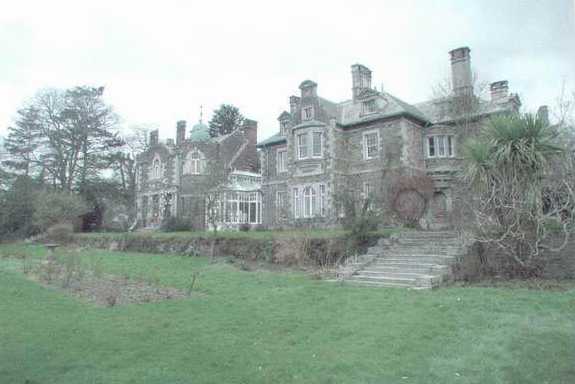
The ideal would be an estate which might include a main house, ancillary or secondary accomodation, houses, cottages, agricultural land, perhaps a separate business such as a garden centre, hotel or whatever (which might give employment to some of those supportive of the safe zone project). For example, I once had a lease of this house in Cornwall:Polapit Tamar House

carriageentrancePolapit
drive1

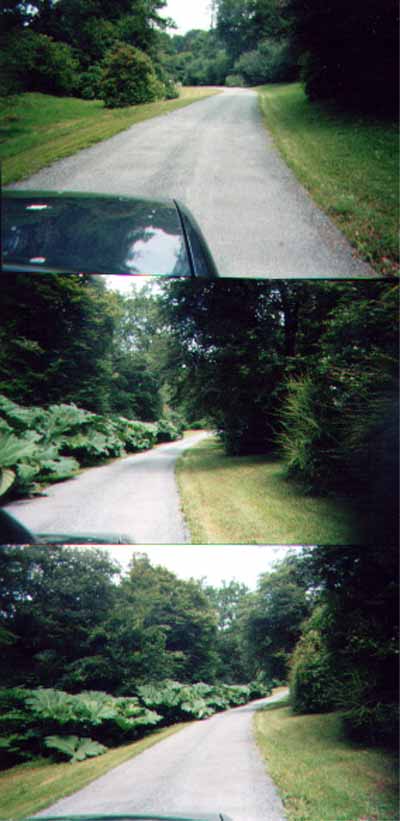
That house, a mid-19thC construction, originally (certainly by 1900) had a 5,000 acre estate, which by the time I lived there (2002 and 2003) had reduced to about 100 acres, most of which was woodland inhabited by reclusive deer. My own lease included only 4 acres (gardens and woodland) and did not include the secondary accomodation such as the North and South Lodges at the ends of the (more than 1 mile long) private road or driveway, 2 detached houses, and a few flats within or over the stable block.

It can be seen that such a house would be a fine hub for the safe zone project. The original relocators could live in that house, with supporters employed on whatever land surrounded it or in the nearby town (in that case, the nearest town was about 4 miles away) and living in the secondary accomodation or elsewhere nearby.

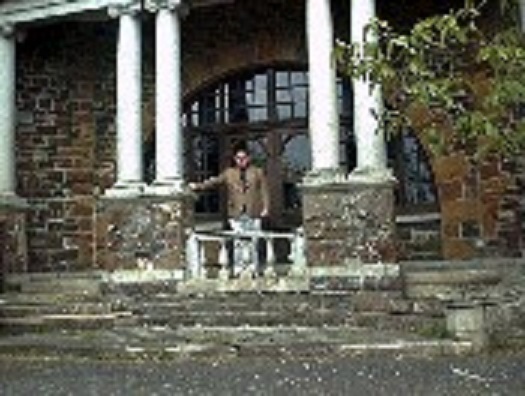
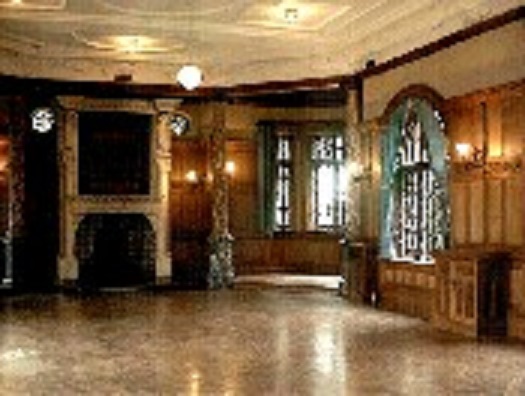
Such a house has the space to host meetings: the photos show the exterior colonnaded entrance to, and the interior of, the ballroom, which was itself larger than the whole of my present humble home…).

t_BallroomEntrance
t_Ballroom1
t_Ballroom2

As suggested above, such rural areas sometimes have businesses available which require staff: garden centres, nurseries, motels, hotels, pubs etc; there might be scope in the nearby villages and towns too. It might not be very long before a thriving hub of social nationalism exists. Suitably-qualified people might get jobs in local schools or local government, even in the police, NHS facilities, or in the fire brigade.

Once the safe zone has progressed that far, it is likely that other land can be bought, other estates or farms. Compare it to a painting-by-numbers set: one by one, the blank bits are filled in.

Naturally, a considerable amount of money is required to start such a project. The hub (estate, farm or at least smallholding) would cost (in Devon or Cornwall) anything from £1M upward, depending partly on the acreage. Agricultural land is valued at present in the range £5,000 to £15,000 an acre, so a house with even 100 acres will probably cost at least a million pounds and quite possibly as much as five millions.

Realistically, several million pounds would be needed to initiate the safe zone project.

However, once operating, the safe zone will thrive. All supporters would “tithe”, as happens commonly in religious organizations etc. If even 100 people are sacrificing a tenth of their (net) income and even if their average income is only £30,000 a year gross (maybe £20,000 net), that still gives the project an annual income of £200,000 at a fairly early stage.

Once more than a few dozen people are involved in the project and resident in its territory, thought can be given to taking over local councils. From there, in electoral terms, the local and regional objective would be to get rid of existing System MPs and replacing them with social national candidates, whether overtly or covertly.

There is more. As the reputation of the safe zone spreads, the trickle of relocators will become a flood. At that point, the safe zone mutates into the germinal ethnostate.

Update, 29 September 2019

https://www.kn-online.de/Nachrichten/Hamburg/Voelkische-Siedler-Die-Bio-Nazis-von-nebenan

Update, 26 July 2020

Saw this… https://www.independent.co.uk/news/world/europe/neo-nazis-plot-to-win-over-small-villages-in-germany-through-settlers-10162589.html

Update, 3 May 2021

Paid Bar Pupillages

There is, currently, discussion yet again at the Bar of England and Wales about whether all sets of chambers should “tax” their members in order to pay pupils (i.e. trainee barristers) a certain minimum during their year of pupillage. The figure mooted has been put by some at £25,000; others put it at £12,000, i.e. about where the present legal “minimum wage” is set. Not all barristers agree. I saw a contrary-leaning article by Jew-Zionist silk Simon Myerson QC. I expect that this is the only issue on which I would ever agree with him (I attach his views at the bottom of this blog post).

I understand that chambers are currently not forced to have pupils, but if they have them they must be paid £12,000 p.a. Apologies if that misrepresents the current position; I have little contact now with affairs at the Bar. [update: see below]

Many who know me or of me may wonder why I am bothering to write about this. After all, I ceased Bar practice in 2008, and was actually disbarred –for political reasons– in 2016, after a pack of malicious Jews cobbled together a complaint to the Bar Standards Board about my socio-political tweets. My answer to such a query would be that I have a view and the time in which to express it. Simply that. I can revisit Memory Lane, too.

The idea that all chambers must fund at least one pupil has superficial appeal to many. Poorer people of merit would be assisted etc. The problem with that is that most young (as most are) Bar pupils are not very poor anyway, and many come from families with considerable incomes and capital. In short, from affluent families. No-one forces chambers to take poor pupils rather than rich ones. In other words, chambers might be forced to pay for pupils who do not even need the money.

When I myself was looking for pupillage in the late 1980s and then early 1990s (interrupted by my going to live in the USA and travelling back and forth in those years), I had handicaps: apart from lack of money, I was, having been born in 1956, about a decade older than most candidates, and (worse) until late 1988 had a beard. That last might seem a small matter, but at least two barristers who interviewed me mentioned it…

I found that, at that time, the Bar was even less well-run than most things in the UK. We (students at the Inns of Court School of Law, at the time the only place where the Bar Finals course was offered) were told by some stuffy blue-stocking administratrix that we should write our applications by hand and preferably in ink, using a fountain pen (though CVs could be typed)! By some miracle, quill pens and parchment had been superseded. Well, I laboured to write maybe a hundred applications (though not with a fountain pen). Most went unanswered. Imagine that… that a letter written in good faith on a quite usual subject (after all, it happens at least annually that people apply to such places) will simply be ignored. Arrogant. Rude.

Of the interviews I had, a few stand out: there was one at a leading commercial set, in which interview I was interviewed by one Christian du Cann and some young woman who was obviously very junior. Du Cann was the son of perhaps the best Bar advocate I ever heard, Richard du Cann QC, who wrote one of the best books on the subject, The Art of the Advocate (highly recommended, by the way, if any Bar students are reading this). Du Cann junior was OK, even pleasant, but the young woman was unpleasant, scornful, contemptuous. Huge chip on shoulder from somewhere. I think that she felt inferior, so abused her half hour of power. Fortunately for her, I have forgotten her name.

Then there was the interview elsewhere, which obviously was not going very well, though in a low-intensity way. One barrister saw me out and made two suggestions: one, never shake hands with another barrister; two, beards are usually unacceptable.

Another interview that was (perhaps on purpose, to put one on one’s mettle) very hostile was with three then fairly well-known people, often in the newspapers: Michael Worsley QC [https://www.telegraph.co.uk/news/obituaries/12118332/Michael-Worsley-barrister-obituary.html], who died in 2016; Roy Amlot (later QC) who was often seen prosecuting IRA bombers etc (and, later, defending in huge fraud trials such as Blue Arrow), now 75 and retired from the Bar; a blonde woman smoking like a chimney (I cannot quite recall after more than a quarter-century whether that was Joanna Korner, now QC and a judge, or Ann Curnow QC, now deceased). All in a room got up to look like a cross between a country sitting-room and a study: panelling, soft-ish lighting, leather sofa etc and a couple of desks. In summary, Worsley appeared to be a stuffed shirt (very different from the figure portrayed in the Daily Telegraph obit), Amlot a funereally-serious and hugely self-important little man, and the blonde woman someone whose interview style seemed to rely on ill-bred mockery.

I did have one interview which was almost Kafka-esque. At that time, my mother and brother were both Members at Ascot (my brother also owned a racehorse at the time). One frequently-encountered fellow-member was a woman whose son happened to be a head of chambers in the Temple. The two ladies arranged an interview for me. I was loath to go for interview under such conditions, but went out of politeness.

In those pre-Internet days, it was not always easy to find out what a particular set did in detail. I went thinking that it was a general Common Law set. On my arrival, on a Friday early evening, about 1800, the members were all enjoying glasses of champagne; bottles of Bollinger were everywhere. I was given a glass. Turned out that they did this every Friday at sundown. The head of chambers, obviously talking to me because his mother had asked him to do so, was not very pleasant and asked me what I knew of family law. I replied not much, never having studied it. He said “We only do family…” End of “interview”.

In the end, I went back to the USA, though I did get a pupillage in London in the end, in 1992, unfunded and making the first six months (when you are forbidden to accept fees) a trial of strength.

In my last few years at the practising Bar, I was based in Exeter. The head of those chambers decided that we should take pupils and (a year or two later) also fund them. At least one per year. Everyone would be “taxed” for this. I think that my share was about £50 a month, something like that. I thought that absurd. Those funded were not in real need of money (as I had been when a pupil) and I saw no need for us to have pupils in chambers anyway. I was there to make a living, not to provide the English middle classes with career or CV opportunities. My Head of Chambers disagreed though. He no doubt wanted to keep in with the the Bar Council etc, and I note that he has since then (in recent years) sat as a Recorder in civil cases.

Thus it is that, for once, I find myself in agreement with Myerson QC, whose view is linked hereinbelow:

Update (July 2018)

My one-time Head of Chambers has, since I penned the above, been elevated to the Bench as a Circuit Judge, I read somewhere or other. May he temper the law (of which he has an impressive grasp) with not only justice but also mercy…

Update, 23 August 2019

I saw this:

So those fortunate enough to find a pupillage at all (only about 1 in 10) will be paid the above sums per year (or pro rata— many pupils are in two different sets for the two halves of their pupillage year). Nice for them.

My objection to the above is not merely (in fact scarcely at all) that “I had to struggle; they should also struggle”, because in any case most Bar pupils are from relatively affluent (sometimes very wealthy) backgrounds. They do not really need the money.

There is another point: a Bar pupil is almost useless in the first 6 months. Barristers in chambers are therefore not only subsidizing people most of whom do not really require subsidy, but paying out for nothing (unless you regard it as akin to noblesse oblige). A Bar pupil may be helpful in terms of research etc, but the barrister who is pupilmaster has to be pretty sure of the pupil to rely on the results. In other words, the pupillage award is not quasi-pay for work done by the pupil, but a kind of de haut en bas largesse. Oh well, not my problem now!

Call No Man Happy Until He is Dead

It is generally believed that the saying “call no man happy until he is dead”, attributed to Herodotus [https://en.wikipedia.org/wiki/Herodotus], was originally uttered by Solon [https://en.wikipedia.org/wiki/Solon]. Perhaps. Many believe that the saying dates back only to the 19th Century. At any rate, the saying has stood the test of time. The basis of it certainly has.

How often have we seen the spectacle of the “famous”, the wealthy, the “happy” or those we perhaps imagine should be happy, brought crashing down, often to obscurity as well as ruination? It was ruminating on this that caused me to write today. Some may think (assuming much, as many do) that I am thinking of myself, once a barrister, once living in (at various times) a Little Venice house, a penthouse apartment, a Caribbean villa, a large English country house with 26 bedrooms, but now cast down and living in extremely reduced circumstances, on a limited income etc and having to give thought to what things cost and so on.

I am sorry to disappoint those who hate me (usually without reason). My life has been one of considerable ups and downs, particularly financial. Every one of my luxurious habitations was supported, as by bookends, by relative and occasionally absolute poverty at each end. Such irregularity fosters a philosophical and perhaps stoical and/or fatalistic attitude missing in those who, having always known wealth and entitlement (or who achieved the same from humble origins) find their lives as well as livelihoods swept away by Fate. These are those who jump off buildings, massacre their families before shooting themselves etc. People with my attitude just think “tomorrow is another day”.

If even my thoughts and feelings are not truly me, in the Egoic sense, if my body is not me, then how little is my bank balance me, how little are my cars, former dwellings and (now long gone!) Rolex watches “me”? Scarcely at all; not at all.

A few examples:

  • Terry Ramsden, now completely obscure (and, presumably, broke, or maybe not: you never know with his type) but “famous” in the 1980s, and so wealthy that he could bet £500,000 each-way on his own horse at the 1986 Grand National (it came fourth; Ramsden profited by £1 million).

https://www.theguardian.com/sport/2004/apr/03/horseracing.comment3

https://en.wikipedia.org/wiki/Terry_Ramsden

  • Tara Palmer-Tomkinson, born into a wealthy family and with every possible material advantage. Judging purely from what I saw occasionally on TV, I thought her useless and brainless, but others thought quite highly of her, I am told. It was reported that she died alone, having not seen anyone for days.

https://en.wikipedia.org/wiki/Tara_Palmer-Tomkinson

  • Various national leaders: Gaddafi (killed by a mob of Libyans, who first shoved a pipe up his rear end); the Shah of Iran (deposed and everything he had worked for destroyed; died in exile); Adolf Hitler (shot himself when the forces of East and West, that is to say Sovietism and finance-capitalism, burst into his capital, having battered down by air and land everything he had built); Stalin (died surrounded by sycophantic ghouls who feared and hated him; a ghastly death, dragged down by unseen forces).

I think too of others, people I have known personally. For example, in my own class and/or year at school, there have been a variety of outcomes (to date: that is one race still not at the finishing post).

One boy became a police officer, at least one an Army officer; a third became a helicopter pilot, later Captain of the Queen’s Helicopter Flight and, later still, the personal pilot of King Hussein of Jordan (he must always have had the makings of a royal servant, having had at school the nickname “Crawler”…). I suppose several boys became office bods, accountants etc. One unacademic but amusing fellow became a banker in Switzerland, of all things; another one, actually part-(francophone)-Swiss, became a structural engineer with his own firm in Paris. Another became, eventually, a chartered surveyor who has written a series of property-conversion manuals. Several no doubt inherited their families’ businesses. A number became BBC producers etc. Some did time in prison (all for GBH, oddly: was it something in the water?) or so I heard. In fact, that last sentence is wrong, because I did read in the Daily Telegraph about one boy (an Organ Scholar, if I recall aright, who used to play the massive school organ), who became a music teacher and (hence the interest of the Press) when in his thirties was convicted of sexually assaulting one of his piano pupils.

Life is always surprising. Who knows where my next port of call will be?

Afterword [19 July 2018]

In fairness to the school I last attended,

https://www.rbcs.org.uk/

it has, since the 1970s, become rather more organized in sending its charges on their way. In fact, reading “Old Blues’ News” [https://www.rbcs.org.uk/old-blues-association/] and the other newsletters they put out about activities and careers etc is alone enough to make one fatigued, so active and driven seem the sharp-elbowed middle classes reported upon. The ranks of former pupils are now replete with quite well-known and even famous people to add to the commanders of ships and heads of economic enterprises: actors and actresses, TV people, film people, and the odd “celebrity” who is “famous” enough to be known even to me (I suppose that those “Old Blues” would include TV presenter Jeremy Kyle and MP Alok Sharma).