Tag Archives: Fidel Castro

Diary Blog, 2 August 2023

Afternoon music

[Tangier in the rain]

Battles past

From the newspapers

https://www.mirror.co.uk/news/uk-news/wealthy-son-hired-dad-78-30602462

A mother was left injured in a horrific revenge attack when her lover hired his retired father to help ‘sort her out’ after she refused to have sex with him.

Alex Craig, 36, and his 78-year-old father Francis Craig carried out the attack when Alex dumped Luana Dougherty. Luana’s daughter Carlee, 16, and her boyfriend Finn McBride were also injured.

The court heard [that] Craig snr, a retired builder, arrived at Miss Dougherty’s house on March 19 and went on to threaten Carlee by saying he would kill her as he pulled her hair and threw her to the ground.

Craig jnr then kicked Miss Dougherty, a mother-of-two, twice in her ribs and repeatedly kicked Finn McBride, 16. During the attack, he also threw a bicycle, pool balls, and an electric fan at the teenager.

Miss Dougherty, a community support worker from Cheshire, was left with bruising to her ribs, a cut to her right arm, and a cut to her lip. Carlee suffered a bump to the side of her head and a bloody nose while Finn suffered cuts to his knees, a bite mark under his left arm, and a split lip.

…at Chester Crown Court they admitted affray and were each sentenced to 18 months in jail suspended for 18 months.

[Daily Mirror].

In what world are the above offences suitable for suspended sentences, looking at the deliberate and premeditated assaults, and the injuries? Crazy Britain, 2023.

Of course, routine over-sentencing in other cases is one factor that has led to a shortage of space in the prisons.

There is a sense that this country is not far from “anarchy” or, better put, societal breakdown. The urban jungles are the worst areas, of course.

We are living pretty much on the edge now, to a greater extent than is generally understood.

Incidentally, I have just been reading the memoirs of Gorbachev, which came out in the mid-1990s. He says that, in Stavropol region, southern Russia, of which he was effectively in charge before going to Moscow as a candidate-member of the Politburo in or about 1980 , they had exactly the same problems— petty and not so petty crime, and arguments around sentences, community penalties, and as to whether prison was the right punishment in less serious cases.

https://www.dailymail.co.uk/news/article-12360279/The-angel-investor-venture-capitalist-anti-Brexit-cycling-CEO-bosses-30m-firm-distributing-material-white-supremacy-British-school-children-young-five.html

This is the kind of treachery taking place in schools.

Tweets seen

If this war both continues and continues to escalate, Kiev will eventually cease to exist except as a blackened ruin. Stop the war now. Stop funnelling arms and ammunition (and money) to the Kiev regime.

More music

More tweets seen

Well, you live and learn. I should never have thought that Karachi was as green and lush as that; looks like England. Maybe outside the main city, and/or in hills. I do not know. I know that Karachi is the 12th-largest city in the world (20M inhabitants) and that much of it is rather bare and dusty. Obviously not all, though.

PMC Wagner, aka “The Musicians”.

As someone once wrote about the (I think) Conservative, or maybe also Liberal Party MPs, after the First World War, “hard-faced men who had done well out of the War“.

Ah…just pinned down that quotation: Stanley Baldwin, and the correct quotation is, apparently, “A lot of hard-faced men who look as if they had done very well out of the war“, referring to MPs elected in 1918. Baldwin was quoted in the influential 1919 book by J.M. Keynes, The Economic Consequences of the Peace [https://en.wikipedia.org/wiki/The_Economic_Consequences_of_the_Peace].

Bournemouth

https://www.bournemouthecho.co.uk/news/23694543.letter-the-town-centre-looks-like-wasteland-filthy/

After visiting Bournemouth town centre today, I came away feeling shocked and sad to see what has happened to the town since I last visited and felt the need to vent my frustration.

I consider myself a local despite no longer living in the area.

I am 34 and lived in Christchurch for most of my life.

I loved regular day trips or nights out in Bournemouth.

The town was always so vibrant with lots going on, great shops and restaurants and always felt very safe.

I moved up to Scotland five years ago and have just returned to Bournemouth for a visit.

What the hell has happened to this place? There are barely any shops left, with many boarded up.

The town centre looks like a wasteland and is filthy.

A high proportion of people walking around the town centre seem to have a drink or drugs problem.

Quite frankly there is no centre to visit anymore and the issues with drink and drugs make the place have an unpleasant and uncomfortable atmosphere.

I just don’t understand what this council are doing but it genuinely disgusts and saddens me.

Simply having a nice beach and gardens is not enough of an attraction with such a rundown town at its centre.

Growing up I was always so proud to live in such a beautiful place.

Now I couldn’t be happier that I no longer live here and after my experience this week I doubt I will ever return to the area again.

What a shame.

SAM GRIFFITHS

Elgin, Scotland

[extracts from a letter to the Bournemouth Echo newspaper]

Bournemouth is about 17 miles from my present home. I remember, just about, being there (from Berkshire) with my family on occasional days in the early/mid 1960s. My memories were of somewhere safe, white, English, sunny (we visited on odd days in the summer), with clean streets and buildings (mainly hotels and apartment buildings), a beach not too crowded, bright yellow double-decker buses.

I also spent a few days there in the 1980s, as a kind of unofficial add-on to a Soviet dance ensemble (my then girlfriend was interpreting for them); I cannot now recall which dance or ballet group it was, but one of the well-known ones. The hotel was a quite decent 3/4-star place, with an unheated outdoor swimming pool. All the Russians opened their windows and looked out when I jumped in and swam in the cold water at about 8 in the evening, after dark.

I also visited the place another time, also early 1980s, when I and my then girlfriend swam with the ex-wife and children of the poet, Yevtushenko. I blogged about that years ago. The grandmother of those children had a wooden bathing hut on a semi-private beach in a pleasant area of Bournemouth; also a nearby home.

Bournemouth is appalling now. I almost never go there. 20+ years ago, it was still not too bad, though nothing like what it was like in the 1960s anyway. I drove there a few times in 2000.

By 2009, when I had to go there and nearby a few times, the downturn was pretty obvious. Large numbers of foreign persons, mostly non-white. Part of that would be the number of language schools there (genuine or otherwise), and also other higher education institutes attracting foreign students. That is far from being the whole picture, though.

As for drugs, I have never had any connection with them (unless you count the cannabis-smoking bourgeois dropouts etc I knew in the mid-1970s, or the DEA agent to whom I was introduced at the Federal Courthouse in Trenton, New Jersey, in 1990, and who showed me the real evidence in a trial that was going on: a sportsbag filled with vacuum-packed cocaine, the packs looking like supermarket coffee packs, but transparent, containing white powder, packed hard). Worth USD $250,000 wholesale, apparently.

However, Bournemouth is apparently now a drugs hotspot.

Sad. Bournemouth is not alone in becoming a dump. Torquay and many other towns, previously rather nice, are no better.

Late tweets seen

A “conspiracy theory” that may not be completely impossible, when you look at times, dates, and the behaviour of Trudeau’s mother.

Interestingly, Justin Trudeau was, it is said, a passenger on at least one flight of the aircraft owned by Jeffrey Epstein, the now-deceased Jewish rapist, supposed millionaire/billionaire, and Israeli intelligence asset: see also https://ianrobertmillard.org/2019/08/11/the-jew-epstein-and-prince-andrew-the-british-royal-family-has-another-scandal-maybe-its-time-to-just-get-rid-of-them/.

Late music

Taking the Whole Package

This evening, I watched a show called something like “The Real Marigold Hotel”, in which four elderly once-“celebrities” went to a country (in this case, Cuba) in order to see what facilities might be available for retired people. As such, as a “documentary”, it was very superficial and lacking depth, though entertaining. What interested me was the society in general.

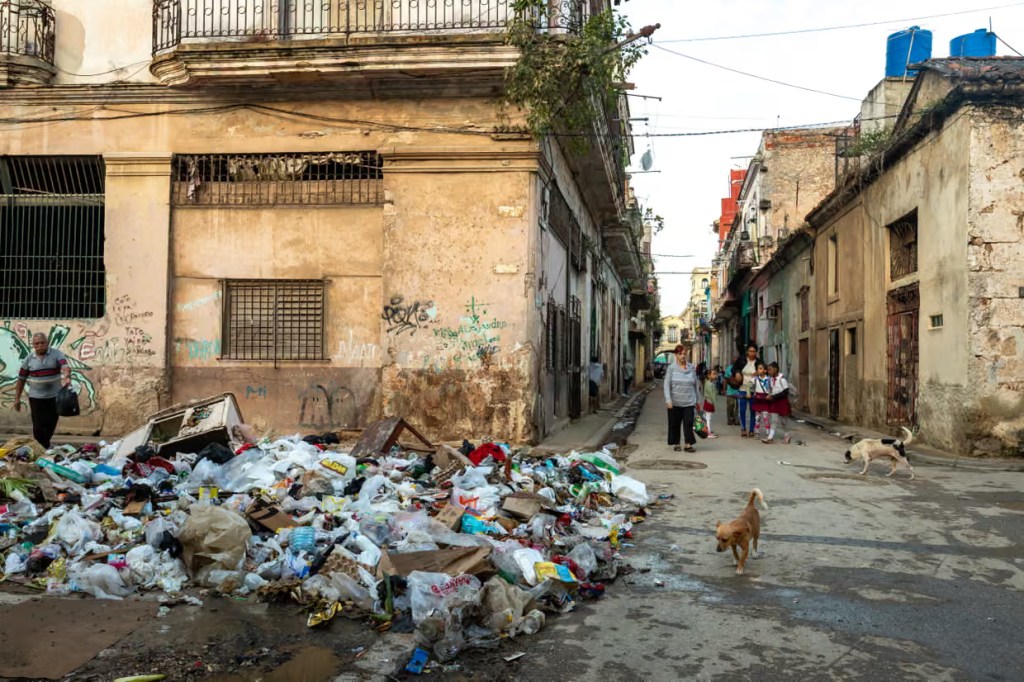
The Cuba –actually just Havana– shown (and I have never been there, though I am quite well acquainted with its history of the past century and, in the manner of Sarah Palin, have glimpsed it from the air and from the sea) was in fact largely the stereotype: old American cars in pastel pink and blue, decrepit but charming colonial mansions, palm trees etc.

The old people went to cultural classes and talked to Cubans in parks. It struck me anew that any society is a package: Cuba has some culture (both European and its own mixture incorporating the Caribbean and African, as well as that of the USA.

The Havana shown was one where the parks were (on the face of it) safe to visit, the people well-educated (one or two Cubans carefully making the point that their good education had been free, as were the classes available to the elderly).

Most people know that the Cuban healthcare system is also very good, both in relative and absolute terms. On the other hand, and as the TV programme noted, the Internet is tightly controlled, requires a card (no doubt traceable..) and is mostly only available in “wi-fi” areas such as certain parks; not so many have home Internet connection.

It is perhaps pointless to reiterate what most of us know in terms of the Cuban police state (which –in all the documentary films I have ever seen– is so pervasive that it is invisible: you never see the hand of the State in plain sight, though it is there all right).

So there you have the Cuban package: low crime rate (supposedly), no obvious disorder, at least some rather polite, cultured citizens, good education and healthcare etc (one Cuban did say that it was better before the supportive Soviet Union collapsed), as well as a certain charm.

As against that, a socialist state which controls the news and Internet tightly, imprisons dissidents for years (not to mention the large number who, in the late 1950s and 1960s, were just shot); a socialized economy which (leaving aside the effect of American embargo) was and largely is hopelessly inefficient at providing consumer goods. Travel restrictions, too.

Let us take a different case. The German Reich in the 1930s was intolerant of dissidents too, though it was far more tolerant than was the Soviet Union under Stalin or, indeed, Cuba under Fidel.

The National Socialist state imprisoned some dissidents or placed them in concentration camps such as Dachau (though few now know that many served short sentences, such as 3 months, there, and were not there indefinitely). Others were encouraged or more or less forced out of the country. There was a generally militarized ethos. How could a state both German and quasi-socialist be anything else?

In the Reich, there was state interference in culture (though, again, far less than, say, in the Soviet Union). Consumer production was given a lower priority than rearmament (“Guns Before Butter”), though large projects for the benefit of the people were also pushed into the foreground: the Autobahnen; the VW “people’s car”; the 1936 Olympics; a huge programme of educational and cultural events; the Kraft durch Freude [“Strength through Joy”] programme of Canary Islands cruises and Baltic beach holidays for the people (at a time when, in the UK, most people who had a holiday at all were corralled into poky Blackpool guest houses…); better nutrition for young people, too.

The National Socialist Reich was hugely beneficial for most Germans, certainly compared to what existed in the Weimar period. The Reich solved the inflation problem, the unemployment problem, the decadence problem and, yes, what it termed “the Jewish question”.

In the UK at the same time, there was greater ostensible “freedom”: elections every 5 years, the freedom to eat daily at the Ritz or at the Savoy Grill (if one had the funds..), no obvious book censorship (though, behind the scenes, there was much, not least via the Jewish element, even then). There was official theatre and cinema censorship (via the Lord Chamberlain’s office) and there was also, of course, grinding poverty (especially outside the South East), and a very repressive justice and prison system; not to mention the pervasive class system and its inequities.

No state, no political system is “perfect”. All have flaws, and all (most, at least) have benefits (though what might be the benefits of living in, say, North Korea or the Congo might be disputed). The aim can only be to do the best with what is available at the material time. We take everything as a package, as a whole.

Castro and Cuba

I had no intention of writing about Cuba or Castro following the recent death of “Fidel”. However, the public and mass media reaction, much of it an outpouring of adulation and “me-too” faux-liberal compromise, has impelled me to write.

There is no doubt that Cuba before Castro was corrupt and, for many, poor. Before Castro there was Batista and before Batista, Prio (Carlos Prio Socarras), of whom the British historian Hugh Thomas wrote, memorably, in his mammoth history of the country, that he “fell like a rotten fruit, full of its own corruption.” Prío himself later said of his presidency: “They say that I was a terrible president of Cuba. That may be true. But I was the best president Cuba ever had.”[see Arthur M. Schlesinger, A Thousand Days: John F. Kennedy in the White House. New York: Houghton Mifflin (2002) p 216].

Prio was in fact someone who tried to keep to constitutional proprieties and it was his decision not to act extra-judicially which allowed the harsher figure of Batista to seize power in 1952, Prio himself having been elected (by free and contested election) in 1948.

Cuba in the 1950s was sometimes described as somewhere between a Latin American country and a detached, poorer, part of the United States, the latter for long its effective suzerain.

It would be easier to make a quick judgment of Castro’s rule had the United States not (and typically) engaged in ham-fisted great-power and quasi-colonialist geopolitics over the island. Those American interventions continue to muddy the waters: attempts to assassinate Castro, the Bay of Pigs “invasion” of 1961; above all, the partial embargo (which Cuba called a “blockade”) imposed initially in 1960.

No-one can say for sure whether Cuba would be much different had it had the chance to trade freely with the USA, its neighbour and natural main trading partner. Probably not much. Venezuela is another and more recent example of the inability of a Latin American socialist economy to perform adequately for long.

The  bien-pensant “usual suspects” in the UK (the absurd Tariq Ali, Ken Livingstone, Jeremy Corbyn etc) are now saying that the Castro dictatorship was sort-of acceptable because Cuba had good education and good medical services. On that basis, they should be very kind indeed to German National Socialism, which provided the same and in fact far more (and with far less repression, in reality).

In fact, long before the Soviet subsidy disappeared, Havana was falling to pieces, as were the Cuban roads and railways. I myself had fleeting and peripheral contact with Cuba, otherwise seen by me only from the sea (between Cuba and the Bahamas) and the air (flying over Cuba between Tampa, Florida and Grand Cayman).

I was asked, when a practising barrister in London circa 1995, to help a scientific start-up based at Porton Down, Wiltshire, the high-security  biological warfare facility, then recently partly-privatized. A small company of scientists had a bacterium which turned biomass into fuel (unscientific me calling it the turning of straw into gold). I thought of Cuba with its sugar-cane detritus, lack of fuel and high technical-education levels. Unfortunately, the Cuban Embassy in London did not respond, unlike the Ukrainian: I visited Porton Down with the then Ukrainian Ambassador, Mr. Komisarenko [https://en.wikipedia.org/wiki/Serhiy_Komisarenko]. Nothing came of that in the end, but it seems that, in more recent years, a company called Havana Energy, headed by ex-Labour Party MP Brian Wilson, has been producing energy that way in Cuba. The Cuban Embassy’s unresponsiveness told me all I needed to know about the Cuban bureaucracy: unalert, lethargic, useless, bearing in mind the country’s crying need for fuel.

Since the early 1990s, Cuba has gradually been moving towards a capitalist economy. No doubt that process will continue. Eventually, some kind of greater rapprochement with the USA will happen.

In this blog post, I am more interested in the puerile reaction of the kind of people in the UK who are letting off Castro on human rights and economic efficiency because Cubans have a health service and a school system. Jeremy Corbyn has excelled himself in ignorant misunderstanding. He just digs himself deeper with every statement.

The mass media and in particular the BBC is, as one might expect, doing its bit to eulogize about Castro, saying that he “turned a small island into a major force in world affairs.” Where does one start in unpacking such nonsense?

The reaction to Castro’s death tells me something else: those in the UK who think themselves “socialist” are willing to turn a blind eye to historical, political and economic realities so long as the label is right.

Update, 5 January 2019

https://www.dailymail.co.uk/news/article-6558991/Rich-kids-COMMUNISM-Fidel-Castros-model-grandson-flashes-wealth-European-vacations.html