Tag Archives: Soviet Union

Diary Blog, 13 December 2021, including more thoughts about 1989-2022, and 2022-2055

Afternoon music

News from occupied Palestine

Tweets seen

To hell with that. Resist. If necessary, boycott Britain’s pubs, restaurants, and other outlets. Strike at government and the msm.

Every. Single. Time…

Bravo. Kristalltag Wien! Jetzt!

More music

[translation:”Space Programme of the new USSR“]
[“Socialism means the establishment of Soviet power, plus the electrification of the whole country”— Lenin]

Both the German Reich and the Soviet Union have now passed into history. From their previous enmity there can now emerge over time a synthesis, with other elements; a Eurasian superstate, geographically incorporating the present Russian Federation, some “nearby” republics, and Europe generally.

More tweets

The Cabinet of Clowns is turning the whole country upside down again, this time in the vain hope of preventing transmission of a “variant” which, so far, seems to be akin in its effects and symptoms to the common cold. Madness.

Will anyone be watching and listening? Did many watch and/or listen yesterday to the part-Jew/Levantine liar and chancer currently posing as Prime Minister? “Boris” and Starmer are two faces of one clock, to put it politely.

Starmer, in effect, says “we support everything or almost everything that the Government is doing, but they should be doing it better, more efficiently, while bending the knee to anti-white “diversity”, and while wearing a facemask“…

Despite the shambolic “Boris” mess at Downing Street, and despite the recent opinion polls, I cannot see fake “Labour” forming a government, so long as the misnamed Conservative Party ditches “Boris” fairly soon.

Labour offers even less than the present pack of clowns to the British people.

“Nudge” propaganda is bad enough, but when it is so inept, what can one say?

In fact, this is all to do with the c.33-year socio-political cycle: 1923, 1956, 1989, and now 2022. The transnational Western “conspiracy” or “consensus” is already trying to seize the agenda for the next third of a century, just as happened in the 1980s in the build-up to 1989.

In that case, in the 1980s, it will be recalled that a number of stage-setting scenarii occurred. In the Soviet Union, the more traditional “fossilized” leaders were replaced by the arch-Westernizer, Gorbachev and his people. Andropov, who wanted to, as people now say, “double down” on Sovietism, died (or was killed) in an event still not clear even today. Some reports say that a neighbour, a widow with a grudge, shot him, after which he died days later; the official version now is that Andropov died from natural but unexplained kidney failure: see https://en.wikipedia.org/wiki/Yuri_Andropov#Death_and_funeral.

Those of a certain age may recall the jokes about the generally very old Soviet leadership of the time: a pensioner wanting better living standards enters the Central Committee building in Old Square, Moscow. He tells the receptionist that he wants to join the Politburo. She answers “are you mad?!“. “Well, no…but I AM old, deaf, rather stupid…and don’t know a lot...”.

Gorbachev succeeded as de facto leader several years before the world-historic key year, 1989, itself.

The same sort of thing happened in the Vatican. After the very unexpected death of Pope John Paul I, the Polish Pope, John Paul II was elected. Although doctrinally conservative, he was in many respects a modernizer and, crucially, wanted to free Poland from control of the Soviet leadership.

It will also be recalled that President Bush senior took over in the USA after the 1988 election, and one of his first acts of importance was to make a speech in 1989 openly proclaiming the New World Order [NWO].

The 33-year cycle starting in in or about 1989 was characterized by the greater grip of the “Western” order or “NWO/ZOG”: the “fall of socialism” worldwide, the collapse of the Soviet Union, the de facto “capitalization” of China, the collapse of European-race rule in South Africa, and of course the waning power of the Arab/Muslim states, despite their continuing hydrocarbon assets and wealth.

The above also meant the domino effect applied to the states opposed to Israel. They have fallen, been suborned, or been neutered one by one.

Now we see the biosecurity police state, almost wordwide, coming into existence, using health as the pretext for extreme control of populations right down to the individual level: “virus” “passports” to travel, sometimes even internally and, almost certainly, and before too long, microchips implanted under the skin, in order to track the individual 24/7, anywhere in the world.

Having said all that, such plans are not always 100% successful. In the past few decades, a number of events parried the NWO/ZOG agenda: the partial recovery of Russia under Putin, the 1990s/2000s Arab/Muslim/Islamist “holy war” against “the West” (notably its attacks on New York City, the citadel of finance-capitalism); also the failure of the forces of NWO/ZOG to dislodge President Assad of Syria from power, and the continuing defiance of the Iranian state. Also, the internal failures of the finance-capitalist economic model: the dotcom bubble bursting, and the post-2008 banking crisis.

It may well be that events will happen also in the coming 33 years or so (exact dates are not so important) to prevent the complete victory of NWO/ZOG.

Late tweets

Jesus H. Christ! British people homeless, young people unable to buy or even rent homes, and these alien, useless and/or hostile millstones round the British neck are provided with everything by virtue-signalling System drones! The msm does not even protest about it, and the tame thick princeling “who would be king” makes virtue-signalling speeches supporting it. If he wants his future crown (if he ever has one) to stay on his head, he had better start to wake up…

Exactly. This whole pseudo-democratic charade is just a spectacle for (sadly, often) “moronic masses”, or to put it another way, at this time of year, a pantomime.

Exactly my experience over the past year. I have visited (not as patient) at least two hospitals, as well as a couple of medical centres. Deserted.

The System will not be alarmed until those crowds stop waving banners and start waving weapons.

Late music

Diary Blog, 28 February 2021, including a few thoughts about trees and forests

I happened to see a report in the Independent about trees: https://www.independent.co.uk/news/uk/home-news/prison-green-space-trees-mental-health-b1808251.html.

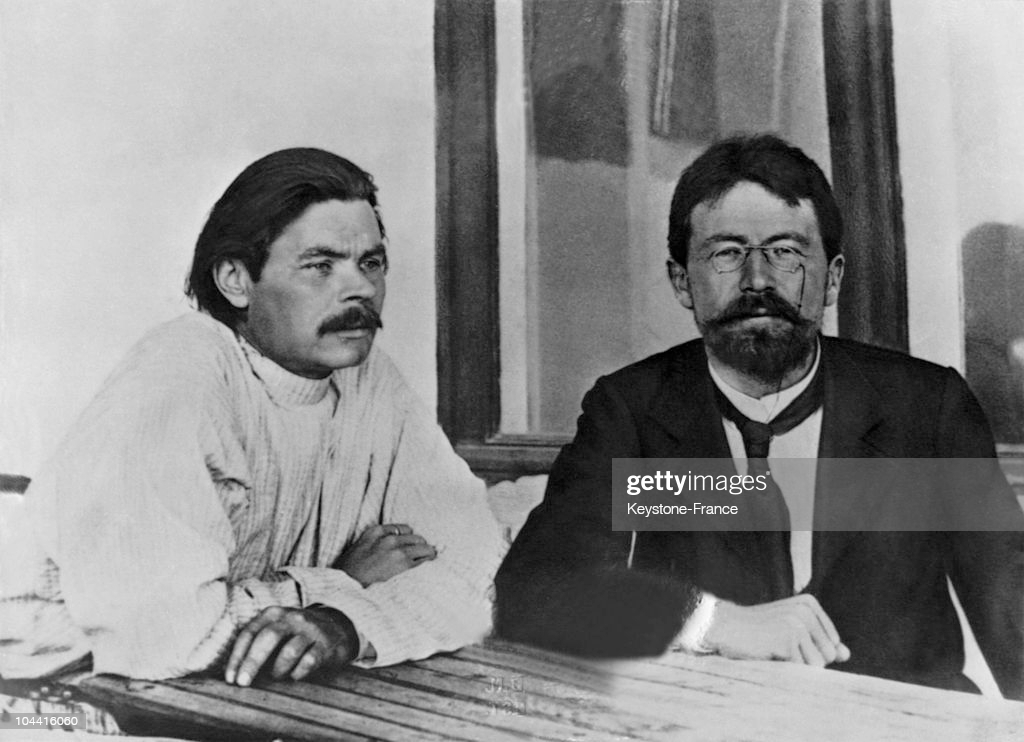
As Chekhov said, either (I forget) in one of his famous works, or perhaps to Gorky, and later recounted in Gorky’s memoirs called Literary Portraits, that “there are men to whom a tree is sacred“.

[RUSSIA – JANUARY 01: Russian writers Anton Pavlovich CHEKHOV and Maxim GORKY at Yalta in 1900. (Photo by Keystone-France/Gamma-Keystone via Getty Images)]

[https://en.wikipedia.org/wiki/Maxim_Gorky; https://www.gutenberg.org/files/37129/37129-h/37129-h.htm]

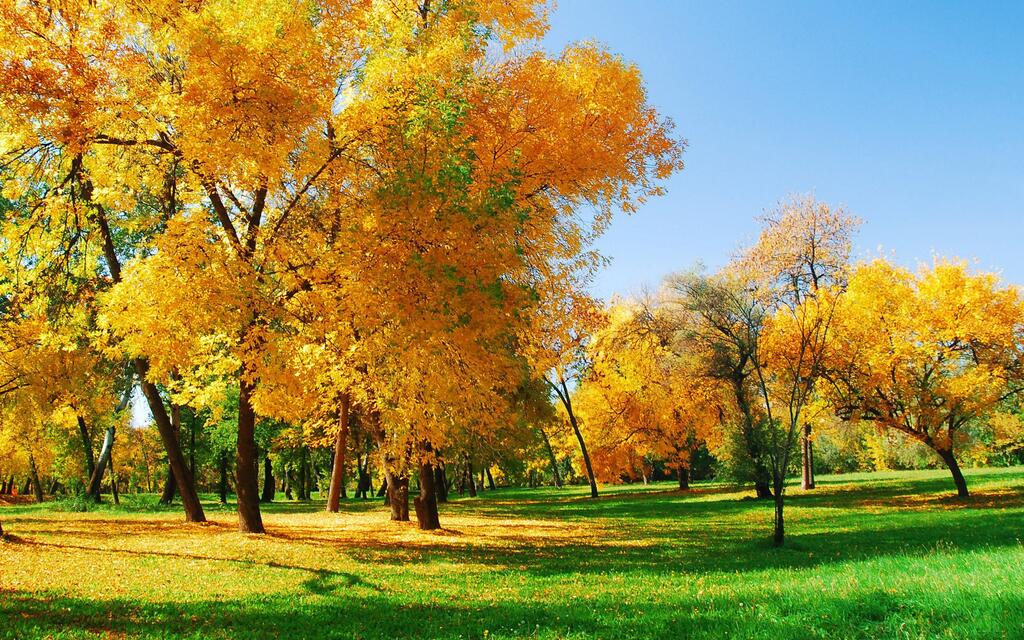
It is hard to imagine anywhere, or any architecture, that cannot be improved by the proximity of a few trees, or which will not be impoverished if existing trees are cut down.

Trees have several enemies in modern Britain, not least local councils who often resent the cost of sweeping leaves etc. The “health and safety” aspect is sometimes brought into play, often unecessarily. Yes, occasionally, tree branches do fall on people or, more usually, parked cars, during storms or other periods of high wind. That is not a good reason to cut down trees wholesale.

Britain has relatively low tree cover, comparing the UK to other European countries by proportion. See https://en.wikipedia.org/wiki/European_countries_by_forest_area. Britain’s tree cover, though greater than it was in the recent past, is still only 13%. Germany has 33%, France 36%, and Finland 73%.

There have been attempts, still continuing, to create new forests in the UK: the Heart of England Forest is one, created by the one-time Oz magazine defendant, Felix Dennis [https://en.wikipedia.org/wiki/Felix_Dennis; https://en.wikipedia.org/wiki/Heart_of_England_Forest; https://www.heartofenglandforest.com/].

Another is the National Forest: https://en.wikipedia.org/wiki/The_National_Forest_(England); https://www.nationalforest.org/

[the National Forest, northeast of Birmingham]

Britain needs more forests, more woods, more tree cover generally, eg in urban and suburban areas. The Woodland Trust, which has planted over 43 million trees over the past four or five decades, can help and even gives away saplings in some cases: https://www.woodlandtrust.org.uk/; https://en.wikipedia.org/wiki/Woodland_Trust.

The Golden Madonna

Watched an old (1949) British film, The Golden Madonna [https://en.wikipedia.org/wiki/Golden_Madonna]. A few silly bits, but overall quite good and rather entertaining.

Tweets seen today

I can understand why Hitchens has acceded to the softly-spoken insistence that he have the Covid-19 vaccine injection. He wants to travel, and that is being made all but impossible without vaccination. Many in the old Soviet Union, the vast majority in fact, made the same sort of compromise: unenthusiastic compliance with the regime, in order to live a quiet life, avoid penalties, and receive modest benefits such as good jobs, flats, or (for the few) travel outside Soviet borders.

The latest Peter Hitchens blog: https://www.dailymail.co.uk/debate/article-9307363/PETER-HITCHENS-Ive-Covid-jab-cost-freedom.html

Afternoon music

More tweets seen

https://twitter.com/ResurrectedTyr/status/1365815796367253514?s=20

https://twitter.com/Amy_amorie/status/1366035690350346240?s=20

This is her: https://en.wikipedia.org/wiki/Sara_Khan_(activist) (“activist” and careerist, who was a hospital pharmacist before getting into her well-paid anti-free-speech government sinecure).

If even part of her “report” were to become law and actually implemented, that is the end of even the limited free speech that now exists in the UK.

https://twitter.com/London19721/status/1365643932026228736?s=20

An idealized view, to be sure, but essentially accurate. Britain was a better place before migration invasion, before Zionist control of the mass media (and now even online space), before multikulti and other nonsense.

https://twitter.com/sakkoira/status/1365952476906741761?s=20

https://twitter.com/Amy_amorie/status/1365985227710074881?s=20

https://twitter.com/GreenManEng/status/1365643964888539138?s=20

https://twitter.com/SilkenThread88/status/1366011619348733953?s=20

“European Housewife” was one of the most charming and unusual Twitter accounts. Historical and environmental as well as political and social. Now “suspended”. The latest victim of the war on free speech.

https://twitter.com/AlphaGoII1/status/1366005643283468298?s=20

https://twitter.com/Paleocon_USA/status/1366003652599635968?s=20

https://twitter.com/SilkenThread88/status/1365988382489346055?s=20

An old German lady told me, long ago, that “it will take a long time, but people will eventually have to face the fact that the only answer is National Socialism.

Hitler, in his Table Talk [https://en.wikipedia.org/wiki/Hitler%27s_Table_Talk] remarks, not far from the disastrous end of the Second World War, that National Socialism (as known) was finished, but that in maybe a century’s time, the essence of National Socialism would be reborn in another form and then would seize the world with the force of a religion. God mote it be!

Interesting. The never-ending movement of history.

Further aspects of the relationship between National Socialism and spirituality (etc): https://en.wikipedia.org/wiki/Religious_aspects_of_Nazism, though it is necessary to note that Wikipedia is rather (((occupied))), so read with an alert mind.

Britain 2021

https://www.mirror.co.uk/news/uk-news/fix-welfare-system-more-people-23577979

I have blogged in the past about Therese Coffey, who is the Secretary of State for Work and Pensions at present: https://ianrobertmillard.org/2019/09/16/deadhead-mps-an-occasional-series-the-therese-coffey-story/.

Late music

Final word for tonight

Some readers of my blog may have noticed that a small group of (((trolls))) and nuisances on Twitter have recently been making untrue allegations of criminal or near-criminal behaviour by me and two other named persons.

In relation to the allegations against me specifically, I have already been forced to complain to the employer of one of the said nuisances, an NHS consultant. I may be making further complaint (regulatory and/or official) in relation to that person and others.

I am not a natural complainer (and usually ignore trolls and nuisances because of my belief in free speech), but was forced, by the harassing tweets of these individuals, to take action.

Update, 22 June 2023

The individual who made the false allegations against me was one Tim G. Stevens, NHS psychiatrist and soi-disant novelist, who self-publishes derivative spy thrillers on Amazon.

He had to eat crow, the horrible bastard.

See also: https://ianrobertmillard.org/2019/07/18/theyre-coming-to-take-me-away-ha-ha/.

What if Beria Had Succeeded Stalin?

Background

I recently re-read Special Tasks: The Memoirs of an Unwanted Witness– A Soviet Spymaster, the autobiography of General Pavel Sudoplatov, who was, inter alia, the brains behind such complex secret operations as the acquisition, in the 1940s, of atomic and nuclear technology from the USA and UK; he also oversaw such sanguinary plots as –and most notoriously– the assassination of Trotsky in Mexico in 1940.

I last read Sudoplatov’s book in 1994, the year of its first hardback publication. On first reading, I did not, perhaps, pay enough attention to the part of the book near the end, dealing with Beria and the Politburo in general after the death of Stalin in 1953.

It might be said that to examine the beliefs and intent of Beria is otiose now that 65 years have passed since his death by summary execution. Also, unsurprisingly, few tears have been shed for him since his death. He was in many ways monstrous: this article is of course limited in scope by reason of, inter alia, lack of space. Beria’s crimes of a political nature were on a vast scale. His more personal crimes were also many and included the regular abduction and rape of women and girls, including some young schoolgirls. Having said that, his swift “trial” (in secret and without defence representation) and the immediately-following execution was a purely political action ordered by those with political records in many ways as bad (Khrushchev, for one).

I start from the following premises:

  • that Western and/or Westernizing conspirators funded and oversaw the Bolshevik coup d’etat in October 1917 (old calendar);
  • that the same cabals set up the Soviet system in the 1920s as a quasi-religious movement (in style) which was atheist (in content);
  • that the quasi-religious character of Bolshevism slowly started to dissipate after the death of Lenin in January 1924, replaced at first by a pseudo-intellectual Marxism-Leninism (incorporating a personality-cult), then by a revival of “Holy Russia” and nationalistic propaganda (mixed with the foregoing) during the war of 1941-45. Finally, there came a late efflorescence of the Stalin personality cult mixed with pan-Slavism between 1945 and Stalin’s death in 1953;
  • that in the (significant number) 33 years from 1956 (the year of Khrushchev’s Secret Speech denouncing Stalinism as a personality cult etc) to 1989, Sovietism continued to decay ideologically, until it finally collapsed into a pile of dust.

Beria, ideologically

Beria was born in Merkheuli, near Sukhumi, which latter was a prosperous resort in late-Tsarist times. His family was not poor. It may be important that (in contradistinction to Russia), the Black Sea littoral was part of the Alexandrine Greek polity and, later, the Eastern Roman Empire. A more cosmopolitan milieu than that of Russia and one which existed for more than a thousand years prior to the first foundation of Kievan Rus.

That area, Abkhazia (geographically a part of Georgia, though historically distinct), was the location of the legendary Golden Fleece and is said to have been the birthplace of wine.

In the Soviet era, peasants were able to (in effect) own their own agricultural or horticultural plots of up to 0.5 hectare (about an acre or so). This was put into law in the mid-1930s. “Special districts” (particularly in Georgia) could have plots as large as 1 hectare (2.2 acres) officially and slightly more unofficially. By 1939, these small plots (only a few percent of the land area of the Soviet Union) produced at least 21% of all Soviet agricultural produce (and a far greater percentage of fruits etc). Some estimates from later times (the 1970s) put the real figure as high as 40%.

The “garden plots” or “household plots” had become important in Georgia/Abkhazia since the end of serfdom in 1865 (serfdom in some parts of the Russian Empire lasted for some years after the formal abolition of 1861).

Beria (b.1899) thus grew up in a milieu quite different from his later Russian and Ukrainian colleagues.

Beria was, as a youth, involved, when a student in Baku (again, a very “capitalist” and cosmopolitan city which, after a long history, had boomed pre-1914 by reason of the oil finds), with both the Bolsheviks and the Azeri anti-Bolshevik Musavat movement, which had Muslim, Turkic and general reformist roots and ideology.

It has been alleged against Beria that he had been involved with British Intelligence in Baku in or around 1919. Not impossible. Baku was of huge strategic importance during the First World War.

Likewise, at his drumhead trial in 1953, it was alleged that Beria favoured soft relations with National Socialist Germany or was even a “traitor” who helped Germany militarily and diplomatically (see the Wikipedia article, below).

Anthroposophy and other Germanic cultural connections

Beria was friendly toward the writer Konstantine Gamsakhurdia, who was educated partly at Berlin University (graduating in 1918) and spent the war years 1914-1918 in Germany and Switzerland as well as France. Gamsakhurdia may well have met Rudolf Steiner (d.1925) at that time, when Steiner was constructing the First Goetheanum (at Dornach, near Basel, Switzerland).

In the 1920s, Konstantine Gamsakhurdia was for 3-4 years a political prisoner in the Solovki concentration camp on the Solovetsky Islands. He would almost certainly not have survived the purges of the 1930s without Beria’s protection.

The son of Konstantine Gamsakhurdia, Zviad Gamsakhurdia, became President of Georgia in the first democratic elections following Soviet rule. He is generally considered to have been an Anthroposophist, and wrote, among other works, Goethe’s Weltanschauung from the Anthroposophic Point of View [pub. Tbilisi 1985].

Beria’s Preferred Policies

Beria was not an idealist, but a practitioner of Realpolitik, par excellence. This enabled him not only to implement Stalin’s repressions without conscience, but also to see the aspects of Soviet life that were not working.

Had Beria succeeded Stalin,

  • he would have brought back a large measure of private ownership, or at least operational ownership, into agriculture. That would have hugely improved Soviet agriculture, whereas Khrushchev’s Virgin Lands scheme was mainly an expensive and ecologically-negative failure;
  • because Beria was not an ideologue, he would have had no qualms in ending the Cold War early. He would have been, to cite Mrs Thatcher’s view of Gorbachev, someone “with whom the West could do business.” That might have meant no Vietnam War, no Soviet support for so-called “Liberation” movements in Africa, no Cuban Missile Crisis, no Berlin Wall;
  • while Beria would certainly have ruthlessly stamped down on domestic political opposition, he would not have repeated Stalin’s mistaken policy (implemented partly by Beria himself) of arresting millions of people for effectively no reason;
  • Beria would have (as Sudoplatov notes) allowed the non-Russian republics a greater degree of independence, thus creating an earlier and more feasible “Commonwealth of Independent States” [CIS], albeit that they would not be “states” but autonomous or semi-autonomous republics.
  • Beria would have concentrated the KGB (its later name) and GRU on useful intelligence gathering and not on playing spy games and fomenting pseudo-Marxist revolts in Africa, Latin America etc.

Conclusion

While it might stick in the craw of many to conclude that Beria would have made a far better ruler of Russia than uneducated Khrushchev with his half-baked huge projects and his bang-shoe-on-table style of diplomacy, the facts speak for themselves.

Notes

https://en.wikipedia.org/wiki/Sukhumi

https://en.wikipedia.org/wiki/Abkhazia

https://en.wikipedia.org/wiki/Household_plot#History

https://en.wikipedia.org/wiki/Musavat

https://en.wikipedia.org/wiki/Baku

https://en.wikipedia.org/wiki/Goetheanum

https://en.wikipedia.org/wiki/Anthroposophy

https://en.wikipedia.org/wiki/Rudolf_Steiner

https://en.wikipedia.org/wiki/Solovki_prison_camp

https://en.wikipedia.org/wiki/Solovetsky_Islands

https://en.wikipedia.org/wiki/Konstantine_Gamsakhurdia

https://en.wikipedia.org/wiki/Virgin_Lands_Campaign

https://en.wikipedia.org/wiki/Lavrentiy_Beria

Literary Note

A British scribbler, one Alex Marshall (formerly of The Guardian, now at time of writing apparently “Europe Culture Editor” for The New York Times) wrote a book called The Caucasus Under Soviet Rule, in which he wrote that “Personally propagating a bizarre Rudolph Steiner-inspired cult of anthroposophy, [Zviad] Gamsakhurdia…[etc]”.

Poorly written, for a start: “Anthroposophy” requires upper-case “A”, just like, say, “Roman Catholicism”. Marshall spells Rudolf Steiner, “Rudolph”, just as those who make fun of Hitler often write his name “Adolph” in petty denigration; also, “a bizarre” should be (if written at all) “the bizarre”.

Marshall’s words sound like a polemic against Anthroposophy, that movement which has achieved so much (though that fact is still not well-known to the masses in the Anglophone countries). To write off Anthroposophy as “a bizarre cult” is itself bizarre: think biodynamic agriculture, Waldorf [Rudolf Steiner] education etc.

I note that Marshall’s book, at least according to some reviewers, contains a number of other factual errors.

In fact, Shevardnadze, who overthrew Zviad Gamsakhurdia, was a ruthless “ex”-Soviet apparatchik who reintroduced large-scale repression into already-chaotic Georgian political life. He was the preferred candidate of the New World Order, completely under the “Western” thumb. I myself was slightly acquainted at one time (c.1995) with one of Shevardnadze’s advisers, who –like me– was on the Committee of the Central Asia and Transcaucasia Law Association [CATLA], a body active in the 1990s and which was supported by the British Government and large London-based law firms with interests in those regions.

http://poli.vub.ac.be/publi/ContBorders/eng/ch0201.htm

https://en.wikipedia.org/wiki/Eduard_Shevardnadze

https://en.wikipedia.org/wiki/Zviad_Gamsakhurdia

https://en.wikipedia.org/wiki/Anthroposophy

https://en.wikipedia.org/wiki/Rudolf_Steiner

Update, 24 November 2018

I have located my copy of the book Beria, by Sergio Beria (Lavrenty Beria’s son), so may add to this blog post when I have reread the book.

Taking the Whole Package

This evening, I watched a show called something like “The Real Marigold Hotel”, in which four elderly once-“celebrities” went to a country (in this case, Cuba) in order to see what facilities might be available for retired people. As such, as a “documentary”, it was very superficial and lacking depth, though entertaining. What interested me was the society in general.

The Cuba –actually just Havana– shown (and I have never been there, though I am quite well acquainted with its history of the past century and, in the manner of Sarah Palin, have glimpsed it from the air and from the sea) was in fact largely the stereotype: old American cars in pastel pink and blue, decrepit but charming colonial mansions, palm trees etc.

The old people went to cultural classes and talked to Cubans in parks. It struck me anew that any society is a package: Cuba has some culture (both European and its own mixture incorporating the Caribbean and African, as well as that of the USA.

The Havana shown was one where the parks were (on the face of it) safe to visit, the people well-educated (one or two Cubans carefully making the point that their good education had been free, as were the classes available to the elderly).

Most people know that the Cuban healthcare system is also very good, both in relative and absolute terms. On the other hand, and as the TV programme noted, the Internet is tightly controlled, requires a card (no doubt traceable..) and is mostly only available in “wi-fi” areas such as certain parks; not so many have home Internet connection.

It is perhaps pointless to reiterate what most of us know in terms of the Cuban police state (which –in all the documentary films I have ever seen– is so pervasive that it is invisible: you never see the hand of the State in plain sight, though it is there all right).

So there you have the Cuban package: low crime rate (supposedly), no obvious disorder, at least some rather polite, cultured citizens, good education and healthcare etc (one Cuban did say that it was better before the supportive Soviet Union collapsed), as well as a certain charm.

As against that, a socialist state which controls the news and Internet tightly, imprisons dissidents for years (not to mention the large number who, in the late 1950s and 1960s, were just shot); a socialized economy which (leaving aside the effect of American embargo) was and largely is hopelessly inefficient at providing consumer goods. Travel restrictions, too.

Let us take a different case. The German Reich in the 1930s was intolerant of dissidents too, though it was far more tolerant than was the Soviet Union under Stalin or, indeed, Cuba under Fidel.

The National Socialist state imprisoned some dissidents or placed them in concentration camps such as Dachau (though few now know that many served short sentences, such as 3 months, there, and were not there indefinitely). Others were encouraged or more or less forced out of the country. There was a generally militarized ethos. How could a state both German and quasi-socialist be anything else?

In the Reich, there was state interference in culture (though, again, far less than, say, in the Soviet Union). Consumer production was given a lower priority than rearmament (“Guns Before Butter”), though large projects for the benefit of the people were also pushed into the foreground: the Autobahnen; the VW “people’s car”; the 1936 Olympics; a huge programme of educational and cultural events; the Kraft durch Freude [“Strength through Joy”] programme of Canary Islands cruises and Baltic beach holidays for the people (at a time when, in the UK, most people who had a holiday at all were corralled into poky Blackpool guest houses…); better nutrition for young people, too.

The National Socialist Reich was hugely beneficial for most Germans, certainly compared to what existed in the Weimar period. The Reich solved the inflation problem, the unemployment problem, the decadence problem and, yes, what it termed “the Jewish question”.

In the UK at the same time, there was greater ostensible “freedom”: elections every 5 years, the freedom to eat daily at the Ritz or at the Savoy Grill (if one had the funds..), no obvious book censorship (though, behind the scenes, there was much, not least via the Jewish element, even then). There was official theatre and cinema censorship (via the Lord Chamberlain’s office) and there was also, of course, grinding poverty (especially outside the South East), and a very repressive justice and prison system; not to mention the pervasive class system and its inequities.

No state, no political system is “perfect”. All have flaws, and all (most, at least) have benefits (though what might be the benefits of living in, say, North Korea or the Congo might be disputed). The aim can only be to do the best with what is available at the material time. We take everything as a package, as a whole.