One sometimes hears contestants on quiz shows asked “which BBC radio drama series was started in order to inform farmers about what they should be doing?” Answer: The Archers. What is less well-known is that the same method is now used across the mass media and especially on TV to push the “multiracial society”.
I am not an avid or regular watcher of TV soaps such as Emmerdale. However, I have noticed on odd occasions over the years that such serial dramas or melodramas are being used to push the multiracial/multicultural society which has been a major part of the System gameplan for many decades.
Gradually, black and brown characters are introduced, to the extent that these rural communities (such as that portrayed in Emmerdale) have to have blacks, Asians (as well as gays, lesbians, drug-abusers, mixed-race relationships etc) to a far greater extent than exist in any real country village. A few years ago, “activists” complained that there were no blacks and browns in Midsomer Murders. Guess what? There now are…
The above nonsense is not confined to TV soaps, either…
The wish to virtue-signal the usual rubbish about “inclusivity” etc reaches a high level (I hesitate to say “apotheosis”) in the period dramas such as Inspector George Gently, Grantchester, Endeavour etc. I was born in 1956 (in Reading, Berkshire), was living in those years right on the Berkshire/Oxfordshire border and the only black person I can remember even seeing in the early 1960s was the NHS ear, nose and throat consultant whom I attended a few times aged about 7, at the Royal Berkshire Hospital (he was from the Caribbean). Yet if you were to watch, say, Grantchester, there are blacks and South Asians etc (not to mention gays) aplenty in that little Cambridgeshire village c.1950! The same is true of, say, Endeavour, the prequel to Inspector Morse.
Why is all this important? Because people who were not around in this or that year of the past get at least some of their ideas of that past time from such dramas shown on TV, or in the cinema. Why else would Hollywood Jews such as Spielberg continually make films showing a basically untrue picture of the Second World War? They want to imbue the public with certain (fake) “facts” and so affect and influence socio-political thoughts, words and actions today. Those who live in the British countryside today know that the real percentage of black and brown residents there is small; the number of inter-racial relationships or marriages even smaller, perhaps vanishingly so. Yet day after day, the British TV audience is washed over with waves of falsity in this regard. Brainwashing in slow time.
Then there are the TV ads. The brainwashing here has become so blatant that quite a number of people on social media, and who are the opposite of social-national in political attitude, have protested; even a couple of (Labour) MPs have said that it is absurd that pretty much every ad now seems to show a mixed-race family or an inter-racial one (usually with a black man as “father figure” or “husband”, and an English —i.e. white— woman, often blonde, as “mother”/”wife”). Sainsbury’s, Halifax, you name it. There are dozens of examples, so many that it cannot be mere co-incidence…
Why? Well, we have to start with the fact that media studies courses at universities and colleges, particularly in the large cities, attract rather many Jewish students, who are usually actively “anti-racist” (except in terms of their own arrogant Jewish-Zionist “racism”, which is often ingrained). Those students go on to join TV companies, ad agencies etc. Also, less obviously, there are secret or occult forces working behind the scenes to push what is sometimes termed the Coudenhove-Kalergi Plan or agenda [see Notes, below]. When the whole advertising industry comes up with almost identical ads, something is going on.
Take a look at the Halifax ad at the foot of this blog post: black “father”/”husband”, white “wife”, in an advanced state of pregnancy.
It must be emphasized that these ads (and soaps etc) do not just reflect UK society but are designed to create a new —multiracial, “multicultural”— society. Multiracial families of the sort shown in countless ads do exist but are relatively rare. The aim of the ads and the soaps and other presentations is to normalize inter-racial relations, mixed-race offspring and, ultimately, to destroy the white Northern European race or ethnicity; in the UK, in mainland Europe, throughout the world.
The infected areas of our society have to be purged or cleansed; this type of evil propaganda must be rooted out wherever found.
The evil must be stopped in its tracks.
Finally, it probably has to be pointed out that the aim of social-nationalism is not to promote “hate” (as the Zionists and their mindless “antifa” dupes tend to aver) but to create the conditions necessary for a quantum leap of the advanced part of the human species. This could never be accomplished out of a mixed-race or non-European population. There has to be the right ethnic foundation. That is why the forces of Evil oppose us.
A Nigerian working in advertising in the UK actually admits that I am right, in effect:
“Greater diversity
This year, amidst the discussion in the industry about whether “Buster the boxer” orWes Anderson won Christmas, one important aspect of the seasonal campaigns has been largely overlooked – their diversity.
There wasn’t much variation to the themes, which typically revolved around traditional subjects such as family gatherings, celebrations, and (surprise, surprise) the joy of giving. However the diversity of people featured in the ads themselves stood out. For example, this year’s John Lewis campaign wasn’t just a departure for the brand because it was funnier than usual; it featured a black family for the first time. Currys PC World also cast a black family for its ad. Sainsbury’s animated tale featured a family of mixed ethnicities. Boots showcased a diverse array of women who work on Christmas day. Not to be outdone, Amazon portrayed the charming friendship of a Christian priest and a Muslim imam.
The John Lewis Christmas ad featured a black family for the first time
That wasn’t all. This year’s House of Fraser’s Christmas ad looked more like a Beyoncé video and M&S made Mrs Claus the star of its campaign. Meanwhile Pret A Manger produced a no-frills spot to highlight their apprenticeship scheme for the homeless, featuring a woman from an ethnic minority background who was forced out onto the streets by her own community because of her sexuality.
Step in the right direction
While it is easy to get cynical about these things, I see it as welcome progress. Diversity has been one of the hottest topics in advertising over the last year, with increasing calls for a more representative industry. Initiatives such as the Great British Diversity Experiment sought to prove that greater diversity leads to better creativity. If these Christmas campaigns are anything to go by, it seems that the message is getting through…
In post-Brexit Britain these ads also send out a covertly political message. Much of the marketing communications industry was in shock after the vote to leave the EU, with many wondering if more could have been done to counteract the negative sentiment that emerged during the referendum campaign.”
In other words, the people behind these ads promoting “diversity” (black-brown monoculture and the trashing of our European society, in reality) have a distinct socio-political agenda and their output is only incidentally selling this or that bank, supermarket etc; the ads are poisonous socio-political propaganda using “commercial cover”. More than that, these traitors to Europe’s peoples and future are acting in concert. Consensus. Conspiracy.
One “Matthew Chapman” on the same subject:
“The festive ad offerings from John Lewis, M&S and Morrisons all feature multi-ethnic families, while Sainsbury’s and Tesco show a wide range of people from different races and religions. Debenhams, meanwhile, created a film that reimagines the Cinderella love story and stars a black man and white woman.“
(He seems to like the fact that a traditional European tale has been trashed).
I want to know why on practicality every British TV advert we have a Mixed race family ? What is all this propaganda about ITV Channel 4 Channel 5. This is pure anti whiteism against the British population and insults intelligence. This is NOT a racist tweet just a question?
A reader of my blog who lives in Argentina writes recently by way of comment:
“Yes, Ian, I remember reading it [the article above]. Very good, as usual.
Strangely enough, Mark Collett made a video showing that some of the biggest retailers in the UK modified their diversity-driven Christmas’ ads last December as a consequence of negative comments they got from customers over the 2018 Christmas campaign that was full of blacks and browns.
Having said that, the majority of whites in the UK, like those in Australia or the US, are brainwashed idiots unwilling to react. I think it is a sign of the times.
Regarding that English Civil War memorial [in Worcester] vandalized by the BLM crowd, I agree with you. The brainless morons must have believed that it was about the US Civil War, showing their colossal ignorance, but what can you expect from riff-raff like that? That is “progressive” (Marxist) education for you.“
Update, 14 January 2026
Hey @Grok is this real ad from Denmark? What is he saying in this video. Translate in full to English please.
They have gaslit us with the alternative definition of “whitewashing” for so long, yet it’s actually making US and OUR history disappear and made a mockery of! https://t.co/H27ixP6HDy
As some of my readers will know, I was from 1991 to 2008 a working barrister (sometimes in practice in England, sometimes employed by international law firms); I was also nominally a barrister, but neither practising nor employed, from 2008-2016. In 2016, I was disbarred by reason of a malicious Jew-Zionist complaint against me by a pro-Israel lobby group known as “UK Lawyers for Israel” (see the Notes at the foot of this blog post).
[photo: me as newly-minted pupil-barrister in or about 1992, aged however about 35]
As matters now stand, I have no personal interest in the Bar or the legal professions (the Bar, the solicitors’ profession etc); I do have a general socio-political interest, however, as well as a liking –perhaps excessive– for walking down Memory Lane (my natal chart has Saturn in Scorpio, for those with interest in such things).
I was impelled to write today having seen the Twitter output of someone calling himself “Abused Lawyer”:
I start from the premise that a society of any complexity requires law, a legal system, legal rights and duties etc. By way of example, as long ago as the Babylonian Empire (c.600 BC), there existed laws dealing with the ongoing liability of builders to purchasers of houses (English law only caught up with this in, I think, the 1970s). At any rate, any complex society requires correspondingly-detailed laws.
Legal complexity is a sign of a complex society, just as the existence of “celebrity chefs” and “celebrity” sportsmen (etc) is a sign of a decadent society (as in the latter days of the Roman Empire: discuss).
Laws alone, however, are only the start. In order to have effect, laws need pillars of support: (equitable) enforcement, at the very least. Stalin’s Russia had laws on paper, but was very arbitrary and unjust in enforcement. English law has always said that “where there is a right, there is a remedy” and that that remedy will consist in, at root, enforcement of criminal law by a criminal penalty, or in civil law a civil ruling providing for compensation or a mandatory compulsion or prohibition.
There is a further point. In order to get from right to remedy, you need a mechanism with which to do that. In an ideal society, every citizen would be educated enough, have sufficient will or resolve (and the means necessary) to be his/her own lawyer. In reality, there is a need, in every society beyond the smallest and most primitive, for a group of lawyers, so that citizens can be advised, protected, fought for, defended, and also so that society functions with relative smoothness.
As societies progress, they go from having no lawyers, to having a few who are supposedly unpaid amateurs or monied gentlemen who receive only gifts (honorarii) from the grateful, then on to having lawyers who are paid freelancers (or, in some countries, salaried employees of the State).
The question arises as to how to remunerate lawyers. In England, there were at one time several kinds of lawyer: barristers, “attorneys”, “sergeants”, “notaries” etc. These categories were whittled down (for most purposes) to only two by the late 19th Century: barristers (in four “Inns of Court” in London) and solicitors. The barristers, when paid, were paid by the solicitors, who in turn were paid by their lay clients (the term “lay” coming, like much else, from the ecclesiastical vocabulary of the late Middle Ages).
The first State-paid legal aid scheme (criminal) in England dated from the 1890s and covered only the most serious offences (particularly murder, then a capital offence). After WW2, it became gradually clear that both justice and convenience required State funding for at least the more serious criminal offences dealt with at the Assizes and Quarter Sessions (from 1971, the Crown Courts). Civil legal aid dates from 1949 and expanded greatly until 2010, when it started to be drastically cut back, along with criminal legal aid.
When I started at the Bar in 1993 as a real working barrister and not a mere “first six” pupil (spectator and dogsbody), I did quite a lot of publicly-funded work: criminal “rubbish” (in the charming Bar term) in the magistrates’ courts and (far less commonly) the Crown Courts; Legal Aid-funded and also privately-funded civil work in the County Courts (housing, landlord and tenant, contract, various tortious disputes) and in the High Court: judicial reviews (mostly housing or immigration-related), which were via Legal Aid; also contractual problems, libels etc, which were privately-paid.
Even in 1993, criminal legal aid was not too generous (I was in the wrong sort of chambers to get lucrative frauds or other really serious criminal cases), though I still recall the unexpected pleasure at getting a £5,000 fee for 5 days at City of London Magistrates’ Court, an “old-style” committal in a cheque fraud case which later went to the Old Bailey for trial. A Nigerian solicitor and another Nigerian, a recently-Called barrister, cheated me out of that trial, but that’s another story….
I do recall that I did go to court from time to time for “Mentions”, a nuisance involving going somewhere, dressing up, then appearing for (usually) 5 minutes before a judge, all for £45, if memory serves (I was told about 10 years ago that the fee for that was still below £50, 15+ years later!).
On the other hand, I knew several people who, having gone to the Bar in 1988 or 1989 with relatively modest academic qualifications, had started to get lucrative and legally-aided criminal work by 1993. One was making around £100,000 p.a. by being led (i.e. by a Q.C.) in large-scale frauds. The average salary in the UK at the time would have been around £15,000 to £20,000, I suppose.
It is a question of where the line is drawn. The general public read of the few barristers making millions (some from legal aid) and are unaware of the fact that many barristers (solicitors too) make almost joke money, such as (in 2018) £20,000 a year, £30,000 a year etc. That applies especially to criminal barristers (and solicitors). The barrister has many expenses to pay, too, from Chambers fees and rent (which work out at as much as 20% of gross fees received) to parking, fuel etc (in the 2002-2008 period I myself travelled all over the UK, and also to mainland Europe and beyond by car, ferry and plane).
Lawyers must be paid, but how well? Unfortunately, this cannot be left to public sentiment. Just as, per Bill Clinton, “you can’t go too far on welfare” (because the public love to see the non-working poor screwed down on), it seems that the public have, understandably but ignorantly, no sympathy for lawyers! The newspapers make sure of it. On the other hand, read what “Abused Lawyer” has to say…
Just received £150 for an appeal against sentence on the same day I received a final reminder from @HMRC. I wish one branch of the government could explain to the other branch how difficult times are for us. Need some flexibility please. #thelawisbroken, #noreturns, #CBA
My first thoughts are that the governments since 2010 and perhaps before have had no real interest in the law as a major pillar of society. The court buildings themselves are often not much to look at. Many of the newer (post 1945) Crown Courts are in the “monstrous carbuncle” region, though there are a few modern courts that are better, such as Truro and Exeter, both of which I visited often when practising at the Bar out of Exeter in the years 2002-2007.
Some County Courts are appalling to look at: I once had to appear at Brighton County Court, which is or was like a public loo in almost every respect. Again, I was once only at Walsall County Court: I saw a magnificent 18thC building in the neoclassic style (pillared frontage etc) with the legend “Walsall County Court” on it. However, it turned out that that building had been sold and that the real County Court was now situated nearby in what had obviously been a shop, possibly a furniture emporium. Now, about 14 years later, I have just read that the original building is a Wetherspoon’s pub! Britain 2018…
If you visit courts in the United States, you often find that they embody “the majesty of the law”: pillars, atria, broad stone steps etc. Not all, but most. Even the modern courts make an effort to seem imposing. Not so in the UK! You might ask “so what?”, but image and impression are important. The same is true of the Bar. It is infuriating to see some barristers hugely overpaid, particularly at public expense, but at the same time law and society are diminished if the Bar is reduced to penury.
The question is not simple: the Bar has become overcrowded. Even now, we see that every other (or so it sometimes seems) black or brown young person wants to become a barrister (quite a few English people –so-called “whites”– too).
When I was at school and vaguely thinking about the idea (in 1973, the year in which I in fact dropped out of school!), the Bar had about 4,000-5,000 members (in practice in chambers), whereas now, in 2018, there are 16,000 (but the official definition now includes some —perhaps 3,000— employed barristers). In very broad terms, you could say that the number of practising barristers has tripled in 40 years. However, it seems that in 2017 and 2016, the number exceeded 30,000! Has there been a cull in the past year or so? I do not have the information with which I might answer my own question.
Looking at the situation from my present eyrie of objectivity, it seems to me clear that the Bar (and also the solicitor profession) as a career for many is going to disappear. Britain is getting poorer and the plan of the international conspiracy is to manage that. How? By importing millions of unwanted immigrants (who breed); by getting the masses used to the idea that Britain is getting poorer and/or “cannot afford” [fill in whatever: the Bar, the law, the police, the Welfare State, defence, decency…]. Also, by labelling the few non-sheep standing up against it all as “extremists”, “neo-Nazis”, “racists” etc.
The fees for the criminal Bar and the lower end of the civil Bar will only become more modest. Large numbers of often rubbish barristers will compete for the badly-paid cases going (and some more affluent young barristers, with family money supporting them, will willingly work for peanuts anyway). There is also the point that, when I was at the Inns of Court School of Law in 1987-88, you had to go there for a year in order to take, eventually, the (then) three days of the Bar Examination. Now, all sorts of poor places offer a “Bar Finals course” (now, I believe, called the Bar Vocational Course or BVC, or some even newer name). Thus the supply of (often poor) barristers has increased.
A final word on fees. Traditionally, barristers were not supposed to care about fees. They could not sue for their fees. These attitudes still exist, though in very modified form, today. At the same time, some solicitors take advantage. I suppose that my critics will call me biased etc, but I found that the non-paying solicitors were mostly the smaller, often Jewish or other “ethnic”, firms who, almost invariably, were also very lax on ethics (i.e. were crooks, in blunt language). I suppose that some will ask why I accepted instructions from such firms. Well, there are ways to get out of things, but the “cab rank” rule limits what you can say and do, and the joke “Code of Conduct” would make it impossible to say “no Jews, no blacks, no browns” (etc)…
Looking further ahead, the legal profession is likely to be hard-hit by AI (artificial intelligence).
As to why (criminal) barristers are now working for peanuts in many cases, see above blog post, and also:
most criminal barristers cannot do anything else and are by no means always of much interest to those who might pay more, i.e. employers of whatever type;
most criminal barristers are “me too” pseudo-liberals with the backbone of a jellyfish, as witness their lack of (public) support for me when a Jew-Zionist cabal (“UK Lawyers for Israel”) made malicious and politically-motivated complaint against me to the Bar Standards Board in 2014 (hearing 2016);
following above theme, most barristers (not only criminal ones) are scared of the (absurd) BSB, the Bar Council, their instructing solicitors, their own shadows (etc);
some have family money and/or are trustafarians.
Update, 13 December 2018
Another relevant contribution, from a barrister calling himself Cayman Taff…
Thriving is very difficult. In 2005 I was paid (legal aid rates) in the region of £600 for an asylum appeal. When i left the UK in 2016 it was (£300ish). Not important type of cases at all.
— Offshore “exbritish legal do-gooder”Taff (@AlastairTaff) December 13, 2018
Update, 16 December 2018
Solicitors: civil legal aid firm numbers reduced by well over 1,000 (from about 3,600 to 2,500), so a reduction of over a quarter. The BBC says “decimated”, but I have ceased to expect much literacy from BBC (or other msm journalistic) staff…
Some reading this may also have read my previous blog posts [see Notes, below] about my rather untraditional Bar pupillage in 1992-93, and also about my early post-pupillage days in Bar practice. I thought to write about a few other stray incidents from those times. Humour was rarely entirely absent, though sometimes in the context of events which were, especially for the people advised or represented, taxing and upsetting. I was, of course, in the first six months of my pupillage not allowed to advise or represent, and so was basically a spectator and supernumerary.
Anyway, here is one event that has stuck in my recollection. It is not directly “legal”, but connected to some lawyers I knew.
Neil’s Party
At the time, in 1992, I was very friendly with a young barrister called Neil M. and his charming wife, Helen. Both had been in the same small “Practical Exercises” group at “Bar School” (the Inns of Court School of Law in Gray’s Inn, at the time the only place where aspiring barristers could study and be examined) in 1987-88. Our surnames all started with “M” (Neil and Helen had different surnames at that time, being unmarried; in fact they first met in that little group of 7 or 8 people).
I had gone to the USA (initially in 1989, but somewhat commuted UK/USA in the following few years) and had married a US citizen; I also qualified by exam (and pretty tough it was) at the New York Bar. Neil M. had started pupillage in London and, by 1992, was already a rising barrister at the criminal Bar. Helen, his wife by that time, had left the Bar for the solicitors’ profession. In 1992, when I returned to the UK after one of my sojourns in New Jersey, the country was just going to hold the General Election of that year.
I was not actively political at the time, though I of course despised the System parties. Neil M., on the other hand, was a Labour Party stalwart, a political position which originated from his upbringing in the North West of England: he was the son of an amiable “tankie” Communist (literally so, a member of the C.P.G.B.), whom I met a couple of times in later years.
Neil M. was, I suppose, somewhere in the middle of the Labour Party, ideologically, close to the outlook of John Smith, the Scottish advocate who led Labour for about 20 months until his death in 1994. I should characterize Neil’s outlook as “tribal Labour”; to me that had no greater weight than that of someone who supports this or that football team, or Oxford/Cambridge in the Boat Race. In fact, Neil M. concurred with my view up to a point, saying that I could not understand why people like him were so partisan in favour of a System party; for him it indeed was like “…supporting a football or rugby team; you don’t understand that either!”
I was invited to attend the special election night dinner at the beautifully-refurbished National Liberal Club, once the haunt of Gladstone, Lloyd George and Asquith, later (in the 1970s) the decayed and dilapidated place where the likes of Cyril Smith and Jeremy Thorpe had stayed and behaved badly. By 1992, most members were “non-political” (meaning not Liberal Democrats). Much later yet, in 2001-2002, I was myself a member.
Large TV screens had been set up in the Club dining room, in order to relay the election results from the BBC as they came in.
Older readers will recall that the opinion polls made Labour favourite to win the 1992 General Election. Neil Kinnock was widely expected to become Prime Minister, though later his triumphalist and arguably too-“Labourite” speech at Sheffield was blamed for putting off floating voters:
At any rate, Labour went into the final day and evening confident, a position echoed by many of those at the dinner I attended. In fact, I noted that many were not pro-Labour, but were quieter than the Labour partisans. At my table, I sat near Neil M. and his wife, as well as another barrister, a markedly iconoclastic (and amusing) Jew commercial barrister called Robert L. and his extremely engaging, attractive and articulate wife, a City of London banker, with whom I had an interesting and slightly barbed conversation.
All went well at the dinner until, after midnight, it started to become very obvious that Labour was not going to win the election. The scene in parts of the large Club dining room reminded me of a smarter and English (and far less sexualized) version of Don’s Party, the Australian film about a party which unravels when the expected victory of the Australian Labor Party (in 1969) fails to occur. I left the Club very late but still before most of the diners. I was told later that, after I left, scuffles and the like broke out between mocking “Conservatives” and angry, frustrated and drunken “Labour” partisans.
I myself was highly amused by the outcome of the election, mainly because, to me, it was obvious that most of the Labour MPs in the Shadow Cabinet were a bunch of fakes and/or hypocrites, led by Kinnock himself, a creeping crawling doormat for Zionists, and an apologist for mass immigration and finance-capitalism ameliorated slightly by a Welfare State already beginning to show signs of disappearance.
Neil M. was angry at me (and years later admitted to me that he had come close to hitting me! In the sacred precincts of the Club, at that!). He himself later became a local councillor in Islington and was informally offered the chance to become a Labour MP, but turned down the opportunity on the ground that as a barrister doing very good criminal work, he was making about twice an MP’s salary and needed the money. Years later he ruefully explained that he had thought that MPs lived off their salaries! He had no idea back then that not only did they have very generous expenses (and in many cases cheated badly on those!) as well as the really quite good salary (compared to most people), but also often had offers of lucrative “work” from all sorts of “consultancies” etc. Disguised near (or actual) corruption. Pity that Neil M. did not become a politician in the Westminster monkeyhouse. He would have been a good and conscientious constituency MP.
Final Word
In fact, Labour improved their position in the election, with an extra 42 MPs, though that still left the Conservatives under John Major with an overall majority of 21. It took 5 years before Labour under Tony Blair could sweep away the Conservatives and many of their MPs. Neil Kinnock ceded control of Labour to John Smith and then (after Smith died in office) to Tony Blair.
As for my friends Neil M. and Helen M. (I shall not say too much, to save them from embarrassment, now that the Zionist Jews label me in the msm and on social media as a “far right” “extremist”, “anti-Semite” and “neo-Nazi”), I maintained friendship for another 15 years, and in fact still regard them as quite close friends today, though I have not seen them now for a decade. I always send them a Christmas card (I’m like that, a bit like Jacob and the Angel: I will not let you go until you bless me…).
The Jew-Zionist lawyer (solicitor) Mark Lewis, best known for the UK phonehacking cases of some years ago, is facing a disciplinary tribunal under the auspices of the Solicitors’ Regulation Authority, and is trying to have part of the case against him thrown out on the specious basis that he was “merely responding” to rude comments about him by “a Who’s Who of neo-Nazis” (as if that were a defence? Oh well, let’s leave that aside…he’s not my solicitor, thank God!). I post the link to the Law Society Gazette report below.
I should add that I am neither party nor witness in those disciplinary proceedings.
I shall be blogging further about this unpleasant individual, probably in considerable detail, at a later time. For the moment, I shall confine myself to saying that
Mark Lewis started to send me a small number of abusive tweets (unprompted by any tweets from me to him) in 2012 or 2013. I did not reply in kind and blocked him on Twitter;
Lewis’s then wife (a short-lived marriage), one Caroline Feraday (a “Z List” would-be “celebrity” about 20 years ago) was in fact the first to abuse me on Twitter, having seen a tweet by me about the “WW2 Jewish looted art” “restitution” scam, reported on by the Radio 4 Today Programme. Lewis joined in her hysterical abuse against me. (The marriage failed after less than a year and after a few years —in 2018— she had a child by another man in Southern California, to where she —and Lewis, for a while, in 2013— had relocated);
I had to block both Caroline Feraday and Mark Lewis on Twitter because of their unpleasant abuse; I should add that, until they started to abuse me online, I had never heard of either of them;
Some time after I blocked Mark Lewis on Twitter, I was informed (and saw evidence from his own online output) that he had tried to make complaint against me to the Metropolitan Police in or around 2013. I know the name of the police officer who was (in Lewis’s words) “dealing with the case”, a woman who had previously served in the Royal Military Police. The complaint failed (in fact, I was not even contacted by the Metropolitan Police);
Mark Lewis is or was a leading member of, and office-holder in, two Jew-Zionist organizations, UK Lawyers for Israel [UKLFI] and the so-called Campaign Against Anti-Semitism [CAA]. The first cabal (UKLFI) made complaint against me to the Bar in 2014 (6-7 years after I ceased practice, a purely political and malicious complaint based on a small number of tweets, none of which were addressed to any individual but were general comments on society). I was disbarred in 2016 as a result of that complaint. The second cabal (the CAA) has tried on several occasions to have me prosecuted, via malicious complaint to Essex Police [see link below] and elsewhere (but now is itself under investigation by the police in relation to several matters);
Mark Lewis has from time to time posted other rude or abusive comments about me online, the last being about a year or two ago;
Mark Lewis is supposedly now relocating to Israel, and the London law firm which employed him for a couple of years, Seddons, parted company with him a while ago.
Unfortunately, I was unaware until recently that Lewis was being “tried” for abuse online against others, and was only aware today that Lewis had made preliminary application to throw out the case in part on the basis that he was merely “replying” to abuse by “neo-Nazis” (in which category he apparently places me). In my case, I was tweeted by Lewis; I was neither rude nor insulting, still less abusive to Lewis, yet he was –unprompted– horribly rude and abusive to me, as was his short-term and hysterical then wife, though she soon moved on and concentrated on (risibly) trying to convince her Twitter followers —mostly bought– that she was still, really, a “celebrity” (apparently a few people still remember her reporting on London traffic congestion etc);
It is important to underline that I was never even rude, still less abusive, to Lewis. His abuse was unprompted, unexpected both in itself and in its ferocity, and not the result of anything I tweeted to him (he addressed me “out of the blue”).
I await the results of the disciplinary proceedings with interest.
Lewis apparently has given evidence that, at times, he “had no idea what he was doing” because of the drugs he was prescribed! Glad that he is not my solicitor!
Psychotic (or maybe the MS he has afflicts mind as well as body); he himself, at trial, blamed drugs for some nasty tweets, but he stands by those shown above!
Update 26 November 2018
Lewis was given a fairly lenient penalty by the Solicitors’ Regulation Authority for his sins: £2,500 fine plus £10,000 costs. Pity he was not struck off the solicitors’ roll. He admitted that he sometimes has no idea what he is doing because of prescription drugs. He’s on the way out.
On Twitter, the whole UK Twitter Jew Zionist cabal (many of them lawyers, several of them Jews with not obviously-Jewish names) is out in force, defending Lewis’s behaviour. Take a look on Twitter under “Mark Lewis” or “@mlewislawyer”.
Also, compare the lenient treatment given to Lewis (whose ferocious abuse was aimed at named individuals and addressed directly to them) to that meted out to me, disbarred for tweeting 7 (reduced to 5) tweets critical of or mocking Jew Zionism!
Jews immediately set up crowdfunding pages for Lewis. Already, about £8,000 has been given (by Jews, presumably and judging from names of donors) and it seems likely that the SRA financial penalty and costs will all be paid that way. Lewis may even make a profit on it all! I cannot imagine that Lewis and his “carer”/”partner” Mandy Blumenthal (a property “investor”) are exactly short of money anyway.
Not sure how he's managing to get away with his behaviour I remember seeing him and his wife on TV, lying through their teeth over having to leave the country They're still here I note
The division is sharp: Jews and a few “useful idiot” non-Jews supporting Lewis (I dare say that most are unaware of the true facts of Lewis’s persistent and long-term abuse of people or have been misled by the story his Counsel put forward on his behalf); non-Jews mostly not supporting his position.
Here for example, we see Aisha Ali-Khan, an oddly pro-Lewis Muslim woman (and married to a one-time policeman, himself given a suspended sentence for a criminal offence as well as dismissed from the police), supporting him. She often calls on Twitter for the prosecution of supposed “anti-Semites” etc. Strange hypocrisy: she herself has been imprisoned two or three times for contempt of court, harassment and so on. Maybe she considers Lewis, as another abuser, to be a kindred spirit! I forgot to mention that, at one time, she was assistant to ex-Labour and Respect former MP George Galloway. I wonder what she was up to…
Today, @sra_solicitors tribunal have found @MLewisLawyer guilty of defending himself against 3 year campaign of hatred by anti-semites &slapped w/ £12500 in costs. Mark is one of the most hardworking,decent lawyers I have ever met-pls donate & share this:https://t.co/b4K9XYopWK
Pathetic minor academic Ben Gidley (another Jew-Zionist), here posing as one of his other Twitter faces, “Bob From Brockley” (yet another of his aliases is “@antinazisunited”; he was also “@TheSoupyOne” but was expelled from Twitter for –again!– harassment! Those Zionist Jews never seem to learn…), and here supports Lewis in reply to Katie Hopkins, dragging me into it all! Note that my featured tweet is not addressed to Lewis…In fact Gidley/BobFromBrockley is once again wrong: I have not been on Twitter for about 7 months now; I no longer have an account. Ben/Bob also falsely implies that I was part of “a concerted campaign” to harass Lewis. No…in fact I never tweeted to him except perhaps (and politely) once, when Lewis started his campaign against me (mostly from the shadows).
The people @MLewisLawyer told to fuck off were literally Nazis, engaged in a concerted campaign of antisemitic harassment against him. (Most of them have since been suspended from Twitter – these are among the few left). Now why would you see him as the bad guy here? pic.twitter.com/dd8RAKKzAW
and it seems that Mandy Gargoyle is not very well thought of, either.
Here is some pseudonymous Jewess, “Anna”, attacking Katie Hopkins, and also persecuted singer-songwriter Alison Chabloz. I have seen tweets identifying “Anna” (and other accounts) as… Mandy Gargoyle, but I have no idea whether she is or not. Maybe not: probably straight from Tel Aviv, judging by the poor English (eg Alison Chabloz as someone’s “son“!). No matter. [note, 29 November 2018: the Twitter account “Anna” has now disclaimed being Mandy Blumenthal, though claiming that she is “honoured” that “one antisemite” “keeps on” making the association. No idea who that might be….I’m looking but not finding, today].
So Alison Chabloz is someone's son. Hopkins should now be ostracized by the jewish community and keep her gobshit mouth out of our buisiness
Here’s an amusing one. Jew (odds-on) who thinks that Lewis should not have been prosecuted by the SRA because tweeting in a personal and not professional capacity.
Context is everything. Mark Lewis was responding to a message to him, wishing him dead. ( I believe one of many). His response was equivalent to “and the same to you!” The SRA clearly got it wrong! Mark Lewis was tweeting in a personal NOT professional capacity.
Well, I pleaded that (inter alia) when Jew-Zionists had the Bar Standards Board “prosecute” me (2014-2016). The tribunal decided (quite wrongly on the facts) against me. I never held myself out as barrister on my Twitter profile or in any of the 5 supposedly offending tweets (none of which was addressed to a named individual). Lewis has always (typical…) self-promoted as a “lawyer” (solicitor) on his Twitter profile. I shall be blogging about the so-called “top lawyer” in greater detail at a later date.
Anti-Zionist Jew, Gilad Atzmon, mentions Lewis and his behaviour here:
Dear friends, I need your support. In March I was sued for libel for suggesting that ‘Antisemitism is a business plan.’ The case has now settled but I am left with a huge hole in my pocket. I guess that this is an important battle for all of us..https://t.co/fqMZ2nbdjJ
This is an amusing one, from Simon Myerson QC, who is part of the Jewish Zionist troll group called “@gnasherjew” on Twitter. My impression over the years is that he constantly tweets “as a Jew”, but here he claims not! In fact, his Twitter profile used to self-describe as “ocean-going Zionist QC”, a neat way of wearing his Jewishness on his sleeve while also bragging (about being both a QC and an ocean yachtie).
I don’t post specifically as a Jew very often. But @sra_solicitors is covered in shame tonight. They picked on a Jew subject to racist abuse. They punished him as a solicitor for responding to death threats. Being a Jew first isn’t acceptable, apparently. Truly contemptible.
Then the weird psycho-Barrister Simon Myerson blustered in and kept telling me to "Listen to the Jews"!! Accused me of antisemitism after about 2 tweets when I asked for evidence of this antisemitism. Then he stalked me for about 2 months after I blocked him
— ʍֆ ɢ wants #CeasefireNOW 🕊🇵🇸 (@Grombags) August 3, 2018
Update, 3 December 2018
The Jews continue to pile in for Lewis. Twitter is still full of Jews wishing Lewis well in his move to Israel (supposedly the day after tomorrow), and Legal Business magazine here quotes a lawyer saying things helpful to Lewis. Was the lawyer a Jew, one wonders?
“The partner added: ‘Is it the role of the SRA to intervene in Twitter rows? This is a case about boundaries, and it suggests that the SRA’s boundaries are in a different place to that of the public.’”
Well, how very supportive. Where were all these supporters of free speech when the Jew-Zionists had me disbarred for 5 tweets about society generally?
In fact not every tweeter has supported Lewis and his appalling behaviour:
Good to see this scumbag lawyer and abusive prick getting fined by his Professional Body
— ICJ says Israel is guilty of Genocide (@TheBirmingham6) December 2, 2018
Update, 4 December 2018
Another Jew lawyer weighs in on Lewis’s side, at the same time wishing him bon voyage to Israel…
@mlewislawyer Solicitor Mark Lewis flags up the almost impossible challenges of responding to vile anti-Semitic abuse when working in a heavily regulated profession. I wish him every happiness in his new life in Israelhttps://t.co/81gXhz5jOH
In fact, Lewis’s remarks seem to be almost incoherent. It is not clear whether that is because of disjointed RT News editing, the long flight to Israel, the effects of his medication on his brain (as mentioned in his recent “trial” before the Solicitors’ Regulation Authority) or some other cause (such as any degenerative effects on the brain caused by progressive MS). It has occurred to me several times over the past 6 years that Lewis’s brain might have been affected by some side-effect of his MS condition itself, but I do not know enough about MS or medicine generally to say whether that is possible (I read that it is, though) or likely. He often seems to me to leave rationality behind.
What would “Golda Meir” have said?
Anyway, here’s someone calling himself “Golden Anglo”, a tweeter who seems to be yet another critic of Lewis and his attitude etc…
Some (a random selection of) very recent tweets about Lewis and Blumenthal (funny though how RT News seems to have swallowed the same bs as the “British” msm about how Lewis is or was a “top lawyer”…)
Theatrical PR. I saw an article on Twitter from around 2015 where Blumenthal said she was 'looking around for a property in Israel' where she hoped to relocate to "in a few years' time". Anti-Corbyn stunt, that is all!
Lewis may or may not have a house in Israel (yet), but he certainly has or had (I suspect still has) an apartment, as he admitted in this 2011 interview with the [London] Evening Standard:
“I was devastated,” he says. “I’d been turned down for so many jobs, I’m thinking to myself, I can’t go on any more, you can only get so many knockbacks. I’m giving in and going to my flat in Israel and retire in Eilat.”
In other words, Lewis (and Blumenthal) now exhibit their primary (in fact, really, only) loyalty, i.e. to the state of Israel and to their fellow-Jews. Yet Jews always say that it is “anti-Semitic” to say that Jews have (even) dual loyalty, let alone that they put Jewry and Israel first, before the host country (in this case, the UK). Here we have a typical case: while in the UK, Lewis and Blumenthal were “British” “patriots”, even putting themselves above real British people in that regard, but as soon as they have emigrated to Israel, Europe (not just the UK) is “finished”, “anti-Semitic”, “unsafe” and Britain is not a home for the Jews but just a “Hotel California” where they spent a few years, or a few generations…
The people I despise are the British ones who, out of naivety, or bribery, or fear of career repercussions etc, doormat for the Zionists. Most barristers, for example, are either such doormats or are silent through fear of being blackballed by the Jewish-Zionist lobby in the legal professions, and particularly by Jewish solicitors who might withhold work. The same applies in the world of entertainment and the msm in general.
Update, 8 December 2018
Tweeters are still commenting…
UK is celebrating their departure. Pair of twats.
— Phil aka Daniel Blake ex-Lab crank (@wirralphil1) December 7, 2018
It's fine, we don't need these types in the UK. I'm pleased they've gone.
— Fierce, Lord Pankake#GTTO @SWLABR@universeodon.com (@Tweeting_Twite) December 7, 2018
They've actually gone this time? Are we certain they are not coming back? Wonderful! I felt extremely unsafe while those 2 were spewing their bile in the UK.
…and Lewis’s ex-wife Caroline Feraday cannot stop herself from commenting! Well, why not? After all, he cannot slap her from Israel!
Who gets on a flight with a great big flag, I thought…..but looking at the flight board, it appears they haven’t just landed at all…did they fake the big arrival? #bonkerspic.twitter.com/wMCDqDXFl1
Meanwhile, Lewis answers one of hundreds of critical tweeters. Note that he —a Jew born and brought up in Manchester, UK— describes the Jews as “my people”: he’s left behind the fiction that he is “British” except in terms of one of his passports (he now proudly holds up his new (?) Israeli one). He’s an Israeli now even officially. I hope, though without much confidence, that he now shuts up about UK matters.
History lesson for you, your country Ireland supported the jackbooted Nazis whilst they killed my people. Don’t lecture me.
…and Mandy Gargoyle has now joined in, trying to intimidate a tweeter who is tweeting under a pseudonym. She is not very intelligent. Just as well. Malice and intelligence would be harder to laugh off.
Meanwhile, dirty little pro-Zionist propagandist Douglas Murray blogs in favour of Lewis. His brief piece made me laugh out loud, so credit where due! Lewis, says he, never sought limelight for himself! Hardy ha ha! “Modest” (ha ha!), “self-effacing” (ha ha ha!), “cerebral” (what on Earth is Murray on?!), “upholding…the principles of a free and fair society” (!). Ah, so that was what Lewis and his fellow Jew Zionists (of “UK Lawyers for Israel” and “Campaign Against Anti-Semitism”) were doing when they had me disbarred for daring to tweet the truth, when they had Alison Chabloz prosecuted for singing songs, when they had Jez Turner imprisoned for speaking the truth in a public speech…
“Though he was near to limelight, he never sought it for himself. A modest, self-effacing and cerebral figure, his career was not about seeking personal notoriety, but of practising the law, representing his clients and upholding what he saw to be the principles of a free and fair society.”
Here below, at the foot of this section, is one of Lewis’s tweets about me, from over 2 years ago. As you, the reader, will see, he refers to me as “failure as a barrister and as a human being”, among other things.
I suppose that most people who read that tweet were unaware of the irony: until Lewis got onto the “phonehacking” wagon, he himself was at rock-bottom. He had parted company with a firm of solicitors in Manchester under unclear circumstances (rather a theme…see below), had been divorced (ditto), and in or about 2009 was only making about £9,000 a year (as he admitted to a newspaper interviewer a few years later).
The phonehacking stuff paid off, and soon Lewis was busily “creating” a legend as “top lawyer”. The phonehacking stuff did not last long of course. Technology moved on and phonehacking is now just a footnote in legal history (it’s a purely UK story anyway: hardly anyone in the USA has heard of it). Lewis left his next firm, in London (where he was a “consultant”), under acrimonious circumstances (he much later sued that firm and they countersued, but it is not publicly known how that ended, the matter presumably having been settled and sealed).
Lewis married, in 2013, one-time local radio presenter Caroline Feraday. “Top lawyer marries celebrity”, or at least that is how the narrative went. Stories were seen in the Press about how Lewis “had clients in the USA” to where he and la Feraday would be relocating (to her new apartment in West Hollywood, no less). She, in her turn, seemingly had various Hollywood opportunities lined up, the newsreading public was told. She already had a part in a TV sitcom arranged —had “been cast” in it—, the gullible (?) readers were told. More than that! She was busy “writing a book”, which was to be turned into a film and “several studios are interested…”
Lewis, the Daily Mail’s tame showbiz reporter was told by Feraday, had clients in the U.S. and would “commute” between LA and London. As 1950s people were wont to say, “get you!”…
Lewis and Feraday moved to West Hollywood, flying Virgin Upper Class (well, after all, they were, er, “celebrities”, weren’t they?) to LA. They joined the West Hollywood branch of the Soho House club, on Sunset Boulevard. “Celebrities” have more than a few thousand Twitter followers, of course, so they both “acquired” tens of thousands of new “followers”, Lewis ending up after a week or so with about 80,000!
Sadly, all that hype seemed to disappear like a mirage in Death Valley. La Feraday never did get into an American sitcom (or if she did, it must have bombed, or been pulled immediately…there never was one, I am guessing). I have no idea whether she ever got any part in American film or TV. Her breathless “look at me, people—a celebrity in sunny Hollywood!” Twitter account said nothing (that I saw, anyway) about her getting a acting part, but that is unsurprising. After all, why should an acting part on American TV, or in a film, go to someone without any acting experience, and who was nearly 40? The supposed book deals and film options also vanished without trace.
As for Lewis, his brave new Californian world crumbled into ashes. American lawyers soon realized that Lewis (unlike, er, me) had never qualified at the Bar of any American state and so was not qualified to practise in California (or any other state). Those lawyers made sure that the California Bar was aware of the foregoing. The upshot (whatever the causes…and I have heard a few stories) was that the marriage foundered after only a year (including a few months in LA) and Lewis returned to the UK in 2014 with his tail between his legs.
By the following year, Lewis had joined the well-known London law firm, Seddons, as a partner (salaried “partner”, not equity partner). At the time, I was surprised that Seddons had taken him on, but there it is. He left in 2018, just as it became known that he was coming up for “trial” in the Solicitors’ Disciplinary Tribunal (where he was found guilty on all charges). Seddons’ statement was that Lewis had resigned as a partner because of his upcoming “aliyah” (emigration) to Israel (he is now an Israeli citizen).
Lewis’s second ex-wife, Caroline Feraday, stayed on in LA, did some amateur comedy appearances there and a few 2-minute reports about the Oscars etc for the British local TV news show, BBC South-East Today (cheaper than actually sending someone, I suppose), and eventually had a child in 2017 by another man.
Lewis is now an Israeli citizen and resident (he has or had a flat there). He is not now a partner or employee of any law firm in the UK and has stated that he will not seek admission to whatever Bar may exist in Israel. He has a degenerative progressive medical condition and is, apparently, on medication.
[note: much material about Lewis, including some newspaper coverage, has mysteriously disappeared from the Internet, or at least from Google searches]
Increasingly, it becomes hard to believe the news, not only because of the various kinds of “fake news” around, but because so much news now, though perhaps completely true, reflects the galloping madness of our society. Take the report I just saw from the [UK] Daily Express (see link in Notes, below), admittedly not the most accurate of newspapers, but there seems to be little doubt that the basics of the report are true. Extracts:
“University lecturers told DON’T USE CAPS as it frightens students”
“UNIVERSITY lecturers have been told not to use words in capital letters when setting assignments because it might frighten students into failure.”
“Generally, avoid using capital letters for emphasis and “the overuse of ‘do’, and, especially, ‘DON’T’.””
Reading the Express report led me to consider related ideas. We already see that almost every school student who is not actually retarded or absent now gets high marks and that the majority now get “A” grades (often in everything, usually triggering the Americanized phrase “straight-A-student”). The same is true at degree level. Only the drop-outs and mentally-disordered now fail or get Thirds. Even a lower Second (the norm of, say, 30 years ago, awarded to such as Tony Blair) is rare. Sweeties for all and Firsts for over half. No-one must be upset, or offended.
Then there is the calibre of recruits to the armed forces. It will be said that many recruits are fit, healthy, brave, resourceful etc; people will point to exceptional cases such as successful SAS candidates, individual heroic actions etc. The reality, though, is that the armed forces have been forced to lower their physical entry requirements, and not only because women now comprise a quite high proportion of the intake (about 9% across the armed forces).
It will be recalled that, when Iranian forces captured a dozen or so British naval and Marine personnel in 2007, one or two not only told the Iranians everything they knew, but in one case did so because the Iranians threatened to confiscate his iPod! Several of those held later sold their stories to the UK tabloid press (one, Faye Turney, a married naval rating aged 25, is said to have made £80,000-£100,000).
In case anyone thinks that I am criticizing without ever having been in such a situation, all that I can say is that in fact I have myself been in a few difficult situations overseas, albeit not exactly similar.
The point is that wars are not won by the few elite or heroic exceptions, but by the rank and file generality, by what Germans used to term the Feldgrau. That brings us onto numbers. The British Army now consists of 81,000 regular troops and 27,000 in The Reserves (formerly, Territorial Army). A number lower than at any time since the late 18th Century. The same is true, mutatis mutandis, of the other armed services.
Now I hope that we shall never war against Russia, and I certainly do not regard the Russians as “barbarians”, but to some extent Russia does stand in the same relation to the “West” as the barbarians stood to Rome 1,500-2,000 years ago, as Amaury de Riencourt pointed out in his 1950s book, The Coming Caesars.
Russia can field, across all arms, over a million men (and women) in regular service and a further nearly three million in reserves. Four million…
Then we have the other and more obvious “barbarians at the gate”, ranging from China (about 2.5 million service personnel), through Islamist forces and terrorists, to the migrant-invaders from Africa and elsewhere. We must also not ignore the fact that the barbarians are, in many cases today, already inside Fortress Europe.
In order to defend a society, one must have strength. Strength comes from both numbers and moral force (and, today, advanced weaponry, but that is, in reality, not quite the gamechanger many imagine). As Hitler said, “it’s not the weapon, it’s the man behind it.” History is replete with tales of how small forces have defeated larger ones, but those smaller ones were always in possession of superior spirit and tactical sense and, usually, superior (or at least more capable of further evolution) race and culture. Is that what we see when we look at the UK, France, Italy, Spain, Germany, Scandinavia today? Hardly!
Look at the seething urban masses of the UK, for example: a very high proportion of non-whites, for a start. Not that every “black or brown” is a “bad person” by any means, but few really share our culture; most (even those born in the UK) are in fact entirely ignorant of our culture and history, and few are ready to fight for it, and us.
Look too at the mass of white British. Can one really say that they are ready to fight for race and culture? I think not. In fact, they have proven the reverse over the past decades. Indeed, since 2010, they have proven themselves incapable even of fighting against their own reduction to near-serfs: pay reductions (in real terms), benefit cuts and oppressions, migration-invasion on a scale that not even Enoch Powell can have foreseen.
Brexit. The EU Referendum brought out the generational differences: about 70% of 16-24-y-o persons favoured Remain (if only out of ignorance, so be it), whereas over-70s were about 80% (maybe more) for Leave. There were many reasons why people favoured either Leave or Remain, but part of the Remain vote was certainly younger persons —and especially younger under-24s— who were scared of not having Big Brother EU to tell them what to do and what to think. The same applies to social media, where so many younger people just want to ban anything or anyone (they think) “offensive” (anything that challenges their spoonfed view of the world).
A good proportion of the white UK population is covered adequately by the pejorative term “plebs”. Culturally-weak, racially-insecure, with quite a number further weakened by drink and drugs. As for the “upper classes”, they are mainly socially and culturally decadent, interested only in selfish concerns and quite as mired in such vices as drug abuse as are those characterized as “plebs”.
I see no sign that the British population as it is can stand up to any of the threats to the present British state, population or way of life. The only solution or possible way out is for a very radical social nationalist movement to take power and impose its will on the unresponsive masses.
The Asia Bibi case surely shows “lack of moral fibre” in the UK “establishment”. I am not, of course, in favour of allowing in “refugee” hordes, but if ever there was a genuine individual “refugee” case, this was it. Refused asylum in advance because few UK politicians and civil servants want to take the risk of agitating the millions of Pakistani Muslims in the UK, many of whom want to turn the UK into a facsimile of their own native (hole of a) country.
Again, I do not much like Katie Hopkins, but is she wrong here?
…and if you think that my blog post title (about the decadent wealthy and their equally drug-soaked and useless pleb contemporaries) is a harsh judgment, take a look at this:
Trawling through some of the “me too” idiots who joined the Jew-Zionists in attacking me at least once on Twitter in the past few years, I noticed a typical waste of space today (for the first time): one Peter, Twitter name “@_binbag”; 23+, gay, with a “degree” from somewhere or other, and “working for” an equally-worthless MA. Semi-literate, probably (judging from his tweets) deeply ignorant, and totally signed-up to the “rainbow” nonsense multikulti society of the doomed. Does someone like this add anything even to the present decadent society? Would such a person be “wanted on voyage” to a better society? I think not.
It has always been accepted that, while subjective views of the world mean that reality may differ for different people, there exists, beyond the subjective reality, an objective reality, most of the time at least. Certain things were to be accepted, by all but the insane, as objectively true or real, and other things were regarded as untrue or unreal. Real included measurement of time, age, race, sex, and a million other things. Unreal did not have to be defined but would include direct “untruths” such as two men dressed up as a pantomime horse. These were “two men dressed up as a pantomime horse” (i.e. true), but were not “a horse” (i.e. false, or untrue).
It was never suggested that two men should not dress up as a pantomime horse and pretend to play the part of a horse on stage —or, indeed, in the street—, simply that two men dressed up as a horse are not a horse! That remains true even were the two men to sincerely believe (e.g. if insane) that they really were a horse.
Now it is true that there might be grey areas, particularly as to the future: it was true, in 1902, to say that people could not fly in heavier-than-air machines; by 1904, the same statement was untrue. There are other obvious examples. “Britain has a huge empire.” True in 1914, 1918, 1939 and even in 1945, but today (2018) not true.
Have we now moved (in the “West”, mainly) to a situation where objective reality is taking a back seat? Wishful thinking (eg the middle-aged woman who thinks that she still looks young) has always existed, but now it is sufficient merely to assert your wish for it to be superficially taken as representing fact: the male person or (far more rare) unfortunate freak of birth who “identifies” or “self-identifies” as female. Not only is such a wish-turned-“fact” to be taken seriously today (in, say, the UK) but anyone saying that a man who has had “gender re-assignment” surgery is still not, inreality, a woman, is accused of being “a bigot” uttering “hate speech”.
So it is that feministic women (with whose outlook I myself generally have little in common) and indeed many other women, and who object to women having to share exclusive facilities such as sport changing rooms, bathrooms etc with so-called “trans-women” (which might mean, eg, young girls having to undress and shower alongside middleaged –and even surgically unchanged– men posing as women, in effect), have been labelled “TERFS“, meaning “Trans Exclusionary Radical Feminists”; and all because the said “TERFS” are unwilling to accept as true an evident untruth.
In the Netherlands, a man of 69 wants to have his age “reclassified” officially as 49, apparently for reasons of vanity, though it has been suggested (see notes below) that in fact he is making a satirical “propaganda of the deed” attempt. All the same, how telling it is that some dimwits commenting actually support the idea that a citizen should be able simply to choose an age at whim. A moment’s thought can surely show that such an idea must lead to chaos in a developed society! Examples (scarcely necessary, surely? Perhaps they are, in an increasingly mad society…): someone of 50 wants to get the benefits available to pensioners, so “self-identifies” as a 70-y-o. Or someone aged 50 wants to be allowed to join an age-restricted-on-entry organization such as the Army, or the Boy Scouts. It’s all just so ridiculous.
Then we have the whole race question. Sometimes I can do nothing but shake my head at the mentality of those who believe or want to believe that, say, a Chinese born in London is “English” or at least “British” rather than Chinese, or that a Jew born in Paris is “French”. Even the hardcore multikulti dimwits and maniacs find it hard to go along with the corollary, i.e. that an ethnically English person born in Peking or Calcutta is thereby a “Chinese” or “Indian”! But of course now the individual can “self-identify” anyway, so that we have cases such as the mentally-disturbed (?) and certainly very odd woman who, in the swamps of American politically-correct academia, simply cosmetically changed her appearance to look a little like a light-skinned “African-American”, then built a whole minor academic career on how bad whites are and how oppressed blacks are in the USA; not that there is not at least some truth in that, but that is a big and complex question, not something black and white (no pun intended). She was exposed in the end, mainly because she had claimed to be partly-black and was not. That was a few years ago. Today, I wonder whether her plea that she was simply “self-identifying” would save her from disgrace.
Another case. Barack Obama. Obama’s mother was white (mainly British –English, Welsh, Scottish– and Irish, with some German and Swiss aspects), his father black African. In his days of political prominence, no-one in the msm wanted to think or speak of him other than as “black”, because his superficial articulacy meant that it “proved” that a “black” man could be suitable (as it at first appeared) to be President of the United States. I do not recall one instance of Obama described accurately as “America’s first mixed-race President”, but only as “America’s first black President”…
There is a whole academic milieu in which it is regarded as axiomatic that “race is a social construct”. Such people have effectively lost touch with reality, as have those who have apparently almost convinced themselves that the Romans were black!
It brings to mind the “Russian” Revolution, which was partly-Russian in its first upsurge in Spring 1917, but simply a Jewish Bolshevik coup d’etat in October 1917 (old calendar).
Updated to 2018, we still see in the UK and elsewhere the fiction that the Jew “oligarchs” who “stole Russia” in the early 1990s (Berezovsky, Abramovitch etc) are “Russians”!
In fact, there are numerous other examples of where people, including the highly –superficially– educated prefer implausible unreality to reality. One, widespread in the UK, is that the country (and Europe as a whole) can accept unlimited millions of immigrants without any diminution in employment, pay, State benefits, pensions, road and rail services, school accessibility, NHS service etc etc.
I have thought a little about where this strange and widespread distortion of reality might have originated. There is the shifting of the ground of reality caused by theoretical physics over the past century. Then there is, more concretely, the “black propaganda” of the two world wars: in WW1, the British atrocity stories (Belgian nuns raped, babies stuck on German bayonets, bodies rendered down to make soap etc). Most of those stories were “recycled” more cleverly in WW2, so that, even today, many of the simpler people in the UK still believe that Jews were made into soap, their hair used to stuff Wehrmacht greatcoats (oh, yes, the German Army loved to stuff its cold-weather clothing with unwashed and lice-ridden hair from Jews!), their skin made into lampshades or tanned into leather upholstery for armchairs… and that is before we even get to the fabled “gas chambers” or the Munchausen-like tales of Elie Wiesel, Irene Zisblatt and hundreds of other proven fakes. The cartoon below illustrates well the situation.
The story about the Emperor’s new clothes has become everyday reality in the UK and across the “West”: fail to at least pretend to believe that the “holocaust” narrative is true in all its details and numbers etc, fail to offer lip service to racial “equality” (eg IQ averages etc), fail to agree that a surgically-altered man is a woman, fail to praise the migration-invasion of Europe, fail to believe that Jews are a wonderful benefit to every nation, and you may well be in serious trouble, especially if you have or need a job or profession. You may even (like Alison Chabloz) find yourself convicted and sentenced accordingly.
Another example is the way in which the basically undemocratic and indeed tyrannical EU matrix is supported by and beloved of millions of deluded people (who often think themselves some kind of intellectual elite) and who regard the EU as a liberal bastion, despite its refusal to honour popular voting, despite its mediaeval-style “holocaust” “denial” laws and its other repressions.
No wonder that the msm is not believed, politicians are not believed, “fake news” becomes a major factor.
In any event, there is no doubt that unreality and the worship of falsity is in the ascendant. Lies are exalted and that means that Evil is exalted. This can have but one outcome.
This bloke seems deadly serious to me. Why are people refusing to respect his inner beliefs about himself? Only he can determine his own age, it's not for anyone else to say https://t.co/EvopLcrdEZ
The above does not purport to be a comprehensive listing of all the instances or situations where people prefer comforting lies (unreality) to the more bracing truth (reality). One might cite, though, to provide two connected examples, academic award inflation and UK university degrees. These are important topics.
Originally, England had but one University (Oxford, founded, in origo, 1096). Later, Cambridge (1209) and others were founded: St. Andrew’s (in Scotland, founded 1413) and (in Ireland), Trinity College, Dublin (1592). Further university expansion occurred in later centuries, particularly in the 19thC.
These expansions of university education were all driven by reality, the need to provide better-educated leaders and specialists in government, industry, science etc.
The next great university-education expansion occurred after WW2. The so-called “red brick” universities. Snobs or people concerned about standards (usually the former), such as Kingsley Amis, proclaimed that “more will mean worse”. There is still debate about that, but the old phrase “six of one and half a dozen of another” probably covers it.
Even at that stage, meaning the 1960s, university expansion in the UK was still partly driven by reality, the more complex post-WW2 society needing more people with high or higher levels of education. In fact, standards were still fairly high. Anyone who looks at the old “O” and “A” Level papers (and “S” Levels, a fortiori) from the 1950s and 1960s, even 1970s, then compares them to today’s equivalent papers can see that most UK school exams have, indisputably, become easier over the past 60 years.
The cracks in the university system which started to show in the 1960s widened thereafter. Tony Blair, the fount of so much badness in the UK, finally cracked the whole system open by allowing virtually any institution to call itself a “university” and to issue (mediaeval concept in any case) “degrees”. Now, pretty much any Tom, Dick or Sharon can get a “degree” at “uni” in some such subject as Hotels and Hospitality, Travel and Tourism, Gender Studies, Third World Studies etc. The more traditional subjects have also been dumbed-down hugely, so that about half the students now (since about 1997) “achieve” a “First”, and hardly anyone gets less than an Upper Second. As for getting a Third or a Pass degree, or even failing the exams, well, short of absenteeism or mental breakdown— impossible. Result? Degrees are now almost worthless and you only have to look at some Oxbridge graduates to see that the problem is not confined to those attending the less-prestigious institutions.
Still, most people like the unreality better than reality: students have an easier life and almost all “achieve” high marks, their teachers like the fact that they “achieve” such high numbers of high-achieving students, the institutions like the same, as does government. The statistics look great! Only thing is, this is largely unreality, a mirage.
Update, 23 November 2018
Below, a thread from Twitter which exposes the contemporary madness richly. For some of these lunatics (and I have seen nonsense of this sort on Twitter etc even from an NHS psychiatrist, one who espouses the “race is a social construct” garbage), reality does not exist except as a subjective wish-list. For them, if an African man of 70 wants to be a European woman of 30, then fine, that’s what he —sorry, “she”— is, and anyone dissenting is “guilty” of “hate speech” or “hate thought” (?) and must be punished. Even George Orwell could never have foreseen this!
Another aspect (again, see the thread…and read the whole thread by clicking on one of the tweets below) is that truth alone is not enough for many, but has to appeal to people via a kind of “support the self-styled victims” argument, as in “don’t discuss whether men can just decide that they are women, but discuss whether their doing that makes [real] women victims” (etc).
The depths of the socio-political madness can be gauged by a look at some of the tweets above, such as the one directly above by tweeter [at time of writing called] “AnarchoCatgirl”. In the old joke, if she is interested, I believe that I can offer her London Bridge at a very reasonable price!
In fact, it is interesting that it is mostly the firmest feminists who have bridled at this whole “transpeople” nonsense and reality-distortion. Feminists may not know much (in some cases) but they do know what is a woman and what is not a woman:
Looks as though others are in agreement with me: see this, written in typically-convoluted Jewish-academic style, and from a different ideological direction than my own, but attacking the same sort of madness:
The madness continues. Sometimes I feel that the only way to deal with these and other issues in the UK will be “non-peaceful” somewhere not far down the line. It may or may not be so, but I myself feel it strongly. Does that mean that it is true?
More Twitter reaction. I shall add to this as I notice relevant bits of news and comment.
Many women are wondering how and why the trans lobby has been so successful this last decade. Here's why – money – and lots of it. Seems odd that we, as taxpayers and contributors, are funding organisations actively working against our interests. https://t.co/omg88ld1bc
Trans women are in fact women. That's why "trans" is an adjective modifying "woman" to mean that a "trans woman" is one way to be a woman, much like a white woman, a straight woman, a disabled woman, etc.
— Maddie, Eschatological Nightmare (@lisaquestions) March 7, 2019
Below: someone called Marc, on Twitter, tries to stand up for truth and logic but is criticized by trans-“woman” Tara Hewitt, a half-crazed creature from the UK North West who, years ago, trolled me on Twitter, and who, supporting Scameron and Osborne’s “austerity” nonsense-economics, wanted to become a “Conservative” MP, despite “her” risibly poor educational level…
More evidence that the UK police see their role not as traditional police (keeping the public safe, investigating real crime etc) but as being a kind of poundland KGB, “investigating” peoples’s opinions and then going on to repress freedom of expression, even travelling long distances to harass or intimidate people suspected of holding or expressing the “wrong” views about society…
Below: the prophet speaks: great classic writer G.K. Chesterton foresaw today’s social madness…
We shall soon be in a world in which a man may be howled down for saying that two and two make four, in which people will persecute the heresy of calling a triangle a three-sided figure, and hang a man for maddening a mob with the news that grass is green.
A Dr Who writer @OldRoberts953 is expunged from a book by the BBC because he won’t conform to the latest transgender ideology. His views on transgenderism are probably shared by 90%+ of Brits but he’s now a Non-Person for the BBC. The net tightens around free speech. Please share https://t.co/G9fM2BK1e4
2016: Craig Telfer is ranked 200th 2017: Craig Telfer is ranked 390th 2018: Craig Telfer 'transitions to female' 2019: CeCe Telfer is national championhttps://t.co/KHXaIjhYvopic.twitter.com/Uoy72PCqkR
"She says the transgender woman, who is serving a sentence for rape of a female, groped her breasts in the prison toilets… The victim was moved to a different prison only to find her assailant had also moved there and would be sharing accommodation."https://t.co/cU0L3maVWf
The madness spreads to organizations such the the Girl Guides. Guides, Scouts, other charities (real or fake), you name it, they are all full, at higher levels, of termites who are traitors to society, evil killers of our future, Common Purpose conspirators etc:
This is not “a victimless crime”, not merely a debate in an ivory tower. Think about the 6-y-o girl who has been abused and traumatized by some teenage nut because he, said nut, wants to identify as “she”. In the future, the Third Reich will have to be revisited.
"This is an act of national cowardice by our would–be leaders, dressed up as high-minded moral superiority. Will any of them think again? While they absent themselves, women are being betrayed."
Even the academic standing against some of the madness, one Kathleen Stock, is compelled or impelled to defend truth not by saying simply “A is TRUE, B is UNTRUE”, but by entering into long philosophical and sociological exegesis. Telling…
Some of the “trans” people and extreme responses to those tweets are so off the wall that you wonder whether what is required is a psychiatrist or a machine-gun.
Time to recall the old saying “those whom the Gods wish to destroy, they first make mad”. This society is running on empty.
The writer of the piece below was rude to me on Twitter, and applauded my getting expelled from in 2018, so it would be natural to put “the finger” up to him, but the topic is important, even if he himself is a flawed messenger (and I do not recall the exact details— he is not important enough for that):
“The panel said only views akin to Nazism or totalitarianism were unworthy of protections for rights of freedom of expression and thought..” Seems that the Indian in charge thinks that National Socialism is just too true!
…but even now the Daily Mail calls the rapist “she”, and “her”…
Update, 2 February 2025
The madness carries over into other socio-political areas, such as the immigration “debate”, aka migration-invasion:
My blog post (another one that has had to be added to via updates over the years) about the links connecting Jew-Zionism, “antifa” nonsense, and mental illness, has proven popular:
I’m very happy about this, but the fact that people need a Supreme Court to tell us that women are in fact women is beyond stupid. This crazy nonsense is where the liberals have dragged society. A playpen for lunatics. Stomp out every liberal policy and stop the insanity!
I recently re-read Special Tasks: The Memoirs of an Unwanted Witness– A Soviet Spymaster, the autobiography of General Pavel Sudoplatov, who was, inter alia, the brains behind such complex secret operations as the acquisition, in the 1940s, of atomic and nuclear technology from the USA and UK; he also oversaw such sanguinary plots as –and most notoriously– the assassination of Trotsky in Mexico in 1940.
I last read Sudoplatov’s book in 1994, the year of its first hardback publication. On first reading, I did not, perhaps, pay enough attention to the part of the book near the end, dealing with Beria and the Politburo in general after the death of Stalin in 1953.
It might be said that to examine the beliefs and intent of Beria is otiose now that 65 years have passed since his death by summary execution. Also, unsurprisingly, few tears have been shed for him since his death. He was in many ways monstrous: this article is of course limited in scope by reason of, inter alia, lack of space. Beria’s crimes of a political nature were on a vast scale. His more personal crimes were also many and included the regular abduction and rape of women and girls, including some young schoolgirls. Having said that, his swift “trial” (in secret and without defence representation) and the immediately-following execution was a purely political action ordered by those with political records in many ways as bad (Khrushchev, for one).
I start from the following premises:
that Western and/or Westernizing conspirators funded and oversaw the Bolshevik coup d’etat in October 1917 (old calendar);
that the same cabals set up the Soviet system in the 1920s as a quasi-religious movement (in style) which was atheist (in content);
that the quasi-religious character of Bolshevism slowly started to dissipate after the death of Lenin in January 1924, replaced at first by a pseudo-intellectual Marxism-Leninism (incorporating a personality-cult), then by a revival of “Holy Russia” and nationalistic propaganda (mixed with the foregoing) during the war of 1941-45. Finally, there came a late efflorescence of the Stalin personality cult mixed with pan-Slavism between 1945 and Stalin’s death in 1953;
that in the (significant number) 33 years from 1956 (the year of Khrushchev’s Secret Speech denouncing Stalinism as a personality cult etc) to 1989, Sovietism continued to decay ideologically, until it finally collapsed into a pile of dust.
Beria, ideologically
Beria was born in Merkheuli, near Sukhumi, which latter was a prosperous resort in late-Tsarist times. His family was not poor. It may be important that (in contradistinction to Russia), the Black Sea littoral was part of the Alexandrine Greek polity and, later, the Eastern Roman Empire. A more cosmopolitan milieu than that of Russia and one which existed for more than a thousand years prior to the first foundation of Kievan Rus.
That area, Abkhazia (geographically a part of Georgia, though historically distinct), was the location of the legendary Golden Fleece and is said to have been the birthplace of wine.
In the Soviet era, peasants were able to (in effect) own their own agricultural or horticultural plots of up to 0.5 hectare (about an acre or so). This was put into law in the mid-1930s. “Special districts” (particularly in Georgia) could have plots as large as 1 hectare (2.2 acres) officially and slightly more unofficially. By 1939, these small plots (only a few percent of the land area of the Soviet Union) produced at least 21% of all Soviet agricultural produce (and a far greater percentage of fruits etc). Some estimates from later times (the 1970s) put the real figure as high as 40%.
The “garden plots” or “household plots” had become important in Georgia/Abkhazia since the end of serfdom in 1865 (serfdom in some parts of the Russian Empire lasted for some years after the formal abolition of 1861).
Beria (b.1899) thus grew up in a milieu quite different from his later Russian and Ukrainian colleagues.
Beria was, as a youth, involved, when a student in Baku (again, a very “capitalist” and cosmopolitan city which, after a long history, had boomed pre-1914 by reason of the oil finds), with both the Bolsheviks and the Azeri anti-Bolshevik Musavat movement, which had Muslim, Turkic and general reformist roots and ideology.
It has been alleged against Beria that he had been involved with British Intelligence in Baku in or around 1919. Not impossible. Baku was of huge strategic importance during the First World War.
Likewise, at his drumhead trial in 1953, it was alleged that Beria favoured soft relations with National Socialist Germany or was even a “traitor” who helped Germany militarily and diplomatically (see the Wikipedia article, below).
Anthroposophy and other Germanic cultural connections
Beria was friendly toward the writer Konstantine Gamsakhurdia, who was educated partly at Berlin University (graduating in 1918) and spent the war years 1914-1918 in Germany and Switzerland as well as France. Gamsakhurdia may well have met Rudolf Steiner (d.1925) at that time, when Steiner was constructing the First Goetheanum (at Dornach, near Basel, Switzerland).
In the 1920s, Konstantine Gamsakhurdia was for 3-4 years a political prisoner in the Solovki concentration camp on the Solovetsky Islands. He would almost certainly not have survived the purges of the 1930s without Beria’s protection.
The son of Konstantine Gamsakhurdia, Zviad Gamsakhurdia, became President of Georgia in the first democratic elections following Soviet rule. He is generally considered to have been an Anthroposophist, and wrote, among other works, Goethe’s Weltanschauung from the Anthroposophic Point of View [pub. Tbilisi 1985].
Beria’s Preferred Policies
Beria was not an idealist, but a practitioner of Realpolitik, par excellence. This enabled him not only to implement Stalin’s repressions without conscience, but also to see the aspects of Soviet life that were not working.
Had Beria succeeded Stalin,
he would have brought back a large measure of private ownership, or at least operational ownership, into agriculture. That would have hugely improved Soviet agriculture, whereas Khrushchev’s Virgin Lands scheme was mainly an expensive and ecologically-negative failure;
because Beria was not an ideologue, he would have had no qualms in ending the Cold War early. He would have been, to cite Mrs Thatcher’s view of Gorbachev, someone “with whom the West could do business.” That might have meant no Vietnam War, no Soviet support for so-called “Liberation” movements in Africa, no Cuban Missile Crisis, no Berlin Wall;
while Beria would certainly have ruthlessly stamped down on domestic political opposition, he would not have repeated Stalin’s mistaken policy (implemented partly by Beria himself) of arresting millions of people for effectively no reason;
Beria would have (as Sudoplatov notes) allowed the non-Russian republics a greater degree of independence, thus creating an earlier and more feasible “Commonwealth of Independent States” [CIS], albeit that they would not be “states” but autonomous or semi-autonomous republics.
Beria would have concentrated the KGB (its later name) and GRU on useful intelligence gathering and not on playing spy games and fomenting pseudo-Marxist revolts in Africa, Latin America etc.
Conclusion
While it might stick in the craw of many to conclude that Beria would have made a far better ruler of Russia than uneducated Khrushchev with his half-baked huge projects and his bang-shoe-on-table style of diplomacy, the facts speak for themselves.
A British scribbler, one Alex Marshall (formerly of The Guardian, now at time of writing apparently “Europe Culture Editor” for The New York Times) wrote a book called The Caucasus Under Soviet Rule, in which he wrote that “Personally propagating a bizarre Rudolph Steiner-inspired cult of anthroposophy, [Zviad] Gamsakhurdia…[etc]”.
Poorly written, for a start: “Anthroposophy” requires upper-case “A”, just like, say, “Roman Catholicism”. Marshall spells Rudolf Steiner, “Rudolph”, just as those who make fun of Hitler often write his name “Adolph” in petty denigration; also, “a bizarre” should be (if written at all) “the bizarre”.
Marshall’s words sound like a polemic against Anthroposophy, that movement which has achieved so much (though that fact is still not well-known to the masses in the Anglophone countries). To write off Anthroposophy as “a bizarre cult” is itself bizarre: think biodynamic agriculture, Waldorf [Rudolf Steiner] education etc.
I note that Marshall’s book, at least according to some reviewers, contains a number of other factual errors.
In fact, Shevardnadze, who overthrew Zviad Gamsakhurdia, was a ruthless “ex”-Soviet apparatchik who reintroduced large-scale repression into already-chaotic Georgian political life. He was the preferred candidate of the New World Order, completely under the “Western” thumb. I myself was slightly acquainted at one time (c.1995) with one of Shevardnadze’s advisers, who –like me– was on the Committee of the Central Asia and Transcaucasia Law Association [CATLA], a body active in the 1990s and which was supported by the British Government and large London-based law firms with interests in those regions.
Max Hill Q.C. is on the brink of taking up his role as D.P.P., in succession to Alison Saunders. It is too early to say what his official attitude will be in relation to political “crime”, “thought crime” and freedom of expression. While he has made some quite liberal remarks in the past in connection with Muslims, Islamists etc, he has also referred to “far right fanatics”, a meaningless phrase which is often used by Zionists and their msm doormats to label social nationalists and others.
Already, the unpleasant Zionist fanatics of the so-called “Campaign Against AntiSemitism” or “CAA” (themselves under police investigation for stalking, harassment and abuse of charitable status) have taken to Twitter etc in an attempt to put pressure on the new DPP. They want him to prosecute anyone criticizing Zionist individuals and groups under the UK’s draconian laws against so-called “hate speech” etc. Indeed, one of their doormats in the msm (himself apparently a Jew) has already publicized on Twitter and on the LBC (radio station) website a file relating to various “cases” where the police and/or CPS have not prosecuted mostly rather innocuous tweets and other online postings.
The Zionists of the CAA are using the entirely unrelated shooting event in Pittsburgh, USA to try to shut down legitimate freedom of expression in the UK…and are being aided and abetted by other Zionists in the decadent UK mass media milieu.
The new DPP, before he listens to any of the CAA’s nonsense, should bear in mind that, quite apart from the various alleged illegalities perpetrated by CAA persons (and which are currently under police investigation), the CAA has made a number of frivolous and indeed malicious complaints (to the police, to the CPS, to Twitter etc) against quite a large number of people, including David Icke, Al Jazeera TV, the Jewish anti-Zionist Gilad Atzmon, and even against me. In fact, in its 4+ years of operation, the CAA has only scored two “victories” of any significance, to wit against Jez Turner (Jeremy Bedford-Turner) and against the singer-songwriter Alison Chabloz (who is in any case presently appealing both conviction and sentence).
The CAA’s membership numbers are secret, but thought by many to number only a few hundred, certainly not many more if its Parliament Square and other demonstrations are anything to go by. Crowds numbering between 50 and 200 individuals.
In order to assist Max Hill Q.C. and his staff in any deliberations, I commend my own experience of victimization by these Jewish-Zionist and pro-Israel fanatics. The events described took place in January 2017, so nearly two years ago now, and the blog post dates from about 18 months ago.
The Jew Stephen Silverman of South Essex, the so-called “Head of Enforcement” at the “CAA” (“Campaign Against Antisemitism”) fake charity, and who was exposed in open court (Westminster Magistrates’ Court) as a pseudonymous troll and stalker of women, has recently been complaining that the DPP will not meet with Silverman or his colleagues (who include Joe Glasman, an evil snooper, and Stephen Applebaum of Edgware, North London, soi-disant “film critic” and house husband; Applebaum was also a very malicious and pseudonymous troller and stalker of women before he was exposed).
If it is true that the DPP will not agree to have his ear bent by the CAA trolls, it must be because, at long last, the CPS (and police?) are waking up to the maliciousness of these Jews, and to their politically-motivated “lawfare” against those with whom they disagree (“those whom they hate” would be more accurate).
In Pittsburgh, someone has apparently shot some Jews in a synagogue. His motives need not concern us. What does concern me is how the System has seized upon the event as an excuse to censor social media comment. In particular, the enemies of freedom have taken the opportunity to attack and try to shut down GAB [https://gab.com/home], at which the alleged shooter is said to have maintained an account.
Within hours of the shooting, both GAB’s hosting service, Joyent [https://www.joyent.com/] as well as Paypal [https://en.wikipedia.org/wiki/PayPal] withdrew services from GAB in a blatant attempt to destroy GAB, which is a small (and freer) version of Twitter.
The rationale for this censorship conspiracy (and of course it is obvious which tribe is behind it) is that GAB is somehow (unspecified) responsible for the Pittsburgh shooting event because the alleged shooter had a GAB account!
Now these days almost everyone has a social media account. The mass killer, Anders Breivik, had a Facebook account. There was no conspiracy or clamour to shut down Facebook after he shot about 80 people a few years ago.
In fact, it turns out that the alleged perpetrator of the Pittsburgh event also had accounts on both Facebook and Twitter! However, neither Facebook nor Twitter are facing any threat of close-down, unlike Gab; neither are the hardcore Jewish Zionists on those platforms calling for any such shut-down. Only Gab is facing destruction…Surely even the “antifa” idiots can see that there is something fishy here?
In other words, the attack on GAB is purely political and is being led, basically, by the Zionist element, which is trying to remove any space wherein social-national or “white nationalist” views can be expressed. Twitter has already purged thousands of its most interesting accounts (including my own) after Jews complained. Now GAB is under threat for not purging the same sort of views. It has nothing to do with violence or supposed incitement to violence. Most GAB posters do not incite violence (far less than do the more extreme Jewish Zionists and their “antifa” “useful idiots”). It is a purely political attempt to prevent any social-national or even traditional-type nationalist views from being expressed anywhere.
It is sobering to look at Twitter and see how the mob is baying for the blood of GAB. Many of the most fervent supporters of censorship are those whose predecessors would have gone to the barricades in defence of freedom: journalists, TV presenters, academics, writers, film directors etc. Many are not Jews but “useful idiot” types, completely bamboozled (but withal aware that to stand against Zionism is often not a good career move in a milieu where “they” have a stranglehold…).
What happens when people are denied a voice, even where that voice is small? Let history judge.
Addendum
When I spoke at the London Forum in February 2017, I used the last part of my talk to raise the point, only since then raised by others (both in UK and especially USA), about what I called “the privatization of public space” online. As I explained in that talk, what I meant was that a very few huge online enterprises now act as near or quasi-monopolies: Facebook, Twitter, Amazon (in respect of book reviews etc), ebay. If the citizen is thrown off those sites and/or barred from expressing opinion, his right to self-expression has been denied him, and that remains true even if there are small websites where he can still comment. The citizen has no right of redress qua citizen, only as a “customer” of those sites. That amounts to no right at all when it comes to freedom of expression.
There should be a right of appeal to an independent agency or tribunal, or to the courts. At present, the large online companies can arbitrarily remove a person from posting, without appeal even in-house in most cases. Those who say that these are private enterprises and have the right to remove whomsoever they wish are missing the point. Risibly, such unthinking and/or malicious people often think of themselves as the “tolerant” and “freedom”-loving ones…their glee at GAB being shut down tells the true story, though. They simply wish to repress freedom of expression for those with whom they (in, often, their smug ignorance) disagree on political, social or historical matters.
Below: Gab comments via its Twitter account (and retweets supporters)
The ENTIRE internet had the same freedoms of @getongab from 1991 until about five years ago. Despite free speech being fettered everywhere online in the past few years it has not made the world safer – crazy people still commit acts of violence even if you silence them online…
Meanwhile, the Jewish-Zionist element is holding conferences about how to “manage” the news and how to present those whom they hate…it seems that the spirit of Pravda and Komsomolskaya Pravda is not dead…
Really excited to be taking part in the Media Forum on "Normalising hate – how should journalists cover the far right?" @goldsmithsuol
If you're in London on the 14th of November, come and join us for this timely discussion!https://t.co/iANULyb7vl
“Free speech” in the Britain of 2019! Note (in the above newspaper report) the robotic refusal of Humberside Police to apologize or engage with the free speech argument, even now. Sinister is the right word for this.
Believe it or not, this idiot (Paul Bernal, see tweet below) is a law lecturer! I feel sorry for his students at the University of East Anglia! According to his definition, even Stalin’s Soviet Union or Mao’s China had “free speech” (you could *say* whatever you liked, but as a consequence might get shot..). What an idiot!
Time for the regular reminder that freedom of speech doesn’t mean freedom from the consequences of your speech.
I have been interested for several, indeed many, years in the socio-political effects of the AI/robot/computer revolution, which effects started to be felt as long ago as the 1960s, accelerated in the 1980s, but which still mushroom, and may be considered to be still in the youthful stage of development.
I happened to see an online article which was about 25 types of human work likely to be largely replaced by robots. Some were unsurprising, such as Data Entry Clerks and Bookkeepers, others less so (as a former barrister, I noticed “Lawyers” with interest!). I did not expect to see “Farmers” on the list, though in fact much agricultural work has already moved from human and animal labour to robotic or at least automated: sophisticated machines now already sow, harvest and process agricultural produce. Some of the most delicate tasks can still not be effectively automated without loss of quality, but that will probably change. The picking of grapes is done today as it has been since the dawn of recorded history– by hand. The best tea is also still picked by hand, though experiments have been made with automation: the Soviet tea industry tried it back in the 1970s (“on Georgia’s sun-dappled hills”, as Lermontov had it).
Looking ahead, one can see that many more jobs will be automated. Even now, that is leaving many either with no jobs, or with “McJobs”, minimum-wage bottom-of-barrel jobs. Increasingly, there will be discontent as those who have either no job or a job which does not cover even basic necessities become more numerous. At present, in the UK, those who have existed on poor pay have had that pay topped up via “tax credits” etc (and/or, now, the cretinous “Universal Credit” pipedream of Iain Dunce Duncan Smith), administered by a shambolic and punitive bureaucratic regime. That can and will be taken over by a Basic Income, paid without reference to whether the individual is trying to find work or better work.
The essence of the plan in respect of AI etc is that automation creates economic surplus. That surplus, at present, is today then distributed mostly to shareholders and higher executives, by means of dividends, pay and capital gains (eg via share options). That surplus or benefit should be shared out with the employees of the enterprise and with the people in general, via the mediation of the State. Not forgetting the need for an economic enterprise to have reserve funding for R&D etc.
Basic Income will give to all citizens at least a measure of the financial and life security currently enjoyed by only the wealthy, the “trustafarians” etc. It will enable those who want more than the basic minimum to work for that extra money, those who want to volunteer or do charitable work to do so and yet still subsist, those who want to think or write to create. As for those who only want to loaf, they do that under any system (including the present one) and at least Basic Income makes society quiescent.
The cost of Basic Income is high, but the cost of administering and paying out the present “welfare” system is hugely high too! Admin, snooping, interrogating, complex payment structures etc.
Taken to absurdity, one could envisage a society entirely dystopian, where no human workers are needed at all. The machines (etc) then produce goods and services which cannot be bought and paid for, because the humans have no work and therefore no pay and therefore no disposable income.
In such a scenario, either goods and services have to be given away free of charge to the humans unable to pay for them, or the humans need to be given money-value for which they have not directly worked. Basic Income.
The present society is already exhibiting a trend to work which pays little or nothing and a connected trend to an amelioration of the effects of that first trend (via State welfare, pensions, tax credits etc).
In the end, Basic Income is essential, because the robotics/AI revolution is loosening the nexus between work and pay.



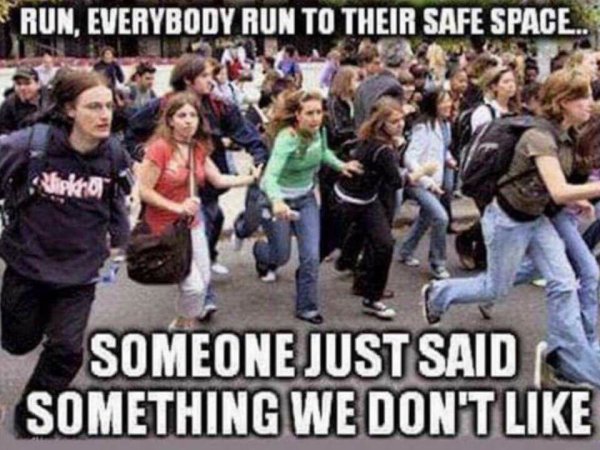
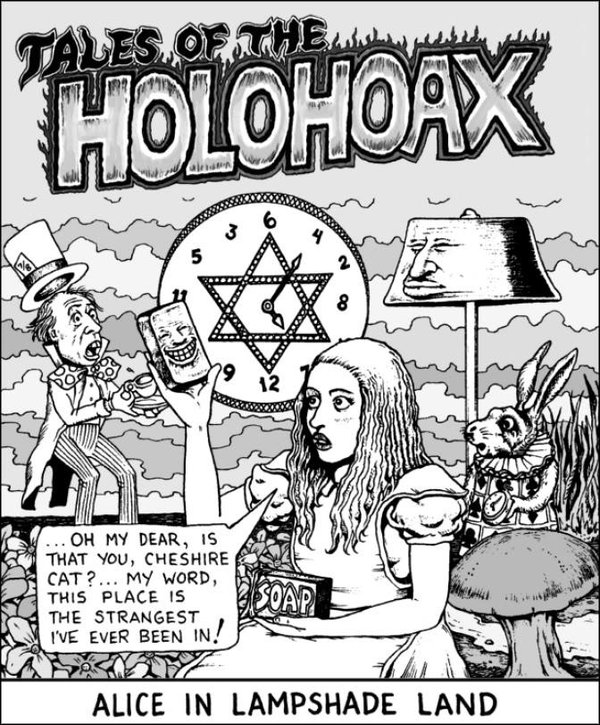

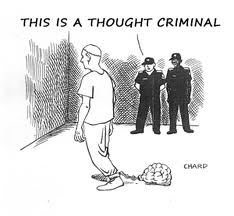

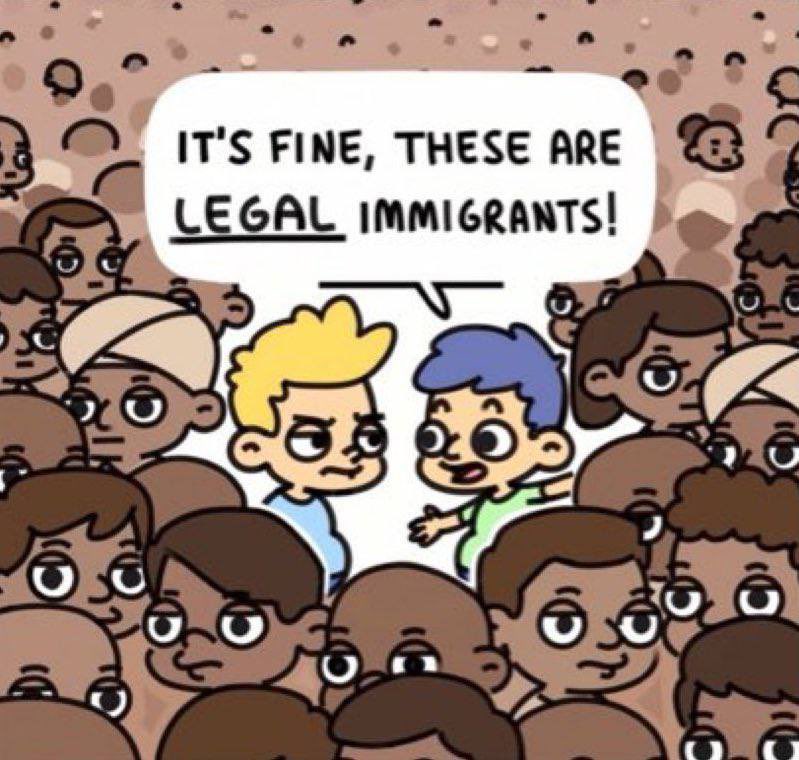



 Ian Robert Millard