Tag Archives: EU Commission

Diary Blog, 12 January 2026

Afternoon music

Tweets seen

So be it. No argument; however, Reform UK is the only vehicle at present which can break up the rigged “two main parties” scam.

Even more striking when you consider the population numbers, and so the per capita figures.
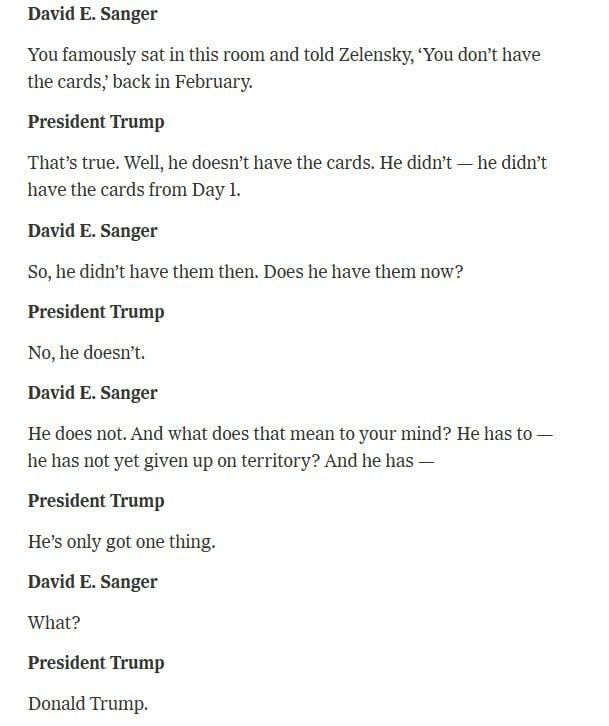
[“Let me take you back to an interesting event from 2018.

The then FM of Austria extended a casual wedding invitation to Vladimir Putin during her diplomatic visit to Moscow.

She never imagined he would take it seriously as it was just a courtesy invitation, not an expectation. But on August 18, 2018, a Russian state aircraft landed in Austria.

Vladimir Putin didn’t just attend the wedding. he arrived with a Cossack choir and a traditional samovar as a gift. Cameras went crazy. Music filled the air. And in a moment that would echo far beyond the dance floor, the Foreign Minister of a neutral EU nation took the hand of the Kremlin’s leader.

They waltzed. Brussels watched. When the music ended, Karin Kneissl performed a deep, traditional Austrian curtsey. That single bow ended her career.

Within hours, the image was weaponized. Political opponents framed it as proof of Austria’s “submission” to Moscow. Brussels politicians, globalist elites, and her domestic critics closed ranks. She was no longer a minister she was labeled a traitor, a spy, a pariah. Death threats followed.

Despite speaking seven languages and holding a doctorate in international law, she found herself erased almost instantly. Her bank accounts were frozen. Her name was blacklisted in her own country. They didn’t just push her out of office. They pushed her out of entire Europe.

Kneissl first fled to France, but exile followed her there too. Her accounts were blocked again. She said pressure was placed on her landlord to evict her.

With no footing left in Europe, she moved to a small village in Lebanon, living like a peasant in quiet exile far from the halls of power she once navigated with ease. And then came the final irony.

The woman driven out of Europe for dancing with Putin eventually found her only refuge in Russia. She describes the financial strangulation across Europe as the decisive force behind her departure first to Lebanon, and finally eastward to Russia.

Today, she lives in Saint Petersburg, heads a geopolitical think tank, and resides in a country cottage.

Her story is not just about a dance. It is about a continent at war with itself. About how symbolism now outweighs substance. And about how, in modern Europe, a single gesture, a bow, a waltz, one unguarded moment against the higher power can cost you everything. They said she danced with the wolf. And Europe elite made sure she paid the price. That’s why you see the likes of Kaja Kallas, Ursula von der Leyen, and others obey without hesitation. No one is allowed to step out of line because they know exactly what happens when you do.“]

https://en.wikipedia.org/wiki/Karin_Kneissl

Austria is a corrupt little country. Look what happened when David Irving gave a talk there. He ended up (by reason of the usual Jewish whining and demanding) actually doing time in a pretty harsh Austrian prison; he sat there for one year out of a nominal three-year sentence…in a country where African and Middle Eastern, and Afghan, “asylum-seeker” untermenschen get trivial sentences for raping Austrian schoolgirls.

Just as EU politicians are scared back into line by, inter alia, what happened to Karin Kneissl, so almost all prominent historians are scared to examine the many many fakeries and lies abounding in the Jew-Zionist “holocaust” farrago, because they see what happened to David Irving— blacklisted, “cancelled”, his books not published, some editions even pulped or burned etc.

https://en.wikipedia.org/wiki/David_Irving#Life_after_the_libel_suit

Too little, too late, Goodwin. A post-Aryan ethnostate is vital.

As predicted on the blog long ago, Reform UK is rapidly turning into a System party. Pro-Jew, pro-Israel, willing (in principle) to turn back new migrant-invaders but not those already here, unwilling to remove or restrict or corrall any other non-whites.

The Reform decision to welcome the likes of Zahawi (a corrupt, freeloading, expenses-cheating, fraudulent Kurd), who made money hand over fist during his time as “Conservative” MP, just underlines (as did previous similar decisions) that Reform will not be much good for the British people (as also long=-predicted on the blog).

Why, then, do I hope that Reform does well? Because it may well destroy the old-established Con/Lab System parties, aka “uniparty”. Their long heritage confers unmerited credibility. Once they are destroyed by Reform, Reform itself, with its shallow roots, lack of real integrity and with no ideology, can itself be destroyed by popular social-national upsurge.

Incidentally, that opinion poll, above, would translate to a Commons with about 424 Reform MPs, Lab 71, 45 LibDems, 42 SNP, 21 Cons, and 11 Greens [etc].

That would be a kind of quasi-populist Con-style police state, which might well precipitate a kind of civil war or social war. Still, and as Lenin said, perhaps in the end “worse will mean better“. I wonder.

One thing is for sure. If there is a Reform landslide, and Reform then either does nothing much, or tries to impose a finance-capital police state, the people will, finally, be ready for social-nationalism as a remedy.

Late tweets

[“I see everyone moaning about the “Islamophobia” bill trying to be passed, but most people won’t acknowledge, or at least dismiss, this happening before in our country and throughout Europe and the Anglosphere. I am talking about “Antisemitism” or at least what our governments are defining that as. The “Islamophobia” bill being passed is more or less what we already have regarding jews. It’s called the IHRA. These are guidelines that are used to gage what can conflate to “hateful speech” and therefore a charge can be brought up after in a general “hate crime”. That’s right, there’s not an official criminal offence for antisemitism here in England and Wales law. The IHRA has caused a lot of ambiguity since it was brought in and has led to some serious speech offences in some countries. The IHRA also came in around the time of the Brexit referendum, so make that of what you will. Long before the IHRA, several countries made it a criminal offence to deny the Holocaust. What other historical event has been criminalised to deny or question throughout history? Absolutely zero. It really shows who pulls the strings in the West, that’s for sure. So, if you are outraged by the “Islamophobia” bill trying to be brought in, you should also be outraged by what’s already happened regarding the IHRA. You’re a plastic patriot if you make exemptions for some groups over others. No ethnic minority is above criticism in a White nation. We need valid criticism to fix England. You can’t discriminate if you discriminate against everyone.“]

As Sophie Meaden says or implies, the English courts have repeatedly underlined that neither “antisemitism”, as such, nor “holocaust” “denial”, as such, are illegal in this country.

https://en.wikipedia.org/wiki/Stepnohirsk

Russian advances continue.

Late music
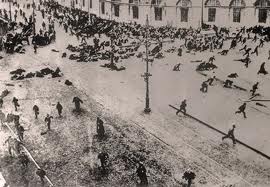
When I Had Lunch at an Italian Restaurant, Visited the EU Commission, but Never Saw Tashkent

Explanation

I am now writing about a personal experience, because I feel that some people might find it interesting anyway, and because I also feel that, inter alia, it says something about the EU and the way it operates.

The facts

In 1998, some months after my return from a several-months sojourn in Egypt, I was telephoned by someone whom I did not know, Leasor by name, who told me that my name had been suggested as someone who might be a suitable candidate for a project funded by the EU, and would I meet the next day to discuss it? I was interested, not least because I needed a job.

At the time, I was staying temporarily with my parents, at the yachting haven of Hamble, in Hampshire. As I say, I had been in Egypt for quite a while, had then spent three months penniless and effectively homeless in London (a dystopian nightmare), and since that time another lucrative work possibility, in Odessa (Ukraine), had just recently fallen through. The small financial settlement I had been paid (after having had to issue court proceedings against a Jew fraud —will blog about that another time—) was running out rapidly. So I was happy to investigate this new idea, whatever it might be.

A day or two later I was in London, lunching in a smallish and pleasant Italian restaurant in Pimlico, a stone’s throw from the Vauxhall Bridge Road. My host, Leasor (I forget his Christian name), was easy to talk to and explained that there was an EU TACIS project coming up for tender. TACIS was “Technical Aid to the Commonwealth of Independent States”, a foreign aid umbrella supposedly helping out the former Soviet republics by providing “expertise”. I regarded it as largely a boondoggle, a major aim of which was to help out not the former Soviet Union but large Western law firms, accountancy firms, “consultancy” firms and industrial concerns.

I believe that, since our telephone conversation, I had faxed my CV to Leasor, so he knew my work background, qualifications etc. He also knew that I had been, during 1995-1996, on the Committee of the Central Asia and Transcaucasia Law Association [CATLA], also connected with TACIS; the CATLA committee met every few weeks at one or another plush office of law firms in the City of London or West End. I remember that they included Clifford Chance, Norton Rose and other large firms. CATLA had been set up by UK law firms with interests in the new states recently carved out of the Soviet Union.

As for Leasor himself, I do not think that he said much about himself, save for the fact that he had been involved in a few similar deals in recent years. I am not someone who questions people closely (leaving aside my years at the practising Bar); I always think it rather rude. Neither did I enquire how he got my temporary home telephone number.

I had spent a year in Kazakhstan (1996-97), and had, a few years earlier, visited post-Soviet Moscow. This was of interest to the consortium which was bidding for the contract in Uzbekistan; also useful was my far-from-perfect but serviceable Russian language (both reading and speaking).

After lunch, Leasor took me to see his brother (in fact he had or has at least one other, but I did not know that then). His brother had been Adjutant of the 17th/21st Lancers, a smart cavalry unit now (at time of writing) not in independent existence; that brother was running what was basically a public relations outfit in a small office in Westminster. The brother or his firm would also be part of the bid consortium. I found both brothers pleasant and polite, though the ex-officer one did carry light traces of his former profession of arms in his speech and manner.

The next meeting was at the offices of yet another part of the consortium, the large law firm Simmons & Simmons, in the City of London. The meeting was chaired by its then “emerging markets” partner, a small Jew with a name so Scottish that the possessor of it should have had bagpipes and a tartan Tam O’Shanter. I had met him before. Also present was a City of London bod with a good line in convoluted financial jargon.

The project in Uzbekistan was to be based in the capital, Tashkent, the largest city in Central Asia. The title of the project was something like “Secondary Markets in Uzbekistan”. What I knew about secondary markets could be written, if not on a postcard, then certainly on a single side of paper, but no matter: the financial bod and the law firm would jointly take up that slack. My role would be to be second-in-command, so to speak, based as sole resident representative in Tashkent. All that was really required of me was legal and resident experience in the region (Uzbekistan borders Kazakhstan) and serviceable Russian. The others would be based in London.

It turned out that this was the EU’s second attempt to get a secondary market going in Uzbekistan. The first had sunk without trace, taking about £2 million in EU funding with it. I discovered that the team who had won the previous bid (I think French) had blown almost all the budget on salaries and on staying in the most expensive hotels in Tashkent, Moscow and European capitals, leaving nothing for publishing useful (educative) information or for effective liaison with the government of Uzbekistan.

20 years have now elapsed. I realized only years after the events now chronicled that, in overall charge of TACIS projects for that part of the world from 1994-1996, i.e. not so very long before I got directly involved in the region, was one Nick Clegg, since then of course MP (2005-2017), UK Liberal Democrat Party leader (2007-2015) and (2010-2015) Deputy PM, but then just a wealthy “trustafarian” whose parents had got him a job in Brussels:

He took up a post at the European Commission in April 1994, working in the TACIS aid programme to the former Soviet Union. For two years, Clegg was responsible for developing direct aid programmes in Central Asia and the Caucasus worth €50 million. He was involved in negotiations with Russia on airline overflight rights, and launched a conference in Tashkent in 1993 that founded TRACECA—an international transport programme for the development of a transport corridor for Europe, the Caucasus and Asia.” [Wikipedia].

No wonder the project for which I was recruited had failed at its first attempt! Clegg! I note also that only now, a quarter of a century later, is the “new Silk Road” coming into being. I wonder how much EU money Clegg wasted overall…

Coming back to a micro level of economics, my own proposed salary was, if I remember rightly, going to be somewhere around £100,000 (I think more) taxfree (and paid offshore), equivalent to maybe £150,000 or so taxfree today (educated guess). I think that accommodation and flights were also on offer. This was more than attractive to someone who had, that very same year, been for months all but destitute in London (where some of my adventures would make amusing reading, were I able to write them down).

So to Brussels…

The two Leasor brothers and I flew on a small business airline to Brussels. The jet was almost empty and arrived just as darkness was falling, around 1800 hrs. A confusing taxi ride through endless tunnels and we were there, in the middle of Brussels, a city to which I had never been (though I had visited Belgium itself on a number of occasions, starting in (I think) 1963, aged maybe just 7, when my family flew Sabena from Heathrow to Ostend, a service long-since discontinued).

In the morning, after an excellent dinner (Brussels is noted for cuisine) and a night in some hotel which appeared to be exclusively occupied by delegates and supplicants to the EU Commission or Parliament, we set off on foot to our own appointment with the Commission.

At the Commission (not the famous main building but a quite neglected smaller one nearby), we were ushered in eventually to a room set up like a tribunal, with EU flags on vertical poles and tables for us, the Uzbek delegation and the Eurocrats judging our bid.

The Uzbeks were a government minister (I forget now, 20+ years later, whether it was the Foreign Minister or Minister for Foreign Trade, I think the former) and his English-speaking assistant, a clever-looking young man who had “KGB” or the equivalent written all over him.

The “tribunal” consisted of a troika: the chairwoman was a French or Belgian woman, maybe 50, very much conscious of her importance (whatever that was) and looking somehow lacquered, as if her hair or face might crack if she were to fall over. There was also a besuited person of, I think, Belgian nationality and an English or maybe Scottish civil servant, looking scruffy and wearing a roll-neck jumper, making him look like the once-famous 1956 publicity shot of the young Colin Wilson, writer of The Outsider, pictured as enfant terrible of popular philosophy.

After one of the others gave an overview of our bid, it was my turn to be grilled. The main thing was to ask about my legal background and then to test my facility in Russian conversation. That was done by the minister, with help from “KGB” assistant. After a while, the KGB assistant carried on, until one of the troika interjected and said “I think that we have established that Mr. Millard has a good command of Russian…we are running short of time.” The KGB assistant wanted to carry on interrogating me but had to shut up. Not before time. The bastard had pretty much reached the outer limits of my fluency. As he subsided, he flashed me a smile and a sharp glance as if to say “I’ve got your number…”

We went back separately to London. I thought that we had done enough to win the bid, as had the brothers, but in the end it turned out that, for purely political reasons, a consortium from, if I recall, Spain had to be awarded the contract, because Spain had not had enough of a bite at the TACIS cherry…

Aftermath

My visit to Brussels over, I only heard once more from Leasor (the one who contacted me initially). I ended up, not long afterward, going to live for a while in the Caribbean and elsewhere. To this day, I have never visited Tashkent.

It was only much later that I started to wonder whether there had been something else behind that —superficially— purely commercial bid. Uzbekistan, like Kazakhstan, was just then, in 1998, becoming pivotal in geopolitical terms, as “Western”/NATO/NWO power rubbed up against an upsurging China, a Russia starting to be resurgent, and Islamism from the South. Maybe Professor Haushofer was at least partly correct…

Uzbekistan was under strict dictatorial control and at that time had not yet committed itself to cooperation with NATO. It might be that our bid was really an opening gambit to insert an intelligence post into Tashkent, with me as “clean” figurehead, at least at first. The project would have provided access to Uzbek ministers and advisors at or near the top level of their government.

Evidence? Not much. Was it relevant that I was called out of the blue? Not necessarily (headhunters had done that before and would do so again). Was it relevant that the Italian restaurant was near Vauxhall Bridge Road? Not necessarily. Was it in any way relevant that —as I only discovered a few years ago— the brothers were the sons of the writer James Leasor, who was a WW2 officer, later a foreign correspondent and writer of famous books on war and espionage, some of which were filmed: The One That Got Away and (filmed sub nom The Sea Wolves) Boarding Party? I suppose not. Straws in the wind, as we are in life…

Notes

https://en.wikipedia.org/wiki/Technical_Aid_to_the_Commonwealth_of_Independent_States

https://en.wikipedia.org/wiki/Nick_Clegg#Careers_before_politics

https://en.wikipedia.org/wiki/James_Leasor

https://www.smashwords.com/profile/view/jamesleasor

https://www.jamesleasor.com/about/

https://woodstockleasor.com/#leadership

https://en.wikipedia.org/wiki/17th/21st_Lancers

https://www.countrylife.co.uk/property/country-houses-for-sale-and-property-news/the-house-we-bought-for-20000-18459

https://en.wikipedia.org/wiki/Tashkent

https://en.wikipedia.org/wiki/Secondary_market

https://en.wikipedia.org/wiki/The_Outsider_(Colin_Wilson)

https://en.wikipedia.org/wiki/Karl_Haushofer

https://en.wikipedia.org/wiki/The_Sea_Wolves