“Councils across England and Wales have said they are keen to help accommodate asylum seekers as the government attempts to move as many as possible out of hotels, in part to try to ease community tensions.
The Local Government Association, which represents councils in England and Wales, said that while it had not been briefed about a possible shift away from the current model, councils would be keen to help if it happened.
“Councils have a proud history of supporting new arrivals across the current range of asylum and resettlement programmes,” said Louise Gittins, a councillor and the chair of the LGA.“
[Guardian]
So there it is. If you cannot get a lease of a local authority council property, or indeed a fairly-priced private lease or rental, you know why— migration-invasion.
Look at the words of that Louise Gittins idiot, i.e. that the way to “ease community tensions” (meaning fool the English/British into believing that they are not being swamped) is to, in effect, prioritize invaders over British or, at very least, to allow them to have social housing on the same basis as those who live here, those whose ancestors lived here, and who pay —through the nose— into the system…
This country’s government, both central and local, is riddled with both idiots and traitors.
After 5 years numbers will quadruple when they will be entitled to bring over family members. My neighbours carers from the Boriswave are all waiting until that day so they can bring over their families
The System parties and their MPs are all the same. In rough and ready language, traitors.
Honour and honours
Take a look at this once-quite-famous British actor, who performed courageous feats in the jungles of South Asia in the Second World War, was also a well-known actor, and an early campaigner for animals and against cruel zoos etc, yet in his whole life was awarded only an MBE, and ask whether the current crop of fake “peers”, “knights” and others have not been over-rewarded…
Press review: Lavrov signals Russia’s readiness for talks as Kiev seeks stronger position. Top stories from the Russian press on Wednesday, January 15th:https://t.co/pCJI77fKa0pic.twitter.com/gPinsRWZxO
“We are losing the future” – Tymoshenko announced the threat of losing sovereignty due to the latest votes in the Rada
The leader of the Batkivshchyna party criticized Law No. 7662, which allows international councils to elect judges of the Constitutional Court of Ukraine,… pic.twitter.com/VCQovmlGEG
Ukraine has no future as an independent state, at least not on the basis of its present borders. If it withdraws to west of the Dnieper, and is centred on Lvov, maybe.
I still do not trust these pollsters, many won’t. To think that half the electorate still intend to vote for Labour or the Conservatives is highly questionable. We are living with the devastating consequences of these two parties having the monopoly of power for far too long. I…
Electoral Calculus has the result of that (with Greens at a notional 8%) as: Labour 230 seats, Cons 197, Reform 93, LibDem 70, Greens 6.
Hung Parliament. Labour, even with LibDem and Green support, could only form a minority government (even in full coalition, only 306 seats, about 16 short of a majority).
Early days, though. If Reform UK could get to 26% (and all other unchanged), the result would be: Lab 190, Reform UK 172 (official Opposition), Cons 160, LibDems 69, Greens 6. In that scenario, Labour, 136 short of a majority, could only govern on the say-so of either Reform UK or the Conservative Party. In fact, in such a scenario, a Reform UK-Conservative Party coalition or agreement would be far more likely, producing a joint majority of about 10 seats.
Sooner or later, real social nationalism must break through. When people have suffered even more.
More tweets
🚨 BREAKING: The official list of which Councils have asked to delay their local elections in May
Counties: Derbyshire Devon East Sussex West Sussex Essex Gloucestershire Hampshire Kent Leicestershire Lincolnshire Norfolk Oxfordshire Suffolk Surrey Warwickshire Worcestershire…
When I first drove in England, aged about 43, I had never had to parallel park for a driving test, and drove as long as I could on my foreign licence.
In the end, because the DVLA would not allow me to simply swap my licence for a UK one, I had to accept that I would have to get a UK licence and also take the UK driving test, which however I passed without difficulty, and perhaps unsurprisingly, having driven extensively both in the UK and overseas (including UK to Turkey and back, a trip more difficult in 2001 than it would be now, with the new motorways that now exist, extended Schengen Zone etc).
The one difficult aspect was the parallel parking, but I employed a driving instructor for 2 brief afternoon sessions, and he taught me how to parallel park to a higher standard than I already knew.
The leader of the Alternative for Germany just said if elected the party would initiate “large-scale repatriations” of foreigners, tear down “all wind farms”, and close down Gender Studies
Look not only at the “Presiding Officer” but also at that ghastly Welsh Labour hag (at the end of the clip), whoever she is. Plainly an enemy of the people.
I was never a sparkling wine drinker, but Sekt is as good as anything else except the best Champagne. Also, on a partly-personal point, not many people know that, when Ambassador in London, Ribbentrop, apart from his residence in the German Embassy (then at Carlton House Terrace near The Mall), kept a private house in Barnes (the area the other side of Hammersmith Bridge; https://en.wikipedia.org/wiki/Barnes,_London).
The modestly spacious detached house, with gardens, and situated in a side-road, was later owned by a lady with whom I was slightly acquainted (the friend of a friend). I visited it once, perhaps twice. She later sold it (mid/late 1980s) to a Jew, who knocked it down and built a small block of two or three-storey flats on the site.
Incidentally, I was just looking at Wikipedia; nothing at all in it about Ribbentrop’s residence in Barnes. “Unknown history”, it seems, though of course MI5’s files would have the details, as far as the 1930s are concerned.
The jobs bloodbath continues as Currys is forced to outsource more British staff to India as a result of Rachel Reeves's "tax on jobs", the Chief Executive of the electricals retailer has said. https://t.co/Qbf9jblrEM
What's the real reason behind the 'Farmer Harmer' Tax, asks David Craig. Could it have anything to do with the current rush among the rich and among financial institutions to buy up farmland? https://t.co/Nqsd7Z0bro
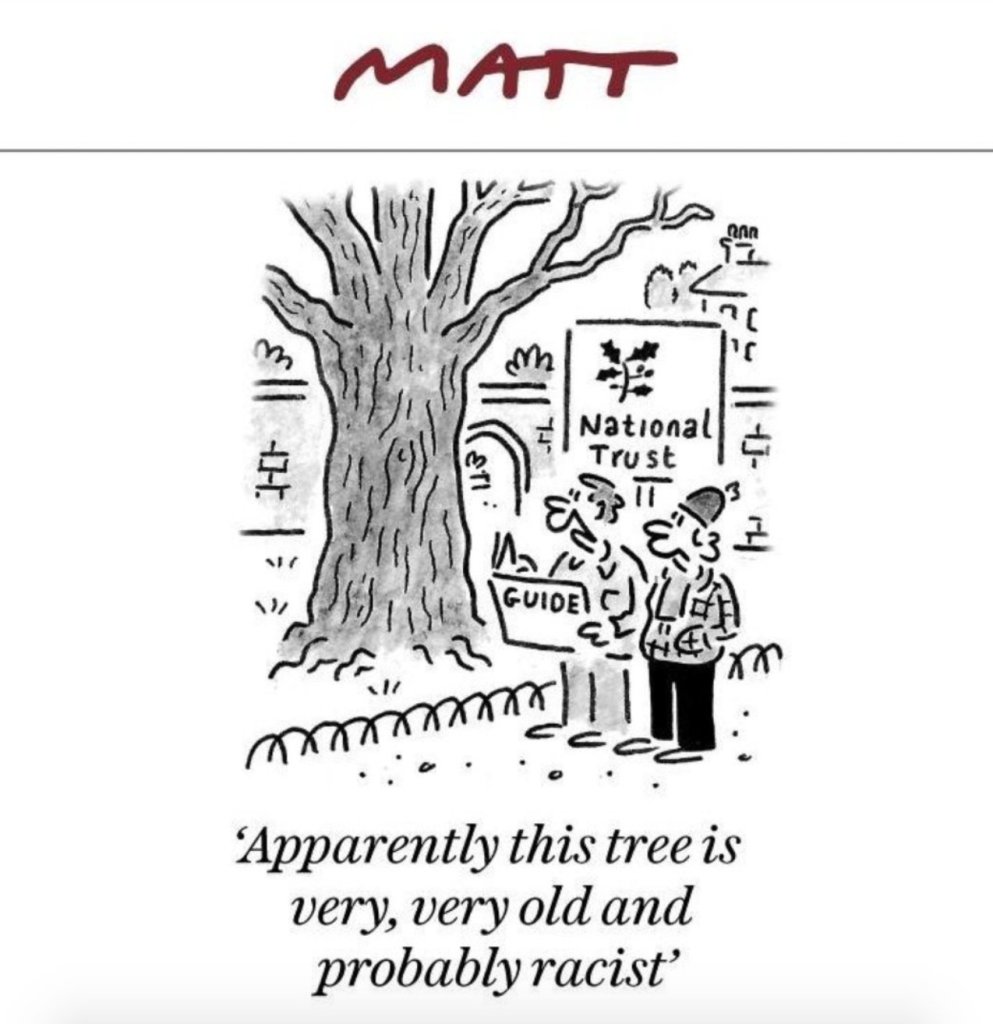
I think that that may be part of it. Also, the sinister conspirators trying to implement the Coudenhove-Kalergi agenda have made a determined effort to flood the British countryside with non-whites, as witness the National Trust and similar organizations.
The British countryside is one of the few redoubts of white British people, surrounded by urban and suburban non-white swamps. Farmers in the UK are almost entirely a white British community. This makes them a target.
I myself have criticisms of farmers in some respects, but that does not mean that I want them “replaced” by migrant-invaders and/or corporations interested only in the bottom line.
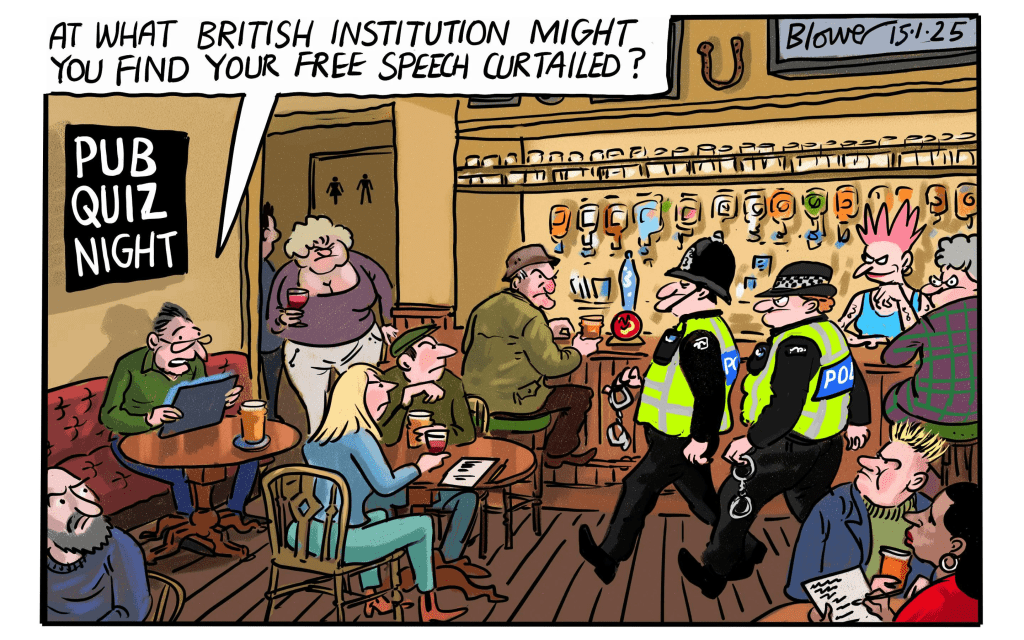
…and the Bar, the BBC, academia, and almost everywhere else. The biggest sharks in that anti-free-speech pool are those of the Jew-Zionist/Israel lobby, by the way.
The Labour Party want to give votes to foreigners, power to unelected quangos, make voter fraud easier and rig the system in their favour.
What is there to say? Instead of being [REDACTED] as he well deserves, he is quite likely going to get “compensation” out of British taxpayers’ money.
Can this country’s System parties do anything right?
Few today will be aware that, when Adams headed both Sinn Fein and the IRA in Belfast, he was getting social security payments from the equivalent of the present DWP. Petty, maybe, but it does show how “careful” the British governments of the 1970s, 1980s, 1990s were in dealing with these people.
The Northern Ireland situation was handled, mainly, in the way the British state handled, for example, the Rhodesia/Zimbabwe situation. Gather as much intelligence as possible. Don’t be too harsh or extreme. Try to get the parties to come to agreement. Manage the situation.
That may sound all very reasonable, but it does not work when you are dealing with the likes of Mugabe or Adams. Fact. It leads to poor resulting conditions.
Northern Ireland stopped actually fighting 25 years or so ago mainly because the IRA had run out of steam, the civilian population wanted an end to it all, and the British Government was willing to throw huge amounts of money at the province in terms of public sector jobs, social welfare, social housing etc, and also willing to let the convicted fighters/terrorists/whatever out of prison. The Good Friday Agreement. “Peace” at a price.
The British Government was also willing to allow, in effect, the IRA into government. Martin McGuinness, Gerry Adams etc.
Oh, well. Northern Ireland is a sideshow anyway, but it is irritating.
A by-election is to be held in Brecon and Radnorshire constituency (formerly Brecon and Radnor, 1918-1997). Unusually, this by-election has been triggered by the conviction for (what amounts to) fraud relating to the Parliamentary expenses of the sitting MP. Christopher Davies, who had held the seat since 2015, pleaded guilty and was sentenced to 50 hours of community service and a fine of £1,500.
The relative leniency of the sentence may reflect the fact that the £700 wrongfully claimed by way of expenses by Davies could have been claimed legitimately (whether approved or not); the way in which he went about it (creating two false invoices amounting to the sum in question) made it unlawful. On a kind interpretation, Davies was stupid or incompetent more than (very) dishonest. Still not very good for him, I would have thought.
The position of the MP and the calling of the by-election
The events around this by-election raise interesting issues.
The news reports say that the seat “has been vacated”, but I have seen nothing about the Speaker declaring it so, a problem which previously arose during the Fiona Onasanya case, when that MP, despite having been sentenced for perversion of the course of justice, and despite a recall petition having been approved by more than the requisite 10% of eligible voters, still sat and voted as MP for Peterborough (including, crucially, in a significant Brexit debate and vote), also getting paid for months.
Davies may or may not, at time of writing, still be an MP. Even the more serious newspapers and the specialized websites (eg Politics Home) have not clarified the position. The Wikipedia entry for Davies says that his removal as MP was “automatic” once the results of the petition were known, but such is not the case. Wikipedia also says that “the seat was declared vacant on 21 June 2019” (today). Perhaps.
The Conservatives must “move a writ” to start the by-election process. In Britain’s unwritten or (more accurately) uncodified Constitution, this is supposed to happen within (usually) 3 months of the seat being declared vacant. After that, the by-election usually happens within 27 days (of the writ having been moved).
In other words, while in theory this by-election could happen by the end of July 2019, it might not happen until late October or, if the Conservatives really stretched the Constitutional proprieties to the limit, even later. Parliament rises for its Summer Recess on 25 July, so if the writ is not moved by then, the very earliest date on which the writ could be moved would be 3 September, after the Commons return, making the earliest by-election date one in late September.
If Davies is still nominally the MP, then he is entitled to his salary and expenses until such time as he is declared (by the Speaker) not the MP.
Christopher Davies, remarkably (bearing in mind that he pleaded guilty to the charges), seems to be breezy about the matter, and has invited his constituents to his local office, in the small Welsh town of Builth Wells, to view and enjoy the 9 landscape photographs which were the subject-matter of the expenses claims in question! I daresay that many of his constituents might wonder why Parliamentary expenses cover such purchases anyway (surely he or the local Conservative Association should have paid?).
Even more remarkably, Davies says that he intends to stand again! The local Conservatives, meanwhile, have not pronounced on whether Davies will be allowed to stand as a Conservative Party candidate! One can see their difficulty: if Davies stands as Conservative candidate, their chance of success is weakened, contaminated by his candidature, but if Davies stands as Independent Conservative or some such, he may draw off at least a few hundred, maybe even a thousand or more otherwise “Conservative” votes. None dare call it blackmail?
Still, one would have thought that simple ethical standards might have come into play, but in the contemporary Conservative Party, it seems not.
Another strange aspect: one would have thought that the two contenders for the Conservative Party leadership would have condemned Davies for his offences, or at least mumbled something neutral, but it seems that both have been “very supportive”.
The constituency
Before 1939, the constituency, under its Brecon and Radnor name, had as MPs persons from the Labour, Liberal, Conservative, Unionist, National and National Liberal parties (the latter three effectively Conservative coalition candidates).
Labour held the seat between 1939 and 1979. From 1979 to 2019, the Conservatives won 3 times, the Liberals/Liberal Democrats 3 times.
The post-WW2 Labour vote peaked in 1964 at just under 58%; its lowest was 10% in 2010. In general, the Labour vote has declined over the years, having not exceeded 20% of votes cast since the General Election of 2001.
The LibDem vote peaked in 2010 at 44.8% (1st placed), since when it declined to about 28% in 2015 and about 29% in 2017; however in both 2015 and 2017, the LibDems were placed 2nd.
In 2017, the Conservative candidate, Davies, achieved a vote of 48.6%, a post-WW2 record for Conservatives in the seat.
The only other (slightly) significant party contending over the years has been Plaid Cymru, which however has rarely retained its deposit in recent decades. Its typical vote share in recent years has been 2%-3%, though it reached 4.4% in 2015 (3.1% in 2017).
A few other parties have stood over the years. UKIP got 8.3% in 2015 (its best in the seat), but slumped to 1.4% in 2017.
The joker in the pack is Brexit Party.
Conclusion
There are some uncertain factors here: will Christopher Davies really stand again, and if so will it be as Conservative Party candidate or as some type of Independent? Will Brexit Party put up a strong candidate? Whatever happens, the Conservatives must be toast here. If Davies stands as Independent, and with Brexit Party now standing, then the Conservative vote will (probably though not necessarily) be even lower than if Davies brazenly stands again as Conservative. Davies does seem to be quite embedded locally, as a former livestock auctioneer, Royal Welsh Show ring commentator and manager of a veterinary practice.
The LibDems are currently strong favourites. The only thing that would or might upset the applecart would be the Brexit Party, now (announced today) entering the fray. Looking at 2015/2017, the LibDem core vote in the seat is below 30%. Even so, the LibDems must be in pole position here. It’s their election to lose.
Further factors
It is plainly in the Conservative interest to delay this by-election as long as possible. Their notional working Commons majority, even with DUP support, is now only four. If Brecon and Radnorshire goes LibDem or Brexit Party, that will reduce to three. Some Conservative MPs are ready to abandon support if Brexit no-deal looks likely. Boris Johnson may be a very short-lived Prime Minister.
The Brecon and Radnorshire Conservatives have reselected Christopher Davies as their candidate.
Davies faces an uphill struggle. While his offence was only marginally dishonest, it was still dishonest. It also showed Davies as both lacking in judgment and as simply inept. Apart from that, there is the point that the Conservatives have rarely if ever been lower in public estimation. Also, this is a by-election and the Conservative Party is in government.
The position has now been clarified. Davies is no longer the MP and the writ is expected to be moved today, Thursday 27 June, having failed two days ago. The by-election is now or soon will be set for 1 August 2019.
In a sense, I am surprised that the Conservatives did not play this more tactically, in view of their situation re. the numbers in the Commons, but there it is.
Now that Brexit Party is standing, the chance of the Conservatives actually winning (especially with a rather discredited candidate) has shrunk accordingly. If Brexit Party gets half of the 2017 Conservative vote, that would give them about 24%. The LibDems are unlikely to get less than the c.29% they got in 2017. Labour got over 17% in 2017.
If Labour does better than it did in 2017, and if Brexit Party does well too, and the LibDems do at least as well as they did in 2017, then all four serious contenders might well get vote shares in the 20%-35% range. If the Conservative vote were to collapse to, say, 10% or 15%, then the other three parties in serious contention might well end up getting about the same vote shares as each other.
This might turn out to be quite close among LibDems, Brexit Party, Labour, and maybe Conservatives too, with the likelihood of placings in that order.
Meanwhile, minor Remain-friendly parties look like not contesting the seat, in order to give the LibDems a clear run. Green Party, Renew, Change UK (probably, if they even bother to make a statement, they are already so marginal), Plaid Cymru (maybe).
Renew has never contested this seat, though it scored about 4% in Newport West recently; Change UK is already a “dead parrot” party, marginal, negligible in support (below 1%); the Greens last contested this seat in 2015, scoring 3.1%; Plaid got 3.1% in the seat in 2017.
If Plaid get on board the non-contest train, the boost to the LibDems must be worth several points, maybe as much as 7%, though more realistically about 5%. Worth having, anyway.
There are so far 4 candidates standing (LibDems, Conservatives, Brexit Party, Labour), with less than 48 hours until nominations close. Plaid Cymru has “indicated” that it will not be standing, in order to give the pro-Remain LibDems their best possible chance. The other pro-Remain parties, meaning Greens and Renew, are both not standing and for the same reason. Any late entries are likely to be vanity or joke candidates and will not at all change the outcome of the by-election.
The LibDems must be in an even stronger position to take the seat now that the smaller parties are not standing. In the last few elections, minor parties accounted for between 5% and 10% of the total vote.
Update, 4 July 2019
My eye was caught by the latest YouGov national opinion poll, as reported by Britain Elects.
If this poll is in any way accurate (and Ipsos Mori put out a very different result only a week ago, which shows how volatile UK politics is becoming), then Brexit Party would actually be the largest party in the Commons after a general election:
Brexit Party 196 seats (130 short of Commons majority), Labour 148, Conservative 169, LibDem 66. That would mean a Brexit Party government with, almost inevitably, Conservative support; possibly a coalition government. Large numbers of both Conservative and Labour MPs would be gone, including half of those recently vying for Conservative leadership.
Thinking about how that might apply to the Brecon and Radnorshire by-election, it may be that most of the 2017 Conservative votes in the seat will go to Brexit Party, but they might not. There is uncertainty. Personality often means more in rural constituencies than in urban and suburban ones. Much depends on whether voters regard the Conservative, Christopher Davies, as an “expenses cheat” and/or “fraudster” after his criminal conviction, or whether they will “forgive and forget” his sin/error because they (do they?) regard him otherwise as OK and his offence a technical one.
My view is obviously no more than an educated guess, but I should think that many locals will think that £700 is a ridiculous sum to pay out for 9 photographs anyway. Others will see the dishonesty aspect; yet others may think that the former MP should be given a second chance. Much depends on his personal vote, on his local popularity.
I find this by-election hard to call. However, it must be done. On present facts, I think that Labour has no chance, realistically. It is seen as the party of the blacks and browns now, for one thing. They are few in number in that part of the world, unless it has changed hugely since I was last there. Also, Remain voters will go LibDem here, not Labour, whereas committed Leave/Brexit voters will go Brexit Party or maybe Con.
I think that it is quite possible that at least half the 2017 Conservative vote will defect to Brexit Party. The LibDem vote will be solid now that the party is bouncing in the polls; also, in this seat, the LibDems are not seen as a wasted vote, Brecon and Radnorshire having had LibDem MPs from 1997 until 2015.
If the LibDems can build on the 29% they got in 2017, and I think that they will, then they are in with a very good chance. They might get a vote between 30% and 40%.
I doubt whether Labour will get more than 10% or so.
The Conservative vote may collapse, though I remain unconvinced that it will go much lower than 20%.
Brexit Party, if it can capture disaffected Conservative votes, might go as high as 30%. There is another point, which is whether people who prefer Conservative or Labour will vote tactically for Brexit Party. Hard to say. The LibDems must get at least 30% and may get 40%, so Brexit Party has to get around 40% to have a chance of winning.
Provisional Conclusion (with nearly 4 weeks left to run):
LibDems
Brexit Party
Conservatives
Labour
Update, 5 July 2019
With weeks left to run, the online betting market shows the LibDems as heavily odds-on (about 1/5), Labour (oddly, but the market is thin) on 2/1, Conservatives on 9/1, Brexit Party at 12/1. Political betting is a minefield. The favourites often go down. Labour on 2/1 looks like exceptionally poor value! Brexit Party, however, looks like fairly good value at 12/1. My own valuation of the odds would be nearer to: LibDems 1/2, Brexit Party 2/1, Conservatives 3/1, Labour 10/1, but we shall see.
The confirmed final list of candidates shows the four expected parties (Con, Lab, LibDem, Brexit Party) and two late entrants, namely UKIP and Monster Raving Loony. The UKIP entry will obviously eat into Brexit Party’s chances; to what extent we shall see, though even 500 or 1,000 votes might be enough to sink Brexit Party in the by-election. Looks more like a spoiler than a serious candidature.
The Guardian interviews locals. One part stands out:
“Given that 19% of the local electorate signed the recall petition, almost double the 10% threshold, a surprising number of locals of different party allegiances express sympathy for Davies’s plight. Yet there are some who are adamant that he should have stood down. One council worker tells me that, owing to her job, she’s in electoral purdah and can only speak off the record. “I signed the petition against Chris Davies because he tried to shaft a friend of mine who works in his office, by blaming the expenses mistake on her,” she says. As far as this council worker is concerned, Davies, whom she voted for in 2017, was given a second chance for cynical reasons. “Everyone knows that they didn’t want to put any promising new candidate in,” she says, “because they know they’re going to lose the seat.””
Had a look at Oddschecker betting array. LibDems are hugely odds-on (1/9), Conservatives second at aroung 7/1, Brexit Party about 12/1, Labour 100/1. Not noted were UKIP and Monster Raving Loony. I expect that anyone wanting to throw away a few pounds could ask for and get 500/1 against either of those.
Betting is not always a sure indicator of a election or referendum result, but the LibDems have, as previously said, a lot going for them here: a fairly recent history of providing the local MP, the fact that the Conservative candidate is damaged goods, the fact that those who would have voted for the parties that have voluntarily withdrawn (Green, Plaid Cymru, Renew) will vote LibDem in a contest where Labour is anyway a wasted vote.
Well, “the moment of truth”, meaning that the by-election will be held tomorrow, Thursday 1 August 2019. This blog post has so far had, in about 5-6 weeks, 600+ views, far above the norm for my blog. Brecon and Radnorshire is having its 15 minutes of fame…
The LibDems are in pole position, hugely odds-on with the bookmakers (1/20 in some quarters), with the Conservatives in 2nd place (about 9/1) and (perhaps surprisingly) Brexit Party in 3rd position (as high as 50/1, which may be, at those odds, a value bet); Labour seems out of it at odds of 150-1.
A month ago, I was predicting, provisionally, LibDems to win, followed by Brexit Party, Conservatives, Labour, UKIP (a pure spoiler candidature, it seems) and the inevitable joke candidate, a Monster Raving Loony calling herself Lily the Pink (presumably after the comic song of 1968).
I see no reason to think that the LibDems will not win Brecon and Radnorshire. They have all the Remain votes and so many of the votes of the highly-subsidized local farmers, though no doubt some of the latter will remain loyal to the Conservative Party and its recently-convicted candidate. I do not know what sort of campaign Brexit Party put up in the constituency, but I should imagine that BP might still come second, notwithstanding the bookmakers. If it does not, Brexit Party’s balloon deflates a little more, but many will be looking at the result of the by-election to see whether the Conservative might have won were there no Brexit Party candidate. If the Brexit Party candidature alone meant that the Conservative could not win, alarm bells will sound at CCHQ.
Update, 1 August 2019
Polling day. The betting odds, for what they are worth are (best odds) LibDems 1/18 odds-on; Conservatives 7/1, Brexit Party 100/1, Labour 150/1. The bookmakers, at least, think that Brexit Party is heading for 3rd place. Perhaps.
It may well be that tactical voting is taking place, in particular that Labour supporters, recognizing that Labour has no chance here, are going with the LibDems in order to ensure defeat for the Conservatives (and Brexit Party).
The only significant changes in the betting are the Conservatives taking closer order (yesterday 8/1 or 9/1, today 6/1 or 7/1, and Brexit Party sliding from 50/1 to 100/1.
Looks as if the LibDems have probably nailed it and that the Government’s majority, even with DUP support, is now 1 MP vote.
The LibDems won fairly decisively, but with a smaller majority than the betting might have been suggesting. I have posted links here below.
For me, the most important aspect beyond the headline result is the fact that the Conservative ex-MP would have won, even handsomely, were it not for the candidature of Brexit Party, which received 3,331 votes.
The LibDem majority over the Conservatives was only 1,425. In other words, had Brexit Party not been standing, the Conservatives would almost certainly have won by nearly 2,000 votes. I shall be blogging separately later about the by-election and the implications of that Brexit Party aspect for the national political picture.
The Labour vote had suffered a general decline in the constituency over the years (all-time high was 57.69% in 1964), but this was its lowest-ever vote-share (5.3%). I attribute that partly and perhaps mainly to tactical voting: Labour supporters voting against the Conservatives (mainly) in a situation where Labour had no real chance anyway: the Labour vote here has not exceeded 20% since 2001 (21.4%).
The Monster Raving Loony Party got 1% (334 votes), the UKIP spoiler candidate (or was she just irredeemably stupid?) only 0.8% (242 votes).
There is not much sunshine for the Conservatives in this result. Still, ex-MP Christopher Davies can always return to auctioning cattle; and he has some lovely landscape photographs (the subject-matter of his criminal case) for his Builth Wells office. Something to think about as he endures his community service serf-labour…
Ynys Mon, a constituency which (sub nom Anglesey) goes back to 1545, was won by the Conservative Party at the 2019 General Election, only the third time a Conservative Party MP had been elected there, and only the second Conservative MP (the first having been the multikulti supporter, Keith Best [MP 1979-1987], who was convicted, while MP, on charges of having made fraudulent share applications).
As to Brecon and Radnorshire, the Conservative Party won easily, with a vote-share of over 53%, at the General Election. Brexit Party had not stood (rather, withdrawn) a candidate after Nigel Farage stabbed his own supporters in the back.
The present MP for Brecon and Radnorshire is Fay Jones, a rather obscure and youngish woman (34/35 y-o) whose father was also once a Conservative Party MP (and is a prominent freemason in Wales).



 Ian Robert Millard