Formation of a Social National Party in the UK

Background

For a number of years, I have watched the socio-political scene in the UK with increasing feelings of concern. The System parties have done terrible things (and omitted to do the right things) without any regard for the national interest, without compassion, without even logic:

  • disastrous foreign wars and other interventions, backing the United States and NATO and (in reality) Israeli interests and the plans for a “New World Order” [NWO];
  • financial madness caused by globalist economics and neoliberalism, not least the inability to tax effectively huge transnational enterprises;
  • gradual takeover by Zionists of strategic areas of society;
  • quite fast increase in the Muslim and other non-European populations of the UK;
  • inflicting appalling hardship and persecution upon the poorer section of the UK population (eg unemployed, disabled) via spending cuts, cruel bureaucratic systems, outsourcing;
  • allowing the NHS to decline steadily in all areas;
  • importation of many millions of immigrants even since 1997, with subsequent births to those immigrants, resulting overall in strain on NHS, roads, trains, housing; schools, prisons, social security, pensions;
  • policies on farming and landowning which do not prioritize wildlife and the environment  in general;
  • crises in care of the elderly;
  • decline in real educational levels covered up by meaningless “degrees” and award inflation;
  • inability to adequately and aesthetically house the population.

The above is not even a complete list of how the System parties have let down the British people.

System Parties

Conservatives

The Conservative Party has inflicted terrible damage on the UK via, inter alia, spending cuts and a coarsening of political converse generally. It might have suffered a huge defeat in 2015, but in the event was saved by the vagaries of the First Past the Post electoral system etc. It has now been saved, for the time being, by the implosion of the Labour Party.

Labour

The Labour Party becomes increasingly less relevant. Even mainstream commentators have woken up to it now. Labour introduced the hateful, dishonest and incompetent ATOS company to persecute the disabled. Labour was the party that decided to invade Iraq and Afghanistan. Labour is infiltrated, indeed pervaded, by the Jewish-Zionist lobby and its agents. True, so is the Conservative Party, but Labour claims to speak for what were once known as “the workers”. That, of course, is Labour’s problem: the bedrock of the “proletariat” has been replaced by the shifting sands of the (increasingly raceless and cultureless) “precariat”. So Labour seems to speak on behalf of metro-liberal “snowflakes”, “antifa” rentamob idiots, employees of the collapsing public sector; above all, perhaps, the “black and brown” ethnic minorities.

Example: in Stoke on Trent, Labour recently won the Stoke Central by-election by 2,500 votes. 62% of the electorate did not vote; of those that did, about 7,500 voted for Labour, 5,000 for both UKIP and Conservative. The constituency has 12% non-English voters (half of them Muslim). Virtually all voted Labour. In other words, the “ethnic” vote swung it for Labour. Educated guess: of the 7,500 Labour votes, virtually all were from ethnic minority (mainly Muslim) voters.

The SNP supremacy in Scotland has taken away about 50 MPs from Labour.

The redrawing of boundaries for 2020 will mean a House of Commons with 600 MPs. Labour is now polling at 25%, concentrated in a relatively few seats. Labour will have 100-200 MPs out of 600. It will be unable to form even a minority government.

Labour is gradually deflating to nothing.

Liberal Democrats

The 2015 debacle has killed the LibDems. The party may be getting “dustbin” or “protest” votes from disaffected Labour/Conservative voters, but its upsurge in 2010 will never be repeated. The Con Coalition mortally wounded the Liberal Democrats and they were lucky not be wiped out in 2015.

Non-System Parties

UKIP

UKIP was founded in 1993 and in the nearly 24 years since then has done well to get MEPs elected but has never come even very close to getting a Westminster MP, except for free-market crazy Douglas Carswell, who after all was already a Conservative MP and may well revert to being one.

UKIP failed badly at Stoke Central and Copeland and those failures reflected its lacklustre performance in local and Westminster by-elections since its peak in or around 2014.

Brexit has shot UKIP’s fox, both on the EU and on EU immigration. UKIP seems unwilling to engage on non-EU immigration and, in general, on race and culture; it seems afraid of being called “racist”. UKIP might have forged ahead had it gone social-nationalist in 2014, but it failed to do that and is now just a (sort of) Conservative joke party again.

UKIP has come to the end of the line except as a dustbin for some white English votes.

Other non-System Parties

There are none, really. Yes, there is “the solitary Green” at Westminster, who will be gone by 2020. The Greens are polling nationwide at 3% or below. As for the BNP, after its rise in 2008-2009, it has all but vanished. Its vote at Stoke Central was 124.

Political Vacuum

It is clear that there is a political vacuum in England. The Conservatives are riding high but only by default, Labour is imploding, UKIP is effectively dead as a party with actual MPs; LibDems may well have no MPs by 2020.

At the same time, real incomes are stagnating or declining in value, immigration continues at about half a million (perhaps 250,000 “net”), housing is inadequate and expensive, young people cannot have a decent life or future, the elderly are neglected, the unemployed and disabled persecuted.

There will never be a better or more auspicious time for social nationalism. However, only if there is a physical instrument, a political movement. I have blogged about the need for safe zones for social nationalism. However, there must also be a movement, part of which must be a political party.

Party

Party Funding

New parties always face financial difficulties. Dependence on donors is not easy yet hard to avoid. A basis of firm finance is essential. It may be that the only way for a small party to grow will be for its members to sacrifice a percentage of their income to the party. On that basis, a party of even 1,000 people can have an annual income of over £2 million (based on average net income of a very modest £20,000 and on a “tithe” of 10% of that).

Party Democracy

In an ideal world, a party should be (arguably) “democratic”, but experience shows that the enemy, particularly the Zionist enemy, is skilled at exploiting cracks and fissures to create factions which eventually destroy the party. It happened to the National Front in the 1970s, it happened (it seems) to the BNP in more recent times. It is happening to UKIP too, despite its doormatting where Israel is concerned, despite its wayward errors in respect of race and culture.

In view of the above, the party leader must have the final say.

Strategy

The way to go is for the new party to target first and foremost seats within the “safe zones” which will attract more and more people from across the UK. Thus the first thing is to create those safe zones.

Further Thoughts and Update (26 July 2018)

The only aspect of the above which requires rethinking is the role –and prospects– of the Labour Party. The bubble of the Conservative Party burst in the final weeks of the General Election 2017 campaign. Labour benefited. That I did not anticipate until the last week or two of the campaign. I see no great revival of Labour fortunes; rather a further deflation of Conservative fortunes. The likely result (in any general election in 2018 or 2019)? Hung Parliament and weak minority government, probably Labour.

As for the rest of my blog post, safe zones etc, all that still applies.

Update, 15 July 2023

“Man proposes, God disposes“, as they say. The Jewish-lobby attack on Corbyn-Labour, combined with Nigel Farage shooting his own Brexit Party in the back, and the wall of lies put up by “Boris” Johnson, resulted in an unexpected and considerable Conservative Party win at the 2019 General Election.

There was another factor underpinning the Conservative Party win of 2019— the fact that so many Labour Party voters “voted with their feet”, a few defecting to vote Conservative, but most simply not voting:

The Conservative vote-share increased only marginally across the country (more in a few seats), but the Labour share fell by 8 points. Had the Jewish lobby not trashed Corbyn-Labour on a daily basis for several years, and had Nigel Farage really fought for Brexit Party, the 2019 result would have been very different.

As for social nationalism, still no credible party anywhere to be seen./

Stoke Central and Copeland: the aftermath for Labour and UKIP

The by-elections in Stoke Central and Copeland have been held. The public relations people for Labour (UKIP seems to have no public relations section) are still trying to spin positives out of the Stoke result and even the Copeland defeat. The time has come to look to the future based on what can be taken from these by-elections.

The Result in Stoke Central

https://en.wikipedia.org/wiki/Stoke-on-Trent_Central_(UK_Parliament_constituency)#Elections_in_the_2010s

The Result in Copeland

https://en.wikipedia.org/wiki/Copeland_(UK_Parliament_constituency)#Elections_in_the_2010s

First Thoughts

I blogged before the poll that, if UKIP failed to win Stoke Central, that that would surely be the end or at least beginning of the end for it as a serious contender. I have also blogged and tweeted for 18 months my view that UKIP peaked in 2014. I have no reason to change those views now.

As a candidate, Paul Nuttall was fairly poor, not resilient, not intelligent, not really passionate enough politically. The UKIP organization or administration of the campaign also seemed poor. Overall, as in the past, UKIP seemed to be afraid to really set the campaign alight. The law being what it now is, UKIP could hardly have copied the successful 1960s Smethwick Conservative by-election candidate whose posters said “if you want a n****r for a neighbour, vote Labour”, but UKIP seemed to want to bypass the race/culture question entirely. There was no bite to the UKIP campaign.

The Labour candidate at Stoke Central, Gareth Snell, might fairly be described as “a poorly-educated and spotty Twitter troll, living mainly if not entirely off his allowances and expenses as a local council leader, who seems never to have had a non-political job (except a trade union one of some kind)”. In some respects he was a worse candidate than Paul Nuttall.

One has to bear in mind the heavily-industrial, heavily-Labour-voting history of Stoke-on-Trent. Labour has always had a built-in advantage there. The Conservative candidate, Jack Brereton, though looking like a schoolboy, did well to come a close third to Labour and UKIP, though in fact the Conservative vote increased by only a modest 1.8 points over the 2015 result.

Apathy or hostile apathy was the real winner in Stoke Central. 62% of the electorate did not vote. No party energized them to come out to vote for it.

As to Copeland, the main point that leaps out, apart from the obvious Labour car crash, is the poor performance of UKIP.

Future View

UKIP

UKIP surely must be finished now. It started in 1993 and in the nearly 24 years since then has failed to win a single Westminster seat, save for that of former Conservative MP Douglas Carswell, who is really just a Brexit Conservative and “free market” globalist.

UKIP would have been in a far better position had it won even a couple of seats at the 2015 General Election, but, in the irritating phrase, “we are where we are”. Theresa May’s Brexit policy has “shot UKIP’s fox” on the EU.

That leaves immigration, race and culture. UKIP now seems to have many spokesmen who are not of European race, so UKIP is not even offering the UK a white persona, a white country, if you like.

The conclusion is clear: UKIP is pointless, hopeless and must go.

Labour

Labour has been declining for years. Corbyn is both symptom and cause. The disappearance of the industrial proletariat has swept away the bedrock underneath Labour, replacing it by the sand of the “precariat”. Labour imported millions of immigrants, who are now breeding. The social landscape becomes volatile. The political landscape too.

The elimination of “socialism” from Labour led to focus-group rudderlessness, surely personified by Tony Blair, who has no principles, no real ideology, just careerism, self-seeking and politically-correct non-thinking. Labour became a party made in Blair’s image. It has no real ideology any more, not even social-democracy.

By 2020, the House of Commons will consist of 600 MPs, reduced from the current 650. Labour is currently at about 25% in the opinion polls and it is likely that, in 2020, Labour will have between 100 and 200 MPs in the House. Labour cannot now form even a coalition or minority government. It will slowly crumble.

The Future Beyond 2020

A new social nationalist party must be formed. It must be ideologically clear, administratively disciplined, capable of gaining trust and credibility. When a crisis comes, that small party may be able to seize control, as has happened before in history.

Update, 23 April 2019

I am updating because there has been much water under the bridge in the past 2 years and 2 months. Labour did fail to become the largest party in the Commons at the 2017 General Election, held a few months after the above was written. However, the Conservatives lost ground. Labour has trailed in the opinion polls since I wrote the above blog post, but just recently has managed to come back, not really on its own merit but because the Conservatives under Theresa May have had a complete car crash in several respects, especially Brexit. Labour has been sitting on the fence, not exactly a “cunning plan” but effective enough…

Update, 20 November 2020

The world turns…the 2019 General Election finished off the “15 minutes of fame” political career of Gareth Snell. He lost out to the Conservative Party candidate: https://en.wikipedia.org/wiki/Gareth_Snell; https://en.wikipedia.org/wiki/Stoke-on-Trent_Central_(UK_Parliament_constituency)#Elections_in_the_2010s.

As for the planned reduction of MP numbers to 600 (from 650), that will not now occur.

Update, 6 December 2020

I just noticed that my prediction of Labour MP-strength in the House of Commons (100-200 by 2020) was right: the Labour Party now has 200 MPs (201, if presently-suspended Jeremy Corbyn is included).

At date of writing, and despite the appalling incompetence of the Boris Johnson government, Labour under Jewish lobby puppet Keir Starmer is still trailing a few points behind the Conservative Party.

Stoke Central By-Election: Final Word before Polling

I have blogged twice previously about the upcoming Stoke Central by-election:

https://ianrmillard.wordpress.com/2017/01/18/stoke-on-trent-central-preview/

and

https://ianrmillard.wordpress.com/2017/01/26/stoke-on-trent-central-by-election/

in which I predicted a very close race. In the latter post I suggested that UKIP and Paul Nuttall could finally crack it and defeat Labour in a former Labour heartland. That post was written on 26 January, since which date Paul Nuttall and UKIP have run one of the least impressive campaigns seen for a long time. Labour is now  (21 February) 8/13 odds-on favourite, with UKIP out at 9/4, having been at one point 10/11 favourite.

The latest polling seems to suggest, however, that UKIP and Labour are neck-and-neck in the affections of the voters:

http://www.stokesentinel.co.uk/survey-predicts-tight-result-in-stoke-on-trent-central-by-election/story-30149927-detail/story.html

As the Stoke Sentinel report says, turnout will therefore be key. UKIP voters tend to be older, tend to vote, tend to be more motivated politically than Labour voters now are. Those factors favour UKIP strongly. Against that, the NHS is a major issue, which favours Labour (especially because Nuttall seems to have flirted with market forces in the NHS, albeit some years ago). Immigration, race, and culture is probably a combined major issue under the surface, something which is often obscured in polling by reason of the pervasive political correctness.

All weather forecasts are showing that Polling Day, Thursday 23 February 2017, will be a cold, wet and windy day across the country, featuring “Storm Doris”. That will depress voting numbers in Stoke Central, which is already one of the least-voting constituencies in the UK (in 2015, the turnout was 49%).

On the face of it, Paul Nuttall seems a poor candidate and UKIP a bit of a joke. However, it was revealed during the campaign that the Labour candidate, Gareth Snell, is a spotty and rather unpleasant Twitter troll, who posted, only a few years ago, some juvenile-level insults about women. He also grievously insulted EU Referendum Leave voters, in one of the most Brexit-friendly parts of  the UK.

In addition, Gareth Snell seems not to have had a job outside local Labour and connected union politics, living off his council allowances and expenses.

http://www.dailymail.co.uk/news/article-4219874/Labour-s-election-candidate-caught-sexist-rant.html

One has to ask whether Stoke Central voters want to be represented by such an unpleasant person. We shall see.

Prediction

It may be foolish to predict anything now that the race seems so close, but I am still inclined to think that UKIP might crack it despite everything that has happened. In the end, if Labour wins, Stoke Central gets another and particularly useless Labour MP, whereas if UKIP wins, Stoke Central really is on the map.

The main indicators still look good for UKIP:

  • turnout
  • voter motivation
  • voter age profile

as against which Labour has on its side

  • traditional Labour voting pattern
  • Muslim voters [6%+].

Conclusion

This looks bad for Labour. Either Labour loses to UKIP or Labour scrapes a pathetic fingertips win. If the former, Labour will go into a tailspin and its MPs will be lining up to find new jobs after 2020; if Labour “only just” wins, then Labour’s decline continues anyway.

As for UKIP, only a win will do. A win keeps the UKIP train clattering along its rusty rails. If UKIP loses here, then that is derailment or the end of the line, whichever metaphor might be preferred.

Update, 14 July 2025

Well, in the end, Gareth Snell won the by-election for Labour with 37.1% of the vote. UKIP’s Paul Nuttall got 24.7%, and the Con Party candidate, Jack Brereton (who was later elected MP for another seat, Stoke on Trent South, 2017-2024), got 24.3%.

Snell was re-elected at the 2017 General Election, but was unseated at the 2019 General Election by the Conservative candidate, Jo Gideon, who however stood down before the 2024 General Election (she was then 71: https://en.wikipedia.org/wiki/Jo_Gideon). Snell was then returned as MP at the 2024 General Election.

Paul Nuttall eventually resigned from UKIP, which became more or less dormant after that, or co-incident with that. Nuttall thereafter faded from political life until (surprisingly) he made a comeback, having been appointed Deputy Chairman of Reform UK in early July 2025. He therefore is (again, surprisingly), not necessarily washed-up, politically. He is still only 48. https://en.wikipedia.org/wiki/Paul_Nuttall#UKIP_Leadership.

So there it is. At time of writing, Snell is still the MP, though it is an open question as to what will happen at the next general election. Reform UK may clinch it.

Arguably oddly, in May 2025 Snell married Ruth Smeeth, now also “Baroness Anderson” and a Labour peer (as well as Israeli agent and former informant for the U.S. Embassy in London). https://en.wikipedia.org/wiki/Ruth_Smeeth.

The Sliding Labour Party– What Next?

Some months ago I blogged about what I saw as the emerging political vacuum in England and Wales. My overall view now is the same but more so.

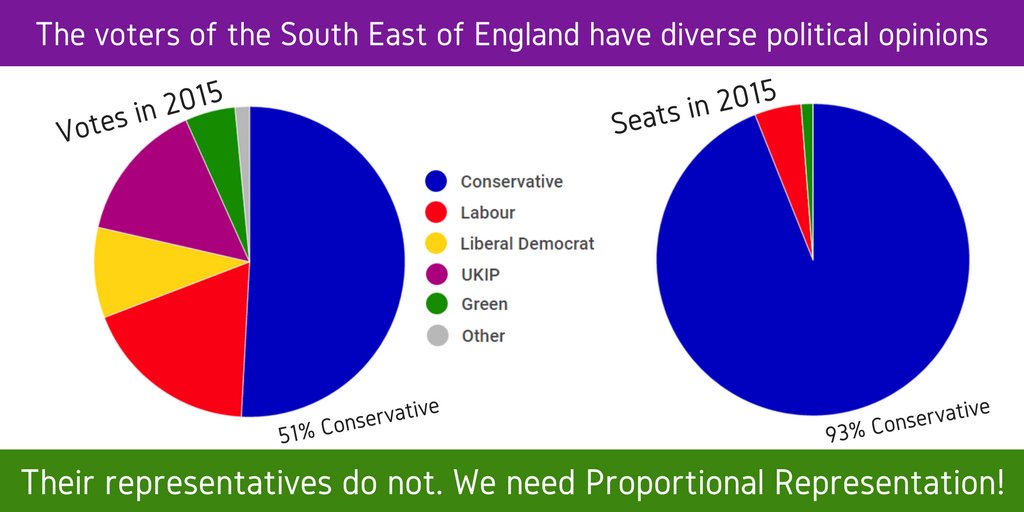
The 2015 General Election would have broken the mould of British politics had it been carried out under conditions other than the absurd First Past The Post system, more suited to the UK of the 1920s than that of the early 21st Century. The distribution of votes in Southern England illustrates this well enough, where the Conservative Party got about half the votes but won about 95% of the Westminster seats (a similar ration to that of the SNP in Scotland).

The UKIP insurgents famously won nearly 4 million votes UK-wide (mostly in England), some 12% of the vote, yet won no seat except that of Douglas Carswell, who is really a Conservative and was previously elected as one.

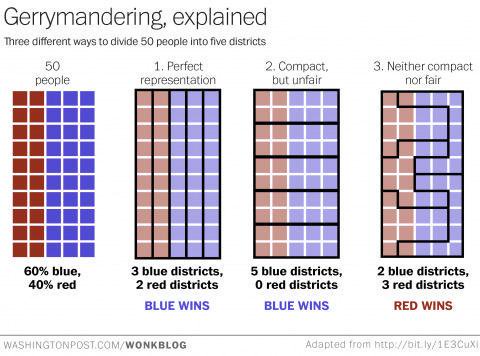
It can be asserted as simple fact that, in almost any given English seat, most of the voters do not get the MP or party that they want and for which they voted. Moreover, even the typical 30%-50% received by the winning candidate often reflects more the candidates that most voters did not want: voters vote tactically in the absence of a true choice being available.

FPTP has distorted British politics, giving the incumbent party in any given seat a great advantage and –far more– giving the main System parties as a whole a like electoral advantage and an anchor against sliding into ruination. All the same, when the forces become unstoppable, that slide does happen. It happened to the Liberal Party during and after the 1920s (replaced by Labour) and it happened to Scottish Labour after 2010. This illustrates it well:

https://en.wikipedia.org/wiki/Scottish_National_Party#UK_General_Elections

Founded in 1934, the SNP often scored less than 1% of the vote in Scotland and had to wait until 1970 to get a single MP elected. Even in 2010, the SNP only got 19.9% of the Scottish vote and 6 MPs (out of 59). Then the tipping-point was reached and in 2015, its vote swelled to 50% and suddenly the SNP had (a typically-disproportionate FPTP result) 56 MPs (out of 59). Labour in Scotland was ruined and now (2017) is only the third party in the polls there (after the Conservatives!) and has only about 15% voter support.

Moving to Labour overall, we see that this is a party that has been living “off its hump” for a long time. It even managed to jettison almost every remnant of “socialism” in its policies and yet win elections under Tony Blair (via appealing to otherwise Conservative or Liberal Democrat voters in the South and Midlands). Labour, in effect, “sold its patrimony for a mess of pottage”. When one asks oneself “what does Labour stand for?”, nothing coherent comes to mind: a confusion of old history, trade unions, strike banners, post-1945 nationalization, 1960s-1970s managerial technocracy, that old humbug Michael Foot in his donkey jacket at the Cenotaph, then, from the mid-1990s, the mirage of Blairism (New World Order pro-Americanism meets the Israel Lobby meets managerial “socialism” meets Common Purpose careerism).

It is often said that Labour is now split into Corbynists and Blairites. Another fault line (closely following the first) might be said to be the pro-Israel lobby bloc and the generally anti-Zionist bloc (though most in both still feel the need to pay lip-service to the “holocaust” narrative and its faked history, non-existent “gas chambers”, the now-derided “six million” etc).

In fact, Labour is now not even two parties but three:

  • the remnant of the old trade union-oriented Labour Party, based around traditional and unthinkingly Labour communities, mostly in the North;
  • the Blairite-Brownite pro-Israel bloc, consisting largely of MPs and their staffs, together with careerists in other parts of the country. These are those who want “to win elections” by promising pie in the sky: socialism to socialists, aspiration to the voters of the suburbs, “diversity” to the ethnic minorities and the rainbow loonies, profits and low taxes to the Jewish Zionist potential donors;
  • the Corbyn  camp, which relates to a partly-imaginary Labour history from the 1930s through to the 1980s: “no pasaran!” Communist (and some syndicalist) propaganda from the Spanish Civil War; an airbrushed “anti-Nazi” and “anti-fascist” Second World War narrative; the conflicts of the 1970s such as that in Chile or those in parts of Central America; the Miners’ Strike of the 1980s (seen mainly through a London lens though). This is largely a bloc based around London, around the half-mad pseudo-socialist local council enclaves that became notorious in the 1980s: Islington, Camden, Haringey, Lambeth. It is the dominant bloc now and is supported by at least half of the ordinary Labour Party members and supporters.

Naturally, there is overlap here and there within that tripartite split. However, what has fallen away is not only consensus among the Labour members and activists, but more, the voters. Most Labour voters now are in that first group and are only voting Labour out of traditional allegiance. When you look at, say, Stoke Central, where the by-election is about to take place, you see that voting Labour, not in 1945 but in 1997, 2001, 2005, 2010, 2015 has not given the people anything. Unemployment high, immigration high, large numbers of ethnic minority voters (Labour’s most reliable pawns now); little hope. Why would people in Stoke Central vote Labour? The answer seems to be that they see little choice (those that will actually vote, being probably a minority of those eligible).

In Stoke Central, the only alternative to Labour is UKIP, which is not the sort of social-national party likely to rise to power. In fact, UKIP is not social-nationalist at all, though some of its supporters are. The fact that UKIP is even being entertained (and may yet win the Stoke Central seat) is mainly a sign of Labour’s decline and not UKIP’s strength.

The industrial proletariat has gone, almost entirely. The trade unions are just a feeble bureaucratic, rainbow-coalition, “anti-racist”, Common Purpose-contaminated joke. The people who are suffering under fake “austerity” (the effect of #NWO/#ZOG globalism) and who belong to the burgeoning “precariat” (unemployed, underemployed, disabled, 50+, zero-hours-exploited, minimum-wage-exploited) are not now Labour voters but non-voters, sometime UKIP voters, potential social-nationalist voters. The Labour MPs are now mainly careerists, pro-Israel drones and “what’s-in-it-for-me?” bastards. Stoke Central MP Tristram Hunt abandoned his seat and constituents because, as he said, “the offer [from the Victoria and Albert Museum] was too good to refuse.” £250,000 a year. That was his price.

When a social nationalist movement of the new type emerges, as it must, it will start to scoop up the poor, or poor and angry and frustrated, masses. Labour will then disappear. Already it seems likely that Labour will only get between 100-200 seats in the 2020 Parliament, whether numbers are reduced from 650 to 600 or not. Labour policies– pro mass immigration, “welcoming” “refugees” (not of course to the MPs’ homes and neighbourhoods but to those of the former Labour voters), pro the EU octopus etc, simply have no appeal to those left behind by a conspiratorial globalism and multiculturalism.

As yet, a suitable party does not exist. When it does exist, Labour, already weakened, will fall to dust.

Update, 24 August 2025

Well, scroll on 8.5 years and here we are. The 2017 Stoke Central by-election was won by Labour (from UKIP and Con), and the seat retained by Labour at the 2017 General Election, but lost to the Conservatives in 2019, only for Labour to win the seat back in 2024: https://en.wikipedia.org/wiki/Stoke-on-Trent_Central_(UK_Parliament_constituency)#Elections_in_the_2020s.

In the bigger picture, of course, the Cons under Boris-idiot won in 2017, and won bigger in 2019, only to lose to Starmer-Labour in 2024, since which time Reform UK has arisen to prominence and, indeed, dominance. We now await events.

My Visit to the London Forum

Background

Some time ago, in late 2016, I was invited to address the London Forum. At that time I had only very peripherally heard of it. This is how it describes itself:

The London Forum is a non-party aligned conference group for nationalists, identitarians, thinkers and commentators from across the Right.

https://identityforum.org.uk/the-london-forum/

and it is connected with the online publisher, The Identity Forum, https://identityforum.org.uk/, which says of itself:

By publishing original work on identity, culture, race, tradition, metapolitics and other topics of interest, our goal is to provide a forum which produces engaging, insightful, high-quality content.”

At the time of my invitation, I had just been disbarred, despite having not actually practised at the Bar for over 8 years, despite having what the Bar Disciplinary Tribunal described as an unblemished record as a barrister (including commendations from the Bench and favourable mention in the main legal directories), despite many other factors in my favour. The complaint against me had been made by a Jewish-Zionist organization, “UK Lawyers for Israel” and related to (in the end) 7 tweets posted (out of some 150,000 at the time). I intend to blog about my case in detail another time. Suffice to say that I accepted the invitation to speak to the London Forum, despite convenience and ease suggesting that I decline.

I had endured “15 minutes of fame” (two days or so, in reality) in late October 2016, as parts of the Press went mad about the (supposedly) “neo-Nazi” barrister and his punishment (presented to an unwitting newspaper readership as getting my “just deserts”, of course). Did I really want more mainstream media attention stoked by Zionist extremists and their hysteria? Not really. Exhibitionism is not a large part of my personality. However, I conceived it to be my duty to speak up, not for myself but for freedom of expression in the UK, under attack from various quarters but especially from the Zionist element.

On the Day

So it was that I went to the London Forum on Saturday 4 February 2017, as one of half a dozen speakers addressing an audience of perhaps 100 people in a large tourist hotel in Kensington. Most of those who spoke can be seen and heard on the London Forum youtube channel, along with speakers from earlier events:

https://www.youtube.com/channel/UCEwrMR1v4vK-LAp4805x6Bg

The reception was warm and the meeting, which started at 1200, proceeded peacefully, though occasionally a very faint chanting could, just about, be heard. It transpired that that scarcely audible chanting was from about 30 masked “antifa” idiots who had congregated outside the main entrance of the hotel. The London Forum was happening one floor up and on the other side of the building. I later discovered that, at first, there were only a few police personnel sent to deal with the rentamob, which had been summoned, no doubt by a Zionist, via tweets; the “activists” were probably overflow from the much larger (40,000-strong) anti-Trump march which happened slightly earlier. It seems that the fools were under the impression that the London Forum was “a secret neo-Nazi gathering”, a description which found its way into the bad-joke online rump “newspaper”, The Independent, a day or so later.

The meeting carried on, most of the audience being entirely unaware of the small protest happening one (atrium) floor down and on the other side of the hotel. The meeting ended at its scheduled time of 1700 hrs. By that time, the main public areas of the hotel had been flooded with what seemed to be about 60 police, including a police medic (I saw the back of his jacket), vans outside and a helicopter whirling overhead. A senior-looking officer (no high-vis jacket, a cap) seemed to have taken charge. He (I was told) gave the order to clear away the would-be “revolutionary” snowflakes from the hotel by issuing a “Dispersal Order” [https://en.wikipedia.org/wiki/Anti-social_Behaviour_Act_2003#Dispersal_zones], after which the snowflakes presumably went home to mama or to wherever they lodge (several that I saw on the Internet, days later, seemed to be foreign). Certainly, by the time the meeting participants left the hotel, the “antifa” idiots had all (all 30!) melted away like real snowflakes.

Aftermath and thoughts

The Press, TV, radio largely ignored both the meeting and the pathetic though noisy protest. The Independent “newspaper” (now online only after its circulation dropped in early 2016 to about 20,000) carried a piece by one Niamh Mcintyre, a student-journalist. Her piece got almost everything wrong: the maybe 30 “antifa” idiots were “80” in the Independent’s “report” and the (open to all bona fide people) London Forum was “a secret neo-Nazi gathering”

http://www.independent.co.uk/news/uk/home-news/neo-nazi-meeting-london-richard-spencer-alt-right-fascist-activists-white-supremacists-a7563021.html

Niamh Mcintyre’s “report” also said that previous London Forum speakers had included Max Weber. This was remarkable, in view of the fact that Max Weber died in 1920!

https://en.wikipedia.org/wiki/Max_Weber

I think that the poor snowflake meant Mark Weber: https://en.wikipedia.org/wiki/Mark_Weber

I saw tweets from Niamh Mcintyre, Independent “newspaper” “journalist” (student) to “London Antifascists” and similar “antifa” idiots, asking “what is happening?” [at the hotel] and requesting comment. At no time (right up to now) were any participants or London Forum officials asked for comment or information, it seems. However, the “antifa” idiots’ comments were printed uncritically by the Independent, even one calling for “direct action” (terrorism and intimidation) to “close down” free speech even in a private forum.

After I tweeted (Wednesday 8 February 2017) about the Independent’s ignorance and lack of journalistic ethics (not checking basic facts, not getting both sides or several sides of a story, bias etc), the egregious error of “Max Weber/Mark Weber” was removed from the Independent online report, but the rest of the nonsense is still up, including a claim that the idiots caused the meeting to close early. Untrue. It carried on to the scheduled end .

The Metro free newspaper carried a slightly more, though not very, accurate report:

http://metro.co.uk/2017/02/07/neo-nazis-allowed-to-hold-secret-meeting-at-central-london-hotel-6432405/

though it saw fit to add a laughable extra line about how it had warned the hotel that “ethnic minorities” and staff might be in danger! Journalism died one day and was replaced by something else…The Metro “newspaper” also described how the London Forum had previously “hosted” “infamous holocaust denier..Max Weber” (who died in 1920!). Not very surprising that newspapers are dying, when they employ the ignorant to make up “fake news”…

Did “antifa” achieve anything? No. The London Forum took place, the videos of speeches are online and (equally importantly) free speech was upheld.

What if the police had not been there? Well, the “antifa” idiots were few (possibly, at peak, 35) in number whereas the audience, speakers and LF security (pretty fit and skilled) numbered well over a hundred. The “antifa” may have got off lightly. They are just the “useful idiots” for others (Zionists) and of no importance.

Freedom of expression on social, political and historical topics must be protected,

c4jxgm2ukae7tt_Update, 9 September 2018

Readers of the above blog post may have noticed that the links for London Forum and Identity Forum are not working. This is because YouTube decided, having been pressured by the Jew-Zionist lobby, to remove those channels in their entirety. The leading light of the London Forum, Jez Turner [Jeremy Bedford-Turner] was prosecuted after the CPS was taken to court on a judicial review application by the “Campaign Against AntiSemitism”, yet another pack of Jewish Zionists in the UK. This is what we are up against: a stealth police state and its private equivalent, which have little or no legitimacy and which must be overthrown.

Update, 6 January 2018

I have seen my own speech to the London Forum posted online recently, so it may be that patriots have posted all the London Forum speeches or talks somewhere or other.

Stoke-on-Trent Central By-Election

Last week, I wrote a preview of the upcoming (23 February 2017) Stoke-on-Trent Central by-election, one of two taking place on that day

https://ianrmillard.wordpress.com/2017/01/18/stoke-on-trent-central-preview/.

Now that the main candidates are declared, I am ready to expand on that and to predict the result as best one can a month before polling.

The Stoke Central constituency has existed since 1950 and the Labour Party has won every election since then. Until Tristram Hunt appeared in 2010, the Labour vote varied between 48% and 68%. Hunt’s votes have been 38.8% (2010) and 39.3% (2015). Stoke Central has moved from being a Labour safe seat to one which can be regarded as marginal:

https://en.wikipedia.org/wiki/Stoke-on-Trent_Central_(UK_Parliament_constituency)#Elections

The Labour vote in 2015 was about 12,000, that of both UKIP and Conservatives about 7,000. The Liberal Democrats, until 2015 the second party, crashed to fifth place (behind an Independent) with 1,296 votes. In fact, the LibDem vote in 2010 was 7,000, the same as the UKIP vote in 2015, perhaps a sign that the “protest vote” bloc at Stoke Central is around 7,000 or so. Arguende. The LibDem candidate for the by-election is Zulfiqar Ali, a consultant cardiologist, who lost his deposit (vote share 4.2%) in the 2015 General Election.

Tristram Hunt, the outgoing-going-gone Labour Party MP, was never very popular in his own constituency, though London TV studios loved him. He made no bones about despising the leader of his own party, tried and failed to formulate policy of his own and was surprisingly bad (for someone of his background and education) at arguing his points when (as so often) being interviewed.

Hunt stepped down as MP in order to take a job as Director of the Victoria and Albert Museum. MP pay is about £74,000 (plus generous expenses); the V&A Director presently gets a package worth £230,000. Hunt may be getting more. No wonder that he said that “the V&A offer was too good to refuse.” So much for political conviction, vocation and, indeed, loyalty (whether to party or constituents). Stoke Central is well rid of him.

The Labour candidate in the by-election is Gareth Snell, a still fairly young former leader of the Borough Council of Newcastle-under-Lyme (3-4 miles from Stoke-on-Trent). His selection indicates that Labour are going to play on local roots and try to pretend that God is in His Heaven and Jeremy Corbyn far away, Corbyn being (arguably?) an electoral liability (seen as a credible future Prime Minister by only 16% in a recent poll).

The Conservatives have not been even the second party at Stoke Central since 2001. This by-election is one which will be decided between Labour and UKIP. The recent Theresa May Brexit speech may well have shot UKIP’s fox overall, but at Stoke Central no-one is expecting a Conservative win or even a Conservative second. The Conservative candidate is Jack Brereton, 25, who was elected at age 19 to Stoke-on-Trent City Council.

Since the 2001 General Election, the second and third-placed candidates at Stoke-on-Trent Central have received very similar numbers of votes (behind victorious Labour).

UKIP, joker in the pack. Paul Nuttall, a Northerner who was recently elected leader of UKIP, is the candidate. He must have a chance despite his partly-“libertarian” views (of which Labour is making the most, of course, claiming that Nuttall believes in NHS privatization). UKIP has a steep climb in the by-election, but it is possible. This is a by-election. The result will not affect who governs the UK. People can protest with their votes. Labour is now seen as the pro-mass immigration party and the pro-EU party. Stoke Central voted nearly 70% for Leave in the EU Referendum.

If turnout is low, if the 2015 Labour vote halves to about 6,000, if the 2015 UKIP vote mostly holds up at 7,000 or not much less, then UKIP can win. If.

It is not credible to imagine a win for the Conservatives or LibDems and they will vie for most votes not going to Labour or UKIP, but this is very much a Labour/UKIP contest. If enough people (eg 2015 Conservative voters) vote tactically for UKIP, UKIP has a good chance. On the other hand, many 2015 LibDem or Green voters may also vote tactically for Labour.

In 2015, an Independent got over 2,000 votes. Will those votes go to UKIP, now that that candidate has not renewed his candidature? Open question.

Unemployment is high, immigration is high and having had Labour MPs for 66 years has not prevented either in recent times. There is strong cultural resistance in the seat to the Conservative Party. UKIP is the insurgent here.

Prediction

The bookmakers still have Labour as odds-on to win the by-election and it would be tempting to call it as a Labour-UKIP-Conservative 1-2-3, but I am going to be bold and say that Paul Nuttall and UKIP can crack this. The seat must be one of the best chances UKIP has had or will have: anti-EU, pro-Leave, anti-mass immigration, disenchanted with the System parties and very much a “left-behind” area. Also, Tristram Hunt abandoning the seat for a quarter-of-a-million-pound job must sit badly in an area which is one of the poorest in England. In addition, Nuttall has the cachet, such as it is, of being his party’s leader.

In sum, I see the 1234 as: 1.UKIP; 2.Labour; 3.Conservative; 4.LibDem.

Effect

If the result is as I have predicted, it will push even more anti-Corbyn Labour MPs to jump ship and it will weaken Labour even further in the North (it being of little importance now in Scotland or most of the South of England). If Labour hangs on to win, then everything depends on the majority obtained but it might well be just a slower car crash.

Update, 30 May 2019

I blogged twice more about that Stoke on Trent by-election:

https://ianrmillard.wordpress.com/2017/02/21/stoke-central-by-election-final-word-before-polling/

and

https://ianrmillard.wordpress.com/2017/02/24/stoke-central-and-copeland-the-aftermath-for-labour-and-ukip/

Copeland By-Election: Watershed?

Three weeks ago, I wrote a preliminary blog post about the upcoming Copeland by-election

https://ianrmillard.wordpress.com/2017/01/02/the-copeland-by-election-the-blog-before-the-blog/

in which I examined the history of the constituency. I also took a look at the factors influencing the present by-election. The time has now come to attempt a prediction with reference to wider political trends.

The Copeland constituency has been in existence on its current boundaries since 1983. The previous constituency, Whitehaven (created during the electoral reform of 1832), was rock-solid Labour (often over 60%) from 1935 until the boundaries were changed in 1983

https://en.wikipedia.org/wiki/Whitehaven_(UK_Parliament_constituency)

The Copeland constituency has continued Labour since its creation: the Labour vote reached its high-water mark in 1997, in the Tony Blair landslide. In that year, the Labour candidate achieved a vote of over 58%:

https://en.wikipedia.org/wiki/Copeland_(UK_Parliament_constituency)#Elections_in_the_1990s.

His successor, Jamie Reed, started off in 2005 with a Labour vote of 50.5%. However, the Labour vote share has steadily declined since then, most recently to 42% in 2015

https://en.wikipedia.org/wiki/Copeland_(UK_Parliament_constituency)#Elections_in_the_2010s

The Conservative vote has been more volatile, ranging in various elections from 29% to 43%. The Conservatives achieved nearly 36% in 2015, only one point down on their 2010 showing.

The UKIP vote in Copeland has mirrored in a modest way that of much of the country: 2.2% in 2005, 2.3% (beaten by the BNP, which got 3.4%) in 2010, jumping to 15.5% in 2015.

The Liberal Democrats have never done very well in Copeland, their vote share flickering around the 10% mark, not exceeding that in 2010 (one point down from their 2005 showing in fact), then crashing to 3.5% in the 2015 debacle.

In 2010, the Green Party stood for the first time since 1987 but received a vote of less than 1%. That improved to 3% in 2015.

There are several factors which do not bode well for Labour:

  • Jamie Reed may be seen as a “rat leaving the sinking ship”, having taken a potentially lucrative position with the company which operates the constituency’s largest employing entity (by far), the Sellafield nuclear plant. That may seep into perceptions of Labour MPs as a whole;
  • recent polling shows Labour nationally as having the support of only 25% of voters;
  • the same polling shows that Jeremy Corbyn is seen as a potential Prime Minister by only 16% of voters;
  • Copeland voted heavily for Leave in the EU Referendum;
  • Copeland is believed to be hostile to the mass immigration which Labour and its embattled leader seem unwilling to criticize, let alone promise to halt.

Labour has now selected as candidate a local councillor, Gillian Troughton, a former medical doctor and supporter of the nuclear industry, in which her husband works. That may help Labour’s campaign, as will her support for the NHS and the local hospital, but Labour’s problems locally stem from its general decline nationally and its generally pro-EU, pro-mass immigration positions.

Traditionally, the Conservative vote in Copeland comes from particular communities along the coast and inland and that vote seems to be rather solid. There is no reason to suppose that the Conservative vote will not hold up fairly well, bearing in mind Theresa May’s recent stance on Brexit and also the immigration question.

Recently-stagnating UKIP can probably expect a surge in its vote, though it seems that the party will probably not be able to do well enough to win, which would require its 2015 vote to increase by at least 50% and probably more. However, UKIP will probably be able to garner votes from disaffected 2010 and 2015 Labour voters.

Turnout is key. In 2015, the Labour vote was 16,750, the Conservatives received 14,186, but UKIP’s vote was only 6,148. It is quite likely that former Labour voters will not so much vote Conservative or even UKIP, but simply stay at home and refuse to support Labour. If turnout slumps, particularly among those former Labour voters, then the Conservatives might well pull ahead of Labour , especially if the UKIP vote increases .

Prediction

Conservatives to win Copeland, with UKIP second and Labour third.

Effect

Only once in 35 years and twice in 60 years has a by-election seat been lost by the official Opposition party. If that happens in Copeland (even leaving aside the result of the simultaneous by-election at Stoke-on-Trent Central), Labour will go into a tailspin.  If Labour is pushed into third place, that effect will be magnified immeasurably.

Corbyn has made it clear that he will not resign whatever happens. Failure at Copeland would lead either to a second attempt to depose Corbyn via leadership challenge or (more likely) to a mass exodus of anti-Corbyn careerists, Blairites, Brownites and Zionists following Jamie Reed and Tristram Hunt out of the House of Commons and possibly out of the Labour Party. If that exodus, in turn, leads to the loss of further Labour seats, then it is hard to see Labour recovering. Ever.

We may be seeing the death of one of the two major (i.e. long-established, sometimes governing) political parties, something that has not occurred since the collapse of the Liberal Party in the 1920s.

Update, 3 March 2019

Well, two years on, looking at the article and its predicted result, I can feel content that I did OK. The Conservative Party candidate, Trudy Harrison, did win, as I thought at the time she would, getting a 43.3% vote. Labour’s candidate, Gillian Troughton, came second on 37.3%. A major factor was the collapse in the UKIP vote, from 15.5% to 6.5%. The vast majority of those votes probably went to the Conservatives.

The Green Party got a 1.7% vote at the by-election, the two Independent candidates 2.6% and 0.4%; none stood at the 2017 General Election.

The contest was reprised only 4 months later, at that 2017 General Election. The “main” (LibLabCon) or System parties ran the same candidates with a similar result: the Con vote increased to 49.1%; the Lab vote however also increased considerably, to 45.1%. The LibDem vote slumped, from 7.2% at the by-election to 3.3% at the General Election. UKIP’s vote slumped too, from 6.5% to 2.5%.

Copeland is now a fairly tight Con-Lab marginal. It could go either way next time.

Update, 5 June 2020

Well, since the last update, there has been another general election, the General Election of December 2019. In that election, the sitting Conservative Party MP, Trudy Harrison, retained her seat, and increased her vote-share to 53.7% (from 49.1% in the 2017 General Election). The Labour Party vote fell back by over 5 points. The other two candidates (LibDem and Green) both scored under 5% of the total vote; both lost their deposits. https://en.wikipedia.org/wiki/Copeland_(UK_Parliament_constituency)#Elections_in_the_2010s

Notes

https://en.wikipedia.org/wiki/Copeland_(UK_Parliament_constituency)

https://en.wikipedia.org/wiki/Copeland_(UK_Parliament_constituency)#Elections_in_the_2010s

https://en.wikipedia.org/wiki/Trudy_Harrison

Stoke-on-Trent Central: Preview

I shall blog in more detail about the upcoming by-election at Stoke-on-Trent Central when the runners and riders are fixed. This is merely an advance viewing of the contest based on the background.

Tristram Hunt, the Labour Party MP, was never very popular in his own constituency, though London TV studios loved him. He made no bones about despising the leader of his own party, tried and failed to formulate policy of his own and was surprisingly bad (for someone of his background and education) at arguing his points when (as so often) being interviewed on TV.

Hunt stepped down as MP in order to take a job as Director of the Victoria and Albert Museum. MP pay is £74,000 (plus generous expenses); the V&A Director presently gets a package worth £230,000. Hunt may be getting more. No wonder he said that “the V&A offer was too good to refuse.” So much for political conviction, vocation and, indeed, loyalty (whether to party or constituents). Stoke Central is well rid of him.

The Stoke Central constituency has existed since 1950 and the Labour Party has won every election since then. Until Hunt appeared in 2010, the Labour vote varied between 48% and 68%. Hunt’s votes have been 38.8% (2010) and 39.3% (2015). Stoke Central has moved from being a Labour safe seat to one which can be regarded as marginal:

https://en.wikipedia.org/wiki/Stoke-on-Trent_Central_(UK_Parliament_constituency)#Elections

The Labour vote in 2015 was about 12,000, that of both UKIP and Conservatives about 7,000. The LibDems, until 2015 the second party, crashed to fifth place (behind an Independent) with 1,296 votes. In fact, the LibDem vote in 2010 was 7,000, the same as the UKIP 2015 vote, perhaps a sign that the “protest vote” bloc at Stoke Central is around 7,000 or so. Arguende.

The Conservatives have not even been the second party at Stoke Central since 2001. This by-election is one which will be decided between Labour and UKIP. The recent Theresa May Brexit speech may well have shot UKIP’s fox overall, but at Stoke Central no-one is expecting a Conservative win or even a Conservative second.

Can UKIP win? The answer, even at this stage, must be a qualified “yes”. Much will depend on its candidate and that of Labour. If Paul Nuttall, a Northerner, stands, he must have a chance despite his partly-“libertarian” views. UKIP has a steep climb but it is possible. This is a by-election. The result will not affect who governs. People can protest with their votes. Labour is now seen as the pro-mass immigration party, the pro-EU party (to an extent). Stoke Central voted about 65% for Leave in the EU Referendum.

If turnout is low, if the 2015 Labour vote halves to about 6,000, if the 2015 UKIP vote mostly holds up at 7,000 or not much less, then UKIP can win. If.

It is not credible to imagine a win for the Conservatives or LibDems and they will vie for most votes not going to Labour or UKIP, but this is a Labour/UKIP contest. If enough people vote tactically for UKIP, UKIP has a good chance. On the other hand, 2015 LibDem or Green voters may also vote tactically for Labour.

Unemployment is high, immigration is high and having had Labour MPs for 66 years has not prevented either.

Labour must still be odds-on to win Stoke Central at this point, but UKIP has a serious chance.

Update, 27 November 2020

Looking at this post nearly 4 years on, I have to say that my prediction was accurate. The Labour Party won convincingly at the 2017 by-election, with 37.1% of votes cast. UKIP came in second with 24.7%, narrowly ahead of the Conservative Party on 24.3%. LibDems 4th-placed, with 9.8% of the vote.

The less-serious candidates all captured less than 2% of the vote; indeed, all except the Green Party got less than 1%: two Independent candidates, BNP, Christian People’s Alliance and the Monster Raving Loony (who actually beat the BNP, CPA and one of the Independents). https://en.wikipedia.org/wiki/Stoke-on-Trent_Central_(UK_Parliament_constituency)#Elections_in_the_2010s.

The Conservative Party candidate, Jack Brereton, did not stand again at Stoke Central but was adopted by the Conservatives at Stoke South, where he was elected at the 2017 General Election and re-elected in 2019.

The 2017 General Election saw the Labour Party MP, Gareth Snell, a seemingly rather unpleasant individual, re-elected with a greatly-increased vote-share (51.5%). However, the 2019 General Election saw Snell lose to Jo Gideon of the Conservative Party in a close result (45.4% to 43.3%).

As for the one-time MP, Tristram Hunt, he is at time of writing still Director of the V&A, still getting that hugely-generous salary and expenses, and has, no doubt, long ago forgotten the people of “his” once-Labour constituency at Stoke-on-Trent…

https://en.wikipedia.org/wiki/Tristram_Hunt

The Internet: Privatization of Public Spaces

I have been concerned for some years about how “public space” on the Internet is really just privately-owned space. Offline, there are sometimes concerns raised about how parks and other spaces, which are usually open to the public, are made less than fully open to the public by the imposition of charges, fees or conditions. In fact, there have in the past often been fees and conditions imposed on entry to parks etc, but in those cases those unable or unwilling to comply could go elsewhere. That is not always so online.

In the offline world, there are public markets and competition between marketplaces in various ways. Online, though the same may be true superficially, the reality is that a few key players operate in a quasi-monopolistic manner. Facebook, Twitter, ebay, Amazon have little real competition. The private individual is granted access to these spaces essentially at the will or whim of the proprietor. If expelled, the individual has no redress save appeal (and not by right) to the website itself. There are no means to go to law to enforce re-admittance, because the relationship between the website and the individual is one based on contract and the contractual power lies with the website.

Taking Amazon and intruding a personal note to make the argument more concrete, for 2 or 3 years (up to 2011 or 2012) I reviewed books on Amazon (at one time I owned over 2,000 books and bought one every few days). I was on the Amazon UK “Top 100 reviewers” list and the vast majority of those who voted or commented liked my reviews and found them helpful. Very few hated what I wrote but one of that tiny handful (literally about 3 or 4 people) was a Jew who objected to some of my reviews because they examined events 1933-45 from a revisionist (truth-seeking) perspective. This person trolled virtually every review I wrote, “commenting” sarcastically on each, insulting me as well as my reviews, trying to bait me to argue with him (with the obvious idea of then screaming “antisemitism!” and “hate speech” and getting me chucked off Amazon, of course. “They” do the same on Twitter etc).

After about 2 years, the aforesaid Jew (who, by the way, operated under a pseudonym, as the same sort of trolls often do on Twitter) managed to interest the Jewish Chronicle in his complaint. The Jewish Chronicle wrote about my reviews, the attention resulting in my being barred from reviewing books on Amazon. About a third of my reviews were removed. Oddly enough, those reviews were removed en bloc. Most had nothing to do with the 1933-1945 era, National Socialism, Jews, Israel etc. There was no possibility of appeal, not even to the site itself.

I then started to review books on the American Amazon site. The same occurred before long, except that this time the same Jew must have contacted Amazon directly after complaining about me under my reviews (all of them…), because all of those reviews on the US site disappeared overnight and I was barred without warning. No appeal, no explanation. So much for American “free speech”!

The above illustrates the problem. While there are other online booksellers, some of which allow reviews, in the end the reviewer, the citizen, is there as guest of the website and can be chucked off at any time. Amazon’s position is quasi-monopolistic, yet it is not merely a retailer but a provider of what amounts to a public intellectual forum.

Twitter is the same: if someone is barred from Twitter, he is effectively muzzled, his right of freedom of expression taken away. He has no redress (though Twitter itself does give a possibility of appeal). It is not good enough to say that “other sites exist”. Twitter is in a global quasi-monopolistic position.

Tellingly, the Zionists and others (but mostly Zionists) often make the point that barring someone from Facebook, Twitter etc is not an attack on free speech because those sites are “private platforms” and can get rid of unwanted authors at will.

The privatization of public online space is wrong. The solution is to give the citizen a legal right to appeal against removal from any website which has more than x number of users or subscribers. The present situation is an unwarranted extension of the economic sphere into the sphere of law and rights.

Free Speech: Individuality and Collectivity

Rudolf Steiner often spoke of the ever-increasing individualism in our age (that period which he named the “Fifth Post-Atlantean Age”, which started around 1400 AD and is due to run until about 3500 AD). This is an inevitable continuing process and will bring many benefits if people are guided by conscience. However, if people are not guided by individual conscience, the forces of the individual will tear apart society.

Against the forces of individualism stands “society”, which encompasses law, unwritten “laws” of convention and expectation and also the powers of the State (which holds itself out as the concrete expression of the people as a whole).

Society is, of course, a good thing. In proper measure, it makes possible and supports such aspects of life as law, public order, organized help for the sick, disabled, elderly, poor etc. It is a structure which supports the family, too. It also provides, via the State,  the structure for defence against outside forces (hostile states, natural calamities etc). However, if taken too far, society and/or the State becomes oppression, involving the repression of individual liberty in various ways (most obviously, perhaps, suppression of free speech or other freedom of expression).

Society restricts freedom of speech. It is hard to imagine a society beyond the most primitive or germinal in which complete freedom of speech exists (eg spoken or written threats against the person). On the other hand, when society (the State, or perhaps a religious or political cult) prevents individual expression, reasonable restriction becomes unreasonable repression. One thinks, perhaps, of the more extreme socialist states of the 20th Century, such as the Soviet Union under Lenin and Stalin, China under Mao Tse-Tung, Albania under Enver Hoxha, Cuba under Fidel Castro. The same was true of anti-socialist tyrannies such as Nicaragua under Somoza.

Particular emergency conditions may lead to a temporary tightening of what is regarded as acceptable free speech. In the Second World War, the various combatants restricted free speech considerably. In the UK, those who spoke out against the war or government policy faced both prosecution (State) and persecution (society generally). Even the USA, with its famous Constitutional safeguards, clamped down on freedom of expression.

As in other fields of life, we can see that the tension between the demands of the individual qua individual and those of the collective results in what amounts to a compromise. It is a question of either where society (in practice, usually the State, but possibly a smaller community such as a town or even a family) decides where the line is drawn, or where the individual draws the line, based on conscience or preference and regardless of where the State and/or society has drawn it.

Most people, most of the time, obey the dictates of the collective. Were that not so, law could not exist except as a facade with nothing behind it (cf. Stalin’s Russia etc); neither could the State or its power, in the end. On the other hand, the individual must always obey conscience and it therefore becomes vital to distinguish between individual conscience and individual wilfulness or egoism. No outside force can decide what is conscience and what is wilfulness or egoism. The individual, the individual human soul, is the only judge or arbiter here. Where the individual and the collective collide, the results can range from martyrdom of the individual to reform or even revolution affecting the collective.

Where do I myself, as both individual and citizen (i.e. part of the collective) draw the line? For me, freedom of expression about social, political and historical matters should be absolute. Other forms of expression (eg threats, libels, fraudulent misrepresentations) can be (and commonly are) restricted to a greater or lesser extent.

It follows from the above that I prefer the approach taken in the United States to that of most EU states (including the UK). Restrictions on freedom of expression are often imposed for or from outwardly “good” motives, but rapidly become a slippery slope with evil results. The road to Hell is paved with good intentions.

Notes

  1.  http://www.cps.gov.uk/legal/a_to_c/communications_sent_via_social_media/
  2. https://en.wikipedia.org/wiki/English_defamation_law
  3. https://en.wikipedia.org/wiki/First_Amendment_to_the_United_States_Constitution

Proposals for a new society…