Today, the Labour Party committed suicide. It decided both that it is going to back a “second Referendum” or “people’s vote”, and that it will be supporting Remain in that vote. In other words, the 2016 EU Referendum result will be dishonoured and quite possibly overturned if Labour has its way.
I have been predicting this System move for a long time; in fact, my first opinion published after the EU Referendum itself was that the Remain side, which is basically the System’s preferred side, would try every method to overturn the Referendum result. After all, the EU has “form” in this regard, making numerous countries re-take referenda which came up with the “wrong” result, even refusing to deal with governments which contained the “wrong” type of elected politician (in Portugal and Austria etc in the past).
The idea (held by most Remain whiners) that the EU is some kind of “democratic” and “liberal” entity is completely naive. The EU was set up by or under the influence of the sinister Richard von Coudenhove-Kalergi
Part of that is the so-called “Great Replacement”, effectively the replacement of the white Northern European peoples by those of other race (blacks and browns etc) and those, in the future, of mixed-race, the outcome of mass immigration into Europe.
My view, published numerous times in these blog pages, has been that the System in the UK and EU would delay Brexit, try to keep Britain in the EU by means of various strategems, or if necessary, to give the UK a “deal” which would effectively be “Brexit In Name Only” (BRINO). Ideally, remaining or BRINO would then be falsely validated by a “second Referendum” under such name as “People’s Vote” or “confirmatory” referendum. So it seems to be happening. I did wonder how long Corbyn himself could sit on the fence.
The possibly deliberate mishandling of the post-2016 Brexit process by the Conservative Party government has now led to the position in which the pro-Remain majority in the House of Commons is determined that the UK will not leave the EU on a “no-deal” (WTO) basis.
I despise Boris Johnson as a politician: he is a charlatan and mountebank, to use old terms, and I have very little faith that he will honour his “pledge” to take the UK out of the EU on 31 October 2019 “if necessary”. However, it is possible that, to save his own skin, if he cannot persuade the Commons to accept a “deal” similar to that the EU offered Theresa May, that Boris Johnson will either cave in to the demand for a second referendum or will appeal over the heads of the parties to the electorate, and hold a general election in an effort to strengthen his hand. A gambler’s gamble.
Alternatively, Johnson may be sidelined quite soon by a no-confidence vote, which will either mean a general election or even his replacement without general election by someone else, presumably Jeremy Hunt. The British Constitution is so vague, relying as it does on a few sentences in Bagehot etc, that that would not, stricto sensu, be unconstitutional.
Labour in a general election
Labour received nearly 13 million votes at the 2017 General Election, 40% of the votes cast. In terms of percentage, that was Labour’s best since Tony Blair in both 2001 and 1997, and before that, Harold Wilson in 1970 (Labour scored over 40% in every general election from 1945 to 1970).
When it comes to House of Commons seats, however, it is a different story. In 2017, Corbyn-Labour won 262 seats with its 40% vote, not much better than the 258 seats won by Gordon Brown’s Labour in 2010, when the Labour vote-share was only 29.1%. In 2001, Tony Blair-Labour won 413 seats on a vote-share of 40.7%.
I think that something more is going on here than just the “glorious uncertainty” and illogicality of the UK First Past The Post and eccentric boundaries electoral system. It is clear that the Labour vote is becoming ever-more concentrated in fewer and fewer constituencies.
Harold Wilson in 1974 (twice), James Callaghan in 1979, and Neil Kinnock in 1987 and 1992, all scored well below 40% in general elections, yet ended up with more seats, considerably more, than Labour won in 2017.
As stated above, it is believed that, out of Labour’s nearly 13M voters in 2017, perhaps 3.5M, though perhaps as high as 4M, had voted Leave in 2016. In other words, about or around 70% of Labour voters voted Remain.
The inference is plain: not only are most Labour voters generally clustered in a relatively small number of constituencies, but the number of 2017 majority Labour-voting constituencies that also had a majority for Remain is even smaller, somewhere around 100.
Labour as a party has been growing distant from its roots, from its core vote, for decades. The industrial proletariat is virtually non-existent, replaced by the “precariat”, economically insecure, politically both apathetic and volatile. The trade unions, though often still linked to Labour, are likewise almost without importance now, all but powerless to help employed persons much, and focussed on “diversity”, “equality”, anti-racism” etc and on ever-more convoluted codes of conduct, politically-correct nonsense, and on support for mass immigration.
As I have commented previously, the Labour “core vote” is now not really the English and Welsh (or Scottish) “working classes”, but the post-1945 immigrants and their offspring and, after them, the public service workers generally, as well as most of the unemployed and/or disabled persons reliant on State benefits.
There are many many seats in the North of England particularly which were rock-solid Labour but which are now less-solid Labour, or are marginal. These are areas which voted Leave, where the English majority (in some cases now, minority) are sick of mass immigration, of cultural decay, of crime and lawlessness, of the patronizing callousness of the self-regarding and self-described “elite” in the msm and Westminster and in the City of London.
A recent opinion poll put Labour on only 18%. Critics said that that was an “outlier” and (perfectly true) that another poll the same week put Labour on 25%. My feeling and view is that Labour will struggle to get even 30% in any general election, i.e. where Labour was in 2017. The big question is where that 30% will be.
Labour’s new unambiguous Remain stance will alienate anyone who regards Brexit (not just Brexit, but the bundle of issues around Brexit) as important. That could be a third of 2015/2017 Labour voters, and particularly in the more marginal seats.
Fortunately for Labour, it looks as though Brexit Party will cripple the Conservative vote nationally. However, Labour too is on thin ice. There is every chance that the new Remain policy will rob Labour of the formerly solid seats in the North.
The Conservatives will fight the next general election against three enemies, but Labour will also be fighting against at least two (Brexit Party being one) in formerly safe seats.
Labour may gain votes in its new core areas, among the blacks, browns, public service people and millennials of London and elsewhere, but at the cost of traditional Labour areas of the North etc. They will not vote Conservative, but might vote Brexit Party out of pure anger. Beware.
If Labour’s new voters are fickle or volatile (as I think that many are), Labour will have lost formerly solid support in exchange for what could be fair-weather votes, leaving Labour, somewhere down the line, with next to nothing.
At present, I still think that Labour might be the largest party after a general election, if held this year or next (the Conservatives are all but on their knees) but I have the feeling that, looking at the medium term (from 2022), Labour has just committed suicide.
Update, 21 September 2019
…from the Independent, “reporting” on beach patrols at Dover; all too typical of the sort of persons now prominent in “Labour” and what is left of the trade unions:
“Riccardo La Torre, firefighter and Eastern Region Secretary of the Fire Brigade Union, branded the coast patrol “despicable” and said: “These have-a-go, racist vigilantes have no place in any kind of enforcement or emergency activities and will only serve to make conditions and tensions worse.”
So “Riccardo La Torre” (que?), a regional secretary of the Fire Brigade Union, thinks that migrant invaders from Africa and the Middle East are “working class people”, who are “trying to get to safety”?!
Safety from, er, France? There you have in a nutshell, the craziness that is much of “Labour” now. Alien migrant-invaders are “working class people”, who should be allowed to occupy the UK at will (and be subsidized too)! Note the fag-end “Marxism”, trying to shoehorn the facts into some 1980s polytechnic back-of-postcard Marxism-Leninism.
A by-election is to be held in Brecon and Radnorshire constituency (formerly Brecon and Radnor, 1918-1997). Unusually, this by-election has been triggered by the conviction for (what amounts to) fraud relating to the Parliamentary expenses of the sitting MP. Christopher Davies, who had held the seat since 2015, pleaded guilty and was sentenced to 50 hours of community service and a fine of £1,500.
The relative leniency of the sentence may reflect the fact that the £700 wrongfully claimed by way of expenses by Davies could have been claimed legitimately (whether approved or not); the way in which he went about it (creating two false invoices amounting to the sum in question) made it unlawful. On a kind interpretation, Davies was stupid or incompetent more than (very) dishonest. Still not very good for him, I would have thought.
The position of the MP and the calling of the by-election
The events around this by-election raise interesting issues.
The news reports say that the seat “has been vacated”, but I have seen nothing about the Speaker declaring it so, a problem which previously arose during the Fiona Onasanya case, when that MP, despite having been sentenced for perversion of the course of justice, and despite a recall petition having been approved by more than the requisite 10% of eligible voters, still sat and voted as MP for Peterborough (including, crucially, in a significant Brexit debate and vote), also getting paid for months.
Davies may or may not, at time of writing, still be an MP. Even the more serious newspapers and the specialized websites (eg Politics Home) have not clarified the position. The Wikipedia entry for Davies says that his removal as MP was “automatic” once the results of the petition were known, but such is not the case. Wikipedia also says that “the seat was declared vacant on 21 June 2019” (today). Perhaps.
The Conservatives must “move a writ” to start the by-election process. In Britain’s unwritten or (more accurately) uncodified Constitution, this is supposed to happen within (usually) 3 months of the seat being declared vacant. After that, the by-election usually happens within 27 days (of the writ having been moved).
In other words, while in theory this by-election could happen by the end of July 2019, it might not happen until late October or, if the Conservatives really stretched the Constitutional proprieties to the limit, even later. Parliament rises for its Summer Recess on 25 July, so if the writ is not moved by then, the very earliest date on which the writ could be moved would be 3 September, after the Commons return, making the earliest by-election date one in late September.
If Davies is still nominally the MP, then he is entitled to his salary and expenses until such time as he is declared (by the Speaker) not the MP.
Christopher Davies, remarkably (bearing in mind that he pleaded guilty to the charges), seems to be breezy about the matter, and has invited his constituents to his local office, in the small Welsh town of Builth Wells, to view and enjoy the 9 landscape photographs which were the subject-matter of the expenses claims in question! I daresay that many of his constituents might wonder why Parliamentary expenses cover such purchases anyway (surely he or the local Conservative Association should have paid?).
Even more remarkably, Davies says that he intends to stand again! The local Conservatives, meanwhile, have not pronounced on whether Davies will be allowed to stand as a Conservative Party candidate! One can see their difficulty: if Davies stands as Conservative candidate, their chance of success is weakened, contaminated by his candidature, but if Davies stands as Independent Conservative or some such, he may draw off at least a few hundred, maybe even a thousand or more otherwise “Conservative” votes. None dare call it blackmail?
Still, one would have thought that simple ethical standards might have come into play, but in the contemporary Conservative Party, it seems not.
Another strange aspect: one would have thought that the two contenders for the Conservative Party leadership would have condemned Davies for his offences, or at least mumbled something neutral, but it seems that both have been “very supportive”.
The constituency
Before 1939, the constituency, under its Brecon and Radnor name, had as MPs persons from the Labour, Liberal, Conservative, Unionist, National and National Liberal parties (the latter three effectively Conservative coalition candidates).
Labour held the seat between 1939 and 1979. From 1979 to 2019, the Conservatives won 3 times, the Liberals/Liberal Democrats 3 times.
The post-WW2 Labour vote peaked in 1964 at just under 58%; its lowest was 10% in 2010. In general, the Labour vote has declined over the years, having not exceeded 20% of votes cast since the General Election of 2001.
The LibDem vote peaked in 2010 at 44.8% (1st placed), since when it declined to about 28% in 2015 and about 29% in 2017; however in both 2015 and 2017, the LibDems were placed 2nd.
In 2017, the Conservative candidate, Davies, achieved a vote of 48.6%, a post-WW2 record for Conservatives in the seat.
The only other (slightly) significant party contending over the years has been Plaid Cymru, which however has rarely retained its deposit in recent decades. Its typical vote share in recent years has been 2%-3%, though it reached 4.4% in 2015 (3.1% in 2017).
A few other parties have stood over the years. UKIP got 8.3% in 2015 (its best in the seat), but slumped to 1.4% in 2017.
The joker in the pack is Brexit Party.
Conclusion
There are some uncertain factors here: will Christopher Davies really stand again, and if so will it be as Conservative Party candidate or as some type of Independent? Will Brexit Party put up a strong candidate? Whatever happens, the Conservatives must be toast here. If Davies stands as Independent, and with Brexit Party now standing, then the Conservative vote will (probably though not necessarily) be even lower than if Davies brazenly stands again as Conservative. Davies does seem to be quite embedded locally, as a former livestock auctioneer, Royal Welsh Show ring commentator and manager of a veterinary practice.
The LibDems are currently strong favourites. The only thing that would or might upset the applecart would be the Brexit Party, now (announced today) entering the fray. Looking at 2015/2017, the LibDem core vote in the seat is below 30%. Even so, the LibDems must be in pole position here. It’s their election to lose.
Further factors
It is plainly in the Conservative interest to delay this by-election as long as possible. Their notional working Commons majority, even with DUP support, is now only four. If Brecon and Radnorshire goes LibDem or Brexit Party, that will reduce to three. Some Conservative MPs are ready to abandon support if Brexit no-deal looks likely. Boris Johnson may be a very short-lived Prime Minister.
The Brecon and Radnorshire Conservatives have reselected Christopher Davies as their candidate.
Davies faces an uphill struggle. While his offence was only marginally dishonest, it was still dishonest. It also showed Davies as both lacking in judgment and as simply inept. Apart from that, there is the point that the Conservatives have rarely if ever been lower in public estimation. Also, this is a by-election and the Conservative Party is in government.
The position has now been clarified. Davies is no longer the MP and the writ is expected to be moved today, Thursday 27 June, having failed two days ago. The by-election is now or soon will be set for 1 August 2019.
In a sense, I am surprised that the Conservatives did not play this more tactically, in view of their situation re. the numbers in the Commons, but there it is.
Now that Brexit Party is standing, the chance of the Conservatives actually winning (especially with a rather discredited candidate) has shrunk accordingly. If Brexit Party gets half of the 2017 Conservative vote, that would give them about 24%. The LibDems are unlikely to get less than the c.29% they got in 2017. Labour got over 17% in 2017.
If Labour does better than it did in 2017, and if Brexit Party does well too, and the LibDems do at least as well as they did in 2017, then all four serious contenders might well get vote shares in the 20%-35% range. If the Conservative vote were to collapse to, say, 10% or 15%, then the other three parties in serious contention might well end up getting about the same vote shares as each other.
This might turn out to be quite close among LibDems, Brexit Party, Labour, and maybe Conservatives too, with the likelihood of placings in that order.
Meanwhile, minor Remain-friendly parties look like not contesting the seat, in order to give the LibDems a clear run. Green Party, Renew, Change UK (probably, if they even bother to make a statement, they are already so marginal), Plaid Cymru (maybe).
Renew has never contested this seat, though it scored about 4% in Newport West recently; Change UK is already a “dead parrot” party, marginal, negligible in support (below 1%); the Greens last contested this seat in 2015, scoring 3.1%; Plaid got 3.1% in the seat in 2017.
If Plaid get on board the non-contest train, the boost to the LibDems must be worth several points, maybe as much as 7%, though more realistically about 5%. Worth having, anyway.
There are so far 4 candidates standing (LibDems, Conservatives, Brexit Party, Labour), with less than 48 hours until nominations close. Plaid Cymru has “indicated” that it will not be standing, in order to give the pro-Remain LibDems their best possible chance. The other pro-Remain parties, meaning Greens and Renew, are both not standing and for the same reason. Any late entries are likely to be vanity or joke candidates and will not at all change the outcome of the by-election.
The LibDems must be in an even stronger position to take the seat now that the smaller parties are not standing. In the last few elections, minor parties accounted for between 5% and 10% of the total vote.
Update, 4 July 2019
My eye was caught by the latest YouGov national opinion poll, as reported by Britain Elects.
If this poll is in any way accurate (and Ipsos Mori put out a very different result only a week ago, which shows how volatile UK politics is becoming), then Brexit Party would actually be the largest party in the Commons after a general election:
Brexit Party 196 seats (130 short of Commons majority), Labour 148, Conservative 169, LibDem 66. That would mean a Brexit Party government with, almost inevitably, Conservative support; possibly a coalition government. Large numbers of both Conservative and Labour MPs would be gone, including half of those recently vying for Conservative leadership.
Thinking about how that might apply to the Brecon and Radnorshire by-election, it may be that most of the 2017 Conservative votes in the seat will go to Brexit Party, but they might not. There is uncertainty. Personality often means more in rural constituencies than in urban and suburban ones. Much depends on whether voters regard the Conservative, Christopher Davies, as an “expenses cheat” and/or “fraudster” after his criminal conviction, or whether they will “forgive and forget” his sin/error because they (do they?) regard him otherwise as OK and his offence a technical one.
My view is obviously no more than an educated guess, but I should think that many locals will think that £700 is a ridiculous sum to pay out for 9 photographs anyway. Others will see the dishonesty aspect; yet others may think that the former MP should be given a second chance. Much depends on his personal vote, on his local popularity.
I find this by-election hard to call. However, it must be done. On present facts, I think that Labour has no chance, realistically. It is seen as the party of the blacks and browns now, for one thing. They are few in number in that part of the world, unless it has changed hugely since I was last there. Also, Remain voters will go LibDem here, not Labour, whereas committed Leave/Brexit voters will go Brexit Party or maybe Con.
I think that it is quite possible that at least half the 2017 Conservative vote will defect to Brexit Party. The LibDem vote will be solid now that the party is bouncing in the polls; also, in this seat, the LibDems are not seen as a wasted vote, Brecon and Radnorshire having had LibDem MPs from 1997 until 2015.
If the LibDems can build on the 29% they got in 2017, and I think that they will, then they are in with a very good chance. They might get a vote between 30% and 40%.
I doubt whether Labour will get more than 10% or so.
The Conservative vote may collapse, though I remain unconvinced that it will go much lower than 20%.
Brexit Party, if it can capture disaffected Conservative votes, might go as high as 30%. There is another point, which is whether people who prefer Conservative or Labour will vote tactically for Brexit Party. Hard to say. The LibDems must get at least 30% and may get 40%, so Brexit Party has to get around 40% to have a chance of winning.
Provisional Conclusion (with nearly 4 weeks left to run):
LibDems
Brexit Party
Conservatives
Labour
Update, 5 July 2019
With weeks left to run, the online betting market shows the LibDems as heavily odds-on (about 1/5), Labour (oddly, but the market is thin) on 2/1, Conservatives on 9/1, Brexit Party at 12/1. Political betting is a minefield. The favourites often go down. Labour on 2/1 looks like exceptionally poor value! Brexit Party, however, looks like fairly good value at 12/1. My own valuation of the odds would be nearer to: LibDems 1/2, Brexit Party 2/1, Conservatives 3/1, Labour 10/1, but we shall see.
The confirmed final list of candidates shows the four expected parties (Con, Lab, LibDem, Brexit Party) and two late entrants, namely UKIP and Monster Raving Loony. The UKIP entry will obviously eat into Brexit Party’s chances; to what extent we shall see, though even 500 or 1,000 votes might be enough to sink Brexit Party in the by-election. Looks more like a spoiler than a serious candidature.
The Guardian interviews locals. One part stands out:
“Given that 19% of the local electorate signed the recall petition, almost double the 10% threshold, a surprising number of locals of different party allegiances express sympathy for Davies’s plight. Yet there are some who are adamant that he should have stood down. One council worker tells me that, owing to her job, she’s in electoral purdah and can only speak off the record. “I signed the petition against Chris Davies because he tried to shaft a friend of mine who works in his office, by blaming the expenses mistake on her,” she says. As far as this council worker is concerned, Davies, whom she voted for in 2017, was given a second chance for cynical reasons. “Everyone knows that they didn’t want to put any promising new candidate in,” she says, “because they know they’re going to lose the seat.””
Had a look at Oddschecker betting array. LibDems are hugely odds-on (1/9), Conservatives second at aroung 7/1, Brexit Party about 12/1, Labour 100/1. Not noted were UKIP and Monster Raving Loony. I expect that anyone wanting to throw away a few pounds could ask for and get 500/1 against either of those.
Betting is not always a sure indicator of a election or referendum result, but the LibDems have, as previously said, a lot going for them here: a fairly recent history of providing the local MP, the fact that the Conservative candidate is damaged goods, the fact that those who would have voted for the parties that have voluntarily withdrawn (Green, Plaid Cymru, Renew) will vote LibDem in a contest where Labour is anyway a wasted vote.
Well, “the moment of truth”, meaning that the by-election will be held tomorrow, Thursday 1 August 2019. This blog post has so far had, in about 5-6 weeks, 600+ views, far above the norm for my blog. Brecon and Radnorshire is having its 15 minutes of fame…
The LibDems are in pole position, hugely odds-on with the bookmakers (1/20 in some quarters), with the Conservatives in 2nd place (about 9/1) and (perhaps surprisingly) Brexit Party in 3rd position (as high as 50/1, which may be, at those odds, a value bet); Labour seems out of it at odds of 150-1.
A month ago, I was predicting, provisionally, LibDems to win, followed by Brexit Party, Conservatives, Labour, UKIP (a pure spoiler candidature, it seems) and the inevitable joke candidate, a Monster Raving Loony calling herself Lily the Pink (presumably after the comic song of 1968).
I see no reason to think that the LibDems will not win Brecon and Radnorshire. They have all the Remain votes and so many of the votes of the highly-subsidized local farmers, though no doubt some of the latter will remain loyal to the Conservative Party and its recently-convicted candidate. I do not know what sort of campaign Brexit Party put up in the constituency, but I should imagine that BP might still come second, notwithstanding the bookmakers. If it does not, Brexit Party’s balloon deflates a little more, but many will be looking at the result of the by-election to see whether the Conservative might have won were there no Brexit Party candidate. If the Brexit Party candidature alone meant that the Conservative could not win, alarm bells will sound at CCHQ.
Update, 1 August 2019
Polling day. The betting odds, for what they are worth are (best odds) LibDems 1/18 odds-on; Conservatives 7/1, Brexit Party 100/1, Labour 150/1. The bookmakers, at least, think that Brexit Party is heading for 3rd place. Perhaps.
It may well be that tactical voting is taking place, in particular that Labour supporters, recognizing that Labour has no chance here, are going with the LibDems in order to ensure defeat for the Conservatives (and Brexit Party).
The only significant changes in the betting are the Conservatives taking closer order (yesterday 8/1 or 9/1, today 6/1 or 7/1, and Brexit Party sliding from 50/1 to 100/1.
Looks as if the LibDems have probably nailed it and that the Government’s majority, even with DUP support, is now 1 MP vote.
The LibDems won fairly decisively, but with a smaller majority than the betting might have been suggesting. I have posted links here below.
For me, the most important aspect beyond the headline result is the fact that the Conservative ex-MP would have won, even handsomely, were it not for the candidature of Brexit Party, which received 3,331 votes.
The LibDem majority over the Conservatives was only 1,425. In other words, had Brexit Party not been standing, the Conservatives would almost certainly have won by nearly 2,000 votes. I shall be blogging separately later about the by-election and the implications of that Brexit Party aspect for the national political picture.
The Labour vote had suffered a general decline in the constituency over the years (all-time high was 57.69% in 1964), but this was its lowest-ever vote-share (5.3%). I attribute that partly and perhaps mainly to tactical voting: Labour supporters voting against the Conservatives (mainly) in a situation where Labour had no real chance anyway: the Labour vote here has not exceeded 20% since 2001 (21.4%).
The Monster Raving Loony Party got 1% (334 votes), the UKIP spoiler candidate (or was she just irredeemably stupid?) only 0.8% (242 votes).
There is not much sunshine for the Conservatives in this result. Still, ex-MP Christopher Davies can always return to auctioning cattle; and he has some lovely landscape photographs (the subject-matter of his criminal case) for his Builth Wells office. Something to think about as he endures his community service serf-labour…
Ynys Mon, a constituency which (sub nom Anglesey) goes back to 1545, was won by the Conservative Party at the 2019 General Election, only the third time a Conservative Party MP had been elected there, and only the second Conservative MP (the first having been the multikulti supporter, Keith Best [MP 1979-1987], who was convicted, while MP, on charges of having made fraudulent share applications).
As to Brecon and Radnorshire, the Conservative Party won easily, with a vote-share of over 53%, at the General Election. Brexit Party had not stood (rather, withdrawn) a candidate after Nigel Farage stabbed his own supporters in the back.
The present MP for Brecon and Radnorshire is Fay Jones, a rather obscure and youngish woman (34/35 y-o) whose father was also once a Conservative Party MP (and is a prominent freemason in Wales).
After their overall 2nd place in the EU elections, there was much talk about (another) LibDem revival, which echoed the chatter of 2010 and (as Liberal Party) right back to Orpington in 1961.
I was unconvinced by the talk of LibDem “revival” or “surge”, despite the post-EU elections polling which (in one case) made the LibDems the most popular party re. the next general election.
I also covered the LibDems, inter alia, in a piece about the Peterborough by-election, written a few weeks before polling day:
So what now? Well, I still think that there is not and will not be any LibDem surge or revival, as such. What I do think will or may boost the LibDems is the Brexit Party surge, if it happens.
In the 2017 General Election, the LibDems won in 12constituencies and came second in37. If the Brexit Party continues to grow stronger and if it gets at least 15% nationwide at the next general election, many of those seats will see a significant fall in the Conservative vote-share by reason only of the existence of the Brexit Party, in addition to any fall for other reasons. In many, perhaps most cases, the beneficiaries will be the LibDems. It is not unreasonable to suppose that the LibDems will win seats. They might win 20 or 30, they might win 50. They might even win many more. However, this will mostly not if at all be a surge in enthusiasm for the LibDems as much as a victory by default, the result of Brexit Party taking Conservative votes, together with a more general fall in support for the Conservative Party.
Having said the above, if the LibDems win seats, they win seats, whatever the reason.
Well, my analysis was right but —as at other times— “events” meant that my conclusion proved to be wide of the mark. At the 2019 General Election, Brexit Party was stabbed in the back by its founder and “owner”, Nigel Farage, so fell out of serious contention, gifting “Boris Idiot” with an 80-seat Commons majority. The LibDems, let by Jewish-lobby puppet Jo Swinson, crashed and burned; Swinson lost her own seat in the process.
Today, in 2024, we relive 2019. This time, Farage has “Reform UK”, and the Labour Party is far ahead in the opinion polling. Present forecasts show Labour possibly getting 300, 400, even 500 seats, the Conservative Party falling back to 150, 10, even 50 or fewer seats.
A side-effect of the above is an unmerited LibDem rise, from their present 15 seats to 30, 40, even 50.
Well, I got it wrong vis a vis the headline result. I thought that the Brexit Party would win and indeed enjoy a near-walkover. In the event, Brexit Party had to accept a close 2nd place. As the Americans are supposed to say, “close but no cigar”.
The result of the Peterborough by-election
The result was:
Labour 10,484 votes, a vote share of 31% (down from 48% in 2017);
Brexit Party 9,801 (29%);
Conservative Party 7,243 (21%, down from 46% in 2017);
LibDems 4,159;
Green 1,035;
UKIP 400.
All others, nine in number, received fewer than 200 votes each, most below 100.
In retrospect, my own prediction was badly misled by the betting (which even on the day showed Brexit Party as very heavily odds-on) and by the large and impressive meetings Farage held in the city (one with 2,000 in the auditorium).
I was right about the Conservatives coming third and the LibDems in fourth etc. Still, irritating to have misread the main contest, close as it was. No cigar for me, either.
Why did Brexit Party lose at Peterborough?
In my previous blogging on the specific subject of this by-election, and on other topics, I have made the point that the UK now has cities (including London) where the white population (let alone the British white population) is less than 50%. Peterborough still has, supposedly, about 80% white population, but at least 10% are from other parts of Europe. The white British part of the population is below 70% of the whole, possibly as low as 60%.
There is also the point that the city and constituency are not delineated the same; part of the city is not within the constituency.
When a city has more than a token non-white presence, a nationalist party of any kind will struggle to win elections there, and that applies even if (as is the case with Brexit Party) the party is not social-national, has no racial or ethnic principles or policies, and even if (as with Brexit Party) some of its actual candidates are black or brown.
It is not only that, in general, the “blacks and browns” will not vote for even a mildly (and notionally) “patriotic” party such as Brexit Party (let alone a social-national party) because they fear that party. The point is that the vast majority of ethnic minority voters have little or no real connection with Britain, its society, its history, its culture etc. They are, in a word, alien to Britain. Look at how even those adhering to the far-longer-standing Jewish community are always “threatening” (“promising”?) to flee from the UK if their demands are not met. They are not really rooted here; the roots of the “blacks and browns” are shallower yet.
Thus, in Peterborough, one can surmise that few blacks, Muslims etc voted Brexit Party. Why should they? Why would they? Brexit Party is hardly the British National Party. It offers no implied threat to the minorities, but it is broadly conservative-nationalist in ethos, and that is enough for the ethnic minorities to vote elsewhere, mainly for Labour.
I have been blogging and tweeting for several years about how the UK part of the “Great Replacement” (of whites by non-whites) means that elections become a no-win situation in much of the UK. That was true, for example, in the Stoke-on-Trent Central constituency in 2017. In the by-election of that year, Gareth Snell, a spotty unpleasant Twitter troll, was the Labour candidate. Paul Nuttall stood for UKIP. Snell beat Nuttall, Labour beat UKIP, by only 2,620 votes. The Pakistani Muslim community locally, numbering over 6,000, almost all (always) vote Labour, a cohesion enforced by dodgy postal ballots and “community” exhortations (eg in local mosques) to vote Labour. Local Muslims 6,000+, Labour majority 2,620…
In other words, without those 6,000 or more Muslims (and others), Nuttall and UKIP would have won Stoke-on-Trent Central easily. As it was, UKIP faded and, at the General Election of 2017, Labour won again, against the Conservatives in 2nd place. Labour won by 3,897 votes. Point made, I think.
Now look at Peterborough. The postal votes were very high (who knows who really fills in the forms?) but even leaving that aside, we see that Brexit Party lost to Labour by 683, in a constituency where the non-European ethnic minorities number perhaps as many as 20,000. “It was the w**s wot won it!”, to paraphrase the famous Sun headline of 1992.
Non-white ethnic minority population in the constituency—10,000-20,000. Votes for Labour in the by-election—10,484
In fact, Labour only won Peterborough by 607 votes at the 2017 General Election, thus propelling useless African ex-“solicitor” Fiona Onasanya into Parliament.
The Future
Labour is, as I have often noted before, now the party, in terms of core vote, of the ethnic minorities (excluding Jews), of the metropolitan “socially liberal” types, of public service workers or officials. The real hard core is mainly the blacks and browns, and the public service people. Labour struggles to win votes wider than that core. Labour won Peterborough in the by-election on a vote-share of only 31%.
Brexit Party has suffered a bad blow. Had it won at Peterborough, its momentum would have carried on. Now, its future seems unclear. It may continue and may yet win seats, but Peterborough was a very good chance despite the ethnic minority vote, and Brexit Party fluffed it.
The LibDems almost quadrupled their 2017 3.3% vote to about 12%, but are still well behind the 2010 days of “Cleggmania”, in which they scored nearly 20% at Peterborough. My opinion? There will be no LibDem revival, at least not on a big scale. Most voters are getting angry. “Centrism” is not the flavour of the times.
The Conservatives were the big losers, as in the EU elections. They achieved what might be regarded as, had it been elsewhere, a respectable 3rd place on a vote-share of 21%, 7,243 votes, only 3,000 or so behind the Labour victor; but Peterborough has mainly been a Conservative seat since 1945. It had a Conservative MP as recently as 2 years ago.
If this result were to be replicated nationwide, there would be little left of the Conservative bloc in the House of Commons. Seats would fall either to Brexit Party, or to Labour (or in a few cases, to LibDems).
Final words
Strategically, a Brexit Party win would have been my preference, in that, down the line, it would expedite the break-up of the “LibLabCon” “three main parties” scam. Having said that, the Conservatives were rightly cast down, while at least the Labour MP elected seems to be to some extent against the Jewish Zionists (though pretty invertebrate when “challenged” on that).
Below, illustrating my point that Labour’s core vote is now “the blacks and browns”
Brilliant canvassing sessions in Peterborough for our fantastic @UKLabour candidate @LisaForbes_ with colleagues from Peterborough and our extended #LabourFamily
In 2008, Labour activist Tariq Mahmood was jailed for trying to rig an election in Peterborough with postal votes. Here he is last night wearing a Labour rosette at the Peterborough by-election count, and he's been photographed with their candidate @LisaForbes_. Very disturbing!
So we come finally to the summit: laurels and oak leaves to the victor. Brexit Party rode its tank over the prostrate bodies of the other parties.
In the EU Elections 2019, Brexit Party was in 1st place, received 5,248,533 votes, a vote-share of 30.7%, resulting in 29 new MEPs. A party which scarcely existed a month or so before the poll.
The Brexit Party vote numbered over one and a half times the vote of the second-placed party, the LibDems, far more than double that of the Labour Party (which was 3rd), about 3x the vote of the Greens, and between 3x and 4x the vote of the Conservatives. As for UKIP and Change UK, which scraped in together in 6th/7th place (excluding SNP, Plaid Cymru and Northern Irish parties), the Brexit Party vote was 10x higher than that of either of them.
Brexit Party was 1st in 9 of the 11 (ex-Northern Ireland) EU constituencies. In Scotland and London it came in 2nd and 3rd respectively.
Brexit Party emerged, apparently from nowhere (perhaps not entirely so, though) and was soon holding rallies where thousands of people turned up to hear Nigel Farage (mainly). They even paid to hear him.
The Brexit party turned up in Newport, south Wales last night. A true Labour heartland. Usually. https://t.co/NoBovPxNCv
Here is Farage talking in Peterborough, where the vital by-election will be held this Thursday 6 June 2019:
Peterborough rally for the Brexit Party. When was the last time British politics saw something like this?? Astonishing. They’re doing three rallies a week! pic.twitter.com/YVUlQnhTdw
I find it amusing that the Peterborough by-election will be held on 6 June 2019, 75 years to the day after the Normandy Landings of 1944. I have not seen Brexit Party making much of that, but it may have at least a limited effect.
Brexit Party has somehow managed to run an incredibly professional campaign including social media campaign, as with this ad for the EU Elections:
There is no doubt about it, though: Brexit Party must win the Peterborough by-election to keep its momentum going. So far, its campaign has gone well, resulting in Brexit Party, which started as 5/4 second favourite (after Labour), now quoted by bookmakers and on the betting exchanges as not only favourite but very heavily odds-on, (this morning at 1/5, but now, as I write, already yet firmer at 1/6!). https://www.betfair.com/sport/politics for updates.
I am updating my own [first written 9 May 2019] look at the by-election on a daily basis:
According to Electoral Calculus [https://www.electoralcalculus.co.uk/userpoll.html ] , the approximate result of that, if applied in the real next general election, would be Brexit Party 322 seats, Labour 129 seats, Conservatives 93 seats, LibDems 26 seats (I have assessed the main Scottish votes as SNP 40%, Con 20%, Lab and LibDem 15% each).
In the above scenario, Brexit Party would be only 4 seats short of a Commons majority.
Another poll (they are both very recent) comes to slightly different results in the poll but hugely different results in the Commons! Indicative of the volatility creeping or seeping into UK politics.
On the immediately-above scenario, Brexit Party would still be largest party in the Commons (Brexit Party 219 seats, Lab 177, Con 156, LibDems 47) but would be 107 seats short of a majority.
Many may say that all either of the above polls would mean in practice (apart from Nigel Farage as Prime Minister!) would be a quasi-Conservative (real Conservative) minority or coalition government and no big change politically in the end. I disagree. The Conservative Party has nearly 200 years of history (some would say more, including its informal origins long before the 1830s). Brexit Party has no history, no traditions, no roots. A shallow plant. Labour too has long tradition and history.
Once those corrupted old parties are mainly uprooted, once people see that there is a world beyond utterly corrupt LibLabCon and its mirages, the way becomes a lot easier for near-future social nationalism and for pan-European real co-operation of free nations for a new world and a new Europe. For race and culture!
Brexit Party is certainly not social-national, even if it is a way-station on that journey.
For all those concerned about the Brexit Party’s racial credentials, the MEPs it will return to Brussels will nearly double the ethnic diversity of the predominantly white and male EU Parliament. Pls retweet
Brexit Party is planning a large rally on 4 June 2019, two days before the actual by-election at Peterborough. The last one they held in the city attracted 2,000 people who actually paid to attend! This one? We shall see. This one is free, so who knows, though the auditorium which seems to be the largest space at the chosen location (The Cresset, Bretton) only has 850 seats: https://www.cresset.co.uk/functions-and-events/conferences/
It may be that the exhibition space at the same place is larger.
Join Ann Widdecombe, Annunziata Rees-Mogg and our candidate Mike Greene this Tuesday for a Brexit Party rally!
The Remain whiners are still desperately tweeting against Brexit Party. See, for example (below) a tweet by angry lesbian scribbler and msm “celebrity” Emma Kennedy, who tweets endlessly on things she thinks she knows about (she used to get angry at me on Twitter until I muted the silly woman). Her “Brexit supporters are ignorant knuckledraggers” viewpoint is very very typical of Remain whiners, who so often imagine themselves to be well educated and intelligent and Leave partisans to be the reverse. She has evidently not considered the alternative view, i.e. “anyone who keeps voting for the LibLabCon parties, who have detailed policies sometimes but rarely carry them out, is a fucking idiot”! Discuss.
In fact, in that regard, stand up, Emma Kennedy! She now supports the LibDems, who fooled millions in 2010 with a lot of talk about human rights, helping the disadvantaged, having a fairer voting system. They betrayed every single one of their manifesto promises!
Someone answers the same tweet of Emma Kennedy, who evidently has time on her hands…(but she herself does not deign to answer the tweeter; of course not— he disagreed with her kneejerk flawed view and lack of logic…)
You Remainiacs already think we’re the thickies that voted for Brexit, so no change there. The truth is we believe in democracy and we expect the referendum to be honoured. Simple.
Actually, Emma Kennedy never replies to those who contradict her nonsense, as here, where she had tweeted that some black Remain nonentity should have stood at Peterborough (I agree. He should have: when he lost, it would have provided a laugh, and in the unlikely event that he won, he would at long last have a job!)
Seems that some people do not give angry scribbler Emma the respect that she thinks that her “ideas” (derivative, flawed) deserve. Don’t they know that she is a “celebrity“?! I mean, she was on Celebrity Masterchef only, er, 7 years ago (in 2012)…and was writing children’s books from 2007 to, it seems, 2011…Ah, well, time can be cruel…
I really should not waste too much time on someone unknown to most people, but it seems to me that Emma Kennedy is rather typical of the Remain whiners: abusive, unable to see that the EU is no guarantor of human rights or civil rights (in reality), sure that she and her Remainiac colleagues are both right and far far more intelligent and better-educated than the Leave/Brexit “fucking idiots”.
What would she make of me? Well, in fact I already know, because (before Twitter expelled me in 2018) she tweeted to the effect that I am a “Nazi” etc (and even if so, does that mean that I am always wrong??). She of course has no idea that I once had my IQ tested at 156, and was (like her) a lawyer (a practising barrister as well as an expat international lawyer; she was a failed solicitor in the 1990s: she did 3 years in the City of London but admits that she was “no bloody good”).
Likewise, Emma Kennedy of course has no idea that I have visited (and even lived in) countries all over the world, from Kazakhstan to the USA, and Egypt to Australia, from the Caribbean to Southern Africa, from the Arabian Gulf to Russia, Poland etc etc (to name but a few places). That would not fit her constipated Hampstead/msm world-view, in which the typical Leave/Brexit supporter is someone of low IQ, poorly-educated, who has never travelled beyond his home in a “left behind” town such as Clacton or Margate, and has of course never met any persons of other race or culture.
By the way, this (below) is the African loudmouth that Emma Kennedy and various other idiotic Remain whiners, pro-immigration whiners etc wanted to see stand as a candidate at the Peterborough by-election:
It's my fault that many Brexit Party voters aren't aware of the facts which prove their leaders have supported racism. Calling them out makes me the racist. I see that now.#PeterboroughByElectionpic.twitter.com/WaHAgWxZLs
His name is Femi Oluwole (from the name, I presume Nigerian origin). Who/what is he? Until the EU elections, I had never heard of him. His Twitter account (@Femi_Sorry) says that he is a “law grad”. That seems to be the sum total of his life achievement to date. Age? 20-something; maybe 30. He does not appear to have a job, as such, or a profession. He works for “Our Future Our Choice” [https://www.ofoc.co.uk/], which says (in small print and buried in its website) that “OFOC is powered by: Best for Britain, Open Britain, and The European Movement”.
“Powered by”? In other words, “funded by”. The EU is funding “OFOC” (and him), in other words. It has several people working full-time for it, and its office is in very expensive Millbank Tower, where the Labour Party, Conservative Party, EU and UN organizations etc have or have had offices.
This Femi person may pretend to be some kind of semi-amateur social media activist, but the big guns of the EU propaganda machine are behind him, broadcasting to his 177,000 apparently rather silly Twitter followers. Ironic that here we have a directly-involved organization, paid ultimately by the EU, and involving itself in a by-election (not for a party but against a party —Brexit Party), yet the Femi person and others make much of the supposed foreign funding for that party!
Below, a tweet from “Femi”, which to me shows that logic is not his strong point.
If I point out that the majority voted for parties that opposed no-deal in their 2017 manifestos and you think the 2016 referendum must override that and force a No-Deal, you believe in dictatorship. You believe that if you vote for a regime once, that overrides all future votes. https://t.co/J416IQtO1P
Another? It seems that “Femi” does not understand the UK political system or the British Constitution:
I don't understand why people keep quoting a Tory manifesto which the majority voted against as a mandate for a No-Deal Brexit. It makes literally no sense.
I wonder whether this Femi will ever get a real job? Doubtful. Another example of the wonderful multikulti “diverse” UK. He does not seem to have understood that Peterborough (where black Africans are “only” 1.4% of the population) had an African MP until quite recently. It was not a successful experiment.
Still, there it is. “Femi” is going around Peterborough, loudly talking mostly at (and insulting) the locals, filming himself and unwittingly causing even more voters to vote Brexit Party on 6 June…I suppose that he assumes that he will be offered a political position by a System party, or even become an MP at some point. Ha ha. Don’t count on it.
The Conservatives were the big losers of the 2019 EU Elections in the UK: 1,512,809 votes, a vote-share of 8.8%, 4 MEPs (down from 19), 5th-placed after Brexit Party, LibDems, Labour and Greens.
The Conservatives were in 5th place in most of the 11 EU constituencies. Their best results were in Scotland, East of England, South East England and South West England, in all of which they were placed 4th, the largest vote-share being in Scotland (11.6%).
This was the worst nationwide result for the Conservatives since the party was officially formed in or about 1832, the year of the first Reform Act (some date its foundation by reference to the publication of the Tamworth Manifesto by Sir Robert Peel in 1834; no matter).
Since the 2019 EU elections (last week), much has happened: Theresa May staying on temporarily as a ghost PM, but having resigned as Conservative leader in advance (effective 7 June 2019); between one and two dozen candidates scrabbling for her purple, with Boris Johnson (“Boris Idiot”) in the lead. More significantly, only 40% of 2017 Conservative voters aver that they will vote Conservative at the next general election, and a YouGov poll taken a week after the EU elections resulted thus:
(UKIP and CHUKUP both on 1%; I have taken SNP support in Scotland as 40%, Con 20%).
If that poll reflects the next general election, the House of Commons would be hung: largest party would be Labour (186 seats), then Brexit Party (184 seats), then LibDem (116 seats). The Conservatives would have 86 seats, only 30 ahead of the SNP.
Note that, though: 86 seats! That would be the smallest MP contingent ever for the Conservatives, easily beating the smallest so far, following the General Election of 1997, at which the Conservatives scored 165 seats on a vote-share of 30.7%: https://en.wikipedia.org/wiki/Conservative_Party_(UK)#UK_general_elections
Many cannot forgive the Conservatives the cruel “welfare” policies of 2010-present. I am at one with that. The “Conservative” ministers responsible should be put on trial at some future point.
No, I cannot trust the conservatives with ANY degree of power.
Austerity has killed an estimated 120,000 people, I cannot enable the Conservative party that inflicted such death upon this nation.
However, the uncaring policies of the Con-Coalition and of the Theresa May government did not directly affect the majority of the population. What has affected the majority has been the starvation of large areas of other public spending: police (albeit that I think that much police effort is misdirected), NHS, justice system etc.
Then there is the sheer ineptitude of so many Conservative ministers. Chris Grayling alone! How many times does that obvious sociopath have to mess up before he is sacked and booted back onto the backbenches? God knows. He is still a Cabinet minister today, despite having messed up at Transport, Justice and Employment, as well as in other roles! The Labour Party has alleged that Grayling alone has mis-spent nearly £3 BILLION in public funds, the Probation Service fiasco merely being his latest failure. “Failing Grayling”.
Grayling is not alone. One only has to think of Esther McVey, dishonest and thick as two short planks. Others abound. Iain Dunce Duncan Smith comes to mind…
Again, the UK (ie the Conservatives) adopted the wrongheaded “austerity” policies of 2010-present, which have not only made the country so much more threadbare but are in in contrast to those of other EU countries (except Greece), which have recovered, and grown so much faster, in recent years.
Now, as Theresa May is banished to the land of the political shades, a mass of idiots (mainly) is scrabbling to tear off her purple. The eventual field may number as many as 20.
The dilemma the Conservatives have is that they can
elect a leader who is Remain or “Soft-Brexit” (Brexit In Name Only), and then very likely get slaughtered when they eventually find the courage to hold a general election (perhaps not until 2022 or until Brexit Party deflates, which latter may never happen); or
elect as leader a Brexiteer (or, like Boris Johnson, a fake Brexiteer), which will mean that his/her attempt to exit the EU on WTO terms will trigger a vote against in the Commons and then a confidence vote, which, with a number of Remain Conservatives abstaining, or even voting against the Government, will mean that the Government must fall and a general election held, at which the Conservatives will probably be slaughtered. Catch-22.
The Conservatives really are in trouble, and it could be terminal. The newspapers (look at the Daily Telegraph) are full of articles saying how the Conservatives have no decent leadership candidates, no ideas, no overarching “story” or ideology etc.
Who now votes Conservative? According to opinion polls, only 4% of under-25s, and only 16% of under-35s. The bulk of Conservative voters are retired people, often in their 70s, 80s, 90s. A rapidly-depleting contingent.
Then we have income and capital demographics. The Conservatives are desperately trying to appeal to renters, students etc, by bringing in “helpful” measures to match Labour promises. I doubt that these late ploys will be very effective.
As to “culture wars” aspects, the Conservatives have failed to prevent the continuing migration invasion, are very much identified with the Jewish Zionist and City of London speculator element, and have lost their traditional supporters by supporting “socially liberal” policies such as gay marriage and all the “multikulti” stuff. One MP personifies all that, though he is not alone (far from it): Nick Boles MP, Bilderberg attendee, Remainer, expenses cheat and blodger (he even claimed on expenses to have Hebrew lessons so that he could communicate with his Israeli boyfriend!); he wants to continue with mass immigration, building millions of rabbithutches on the countryside for the influx and their offspring. Goodbye England!
On 6 June, there will be held the very important Peterborough by-election. Peterborough is or was a Con-Lab marginal.
In 2017, a black African woman, Fiona Onasanya, was foisted on the people of Peterborough by the Labour Party machine in London. It turned out that she was not only yet another MP whose CV was partly a fake, but that she was totally incompetent and useless (5,000 unanswered emails from constituents were found by the assistant she then hired, which lady is now suing Onasanya in the Employment Tribunal).
Onasanya was only removed as MP following a petition triggered by her conviction for perverting the course of justice; she spent 28 days of a lenient 3-month sentence in prison. That did not stop her from not only getting her pay, free London flat, bills paid etc until she was kicked out, but she even voted maliciously against Brexit in the Commons, while still wearing her electronic tag!
Labour has a lot to live down in Leave-supporting Peterborough. However, their present candidate, Lisa Forbes, a trade union woman, is 2nd favourite (after the odds-on Brexit Party candidate) to win the by-election. At time of writing, 4/1. At the start of the campaign, Labour was Evens favourite with the bookmakers, so is struggling.
As to the Conservatives, who only lost to Labour in 2017 by 607 votes, their stock has fallen, or should I write “plunged”? 25/1 today with the bookmakers. My analysis is that Brexit Party is being supported on its merits as anti-System but also supported as the best way to keep Labour out. That is, even Conservative voters who prefer their usual party to Brexit Party are going to vote Brexit Party to keep Labour out. At the same time, Remain voters (including former Con Remainers) are clustering round the LibDems (whose odds have fallen from 70/1 a week ago to 12/1 today). The Conservatives are therefore being deserted both by Brexit-favouring voters and Remain-favouring voters.
If Brexit Party wins at Peterborough, that will confirm that 2019 is the beginning of the end for the Conservative Party. If Brexit Party can get 10% at the next general election (assuming before 2022), the Conservative Party is unlikely to get a majority. If Brexit Party gets 20%, then the Commons will have, probably, three or even four English parties with substantial blocs of MPs (and also the SNP). Above 20%, and the Brexit Party effectively replaces the Conservatives (and maybe Labour, to a lesser extent) in the Commons.
Both Labour and Conservatives are fading from relevance, partly for the same reasons, partly for different reasons. The Conservatives face the immediate threat of near-extinction. They now look as if their days are numbered.
I watched “63-Up”, the latest in the TV experiment that follows a group of people born, as chance would have it, the same year as me (1956), a film about them being made every 7 years. The sort of original-thinking TV project that is rarely if ever attempted today.
The subjects are now all 62 (like me) or 63. One of those featured today was a young London East-Ender, Tony Walker [https://en.wikipedia.org/wiki/Up_(film_series)#Tony] who had been a jockey and a taxi driver. Politically, what interested me is that the subject said that, as an adult, i.e. since the late 1970s, he had always voted Conservative, but now would never do so again. Why? Not for economic reasons: he had done well in aspirational terms, had moved from East London proper to relatively leafy South Woodford https://en.wikipedia.org/wiki/South_Woodford,
The subject, Tony, was never going to vote Conservative again because he wanted the UK to be free of EU control but also because he evidently has woken up to the fact that globalist puppet-masters are pulling the strings. I do not know what other issues were or are of importance to him, and in a sense it hardly matters. What does matter, as we look at events politically, is that Tony and a million other Tonys are not voting Conservative in the next UK general election. People like him do not vote Labour these days, so where? In the film, he even said that the Greens might get his vote (to me, surprisingly). The film would have been made a few months ago, before the advent of Brexit Party and its rise to pre-eminence, but I think that I can guess where Tony’s vote is going next time…
The Conservatives are now revealed by events and their own actions as a bunch of clowns, who have failed on Brexit, failed on everything. They cannot even run the election for their own leader effectively! I really believe that the Conservatives, even more than Labour and the LibDems, are heading for the scrap-heap, rapidly.
Labour did not do well at the EU elections: 3rd-placed with 2,347,255 votes, a 13.7% vote share, and 10 MEPs (down from 20). Labour only got two-thirds as many votes as the LibDems, and far less than half as many votes as Brexit Party attracted.
Remain whiners are saying that that happened because Labour did not proclaim itself as anti-Brexit and/or pro a second EU referendum. That is a doubtful proposition, in that it seems that more Labour voters voted Leave than Remain in 2016. What probably is correct is in saying that Labour’s message was mixed, or that Labour and Corbyn were “fence-sitting” re. Brexit (true, but what else can he do?). Parties that had a clear Brexit message (Brexit Party, LibDems, Greens) did better than those with mixed messages (Conservative and Labour). In the Russian proverb, “if you chase two hares, you won’t catch one”.
True, Change UK and UKIP had clear messages either way on Brexit and both failed miserably, but in the case of UKIP, Brexit Party simply took its votes and was seen as the bandwagon on which to jump; Change UK was just seen as a joke (there was something of that in UKIP too, it having joined with the “alt-Right” wastes of space “Sargon of Akkad” Carl Benjamin, “Prison Planet” Paul Watson and “Count Dankula” Mark Meechan).
Labour did not come in 1st place in any of the EU constituencies and, in the 5 constituencies where it came 2nd, was far behind Brexit Party (and typically with less than half of the votes of Brexit Party), with the sole exception of London, where Labour came 2nd to the LibDems (23.9% vote, LibDems on 27.2%).
Labour’s campaign was weak, and the Jewish-Zionist element was, as always, still there, sniping from cover at Corbyn and his (as far as I can see) very limited if even existent “anti-Semitism”.
Labour’s best argument in respect of Westminster elections has been, for the past 9 years, that it is not the Conservative Party. That trend has continued and strengthened under Corbyn. Is that enough?
True, Labour has policies designed to appeal to the middle-of-the-road voter (public ownership of some utilities, rail lines etc, a fairer deal for tenants, promises of more money for NHS etc).
On the other hand, if a voter wants to really give the Conservatives a kick, particularly in usually-Conservative-voting areas or in marginal Con-LibDem (Westminster) constituencies, that angry former Labour voter or floating voter might well do better to vote Brexit Party rather than Labour, because in strongly Conservative areas, Labour has no chance anyway in most years, whereas the LibDems are often the second party in such areas. Such a voter could (obviously) just vote LibDem straight off. Many voters, though, if there is a 3-way Con-LibDem-Brexit Party split (realistically), may want to vote Brexit Party rather than LibDem in the hope that a BP candidate can come through the middle to win, or because the LibDems enabled the 2010-2015 “coalition” government.
As to the impact of Brexit Party on Labour seats in the North and Midlands, I should assess it as potentially very damaging, but difficult to quantify. It is not just that Corbyn is said to be unpopular. It is also a question of Labour’s failure to stand up for (real) British people, for white neighbourhoods and communities. Labour failed to stem mass immigration and in fact encouraged it (of course, we now know from a whistleblower that Labour Jews such as Barbara Roche, and Phil Woolas, deliberately imported millions of non-European immigrants in order to destroy our race and culture).
There is also the connected fact that Labour never even admitted the nature and extent of the sexual exploitation of young girls by Pakistani gangs across the country, and particularly Northern England. In fact, Labour covered up the crimes, assisted by Common Purpose organization members in the police and in local councils.
The Labour voters who voted Green in the EU elections (held under proportional voting) will mostly return in a Westminster election (held under FPTP voting) because in the Westminster election, a Green vote is a wasted vote, without doubt.
If Brexit Party can take away 10% or more of what would otherwise be the Conservative vote, the Conservative Party is badly damaged (as when UKIP got 12% in 2015). If Brexit Party can get an overall 20%, the Conservative Party is toast except in a few very safe seats. Labour voters should therefore (whatever they think of Farage and his party) vote Brexit Party and not Labour, unless Labour is in a very strong position to win in any particular seat.
Labour has a good chance of forming a minority government or even a (small?) majority one if a general election is held soon, meaning in 2019, maybe 2020. The Conservatives are despised, divided, and weakened both internally and by the upstart Brexit Party. I blogged recently about how the Conservatives might try to limp on to 2022, when the reduction in MP numbers to 600 and accompanying boundary changes will cost Labour as many as 30 MPs. Much depends also on whether Brexit Party is a flash in the pan or a growing menace to the Conservatives.
I wrote the following after the Stoke-on-Trent by-election of 2017:
“Labour has been declining for years. Corbyn is both symptom and cause. The disappearance of the industrial proletariat has swept away the bedrock underneath Labour, replacing it by the sand of the “precariat”. Labour imported millions of immigrants, who are now breeding. The social landscape becomes volatile. The political landscape too.”
The tweet below, from the Peterborough by-election, illustrates my often-posted belief that the Labour core vote is now largely composed of the “blacks and browns”:
Brilliant canvassing sessions in Peterborough for our fantastic @UKLabour candidate @LisaForbes_ with colleagues from Peterborough and our extended #LabourFamily
In other words, Labour is now the party of the blacks and browns.
Yes, l too heard that admission by a reporter that the Labour Party R pinning their hopes on the mu*lim vote to win the Peterborough by-election! As suspected, it appears that the Labour Party now only represent the metropolitan elites & the mu*lim vote, no longer working class!
— WarriorQueen 🇬🇧 🇺🇲 #MAGA2024 (@WarriorqueenThe) June 6, 2019
Update, 21 September 2019
…from the Independent, “reporting” on beach patrols at Dover; all too typical of the sort of persons now prominent in “Labour” and what is left of the trade unions:
“Riccardo La Torre, firefighter and Eastern Region Secretary of the Fire Brigade Union, branded the coast patrol “despicable” and said: “These have-a-go, racist vigilantes have no place in any kind of enforcement or emergency activities and will only serve to make conditions and tensions worse.”
So “Riccardo La Torre” (que?), a regional secretary of the Fire Brigade Union, thinks that migrant invaders from Africa and the Middle East are “working class people”, who are “trying to get to safety”?!
Safety from, er, France? There you have in a nutshell, the craziness that is much of “Labour” now. Alien migrant-invaders are “working class people”, who should be allowed to occupy the UK at will (and be subsidized too)! Note the fag-end “Marxism”, trying to shoehorn the facts into some 1980s polytechnic back-of-postcard Marxism-Leninism.
The Liberal Democrats had a good election. Everyone says so. From having 1 MEP to now having 16 MEPs. 3,367,284 votes. A vote-share of 19.58% (second only to Brexit Party, which scored 30.22%).
In London the LibDems came 1st, with a 27.2% share. London was the only EU constituency of England and Wales where Brexit Party did not top the poll (it came 3rd, behind the LibDems and Labour).
The only constituencies where the LibDems failed to get at least one MEP were Wales and North East England.
It seems clear that the LibDem surge and vote was, more than the vote for any other party in these elections, purely an outcome of the Remain/Leave binary. The LibDems are the party of Remain, Remain at all costs, Remain no matter what.
Not that the LibDem vote in these elections was solely a Remain vote, a Remain vote and nothing else, but 90% probably was. The two major System parties were both ambiguous in terms of statements, policies and, especially, their MPs. Brexit Party and UKIP were of course both unambiguously Leave. The Greens and the new joke party, Change UK, were also Remain. The LibDems got about 70% more votes than the Greens, who came 4th overall.
At an educated guess, the Remain votes that went Green rather than LibDem were from people who remember the way in which the LibDems (arguably the least honest party in the UK) enabled the dreadful and cruel policies of the Conservatives, of David Cameron-Levita-Schlumberger and his 2010-2015 “Con Coalition”, while still spouting the language of “social justice”. Nick Clegg, Danny Alexander etc. Remember them?
The above being so, the support that the LibDems received in the EU elections will almost certainly not follow them into the Westminster arena. A good test will be the result of the Peterborough by-election scheduled for 6 June 2019. In 2010, the LibDem vote in Peterborough peaked at just under 20% (3rd place), which was a few points up on previous general elections. The LibDem vote fell back to 3.8% in 2015, then fell back again to only 3.3% in 2017 (as it did in most constituencies, though the LibDem MP cadre actually increased from 8 to 12 thanks to the UK’s mad electoral system).
Now, in Peterborough, the LibDems, with the same candidate they stood in 2017, look like losing, possibly badly, at the by-election. Their odds re. winning are at time of writing 25/1, joint 3rd place with the Conservatives (Labour 4/1, Brexit Party 1/5 odds-on favourite).
Brexit is not the only issue in a Westminster election. Yes, the LibDems are still the go-to “dustbin” vote out of the System parties, and there may be many (especially in the Southern parts of the UK) who will vote LibDem as a tactical measure in the next general election, but in the most heavily Conservative-voting areas that will not much dent massive Con majorities, whereas in more marginal areas it will (with Brexit Party) help to sink the Conservatives, but only in a few areas will the ultimate beneficiaries be the LibDems themselves.
In any case, by 2022, boundary changes and the reduction of MP numbers to 600 will have culled almost all LibDem MPs.
I have considered the LibDems to be effectively dead since the days of the Con Coalition. The EU elections will have cheered them, but their fires will soon be but glowing embers.
First time ever since polling started in 1943 that a voting intention poll for Britain has had neither Labour nor the Conservatives in the top two. https://t.co/zqSSsXitSV
If that poll were to be given effect in a general election, the result would be about (depending on various factors): Brexit Party 188 MPs (and largest party in Commons), Labour 186 MPs, LibDems 114 MPs, Conservatives 83. Hung Parliament (Brexit Party 138 short of majority). Popular vote does not exactly equal number of MPs.
Also, if that general election were held in or after 2022, remove about 10 from LibDems and about 30 from Labour; and maybe 5-10 from Conservatives.
I still cannot see that the LibDems will be able to replicate 2010 Cleggmania even if it seems that many are able to forgive and forget the “Con Coalition” of 2010-2015 (I cannot. I will not). I still see the LibDem vote next time as amounting to no more than about 10% and the LibDems as coming away with fewer than 20 MPs. I concede that I may be wrong on this if hard-core Remain voters continue to flock to LibDems and away from Conservatives (as they did in the EU Elections 2019). Everything is uncertain in that no-one knows who will be Conservative leader, how long he (or she) will last as PM (not long, I think) and whether he or she will be basically Remain or Leave.
Update, 1 June 2019
The betting on the Peterborough by-election, scheduled for 6 June, five days from now, continues to shift. At present, the LibDems, who were at 70/1 and in 4th place just a week ago, are now, as of 1 June, on 12/1 and in firm 3rd place (Conservatives 25/1 and in 4th place, and already looking well-beaten). Brexit Party 1/5, Labour 4/1. It still seems unlikely that the LibDems can win:
but it is just possible if and only if pro-Remain and/or anti-Brexit Party voters abandon both the Conservative candidate and Labour, and go LibDem. Tactical voting to block the Brexit Party candidate.
If the LibDems can pull off the coup of getting their candidate elected at Peterborough (in the 2017 General Election, her vote share was only 3.3%), it will rank, arguably, above the other LibDem and Liberal Party revivals in the post-1945 era, such as the 2010 “Cleggmania” and the 1961 Orpington by-election
In that event, the Brexit Party juggernaut would be halted in its tracks, quite possibly.
Update, 1 March 2022
In fact, at that Peterborough by-election of 2019, Labour managed to pull off an unexpected victory, scoring 30.91% as against Brexit Party’s 28.89%. The LibDems came in 4th, with 12.26%: https://en.wikipedia.org/wiki/2019_Peterborough_by-election.
Since then, much water under the bridge. There was a General Election only 6 months later. At that election, the Labour MP, Lisa Forbes, lost her seat, being replaced by a Conservative Party MP who had not been the by-election candidate. Brexit Party nationwide was betrayed by its own leader, Farage; Mike Green stood again for Brexit Party but received a poor vote-share of 4.4%. As for the LibDems, a mere 4.9% (same candidate).
I am going to blog about all of the significant parties which took part in these recent EU elections, even those that carry little political weight. I start with Change UK [CHUKUP].
Change UK is significant despite carrying little weight, in that its MPs (all ex-Con and Lab defectors, of course) and voters seem to be coming from a “socially liberal, fiscally conservative” direction and thus will be taking votes from other parties, notably Conservatives, as well as Labour and LibDems.
I have blogged previously about Change UK. I wrote in April that it seemed to be washed up almost as soon as it emerged into existence:
I see no reason to alter that view! However, the continued existence of CHUKUP does not mean that its relatively few votes will not have any effect. After all, a vote for CHUKUP is the absence of a vote for LibDems, Conservatives, or even Labour.
As to the EU Elections, Change UK ran a campaign that was a joke even by small-party standards. “Rallies” with audiences of 40, 20, 6, and even, in one place, 2 people! Pitiful. At the same time, Nigel Farage of Brexit Party was pulling in crowds of up to 3,000 people, sometimes twice a day! They were even paying for the privilege of hearing him!
Change UK, in terms of MPs, has been a kind of dustbin for a few MPs (I believe 11) most of whom were unwanted by their own local parties. Several were at one time barristers or solicitors. Others have other professional backgrounds. Few if any are poor or from impoverished backgrounds. That seems to be the case with CHUKUP’s supporters and candidates too. There also seems to be a very strong Jewish element. Twitter is the natural habitat for Change UK’s people.
I have previously blogged about the Hampstead/Highgate/Blackheath (etc) milieux in which the Change UK people seem to swim. Some wag tweeted weeks ago about how Change UK candidates all seemed to have come from the cafe at Waitrose.
In fact the above characteristics were all neatly displayed when a fruit-seller by Hampstead Heath overground station was rude to Jessica Simor QC, Change UK candidate for London:
Democracy only functions if everyone feels they have a right to participate – well done for standing up and being counted @JMPSimorhttps://t.co/10WKTeUI4E
Some tweets commenting on the above incident were more interested in the exotic plenitude of the fruit on offer from that shop! In fact, there’s no mystery about that: apart from being in an affluent neighbourhood and opposite one entrance to Hampstead Heath itself (where people might eat fruit while strolling), the Royal Free Hospital, Hampstead, is nearby. Do people still take fruit to patients? I assume so.
Well, in the event, Change UK only got 2.8% of the vote nationwide. It was at the bottom of the poll almost everywhere. In fact, it polled only 4.7% even in Broxtowe, the area where Anna Soubry is the MP (boundaries not perfectly aligned). Next Broxtowe election…goodnight Vienna.
Elsewhere, the Change UK candidates were trashed even more. For example, Kate Godfrey, the Zionist tweeter who once tried to blog and blag her way to a comfortable Labour MP career, became a Change UK candidate for the East Midlands, but has crashed and burned. I suppose that we shall see her try the LibDems next.
The day before the elections, the Interim Leader of Change UK, Heidi Allen MP, said that Change UK should “merge” with the LibDems. I doubt that that made a huge difference to the relative vote shares, but it certainly vindicates my view of last month that Change UK is doomed and, in fact, pointless.
Some LibDem/Remain partisans have made the point that the votes that went to Change UK deprived the LibDems of local wins and even MEPs.
In Wales, the LibDems would have gained another MEP had it not been for the votes going to Change UK.
As for the Twitter reaction, I have had much amusement reading the tweets of Remain whiners, all trying to prove that Brexit Party did not really win these elections at all, because if you add up the votes going to LibDems, Change UK and Greens (etc?), that total beats the Brexit Party vote. Some go further to aver that that means that the British people do not want to leave the EU and that the whole Brexit process should be halted…
Really hacked off with @bbc for #EUelectionresults reporting. The Brexit Party are NOT the winners. Libdems and Greens have equal votes to BP. Labour have more votes than Tories. The winner tonight is #Remain.#Brexit is the loser. Britain is demanding a #PeoplesVote
— Bakehouse Cottage aka Helen #FBPE (@Bakehouse2016) May 27, 2019
and this well-known Jewish scribbler (see below) is experiencing severe angst as he pretends that the vote was about Leave v. Remain only (and that –guess what?–Remain won!). Ha ha!
Brexit has LOST the election. MEP seats now projected: 33 Brexit plus Tories versus 37 anti-Tory Brexit. Vote share looks like 54-45 in favour of Remain. Ignore BBC propaganda about Brexit Party landslide. Remain unequivocally won this election!!
So what now for Change UK? As I blogged previously, Change UK is doomed partly because it is just a dustbin for MPs unwanted elsewhere and for votes by well-meaning but very silly people with no political sense at all. I have seen this before, in the 1980s, when the SDP (which at least was a genuine party) failed very quickly.
Strategically, Change UK will get (has got) nowhere because
politics is moving away from vague “centrism”;
anyone wanting to stay in the EU and support a “non-extreme” party can vote LibDem.
Change UK may be able to merge with its more successful LibDem rival, but only if it acts quickly, while the CHUKUP MPs still hold their seats. After the next general election, there will be no Change UK MPs. Most of Change UK’s support, such as it is (about 600,000 votes, nationwide), will just go to the LibDems or to Remain-voting Conservatives anyway, and fairly soon.
Ha ha! Jessica Simor QC making herself look very silly (again)…
Harry hasn’t worked there for years. He’s one of the best reporters in Westminster. Not everything happens because of a plot. You’re a QC, stop behaving like a conspiracy loon
and here [below] is a CHUKUP candidate, Emma Jane Manley, “celebrating” (with horrible Zionist careerist Kate Godfrey) the fact that the two of them, with three others, came seventh (!) in the election for the East Midlands area. 41,000 votes? Brexit Party got over 452,000! The LibDems got 204,000. Even UKIP, in sixth place, received 58,000. Brexit Party vote share was over 38%; even UKIP got nearly 5%; CHUKUP? 3.47%. Game over.
I find myself unable to resist adding this tweet by Kate Godfrey, mainly because it really does show up the incredibly poor level of education today in the UK, as well as the kneejerk anti-“racism” of the brainwashed “millennial” airheads featured…As for Kate Godfrey, CHUKUP candidate, and Change UK, the desperation is palpable. Next time, she should try press-gangs to try to recruit voters. Anna Soubry would like that. Actually, though, there never will be a next time: Change UK will not survive the next general election, and I should not be surprised to see Kate Godfrey attach herself to some other vehicle, perhaps the LibDems, before that.
Note the tone: somewhere between patronizing and self-deluding: “awesome” young women who are so bloody ignorant that they do not even know that EU elections are taking place! Let alone who Nigel Farage is! Oh, but “racism”…oh yes, they oppose that (whatever it is), because they have had their empty little heads stuffed —at school and in the msm— with the “anti-racist” drivel, for years. As for the idea that those bimbos are really, actually, going to vote, ha ha!
Meanwhile, in the real world, “Change UK” is running at 1% in the opinion polls for the next general election.
Update, 4 June 2019
Well, Change UK has now split in half, 6 of its MPs have left and will apparently be “Independents” again (having been elected as Labour or Conservative). I expect that they will join the LibDems in the end.
Anna Soubry, now the “leader” of the “party”, appeared on TV to talk about the split etc. She looked drunk (again). Sigh. Maybe she was just “tired and emotional”…
The only aspect that surprises me is that CHUKUP has 100,000 registered supporters, if the Independent report is correct.
Here we see Leave UK laughing at Anna Soubry and Change UK:
You've got to feel sorry for poor old @Anna_Soubry – she's just as good as Sadiq Khan at being a stone cold loser, but gets no recognition for it because she's too irrelevant for Trump to know who she is!
— Sky News Politics (@SkyNewsPolitics) June 4, 2019
My advice to Anna Soubry is that she should just open another bottle and forget this idea that she is some kind of political leader and influencer, when she is little more than a political bad joke.
Douglas Carswell enjoys rubbernecking the car crash:
What a bunch of clowns and rejects. Not one of the cowards with the guts to put themselves up for re-election to let their voters pass judgement on them!
Some typically obtuse Remain whiners and metro-liberal idiots in the msm still have not learned any lessons, though:
As I said earlier, I’m sorry to see Change UK split, especially because the reason/problem why ex-Labour MPs left has not been solved – if anything, it’s got worse. There’s still a need for a progressive centre left party in British politics.
Jane Merrick needs it presented A-B-C style: British-politics-has-less-and-less-space-for-vague-“centrism”…
As for the tweet below, I seriously thought it a parody, but it seems not!
It's no longer the party they joined. They're not leaving Change UK The Independent Group, Change UK The Independent Group has left them. An emotional moment—quitting the party they love. At least they're bloody _doing_ something & standing up for their values. Politics is broken https://t.co/dHx8UPl2Id
— Edmund Griffiths (@EdmundGriffiths) June 4, 2019
Here’s another one. These silly silly people really think that Twitter is incredibly important! This one thinks that a bit of “rebranding” and some intensive tweeting and Change UK will somehow be resurrected! Ha ha!
Below, a more erudite analysis (from February) than the tweets of the Remain whiners, but one which, unlike my own blog posting, did not predict the early end of Change UK with certainty.
Why did The Brexit Party succeed and ChUK fail? There's much more to it than strategy. I think this from February has held up pretty well:https://t.co/PLM9VbuBsk
Usually, the Daily Express “newspaper” can be ignored, but the story linked below is not without interest. Drunken idiot MP Anna Soubry expresses her disillusionment with Fathead Chuka and says that she thinks that he “is the future of our country”! Whatever she is drinking today, I think that I need some too! In what parallel universe is that mixed-race, smug, dim nonentity and publicity hound going to be “the future” for any country? He has a meltdown trying to decide which louche nightclub to visit! Fathead Chuka is a dead loss, but even now it seems that Anna Soubry cannot fully see that.
In any event, Change UK, now a total dead parrot, with a new name which I have forgotten —not that it matters– is yesterday’s news. Not really worth updating, but the report amused me.
There are now only half a dozen Change UK MPs left, the rest having either decided to leave politics or join the LibDems.
Update, 14 November 2020
Late update. In the General Election of December 2019, CHUKUP, rebranded as Independent Group for Change, put up 3 candidates, each one losing badly (average vote-share 6%).
Five days later, Anna Soubry announced that the party was disbanding. She then went for a swim in another vat of booze.
3,000 people paid £2.50 to hear Nigel Farage speak. How many System politicians can get 3,000 to hear them speak? In fact, few would even get an audience of 300. Maybe 30, but only if entry were gratis. In fact, many of those listening to Farage had also paid a voluntary £25 donation to Brexit Party (read the report).
The size of the rally was not quite as impressive as those of Mosley in the 1930s, but you can’t have everything!
On 16 July 1939, Mosley addressed 30,000 at Earl’s Court in West London.
Returning to our contemporary political reality, here are the latest opinion poll readings:
Note the variation between the YouGov and ComRes polls. There is usually variation, but not such wide variation. The YouGov poll is the more recent, relying on polling done in the past 3 days (19-21 May). It shows Brexit Party at 37%. The Conservatives have slumped to a miserable 5th place, on merely 7%! This is incredible! As for Labour, it has been overtaken by the LibDems.
Obviously, EU elections are not the same as Westminster ones, but I think that we are seeing more here than the sort of EU election surge that we have seen before with both UKIP and to a lesser extent and long ago (in 1989) the Green Party.
Anecdotal evidence is always suspect, but then so are “statistics”. I concede that I meet few people these days, but everyone that I do meet, or encounter, or hear, is voting Brexit Party in the EU election.
I am inclined to believe that, with only a day to go, Brexit Party is still, even now when it is polling around 37%, being underestimated. I should not be surprised were Brexit Party to top 40% on Thursday.
It is clear that the most fixated Remainers are gravitating to the LibDems, with most of the rest voting Labour. The new party, Change UK, has sunk like a stone and I shall be surprised if it gets a vote of 5% (as polling indicates). Its “rallies” have all been tiny meetings, with audience numbers often in single figures. Even its main London meeting audience (disregarding journalists) only numbered about 40.
MSM scribblers and the Twitterati wastes of space are now discussing as to whether the EU elections constitute a kind of referendum on UK EU membership. How can it be, when the Labour, Conservative and even Green parties are internally split?
It is clear to me that the EU election in the UK will be dominated by Brexit Party candidates. What is really significant is that Brexit Party doing really well will give it a launching pad for Westminster.
The important poll will be the Peterborough by-election on 6 June. If Brexit Party can win that, it will be on its way.
People are angry about what has happened in and to this country over decades, since 1989 particularly. Finally they have realized that the guilty parties are literally that, the political parties (and their own apathy, but let’s not look in the mirror…). The Conservatives, having destroyed so much over the past decade, are the primary target for the wrath of the people, including that of many who until recently were themselves voting Conservative.
Brexit and its betrayal has finally crystallized the feelings of disappointment and treachery.
The Conservatives are facing a perfect storm in the EU elections:
the pathetic Prime Minister, Theresa May;
the mediocre or poor level of most other leading Conservative MPs;
Brexit, fake Brexit, and betrayal of the popular decision in the 2016 Referendum;
the rise of Brexit Party to near 40% in vote-share and perhaps, on the day, beyond;
the defection of Conservative pro-EU/Remain voters to the LibDems
The real crisis for the Conservative Party will come after the EU elections. The Peterborough by-election was noted above. The Conservative Party is rated by the bookmakers as no better than a 20/1 shot for that by-election. Incredible when one considers that from 2005-2017, Peterborough had a Conservative MP who was beaten in 2017 by only 607 votes (1.3%). Even when Peterborough had Labour MPs in the 1990s, 1980s etc, the Conservatives were always closely second-placed.
Then there is the Conservative Party membership, officially 124,000 but most of those are people in the sixties, seventies, eighties or even nineties. The active membership may be no more than a few thousand. This is important for several reasons: lack of canvassers etc, lack of subscriptions, but also the fact that, once Theresa May goes, if MPs cannot elect a new Conservative leader outright, the top 2 in the MPs ballots will go for general membership vote. Who will the aged Conservative membership pick? Will their chosen leader be in any way acceptable to the British public as a whole? That seems doubtful.
What an odd system, when a Prime Minister can resign and then be replaced by some new leader, chosen by about 150 Conservative MPs or —at most— by maybe 60,000 aged Conservative Party members, and who then becomes Prime Minister automatically, with no obligation to call a general election until 2022!
People in the UK are outgrowing both the present political/electoral system and the existing System parties.
Using Electoral Calculus [ https://www.electoralcalculus.co.uk/userpoll.html ], that Panelbase poll indicates that a general election held now would produce the following result: Brexit Party bloc of 19 seats. Labour majority of 44 seats. Conservative loss of 132 seats, including those of Amber Rudd, Nicky Morgan, Justine Greening, Stephen Crabb, Boris Johnson, Grant Shapps etc. Happy time! (except for the Labour majority, but the Cons have to be stamped on now; should have happened long ago)
Update, 23 May 2019
Election day, 1800 hrs. I happened to see an interesting Twitter thread analysis from a journalist. From a couple of days ago. Read the whole thread.
THREAD: On the rise of the Brexit Party and what it means for Brexit and British politics.
That’s it, there are no more Brexit Party rallies planned before polling day. I’ve been to half a dozen of them across the country, from the very first week to the end.
It will be be seen above that the videos of Mosley’s massive 1939 rally in London are now “not available” because YouTube (aka, for many, “JewTube”) has closed the account. This is part of a huge censorship campaign now spreading across the Internet. (((They))) are behind it. It is a covert censorship, banning and barring operation to close down free speech in the UK and across the Western world. It affects, inter alia, YouTube, Twitter, Facebook, Amazon; many others too.
In view of the duty to fight the evil noted, I have posted, below, other links.


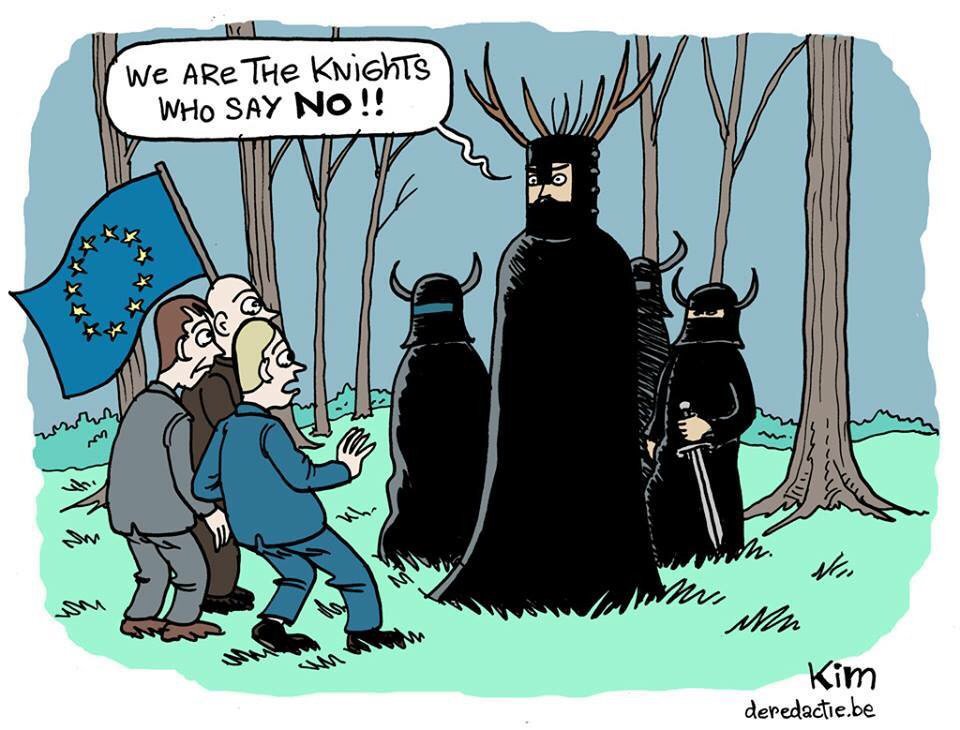


 Ian Robert Millard