Introduction
I was just watching one of the seemingly endless re-runs of the early 1970s historical documentary series, The World at War, and in particular the episode named Barbarossa (from Fall Barbarossa or Operation Barbarossa, named after Friedrich I, the Holy Roman Emperor of the 12th Century who led the Third Crusade against the infidels).
I of course remember watching the TV series when it first was broadcast, in 1973. Many will say that it is in many parts contaminated by what amounts to Jew-Zionist propaganda, and I do not dispute that. Others point out, in a connected critique, that every alleged wrong done by the German Reich and its forces is given great prominence, whereas the cruelties and barbarities of the Soviet regime are barely mentioned (I suppose that it could be argued that the most famous chronicles of those terrible times were not published in English until after The World at War was made: GULAG Archipelago, for one). The criticisms are valid, but one cannot write off The World At War because of those flaws.
The strength of The World at War was that many of the leading personalities on all sides, such as German, English and other general officers, admirals etc, some members of Hitler’s circle (eg Speer), and a host of lesser-ranked people, were all still alive in 1973, giving their filmed testimony weight and immediacy.
Anyway, this article is not meant to focus on The World at War alone, but to examine a couple of “what if?” situations, both in the war years of 1939-45 (for Russians and Americans, 1941-45) and at other times.
The drive to Moscow in 1941
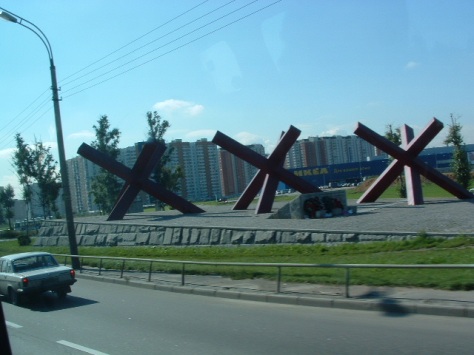
When I was first in Moscow, in 1993, my assigned driver, Pasha (an insolent loutish youth, apropos of nothing) pointed out, as we drove into the city from Sheremetyevo airport, the tank trap memorial, 23 kilometres from the Kremlin on the Leningrad Highway (Leningradskoye Shosse). The memorial marks the supposed furthest point of advance of the German forces in 1941. We drove near to the Kremlin only about 15-20 minutes later.
In 1941, the town of Khimki (now effectively a suburb of Moscow) had only just (1939) been administratively created, and was little developed. Now, hundreds of thousands live close by. Even since I drove through in 1993 there has been further development. Indeed, in the photograph below, taken in a recent year, there can be seen an IKEA warehouse. What would Stalin have had to say about that?!
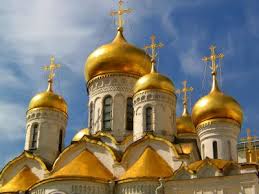
The proximity to central Moscow amazed me. Even if not true (as some say) that some German advance-reconnaissance motorcyclists advanced yet further, to a point where they could see the golden domes of the Kremlin churches, it is incredible to see how close the forces of the Reich came to capturing Moscow.
In 1941, flush with the victories in the West in 1940, Hitler intended to advance in Russia against 3 main objectives: Leningrad, Moscow, and also the Ukraine generally, with its huge natural resources of grain crops etc and (in the Don Basin or Donbass), coal.
Hitler at first prioritized Leningrad, followed by the Donbass, and only then Moscow. His generals disagreed, arguing that only a decisive blow against Moscow could achieve victory. There were cogent arguments for all three main objectives:
- Leningrad: reasons based around morale (the city of the two 1917 Revolutions and in particular the second, Bolshevik, one; the city bearing the name of Lenin); also, the city without which the all-weather port of Murmansk could probably not be held. If Murmansk fell, there could be no Allied resupply of the Soviet Union except via the Soviet Far East. At that stage of the war, that alone might sink the Soviet regime;
- Ukraine: grain supplies, coal, even oil (should German forces be able to advance beyond Ukraine; also, protection for the Romanian oilfields supplying Germany);
- Moscow: in the highly-centralized Stalinist system of the Soviet Union, everything came from the centre. Indeed, in the earliest hours of Barbarossa, Soviet officers were heard in German intercepts begging Moscow for orders: “we are under attack; what shall we do?”…It might be that, were Moscow to fall, the Soviet Union would fall. Hitler himself had said that “all we need do is kick open the front door and the whole rotten structure will come tumbling down.”
I have to say that (of course with the knowledge of the decades since 1941) I would favour the Moscow option. Had Moscow fallen, the bubble of the regime would have burst. In a small way, the open panic of the NKVD and CPSU when they thought the Germans would soon be in Moscow, and which led to open rebelliousness on the part of ordinary Moscow inhabitants, leads me to think that a German capture of the city would have led to a rapid fall of the Soviet regime in all of European Russia and perhaps beyond.
In any case, without Moscow under Soviet control, Leningrad must surely have fallen too before very long.
Hitler thought that it was more important to defeat the Soviet armies in the field. European thinking, thinking from the constricted lands of Central and Western Europe. In the Russian space, those otherwise valid ideas become less valid. New armies can be (and were) raised from the vast areas beyond the Volga, beyond the Urals.
As for going for three objectives at once, it might, under other stars, have worked, but the cautious Russian proverb says “chase two hares and you will not catch one”…
Still, what if? What if Moscow had fallen in 1941? Without a two-front war, Germany could not have been defeated in the West. There could not have been the Normandy Landings of 1944, certainly not successfully. European Russia would have been under German control, and the wider expanses of the Soviet Union would probably have been invaded and taken by a Russian but anti-Soviet army such as the Vlasov Army, which might have been expanded to a formidable force. Also, the forces under Rommel in North Africa would have been able to have been hugely reinforced, with the heady strategic possibility that Rommel might have been able not only to take Alexandria, Cairo and the Suez Canal, but Jerusalem, Damascus and then drive up through the foothills of the Caucasus towards Baku and its oilfields, linking up with the forces of Army Group South driving South-East from Ukraine; German forces did occupy part of the Caucasus and even part of Kalmykia in 1942 (occupying Elista briefly).
Mainland Europe would, in that overall scenario, have avoided most of the destruction of 1941-1945. In time, there would no doubt have been peace made between the German Reich and the British Empire. The calamitous decolonization in Africa etc would have been avoided, at least until such time as it would not have had such terrible effects on human and animal inhabitants. There would be either no State of Israel, or one which would not be the hub of a worldwide Jew-Zionist web. The forces of Stalinism would never have invaded Eastern and Central Europe. There would have been no Korean War, no Vietnam War, no Cuban Missile Crisis, and Castro himself would have been seen as just another Latin American tinpot dictator (which is all he was anyway, once Soviet backup was removed) and unable to pose as a world “statesman” (BBC and Labour Party idiots please note).
What if? If only…
And now for something completely different…
What if…Beeching had never happened? Alternatively, what if rail lines had been closed but maintenance of track continued?
I wonder how many British people of the post-1960s age, let alone the (often vacant-seeming) “millennials”, have even heard of Dr. Beeching, his reports and his “Beeching Axe”? [see Notes, below]. In outline, then:
“The first report identified 2,363 stations and 5,000 miles (8,000 km) of railway line for closure, 55% of stations and 30% of route miles, with an objective of stemming the large losses being incurred during a period of increasing competition from road transport and reducing the rail subsidies necessary to keep the network running; the second identified a small number of major routes for significant investment. The 1963 report also recommended some less well-publicised changes, including a switch to containerisation for rail freight“. [Wikipedia]
Note those figures: 2,363 rail stations to be closed! Not to mention 5,000 miles of track.
“Protests resulted in the saving of some stations and lines, but the majority were closed as planned, and Beeching’s name remains associated with the mass closure of railways and the loss of many local services in the period that followed. A few of these routes have since reopened, some short sections have been preserved as heritage railways, while others have been incorporated into the National Cycle Network or used for road schemes; others now are lost to construction, have reverted to farmland, or remain derelict.” [Wikipedia]
“Beeching’s reports made no recommendations about the handling of land after closures. British Rail operated a policy of disposing of land that was surplus to requirements. Many bridges, cuttings and embankments have been removed and the land sold for development. Closed station buildings on remaining lines have often been demolished or sold for housing or other purposes. Increasing pressure on land use meant that protection of closed trackbeds, as in other countries (such as the US Rail Bank scheme, which holds former railway land for possible future use) was not seen to be practical. Many redundant structures from closed lines remain, such as bridges over other lines and drainage culverts. They often require maintenance as part of the rail infrastructure while providing no benefit. Critics of Beeching argue that the lack of recommendations on the handling of closed railway property demonstrates that the report was short-sighted. On the other hand, retaining a railway on these routes, which would obviously have increased maintenance costs, might not have earned enough to justify that greater cost. As demand for rail has grown since the 1990s, the failure to preserve the routes of closed lines (such as the one between Bedford and Cambridge, which was closed despite Beeching recommending its retention) has been criticized.” [Wikipedia]
The above long extracts from Wikipedia lay out the facts quite well. What is missing is perspective. The postwar period in the UK, particularly in the 1960s and 1970s, was one of almost wholesale destruction of old buildings, streets, villages, towns and cities. In fact, postwar redevelopment changed London a great deal more than the oft-cited depredations of the Luftwaffe (most of which bomb damage was concentrated on the Thames dock areas and nearby areas which suffered collateral damage). Naturally, demolitions are sometimes inevitable and sometimes an improvement [see Notes, below], but much that was valuable has gone.
In fact, the 5,000 miles of track closures earmarked by Beeching were in addition to about 3,318 miles of railway track closed between 1948 and 1962 and also a further 1,300 miles of passenger railway between 1923 and 1939! Over 9,000 miles of track!
So “what if”? What if, for example, the rail track had been maintained? That way, were (as now are) different ideas, new technical ideas, possible (eg robot trains, no-staff trains, small ultralight trains, trains made with lighter materials, trains using solar power etc), those tracks could be the basis for new transport links and could be further linked with new track.
The expense of a railway is mostly in the staff pay, pensions etc; after that, the cost of actually running trains (fuel etc); after that, maintenance of trains, track, bridges, tunnels etc. The core maintenance can be relatively little. In the USA, this is the policy (see Wikipedia in Notes, below). Political policy which is also a national insurance policy.
Not that the trekking ways, cycleways and nature walks which often have replaced the old railways are not useful too, but most rail track destroyed has been simply ploughed over, built over or abandoned. Pity.
Notes
https://londonist.com/london/history/lost-london-buildings-destroyed-in-the-21st-century
https://www.amazon.co.uk/Lost-London-1870-1945-Philip-Davies/dp/0955794986
https://www.timeout.com/london/art/12-amazing-photos-of-londons-lost-landmarks
https://en.wikipedia.org/wiki/Beeching_cuts
https://en.wikipedia.org/wiki/Kalmykia#World_War_II
https://en.wikipedia.org/wiki/Elista
https://en.wikipedia.org/wiki/Baku
https://en.wikipedia.org/wiki/Erwin_Rommel#North_Africa_1941%E2%80%931943
https://en.wikipedia.org/wiki/Russian_Liberation_Army
https://en.wikipedia.org/wiki/Khimki#Khimki_in_the_Battle_of_Moscow
https://en.wikipedia.org/wiki/Frederick_I,_Holy_Roman_Emperor
https://en.wikipedia.org/wiki/The_Gulag_Archipelago
https://en.wikipedia.org/wiki/The_World_at_War

