
Morning music
Saturday quiz

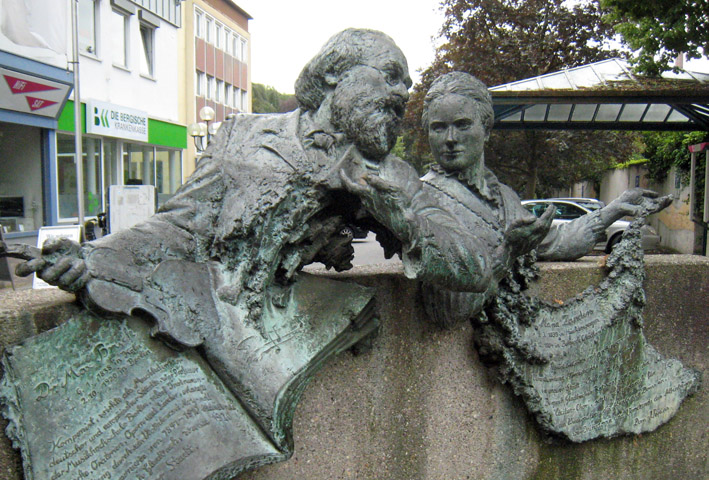
Well, this week another narrow victory over political journalist John Rentoul— 4/10, as against Rentoul’s 3/10.
I knew the answers to questions 1, 4, 7, and 9. I could not remember the answer to question 6, did not think long enough to get question 3, and had no idea about the most of the others; question 5 has several possible answers (though one stands out, I now know); the instrument I guessed was one of the (4 or 5) musical instruments Marie Antoinette played, though not the one wanted by the quizmaster, it seems, so I have not awarded myself that one.
A few extra thoughts about Mandelson, Epstein, and the whole Jew-lobby scandal at and around Starmer-stein’s government
First thought: saw Gordon Brown on TV news lamenting about it all, and excoriating Mandelson. Well, OK, but you, Brown, you loony and hypocrite, knew all about his general sleaziness, his sexual proclivities, his activities in London youth clubs etc, going back as far as the 1970s, and his willingness to cheat and scheme to make money, as with his mortgage and loan and property activities in the late 1990s, which activities in fact attracted the attention of the police at the time, until their investigation was interfered with, and they were warned off.
Second thought: how useless is MI5, that they seem either to have been unaware of the Mandelson and Epstein connection or, far more likely, were unwilling to rock the political boat? Same goes for SIS, incidentally.
Third thought: so Jews conspired to make money illicitly? Quelle surprise… oh, no, wait…
Tweets seen
Amazing. It took humanity unknown ages, tens of thousands or hundreds of thousands of years to come up with that. Now it is known, it must not be forgotten.
See also:
As I blogged years ago, about 5 years ago, Starmer (to my then slight surprise) turned out to be utterly clueless.
Not many lawyers in the modern era are much good as politicians, though I suppose one could reference Lenin. Or Castro [https://en.wikipedia.org/wiki/Fidel_Castro#Career_in_law_and_politics:_1950%E2%80%931952]. A few others too, maybe.
Some might include Mandela, but he was never really a lawyer, just a “gopher” in a law firm for a while, until awarded a law degree on the nod while a celebrity prisoner in the 1980s, and aged about 70. He had failed his law degree three times in the late 1940s, when about 30 years old.
As for Starmer-stein, Matt Goodwin and Reform UK must be loving this heady mixture of cluelessness and corruption in the present fake “Labour” government. Only 17 days until the Gorton and Denton by-election.
Many will later turn to social national politics.
I blogged previously that all three leading contenders might score around 30%, leading to a very close result. Were Labour to win by a small margin, that would still be a negative sign, because Labour scored 50.8% there only last year.
Anti-Reform tactical voters will have to decide which party is more likely to be able to defeat Reform. Either Labour or the Greens. Polls presently put Labour ahead of the Greens, but that may not reflect feeling among those actually going to vote.
Reform is still slightly ahead in the opinion polling at Gorton and Denton, but it is hard to say where the voters will be by 26 February, the polling day. I begin to think that the Labour vote might collapse, by reason of abstention as much as via defection. That might or not boost the Green vote, but would probably lead to a Reform triumph.
I blogged about Carns yesterday. Someone who would go down well with the public, on first showing, and because of his background, but who is an unknown quantity ideologically.
Ex-officers usually disappoint as MPs. Examples from recent years would include Dan Jarvis and Johnny Mercer.
Well, we shall see.
Trump is all over the place, from one day to the next.
The very slow but inexorable advance continues along much of the overall front. There are no Kiev-regime advances, and have not been for at least a year or so.
[“I was born in Woking, Surrey, less than a mile from the site of the Shah Jahan mosque, the first built in Britain. Growing up in Woking my friends and I soon learnt that the Pakistani community acted differently to us. They operated like a clan, like a gang. If you crossed one, you would find a dozen brothers and cousins waiting for you outside the school gates. As English people who had small, quite independent families, this clan loyalty and mindset was nearly impossible to contend with. ‘Turn the other cheek’ my mother used to say. Never easy though when you’ve seen your friend have his teeth kicked in by a mob for a minor instance of perceived disrespect. We used to play pool at the Planets in Woking town centre after school, however it wasn’t long before this was taken over by the Pakistani clans from Maybury. They’d pelt us with pool balls and intimidate us to leave. It was their territory now. So spare me your victimhood @sajidjavid.”]
I blogged, years ago, about the attack in New Zealand carried out by Brenton Tarrant in 2019. In that blog post, I mentioned, in passing, that mosque in Woking (which you can see from the train):
Ah. Just what I wondered about earlier in the day.
Starmer-stein is a real office-politics tiger, isn’t he? Useless at anything else.
I see many tweets and other online comments about the supposed “Ukrainian rent boys”, their alleged connection with Starmer-stein, and their delayed trials. I wonder what might be the truth about all that…
…and the same [kind of] police pretend to be terribly shocked when tasked with bothering social-national bloggers such as myself, or satirical singers such as Alison Chabloz, or public speakers such as Jez Turner (etc).
One begins to wonder whether there is much point in even having a police force of the kind the UK now has. Like so many long-established UK institutions (Monarchy, the Bar, the Church of England, the ancient universities, SIS, MI5, Parliament, the NHS etc), the police need “a revaluation of all values“.







Late tweets
It’s almost as if Adolf Hitler and others were right after all…
As for sleazy Alastair Campbell, what his tweet tells me is that he, and all the other Labourite drones, are getting very desperate. As if it really matters that Reform in Gorton and Denton may have sent out a few leaflets without the correct labelling.
The Jew Mandelson “very greedy” and “always looking for money“? Well, who would have thought it?
Maybe I should relocate to Hungary, which at least will not be directly targeted in any nuclear exchange. I rather liked the lakeside suite I had in 2001, with its direct access to the gardens and lake (Balaton). I swam in the lake, and enjoyed an evening palinka (or two).
[“Iran has prepared a large-scale plan to counter the US armed forces and pressure on the global economy. According to the Tasnim agency affiliated with the IRGC, within a few hours after a possible US attack, Iran will launch massive strikes with ballistic missiles and drones on US military facilities throughout the region, expanding the conflict zone beyond its borders.
Tehran also relies on its cyberwar capabilities – attacks on US logistics, disruptions in the command and control system, and creating chaos among countries hosting American forces. The IRGC’s naval forces have been practicing the “swarm” tactic – attacks by small boats equipped with missiles and torpedoes to overload and suppress large warships. Blocking the Strait of Hormuz could lead to an increase in oil prices above $200 per barrel, which would cause serious damage to the global economy and increase pressure on Washington.
Hossein Shariatmadari stated that Iran could block the passage of American, French, British, and German ships through the Strait of Hormuz. Iran’s strategic goal is to create an unstable multi-front confrontation for the US, forcing American forces to simultaneously face pressure in Lebanon, Yemen, Iraq, and potentially in Syria, while protecting its allies in the Persian Gulf and ensuring the safety of sea routes.“]
Were I the Iranian leadership, I should think that all Iran’s missiles should be targeted on Israel, focussing on a few main targets— Dimona, Ben-Gurion Airport, central Tel Aviv and affluent areas in that region, such as Ra’anana and Herzliya.
Still, it’s their party…
Late music
A great American symphony by a composer much underrated.


 Ian Robert Millard