Zelensky: Ukraine cannot equip 14 brigades due to lack of weapons
" We have brigades without weapons, we have 14 brigades that do not have enough weapons. One brigade has from 1,000 to 8,000 people, and the main source of weapons for the Ukrainian forces is Western supplies ,"… pic.twitter.com/wIjrY2zSzv
— S p r i n t e r F a m i l y (@SprinterFamily) July 4, 2024
Whether it happens this summer or next, sooner or later the Russian “Stavka” will order a general advance across Eastern Ukraine. Russia cannot lose this war and will not lose it.
#ToriesIntoThird Stephen Smith was found 'fit for work' by the Tory DWP. He appealed from his hospital bed but died before the result was known. One of thousands. Don't let them get away with it. pic.twitter.com/wsScXd1WGM
The Labour Party 1997-2010 created the system that resulted in this, the Conservative Party 2010-2015 made such events more common, and the Liberal Democrats enabled the Conservative Party from 2010-2015.
— alessandra rizzo (@alessandrarizzo) July 4, 2024
If so, rather disappointing for me. I wanted the Conservative Party to be all but wiped out, primarily. 130 MPs will mean that it can still present itself as a potentially viable party of government, as it did after 1997. Very disappointing and irritating.
That means that the “2-3 main parties” scam rolls on, at least until 2029.
For social nationalism, there is no “Parliamentary road”…
Assuming that the exit poll is accurate, this is the triumph of the unmeritorious. Unmerited “elected” dictatorship for Labour. Unmerited success for the LibDems, getting 61 seats off little more than Ed Davey clowning and falling off sailboards etc. The “dustbin” party… Also, the unmerited survival of the Conservative Party, even if only as a rump party of ~131 MPs, but still enough to be the official Opposition.
The SNP, reduced to ~10 MPs at Westminster, is pretty much a dead duck as a party of Scottish government in the future, as is, now, any faux-“Independence” for Scotland.
As for Reform UK, I think that ~13 MPs constitute as good a result as they realistically could have expected. For the past 9 years, the LibDems have had fewer MPs: 8 in 2015, 12 in 2017, and 11 in 2019, yet look at them now— 61 MPs predicted. Reform UK could be there, or beyond there, in 2029. https://en.wikipedia.org/wiki/Liberal_Democrats_(UK)#General_elections.
The air force and air defense forces of Belarus and the Russian Federation are put on high combat readiness due to the activation of the Armed Forces of Ukraine
Missile systems "Polonaise" and "Iskander" were brought into position, President of Belarus Lukashenko pic.twitter.com/3ZWzRUdAlA
— S p r i n t e r F a m i l y (@SprinterFamily) July 3, 2024
— S p r i n t e r F a m i l y (@SprinterFamily) July 3, 2024
🇻🇳 Footage from a Vietnamese police training to destroy terrorists and rescue hostages in a building pic.twitter.com/RrOcl7ICT6
— S p r i n t e r F a m i l y (@SprinterFamily) July 3, 2024
Former economic adviser to Israel's chief of staff, Ram Aminah, said: "Israeli society does not understand the extent of Hezbollah's power" because it has a large stockpile of missiles, he added.
Hezbollah is considered one of the five superpowers along with the United States,… pic.twitter.com/udIWpIVVxF
— S p r i n t e r F a m i l y (@SprinterFamily) July 3, 2024
“Former economic adviser to Israel’s chief of staff, Ram Aminah, said: “Israeli society does not understand the extent of Hezbollah’s power” because it has a large stockpile of missiles, he added. Hezbollah is considered one of the five superpowers along with the United States, China, Russia and Germany.“
Interesting and unexpected. All the same, Hezbollah is not part of the nuclear club: no Trident, no French force de frappe…
— S p r i n t e r F a m i l y (@SprinterFamily) July 3, 2024
When they are given power…
The Kiev junta refused to compromise with Moscow:
Ukraine is not ready to compromise with Russia and give up any territory in order to end the conflict – Ermak. pic.twitter.com/Fq9IfoRDi9
— Global Info Factory (@GlobalInfoFact) July 3, 2024
“He who lives by the sword shall die by the sword” [Matthew 26:52]
Extraordinary- Sam Coates saying one member of the govt worried he might win, he just wants to lose 😆 Survation's latest poll puts Tories at just 64 seats. But we need to VOTE pic.twitter.com/eWnPFSqny4
Wonder what that idiot-tweeter will say when real social-nationalism arrives…
Have you any idea how shite the UK is to live in? Have you any idea how long you need to wait for a check up, a hospital bed, a dentist etc? Have you seen the slums and filth being created through lack funding? And you want more of the fucking same???
Incidentally, that Britain Elects poll result, if it is right, would mean a House of Commons with 469 Labour MPs (overall majority 288), 75 LibDems, 56 Con MPs, 15 SNP, 9 Reform UK, 3 Green (etc). https://www.electoralcalculus.co.uk/userpoll.html.
Many will settle for a 20k salary so they avoid paying tax
My view is that it would be better to raise the threshold to at least the £20,000 level, but increase the tax burden of VAT (overall). True, that would hit poorer people disproportionately, but at the same time would put the choice into their hands, in fact into the hands of all consumers. Basic purchases, such as food, or basic foodstuffs, could be charged out at a lower rate or rates, or zero-rated.
Government needs tax monies in order to fund the functions of government.
"The British Conservative party will leave Downing Street after 14 years and 5 incompetent prime ministers who have left Britain poorer and weaker. More than at any time in modern history, Britain has lost the respect of the world", @FrancisGhiles 🔗https://t.co/a2FDKtxJ0cpic.twitter.com/4fEYy8suc3
— CIDOB (Barcelona Centre for International Affairs) (@CidobBarcelona) July 3, 2024
FINAL poll of campaign
Labour 36% Reform 20% Conservatives 16% Lib Dems 10% Greens 9% SNP 4%
That poll, by my use of Electoral Calculus, would result in a House of Commons with 454 Labour MPs (overall majority 258), 74 LibDems, 46 Cons, 34 Reform UK, 15 SNP, 4 Green (etc).
That People Polling opinion poll comes very close to my own (I hope, educated) guess about what might be the result of tomorrow’s General Election. Labour as “elected” (by default) dictatorship, LibDems the official but completely toothless Opposition (again only by default), and Reform UK in a good position to capitalize on what will soon be Labour’s total let-down as a government. Oh, and the SNP put back in its box, probably permanently.
As for the Conservative Party, if not totally wiped out on the day, mortally wounded.
I also tend to agree, as I have been blogging recently. “Shy Reform UK voters”, unwilling to share their tendency with pollsters, may add up to something significant, if they vote at all.
That means a House of Commons with 472 Labour MPs (overall majority 294), LibDems 69, Cons 63, SNP 15, Reform 6, Greens 3 (etc).
Once again, LibDems as official Opposition. About half the polls are predicting that the LibDems will get more MPs than the Cons. I imagine that large donors to the Conservative Party will close their pocketbooks soon. A party not in government and not even the main opposition party has little influence.
1700 hrs now. 17 hours before the polls open for real.
BREAKING – final YouGov polling has Reform on 36% in Great Yarmouth, Labour on 29%. The Tories CANNOT win here. If you want to keep Labour out, then voting Reform tomorrow is the only way. pic.twitter.com/MDwe0OsKdW
This is Frank and he has had a coffee stand at the top of the steps at Bethnal Green tube for as long as I can remember.
When the new restaurant/coffee shop next door opened along with another high street outlet opening across the street, Frank suddenly found that his license… pic.twitter.com/3bgeCMvuxP
“This is Frank and he has had a coffee stand at the top of the steps at Bethnal Green tube for as long as I can remember.
When the new restaurant/coffee shop next door opened along with another high street outlet opening across the street, Frank suddenly found that his license from the council had been revoked and he was chucked off his stand. I believe it was to make way for these new shops to take his regular custom. They didn’t need him in the way of gaining maximum profit… so Frank was gone.
Well the locals were having none of it and a petition started demanding his return. How dare they do this to him. How dare these people smash his business and leave him with nothing.
After a lot of pressure the council backed down and Frank had his licence and pitch returned to him but sadly by that time Frank had sold his equipment to feed his family and try to survive. So the good people of Bethnal Green started crowdfunding and here’s the result… Frank back in business on his old pitch with brand new equipment and even a little hut now to shelter him from the rain… Brilliant!!
He is truly the happiest man in East London and it’s wonderful to see. It really does show that if we all stick together, stand up to them and just say no… the little guy can win. If you’re in Bethnal Green come and have a coffee with this lovely man.“
A nice story, and an illustration on a small scale of what society could be.
Not an area I know (have been there a couple of times, 30-40 years ago), but if I am ever there, admittedly highly unlikely, I’ll take that coffee.
“A man has been convicted of strangling his wife while her online boyfriend was on a video link, and throwing her body hidden in a suitcase into a tributary of the River Thames.
Aminan Rahman, 46, was found guilty by a jury at the Old Bailey of murdering Suma Begum, 24, in a flat in east London on the night of 29 April last year.
The killing was witnessed by Begum’s two children, aged four months and two years, and her online boyfriend via a video call from the United Arab Emirates (UAE), where he was living.“
[The Guardian]
Late tweets seen
Nigel Farage and Reform's average vote share in the final polls is now up to 17.3% — from 11% at the start of the campaign & 15% last week. Most polls suggest a strong end to the campaign for Farage & Co … https://t.co/O3wB4eQNON
‘He was the guy who liberalised immigration. He was the guy who lost control of the borders. He’s the guy who put mass migration on steroids.’@GoodwinMJ rips into Boris Johnson, saying his political influence has almost entirely diminished following his time in office. pic.twitter.com/KwVR8b8V9j
[1938— Adolf Hitler enters Vienna to popular acclaim after the overwhelming vote of the Austrian people to join with National Socialist Germany in the new German Reich]
Talking point
[comment from a report in an American news magazine]
The Conservative Party misgovernment is more or less at an end now. The next battle will soon start, the battle against the overall “woke” nonsense going to be spearheaded by the Labour Party in government: “trans” nonsense, multikulti nonsense, migration-invasion, Israel/Jewish lobbyism and, encompassing all of those and more, the attack on free speech and freedom of expression.
Tweets seen
Blowback is a great podcast on the Iraq War.
“The invasion of Iraq in 2003 constitutes the greatest crime of the 21st century. The war killed hundreds of thousands of Iraqis, and the country plunged into a cycle of violence and misery that endures today.”…
A reminder that, in international affairs, there is sometimes no “good” option but only “bad” or “worse” options. Sometimes the “least worst” option is also the (relative) “best” at that particular time.
In the example, leaving a terrible tyrant like Saddam Hussein in place might be “bad” (arguably) but deposing him, destroying Iraq, and further destabilizing the region, thus also causing millions to flee westward, might be described as “worse” or even “worst”.
Well they have been for some time
— Sue🐱🐴🐔🍃💚🍃 🏴 🇬🇧 🇨🇦 (@sw18780774) June 29, 2024
🚨DOVER INVASION UPDATE🚨
Over 300 illegals in the last 3 days have crossed the channel in dinghies
Saturday: 77 illegals in 1 boat Sunday: 217 illegals in 4 boats Monday: 85 illegals in 2 boats
13,574 migrants in 272 dinghies have so far crossed the channel this year, an 18%… pic.twitter.com/uBHagV2n43
Most Britons are willing to at least give a Starmer government the benefit of the doubt
Have high hopes and think they will do a good job: 21% Do not have high hopes, but willing to give the benefit of the doubt: 35% No not have high hopes and think they will do a bad job: 33%… pic.twitter.com/9JQTZgNzBd
So we are asked to believe that two Reform UK GE 2024 candidates have only just discovered, in the latest case two days before the General Election, that they disagree with their Reform UK colleagues or ex-colleagues?
To me this looks like a set-up, maybe co-ordinated, maybe not.
The latest defector is one Georgie David. I wonder what her provenance might be. She does not look very European in the Sky News photo.
If those two candidates really are against the UK being mainly white Northern European etc, how stupid must they be to have joined with Reform UK in the first place? I might add that the pair are, obviously, though in a minor sense, “traitor” types by nature, to defect like that only days before the “off” (to put it in racing terms).
I doubt that the defections will have any effect on the General Election. In fact, I doubt that the barrage of anti-Reform propaganda being put out by the Conservative Party will do more than perhaps dent a little the Reform UK vote. Even if it did, it would not help the Con Party; any Reform-leaning voters in doubt would not vote Con anyway, but more likely abstain.
More tweets seen
I remember Obama visiting downing street just a couple of days before he announced the election. I think sunak was ordered by the Davos lot to hold an election, get there man starmer in so we can have a war in Ukraine. The chess pieces are being moved into their final position.
Likewise, I happened to be in Qatar for a few days in early 2001. On leaving from the old (now replaced) Doha Airport, I was just being driven to the steps of my plane in a limousine when I noticed that Air Force Two (with Colin Powell on board, as I later discovered, though probably not aboard at that exact moment), was parked right next to it. In retrospect, part of the diplomatic build-up to the invasion of Iraq which occurred 2 years later.
There are always small events, and there is always chatter, before larger events occur. One reason why it is so suspicious that the Israelis claim that the events near Gaza in early October 2023 came as a complete surprise to them.
Labour policies in a nutshell…
🚨 Trans rights over women’s rights 🚨 Immigrants first, Britons last 🚨 Net Zero & higher bills for all 🚨 War first, peace last 🚨 LGBTQIAP+ gender ideology 4 all kids 🚨 Davos first, Britain last
Rachel Reeves. Labour Friends of Israel. Poses as “competent”. Ran up very large (interest-free) debt on her House of Commons credit card, then refused for years to repay. Freeloader and cheat.
Shut these sick events down , we the ordinary public have had enough of this nonce shit https://t.co/u0xpR2pvhf
— Tommy Robinson 🇬🇧 (@TRobinsonNewEra) July 1, 2024
Tommy Robinson. Even a stopped clock is right once or twice per day.
From Sept 2020 @GuidoFawkes reported that in a 1988 edition of Socialist Lawyer magazine, the words of Sir @Keir_Starmer.
All main System parties are signed up to the Coudenhove-Kalergi Plan: https://en.wikipedia.org/wiki/Kalergi_Plan (nb. the “usual suspects” habitually vandalize Wikipedia, so bear that in mind).
👏🏼👍🏻🇬🇧
— 🇬🇧#VoteREFORMUK🇬🇧 I want my country back! 🇬🇧 (@ItParachute) June 27, 2024
— David Morgan 🏴 #StayFree (@david_r_morgan) July 1, 2024
My own experiences have been both worse and far more significant (because my own free speech struggles have been over serious socio-political postings, not silly “dog gives Hitler salute” video clips): see below
I don't think he can live. But you have rescued him and that was the best that you could do. I think you must have reassured him that he was not lost in some dark mysterious place, causing him pain. Às a pet cat he would have looked to humans for help.
Mark Lewis left Britain because antisemitism meant he did not feel safe?
But he returned to spend a week in court representing people who joke about the Protocols, being Nazis, and fleeing to Argentina?https://t.co/oq8y9GCyCA
The old adage about how investigators should “always follow the money” applies a fortiori to the egregious Lewis.
Nina Power is bankrupt after losing a defamation case. Her co-claimant Daniel Miller is already bankrupt. Both defendants in my case are heading for bankruptcy. They are all former clients of Mark Lewis who decided to take cases to trial and lost. @MLewisLawyerpic.twitter.com/LVJ4tmvbv9
As I have said on the blog previously, I pity anyone who instructs Lewis as solicitor (at least anyone who does not have a rather simple and easily-won, indeed “open-and-shut”, case).
— Damian Lyons Lowe (@DamianSurvation) July 2, 2024
The only two where the range is relatively unimportant are Labour, which is (however unmeritoriously) on track for a massive win, it seems, and the LibDems, who seem likely to do modestly well or quite well purely by default, by being the “dustbin” or “tactical vote” choice.
All the rest? Either getting a bloc of significance, or almost nothing. Even the Con result will be very different on 34 MPs (a near wipeout) compared to 99 MPs (very poor but still just about in the game).
Last week Starmer said, “Handouts offer less dignity to people than earning a living through work.” The same Starmer has accepted £76,000 of handouts including concerts, parties, sport games, hotel stays and clothing. https://t.co/oNsXDQWteY
Starmer and his cabal are a collective waste of space, but this time next week they will constitute the “politburo” of an “elected” dictatorship.
Nebenzja: Residents of Gaza on the brink of starvation
" The situation on the ground is not only worsening, but it is bringing the people of Gaza to the brink of starvation. This is a sad reality, which is directly indicated by the estimates of the UN World Food Program, which… pic.twitter.com/N2ac9COlcD
— S p r i n t e r F a m i l y (@SprinterFamily) July 2, 2024
Everything that was published about the terrible conditions was true. I have already proposed a much simpler solution – the introduction of the death penalty "
Israeli National Security Minister Itamar Ben-Gvir commented on reports of concentration camps for Palestinian… pic.twitter.com/jNX10O5MIU
— S p r i n t e r F a m i l y (@SprinterFamily) July 2, 2024
“Everything that was published about the terrible conditions was true. I have already proposed a much simpler solution – the introduction of the death penalty “.
Israeli National Security Minister Itamar Ben-Gvir commented on reports of concentration camps for Palestinian detention, where Israeli soldiers tortured, deprived of food Palestinians.”
[Israeli Jew, and government minister, Ben-Gvir]
Ecce “the simulacrum of the human“…
A Palestinian youth made a video documenting his life in Gaza before and after the war. pic.twitter.com/1hOldX1BGZ
— S p r i n t e r F a m i l y (@SprinterFamily) July 2, 2024
Interesting poll tonight from Reuters/Ipsos: Trump with 39%, Michelle Obama with 50%.
— S p r i n t e r F a m i l y (@SprinterFamily) July 2, 2024
The latest trick of the Deep State “war party”…
Donald Trump, if he wins the elections, could abandon the expansion of NATO to the east , especially to Ukraine and Georgia, writes "Politico".
▪️Trump is also thinking about an agreement with Vladimir Putin on which countries will be able to join NATO in the future.… pic.twitter.com/q6PDsY9Vyq
— Global Info Factory (@GlobalInfoFact) July 2, 2024
Makes me wonder whether the “war party” is somehow drugging Biden to make him seem even more demented, with the idea that he will be pressured to step down in favour of a candidate more likely to be able to defeat Trump.
There’s something wrong with a system which not only promotes people such as Beth Rigby (who has a speech impediment…yet is on TV and radio for a living), but pays them hundreds of thousands of pounds a year.
Nearly a decade on from 2016 much of our national "debate" is still built around catastrophising over the rise of these parties rather than actually addressing why so many people (especially YOUNG people) are voting for them.
“The astonishing victory by the Right tonight in the first round of the French general election where Le Pen’s National Rally received 34.5% trouncing the Left alliance ( 29%) and destroying Macron ( 20%) augurs well for Nigel Farage and Reform. I suspect our voters will no longer believe a vote for Reform is wasted vote. They will view it as a chance to change the political narrative once and for all just as it’s doing in France. Anything could happen on Thursday.”
[Kelvin MacKenzie]
Must be the first time I have ever agreed with Kelvin MacKenzie.
I was at a BBQ with friends last night, everyone there said they’ll vote for Reform. In the past, they’ve voted for diff parties. No one trusts Labour not to hike taxes to an unacceptable level and ex Tory voters feel let down.
Huge numbers of people are getting desperate for social-national change. Reform UK is only halfway —if that— there, but it is a start, a start which can smash the “two main parties” scam, change the dynamics of UK politics (if it does well enough on Thursday), and move the “Overton Window”, or at least start to move it.
I suspect that many will say “**** it!” and put their crosses next to Reform UK on Thursday, as a last-minute decision. I may be wrong, but that is my feeling anyway.
Would Sunak raise a crowd that big? That is not even a question. 10, yes, 100, doubtful. 5,000? Ha ha…
What about Starmer? Maybe a few hundred (organized by the Labour machine)…maybe.
Whatever the voters want now, it is not the hopeless and ridiculous Conservative Party; not really Labour either, or the LibDems. They will profit only by default.
Who are the 10% or maybe 15% still voting Con? Must be lifelong unthinking habit-voters, mostly those in extreme old age, in my view.
Frankly, I doubt whether the Cons will even get to 20% in this General Election.
Been coming for some time but still extraordinary to see like this.
— Remote-Controlled President Bumpty (@RealHumptyB) July 1, 2024
Legacy media is enemy of the people, it is disinformation and paid propaganda.
X is where the real news happens.
— Gunther Eagleman™ (@GuntherEagleman) July 1, 2024
These nurses fighting for women’s spaces really are so heroic
Compare and contrast their straightforward decency with the bloke at the end trying to hypnotise us all into thinking women’s concerns are a non-issue pic.twitter.com/pRM4WuevYZ
David Lammy is currently Shadow Foreign Secretary and, no doubt he plus many others expect him to become the Foreign Secretary, should Labour win the election; which seems likely.
— Hugh Fletcher #WTO-Brexit (@Hugh8Fletcher) July 1, 2024
A photo of a burning M113 armored personnel carrier of the Israeli army has appeared. It was shot down in Tel el-Hawa, south of Gaza City. pic.twitter.com/Cb4HCt8NGU
— Global Info Factory (@GlobalInfoFact) July 1, 2024
BBC Question Time is a show so biased, and serving a System agenda, that it would not have been out of place in the Soviet Union. Look at what happened to Nick Griffin about 14 years ago. A complete and rigged lynching.
There should be a massive purge of the cultural sector generally.
Labour don't have a serious plan to tackle mass uncontrolled migration.
The 1% of green belt will not be enough if they don't tackle mass uncontrolled migration.
Labour want GDP to grow but GDP per capita will drop & make us all poorer.
Tom Harwood is a horrible little bastard. A typical “knows the price of everything and the value of nothing” careerist.
Yes, they will take “just” 1% of the Green Belt…at first. That covers a year or two of the “need” for new “homes”. A couple of years later, with another 1M+ immigrants to house, guess what? Another 1% (or more) of the Green Belt will be “needed”. And so on…
All that will feed money to housebuilding giants and banks and, down the line, to organizations such as GB News, and to talking heads such as Tom Harwood.
As tweeted there, “Labour” has no, or no effective, plan, because (just like the “Conservatives”) they want more immigration. Evil. Treacherous. Coudenhove-Kalergi puppets.
When your smug, long-winded gotcha question in a BBC audience backfires and leaves you holding nothing but your own backside. pic.twitter.com/o1Ocy3z28K
Ha ha! The face of that silly woman (as seen in the clip) was a picture! Veritas omnia vincit…
In 2013, Obama invented the "97% scientific consensus." This was designed to intimidate good scientists into silence, by implying they weren't qualified to discuss climate. https://t.co/GANjbITcAs
“The consumption of material resources using the photovoltaic technology is at least 64 times that of nuclear energy. For the production of the solar-grade silicon for one square meter of panel area it requires 3.5 kg of concentrated hydrochloric acid. The weight of concrete, steel and chemicals used, such as acids/ bases, etchants, elemental gases, dopants, photolithographic chemicals etc. are never included. PV technology is more than 7 times more labor intensive than other energy sources. They never include disposing of the worn out panels, recycling copper wiring etc. after solar farms have reached end of life. So when they tell you solar makes back the energy used to build and maintain them in X amount of time, they are actually lying to you.”
Interesting, nicht wahr, that all these supposed imperative “needs”, such as concreting over the English countryside to provide “homes” (mostly for migrant-invaders), or creating massive solar farms in the countryside or, indeed, creating fake “vaccines” and the “need” for this, that, or the other anti-“pandemic” equipment and services, always seem to mean massive profit for greedy landowners, farmers, giant companies, the mass media organizations etc?
🚨SEAT PROJECTION: Mid Buckinghamshire
Reform GAIN from Conservatives ➡️|🌳
Reform Party candidate Steph Harwood leads the Conservatives by 1.9%!
GE 2024 may be nailed on for Labour, but there is everything still to play for in respect of Reform UK; also, in terms of really wiping out (or not) the totally useless “Conservative” Party. Still 4 days or so to go before the campaign is at an end. About a fifth of eligible voters are still unsure whether to bother voting, and/or where to place their cross.
If Reform UK only gets about 15% or 16% across the board, then that will be underwhelming, though it should sink the Conservative Party. In that event, Reform would probably get only one or two MPs. If, on the other hand, Reform can get about 23%, then it might end up with 50+ MPs, and the map of British politics will have been irrevocably changed.
Talk TV, one of the Murdoch assets, was one of the few msm outlets to report on my free speech trial sentencing hearing. It managed to get the sentence completely wrong, stating that I had been “jailed“!
That interviewee was right. Talk TV/Talk Radio are indeed “clowns“.
The mass media are under (((control))), just as the entire political system is monitored and controlled. Once even a mild-ish small-c conservative party such as Reform UK starts to become popular with the masses, the control starts to become more heavy-handed. It is pretty blatant.
Credit in part to the BBC and Channel 4 for all their sh!t stirring … 🥴🥴 https://t.co/DhLPDNJ6Ld
What other party could do this in the Britain of 2024? Brexit Party did it, on a smaller scale, but Farage stabbed it in the back. This time, he obviously plans to take it to the end (Election Day).
Like the end of the 1934 Nuremberg rally, but without a proper social-national party, movement, ideology, or leader.
Still, if it destroys at least half of the “two main parties” scam, and moves the “Overton Window” a bit (or a lot), I am relatively happy…
Incidentally, if you do not see the (superficial) parallel to 1934 Nuremberg, see the video below [at/from 1hr 30 mins]
The lion has woken up Vote Reform UK 🇬🇧 We are taking our beautiful Country back pic.twitter.com/HuGLYmrHIF
“With the IFS questioning how Labour and the Tories are going to fund their manifesto pledges, the public are similarly sceptical: % who think each party’s promises are…
Most people realize that “democracy” is largely a sham.
In 2015 I met this Palestinian farmer, Abdel-Majeed, on the West Bank. Israeli settlers were attacking him and stealing his land, and I thought the situation was about as bad as it could get.
No, it has gotten much worse. I revisited him last week, during a week-long trip… pic.twitter.com/304a65x7Qj
“In 2015 I met this Palestinian farmer, Abdel-Majeed, on the West Bank. Israeli settlers were attacking him and stealing his land, and I thought the situation was about as bad as it could get. No, it has gotten much worse.
I revisited him last week, during a week-long trip through Israel and the West Bank, and I found that settlers have burned his cars and destroyed his tractor. They have cut down his olive trees and set his sheep shed on fire. They tried to break into his house when his granddaughter was home. Now his wife is arguing that they should give up their home, for fear of being burned alive by settlers.
This is life on the West Bank today. It doesn’t get as much attention as Gaza, but the situation is desperate. And the US is largely AWOL. I know it feels a long way away, but this is central to the Middle East crisis and is one reason I fear the crisis will get worse.
Speaking to the French people’s intensifying concerns about mass immigration, violence & the breakdown of order Marine Le Pen describes this as the ‘ensauvagement’ (savagification) of French society"https://t.co/wPmLXPgVNq
Wow. Marine Le Pen and National Rally win the first round of elections in France with 34% of the vote. Macron falls to third. Enormous result for Le Pen and national populism https://t.co/qwN7zLY6DY
[“Moskva” swimming pool, Kropotkinskaya, in 1980. At the time (it is no longer in existence) the largest swimming pool in the world, capable of hosting thousands of swimmers. I myself swam there daily when I was in Moscow in 1993 but, at that time, a year before its permanent closure, there were only about a dozen or so swimmers when I would visit (quite early in the morning): https://en.wikipedia.org/wiki/Moskva_Pool]
Well, this week I scored 5/10, the same as political journalist John Rentoul. I knew the answers to questions 2, 3, 5, 6, and 9. I could not quite bring to mind the answers to questions 1 and 8, and had no idea about questions 4, 7, and 10.
My feeling, with a mere 5 days to go before Election Day, is that, firstly and obviously, the Conservative Party has reached the end of its road.
What does it even pretend to stand for now? It has embraced every sort of “woke” nonsense over the past 14 years, and even tried to hit Reform UK yesterday with the accusation that a Reform UK activist criticized a police car flying a “Pride” (LGBTQXYZ) flag. How is such criticism even controversial? The police should not be flying socially or politically contentious flags.
The Conservative Party has also presided over the migration invasion, trying to manage the influx of millions of non-Europeans (over a million a year now) but never seriously trying to stop it; indeed, encouraging “legal” migration, which is 95% of all migration-invasion. Coudenhove-Kalergi Plan: https://en.wikipedia.org/wiki/Kalergi_Plan.
As for living standards, straight down, and set to continue, under Labour plunging ever-lower. That may give social-nationalism an opening quite soon (but there has to be a movement to capture the sentiment).
My view about Reform UK is that many of those who favour it have already voted, via the postal ballot. Most of the rest who are leaning to Reform UK will not be put off by the contrived scandal in Clacton; some may even like the outspoken comments aired on Channel 4.
There is also the point that maybe 20% of eligible voters are either not going to vote, or are still uncertain. Few will vote Con. They —in my opinion— will not, most of them, vote Lab either. So either Reform UK, LibDem, or Green. I should say that Reform UK will get more than the LibDems, maybe more than the LibDems and Greens combined. Even if that only boosts Reform UK’s vote-share by 2 or 3 points, so from ?18% or ?20% to 21% or maybe as high as 24%, that would be mega in terms of the ultimate results.
If, as seems, anything from 5% to 20% of voters are only going to decide in the last days of the campaign, or even on the day, that means that there is still much to play for.
Tweets seen
Many White House employees were so devastated by Biden's debate failure that they did not go to work on Friday and stayed home telecommuting, CNN reports.
In group chats, sad jokes were made about updating a resume to look for a new job elsewhere, one of the officials told the… pic.twitter.com/cTJa71LCjI
— S p r i n t e r F a m i l y (@SprinterFamily) June 28, 2024
Donald Trump said China, Russia and North Korea will not be enemies if he is re-elected pic.twitter.com/hTQU28nRgv
— S p r i n t e r F a m i l y (@SprinterFamily) June 28, 2024
Hopefully, when/if Trump becomes President again, American support for the Kiev regime will be scaled back and maybe stopped altogether. Other NATO states, and other states yet, will then and consequently rethink their pro-“Ukraine” (Kiev regime) stances.
The war will then grind to a halt within, at most, a few weeks. Zelensky and his cabal will flee, or be captured, or killed, and Russia will be able to redraw the map in suitable fashion, ruling the “Russian” part east of the Dnieper and along the coasts of the Sea of Azov and Black Sea, as well as Crimea; the rest of Ukraine can be an independent or autonomous state or territory centred on Lvov, peacefully and unthreateningly ruling its own lands and population. About half of Ukrainian territory as it was pre-2022.
As for Zelensky, if he survives, he and his wife can go to one of his villas in the Americas (Gulf Coast Florida, and/or the Caribbean), or to Israel, there to live off his stolen billions.
Massive looting occurs in Nairobi, Kenya following recent protests against President Ruto's initiatives pic.twitter.com/fSCbfUG2pp
— S p r i n t e r F a m i l y (@SprinterFamily) June 28, 2024
Thick-as-two-short-planks David Lammy, arguably the most high-profile useless “diversity hire” in the UK.
That ridiculous creature may soon be Foreign Secretary. Looks like James Cleverly’s status as most ludicrous (ever?) Foreign Secretary will have been as brief as those of Liz Truss and “Boris” Johnson…
See also:
No wonder Starmer has locked Lammy in a cupboard till the election is over. Otherwise the electorate may suss Dave is as thick as pig shit. Has anyone seen Lammy? Maybe should report him missing. https://t.co/MvkPKhsQaD
— The Philosopher's Monkey (@Dunnylad1) June 29, 2024
The Conservative Party deserves to disappear, but Starmer, the Israel and NWO/ZOG puppet, will lead an “elected” dictatorship, which will intensify the attack on free speech and the future of the British people.
More tweets seen
🚨Bombshell🚨
More tomorrow, Andrew Parker, the actor who used profane racial language has worked for Channel4 before and boasts one of his skills is "secret filming". pic.twitter.com/wG3evT7Ali
LOOK: Andrew Parker lists “secret filming” as one of his “special skills.” Another coincidence? Perhaps. But they really are starting to pile up…. pic.twitter.com/UxkIwFLtYa
I see the mounting evidence of a possible stitch up over actor Andrew Parker's "racist remarks" in Clacton is not being covered by anyone apart from us on social media.
The System parties want even something as semi-System as Reform UK to be squashed flat by propaganda lies and by State repression (and electoral trickery). Is this really “democracy”?
Simon Myerson’s unwavering confidence in his views, despite compelling evidence he is obviously wrong, puzzles me.
He posted to accuse Assange of causing deaths. It’s an allegation of the utmost seriousness for a judge and KC to make?
“Simon Myerson’s unwavering confidence in his views, despite compelling evidence he is obviously wrong, puzzles me. He posted to accuse Assange of causing deaths. It’s an allegation of the utmost seriousness for a judge and KC to make? But the court judgments make it clear Myerson is wrong. And Assange’s sentencing judge has now confirmed nobody suffered physical harm. Will Myerson delete his false allegation about Assange? No chance.”
[James Wilson]
Myerson’s status as Recorder (p/t judge) should be reviewed by the Judicial Conduct Investigations Office. He is plainly unfit to sit in judgment on others.
Then mix that with being a zionist.
— Mark 🌹 Disabled as defined the Equality Act 2010 (@RacistToriesOUT) June 26, 2024
🚨 POLITICAL INTERFERENCE ALERT 🚨
It comes as no surprise that that the #BBCQT audience last night was rigged.
These were not ordinary members of the public.
They hand-picked a prominent pro-Palestine activist & even a BBC TV Director to attack me. pic.twitter.com/AbEqoAgOHS
Breaking: Soap Star Link To Farage C4 Sting: Reform Party Chairman Richard Tice has alleged that @Channel4 bought undercover film from specialist firm called Lee Morrell Media. According to Companies House UK Govt website, Lee Sorrell, the Director of Lee Sorrell Media, is also… pic.twitter.com/QjZby2OsBY
— Herd Immunity News🇬🇧🇺🇸 (@HerdImmunity12) June 29, 2024
“Breaking: Soap Star Link To Farage C4 Sting: Reform Party Chairman Richard Tice has alleged that @Channel4 bought undercover film from specialist firm called Lee Morrell Media. According to Companies House UK Govt website, Lee Sorrell, the Director of Lee Sorrell Media, is also Director of another company named COCO MOCHA FILMS LTD. Another named person as a ‘director’ of COCO MOCHA FILMS LTD is former Emmerdale Farm actor Neil Lennon. We’re not sure to what extent Mr Lennon is linked to the apparent ‘stage managed hit piece on the @reformparty_uk and @Nigel_Farage in Clacton? WTF is going on here? Undercover media firms based in Barnsley, ITV rejected soap stars, leftist filmmakers working for @Channel4, all heading over to Clacton to destroy the Reform vote there.”
More music
[Berlin 1945]
[1960s— couple look over Berlin Wall from western side to eastern side]
Talking point
And that will be England gone, The shadows, the meadows, the lanes, The guildhalls, the carved choirs. There'll be books; it will linger on In galleries; but all that remains For us will be concrete and tyres.
“A 12-year-old schoolboy has been investigated by counter-extremism officers after he declared there ‘are only two genders’.
The child made a video, posted online, in which he also stated: ‘There’s no such thing as non-binary’.
And in response to school bullies who mistakenly believed he supported transgender ideology, he said: ‘[I’m] gay not queer.’
Originally a homophobic slur, trans activists claim the word ‘queer’ now describes people who don’t adhere to ideas of sex or gender.
But the school told the boy’s mother they would refer him to Prevent, the Home Office programme that attempts to stop people becoming terrorists, amid fears he could be at risk of being radicalised by the far-right.”
Same here in the Colne Valley. Out candidate Stuart Hale is not a politician. He's a normal working guy who's passionate about changing politics and bringing power back to the people, not the blob.
Give him a follow here and let's spread the word… @Colnevalleyref
— Make Albion Great Again 🇬🇧 (@ReclaimAlbion) June 29, 2024
The whole Johnson family are arrogant ignorant sociopaths believing they and they alone have the right to dictate to the rest of us. No wonder @BorisJohnson is as he is!
‘Stanley Johnson caused our flight to be cancelled’ say BA passengers https://t.co/fhYHrco68F
EXCLUSIVE: We’ve gone undercover inside Nigel Farage’s Reform UK campaign in Clacton and found evidence of anti-migrant rhetoric, homophobia and one canvasser making racist and offensive remarks. As @DarshnaSoni reports. pic.twitter.com/VkhVLczjcw
The System is now getting very worried about the level of support being shown even for Reform UK, a basically small-c conservative-type party. The anti-Reform UK rhetoric is now close to that displayed in the past against more social-national parties such as the BNP and, further back still, the National Front.
The System thinking must be, “if even Reform UK can be so disruptive, how more so would be a credible and genuinely social-national party?“
That anti-Reform UK propaganda is broadcast as Reform UK reaches heights of popular support few thought that it would or could reach.
Some polls are putting Reform UK as high as 20%, and all are putting it well above 15%, the average now being around 17%.
Meanwhile, support for the Conservative Party has dropped to as low as 18%, and may go even lower. I have just yesterday heard admittedly anecdotal evidence that, in my own local area (in coastal Hampshire, and one of the most heavily-Con in England), lifelong Con voters are planning to vote anywhere other than Con or Labour. Many, perhaps most (?), are switching to Reform UK, and some to the LibDems.
I was just looking at my blog from about 8 or 9 months ago. I thought then that Reform UK would get a nationwide popular vote of at least 15% and, at the outside, 20%. Seems that I was right (so far).
Estimates of the number of MPs Reform UK might have by 5 July 2024, i.e. once the votes are counted, range from 1 or 2 to as many as 22. A few Reform UK optimists are doubling or even tripling that. It seems very open, with less than a week to go.
I doubt whether the Channel 4 undercover silliness will change the minds of many people planning to vote Reform UK, as witness the tweets below:
I doubt that more than a few hundred of the voters of Clacton will have even seen the “expose”. In any case, the main person shown was merely a volunteer. It may even be that some people will be more inclined to vote for Reform after having seen the Channel 4 piece. You never know.
There is also the point that postal voting has already taken place. Many of the older and/or disabled British voters, as at Clacton, will by now have voted.
Farage seems nailed-on to win at Clacton, as far as I can see. The Conservative Party candidate has not even been seen (by me anyway) on TV or online, while the young African standing as Labour MP has apparently been redeployed to help another Labour candidate, in the West Midlands, and has thus left the field of battle at Clacton.
I can only suppose that Starmer decided that only the Con candidate had any chance of beating Farage, having scored 72.3% in 2019, so scaled back the Labour effort at Clacton to zero for nakedly tactical reasons.
Also, the fact that Labour deliberately chose an African for its candidate at Clacton, of all places, would be likely to prompt a surge in support for Reform UK. Anyway, he’s gone elsewhere, and will probably not be seen at Clacton until the count on Election Night. I still think that he might lose his deposit.
As blogged previously, while I am not a Reform UK supporter, as such, its existence moves the “Overton Window” a bit, at the very least, and will help to break down the “two main parties” scam.
The public’s view of the mostly System politicians is not favourable. Even Starmer, on the crest of his “popularity by default”, is only viewed favourably by just over a third of voters.
Look at Sunak. Only 19%, the same as the Conservative Party. I begin to wonder whether previously undecided voters will actually start to pile in against the Conservative Party now, or at the last minute, thus reducing the Conservative vote to somewhere below that 19%, maybe as low as 16%. We shall know in 6 days’ time.
I’ve interviewed George Galloway who told me he is a fan of the Latin Mass. He calls it “poetry in motion”. George has met and asked the Pope not to ban it.
“I believe in Jesus with all my heart… Jesus genuinely moves me, drives me”. https://t.co/BgYEBgOVpC
Staggering how unrepentant the Tories are. 14yrs. And everything that’s broken is down to them. They reek of corruption, dishonesty and failure. Yet still so smug, so entitled, so nasty and defiant in the face of their glaring unpopularity. They’re due such an electoral slapping.
I should say “80% that’s broken“, not “everything“. Otherwise, I agree.
Tory MP Philip Davies put a £8k bet on himself to lose. This is what we found when we dug into his and his wife Esther McVey’s finances pic.twitter.com/3HyoNfwcHj
The African will probably get about 4% of the vote, and lose his deposit.
BREAKING: is the key character in the Channel4 undercover “expose” in fact an ACTOR who specialises in what he calls “rough voices”?? @reformparty_uk is urgently investigating
You had MPs sacked for Rape, bribery, corruption, tractor porn & a host of unsavoury actions. Rather than the odd candidate or supporter. Dopey! https://t.co/eupilvgSXK
Gavin Barwell really is an utterly stupid person, yet there he sits in the House of Lords, getting nearly £400 a day (taxfree) any (sitting) day on which he chooses to turn up for 30 minutes and have his name ticked off… https://en.wikipedia.org/wiki/Gavin_Barwell.
Dover & Deal constituency polling update 📊
The Conservatives have 19.5% and cannot win. A vote for the Tories is a vote for Labour.
— Reform UK Dover and Deal (@doveranddeal) June 27, 2024
Yes. If all Con-leaning or anti-Lab-leaning voters were to vote Reform UK, Reform UK could just about win at Dover; even then it might be very close. One thing is for sure— the Con candidate cannot win.
So Giles Watling is still alive… I had seen and heard nothing from the retired actor since the Clacton campaign started. I assumed that he had fallen into his soup and drowned at the Garrick Club.
Watling has nothing in common with most Clacton voters. Hopeless.
These men died in a war that should never have happened. Arrogant Neocons in the Biden White House sacrificed half a million soldiers in a proxy war they hoped would weaken Russia. It didn’t work. Russia now has more international prestige and a stronger military capacity than… https://t.co/5jIcX76Syu
— Robert F. Kennedy Jr (@RobertKennedyJr) June 27, 2024
The Jew Zelensky thinks that there can be a “peace summit” without Russia’s participation (unless Russia were to effectively surrender). He’s a con-man who has stolen billions.
Talking point
Should make people think.
More tweets seen
Convinced whatever they say it's been deliberate. If labour implode off a large majority then the 2030 great reset and one world government is doing its thing.
I tend to agree, up to a point, with that last tweeter. Yes, the Cons are doomed, but look at what the Labour Party now is! A mixture of Blair-Brown-style fake communitarian rhetoric, “woke” craziness, “Ukraine” (Kiev regime) partisanship, and pro-Israel-ism, combined with pro-Jewish lobby repression of free speech and, in terms of domestic policy, almost indistinguishable in reality from the policies of the Conservative Party.
Incidentally, it is Bicester and Woodstock, a new constituency, not just Woodstock. That may explain the close polling.
Even Reform UK has more support among the under-30s in the UK, especially in England, than many suppose. A real social-national party might be able to capture far more hearts and minds.
This really is stunning. If accurate, it may mean a House of Commons with 483 Labour MPs (overall majority 316), 73 LibDems, 27 Reform UK, and only 22 Con Party MPs (SNP 18, Green 4 etc). https://www.electoralcalculus.co.uk/userpoll.html.
It would mean the LibDems as official Opposition, and Reform UK with several more MPs (27 in toto) than the rump of the old Conservative Party (22), which would not be the Opposition, not even third party, but a poor fourth. Finished. Washed-up.
I have yet to meet, in the past month or even longer, even one person who expresses an intention to vote Con. There may be some people I meet who intend to vote Con without my knowing it, of course; I meet relatively few people, and rarely talk directly about politics with most of those that I do meet. All the same…
In fact, and by my use of Electoral Calculus, it may be that, were Reform UK to poll at 24%, only 3 points higher than in this latest poll, Reform could edge the LibDems out of second place, which would mean Reform UK as the official Opposition, and Farage as Leader of the Opposition! Were that to happen, I should have to eat my words of a year or two ago (dismissing him as not such an effective politician despite his oratorical and mass media skills).
“Brutal” is the word. Whatever one may think of Trump and his overall fitness for office, it is clear that Biden should now go into retirement.
The world has rarely if ever been in such multiform peril. The state with, by far, the greatest military-destructive power on Earth, is a “colossus on legs of straw”, and cannot, at this time, be commanded, even notionally, by someone not in command of his own faculties.
“The Labour parliamentary candidate for Poole, Neil Duncan-Jordan, said he and others have been targeted with ’disgusting and disrespectful’ comments.
He said he had been called a ‘white traitor’ and told that ‘Adolf Hitler had the right idea’.
Mr Duncan-Jordan has called on his counterparts in the election to distance themselves from antisemitism, racism and hate crime following a number of incidents he and his supporters have faced.
Mr Duncan-Jordan said: “In the last few days there have been three separate incidents that have caused me concern. I’ve been called a ‘white traitor’, one of my supporters was spat at and I was told that “Adolf Hitler had the right idea.”
“I think it’s important that all candidates in this election come out clearly and say that antisemitism, racism and fascist views have absolutely no place in modern Britain.
“Spitting at someone because you don’t like their political views is disgusting and disrespectful. We cannot allow this kind of behaviour to become the acceptable norm.”
The candidate has reported the incidents to the police.“
[Bournemouth Echo]
Well, while I would never condone spitting at (or for that matter, throwing milkshakes over) people (as a Labour supporter did to Farage recently), if a candidate wants to knock on people’s doors to engage them in political debate, he must expect some of his “victims” to cut up rough, bearing in mind what the System parties have been doing to this country.
God knows what, in the course of time, will be the karmic, including group-karmic, consequences of everything that has happened in and around Gaza in the past 9 months, or indeed the past 77 years.
Spot on. The so called Reform candidate is an actor hired by Channel 4 to try and discredit the Reform Party. Channel 4 should be charged with electoral interference
— lieutenant Colonel Kojak Slaphead The 3rd (@Scarfer13) June 28, 2024
The whole of the System msm is rotten.
A constituency with that kind of history would be a great one to flip to make the message clear that we don't want any more of what these charlatans are selling (or their blatant, in your face, corruption)
“Rishi Sunak‘s chief of staff has been interviewed as a witness by the gambling regulator as part of the row over alleged bets on the timing of the general election, it has emerged.
Liam Booth-Smith is reported to have spoken to the Gambling Commission last week to help the watchdog understand who may have known when polling day would be.
Sources stressed to the BBC that the PM’s top adviser – dubbed the ‘Treasury Travolta’ during Mr Sunak’s time as Chancellor due to his fondness for leather jackets – is not a suspect in the regulator’s investigation and had not placed a bet himself.“
[Daily Mail]
Can you believe it, even today, as the UK goes into a tailspin? The Chief of Staff of the UK Prime Minister— and look at the bastard!
“Liam Booth-Smith (born 1987) is a British political adviser who has served as the Downing Street Chief of Staff since October 2022. He previously served as de facto chief of staff to then-chancellorRishi Sunak as head of the Joint Economic Unit.
I know that I often expostulate in this vein, but this country really is ****** on so many levels…
[Update, 16 January 2026: Liam Booth-Smith must have been born under a lucky star— he was elevated to the House of Lords by Sunak, in his 2024 Resignation Honours List, so now gets about £400 a day taxfree just for rolling up, for as brief a time as half an hour, any sitting day, i.e. about 200 per year. About £80,000 a year taxfree, for not necessarily doing anything at all. He also makes a great deal more via his salary, bonuses etc as executive of an AI company. As a John le Carre character called this country, “the pigs in clover society“…]
More tweets
The National Front turned out to be optimists
— Sally-Anna King – Misinformation reporter (@sallyanna25) June 28, 2024
In the 1970s, Britain still had many avenues open to it. Now, it is as if (?) we are painted into a corner, with almost nowhere to turn.
"Why would we want to conservative any of this?" One Zoomer wrote for me recently on why they are planning to back Reform over the big parties. I've made it open access in case it's of interesthttps://t.co/QgmeqpQirE
Only 21% of Brits think a Labour government will make the economy stronger. I'm telling you now -this will quickly be a very, very unpopular governmenthttps://t.co/8jAhHg8gbr
— S p r i n t e r F a m i l y (@SprinterFamily) June 28, 2024
When I stayed for three weeks with a French couple, in Paris, in 1971 (at age 14), I was taken once by car through an area my host referred to as the “quartier arabe“. Now it seems that much of Paris is the “quartier africaine“…
— S p r i n t e r F a m i l y (@SprinterFamily) June 28, 2024
🔥“In #Israel we have this big surveillance lab called the occupied territories where there are 2.5 million guinea pigs that shows how to completely monitor and control a population with very few soldiers.” #Harari, Davos 2020#GazaGenocide2024 pic.twitter.com/azQOMB0iTd
My own admittedly anecdotal and completely unscientific guess for this area (coastal western Hampshire), is that support for the lazy and useless Conservative Party incumbent has slumped, but that he is so entrenched in this ultra-safe Con heartland that he will survive without too much trouble.
I did see, somewhere or other, one Con Party poster, a while ago, and I have seen one solitary Labour one now; an outlier in a constituency where Labour usually comes in third or even fourth; Labour only managed (a very poor) second once (in 2017, under Corbyn). I have, however, now seen quite a few LibDem posters.
The LibDems usually come second here, and their high point was in 1997, when they still only scored 27.8%.
The only joker in the pack is Reform UK. Their likely vote is unknown in this constituency, but may reach 20%; we shall see.
“Study identifies 16,825 sites around the world where prioritising conservation would prevent extinction of thousands of unique species.
Protecting just 1.2% of the Earth’s surface for nature would be enough to prevent the extinction of the world’s most threatened species, according to a new study.
Analysis published in the journal Frontiers in Science has found that the targeted expansion of protected areas on land would be enough to prevent the loss of thousands of the mammals, birds, amphibians and plants that are closest to disappearing.
From Argentina to Papua New Guinea, the team of researchers identified 16,825 sites that should be prioritised for conservation in the next five years to prevent imminent extinctions of animals and plants found nowhere else.”
[Guardian]
More tweets
Hopefully a very long prison sentence. @JustStop_Oil are a domestic terrorist group who should be proscribed.
As frequently blogged previously, the connected “Just Stop Oil” and “Extinction Rebellion” groups are sub-terrorists. They set out to create chaos, they set out to intimidate, and deserve a good kicking.
‘I would not fight for the country anymore’ | Veteran, Les Underwood ashamed as ‘This is not Great Britain anymore’ and wonders what he and his fellow comrades have ‘sacrificed so much for.’#UK#GreatBritain#Veteran#War#Englandpic.twitter.com/RjvmdWMp0g
🚨 EXCL: A Royal Mail postman has been caught writing 'racists' on Reform UK leaflets
A RM spokesman said: "We are aware of the video and are conducting immediate enquiries. It’s our priority to ensure all candidate mail is delivered with the same, high level of service." pic.twitter.com/QzGHrMF7QV
Liz Kendall, Labour Shadow Secretary of State for Work and Pensions promises to get tough on benefits. But Since becoming an MP in 2010 she's claimed over £2 Million in taxpayer funded expenses on top of her £86K salary. Now those are the kind of benefits that Liz really likes. pic.twitter.com/y3kc21EruR
— Ragged Trousered Philanderer (@RaggedTP) June 11, 2024
Liz Kendall is like a poor actress trying to portray “genuine emotion” by overdoing the (((typical?))) hand gestures etc. She comes over rather like one of those puppets from 1960s shows like Stingray or Thunderbirds.
Good grief. The more I see of the upcoming fake-Labour “elected” dictatorship, in its germinal form, the more I think that it will have to be overthrown.
NEW POST. Is support for Nigel Farage and Reform SLIDING? What the latest polls suggest after Nigel Farage's Ukraine commentshttps://t.co/L58R1GN7Sd
Most people in the UK are not pro-“Ukraine” in the sense of being pro-Zelensky and his brutal yet shambolic regime. Many are sorry for the ordinary people there, and their companion animals —indeed, that applies to me too, which is why I hoped for a very swift Russian victory in 2022— but few really support the Kiev regime to the point at which it becomes a UK General Election issue.
I do not think that Reform UK is sliding. In any case, many postal votes have already been cast, often by the middleaged and elderly people who are more likely to vote Reform UK.
Only 8 days now separate us from Election Day. Many people are angry, and almost all want to bin the Sunak-led Conservative Party, or even the Con Party under other management. I still think that many of the “undecided 20%”, if they vote, may decide to back Reform UK. We shall see.
I should not be surprised to see Reform get to 20% in the end. At the present, the election remains to that extent open. The Cons are surely doomed, and Labour, without much merit, looks heavily odds-on not only to win but to win at a level which may turn out to be historic. However, the level of Starmer’s victory is still undecided, as is the extent to which the very uninteresting LibDems will, purely as an electoral side-effect, have their MP numbers boosted. Perhaps by as many as 70 in total, almost certainly by 30-40 in total.
The number of Con MPs after 4th of July may be as few as 40 or as many as 140. My guess has always, in the past months, been closer to 40 than 140.
Whoever wins and whatever the detail, the bottom line is that the incoming Labour government will be trying to install a police state. That will have to be fought.
More music
[East Berlin, 1970s]
Look at how free speech, freedom of expression has become largely a thing of the past in the UK. Also, consider how there is a double standard: anyone social-national, or even conservative-national (even someone as basically near-centre-ground as Farage) is under far more scrutiny and restriction than either the hostile Jewish/Zionist Israel-lobby element or the often-connected “antifa” types, let alone the “useful idiots” of the transnational conspiracy, such as the Black Lives Matter nonsense, the Just Stop Oil and Extinction Rebellion pawns etc.
We now project that the Liberal Democrats will be forming the official opposition, pushing the Conservatives into third place in terms of seat tally. pic.twitter.com/2IOPjlw6QE
Johnny Mercer voted to cut veterans benefits. Took £85k from a Veterans Charity. Pays his wife £45k a year. Took an extra £30k a year being a Veterans Minister and did nothing except vote against them.
As previously blogged, I have been disappointed in Mercer. I thought that the ex-officer would be a breath of fresh air and integrity at Westminster. In fact, he has been basically useless and, worse than that, rather a freeloader, even somewhat corrupt (in my opinion).
I rather like the humorous and sometimes combative tweets of his wife, but they cannot save him. Time to bid adieu.
Suella Braverman: antisemitism in Britain has made me ‘ashamed to be British’ https://t.co/3UUd86XgTJ
Quite. Ecce “democracy”— with enough “lobbying“, box-ticking, and “money from central government“, 50 feet of road in Cheshire can finally be patched up. “Pathetic” is indeed the word. The whole system must be changed, not just thick-as-two-short-planks Esther McVey binned.
An idealized but not really untruthful view of how parts of England were in the 1950s, or even early 1960s, if you forget the 1930s-style bus in the background.
Incidentally, I was watching a “true crime” documentary about a series of appalling murders carried out by some crazed half-caste in the mid-1980s, the “Stockwell Strangler” [https://en.wikipedia.org/wiki/Kenneth_Erskine], who, incidentally, is still detained in a mental hospital.
What struck me as much as anything is how smart the uniformed police still looked back then; one forgets. No beards, no stubble, no tattoos, and wearing shirts and ties and neat uniforms. What a contrast to the often untidy-looking rabble they (especially in London?) are today, with their beards and tattoos.
— Boris D'Burger-Zilla (Vote Count Binface) (@dozecat007) June 24, 2024
A parody very close to the truth.
Sometimes, as I navigate along the potholed and badly-patched highways in the area where I live (supposedly one of the most affluent in England), thinking about things, I think that this country is so ****** that only some kind of very radical, indeed revolutionary, change will be able to give it a decent future.
Labour are haemorrhaging votes as they cannot get enough 'activists' out on the stump.
Slightly more than half the number of Labour activists are on the stump in this election compared to the Corbyn campaigns.
Labour is dying at it's roots, Tories at the head.
💬 “If Keir Starmer said, you know, we’re setting up a cross-party commission on the NHS or on AI, and we want people from different parties … I’d love to do that”@jamesrbuk meets @RoryStewartUK, for @theipaper
Tories might complain about Labour's position on gender transition but it was the Tories who mainstreamed woke gender ideology. We need a politics that actually stands up to this nonsense.https://t.co/eRkEYav5SF
#VoteTactically folks. Braverman works more for Likud than her constituents. Fareham and Waterlooville Labour voters, please lend Lib Dems your vote. https://t.co/bUBqTMjTV1
Needless to say, my views on the current migration-invasion are not unalike to those of Suella Braverman, but I do not need some Mauritian Indian bas-class import to tell me what to think. Anyway, she is married to a Jewish Zionist, and supports Israel to the hilt, so nein, danke!
For Ukrainian troops, a difficult situation has developed on the battlefield, said the head of intelligence of the Ukrainian Ministry of Defense Kirill Budanov in an interview with The Philadelphia Inquirer. This is how he answered the journalist’s question whether the Ukrainian… pic.twitter.com/82kpTvdTXE
— S p r i n t e r F a m i l y (@SprinterFamily) June 24, 2024
“For Ukrainian troops, a difficult situation has developed on the battlefield, said the head of intelligence of the Ukrainian Ministry of Defense Kirill Budanov in an interview with The Philadelphia Inquirer. This is how he answered the journalist’s question whether the Ukrainian Armed Forces will be able to stop the advance of Russian troops.”
Will truth now start to break out in the newsrooms of the Western msm?
The head of Ukrainian intelligence Budanov* admitted that the situation at the front for the Ukrainian troops is difficult. He also stressed that he opposes peace negotiations with Russia pic.twitter.com/Hs1Bskufun
— S p r i n t e r F a m i l y (@SprinterFamily) June 24, 2024
Russia cannot lose this war and will not lose it.
A big fire in Odessa after a rocket attack – a storage of Western-made rockets was hit pic.twitter.com/1xr6L3Pwj8
— S p r i n t e r F a m i l y (@SprinterFamily) June 24, 2024
Ukrainian army will have to get used to it – FAB-3000 has arrived at the front Another video of the use of a FAB-3000 devastating bomb with a universal planning and correction module in the village of Lipci in the Kharkiv region appeared on social networks pic.twitter.com/jLjrxkvNCV
— S p r i n t e r F a m i l y (@SprinterFamily) June 24, 2024
— S p r i n t e r F a m i l y (@SprinterFamily) June 24, 2024
Ukrainian deputies received 20 thousand dollars for voting in support of the mobilization law. This was stated by ex-Minister of Labor of Poland Piotr Kulpa. pic.twitter.com/2QkyZjLb7q
— S p r i n t e r F a m i l y (@SprinterFamily) June 24, 2024
Kiev-regime “Ukraine” is not even a “failed state”— it is scarcely a state at all.
More than half a million people left Israel forever during the first six months of the war in the Gaza Strip, from October 7 to April, reports the Israeli television channel Channel 12 pic.twitter.com/7K2VLVH7q9
— S p r i n t e r F a m i l y (@SprinterFamily) June 24, 2024
Huge numbers of Israeli Jews are dual passport-holders.
“Nigel Farage is on course to win the Clacton seat with a 27 point lead in a devastating blow to the Conservatives.
The Clacton Constituency poll, conducted by JL Partners on behalf of Friderichs Advisory Partners, has Farage polling at 48 per cent while the Tory leader sits back at 21 per cent of the vote share.
Farage is leading in every age group apart from the 18 to 34-year-olds and only one in five 2019 Conservative voters are sticking to the party.“
[GB News]
I presume by “Tory leader“, GB News means “Conservative Party candidate“(?), unless the reference is to Sunak in his Richmond (Yorkshire) constituency.
I predicted previously on the blog that the Labour candidate at Clacton would bomb, maybe even losing his deposit. Let’s see.
Never thought I’d ever say this, but well said, Harry Cole, on gamblegate:
“It looks like the last days of Rome, it’s nicking the candlesticks on the way out. The first instinct the people running your election campaign had as soon as they found out was to fill their boots.” pic.twitter.com/LFC7VrFuXv
Yes, 800 a day crossing the Channel, being ferried most of the way by the bloody “Border Force” farce and others, such as the RNLI, but what about the other invaders, 4,000+ per day, coming in quasi-“legally”?
Starmer-Labour will stop the smaller influx, the “small boats” influx, to a large extent, by simply rubberstamping 90% or more of the applications before they even get here, doing it in France, after which the invaders will simply get onto a ferry in Calais and will be here 2-3 hours later.
Residents of Khan Yunis are returning to life in the ruins of their homes destroyed as a result of the occupation. pic.twitter.com/ycoTGz1bGZ
— S p r i n t e r F a m i l y (@SprinterFamily) June 24, 2024
I do not think that I can be accused of being overly pro-Arab, let alone pro-Islamist, and I might be induced to agree that the attack on Israel in October 2023 should not have happened (for the good of all sides), but what Israel has done since then has been utterly abhorrent, and it continues to do the same or similar.
Many readers will be aware that I was put on trial in November 2023 for having supposedly published 5 “grossly offensive” items on this blog; 5 items within 5 pages (5 days’ posts). 5 blog posts out of, at the time, about 1,700. I was sentenced in March 2024.
The background of that is known to some but not all readers. I therefore offer the following blog pages as explanation (obviously, I cannot republish or link to the 5 blog posts which were determined by the Court to have been, or to have contained material, “grossly offensive“, so here are 5 others).
I should add that, while 5 blog posts were determined, in the magistrates’ court, to have contained “grossly offensive” material (in fact, in my opinion, largely innocuous comments and cartoons), the material in question was tiny in amount, about 2% of each blog post, if that. In fact, only a few sentences allegedly written by me were specifically mentioned in the judgment.
As previously mentioned on the blog, I am perforce far more diplomatic now on the blog than I was a few years ago, but how sad it is that this country that, arguably more than any other bar the USA, championed free speech for so long, should fall victim to this kind of sub-“Stasi“, poundshop KGB-ism, with the Clown Prosecution Service and police falling over themselves to placate the Israel lobby.
Labour leader Keir Flip-flop (Starmer) is the personification of the Norman Wisdom character, the clueless teaboy or whatever, who suddenly wins the lottery (or, in those 1950s days, the football pools). Starmer is about to become an “elected” dictator, despite most people despising, disliking or distrusting him.
Look, though, at what the Conservative Party now is. We are told that, if they survive the election, the leading contenders for the leadership position will probably be Kemi Badenoch (Nigerian), Priti Patel (East African Asian, and Israeli agent), James Cleverly (half-caste West Indian/British), and Suella Braverman (Mauritian Indian). All members of Conservative Friends of Israel, too.
Need one even comment?
[Update, 1 December 2024: Erratum— James Cleverly’s father was African, not (as I said, mistakenly) West Indian].
We are told, also, that the polls say that 20% of eligible voters have not even decided whether they will vote at all, and are also undecided as to which way they might cast their votes if they do vote. Do we take it that many of those will simply abstain? Will they vote simply as protest? Uncertain.
It could just be that those “undecideds” will vote, will want to vote as protest, and so will mostly vote Reform UK. Were that to happen, it really would put the cat among the pigeons.
The fact is that the Conservatives are in deep trouble anyway, that the mere existence of Reform UK has deepened that existing trouble, and that, even at a nationwide 15%-19% (as per recent polls), Reform UK, while perhaps only getting a few seats, would spell doom for the Conservative Party. Which is why the msm is now going crazy trying to demonize Farage and his latest party.
If Reform UK actually scores above 20%, then game on. If the existing ~18% is boosted by another 5 or 10 points, then UK politics will have received a meteorite hit, and will never be the same again. Were Reform UK to get 28% of the national vote, that might mean 80-90 Commons seats, and Reform UK would be the official Opposition.
That may seem impossible or crazy, and it may not happen, but the exciting thing is that it actually could happen. You cannot compare Reform UK in 2024 to Brexit Party in 2019, or UKIP in 2015.
This time, the Cons are going to go down really badly. More importantly, there is a perception this time that to vote Reform UK is not a mere protest vote, but a protest vote that really could accomplish something concrete— the utter destruction of the Conservative Party for a start.
I do not know whether Reform UK will manage to get beyond its present 15%-19% range, and/or get as high as 28%, but it just might.
Talking point
Tweets seen
🔥 “I am not your friend, nor a bride, nor a groom. I am President of the Russian Federation, 146 million people, these people have their own interests and I am obliged to protect them” – President Putin, the best President ever. pic.twitter.com/Idx2FVcKZN
— 🇷🇺Russia is not Enemy (@RussiaIsntEnemy) June 22, 2024
Britain has not had anything approaching such a statesman for a very very long time.
Not that I approve of everything Putin has done within Russia itself, and Russian society still does not have an ideology capable of consigning to the past Western finance-capitalism, the mainly Jewish (but also Russian-criminal) “bandit capitalism” of the past 30+ years, and the former harsh Marxist-Leninist ethos, out of which the “bandit capitalism” emerged.
Still, as a transitional but very significant political power-holder, Putin must be supported as far as necessary, as a bulwark against various poisonous and contending elements in the world.
Farage is on a roll and the Tories are bricking it.
Reform could be up to 25% by next week, which would leave the Tories with less seats than the LibDems… pic.twitter.com/XfxTbyLfti
The policy is working so well as a deterrent that, even in the past couple of days, about 2,000 more migrant-invaders have entered the UK via the English Channel, ferried in by the RNLI and Border Farce.
All the System parties talk about “smuggling gangs”, but the smugglers could, in principle, be dealt with easily enough by special forces undercover. Dealt with. Just dealt with. The necessity is to deter or stop the migrant-invaders themselves, to close down the “small boats” cross-Channel route, and to protect both our borders and the future of our people.
#BBCLauraK Laura Kuenssberg failed to mention Craig Williams mate of RISHI SUNAK admitted to Betting 1OO quid on the Date of the Election He is allowing him still to stand as a Candidate HOW SHOCKING pic.twitter.com/KVRqfG6Cna
Not a very impressive candidate anyway: https://en.wikipedia.org/wiki/Craig_Williams_(British_politician). 39 years old. His only non-political job was as a director of Cardiff Bus, a municipal bus service company owned by Cardiff Council; Williams was a councillor and on the relevant Council committee at the time. What a boondoggle.
Williams has been an MP since 2015, but lost his previous seat to Labour in 2017 and was then elected for another constituency in 2019. That constituency has now been abolished, and redrawn into the new constituency of Montgomeryshire and Glyndŵr.
On the previous boundaries, the area was quite solidly LibDem until 2010, when the egregious Lembit Opik managed to ruin his political career by making plainly freeloading expenses claims and by playing around with young Romanian pop singers called the Cheeky Girls: see https://en.wikipedia.org/wiki/Lembit_%C3%96pik.
While one might have expected Williams to continue the run of Conservative Party successes in the now-redrawn seat, the plunging popularity of the party, combined with Williams having tried to make an illicit profit by betting on the election date while obviously having inside information, may make him unelectable. We shall see.
The new constituency is being contested by Con, Lab, LibDem, Green, Plaid Cymru and, perhaps most interestingly, Reform UK.
Obviously, I have no idea how Reform UK will perform, and it may be that the LibDems have the best chance of getting rid of Williams, but if (a big if, as they say), Reform were to take half of the otherwise Con vote, then either Reform or the LibDems might succeed.
On the wider point, had something like this betting scandal occurred in, say, 1994, or 1984, let alone 1974 or 1964, the person implicated would have been expected to step down either as candidate or, later, as MP (if re-elected). The slide in integrity and honour in British politics is palpable. The bastard seems to be intent on riding it out, and hoping to get away with it.
A reminder that my modest crowdfunder (to help pay the costs imposed on me after my free speech trial) is still running: https://www.givesendgo.com/GC14J.
Late tweets seen
#VoteReform, this is a war to save our country, we are being invaded by people who have no documents and we have no idea where they come from and what they believe in. Only Nigel Farage,Lee Anderson,Richard Tice,BenHabib and Suella Braverman are being honest with the 🇬🇧people. pic.twitter.com/HAEi6sQM8w
Ha ha! Anna Soubry, the notorious former “MP for Plymouth and Angostura” (she briefly threatened me online with a libel suit when I first tweeted that humorous description of her, many years ago, the silly creature), talks about Farage being “a gob shite“!
I can well understand why Anna Soubry has no mirrors around her, but she ought to take a good look at herself some time…
Ha. Yes, that is what is happening. A million migrant-invaders a year? Putin’s fault. Housing crisis? Putin’s fault. Nothing working properly any more in the UK? Putin’s fault.
If the “occupied” UK TV, radio, and newspapers disappeared tomorrow, the air would be cleaner.
"For the millions of people who voted for it, Brexit was always about a long-term repositioning of their country –not simply chasing short-term financial gains"https://t.co/4TVdgt1SBz
Even 8 years ago, I was saying that “Brexit is more than Brexit“. Now, I say that people voting Reform UK are doing so for reasons far beyond, far far wider, than a limited wish to have Farage and his party get a few MPs.
Israel launched a massive strike on Hezbollah positions in Lebanon, several Middle Eastern channels reported Allegedly,phosphorus shells are used pic.twitter.com/oOuvBxbovg
— S p r i n t e r F a m i l y (@SprinterFamily) June 23, 2024
— S p r i n t e r F a m i l y (@SprinterFamily) June 23, 2024
Our animal friends.
The moment ATACMS missiles of the Ukrainian Armed Forces hit the beach in Sevastopol was caught on video.
The Russian Ministry of Defense promised to take revenge for the attack on civilians. pic.twitter.com/c0UPyWI3ZE
— S p r i n t e r F a m i l y (@SprinterFamily) June 23, 2024
🇺🇸 The strike by the Ukrainian armed forces on Sevastopol is nothing more than a gesture of desperation by which Kiev tries to divert attention from its failures on the battlefield , said Scott Ritter pic.twitter.com/NhwJtlxFCM
— S p r i n t e r F a m i l y (@SprinterFamily) June 23, 2024
🇷🇺 The Ukrainian attack on Sevastopol represents a ritual crime , said Maria Zakharova.
" The Day of the Holy Trinity was not chosen by chance ," added the spokeswoman of the Russian Ministry of Foreign Affairs.
— S p r i n t e r F a m i l y (@SprinterFamily) June 23, 2024
The head of Sevastopol clarified that after the Ukrainian Armed Forces’ attack on the city, four people (including two children) died, and not five, as previously reported. The total number of victims increased to 144, of which 82 were hospitalized, – RIA Novosti pic.twitter.com/taICaHmi6K
— S p r i n t e r F a m i l y (@SprinterFamily) June 23, 2024
🇩🇪 The Alternative for Germany party wants to create a faction in the European Parliament that will seek normal relations with Russia and fight against the hegemony of the European Union , writes "Spiegel".
▪️AfD needs 23 deputies from seven countries for this, and the party…
— S p r i n t e r F a m i l y (@SprinterFamily) June 23, 2024
Ilana Grichevski, an Israeli prisoner released by Hamas, praised the resistance forces:
“I feel betrayed by the government. Not a single minister had time to call and ask how I was doing. Al-Qassam treated us like human beings. This is simply a disgrace for the Netanyahu… pic.twitter.com/GsycYO8zRg
— S p r i n t e r F a m i l y (@SprinterFamily) June 23, 2024
🇵🇸 Government press office in the Gaza Strip:
Since the beginning of the war in the Gaza Strip, more than 17 thousand children have been orphaned as a result of the occupation, 3% of whom have lost both parents. pic.twitter.com/vshTjt9aSb
— S p r i n t e r F a m i l y (@SprinterFamily) June 23, 2024



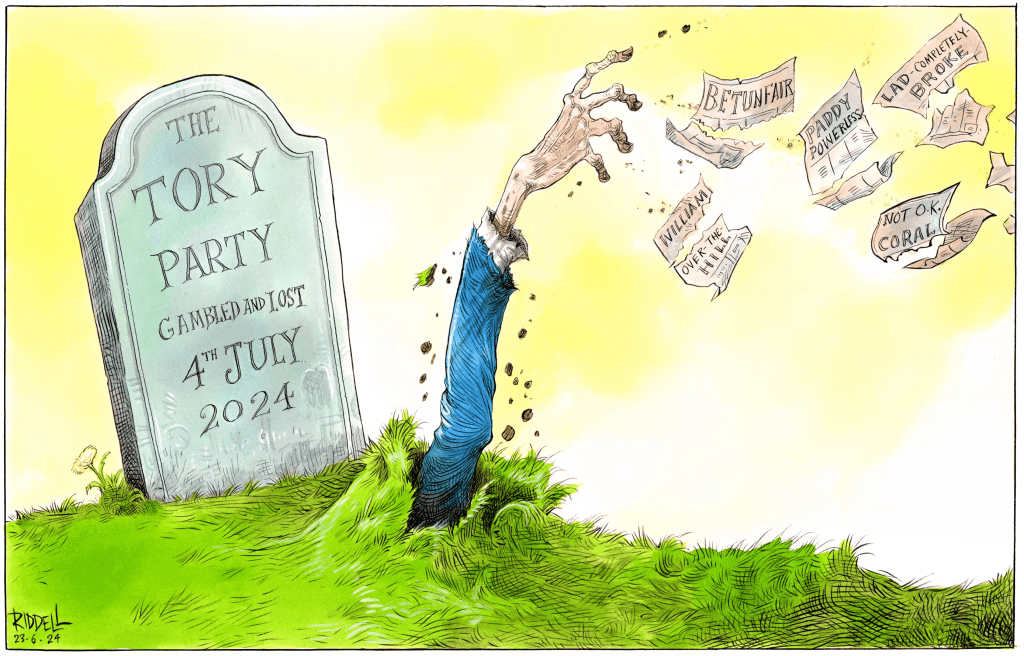



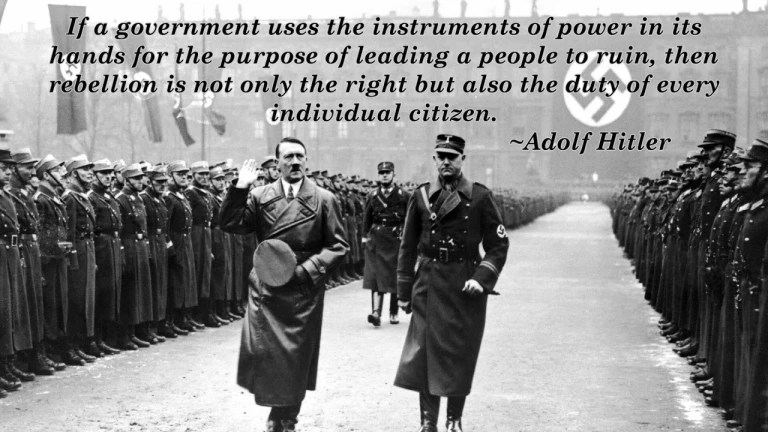
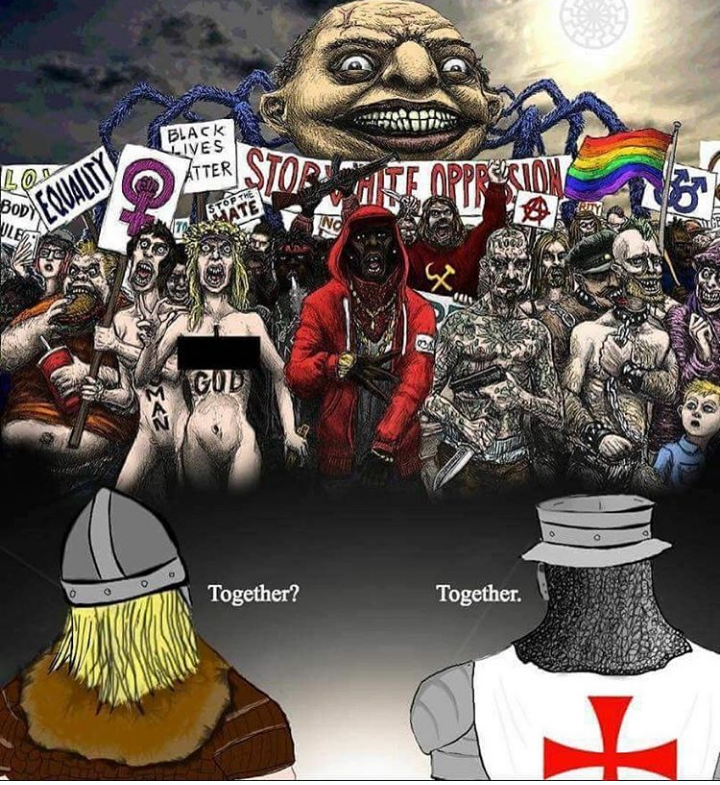


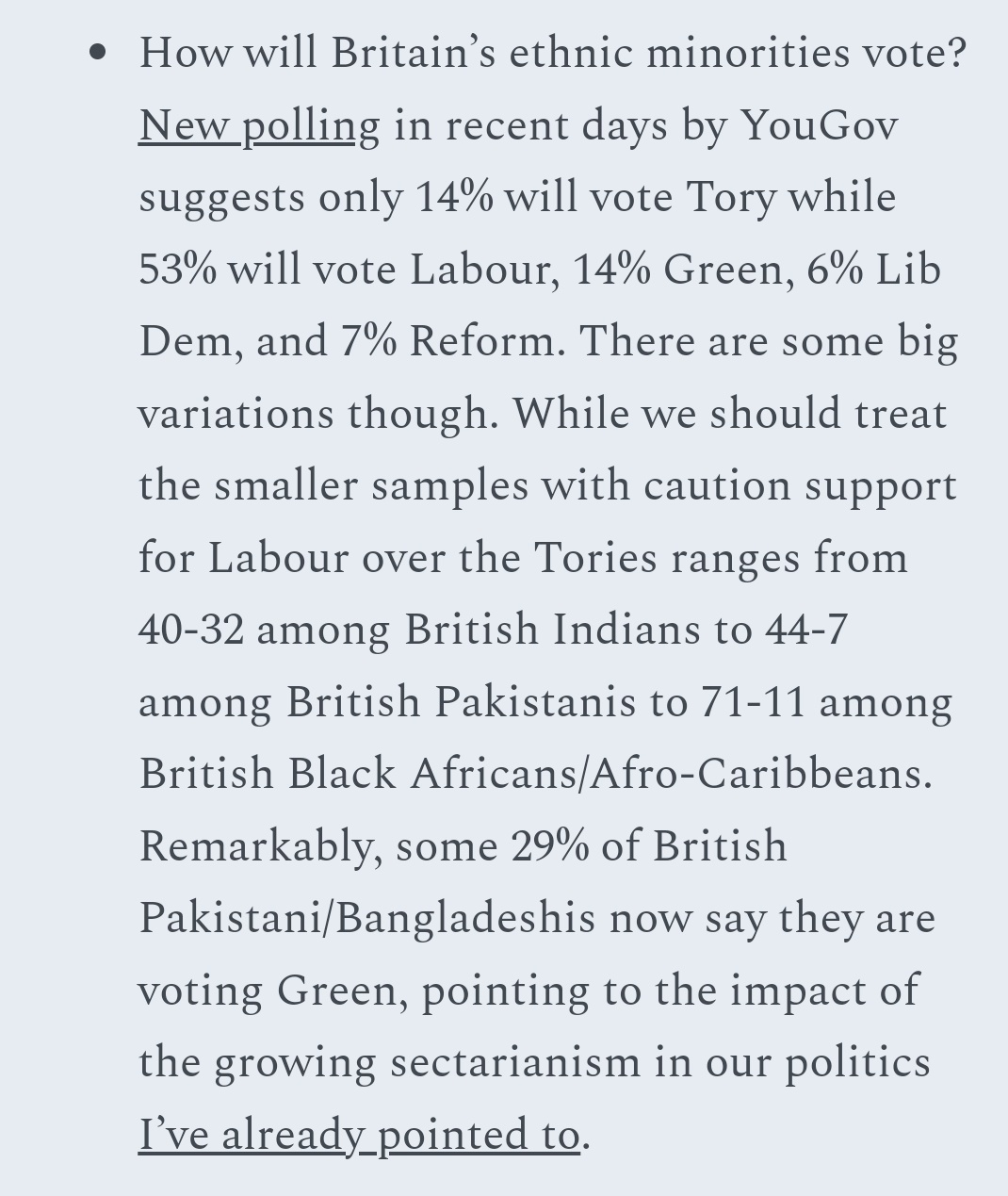







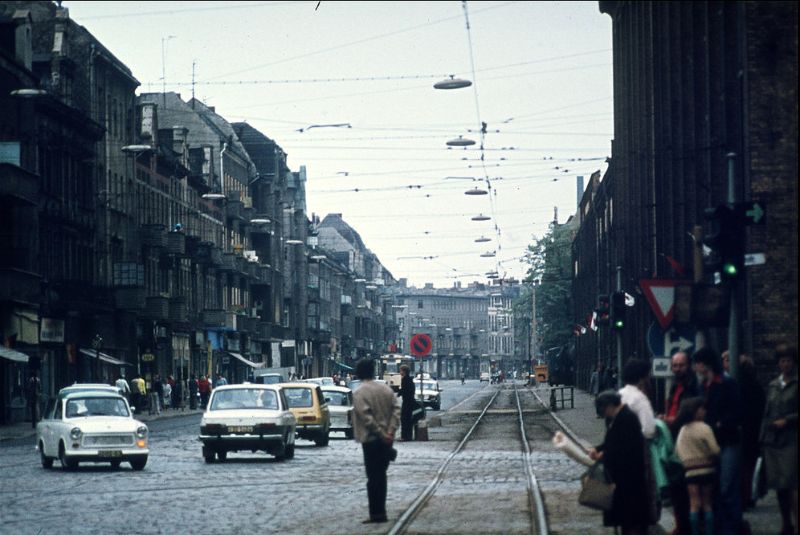





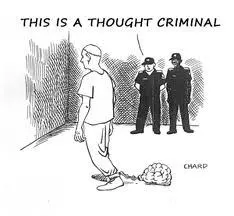


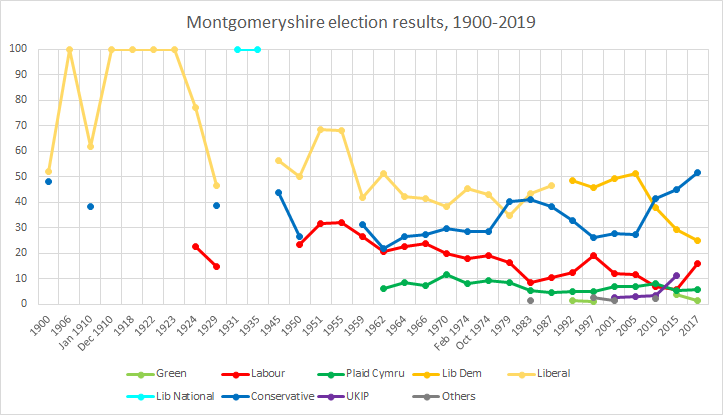

 Ian Robert Millard