Morning music

On this day a year ago
Regeneration and transformation of land and landscape
Saw again this video, which I posted on the blog last year:
The lady at Bealtaine Cottage in Ireland was, sadly, persuaded by notorious Jew Twitter-troll Ben Gidley, under one of his aliases, to block me on Twitter, some years ago. No matter. I still think her work interesting. #MoralHighGround.
[Incidentally, the Jew Gidley is a lecturer at Birkbeck College in London. His admitted Twitter account is “@bengidley”, but he also runs “@bobfrombrockley” and, in the past, Twitter accounts closed down for trolling and online stalking: “@inthesoupagain” and “antinazisunited”. All accounts replete with Jew-Zionism, and mostly with a fake “socialist” tinge.
I am not the only person to have had problems with the Jew Gidley’s Twitter (and other) behaviour. The well-known journalist and columnist, Peter Hitchens, repeatedly exposed some of Gidley’s activities in his own tweets, though long after I had unmasked the little bastard. Others as well. I blazed the trail, though.
[Gidley there hiding behind the photo/mugshot of Johnny Cash]
Other Jew trolls tried to defend Gidley by attacking me and others:
As I tweeted some years ago (Jews conspired to have my Twitter account closed down in 2018), Gidley seems to spend most of his time tweeting, mostly via “sock accounts”, in the Jewish and Israeli interest, and most of that tweeting is negative trolling.
If, as seems, Birkbeck College is going to make a number of staff redundant, they could not do better than to start with Gidley, whose jargon-filled “academic” product is completely useless to society anyway].
Another interesting project:
Tweets seen
British people living in tents, while non-white migrant-invaders are accommodated in good hotels, and given money, telephones etc on top, not to mention hordes of Ukrainian ingrates living like leeches on well-meaning but naive British families.
East Germany, the DDR, was very strange; I have blogged previously about my impressions, gained in a short time (less than 3 days) there, in 1988, and while in car transit from then-socialist Poland to the then West Germany.
“Ostalgie”-Musik
As blogged previously, I find myself rather fascinated by “contrived” societies, societies which have in a sense invented themselves: the DDR, Singapore, Israel etc. It might be said that all societies “invent themselves“, but the phenomenon is more obvious in some as compared to others.
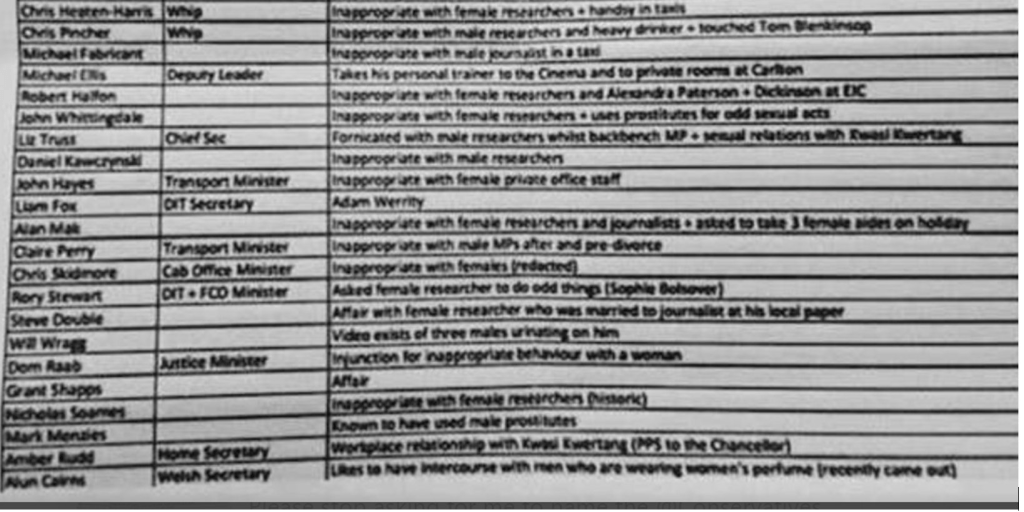
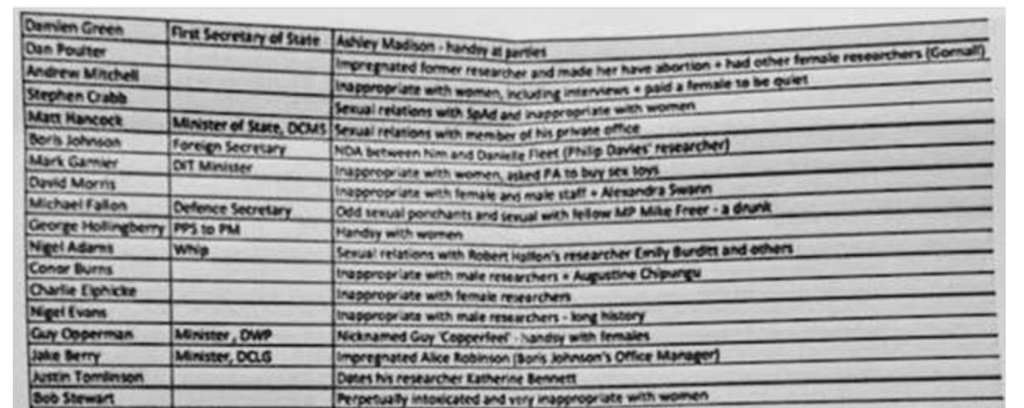
Few MPs are worth anything these days. Most are either useless freeloaders or are actual enemies of the British people, or both (eg Yvette Cooper).
My own assessment from a few months ago: https://ianrobertmillard.org/2022/09/30/diary-blog-30-september-2022-including-an-assessment-of-jack-monroe-aka-the-bootstrap-cook/.
Johnny Mercer
Saw this from Johnny Mercer, the MP for Plymouth Moor View:
Mercer became a Member of Parliament on the back of his military career, with the obvious implication that he was, is, or considers himself to be, a British patriot or some such: see https://en.wikipedia.org/wiki/Johnny_Mercer_(politician).
I was hoping, some years ago, that Mercer would prove to be an improvement on the all-too-often-seen MPs who put their duty behind their own financial or career benefit.
Unfortunately, as an MP, Mercer has been a big disappointment. First of all, it seems that he is, at least to a large extent, motivated by money. Criticism has been made of his making a considerable sum from commercial and/or “charitable” activities outside his work and position as an MP. His expenses have also been criticized.
Quite apart from the above, Mercer has had the “distinction” of having been sacked as a minister by the two previous Prime Ministers, first by Boris Johnson, and then by Liz Truss, the latter of which triggering a tweet by Mercer’s wife (employed by him on his Parliamentary expenses, incidentally), which tweet described Liz Truss (admittedly not unfairly) as “an imbecile“.
Presumably, Madame Mercer did not like the fact that Mercer (and so she too) thereby lost a ministerial salary of about £71,000 or so, per year (paid on top of MP salary and expenses).
Well, Mercer is now back in Government, as Minister of State for Veterans’ Affairs (the UK now using the American-style term “veteran” for someone who has served, however briefly, in the armed forces).
Now I see that Mercer thinks that Jew-Zionists such as Ruth Smeeth (actually half-Jewish— see https://en.wikipedia.org/wiki/Ruth_Smeeth) are “brilliant“…
I daresay that few would call Mercer himself “brilliant“. Ruth Smeeth (now “Baroness” Anderson) has worked for BICOM, the overseas propaganda org supporting the Israeli state and government. She is, and/or has, also been involved with the malicious and basically Jewish “anti-fascist” org called “Hope not Hate”, and (I think) the even less pleasant “UAF” (“United Against Fascism”).
Ruth Smeeth is a member of Labour Friends of Israel, and was a major part of the anti-Corbyn campaign which, as noted previously in this blog, was effectively a Jewish campaign to remove Corbyn as Labour leader, a campaign crowned with success when Corbyn was replaced by Jewish lobby and/or Israel lobby puppet, Keir Starmer.
Ruth Smeeth is well-embedded in the System. Not only now elevated to a well-paid sinecure in the useless House of Lords boondoggle but also appointed, a while ago, as an “Honorary Captain” of the Royal Naval Reserve, an unusual —and, to me, puzzling— appointment.
In applauding the likes of Ruth Smeeth, Johnny Mercer’s stock, which has been falling in my estimation for a few years now, falls to the floor.
When Mercer was elected, I rather liked the idea that he was a bit of a “loose cannon”, as distinct from the usual yes-men in the Commons. I fear however, that he is, also, not much good, as his having been fired by two successive Prime Ministers would seem to indicate (albeit that “Boris”-idiot and Liz Truss were both also useless).
Support for Jew-Zionism and its creatures, however goes too far.
Mercer won his seat from Labour fairly narrowly in 2015, getting 37.6% of votes cast; the constituency was only created in 2010. In 2017, Mercer’s vote-share jumped to 51.9%. The 2019 election saw a further increase, to 60.7%. Driving factors may have been the LibDem collapse (16.9% in 2010, as low as 2% in 2017, and only 5.2% in 2019), the collapse and disappearance of UKIP (21.5% in 2015 but not even standing in Plymouth Moor View in 2019), and Labour’s decline (in 2019, 31.5%).
As to whether Mercer will retain his seat at the next general election, in 2023 or 2024, that is an open question, though it seems quite likely.
See also: https://en.wikipedia.org/wiki/Plymouth_Moor_View_(UK_Parliament_constituency)#Elections.
Christmas University Challenge
Once again, the alumni teams of prominent and/or famous ex-students did battle; this time Hertford College, Oxford against St. Anne’s, Oxford.
Both teams pretty poor. As on most other similar recent occasions, I could have beaten either team on my own.
Late tweets

Late music