Their chosen identity is the bland “The Independent Group”. Note, “group”, not party. When the SDP was formed in 1981, it quickly adopted a firm identity which everyone in the UK understood. It was a political party, with a firm policy position.
These Jewish and pro-Jewish-Zionist whiners are not a party, even on the face of their own now-public identity. They are just a group of Jewish and/or pro-Zionist MPs, all facing retirement or deselection, and whose main gripe is “anti-Semitism” in the Corbyn-led Labour Party. None of them, at their launch yesterday, actually tried to put forward any thoughts about what is wrong in Britain, let alone what might improve the country. The Jew Zionist Mike Gapes MP was the most honest, talking purely about his hatred for so-called “Anti-Semitism”. As noted, his tribal interest was at least not concealed by some faked concern about the British people.
The mass media are agog at the thought of what might happen in some game of fantasy politics where numbers of disaffected MPs from the traditional “three main parties” all coalesce in a House of Commons bloc to thwart the plans of Corbyn and (if she has any plans) Theresa May. For example, see here below (the tweeter is that little Indian who sometimes presents Channel 4 News):
The Independent Group of seven former Labour MPs could grow – with more Labour, even a couple of Tory and potentially all the Lib Dems – and then become a new party. It would then have to decide who it would and wouldn't go into coalition with.
Corbyn Labour supporters, however, were swift to seize on the group’s weak points:
So 3 hours after Independent Group launch:
No policies. Website crashed. Exposed their registered as a Ltd Co to avoid donor scrutiny. Website registered in Panama tax haven. Received backing from the Far-Right.#ChangePolitics bantz
Just realised Angela Smith is the MP who wrote an article in the Guardian about why water companies shouldn't be nationalised, without disclosing her husband's interests in private water companies! 🤔#LabourSplit#FunnyTinge#independentgroup
Luciana Berger. Rented a flat in London which is owned by a company based in the British Virgin Islands, but didn’t want anyone to know. That’s not Labour. #BlairRichProject
Yesterday's #independentgroup Ltd. launch has changed nothing in the lives of those suffering from the Tories universal credit, austerity, rigged system, or hostile environment.
TIG Ltd are nothing but wreckers. Lets hope they prove to be as incompetent as their record so far.
The above tweets are a selection of the more polite ones criticizing the new not-a-party.
Meanwhile, Chuka Umunna has now broached the “elephant in the room” question, saying that he “hopes” that a new party could be formed “by the end of the year”. Hopes? Could? Imagine Adolf, back in 1919, “hoping” that a new party “could” or might be formed “by the end of the year”! That’s Chuka for you, as seen in the Labour leadership contest: a half-Nigerian fathead, irresolute, shallow, lacking will and force.
Questions about the initial funding of the “Independent Group” of 7 Jewish and/or Zionist MPs are building now. A Labour MP has suggested that the funding may have come (directly or indirectly) from Israel:
It is interesting that the company which owns this “Independent Group” is based in the secretive offshore jurisdiction of Panama, long a favourite of rich Jews connected with Israel and/or MOSSAD. “Robert Maxwell” for one.
My thoughts so far
As ever, the msm Westminster Bubblers are getting it wrong. Polls have been produced to show that the public would be “more likely to vote for” the Independent Group MPs than Labour. Really? What would those poor sheep be voting for? There is no point in asking the “Independent Group”, for their own website is as innocent of policy (even in the broadest of broad brush terms) as were the brief statements made by the seven defectors at yesterday’s launch (media event). Their published statement of intent could have been produced by almost any political party, tendency, or even religion.
My own view is that, yes, most UK voters, certainly most English and Welsh voters are thoroughly sick of pseudo-democratic politics in the UK, they do want a new direction and would be willing to embrace a new party, but that party is not this party.
In fact, of course, the Independent Group is not (yet) a party anyway. It is not (yet) registered as such with the Electoral Commission, does not say that it is going to become a political party, and, as noted already, not only has no policy, but has not even any locus standi in the sense of where it stands, beyond a vague and implied “Centrism”.
If further Labour defections happen (rumours abound about 20-30 MPs, with a few wild msm assertions that 100 might go) then the new party (if it becomes a party) might have traction in the short term. I still doubt that any “centrist” party could get anywhere in the medium term (i.e. beyond 2022), let alone have any greater durability.
What strikes me but does not shock me is the sheer ineptitude of the defectors: they had three years in which to get this together, to recruit more cohorts, to organize things. Needless to say, I am not surprised to see that fathead Chuka was unable to organize anything more than an evening in one of the expensive and decadent nightclubs which he is said to patronize.
What a difference it would have made, had yesterday’s launch announced that a new party had been founded or was about to be registered, and if the Independent Group had actually managed to organize a decent website (to digress: my own website, http://ianrmillard.com/, is amateur, yes, because I did it myself as best I could, and spent almost nothing on it; one expects something more professional from a group of individuals with plenty of money, wealthy Jewish backers, and who are hoping to soon form a major party). Above all, it would have made a huge difference had the defectors been able to say yesterday: “We are 100 [or even 30] Labour MPs who have now left Labour, are forming a new party, and invite applications for membership and candidature.” The new party would then have been in a position to recruit members and candidates for office.
Any new party [even if] based on the “7 defectors”, and which fields hundreds of candidates in a general election, would have to be taken seriously, though the experience of both the 1980s SDP and, more recently, UKIP shows that even a party capable of fielding hundreds of candidates might well end up with no MPs under the FPTP system.
As it is, we have 7 MPs who seem to be wanting mainly to make Jewish-Zionist propaganda against Corbyn-Labour, and who now have no party, no obvious policy, and no way yet of building a party organization in a situation where there might be a general election this year. Such an election would wipe out the defector cabal at once. No question.
It is interesting to note that even long-time anti-Corbyn plotters such as pro-Zionists Liz Kendall MP and John Woodcock MP, the sex-pest depressive, have not pledged allegiance so far. In Woodcock’s case, he might have been warned off as just too toxic, but Liz Kendall must have other reasons, maybe the wish not to risk that easy lucrative job as MP, with the £75,000 salary, the huge expenses, the opportunities for “nice little earners” on the side etc. Not to mention, down the line, the possibility of getting a nice little fake “peerage”, and so £300+ per day taxfree for merely turning up and signing a register!
I should imagine that there was jubilation at Corbyn HQ yesterday. They may even have popped open a few bottles of vintage Soviet “champagne”. The hard core of opposition to Corbyn has just committed hara-kiri.
Interesting: the “Independent Group” launched yesterday, 18 February 2019. Today, as I have been writing and looking at Twitter, I noticed that, as I thought and wrote, there were 38 tweets under hashtag #IndependentGroup in a period of one hour. Over an hour later, another 35. Twitter is not the world, or even the UK, but the low interest shown tells me much. The “Independent Group” now has over 80,000 followers on Twitter, but Twitter followers are not members, donors or even necessarily going to vote for the new party (if it ever emerges).
My guess is that this new non-party is going to fail. If there is no general election this year and if the Independent Group can recruit at least another couple of dozen MPs and a small army of candidates and foot-soldiers, then it might just about have a run in it. I doubt even that, though.
An earlier Survation poll seemed to indicate that people would prefer to vote for the “Independent Group” as compared to Labour, but a Sky poll now puts “support” for the IG at only 10%. Admittedly, not bad for a party which is not yet a party and which has no policies! All the same, in itself, that only puts IG firmly in “UKIP” territory, i.e. “good also-ran”…UKIP still had no MPs after its 2015 General Election peak of about 12%.
It will be noted that the percentages add up to 87%, meaning, I suppose that 13% are “Don’t Know”. It seems, and assuming (I am skeptical) that IG can organize itself as a party before the next general election, that there will be a crowded field: Con and Lab jostling for position with IG, LibDems, UKIP and Greens, as well as smaller parties and the usual independents. IG will have to have at least some broad policies before it tries to contest elections, though. Oh…and a leader…
Update, 19 February 2019
Joan Ryan MP has now also joined the “Independent Group”. Though not Jewish (nor even part- or crypto-), she is or until today was a member, like the other members of IG, of Labour Friends of Israel, chairing the Zionist organization in 2015.
Thousands of tweets attacking Joan Ryan this evening. One that caught my eye:
Good job, will you be claiming any more expenses, or paying back those you claimed incorrectly? You are great, I have to take my own rubbish out, but luckily for @UKLabour the rubbish is taking itself out! Marvellous. #JC4PM@ToryFibs
That one really made me “laugh out loud” in the now-superseded Twitter/text phrase!
In fact, Enfield North is a Lab-Con marginal seat, so if Joan Ryan contests it (as an IG candidate rather than as simply “Independent”) at a general election, there is every chance that a Conservative will win the seat. In the recent past, Nick de Bois, who was one of the better MPs on the Conservative side, held the seat (2010-2015)
And why would you believe one word that Joan Ryan says? Given she’s a proven expenses fraud, voted to keep MPs expenses secret, and was filmed being offered £1 million by Shia Masot, the same Israeli official who conspired to ‘take down’ Sir Alan Duncan!
The fact that the absurd, leaderless, policy-free “Independent Group” is now already running at 14% in the opinion polls tells me that the British people are getting desperate for change, perhaps any change. Social nationalism is now in with a real chance.
🧨 BREAKING: Times/YouGov voter intention poll
Con 38 Lab 26 *TIG 14* LD 7 SNP/Plaid 5 Other 11
(Weighted by likelihood to vote, excluding would not vote and don’t knows) https://t.co/3TfImvFDv4
Another tweet from today, attacking fathead Chuka and his combination of hypocrisy and stupidity (Chuka’s tweet is from two and a half years ago, when he was still being puffed by the msm as a “senior” Labour MP…):
It is absolutely infuriating the MSM fails to mention the vital fact that Ian Austin is a serial fraudster. Should have been forced out of the Party long ago. https://t.co/A6dtrPZghH
Seems now that Ian Austin MP is in fact not joining the “Independent Group”, though he is leaving Labour with immediate effect. He is not stepping down as MP for Dudley North and is not expected to repay any of his inflated expenses.
As to Austin leaving Labour, it means that he has probably committed political suicide, like most of the defectors from Con and Lab in the past week.
More Twitter comment…
Would anyone care to guess how long my BTL comment on the Guardian website Politics Live stream will last? pic.twitter.com/uzqx88QJoJ
In other blog posts, I have criticized Aaron Bastani, Ash Sarkar etc, but Bastani is surely right in tweeting that “The space for a successful far-right party in the UK is massive.” The label “far-right” I disparage, of course, but in essence I agree with him. The difference is that he opposes it, I support it!
The space for a successful far-right party in the UK is massive. We are fortunate that both the BNP & UKIP failed to fill it.
The fact that much of the establishment still thinks a 'centrist' politics is even remotely possible shows they either don't know this or don't care >
Here is a good example of a Westminster bubbler unable (perhaps) to distinguish between people noticing a news item and the same people supporting a political group, or the same people actually voting for a new political party a year or three in the future…Those in and around the Westminster bubble are probably often rather well-paid, but are they worth their salt?
How much cut-through has the @TheIndGroup had beyond the bubble? 19% spontaneously mentioned it to Populus as their number one most noticed news story. For those of you not familiar with this series, that's A LOT. https://t.co/lU4mipHapp
Fathead Chuka announces that the Independent Group is now a registered party: “Change UK”. Not “The Independent Party”? That would have sounded odd, but then the USA had the “Tea Party”. Anyway, “Change” it is. Loose change? Small change? Am I being unkind?
BREAKING: We have been overwhelmed by the public support for @TheIndGroup since we were established last month, with tens of thousands or people all over the country signing up as supporters. Today we've announced we have applied to become a political party – Change UK. (1)
“The Independent Group for Change, also known as Change UK, was a British centrist, pro-European Union political party, founded in February 2019 and dissolved ten months later, shortly after all its MPs lost their seats in the 2019 general election.”
The UK has, famously or infamously, a First Past The Post [FPTP] electoral system. Winner takes all. There was some logic supporting such a system in, say, the 1950s, when over 90% of the electorate of the UK voted Conservative, Labour or Liberal, and in fact almost entirely for the first two. In the 1950 General Election, nearly 97% of those who voted voted for the “three main parties”. At that time, the FPTP system provided stability and a certainty of result in most general elections. Indeed, most UK adults were actually members of those parties. Even as late as 1983, 65% of UK adults belonged to a political party, mostly the “big three” and in fact mostly the “big two”. That contrasts with somewhere between 0.5% and 1.5% now, in 2019.
The figures are not entirely what they seem, of course: millions were inducted into the Labour Party by default, via their trade union membership (itself then compulsory in many industries and occupations); the Conservative Party was also packed by people who joined at least partly because they wanted to belong to Conservative clubs, i.e. social clubs (with bars). Labour also had social clubs: as it might be, the Toytown Working Man’s Club or Labour Club. Millions also belonged to the Young Conservatives (a mainly social organization and, unofficially, dating forum).
The above reflected the relative homogeneity of the UK population at the time. That homogeneity and cohesion has been shattered by social and demographic changes. We see now that FPTP voting does not reflect even the votes cast, let alone wider opinion. The chart below, for example, shows the votes cast in the South East of England, vis a vis Westminster seats won, in the 2015 General Election. Even that chart does not tell the full story, leaving out the views of those who had to compromise because there was no party which reflected their true views standing in the particular constituency: they therefore voted for the nearest party to them, ideologically, or just refused to vote (33.6% of those eligible to vote did not vote! I wonder what kind of party might capture that more-than-a-third of eligible voters?)
Also, we see that the way in which constituencies are sliced-up is a fairly arbitrary one:
The Boundary Commissions for the four UK countries delineate the constituency boundaries in such a way as to preserve a notional “balance”, a completely outdated one, based on that 1950s paradigm. So we see that some constituencies are “safe” Conservative or Labour and that a few are or were in the past Liberal Democrat/Liberal . A minority of seats are designed to be “marginal”, whether Con-Lab, Con-LibDem, LibDem-Lab.
The result of the above system is that, at time of writing, 80% of voters do not think that any party speaks for their views or for them.
To put it another way, there is a battle between anger and apathy.
Obviously, there should be a more responsive electoral system, based on one of the proportional voting systems already in use in many countries. However, FPTP is still the voting system in use in the UK for Westminster elections. That being so, tactical voting is the only way in which the ordinary voter can influence the result.
Take a fairly random example, Chesterfield, the constituency of Tony Benn for many years. Chesterfield, first contested in the 1880s, has been regarded as a safe Labour seat for most of that time. The Conservatives won it only once, in 1931, when the Liberals, who had won the seat several times previously, declined to stand. The Liberal Democrats won in 2001 and 2005, after the retirement of Tony Benn. Labour won again in 2010, 2015 and 2017.
The point here is that Labour has in most Chesterfield elections won, when it has won, because the anti-Labour vote was split, usually between Liberal Democrat and Conservative, in the past between Liberal and Conservative, and once only (2015) among LibDem, Conservative and UKIP (which attained a strong 3rd place).
Tactical voting could, at times, in fact quite often, have prevented Labour from winning Chesterfield. The same is true in many Lab or Con seats across the country.
The sting in the tail is that, yes, the voter can vote tactically, but all that does, usually, is to replace one System dummy with another, and one label with another. In a situation where 80% of voters think that no System party represents them or speaks for them, that is cold comfort.
We hear rumblings about Labour and possibly the Conservatives splitting and thus engendering a new “Centrist” party, possibly even two new parties. If that were to happen, it would of course be good from the social-national viewpoint. We need the political monolith to crumble and to fracture.
We see from the latest polling that, when asked who would be better as Prime Minister of the UK, 39% answer Theresa May, 19% prefer Jeremy Corbyn, but 40% say Don’t Know. This is perhaps a clearer picture of the real state of public opinion than “which party will you vote for at the next general election?”, which, at present, polls as seen below:
The variations in “main party” support show uncertainty but also dissatisfaction. That is surely the mood today: a useless and unpleasant Government, a useless and half-crazed Opposition, and no other party with the support or credibility to present an alternative. Another very recent poll indicated that nearly 80% of voters say that none of the “main parties” speak for them or represent them (I am assuming that the LibDems are also still taken to be a “main party” despite the obvious fact that the LDs are totally washed-up)..
We are told that there may be splintering, with MPs from both of the (real) main System parties ready to jump ship.
Labour Party
I have blogged previously (see my WordPress archive) about how I feel that supernatural forces (yes, sounds weird, but look at what happened, in detail…) put Corbyn –who in himself is entirely unfitted– into office as Labour leader. Looked at with cold objectivity, Corbyn is lucky to be an MP, let alone the leader of his party: his school career was an abject failure, and his tertiary education (at a poor polytechnic, reading Trade Union Studies, a real Mickey Mouse degree), lasted only a year before he dropped out. His work history before he became an MP was likewise risible: he spent a few weeks as a reporter for a rural local newspaper in Shropshire, the Newport and Market Drayton Advertiser (does anything really ever happen in such bucolic surroundings?) before, at age 19, spending 2 years or so overseas, firstly –for 1 year– as a youth worker and teacher of geography in Jamaica for the VSO aid organization (volunteers get flights, accommodation and pocket money); he then toured Brazil, Argentina, Chile and Uruguay.
To digress a little into the speculative, was this relatively early exposure to the women of Jamaica and South America a factor in Corbyn’s later sexual interest in blacks and Latinas? He had, famously, an affair with Diane Abbott, and later married a Chilean political dissident, with whom he had two children.
After returning to the UK, Corbyn embarked on his “Trade Union Studies” Mickey Mouse degree, but, as noted, dropped out after one year. He then became a trade union organizer, mostly for NUPE, the union which mainly consisted of lower-paid public sector workers, such as hospital cleaners. That seems to have lasted months rather than years.
Incredibly, despite his very poor academic and work background, he was appointed a member of a district health authority at the age of 23 or 24. He also became a Labour councillor. He was elected to Parliament nearly a decade later, at age 33, in 1983.
Corbyn has never organized anything effectively beyond, arguably, a few small demonstrations and marches. The recent revelations from his former wives and associates to that effect and in respect of his scarcely ever reading a book, or even bits and pieces (not even Marxist theory etc), certainly chime with my view, formed mostly over the past few years (though I was aware of him since the 1980s), that he is intellectually poor, no great thinker, and not even passably interested in ideas (that was where I felt that Corbyn’s predecessor, Ed Miliband, scored to some extent, albeit that of course I would never in any way “endorse” a Jew as a UK political leader).
It is clear that Corbyn, and so Corbyn-Labour, has few policy ideas beyond what amount to a rehash of the Labour Party policies of the 1970s and 1980s, though refreshed slightly via books such as The Spirit Level and theoretical policies such as Basic Income (not that I myself oppose those, as far as they go).
One funny aspect of the Corbyn/Labour debate is that many “Corbynists” or “Corbynites” spend much time decrying the “racism” of (real/white) British people, yet think that the fact that Corbyn is always surrounded by blacks and browns (both in and outside Parliament) will have no effect on whether voters will decide to support Labour at the next General Election! A word to the wise….it will.
The Jew-Zionist element of course “has it in for” Corbyn and so Labour. Most of the MPs who are anti-Corbyn most actively are Jews and/or are pro-Jew, pro-Israel and/or have received monies from Israel or Israeli sources in the past (or still do). There have been repeated attempts to unseat Corbyn as Labour leader. These have all failed, but have obviously damaged Labour’s standing among the voters. Now there is persistent media chatter about the formation of a breakaway party. The Zionist or pro-Zionist MPs are in the forefront. How many will actually leave Labour is doubtful. Four or five are regularly mentioned in the msm, always including half-Nigerian fathead Chuka Umunna, who was so overwhelmed by scrutiny of his private life when he stood for the Labour leadership in 2015 that he burst into tears and withdrew, only 3 days in. Very impressive…
It has to be doubted whether even the most anti-Corbyn MPs, such as Zionist Luciana Berger, will abandon the Labour label, when push comes to shove. I am sure that she and others will have noted the fate that overtook teen-girl-spanking Simon Danczuk after he was deselected: as Labour candidate in 2015, he received 20,961 votes, but as Independent in 2017, only 883. Danczuk came 5th out of 6 candidates and, with a vote-share of only 1.8%, lost his deposit. Danczuk now seems to tweet about Bangladesh, so is presumably being paid to promote Bangladeshi things somehow, while his ridiculous ex-wife, Karen, has lost her well-paid fake job as Danczuk’s “assistant” and is either living on the dole or subsisting off occasional “z-list celeb” tabloid stories about her grisly sex life, romances, exercise routine etc. No wonder that the “redtop” Press is sliding to oblivion!
It may be that only MPs who have already been chucked out of Labour, or who face deselection, or who jumped before they were pushed (such as pro-Israel sex-pest John Woodcock), will take the shilling (or shekel). [for more about Woodcock, see Notes, below]
I doubt that many if any Labour MPs in safe-ish Labour seats will jump ship`to stand as candidates for a new “Centrist” party, especially if it is mainly Jewish in MPs and membership (thus creating the impression of being a doomed political ghetto). It could only succeed if at least a significant minority of MPs were to join; say 30. Fewer than that and the new party would have no credibility with the electorate. In any event, in few constituencies would such a party have a chance of success. More likely, the new party would open up the contest, allowing unexpected candidates to win. In some cases, the winner will be the Conservative candidate.
Many older people (like me now, I suppose!) recall the SDP and its swift demise: in 1981, the SDP had 29 MPs, all except one owing their “SDP” seats to having been elected under the Labour banner (the one exception was a Conservative). In the first general electoral test, in 1983, the 29 were whittled down to 6, then again to 5 in 1987.
Conservative Party
One reliable fact to hang on to in respect of the misnamed Conservative Party is that most of its MPs are, and have long been, spineless. Not for nothing was Mrs Thatcher described as “the only man in the Cabinet”. Few will throw away safe seats with majorities of thousands (in some cases tens of thousands) in order to protest about Brexit (whether from a Remain or Leave direction). One of the few might be Anna Soubry, who with her small majority of 869 may have little to lose. Still, one has to ask whether she would really join with even pro-Zionist “Labour” “centrists” in a new party, especially if few (or no) other Conservative Party MPs join her. The Member for Broxtowe (or, as I prefer, “the Member for Plymouth and Angostura”) has little incentive to jump, really, at the age of 62. Still, you never know.
Conclusion
This is not going to happen. If I am wrong on that and it does happen, the MP contingent will be all or almost all from Labour. The SDP all over again.
One aspect which I think will sink the supposed “centrists” is that people are starting to get very angry in the UK, especially England, about immigration and its negative consequences, about Jew-Zionist influence and control over mass media, politics, law etc, about Brexit and how the 2016 Referendum result has been betrayed, and about how this rotten “Conservative” government has failed to organize anything in respect of it; also about how the government and politicized police are allowing serious crime to flourish while at the same time persecuting people who make speeches (Jez Turner) or sing satirical songs (Alison Chabloz) or even post silly Internet jokes (“Count Dankula”). People are sick of potholed roads, of public transport both expensive and packed (often with non-whites), of being ripped off by utility companies, banks, you name it.
In other words, people want solutions, even “extreme” ones, not another version of what already exists. In the next few years will arrive the best chance for social nationalism since the 1930s.
Well, it seems that I was wrong about Luciana Berger being unlikely to leave Labour. She has resigned from Labour (though not as MP), alongside useless creature Chuka Umunna, Angela Smith, Ann Coffey, Chris Leslie, Mike Gapes and Gavin Shuker. Out of the seven, three Jewish, one or two maybe part or “crypto”. The others are all doormats for Zionist cabals.
I shall post a separate blog post about this now, but I note a few points:
Mike Gapes MP, a Zionist Jew (who blocked me on Twitter without my ever having tweeted to him);
Chuka Umunna MP (see post above) and: “In August 2018, The Guardian reported that “Umunna and fellow Labour MP Chris Leslie, are widely believed to be laying the groundwork for the creation of a new [political] party although both have denied this.”[68] In October 2018, it was announced that Umunna would serve as the chairman of a new centrist think tank called Progressive Centre UK. It was revealed that he would be earning £65,000 a year for his work on the advisory board” [Wikipedia]; and “Umunna is associated with the Labour Friends of Israel; along with Liam Byrne, he made an official visit to Israel in October 2012 as part of the LFI’s UK-Israel Economic Dialogue group” [Wikipedia];
Angela Smith MP: pro-Zionist, very very interested in money (an expenses cheat)…“[Angela Smith] is one of 98 MPs who voted unsuccessfully to keep their expense details secret in 2007. She defended her vote on the grounds that it would help member-constituent confidentiality, and to help prevent the private addresses of MP’s being readily available to the public.[18]In 2009, Smith was one of the MPs whose expenses were highlighted by The Daily Telegraph during the Parliamentary expenses scandal, as she had submitted expenses claims for four beds for a one bedroom flat in London.[19]
Smith employs her husband as her Senior Parliamentary Assistant on a salary up to £40,000 [now £50,000].[20] The practice of MPs employing family members has been criticised by some sections of the media on the lines that it promotes nepotism.[21][22] Although MPs who were first elected in 2017 have been banned from employing family members, the restriction is not retrospective – meaning that Smith’s employment of her husband is lawful.” [Wikipedia];
Gavin Shuker MP, a pro-Zionist of Jewish or part-Jewish origins, though he was also apparently a “pastor” of some small Christian sect in Luton at one time;
Ann Coffey MP: pro-Zionist. “During the expenses scandal of 2009 it was revealed that Anne Coffey claimed £1000 per month for the interest on the mortgage of her London home and £160 per month for a cleaner.[8][9] In addition to her salary of £60,000 in 2007 she claimed £150,000 for staff salaries and office costs plus reimbursable expenses” [Wikipedia];
Luciana Berger MP: prominent Zionist Jewess;
Chris Leslie MP: careerist Blair-Brown drone and pro-Zionist.
Thoughts about the resignations:
The seven MPs were almost all living on borrowed time. Luciana Berger faced a (withdrawn) vote of no-confidence only recently. Mike Gapes is 66 (only 4 years older than me, but he looks about 20 years older). Ann Coffey is 72. The others were facing possible deselection. Chris Leslie, a typical bland careerist, obviously saw that his career in Parliament had ground to a halt, with no possibility of ministerial preferment even in a Labour government.
This is a Zionist group mass media event rather than a Labour “split”. Labour still has 241 MPs. The 7 departees will all lose their seats at the next general election. They have not formed a party, as yet anyway, and, as I blogged, would have no chance of success if they did.
Many will have seen the newspaper reports, not all accurate, about the result of the Crown Court appeal from Westminster Magistrates’ Court, which ended today. Already the malicious “Campaign Against Antisemitism” supposed “charity” (Zionist propaganda, snooping and repression organization) has been spinning fake news. Gideon Falter, its Chairperson, has been quoted as saying that the verdict by a Crown Court judge in the appeal “sets a precedent” and means that “holocaust” “denial” (i.e. critical examination of the “holocaust” narrative) is now effectively illegal in the UK. That is of course nonsense.
Firstly, this was a decision by a Crown Court judge and so sets a precedent only in the most marginal sense.
Secondly, there will now almost certainly be a further appeal, on point of law, to the Divisional Court and, perhaps, yet higher. There are points of law in the Alison Chabloz case which are of general public importance and might even have to be considered by the Supreme Court in due course.
Thirdly, the learned judge [H.H. Judge Hehir] emphasized in his judgment that “anti-Semitism” is not a crime in the UK, and that “holocaust” “denial” is also not a crime:
“We emphasise that anti-Semitism is not a crime, just as Holocaust denial is not. Nor can the fact that somebody is a Holocaust denier or an anti-Semite prove that anything she writes or sings is grossly offensive”
Alison Chabloz is expected to appeal her conviction and sentence further, initially to the Divisional Court. The fight for freedom of expression goes on!
My blog, as regular readers will know, concentrates on ideas or matters of general import to society or the world. I do occasionally blog about other things, such as the less strictly legal aspects of my life at the English Bar, particularly if the story or anecdote has a humorous element or one which, to me, seems to say something about society as a whole.
When I blog about people I have known or had connection with, I usually keep them anonymous, or use initials only as identifiers. However, there are cases where the individual is either very well-known or, in my view, does not deserve the protection of anonymity.
Let us go back to December 2007, when I was beginning to have serious problems with the Revenue, problems which were not resolved until 2012. I made my last appearance in court (a truly ridiculous 3-day construction case at Central London County Court…long story, deserving a blog piece of its own some day) and left for my home in North Finistere, France (though I remained, purely nominally, a barrister in chambers, and at the practising Bar, until mid-2008).
Not long before I left for France for the last time (I had been bi-weekly commuting for 3 years via car ferry and air), a nuisance joined chambers. I had twice (successfully) opposed this barrister, one Brent McDonald, in fairly minor County Court negligence cases in the South West of England and had been frankly unimpressed by him. Though he seemed not unintelligent, he also seemed devoid of common sense: for example, insisting to a judge that a motor accident must have happened in a certain way because of the laws of kinetic energy! He was originally in the construction trade, I believe, and had a technical background. I disliked his attitude, which was very and unnecessarily confrontational. He was also a sore loser. If I am being completely honest, I thought that there was something wrong with him mentally.
That individual, I believe of Scottish origins, was, according to the senior clerk to chambers, married to an Indian (I think) woman, and they apparently had a child (in fact, if memory serves, two children). The Clerk said that he had plenty of good work, mostly legally-aided.
I was, at the time, a member of Rougemont Chambers, Exeter, which had burgeoned from a handful of people and not much work when I joined in 2002 to being a busy provincial set with a couple of dozen barristers and three clerks in 2007 (it is now merged with another set under a new name and is the largest set in Exeter and the largest in the South West outside Bristol).
The other members of chambers (it was always a surprise to me what poor judges of character many barristers are) were apparently impressed by McDonald at a reception chambers held for him, and the senior clerk was impressed by the list of solicitors supposedly willing to instruct him (and thus bring work and revenue to chambers). I abstained on accepting him into chambers, rather than voting against him, because both the Head of Chambers (who is now a Circuit Judge) and the Senior Clerk had persuaded all other members to approve him and I did not have the power to veto his acceptance.
In the first day or so, McDonald was not offensive and even remarked on how impressed he was that I was mentioned in the main legal directories (that “review” barristers and solicitors) as someone to brief on matters such as Caribbean and other offshore laws, and oil and gas questions, the latter particularly involving the Russophone jurisdictions where I had had very direct experience (including a year living in Kazakhstan).
It was not long, however, before McDonald started to buttonhole me on my political views, though only on the race question (including the Jewish Question). This was odd, because members of chambers rarely discussed anything political. McDonald was insolent and inquisitorial. To me, his attitude was unbelievable, not least because he had only just joined chambers and was in every way junior to me! Protocol is important to me. His demeanour was would-be intimidating, would-be bossy. I was fuming but courtesy also is very important to me. In fact, the bastard even remarked, half-sneeringly, on how polite I was and how it was obvious that politeness was important to me!
McDonald effectively admitted that his antipathy toward me was based on (his kneejerk assumption about) my political views, combined with the fact that his wife and offspring (I think that he had two children) were non-European; as noted above, I believe that his wife was Indian. In the end, he grudgingly accepted that I had different views from his and we effectively agreed to avoid each other in chambers. Until he arrived, chambers had been a pleasant place. It was an object lesson in how one person can poison a whole environment very quickly.
So I left the practising Bar and my Exeter chambers and England, though not primarily (in fact, scarcely at all) because of McDonald (though his being there was certainly a disincentive to me, like the taste of a bitter piece of peel when eating a fruit).
I do not think that McDonald stayed long in those chambers before joining a larger set in Bristol, an offshoot of a London set. I noticed that he was himself now mentioned in the legal directories which he seemed to revere. They said that he “had come up through the ranks” and was well-regarded or some such.
I myself have always viewed such legal directories with skepticism, not so much because they recommended me at one time (!) but more because I had read glowing reports about people and organizations which did not chime with my direct experience of them, such as the “Emerging Markets” mini-department at Cameron McKenna (a large City of London law firm) for which I worked for 6 months in 1996-97, based for most of which time in Almaty, Kazakhstan (I later stayed on there, working with a very large American law firm).
That Cameron McKenna department was largely a Potemkin village created by an Australian woman of Russian-speaking (note speaking) origins, who would have been incapable of organizing the proverbial “piss-up in a brewery”, but who was very good at putting on an impressive front: when her department was about to be closed (when the **** hit the fan in various ways), about a year after I myself had moved on, that person not only managed to move just in time (and with a few toadies) to another large City of London law firm dealing with Russia, Kazakhstan etc, but the Times legal section and the main legal directories all (briefed by her and/or cronies, no doubt) lauded her new firm as having been “strengthened” by having this useless and devious woman and said toadies on board! (the last I heard of her, a few years ago, she had returned to the Antipodes and was an Australian trade delegate at a fairly high level, no doubt flourishing like the green bay tree…).
Anyway, returning to this McDonald character, I pretty much forgot about him for a decade, but then I started my blog and included a few reminiscences etc. So it was that I decided, recently, to see whether he was still at the Bar. To my surprise, I could not find him in the Bar Directory, or anywhere else, even by Googling. I did find some noted (i.e. appeal) cases, dating from 2008 or so. I wondered whether he had died, emigrated, even been disbarred! I drew a blank everywhere. Then I noticed that there was someone with the same surname at his last-known chambers. Not his wife at the time I knew him, because hers was a foreign, I think Indian, first name and this one was called Fran. Anyway, the Indian woman had not been at the Bar. So I thought that the surname must be co-incidence (McDonald being a fairly common name). Then, however, I noticed a few more facts.
It turned out that appeal cases from 2008 and later, proudly noted on that chambers’ website as having been done by Fran McDonald, had in fact been noted, in the law reports themselves, as having been done by Brent McDonald. I took a closer look.
The Bar Directory now has no public record for a Brent McDonald, but does now have an entry for one Lola Francesca McDonald…
Now a stranger move yet! It turns out that the barrister formerly known as Brent McDonald and now known as Fran McDonald has relocated to, of all places, the small New Zealand town of Nelson, at the top of NZ’s South Island.
What makes this move even stranger, on the face of it (and notwithstanding that Nelson seems a pleasant small town, reputedly the sunniest in New Zealand), is that McDonald (whether as Brent or Fran) was a personal injury specialist (though in Exeter he did other negligence-related and yet other work in the brief time when we were both members of Rougemont Chambers in 2007). There is, as far as I know, no personal injury legal work in New Zealand (see below for the reason for this).
The legal directories said:
“‘…rising star [Fran] McDonald continues to act on severe injury and fatal accident cases in the UK and abroad. She is very popular.’ (2012)”; and
“‘[Fran] McDonald is solely focused on personal injury and clinical negligence.’ (2014)”
(note the square brackets: looks as if Fran was still Brent in 2012 and 2014, despite the “she”; as for the Legal 500, that organization does not note McDonald’s New Zealand departure in its latest online offering: see below)
“WORK DEPARTMENT
Personal injury; public inquiry; clinical negligence; product liability; inquests.
POSITION
Fran is a specialist barrister acting in the field of personal Injury who is recommended in both ‘Chambers & Partners’ and ‘The Legal 500’. Fran’s practice is focused on personal injury, including fatal accidents, inquests and inquiries.“
The favourable references cease after 2016. The reason is a little vague (to me at least). I have no idea how long “gender reassignment” takes (or whether Brent/Fran underwent it), though, apropos of nothing much, I did once own a copy of the memoirs of April Ashley, my copy sadly abandoned in France in 2009, along with 99% of my library of 2,000 books. The April Ashley book was rare, too, the print run having been pulped.
I presume that the apparent hiatus after 2016 may have had something to do with what must be a very trying metamorphosis for anyone.
What makes the emigration to New Zealand odd is that it is clear, on the face of it, that McDonald built up a solid reputation in England in personal injury and the related clinical negligence area, but has now relocated to a country where there is effectively no personal injury or clinical negligence work, because New Zealand has a “no-fault” system, based on universal insurance, assessment of injury etc (see Notes, below).
I notice that McDonald, despite and perhaps justly boosting his/her personal injury repertoire on the London chambers’ website (to the exclusion of almost everything else), now lists as specialisms “employment law” and, even more weirdly (to my eye), nautical matters!
“Fran’s main specialism in Nelson is issues relating to employment law. After completion of his exams in the new year he will resume practice over his full range of contentious interests including tort law (negligence, trespass etc), insurance, commercial/contractual disputes, professional liability, property disputes, medico-legal matters, engineering and construction and health and safety legislation.”
and
“Many of his cases over the years have had a nautical theme such as claims involving distraint of containerised goods, allisions or breach of contract especially where jurisdictional/conflict of laws questions arose. Fran is equally happy to bring or defend claims. For example, he acted for UK Marines injured on the battlefield at the same time as being counsel for over 1,200 Iraqis alleging they were imprisoned, tortured or had family members murdered by UK forces.“
The Nelson law firm names McDonald as Fran, as do the chambers in London (of which he/she is still, it seems, a member), but the London website refers to “she/her” whereas the New Zealand one has it as “he/his”. All very confusing… In addition, the New Zealand law firm shows McDonald as male, in a suit, shirt, tie, with short hair. The London website shows Fran as, or as if, female, with matching hair. Even more confusing…
The New Zealand law firm, Hamish Fletcher, which McDonald has joined in Nelson, has —actually not too unpleasing aesthetically, from the architectural point of view— offices on the floors above some retail outlets: Specsavers, a clothing shop and a “vape shop”, as can be seen via Google Earth.
Well, there it is. I am no psychiatrist, but it appears that the underlying motive force here is a wish for reinvention: the young man in construction or engineering becomes a barrister, marries, has children, changes sets, changes locations, changes sex, emigrates to the far side of the world and to very different circumstances, even (as it appears) metamorphosing in appearance again.
In the Russian proverb, “the soul of another is a dark wood” [чужая душа темный лес].
Does the above story tell us anything beyond the egregious McDonald’s personal odyssey? Someone seemingly rootless… is that typical of the age, typical now of UK people? I myself was once called, in jest, “the wandering Aryan”! It does reinforce my view of “legal directories”, not to mention chambers’ and law firms’ websites!
What about the “gender bender” aspect? A lady barrister I knew in London once was convinced that pollution of the water and air was leading to feminization in the males of both fish and humans (she was looking at her boyfriend at the time!). Was she wrong? I merely pose the question. When both April Ashley and (btw) a later friend of mine, Della Aleksander, had “sex change surgery” in Casablanca (April Ashley in 1960, Della Aleksander sometime in the early 1970s, I believe), such things were outrageous enough to draw down huge tabloid press interest. Now, it sometimes seems as though everyone and his dog is having a “sex change”! I do not think we can simply shrug our shoulders at all this. It may be that we are coming to the point where our whole civilization is about to experience a crisis.
Many readers of my blog will be aware that I ceased to be even nominally a barrister in late 2016. For those who are not, and are curious as to why, please see:
I happened to notice that the name of the subject of the blog post no longer appears in the online list of barristers belonging to his former chambers in England.
Update, 28 May 2022
Having seen that the original blog post has had a number of hits overnight, I checked out the website of that law firm in Nelson, New Zealand. It seems that the individual in question has now reverted to “Brent”.
What an unexpected and odd world we live in.
Update, 14 June 2023
Upon looking up the individual in question (on the website of the New Zealand law firm) for the first time in over a year, it appears that the individual no longer says anything about specializing either in personal injury or “wet” shipping matters, but now gives priority to business mediation etc, and even claims to have always done that kind of work. Really?
I cannot recall him ever doing that kind of work when I had the misfortune of being acquainted with him, whatever he may now claim. I should know. I did a bit myself when in the same chambers as him, and even sat as a business mediator now and then.
Oh, well, there it is…
Update, 15 July 2024
The blog post having had quite a few recent hits, I decided to see whether there was any further or better information that I should add. Turns out that the individual in question is still “Brent”, and now sports a beard. He moved on, apparently, from his former law firm a year ago and over the past year has been associated with two other law firms in turn, both on the South Island of New Zealand. He is not, however, and as of today’s date, on the websites of either.
I have blogged previously about the need for Basic Income (see Notes, below).
One important point is that the nexus connecting work and pay is loosening in the more developed countries. Already, computers, automation and modern business streamlining have led to the situation whereby, apart from actual unemployment, there is huge underemployment. In the UK, we see, in big picture terms, that the poorer half of the workforce is still being paid less in real terms (the latest statistics suggest about 7% less) than was paid in 2007 for equivalent work.
Now, there is a headlong rush into greater automation and, crucially, to Artificial Intelligence [AI].
Working Tax Credits as Government Subsidy to Poor-Paying Employers
Even before the financial upheaval of 2007-2008, it is clear that the “market”, as “hidden hand” mechanism, delivering adequate pay for required work, was not working properly or as old-thinking economic theory suggested that it should. Employers were unwilling or in some cases unable to offer pay high enough for employees to subsist on, let alone live decently on.
The answer of the Blair-Brown governments was to offer employees “working tax credits”, i.e. a form of “welfare”/”social security” for those in employment, the purpose of which was (and at time of writing still is) to top-up inadequate pay to a determined level. A more limited measure, Family Credit, claimable only by families, was in operation from 1986-1999.
The most obvious drawback of Working Tax Credit [WTC], i.e. that it in effect subsidizes poor and poor-paying employers out of general taxation, was either not foreseen by self-styled financial genius Gordon Brown, or was ignored by him and/or Tony Blair. Adding insult to injury was and is the fact that some of the worst-paying employing companies are also those most adept at avoiding tax liability: transnational enterprises such as Amazon in particular.
In other words, an employee is forced (by circumstances) to work for pay which is not enough for that employee to live on, even at a very basic level. That pay is then topped-up to a minimum subsistence level by Working Tax Credit, which is paid for not directly by the exploitative employer but by government, and so by general taxation. Low-paid employees pay little or no income tax now, but still pay so-called National Insurance, which is today just another or extra income tax in all but name. Put simply, the low-paid worker is paying out for his or her own Working Tax Credit, at least to some extent.
The poor-paying employer has no incentive to pay decently, because the government will stump up enough to keep the employee in place.
Real-terms pay now, for very many people, is inferior to what was paid in the 1980s and 1970s. Conditions of employment are also worse in reality (though that aspect is not part of this blog post).
At present, 5 million people in the UK receive WTC, while another 2 million are entitled to receive it but, for whatever reason, do not apply for it.
Other Government Top-Ups to Pay
In addition to basic Working Tax Credit, people in low-paying jobs and who have children can get extra money via WTC , as can disabled workers.
Persons who are disabled or unwell (including employed persons) can receive Disability Living Allowance, which is not means-tested.
Persons who have children are also entitled to Child Benefit, regardless of capital or income (up to £50,000-£60,000, tapering).
Persons of the age(s) specified can receive State Pension regardless of whether they work or not; moreover, whether or not they have ever worked.
Limited Elements of Basic Income Already Embedded in the Existing System
State Pension, paid whatever the individual’s capital or income, and whether or not the individual is working (employed or self-employed) or not and (if you include Pension Guarantee Credit), payable regardless of how much the pensioner has paid in via National Insurance;
Child Benefit, paid regardless of income (under £50,000 p.a.);
Disability Living Allowance (and its successor, “Personal Independence Payment” or PIP), paid regardless of capital or income to qualifying persons (and this is not the place in which to examine why politicians and Department of Work and Pensions [DWP] civil servants often choose vulgar names for State benefits and programmes: cf. “Jobseeker’s Allowance” etc).
Advantages of Basic Income
Simplicity. A Basic Income would mean that most of the existing DWP structure could be dispensed with: the vast edifice of “Jobcentres” (office buildings), filled with DWP staff engaged in adminstration, and the snooping upon, monitoring, “assessing” of claimants etc. The absurdity of it is that many claimants are only getting about £75 a week anyway. The present Kafka-esque set-up really should be and can be junked. Probably 90% of the present 85,000 DWP employees can be made redundant. The financial savings from that, decommissioning of buildings, running costs etc would be in the tens of billions annually; the untold billions paid by the State to useless and dishonest private contractors, such as ATOS and Capita, would also be saved;
Security of Citizens. It has been shown in overseas pilot studies (eg recently in Finland) that having a Basic Income, even if small, gives people a sense of security only available until now to those with an inherited private income. Yes, some people will decide to loaf all day, maybe even drink all day, but others will do paid work, start small businesses, improve their cultural level, volunteer locally or far away etc. The idle and/or useless are like that under the present system anyway and are costing the State money even now, both directly and indirectly (eg via the costs of policing, NHS, prisons etc);
Doubts Often Expressed about Basic Income
“People will not want to work if they get money for nothing”: well, most wealthy inheritors of capital, most of those living off trust incomes etc do seem to want to work in some way, or to set up businesses, or at least to write, paint, or other similar activity. Don’t disparage writing or other artistic activity. After all, Harry Potter, which snowballed into a huge industry employing, altogether, many thousands and even tens of thousands, came out of the mind of one lady, a single mother on State benefits; J.K. Rowling herself has said that, under the punitive present benefits regime, she would have been messed around so much that it would have been impossible for her to sit in cafes with her baby writing Harry Potter. True, some people will simply loaf. They do that under the present system. Don’t think that there are no costs to the State and society now (even if actual benefits are cut off): police costs, court and legal costs, NHS costs, too;
“The cost to the taxpayer”: the cost of Basic Income would be little more than the present “welfare” (social security) system, once you take into account the huge savings on DWP and HMRC bureaucracy, savings by not using useless/dishonest outsourcing organizations, the economic benefit of people spending more, stimulating the economy, setting up new small businesses;
“People getting Basic Income money that they do not even need”: firstly, what people “need” is, beyond the basic level, something subjective. Apart from that, there is no problem with clawing back monies paid to those above a certain income. All that need happen is that a maximum level of income (all income) for recipients be set. All persons above that income level to be taxed or super-taxed to the same level as Basic Income received. The level might be a total (including Basic Income) of £30,000, assuming Basic Income of perhaps £15,000 per year. In that case, the person would be taxed the £15,000, leaving £15,000. Yes, there would be apparent unfairness at lower income levels, whereby it might be questioned why work, when you could simply receive the (in the example given) £15,000 and not work. However, even then the recipient does gain, via extra security in case of job loss or illness; alternatively, the threshold could be set higher, say at £50,000 p.a.
Variations on the Basic Income Theme
Instead of money alone, Basic Income could include benefits paid to certain persons, such as free housing for persons receiving less than a certain income. The danger here is in the complexity and cost, as under the existing system, as well as monies wasted going to landlords charging excessive rents. It may be that the way forward is to add to the existing (in the UK) more or less “free” (at point of use) health service, free education at primary and secondary level etc. Examples:
free public transport, whether local or regional;
free car insurance;
free domestic utilities;
free NHS or similar;
free education.
Basic Income as Necessity
It is clear that, in the UK, relatively few people at present are purely living off what they can earn by work or by investments and/or trust income. 7 million are eligible for Working Tax Credits, millions more are children, retired people, disabled and not working, unemployed etc. For many, working for pay does not cover the basic necessities of life, let alone provide a decent human existence. The State already recognizes these facts.
The explosion in artificial intelligence and robotics will turn the screw. For example, there are at present356,300 taxi drivers and private hire drivers in the UK. The technology already exists to replace them. It is unlikely that more than a small percentage will still be doing such work in, say, 2030. That’s just one group affected. Groups as diverse as farmers, lawyers, surgeons, pilots, security guards will all be made, as groups, largely redundant.
Basic Income is not just the right thing, but the necessary thing.
The necessity for Basic Income is spreading, but not yet to enough people. Many still think that it is “expensive” (probably the same people who believe that the answer to a recession is to “cut spending”…). There is, however, dissent…
I was reminded yet again (not that I require the reminder) of the migration-invasion of the UK, having seen a Daily Telegraph article written some 6 years ago (2012), just recently tweeted or retweeted by (ironically) a Jew-Zionist extremist. To read the full article, see Notes, below.
What the article says
In that Daily Telegraph article, the authoress writes that
“I feel like a stranger where I live.”
I am living in a place where I am a stranger.”
“Muslims…it feels as if they have taken over.”
“There are, of course, other Europeans in my area who may share my feelings but I’m not able to talk to them easily about this situation as they are mostly immigrants, too.”
“I suspect that many white people in London and the Home Counties now move house on the basis of ethnicity, especially if they have children. Estate agents don’t advertise this self-segregation, of course. Instead there are polite codes for that kind of thing, such as the mention of “a good school”, which I believe is code for “mainly white English”. Not surprising when you learn that nearly one million pupils do not have English as a first language.”
“I, too, have decided to leave my area, following in the footsteps of so many of my neighbours. I don’t really want to go. I worked long and hard to get to London, to find a good job and buy a home and I’d like to stay here. But I’m a stranger on these streets and all the “good” areas, with safe streets, nice housing and pleasant cafés, are beyond my reach. I see London turning into a place almost exclusively for poor immigrants and the very rich.”
“…now, despite the wishful thinking of multiculturalists, wilful segregation by immigrants is increasingly echoed by the white population – the rate of white flight from our cities is soaring. According to the Office for National Statistics, 600,000 white Britons have left London in the past 10 years. The latest census data shows the breakdown in telling detail: some London boroughs have lost a quarter of their population of white, British people. The number in Redbridge, north London, for example, has fallen by 40,844 (to 96,253) in this period, while the total population has risen by more than 40,335 to 278,970. It isn’t only London boroughs. The market town of Wokingham in Berkshire has lost nearly 5 per cent of its white British population.”
“It’s sad that I am moving not for a positive reason, but to escape something. I wonder whether I’ll tell the truth, if I’m asked. I can’t pretend that I’m worried about local schools, so perhaps I’ll say it’s for the chance of a conversation over the garden fence. But really I no longer need an excuse: mass immigration is making reluctant racists of us all.”
So finally the authoress, obviously by nature something akin to what the Americans might term, mutatis mutandis, a “Country Club Republican” (meaning “liberal conservative”) has to concede that “I no longer need an excuse: mass immigration is making reluctant racists of us all.”
The only thing to be added to her article itself is that it is 6 years since she wrote it. The statistic given of 600,000 white British or mostly British who left (fled?) London in the decade before the article was written could probably be updated to 1M or more now.
Personal Experiences and Thoughts
The Daily Telegraph article focusses on the Muslim influx into London. Firstly, that influx has been far greater in percentage terms in some of the post-industrial Northern towns and cities; secondly, the writer says that “Of the 8.17 million people in London, one million are Muslim, with the majority of them young families. That is not, in reality, a great number.”
In what world is a million (now? God knows…) not a great number? In what world is nearly 13% (now, what?) of the population (and growing fast as those “young families” breed) not huge? The lady writer so obviously wants to be “nice”, and not to “offend” etc, but I fear that desperate times betoken desperate measures. Nice polite sentiments are, well, nice and polite, but we have to face facts with both clear thought and clear expression of thought if Western civilization is to survive.
The Daily Telegraph guest writer prefers to focus on the Muslims as a population bloc (and, though unsaid, population bomb), but effectively ignores the multitude of other races, ethnicities and nationalities that now comprise part of the London population. Africans, West Indians, Chinese etc, a giant multikulti Pandora’s Box. We hear much now about the explosion in youth “gangs” and “knife crime” etc (almost all of which is carried out by blacks and other non-whites), and the System msm and political milieu becomes ever more hysterical with calls to restrict and get rid of…knives! In the old phrase, “’nuff said”!
I once lived in London, starting in Little Venice in 1976 (at age 19; I returned intermittently and that was the main area in which I lived over the years), eventually living in a number of different areas, some good, some not so good: Blackheath, Lee, Lewisham, East Dulwich, Tulse Hill, New Cross, Holland Park. The house in which I first lived, in Little Venice, was valued at £100,000 when sold to the lessee c.1980. It was sold in 2005 (by my friend who bought the freehold c.1980) for £1.4M…That same house, or at least identical Victorian semi-detached villas with good gardens in the same road, were valued in 2018 at up to £4M! A 40x increase in “value” in less than 40 years! A low to average pay in 1976 would have been about £100 per week; similar work would today pay perhaps £400 or £500 a week. In other words, pay has increased, for most people, at a face value of perhaps 4x or 5x over those 40 years, but the cost of a house by 40x! Rent has increased similarly.
Mass immigration is only one of the factors that have driven up the cost of London housing, but it is a major one and probably the most important. The wealthier parts of London now house largely a cosmopolitan crowd of Chinese, “Russians” (many of which are in fact Jews from Russia), Israelis, Arabs, you name it. In fact, large swathes of expensive housing are owned but kept empty by absentee foreigners. The poorer parts (such as in the Daily Telegraph article) are now flooded and indeed swamped by a motley mob of blacks, browns and others (and also whites from the poorer parts of Europe).
Little Venice has changed from, in 1976, being a fairly affluent, in places wealthy, and also rather intellectual (because of the BBC studios in the outer part of Maida Vale, perhaps), inner suburb, to a now very wealthy enclave (one cannot list the famous pop stars, theatrical people, film stars, “entrepreneurs” etc who now live there, so numerous are they). However, this “island” is surrounded by a black/brown sea in all directions North and West. Even in the 1990s, if a school trip party from the nearby areas were to be encountered at Warwick Avenue Underground Station, there were few if any white children.
I myself saw what was coming, decades ago. I stayed in London (for much of the time, though I was sometimes overseas, at times resident in the country or in the USA) until I left to live in Kazakhstan on kommandirovka (work contract) for a year (1996-1997). Others I knew in London had started to leave by then.
One couple, the sister and brother in law of a lady I knew, lived in Catford, South London, in what was probably the only decent road there: a leafy enclave of large detached Victorian or perhaps Edwardian houses. They, professed Labour supporters and, I think, members, no doubt “anti-racist” etc (I was warned not to talk politics with them, and I think that they had been given a similar warning!) were able, for a while, to live there an comfortably affluent life (he a partner in a City of London law firm, she a housewife –though I daresay never accepting such a label– and Open University student) and able also to put out of mind the enveloping near-jungle that started at the end of their own road. They relocated to rural Kent in the 1990s, pleased to discover that their Catford residence could be sold to their advantage, allowing them to buy a country house complete with acres of manicured grounds, a swimming pool, tennis court, stables (and horses) etc, somewhere near Tonbridge.
I doubt that the above couple would ever have said (even between themselves, probably) that there was a racial element to their relocation (escape?); more likely to have cited fresh air, space, less noise, better schools for their two children etc (and would never have linked those factors, at least consciously, to the racial-ethnic one…).
The lady whose sister and brother in law are mentioned above also relocated out of London, in the late 1990s, having contracted a marriage or quasi-marriage. She and her “partner”, to use the contemporary word, sold their London homes (in his case in the “bandit country” of the Seven Sisters neighbourhood of North London) and bought a house in Brighton. Neither of them, I am sure, would ever mention ethnic-related crime as one reason to move (they were both strong “anti-racists” and she is the only woman ever to have walked out on me at a restaurant, the result of an ideological disagreement at the –now and sadly closed-down– Luba’s Bistro in Knightsbridge). More likely to be mentioned: sea air, a less frenetic life etc…
Thirdly, a barrister I knew, who also relocated, also to the South Coast, in the early 2000s, together with his very charming wife and then-young children: another Labour Party member (and one-time Islington councillor, who was offered but declined the chance of a safe seat in the Commons under Blair), I am sure that the reasons which he or his wife might give for having moved out of London would be fresh sea air, space, good schooling for their two children etc; certainly nothing to do with the ethnic swamping of London. They may even believe that themselves. Call me a cynic…
It may or may not be significant that in all three of the above cases, one person from each couple had to commute a considerable distance daily to London. Obviously, those people thought that the trouble and extra travel expense was worth it.
Another case: someone I had known from school, who bought a house (later two others) in South London, rented rooms, converted two houses into flats, starting around 1980. He eventually married and then, around 2000, moved out of London to what the Daily Mail might call “leafy Buckinghamshire”. I do not know whether he would say that racial or ethnic swamping was a cause of his relocation or not; he would probably cite cultural factors. Like the others above, he and his wife are bringing up their children (indeed, by now have brought them up) in a basically white English racial and cultural milieu.
There are similar relocations constantly, from London and other UK urban centres to the country, to Australasia etc. Few of those fleeing or, put less dramatically, relocating, are very “political”; if they were, there might be no need for “white flight”!
Safe Zones
I have previously blogged about the need for English (to a lesser extent, Welsh and Scottish) people to relocate to “safe zones” and in particular to the one major zone which I propose in the South West of England. This is not exclusively a racial imperative. It is also a social and cultural one.
I have been criticized by old-thinking persons who say that English people should “stay and fight” (at least politically). Such people still think in terms of starting a political party, printing leaflets (in the digital age!), holding meetings, and canvassing voters “on the doorstep” just like System party MPs and candidates pretend to do at election time as part of the meaningless flim-flam of System party politics. Well, how has that worked out? The NF tried it in the 1970s (before the Internet). Result? Nothing. The BNP tried it in the 1990s and 2000s. Result? Almost nothing (and eventually nothing). UKIP tried it and is still trying it with its few members. Result? Nothing, really.
How is it possible to fight or struggle politically for social nationalism in a city such as London which is majority non-white/non-European? A doomed struggle. That is what faces us in most UK urban concentrations.
There must be a concentration of forces, to enable a new future to be developed. Not just “white flight” away from certain ways of life, but advance to a new society.
Further to the above, I saw the youtube video below, which is self-explanatory and also hilarious, as virtue-signalling Swedes tie themselves in knots trying to backtrack after lying that they would, if asked, accept a “refugee” into their homes as a staying guest. It reminded me of all those enemies of the people in the UK, who are constantly telling (other) British people to give up their living standards or even their own homes to (mostly fake) “refugees”. You know some of the worst of them: Yvette Cooper, Lily Allen, Billy Bragg, the jew “lord” Dubs etc.
Now look at these virtue-signalling Swedish morons!
and here (below) is the Peter Hitchens view. Sadly, not a social nationalist, but he does castigate mass immigration
Update, 3 June 2019
I am probably wasting my time talking about a random tweet seen, especially when it is typical of thousands, but anyway…
Nicely put! 🙂 I am one of those Brits living in Europe and fighting for the rights of my children and grandchildren to enjoy FOM.
which is in a very pleasant and quiet (and European-race) corner of France (the village or town has fewer than 3,000 inhabitants). Hardly any non-Europeans live anywhere in the whole region.
This woman is tweeting in support of a Romanian girl who wants to stay in the UK, where the Romanian has been living for 7 years (probably at State expense in part, possibly as cheap labour in part) and who is doing a PhD (on “migrants in the UK”! You could not make it up!). Judging from the photos tweeted, the Romanian girl is at least real Romanian, not one of the horde of Roma Gypsies with Romanian or other passports.
My attitude? I have no objection to the odd (real) Romanian coming to or staying in the UK; n.b. not Roma Gypsies, not in the millions (of any kind of person). As for the tweeters supporting mass immigration, “idiots”, “bien-pensants”…..”well-meaning fools” pretty much covers it. Look at the Woolf woman, wishing yet more swamping of the UK… from her rural idyll in one of the most scenic and prosperous (and unswamped) parts of Western France!
I suppose that I should add that I myself was resident in France (Finistere-Nord, Brittany) for several years, but there again (unlike many of those who are swamping the UK) I am of European race and culture, did not use the French social security or free health system, brought money into France rather than exporting funds from France and was never in trouble with the police (save for one minor nonsense “crime”, an on-the-spot speeding ticket, when I was caught doing nearly 100 mph on a dual-carriageway with a speed-limit of about 65 mph).
These idiots tweeting their virtue-signalling tend to equate British pensioners, business owners, or expat residents (working part-time in the UK or elsewhere if working at all), with (often non-European) cheap labour, fake “refugees”, criminals, scavengers etc! Such hypocritical and (at least in their own minds) “well-meaning” idiots are some of the gravediggers of Europe’s future.
Update, 27 June 2019
A Daily Telegraph property report published this week.
“Christopher Snowdon, head of lifestyle economics at the Institute of Economic Affairs (IEA) said that “property prices are a big deal” and the main cause of internal migration from London. “Obviously people also want a better quality of life, but they also want access to good schools, to live in rural areas and to get away from the stabbings.”“[Daily Telegraph]
“Neil Park, head of the ONS’s population estimates unit, said: “In the last two years, population growth in the UK has been at its lowest rate since 2004.”
“For the fifth year in a row, net international migration was a bigger driver of population change than births and deaths”
The racial-ethnic aspects of migration by English people out of London are not mentioned directly once in the (immediately above) Daily Telegraph report. It’s all “better schools”, “fresh air”, “leisure opportunities”, “knife crime” etc. Same old…meaning same hypocrisy and same unwillingness to face the truth.
This may be the most important article that I have written, or will write, for my blog. It goes beyond the usual matters of personal experiences, party politics, ordinary events in society, analysis of historical events etc.
I have been thinking of writing this article for some time. I always get distracted. It will examine, as well as can be done in brief format, whether our present society, culture, civilization, even species, can survive even in the short-term (here meaning the next few decades). It will also suggest some possibilities covering the next few years, next few decades and also a longer-term human future.
General Background
Living in the world, we accept, as the default position, that which we have known all our lives. We consider that to be natural or normal. However, a moment’s thought tells us that that is not so.
As is known (though by no means universally accepted, and still a subject for debate), the Atlantean period ended about 10,000 years ago. The most advanced people of that period were not the latest in time (the Seventh Race) but the Fifth Race, the Aryans. The remnants of that race emigrated from what is now the North Atlantic area to parts of the Earth where they founded new colonies. The main one was that of ancient (pre-Vedic) India.
The foundations of modern Europe lie with the Aryans and their post-Atlantean, post-Aryan descendants:
“The place where Europe began: Spiral cities built on remote Russian plains by swastika-painting Aryans”
“Desolate: The Bronze Age cities were built some 4,000 years ago by the Aryans in a 400 miles long region of the Russian Steppe.”
“The Aryans’ language has been identified as the precursor to a number of modern European tongues. English uses many similar words such as brother, oxen and guest which have all been tracked to the Aryans.” [Daily Mail report]
‘These ancient Indian texts and hymns describe sacrifices of horses and burials and the way the meat is cut off and the way the horse is buried with its master. If you match this with the way the skeletons and the graves are being dug up in Russia [on the border of Siberia and Kazakhstan], they are a millimetre-perfect match.’ [Bettany Hughes, TV historian, in UK Daily Mail].
During our own Post-Atlantean Age, the line of cultures (in the sense of different “civilizations”) has travelled through a succession of Aryan-founded cultures: ancient Indian, ancient Persian, then the Egypto-Babylonian-Chaldean (etc), Graeco-Roman, and now our own, which might be called “Germanic-Anglo-Saxon-American”.
The clue lies in language. The Indo-European language family stretches from present-day India to the British Isles and Iceland and back across Russia and Siberia: https://en.wikipedia.org/wiki/Indo-European_languages
Our own present culture started around 1400 AD (or, in the alternative, “CE”). Its first fruits were a relatively brief recapitulation of the preceding culture, the Graeco-Roman. This recapitulation was what we term the Renaissance, and started in the homeland of the Romans, Italy.
In the future (postulated as expected to start around 3500 AD), another great culture will arise, based on the Slavonic or Slavic peoples; however, that takes us beyond the scope of this present study.
Present orthodox scientific consensus re. human or near-human presence in Europe
Some Changes During the Past 10,000 Years
This is not meant to be a comprehensive study (which would have to be at least of book length). I should like to highlight a few things as a foundation for what I shall write hereinbelow.
in Europe, the human population seems to have been small, perhaps very small, until quite recent times (meaning times more recent than 10,000 years ago). The famous Lascaux cave paintings (present-day SW France) are believed to date from perhaps 15,000 years ago.
Leaving aside detailed consideration of yet more ancient times, the details of which are even more speculative, let us concentrate on the time between that period usually known as the Bronze Age (that is, the period which started no more than 5,000 years ago and in Northern Europe more recently, less than 4,000 years ago, and continued to as recently as 500 BC), and the present day.
Half of the Present-Day Inhabitants of Europe Descend from One Bronze Age Man
Recent advances in archaeological technology, DNA etc have established that over half of the present European population is descended from only one Bronze Age individual, who lived about 4,000 years ago.
In fact, studies seem to show that most present-day Europeans are descended from only three such Bronze Age “kings”, “nobles” etc (in fact, such titles are nothing more than journalistic guesses). Indeed, if present-day non-Europeans and part-Europeans (resident in the Europe of today) are taken out of the equation, the proportion descended from those few might well be far higher.
This is not the place in which to speculate about what events caused only 3 individuals to be the progenitors of most of the European population living today. That speculation is better left to others with wide knowledge of palaeontology, archaeology etc. In any case, that is not the point of this article. The fact remains that almost everything we know as our present culture originated, genetically, from those few men and their families. As a 1930s poster had it, “National Socialism, The Expression of our Biological Knowledge”.
Just think about that: everything, pretty much, that we accept as the human-created world around us, from planes to cars to our housing, to our philosophies, sciences etc, comes from those few people, whose descendants are now the European peoples, and also many of the Americans, Australians etc in the world. Yet those ancient people themselves of course knew nothing of what has become our world.
Ways of Life
Many tourists visit ancient ruined temples, fortresses, whole cities, whose inhabitants fled or were killed, hundreds or even thousands of years ago. In some cases, natural phenomena such as interruption of water supply caused places to be abandoned. More commonly, the cause is found in the military or social collapse of a society. One does not have to visit such places as El Djem, Dougga, Karnak, Babylon, Susa, the great temples of South-East Asia, the ruined cities and pyramids of the Aztecs and Mayans, to realize that even the most developed civilizations sometimes just stop.
In England (and Britain as a whole), for example, we have the remains of several previous cultures:
When the Romans left Britain (410 AD is the usual date, but the decline of Roman Britain was a gradual process over very many decades on either side of the date of departure of the last legion), the existing inhabitants and later the incoming Saxons etc had to start anew. They were not equipped to continue Roman civilization and its way of life. Britain only started to climb to anything like the Roman level a thousand years later. Indeed, in some ways, Britain only reached a Roman level of lifestyle some 1,500 years after the Romans left, in the 19th and 20th centuries: central heating, good roads, a good level of general education, running water for the urban populations etc.
The biggest mistake that can be made in this area is to imagine that fallen societies are always replaced by more sophisticated, more advanced, more civilized societies. In fact, the usual situation is expressed by the staggered spiral. A period of advance is not infrequently followed by a retrograde motion, before another and greater advance can be made. So the Graeco-Roman period reached its greatest outward extent, only to decline internally, lapsing into weakness and decadence, before collapsing entirely; invaded and largely destroyed by peoples less civilized, who however had within them the seed of later greatness. “Dark Ages” followed, followed by several centuries of the upbuilding of culture by the “new” peoples before those peoples rediscovered antiquity in the Renaissance, which then led on to the Enlightenment and to a civilization of a new and different kind: scientific, interested in practical matters, which however incorporated into itself the earlier culture.
In terms of exploration of the world from Europe, we know that Columbus reached the islands of the Americas in 1492, and that Africa, Australia etc were only really explored by Europeans in the 19thC, so only about 150 years earlier than today, whereas Antarctica was actually unknown until sighted by a Russian ship in 1820.
Where We Are Now
It may be that our present (Fifth Post-Atlantean Age) culture has reached, or shortly will reach, its highest point, despite having run less than a third of its course. A vast array of scientific discoveries have been made since this age started in the early 15thC. Those discoveries have been exploited for both martial and ordinary economic uses. In the field of transport alone, there have been developed cars, motorcycles, trucks, tanks, trains, planes, rockets, powered sea-going craft, submarines, helicopters, hovercraft etc. In medicine, we have had the discovery of bacteria, of pasteurization, immunization, disinfection, advanced surgery (one only need think how primitive even basic anatomy was until the late 19thC), body scanning, antibiotics, organ transplants, powerful analgesics, homeopathy (controversial though that may be), DNA etc. All within the past 200 years or so, and much of it within the past 100.
The population of the Earth is now at what appears to be its greatest-ever extent, certainly in recorded history:
“The highest population growth rates – global population increases above 1.8% per year – occurred between 1955 and 1975, peaking to 2.06% between 1965 and 1970.[5] The growth rate has declined to 1.18% between 2010 and 2015 and is projected to decline further in the course of the 21st century.” [Wikipedia]
The 10 most populous countries contain about 60% of the population of the world, India and China having about 36% (with Bangladesh and Pakistan, over 40%) of the total.
As we see, the population of the world, though still growing, is growing at a fairly slow rate now, though still huge in terms of numbers. It may be that almost all those who were sent to (re)incarnation in order to experience the high point of our age (now nearly a third of the way through its course) are on Earth or recently have been.
What Might Cause the Immediate or Very Swift Collapse of the Present World Order and/or European Society, As Well As Population Reduction?
Many will speak of climate change, but that, in itself (leaving aside to what extent it exists— and what is the cause of it if it exists), will not change anything significant in terms of social order in Europe in the next 10-30 years.
Then there is the possibility of a strike by a large object from space, such as a meteor. Impossible to quantify. Some scientists say that the odds are shortening.
Another possibility is a massive tsunami, which might be provoked by a seismic collapse in the area West of the Canary Islands. If that happened, it would dwarf the recent Asian tsunamis and wipe out much of the population in Western Europe.
Pandemic: with the gradual lessening of effectiveness of antibiotics, this must be a possibility.
The most likely large-scale event to affect Europe in the next few years would be war between Russia and NATO, provoked by NATO as the armed wing of the New World Order. NATO troops, especially American, with a small number from Britain’s depleted spearhead, now often go on “exercise” on the very borders of Russia (Latvia, Ukraine etc) and have even been deployed there on a longer-term basis. Were a NATO-Russia war to occur and to go nuclear, parts of Europe would be devastated. The UK, still after 75 years “America’s unsinkable aircraft carrier” (in the words of Roosevelt), would be all but annihilated as the major strategic targets were destroyed: submarine bases in Scotland, the various early-warning stations, US airfields and other facilities in the UK, large ports etc.
However, even nuclear devastation (so long as it did not cause a nuclear winter) would not necessarily be the end of the story. The Japanese cities hit by atomic bombs in 1945 and almost entirely devastated were rebuilt and are now thriving: photos below show Nagasaki by night and by day, c.2018
photo below shows Nagasaki industrial district after the American atom bombing in 1945
photos below: Hiroshima after atom bomb attack in 1945, and then today
In fact, such destruction was not confined to areas hit by atom bombs. In Japan, Germany and elsewhere, the devastation from conventional bombs and deliberately-created firestorms was quite as bad. Below, Tokyo and Dresden, 1945:
Both Tokyo and Dresden are now once again thriving and heavily-populated cities, of course.
It is common knowledge that the nuclear weapons of today are far more powerful than those used against Japan in 1945. However, the principle is the same. In fact multiple warheads would destroy the same areas, those of the highest strategic importance; other areas would be affected only indirectly, especially those likely to be upwind (in the UK, Wales, Cornwall, Devon, the Western areas of Britain generally).
Chernobyl
The medical and other effects of the 1986 Chernobyl disaster have been terrible for very many people, especially in the Ukraine, especially those who lived near Chernobyl or under the path of its pollution. However, people generally do live unaffected by it, not only in Kiev (which was upwind of the “plume” of radioactive dust) but even (illegally or unofficially) within the “exclusion zone” (mostly now-elderly people who returned against orders to their former homes in the less built-up areas).
Below, before and after photos of the same street corner in Pripyat, the nearest town (until the disaster, 49,000 inhabitants) to the Chernobyl nuclear plant.
Below, Pripyat today, in summer— a ghost town…
In fact, despite radiation and some undesirable genetic mutations and cancers, the animal population in the contaminated Exclusion Zone (i.e. nearly 20 miles in all directions from the Chernobyl reactors, an area the size of Hampshire, or 10 times the size of the Isle of Wight) has flourished since humans fled. Species rarely seen before 1986 are now almost commonplace: Przewalski’s horse, bears, wolves, elk, wild boar, lynx, among others.
Thinking The Unthinkable
Since 1945, the peoples of the world have, with reason, thought of nuclear war as the worst possible eventuality. The powers-that-be (on all sides) have encouraged that view. It has been part of the nuclear stalemate, the nuclear peace during the Cold War. Mutually Assured Destruction.
From the Kremlin to the White House, from Pugwash to Helsinki, from the Rand Corporation through Iron Mountain to Chatham House, and from Herman Kahn to Bertrand Russell, the post-1945 peace and standoff has been secured, in part, by the consciousness that nuclear war might well mean destruction of not only all human civilization but of all life on Earth. What if, though, that “Ur-fact” or Grundnorm is in fact only a partial truth?
Only a maniac could speak of nuclear war lightly. However, might our basic culture, if not the hugely-complex civilization based on it, be able to survive a major nuclear war? Not to think lightly of that possibility, and certainly not to promote it as a way forward, but might we (as a race or people), like the animals of Chernobyl, survive and eventually thrive if it happened?
Gaia
The “Gaia Hypothesis” https://en.wikipedia.org/wiki/Gaia#Modern_ecological_theory., that is, that the Earth is to some extent self-regulating (or even “alive” as an organism) was popularized from 1979 by the British scientist, environmentalist and futurist James Lovelock, but the essence of it, in more spiritual form, had been noted long before, notably by Rudolf Steiner, in some of his lectures. The latter also said that from time to time the Earth shrugs off unwanted irritants as a large animal does parasites from its body.
When we look at the Earth over the course of the present Fifth Post-Atlantean age, i.e. from about 1400 AD to the present day, we see how a relatively unspoiled natural world has been gradually polluted and abused. In 1400, even Western Europe had vast forests, few of which still exist to their original extent. That was even more true of Eastern Europe and Russia. Australia, New Zealand had not been discovered by Europeans; neither had the Americas, in effect, though in fact the Vikings knew of North America, had even visited it, but (for good reason) the Vatican suppressed that knowledge as long as it could, thus delaying for several centuries further European connection to the Americas.
The oceans were still pristine in 1400, and have become progressively more polluted and overfished in the past 600 years. Plastic waste has become almost ubiquitous on both land and sea.
As for the animal kingdom, many scientists think that we are living in a period of extinctions, a “Great Mass Extinction” of life on Earth. Unlike previous mass extinctions, this one is being caused mainly by human activity. We have all seen the struggle to protect the great (and small) animals of Africa, Asia etc, and those of the oceans.
Europeans have awoken to the world environment and its crisis, but that has mainly not been the case among the backward peoples: Chinese, Indians, Africans etc (speaking in group terms). Europe is at least now struggling to help the environment, but is outnumbered many many times over by the Chinese, Indians etc, most of whom have little understanding of the need for stewardship of the Earth, and who accuse the “West” of hypocrisy for its high per-capita consumption.
The human population of the Earth 10,000-12,000 years ago has been estimated as having been anything from 1 million to 15 million. In other words, speculation. The Roman Empire c.500 AD may have contained 50 or 60 million inhabitants, and China contained (another estimate) perhaps 100 million. The estimate for the whole world at the beginning of our age (c.1400 AD) is around 350 million. Now (2019) the world contains nearly 8 billion (8,000,000,000) people. Twenty times the population of 600 years ago, and those people are almost all each consuming hugely more than did people of former times. Something surely has to give.
The Path Ahead
I have blogged previously about the need for “safe zones” as a germinal ethnostate in the UK. I note that, in Germany, USA and elsewhere, others seem to have come to the same conclusion. People of social-national views are at least thinking about withdrawing from the present society and creating their own autonomous or semi-autonomous societies in rural areas. In its basic form, this idea is “white flight” and has been happening for half a century in North America; it happens now in the UK, Germany, France too. In more sophisticated form, the idea takes shape more consciously, not simply “white flight” away from the present society but also to the beginnings of a new society.
My past blog posts on the subject of “safe zones” etc:
Nick Griffin, one-time head of the BNP, has written about how conventional politics is finished in Western Europe. He places his trust in the durability of the white Northern European family: the production of children to maintain the bloodlines or, as some term them, “les rivieres pourpres”. While I cannot agree with him if he thinks that organization is unnecessary (I suspect that he does not go that far), it is certainly true that setting up little political parties, or having pleasant social evenings with like-minded political people etc is a dead duck at present, though we must never forget that Adolf Hitler was member number 7 of the DAP which became the NSDAP. Cometh the hour, cometh the man.
In the end, the future may be ours if we as a group have children who can bear our bloodlines into the future. In this study, I noted that one man long ago, about 4,000 years ago, is now known to have been the progenitor of over half of all European people alive today. I also noted that two other men were the progenitors of most of the rest of the people of European ethnicity who now live. Those three men created our present Europe and therefore most of the advanced world civilization of today. Three men!
It may be that a mere few people or even one couple will, through their children, be the transmitters of les rivieres pourpres into the future, that our present civilization will soon descend into bloodshed and chaos, but that the few who matter will survive and then create the future through their own bloodlines and via the culture and knowledge which they possess.
“You carry in your blood the holy inheritance of your fathers and forefathers. You do not know those who have vanished in endless ranks into the darkness of the past. But they all live in you and walk in your blood upon the earth that consumed them in battle and toil and in which their bodies have long decayed.
Your blood is therefore something holy. In it your parents gave you not only a body, but your nature. To deny your blood is to deny yourself. No one can change it. But each decides to grow the good that one has inherited and suppress the bad. Each is also given will and courage.
You do not have only the right, but also the duty to pass your blood on to your children, for you are a member of the chain of generations that reaches from the past into eternity, and this link of the chain that you represent must do its part so that the chain is never broken.
But if your blood has traits that will make your children unhappy and burdens to the state, then you have the heroic duty to be the last. The blood is the carrier of life. You carry in it the secret of creation itself. Your blood is holy, for in it God’s will lives.”
[SS Verlag: material for instruction of the Hitlerjugend]
I watched a BBC2 TV documentary about Venezuela. Something like Venezuela: Revolution in Ruins. I was of course au fait with the way in which other revolutions in history developed and, in many cases, degenerated: Russia/Soviet Union, China, Cambodia/Kampuchea, Ethiopia, Cuba etc, even France (from 1789). However, I especially wanted to understand better why this country, Venezuela, rich in oil, huge in area, fertile, with a coastline on the Caribbean, a number of scenic islands and also a huge exclusive economic zone (EEZ) under the Law of the Sea, should be in such a condition that 3 million or more, 10% of its population, have now fled, that large numbers of its inhabitants are starving, or rummaging for food in trash cans or dumps, or are foraging wherever they can.
Why are basic items such as loo roll, bread, milk, even fruit (in a tropical country where many fruits grow wild) effectively unavailable? Why are basic medicines not available? Why is oil being imported when Venezuela has the largest oil reserves in the world, exceeding even those of Saudi Arabia?
There is a natural human desire to make excuses for states espousing the overall values (superficially) espoused by the judging person. Thus we see pro-“socialist” people defending the Soviet record on human rights, living standards or generally, despite the early [Russian Civil] War Communism (under which strikers and others were shot, and anyone late for work could be imprisoned or sent to a labour camp), despite the Leninist and Stalinist repressions, the “GULAG Archipelago”, the Cheka/OGPU/GPU/NKVD/KGB etc. Thus we see people (British, other Europeans, North Americans, others) today defending Castro’s dictatorship in Cuba, despite the large number of persons shot, imprisoned or driven out under socialist rule.
The usual excuses for the failure of an old-style Marxist-Leninist socialist state are that:
foreign intervention ruined the economy and/or made the new regime more severely repressive than it otherwise would have been;
one or more individuals usurped or misused the power which properly belonged to “the people” and/or the “true” socialists;
existing private enterprises or wealthy persons either left the country (with their wealth) or stayed in the country and profiteered; in both cases, these parasitic classes of people sabotaged the socialist economy.
We can look at a few well-known examples to illustrate the syndrome.
Russia
Here is a typical example of a self-deluding socialist, one “Liz from Leeds”, heard via telephone on some daytime TV show (the black woman shown is the presenter):
Aaron Bastani and Ash Sarkar are supporters of Corbyn-Labour and part of a collective called Novara Media. I wrote about them —and others— in this article:
In that clip, hereinabove, “Liz from Leeds” asserts that Soviet socialism failed because
“14 foreign armies smashed it” and then
“Stalin took over and imposed a state-capitalistic totalitarian state”.
(and, by the way, “revolutionary” talking-head Ash Sarkar, on the show as a guest, and who teaches Global Politics at a former polytechnic —!—, can be seen nodding in apparent agreement at this ahistorical nonsense!).
“Liz from Leeds” obviously has little or no real knowledge of what seems to be her main interest, because:
the Intervention by “Western” powers in Russia only started to occur in July 1918, about 8 months after the start of the Russian Civil War. By that date, the various factions in the Civil War had already been fighting for months;
the largest and most powerful foreign contingent, the Czechoslovak Legion, eventually had 40,000 soldiers (93% Czech, 7% Slovak) in Russia, but this was not a foreign army in the sense of a state-controlled force. Czechoslovakia only declared independence from the Austro-Hungarian Empire in December 1918. The Czechs etc were in Russia because they had been fighting with the Russian Empire against the Central Powers (including Austria-Hungary) in the First World War.
all this in a country of vast extent (over 90x the size of the UK), encompassing 11 time zones, in which the Bolshevik forces numbered some 5.5 million (and the White or anti-Bolshevik forces about 2.4 million).
in other words, the Intervention was fundamentally a side-show in the Russian Civil War. The war started in late 1917, eight months before Intervention, and continued until late 1922, two years after almost all Allied forces had left in 1920 (though Japanese forces occupied small parts of the later-termed “Soviet Far East” until 1922, and part of Sakhalin Island until 1925); in fact, the larger contingents, such as the 23,000 Greek troops in and around Odessa (to protect Black Sea Greeks), were only there for three months;
while Intervention affected the development of the Soviet Union (established late 1922), it did so mainly in the psychological sense. In fact, there were still outbreaks of anti-Soviet fighting as late as 1934 (in Central Asia), but there was no foreign backing for that. It was purely local and regional.
As to personality-cult etc, Stalin expanded the slave-state aspects of the Soviet Union, but that already existed: Lenin and his fellow-Communists (Jews and part-Jews, mostly, such as Dzerzhinsky) set up that system as soon as they seized power (in one fairly small corner of the Empire, i.e. Petrograd and Moscow, initially): executions on a vast scale, prison camps, prisons, labour camps, secret police and so on;
the Soviet Union was “State Capitalism”, but that was not the creation of Stalin. It was there from the very start of Lenin’s rule;
even the system of “nomenklatura”, with its gradations of special rations (the best being the Kremlin Ration [Kremlyovsky Payok], which developed under Stalin into a whole sector of special-privilege shops, apartments, health services etc), started during the Civil War: http://www.polithistory.ru/en/visit_us/view.php?id=1735
As to sabotage by parasitic classes, the Bolsheviks first destroyed (killed, exiled, imprisoned) the Imperial Family, then the aristocracy and the wealthy merchant class, but then moved on to those peasant families who were more affluent than average (the “kulaks“), then later to the peasantry as a whole (via Collectivization). Eventually new targets had to be found: a myriad of Diversionists, Deviationists, Trotskyists etc. “Enemies of the people”. By that time, most of the “former people” of pre-1918 had been exiled overseas, killed, imprisoned, or reduced to complete poverty in internal exile. Few existed in Soviet territory, outside camps and prisons, after the 1930s.
[Addendum: re-reading this in 2021, I realize that some people may object that Dzerzhinsky was not Jewish. Wikipedia describes his parents as “ethnically Polish”. Sadly, Wikipedia is not infallible. Though Dzerzhinky’s parents were technically second-generation “noble” under the Tsarist meritocratic honour system (Lenin’s father was “ennobled” for service as a schools inspector), and mainly of Polish origin, Dzerzhinsky’s father was part-Jew (as was Lenin’s mother)].
The “Liz from Leeds” school of cod-history is based on small nuggets of truth as well as large measures of wishful thinking. The Tsarist system was in need of reform; there were huge inequities; there was a foreign Intervention, though very limited, composed arguably of 12 mostly small forces rather than “14 armies” (and never intended to actually overthrow Bolshevism); there was the cult of personality (though it predated Stalin’s supremacy and was the child of Lenin, Trotsky/Bronstein and others in the early 1920s); there were wealthy or not-poor classes who could to some extent be described as parasitic (especially the absentee and rentier nobles). It is worth remembering that, pre-1914, the Russian economy was booming, and looked like overtaking Europe and North America before long.
However, the Soviet Union was badly flawed from its inception, and its evil seed was Marxism-Leninism. The idea that the political sphere (the State) should rule over both the economic sphere and the sphere of spirit, culture, education, medicine, was wrong in conception and was bound to lead to a greater or lesser disaster. The same mistaken conception brought low other lands (eg Cuba) and, our present interest, Venezuela.
In fact, the syndrome, in less savage or severe forms, also applies to the social-democratic regimes in Europe, such as the post-1945 British governments. Harold Wilson of the Labour Party blamed “speculators” and “the Gnomes of Zurich” (Swiss bankers) for the UK’s economic problems of the 1960s and mid-1970s, rather than nationalized industries and subsidies paid to industry and agriculture.
Below, a cartoon for “Liz from Leeds” and her colleagues in (?) the local social workers’ union or comprehensive school staff-room:
Cuba
The same applies to Cuba: socio-economic inequities, leading to revolution. That revolution elevating personalities (Fidel, Che etc). State takeover of the economy, including all major industry and agriculture. Eventually, shortages, corruption (you don’t think that Castro lived like the poor mulatto saps he ruled, do you?), repression. Cuba even had ineffective foreign (US) interventions: the Bay of Pigs botched “invasion” by proxy, the sanctions regime imposed by the USA (termed “Blockade” by Castro); attempts to assassinate Castro in various absurd ways (eg poisoned ice-cream). As for scapegoating, the Cuban regime has blamed American policy, counter-revolutionary Cubans based in Miami, but also Cubans in Cuba and who wanted to leave in the 1960s and 1970s, which people were called gusanos (“worms”).
The Cuban economy was kept afloat by Soviet subsidy (direct subsidy and also via preferential pricing of Cuban agricultural exports to the Soviet Union) until the early 1990s. Cuba then had to introduce a free-market element to the economy, in order to prevent complete collapse.
Venezuela
So we return to Venezuela. Again, socio-economic inequities led to demands for reform. Eventually, a revolution by election happened, in 1998, in this case led by an Army general, Hugo Chavez. I have no idea what Chavez was like as a general (though judging by his botched first coup d’etat, in 1992, not very effective), but as a political leader I regard him as having been a blundering clown, sometimes well-meaning, genial, friendly, sometimes sinister and frightening. In fact, with his televized clowning, inability to master facts, and populist emoting, he was reminiscent of a certain British politician, one who is superficially on another ideological page— Boris Johnson.
As the TV documentary I saw noted, Venezuela’s oil wealth bankrolled the social programmes which improved the lot of many of the poorer Venezuelans. Chavez was voted into power by 56% of the population, mostly the poor and some of the “disenchanted middle class”.
No attempt was made to diversify the economy. When oil prices fell, Venezuela went into a spiral. The tensions within the country worsened, many left (the wealthy by air to the USA and other countries, the middleclass nouveaux pauvres and the real/always-been poor by car or on foot to neighbouring countries).
The US sanctions on Venezuela have enabled the Venezuelan government, now under Maduro, to claim, however implausibly, that those sanctions largely caused the economic collapse.
Chavez expropriated and redistributed land, again with “good intentions”, but the net result has been both a falling-off in food production and a great fall in dollar-exports, which in turn restricted the supply of foreign imports of food (and other goods).
Chavez blamed “speculators and hoarders” for the problems, imposed price controls, replaced private supermarkets by a chain of 16,000 State shops and supermarkets, which however now have almost bare shelves. Chavez also nationalized large food producers. The result has been a breakdown in food supply. Children are starving, adults and children alike scavenge in the trash for anything to eat. The Roman Catholic Church has asked those who discard any food waste to label it so that people can rummage in the rubbish dumps and trash cans for it. Meanwhile, the government set up 6,000 soup kitchens.
Thoughts
I have never been to Venezuela (nor any part of Latin America south of Panama), and I have only known one person who has visited the country (a girlfriend who attended a week-long international conference in Caracas in the 1980s). My views are therefore taken from what I have read and what I have watched on TV.
It is clear to me that Venezuela’s problems are, at root, political. There was always poverty there, but the cure has been worse than the illness. Chavez was a political clown, who had no idea how to run a government, let alone an economy, but who decided, amid clowning and behaving like a public entertainer, to take the reins of the economy firmly in his own hands. He took over the oil industry, agriculture, food production and distribution, imports and exports generally, even banking. He tried to run industries himself or via equally-inept cronies.
The result has been disastrous. Thousands and quite possibly millions may have died from lack of food and medicine, as well as via militarized repression (the troops always look fit and well-fed…). To my mind, those responsible for this politico-economic disaster could not complain were they to be taken out and shot. Chavez himself died a few years ago; his daughter is apparently one of the wealthiest women in the world. Before people start praising Chavez, they might start to ask where those hundreds of millions of dollars came from.
What Chavez should have done would have been to
regulate, tax, but not operate businesses;
by all means nationalize oil production, as a national strategic asset, but employ only experts experienced in upstream and downstream oil to operate it;
work with landowners (existing landowners and new entrants) to maximize and diversify domestic food production; set a cap on acreage held by any one family;
revalue the currency;
create social programmes from taxes raised, not directly from oil revenues.
All the same, there are those in British political life who praised Chavez: Diane Abbott and Jeremy Corbyn, to name the two most prominent. They have been quiet about Venezuela for a while now, as that country slides into chaos, but some of their colleagues still beat the drum. Here is Chris Williamson MP (whom I am loath to impliedly criticize, because he is pro-animal welfare, and used to retweet me on Twitter occasionally; and because the Jew-Zionists hate him, but truth conquers all):
(in fact, the Venezuelan government has only hit 24% of its housing target, though the programme itself may be OK in principle).
It seems to me that the only thing to do in Venezuela is to rip up the Chavez-Maduro system and begin ad novum. That means a different government, an all-out war on crime, corruption and disorder, a private-enterprise economy (except for oil production), a clear and effective tax system, an appeal for all Venezuelans now overseas to return and to help rebuild. Also, the government has lost control of the borders of the State and has lost control of the streets. Gangs are rampant. Firing squads may be necessary. An effective border force must be set up. Above all, consumer goods and/or including food must be prioritized, urgently. In this case, butter before guns, up to a point at least.
Racial Aspects
Racial aspects are important. Cuba was ruled by Spanish-descended Europeans and to some extent also mestizos, until Castro drove most of them to the USA or elsewhere. Now Cuba has a far higher percentage of blacks than it had in 1959. Venezuela is about 54% mestizo, only 43% white (and that figure is out of date; there must be far fewer white people now).
Could It Happen Elsewhere?
Never say never. Russia was booming only four or five years before it fell into civil war and despair under Lenin. Cuba, though corrupt and unequal, was in a far better state in the 1940s and 1950s (even though plagued by the Jewish gangster Meyer Lansky etc) than it is now. From what I have seen on TV, much of Havana seems to be just falling apart, literally. As to Europe, who knows? Reasonably-civilized Yugoslavia fell into civil war and bloody chaos only 25 years ago.
Now that Europe has been invaded by untermenschen, who are breeding, who knows what lies ahead? Britain is increasingly non-white, while the real British (white) population is, in my view at least, less and less cultured. You only have to look at those who are now MPs. Many MPs, and not only Labour Party ones, would not have been seen in the Palace of Westminster before the 1990s, unless working as cleaners or office staff.
As to economy, we have seen that Corbyn-Labour (yes, well-meaning, as were many radicals and revolutionaries prior to taking power) has praised Castro, Chavez, even Lenin and Trotsky! British Labour Party policy may not go as far as that which Labour leaders have praised in other lands, but never say never…
Listening again to painfully naive “Liz from Leeds”, it occurs to me that her definition of “Communism” could apply to almost any self-describing political movement, as well as to, say, Christianity. In fact, Valentin Tomberg [https://en.wikipedia.org/wiki/Valentin_Tomberg], whose mother and pet dog were both killed (tied to a tree and shot) by those lovely kind Communists after the Bolshevik Revolution, made the point in one of his works that it was the small “Christian” element in Communism that made people willing to support it and struggle for it.
“Communism” as defined by “Liz from Leeds” is the sort of platitudinous wishful thought that might be heard on Radio 4’s Thought For The Day. Stalin once cut short a discussion (which must have been unwittingly hilarious) among his mostly useless Politburo members, as to what “Socialism” (the earlier stage, in Marxist theory) was, by saying “I’ll define Socialism for you— it’s where the Red Army halts its trucks!”
21 January 2019: a few more thoughts
Some reading the above article may imagine that my being opposed to fossilized 20thC socialism must mean that I am a free-market anti-communist and nothing more. Not so. My views favour policies which are social, rather than socialist. For me, economic enterprises must be regulated and taxed (and that is the business of government), but not directly run by the State. By the same token, the world of business must not interfere with the organs of the State, must not buy or own politicians or civil servants.
29 January 2019
It occurs to me that Che Guevara was at least to some extent in the real world, unlike most of those who admire him…
Andrew Neil on BBC2 This Week nails Ken Livingstone to the mast…
"If all that's true, it would be appalling, but I have watched America impose sanctions… an appalling impact on their country" @ken4london on how Alan Johnson & Esther McVey reacted to his #bbctw film
Below, an interview with Venezuelan quasi-dictator Maduro. While he is probably right to say that the USA would like to have a firmer superpower grip on Venezuela, Maduro cannot explain Venezuela’s fall into chaotic poverty by reference to that American wish or strategy. He’s an idiot…
President Maduro tries to make a BBC journalist understand the political war that the US extreme right is waging against Venezuela. pic.twitter.com/fNQZplj1W1
Venezuela's health crisis is so bad that patients who go the hospital need to bring their own food and medical supplies, like syringes and scalpels, as well as their own soap and water, says a new report. https://t.co/dFRcpuS4X5
"While migrants and cocaine leave Venezuelan shores in growing quantities, food and medicines travel the other way, for purchase by those in Venezuela who still have access to hard currency," writes @JerryMcdermott:https://t.co/InI2XAYPi3
Well, the Venezuelan rebellion has failed, mainly because the Army would not back it. Also it seems that the leader of the uprising, who now hides out in the Spanish Embassy in Caracas, is a silly ineffective fellow. We saw something similar in Zimbabwe, when the opposition to Mugabe years ago was led by a silly and thick African (supposed) “liberal” (later killed in the USA, in a plane crash). The lesson is that a dictator may be opposed by less wicked people but those possibly better people may simply be ineffective.
Meanwhile, for the Venezuelan poor (i.e. almost all inhabitants), the agony (caused mainly by simplistic socialism) continues:
Venezuela’s fall is the single largest economic collapse outside of war in at least 45 years, economists say https://t.co/EP1bJWFTJV
Here is another little twit of the same or similar tribe, one “Chris#WeBackCorbyn/@Socialist_Chris”:
Criminals, thieves and worse. I wouldn't even allow them to stand.
I don't agree with fascist parties being allowed to take part in democratic elections, considering they stand for dismantling democracy in the first place.https://t.co/p7BY8nQeUy
— Chris (still a socialist) (@Socialist_Chris) July 16, 2019
To understand the fullness of this idiot’s repressive ideological fanaticism, you have to read the whole thread. He thinks that parties or people which are “fascist” (as decided by him? as decided by a troika of secret police officers? as decided by a Stalinist-style fixed meeting of “activists”?) should be barred from elections or other political activity.
“Socialist Chris” seems very limited in his mentality. His derivative and flawed narrative about being intolerant of intolerance is not only hackneyed in the extreme, but is dependent on him or people like him deciding what is “fascist” (and so unacceprable…to him). He says that “you cannot compare fascism and socialism”. In a sense, true. Many 20thC types of “socialism” were far worse (more repressive, more evil, less effective in any field but repression) than Fascism (eg Mussolini, Franco) or even (different from “Fascism”), National Socialism.
Those books, and thousands of others, show that when relatively undiluted “socialism” takes power (whether by force or election), political freedom vanishes. That has been true in every instance of importance, from the Soviet Union and China to Cuba and Venezuela.
I suppose that “Socialist Chris” would make the usual excuses (see above) re. all that. He cannot see that “socialism” in the 20th (and now 21st Century, as far as “socialism” has even existed since 1989) is and has been far more repressive than either “fascism” or National Socialism, and that both Fascism and National Socialism achieved far more for the people than Marxist (etc) “socialism”, and in far less time.
An idiot, and yet looking at his tweets, I see that he makes much of having written a “dissertation” (on post-1945 “fascism”). No university mentioned. Maybe Oxford, maybe Cambridge, maybe the God-Knows-Where University of Travel and Tourism, who knows? No mention of a specific profession or occupation, just that he works up to 13 hours a day (which seems doubtful, but maybe that’s life in a call centre…I wouldn’t know).
Here’s another idiot, supporting “Socialist Chris”:
What happens if they stand, win and then remove the vote? You know, without telling you before they won that election that they would seek to do so?
Ahh sure don't worry about it, it'll never happen again, we've all learned so much. 🙄 https://t.co/QmxlVKHLdV
— Chris (still a socialist) (@Socialist_Chris) July 16, 2019
Marxist “socialists” wouldn’t do that, would they? Remove the vote from people? Never! Ha ha! No, they would more likely seize power forcibly in the first place, then label all opposition “fascist” (and so barred from existing at all), then hold meaningless “votes” in elections containing only approved non-“fascists”…
It is worrying that someone such as “Socialist Chris” can undergo primary, secondary and tertiary education, including as it seems a valueless “Master’s degree” and even perhaps a pointless “doctorate”, yet still be unable to reason. But that is where we are…
Update, 25 August 2013
Here’s another idiot, one @eshaLegal. A lawyer? If so, remarkably ill-informed about modern history, especially that of the Soviet Union, Stalin etc. Seems to be an Indian or Pakistani living in the USA. Read the thread to see others put her right (more or less right), anyway.
Victims of Stalinism? You mean Nazi war criminals? You want us to remember Nazi war criminals along with Nazi victims?
The Brexit argument in the UK has brought to the fore divisions and truths which, until recently, had been covered up by a “politically correct” or bien-pensant “consensus” in the (largely Jew-Zionist-controlled or strongly influenced) mass media and political milieux.
Anyone who imagines that “Brexit” is just about the UK’s membership of the EU is indulging in hobby-politics and joke-politics and/or exhibiting very poor political judgment. I have blogged about this on previous occasions, eg:
UKIP is the joke party and hobby-politics party of the UK, effectively a one-trick-pony, obsessed with the EU and EU immigration but not hitting hard on non-EU immigration and only peripherally touching on other issues. However, those voters who grasped at the UKIP straw up to 2015 were voting to a large extent not for Nigel Farage as Prime Minister, not for UKIP’s clown MEPs as UK ministers, not even simply to get Britain out of the increasingly sinister EU matrix, but as a protest and shout of anger against a whole host of issues, not all of which are connected directly to the UK membership of the EU.
What Is Democracy Anyway?
“Democracy” is one of those terms which is rather imprecise and commonly misused (another is “holocaust”, usually and deliberately misused and distorted by Jew-Zionists and others as “the Holocaust”, the definite article and the capital letter supposedly differentiating any misfortunes visited on Jews in the Second World War from similar misfortunes visited on non-Jews throughout history).
In ancient Greece (for example Athens, the home of the idea of “democracy”), we see that only the relative few had full political rights. In the 4thC BC, Attica had about 300,000 inhabitants (in the state as a whole, not just the “urbanized” polis of Athens itself). Out of that population, only about 100,000 were citizens. Out of that 100,000, only 30,000, being adult male citizens who had completed military service or similarly accepted service, were allowed to vote or to participate in political life. Women, slaves, freed slaves, children and metics (foreigners resident in Attica) were not allowed to vote etc. In other words, out of 300,000 inhabitants, only about 30,000, 10% of the whole, played a significant political role.
UK Democracy: the expansion of the electorate
In more modern times and in England/UK, we see that, though a kind of representative Parliament existed from the 13thC AD, the electorate (using the term broadly) widened over the centuries. At the time of the first great Reform Act (1832), the population of England and Wales (excluding Scotland) was about 12 million, out of which only 200,000 in counties and perhaps 20,000 more in boroughs had voting rights (see Notes, below), about 2% of the whole population (nb. population estimates of that era are not very accurate: some estimates say 400,000 in toto, so perhaps 4% of all inhabitants could vote), a far smaller percentage than in Periclean Athens! In France, the percentage with voting rights was even smaller, but was expanded hugely when universal suffrage was introduced in 1848.
The percentage expansion of the electorate in Scotland in the 1830s was far greater than applied in England and Wales. Some historians use the term “revolutionary”. I wonder whether that has perhaps had a lasting effect on Scottish socio-political attitudes down the line, even to the present day. Just a stray thought…
Further expansion of the electorate in the UK (as a whole, not just England and Wales) in the 19thC meant that, by 1912, there were 7.7 million voters, a figure that increased to 21.4 million following the Representation of the People Act 1918, which extended the franchise to most women of 30+ years, as well as to almost all men of 21+. Of course, the actual population had also increased very greatly, from 27 million in 1850 to 42 million in 1918.
In 1928, women 21-29 also gained the vote, increasing the number eligible to vote to about 27 million.
Changes in the Post-1945 era: where are we now?
UK voting qualifications have not changed substantially since 1928, except that, since 1948, university graduates have no longer had two potential votes, and the minimum voting age is now (and since 1970) 18.
There are now about 65 million inhabitants in the UK (some put the figure higher, by reason of undocumented, unregistered “illegals” etc).
Does “democracy” mean that all inhabitants of the state must be enfranchised?
The South African Example
We have seen that, in ancient Athens, only male citizens who had completed military service could vote. In “apartheid” South Africa, there was a fully-functioning democracy limited however to those of European (white) origin.
There had, prior to 1910, been non-racial forms of limited democracy in Cape Province, limited by reference to property etc. From 1910-1961, the vote was granted to all white men in South Africa, to mixed-race men in Cape Province, and to black men in Cape Province and Natal. Only white men could become Senators or MPs. White women were allowed the vote in 1930 and could serve as MPs or Senators. Blacks and “coloureds” (mixed-race) were barred from holding those offices. In 1960, the black franchise was terminated; the mixed-race franchise followed in 1968. Later, in 1984, an attempt was made to re-enfranchise the mixed-race population and to enfranchise, on a limited basis, the Indian population.
In 1992, a small majority of (white-only) voters endorsed, by referendum, the end of the apartheid system, after which South Africa adopted a different system, under which all person of 18+ years can vote or be elected. In practice, however, this led to what is effectively a one-party, typically-African state, shambolic and corrupt. The African National Congress (ANC) operates what is effectively an elected dictatorship. In the most recent election (2014), its vote declined, but it still holds 249 out of 400 seats (on 62% of the popular vote).
Under this “new” (post-1994) “democracy”, the white population of the country is under siege from both crime (racially-based) and/or (connected) “political” attack, such as the robbery, rape and murder of whites, particularly in the rural areas. Neither are the (mainly black) poor of South Africa helped by the “elected dictatorship”. Indeed, in some respects they are worse off than they were under apartheid. The “infamous” pass laws may have restricted the blacks, but also restricted crime, which has become epidemic.
The USA
The USA is supposedly a “democracy”, but in practice any Presidential candidate has to be a multi-millionaire or billionaire, or have the support of such, simply to be seen as a credible candidate, or to be able to buy TV ads (this is about the same thing, in practice). If elected, he will find that to do anything effective requires that he be not opposed by either the Congress or the Supreme Court. This rarely happens. In most cases, the separation of powers prevents anything effective, let alone radical, being implemented.
The UK
In the UK, there is “democracy” (we think). Almost everyone can vote, almost everyone can be a candidate. Yet there are impediments: the powerful Jewish-Zionist lobby (special-interest group), the entrenched First Past The Post (FPTP) voting system, the need for finance, and the way in which boundaries are deliberately sliced up to provide a semblance of “fairness”, but in fact to favour 2-party or sometimes 3-party “stability” over real reflection of popular opinion. There is also the fact that “main party” (System) candidates are usually carefully selected to exclude anyone with even mild social-national views. The “choice” is then put before the electorate (together with the minor candidates who almost invariably have no chance at all).
Another important aspect is that, since the Tony Blair government passed its restrictive laws, political parties have to be registered, can be fined (eg for refusing membership to certain types of person, or certain racial or national groups), and can even be “de-registered”, thus barring them from standing candidates in elections. Democracy?
Here is an example from the General Election of 2015.
Brexit
The Brexit vote has exposed the sham or part-sham of British democracy. David Cameron-Levita thought that the 2016 Referendum would be easy to “manage”. He had, after all, “managed” two previous referenda: the Scottish Independence referendum and the AV-voting referendum. Third time, he miscalculated. The people, on the FPTP basis, voted about 52% to 48% for Leave. This was a shock to the System. Immediately, the Remain leaders started to demand “No Brexit”, and for a second Referendum, which would (once the voters had been exposed to enough fear propaganda) come to a different result, and/or for Parliament (most MPs being “Remain”) to just ignore the 2016 Referendum result which (they said) had been procured by fraud, lies, or post-KGB Russian trickery…
The fact is that, leaving aside the “sheeple”, the hard core of anti-Brexit Remain consists of
the affluent/wealthy metropolitan self-styled “elite”;
the big business people;
the Jews (most of them);
those who have done well financially in the 2010-2019 period;
the brainwashed under-30s, mostly from not-poor backgrounds, who imagine that not being in the EU somehow prevents them from getting (for most of them, non-existent) jobs in the EU, or that they will even not be allowed to travel after Brexit!
Those shallow little nobodies (again, mostly young or would-be young urban-dwellers) who think that it is old, unfashionable and “gammon” (white Northern European British) to support Leave or indeed to have any pride in England’s history, race and culture;
Almost all of those working in the msm.
These groups have become ever more severe and open in their hatred of Leave supporters. There are now open calls for the rights of, in particular, voters over the age of, perhaps, 60, to be restricted, for older people to be disenfranchised, especially if white, (real) British, or “racist” (i.e. people who see their land and culture being swamped and destroyed).
Here, for example, we see an almost archetypal Remain whiner, the broadcaster Jeremy Vine, 53, who is paid over £700,000 a year by the BBC and maybe as much as £100,000 p.a. from elsewhere (despite having been awarded only a mediocre 2:2 in English at university and then been –in my opinion– a markedly mediocre Press/radio/TV journalist).
Do we need a maximum age for voters? We have an aging population and as a result so-called "grey voters" have a huge influence over the outcome of elections and referendums.
We see from examples around the world, eg South Africa, or Zimbabwe (etc) that one-man one-vote “democracy” can lead to elected dictatorship. In the UK, it has become increasingly clear that the Parliamentary democracy in place does not reflect the views of the bulk of the population, and certainly not the bulk of the white real British population, those with whose future I concern myself.
Leave may “only” have won the EU Referendum by 52%-48%, but there are nuances here: the assassination of pro-Remain MP Jo Cox, only a week before the referendum certainly had an effect, and is thought to have changed the outcome by as much as 10 points (at the time of her death, Leave was 10 points ahead of Remain in some polls); particularly as much was made of supposed secondary culpability of Leave propaganda for the attack. The referendum outcome might easily have been 60% or even 65% for Leave.
There is also the point that most “blacks and browns” and other ethnic minority voters (eg Jews) voted Remain if they voted at all. Most Scots voted Remain too (no doubt because they have a faux-nationalist SNP as a comfort blanket). Take away those Remain blocs and it might be that about 60% of white English and Welsh voters voted Leave, which might have been 70% without the Jo Cox matter.
Alternatives to Parliament Deciding Everything
I favour the Rudolf Steiner concept of the “Threefold Social Order”. As I paraphrase it, and in the contemporary UK context,
it means that an elected Parliament decides matters properly within the political sphere or “sphere of rights”;
it means that Parliament (and government) does not run the economy or economic enterprises (though it can regulate it and them); likewise, economic forces and personalities cannot rule the political sphere and/or “sphere of rights”;
it means that the State (or economic forces) cannot rule over the proper ambit of the sphere of spirit, culture, religion, medicine, education.
This obviously moves on from the conventional “Parliament rules supreme” idea, developed in the UK since the time of Cromwell.
We can see that Parliament in the UK is no longer fit for purpose. Those currently elected have only a limited mandate. Greater freedom and a more efficient as well as a more just society depend on proper integration of the three basic spheres: political, economic, spiritual/cultural.
There is no necessity for everyone to vote. Voting should be for citizens who are resident and who are of suitable age (I favour 21 years, at minimum). Foreigners, offspring of foreigners, persons who are mainly of non-European origin etc should not be allowed a vote.
Brexit and the future
People voted for Brexit for many reasons and fundamentally out of a lack of satisfaction with the existing way of life in the UK. That urge for something better may be the basis for social-national reform or even revolution. The British people will no more allow themselves to be treated as helots.
Well, it seems that I spoke too soon in saying that the British people will no longer allow themselves to be treated like helots! The “panicdemic”, weaponized for the purpose, has (or the moment at least) put both the British people and “democracy” back in the box. Still, “the night is young”, I suppose. “Tomorrow is another day”…

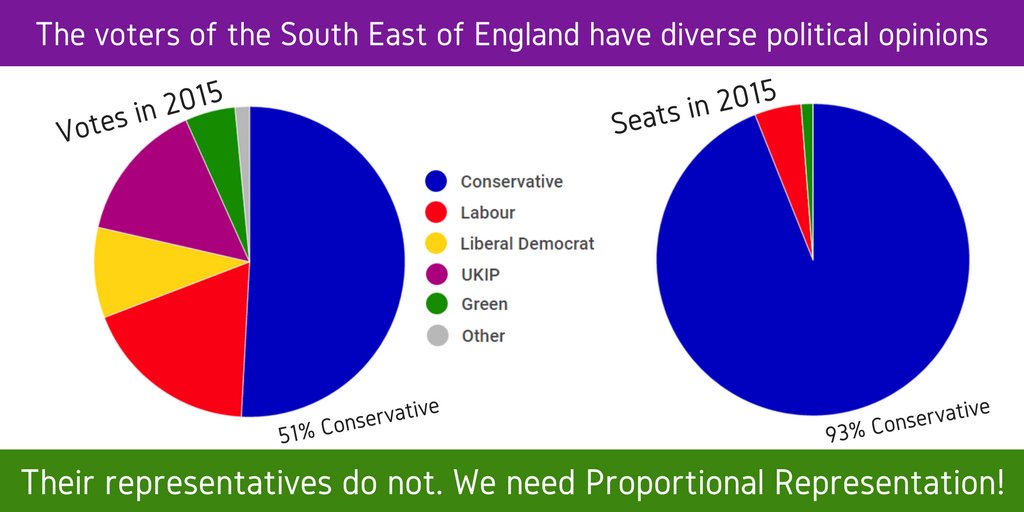

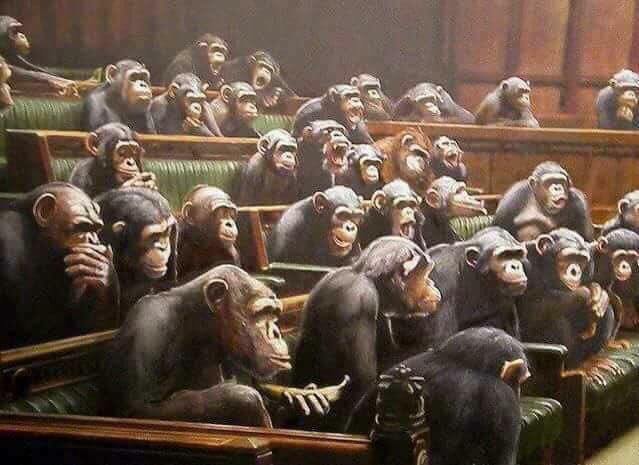

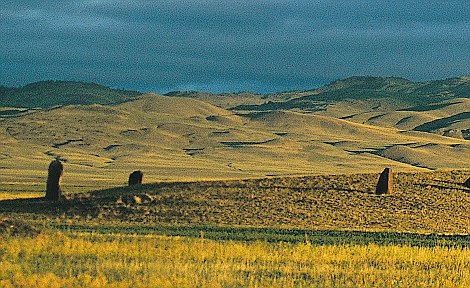




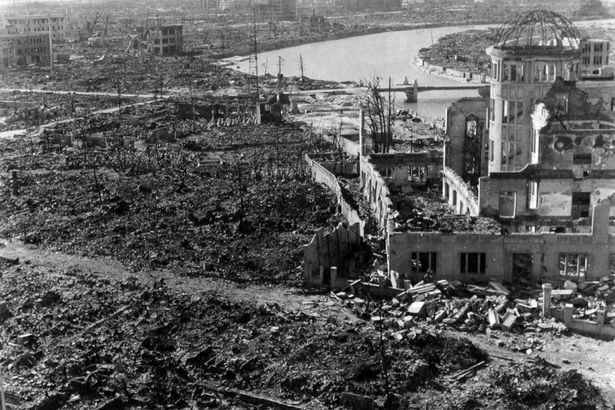

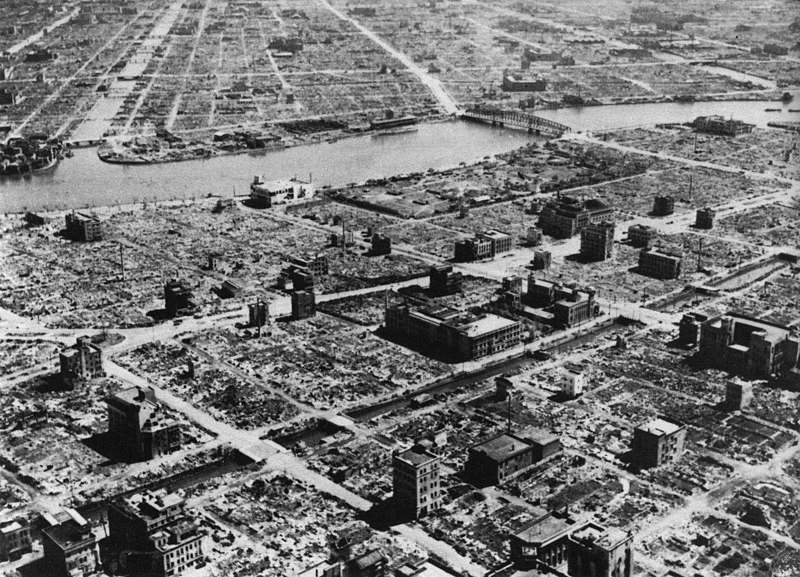





 Ian Robert Millard