
Morning music

Tweets seen
Hundreds of replies to Starmer-stein’s tweet, but few if any positive. He is a disaster. His Labour Friends of Israel misgovernment is a disaster.

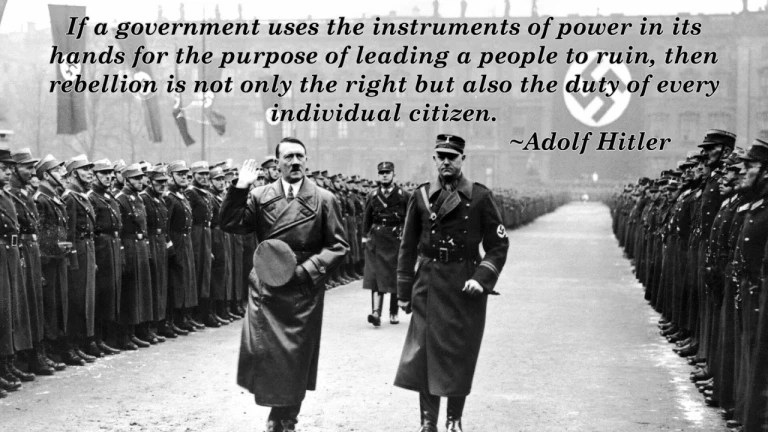
Incredibly, even after Sunak, Truss, Johnson, May, and Cameron-Levita, that is true.
Cut off the supply of arms, ammunition, and money to the Kiev regime. It will then collapse very quickly, within weeks.
On its own, the Kiev regime fails and falls. It needs NATO to come in on its side. Thankfully, that will probably not now happen, thus saving Europe from another historic round of devastation.
Absolutely mad. The people of the EU states will thus become poorer without having achieved anything in return for that sacrifice.
The people of England want to stamp “the old parties” (as Mosley termed them ) into the ground. Conservative Party. Labour Party.
Reform UK is disliked by many, and many (including me) find its policies inadequate, but it is the only game in town right now, and can pave the way for a real social national party later.
Thinking ahead, if/when Reform is in a position of power, perhaps after 2029, and if Reform itself then fails, the moment for social nationalism will have finally arrived.
[“It occurs to me that Reform’s success may well accelerate a day of reckoning in the UK. The cynic in me feels the mass immigration that’s happened, has placed a sleeping army throughout the country, it doesn’t need to act yet, but once it’s deemed that the British people are finally pushing back, that day of reckoning may well happen because it’s clear now that Reform are a credible force to gain power and that will conflict with everything that’s been planned by those facilitating the immigration.“]
Facilitated by those, or some of those, who live, and profit, in the USA, Canada, UK, Australia, France and other countries.
Meanwhile, “the usual suspects” wail about supposed defaults or crimes committed (or not committed, or not committed on the scale they claim) in Germany, Poland and elsewhere in the late 1930s and early 1940s, and more than 80 years ago.
Jews in the UK supporting migrant-invaders
No comment (and none required).
More tweets seen
Britain in 2025
“Macmillan Cancer Support is to scrap its £14m-a-year specialist advice service, which helps tens of thousands of people every year, in what has been described as a betrayal of vulnerable patients.
The cuts were received with shock and anger by welfare advisers, who said the depth and expertise of the service were irreplaceable, while the timing – before the government’s £5bn cuts to disability benefits, which are the single biggest focus of Macmillan-funded welfare support – could not be worse for cancer patients.
“I just don’t understand why they are getting rid of a service that so many thousands of people rely on, while at the same time, hiring senior people on large salaries.
“I get why cuts may have to be made, the climate we are in, but I don’t understand why the welfare advisers are the ones to be cut, why the frontline has to be cut, when there are so many senior people sat in offices discussing strategy and in meetings all day.”
[Guardian]
Late tweets
[“My monologue on today’s The Times at One with Andrew Neil. More at 1pm tomorrow on @TimesRadio.
Eighty years on from the end of the Second World War in Europe and we’re at a watershed in British politics — one of these historic turning points which up-ends politics and radically reconfigures the two-party system as we’ve known it.
Two parties have long been the bedrock of British politics. Conservative versus Whig in the early part of the 19th century. Conservative versus Liberal from the mid-1850s onwards. Conservative versus Labour from the 1920s onwards, especially since the end of the war in 1945.
You will have noticed that, as Whig gave way to Liberal and Liberal to Labour, Conservative remained a consistent presence. Which is what makes this latest rearranging of the two-party deck chairs unique — for the first time in 200 years it looks as if the Conservatives are going to be the victims of a radical realignment in British politics.
Of course we’re really talking England here rather than Britain. The two-party system has been dead for decades in Scotland, Wales and Northern Ireland. You could say England is only now catching up with the rest of the country. And transition can be messy.
After last year’s general election and last week’s local elections, England has gone from a largely two-party system to a five-party system. Our first-past-the-post voting system produces a clear winner when only two parties are vying for power. But when our votes are spread generously across five parties, the outcome can be unpredictable and haphazard. Not only will no one party have an overall majority. No party will have anything close to it. So even coalition building becomes problematic. And that carries the risk of becoming ungovernable.
The catalyst in all this, of course, is Nigel Farage’s insurgent Reform party. It takes disillusioned votes from Labour and Conservative alike. After last year’s general election it is second in 89 Labour seats. And after last week’s elections a majority of these Labour seats are now vulnerable. But whereas Reform is on track to beat Labour it is on track to replace the Conservatives, which is why the Conservatives have most to lose. Even traditional Tories now talk privately about the need to have some sort of accommodation with Reform. That could be wishful thinking.
If Reform heads towards around a 30% share of the vote in the polls — it won a bit more than that in actual votes last week — then the Tories will be languishing in the late teens. And far from securing a friendly merger with Reform — would more likely face a hostile takeover.
However the chips eventually fall, the Tory-Labour two-party system would seem to be on its last legs. It’s had a good innings but now looks knackered. Last week showed the Tories have claimed back no ground since their thrashing last July. Indeed they might be losing more. It also confirmed that Labour and its leader Keir Starmer have fallen further and faster in public approval since that landslide victory than any new government in living memory.
The two-party system which gave Labour and Tory alternate turns at power is now widely derided for having delivered a stagnant economy, squeezed living standards, uncontrolled mass migration, broken public services, a remote woke establishment and unbridled net zero zealotry.
Voters might not be sure what they want. But they know what they don’t want, which is more of the same. Which is what propels Reform and the closer it gets to that crucial 30% of the vote the more it will upend politics as we’ve known it. For it’s at around 30% that a ton of seats start falling Reform’s way. Not enough to give it an overall majority. Not enough to give Farage the keys to 10 Downing Street. But enough to be the largest party. Enough to have a veto on who forms a government. Enough to make Farage, always underestimated by the political and media establishment, if not king then the kingmaker.“]
[Andrew Neil]
Late talking point
1629? I should have thought that 1829 was more accurate. Never mind.
Late music

 Ian Robert Millard