Well, that’s Theresa May gone. Or not. She may have given up the nominal leadership of the misnamed Conservative Party, but it seems that she will not be leaving the office of Prime Minister until July. Presumably, the hunt for her successor will start immediately.
What have I liked about her time as Prime Minister? Nothing much. In fact nothing.
Theresa May was (if possible) even more in the pocket of the Jewish-Zionist lobby than was David Cameron-Levita. She was the same when Home Secretary. Under her, malicious Zionist organizations gained even more influence in the UK. In fact, she could not even make her resignation speech without telling some cheesy anecdote about herself and Nicholas “Winton” (Wertheim), who imported about 700 Jewish children into the UK in 1939.
As for the rest of the content of the Theresa May resignation speech, it seemed to be about some other country, not about the UK at all. In that other country, the economy is apparently buoyant, the people happy and united, the “austerity” “necessary” in the recent past has been banished and everything is wonderful.
I am sure that the millions of British people who are homeless and/or literally (in many cases) starving, who cannot pay inflated rents, let alone think of buying a house (even with a mortgage), who are paid peanuts when working, who are subject to a Kafka-esque regime of callousness and cruelty if unemployed or disabled, would love to live in that other country Theresa May lauded to the skies.
In Theresa May’s speech, no mention was made of the country where the racial stock has been deliberately contaminated, where millions of unwanted immigrants continue to flood in, where nothing now seems to work properly (from road and rail to the NHS, the police, the educational system) and so on.
No mention was made of the country where, under her, as both Home Secretary and Prime Minister, freedom of expression has been restricted even more than it was under David Cameron-Levita, Gordon Brown and Tony Blair.
This hateful woman has now gone or is about to go, presumably hoping that her political spawn, such as Amber Rudd, will follow in her footsteps.
Well, I have some news for her. She has as good as destroyed the Conservative Party and may well prove to be its last elected Prime Minister. Ah… I knew that, in the end, I would find something good to say about her…
[above, Theresa May with the Israeli Ambassador and his wife. Theresa May, like 80% of Con Party MPs, is a member of Conservative Friends of Israel, and is herself suspected of being part-Jewish by origin]
No hope of change with a new PM either UN poverty expert hits back over UK ministers' 'denial of facts'https://t.co/Q4TQMUP1kr
Theresa May is likely to resign as Prime Minister tomorrow, 24 July 2019. Her successor is likely to be Boris Johnson, incredibly…
Update, 27 December 2022
Well, three and a half years on, we see that “Boris” Johnson did indeed succeed Theresa May; in turn, Johnson was succeeded briefly by Liz Truss, and now by Rishi Sunak, both the first non-white Prime Minister and the richest (£750M, apparently). Theresa May remains on the backbenches, a critical presence, rather like Edward Heath during the Thatcher era of the 1980s.
3,000 people paid £2.50 to hear Nigel Farage speak. How many System politicians can get 3,000 to hear them speak? In fact, few would even get an audience of 300. Maybe 30, but only if entry were gratis. In fact, many of those listening to Farage had also paid a voluntary £25 donation to Brexit Party (read the report).
The size of the rally was not quite as impressive as those of Mosley in the 1930s, but you can’t have everything!
On 16 July 1939, Mosley addressed 30,000 at Earl’s Court in West London.
Returning to our contemporary political reality, here are the latest opinion poll readings:
Note the variation between the YouGov and ComRes polls. There is usually variation, but not such wide variation. The YouGov poll is the more recent, relying on polling done in the past 3 days (19-21 May). It shows Brexit Party at 37%. The Conservatives have slumped to a miserable 5th place, on merely 7%! This is incredible! As for Labour, it has been overtaken by the LibDems.
Obviously, EU elections are not the same as Westminster ones, but I think that we are seeing more here than the sort of EU election surge that we have seen before with both UKIP and to a lesser extent and long ago (in 1989) the Green Party.
Anecdotal evidence is always suspect, but then so are “statistics”. I concede that I meet few people these days, but everyone that I do meet, or encounter, or hear, is voting Brexit Party in the EU election.
I am inclined to believe that, with only a day to go, Brexit Party is still, even now when it is polling around 37%, being underestimated. I should not be surprised were Brexit Party to top 40% on Thursday.
It is clear that the most fixated Remainers are gravitating to the LibDems, with most of the rest voting Labour. The new party, Change UK, has sunk like a stone and I shall be surprised if it gets a vote of 5% (as polling indicates). Its “rallies” have all been tiny meetings, with audience numbers often in single figures. Even its main London meeting audience (disregarding journalists) only numbered about 40.
MSM scribblers and the Twitterati wastes of space are now discussing as to whether the EU elections constitute a kind of referendum on UK EU membership. How can it be, when the Labour, Conservative and even Green parties are internally split?
It is clear to me that the EU election in the UK will be dominated by Brexit Party candidates. What is really significant is that Brexit Party doing really well will give it a launching pad for Westminster.
The important poll will be the Peterborough by-election on 6 June. If Brexit Party can win that, it will be on its way.
People are angry about what has happened in and to this country over decades, since 1989 particularly. Finally they have realized that the guilty parties are literally that, the political parties (and their own apathy, but let’s not look in the mirror…). The Conservatives, having destroyed so much over the past decade, are the primary target for the wrath of the people, including that of many who until recently were themselves voting Conservative.
Brexit and its betrayal has finally crystallized the feelings of disappointment and treachery.
The Conservatives are facing a perfect storm in the EU elections:
the pathetic Prime Minister, Theresa May;
the mediocre or poor level of most other leading Conservative MPs;
Brexit, fake Brexit, and betrayal of the popular decision in the 2016 Referendum;
the rise of Brexit Party to near 40% in vote-share and perhaps, on the day, beyond;
the defection of Conservative pro-EU/Remain voters to the LibDems
The real crisis for the Conservative Party will come after the EU elections. The Peterborough by-election was noted above. The Conservative Party is rated by the bookmakers as no better than a 20/1 shot for that by-election. Incredible when one considers that from 2005-2017, Peterborough had a Conservative MP who was beaten in 2017 by only 607 votes (1.3%). Even when Peterborough had Labour MPs in the 1990s, 1980s etc, the Conservatives were always closely second-placed.
Then there is the Conservative Party membership, officially 124,000 but most of those are people in the sixties, seventies, eighties or even nineties. The active membership may be no more than a few thousand. This is important for several reasons: lack of canvassers etc, lack of subscriptions, but also the fact that, once Theresa May goes, if MPs cannot elect a new Conservative leader outright, the top 2 in the MPs ballots will go for general membership vote. Who will the aged Conservative membership pick? Will their chosen leader be in any way acceptable to the British public as a whole? That seems doubtful.
What an odd system, when a Prime Minister can resign and then be replaced by some new leader, chosen by about 150 Conservative MPs or —at most— by maybe 60,000 aged Conservative Party members, and who then becomes Prime Minister automatically, with no obligation to call a general election until 2022!
People in the UK are outgrowing both the present political/electoral system and the existing System parties.
Using Electoral Calculus [ https://www.electoralcalculus.co.uk/userpoll.html ], that Panelbase poll indicates that a general election held now would produce the following result: Brexit Party bloc of 19 seats. Labour majority of 44 seats. Conservative loss of 132 seats, including those of Amber Rudd, Nicky Morgan, Justine Greening, Stephen Crabb, Boris Johnson, Grant Shapps etc. Happy time! (except for the Labour majority, but the Cons have to be stamped on now; should have happened long ago)
Update, 23 May 2019
Election day, 1800 hrs. I happened to see an interesting Twitter thread analysis from a journalist. From a couple of days ago. Read the whole thread.
THREAD: On the rise of the Brexit Party and what it means for Brexit and British politics.
That’s it, there are no more Brexit Party rallies planned before polling day. I’ve been to half a dozen of them across the country, from the very first week to the end.
It will be be seen above that the videos of Mosley’s massive 1939 rally in London are now “not available” because YouTube (aka, for many, “JewTube”) has closed the account. This is part of a huge censorship campaign now spreading across the Internet. (((They))) are behind it. It is a covert censorship, banning and barring operation to close down free speech in the UK and across the Western world. It affects, inter alia, YouTube, Twitter, Facebook, Amazon; many others too.
In view of the duty to fight the evil noted, I have posted, below, other links.
At first blush, it may seem strange that I am focussing today on Andrea Jenkyns MP [Con, Morley and Outwood], in that she wants to leave the EU, is an animal-lover and a vegetarian. I support, in essence, all three positions. Also, she has chronic medical conditions, and I always feel sorry for people suffering in that way. However, “there is no religion higher than Truth” and so on, so I am writing about her, though —after thought– I have decided not to include her in my blog category “Deadhead MPs: An Occasional Series”. That decision may reflect mercy more than justice, but so far she falls just the right side of the line.
“Jenkyns was born in Beverley, Humberside. After leaving school at 16, Jenkyns secured employment at Greggs bakery as her first job.[4] When 18, Jenkyns’ father sent her photo off to a beauty pageant and she got into the final for Miss UK.[5] Over the subsequent years Jenkyns changed employment a number of times, performing a number of different roles at different businesses. Her employment history has included being a secondary school music teacher and an executive with a management training company.” [Wikipedia]
What does that show? Not necessarily that she is unacademic or unintelligent. There are reasons, or were, why people drop out of school early (I believe that it is now more or less mandatory for them to stay until 18). In her thirties she did study for a degree (for what it may be worth these days): International Relations and Politics. Her Wikipedia entry does not say that she was awarded the degree or finished the course at the University of Lincoln. It seems that she may have finished the degree over time at the Open University. She was also awarded a diploma in Economics from the Open University, but only when in her forties (she will be 45 in June 2019).
Andrea Jenkyns is a singer and songwriter, who even had a musical hit in South Central Asia at one time.
I started this study thinking that I would find Andrea Jenkyns rather mediocre and even one of my “deadhead MPs”, but find that I slightly warm to her. She is evidently genuinely interested in animal welfare, and got into politics, it seems, from a recognition that the NHS needed to improve its standards, particularly hygiene standards in hospitals, her own father having perished from having developed MRSA.
Sadly, like so many MPs, Andrea Jenkyns seems to think that proper preparation is unnecessary. Not so. Lack of preparation can make you look rather silly.
"I don't fear the WTO!" insists Andrea Jenkyns, mere seconds after being exposed to the apparent kryptonite of simple questions and demonstrating that her pitiful knowledge of the subject barely goes beyond the acronym itself.
Her husband, Giacomo “Jack” Lopresti MP, a former Army reservist, would be able to tell her about the military acronym “the 5 Ps” (PPPPP) (“Proper Preparation Prevents Poor Performance”); the less polite version has 6 Ps.
Nearly three years of Brexit and ERG ‘star’ Andrea Jenkyns still hasn’t done her basic homework. The arrogance of these people is staggering https://t.co/rYlN4yoffm
Andrea Jenkyns is absurd. Nothing going on there at all. Nothing. I think we should all start demanding *a lot* more from our MPs. https://t.co/SeYPeUSv6Y
As mentioned above, I myself strongly favour Leave/Brexit, but the performance of dunce-like Conservative Leave MPs (some of them) makes me fume: Iain Dunce Duncan Smith is another such.
On the even more negative side, it seems that Andrea Jenkyns is a member (like 80% of Con Party MPs) of Conservative Friends of Israel. Her husband, Jack Lopresti, is another one.
As to her future, her constituency is a Con-Lab marginal created in 2010 and held until 2015 by Labour big-hitter and Bilderberger, Ed Balls. Morley and Outwood has had Con and Lab (Labour and Cooperative) within a couple of points of each other in 2010 and 2015, but in 2017 Andrea Jenkyns won with a bigger margin (50.7% as against 46.7% voting Labour). The third-placed (and only other in 2017), the LibDems, scored worse in 2017 than they had in 2015 (2.6% from 3%). This is a trend seen across the country.
UKIP scored 16.5% in 2015, but did not stand in 2017. There is every prospect that, if Brexit Party stands any time soon, that it could outdo UKIP’s 2015 result. It is doubtful that Brexit Party could win, but a vote amounting even to 10%, let alone 16.5% or more, would be enough to destroy the Conservative majority.
There is every reason to think that, unless Brexit Party lets her off the hook by not standing a candidate at the next general election, Andrea Jenkyns will have to add “MP” to her other and previous short-lived employments.
Reading the above again, and again watching Andrea Jenkyns squirm in that Daily Politics clip, I think that I probably was too kind in not including her as a “deadhead MP”. Still, there it is.
Andrea Jenkyns has been given an unexpected gift from the Gods inasmuch as Brexit Party is now not standing against her in the 2019 General Election. That may help her to hang on.
Update, 21 December 2019
The gods again smiled on Andrea Jenkyns: Brexit Party did not field a candidate, Labour’s vote collapsed from 46% of the total to 35%, and so Andrea Jenkyns was re-elected with a increased majority and no less than 56.4% of the total vote.
Andrea Jenkyns, with her husband (or ex-husband; it seems unclear), Jack Lopresti [https://en.wikipedia.org/wiki/Jack_Lopresti] are both Con Party MPs, and both are also members of Conservative Friends of Israel. His constituency (also to be fought on new boundaries) may be “safer” than his wife’s or ex-wife’s, but whether safe enough to save Lopresti from also having to stack shelves is an open question: https://en.wikipedia.org/wiki/Filton_and_Bradley_Stoke_(UK_Parliament_constituency). His only real job prior to becoming an MP was in his family’s ice-cream business (he is of Sicilian origin).
Andrea Jenkyns and Jack Lopresti. Both pro-Israel and the UK Jewish lobby. Kick them both into the political gutter, dear voters.”
Labour 44%, Con 23%, Reform UK 20.4%. Even had all the Reform voters voted for her, Andrea Jenkyns would still have lost. Looks like she has had her 9 years of high pay, good expenses, and other perks. She will probably end up stacking shelves.
The political realities and tendencies of 2025, Reform UK, and Eastern England being as they are, there is every chance that Andrea Jenkyns will win election to that post.
Update, 2 May 2025
Well, there it is. Once again, Andrea Jenkyns, former Greggs employee (etc) has been saved from stacking shelves at Lidl by electoral success. She is now the Mayor of Greater Lincolnshire, a name reminiscent of the inventions of P.G. Wodehouse.
Incidentally, Jack Lopresti, Andrea Jenkyns’ ex-husband, is now sitting at a desk in Kiev doing some kind of military-connected work for the Kiev regime:
“A Tory MP who lost his Westminster seat in the general election last year is now serving in the Ukrainian military.
Jack Lopresti was the MP for Filton and Bradley Stoke, in South Gloucestershire, until Labour’s Claire Hazelgrove secured victory in 2024.
Mr Lopresti, 55, said on social media he was now volunteering for the International Legion of Ukraine, Defence Intelligence.
“It’s a huge honour and an immense privilege for me to serve in the Ukrainian military and be able to help the gallant and amazing Ukrainian people in any way I can,” he said.
Mr Lopresti previously served in the UK Army Reserve as a corporal, and said he was focusing on charity work in the country, supporting veterans, foreign relations and diplomacy and weapons procurement – as well as military duties.“
A comet has appeared in the UK’s political skies. Its name is Brexit Party. It is running at about 30% in the opinion polls re. the EU elections to be held on 23 May 2019, while in respect of Westminster elections, it is on about 15%. The EU elections may not be of much importance except as a popularity contest, but for a new party without any policies at all (except to get out from under the EU) to be at 15% indicates a groundswell of public disquiet which may have huge consequences one way or another in domestic UK politics.
[note: even as I write, the polling figures above are out of date! One very recent poll now has Brexit Party at 34% for the EU elections and 20% re Westminster voting intention, with Conservatives only on 19% for Westminster and 13% for the EU elections; has the Conservative vote ever been that low? I think not; even in the Blair-Labour landslide of 1997, the Conservatives polled in the actual election at 30.7%].
It now looks as though some of my early blogging was prescient indeed, if I myself may say so. “Give that man a cee-gar”!
Exclusive Telegraph poll: for the first time Brexit Party is in second place in general election polling – BP on 20%, Tories on 19% – on course to win 49MPS – Tories lose over 130 seats including Johnson and Rudd – Labour in minority governmenthttps://t.co/YGVFr3Y6bL
The Brexit Party gets more popular by the day, with 34% now intending to back them in the European elections – more than the Labour and Conservative Parties COMBINED. The 17.4m have been betrayed by our political class for years, and now we're going to MAKE them listen!
There are signs of panic in the main System parties:
“A ComRes poll for the Sunday Telegraph showed that if a Westminster general election were called, Labour would reap the largest share of the vote with 27%; the Brexit party would garner 20% ahead of the Conservatives on 19%. The Liberal Democrats would win 14%, followed by ChangeUK (7%) and the Greens (5%) with Ukip trailing on 2%.” [The Guardian]
I come from a certain direction: I recall the limited but real popularity of the National Front [NF] in the mid-1970s, and saw at first hand how outside forces made use of internal dissensions in order to destroy the NF as an effective party and movement. I believe (though without having any direct or personal knowledge) that similar events may have happened to explode the British National Party [BNP].
The National Front and BNP were both broadly social-nationalist, whereas UKIP is broadly nationalist but lacking the para-socialist element ideologically. Brexit Party has taken on UKIP’s “nationalist” or “patriotic” mantle despite having no published policies at all beyond leaving the EU.
It is easy to speculate about why the course of events happens, harder to pin down the exact or even approximate facts. Many casually blame, or designate as important, the operations of Zionists, Israel, MI5, SIS, MOSSAD, unnamed State agencies, freemasons, occult spiritual groups etc.
Every party or movement has internal tensions. As a John le Carre character remarked, “Jesus Christ only had 12 agents, and one of those was a double” [meaning “double-agent”].
The art of influencing events from the shadows is not to be identified or identifiable as a moving force.
Coming back to Brexit Party, there are known facts. The extraordinary political showman (as some would have it, “snake-oil salesman”), Nigel Farage, was leader of UKIP for decades. He in fact was in UKIP almost at the start, and is often termed one of the founders, though he was not the actual founder, who was an academic called Allan Sked.
“Sked is a member of the British-American Project, which exists to promote Britain’s political ties to the U.S.” [Wikipedia].
“During the administration of President Bill Clinton in the US, the Australian journalist John Pilger attacked the BAP as an example of “Atlanticist freemasonry.” He asserted in November 1998 that “many members are journalists, the essential foot soldiers in any network devoted to power and propaganda.” [Wikipedia].
Here is one msm drone who belongs to that British-American Project:
Yes, that’s right. Yasmin-Alibhai-Brown, the supposedly “radical”, “anti-imperialist” “journalist” (in fact, totally unqualified and inexperienced in true journalism, just a ranting loudmouth).
Another member of the very same organization is BBC journalist James Naughtie, most of whose views are, at least superficially, totally different from those of Yasmin Alibhai-Brown…
The British-American Project contains a large number of UK-based (and other) journalists (and others), of supposedly diverse views. I wonder if their views and motives are as “diverse” as they seem to be at first blush.
Only today, on the Andrew Marr Show [BBC 1 TV], Marr tried to trash Nigel Farage and Brexit Party, but Farage was able to crush Marr easily in the end.
System drones like Marr do not seem to understand that populist movements such as UKIP (a few years ago) or Brexit Party (now) are the last chance for the System to listen to the British people and so avert an explosion of justified political hatred which will, otherwise, roll over them like a tank over a cockroach.
Marr’s own (rarely admitted) views:
A typical pro-NWO, pro-ZOG, pro-EUmsm drone, paid until recently a million pounds a year by the BBC out of your “licence fee” (enforced tax) monies (apparently somewhat less now, after public uproar about the absurd salaries paid by the BBC to key propagandists).
Was the secret aim of UKIP to draw off nationalist sentiment from parties such as the BNP, i.e. to neutralize effective political opposition to NWO [New World Order] and ZOG [Zionist Occupation Government] in the UK by containing it, controlling it, monitoring it? Or was UKIP just a typically English amateur effort which mushroomed into something bigger. Or both of those?
Already, in looking at UKIP, we see the difficulty of unravelling the skein of motives: secret forces, public faces, ambitions, ideals, various personalities etc.
As recently as last year, Alan Sked said that “I founded UKIP. It’s a national joke now and should disappear.” [The Guardian]. Is that just sour grapes from a founder left behind? Is there anything else there? Had UKIP “done its job”, and so could be binned?
Until 2010, the BNP did better in all or almost all elections than did UKIP. It is hard to recall that, now that the UKIP star has risen and fallen and now that the BNP is just a tiny handful of back-room zealots. In its heyday, the BNP was more successful by far than UKIP. The BNP even had two MEPs (Nick Griffin and Andrew Brons).
Brexit Party is UKIP, but a UKIP which, like a snake, has shed its “skin” of various unwanted people, unwanted history etc and, unlike the snake, miraculously become far far more powerful, far more slick, far more able to capitalize on its “unique selling point”, the sheer hatred which many many people now feel for UK society as it now is (and also for the EU dictatorship).
Farage is the star of Brexit Party, as he was when in UKIP. Look at the clip below. Farage enters a hall packed with supporters. It echoes in a minor key the entrance of Adolf Hitler into the hall at the end of the 1935 Leni Riefenstahl film Triumph of the Will.
The Brexit party turned up in Newport, south Wales last night. A true Labour heartland. Usually. https://t.co/NoBovPxNCv
Farage can draw large crowds, as in this recent rally at Peterborough, where 2,000 supporters are said to have paid£10 each just to hear Farage speak. Few other politicians in the UK could get 200 (or even 20, in many cases) to turn up to hear them, even for free!
Peterborough rally for the Brexit Party. When was the last time British politics saw something like this?? Astonishing. They’re doing three rallies a week! pic.twitter.com/YVUlQnhTdw
Farage is the key to this. No Farage in UKIP means, effectively, no UKIP. Were there no Farage in Brexit Party, that party would also rapidly cease to exist.
Despite his public profile, Farage is to some degree an enigma. A metals trader, he was in employment as recently as 2003 and possibly even after that. He was elected as an MEP in 1999. He seems to have been a “Eurosceptic” (anti-EU) for a long time, voting Green Party in 1989: the Green Party was, at that time, Eurosceptic and not pro-mass-immigration. One wonders whether, had it not become a kind of middle class virtue-signallers’ party, Green Party might have had greater political success.
Farage created UKIP (not founded perhaps, but created) in his own image: anti-EU, free marketist (softened for tactical purposes), English more than British, not social-national, not “racist” (racialist), despite Farage making a few innocuous comments that only echoed what most white British people believe or feel. Brexit Party may or may not follow those lines, but we cannot say for sure, because Brexit Party, almost uniquely, has published literally no policies at all, save for Brexit itself.
I say “almost uniquely” because the surely-doomed Change UK, which can be taken to be the opposite pole to Brexit Party, also has no published policies (beyond staying in the EU). This is in fact consonant with earlier blogs and, until I was expelled from Twitter, tweets, i.e. that people in the UK, at least in England and Wales, are now voting against rather than for parties; voting tactically to block parties they dislike, rather than supporting the party they like. I have blogged before about this and how it is an outcome of the ludicrous UK electoral system.
I take Farage to be sincerely anti-EU, anti-socialist, possibly anti-immigration, but not to have any sophisticated socio-political or economic ideas. I have said before that Farage does not understand politics well, a surprising statement in view of his stellar public political performance. What I meant is that he has not developed any ideology, as such; neither has he a political programme; also, he has not much developed a party machine (with UKIP; we shall see what happens with Brexit Party).
I take Farage at face value, more or less; the same with his mass following. As to others, I am looking and seeing a strong Jewish element. Brexit Party already has a “Brexit Party Friends of Israel” group. There are other indications; the Brexit Party Treasurer is indirectly connected by marriage to the Rothschilds:
Brexit Party not only has Jewish influence but is open in general to persons of other and various ethnicities. Many candidates are not really British, certainly not of British origin.
Good afternoon Mr. Umunna. I am a candidate for the Brexit party. I am partly of Pakistani origin. There are many candidates of mixed ethnicity in our terrific party. You have the wrong end of the stick. May we pls meet to discuss your prejudices? Anytime that suits you. Pls say https://t.co/W6IdKODVMQ
Despite its paucity of policy and its multi-ethnic candidate list, many of those who support Brexit Party and also many of those who oppose it seem to think that it is somehow “nationalist”. It may be, but only in the very broadest sense.
In respect of candidates, one aspect I find very odd is that, out of about 60 or so Brexit Party EU election candidates, Brexit Party has no less than 3 who are former members of the (1978-1997) Revolutionary Communist Party. Remarkable from a tiny party which had so few members. If I were to suggest State involvement here, it would be without any real evidence, but it does give me pause all the same.
The Great Replacement, otherwise known as “migration-invasion” of Europe, is no mere “conspiracy theory”. United Nations and EU documents have laid out the conspiratorial globalist plan time and again. Only recently, EU and other political heads met in Marrakesh, Morocco, to pledge to assist African and Asian invasion of Europe, to replace European populations with alien black and brown populations.
This anti-white, anti-European campaign was built into the EU right from the start and conflated with the idea of a European “superstate”:
Jean Monnet was one of the principal freemasonic architects of the EU:
“Jean Omer Marie Gabriel Monnet (French: [ʒɑ̃ mɔnɛ]; 9 November 1888 – 16 March 1979) was a Frenchpolitical economist and diplomat.[1] An influential supporter of European unity, he is considered as one of the founding fathers of the European Union. Jean Monnet has been called “The Father of Europe” by those who see his innovative and pioneering efforts in the 1950s as the key to establishing the European Coal and Steel Community, the predecessor of today’s European Union.[2] Never elected to public office, Monnet worked behind the scenes of American and European governments as a well-connected pragmatic internationalist.” [Wikipedia]
“He was the first to be bestowed Honorary Citizen of Europe by the European Council of the European Union, for extraordinary work to promote European cooperation on 2 April 1976. Following this he became the first person alive to be pictured on a German stamp who was not also a German head of state.” [Wikipedia]
“In his book Praktischer Idealismus (Practical Idealism), written in 1925, he describes the future of Jews in Europe and of European racial composition with the following words:
The man of the future will be of mixed race. Today’s races and classes will gradually disappear owing to the vanishing of space, time, and prejudice. The Eurasian-Negroidrace of the future, similar in its appearance to the Ancient Egyptians, will replace the diversity of peoples with a diversity of individuals. […]
Instead of destroying European Jewry, Europe, against its own will, refined and educated this people into a future leader-nation through this artificial selection process.”
“Nazis considered the Pan-European Union to be under the control of Freemasonry.[27] In 1938, a Nazi propaganda book Die Freimaurerei: Weltanschauung, Organisation und Politik was released in German.[28] It revealed Coudenhove-Kalergi’s membership of Freemasonry, the organization suppressed by Nazis.” [Wikipedia]
“Hitler did not share the ideas of his Austrian compatriot. He argued in his 1928 Secret Book that they are unfit for the future defense of Europe against America. As America fills its North American lebensraum, “the natural activist urge that is peculiar to young nations will turn outward.” But then “a pacifist-democratic Pan-European hodgepodge state” would not be able to oppose the United States, as it is “according to the conception of that commonplace bastard, Coudenhove-Kalergi…”” [Wikipedia]
There are secret occult forces behind the founding and expansion of both USA and EU. They are not exclusively Jewish or Zionist, but there is a strong link, as there is to Freemasonry, and also to other groupings not publicly named. Forces of Evil.
Look at the tweet below, from the World Economic Forum at Davos, and retweeted by a pro-EU public relations drone, and which purports to show a wonderful “economic plan” to create a “trade route” (corridor) from Malta and the Mediterranean to Scandinavia. What is the real purpose here? To create a funnel from Africa to Northern Europe, through which migrant-invaders will be funnelled through the heart of Europe to destroy it racially and culturally.
The EU was never meant to be just a mutual-benefit trade bloc. It was always meant to be a monolithic superstate in which the white European populations could be mixed, eventually, with blacks and browns. Of course, that was never conveyed to the peoples of Europe, only to the self-appointed “elite”. In fact, some naive people supported the EU (and still do) because they imagined that it was European in race and culture and not only in geography. Thus we see the deliberate conflation by Remain drones, in the msm or on social media, of “EU” and “Europe“, as in “if Brexit happens, we shall be leaving Europe“, rather than “…leaving the EU.” The UK is part of Europe and always will be; it need not be part of the already-dictatorial EU superstate, which is deliberately importing the culturally inferior by the million.
How is it possible, though, for bothEU and Brexit Party to be heavily influenced by the same forces (ZOG, NWO etc)? Think of a bet whereby you could, in a two-horse race, win whichever horse puts its nose in front. Likewise, in the UK there are or were two or three main parties. The fix was/is into all of those parties. It does not matter (or did not, until Corbyn took over Labour) which party wins, because ZOG/NWO is embedded in all three “main parties” (things are changing now, though).
Brexit Party may have been partly set up with secret aims in mind, but these plans do not always go as planned. Brexit Party has mushroomed, almost exploded, in a way which was perhaps unforeseen even by Farage himself. These things happen in history. The events of the Russian Revolution spiralled out of control, or to use a different metaphor, spread like a wildfire from its modest beginnings in one city in the corner of a huge empire.
Why are voters flocking to Brexit Party? It cannot be because of Brexit Party’s policies, because it has none, or at least only one. I identify these factors:
the wish to have the Referendum of 2016 properly respected and complied with; but beyond that
the wish to hit out at the System parties and especially the mis-named “Conservative” Party, which under the influence of Jewish Zionism and globalism has trashed the UK (especially England and Wales) to the point where nothing works properly, where most people have neither security nor freedom, where the population is only about half really British now, and where standards in all areas are dropping like a stone (NHS, transport, education, real pay, State welfare benefits, animal welfare, environment etc). There is also the repression on thought and socio-political expression. “Free speech” scarcely exists now in the UK.
The wish to lash out is very strong now. The people can see that Brexit Party has the popular support to make it a credible vote at both EU and (so far) Westminster elections. People know (whether intellectually or instinctively) that a vote for Brexit Party is one that hits the Conservatives hard, much harder than voting, say, Labour. In any case, Labour itself is not supported by most people (not so much for policy reasons as because white English people especially do not like what they see around Corbyn: the blacks and browns, the semi-literate Angela Rayner types who would be in Cabinet, the creaking 1970s comic-book “Marxism” etc).
A vote for Brexit Party hits the Conservative Party hard not only in areas where Labour is strong but in areas where the Conservatives have prevailed for decades. As I blogged previously, if (as polls suggest) the Conservatives lose 60% or even 50% of their votes, they will lose 50-200 seats, to Labour, to Brexit Party itself, and, here and there, to the Liberal Democrats. That means (as I also blogged previously and to which the msm is now catching up) that
Brexit Party may actually win some —possibly 50, even 100— seats at Westminster;
The Conservative Party, which has outlived its usefulness, will fade and go the way of the Liberal Party after the First World War; and
Labour will (as I have predicted for 2 years) probably be largest party in the Commons, but will be unable to do whatever it wants, because it will be a minority government (almost certainly). People may well prefer that to a majority Labour government.
It can probably be said that, in Westminster constituencies where Labour is not now the first or second party in elections, even former Labour voters would be better to vote Brexit Party than to vote Labour, because in “Conservative” Westminster constituencies, a vote for Labour is going to be a wasted vote, whereas a vote for Brexit Party will quite possibly help to unseat the Conservative MP in question.
Speaking now from a social-national viewpoint, why do I welcome Brexit Party?
That is a simple question to answer. No matter what forces may be behind Brexit Party, no matter what forces influence it, its importance to me lies in its ability to smash the “three main parties” scam-system in the UK. A weak government, esp. Labour, would open the way to real social nationalism in a way never seen before.
The unreality of the “Remain” crowd can be gauged by the tweet below. Like so many of the twitterati, this fellow over-values Twitter. He actually thinks that he is achieving something by having a few hundred or a few thousand other Remain whiners in his echo-chamber retweet or “like” his pointless tweet. Result? Nothing, but he feels warm and justified. In fact, he is a public relations man whose Twitter output is largely a one-sided and pro-EU song of praise. I predict that 24 May 2019 will not be a pleasant day for him!
Looks as if Boris Idiot and Amber Rudd might both lose their seats at the next General Election. Conservative MPs will not be voting for either of them to be leader if there is every chance that they might lose their seats…Happy day!
Curtice: "The [Conservative] party faces the prospect of nothing less than a mass defection that could leave it with by far its worst ever result in a UK-wide ballot"https://t.co/PW0KpRPHiv#EP2019#brexit
Someone called Casper Hughes, writing in The Independent [see below], says that Brexit Party will have no effect on Westminster elections. That statement, I think, is probably wrong. For the following reasons:
first of all, like most unthinking scribblers and talking heads of the present time, he has not managed to free himself from the idea that there is a spectrum going from “far left” through “hard left”, “soft left”, “centre-left”, “centrist”, then to “centre-right”, “rightwing”, “hard right” and finally the —demonized— “far right”;
Casper Hughes labels, simplistically, a huge group as “rightwing voters”. It’s a meaningless phrase; it shows lack of real understanding;
politics is more nuanced now. People from all parts of the outdated “right”/”left” spectrum can, for example, be allied on animal rights, environment, economic outcomes (and even policies: rail and utility renationalization for example). It was Jack London who said “I am a socialist, but a white man first”;
it is a mistake to imagine that Brexit Party support is all about Brexit. The System betrayal of the EU Referendum result is one example of how the System has, in vulgar terms, shat on the white British people over and over, especially in the past 30 years or so. The Brexit Party is a chance (like the 2016 EU Referendum itself) to kick the System “parties” (which form, to a large extent, one party with 2-3 faces).
people are currently (since at least 2015) voting against, not for. The article does to some extent acknowledge that. That means that people are voting not for Brexit Party and its sole policy, but to stamp on Con and Lab (and LibDem) as well as voting —yes— for Brexit, i.e. to leave the EU properly, without strings;
people generally now realize that a conspiracy is stealing Brexit, against the “democracy” we are supposed to have in the UK; they want to fight against that; the traditional voters for the “main parties” are not as dominant as they were. In 1950, 97% voted LibLabCon. Now? Maybe 50%;
also, many traditional voters feel betrayed: Labour betrayed its core vote by turning into the Blair finance-capitalist, mass immigration, “ignore-Pakistani-child-rapists” “New Labour” or fake-Labour party. The Conservatives betrayed their core vote by continuing with mass immigration, by increasing taxes to an extent not seen under Blair —or even Callaghan in the 1970s—, by destroying much of the mental landscape that made England England, by conspiring to dishonour the 2016 Referendum result, and in other ways;
the article says in terms that the present situation is a re-run of UKIP in 2014-2015. It is not. People saw that UKIP was cheated in 2015 (1 in 8 people voted UKIP in 2015 and were cheated by a rigged electoral system) and are angry at that, but even more angry at the corruption, freeloading and dishonesty of the main 2 parties, as well as at their incompetence and arrogance;
the article supposes that the so-called “right-wing” voters will “coalesce” around the misnamed “Conservatives” as a “stop Corbyn” tactic. Don’t count on it. After 3 years of Jewish propaganda contra Corbyn, Labour is riding higher than ever; and many former Con voters actually like many Corbyn-Labour policies;
the article says that Brexit Party is unlikely to win many if any Westminster seats. Let’s see. The SNP was founded in 1934, and did not get many MPs until 2015, before which it often had 0, 1, 2 or a few MPs most of the time (81 years!); then it reached that FPTP tipping point and had 59. Brexit Party may or may not get to the tipping point, but the idea is no longer ludicrous, if it opposes, say, Labour under Corbyn and Conservative Party under whoever (possibly Boris-Idiot);
the very fact that Boris Johnson is spoken of as possibly Prime Minister is proof enough that the System is sick and the Conservative Party terminally so;
the article seems to imagine that if Brexit Party gets only the same vote as UKIP in 2015, then its effect is meaningless. No, because even if Brexit Party gets the 12% UKIP got in 2015, and if the others stack up as Lab 35%, Con 35%, LibDem 10%, that leaves the Conservatives, though largest party, 32 seats off a majority: https://www.electoralcalculus.co.uk/userpoll.html (only a couple of points more for Labour and Labour are largest party, though 18 off a majority);
the article’s conclusion is predicated on traditional tribal Conservative loyalty, but that is breaking down fast and very many older voters are dying. A recent poll said that less than half of 2017 Conservative voters intend (at present…) to vote Con next time. That would cull anything up to 200 Conservative MPs if it were to become reality;
the EU elections will be a guide, the Peterborough by-election even more important.
I noticed that the article ends on an uncertain note.
If actual voting reflected that, the Conservatives would lose about 172 seats and be left with about 145; Labour would be the largest party in the Commons, with 297 MPs (up 35), and Brexit Party would have a bloc of 105 MPs. LibDems might have 18. That would mean Corbyn as Prime Minister of a minority (or coalition) government, 29 seats short of a Commons majority.
Brexit Party is now holding two rallies daily! Not pathetic little meetings like those of Change UK (a Change UK meeting yesterday had 9 people on the podium and 5 —yes, 5— people in the audience!) Here is the Thursday May 16 2019 Brexit Party meeting in Willenhall, West Midlands, a town with a population of about 29,000; the meeting had about 1,000 attending, obviously mostly locals:
and here (same day!), another Brexit Party meeting in the same region, in Wolverhampton, this time with 1,200 attending! So at least 2,200 people had turned out to support Brexit Party in the same region and on the same day! This seems unstoppable, whatever some msm twitterati and chatterati are saying!
Nigel Farage about to go on stage in Wolverhampton. Hall managers tell me around 1200 are here. Every seat is taken. Supporters are having to stand around the walls. pic.twitter.com/xZshL2LgNW
— Christopher Hope📝 (@christopherhope) May 16, 2019
Meanwhile, at a Change UK “rally” (8 members of the public and 2 reporters? Or was it 5 members of the public and 5 reporters?…)
Now we’ve seen the enthusiasm of the people for Chuka and Soubry’s great party I assume we’ll be seeing less of them on #marr, #bbcqt and #BBCR4today… but I won’t hold my breath pic.twitter.com/TlZ9uVgCAT
Here we are. Election day. Every indication shows Brexit Party powering ahead, leaving Con, Lab, LibDems, let alone Greens and Chukup, in its wake and floundering. I saw an interesting Twitter thread analysis about it all (see below):
THREAD: On the rise of the Brexit Party and what it means for Brexit and British politics.
That’s it, there are no more Brexit Party rallies planned before polling day. I’ve been to half a dozen of them across the country, from the very first week to the end.
The Peston show on ITV got a psephologist to work out what would happen in the (unlikely but possible) contingency that the next general election saw the same voting as the recent EU elections. The result? Brexit Party 441 seats, Conservatives 1 seat!
Well, much water under the bridge! Brexit Party was polling around 12% when Farage decided to pull 317 Brexit Party candidates only 4 weeks before the election. That was followed by another 38. That, in return for a worthless promise from Boris Johnson, a man of no credibility, no integrity, a useless beneficiary of the UK’s sick political system.
Farage‘s ridiculous decision (taken unilaterally and without consultation with the candidates themselves, who had all paid to be considered as candidates) collapsed Brexit Party overnight. Farage killed his party as surely as if he had shot it in the neck.
Now, at time of writing, Brexit Party is in the polls at around 4% and, with 3 weeks to go, is not a serious contender in the General Election. Brexit Party might have won a number of seats while depriving the Conservatives (mainly) of a number of others, but now will be lucky to win even in those constituencies where it had a chance (e.g. Hartlepool).
Why did Farage destroy his own party? I am not the conspiracy theorist some imagine but I do speculate whether this is some kind of Russian operation.
Russia, we are told, wants the UK out of the EU (and, in Putin’s wildest dreams, NATO). Taking that as correct, it may be that Russian strategists were (are?) hoping for “hard Brexit” or “no deal Brexit” (real Brexit), because it weakens the EU (as part of the New World Order or “NWO”) and because a real Brexit might both cause economic/political discontent in the UK down the line and also stimulate Scottish nationalism, with the possibility that Scotland might break off from the UK, and then possibly (probably) decommission the nuclear missile submarine bases there. A break-up of the UK would be a stunning coup for the Russian state in terms of Atlantic geopolitics.
Still speculating, if an immediate “hard Brexit” seemed likely to be blocked by Parliament’s Remain majority in the event of another hung Parliament, then Russian strategists might have decided to strengthen Conservative Party chances by taking out Brexit Party.
Brexit Party is a dictatorship of one man, Farage. To take Brexit Party out of the General Election, Farage alone had to make that decision. He did. So the question is why did Farage take that decision? To my mind, there is no logical reason based on ordinary politics why Farage should take the word of a proven and continual liar such as Boris Johnson. On the other hand, if Farage is or has become an agent under control, then it makes perfect sense.
How do we know that Farage has not been promised (or even paid already) a large sum (£20M is good, £50M is even better) offshore? It makes sense in baldly venal terms but it also makes sense for Farage politically, if Farage has become convinced that a Boris prime ministership with a large majority would result, in a year or two, in a “hard” or even “no deal” Brexit. That way, Farage gets a secret fortune and the political result he has wanted to see since the early 1990s.
True, Farage is wealthy anyway (is supposed to be), but so what? As to whether the Russians would pay really large sums for such purposes…well, the wife of an “oligarch” paid the Conservative Party £160,000 just to have a tennis game with Boris Johnson and David Cameron-Levita. On that basis, £50M to change the whole course of British policy and strategy seems cheap at the price.
There is no direct evidence that Farage is an agent of the Russian state, but he has been shown to have close links with some leading “oligarchs” etc. The Russia of Putin is not the Soviet Union. It operates partly via the uber-wealthy who are beholden to Putin; the Soviet Union operated in this sense in a different way, bureaucratically, via the KGB and its predecessor agencies (NKVD etc), GRU and, pre-WW2, the Comintern.
As we have seen (google, or see my earlier blogs), Boris Johnson, like Farage, is or has been close to some Russian or Russian-Jew “oligarchs”. Then there is the role of Dominic Cummings, Johnson’s “adviser” (who however has been reported as having actually overruled Johnson on some occasions!). I blogged about Cummings a few months ago: https://ianrmillard.wordpress.com/2019/08/10/les-eminences-grises-of-dystopia/
There have been those who have implied that Cummings is a kind of Russian agent. My previous assumption was that he might have been an agent of SIS (British agent rather than salaried officer, perhaps, but who knows?) for a while (when he was in Russia for about 3 years after having graduated from university) but again that was just my speculative thought. Still, one would not necessarily preclude the other, especially over time.
I have no evidence that Farage has been paid a huge bribe by Russia; I have no evidence that Cummings has, either. Still, I do wonder. “Thoughts are duty free”, even in the EU…
There is, of course, also the fact that the British Intelligence assessment of some connected matters is not going to be released until after the General Election. It has been held up by Johnson and Cummings. Why?
Fiona Onasanya has drunk her last draught from the taxpayers’ trough and has now been removed as MP, the Peterborough seat having been declared vacant on 1 May 2019. We therefore move to the question of who will replace her.
Peterborough
The constituency covers the majority of the city of Peterborough and some rural areas to the East. I myself have visited the city but once, in 1975, and the city I saw in a few hours and 44 years ago is a very different place now. The population increased about 50% in the years 1971-1991 alone, since when it has increased again hugely. The city of 1971 had about 100,000 inhabitants but now has about 200,000 and still increasing. Even that does not tell the full story.
A few years ago, Peterborough was said to have the second-fastest population growth of any city in the UK. In 2007, the Chief Constable of Cambridgeshire noted that, as recently as 2003, 95% of the teenagers in the county had been white (ie English), whereas the figure in 2007 was radically different and the population “diverse”. What is that figure now, I wonder? 50%? Probably far below that.
The true scale of the change is probably covered up. The city’s inhabitants are now 82% white (officially), but many of the white inhabitants are of recent Eastern European origin.
Peterborough constituency and by-election candidates
The constituency has been a Con/Lab marginal for decades, with the two parties usually but not always within a few points of each other. The Liberal Democrats have come third in every election for decades, except in 2015 when the LibDems came fourth after UKIP (there was no UKIP candidate in 2017).
Stewart Jackson was the Conservative MP from 2005 until 2017, his vote share gradually declining from 42.1% in 2005 to 39.7% in 2015 before, ironically, peaking at 46.8% in 2017, in which year he was replaced by Labour’s Fiona Onasanya (she got 48.1%).
I have blogged previously about Fiona Onasanya, who has wisely decided not to bother standing again (Labour has another candidate, but Fiona Onasanya could, in theory, have stood as an Independent, despite her conviction and brief imprisonment).
The Conservative candidate for the by-election, Paul Bristow, is a local businessman who says that “I run my own public affairs and PR business centred around the medical device industry.” I dare say that Bristow, though one of the most likely to succeed candidates, will have an uphill struggle, the way things are with a Conservative Party in meltdown; I also wonder whether voters will want a “multikulti” public relations man (see Bristow’s website in the Notes, below) as their MP. We shall see.
Labour Party
The Labour candidate is Lisa Forbes. A trade union official, she was Labour candidate for Peterborough in 2015, at which election she apparently fought a fairly strong campaign, finishing second with 35.6% of the vote (the Con vote was 39.6%). For the by-election, she beat one other woman in a contest held using a women-only shortlist.
Liberal Democrats, Greens, Change UK
The LibDem candidate is Beki Sellick, about whom a local newspaper reports:
“The Liberal Democrats have selected Beki Sellick as their Prospective Parliamentary Candidate for Peterborough. The engineer fought the seat in the 2017 election, finishing third with 1,597 votes. She said: “I’m an ordinary person who’s had a variety of jobs – nationalised and privatised, shop floor and management, full-time and part-time, redundant. And then I started my own business in Peterborough two years ago. I chair our residents association where we run a monthly community café.””
The LibDems (same candidate) got a vote share of only 3.3% in the General Election of 2017, which result was even below the 3.8% they scored in 2015 (cf. 2010—19.6%, and 2005— 14.5%). I cannot see the LibDems winning. They are probably fighting for fourth or fifth place.
One interesting aspect is that Change UK, the new pro-EU and pro-Israel party, is not putting up a candidate. I read somewhere that the very strongly pro-EU and anti-Brexit parties (LibDems, Greens, Change UK) were going to not stand against each other in Peterborough and elsewhere, so as not to split the Remainer vote. Well, it looks like someone forgot to tell the Greens, who are standing, their candidate being one Joseph Wells, about whom nothing much is known.
The Green Party website says about their by-election candidate: “Candidate for Peterborough. Joseph Wells. No Candidate [sic] information at this time. Please check back.”
What a joke the Green Party is! Here we have a by-election held after a scandal. The ideal place for a small party to get some publicity and maybe save its deposit, yet on the day the nominations close, the useless creatures cannot even put out a few basic facts about the poor sap they have chosen as their doomed candidate! Not that it makes much difference: the Greens got 1.8% in Peterborough in 2017. Like the pro-Remain and pro-immigration LibDems, the Greens are unlikely to do well in an area which was over 60% Leave and where many of the English people feel (and have been) swamped by mass migration or “migration-invasion”.
The list closed at 1600 hrs. It is now 1611 as I write. At 1555, 5 minutes before closure of the list, Mark Pack, who does LibDem publicity, was tweeting this!
The LibDems are as useless as the Greens and the new joke party, Change UK!
What is more significant is that Change UK have effectively chickened-out of this contest. Either that or they are just too incompetent even to register a candidate for the only by-election being held! Either way (and as I have previously blogged), they are a total waste of space.
NEW: So much for the remainer joint ticket in Peterborough. I understand that the Lib Dems will be running their own candidate. Looks like the talks broke down.
So there it is: Change UK are too frightened or too incompetent to put up a candidate at Peterborough (voters might like to remember that at the 23 May EU election too…and at the next general election).
This means that, at the by-election, the Remain or pro-EU vote, which at best is probably no more than 40% of the electorate anyway, will be split between Greens and LibDems (and Labour). Bearing in mind that, in 2017, the combined vote for the LibDems and Greens was only 5.1%, it may be that most Remainers in Peterborough will vote Labour; neither of the two smaller parties has any real chance.
Minor candidates
UKIP is standing, thus splitting the hardcore Brexit vote, but is running at only about 3% in nationwide opinion polling. The candidate is John Whitby, a former UKIP councillor, who came last out of 5 candidates in the recent local election for Fletton and Stanground ward, Peterborough (he got 320 votes out of about 2,000):
well, in case people wonder if I know what I'm doing diving in at the deep end……… pic.twitter.com/qbFIACseKJ
Hard to predict UKIP’s vote share at the by-election, except that it will be below 5%. I am guessing that it will be around 2%.
The former journalist and UKIP MEP, Patrick O’Flynn, who now fights for the (post-1990) Social Democratic Party (SDP), is standing, but I would be surprised if he were to get above 1% of the vote. In a way, he was a loss to UKIP, in that he was probably one of UKIP’s more intelligent leaders, particularly on economic issues.
Why O’Flynn has chosen to ally himself with the SDP dead parrot party, God knows. Maybe because he did not want to be an Independent. He, in himself, is not a bad candidate, but the SDP is just silly: in 1992, it put up 10 candidates at the General Election. Total vote was over 35,000 or 0.1%, but individually they did not do badly at average 3,500 votes each. However, since then, their few candidates have registered not thousands, not even hundreds, of votes (at the General Election 2017, 6 SDP candidates stood, and got a total of 469 votes, about 75 votes each; in national terms, statistical zero).
Now we come to the bottom of the barrel: the Christian People’s Alliance (not to be confused with the Christian Party Alliance; yes I know…Judean Popular Front etc…) is standing a Dr. Rogers (not I think a medical doctor, but someone with a Ph.D who is a local teacher). I sometimes puzzle over why people even bother standing for silly no-account organizations like this. Still there it is. He may get 50 or 100 votes, who knows?
There are 2 Independents.
One Goldspink is standing for the faux-“nationalist” English Democrats.
There are candidates for “Common Good” and “UK European Union Party”.
There is a “Renew” candidate. There was one in the recent Newport West by-election: that candidate got nearly 4% of the vote there.
“Howling Lord Hope” of the Official Monster Raving Loony Party needs no introduction: the fat little man wearing a white or yellow suit is a veteran of dozens of elections and in fact was actually elected (unopposed) in a local council election at Ashburton, Devon, many years ago. I imagine that he will beat some of the Peterborough candidates who take themselves more seriously.
Brexit Party
Brexit Party has burst upon the political scene (or should that be “swamp”) and may change everything just by existing. Needless to say (to regular or frequent readers of this blog), I would never “support” a party which is not fully social-national, let alone one that has a “Friends of Israel” section already…Having said that, anything that helps to fragment the “three party” or “two party” FPTP scam, that is conventional politics in the UK, has my blessing.
Brexit Party is mushrooming and now has somewhere around 100,000 “supporters” (by any other name, members) who have, apparently, each donated between £5 and £200,000 (the average is about £30, giving Brexit Party somewhere in the region of £5 million in battle funds).
Below, Nigel Farage, the leader of Brexit Party, arriving in Newport, Wales, to a rapturous and almost ecstatic reception:
The Brexit party turned up in Newport, south Wales last night. A true Labour heartland. Usually. https://t.co/NoBovPxNCv
and here is a comment about both Brexit Party and Change UK rallies (well, Brexit Party’s 2,000-strong Peterborough rally and Change UK’s pathetic almost empty London meeting…)
Change UK London Rally vs Brexit Party Peterborough Rally. One made lead story on BBC News, the other didn’t even feature. That’s right. The tiny one made the front page, the massive one didn’t. Why’s that I wonder? pic.twitter.com/0MVGwgUoly
Peterborough rally for the Brexit Party. When was the last time British politics saw something like this?? Astonishing. They’re doing three rallies a week! pic.twitter.com/YVUlQnhTdw
The bookmakers have Brexit Party favourite to win the by-election: just odds-on, but closely followed at 11/10 by Labour. The Conservatives are on 20/1, the LibDems 50/1, Change UK 66/1 (rather ungenerous since they now seem not to be standing!), 100/1 bar. So Greens and UKIP are both 100/1. William Hill are similar but more generous. They have SDP at 125/1 and Green at 150/1.
A week ago, Labour were the favourites. That though was before Nigel Farage and Brexit Party had 2,000 people attend a rally in Peterborough for which, it seems, tickets were sold at £10 a pop. This is not British politics as we know it…most System candidates would struggle to get 200 (or, in some cases, 20) voters to turn out for a meeting where entrance is free!
Britain Elects has, a minute ago, tweeted the following polling for the EU elections:
Those figures might inform us re. the Peterborough by-election, except that Change UK is not, it seems, a factor.
The Brexit Party candidate is Mike Greene, a multi-millionaire businessman and considerable local philanthropist, who supports 40 local charities and good causes. He comes from modest origins and is a local resident who was brought up in or near the city. He was a Conservative until recently.
Conclusion and forecast
Unless something absolutely stunning happens in the next 4 weeks, this is a straight fight between Brexit Party and Labour. The Conservatives seem to be toast. In fact, now that that is plainly the case, I should expect many more Conservative voters to vote tactically for Brexit Party, in order to keep out Labour.
The Remain vote will probably gravitate to the LibDems, but the Greens will take quite a few Remain votes. Other parties can be more or less disregarded.
There is also the point that, on 23 May, halfway between now and the by-election, the EU elections are expected to be a triumph for Farage and the Brexit Party. The Conservatives are forecast to come 3rd or even 4th.
It looks as though this will be the Westminster victory that might launch the —as yet, policy-free— Brexit Party. Second place will go to Labour. Third? Either LibDems or Conservatives. Quite possibly the LibDems.
Current betting as of today (21 May) is: Brexit Party as odds-on favourites (8/13), though challenged fairly closely by Labour on 5/4. The rest of the field is comprised of also-rans, it appears: Conservatives 20/1, LibDems 50/1, and 125/1 bar those four.
Update, 23 May 2019
There has been movement in the betting market for the by-election: Brexit Party hardening and now at 8/15; Labour less firm and out to 7/4; Conservatives at 9/1 (from 20/1 only two days ago); LibDems sliding to 70/1; 125/1 bar those four.
Just saw the clip below from BBC News. It exemplifies the BBC way of doing bias in political coverage. The whole clip lasts well over 2 minutes (2:16), out of which Mike Greene, the candidate for Brexit Party, was given 5 or 6 seconds! Brexit Party is way ahead in the betting and polling for the by-election, but the BBC chose to present the three System party candidates as the “serious” ones, each of whom got a number of short slots within the clip. Even the lady standing for the LibDems got two or three slots, despite the fact that the LibDems have no chance, are 70/1 to win, and when the same lady stood in Peterborough for the LibDems at the 2017 General Election, she only got 3.3% of votes cast!
I am not a “supporter” of Brexit Party, as such, but the BBC’s bias against it is really showing now.
Update, 26 May 2019
By-election betting now shows Brexit Party hardening to 2/5, and now strong odds-on favourite; Labour slightly out at 15/8; Conservatives, who went from 20/1 to 9/1, are now again sliding and are at 12/1; LibDems in from 70/1 to 50/1; still 125/1 bar those four.
Update, 27 May 2019
After the stellar victory of Brexit Party in the EU elections, the odds on Brexit Party smashing the Peterborough by-election have hardened again, now to 4/11. Labour’s dispiriting results in the EU elections have lengthened its odds to 5/2. The Conservatives’ odds have slid back to 16/1, whereas the LibDems’ odds, also at 16/1, are hugely shorter now (they were 50/1 only yesterday!); 125/1 bar those four.
As my blog, written 9 May, said, this is a contest between Brexit Party and Labour, but now the LibDems are complicating the issue. If all anti-Brexit voters gathered behind one candidate, the Brexit Party could not win. The question arises: which one party and candidate? The Remain-oriented side is split, and there are other issues. It may well be that many Con voters and others will switch to LibDem for the by-election, but many Labour voters will recall the LibDems’ dreadful and dishonest support for the Con Coalition 2010-2015. My prediction is that the Brexit Party is going to win this by a goodly margin in the end.
Update, 29 May 2019
The betting continues to firm for Brexit Party. Now 1/5 odds-on (from 4/11). Labour has weakened to 4/1 (from 5/2). The LibDems are still at 16/1, but the Conservatives are still sliding, now at 20/1 again (from 16/1). As far as the bookmakers are concerned, it’s all over.
As my initial blog post speculated, Conservative voters are now flocking to Brexit Party, either out of conviction or because it is the best way to deny Labour the prize. It may be that, after the Fiona Onasanya fiasco, Labour is badly damaged. The candidate for Labour seems to be not very intelligent, which hardly helps (though I understand that she is at least anti-Zionist. On can rarely have everything.
Latest betting: Brexit Party still strong odds-on favourite at 1/5, Labour still 4/1 (both unchanged from yesterday), but LibDems and Cons have now both slid to 25/1. 125/1 bar those four.
Update, 31 May 2019
Brexit Party still at 1/5, Labour still at 4/1. LibDems have recovered to 12/1 after opinion polling suggesting that, nationwide, the LibDems are now, suddenly, the most popular party in England and Wales! Conservatives are available at 25/1 for the by-election. 125/1 bar those four.
Meanwhile, the newspapers converge on Peterborough to seek opinions…
“A disillusioned Tory, his message is clear that the Lib Dems ‘may sneak in here’. He says Peterborough is ‘an absolute dump’ with poverty rife. People are so poor they think twice about buying even a multi-pack of crisps.” [Daily Mail]
“Back in Lincoln Road, at a cafe bar, I talk to Janet Tobolik, who is 65 and half Polish. A devout Eurosceptic, she says only one party cares about Peterborough’s problems. She is voting UKIP. ‘There is rubbish on the streets. This is my country and you suddenly find a settee in the middle of the road. Peterborough is a slum. They drop everything these immigrants.’” [Daily Mail]
“Down the street, a 73-year-old man who called himself Mr Dhillon, said: ‘I have lived here since 1967. I always supported Labour. But they and the Tories have done no good for Peterborough. I think we should leave the EU and then we can start again.’”
“Yes, as it stands, it is Farage who is on a roll. He is hoping to bury his opponents in Peterborough, just like Catherine of Aragon, and the odds are hugely on his Brexit Party’s side. Next Thursday we’ll discover if the people of this city will change the future of British politics.” [Daily Mail]
Update, 2 June 2019
The betting market has moved as far as Labour and the LibDems are concerned. Brexit Party is still strong odds-on favourite at 1/5, but Labour is now closer at 10/3 and the LibDems , who were 12/1 yesterday and 70/1 only a week ago, now move to 9/1. The Conservatives are still on 25/1; and 125/1 bar those four.
As I commented earlier elsewhere, the battle for second place at Peterborough is intensifying. The Brexit Party seems unchallenged now for 1st place. The only way for Brexit Party to lose would be if those opposed to Farage all clustered round one other party standing. That is obviously not happening. Labour is fighting hard for the seat, but the LibDems are “playing a blinder” bearing in mind that they only got 3.3% in 2017 and 3,8% in 2015. Even at the height of 2010 Cleggmania, they only managed (just under) 20%.
The Conservatives are toast and have no chance. Labour is battling not to be toast. A 2nd place at Peterborough would keep Labour in the game nationally. If Labour drops to 3rd at Peterborough, heads may roll.
Brexit Party tweets cleverly: their tweet (below) is in fact correct, but from the purely electoral point of view helps Brexit Party, because Labour is still the main enemy of Brexit Party in this Peterborough by-election. Tactically, Brexit Party very much knows how to run a campaign.
Only 2 parties are being honest about their positions in Peterborough. Vote for democracy with The Brexit Party or vote to remain the EU with the Lib Dems this Thursday. pic.twitter.com/PD2F56XFk7
“…many Peterborians feel life is getting worse; nothing catastrophic, but a noticeable unravelling. Stagnation of living standards and diminishing prospects, as much as Brexit and migration, are likely to shape how they vote.”
“…people also sense deeper changes to the social fabric, caused in part by the march of buy-to-let property investors, the retreat of the state from providing housing for the working class and ever-shrinking funding for maintaining the fabric of neighbourhoods. With Brexit dominating the byelection, there is little room to debate much of that.”
The BBC has also posted a not very illuminating analysis:
As for the betting market, Brexit Party is now even more firmly odds-on, prohibitively priced at 1/6. Labour has gone out again, returning to 4/1. The LibDems are now also further out at 10/1, while the Conservatives have all but given up the ghost at 33/1 (out from 25/1).
The LibDems were always going to be on the back foot in Leave-friendly Peterborough (in the 2016 Referendum, 61% voted Leave, on a high turnout of over 72%), but their apparent lack of success is a warning light about taking their 2019 EU elections performance and more recent opinion polling too seriously (particularly now that it seems that pollsters have been deliberately suppressing Brexit Party in some polling).
When push comes to shove, can the LibDems hack it? Their performance electorally over many years and in government from 2010-2015 would suggest not.
As to the Conservatives, I suggest that my initial analysis was right: former Conservative voters are backing Brexit Party both for itself and because they have lost confidence in the Conservatives as a potentially-winning party. A Conservative vote in Peterborough is now a wasted vote. The tactical option to keep Labour out is therefore to vote Brexit Party. They are obviously deserting the Conservatives in droves; incredible when you consider that Peterborough has had a Conservative MP for most of the years 1945-2019. A symptom of the general and possible terminal decline of the Conservative Party.
Labour is the only party now likely to come close to Brexit Party in the by-election. The “blacks and browns” (etc), comprising a fifth of the inhabitants, will vote Labour if they vote at all. Remain voters are more likely to vote LibDem now. The non-Brexit-Party vote is thus split. Brexit Party may get 50% of the vote, it may get only 40%, but it does seem likely to win.
Note: in the few hours since I wrote the above update for 3 June, the betting market has moved again. Now Brexit Party is in at 1/7, Labour has gone out to 5/1, the LibDems have slumped to 14/1 and the Conservatives are still in outer darkness at 33/1 (125/1 bar those four).
It is pretty clear that the punters and bookmakers have decided that Brexit Party is unassailable at Peterborough. I think that Brexit Party will be elected, and maybe on as much as 50% of the vote.
The Labour candidate has been (supposedly) damaged by her (again, supposedly) “anti-Semitic” online statements of some time ago (my problem with her is that she has recanted, and cravenly “apologized” to the Jew-Zionist lobby). She will probably get 2nd place, and on a vote of about 25%.
The LibDems have no realistic chance now. They will be looking to get the bulk of the Remain vote in a city where most people (61%) voted Leave in 2016, and where the LibDem core vote has been between 3% and 4% for several years (and even in 2010 was only 19% or so). I shall be surprised if the LibDems can get to 2nd place in this by-election. My guess as to their vote share would be somewhere around 20%.
Conservatives? They are just going through the motions. If their vote exceeds 10%, I shall be surprised.
…and the msm “journalists” are still making assumptions based on their belief that the System parties (LibLabCon) are eternal and immortal. Those parties will all be dead soon. “Protest vote” does not begin to cover what is happening.
So here we are, the day before polling day. The betting has moved in a little. Brexit Party still heavily odds-on but a little out from yesterday (1/7 from 1/9); Labour has come in to 9/2 (from 6/1); the LibDems are at 14/1 (from 16/1), Conservatives still 33/1 (125/1 bar those four).
There was a late attempt in the Guardian to connect Mike Greene, the Brexit Party candidate, with the retention-of-freehold-rights scam/scandal, but it seems to have had little impact for various reasons, not least that 99% of Peterborough voters never read the Guardian.
Brexit Party looks, on the face of it, as if it is going to walk this one.
Update, 6 June 2019
The moment of truth. The polls are open. Brexit Party is still at 1/7 in the betting odds, with Labour again firmer at 4/1; the LibDems and Conservatives have settled together at 20/1.
and at 1330 on polling day…
The betting has altered “in play”, so to speak: Brexit Party still at 1/7 and looking on the face of it like a shoo-in to win; Labour firmed today, to 7/2; as to the others, both the LibDems and the Conservatives have been sliding, the LibDems to 25/1, the Cons to 50/1. (125/1 bar those four).
It is clear that the Conservatives are going to go down very badly. How badly, we wait to see. This may prove to be the most significant by-election since 1945.
(as a light ending, until the result, I reproduce—see below—the most stupid, also the funniest tweet I saw today!)
As I predicted weeks ago, it is between these two now. Labour struggling hard not to be too badly beaten. Many of the Remain votes will go Labour, and almost all of the votes of the blacks, browns etc, and those of any immigrants eligible to vote.
The LibDems are only 40/1 in the by-election betting now. Cons 50/1, others 125/1 or more. As usual, the LibDems talk a good game but rarely follow through. They wasted their chance of getting proportional representation in 2010. That sank their party and many of Britain’s people.
Just saw this, illustrating my point that Labour’s core vote is now “the blacks and browns”:
Brilliant canvassing sessions in Peterborough for our fantastic @UKLabour candidate @LisaForbes_ with colleagues from Peterborough and our extended #LabourFamily
Labour won, unexpectedly (and because of the organized ethnic minority vote, including postal vote), and on 31% of the votes cast (Brexit Party got 29%).
So here we are again, in the “deadhead MPs” zone. The problem I have is that so very many MPs are now deadheads, meaning MPs who fall below the bar even for mediocrity. Mediocrity alone does not qualify an MP to be immortalized here. The MP must be outstandingly poor. How to say where that line is set, when so many now qualify? Anyway, having already chosen a number of MPs to participate in this series, here is a well-deserving example: Jess Phillips MP [Lab, Birmingham Yardley].
Jess Phillips
Background
Jess Phillips is the daughter of two “socialist”-oriented persons, who apparently walked around naked all the time at home, in front of their children. Very odd. Even the East Germans (some of them) only did that on specified Baltic beaches. The online magazine, Conservative Woman, commented thus:
“‘Teach girls at school about orgasms, says Labour MP’. That startling newspaper headline, alone, would have been sufficient for most readers to guess that the source was an interview given by that shameless self-publicist Jess Phillips.“
“Her interview also revealed that not only was Phillips brought up in a ‘naked household . . . an environment where nothing was embarrassing’, today in her own home she often goes around nude. Jess further boasts of being ‘open about sex’ with her two sons, currently aged 10 and 14, which must be delightful for them, though it is unclear whether or not she is clothed during their intimate chats.”
“If Phillips’s tale of home nudity is actually true and not a wind-up, far from being charmingly eccentric, it is revolting. Were a father revealed to be exposing himself to school-age daughters, with whom he frankly discusses sex, it would likely be career-ending, certainly for an MP, and might also interest both social services and police.”
“But don’t expect Jess Phillips to have her collar felt – she won’t be wearing one.”
Readers of the profile were not complimentary to Jess Phillips:
“Phillips is as mad as a barrel of polecats anyway. The fact that people actually vote for her is astonishing.”
and
“I’d like to like Jess Phillips, because at least she seems to have an infectious laugh. The trouble is, I remember her laughing also at male suicide statistics. Seemed to think it funny that suicide is the leading cause of death in British men aged 20-49. Not so funny really.”
It seems that her parents, though “socialist”, set up a private company in order to make money out of the NHS, her mother having been Deputy Chief Executive of the NHS Confederation and Chair of South Birmingham Mental Health Trust. That private company was active from 2003 until at least 2010, but is now defunct. Jess Phillips’ mother died in 2011.
Jess Phillips attended a local grammar school for girls, then the University of Leeds (Economic and Social History and Social Policy, a “soft” degree); she then took a post-graduate diploma in Public Sector Management at the University of Birmingham.
“At 16 I was a raver, a party animal to say the least. Weekends would start early on a Friday night, round at my friend’s house where we’d get ready. Then we’d be out, maybe to a local party at someone’s house. Then on Saturday it was an all-night rave until the wee small hours of Sunday.”
The only known jobs done by Jess Phillips are working for her parents until 2010 (when she was 29), and (from 2010) working as a business development manager at Women’s Aid domestic abuse charity. It is unclear for how long this position lasted. In the 2010-2015 period, Jess Phillips was also engaged in paid political activity as a councillor and as a member of at least two local quango panels. On occasion, Jess Phillips has made reference to having done waitressing and other work, but I think that we can be sure that we are talking days or weeks rather than months or years, assuming that she ever did those jobs at all.
Jess Phillips is married to one Tom Phillips. They have two children. I have been unable, as yet, to discover whether her husband is of Jewish or part-Jewish origin or indeed whether she herself is.
Controversies as MP
Jess Phillips
was selected as candidate not by open competition but via an approved “all-women shortlist”;
is a member of Labour Friends of Israel and has made a number of pro-Jewish interventions; Jews on Twitter etc often seem to give her support (may be part-Jew);
invented an altercation with Diane Abbott MP in which, Phillips claimed, “‘I roundly told her to fuck off.’ When asked what Ms Abbott did after that suggestion, Ms Phillips replied: ‘She fucked off.'” According to Diane Abbott in a January 2018 Guardian interview: “Jess Phillips never told me to fuck off. What was extraordinary is that she made a big deal of telling people she had”. Phillips later apologised.” [Huffington Post]
“Phillips told Owen Jones in December 2015 that she had told Corbyn and his staff “to their faces: ‘The day that … you are hurting us more than you are helping us, I won’t knife you in the back, I’ll knife you in the front‘”, if it looked as though he was damaging Labour’s chances of winning the next general election. Responding to criticism about her use of language, Phillips said on Twitter: “I am no more going to actually knife Jeremy Corbyn than I am actually a breath of fresh air, or a pain in the arse” [Wikipedia]
walks around in the nude at home, despite having two sons living with her;
has quarrelled with UKIP MEP candidate Carl Benjamin aka “Sargon of Akkad”, who said, in 2015, that “he would not even rape her”. Jess Phillips has now dredged that up, four years later, and has been making her usual and no doubt well-paid round of the TV and radio studios in order to make more publicity for herself out of it; she has even made complaint to the police about it, four years on (and, no doubt coincidentally, during the EU election campaign)!
has threatened several times to resign from the Labour Party but somehow never quite manages to do it (see below for details of how much money she drags down solely by being an MP);
“In July 2018 it was reported that Phillips served as deputy editor of The House, the in-house Parliamentary magazine published by the Dods Group, which had been purchased by Conservative Party donor and former Tory vice-chairman Michael Ashcroft, earning an annual salary of £8,000 for two hours’ work per month.” [Wikipedia]. So she does maybe 2 hours work each month for that obscure magazine, which pays her about £700 per month, i.e. about £350 an hour. Not bad compared to most of her poverty-stricken constituents, who are probably lucky to get £10 a hour!
draws a salary of £80,000 and also claims a quarter of a million pounds each year in expenses, most of which consists of “staff pay”, which includes £50,000 a year paid to her husband as “Constituency Support Manager” (house husband?); she also claims about £30,000 a year for accommodation (about 50% more than average);
constantly makes the rounds of TV studios, radio studios, Press interviews (all or mostly paid…)
Ambition
“In March 2019, she said: “I think I’d be a good prime minister” and that “I feel like I can’t leave the Labour Party without rolling the dice one more time. I owe it that. But it doesn’t own me. It’s nothing more than a logo if it doesn’t stand for something that I actually care about – it’s just a f***ing rose.” [Wikipedia]
Conclusion
The mystery is (or would be, were it not so common in the House of Commons now) why this ignorant, uncultured, foul-mouthed creature was ever thought suitable to be an MP. Birmingham Yardley is a safe Labour seat, and it seems that no way exists for her to be removed, unless her local Labour Party deselects her. Incredibly, despite her saying time and again that Labour means nothing to her, she has been reselected. She makes a very good living out of being a caricature loudmouth MP, and I see no possibility that she will leave Labour unless another party offers her a continued sinecure. Unfortunately.
Jess Phillips is the Left's equivalent of Boris Johnson – using irreverence and edginess as a substitute for ability, more interested in being a media celeb than in the hard graft of political ideas and debate, courting publicity at every opportunity. Why do people fall for it?
In case people think that I select only tweets hostile to Jess Phillips, here is one from (another) “Labour” and pro-Zionist doormat, Stella Creasy MP (Labour Friends of Israel etc), who wants to make “misogyny” [meaning trenchant criticism of any female, female MP that is] a “hate crime”! Note: Stella Creasy and Jess Phillips are both personal friends and members of Labour Friends of Israel.
It makes me want to tear stuff up and go all boudicca that this is happening to @jessphillips – I'll settle for now for making misogyny a hate crime so these idiots can be tackled and ensuring there's jacobs crackers and edam on tap whenever she needs next door x https://t.co/17XM6SJf6x
and here is another tweet supporting Jess Phillips, this time from vastly privileged System mouthpiece Dan Snow https://en.wikipedia.org/wiki/Dan_Snow , the son of BBC talking head Peter Snow. Dan Snow: St. Paul’s School, Balliol College, Oxford, married to the second daughter of the 6th Duke of Westminster (who was one of the richest men in Britain). “Snow presented his first programme in October 2002 just after graduating from university, co-presenting the BBC’s 60th anniversary special on the Battles of El Alamein with his father” [Wikipedia]. “With his father”?…Oh, that’s handy… Nepotism Central…Also a Remain drone (of course), Dan Snow thinks that making a silly remark should “instantly” disqualify a political candidate! He’s a well-educated, er, idiot…(correction, a well-educated and above all well-connected idiot).
Feeling so sad and helpless about the @jessphillips assault discourse. It should obviously be instantly disqualifying. That it isn't shows there is evil in our politics. I would never have believed it of my country.
and here’s another, but this time obscure, idiot who also believes that only “approved” and uncontroversial candidates should be allowed. Oh, right, like in Asian fake “democracies” such as China…
of course you are in an 'obvious box' – your politics are those of a careerist politician. You could be any number of Parties. I would suggest that your eye is on the main chance for Jess Phillips, not the people of Britain who you say you serve…? #RevolvingDoor
I have to admit that I found the following tweet rather funny!
Just leaving Westminster and and man ran down the street along side me asking me about why Carl Benjamin shouldn't be able to joke about my rape. Shouting "I pay your wages".
First The Times gave us Phillips as glamorous & seductive, now we have her looking like a prison warden. No matter how the media portray Phillips they'll never persuade us she's anything other than a publicity seeking opportunist. pic.twitter.com/7RlPDPNz7r
I expect that the judge and police/CPS will turn a blind eye. I myself think that she should suffer some penalty. What an incredibly stupid woman she is.
Update, 15 November 2023
🚨🚨 BREAKING: Jess Phillips has RESIGNED from Keir Starmer's front bench after voting for a Gaza ceasefire pic.twitter.com/x1zRT2v2Vr
Maybe liberalism’s children are starting to realise that multiculturalism has been a disastrous social experiment that no one wanted and that will destroy every society it’s forced upon. https://t.co/9qRLKK25TC
It just occurred to me that, with Jess Phillips, the apple did not fall far from the tree. She, like her parents, combines pseudo-socialism with grabbing as much money as possible, and with using Labour Party networking in order to do that.
I saw tweets about her today:
This is exactly the same kind of whataboutery and denialism that enabled the rape gangs to begin with https://t.co/Ol7CYZmIhy
Just a straight-out enemy of the future of white Europe.
Update, 25 October 2025
The second is from all 6 survivors switalskis represent both on the panel and 2 that have resigned, outlining the concern both from on the panel and that led to people leaving the panel. pic.twitter.com/7hgIXsCGEj
I tweeted (before Twitter expelled me) in the past about freedom of expression and how it is now under attack across the “West”; I have also blogged about it. It is not a straightforward issue but clarity is possible. The same is true when talking about the enemies of freedom.
Below, I link to a BuzzFeed “report” (propaganda piece) promoting the views of Jess Phillips MP, one of the worst MPs in the present House of Commons, who has now said (of a UKIP candidate, Carl Benjamin):
“The Electoral Commission should surely have standards about who can and can’t stand for election. If Facebook and Twitter can ban these people for hate speech how is it they are allowed to stand for election?”
It is hard to imagine being back in 1999, let alone 1989, 1979, 1969 (or any time before that right back to the 18th Century), when a Member of Parliament, even one as profoundly ignorant, uneducated and uncultured as Jess Phillips, would say that a civil service body should decide who should be allowed to stand for election!
Now there are certain kinds of people who cannot stand for election in the UK, and there is a debate to be had about whether those rules are too restrictive, but it has never been seriously suggested before that a candidate should be barred from standing simply because of whatever he or she has said!
Now, those who read my blog etc know that I have rather little time for “Sargon of Akkad” (Carl Benjamin) or his fellow “alt-Right” vloggers (“Prison Planet” Watson etc) but I think that they have the right to speak, to speak online, and to stand for elections. As to Benjamin’s “rape” comments about Jess Phillips, well they were in very poor taste and certainly not chivalrous (though Jess Phillips has no time for courtesy and, still less, for chivalry, in any case), but I do not think that he should be arrested, questioned by police etc about them, nor prevented from carrying on his doomed attempt to become an MEP.
The general assault on freedom of expression in the UK and across the “West”
The attack on what might loosely be called “free speech” is being led and largely carried out by the Jewish or Jewish-Zionist lobby, monitored and supported by the Israeli state. This can be illustrated by a few examples from the UK, starting with my own experiences:
Alison Chabloz sang satirical songs which were posted online; she placed a link on her blog. She was persecuted, lost her job as a result, further persecuted, then privately prosecuted by the fake “charity” called “Campaign Against AntiSemitism”, which then led to prosecution by the CPS and conviction under the bad law of the Communications Act 2003, s.127. At present she is still appealing:
Jez Turner made a speech in Whitehall in 2015, in which speech he suggested that Jews should be cast out from England as they had been on several occasions in the past (eg under Edward I). After a long legal struggle with the Jewish lobby, more particularly the “CAA”, the CPS caved in and prosecuted Jez Turner. He received a 1 year prison sentence in 2018 (he was released on strict conditions after 6 months).
Tommy Robinson
The activist known as Tommy Robinson has been banned from both Facebook and Twitter.
I have written and spoken many times about the “privatization of public space”. In my case, I have been disbarred because Jews wanted to stop me tweeting and/or punish me for exposing them. I have been interrogated by the police at Jewish instigation. I have had other problems with the authorities in recent years. All the doing of Jew conspirators.
In the past, printed matter was the medium of political propaganda. Today, it is online matter that counts, but the online platforms and internet services are in few hands, and most of the hands that matter are Jewish.
An individual can now be effectively silenced by being banned from Twitter, Facebook and YouTube, which can be the decision of a single capitalist “owner”, a manager or executive, or even some deskbound dogsbody.
In addition, that decision-maker, or a couple of such, can deprive the individual of money donations via removal of his or her Paypal, Patreon or other money-donation service.
Likewise, an organization can now be all but wiped out simply by the same methods. Just as I was expelled from Twitter (albeit that Twitter is just a waste of time and effort, really), so have been expelled (“suspended”, in Twitter’s weasel word) Alison Chabloz, Tommy Robinson and innumerable others. They have also been removed from Facebook, YouTube etc (I have no accounts on those platforms) and from donation sites, Paypal etc.
I see that Facebook has now removed Louis Farrakhan’s Nation of Islam organization too (for “anti-Semitism”). The Jews are crowing. Maybe prematurely.
It is clear that power online is in very few hands. One decision by some Jew like Zuckerberg and an organization with literally millions of followers, such as InfoWars, can be sent spinning into outer darkness, with no right of appeal or legal redress qua citizen.
In the USA, these facts also mean that the Constitutional right to free speech is scarcely worth the paper it is printed on. I was always sceptical about it, on the basis that, yes, you can speak freely in the USA, so long as you do not mind losing your job, profession, business, home etc…Now the near-uselessness of the Constitutional freedom of speech is even more stark: by all means speak freely, but you are restricted to howling in the dark, or at least in the street. Your online “free speech”, meaning your communication with anyone not your immediate neighbour or family, is monitored, censored and can be completely taken away from you, not by the State, even, but by online platforms pressured by or owned by the Jewish Zionist lobby. We see that there are moves afoot in the UK even to prevent our taking part in already-stacked elections!
Conclusion
As European people and social nationalists, we can no more rely on online platforms than we can rely on getting elected in a rigged system, on fair reportage from the msm, or on getting justice under rigged legal systems.
Believe it or not, this idiot, Paul Bernal (see below), is a law lecturer! I feel sorry for his students at the University of East Anglia! According to his definition, even Stalin’s Soviet Union or Mao’s China had “free speech” (because you could *say* whatever you liked, but as a consequence might get shot…)
What an idiot! Absolutely prize…!
Time for the regular reminder that freedom of speech doesn’t mean freedom from the consequences of your speech.
This blog post is not primarily about the Jess Phillips idiot-woman, but it is frightening to see the tweets of her supporters, showing the intellectual dullness even of the supposedly educated these days: see the tweet by one @docsimsim of Richmond, below
Jess Phillips my shero. She should be in the shadow cabinet atleast and possibly the next labour leader should she want the job. #StopBrexithttps://t.co/v0goH4HsOw
Others, however, have seen through the Jess Phillips Empty Vessel performance
Ignorance. Just ignorance. Sad indictment of how poorly ideas/policies are communicated. The MSM only interested in sound bites & those who produce them. The mouthpieces, eg Jess Phillips, always available for comment & contribute nothing. #BBCQT adds nothing to the discussion.
Here’s an American, one “Chris”, who seems to find it unobjectionable that some “authority” persons should “decide” on whether a candidate can be “allowed” to stand:
and here is Jess Phillips trying to make more publicity for herself while trying to squash down what little freedom of expression still exists in the UK:
Happy to discuss indeed. Personally I think we need a code of conduct that cannot be breached by those who stand as public representatives. I'd say saying you would rape someone if forced I'd say was a clear breach. I'll contact you for a meeting. Thanks https://t.co/iMlQvYIOBn
For those who are unaware, since being elected in 2015, Jess Phillips has squeezed every penny she can out of the taxpayers: not satisfied with a salary of nearly £80,000 and very generous “expenses”, she even “employs” her husband on £50,000 a year as “Constituency Support Manager” (he stays at home and is, presumably, a “house husband”). Yet she, this ignorant, rude, uneducated, uncultured creature, has the cheek to talk about “people with literally no discernible skills” getting high pay! That may be so, but she should look in the mirror, if she can bear it!
YouTube have banned me for 'hate speech', I think due to clips on Nazi policy featuring propaganda speeches by Nazi leaders. I'm devastated to have this claim levelled against me, and frustrated 15yrs of materials for #HistoryTeacher community have ended so abruptly.@TeamYouTube
— Mr Allsop History (@MrAllsopHistory) June 5, 2019
Update, 18 June 2019
Just one more random example of the slide into censorship and quasi-official lies or falsity:
A Dr Who writer @OldRoberts953 is expunged from a book by the BBC because he won’t conform to the latest transgender ideology. His views on transgenderism are probably shared by 90%+ of Brits but he’s now a Non-Person for the BBC. The net tightens around free speech. Please share https://t.co/G9fM2BK1e4
The police, CPS etc, but especially police, seem incapable of distinguishing, or unwilling to distinguish, between “grossly offensive” (unlawful) and merely “offensive” (lawful) and tend to treat all “offensive” communications as “grossly offensive”, which runs counter to Court of Appeal and Supreme Court case authority.
This is what happens when plainly bad law, such as Communications Act 2003, s.127, is drafted and passed into statute.
[above, Rory Stewart, many years ago in Afghanistan, consciously reprising Lawrence of Arabia; he was sometimes called both “Florence of Arabia” (in Iraq) and “Florence of Belgravia” (because of his well-connected and wealthy background)]
Introduction
My attention was caught by the BBC Politics tweet below.
Rory Stewart MP [Con, Penrith and Borders], who until yesterday was Minister of State for Prisons, a political dead-end, now can be said, appropriately enough, to have jumped free with one bound, and is now Secretary of State for International Development, a position again not quite in the front rank but a Cabinet post all the same. From his new elevation, Stewart has wasted no time in declaring his candidature for Conservative Party leadership.
I have been interested in Stewart and his political career for several years. I was puzzled as to why someone who appeared to have so many advantages (wealth, family influence, expensive education, pre-political career moves, a degree of public prominence etc) seemed to have run into the sand as an MP. However, it may be that he was playing a long game which will yet bring him to the highest office.
I do blog about MPs individually, but mostly those I term “deadhead MPs”. Stewart is certainly not one of those. However, his CV is almost too obviously brilliant. He seems to have almost too many talents, qualifications and virtues to be true. I do, perhaps unfairly, harbour a suspicion that the sum of his many parts may not quite add up to the same amount.
“After graduating, Stewart joined the Foreign Office.[11] He served in the British Embassy in Indonesia from 1997 to 1999, working on issues related to East Timor independence, and was appointed at the age of 26 as the British Representative to Montenegro in the wake of the Kosovo campaign.” [Wikipedia]
Stewart is believed to have been, like his father, an officer of the Secret Intelligence Service [SIS], a fact alluded to by David Dimbleby on BBC Question Time. Stewart neither agreed nor demurred. Still, a touch of the James Bonds impresses the common herd, I suppose…
[above, Brian Stewart, the father of Rory Stewart, wearing the badge of a Companion of the Order of St. Michael and St. George (CMG), the 4th-highest order of chivalry in the UK (if excluding two now-dormant orders, the Order of St. Patrick and the Order of The Star of India)]
“After the coalition invasion of Iraq, he became the Coalition Provisional Authority Deputy Governorate Co-Ordinator in Maysan and Deputy Governorate Co-ordinator/Senior Advisor in Dhi Qar in 2003, both of which are provinces in southern Iraq.[9] He was posted initially to the KOSB Battlegroup then to the Light Infantry.[12] His responsibilities included holding elections, resolving tribal disputes, and implementing development projects.[12] He faced growing unrest and an incipient civil war from his base in a Civil-Military Co-operation(CIMIC) compound in Al Amarah, and in May 2004 was in command of his compound in Nasiriyah when it was besieged by Sadrist militia.[9] He was awarded an OBE for his services during this period. While Stewart initially supported the Iraq War, the International Coalition’s inability to achieve a more humane, prosperous state led him in retrospect to believe the invasion had been a mistake.” [Wikipedia]
Full marks for honesty, but not for perspicacity. Let’s look at the above again: Stewart joined the FCO (and/or SIS) in 1995-96 and by 1999, at age 26, he is British Representative in Montenegro, at that time emerging from nearly a decade of ex-Yugoslav conflict.
This is rather remarkable. Why was a 26-y-o appointed to this rather important strategic post? Even more remarkably, perhaps, Stewart was then posted to Iraq in the immediate post-invasion era, and was rather famously deputy-governor of an Iraqi province at the age of 28. As noted above, he even “saw action” to some extent when his compound was besieged by militia fighters.
“From 2000 to 2002 he travelled on foot through rural districts of Pakistan, Iran, Afghanistan, India and Nepal, a journey totalling around 6000 miles, during which time he stayed in five hundred different village houses. He had previously walked across West Papua in 1998,[115] and has since made a number of long walks through Cumbria and Britain. He also travelled into Libya a day after the fall of Colonel Gaddafi.” [Wikipedia]
“In late 2005, at the request of the Prince of Wales and Hamid Karzai, President of Afghanistan,[15] he established, as Executive Chairman, the Turquoise Mountain Foundation, a human development NGO, in Afghanistan, and relocated to Kabul where he lived for the next three years restoring historic buildings in the old city of Kabul, managing its finances, installing water supply, electricity, and establishing a clinic, a school and an institute for traditional crafts.[4] Stewart was awarded the Royal Scottish Geographical Society‘s Livingstone medal in 2009 “in recognition of his work in Afghanistan and his travel writing, and for his distinguished contribution to geography”.[16] Stewart stepped down as Executive Chairman of the Turquoise Mountain Foundation in May 2010.” [Wikipedia]
By any standards, Stewart’s life up to age 33 at least (he is now 46) was packed with achievements and adventures. Not many UK MPs could lay claim to anything even a tenth as interesting and varied (note my blogs about “deadhead MPs”). Indeed, it seems that, in 2008, a Hollywood studio (Studio Canal/Brad Pitt) actually bought the film rights to do a biopic of Stewart, starring, it was envisaged, Orlando Bloom as Stewart! No film has been made (yet).
This is not the British politics we know! This is somewhere in the realm of John Buchan and Sidney Reilly, a post-imperial Great Game pastiche.
Stewart’s second book, The Prince of the Marshes: and other Occupational Hazards of a Year in Iraq, also published as Occupational Hazards: My Time Governing in Iraq, describes his experiences as a Deputy Governorate Co-ordinator in Iraq.[4] The New York Timescritic William Grimes commented that Stewart “seems to be living one of the more extraordinary lives on record”, but for him the “real value of the new book is Mr. Stewart’s sobering picture of the difficulties involved in creating a coherent Iraqi state based on the rule of law”.[126] Stewart’s books have been translated into multiple languages.
Stewart’s reflections on the circumstances under which outside military and political intervention in countries’ internal affairs may or may not hope to achieve positive results were distilled in a 2011 book, Can Intervention Work?, co-authored with Gerald Knaus and part of the Amnesty International Global Ethics Series. He has also written about theory and practice of travel writings in prefaces to Wilfred Thesiger‘s Arabian Sands,[127]Charles Doughty‘s Arabia Deserta[128] and Robert Byron‘s The Road to Oxiana.[129]
In 2016, he published The Marches, a travelogue about a 1,000-mile walk in the borderlands separating England and Scotland, known as the Scottish Marches, and an extended essay on his Father, Brian Stewart.[130] The Marches was long listed for the Orwell Prize, won the Hunter Davies Lakeland Book of the Year,[131] was a Waterstones Book of the Month,[132] and became a Sunday Times top ten bestseller.” [Wikipedia]
I suppose that many would be well satisfied to have done even one or two or three of the things noted above. Stewart has dozens of accomplishments and successes to his name. A few more are:
“His 2008 cover article in Time magazine, where he debated presidential candidates Obama and McCain, arguing against a troop surge in Afghanistan, has been shortlisted for an American Journalism Association Award
Afghanistan: The Great Game – A Personal View by Rory Stewart, a documentary in two parts that tells the story of foreign intervention by Britain, Russia and the United States in Afghanistan from the 19th century to the present day,which aired on BBC2 and which won a Scottish BAFTA (2012).[139]
Border Country: The Story of Britain’s Lost Middleland, which investigates the rift created by Hadrian’s Wall, and the issues of identity and culture in a region divided by the fabricated border, which was singled out for praise by David Attenborough.”
“Stewart speaks some French, Persian (Dari), and Indonesian. He has also studied at school, in the Foreign Office, and on his Asian travels, Latin, Greek, Russian, Chinese, Serbo-Croat, Urdu, and Nepali languages. He acknowledges that the latter three languages are “very rusty“;
He has lectured at Harvard and even advised Hillary Clinton…;
He is a karate expert (level unknown) and belongs to the Special Forces Club in London, some of whose members were in WW2 secret work, some were in the military and naval special forces, some ex-intelligence personnel —and there are also some who are rumoured to be just gold-plated fakes and fantasists;
“His speech about hedgehogs in Parliament in 2015[39] was named by The Times and The Telegraph as the best parliamentary speech of 2015 and described by the Deputy Speaker as “one of the best speeches she had ever heard in Parliament” [Wikipedia]
Stewart is married to an American woman who had previously been married to a fellow NGO worker. One of the children of the Stewarts was delivered by Stewart himself without medical assistance.
Stewart once tweeted to me about something, several years ago, and was very polite, something that I value. I do not attribute that entirely to the influence of the Dragon School or, indeed, Eton. He seems to know how to behave (though not all agree, I have heard).
Thoughts
Stewart’s stellar career stalled after he became an MP in 2010. Having said that, he has chaired Commons committees, been promoted slowly but surely, and Wikipedia notes that he attended the Bilderberg cabal along with George Osborne. Not that being a Bilderberg attendee is a guarantee of lasting political success (cf. Nick Boles MP) but it does indicate that the primary powers behind the Western throne consider that a person is of interest.
This is Rory Stewart’s moment of opportunity. He has seized it. Once Theresa May leaves office, the Conservative Party will elect a new leader. Stewart is the international System candidate nonpareil. I should not be surprised were he to win a first ballot outright, bearing in mind the collection of fools, knaves, deadheads and frauds likely to oppose him in the contest:
Penny Mordaunt, best known for diving in a swimsuit (she looked good, so be it…) and for being a reserve naval sub-lieutenant;
Michael Gove, pro-Jew, pro-Israel fraud and expenses cheat (I tweeted that once and it was one of 5 tweets that had me disbarred at the instigation of the Jew lobby, so it pleases me to repeat it!);
Boris Johnson (aka Boris Idiot), who proved as Foreign Secretary that he cannot hold down high office;
Andrea Leadsom, a nonentity;
Jeremy Hunt, smarmy clever snake and tipped to take May’s purple;
Amber Rudd, yet another dimwit, though she thinks herself terribly clever. Pro-Israel, pro-EU, pro-immigration. Was involved personally with Kwasi Kwarteng, the “African at Eton” (well, one of them), who has now married, or is about to marry, a younger Amber Rudd lookalike. Amber Rudd’s own seat may well be lost next time;
Philip Hammond, careful calculating Remainer;
Dominic Raab, part-Jew, pro-Brexit, hardfaced and careerist.
There may be others. There would have been Gavin Williamson (who has the self-confidence of the stupid) and Stephen Crabb (sex pest, expenses cheat and so pro-Israel that he could be termed “an agent of influence”) but both of those have ruled themselves out by their egregiously poor behaviour. Deadheads.
It scarcely needs to be said that, as social nationalist and thinker into the future, I am not on the same page as Rory Stewart, so obviously NWO/ZOG in orientation is he, and whose MP voting record etc is far from entirely to my liking. He also wanted the UK to remain in the EU and now seems to want to “leave” but not really leave: Brexit in name only (BRINO). However, there is no doubt that he is the standout candidate now to replace Theresa May, which means that he could be Prime Minister by the Autumn.
Still don’t understand the hard-on people have for Rory Stewart. Guess Brits can’t get over their worship for the military or posh men addicted to lying about statistics.
Military? Does 5 months as an instant 2nd lieutenant count? Or is that a reference to Stewart’s “secret war” posts?
A few more thoughts, 4 April 2019:
It seems that Stewart favours immigration:
“One farmer told Stewart, “All illegal immigrants should be rounded up and on the first ship out.” Some voters might expect their Conservative candidate at least to nod, but Stewart said, “Hmm,” and changed the subject. After leaving that house, he said quietly, “Actually, I’m rather in favor of immigration.” [The New Yorker]
So he favours (mass?) immigration. That would chime with those Bilderberg/Davos linkages. Also, it is all very well for a spoiled son of the “British Establishment” (father was a high-ranking SIS officer; Stewart lives in a country house surrounded by a small estate of a hundred acres or so) and who has always had access to effectively any money or anything he wanted without struggle or effort, to be OK about the mass of British people being replaced by blacks, browns, Chinese etc; and having to live with those basically backward peoples, share limited housing, road/rail space etc. Not to mention the effect on rates of pay, and the huge strain on public services, education, NHS, “welfare” etc.
Stewart is quite consciously remote from the concerns of the British people. He has put in huge effort on his adventures and career, but has never had to. Big difference.
I seriously wonder now, looking at or studying Stewart, whether he is right for the office of Prime Minister. Yes, it is very impressive to have run an Iraqi province (effectively or not, though?…) or part of Kabul (ditto) when only 28 or 30-ish, it is impressive to have walked across Afghanistan etc. It is impressive to have all those literary and other medals. However, how far does that get you in terms of being a British Prime Minister?
As a matter of fact, is it really that impressive to have been deputy governor of an Iraqi province when you were (some say) no bloody good, accomplished almost nothing and got a transfer a few months later to a more congenial post elsewhere in Iraq? I do not know the truth of it all, and I may be unfair or simply mistaken here, but I wonder whether Stewart’s other great accomplishments have a rather thin layer of reality under the surface glitter?
Impressive though those career highlights are, I am unsure as to whether Stewart really does have what it takes to be Prime Minister of this country in 2019 or 2020, as distinguished from being in that high office in a John Buchan political landscape circa 1912, and as a kind of Richard Hannay, a Hannay who is playing the role of an earlier and English/Scottish type of “Jack Ryan”, the American adventurer-patriot who eventually becomes President in the bestselling books of Tom Clancy.
I have spent some time (by my standards anyway) in preparing and writing and rethinking this picture of Rory Stewart. He disturbs me more than he reassures me: he seems rather fixated on himself, his own psychology, his motivations, his own (enormous and not denied by the man himself) ambition.
It worries me that, in the interviews and profiles I have read, Stewart says much about himself, his achievements, his accomplishments (or allows them to be known…), but little about the needs of the world, of Europe, of the European peoples, of the British people. I see little or nothing in terms of policy, or wider ideas, just a self-view that he is the right sort of chap to run the UK. That sounds like a more impressive sort of David Cameron-Levita-Schlumberger to me, and that worries the hell out of me.
Parris is not only remote from the concerns of the British people (though in his case the remoteness comes not from ancestral hauteur but is the self-consciously created la-di-da-ness of the fastidious metropolitan gay), but is also a pro-immigration Remainer who thinks that ruling the UK should be left to people like him and his affluent, cosmopolitan, pro-multikulti friends. Trouble is, it has been, and look at the result! (Parris himself, elected in 1979, was reprimanded by Mrs Thatcher for having replied to a constituent that she should count herself lucky to have a council house, whatever its flaws…), though he stayed on as an MP until 1986.
I started off thinking that Rory Stewart was, judging objectively, far and away the best candidate to replace Theresa May. I still think that he is by far the most accomplished candidate, but I the more I read about him, the more doubts and suspicions I have. I am also disturbed that some of the Jewish lobby on Twitter seem to favour him.
In the end, no System party or candidate has the right to rule the UK. Social nationalism must triumph.
A few recent tweets seen about Rory Stewart
I’ve a horrid feeling it means they are going to do a deal soon. She will announce she is going, the contest will start with Rory Stewart being lined up as her successor. Democracy is dead in this country, I just worry they will do us out of voting for MEPs too.
Rory Stewart abnormal. Who ignores pleas fr help when a quadriplegic prisoner lying on back 24/7 with bedsore so badly neglected & tissue deteriorated that pelvic bone is exposed ? Stewart as Prisons Minister downright cruel.
I thought I’d heard it all from Diane Abacus until this bloke Rory Stewart springs up. Where do political parties find these lying conniving self indulgent corrupt fuckwits? https://t.co/6cbEnUKXnY
Here is a surprise. The MI6 house journal, the Guardian, shills for ex MI6 officer Rory Stewart (whose dad was also deputy head of MI6). The Guardian views his role in the destruction of Iraq and Afghanistan as making him "highly qualified" in International Development. https://t.co/2NrZXzC9tE
The first day of his promotion to Cabinet is an opportune time to recall a classic from Rory Stewart's back catalogue. As Floods Minister he said the flood defences had worked well but the water had come over the top of them. #r4today#BBCNews#Reshufflepic.twitter.com/1N2iHIkvpP
Oh, dear…(see below): I am thinking now that Stewart is rapidly using up his credit with at least some of the public, though in the end the ones who will vote for a new Conservative Party leader will be, initially, the Con MPs in the Commons, not Joe Public. It may be that Stewart will be seen as the ideal “Stop Boris” candidate, someone to rally to. I do not know what level of MP support he now has. I presume some, or why would he risk being humiliated? On the other hand, he does strike me as a very ambitious gambler and chancer.
Am I alone in thinking Rory Stewart comes across as a complete prat. I’ve never seen less leadership qualities from an officer in the armed forces.
The tweeter above is yet another who seems to think that Stewart’s 5 months as a gap-year “officer” on probation is something real, rather than a kind of adventure holiday for the gentry. Unless the tweeter, like others, takes the term SIS “officer” at face value, rather than as a conventional designation (cf. police “officer”, council “officer” etc).
Update, 25 May 2019
Well, here we are after Theresa May’s announcement of departure, and Rory Stewart is on all msm outlets. He has put the knife into Boris-Idiot and may have damaged the latter’s campaign. Opinion on Stewart himself is divided, half seeing his accomplishments and character, half seeing his gaffes. The tweet below is more favourable than not to him
On the other hand, I saw Stewart on TV, saying that “we” must build 2 MILLION (!) houses. My reaction? “Only because the UK has imported millions of unwanted immigrants, who are breeding fast; and Britain CONTINUES to import huge numbers, even in 2019!”
I see no willingness in Bilderberg/Davos Stewart to take on mass immigration. In fact, he seems to support it. The negative effects will scarcely impact him or his family, after all, in his listed Borders country house…
Ah…another tweeter who raises points against Stewart:
and, below, the sort of statement that comes easier to those who have never been poor, hungry, desperate etc…Almost clownish coming from someone who has been an MP and whose votes, with those of other Conservatives and LibDems, enabled the attacks on the unemployed and disabled since 2010…
The country can be a much better and much happier place if we learn again to focus on the small things that make a real difference to people. pic.twitter.com/KfYxEi6E6e
Stewart seems to be an engaging fellow, at least on the surface, but the more I see of him, and the more that I read about his voting record and views, the less I like him ideologically or politically.
Update, 1 June 2019
Ah, I see that I am not alone in thinking that Stewart’s accomplishments and achievements are perhaps not quite all that they seem on paper:
“Though few would speak on the record, there is a broad critique of Stewart that his biography is a little overegged and certainly self-regarding – leading to a nickname, a member of his wider social circle confides, of “Florence of Belgravia”.” [The Guardian]
“Though Stewart has claimed to know “what it feels like to be in the army”, for instance, he spent only a gap year stint in the Black Watch and did not see active service. He can often give the impression his role in Iraq was rather more important than the reality, according to someone who witnessed his work there (“He was regarded as a pretty competent mid-ranking Foreign Office official … He wasn’t a nonentity and I think the view in Iraq was that he was conscientious, but he wasn’t Lawrence of Arabia.”).” [The Guardian]
“Several well-placed observers of Stewart’s time in Afghanistan point out that his much-discussed Afghan walk, the origin of his reputation as an expert on the region, was a month spent crossing a comparatively safe part of the country (“Other people would call it a walking holiday,” notes one).” [The Guardian]
“In general, he has done a lot and it’s all very impressive,” says someone who observed Stewart at close quarters in Kabul. “But it’s not quite as impressive and remarkable as he allows people to think. This is not necessarily all his doing, but the willingness of others to project things on to him … All sorts of journalists wrote up the Turquoise Mountain Foundation [Stewart’s Afghan NGO, which aimed to preserve local crafts] as the most amazing project in Afghanistan, when it was actually a rather low impact thing that affected the lives of a small number of people.” [The Guardian]
“…to his credit he does not dissemble when asked directly about his experience (“It was unbelievably brief,” he told the New Yorker of his time in the Black Watch.)” [The New Yorker; The Guardian]. So not even 5 months? Sounds as though it was somewhere between the 5 months previously claimed and, er, what? A week? A month? A few months?
“Claims this week to have “negotiated in Iraq, negotiated in Afghanistan” provoked “snorts of derision”, the former Afghanistan correspondent Jon Boone tweeted. “Who with, the Kabul guild of potters and calligraphers?” [The Guardian]
Maybe Stewart should not have exposed his gilding to the very harsh light of scrutiny.
A few more thoughts
Since I penned the main blog post, much has happened. Stewart has come under more scrutiny, but also has travelled the country (the UK, not Afghanistan) doing Twitter vox pop chats with random passers-by. At least he is not afraid to do that. He is becoming better-known to the public and apparently now has a few Conservative MPs supporting him; but not many. As to the bookmakers, some have him as 66/1 for “next Conservative leader”, though Betfair betting exchange has him at 12/1, which strikes me as more realistic (making that 66/1 a value bet if you can get it)
“Speaking in her personal capacity – and not in her current role as chief executive of the Jo Cox Foundation – Catherine Anderson told The Courier she was drawn to Rory’s internationalism.” [The Courier]
A few more endorsements like that and it’s Goodnight Vienna to Stewart!
Ah…seems that Catherine Anderson is “an aspiring Conservative MP” who used to be “Chief of Staff” and Campaign Manager for (drum roll…) Rory Stewart! In fact she worked for Rory Stewart for nearly 9 years!
Well, the first ballot has been held and Rory Stewart is still standing. Just. 4th from bottom. All below him (McVey, Leadsom, Harper) eliminated (though only from the contest, sadly…). So far, only 19 MPs voted for Stewart. His immediate prospects look bleak, inasmuch as Boris-Idiot, someone with no real vision, ability, ideas, ideals, nor even basic decency, is the frontrunner still. Boris has 114 craven MPs backing him, so far.
Our analysis of the results of the first ballot of the Conservative leadership contest… three candidates have been eliminated – Leadsom, Harper and McVey. pic.twitter.com/GUlcsa900q
What does it say about the Conservative Party and, to a lesser extent, the UK (England, mainly) that a blot like Boris Johnson may soon be Prime Minister? I am not talking about his character alone, but also his actual ability to be effective. Still, there it is…
Update, 17 June 2019
Well, as I guessed a couple of days ago, Rory Stewart has gained ground, at least in the betting, though the betting exchanges’ and bookmakers’ odds are often not a reliable guide to political results (see the EU Referendum, the Trump election, the recent Peterborough by-election etc).
Stewart is now at 2nd place in the betting to be next Conservative leader, though only at 16/1. Boris Johnson is favourite at around 1/5 odds-on (Hunt 20/1, Gove 46/1, Raab 85/1, Javid 120/1).
By all accounts, Stewart did well in the TV debate (Johnson the sole absentee, obviously afraid of being exposed as an idiot and incompetent, as well as wanting to seem to be the “presidential” figure above the fray).
Having said that, Stewart will have to pull off a considerable coup even to be one of the final two, though that now seems a 50-50 possibility.
Update, 19 June 2019
Well, Rory Stewart is out of the race, which means that, until or unless Boris Johnson leaves frontline politics, his career is stalled again. He pledged not to serve in a Johnson Cabinet, and, as I blogged previously, it is doubtful that Johnson will appoint him to anything significant anyway.
That leaves Johnson, Hunt, Gove, Javid.
Looks as though arguably the worst candidate is about to win…
Talked to a Tory MP last night who was backing Johnson "Do you think he'd be any good as PM" "No" "What on earth will he do about Brexit"? "No one knows" "Why do you want him, then?" "He's the best hope we've got" "By 'we" you don't mean Britain do you?" "No the party, of course"
Having said that, Stewart has staked his claim to be taken more seriously somewhere down the line. System politicians, like revolutionary ones, are all seeking to catch the right wave, like surfers.
Update, 20 June 2019
Just saw this tweet, posted 2 days ago. Worth reading; one has to take its veracity on trust, not ever having heard of the tweeter, and the emailer mentioned remaining unnamed.
So Rory Stewart is standing down as MP for Penrith and Borders at next election. He has also resigned from the Conservative Party. Reasons not given. Maybe, in the end, he just was not hungry enough, which would explain why he did not want further ministerial preferment, or to seek the role of PM, but does not explain why he has also decided not to continue as MP; neither does it explain why he has also resigned from the Conservative Party. Perhaps the situation will be clarified in due course.
Update, 5 October 2019
Ah…mystery solved. Stewart is intending to stand for the post of Mayor of London.
He has obviously seen how Boris-Idiot used the position to keep his profile high until he was ready to re-enter the Westminster fray.
The other main candidates are already known: Sadiq Khan, the present Mayor, for Labour, and Shaun Bailey, the West Indian who will be the Conservative candidate. Sadiq Khan has the support of the msm, the Jewish lobby etc, as a Labour mayor who is rather anti-Corbyn. Shaun Bailey may be seen by the blacks as rather an “Uncle Tom”, and there are still questions around missing or misapplied funds of a “social enterprise” he set up in 2006: the monies missing were never accounted for; other monies, amounting to the bulk of spending by the organization, went on “travel and subsistence”, probably for Bailey himself. No criminal charges or civil claims were ever brought, though.
Despite Khan’s poor record as Mayor, he is probably well-placed vis-a-vis Bailey. Now that Rory Stewart has entered the fray, Bailey is holed below the waterline and his candidature will inevitably sink. Whether Rory Stewart can beat Khan and the other candidates (the LibDem being the main also-ran) is an open question.
London is a mainly non-white city now, and an English candidate (well, Anglo-Scottish) like Stewart may find this an uphill slog. On the other hand, Khan is not a popular figure, Stewart is a fresh and now politically non-aligned contender who, however, has high public recognition and profile. I do not think that he can be written off here, and if that is so, his wider ambition, to be Prime Minister, may survive the presently wintry conditions.
Update and addendum, 10 October 2019
Thank to an alert and well-informed blog reader, I can now add a significant addendum to my study of Rory Stewart:
So it turns out that, notwithstanding the listed country house in the Scottish Borders, notwithstanding the almost caricature “country gentry” persona, Stewart is part-Jew! It now is clear that he is what the Reich called a “Mischling”, in his case one-quarter, his maternal grandfather having been “a Jewish doctor from Wimbledon”, whose own parents were Jews from Romania who arrived in London after having lived in New York City for a while.
Well, now it becomes clearer: the self-publicizing (shades of Boris Johnson…), the liking for “fancy dress”, eg tribal costume and being photographed posing in it, the pro-immigration stance, the Davos and Bilderberg linkages.
More than that: Stewart’s wife, Shoshana Stewart, is half-Jewish. In fact, the “half” in question is the maternal half, which means that, according to the way that Jews themselves calculate ancestry, his wife is “Jewish”, simpliciter; that also means that, according to Jewish custom, Stewart’s children are Jewish (though of course we non-Jews decide such designations according to genetic science, meaning that his children are in fact three-eighths Jewish, if my mathematical calculation is right, which often is not the case; anyway, no matter if the right answer is three-eighths or something else, the exact proportion changes nothing). According to the Jewish Chronicle report, above, Stewart and his wife and children celebrate Jewish religious holidays as well as the main Christian ones.
I smelt a rat about Stewart when I saw that the vocal Jew cabal on Twitter all seemed to favour him during the Conservative leadership contest, but it did not occur to me that he himself was part-Jew. I thought that his odd and dark looks came from Western Scottish origins (as they presumably do, in part). I thought that the Jews were supporting Stewart because of his “liberal” Conservatism…
How do these facts, concealed or at least not publicized until now, affect Stewart’s London Mayor election bid? Damaging, I think. While the Jews of North London will probably support him now, the far greater number of Muslims and others who commonly disfavour Jews will probably not vote for him (despite the fact that the present Mayor of London and Labour Party candidate, Sadiq Khan, a Muslim by origin, has been a complete doormat for the Jewish lobby for years).
Fair comment, surely, if one looks at Rory Stewart’s voting record as an MP (2010-2019).
Without taking away from his interesting and accomplished background, as detailed in my lengthy blog hereinabove, my feeling at the moment is that Rory Stewart is basically an oleaginous, dissembling, part-Jew shit.
Update, 6 April 2020
Stewart is no longer standing as candidate for Mayor of London:
There must be a reason; I do not know that reason.
feels entirely absurd that one year ago this month Rory Stewart became the new DfID secretary in Theresa May's cabinet, and since then he's resigned from that post, run for the Tory leadership, left the Tories, and run for London mayor as an independent
So once again Rory Stewart is the nearly man: nearly something important in SIS or FCO, nearly Conservative Party leader, nearly Mayor of London. Sometimes a candidate has to stick in there and await Fate. Had Stewart not huffed off and resigned as MP after losing out to, ultimately, Boris Johnson, his time might have come, after Johnson messes up even more, which is inevitable.
I always recall being in the USA during the 1992 US Presidential Election campaign. At one point, Clinton was placed third of the three major candidates in the opinion polls. A poor third, at that. He stuck it out (admittedly, what else could he do?) and, after Ross Perot dropped out, beat George Bush snr. for the Presidency, being inaugurated in 1993.
[addendum, 31 October 2021: my point about Clinton sticking to it applies more forcefully to Ross Perot, which I should have explained better. Had Perot shown more resilience, and stuck to it, he might easily have become President and thus, as a non-Republican/Democrat candidate, made history. As it was, he dropped out, later claiming that sinister forces had threatened him and his family. Who were they? NWO/ZOG?].
Years earlier, Clinton, who at 31 had been a very young Governor of Arkansas, was defeated there after one 4-year term. Undeterred, he tried the next time and was re-elected. A stayer.
I should think that this spells the end of Rory Stewart as a potential political leader. What does it mean for the London race? I have not followed it closely, but it must give the Conservatives a better chance, despite their candidate being a West Indian with a very dodgy background in terms of near-fraud (though he has never been charged with anything).
Sadiq Khan was running at 8/1 on (1/8) with the bookmakers. Rory Stewart was at 11/8. Shaun Bailey, for Conservative Party, at 20/1. Now that Stewart is gone, I imagine that Sadiq Khan will go out to about 1/6, and Shaun Bailey go in to about 10/1 or so. Despite his poor record, Sadiq Khan is unlikely to lose to Shaun Bailey.
In a John Buchan story, the Stewart or “Hannay” character would no doubt “retire” from public life only because he would be secretly saving the Empire from imperial Russia, or imperial Germany, or would be thwarting a dastardly plot involving transnational conspirators. In fiction, he would save the Empire, then either be knighted or (and/or) be appointed Chief of the Imperial Secret Service. In real life? I have no idea. Stewart is now, or was until recently, teaching at Yale: https://en.wikipedia.org/wiki/Rory_Stewart#Post-political_career.
Update, 22 January 2022
Boris Johnson is a symptom of a much broader problem in British politics – which can only be fixed with new policies, and – almost certainly – new parties and a new electoral system https://t.co/4XUQ8YGAZ8
Had Stewart retained his MP-status, he might now be in again with a real chance of leading his former party. Having decided not to continue as MP, he is necessarily out in the cold.
Update, 9 July 2022
Just read an appreciation of Stewart from the Tatler (2016, expanded and updated 2019). Don’t think I saw it before today. Written by Quentin Letts [https://en.wikipedia.org/wiki/Quentin_Letts].
Frankly, nowhere as complete, or as good, as my own assessment, if I say so myself. As for it containing “everything you need to know about Rory Stewart“, I think not! For one thing, no mention of the part-Jewish background, and no mention of the fact that his wife is half-Jewish.
Update, 2 April 2023
Well, in the end, the London Mayoral Election was held in 2021. There were 20 candidates, both Independents and those from political parties. In the run-off, Sadiq Khan (40%), beat Shaun Bailey (35.3%) in what turned out to be a close-run thing. https://en.wikipedia.org/wiki/2021_London_mayoral_election.
As for Rory Stewart, now 50, he has pottered around doing podcasts in the past couple of years. He also moved to Jordan in 2021 with his wife and children, apparently to do work connected with his Turquoise Mountain charity.
That article mentions that Stewart is (or was, in September 2021, when the article was written) thinking of possibly standing again as a London mayoral candidate in 2024. I doubt that he will. The 2024 election will be run on FPTP lines, giving an outsider (in his case, as a non-party candidate) fewer chances.
Overall, it seems to me that Rory Stewart’s political career is finished, in all likelihood.
“Anyone with the slightest interest in politics should get a copy of Rory Stewart’s political memoir.
Not because he had a particularly long or even influential career: just nine years in Parliament and only months in the Cabinet. But you will learn more about the nature of Westminster machinations and how government actually works (or doesn’t) from this volume than from those of many more illustrious politicians. In terms of the quality of writing, there has been nothing to approach it since the diaries of Alan Clark (who never made it to the Cabinet at all).
But whereas Clark was a genuinely bad person — part of the attraction, perhaps — Stewart is a fundamentally good man, even if his self-belief, touching on the messianic, occasionally made him appear preposterous.”
[Dominic Lawson in the Daily Mail].
Interesting that Stewart was apparently in SIS/MI6 for several years, and that Dominic Lawson was said to have been a long-term SIS/MI6 source: see https://en.wikipedia.org/wiki/Dominic_Lawson. Lawson is 17 years older than Stewart, in fact born the same year as me— 1956.
However, the allegations about Lawson do refer mainly to the 1990s and focus partly on the Balkans, particularly (ex-) Yugoslavia. Stewart joined FCO/SIS in the mid-1990s, and was posted to Montenegro in, I think, 1999. Tenuous link, perhaps nothing…
“This silly little man has delusions of grandeur“, “I cant wait to see the back of Khan, but Rory Stewart god help us“, “Gottle of Gear“, “Nay ,nay ,thrice times nay.“, “The guy’s a joke, and not a funny one“, “Please no, he’s a right weirdo” and “Oh no! Not this opportunist” are among some of the more polite.
Rory Stewart has now written his latest book. His profile is high enough even in 2023 to ensure msm interest and comment (not all favourable, though):
Behind a paywall, but I include it for the sake of completeness.
[Rory Stewart, 2023]
I expect that I shall buy the book secondhand off Amazon, once it reduces to about £5 or £2. The price for the new and unreleased (until 14 September) book has already declined from the original £22 to £16 or so.
I am not now in the new-book-buying classes (and prefer hardbacks) so the Amazon website is a great boon for me.
Not long ago, I bought the memoirs of Gorbachev, a heavy tome; great value at about £5 including postage from a used-book company on Amazon.
I have now bought another book: £2.80 only, and also including the postage. Hard to believe. One wonders how they make a profit, but then (to coin a phrase) I never was much of a businessman!
I met the author a few times in the 1980s. Frankly, a rather pompous man whom I (even more frankly) found rather unpleasant in a minor way, but his book might be interesting. As for the author, he is now deceased.
(about how Stewart is now angling for both a peerage and a ministerial portfolio from Starmer…).
Stewart’s ambition and careerism are both relentless, if inconsistent.
Actually, in terms of individual jobs or posts, I should say that Stewart (despite his many accomplishments) is a “quitter”, but behind that is his already-noted enormous ambition, “looming like a thundercloud over the scene“…
An old friend of mine used to quote her deceased husband (ex-Guards officer, ex-Royal Flying Corps, WW1, d. circa 1970): “if you throw a Jew out of the door, the Jew will sneak back through a window“… Of course, Stewart is only part-Jew.
If Starmer can indeed give Rory Stewart a job and put him out of his often expressed misery of not being a politician with a brief anymore then that really would be great for everyone including those who are tired of hearing him pine pic.twitter.com/83Q6CfN6Lz
Stewart will fight Vance over 'ordo amoris' but stands idly by while mothers kill their own children in their wombs and HMG arrests those who pray silently against it!
Emasculated phoney who actually cares nothing for the most vulnerable and marginalized.
USAID: British politician complaining that his wife was supposed to get $1M in USAID grants before Trump cancelled the contract. Rory Stewart's wife runs Turquoise Mountain Foundation, which exposes modern art to puzzled Afghan women.
USAID: The NGO which Rory Stewart’s wife works for just has its USAID funding cancelled, The Turquiose Mountain Foundation, teaches ‘liberated’ Afghan women about modern art like Duchamp’s urinal. pic.twitter.com/0IJdoF2Rwn
Oh this has absolutely made my day. Rory Wrong About Everything Stewart whingeing about his wife having her $1 million contract from USAID cancelled with immediate effect by DOGE. Priceless, absolutely priceless🤣🤣
Stewart once again proving the truth of the old adage about how it is better to keep your mouth shut and let people assume that you are an idiot, than speak and thus confirm it…
I had meant “Deadhead MPs” to be indeed “occasional” in these blog pages, but the “democratic” deadheads are so prevalent now, and so prone to getting themselves into trouble and into the newspapers, that I have had to write more often about them than I had at first intended.
Gavin Williamson’s background
So we move to Gavin Williamson. Where to start? At the beginning, I suppose: Williamson was born in 1976, in “bracing” Scarborough. His parents were both public sector office workers. Comprehensive school was followed by the University of Bradford, where he read Social Sciences. He was involved with the rowdy and eventually shut down Conservative Students organization, of which he was penultimate Chairman.
Williamson must have graduated in 1997 or 1998. The next we hear of him is in 2001, in North Yorkshire, where he was a county councillor for a while. He is also at that time involved in Conservative Party activities in Staffordshire and Derbyshire.
There is an obscurity about Williamson. We do not know what non-political jobs he has done, save for having been Managing Director of a fireplace manufacturer, Elgin & Hall, for a while (until 2004) and then Managing Director of and shareholder in Aynsley China, a Stoke on Trent china manufacturer founded in 1775 and which was dissolved in 2014. It seems, again, obscure as to when Williamson’s connection was severed, but between 2005 and his election as MP in 2010, he was also Managing Director of an architectural design firm or company. So we are told.
Am I missing something here? Williamson came from modest origins, his academic background seems to have been at best mediocre, there is no evidence in the public domain (that I have seen) of family wealth, yet here is Williamson, still in his twenties at that, becoming managing director of three separate companies in three different industries or areas of commercial activity, despite the fact that his academic background was in Social Sciences, nothing to do with business, industry, china manufacture, pottery, architecture or design. He is even described as “co-owner” (major shareholder?) of a china manufacturer. Where did he get the capital? Very odd.
It is likely that Williamson is a freemason, but all the same, his being appointed to those jobs (all seemingly within about 5-6 years) is a little strange, somehow.
Parliament
Williamson made a racing start in the House of Commons from election in 2010. He became a Parliamentary Private Secretary or PPS to a minister in 2011, again (this time to a Cabinet minister) in 2012, then made another career leap in 2013, becoming PPS to the Prime Minister (David Cameron-Levita).
In 2016, he supported Theresa May in her leadership bid, mainly (we are told) in order to stop Boris Johnson. In return, upon her victory, May made Williamson the Government Chief Whip.
In 2017, following the resignation of drunk and sex-pest Michael Fallon as Secretary of State for Defence (I feel another blog post in this series coming on…), Williamson was appointed to replace him.
Secretary of State for Defence
It was after having been appointed to Cabinet that Williamson’s lack of serious academic, political and intellectual background began to tell, resulting in a series of blunders and gaffes. The Sun “newspaper” reported that “
Defence Secretary Gavin Williamson has ‘lost the plot’ over barmy plan to put guns on tractors
Other crazy ideas include disguising mobile missile defence systems as Coca-Cola lorries and transforming old commercial ferries into beach assault craft”
and continued:
“DEFENCE Secretary Gavin Williamson has stunned military chiefs with crackpot ideas to solve an equipment crisis — including fitting tractors with guns. Williamson‘s department faces a shortfall of £20billion in its budget for new equipment.”
“A source said: “The man is out of his mind. No one knows what to do.”
As the MoD struggles to deal with a budget black hole, Williamson has been accused of hatching a series of crackpot schemes to solve an equipment crisis.
According to several senior sources they include:
MOUNTING “really expensive guns” on tractors and disguising mobile missile defence systems as Coca-Cola lorries;
BUYING old commercial ferries and transforming them into beach assault craft, and;
WASTING thousands of hours of civil service time on plans to launch his own medal“
The source added: “We need billions and serious ideas to tackle serious problems.
“Yet Williamson is mucking about with his spider and coming up with crazy suggestions. The man is out of his mind.
“His behaviour is totally bizarre and no one knows what to do.”
“Williamson took over at the MoD in November. The source added: “Everyone had so much hope in him. It all looks so misplaced now.”
Defence chiefs now fear Williamson’s bizarre regime has torpedoed any hope of the MoD getting desperately needed extra money out of the Treasury.
It needs £1billion more a year just to keep the armed forces at their present size — and it has to somehow fill a potential £20billion budget deficit in its £179billion ten-year equipment plan.
But sources say ex-furniture salesman Williamson’s failure to grapple with the detail and refusal to heed expert advice is proving disastrous.”
“It is feared he also scuppered any chance of a financial aid package by briefing against the Treasury and boasting he could “make or break” Theresa May as PM.
Williamson’s idea for armed tractors is said to have come at a summit on the equipment budget.
A source said: “Gavin just came out with it. He said, ‘Can’t we buy tractors and put really expensive guns on them?’ People were open-mouthed. Others didn’t know where to look. It was totally bizarre.”
Williamson has since denied making the comment.”
“But insiders say it was just one of a stream of nonsensical suggestions.
He allegedly outlined the disguised missile trucks during a meeting with his Polish counterpart to discuss the renewed Russian threat.
A source said: “The idea was to have an HGV with the livery of the Coca-Cola brand — but inside would be a missile defence system.
“His plan was missiles systems disguised as soft drinks delivery trucks. No one really knows why.” [The Sun]
More:
Williamson thought that a proper way to respond to the Spanish government over Gibraltar was to fire paintballs at Spanish Navy gunboats;
Williamson responded to Russian comments about the Skripal affair by saying that “Russia should just shut up and go away”, hardly a suitable response, neither tough (bearing in mind Russia’s alleged behaviour) nor intelligent (bearing in mind Russia’s enormous and growing strength!);
Williamson “threatened” to send a warship (one of maybe a dozen or so that the UK now has) to the South China Sea, to intimidate China…That would really frighten a country that has 512large ships, about 800 naval aircraft alone, and a quarter of a million sailors! (see the link in the Notes, below, for details of the truly fearsome Chinese order of battle on the high seas).
In Williamson’s very silly mental landscape, throwing around schoolboy remarks about paintballs, shutting up nuisances with a throwaway remark and disguising mobile missile-carriers as Coca-Cola trucks serve as brainstorming, I suppose…
Now, of course, Williamson has been sacked for supposedly having leaked secret talks in the National Security Council (NSC). He denies having done so. As Mandy Rice-Davies said, in another context, “well he would, wouldn’t he?”
What can we learn from this farce?
For me, there is much that could be learned, were there politicians with the ability to learn.
First of all, I am concerned less about the leak, or who did it, than the fact that a mediocre little careerist like Williamson could ever become an MP, let alone minister, let alone Cabinet minister. It must be something to do with freemasonry and/or the Israel lobby (is Williamson a member of Conservative Friends of Israel? Odds-on…).
Secondly, I am concerned that the now-ex Secretary of State for Defence has so much time on his hands that while in office he can spend a quarter of an hour telling his contact at the Daily Telegraph all about his day (or whatever). Also, was that mobile telephone secure?
As soon as the leak scandal blew up, I thought “either Williamson or Fox”. Fox probably learned his lesson when Cameron-Levita caught him leaking years ago.
South Staffordshire is one of the safest Conservative seats. Williamson got 69.8% of the votes cast in 2017.
What now?
Williamson has been replaced by Penny Mordaunt, though the reason remains obscure. Surely her stints as naval “reservist” sub-lieutenant were not taken into account? Rory Stewart MP, arguably a better candidate, was also elevated, but to another ministry.
As to Williamson himself, there are now calls for him to face police action and possible prosecution. Theresa May would rather avoid that, in the runup to the EU elections, but time will, of course, tell. Watch this space.
I doubt whether Williamson can ever recover from this whole situation, though he will be able to stay on as MP unless sacked by his local Conservative association. He will not be seen on the Conservative front benches again, though.
Well, I was wrong. Not about Willamson as such, but the parting comment that his frontbench Conservative career had finished. Incredibly, Boris-idiot has appointed Williamson as Secretary of State for Education! So this twerp is actually posing as a Cabinet minister again! At first I was incredulous, but there again, you have a complete idiot as Prime Minister, and a bunch of total fuck-ups as Cabinet ministers anyway: Priti Patel, Matt Hancock, Sajid Javid, Liz Truss, Grant Shapps (!), that little pissant Robert Jenrick, Dominic Raab, Michael Gove, Andrea Leadsom, Amber bloody Rudd, the idiotic James Cleverly, Liz Truss (!), Theresa Villiers (a doormat for the Jew-Zionist lobby even in a Cabinet stuffed with Zionists and pro-Zionists) etc…
…and…among those who sit in on Cabinet without being members, Nadine Dorries (I mean, how lowbrow can you go?) and even, on occasion, apparently, ah…the fellow who runs the Wetherspoon’s pub chain! Who is not even an MP!
Among the rest of the Cabinet and the occasional attendees, I suppose that Williamson does not stand out as impossibly half-witted. No, he fits in just fine…
“Ian Millard has left the building”…
Update, 4 March 2022
Williamson was dismissed as Education Secretary in 2021; also dismissed from Cabinet and Government.
Williamson was appointed Sec for Defence on Nov 2 2017. Days after FBI revealed it was investigating suspected Russian assets/agents operating in London. Some of these had met Foreign Office officials. These including Johnson, then Foreign Secretary 2/https://t.co/x9Vf995MS0
I wrote about the Russian connections to Brexit & Conservative party which unleashed a world of trouble.
Meanwhile, Isabel Oakeshott had a tip off. A person "high up in govt" with intelligence connections rang Richard Tice who passed it on to her. 4/https://t.co/YQB5sm0SCI
Under cross-examination, I had to explain how I obtained the emails. It's a matter of court record – & therefore reportable – that source believed that person who tipped off Tice about Banks's Russian connections was…drum roll…Gavin Williamson, then sec of defence 6/ pic.twitter.com/3hwkz0Viw4
On Nov 14, 2017, Theresa May called out Putin in strongest possible terms. A landmark moment. First time, UK govt acknowledged Russia's attack on our democracy.
Final weird oddity. The article I wrote at that time on Russian connections to Brexit includes Johnson's relationship with Russian "diplomat" Sergey Nalobin. He ran an influence op targeting Conservative MPs.
A useless freeloader, personifying the broken UK political system.
Update, 25 May 2024
“From the next general election, Williamson’s current seat of South Staffordshire will be split, with Williamson being selected as the Conservative candidate for the newly formed constituency of Stone, Great Wyrely and Penkridge. Philip Catney, a senior politics lecturer at Keele University described the newly formed constituency as a safe seat, with a Conservative MP being “guaranteed a job for life”.[94]
On 4 September 2023 Williamson was told by a Parliamentary independent expert panel to apologise to the House of Commons and to take behavioural training. The panel concluded that he had abused his power when he sent Morton text messages in 2022.[95]“
[Wikipedia]
An “eccentric” but not a pleasant one. Useless idiot.
Here, in my occasional series about those I am pleased to call “deadhead MPs”, I now feature Justin Tomlinson MP [Con, North Swindon]. Tomlinson is unique —so far— in terms of this series, in that he has actually achieved junior ministerial rank (appointed junior minister at the DWP). [*Note: I have previously written about Kate Osamor MP, but until she resigned she was only in the Shadow Cabinet and has never been in government].
As on previous occasions in this series, this MP’s academic and work background do not inspire confidence. His family origins seem obscure. Having been born in Blackburn, Lancs, in 1976, he attended a comprehensive school in Kidderminster, Worcs, before reading History and Politics at Oxford Brookes University (the former Oxford Poly).
Arguably bizarrely, Tomlinson’s only known employed position was as manager of a small nightclub known as Eros, in Swindon: see Notes, below (the photographs show scenes every bit as ghastly as expected, a strange mish-mash of provincial, cheesy, decadent and humdrum. Forget Cabaret, think The Office).
It must remain a mystery as to why Tomlinson, a son of either Lancashire or Worcestershire, and then a student in Oxfordshire, relocated yet further South to Wiltshire. Was the Swindon job (as manager of “Eros”) the only one he could get?
We are asked to believe that Tomlinson also “ran a small marketing business” called TB Marketing Solutions Ltd at the same time (c.2000-c.2010). It must have been “small” indeed. The Companies House accounts summary shows the company’s net worth in 2011 at only £66,000. It seems to have had, at any one time, only one director other than Tomlinson, as well as a company secretary, and to have operated from a privately-owned or rented flat in Swindon. It was dissolved in or shortly after 2011. Still, something to add to the CV, I suppose…
Tomlinson may be short on background but he is certainly not lacking self-confidence, having when a student placed a bet on himself to become Prime Minister!
“Chris Kelly and Justin Tomlinson stand to collect £500,000 from William Hill should either become prime minister before 2038. Tomlinson placed two £50 bets at 10,000/1 when the pair were at university. Both are already Conservative MPs.” [BBC, in 2012]
Chris Kelly stood down as MP in 2015 (returning to his family’s Midlands truck-rental business), which is a pity in that he might have made a good “deadhead MP” for this series, were I able to find anything even slightly interesting to say about him.
Back to Tomlinson. He was a local councillor for several years prior to being selected then elected as MP for North Swindon, one of the two constituencies in the town.
Some highlights from Tomlinson’s Parliamentary career
“In May 2015, it was reported by The Huffington Post that his appointment as Minister for Disabled People was controversial as he had previously voted against protecting the benefits of disabled children and those undergoing cancer treatment.” [Wikipedia];
“Tomlinson faced calls for his resignation in October 2015 after it was reported that he had leaked information from the Public Accounts committee regarding regulation of short term high cost credit “payday lenders” to Wonga.com back in 2013. Tomlinson accepted he had broken the rules and apologised, stating that his “strongly-held belief that action needed to be taken on payday lenders” had caused his “judgement to be clouded”.[13] Tomlinson arranged £30,000 of sponsorship for Swindon Supermarine F.C., a local football team by the same payday lender wonga.com. The football club’s chairman, Jez Webb, has made donations of £30,218 to both Tomlinson’s and local Conservative Party funds since 2014. Webb stated that he donated in a personal capacity and that the very similar amounts “were coincidental.”[14] Tomlinson was subsequently accused of trying to remove references to previous links to Wonga from his website, including the arrangement of a sponsorship deal with Swindon Supermarine F.C. in 2011.” [Wikipedia];
Tomlinson, 42, employs his personal partner, Katie Bennett, 28, as his office manager, on a salary of £50,000 p.a.; Tomlinson was married from 2012-2016 to another lady but is now divorced;
“Tomlinson leaked a draft of a public accounts committee report on the credit industry to someone he knew who worked for payday lender, Wonga. And when that person emailed four suggested amendments back, Tomlinson had forwarded them virtually word for word on to the Committee as if they were his own.” [The Guardian];
“In November 2018, Tomlinson again sparked controversy, this time by suggesting that families facing penury under the Universal Credit scheme initiated by the Conservative governments of 2010-2018 should “take in a lodger.”
“Tomlinson was apparently unaware that [even discounting the fact that few such families have spare rooms], both private and other (e.g. local council and housing association) leases prohibit any form of sub-letting.” [Evening Standard].
North Swindon
Considered to be a “bellwether” constituency, North Swindon has, since its creation in 1997, always followed the national trend. Tomlinson was elected for North Swindon in 2010, receiving a 44.6% vote share (Lab 30.5%). In 2015, the Conservative vote share was 50.3% (Lab 27.8%) and in 2017, 53.6 (Lab 38.4%). In other words, Labour are creeping back but were still well behind in 2017.
Tomlinson has consistently voted for Leave/Brexit, which may help him hang on.
Tomlinson’s vote in numbers was just under 30,000 in 2017, and his majority about 8,000. If, as a recent opinion poll claimed, half those who voted Conservative in 2017 are not going to vote Con in any 2019 General Election, that would reduce Tomlinson’s likely vote to about 15,000 and render the election of another candidate, probably the Labour one, likely. Labour got over 21,000 votes in 2017.
Conclusion
Well, there he is, voters of North Swindon— your deadhead MP. If you want to kick him out, the only lawful way is to vote for Labour or, if it stands, Brexit Party, next time.
In the end, Tomlinson held on at North Swindon rather easily. Nigel Farage stabbed his Brexit Party and its candidates (and supporters) in the back; Brexit Party candidates in Conservative Party-held seats (even where the sitting MP was a Remain partisan) were all stood down so that the Conservative Party could win the General Election of late 2019. Tomlinson thus faced no danger that much of his vote would defect to Brexit Party.
Not that the absence of Brexit Party materially altered the result. Labour’s vote slid substantially, and Tomlinson was re-elected by a majority double that which he had achieved in 2017, both in absolute and percentage terms (majority in 2017 was 8,335; in 2019, 16,171).
His vote share in 2019 was 59.1% (2017: 53.6%); pretty convincing by any standards.
Tomlinson continues as Minister of State (i.e. junior minister) at the DWP, the post he has held since April 2019.
Update, 9 August 2022
Tomlinson was sacked as junior minister in a Government reshuffle of September 2021.
“In February 2022 Tomlinson was accused of bullying and sending inappropriate “unprofessional” and “belittling” messages to employees at Conservative Campaign Headquarters.[32]“
[Wikipedia].
Tomlinson must have blagged plenty of money since 2010 in terms of pay, expenses, and “consultancy fees” from Wonga etc. He may need those monies. On present opinion polling, the bellwether seat of Swindon North may jettison him at the next general election.
Update, 5 July 2024
As expected, Tomlinson was binned at GE 2024. Time for him (and girlfriend/wife?) to get employment of a more useful type.





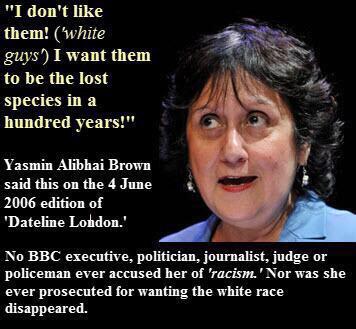
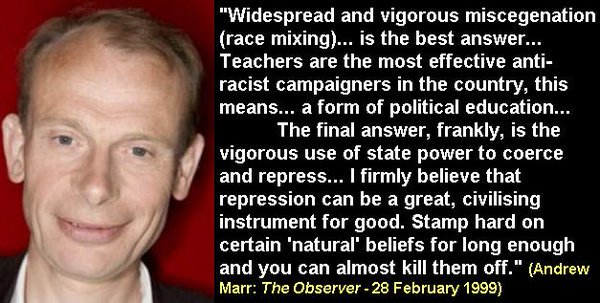
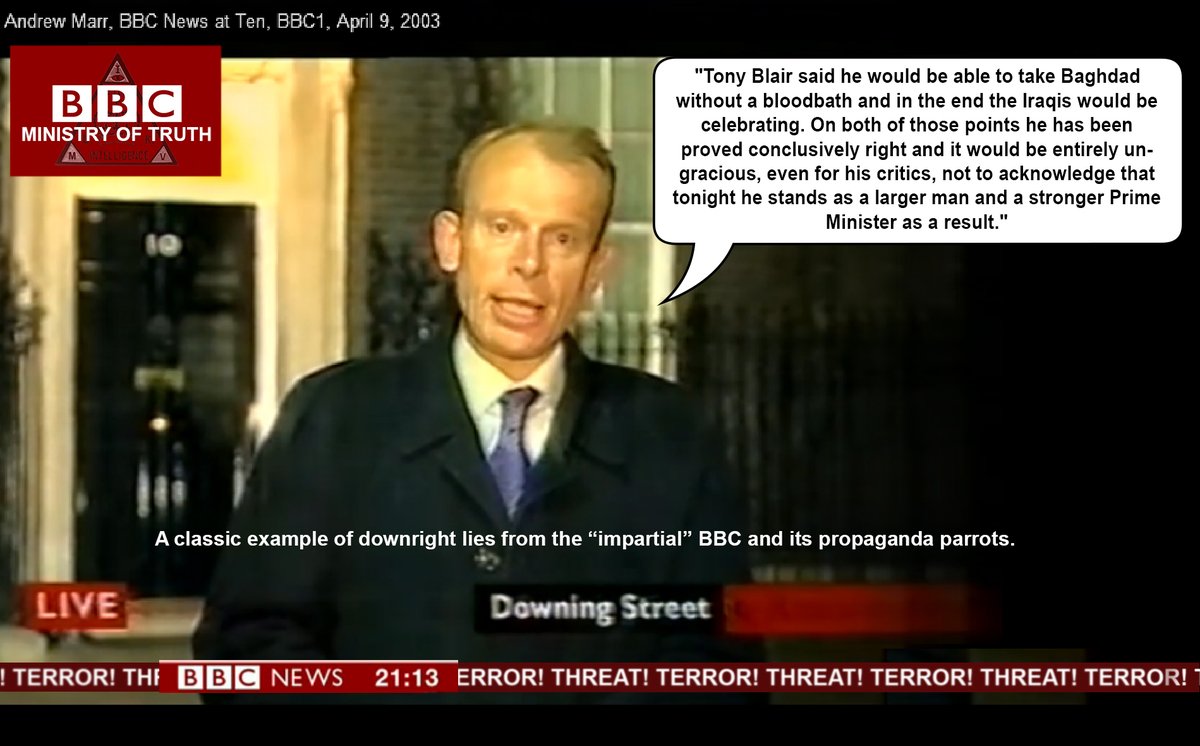
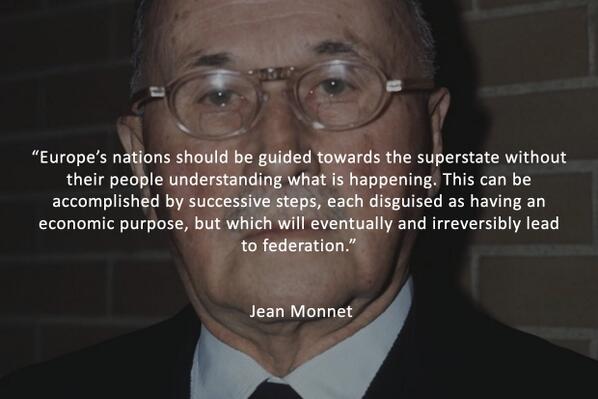





 Ian Robert Millard