This is the latest in my occasional series about those whom I consider to be “deadhead MPs”. The lucky politico this time is Karl McCartney, MP for Lincoln 2010-2017.
I would not usually bother with someone who is no longer an MP and who is very unlikely to be returned to the House of Commons. In McCartney’s case, I have decided to make an exception. The reason is because McCartney’s combination of brash overconfidence, unpleasantness, personal moneygrabbing and expenses blodging, lack of interest in the poorer part of society and unimpressive academic and work background is now, and has become, over the past decades, almost typical of MPs (and by no means only on the Conservative side of UK System-politics). That such people can become MPs is an indictment of the selection and election procedures in place in the UK.
Lincoln is considered to be an “ultra-marginal” and a “swing seat”. In 2010, McCartney and the Conservatives won with 37.5% of the votes cast, as against 35.2% for Labour and 20.2% for the LibDems (BNP 3%, UKIP 2.2%, English Democrats 1.3% and an Independent on 0.5%).
In 2015, McCartney was re-elected: Con 42.6%, Lab 39.6%, UKIP 12.2%, LibDem 4.3%, TUSC 0.7%, Lincolnshire Independent 0.6%. The key points were the collapse of the LibDem vote by 16 points, the non-appearance of the BNP and English Democrats, and the rise of UKIP —by 10 points, though that was modest bearing in mind that the BNP and EDs did not stand. Both Con and Lab increased their percentages.
In 2017, the result was Lab 47.9%, Con 44.7%, UKIP 2.6%, LibDem 2.6%, Green 1.2%, and two Independents (0.6%, 0.3%). A pattern seen in many constituencies: UKIP slumping back to a 2010 or pre-2010 level and the LibDems failing to recover from the 2015 debacle and indeed slipping further. While the Con vote percentage did slightly increase –2 points– in 2017, Lab did far better–8 points higher. That despite the UKIP slump, despite McCartney favouring Leave/Brexit, despite the appearance of a Green candidate likely to impact the Labour vote. It is hard to escape the view that the Con loss was the result of popular judgment on McCartney himself.
McCartney was exposed from 2010-2017, in various ways, as unsuitable.
A lecturer at the University of Lincoln blamed McCartney’s laziness and complacency for the loss (see Notes, below) and was too polite to mention McCartney’s alleged porn-trawling (though that was, admittedly, in 2014), his employment of his wife at £50,000 a year via Parliamentary expenses, or his expenses generally.
“On 28 February 2013 McCartney apologised to the Independent Parliamentary Standards Authority (IPSA) for the content of notes he had sent to staff. The notes were described by IPSA Chief Executive, Andrew McDonald as ‘abusive’, ‘offensive’ and ‘condescending’. McCartney’s apology stated, “I apologise unreservedly to IPSA for my comments” [Wikipedia]. and
“The following month he claimed that IPSA’s incompetence had forced MPs from all parties to borrow money and that he had had to ask his parents for financial assistance.[30] McCartney also said that he had been told by a “senior IPSA official” that the organisation intended to “damage MPs as much as possible,” a claim that IPSA said was “wild ..simply untrue.” [Wikipedia].
The readers’ comments section under that newspaper report was harsh:
“Poor old Karl. He really needs to wipe away those tears and get on with his life. He is an arrogant, rude and bitter loser. And they are his good points. Lincoln and the Conservatives are better off without him. Ignore him Karen.”
and
“Happiest day last year was when he walked away in a huff and refused to speak to anyone or congratulate at the election result which pretty much summed everything up.”
As to what McCartney is doing now, I think that the answer may be “very little”. I notice that, as I write this piece, around 1800 hrs, he has already tweeted or retweeted 29 times today, so far. His website seems to say that he will be the Conservative candidate at the next general election. It is hard to know why. One can only speculate as to why the local Conservatives have chosen him. He was a lay magistrate at one time; he is a Freeman of the City of London (see Notes, below), having “worked with”, his website claims, more than one Lord Mayor in the late 1990s. Freemason? I do not know.
McCartney obviously did pretty well financially in his 7 years as MP: salary of (then) about £70,000 pa, and wife’s salary (paid out of his expenses claimed) £50,000 pa; also possible other (outside) sources of income (I do not know about this). His overall expenses alone over his time as MP totalled well over a million pounds. He does not appear to have a job at present (there is nothing mentioned on his website); perhaps his wife has found another job, now that her well-paid work as her husband’s assistant has gone.
Readers of The Lincolnite (online newspaper) were as harsh as those commenting on Lincoln Live (above):
“A totally useless MP, more concerned about himself and his expenses than he ever was about Lincoln – amazed that they’ve reselected this waste of space.
John Bercow (Speaker, House of Commons) summed him up nicely with this in a parliamentary debate when McCartney let himself (and us) down yet again:
“Mr McCartney, calm yourself. Be quiet, young man. We do not need to hear from you. You add nothing and you subtract from the proceedings.”
Then there were the abusive notes (for which he had to apologise) he sent to the parliamentary expenses staff when they queried his expenses.”
and
“Unvelievable! [sic] A sure fire way for the Conservatives to lose votes.”
and
“It’s not what you know but who you know ,Roll your trouser leg up, funny handshake and fancy apron crowd.”
What are McCartney’s chances of getting back as Lincoln’s MP? Very slight. I have blogged elsewhere about the impact of Brexit Party (and slightly revived UKIP) on the Conservative vote, assuming that Brexit Party contests a general election. That alone would sink the Conservatives in an ultra-marginal such as Lincoln.
Another point is that present Labour MP, Karen Lee, who worked in shops for years before spending 14 years as an NHS nurse, still puts in some shifts at a local hospital, donating her NHS earnings to charity! What a contrast to greedy, moneygrasping and “entitled” McCartney! His work in the City of London in the 1990s was obviously so unimportant that even his own website says almost nothing about it (neither does he seem to have done much outside Con politics in the decade up to his election in 2010).
In addition to all that, Karen Lee is local in origin, whereas McCartney was born in Birkenhead, “Murkyside” (Merseyside), and was educated there and in Wales.
Well, there you are. My latest “deadhead MP”, who is hoping to resume his place at the trough soon. Over to you, voters of Lincoln…
“In England, the most established borough freedom is that conferred by the Freedom of the City of London, first recorded in 1237. This is closely tied to the role and status of the livery companies. From 1835, the freedom “without the intervention of a Livery Company” has been bestowed by a general resolution of Common Council, by “redemption” (purchase), at one time for an onerous sum. Now the Freedom can be obtained by servitude, by patrimony, by nomination, or by presentation via a Livery Company. Freedom through nomination by two sponsors is available for a fee (known as a “fine”) of £100, but is free to those on the electoral roll of the City.” [Wikipedia]
Update, 1 May 2019
I am writing this update just after 1400 hrs. McCartney took to Twitter today at about 0600 and, by my reckoning, has, in the intervening 8 hours, tweeted or retweeted at least 52 times (I think that I have left out a few retweets). Quite a few of his tweets and retweets seem to be about “anti-Semitism” in the Labour Party. McCartney must have been part of the “Friends of Israel” crowd (like 80% of “Conservative” MPs). He obviously wants to remain (((onside))). I have no idea whether Lincoln’s deadhead former MP actually has a job at present. I doubt it. He seems an extremely unpleasant person either way.
In the article above, written for The Lincolnite (local online newspaper), McCartney again obsesses about “anti-Semitism” in the Labour Party, saying that Labour peers have raised the issue again. Well, about 50 or 60 have, out of 179…
I wonder whether the voters of Lincoln share McCartney’s obsession with speaking out in favour of the Jewish lobby? I doubt it! As for the rest of his article, the Lincolnite needs a sub-editor to correct spelling errors (“buses” is right, “busses” is not) and grammar.
Some of the few readers’ comments on the above article have been unkind:
Why are you giving this failed Tory a voice he spent 1000s on a letter folder, and employed his wife as an assistant on 45k a year. He doesnt give a toss about us he just wants his expenses back…“
I am assuming the Lincolnite has decided to join his very early election campaign hence the article. I assume we will get more of the same until a General Election. As it stands he is a nobody and yet has got 3 times more space than the sitting MP who represents which Party? Well blow me“
Seems that McCartney and his wife, a local councillor, are living rather well off the hump, despite having had their joint income reduced since his 2017 election failure:
Well, it seems that McCartney’s leech-like tenaciousness in Lincoln might (against the odds and all reason) pay off. Corbyn-Labour is suffering a crisis of public confidence, while (by reason of that) Boris-Idiot and the misnamed “Conservatives” are riding high in the opinion polls.
People vote (mainly) according to party label and national trend rather than for or against the individual candidate. That plays to McCartney’s advantage here, however unfair that may be. At present, the Conservatives are favourites in the betting to retake Lincoln (1/2) whereas Labour is on 11/8:
If I myself say so, it was rather prescient of me to have included Karl McCartney in my Deadhead MPs series, inasmuch as the tides have turned, at least temporarily, in his favour, which means that he may well be back as MP for Lincoln (well, MP for His Own Benefit, His Wife’s Benefit, and, maybe, Lincoln) by 12 December.
The betting odds have McCartney favourite to retake the seat on Polling Day. That must reflect the general/national public sentiment against Labour, mainly, as well as McCartney’s pro-Brexit stance in a Leave constituency.
Brexit Party is standing, but is probably of no great significance now, Farage having shot his own party in the head (now at 3% or so in the opinion polls). UKIP stood at Lincoln in 2017, but only received 2.6% of the total vote.
Well, the voters of Lincoln have evidently eaten too many potatoes. McCartney has been elected again as MP. He must be celebrating his return to paid “work”, generous (whatever he says) expenses, and perhaps to getting his wife back on the gravy-train (£50,000 pa as “assistant” or whatever, yet again via expenses), though the rules were changed for MPs elected in or after 2017, so it may be that he at least will be prevented from blodging in that way.
McCartney was elected this time because the Brexit Party candidate withdrew on his own initiative. What an idiot…his (guessing) several thousand intended votes probably did it for McCartney, who beat the far better Labour candidate, Karen Lee, by about three and a half thousand votes.
After McCartney lost his seat again in 2024 (he scored 23% as against the Labour candidate’s 43.8%; Reform scored 18%, so even had Reform not stood, McCartney would still have lost), he tried to be selected as Conservative Party candidate for the Greater Lincolnshire mayoral contest, but did not make it onto the shortlist; in any event, the ex-Con Party ex-MP, Andrea Jenkyns, standing for Reform, soundly beat the Con Party candidate, by 42% to 26.1%: https://en.wikipedia.org/wiki/2025_Greater_Lincolnshire_mayoral_election
McCartney is now 57. His loyalty to the Jewish lobby and the Israeli cause may have helped him stay as MP for a total of 12 years, but his political career, such as it was, is now at an end.
I have in the recent past posted a few analyses of the Labour and Conservative defectors who called themselves the “Independent Group of MPs”, which has now become the new party Change UK. I concluded that, if it became a party, it would have even less success than had the Social Democratic Party [SDP] in the 1980s: see Notes, below.
Change UK is now putting up candidates for the EU elections. As far as I know, it missed the boat for the UK local elections and in any case would have had few candidates available.
My attention was caught by the tweet below. The tweeter is “Senior Political Correspondent” for the online news outlet BuzzFeedUK.
This morning's new Brexit Party candidates: environmentalist, Afghan vet, charity director, entrepreneur, nurse
This morning's new Change UK candidates: Boris Johnson's sister, two former Tory MPs, that BBC guy and QC who tweet a lot…
The tweet makes the point readily enough. Change UK is the unalloyed party of Remain. It is also, as Wickham’s tweet suggests, the party of the Westminster Bubblers, and of the cronies and families of existing MPs and others who, like “Tricky Dicky from Billericay”, have been “doing rather well” out of the existing political and socio-economic system. I notice, as one does, that Change UK also seems to be the party of (some of) the Jews and (both Jewish and non-Jewish) Zionists. Luciana Berger, Mike Gapes, Gavin Esler etc.
Only this morning, Change UK launched its EU election campaign. 3,700 people wanted to be Change UK candidates. 70 were chosen. Some “celebrity” new candidates were announced: Gavin Esler, Rachel Johnson (one-time Editor of The Lady, and sister of that idiot who wants to be Prime Minister and whose comic am-dram reprise of Winston Churchill is apparently admired by a few people who have dined too well at the golf club).
“Esler added: “I have never been a member of a political party but I am now. “I have never been a candidate in an election but I am now. I have never been seriously worried about the future of our country but I am now. Our political system is a joke. It is a worldwide joke. They are laughing at us – not with us, at us.” [The Guardian]
Those who have read my blog posts about The Independent Group/Change UK will not be surprised to be told that I rate the chances of the new party as being somewhere around zero. This is not in fact a party at all, but a dustbin into which has been thrown unwanted rubbish from the Labour and Conservative benches of the House of Commons.
The Interim Leader of this party without policies is Heidi Allen MP. She has made it very clear that Change UK (which has 11 defector-MPs now) will not bring down the present Conservative minority government:
“Asked if Change UK MPs would back the government in a no confidence vote, Ms Allen told the BBC: “I can’t say wholeheartedly that we’ll vote for the government, or indeed would we ever be a confidence and supply partner in any coalition type government. You need to see what the offer on the table is at the moment….Do I believe however that a general election is a smart thing right now for our country? Absolutely not.” [Daily Mirror]
Does Heidi Allen believe that statements like that fool potential voters? If she does, she must be even more stupid than I had imagined (despite her degree in astrophysics: I only ever met one person with such a degree, and that woman was as thick as two short planks…).
It is obvious to everyone, surely, that the “Change UK” MPs are unwilling either to precipitate a general election (which they probably could, given the numbers of the parties in the House of Commons) or to hold by-elections in their own seats, because they must know, in their hearts, that most of them have little or no chance of retaining those seats.
There are several reasons why I think that Change UK has no chance: its MPs, its palpable Hampstead/Highgate/Blackheath and also affluent provincial air, its paucity of policy, its apparently chaotic organization, and its connections with Jewishness and Israel (those latter being, though, the least of its problems).
Then we look at those MPs again….Heidi Allen, does anyone, anyone at all in the UK, see her as Prime Ministerial material? Fathead Chuka? Ha ha! He has a meltdown trying to decide what scent to wear and which nightclub to attend! What then about Anna Soubry, MP for Broxtowe, or should that be “for Plymouth and Angostura”?…
There is another aspect: the British people are not moving toward vague ZOG-approved “Centrism” (ZOG/NWO/EU-ism, if you like), but toward the so-called “extremes”, meaning that they actually want to be helped and not oppressed by their government, and they also want a government which can accomplish concrete results.
There is something doomed and even pointless about Change UK.
She is correct, @ChukaUmunna. Change UK is losing traction. I could have remedied that for you, even prevented it. I applied for the social media position but didn't receive a reply. Your social media presence is staid, at best. Why hasn't it improved yet?
Change UK literally is the face of everything that is wrong with politics, people who look like the frame of a david milliband, cameron, clegg, may, are just copy and paste robots in a suit the idea is dead. If centre ground new politics looks an ex tory i aint buying it. https://t.co/VQseOiLnk1
It isn’t clear what #ChangeUK want to actually change.
They want to stop Brexit, stay in the EU and apparently won’t even vote to bring down Theresa May if Labour bring another confidence motion forward in Parliament. https://t.co/OU0r94yTGP
Why didn't you call yourselves 'The Remain Alliance' Party instead of Change – which is @Change organisations name.?They mean real change – your party does not mean change at all. @brexitparty_uk are the real political party for change. Leave means leave. https://t.co/V8inLOHu7D
— Grace Mason 😇🇬🇧🙏✝️♥️ (@Gracefulgrace10) April 23, 2019
"Change UK are a single-issue Party with no coherent policy platform… This is a re-branding exercise for former Conservative and Labour politicians who presided over cuts to public services and the relentless growth in inequality." https://t.co/tycslU2R0e
The funding of “Change UK” is opaque. It seems that it is funnelled via offshore trusts in at least two jurusdictions. Panama is one. The second part of the video below shows Joan Ryan, now a Change UK MP, at a time when she was still a Labour MP, conspiring with Shai Masot, an Israeli intelligence operative, and talking about using a million pounds in Israeli funds to suborn or corrupt MPs, presumably Labour ones. Does some of Change UK’s funding come from Israel or from secretive non-governmental Jewish sources?
Update, 26 April 2019
A tweet or two that caught my attention:
Anyone else noticed how the candidates for @brexitparty_uk are young, old, black, white, mixed race, working class, middle class. And the candidates of Change UK @IndGroup_UK are all from the cafe in Waitrose?
Meanwhile, away from the pathetic defector MPs and their Israeli links, Brexit Party is storming forward, over the bodies of the already-dying “Change UK”:
This is incredible! I am not a “supporter” of Farage or “Brexit Party”, but this is the sort of reception that few get! Reminiscent of the Fuhrer (though without the depth or substance, of course). Brexit Party is on a roll! Only three weeks to go before the moment of truth (EU elections).
The Brexit party turned up in Newport, south Wales last night. A true Labour heartland. Usually. https://t.co/NoBovPxNCv
While Brexit Party is holding large meetings, rallies almost, all over England (2,000 people in Peterborough, where the by-election is due on 6 June), Change UK is holding tiny gatherings, promoted by typical msm “journalists” (almost all pro-Israel, pro-Remain, anti-Brexit).
Change UK London Rally vs Brexit Party Peterborough Rally. One made lead story on BBC News, the other didn’t even feature. That’s right. The tiny one made the front page, the massive one didn’t. Why’s that I wonder? pic.twitter.com/0MVGwgUoly
Ironic! Lying Jew Zionist Mike Gapes MP (MP until the next general election…) well and truly put in his place by LBC’s Iain Dale (who usually bends over backwards for Jews)! If it had been any other presenter, Gapes would be screaming “anti-Semitism!” by now!
An interesting tweet (see below), from a week ago but just noticed: Change UK is less popular than Brexit Party even in metropolitan, cosmopolitan London!
and now Chris Leslie, one of the Change UK MPs, i.e. a political careerist elected under the Labour banner and who, facing deselection from his very safe seat, defected to the “Independent Group” which is now Change UK, decides to comment on the contrived Jess Phillips “rape” storm in a teacup:
Unfortunately for deadhead Leslie (who belonged to Labour Friends of Israel….quelle surprise…), “Sargon of Akkad” (Carl Benjamin) is a UKIP candidate and not a Brexit Party one! Leslie wrong again. Thousands of replies later (see the thread), Leslie has still neither deleted his inaccurate tweet nor apologized. Incompetent little chancer, who has never had a job outside politics. A drone.
So now it turns out that some of the big donors to “Change UK” are a pack of Jews who are also behind finance-capitalist projects designed to snoop on British people. The names are enough…Isaacs, Sugarman, Agioff…
EXC: Who is behind the controversial facial recognition software used by the government to register EU citizens post-Brexit, which has been condemned by Remainers and privacy campaigners?
You really could not make it up! Change UK (appropriately known as CHUKUP) is an “organization” of donkeys which is also “led” by donkeys! I have nothing against real donkeys (charming little friends of humanity who are more worthy and more beautiful than any of the CHUKUP MPs) but I prefer not to vote for human ones to rule over us!
One of Change UK's top candidates has defected to the Liberal Democrats a week before European elections https://t.co/auNeLQjJcv
Meanwhile (see below), faux-revolutionary poseur Owen Jones interviews Anna Soubry MP, who appears to have been on the sauce again, judging from her mannerisms and words. Or maybe she just has mental problems. Or both. She conflates freedom of speech (which she claims, falsely, to support) with freedom of movement inside the EU. Of course, she is a bit thick anyway, and certainly not educated or cultured. She says that the “white working class” are against immigration because they have never seen non-whites! She’s either cuckoo or drunk (again)! She also says that she does not want the votes of any Broxtowe voters who are anti-immigration. Bin her. Evil old bitch.
I hope that she loses her Commons seat and subsides into an alcoholic stupor somewhere.
Update, 18 May 2019
Some of the ex-Labour Change UK idiots now try to worm back into the Labour Party! Ha ha! I bet that fathead Chuka is one of them!
Imagine this: fathead Chuka was once spoken of (in the corrupt msm) as ministerial or even prime ministerial material! They said the same about airheaded Heidi Allen! Imagine idiots like that at the head of affairs! It might be even worse than the present bunch of idiots…
…while in Liverpool, Jewish couples meet to shoot the breeze while they shop…oh, no, wait, it’s Zionist MP Luciana Berger and her few supporters
Good to see you found the 4 other CUKs in Liverpool, so sweer
I have to say, Change UK are certainly doing politics differently! Don't think many people have seen this level of organised incompetence from a political party,,,,,,,,,,, ever! Truly Historic!
In the opinion polls, Change UK are now at or under 2%. Looks like this blog foretold the future accurately (again). Only 5 days to go before “Change UK” sinks permanently.
I just noticed this “blast from the past”: Zionist Kate Godfrey thought that she had a freeloading “Labour” political career set up, no doubt with the help of Common Purpose drones, but people saw through her careerism and Zionism, with the result that she never did become an MP, and later resigned from the Labour Party in a fit of pique, relocating from West Midland to East Midlands. Now she tries to become an MEP for Change UK! You couldn’t make it up! Ha ha! She made the wrong call yet again! She used to tweet nonsense about me to other Zionists in their Twitter echo-chamber, a few years ago. Looks like “the Curse of Millard” is still working!
Change UK holds a “rally” (5 members of the public and 5 reporters)!
Now we’ve seen the enthusiasm of the people for Chuka and Soubry’s great party I assume we’ll be seeing less of them on #marr, #bbcqt and #BBCR4today… but I won’t hold my breath pic.twitter.com/TlZ9uVgCAT
Well, I was there a month ago, but the msm is now finally catching up with me!
“Change UK is dying before it even learned to walk. Its MPs know it. Its candidates know it. The public knows it. Change UK never really wanted to change anything. What it wanted most of all was for things to stay the same. For the UK to remain in the EU and for the extremes of both the Tory and Labour parties to shut up and go away” [ The Guardian]
So here we are, EU election day, and “Change UK” is tweeting (see below) that the problems of the UK are all because of “the lies” supposedly told by “the far right”, UKIP and Brexit Party (none of which have ever had any power in the UK)…
Meanwhile, I sincerely hope and believe that Change UK is being slaughtered at the polls.
Update, 26 May 2019
Votes being declared in the EU Elections. The BBC interviews Heidi Allen MP, the ex-Conservative defector now in Change UK. She says that CHUKUP is only “at the start of something”. Asked “where does Change UK go from here?”, she answers with waffle. CHUKUP is not even contesting the important Peterborough by-election. It’s finished.
Update, 27 May 2019
Oh, no! Looks as though Anna Soubry has been hitting the bottle again, following CHUKUP’s terminally poor European Elections results…
Even in the Broxtowe area, in which Anna Soubry’s constituency is located (the boundaries are not exactly the same but almost the same), CHUKUP only managed 4.7%. Anna Soubry should just open another bottle and try to forget what is left of her unimpressive political career.
Broxtowe (East Midlands) result:
Brex: 35.9% (+35.9) LDem: 20.9% (+14.5) Grn: 13.5% (+5.7) Lab: 12.1% (-14.4) Con: 8.9% (-15.2) ChUK: 4.7% (+4.7) UKIP: 4.0% (-27.0) Looks like Broxtowe rejects your opinion Anna & the CHUKs 😂 No wonder you do not want a by election 😂 😂
Well, Change UK (I call it CHUKUP) is still notionally in existence by polling at statistical zero. As I predicted on 18 May, Fathead Chuka [Umunna] has indeed had a meltdown and defected, though to the LibDems rather than back to Labour (they wouldn’t let him rejoin). He lasted a month or so in CHUKUP, so anyway rather longer than the day or two he lasted as Labour leadership candidate! What a total waste of space Fathead Chuka is! I suppose that he hopes that the LibDems will find him a seat to contest. Not Streatham, which has been safe Labour since 1992: https://en.wikipedia.org/wiki/Streatham_(UK_Parliament_constituency)#Elections_in_the_2010s
Meanwhile, “Interim Leader” Heidi Allen clashed with drunken creature Anna Soubry. Allen advised a merger with the LibDems. When Soubry attacked the idea, Heidi Allen walked, and now sits as am Independent. That leaves Anna Soubry as “leader” of this waste of space “party” and its 5 MPs, none of whom will be MPs as soon as a general election is called.
As I predicted pretty much from the start, finished.
Update, 4 July 2019
I missed this: Change UK is now called The Independent Group for Change. The third or fourth name this dead-parrot “party” has had in its few months of existence.
I do not think that most newspapers even reported the above. Maybe a small paragraph on some obscure page. A sign that The Party Formerly Known As Change UK is on life-support, which with the next general election will be turned off.
Chuck Anna Soubry into a vat of alcohol and go home.
Update, 28 January 2024
The post had a few hits today, the first for a long time. I was idly wondering whatever happened the Blair-Brown “Labour” drone Chris Leslie, at MP until the 2019 General Election.
Well, seems that (((they))) rewarded him— he is now the chief executive of a trade body representing the organized debt and debt collection industry. How pleasant…
I have blogged in the past about a few MPs in the present House of Commons who stand out even in that —at best— mediocre ensemble for their stupidity, deadheadedness and general uselessness. My most recent targets have been Kate Osamor MP and Fiona Onasanya MP. I move now to examine Scott Mann, Conservative Party MP for North Cornwall.
Scott Mann has made so little impact in Parliament since he was elected in 2015 that I was entirely unaware of his existence until today, despite the fact that, in the years 2002-2004, I myself lived in the North Cornwall constituency and had a lease of one of the largest country houses there [seen below in a 1940s photograph]
The North Cornwall Constituency
The constituency is largely rural, though it contains some fairly small towns (Launceston, Bude, Wadebridge, Padstow); it has a significant, mostly coastal, tourist industry. It was held by the Liberal Democrats from 1992 to 2015. The national collapse of the Liberal Democrat vote in 2015, which continued in 2017, was reflected in North Cornwall. The Conservative, Mann, increased his vote share from 45% in 2015 to 50.7% in 2017. It can now be considered a safe Conservative seat.
Scott Mann
I am not someone who is biased against those who drop out of school or education; after all, I myself did! (and then had to do it all myself later). There are several possible reasons (apart from sheer lack of ability) why someone gets a university degree late or (as in Mann’s case) not at all (and in any case the “degree” label is so devalued these days anyway), but Mann’s background, like those of so many MPs now, does not inspire confidence.
Mann was educated locally before becoming a postman, working out of the sorting office in Wadebridge (Cornwall), the town in which he had been both born and brought up.
In 2007, Mann was elected as a county councillor. In 2016, he resigned after having been criticized for poor attendance. He remained a postman until he became an MP.
Mann employs his girlfriend as “part-time secretary” via Parliamentary expenses (she gets about £30,000 a year for a part-time job). Apparently, they do not live together. He also claims, or has done, for other personal items, such as Amazon Prime [see Notes, below], and for his London accommodation. Well, after all, he lived for years on a modest Royal Mail pay-packet, and the opportunities to make hay, as a county councillor, are far more limited than those open to an MP.
Now Mann has come to public attention as the idiot who says that all knives should be fitted with GPS (!) and that anyone carrying one should be severely punished unless hunting, fishing or shooting! P.G. Wodehouse meets Common Purpose? I have some sympathy with the tweeters who asked “how are you even an MP?”
“Scott Mann admitted his idea was “s—“, but added: “ultimately we do have a problem, and no one’s coming up with any solutions, we need to sort it out.”” [Daily Telegraph]
I fear that the answer to the above question (as to how this idiot ever became an MP) is the same as applies to all other “deadhead” MPs (and they are many) in the Westminster monkeyhouse: they get through a selection procedure which is often a joke, or rigged, then get “elected” in circumstances where only one candidate (sometimes two, very occasionally three) has a realistic chance, because of FPTP voting, dominated by 2 or 3 System parties.
The tweet that exposed Scott Mann MP as a deadhead…
Every knife sold in the UK should have a gps tracker fitted in the handle. It’s time we had a national database like we do with guns. If you’re carrying it around you had better have a bloody good explanation, obvious exemptions for fishing etc.
It's not at all cool. People who opt for idiotic & unworkable solutions to complex/deadly problems shouldn't be allowed anywhere near law making process. Doubly so when they vote thru huge cuts in police funding. He's pretending to look for solutions whilst being part of problem
Unusually, especially for a Cornishman (I would suppose anyway), Mann cannot swim. He nearly drowned in 2016 and had to be saved by fellow-MP Johnny Mercer:
The General Election 2019 confirmed Mann as MP for North Cornwall. In fact, Mann received the votes of no less than 59.4% of those who bothered to vote, the largest winning percentage in the history of the constituency if one leaves out the unopposed victories of Liberals in 1918 and 1923.
In 2019, Mann managed to more than double his 2017 majority to 14,752; he also doubled his majority in percentage terms. Interestingly, the LibDem candidate’s percentage share (30.8%) fell not only compared to 2017 (36.6%) but even as compared to 2015 (31.2%). Another sign that the LibDems are on the way out even in former strongholds.
Seems that deadhead MP Scott Mann is now odds-on to lose his seat to the LibDems. Five years ago, and in fact until quite recently, I thought that “LibDemmery” was dead, but it has revived as a result of the total incompetence of the present Conservative Party and its ministers and MPs, and may be set to actually get 40, 50, maybe even 60 or 70 seats at the 2024 General Election. Who would have thought it? Unmerited, of course, but unmerited benefit is, after all, so UK 2024…
As for Scott Mann himself…well, my opinion is that, for someone with his very underwhelming academic and work background, he has been very lucky to have had a pretty well-paid near-sinecure as MP for 9 years.
Indeed, in 2022, he was even appointed to a minor ministerial position (as a Parliamentary Under-Secretary of State, or PUS) by Liz Truss. That was after he was “shifted” says his Wikipedia entry (probably edited by Mann himself) in 2021 after a few months being a Government Whip (paid) to being an Assistant Whip (unpaid). Translation: he’s useless.
Mann will now have to forgo the MP salary (now over £90,000 p.a., plus pretty decent expenses), and that also means that the London flat will go, as will (at least as paid “part-time secretary”) his girlfriend.
In fact, MP salaries are not paid while Parliament is not sitting by reason of a General Election, so he may already be feeling the pinch.
Mann could, I suppose, go back to being a postman, a far more socially-useful job than being an MP, at least one of the type Mann has been. Otherwise, unless his friends can find a job for him, he may soon start to learn from personal experience how hard life can be in contemporary Britain for the unemployed, especially at his age (46).
That should not come as too much of a shock to him, though. After all, he himself voted for all of the anti-“welfare” nonsense put through from 2015-2024, and approved of most if not all of the Dunce Duncan Smith nonsense of 2010-2015.
Those who read my blog regularly will know that I am far from being an unalloyed fan of Jeremy Corbyn. I think him wooden and not a genuine political thinker, someone who is stuck somewhere between the crypto-Communism of the Michael Foot era and the ideological madness of the contemporary self-described “Left” (I myself never use terms such as “Right”, “Left” as useful descriptors), the crazies who have rushed in to fill the vacuum left by the collapse of old-style socialism in and after 1989.
You get the idea.
Corbyn is, in short, a bit of a joke. I have blogged about him, and what I call Corbyn-Labour, in the recent past. He and his party are also in favour of, or not opposed to, mass immigration and the “multikulti” society.
I have little time for Corbyn as a political leader, as such. His poor intellectual level and Lego-brick level of understanding of society and international politics and geopolitics give little confidence.
On the other hand, there is or was something not entirely unpleasantly familiar about Corbyn. As I have blogged and (before I was expelled from Twitter) tweeted about him, he is a recognizable 20th century English type: the bearded “socialist” from the provinces (in Corbyn’s case, transplanted aged about 22 to London), wearing his Lenin cap, reading the Morning Star, Tribune and the Guardian, protesting against 1980s South African apartheid or Israeli West Bank settlements etc, supporting Castro-Cuba, “revolutionary” 1980s Nicaragua, “socialist” Venezuela etc.
Corbyn’s type, with variations, could be observed from around the time of the First World War, and up to the present day, in its “natural surroundings”: the Durham Miners’ Gala, the Tolpuddle Martyrs annual event, the conferences of the Labour Party and TUC, local constituency Labour parties, CND marches, steam rallies, heritage railways, allotments. So much of a “type” is Corbyn that he could easily be imagined included in a series of “English types” in the Edwardian cartoon tradition, complete with outsize head and a little descriptive caption.
Corbyn’s elevation to the Labour leadership was, as I have also blogged, little short of miraculous. Since 2015, Corbyn has also managed to fight off repeated Jew-Zionist attempts to unseat him. What do “they” want? They want Corbyn gone so that Jew-Zionists, lobbyists and placemen can once again control Labour. “They” already control the misnamed “Conservative” Party and have done since at least the end of the Thatcher era; until Corbyn’s accession, “they” controlled Labour too. They want that control back.
We have seen recently how some of Corbyn’s enemies in the Commons started to capitulate and leave the Parliamentary Labour Party, committing political hara-kiri
At the same time, however, Corbyn-Labour has made the mistake of trying to conciliate, making concessions to the Jew-Zionist element. It did that before, when it surrendered to “them” over the so-called “international” “definition” of “antisemitism” (in fact, adopted by fewer than 40 states out of about 200). Now Corbyn-Labour has given in on Chris Williamson MP and has suspended him.
Chris Williamson MP occasionally (maybe two or three times only) retweeted my tweets when I still had a Twitter account. However, when the Jew-Zionists noticed that fact, they criticized him for it, after which he stopped retweeting me and may have (I forget) blocked my account. Weak. It showed weakness in relation to the Jews. I have not forgotten that.
Now Corbyn, John McDonnell and some of their closest allies (as well as swathes of “useful idiots”) in Labour labour under the same cognitive dissonance problem: Corbyn and many of his supporters see what the Jewish-Zionist lobby is trying to do, want to fight against it, but at the same time tie their own hands behind their collective back by saying that they oppose “antisemitism” and are only against Israeli depredations and behaviour rather than being in any way hostile to Jew-Zionist lobby activity in the UK (or France etc).
Corbyn and most of Labour also go along with the largely-debunked “holocaust” narrative as well. It all just plays into the hands of the Zionist lobby, which controls or near-controls many Labour MPs. Yes, some have left (Luciana Berger, Joan Ryan, Angela Smith, Ian Austin, Chuka Fathead) and their political careers are finished. However, there are many like them still in place and reporting back: Stella Creasy is just one example. Mary Creagh, Rachel Reeves and Liz Kendall also come to mind, inter alia, as do the outright Jewish Zionists such as Margaret Hodge.
Since Chris Williamson was suspended, the whole Jewish “claque” on Twitter and in the Press (in fact, in the msm generally) has gone mad again about Corbyn, “anti-Semitism” in Labour etc. It’s odd: we are told constantly that there is no “Jewish lobby”, and that individual Jews tweet or scribble purely as individuals, yet when something like this crops up, they all go the same way instantly, like a shoal of fish.
Corbyn-Labour, for all its flaws, is the only game in town right now for striking against the enemies of our British and European future. It can pave the way for social-nationalism down the road.
This is a crisis for Corbyn and his allies. They must either fight back against the encroaching, whining, pleading, manipulating and angrily-demanding Zionist lobby, or be “cribbed, cabined and confined”, imprisoned in a Zionist-constructed box made out of “antisemitism” allegations, “holocaust” fakery and a raft of trickster-drafted “definitions”, “regulations” and inhibition of free speech. Just say no!
Here we see the Jewish anti-Corbyn “claque-storm” in its “tweetstorm” mode, exemplified by this tweet, in which a Jewish woman wants the Labour Party to either disenfranchise its Sheffield Hallam branch (by putting it into “special measures”, i.e. ruling it from London), or to remove (or remove the rights of) the 40 members who voted for a statement (only 1 person voted against). You see the problem: the 40 English people count for less than the one Jewish or pro-Jewish one…If Labour did that across the country, it would be left without active members, the footsoldiers that win elections.
A good typical example of how, if you give “them” an inch, (((they))) take a mile: the Jew-Zionist lobby gets what it wants re. Chris Williamson, but then whines or blusters about how it is too little too late. Their next demand will soon be uttered…
Fiona Sharpe, spokesman for @LabourAgainstAS, said: ‘The decision of Labour's NEC ruling body not to allow Chris Williamson to stand as the Labour candidate for Derby North is too late in coming and totally inadequate. 3/6
When I wrote the above article, I thought that 30 or 35 states had “adopted” the “IHRA” definition of “antisemitism”. In fact, and as I now know, the true figure is only about 15, out of 200 states.
Once again, I am deflected from my slow and peaceful writing of a piece about my several years in Cornwall and Devon, and particularly those spent at Polapit Tamar [below, pictured in the 1940s], and which has an interesting history of its own,
by the need to write about contemporary political events. Still, duty calls…
Social Nationalism is stalled in the UK, but waking from a dormant state…
In other blog posts, I have criticized Corbyn-Labour-supporting Aaron Bastani, Ash Sarkar etc, but Bastani is surely right in tweeting that “The space for a successful far-right party in the UK is massive.” The label “far-right” I disparage, of course, but in essence I agree with him. The difference is that he opposes the birth of such a movement, whereas I support it!
The space for a successful far-right party in the UK is massive. We are fortunate that both the BNP & UKIP failed to fill it.
The fact that much of the establishment still thinks a 'centrist' politics is even remotely possible shows they either don't know this or don't care >
I have recently blogged about the “Independent Group” non-party, about how it will struggle even to get to a 2015-UKIP level of support (see Notes, below), both for “technical” reasons (FPTP voting, a likely even level of support nationwide, so insufficient to create a winning concentration of votes, a Schwerpunkt, in any one constituency etc) and because the voters are moving to the falsely so-called “extreme”. I examined also the Social Democrat Party of the early 1980s.
There is however also the point that Bastani raises in the tweet shown above (does he read my blog?): the fact that people generally are getting frustrated, and many angry, very angry, with smug, “centrist” MPs and MEPs complacently making hay for themselves as people struggle and, in not a few cases, literally starve to death in the UK (thanks to policies such as the “welfare” “reforms” which were imposed by political rats such as Iain Dunce Duncan Smith, Esther McVey, the Jew “lord” Freud and many others).
The roads are potholed, the trains are expensive and don’t even run much of the time, mass immigration has, taking the effect overall, trashed our European society, legal services, local services etc have been cut or destroyed, housing has not only become completely inadequate (mass immigration, millions of births to backward aliens, private profiteering) but threatens to become even less adequate.
The British people want and increasingly will want concrete results. The Westminster game of using the corrupt electoral system to win over the “moderate” voters in the 50-100 most marginal constituencies to a “same-old” pseudo-democratic con-game is seen as the rigged system that it is.
A few years down the line, the choice will be stark: European civilization and social nationalism against “multikulti” neo or pseudo-Marxism and also against Zionist-controlled private profiteering and fake “conservatism”.
When the right time comes, our society will be changed in the right way, keeping what should be preserved, creating what is new and worthwhile, but destroying the inferior with the flame of justice.
Their chosen identity is the bland “The Independent Group”. Note, “group”, not party. When the SDP was formed in 1981, it quickly adopted a firm identity which everyone in the UK understood. It was a political party, with a firm policy position.
These Jewish and pro-Jewish-Zionist whiners are not a party, even on the face of their own now-public identity. They are just a group of Jewish and/or pro-Zionist MPs, all facing retirement or deselection, and whose main gripe is “anti-Semitism” in the Corbyn-led Labour Party. None of them, at their launch yesterday, actually tried to put forward any thoughts about what is wrong in Britain, let alone what might improve the country. The Jew Zionist Mike Gapes MP was the most honest, talking purely about his hatred for so-called “Anti-Semitism”. As noted, his tribal interest was at least not concealed by some faked concern about the British people.
The mass media are agog at the thought of what might happen in some game of fantasy politics where numbers of disaffected MPs from the traditional “three main parties” all coalesce in a House of Commons bloc to thwart the plans of Corbyn and (if she has any plans) Theresa May. For example, see here below (the tweeter is that little Indian who sometimes presents Channel 4 News):
The Independent Group of seven former Labour MPs could grow – with more Labour, even a couple of Tory and potentially all the Lib Dems – and then become a new party. It would then have to decide who it would and wouldn't go into coalition with.
Corbyn Labour supporters, however, were swift to seize on the group’s weak points:
So 3 hours after Independent Group launch:
No policies. Website crashed. Exposed their registered as a Ltd Co to avoid donor scrutiny. Website registered in Panama tax haven. Received backing from the Far-Right.#ChangePolitics bantz
Just realised Angela Smith is the MP who wrote an article in the Guardian about why water companies shouldn't be nationalised, without disclosing her husband's interests in private water companies! 🤔#LabourSplit#FunnyTinge#independentgroup
Luciana Berger. Rented a flat in London which is owned by a company based in the British Virgin Islands, but didn’t want anyone to know. That’s not Labour. #BlairRichProject
Yesterday's #independentgroup Ltd. launch has changed nothing in the lives of those suffering from the Tories universal credit, austerity, rigged system, or hostile environment.
TIG Ltd are nothing but wreckers. Lets hope they prove to be as incompetent as their record so far.
The above tweets are a selection of the more polite ones criticizing the new not-a-party.
Meanwhile, Chuka Umunna has now broached the “elephant in the room” question, saying that he “hopes” that a new party could be formed “by the end of the year”. Hopes? Could? Imagine Adolf, back in 1919, “hoping” that a new party “could” or might be formed “by the end of the year”! That’s Chuka for you, as seen in the Labour leadership contest: a half-Nigerian fathead, irresolute, shallow, lacking will and force.
Questions about the initial funding of the “Independent Group” of 7 Jewish and/or Zionist MPs are building now. A Labour MP has suggested that the funding may have come (directly or indirectly) from Israel:
It is interesting that the company which owns this “Independent Group” is based in the secretive offshore jurisdiction of Panama, long a favourite of rich Jews connected with Israel and/or MOSSAD. “Robert Maxwell” for one.
My thoughts so far
As ever, the msm Westminster Bubblers are getting it wrong. Polls have been produced to show that the public would be “more likely to vote for” the Independent Group MPs than Labour. Really? What would those poor sheep be voting for? There is no point in asking the “Independent Group”, for their own website is as innocent of policy (even in the broadest of broad brush terms) as were the brief statements made by the seven defectors at yesterday’s launch (media event). Their published statement of intent could have been produced by almost any political party, tendency, or even religion.
My own view is that, yes, most UK voters, certainly most English and Welsh voters are thoroughly sick of pseudo-democratic politics in the UK, they do want a new direction and would be willing to embrace a new party, but that party is not this party.
In fact, of course, the Independent Group is not (yet) a party anyway. It is not (yet) registered as such with the Electoral Commission, does not say that it is going to become a political party, and, as noted already, not only has no policy, but has not even any locus standi in the sense of where it stands, beyond a vague and implied “Centrism”.
If further Labour defections happen (rumours abound about 20-30 MPs, with a few wild msm assertions that 100 might go) then the new party (if it becomes a party) might have traction in the short term. I still doubt that any “centrist” party could get anywhere in the medium term (i.e. beyond 2022), let alone have any greater durability.
What strikes me but does not shock me is the sheer ineptitude of the defectors: they had three years in which to get this together, to recruit more cohorts, to organize things. Needless to say, I am not surprised to see that fathead Chuka was unable to organize anything more than an evening in one of the expensive and decadent nightclubs which he is said to patronize.
What a difference it would have made, had yesterday’s launch announced that a new party had been founded or was about to be registered, and if the Independent Group had actually managed to organize a decent website (to digress: my own website, http://ianrmillard.com/, is amateur, yes, because I did it myself as best I could, and spent almost nothing on it; one expects something more professional from a group of individuals with plenty of money, wealthy Jewish backers, and who are hoping to soon form a major party). Above all, it would have made a huge difference had the defectors been able to say yesterday: “We are 100 [or even 30] Labour MPs who have now left Labour, are forming a new party, and invite applications for membership and candidature.” The new party would then have been in a position to recruit members and candidates for office.
Any new party [even if] based on the “7 defectors”, and which fields hundreds of candidates in a general election, would have to be taken seriously, though the experience of both the 1980s SDP and, more recently, UKIP shows that even a party capable of fielding hundreds of candidates might well end up with no MPs under the FPTP system.
As it is, we have 7 MPs who seem to be wanting mainly to make Jewish-Zionist propaganda against Corbyn-Labour, and who now have no party, no obvious policy, and no way yet of building a party organization in a situation where there might be a general election this year. Such an election would wipe out the defector cabal at once. No question.
It is interesting to note that even long-time anti-Corbyn plotters such as pro-Zionists Liz Kendall MP and John Woodcock MP, the sex-pest depressive, have not pledged allegiance so far. In Woodcock’s case, he might have been warned off as just too toxic, but Liz Kendall must have other reasons, maybe the wish not to risk that easy lucrative job as MP, with the £75,000 salary, the huge expenses, the opportunities for “nice little earners” on the side etc. Not to mention, down the line, the possibility of getting a nice little fake “peerage”, and so £300+ per day taxfree for merely turning up and signing a register!
I should imagine that there was jubilation at Corbyn HQ yesterday. They may even have popped open a few bottles of vintage Soviet “champagne”. The hard core of opposition to Corbyn has just committed hara-kiri.
Interesting: the “Independent Group” launched yesterday, 18 February 2019. Today, as I have been writing and looking at Twitter, I noticed that, as I thought and wrote, there were 38 tweets under hashtag #IndependentGroup in a period of one hour. Over an hour later, another 35. Twitter is not the world, or even the UK, but the low interest shown tells me much. The “Independent Group” now has over 80,000 followers on Twitter, but Twitter followers are not members, donors or even necessarily going to vote for the new party (if it ever emerges).
My guess is that this new non-party is going to fail. If there is no general election this year and if the Independent Group can recruit at least another couple of dozen MPs and a small army of candidates and foot-soldiers, then it might just about have a run in it. I doubt even that, though.
An earlier Survation poll seemed to indicate that people would prefer to vote for the “Independent Group” as compared to Labour, but a Sky poll now puts “support” for the IG at only 10%. Admittedly, not bad for a party which is not yet a party and which has no policies! All the same, in itself, that only puts IG firmly in “UKIP” territory, i.e. “good also-ran”…UKIP still had no MPs after its 2015 General Election peak of about 12%.
It will be noted that the percentages add up to 87%, meaning, I suppose that 13% are “Don’t Know”. It seems, and assuming (I am skeptical) that IG can organize itself as a party before the next general election, that there will be a crowded field: Con and Lab jostling for position with IG, LibDems, UKIP and Greens, as well as smaller parties and the usual independents. IG will have to have at least some broad policies before it tries to contest elections, though. Oh…and a leader…
Update, 19 February 2019
Joan Ryan MP has now also joined the “Independent Group”. Though not Jewish (nor even part- or crypto-), she is or until today was a member, like the other members of IG, of Labour Friends of Israel, chairing the Zionist organization in 2015.
Thousands of tweets attacking Joan Ryan this evening. One that caught my eye:
Good job, will you be claiming any more expenses, or paying back those you claimed incorrectly? You are great, I have to take my own rubbish out, but luckily for @UKLabour the rubbish is taking itself out! Marvellous. #JC4PM@ToryFibs
That one really made me “laugh out loud” in the now-superseded Twitter/text phrase!
In fact, Enfield North is a Lab-Con marginal seat, so if Joan Ryan contests it (as an IG candidate rather than as simply “Independent”) at a general election, there is every chance that a Conservative will win the seat. In the recent past, Nick de Bois, who was one of the better MPs on the Conservative side, held the seat (2010-2015)
And why would you believe one word that Joan Ryan says? Given she’s a proven expenses fraud, voted to keep MPs expenses secret, and was filmed being offered £1 million by Shia Masot, the same Israeli official who conspired to ‘take down’ Sir Alan Duncan!
The fact that the absurd, leaderless, policy-free “Independent Group” is now already running at 14% in the opinion polls tells me that the British people are getting desperate for change, perhaps any change. Social nationalism is now in with a real chance.
🧨 BREAKING: Times/YouGov voter intention poll
Con 38 Lab 26 *TIG 14* LD 7 SNP/Plaid 5 Other 11
(Weighted by likelihood to vote, excluding would not vote and don’t knows) https://t.co/3TfImvFDv4
Another tweet from today, attacking fathead Chuka and his combination of hypocrisy and stupidity (Chuka’s tweet is from two and a half years ago, when he was still being puffed by the msm as a “senior” Labour MP…):
It is absolutely infuriating the MSM fails to mention the vital fact that Ian Austin is a serial fraudster. Should have been forced out of the Party long ago. https://t.co/A6dtrPZghH
Seems now that Ian Austin MP is in fact not joining the “Independent Group”, though he is leaving Labour with immediate effect. He is not stepping down as MP for Dudley North and is not expected to repay any of his inflated expenses.
As to Austin leaving Labour, it means that he has probably committed political suicide, like most of the defectors from Con and Lab in the past week.
More Twitter comment…
Would anyone care to guess how long my BTL comment on the Guardian website Politics Live stream will last? pic.twitter.com/uzqx88QJoJ
In other blog posts, I have criticized Aaron Bastani, Ash Sarkar etc, but Bastani is surely right in tweeting that “The space for a successful far-right party in the UK is massive.” The label “far-right” I disparage, of course, but in essence I agree with him. The difference is that he opposes it, I support it!
The space for a successful far-right party in the UK is massive. We are fortunate that both the BNP & UKIP failed to fill it.
The fact that much of the establishment still thinks a 'centrist' politics is even remotely possible shows they either don't know this or don't care >
Here is a good example of a Westminster bubbler unable (perhaps) to distinguish between people noticing a news item and the same people supporting a political group, or the same people actually voting for a new political party a year or three in the future…Those in and around the Westminster bubble are probably often rather well-paid, but are they worth their salt?
How much cut-through has the @TheIndGroup had beyond the bubble? 19% spontaneously mentioned it to Populus as their number one most noticed news story. For those of you not familiar with this series, that's A LOT. https://t.co/lU4mipHapp
Fathead Chuka announces that the Independent Group is now a registered party: “Change UK”. Not “The Independent Party”? That would have sounded odd, but then the USA had the “Tea Party”. Anyway, “Change” it is. Loose change? Small change? Am I being unkind?
BREAKING: We have been overwhelmed by the public support for @TheIndGroup since we were established last month, with tens of thousands or people all over the country signing up as supporters. Today we've announced we have applied to become a political party – Change UK. (1)
“The Independent Group for Change, also known as Change UK, was a British centrist, pro-European Union political party, founded in February 2019 and dissolved ten months later, shortly after all its MPs lost their seats in the 2019 general election.”
I watched a BBC2 TV documentary about Venezuela. Something like Venezuela: Revolution in Ruins. I was of course au fait with the way in which other revolutions in history developed and, in many cases, degenerated: Russia/Soviet Union, China, Cambodia/Kampuchea, Ethiopia, Cuba etc, even France (from 1789). However, I especially wanted to understand better why this country, Venezuela, rich in oil, huge in area, fertile, with a coastline on the Caribbean, a number of scenic islands and also a huge exclusive economic zone (EEZ) under the Law of the Sea, should be in such a condition that 3 million or more, 10% of its population, have now fled, that large numbers of its inhabitants are starving, or rummaging for food in trash cans or dumps, or are foraging wherever they can.
Why are basic items such as loo roll, bread, milk, even fruit (in a tropical country where many fruits grow wild) effectively unavailable? Why are basic medicines not available? Why is oil being imported when Venezuela has the largest oil reserves in the world, exceeding even those of Saudi Arabia?
There is a natural human desire to make excuses for states espousing the overall values (superficially) espoused by the judging person. Thus we see pro-“socialist” people defending the Soviet record on human rights, living standards or generally, despite the early [Russian Civil] War Communism (under which strikers and others were shot, and anyone late for work could be imprisoned or sent to a labour camp), despite the Leninist and Stalinist repressions, the “GULAG Archipelago”, the Cheka/OGPU/GPU/NKVD/KGB etc. Thus we see people (British, other Europeans, North Americans, others) today defending Castro’s dictatorship in Cuba, despite the large number of persons shot, imprisoned or driven out under socialist rule.
The usual excuses for the failure of an old-style Marxist-Leninist socialist state are that:
foreign intervention ruined the economy and/or made the new regime more severely repressive than it otherwise would have been;
one or more individuals usurped or misused the power which properly belonged to “the people” and/or the “true” socialists;
existing private enterprises or wealthy persons either left the country (with their wealth) or stayed in the country and profiteered; in both cases, these parasitic classes of people sabotaged the socialist economy.
We can look at a few well-known examples to illustrate the syndrome.
Russia
Here is a typical example of a self-deluding socialist, one “Liz from Leeds”, heard via telephone on some daytime TV show (the black woman shown is the presenter):
Aaron Bastani and Ash Sarkar are supporters of Corbyn-Labour and part of a collective called Novara Media. I wrote about them —and others— in this article:
In that clip, hereinabove, “Liz from Leeds” asserts that Soviet socialism failed because
“14 foreign armies smashed it” and then
“Stalin took over and imposed a state-capitalistic totalitarian state”.
(and, by the way, “revolutionary” talking-head Ash Sarkar, on the show as a guest, and who teaches Global Politics at a former polytechnic —!—, can be seen nodding in apparent agreement at this ahistorical nonsense!).
“Liz from Leeds” obviously has little or no real knowledge of what seems to be her main interest, because:
the Intervention by “Western” powers in Russia only started to occur in July 1918, about 8 months after the start of the Russian Civil War. By that date, the various factions in the Civil War had already been fighting for months;
the largest and most powerful foreign contingent, the Czechoslovak Legion, eventually had 40,000 soldiers (93% Czech, 7% Slovak) in Russia, but this was not a foreign army in the sense of a state-controlled force. Czechoslovakia only declared independence from the Austro-Hungarian Empire in December 1918. The Czechs etc were in Russia because they had been fighting with the Russian Empire against the Central Powers (including Austria-Hungary) in the First World War.
all this in a country of vast extent (over 90x the size of the UK), encompassing 11 time zones, in which the Bolshevik forces numbered some 5.5 million (and the White or anti-Bolshevik forces about 2.4 million).
in other words, the Intervention was fundamentally a side-show in the Russian Civil War. The war started in late 1917, eight months before Intervention, and continued until late 1922, two years after almost all Allied forces had left in 1920 (though Japanese forces occupied small parts of the later-termed “Soviet Far East” until 1922, and part of Sakhalin Island until 1925); in fact, the larger contingents, such as the 23,000 Greek troops in and around Odessa (to protect Black Sea Greeks), were only there for three months;
while Intervention affected the development of the Soviet Union (established late 1922), it did so mainly in the psychological sense. In fact, there were still outbreaks of anti-Soviet fighting as late as 1934 (in Central Asia), but there was no foreign backing for that. It was purely local and regional.
As to personality-cult etc, Stalin expanded the slave-state aspects of the Soviet Union, but that already existed: Lenin and his fellow-Communists (Jews and part-Jews, mostly, such as Dzerzhinsky) set up that system as soon as they seized power (in one fairly small corner of the Empire, i.e. Petrograd and Moscow, initially): executions on a vast scale, prison camps, prisons, labour camps, secret police and so on;
the Soviet Union was “State Capitalism”, but that was not the creation of Stalin. It was there from the very start of Lenin’s rule;
even the system of “nomenklatura”, with its gradations of special rations (the best being the Kremlin Ration [Kremlyovsky Payok], which developed under Stalin into a whole sector of special-privilege shops, apartments, health services etc), started during the Civil War: http://www.polithistory.ru/en/visit_us/view.php?id=1735
As to sabotage by parasitic classes, the Bolsheviks first destroyed (killed, exiled, imprisoned) the Imperial Family, then the aristocracy and the wealthy merchant class, but then moved on to those peasant families who were more affluent than average (the “kulaks“), then later to the peasantry as a whole (via Collectivization). Eventually new targets had to be found: a myriad of Diversionists, Deviationists, Trotskyists etc. “Enemies of the people”. By that time, most of the “former people” of pre-1918 had been exiled overseas, killed, imprisoned, or reduced to complete poverty in internal exile. Few existed in Soviet territory, outside camps and prisons, after the 1930s.
[Addendum: re-reading this in 2021, I realize that some people may object that Dzerzhinsky was not Jewish. Wikipedia describes his parents as “ethnically Polish”. Sadly, Wikipedia is not infallible. Though Dzerzhinky’s parents were technically second-generation “noble” under the Tsarist meritocratic honour system (Lenin’s father was “ennobled” for service as a schools inspector), and mainly of Polish origin, Dzerzhinsky’s father was part-Jew (as was Lenin’s mother)].
The “Liz from Leeds” school of cod-history is based on small nuggets of truth as well as large measures of wishful thinking. The Tsarist system was in need of reform; there were huge inequities; there was a foreign Intervention, though very limited, composed arguably of 12 mostly small forces rather than “14 armies” (and never intended to actually overthrow Bolshevism); there was the cult of personality (though it predated Stalin’s supremacy and was the child of Lenin, Trotsky/Bronstein and others in the early 1920s); there were wealthy or not-poor classes who could to some extent be described as parasitic (especially the absentee and rentier nobles). It is worth remembering that, pre-1914, the Russian economy was booming, and looked like overtaking Europe and North America before long.
However, the Soviet Union was badly flawed from its inception, and its evil seed was Marxism-Leninism. The idea that the political sphere (the State) should rule over both the economic sphere and the sphere of spirit, culture, education, medicine, was wrong in conception and was bound to lead to a greater or lesser disaster. The same mistaken conception brought low other lands (eg Cuba) and, our present interest, Venezuela.
In fact, the syndrome, in less savage or severe forms, also applies to the social-democratic regimes in Europe, such as the post-1945 British governments. Harold Wilson of the Labour Party blamed “speculators” and “the Gnomes of Zurich” (Swiss bankers) for the UK’s economic problems of the 1960s and mid-1970s, rather than nationalized industries and subsidies paid to industry and agriculture.
Below, a cartoon for “Liz from Leeds” and her colleagues in (?) the local social workers’ union or comprehensive school staff-room:
Cuba
The same applies to Cuba: socio-economic inequities, leading to revolution. That revolution elevating personalities (Fidel, Che etc). State takeover of the economy, including all major industry and agriculture. Eventually, shortages, corruption (you don’t think that Castro lived like the poor mulatto saps he ruled, do you?), repression. Cuba even had ineffective foreign (US) interventions: the Bay of Pigs botched “invasion” by proxy, the sanctions regime imposed by the USA (termed “Blockade” by Castro); attempts to assassinate Castro in various absurd ways (eg poisoned ice-cream). As for scapegoating, the Cuban regime has blamed American policy, counter-revolutionary Cubans based in Miami, but also Cubans in Cuba and who wanted to leave in the 1960s and 1970s, which people were called gusanos (“worms”).
The Cuban economy was kept afloat by Soviet subsidy (direct subsidy and also via preferential pricing of Cuban agricultural exports to the Soviet Union) until the early 1990s. Cuba then had to introduce a free-market element to the economy, in order to prevent complete collapse.
Venezuela
So we return to Venezuela. Again, socio-economic inequities led to demands for reform. Eventually, a revolution by election happened, in 1998, in this case led by an Army general, Hugo Chavez. I have no idea what Chavez was like as a general (though judging by his botched first coup d’etat, in 1992, not very effective), but as a political leader I regard him as having been a blundering clown, sometimes well-meaning, genial, friendly, sometimes sinister and frightening. In fact, with his televized clowning, inability to master facts, and populist emoting, he was reminiscent of a certain British politician, one who is superficially on another ideological page— Boris Johnson.
As the TV documentary I saw noted, Venezuela’s oil wealth bankrolled the social programmes which improved the lot of many of the poorer Venezuelans. Chavez was voted into power by 56% of the population, mostly the poor and some of the “disenchanted middle class”.
No attempt was made to diversify the economy. When oil prices fell, Venezuela went into a spiral. The tensions within the country worsened, many left (the wealthy by air to the USA and other countries, the middleclass nouveaux pauvres and the real/always-been poor by car or on foot to neighbouring countries).
The US sanctions on Venezuela have enabled the Venezuelan government, now under Maduro, to claim, however implausibly, that those sanctions largely caused the economic collapse.
Chavez expropriated and redistributed land, again with “good intentions”, but the net result has been both a falling-off in food production and a great fall in dollar-exports, which in turn restricted the supply of foreign imports of food (and other goods).
Chavez blamed “speculators and hoarders” for the problems, imposed price controls, replaced private supermarkets by a chain of 16,000 State shops and supermarkets, which however now have almost bare shelves. Chavez also nationalized large food producers. The result has been a breakdown in food supply. Children are starving, adults and children alike scavenge in the trash for anything to eat. The Roman Catholic Church has asked those who discard any food waste to label it so that people can rummage in the rubbish dumps and trash cans for it. Meanwhile, the government set up 6,000 soup kitchens.
Thoughts
I have never been to Venezuela (nor any part of Latin America south of Panama), and I have only known one person who has visited the country (a girlfriend who attended a week-long international conference in Caracas in the 1980s). My views are therefore taken from what I have read and what I have watched on TV.
It is clear to me that Venezuela’s problems are, at root, political. There was always poverty there, but the cure has been worse than the illness. Chavez was a political clown, who had no idea how to run a government, let alone an economy, but who decided, amid clowning and behaving like a public entertainer, to take the reins of the economy firmly in his own hands. He took over the oil industry, agriculture, food production and distribution, imports and exports generally, even banking. He tried to run industries himself or via equally-inept cronies.
The result has been disastrous. Thousands and quite possibly millions may have died from lack of food and medicine, as well as via militarized repression (the troops always look fit and well-fed…). To my mind, those responsible for this politico-economic disaster could not complain were they to be taken out and shot. Chavez himself died a few years ago; his daughter is apparently one of the wealthiest women in the world. Before people start praising Chavez, they might start to ask where those hundreds of millions of dollars came from.
What Chavez should have done would have been to
regulate, tax, but not operate businesses;
by all means nationalize oil production, as a national strategic asset, but employ only experts experienced in upstream and downstream oil to operate it;
work with landowners (existing landowners and new entrants) to maximize and diversify domestic food production; set a cap on acreage held by any one family;
revalue the currency;
create social programmes from taxes raised, not directly from oil revenues.
All the same, there are those in British political life who praised Chavez: Diane Abbott and Jeremy Corbyn, to name the two most prominent. They have been quiet about Venezuela for a while now, as that country slides into chaos, but some of their colleagues still beat the drum. Here is Chris Williamson MP (whom I am loath to impliedly criticize, because he is pro-animal welfare, and used to retweet me on Twitter occasionally; and because the Jew-Zionists hate him, but truth conquers all):
(in fact, the Venezuelan government has only hit 24% of its housing target, though the programme itself may be OK in principle).
It seems to me that the only thing to do in Venezuela is to rip up the Chavez-Maduro system and begin ad novum. That means a different government, an all-out war on crime, corruption and disorder, a private-enterprise economy (except for oil production), a clear and effective tax system, an appeal for all Venezuelans now overseas to return and to help rebuild. Also, the government has lost control of the borders of the State and has lost control of the streets. Gangs are rampant. Firing squads may be necessary. An effective border force must be set up. Above all, consumer goods and/or including food must be prioritized, urgently. In this case, butter before guns, up to a point at least.
Racial Aspects
Racial aspects are important. Cuba was ruled by Spanish-descended Europeans and to some extent also mestizos, until Castro drove most of them to the USA or elsewhere. Now Cuba has a far higher percentage of blacks than it had in 1959. Venezuela is about 54% mestizo, only 43% white (and that figure is out of date; there must be far fewer white people now).
Could It Happen Elsewhere?
Never say never. Russia was booming only four or five years before it fell into civil war and despair under Lenin. Cuba, though corrupt and unequal, was in a far better state in the 1940s and 1950s (even though plagued by the Jewish gangster Meyer Lansky etc) than it is now. From what I have seen on TV, much of Havana seems to be just falling apart, literally. As to Europe, who knows? Reasonably-civilized Yugoslavia fell into civil war and bloody chaos only 25 years ago.
Now that Europe has been invaded by untermenschen, who are breeding, who knows what lies ahead? Britain is increasingly non-white, while the real British (white) population is, in my view at least, less and less cultured. You only have to look at those who are now MPs. Many MPs, and not only Labour Party ones, would not have been seen in the Palace of Westminster before the 1990s, unless working as cleaners or office staff.
As to economy, we have seen that Corbyn-Labour (yes, well-meaning, as were many radicals and revolutionaries prior to taking power) has praised Castro, Chavez, even Lenin and Trotsky! British Labour Party policy may not go as far as that which Labour leaders have praised in other lands, but never say never…
Listening again to painfully naive “Liz from Leeds”, it occurs to me that her definition of “Communism” could apply to almost any self-describing political movement, as well as to, say, Christianity. In fact, Valentin Tomberg [https://en.wikipedia.org/wiki/Valentin_Tomberg], whose mother and pet dog were both killed (tied to a tree and shot) by those lovely kind Communists after the Bolshevik Revolution, made the point in one of his works that it was the small “Christian” element in Communism that made people willing to support it and struggle for it.
“Communism” as defined by “Liz from Leeds” is the sort of platitudinous wishful thought that might be heard on Radio 4’s Thought For The Day. Stalin once cut short a discussion (which must have been unwittingly hilarious) among his mostly useless Politburo members, as to what “Socialism” (the earlier stage, in Marxist theory) was, by saying “I’ll define Socialism for you— it’s where the Red Army halts its trucks!”
21 January 2019: a few more thoughts
Some reading the above article may imagine that my being opposed to fossilized 20thC socialism must mean that I am a free-market anti-communist and nothing more. Not so. My views favour policies which are social, rather than socialist. For me, economic enterprises must be regulated and taxed (and that is the business of government), but not directly run by the State. By the same token, the world of business must not interfere with the organs of the State, must not buy or own politicians or civil servants.
29 January 2019
It occurs to me that Che Guevara was at least to some extent in the real world, unlike most of those who admire him…
Andrew Neil on BBC2 This Week nails Ken Livingstone to the mast…
"If all that's true, it would be appalling, but I have watched America impose sanctions… an appalling impact on their country" @ken4london on how Alan Johnson & Esther McVey reacted to his #bbctw film
Below, an interview with Venezuelan quasi-dictator Maduro. While he is probably right to say that the USA would like to have a firmer superpower grip on Venezuela, Maduro cannot explain Venezuela’s fall into chaotic poverty by reference to that American wish or strategy. He’s an idiot…
President Maduro tries to make a BBC journalist understand the political war that the US extreme right is waging against Venezuela. pic.twitter.com/fNQZplj1W1
Venezuela's health crisis is so bad that patients who go the hospital need to bring their own food and medical supplies, like syringes and scalpels, as well as their own soap and water, says a new report. https://t.co/dFRcpuS4X5
"While migrants and cocaine leave Venezuelan shores in growing quantities, food and medicines travel the other way, for purchase by those in Venezuela who still have access to hard currency," writes @JerryMcdermott:https://t.co/InI2XAYPi3
Well, the Venezuelan rebellion has failed, mainly because the Army would not back it. Also it seems that the leader of the uprising, who now hides out in the Spanish Embassy in Caracas, is a silly ineffective fellow. We saw something similar in Zimbabwe, when the opposition to Mugabe years ago was led by a silly and thick African (supposed) “liberal” (later killed in the USA, in a plane crash). The lesson is that a dictator may be opposed by less wicked people but those possibly better people may simply be ineffective.
Meanwhile, for the Venezuelan poor (i.e. almost all inhabitants), the agony (caused mainly by simplistic socialism) continues:
Venezuela’s fall is the single largest economic collapse outside of war in at least 45 years, economists say https://t.co/EP1bJWFTJV
Here is another little twit of the same or similar tribe, one “Chris#WeBackCorbyn/@Socialist_Chris”:
Criminals, thieves and worse. I wouldn't even allow them to stand.
I don't agree with fascist parties being allowed to take part in democratic elections, considering they stand for dismantling democracy in the first place.https://t.co/p7BY8nQeUy
— Chris (still a socialist) (@Socialist_Chris) July 16, 2019
To understand the fullness of this idiot’s repressive ideological fanaticism, you have to read the whole thread. He thinks that parties or people which are “fascist” (as decided by him? as decided by a troika of secret police officers? as decided by a Stalinist-style fixed meeting of “activists”?) should be barred from elections or other political activity.
“Socialist Chris” seems very limited in his mentality. His derivative and flawed narrative about being intolerant of intolerance is not only hackneyed in the extreme, but is dependent on him or people like him deciding what is “fascist” (and so unacceprable…to him). He says that “you cannot compare fascism and socialism”. In a sense, true. Many 20thC types of “socialism” were far worse (more repressive, more evil, less effective in any field but repression) than Fascism (eg Mussolini, Franco) or even (different from “Fascism”), National Socialism.
Those books, and thousands of others, show that when relatively undiluted “socialism” takes power (whether by force or election), political freedom vanishes. That has been true in every instance of importance, from the Soviet Union and China to Cuba and Venezuela.
I suppose that “Socialist Chris” would make the usual excuses (see above) re. all that. He cannot see that “socialism” in the 20th (and now 21st Century, as far as “socialism” has even existed since 1989) is and has been far more repressive than either “fascism” or National Socialism, and that both Fascism and National Socialism achieved far more for the people than Marxist (etc) “socialism”, and in far less time.
An idiot, and yet looking at his tweets, I see that he makes much of having written a “dissertation” (on post-1945 “fascism”). No university mentioned. Maybe Oxford, maybe Cambridge, maybe the God-Knows-Where University of Travel and Tourism, who knows? No mention of a specific profession or occupation, just that he works up to 13 hours a day (which seems doubtful, but maybe that’s life in a call centre…I wouldn’t know).
Here’s another idiot, supporting “Socialist Chris”:
What happens if they stand, win and then remove the vote? You know, without telling you before they won that election that they would seek to do so?
Ahh sure don't worry about it, it'll never happen again, we've all learned so much. 🙄 https://t.co/QmxlVKHLdV
— Chris (still a socialist) (@Socialist_Chris) July 16, 2019
Marxist “socialists” wouldn’t do that, would they? Remove the vote from people? Never! Ha ha! No, they would more likely seize power forcibly in the first place, then label all opposition “fascist” (and so barred from existing at all), then hold meaningless “votes” in elections containing only approved non-“fascists”…
It is worrying that someone such as “Socialist Chris” can undergo primary, secondary and tertiary education, including as it seems a valueless “Master’s degree” and even perhaps a pointless “doctorate”, yet still be unable to reason. But that is where we are…
Update, 25 August 2013
Here’s another idiot, one @eshaLegal. A lawyer? If so, remarkably ill-informed about modern history, especially that of the Soviet Union, Stalin etc. Seems to be an Indian or Pakistani living in the USA. Read the thread to see others put her right (more or less right), anyway.
Victims of Stalinism? You mean Nazi war criminals? You want us to remember Nazi war criminals along with Nazi victims?
The Brexit argument in the UK has brought to the fore divisions and truths which, until recently, had been covered up by a “politically correct” or bien-pensant “consensus” in the (largely Jew-Zionist-controlled or strongly influenced) mass media and political milieux.
Anyone who imagines that “Brexit” is just about the UK’s membership of the EU is indulging in hobby-politics and joke-politics and/or exhibiting very poor political judgment. I have blogged about this on previous occasions, eg:
UKIP is the joke party and hobby-politics party of the UK, effectively a one-trick-pony, obsessed with the EU and EU immigration but not hitting hard on non-EU immigration and only peripherally touching on other issues. However, those voters who grasped at the UKIP straw up to 2015 were voting to a large extent not for Nigel Farage as Prime Minister, not for UKIP’s clown MEPs as UK ministers, not even simply to get Britain out of the increasingly sinister EU matrix, but as a protest and shout of anger against a whole host of issues, not all of which are connected directly to the UK membership of the EU.
What Is Democracy Anyway?
“Democracy” is one of those terms which is rather imprecise and commonly misused (another is “holocaust”, usually and deliberately misused and distorted by Jew-Zionists and others as “the Holocaust”, the definite article and the capital letter supposedly differentiating any misfortunes visited on Jews in the Second World War from similar misfortunes visited on non-Jews throughout history).
In ancient Greece (for example Athens, the home of the idea of “democracy”), we see that only the relative few had full political rights. In the 4thC BC, Attica had about 300,000 inhabitants (in the state as a whole, not just the “urbanized” polis of Athens itself). Out of that population, only about 100,000 were citizens. Out of that 100,000, only 30,000, being adult male citizens who had completed military service or similarly accepted service, were allowed to vote or to participate in political life. Women, slaves, freed slaves, children and metics (foreigners resident in Attica) were not allowed to vote etc. In other words, out of 300,000 inhabitants, only about 30,000, 10% of the whole, played a significant political role.
UK Democracy: the expansion of the electorate
In more modern times and in England/UK, we see that, though a kind of representative Parliament existed from the 13thC AD, the electorate (using the term broadly) widened over the centuries. At the time of the first great Reform Act (1832), the population of England and Wales (excluding Scotland) was about 12 million, out of which only 200,000 in counties and perhaps 20,000 more in boroughs had voting rights (see Notes, below), about 2% of the whole population (nb. population estimates of that era are not very accurate: some estimates say 400,000 in toto, so perhaps 4% of all inhabitants could vote), a far smaller percentage than in Periclean Athens! In France, the percentage with voting rights was even smaller, but was expanded hugely when universal suffrage was introduced in 1848.
The percentage expansion of the electorate in Scotland in the 1830s was far greater than applied in England and Wales. Some historians use the term “revolutionary”. I wonder whether that has perhaps had a lasting effect on Scottish socio-political attitudes down the line, even to the present day. Just a stray thought…
Further expansion of the electorate in the UK (as a whole, not just England and Wales) in the 19thC meant that, by 1912, there were 7.7 million voters, a figure that increased to 21.4 million following the Representation of the People Act 1918, which extended the franchise to most women of 30+ years, as well as to almost all men of 21+. Of course, the actual population had also increased very greatly, from 27 million in 1850 to 42 million in 1918.
In 1928, women 21-29 also gained the vote, increasing the number eligible to vote to about 27 million.
Changes in the Post-1945 era: where are we now?
UK voting qualifications have not changed substantially since 1928, except that, since 1948, university graduates have no longer had two potential votes, and the minimum voting age is now (and since 1970) 18.
There are now about 65 million inhabitants in the UK (some put the figure higher, by reason of undocumented, unregistered “illegals” etc).
Does “democracy” mean that all inhabitants of the state must be enfranchised?
The South African Example
We have seen that, in ancient Athens, only male citizens who had completed military service could vote. In “apartheid” South Africa, there was a fully-functioning democracy limited however to those of European (white) origin.
There had, prior to 1910, been non-racial forms of limited democracy in Cape Province, limited by reference to property etc. From 1910-1961, the vote was granted to all white men in South Africa, to mixed-race men in Cape Province, and to black men in Cape Province and Natal. Only white men could become Senators or MPs. White women were allowed the vote in 1930 and could serve as MPs or Senators. Blacks and “coloureds” (mixed-race) were barred from holding those offices. In 1960, the black franchise was terminated; the mixed-race franchise followed in 1968. Later, in 1984, an attempt was made to re-enfranchise the mixed-race population and to enfranchise, on a limited basis, the Indian population.
In 1992, a small majority of (white-only) voters endorsed, by referendum, the end of the apartheid system, after which South Africa adopted a different system, under which all person of 18+ years can vote or be elected. In practice, however, this led to what is effectively a one-party, typically-African state, shambolic and corrupt. The African National Congress (ANC) operates what is effectively an elected dictatorship. In the most recent election (2014), its vote declined, but it still holds 249 out of 400 seats (on 62% of the popular vote).
Under this “new” (post-1994) “democracy”, the white population of the country is under siege from both crime (racially-based) and/or (connected) “political” attack, such as the robbery, rape and murder of whites, particularly in the rural areas. Neither are the (mainly black) poor of South Africa helped by the “elected dictatorship”. Indeed, in some respects they are worse off than they were under apartheid. The “infamous” pass laws may have restricted the blacks, but also restricted crime, which has become epidemic.
The USA
The USA is supposedly a “democracy”, but in practice any Presidential candidate has to be a multi-millionaire or billionaire, or have the support of such, simply to be seen as a credible candidate, or to be able to buy TV ads (this is about the same thing, in practice). If elected, he will find that to do anything effective requires that he be not opposed by either the Congress or the Supreme Court. This rarely happens. In most cases, the separation of powers prevents anything effective, let alone radical, being implemented.
The UK
In the UK, there is “democracy” (we think). Almost everyone can vote, almost everyone can be a candidate. Yet there are impediments: the powerful Jewish-Zionist lobby (special-interest group), the entrenched First Past The Post (FPTP) voting system, the need for finance, and the way in which boundaries are deliberately sliced up to provide a semblance of “fairness”, but in fact to favour 2-party or sometimes 3-party “stability” over real reflection of popular opinion. There is also the fact that “main party” (System) candidates are usually carefully selected to exclude anyone with even mild social-national views. The “choice” is then put before the electorate (together with the minor candidates who almost invariably have no chance at all).
Another important aspect is that, since the Tony Blair government passed its restrictive laws, political parties have to be registered, can be fined (eg for refusing membership to certain types of person, or certain racial or national groups), and can even be “de-registered”, thus barring them from standing candidates in elections. Democracy?
Here is an example from the General Election of 2015.
Brexit
The Brexit vote has exposed the sham or part-sham of British democracy. David Cameron-Levita thought that the 2016 Referendum would be easy to “manage”. He had, after all, “managed” two previous referenda: the Scottish Independence referendum and the AV-voting referendum. Third time, he miscalculated. The people, on the FPTP basis, voted about 52% to 48% for Leave. This was a shock to the System. Immediately, the Remain leaders started to demand “No Brexit”, and for a second Referendum, which would (once the voters had been exposed to enough fear propaganda) come to a different result, and/or for Parliament (most MPs being “Remain”) to just ignore the 2016 Referendum result which (they said) had been procured by fraud, lies, or post-KGB Russian trickery…
The fact is that, leaving aside the “sheeple”, the hard core of anti-Brexit Remain consists of
the affluent/wealthy metropolitan self-styled “elite”;
the big business people;
the Jews (most of them);
those who have done well financially in the 2010-2019 period;
the brainwashed under-30s, mostly from not-poor backgrounds, who imagine that not being in the EU somehow prevents them from getting (for most of them, non-existent) jobs in the EU, or that they will even not be allowed to travel after Brexit!
Those shallow little nobodies (again, mostly young or would-be young urban-dwellers) who think that it is old, unfashionable and “gammon” (white Northern European British) to support Leave or indeed to have any pride in England’s history, race and culture;
Almost all of those working in the msm.
These groups have become ever more severe and open in their hatred of Leave supporters. There are now open calls for the rights of, in particular, voters over the age of, perhaps, 60, to be restricted, for older people to be disenfranchised, especially if white, (real) British, or “racist” (i.e. people who see their land and culture being swamped and destroyed).
Here, for example, we see an almost archetypal Remain whiner, the broadcaster Jeremy Vine, 53, who is paid over £700,000 a year by the BBC and maybe as much as £100,000 p.a. from elsewhere (despite having been awarded only a mediocre 2:2 in English at university and then been –in my opinion– a markedly mediocre Press/radio/TV journalist).
Do we need a maximum age for voters? We have an aging population and as a result so-called "grey voters" have a huge influence over the outcome of elections and referendums.
We see from examples around the world, eg South Africa, or Zimbabwe (etc) that one-man one-vote “democracy” can lead to elected dictatorship. In the UK, it has become increasingly clear that the Parliamentary democracy in place does not reflect the views of the bulk of the population, and certainly not the bulk of the white real British population, those with whose future I concern myself.
Leave may “only” have won the EU Referendum by 52%-48%, but there are nuances here: the assassination of pro-Remain MP Jo Cox, only a week before the referendum certainly had an effect, and is thought to have changed the outcome by as much as 10 points (at the time of her death, Leave was 10 points ahead of Remain in some polls); particularly as much was made of supposed secondary culpability of Leave propaganda for the attack. The referendum outcome might easily have been 60% or even 65% for Leave.
There is also the point that most “blacks and browns” and other ethnic minority voters (eg Jews) voted Remain if they voted at all. Most Scots voted Remain too (no doubt because they have a faux-nationalist SNP as a comfort blanket). Take away those Remain blocs and it might be that about 60% of white English and Welsh voters voted Leave, which might have been 70% without the Jo Cox matter.
Alternatives to Parliament Deciding Everything
I favour the Rudolf Steiner concept of the “Threefold Social Order”. As I paraphrase it, and in the contemporary UK context,
it means that an elected Parliament decides matters properly within the political sphere or “sphere of rights”;
it means that Parliament (and government) does not run the economy or economic enterprises (though it can regulate it and them); likewise, economic forces and personalities cannot rule the political sphere and/or “sphere of rights”;
it means that the State (or economic forces) cannot rule over the proper ambit of the sphere of spirit, culture, religion, medicine, education.
This obviously moves on from the conventional “Parliament rules supreme” idea, developed in the UK since the time of Cromwell.
We can see that Parliament in the UK is no longer fit for purpose. Those currently elected have only a limited mandate. Greater freedom and a more efficient as well as a more just society depend on proper integration of the three basic spheres: political, economic, spiritual/cultural.
There is no necessity for everyone to vote. Voting should be for citizens who are resident and who are of suitable age (I favour 21 years, at minimum). Foreigners, offspring of foreigners, persons who are mainly of non-European origin etc should not be allowed a vote.
Brexit and the future
People voted for Brexit for many reasons and fundamentally out of a lack of satisfaction with the existing way of life in the UK. That urge for something better may be the basis for social-national reform or even revolution. The British people will no more allow themselves to be treated as helots.
Well, it seems that I spoke too soon in saying that the British people will no longer allow themselves to be treated like helots! The “panicdemic”, weaponized for the purpose, has (or the moment at least) put both the British people and “democracy” back in the box. Still, “the night is young”, I suppose. “Tomorrow is another day”…
I have blogged previously about Corbyn, Labour etc. About Corbyn, I have not much changed my view, which is that
Corbyn is someone with an almost pathetic level of formal (and also, judging from his pronouncements, informal) education, someone with what at least appears to be a poor knowledge-base even in respect of those areas where he seems to think himself knowledgeable (eg the 1930s, Fascism, National Socialism, Marxism, Mosley, the Second World War and so on);
Corbyn was never expected to be more than a back-bench Labour MP and (in the view of many) an infantile crypto-Communist nuisance (perhaps more “anarcho-Communist”), and who was more likely to appear in the now-all-but-defunct pages of Militant (now, The Socialist), Tribune, Lobster or Private Eye than in the commentary columns of the more serious newspapers;
Corbyn’s election as Labour leader had something supernatural about it, in that he was only able to get the necessary 35 nominations to stand in the contest because he was nominated by a number of MPs who had no intention of voting for him!
Corbyn’s nomination was (to use the Leninist metaphor) the spark that created a raging conflagration in Labour;
Corbyn has, on the one hand, energized Labour’s activist base and “created” a party of between 500,000-600,000 members (though pre-2015 Labour did have a total of about 550,000 full members, affiliated members and registered supporters, of which 147,000 were full members); on the other hand, there is no evidence that Corbyn-Labour has solid support in the country as a whole;
The Jewish-Zionist element has tried to unseat Corbyn several times, by holding a second leadership election, as well as by a relentless msm and social media campaign;
As I predicted throughout would happen, Corbyn saw off all challenges despite his being a poor leader (indeed, scarcely a leader at all) and despite the relentless Jew-Zionist assault on his leadership; this again indicates the supernatural nature of, not Corbyn himself, but his placement as Labour leader. Corbyn is there for a reason;
Despite his strange fuzzy “sort-of-Marxist” or almost anarcho-syndicalist ideology (as it seems to me), Corbyn is actually not as alien a figure to many voters as are or were the “entitled” trustafarians David Cameron-Levita, George Osborne (both part-Jew, in fact) and Nick Clegg, with their cosmopolitan sheen of wealth, easy road to fame, inherited money and foreign origins. Corbyn is in fact, as I have said before, a recognizable English/British type, with his Lenin-meets-engine-driver caps, his vegetable-growing allotment, his non-Oxbridge bicycling etc. At any point from the 1920s or even the Edwardian age to the present day, such a figure might be encountered on, indeed, local allotments, in local Labour constituency parties, at the Tolpuddle Martyrs’ commemoration, the Durham Miners’ Gala, at steam fairs or on heritage railway lines, not forgetting marches and demonstrations in solidarity with this or that obscure foreign cause.
I have thought for some time, certainly since 2015, that voters in England (and maybe Wales, and even Scotland) today are voting (if at all) against and not for this or that party. I now see more mainstream commentators taking up that baton. Someone on the BBC World Service radio made the same point in the past week.
The Jew-Zionist lobby has thrown everything at Corbyn from “antisemitism” (which may even have rebounded to his advantage!) to his silly pro-IRA linkage in the 1970s and 1980s. Nothing has worked. Labour has not overtaken the Conservative Party by much (if at all) but has not collapsed in the opinion polls either. Likewise, the shambolic performance of the Conservative Party in government has not collapsed the Conservatives in the polls. To my mind, that is because there are huge numbers who are going to vote against parties rather than for them. That means tactical voting to exclude the most disliked party in any given constituency.
To me, it is telling that, when asked to give a thumbs-up or down re Corbyn as PM, he scores only about 25%; Theresa May scores slightly better, maybe 35%, but “Don’t Know” beats both of them at about 40%.
The odds must favour a hung Parliament. Neither main System party is now in a position to deliver a killer blow, though much depends on whether the SNP vote continues to decline or whether it holds up enough to maintain a serious voting bloc. It looks as if the SNP will hold on to at least 30 MPs, maybe more.
What is holding Labour back more than anything is the corona of “deadhead” MPs (many, though by no means all, black or brown) around Corbyn. The “Diane Abbott effect” has been seen in spades recently, with the Fiona Onasanya and Kate Osamor scandals.
In the end, I think that Corbyn has a good chance of being the next Prime Minister, though at the head of a minority government, so long as the next general election occurs before boundary changes kick in in 2022.
“Man proposes, God disposes”…as someone (Mark Twain?) once wrote. My blog post was right in almost everything but its main prediction! In fairness, it was written over a year before the disastrous General Election of 2019, which propelled Boris-idiot into real power as Prime Minister, a role which, at time of writing, he has been unable to fulfil with any credibility.
I was just reading a few appreciations of Paddy Ashdown, the one-time LibDem leader, who recently died. I tend to adhere to the saying de mortuis nihil nisi bonum, but when it comes to political people, kindness must sometimes give way to clarity.
In fact, I rather liked Paddy Ashdown, at least in parts (not that I ever actually met him). I certainly feel more respect for him than I ever could feel for the idiots who preceded and followed him (Thorpe, Steel, Kennedy, Campbell, Clegg etc, though I do have time for Jo Grimond, whose interesting and erudite memoirs I reviewed on Amazon years ago; Grimond was by far the best of the Liberal/LibDem leaders, to my mind).
I feel that Ashdown was a great deal more honest than most System politicians, for one thing. Also, he was an idealist, and someone willing to put a mission above his (and his family’s) comfort: not many men in their mid-thirties would leave a comfortable and perhaps promising SIS/FCO career to get involved in the hurly-burly of UK politics, particularly for something as marginal as the then Liberal Party (at the time it had only 13 Commons seats, despite having garnered nearly 20% of the popular vote in both of the two 1974 General Elections). Ashdown gave up a pleasant diplomatic/intelligence near-sinecure based in Switzerland to take ordinary jobs in the Yeovil (Somerset) area while pursuing his political mission. When his employer folded, nearly a decade later, Ashdown applied unsuccessfully for 150 jobs. When elected MP for Yeovil in 1983, he had been unemployed for 2 years and was doing unpaid volunteer work as part of a programme for the long-term unemployed.
Not that I agreed with much of Ashdown’s policy-set: Ashdown was a politician for an England which was disappearing even in the 1970s. He seems to have been sanguine about mass immigration, for one thing. I doubt that he was ever anti-Zionist in any sense (certainly not my sense). Ashdown was no intellectual and not (to my mind) a policy person. Neither was Ashdown intellectually honest in a way that might match what I still perceive to be his personal integrity (leaving aside the “Paddy Pantsdown” episode). Certainly, amid the pathetic rabble called the LibDems, Ashdown could hardly fail to be seen as a star, just as the young Bill Clinton, with his Georgetown, Oxford and Yale academic background, could not fail to shine in the intellectual backwater that is Arkansas.
Yes, much can be laughed at in Ashdown, not least his absurd sense of his own importance and weight, as when he was or tried to be (using my own parody-title for him) “the Lord High Panjandrum of the Balkans and Afghanistan”, but without at least some elevated sense of self-worth, Ashdown would never have tried to be a political leader in the first place, I suppose.
So why am I talking about Ashdown, when this blog piece is supposed to be about the creation of a social-national movement?
What caught my attention about Ashdown as politician was that he only got elected as MP in 1983, after about 8-9 years of trying; also, once he was an MP, it only took him 5 years to become the leader of his party (admittedly tiny in terms of MP numbers).
One of the precepts of the American “self-help” guru Anthony Robbins is that “most people overestimate what they can accomplish in a year and underestimate what they can achieve in ten years.” That is very true. Examples are all around in history.
Famously, Hitler joined the NSDAP as “Member no.7” in 1919. A year later, it was still of little importance even in its home city, Munich. By 1923 Hitler had attempted the Beer Hall Putsch, which went down in shambolic ignominy; by 1928, 9 years after its foundation, the NSDAP could still only raise a national vote of 2.6%. However, Hitler had built a party and beyond that, a whole volkisch movement. It only needed the right conditions in which to flourish. The Depression provided that, together with the widespread feeling against the Jewish exploitation of the German people: by 1930, the NSDAP had a vote of 18%, by 1932 of 33%, and by 1933 of nearly 44%.
Lenin’s serious revolutionary political activity could be said to have begun with the establishment of Iskra [The Spark] in 1900. Though by 1910, Lenin was still politically marginal, he was considered to be one of the leaders of the Marxist tendency, at least. However, both Bolsheviki and Mensheviki together numbered only 8,400 by 1910 (perhaps 75% of whom were under 30 years of age). Once again, though, the important point is that a party, albeit split, existed and, once the disastrous Russian participation in the European war of 1914 onward had destroyed the strength of the Tsarist government and society, that party could take over the existing uprising in 1917 and perform a coup d’etat later the same year.
Other examples? How about “Solidarity” in Poland? Founded by a small number of workers in Gdansk (former Danzig) in 1980, by 1989 it was the governing party in Poland.
UKIP was formed in 1993 and had become an organized though marginal party by 2003. UKIP never did break through. It peaked in 2014 and deflated from 2015. What stopped UKIP from taking power was not only the UK’s totally unfair First Past the Post electoral system (though that did not help). What stopped UKIP was, first, that it was and (to the extent that it still exists) is not a revolutionary, nor even radical, party/movement; also, there has been no truly “triggering” event comparable to the First World War, the Great Depression etc in the UK of the late 20th/early 21st centuries.
Even if the future for the UK and Europe is a kind of multifaceted civil war, a political party or movement must exist. It is the sine qua non. In a year, it would achieve nothing, but in ten years it could achieve everything.

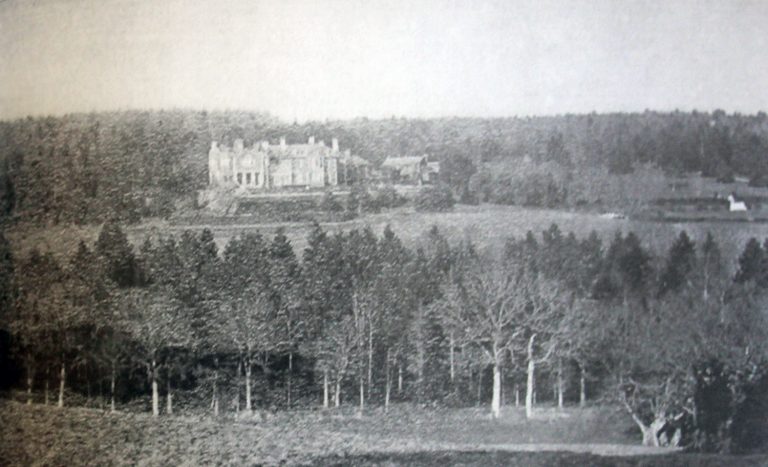
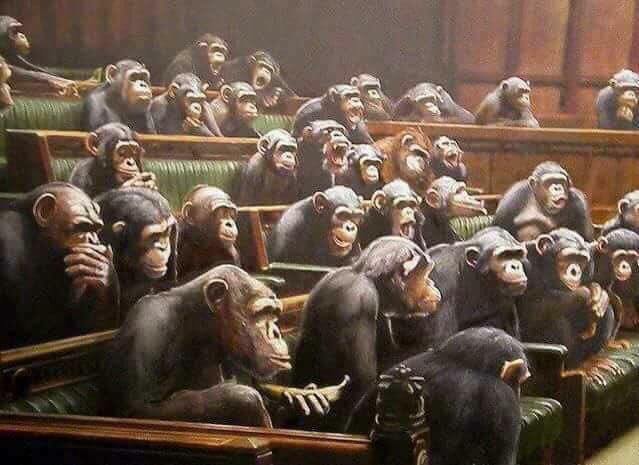


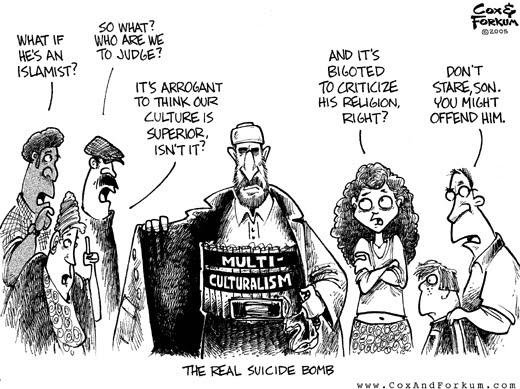
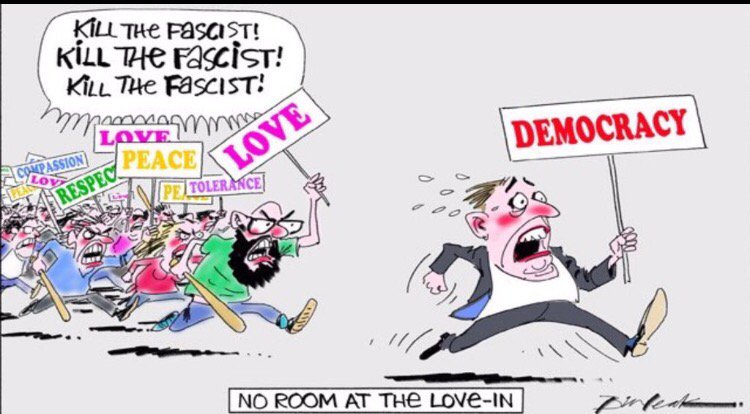


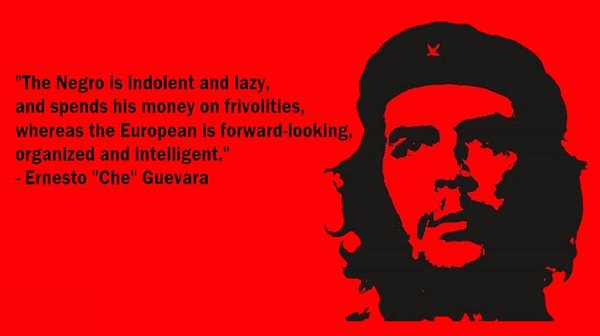
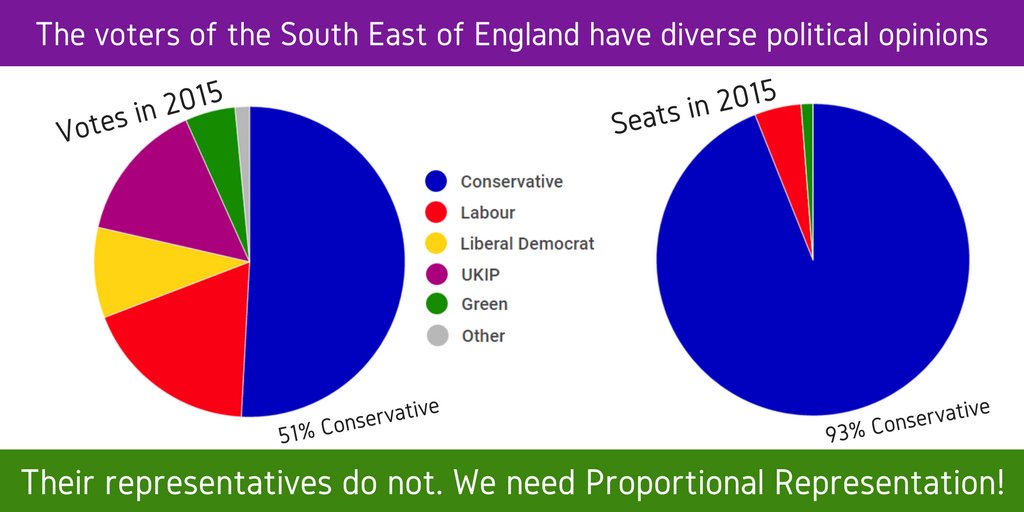
 Ian Robert Millard