
Afternoon music
The incomparable Sadie Marquardt.
Tweets seen
Tel Aviv, other cities, and some thoughts about “new” cities
The events in Israel/Palestine have sparked a few thoughts.
Not very beautiful, but it is impressive all the same, when one thinks that, 150 years ago, there was very little if any urbanization, though the port of Jaffa, the original town in part of the location, has existed for 1,800 years: https://en.wikipedia.org/wiki/Jaffa.
“In 1906, a group of Jews, among them residents of Jaffa, followed the initiative of Akiva Aryeh Weiss and banded together to form the Ahuzat Bayit (lit. “homestead”) society. One of the society’s goals was to form a “Hebrew urban centre in a healthy environment, planned according to the rules of aesthetics and modern hygiene”.[32] The urban planning for the new city was influenced by the garden city movement.[33] The first 60 plots were purchased in Kerem Djebali near Jaffa by Jacobus Kann, a Dutch citizen, who registered them in his name to circumvent the Turkish prohibition on Jewish land acquisition.[34] Meir Dizengoff, later Tel Aviv’s first mayor, also joined the Ahuzat Bayit society.[35][36] His vision for Tel Aviv involved peaceful co-existence with Arabs.[37][unreliable source]
On 11 April 1909, 66 Jewish families gathered on a desolate sand dune to parcel out the land by lottery using seashells. This gathering is considered the official date of the establishment of Tel Aviv. The lottery was organised by Akiva Aryeh Weiss, president of the building society.[38][39] Weiss collected 120 sea shells on the beach, half of them white and half of them grey. The members’ names were written on the white shells and the plot numbers on the grey shells. A boy drew names from one box of shells and a girl drew plot numbers from the second box. A photographer, Abraham Soskin (b. 1881 in Russia, made aliyah 1906[40]), documented the event. The first water well was later dug at this site, located on what is today Rothschild Boulevard, across from Dizengoff House.[41] Within a year, Herzl, Ahad Ha’am, Yehuda Halevi, Lilienblum, and Rothschild streets were built; a water system was installed; and 66 houses (including some on six subdivided plots) were completed.”
[Wikipedia https://en.wikipedia.org/wiki/Tel_Aviv].
Note, though, how even those first steps by the Jews were accompanied by the acquisition of land by subterfuge: “Jacobus Kann, a Dutch citizen, who registered them in his name to circumvent the Turkish prohibition on Jewish land acquisition“… [Wikipedia].
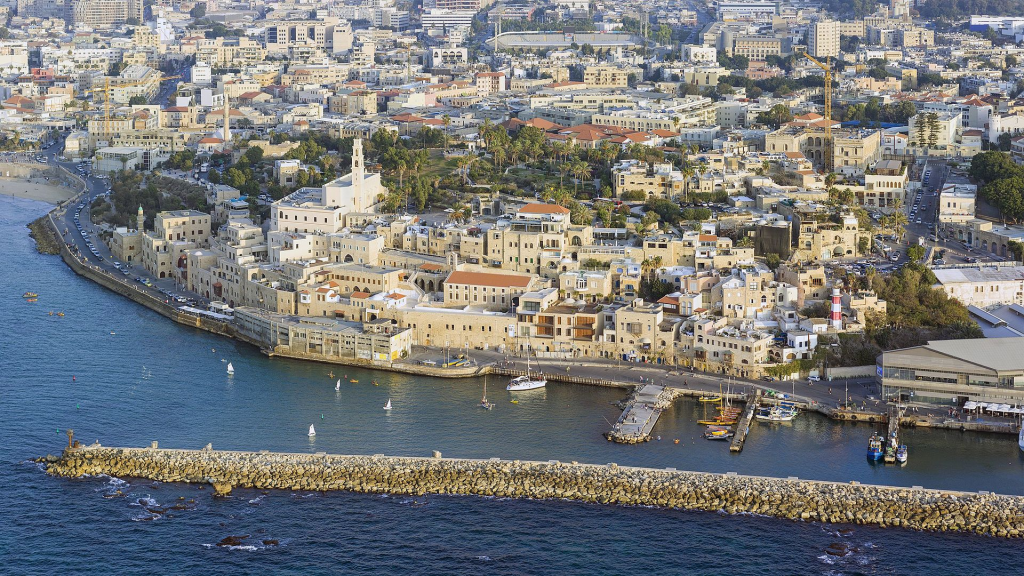
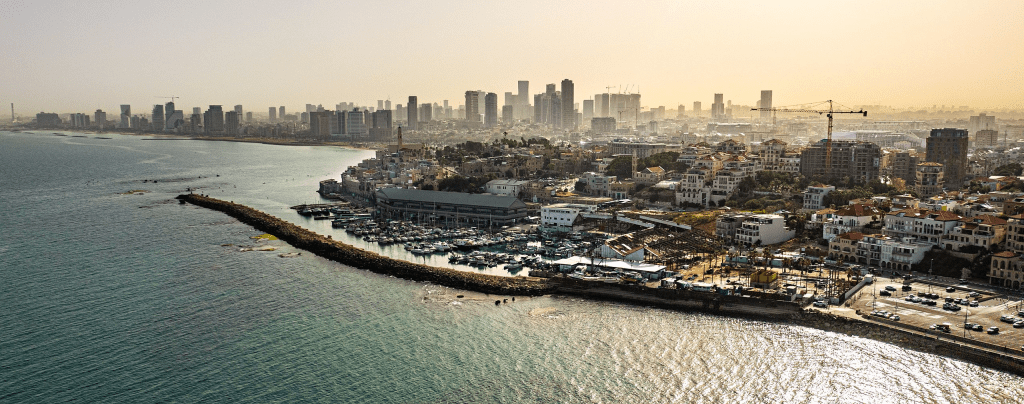
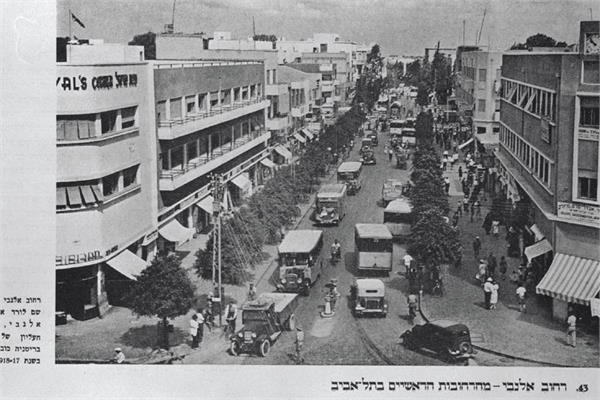
The city of Tel Aviv grew rapidly as Jewish immigration increased in the 1920s and 1930s:
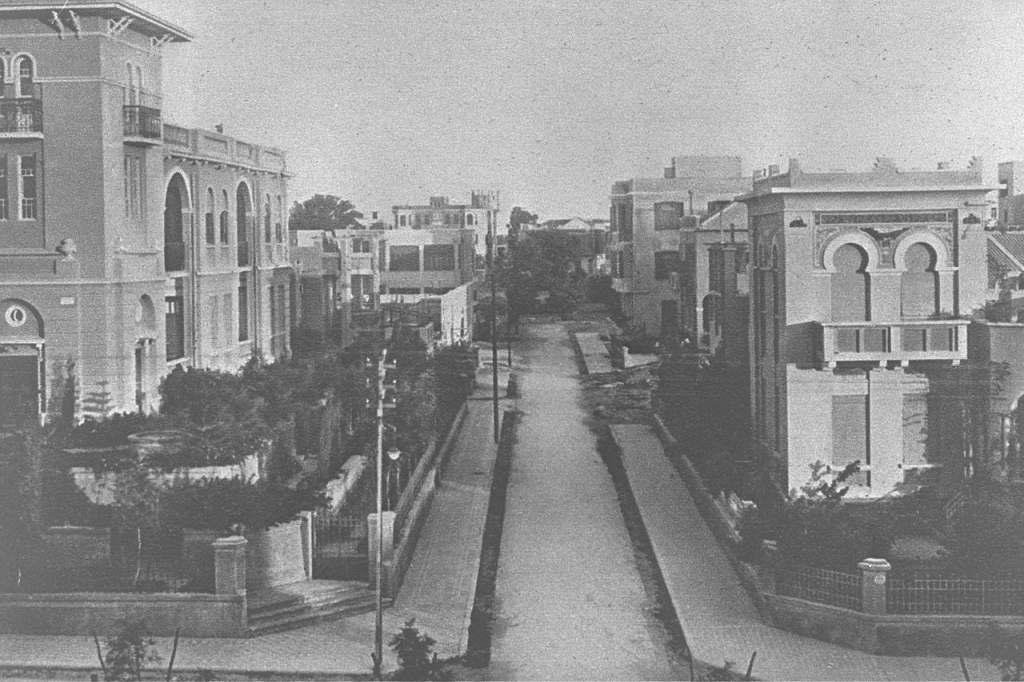
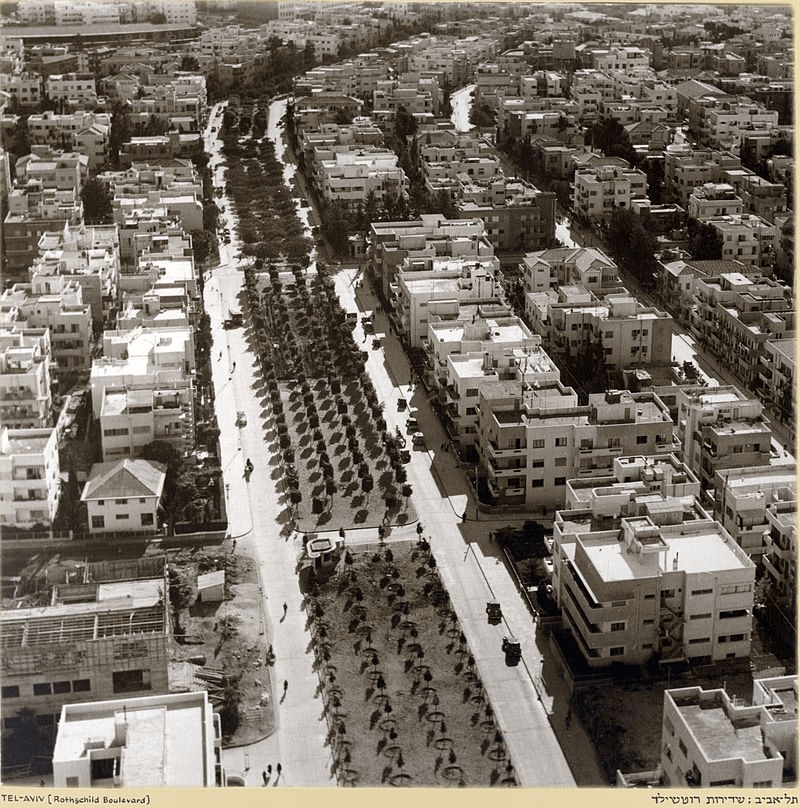
It could be argued that, like so much of the world, Israel/Palestine would have been better had it stayed under European, in this case British, rule (the British having conquered the region during WW1, and then administered it under League of Nations mandate).
I have seen other “instant” cities, at least cities which have been founded from effectively nothing and then have mushroomed quite quickly (in historical terms). Salisbury, Rhodesia (now Harare, Zimbabwe) for one.
Incidentally, “Harare” was, pre-1980, the name of an African “township” (poor suburb outside the city).
“[Salisbury] was founded in 1890 by the Pioneer Column, a small military force of the British South Africa Company, and named Fort Salisbury after the British Prime Minister Lord Salisbury. Company administrators demarcated the city and ran it until Southern Rhodesia achieved responsible government in 1923.”
[Wikipedia https://en.wikipedia.org/wiki/Harare]
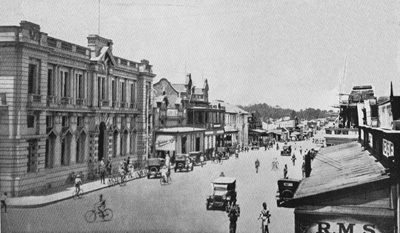
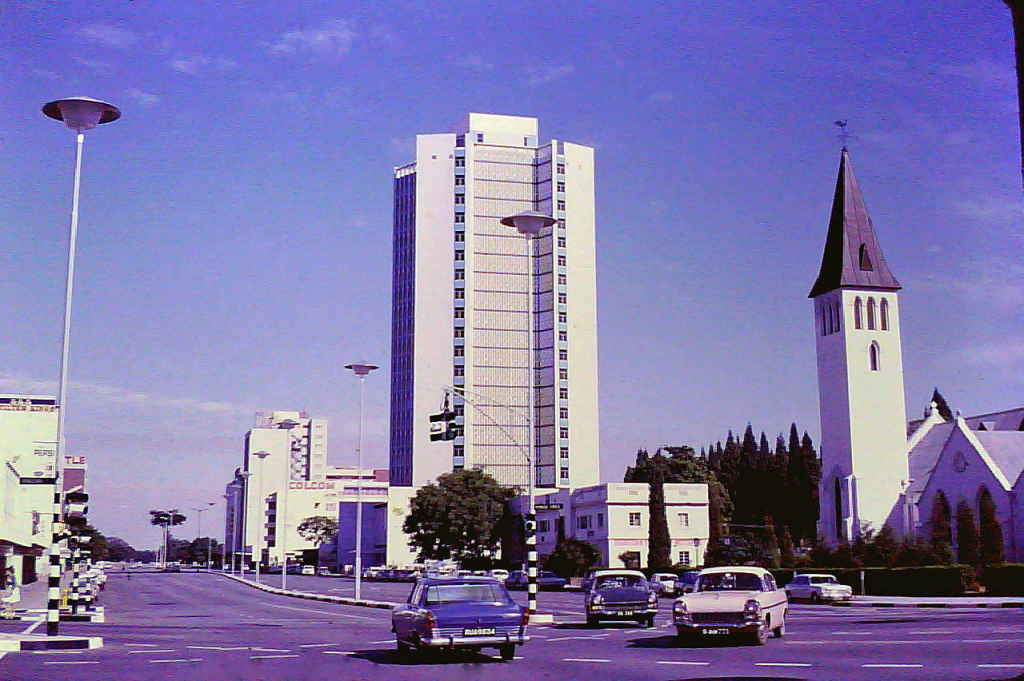
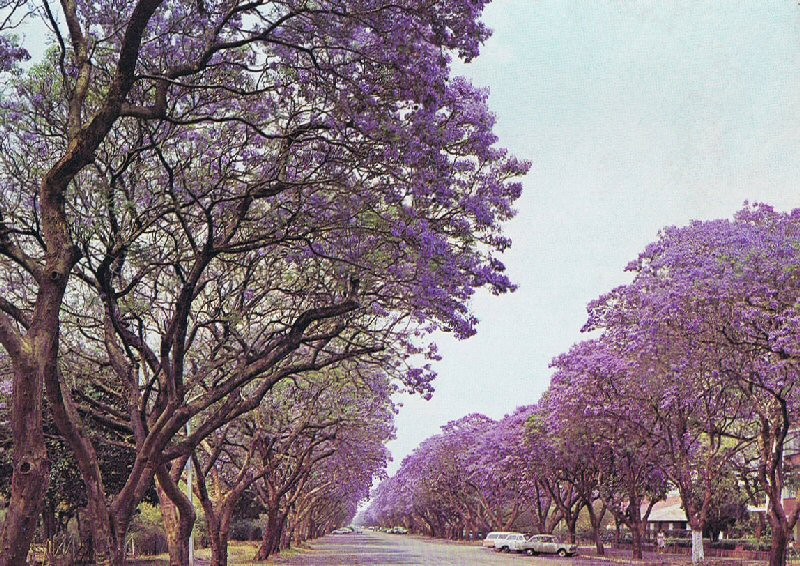
I remember well how struck I was when I saw the flowering trees and bushes almost everywhere in the central and near-central parts of Salisbury. I have never been able to discover what were the quite large dark-green trees with football-sized spherical orange flowers that I saw quite often in 1977. Very beautiful.
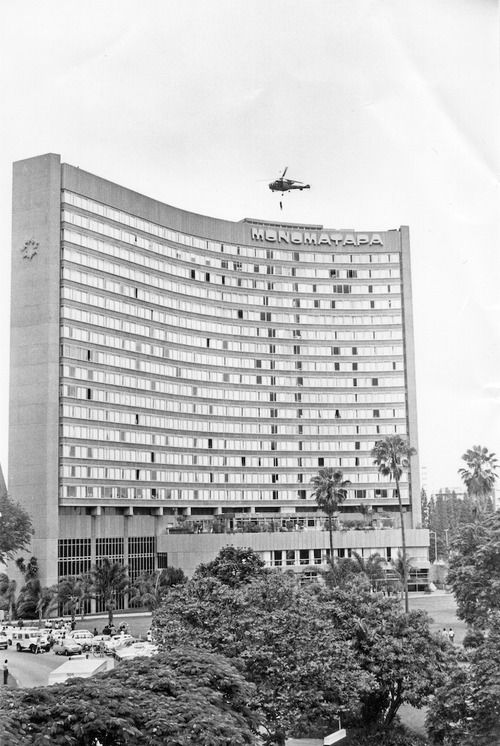
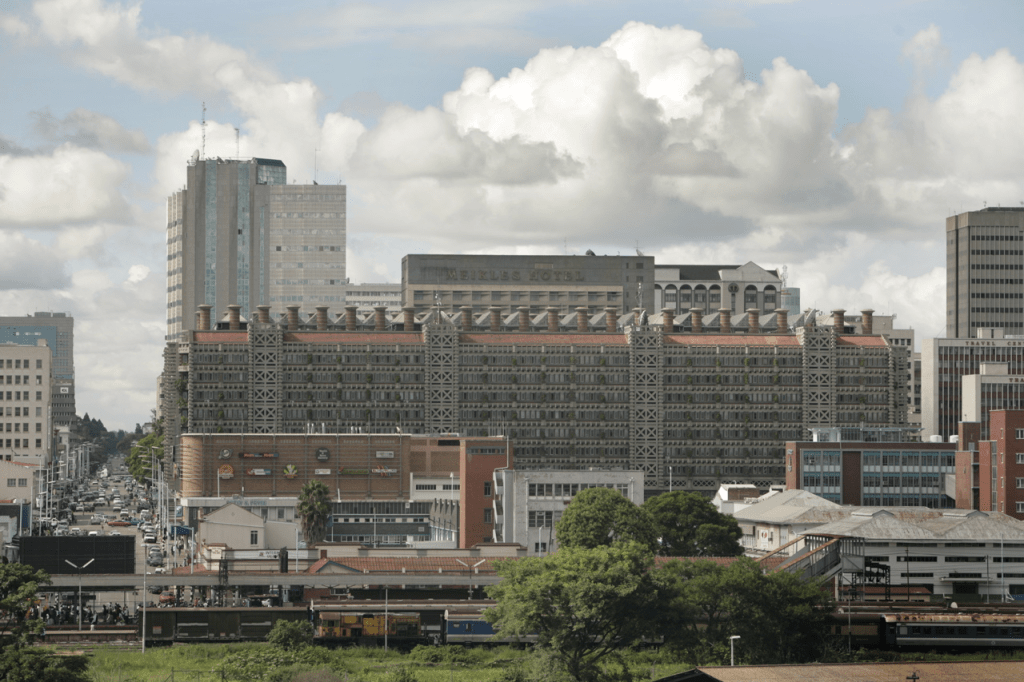
In a way, a city such as Salisbury (now Harare) was even more impressive as a testament to human enterprise than somewhere such as Tel Aviv, which after all grew upon an existing port, Jaffa (or Yafa; the Jews call it Yafo). The location of Salisbury was almost terra nullius; only a few African tribesmen were in the area at the time of its foundation as a fort in 1890.
Population increases are always key. The present Harare has over 2M inhabitants; Tel Aviv (including autonomous suburbs etc) about 4M.
Another city, where I lived for a full year [1996-1997] is Almaty, Kazakhstan, founded (like Salisbury) as a fortified stockade in the late 19thC and called, by its Russian founders, Verny. Now, a city of over 2M inhabitants.
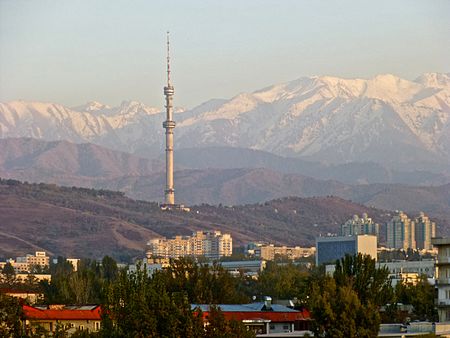
I find rather fascinating cities —and whole states and societies— which grow from almost nothing in a relatively short space of time. One, which I saw in its construction phase, was Milton Keynes [https://en.wikipedia.org/wiki/Milton_Keynes]. I knew it for a few months in early 1977; on returning a few times about 30 years later, the difference was incredible. Whole suburbs where only fields were before; a railway station where none existed before; a population of over 250,000 (in 1977, only a few thousand); bus services (in 1977, effectively non-existent); filling stations; large modern hotels.
I appeared as Counsel a couple of times in the years 2002-2007 at Milton Keynes County Court; in 1977, there was no such court; neither was there the whole Central Milton Keynes district where the Court and the railway station etc are now located.
I saw Doha, Qatar, in 2001. A sleepy and not unpleasant city. When I returned in 2008, Doha was already unrecognizable, a city of concrete and skyscrapers. Since then, a further transformation along the same lines. A kind of Manhattan-look in the desert, and on the Red Sea.
One thing I can say which is positive about the Israelis is that much —not all— of their town planning is pretty good, from what I have seen from photos etc. Many of their suburbs and towns seem well-planned, with trees, parks and leisure facilities.
Of course, the foundation and sometimes fast development of cities has a flip side: cities can sometimes disappear quickly as well.
More tweets seen
This government of Sunak (with those of his predecessors) is a disaster. There is every chance that the Israel-lobby Starmer-Labour replacement will be as bad, or even worse.
Saudi Arabia is a useless, corrupt, decadent and hypocritical pseudo-theocracy.
“Retired General Wesley Clark speaks about the USA’s plan to DESTROY 7 countries within 5 years in the Middle-East.
“Did you know that the USA wanted us to completely destabilize the middle-east and turn it upside down? Did anyone ever tell you this? Has there been any public dialogue about this? Did Senators or congress denounce these plans!? NO, they have not!!” “They told me that they were invading Iraq and I asked, WHY!? They said, ‘sir, it’s much worse than that, we’re going to destroy 7 countries in 5 years’ : We’re going to start in Iraq, then Syria, then Lebanon, then Libya, then Somalia, then Sudan and we’re gonna finish with Iran.
The USA and allies already destroyed and demolished every country on this list except Iran – Who are the real terrorists that are terrorizing the entire planet? How can you hear this and not immediately think : Who the fuck is controlling the USA military and what is their real purpose? Who do they work for?
If you can’t use your critical thinking skills then you really don’t stand a chance at figuring shit out. The mainstream media creates your perception of reality on behalf of the globalists. The media is their strongest weapon of deception. Please STOP letting others shape your view of the world. Use your own brain and understand that we are up against a group of people/cult that runs and controls our world in secret. It’s OBVIOUSLY not easy to see through their deceit or else they wouldn’t have been in control of our planet for 100s, if not 1000s of years.“
Most of which is effectively as said by me on Twitter (until the Jewish lobby had me expelled in 2018), and on this blog since late 2016. NWO/ZOG.
One can imagine what might happen were Israel to be more heavily attacked, or invaded.



Well, there’s a surprise…oh, no, wait…
Late tweets
It seems that the vast majority of cruise missiles and drones (though 99% seems very high) were destroyed in the air either by Israeli forces or by US, UK, French, Jordanian and Saudi aircraft. Such cruise missiles and drones are quite slow. If, however, the Iranians were to use the hypersonic missiles they are said to possess, then it might be a very different story.
Late music




 Ian Robert Millard