Why does @ChtyCommission allow Zionist groups to ‘police’ UK citizens using tactics synonymous with The Cheka police. How long before ‘volunteers’ claim leather coats on expenses? Make no mistake #Chekism is alive and well just watch Joe Glasman’s video. https://t.co/zZvuGe5HWg
Seeing as @BBC are putting up their license fee it’s definitely about time the corporation was more interactive. For example we could press the red button to show our dislike of certain programmes and personalities. The centrist luvie revolving door is why the corp is so crap
Hitler and the NSDAP were not Zionists; Zionists were not National Socialists. Having said that, there was a community of interest insofar as Hitler wanted Jews out of Germany and out of Europe, while the transnational Jew-Zionist lobby wanted as many Jews as possible to go to British Mandate Palestine in order to gradually colonize the territory and be able to confront the existing Arab inhabitants (and then to dispossess them).
The Zionists therefore treated with the 1933-1945 German Government and particularly (though not exclusively) the SS. Something that both sides prefer to forget these days. The SS and NSDAP no longer exist in their original form, but the Zionists and their post-1948 government, in what is now Israel, certainly do exist. For them, such history is better concealed or buried (or banned under the fake “international definition” of “antisemitism”).
How did England go from being a world power to arresting people for saying mean things on the Internet? lmao
Very true. Look at the self-described “Left” on Twitter etc. It puts forward no socialist or even social programme, no socialist policies to speak of, just “black lives matter” nonsense, “LGBTQXYZ” nonsense, pro-facemask and pro-lockdown nonsense.
What a contrast with the years 1917-1956, or 1956-1989!
The self-describing “Left” now has, as a main aim, “deplatforming” nationalist and other “influencers” on social media etc. In that world, getting someone expelled from Twitter (as happened to me in 2018, the expulsion procured by Jews, but applauded by the Twitter pseudo-socialists) counts as a major victory.
The “nationalist” and allied side of the house is little better. For the “alt-Right” and “Alt-lite” purported nationalists (in the UK), the UKIP/Brexit Party types, what matters is changing a red passport for a blue one, or fishing rights in the Channel, or at least pretending to support free speech. For many of the more solid nationalists, even social nationalists, what matters is trying to fight the social media “deplatforming” by complaining (mainly), or tweeting, blogging (yes, I do not exclude my own efforts), or vlogging.
What should matter to us is having a solid social-national programme; after which, having a solid socio-political movement; after which, having “boots on the ground”…
This is not a “debate”. This is not a “disagreement”. This is the precursor to a civil war or (perhaps more accurately described) social war. Before the American Civil War started, in 1861, the cannon at Fort Sumter, South Carolina (in the harbour at Charleston, a lovely city which I myself, long ago, visited several times) opened fire. That signalled the conflict about to start.
[Fort Sumter]
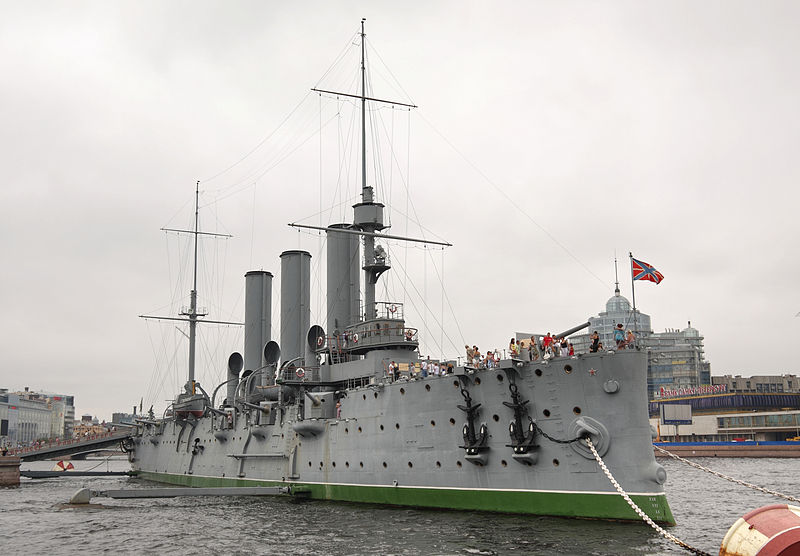
Likewise, in 1917, a naval gun on the cruiser Aurora opened fire, signalling the start of the Bolshevik seizure of power in revolutionary Petrograd, and the effective start of the Russian Civil War.
[the cruiser Aurora, St. Petersburg]
What we see now, on social media, is the equivalent.
"Asthma drug cuts need to send Covid patients to hospital by 90%". Another day, another common & proven drug found to stop covid in its tracks. But STILL the elite press on with society-crushing lockdown. Anyone woud think they want to 'de-develop' us…https://t.co/ZFEFc8IIF4
[Philip Green, wife, daughter; examples of “the simulacrum of the human”…]
As the Daily Mail article says, while such parasites stole hundreds of millions of pounds, thousands of British employees lost out and now have lost their jobs.
It has happened before, most obviously in Germany during the time of the Weimar Republic [1918-1933].
See the resemblance?
Something far more beautiful
Rewilding is obviously an important part of the way forward for the UK.
Alison Chabloz was treated more harshly for having sung supposedly “grossly offensive” songs about Jews and “holocaust” hoaxes and frauds. Jez Turner of the London Forum was even imprisoned simply for having made a speech saying that Jews should be chucked out of the UK! Real justice is failing in England.
British Army boxer, “who wanted to represent the Philippines at the Olympics“…
This country is now a complete dustbin.
As for those sentences, the defendants were fortunate that they said nothing about Jews. Now that really would have been treated as a “serious offence”…
If you look at the photo of the poor little girl closely, her hair is pulled very tightly like an afro style. Straight European hair is more delicate, and cannot be styled in this manner. Such treatment would result in hair loss. This is racism and cultural insensitivity.
It gives me a headache just looking at that cruelty to the little girl's hair. Mine is similarly fine. Yanking and long term pulling like that makes for a constant sore scalp and tension headaches. Was the *adoptive mother* taking out her resentment and hatred of whites on her?
“Wera Hobhouse is a Christian.[22] Although her mother and grandmother identified as Christians, her great-grandfather was Jewish.” [Wikipedia] https://en.wikipedia.org/wiki/Wera_Hobhouse.
The Jewish/Israeli takeover of the USA really took place after the Second World War. At the time of the Suez affair (1956), the USA (as a state) was keeping Israel (as a state) at arm’s length [https://en.wikipedia.org/wiki/Suez_Crisis].
Even in the 1960s, the USA was still not entirely under the sway of its domestic Jew (and pro-Israel) lobby. However, the American film industry had been under Jewish control since the 1920s, and the American television industry was under Jewish control from inception: https://en.wikipedia.org/wiki/William_S._Paley [CBS]; https://en.wikipedia.org/wiki/Ralph_J._Roberts [NBC].
Thus the American public was brainwashed by Jewish and Israeli propaganda from, at latest, the 1950s onward. That brainwashing encompassed everything from academic works through to the “nightly news” on TV, as well as works of fiction and “faction” (examples? Exodus and Schindler’s List, to name but two of the more influential).
We have recently seen that even a “outsider” like Trump was really just a squawking parrot in a gilded cage, completely under Jewish control. The new President, Biden, is under even greater control. All of his top team and Cabinet are Jewish; even his children are all married to Jews. The penetration is so great that even Israeli (and other) newspapers have commented on it.
More tweets
This is such a very sad story of ruined happiness. Those who have pretended for years, for their own varying selfish purposes, that marijuana is a harmless drug have much to answer for. And if they do not stop, they will have much more to answer for. https://t.co/yOgELGCu1Y
I always ask for details of what happened beforehand when I see such films, but walloping a seated man, from behind, seems very hard to justify under any rules. What *is* happening to the formerly free world? https://t.co/nRl1FTKtd5
“Liberal”, supposedly “caring sharing”, Holland/Netherlands. I and my family had friends in Amsterdam, and for many years I had an almost rose-tinted view of life there (and I visited on a number of occasions in the 1970s and 1980s), but since then, in the past 30 years, I have encountered a number of far less congenial Dutch people, very superficial and moneygrubbing; I have realized that much of the famed Dutch “liberalism” is just a lack of real concern, and a superfluity of moral cowardice.
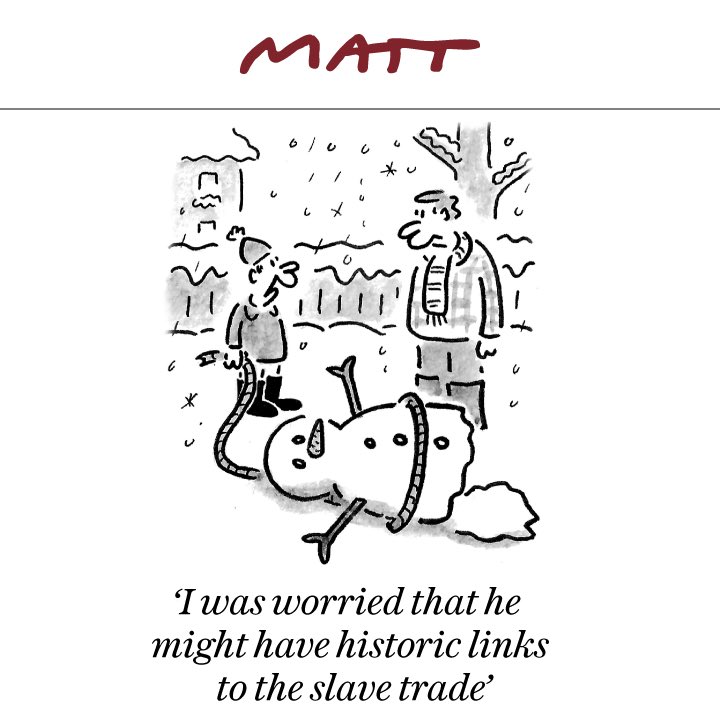
As for the above film clip, I think that the cartoon below is instructive:
Not very much @dsbahia1, because these debates were always empty and without force. I am more worried about Parliament's abdication of its duty to hold the executive to account, and the resulting government by decree. https://t.co/FpERKERtYp
⚠️URGENT⚠️ As a small charity we rely heavily on the income of many funds that have been completely wiped out due to the pandemic. We urgently need help to feed & care for every sick, injured, abused & abandoned animal who needs us.
Read this fascinating article..today China consumes 28% of the worlds meat..including half of all pork. Following the coronavirus outbreak govts & consumers around the world are more cognizant of the risks posed by industrialised animal agriculture #veganhttps://t.co/349RxRkKZC
I went to the local supermarket yesterday, in the mid-evening. Very few customers shopping. Waitrose “Handmaid’s Tale” militiamen on duty, clothed in black, as always, faces covered with black scarves and masks like the ISIS barbarians.
The funny thing was that there was a shopper there, a grey-haired woman probably in her sixties if not seventies, wearing a cloth (i.e. useless) facemask and who insisted on giving me a wide berth of at least 10 feet! I saw her shaking her head, probably because she divined that I was not at all interested in pretending that the population has Ebola, or maybe she thought that I should be more fully masked than I was. I was the only other shopper around.
At any rate, I would have loved to have just said “wake up! It is not the Plague, and hardly anyone in this whole district has even had it!”, but (typically English?) I just ignored her scarcely-hidden rudeness and carried on.
The mad thing is that you see scared rabbits or extreme social-compliers like that woman everywhere now, masked even when alone on wet windy footpaths or in supermarket car parks. The social pathology is disturbing; I am sure that that is why “a majority of the population want more severe lockdown” (opinion polling) despite the country obviously showing signs of falling to pieces. A kind of mass agoraphobia and fear, and “Soviet” levels of —superficial— compliance; the fear has been whipped up by this government of clowns and their absurd “expert advisers”. That fear has taken on a life of its own now…
Still, I am not afraid, and after dark shop peacefully…
More music, dear blog readers?
Tweets
Welsh police stop customers going to a farm shop to buy their milk – telling them they should get it from a supermarket instead Can you explain the logic in this? Beats me…https://t.co/Kv7WX6UvRd
It was a year ago that Jack's Yak (Jack's oak tree) near Penrith #Cumbria fell in a storm. Its demise was supposed to foretell great disaster. Yep, they got that right! #treespic.twitter.com/mPaA4IvFcX
In addition, you still won't be allowed to travel anywhere. So what exactly do fit & healthy people get in exchange for risking all sorts of allergic reactions?
Define denier? Do you deny the mounting evidence that proves lockdowns cause greater excess mortality? Do you deny the inaccuracy of PCR tests? Do you deny the growing assault on our civil liberties?
Yes, @leehurstcomic, there is much in what you say. Many believe their opinions are facts, and that the subjective and the emotive are superior to the objective and testable. The Age of Enlightenment appears to be one of the victims of this outbreak. https://t.co/vD211TfXPD
1/2 'We need proper information to inform our responses to the virus… Instead, we have no idea how many of the deaths attributed to Covid-19 really were due to the disease…' https://t.co/ls7LBFVBot via @spectator
2/2 The way ‘Covid deaths’ are being counted is a national scandal https://t.co/ls7LBFVBot via @spectator '…And we have no idea how many of the excess deaths were really due to Covid-19 or to the effects of lockdown'.
“Prof Streeck said the virus had not even been found on door knobs or animal fur. He told German TV that there had been ‘no proven infections while shopping or at the hairdressers’.“
“‘We know it’s not a smear infection that is transmitted by touching objects, but that close dancing and exuberant celebrations have led to infections.’”
Oh, so the ridiculous “social distancing” nonsense in the UK supermarkets and elsewhere, complete with petty authoritarians calling out “[Please] stand behind the yellow line!” (with or without a “Sir” on the end) may not even be necessary?
Also, it now seems that you cannot get or are very unlikely to get this virus by touching objects, even if the virus is on the surfaces.
Social gatherings
There is at least some evidence that Coronavirus spreads most readily in social gatherings where people are hot, excited, closely-packed: an apres-ski bar in Austria, a Berlin “club”, a football game, Jews celebrating their tribal festival called Purim, people at carnivals in Germany, the attendees at Cabinet meetings in London.
I myself shall continue to wash hands frequently with soap and water, and I shall continue to avoid others as far as possible, which is surely only sensible, but my sense is that, in the UK, this crisis, as a purely medical crisis, has peaked or is close to peak, whatever the government and msm may be saying. If I am wrong in that, I am wrong, but I have a strong intuition about it.
An important little piece of news. In the group tested, 74% of those who showed no symptoms of Coronavirus tested positive, meaning that they had or had had the virus.
This is what I am coming to believe has happened in the UK: huge numbers are or have been infected but have shown few, if any, symptoms. That, in turn, might mean that our economy and society has been almost shut down unnecessarily, but we cannot know for sure. One could say “better safe than sorry”, but for how long?
Meanwhile
“Parents of teenagers who flout coronavirus lockdown rules should be fined, police told”
“Government polling, not released to public, identifies teenagers as ‘problem’ group when it comes to compliance, Telegraph learns.” [Daily Telegraph]
Did it really come as a surprise to “the authorities” that teenagers might rebel against a rule purporting to put them into house arrest from March until June or July or for longer? Three months, four months or longer. That was never likely to fly. In fact, I doubt whether older people will continue to comply for very long, particularly when they realize (as many will and some already do) that this virus, though certainly a serious public health threat, is not the Black Death or the Plague.
As I predicted from the start, the British people, while willing to be corralled a bit for the general good in a situation replete with scaremongering, would not sit still under this absurd and contrived Toytown police state forever or for very long.
Once again, Britain’s increasingly absurd police are trying to enforce rules that do not exist or have no legal force, using powers that they do not have:
“‘The police seem to have applied powers they don’t have. Whatever the investigation, the prosecution has to be right under the act’.”
“‘There’s a mixing up here of the Coronavirus Act & the Emergency Regulations. It looks like the police, prosecution & magistrates did the same thing resulting in a wrongful prosecution & conviction’.” [Daily Mail]
Hong Kong
Hong Kong is closing all bars for two weeks. It seems that 75% of Coronavirus cases in HK have been linked to bars. A further indication that excited, hot social situations are where this virus becomes particularly actively transmittable.
The Press is waving, but I am laughing
My colleagues are properly up against it.
Whatever your politics newspapers are still an integral part of our lives.
Please consider stopping to buy one during your #lockdown stroll – before it’s too late for them.
I hate the “British” Press and, yes, that does include weekly publications such as The Spectator. They are all completely infested by the Jewish-Zionist element. Some have a few sparks of light amid the darkness, but they are all basically on the wrong side. If they disappear because of the Coronavirus (or rather the extreme measures taken by the Boris-idiot government), then I am content. I particularly want the “journalists” and other scribblers to suffer, from the fake or would-be “intellectuals” (which, I suppose, would include idiots such as Yasmin Alibhai-Brown and Zoe Williams) to the bottom of barrel ignoramus types such as Carole Malone and Susie Boniface (aka “the Fleet Street Fox”). Particularly damned are those who wrote about me after my disbarment (procured by a pack of malicious Jews in 2016). Down with all of them.
Labour: Corbyn’s last day
Thoughts:
But when Jeremy Corbyn wanted nationalised railways, no tuition fees and higher pay to NHS workers, you told him there wasn’t a money tree. I hate you people. https://t.co/W222tuYNcC
That is a point worth holding onto. For social-nationalists. In the right circumstances, almost anyone, with any “extreme” policy offering, can attain to political power, whether via “ballot box” or ammunition box.
Lenin thought that 1905 was “the” Revolution in Russia. He was wrong. He also thought, at first, that the February 1917 Revolution in Petrograd was not the Revolution for which he had waited all his life. Wrong again, Lenin had to hurry across Europe to join in, only arriving in April 1917. He then fomented a coup d’etat in October 1917 (Julian calendar).
Hitler’s NSDAP only got 2.6% of the national vote in Germany in 1928. Then the Great Depression happened. By 1932, the NSDAP vote was 33%, enough to give the NSDAP a seat in government. The following year, 1933, that vote went up to 44% and Hitler was proclaimed Chancellor.
The effective stoppage of the world economy might cause a shock big enough to unseat, not only a government here and there, but the whole accepted basis for governments across the world.
As for the Labour Party, the three contenders are all pretty much of a muchness. All have kow-towed to the Jew lobby, for one thing. Rebecca Long-Bailey is more radical than the other two, but at the end of the day, she also signed her name —not in her own blood, so be it— to what the Jew lobby wanted. Das ist’s!
— Campaign Against Antisemitism (@antisemitism) April 2, 2020
In fact, Labour is still declining in the polls. I think that the last one I saw had Labour on about 26% or 27%. Many will say, “it could not go lower”. No? Look at Scottish Labour.
Britain needs a credible new movement, a social-national one.
What is really behind the Coronavirus “lockdowns” worldwide?
I do not ask, as do those labelled “conspiracy theorists”, what is behind the virus itself. For the moment, I take the narrative as broadcast, that the virus somehow developed out of a barbaric seafood and live animal market in Wuhan, China. No, what I ask is: why the global “lockdown”? Is there some plan behind it? If so, what? A new New World Order, based on popular fear of pandemic? Seems unlikely, despite the quasi-dictatorial measures being put in place worldwide. There must be an additional factor which has not yet happened.
Another tweet seen today
This tweet combines Corbyn and Coronavirus in a criticism of Jewish lobby puppet MP Jess Phillips:
You forgot to tell us how this terrifying ordeal was Jeremy Corbyn’s fault? https://t.co/aUaQiL1TIw
In fact, it is clear that the relatively mild ordeal of Jess Phillips is a widespread phenomenon. The television pictures of the gravely unwell etc tend to distract us from the big picture: most Coronavirus sufferers in fact suffer briefly (indeed often not at all), never need hospital treatment and may be unaware that they have been infected and then either not affected, and/or in any case recovered within days.
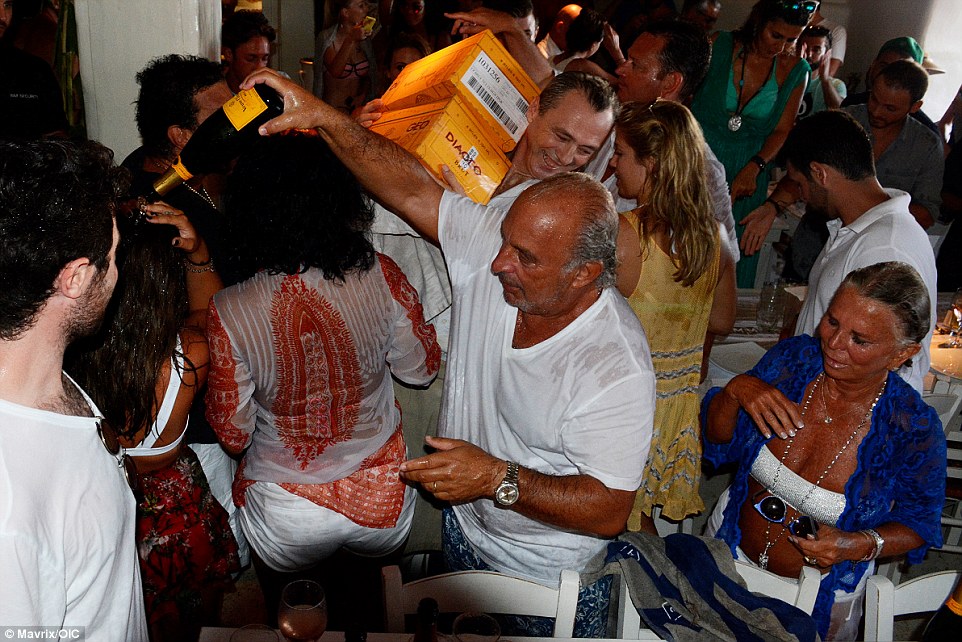
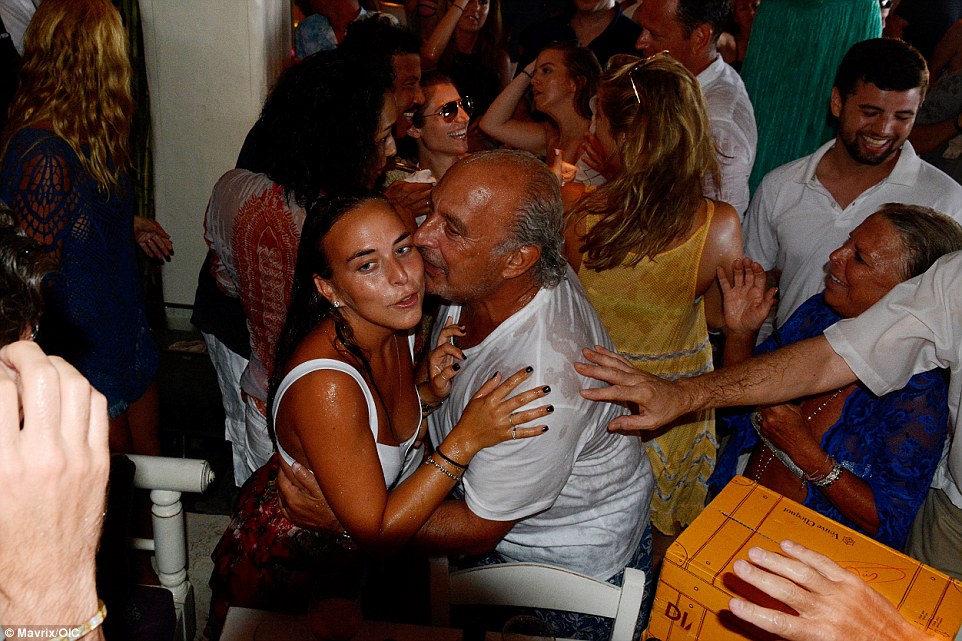
Tax-dodging Jew Philip Green, whose wife, the beneficial majority owner of Arcadia, is domiciled in Monaco, asks British taxpayers to prop up his retail empire, which was collapsing even before Coronavirus existed.
[above: arrogant tax-dodging Jew, Philip Green, a few years ago, pouring Champagne over some “hoes” on one of his mega-yachts in the Mediterranean]
[above: saying hello to someone, possibly his daughter, in pre-Coronavirus days…His wife is the creature dressed in blue in the photos]
It seems that the Queen will make a rare television broadcast on Sunday 5 April 2020. Could it be that she will abdicate in favour of Charles? I have always assumed that she would carry on until Fate took a hand, but maybe not. On the other hand, it may be all about the Coronavirus situation throughout the Commonwealth.
Jud Süss, a film well worth seeing
Jud Süss, [ The Jew Süss] made in 1940, is a costume drama based closely on a true story from the 18thC in Germany, before the various kingdoms and principalities had been unified into one German state. It tells the story of how a Jew managed, via manipulation of money, to take over the State, before he eventually faced justice.
You will never see Jud Süss on any TV channel. Banned. Even YouTube has now taken it down (as it has most “anti-Jew”, National Socialist and social-national films, songs, photos etc). Make the most of it [see below] while you can…
“Nightingale emergency coronavirus hospital may not be needed as urgently as expected”
“London’s intensive care units were expected to be overflowing at this point but are only three-quarters full”
“But while the emergency capacity had been expected to be required as soon as last Wednesday, the first patients are now likely to arrive early next week – a tentative sign that the coronavirus outbreak in the capital may not be as bad as expected.” [The Guardian]
I was just reading a few appreciations of Paddy Ashdown, the one-time LibDem leader, who recently died. I tend to adhere to the saying de mortuis nihil nisi bonum, but when it comes to political people, kindness must sometimes give way to clarity.
In fact, I rather liked Paddy Ashdown, at least in parts (not that I ever actually met him). I certainly feel more respect for him than I ever could feel for the idiots who preceded and followed him (Thorpe, Steel, Kennedy, Campbell, Clegg etc, though I do have time for Jo Grimond, whose interesting and erudite memoirs I reviewed on Amazon years ago; Grimond was by far the best of the Liberal/LibDem leaders, to my mind).
I feel that Ashdown was a great deal more honest than most System politicians, for one thing. Also, he was an idealist, and someone willing to put a mission above his (and his family’s) comfort: not many men in their mid-thirties would leave a comfortable and perhaps promising SIS/FCO career to get involved in the hurly-burly of UK politics, particularly for something as marginal as the then Liberal Party (at the time it had only 13 Commons seats, despite having garnered nearly 20% of the popular vote in both of the two 1974 General Elections). Ashdown gave up a pleasant diplomatic/intelligence near-sinecure based in Switzerland to take ordinary jobs in the Yeovil (Somerset) area while pursuing his political mission. When his employer folded, nearly a decade later, Ashdown applied unsuccessfully for 150 jobs. When elected MP for Yeovil in 1983, he had been unemployed for 2 years and was doing unpaid volunteer work as part of a programme for the long-term unemployed.
Not that I agreed with much of Ashdown’s policy-set: Ashdown was a politician for an England which was disappearing even in the 1970s. He seems to have been sanguine about mass immigration, for one thing. I doubt that he was ever anti-Zionist in any sense (certainly not my sense). Ashdown was no intellectual and not (to my mind) a policy person. Neither was Ashdown intellectually honest in a way that might match what I still perceive to be his personal integrity (leaving aside the “Paddy Pantsdown” episode). Certainly, amid the pathetic rabble called the LibDems, Ashdown could hardly fail to be seen as a star, just as the young Bill Clinton, with his Georgetown, Oxford and Yale academic background, could not fail to shine in the intellectual backwater that is Arkansas.
Yes, much can be laughed at in Ashdown, not least his absurd sense of his own importance and weight, as when he was or tried to be (using my own parody-title for him) “the Lord High Panjandrum of the Balkans and Afghanistan”, but without at least some elevated sense of self-worth, Ashdown would never have tried to be a political leader in the first place, I suppose.
So why am I talking about Ashdown, when this blog piece is supposed to be about the creation of a social-national movement?
What caught my attention about Ashdown as politician was that he only got elected as MP in 1983, after about 8-9 years of trying; also, once he was an MP, it only took him 5 years to become the leader of his party (admittedly tiny in terms of MP numbers).
One of the precepts of the American “self-help” guru Anthony Robbins is that “most people overestimate what they can accomplish in a year and underestimate what they can achieve in ten years.” That is very true. Examples are all around in history.
Famously, Hitler joined the NSDAP as “Member no.7” in 1919. A year later, it was still of little importance even in its home city, Munich. By 1923 Hitler had attempted the Beer Hall Putsch, which went down in shambolic ignominy; by 1928, 9 years after its foundation, the NSDAP could still only raise a national vote of 2.6%. However, Hitler had built a party and beyond that, a whole volkisch movement. It only needed the right conditions in which to flourish. The Depression provided that, together with the widespread feeling against the Jewish exploitation of the German people: by 1930, the NSDAP had a vote of 18%, by 1932 of 33%, and by 1933 of nearly 44%.
Lenin’s serious revolutionary political activity could be said to have begun with the establishment of Iskra [The Spark] in 1900. Though by 1910, Lenin was still politically marginal, he was considered to be one of the leaders of the Marxist tendency, at least. However, both Bolsheviki and Mensheviki together numbered only 8,400 by 1910 (perhaps 75% of whom were under 30 years of age). Once again, though, the important point is that a party, albeit split, existed and, once the disastrous Russian participation in the European war of 1914 onward had destroyed the strength of the Tsarist government and society, that party could take over the existing uprising in 1917 and perform a coup d’etat later the same year.
Other examples? How about “Solidarity” in Poland? Founded by a small number of workers in Gdansk (former Danzig) in 1980, by 1989 it was the governing party in Poland.
UKIP was formed in 1993 and had become an organized though marginal party by 2003. UKIP never did break through. It peaked in 2014 and deflated from 2015. What stopped UKIP from taking power was not only the UK’s totally unfair First Past the Post electoral system (though that did not help). What stopped UKIP was, first, that it was and (to the extent that it still exists) is not a revolutionary, nor even radical, party/movement; also, there has been no truly “triggering” event comparable to the First World War, the Great Depression etc in the UK of the late 20th/early 21st centuries.
Even if the future for the UK and Europe is a kind of multifaceted civil war, a political party or movement must exist. It is the sine qua non. In a year, it would achieve nothing, but in ten years it could achieve everything.
Someone, possibly Auden, remarked once that “people are worth more than their opinions” (in relation to the Comintern/NKVD agents of the 1930s active in the British universities). There is something in that. On Twitter, for example, I have noticed that people bitterly divided politically will often still support, separately, such causes as animal welfare or environmental improvement. Wider than that, I am willing to see that some of those who attack my views (and, often, me personally) are, in some cases –and like me– interested in the welfare of the more downtrodden parts of the population. Sadly, most of those who attack me –and this particularly applies to the Jewish Zionists– are unwilling to see the slightest good in me or my views. I can only assume that to do so would weaken their assertion that anything connected with social nationalism (and, a fortiori, National Socialism) is irredeemably evil and without any good in it at all.
Adolf Hitler was of different mind. He accepted into the ranks of the NSDAP and SA, even into the SS, many who had been his enemies. People, in other words, who wanted a better society but who at first did not accept that National Socialism would create one.
In the Soviet Union, from 1917 onward, many who fought Bolshevism or were at least opposed to it were later shot, imprisoned or exiled as so-called “former people”, others however were allowed to stay as free as anyone could be under Sovietism. Some even became members of the CPSU and/or the officer corps of the Red Army, at least until the purges of the late 1930s. Beria’s own past was full of ambiguities. During the 1941-1945 war, the vast majority of Russians fought and struggled together (whatever one may think of that).
In the UK at present, I can see that many want positive social change and that many (sometimes the same people) want to preserve the better aspects of the existing society. These people belong to Labour (especially the Corbyn wing), the Green Party, the LibDems, UKIP, even the Conservative Party. I trust that, when a real social national movement comes into existence, these people or many of them will feel able to join with me in the rebirth of this country.
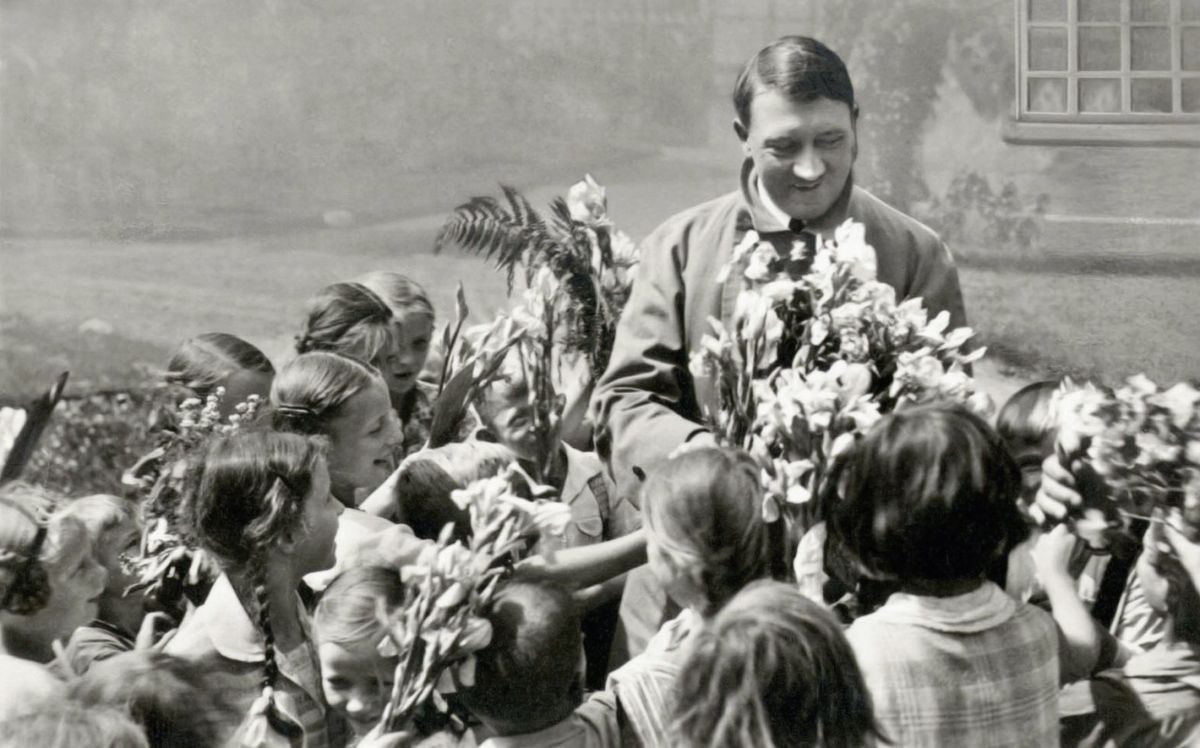
We are accustomed to reading the most arrant nonsense about Adolf Hitler. According to this stream of black propaganda (which started as long ago as the 1920s), Hitler was savage, unforgiving, tyrannical, vituperative, uneducated, a down-and-out from the gutter, a house-painter, sexually perverse, an erotomaniac, impotent, excessively interested in women, a gay, mad, sometimes mad, occasionally mad, only interested in his own material benefit, a tax dodger, even harsh toward his beloved dog, Blondie!
In Hitler’s own lifetime, a pack of lies was spewed out by his enemies: Jewish elements and interests; the Communists and Socialists who, many of them, supported or condoned Stalinism; also journalists working, in effect, for those same groups. During the Second World War, both the Soviet Union and the Western Allies maintained huge ministries and agencies dedicated to “black propaganda”. After 1945 the baton was passed to the increasingly prevalent Jewish or Zionist lobby and its major offshoot, the “holocaust” industry, aided by historians who knew that their careers depended on not challenging the approved narrative.
The “Hitler was a house-painter” story seems to have come from a Jesuit priest who was taken to hear Hitler in Munich in or about 1920. He asked what Hitler was (at that time Hitler had few followers and was unknown outside the city); the answer came, “I think that he is a painter of houses” (no doubt a garbled version, heard somewhere, of Hitler’s pre-WW1 life as a struggling art student and painter). In the 1930s, Churchill took up that false version of Hitler’s life as a young man, no doubt calculating that English snobbery would be inherently biased against a political leader with a past involving painting houses or the like. Even today, one occasionally sees reference to Hitler “painting houses”.
The idea that Hitler was “mad” came from an anti-Hitler newspaper editor (probably the half-Jewish scribbler Konrad Heiden), who, in the 1930s, told the American correspondent and anti-Hitler propagandist William Shirer (who posed as an historian after 1945) that Hitler was a “Teppichfresser” (“carpet-chewer”), meaning prone to bouts of insanity when he would supposedly curl up in rage on the carpet and chew the edge of the same. A complete invention, which has coloured the popular view of Hitler ever since, though even the Jewish historians no longer make the exact allegation.
As to the stories and speculations about Hitler’s sex life, I should imagine that every possibility has now been explored by journalists and historians eager to reduce Adolf Hitler to a sort of freak show. Needless to say, the most likely possibility (that Hitler was “normal” but unenthusiastic) is of little interest, being unlikely to sell books or newspapers.
A more recent allegation has been that Hitler was a drug addict. Again untrue, though there is at least a kernel of fact underpinning this one, in that Hitler’s doctor, Morell, was a medical innovator who did tend to experiment on his patients. Hitler demanded results; Morell tried to provide them:
(actually, though many have quailed at Morell’s preparations, such as the ones that included “intestinal bacteria”, these were the basis for the now-popular “active” yoghurt health drinks for the stomach now found next to the milkshakes in every UK supermarket).
What about Hitler as a vengeful tyrant? This seems to rest mainly on his reaction to the 1944 plotters, who, in the midst of Germany’s fight for survival, saw fit to blow up Hitler and the German High Command at Rastenburg in East Prussia (now in Poland). Yes, they were executed, some cruelly, it seems, but would it have been much different in, say, England, had Churchill been blown up by “traitors” at Ditchley Park (in, perhaps, 1940), alongside his military and naval chiefs?
In reality, Hitler was not a vengeful type. Anton Drexler, the locksmith who founded the then DAP which Hitler joined in 1919, had a serious quarrel with Hitler in 1921. He wrote a letter accusing Hitler of “acting like a Jew, twisting every fact” (!), was removed as head of the party (replaced by Hitler) and was given a purely figurehead position until he resigned in 1924, after which he was elected to the Bavarian Parliament for another party, serving as elected member until 1928. Despite that, Drexler was readmitted to the NSDAP in 1933, honoured (though not given any political position) and died peacefully in 1942. One cannot imagine Stalin treating a similar case the same way!
Another example. The first reports about an attempted putsch in Munich in 1923 (the Beer Hall Putsch, also known as the Hitler-Ludendorff-Putsch), reached the ears of a police commander called Sigmund von Imhoff, who contacted the Reichswehr commander of the city and seized the telephone and telegraph exchange. He was probably the most important reason that the putsch failed (amid bloodshed, Hitler himself being injured as the main march was brought to a halt).
One can well imagine what Stalin, on attaining power, would have done with an officer such as von Imhoff, but under Hitler he was not punished. On the contrary, he was promoted to Police General in 1933 and, in WW2, seconded to the Luftwaffe with the rank of Major General (he died in Bavaria in 1967).
This article could be ten times or a hundred longer, so many lies about Hitler and the Reich have been told and continue to be told. However, the few examples above perhaps will give pause to those who imagine that they have been told the truth about those world-historic events of the 1920s, 1930s and 1940s.
We have all heard of the theatrical cliche of the actor who achieves “overnight success”, having in fact worked hard against all the odds for years. The same is often true of writers, painters and other artists. Not forgetting scientists. It was Edison who, on the failure of his (supposedly) 2,000th lightbulb experiment, is said to have said: “I have not failed. I have just discovered the 2,000th way not to invent the incandescent lightbulb.” At a later time, he of course succeeded. Many things follow the pattern: a long period of non-movement, then sudden success (or sudden failure of something, often after long stagnation).
One can call this a tipping-point, or characterize it by some other metaphor. The aircraft which suddenly fails by reason of metal fatigue, the ship which finally turns over after ice has built up on its external structure in Arctic waters, the huge empire which “suddenly” staggers and falls. On the other hand, there is that actor with his “overnight” success, that composer whose works suddenly find favour, the small political group which “suddenly” rises to prominence and power.
The Bolsheviks were a small group of societal rejects mostly living in internal or external exile, or in prison. Many were not even Russian. Jews predominated in their higher councils (despite forming only 10% of the entire membership), but there were also Georgians and others. In fact, the Bolshevik Party only had 8,400 members in 1905 and, though that increased to 46,100 by 1907, by 1910 the numbers had slipped back to about 5,000. Few would then have imagined either that the mighty Russian Empire would collapse or that the tiny faction of Bolsheviks could seize control of what was left. We know the rest: a failing war and an impoverished population, an initial attempt by others at “moderate” revolution and then a coup d’etat by one small group in one corner of a vast empire.
The lesson: a small and marginalized group, disciplined ideologically and practically, can both seize power and institute an entirely new form of society, once that tipping point or crisis point has been reached.
In post-WW1 Bavaria, Adolf Hitler became the 7th member of the German Workers’ Party [DAP], which may also have had an unknown number (estimates vary from mere dozens to as many as 15,000) of loose supporters in the beerhalls of 1919 Munich.
By 1923, this tiny and marginalized group was able to attempt the Beer Hall Putsch [aka Hitler-Ludendorff-Putsch], but it is important to note that, despite the support of Ludendorff and a few other notables, the actual number of putschists involved was small: the main march headed by Hitler was only 2,000-strong (immediately after the putsch failed, 3,000 students from the university also marched in support and to lay wreaths). Indeed, even had the putsch succeeded, Hitler would only have taken power in one city of one region within the German state as a whole.
The membership of the NSDAP grew steadily, reaching 108,000 by 1928. Electorally, however, the NSDAP was doing worse in 1928 (receiving only 2.6% of the national vote) than it had done in 1924, no doubt a reflection of the growing prosperity in the intervening years (i.e. since the infamous hyperinflation finished in 1924). Despite that poor showing, once the Great Depression started to affect Germany after 1929, the NSDAP was able to gain the trust of ever-more voters: the vote in 1932 was 37% and then 33% (in the two elections of that year), growing to 44% in 1933. Adolf Hitler then took full power, having been appointed Chancellor in 1932.
A different example: UKIP grew from a few people in a pub in 1991 to a peak in the 2012-2015 period, but has not the ideological discipline or revolutionary intent to “seize power” even by electoral means. It missed its chance and will probably not get any further. Still, its growth, in the UK context, is interesting. Its founder, Alan Sked, was a former Liberal candidate who stood as “Anti-Federalist” candidate for the seat of Bath in 1992 (i.e. after UKIP had been formed), receiving 117 votes [0.2%].
UKIP had virtually no members until the late 1990s, though by 2015 the membership had grown to nearly 50,000 (now 30,000). As for its vote share, that grew to nearly 13% by 2015, but the UK’s unfair “First Past The Post” [FPTP] electoral system meant no gains.
FPTP voting itself illustrates the “tipping point” idea, as happened in Scotland: the SNP had fairly good support for decades, but few MPs until the tipping point was reached. Now it has 50% support, but almost 100% of Westminster seats. Why was the tipping point reached? Cultural identity rising, living standards falling, entrenched Labour failing. The point was reached–and the Labour vote collapsed.
UKIP has the same problem. So long as it has only 10% or even 15% of votes, it cannot get more than one or two MPs. Were it to get to 25% support, the situation would tip and UKIP would have perhaps 100 MPs. Except that that will probably not happen…
In fact, the Bath constituency mentioned above is instructive: Alan Sked got only 117 votes (0.2%) in 1992; in 2015 the UKIP candidate received nearly 3,000 votes (over 6%), but was still only 5th (Sked came in 6th in 1992)
The difference between UKIP’s situation and that of the Bolsheviks or NSDAP is that UKIP has no really firm ideological or organizational structure. Even if society came to a political tipping point, UKIP might well be unable to take advantage of that.
A new and properly-run social nationalist party could take most of the votes of UKIP as well as those which formerly went to the BNP and others. That however, could only ever be a foundation for electoral success. That success itself would depend on the rising star of the new party meeting the fading star of the old parties. It is a question of timing and of Fate. The tipping point for the whole society would be key.
There has always been a strong connection between the current now known as social nationalism and what is now called the “green” movement.
The famous author Henry Williamson [https://en.wikipedia.org/wiki/Henry_Williamson#Politics], who lived in North Devon and wrote the story Tarka the Otter, was a member of the British Union of Fascists, visited Germany during the 1930s and was, by any other name, a National Socialist.
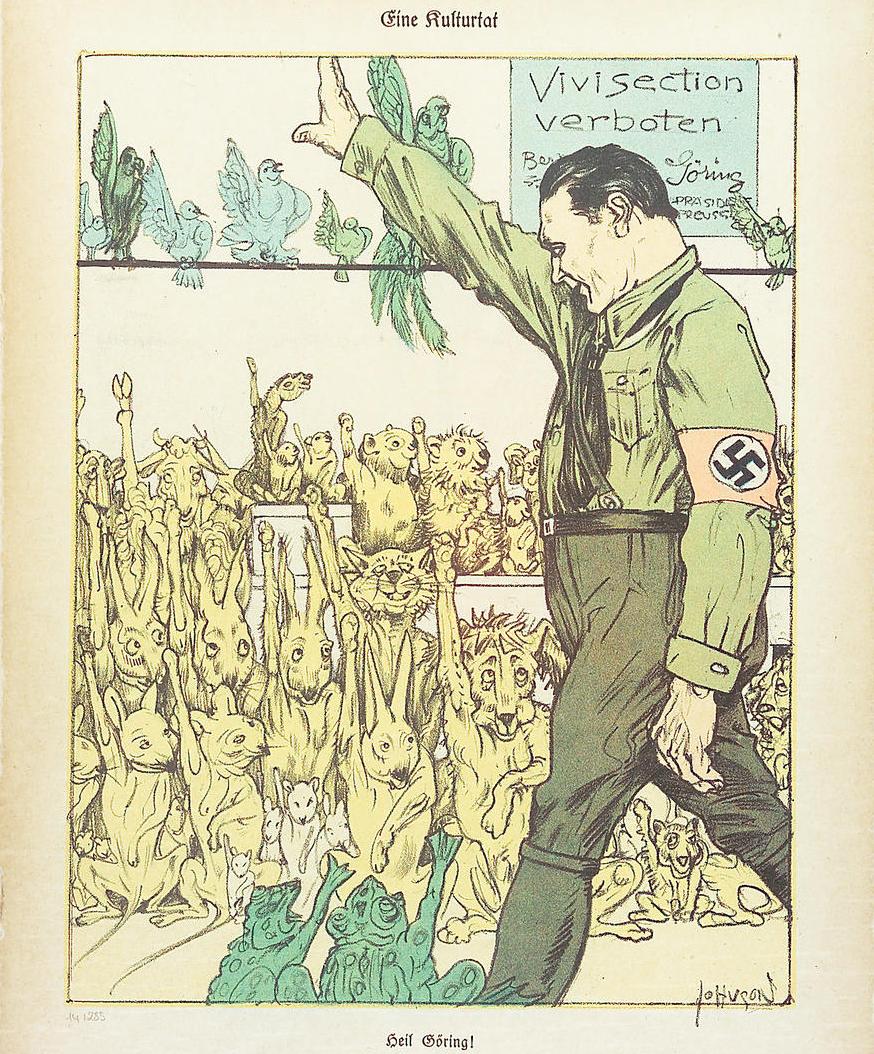
The only state, to date, to have banned cruel experiments on animals outright was National Socialist Germany. The anti-vivisection law was the first law or one of the first few laws passed by Hitler’s government. Cartoons showed Goering (another National Socialist and leading conservationist) and animals saluting, with captions such as “Heil Goering!”, “Even the animals vote for the Fuhrer!” and “Vivisection verboten!”
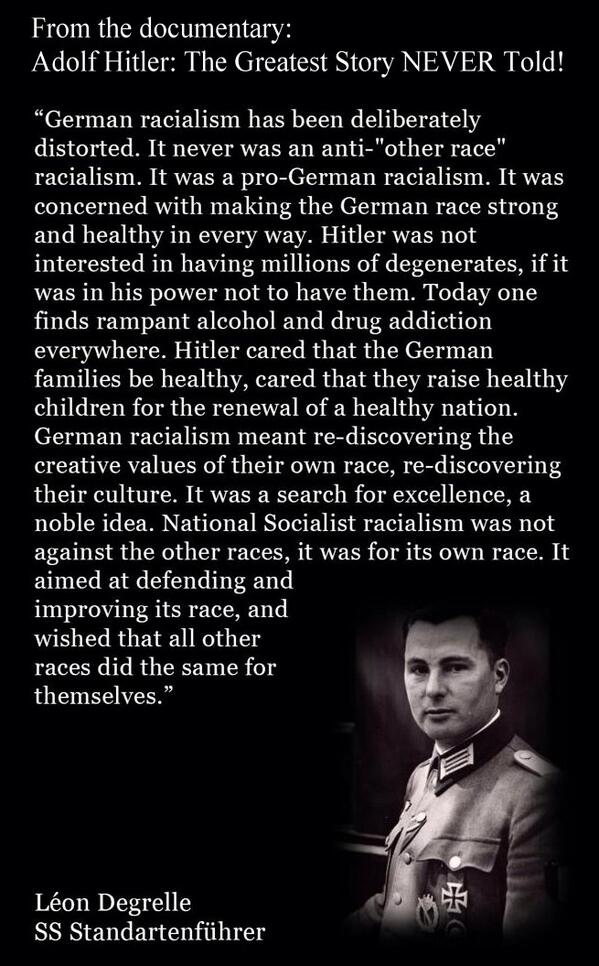
The connection is not surprising. What is now termed social nationalism is organic, built on the natural order and having respect for the creatures of the land, water and air as well as (contrary to Zionist propaganda) the relatively backward racial groups and peoples of our Earth. The hero Leon Degrelle [https://en.wikipedia.org/wiki/L%C3%A9on_Degrelle] put the latter point very well after the Second World War:
It is striking to see that there is very often an overlap, for example on Twitter, between those who are protective of animals and those who are strongly social-nationalist. Brigitte Bardot is a name which comes to mind: https://en.wikipedia.org/wiki/Brigitte_Bardot.
The new society in Europe will be nationalist; it will also be for Europe’s European future (though anti-EU); it will be green and it will be socially-just.





 [above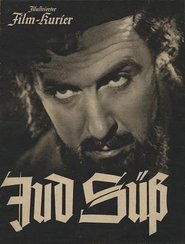
 Ian Robert Millard