Though I examine particularly closely any claims made by a Jew, the information is interesting. There may be something in it.
It will be recalled that South Africa was said, in the 1980s, to be working on biological weapons which would only affect black Africans. South Africa was also far advanced in an atomic weapons programme, in collaboration with the Israelis working out of their nuclear centre at Dimona, in the Negev Desert of southern Israel.
It would not be beyond the realm of the possible were the Israelis to have collaborated with South Africa on biological warfare as well.
Now we see claims by the Israelis themselves that
Israeli scientists were working on a vaccine for Coronavirus even before the Wuhan outbreak; they attribute the co-incidence to “luck”.
On the wider point, it may be that this outbreak is in the nature of an experiment, and that at some later point a virus equally or more infectious but far more deadly will be released, with the aim of reducing the Earth’s population to 10% or 20% of what it presently is.
[note: the above paragraph is speculation only and should not be taken to be my settled view].
Rishi Sunak and the UK economic stimulus package
The bailout of the banks a decade ago was disastrous, inter alia because banks are merely a useful parasite upon the real economy. The bailout impoverished many individuals via the so-called “austerity” programme. It also gave preference to the banks over businesses in the real economy.
This latest “bailout for business” is also misconceived, because it supports businesses as such but not the most important basis for business, individual consumers.
What Sunak should do (but will not, because it —superficially— is in opposition to Conservative Party attitudes) is to establish a Basic Income for all citizens (citizens, not any migrant-invader straight off the boat (rubber boat).
That would boost and secure the retail sector and other sectors, and would enable people to pay rent etc.
I was at the nearest supermarket (Waitrose) at 1930 yesterday, half an hour before closing time. More shoppers than usual at that time, though not crowded. The main doors wide open to promote fresh air inflow (and virus outflow?). More staff than usual at that hour. The shelves looked as if an invading horde had looted the store. Whole shelves completely picked bare: no loo paper, pasta, pasta sauce, shower gel or bread (instead of the usual hundreds of loaves of about 30 different kinds, only one pack of “ancient grains” muffins left (I bought that) and two specialist Jewish loaves (from Cohen’s Bakery).
So it seems that the bulk-buying and/or panic-buying continues. I can only assume that people are buying bread to freeze it, anticipating…what? Civil war? Disordered chaos? One would normally scoff, but I have a lingering feeling that those panicking, preparing or “prepping” may not be so silly after all…
Half-truths
Try isolating in one room of a hostel, B&B or Women’s Refuge.
Even in a flat it’s different- can’t just pop out in the garden for some Vitamin D & air.
Everything hits the least wealthy/most vulnerable worse & of course, it’s usually Capitalism that made them vulnerable https://t.co/1FDY6UdO77
“Dr” Louise Raw (and another) making true points about poor housing and social conditions, while shoving in a silly point about “capitalism”. Has she never heard of, for example, Soviet housing conditions? Or maybe she calls that “State capitalism”, in the Trotskyist way? I do not know.
I wonder whether the people will come out onto the streets. Not now, though. However, down the line, it has to be a real possibility if large numbers of renters are evicted at the same time; and if people lose their jobs and are cast into the pit created by Iain Dunce Duncan Smith, the Jew “lord” Freud, Esther McVey, David Gauke, all those evil swine. I rule out nothing for later this year, for 2021, for 2022.
Maybe that is why the “emergency legislation” being nodded through Parliament this week will contain enhanced so-called “anti-terror” powers for police, MI5 etc…
Tweets seen today
Say that about this. We need to close schools. They ate always open to those students who need to be looked after during school hours. pic.twitter.com/yunqdQryce
German POWs(yes they were still here!) from Ely’s 2 POW camps worked side by side with the British Army, reinforcing defences and rescuing people from rooves!
As I have blogged several times, Twitter is such a waste of time that I have even considered the possibility that it is being promoted precisely so that discontented people can imagine that they are engaging in socio-political activism by spending their days just tweeting. At any rate, that is what actually does happen. There are huge numbers of people on Twitter. Most are not political. Those that are think that they make a difference by being on Twitter. I doubt it.
I had 3,000 followers on Twitter when expelled, but was following only about 50, mostly organizations. You see some Twitter accounts with thousands or even tens of thousands of “followers” but then you notice that those accounts are themselves following a similar number of accounts!
Twitter is an interesting and potentially useful source of news and other information, but politically is largely a waste of time.
There is also the point that Twitter now “suspends” or suspends permanently (i.e. expels) many of the most interesting tweeters. This usually happens because of organized campaigns by either Zionist Jews or “antifa” idiots. In fact, those cabals revel in their pointless “activism”, as they did when I lost my Twitter account (which was not so important to me because I had “red-pilled” re. Twitter) but to those who denounced me would have been tragic, had it happened to them!
In fact, it did happen to some of them. Some, who had trolled me for years, are now gone, having been expelled. I notice that others have actually died; yet others are declining fast from chronic medical conditions…
Basic Income (again)
Some of the System politicians are thinking along the same lines as me:
Now Ian Blackford for SNP calling for temporary universal basic income
Coronavirus : Denmark’s government told private companies that it would cover 75% of employees’ salaries, if they promised not to cut staff. Putting money directly into people's pockets is a far better policy than the random policies pursued by the UK.https://t.co/wXVO2q14Js
I have previously blogged about various aspects of the proposed “safe zone” or zones which might become the hub of social national activity in the UK. I have explained how the “safe zone” might be created, perhaps most likely by one person, couple or family buying an estate, farm, house, business or whatever in the selected geographical area, then other people gravitating to the same part of the country.
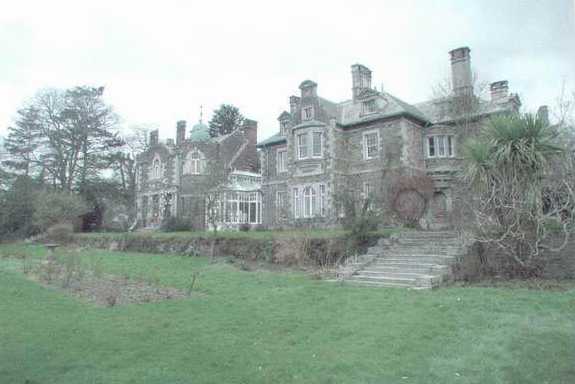
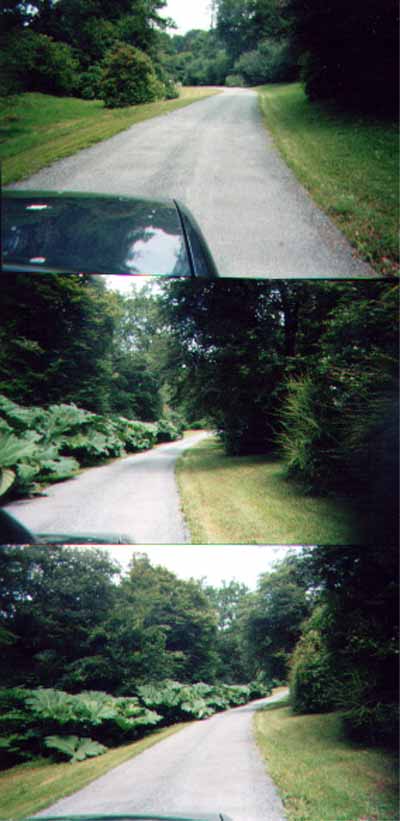
The ideal would be an estate which might include a main house, ancillary or secondary accomodation, houses, cottages, agricultural land, perhaps a separate business such as a garden centre, hotel or whatever (which might give employment to some of those supportive of the safe zone project). For example, I once had a lease of this house in Cornwall:
That house, a mid-19thC construction, originally (certainly by 1900) had a 5,000 acre estate, which by the time I lived there (2002 and 2003) had reduced to about 100 acres, most of which was woodland inhabited by reclusive deer. My own lease included only 4 acres (gardens and woodland) and did not include the secondary accomodation such as the North and South Lodges at the ends of the (more than 1 mile long) private road or driveway, 2 detached houses, and a few flats within or over the stable block.
It can be seen that such a house would be a fine hub for the safe zone project. The original relocators could live in that house, with supporters employed on whatever land surrounded it or in the nearby town (in that case, the nearest town was about 4 miles away) and living in the secondary accomodation or elsewhere nearby.
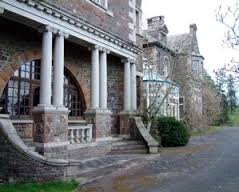
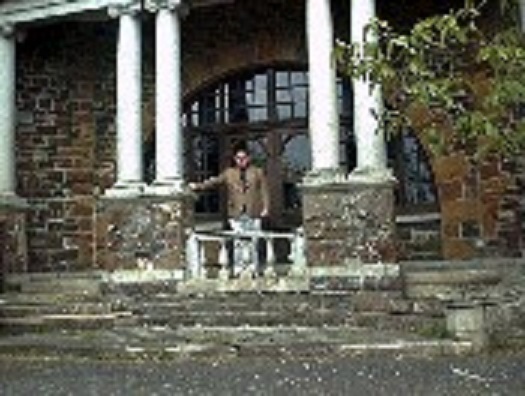
Such a house has the space to host meetings: the photos show the exterior colonnaded entrance to, and the interior of, the ballroom, which was itself larger than the whole of my present humble home…).
As suggested above, such rural areas sometimes have businesses available which require staff: garden centres, nurseries, motels, hotels, pubs etc; there might be scope in the nearby villages and towns too. It might not be very long before a thriving hub of social nationalism exists. Suitably-qualified people might get jobs in local schools or local government, even in the police, NHS facilities, or in the fire brigade.
Once the safe zone has progressed that far, it is likely that other land can be bought, other estates or farms. Compare it to a painting-by-numbers set: one by one, the blank bits are filled in.
Naturally, a considerable amount of money is required to start such a project. The hub (estate, farm or at least smallholding) would cost (in Devon or Cornwall) anything from £1M upward, depending partly on the acreage. Agricultural land is valued at present in the range £5,000 to £15,000 an acre, so a house with even 100 acres will probably cost at least a million pounds and quite possibly as much as five millions.
Realistically, several million pounds would be needed to initiate the safe zone project.
However, once operating, the safe zone will thrive. All supporters would “tithe”, as happens commonly in religious organizations etc. If even 100 people are sacrificing a tenth of their (net) income and even if their average income is only £30,000 a year gross (maybe £20,000 net), that still gives the project an annual income of £200,000 at a fairly early stage.
Once more than a few dozen people are involved in the project and resident in its territory, thought can be given to taking over local councils. From there, in electoral terms, the local and regional objective would be to get rid of existing System MPs and replacing them with social national candidates, whether overtly or covertly.
There is more. As the reputation of the safe zone spreads, the trickle of relocators will become a flood. At that point, the safe zone mutates into the germinal ethnostate.
I have previously blogged about the need to establish at least one “safe zone” in the UK, to act as a germinal ethnostate. My writings on this topic can be read on this site (under headings such as “safe zones”, “white flight”, “prepping” etc) and on my own website (http://ianrmillard.com).
[Update, 28 January 2024: please be aware that my former website address is not now operative. The present blog is on ianrobertmillard.com].
Why do I favour one safe zone in the UK rather than many? The Russian proverb is “if you chase two hares, you won’t catch one”. It is better to have 48 people living in one English county than to have 1 person living in each of the English counties. This accords with the dictum of Clausewitz: to wit, that a secure base must be established before power can be extended beyond. It also accords with the military doctrine of the Schwerpunkt or concentration of forces [lit. heavy point or main point or emphasis].
Realistically, one cannot expect every social nationalist in the UK or even in England alone to relocate to one area (I favour South West England, for reasons about which I have already blogged). People have ties which cannot always be severed easily. However, I feel that focusing on one main safe zone will allow that zone to exercize magnetic attraction and will achieve a momentum, eventually.
Present Situation
Writing in mid-2018, it seems to me that the need for the safe zone(s) becomes ever more pressing. For several reasons. I focus on the UK, but my comments refer also to the rest of the world.
UK cities are going black/brown. That is a very general statement and of course there are other groups also very numerous now, such as Chinese. In broad brush terms, the phrase is all right. At any rate, white Northern Europeans are already a minority in several English towns and cities. Continuing mass immigration and the higher birth-rate of non-Europeans will ensure that few large towns and cities will be majority white European (let alone predominantly so) by 2050. What does this mean? Politically, electorally, it means that social nationalism cannot succeed even if all white Europeans were to, say, vote for a social-national party standing in any election. The numbers would not and could not be there.
Protection and security. At present, even the most innocuous meetings by social nationalists face annoying disruption and even prevention by reason of the activities of the mindless “antifa” groups, which groups can be described as the “useful idiots” of the Jewish-Zionist lobby. (They often in fact say that they are “anti-Zionist” as well as “anti-fascist”, but strangely seem rarely or never to attack Zionist gatherings). A safe zone will ensure that the personnel are there to protect the white European social-national community, come what may. The safe zone will also provide protection and support to those affected by the over-zealous policing now current.
The presence of large numbers of social nationalists in one area will enable election of local and national representatives. This is not the main driver, but will be useful.
Protection of children from unsuitable social pressures and brainwashing.
A further reason to create a safe zone is the uncertainty in the international situation. War may yet ravage Europe. Safe zones enable survival of people and ideas.
I am not an economist; neither am I, at least in terms of occupation and/or formal training, an historian. I say that from the outset simply because it may be objected that, especially in terms of economics, I have no intellectual locus standi, despite the fact that most predictions made by economists turn out to be inaccurate. Also, “two economists, three opinions”…
Bitcoin
So, Bitcoin. Bitcoin was invented in 2008, possibly in Japan, by someone (or a group) whose provenance and even real name or names remain unknown:
Money is an almost metaphysical thing. Different societies have used seashells, precious metals etc as money, the key characteristic being the relative rarity of the commodity used. In China (in the 7th Century under the Tang dynasty), paper currency was invented, and later more widely introduced in the 11th Century (Song Dynasty), where it was encountered by Marco Polo and others, who introduced the idea to Europe.
Paper currency was, at first and for a long time, backed or notionally backed by precious metals, notably gold. Paper money only became generally acceptable in Europe a thousand years after its invention in China. The natural scepticism of the people was overcome both by its convenience and by its credibility, that credibility not only bolstered by its supposed convertability into gold or silver but also by the draconian penalties visited upon those who counterfeited the notes.
These factors underpin all money, credibility or popular belief in its value being the core.
Speculative Bubbles
One could go wider and say that credibility and belief underpin all valuation of assets, whether money assets, real property or other property in which the population is impelled to invest. Time and again there have been speculative bubbles: in currencies, in shares, in housing, in undeveloped land, in metals and even in such things as tulip bulbs (17thC Holland).
A good history of these bubbles and other mass events of the sort was penned in 1841 after the South Sea Bubble and was reprinted after the Wall Street Crash of 1929: Extraordinary Popular Delusions and the Madness of Crowds (and reprinted since, eg in the early 1980s)..
Since that book came out, since its 1930s reprinting, other bubbles have come and gone. Among the more noteworthy was the “Silver Bears” bubble of the 1970s
and also many and various real property bubbles across the world.
Bitcoin Goes Viral
At first, back in 2008, Bitcoin was valueless, worth nothing at all. It was just electrical impulses on a machine, effectively. It was still of small value three years later:
“The price of bitcoins has gone through various cycles of appreciation and depreciation referred to by some as bubbles and busts.[129][130] In 2011, the value of one bitcoin rapidly rose from about US$0.30 to US$32 before returning to US$2.[131] In the latter half of 2012 and during the 2012–13 Cypriot financial crisis, the bitcoin price began to rise,[132]reaching a high of US$266 on 10 April 2013, before crashing to around US$50.[133] On 29 November 2013, the cost of one bitcoin rose to a peak of US$1,242.[134] In 2014, the price fell sharply, and as of April remained depressed at little more than half 2013 prices. As of August 2014 it was under US$600.” [Wikipedia]
Wikipedia continues:
“Ponzi scheme and pyramid scheme concerns
Various journalists,[79][144] economists,[145][146] and the central bank of Estonia[147] have voiced concerns that bitcoin is a Ponzi scheme. In 2013, Eric Posner, a law professor at the University of Chicago, stated that “a real Ponzi scheme takes fraud; bitcoin, by contrast, seems more like a collective delusion.”[148] A 2014 report by the World Bank concluded that bitcoin was not a ‘deliberate’ Ponzi scheme, but that it did thus far meet the “standard definition of a speculative bubble”.[149]:7 The Swiss Federal Council[150]:21 examined the concerns that bitcoin might be a pyramid scheme; it concluded that “Since in the case of bitcoin the typical promises of profits are lacking, it cannot be assumed that bitcoin is a pyramid scheme.” In July 2017, billionaire Howard Marks referred to bitcoin as a pyramid scheme.[151]
On 12 September 2017, Jamie Dimon, CEO of JP Morgan Chase, called bitcoin a “fraud” and said he would fire anyone in his firm caught trading it. Zero Hedge claimed that the same day Dimon made his statement, JP Morgan also purchased a large amount of bitcoins for its clients.[152]
Speculative bubble dispute
Bitcoin has been labelled a speculative bubble by many including former Fed ChairmanAlan Greenspan[153] and economist John Quiggin.[154]Nobel Memorial Prize laureate Robert Shiller said that bitcoin “exhibited many of the characteristics of a speculative bubble”.[155] Journalist Matthew Boesler in 2013 rejected the speculative bubble label and saw bitcoin’s quick rise in price as nothing more than normal economic forces at work.[156] Timothy B. Lee, in a 2013 piece for The Washington Post pointed out that the observed cycles of appreciation and depreciation don’t correspond to the definition of speculative bubble.[131] On 14 March 2014, the American business magnate Warren Buffett said, “Stay away from it. It’s a mirage, basically.”[157]
Two lead software developers of bitcoin, Gavin Andresen[158] and Mike Hearn,[159] have warned that bubbles may occur. David Andolfatto, a vice president at the Federal Reserve Bank of St. Louis, stated, “Is bitcoin a bubble? Yes, if bubble is defined as a liquidity premium.” According to Andolfatto, the price of bitcoin “consists purely of a bubble,” but he concedes that many assets “have bubble component to their price”.[53]:21 Speculation in bitcoin has been compared to the tulip mania of seventeenth-century Holland. Comparisons have been made by the vice-president of the European Central Bank, Vítor Constâncio, by JPMorgan Chase chief Jamie Dimon,[160] by hedge fund manager Ken Griffin of Citadel,[161] and by former president of the Dutch Central Bank, Nout Wellink.[162] In 2013, Wellink remarked, “This is worse than the tulip mania […] At least then you got a tulip [at the end], now you get nothing.”[163] On 13 September 2017, Jamie Dimon compared bitcoin to a bubble, saying it was only useful for drug dealers and countries like North Korea.[164] On 22 September 2017, a hedge fund named Blockswater subsequently accused JP Morgan of market manipulation and filed a market abuse complaint with Financial Supervisory Authority (Sweden).[165]
Bitcoin started to reach escape velocity in late 2016, going from hundreds of U.S. dollars to thousands. At time of writing (December 2017), a single Bitcoin is valued at over $14,000 [USD], or £10,500 [Pounds Sterling]. People who “invested” less than £100 several years ago have seen their stock suddenly rise to be “worth” as much as £100,000. Those who have risked more (in some cases a million pounds or more) now find themselves in theory able to buy small or even medium-size nation-states lock, stock and barrel.
What Do We Know About Bitcoin?
Bitcoin’s origins are obscure, to the extent that journalists and others have researched, investigated and written about the names of possible founders and organizers without having come to a definite conclusion;
Bitcoin is almost useless as a popular currency: its explosion in “value” has made it unusable for any transaction not involving, at the least, tens of thousands of pounds;
Bitcoin, though supposedly limited in overall amount or number, has seen security breaches which, at the push of a button (putting it simply), have at least briefly increased the supply of Bitcoin.
Conclusion
Bitcoin is a classic speculative bubble or, alternatively and perhaps even better put, pyramid scheme. The people who got in early and stayed in are sitting on mirage-fortunes; those who have “invested” more recently will probably lose everything they put in. At the moment of writing, Bitcoin is probably nearing its peak. When it starts to fall rapidly, the panic will probably wipe it out entirely.
The surely inevitable collapse of Bitcoin will take down more than just Bitcoin itself. It may affect the stability of the economy more generally. Beyond that, if (as Bitcoin proponents and/or “investors” say–and their anger at any criticism is perhaps born of subconscious desperation), Bitcoin is as “credible” as any “ordinary” currency (and that is Bitcoin’s strongest point), then the upcoming crash of Bitcoin could take with it much public confidence in the value of the world’s major currencies too. Our major currencies are no longer backed by gold or silver and have only the value we put upon them. We exchange stones for bread. Our currencies are themselves castles in the air and “such things as dreams are made on”.
We recall the hyperinflation of early 1920s Germany, and I myself saw, on several visits to 1980s Poland, how the slide of the zloty affected that country politically and socially. The fate of Bitcoin is not just about Bitcoin.
At the time of writing of my own 2017 blog article, a single Bitcoin was “worth”, i.e, valued at, about £10,500 pounds sterling. At time of writing today, 1 Bitcoin is worth just over £2,853 pounds sterling, somewhat above a quarter of the former figure, and only about a sixth of the 2017 peak.
Update, 19 November 2020
I update my post purely because, in the uncertain conditions of 2020, I see that the article is receiving more hits. Sign of the times?
I have nothing to add to the article itself, but as of today, Bitcoin is trading at just under £13,398 (pound sterling) and at USD $17,730.
Radio 4 Today interviewed an expert in cryptocurrencies, who himself has made tens of millions of pounds from them. He expects a crash. I expected one three years ago. Never happened, though the value did plummet before recovering and climbing further.
As of today, 20th February 2021, 1 Bitcoin is valued at not far short of £40,000!
I notice that Alison Chabloz accepts Bitcoin donations; I hope that she got some before the price rocketed, and still has them. If so, she may have a windfall. https://alisonchabloz.com/how-to-donate/
Today, Bitcoin recovered from USD $44,000 to USD $46,000 after having fallen from USD $52,500. An indication of the underlying volatility.
All the same, I am wondering whether, so far from being somehow “anti” the international money system, Bitcoin might not in reality be controlled by it…
Certainly, the genesis of Bitcoin has the feeling of “legend” (in either sense) about it (supposedly created by a Japanese whose identity has never been confirmed. Perhaps…).
Well, I have to admit that my 2017 prediction of a Bitcoin collapse was, though accurate-seeming in 2019 (when the price dropped to a mere sixth of its 2017 peak) wrong in terms of its later rise.
Incredibly, as of today, the price of 1 Bitcoin is £49,700 (Pound Sterling) or USD $64,627!
I can only suppose that the surge in “value” (rather, in price) of Bitcoin reflects the world situation, the instability of the world economy, and therefore the instability of world traditional currencies.
Gold is also at a record high at present.
All the same, if there were a major war, a world war (a fortiori, a nuclear war), and assuming that any human society and economy were to survive, Bitcoin would probably disappear in a flash (literally), as the Internet is destroyed, taking Bitcoin with it.
Human paper currencies would also disappear, at least for a while, in that scenario, but gold would still hold at least some value, presumably. At least you can hold a lump of gold in your hand, or put it in your rucksack…
Recent months have seen devastation from hurricanes. The Caribbean area has been the worst-hit. Most of those islands are now, with help from major states as well as from charities and individuals, bouncing back. Puerto Rico is still suffering from the effects, partly because it is the largest of the worst-affected islands, partly because the US Federal Government response has been sluggish.
In Europe, it is unlikely that we shall suffer in any major way from hurricanes, but there is a quite-high chance that our societies will suffer from the dislocations caused by war and/or socio-economic collapse. Many will say that this cannot happen or would not affect at least the more civilized parts of Europe. Are they sure? It is still just within living memory that parts of Europe were devastated twice by the very major conflicts of 1914-18 and 1939-1945. Apart from those wars, there have been others: the war between the Bolsheviks and others from 1918-1922 (Russia, Ukraine, Poland, East Prussia); the Spanish Civil War (1936-1939); the Balkan War(s) of the 1990s. That is not even taking into account smaller armed conflicts such as the Hungarian Uprising and subsequent Soviet invasion (1956) or disruptions of an economic or other nature. The recent and continuing “migration-invasion” of Europe by non-Europeans comes to mind.
An individual or small group within a society, not holding political power, cannot do much to steer such events; neither can an individual or small group easily defend itself either directly or in terms of subsistence. However, there are possibilities, if prepared for in advance. In Puerto Rico, while most of the population suffered (at time of writing many continue to suffer) from shortages of water, food, from lack of electricity, vehicle fuel and medical help, others have been able to weather the storm, both literally and metaphorically, far better.
In Puerto Rico and elsewhere, those who survived without suffering more than they had to were those whose homes were solid, who had stocks of food, fuel and medical supplies and who were as far as possible “off-grid”. Twitter carried innumerable stories of despair and triumph, such as the farmer who powers his farm using solar power from his own solar array. For him, the fact that the electricity distribution network was not working (for weeks) was not directly relevant.
In the UK and across Northern Europe, the same applies. I have blogged previously about how people on farms, country estates and elsewhere might be able, not only to survive social collapse, but also to help to preserve culture and civilization during what could be an extended period without central control, help, law, order. As during WW2 rationing, those best off might be people living in rural areas, especially those already “prepped”:
electrical power and hot water from solar panels, heat exchanges, small wind turbines, small hydropower plants; there are also ways of producing limited amounts of electricity via pedal-powered and hand-operated wind-up systems; temporary back-up might involve small petrol or diesel generators.
water purification systems; solar stills; temporary back-up via stocks of bottled water: bottled water lasts, at a minimum, 2 years and in many cases is still drinkable without treatment after 4 –or more– years and even after that can still be used after simple treatment such as addition of drops of potassium permanganate or by running it through a filter and purification system, or by boiling it as required. In fact, most rural farms and estates have access to springwater supplies etc.
food home-grown or produced. This of course depends on having land on which to grow it and will be much easier if the preppers already do it on their own estates and farms (or the land around ordinary houses). How much land is required is not fixed and depends on the required diet, the land type and quality etc, but can be as little as half an acre per person and quite likely even a smaller area– https://www.smallfootprintfamily.com/how-much-land-is-needed-to-be-self-sufficient . In addition, there will be food backup via stocks of tinned food, dried foods and, for those whose diet encompasses them, foods from fishing and shooting: fish, shellfish, venison etc. A further source would be from permaculture sources: nut-bearing trees, wild berries and so on.
Internet. This may be interrupted or even cease to exist for a time, though it is likely that service will continue in some form or be rebuilt eventually; a major resource in terms of useful techniques, as well as in holding together spread-out communities and the rebuilding –if necessary– of the wider society. Also, a way of offering or asking for help.
medical help: as on expeditions etc, you can never have too many doctors or nurses. A further advantage to having doctors on board before disaster strikes the general society is that doctors can order supplies of drugs unavailable without prescription and, should they so decide, stockpile them. While few individuals will be able to afford their own operating theatre, a social-national community might be able to fund doctors to set up one before it is required.
transport: vehicle fuel can be stored, but may not last very long. Electric cars and other vehicles are still novel; when they are available, anyone with an electrical supply and a charger will be able to charge them and so continue to have the use of cars, trucks, tractors etc.
I have left out the question of arms. As the law now is in the UK, most people are not permitted arms beyond shotguns and in some cases rifles. Obviously, farmers and landowners will usually have such weapons. In a situation of collapse, arms will probably become available. In any event, any larger or more complex weapons (eg mortars, tanks) require persons with the requisite military training. In short, it is unnecessary for the germinal ethnostate to have arms beyond those customarily available to all rural communities in the UK (other European countries are far less strict).
We in the germinal ethnostate will be in a good position not only to survive but to found a new society if we prepare in the right way and in good time.
We read of those, especially in North America, who are termed “preppers”, people preparing for various forms of disaster (nuclear war, an asteroid hitting the Earth, inability of the State to maintain civil order) leading to social collapse, either with rampaging and desperate hordes of displaced people everywhere or with a mere few “survivors” from whatever calamity has struck. We in Europe tend to laugh at these American excesses (as they seem to us), but perhaps we should be less amused and more cautious.
Naturally, there is a huge difference in geographical and demographic norms. The wide open spaces of much of the USA and Canada contrast starkly with Europe, particularly the UK, with its centuries-old man-altered landscapes, densely-populated cities and towns, lack of true wilderness (except in the North-West of Scotland).
The population density of the USA, overall, is 92 persons per square mile; that of the UK nearly 700. Naturally, that is a misleadingly simplistic picture. The most densely-populated American state, New Jersey (where I myself once lived) has a population density of over 1,200 ppsm, whereas, while the UK West Midlands region has a density of over 3,000 ppsm and Manchester over 2,000, Devon has only 172, Cornwall 154 and the Scottish Highlands and Islands only 11. On the other hand, there is the point that “crowded” (in parts) New Jersey, the 4th-smallest American state, is about the same size as Wales. The more sparsely-populated areas of the USA are often a very long way from major cities or even modest towns.
It is clear that, for the UK prepper, less is more and that the congested urban and suburban areas are to be avoided as a base. However, the distinction should be made between the hardcore prepper, who intends to live by hunting, fishing and his wits, i.e. as a “survivalist” and the person who aspires to the creation of a new society after any collapse of the existing one. The latter is therefore, almost ipso facto, a conserver of civilization and culture.
I have already blogged about the idea of forming and developing a “safe zone” or base area for UK social nationalists. I have suggested that, in terms of region, the Devon/Cornwall peninsula might be the most suitable. Naturally, when social nationalists have relocated to that zone, their lives will not consist, in the absence of immediate war or social collapse, of hunter-gatherer or subsistence farmer activities. They will do normal jobs, run businesses, smallholdings, farms and estates and in general live (in most cases) as they do in those other parts of the UK where they live at present.
I suggest the following ideas. This is not supposed to be a comprehensive list, but only a basis for one:
Food Security
Keep a stock of food to last for a year or even two. The Mormons have been doing this for a long time, certainly for many decades. There is no need to re-invent the wheel when we can learn from others who know how to do things. Here is one explanation of how the food storage system works with the Mormons:
The Mormon system seems to work on the idea of having a buffer for months rather than years, but with modern canning, packing and freezing techniques it should be possible to give the people in the safe zone at least a one-year supply of food from store.
Naturally, in a rural area, agricultural and horticultural produce will be available. Members of the social-national community will no doubt own estates, farms, smallholdings. In addition, those occupying smaller residences can be encouraged to cultivate part of their gardens, grow produce on a small scale under glass etc.
An important aspect of food security is the existence of a seed bank. Individuals and families can keep their own, but the community as a whole should also maintain one.
No doubt people will be able, in hard times, to forage and to find wild food and to fish.
Energy Security
It is to be expected that, in the first instance, the houses and other buildings in the safe zone will be on mains electricity. This supply is vulnerable in the event of war, natural disaster or social collapse in the wider society.
The first necessity is to build up the supply, within the zone, of solar electricity generation and solar heating. There are buy-back schemes etc whereby the householder can even sell his excess power to the National Grid, so long as it exists. At any rate, the community within the safe zone should do everything it can to utilize this renewable supply.
Geothermal heating of homes and other buildings is possible now, if the capital is there to utilize it.
It may be possible for individual residences in the countryside to have small wind turbines too, which can both supply those homes with electricity and also put any surplus back into the National Grid or a local grid.
A further option for some farms and estates would be hydropower from rivers and smaller streams of water.
As an emergency fallback, there should be a range of off-grid options for heating homes: woodburning stoves, ordinary open fires and, for electricity generation, emergency generators run from oil or other petroleum products.
It would be useful, too, if members of the community were to stockpile emergency lighting: candles (even tealights), hurricane lamps etc, battery-operated or camping gas-operated lights, wind-up lamps and torches.
Water Security
Water supply is easier, being regional and local rather than national. Indeed, many houses and farms in rural England have their own supply from springs. However, a contingency plan must be drafted and worked out.
Communications
The Internet was designed, originally, as a means by which communications might continue even after nuclear war. Presumably, that system will continue in some form even during social collapse. If so, it might be of huge importance beyond the confines of the safe zone, in the struggle to rebuild the wider society.
The community ought to maintain a radio transmitter.
Conclusion
An article such as this cannot cover all aspects of how a decent society might survive when the wider society around it is in a state of disorder and even collapse. I have not touched upon questions of social order, for example. However, these few proposals may start running a current of thought. The proposed safe zone will have to operate on the basis that an externally-triggered emergency will probably occur before very long.
Update, 21 July 2019
I saw this on Twitter. Obviously drafted with American conditions in mind rather than European/UK ones, but not bad overall.
The large cities of England are becoming no-go zones for social nationalism. Repressive anti-free-speech laws, politically-indoctrinated police and, above all, the increasing hordes of non-Europeans make cities such as London, Birmingham, Manchester (let alone such as Bradford or Leicester) unwelcoming. In London, the Jews have even established their own police force (under the cover of a help-the-police Neighbourhood Watch scheme). This body, apparently known as the “Shomrim”, has marked “police” cars, uniformed “officers” and, it is said, operates from real police stations in Barnet and elsewhere. In the Muslim areas of the large cities, it would be a brave individual who would undertake any political activities of a social-nationalist or anti-immigration nature, even if as mild as, say, supporting UKIP.
Electorally, social-nationalists are isolated and, especially since the implosion of the BNP, almost certain to receive fewer than 5% of votes, even in local council elections. UKIP is scarcely social-nationalist, garnered 3.8 million votes, yet failed to win a single new MP in 2015.
Socially, English and Welsh people (I leave Scotland aside) find that their children, if in State schools, are in a milieu which is not British and are subjected to brainwashing propaganda dressed up as education, while they themselves live in a “multicultural” mess which can only get worse.
There is already “white flight” from the large cities of England to the smaller cities and towns and to the rural areas generally.
Let us build on this existing trend.
What I propose is that social nationalists cluster in one or two or a few areas, where we can order society the way we want, educate children the way we want, have electoral weight and other political influence.
Those who have capital can buy houses, businesses, farms, estates. Those without capital and dependent on paid work, pensions, or State benefits can relocate to circumstances similar to those in which they currently live. An organised movement will be able to assist with contacts, jobs and business links etc. An internet radio station can be established without State interference. Even a “normal” (albeit regulated and censored by OFCOM) local radio can be set up and a local newspaper established.
Once there is a credible social national party, it can take over the local council(s) without much difficulty and in time depose whoever is the System party MP to elect a real social-national MP (or MPs).
A thriving base for social nationalism will exist, spreading influence nationwide, attracting even more like-minded people. If two or more such bases are established, the same applies, but concentration is key.
I have had several places or regions suggested as the most suitable. There may be a number of suitable parts of England or Wales; I personally favour the South West, an area which I know, where I have lived and which has always been sympathetic to British and/or English national sentiment.
I welcome all useful or constructive contact and comment on how to start this ball rolling.
In the Dark Ages, the flame of civilization and culture was kept burning in fortified centres: walled cities, monasteries etc. It may be that the time has come to think in terms of “back-up” for the knowledge and human expertise that we take for granted today.
What does that mean in practical terms? There can be little doubt that, were a breakdown of law and order to occur (whether as a result of war or natural calamity), the British cities would probably become chaotically lawless in a short space of time, especially if fuel, food, water or utilities were unavailable.
It seems to me that those inclined to social-nationalism should think in terms of relocating to areas some distance from major cities, to small towns and villages where like-minded people can become either the majority or a strong minority. Such clusters of people can take over the local councils, local businesses and farms, as well as doing the usual run of employed work which they might do in the cities where they, perhaps, now live.
The idea has the following merits:
a. Political (electoral or other) bases can be created, with voting weight;
b. The clustering effect would enable concerted action;
c. In the event of catastrophes in the wider world, these centres would become the places looked to by the wider masses for leadership.
Clausewitz said that, in order to extend power, one must first have a secure base. It is that that social-nationalism lacks at present in the UK. The above proposal aims to address that lack.






 Ian Robert Millard