

Tag Archives: Rougemont Chambers

Diary Blog, 14 January 2025

Morning music

[какая красавица…]

Reform UK

https://www.dailymail.co.uk/news/article-14280613/Reform-UK-Nigel-Farage-Labour-government-new-poll.html

Reform UK is now only a single percentage point behind Labour – putting their leader Nigel Farage within touching distance of Number 10 at the next election.  

New polling data from YouGov, commissioned by Sky News, puts Reform on 24 per cent and Labour on 25 per cent – down a whopping 9 percentage points from their winning vote share at the 2024 UK election.  

With the Conservatives on 22 per cent, the UK electorate may be about to usher in a new epoch of three-way party politics.

The new research puts Labour on 26 per cent, Reform UK on 25 per cent, the Tories on 22 per cent, the Lib Dems on 14 per cent and the Greens on 8 per cent.

In general the assessment of Sir Keir’s first six months in office is damning, with only 10 per cent of voters judging that he has been successful and an overwhelming majortity (60 per cent) saying he has been unsuccessful.

Labour insiders are also worried at how the party is hemorrhaging voters to other parties across the political spectrum.  

The new data found that they have retained only 54 per cent of supporters from the general election – while 7 percent have defected to the Lib Dems, 6 per cent to the Green Party, 5 per cent to Reform UK and 4 per cent to the Tories.

Meanwhile almost a quarter of those who voted Labour in the polls (23 per cent) either did not say, weren’t sure or had decided not to vote at all. 

Labour also faces a problem with elderly voters in light of policies like the removal of the winter fuel allowance, with only 14 per cent of OAPs now saying they would cast their vote for Labour – down eight percentage points from the election.

[Daily Mail]

Naturally, Reform UK is not very close to me, ideologically. Pro Israel, pro-Jewish lobby, and (relatively) anti-welfare state; pro-finance capitalism.

Still, Reform UK has its uses. To move the “Overton Window”, particularly on issues of immigration, migration-invasion, free speech etc. Above all, to break up the LibLabCon “three main parties” scam which has been in place during my lifetime.

It may well be that all party politics will crumble to dust by reason of some existential catastrophe in the world, such as nuclear war, but that is another matter, arguably.

According to Electoral Calculus [https://www.electoralcalculus.co.uk/userpoll.html], the figures given, if replicated at a general election, might result in a House of Commons with Labour holding 287 seats, Conservative Party 128, Reform UK 107, LibDems 77, Green Party 4. That would indicate a Lab-LibDem coalition, or some lesser concordat, Labour being about 37 short of an overall majority on those figures.

Tweets seen

The (continuing) “reduction of the Gaza ghetto”…

Either ship him back or just get rid of him (and the rest).

When I was about 21-y-o, I wanted to get rid of hundreds of unwanted books, mostly paperback novels (spy stories and crime thrillers etc). I gave them to the Royal Marsden because I was then living at Reigate Hill in Surrey, only about 8 or 9 miles away from the hospital’s site at Sutton (though the distance seems more because the two areas are so different). I dropped them off at the hospital reception. I hope they at least passed the time for some of the in-patients. I suppose that must have been 1977 or 1978.

It looks, though, as if the lady tweeter noted attends not the Sutton site of the hospital but rather its other and older location, in Kensington (which would make more sense, because she lives not far from my old shooting club, the Kensington Rifle and Pistol Club, now all but defunct and no longer —since the 1990s, if not earlier—in West Kensington). https://en.wikipedia.org/wiki/Royal_Marsden_Hospital.

My annual mammo is the best focus group of one you’ll get. Delightful radiographer tells me she’s never voted, they’re all as bad as each other and don’t listen to the NHS.

Furious about the social care plan delay not just as a healthcare worker but as the mother of a special needs adult who needs it. Her daughter volunteers in a food bank when she can, bless her.

3 disgraces in this story alone – underpaid NHS worker (my words not hers), crap & ludicrously expensive social care, food banks. I say I might have an offer you like and care passionately about fixing social care. And the rest. I also think doctors would run the NHS better, pen-pushers and deadbeat hospital CEOs, often from industry or politics, should be blocked off.

All right. Some good points, but was she saying all that when she was married to a Conservative MP and Whip (until a decade ago)? I do not know, but I doubt it. She was (and still is? I wonder…) a passionate supporter of the part-Jews David Cameron-Levita and George (Gideon) Osborne, whose government of nasty nonsense, 2010-2015, imposed so-called “austerity” (for the poor) and spending cuts which permanently crippled this country in every way.

As for “food banks”, they scarcely existed until 2010. Only on a tiny scale, anyway. Another result of “Conservative” Party policies 2010-2015.

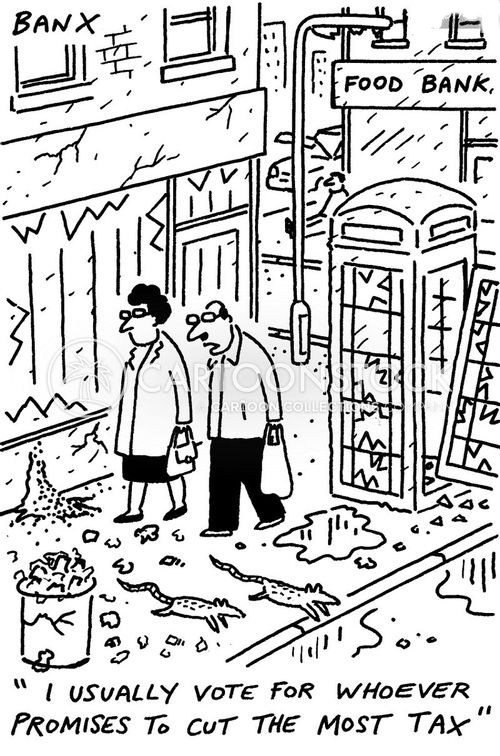
The Fiona Syms tweeter should think about why the Conservative Party presently stands at 22% in the opinion polls, 2 points lower than at GE 2024, despite the evident hopeless incompetence and unpleasantness of the “Labour” government of “Tel Aviv Keith” Starmer and his little Labour Friends of Israel cabal.

People have not forgotten the 14 years of truly bad “Conservative” government 2010-2024, finishing off with the government of the little Indian money-juggler, Sunak; and now the “Conservatives” are “led” by a political joke (again), a Nigerian woman who only came to the UK at age 16, albeit that she spent a day or two here after her birth (in London).
Having said that, it is clear that Labour (too) is finished. After a week or two of Starmer-Labour misgovernment, I blogged as much, at which time the msm were sycophantically applauding Starmer (some stupid woman scribbler in, I think, the Guardian, even said that she found herself attracted to Starmer sexually!— Well, Henry Kissinger did say that “power is the ultimate aphrodisiac“…).

More tweets seen

What stands out there for me is how only among those 65+ years of age is voting Conservative anywhere near the level required to ground a Conservative Party government. 35%. Not very impressive anyway, but dropping to only 25% among those 50-64 y o, and to only 16% among those aged 25-49 before almost disappearing among those aged 18-24.

It might be argued that those aged below 65 y o might well change their views when they age further (just as it was said by Soviet anti-Christian propagandists in the pre-1989 period that “only old women now attend Russian Orthodox churches“, but that was countered by those who noted that there seemed always to be another generation of old women at church…).

Yes, those now aged below 65 may well be more inclined to vote Conservative when they reach 65+, but in my opinion the numbers will never be higher, or even as high, as they now are.

If the percentage of those 65+ voting Conservative is now 35% or so, by 2029 that might easily decline to 30%, and lower thereafter. The same slide might also be seen, and probably will be seen, lower down the age scale. If the present 18-24 y o generation only vote Conservative Party at around 5%, that will almost certainly increase, but maybe only slightly, over the years to come. To what extent is hard to pinpoint, but maybe by only about 5 points in each coming generation, so at age 65+ maybe to about 20%.

Admittedly speculative.

That is assuming that the present voting and political system will still be here in 2060, 2040, or even 2030. Or the present world as we know it…

More music
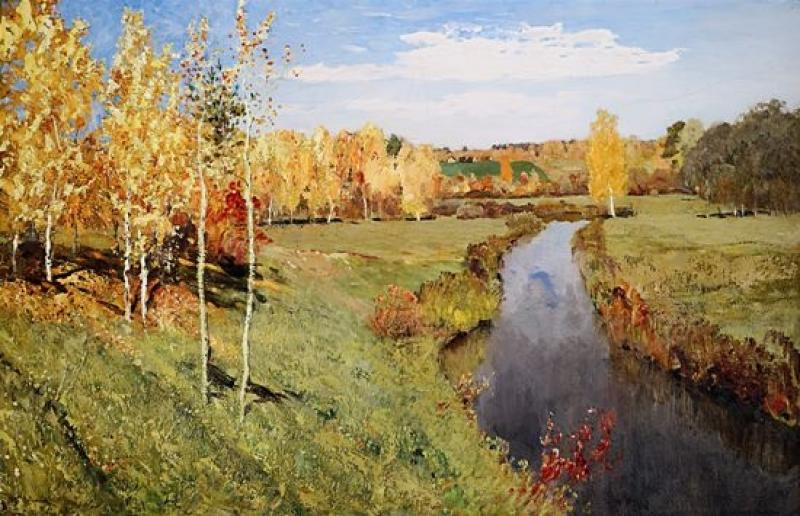
[painting by Levitan]

[Ermine Street (Roman road); https://en.wikipedia.org/wiki/Ermine_Street]

More tweets seen

Until 6 months ago, though I already predicted on the blog that Starmer-Labour would be useless, I did not think that this government would or even could equal in infamy the totally s**t governments of 2010-2024. Well, I was wrong in that last. Starmer and his crew are as bad as, or worse than, any of the “Conservative” governments of 2010-2024.

Talking point

Talking point

https://www.crowdjustice.com/case/saba-poursaeedi-lost-my-job/

I think that this comes within the category “shocking but not surprising”…

Yes. All true. However…where was Toby Young, and where was the “Free Speech Union”, when I was wrongfully (and, as it later turned out, unlawfully) disbarred in 2016, as a result of a concerted campaign by the Jew-Zionist lobby, specifically the overlapping “UK Lawyers for Israel” [“UKLFI”] and “Campaign Against Antisemitism” [“CAA”]?

Likewise, where were the “Free Speech Union” and Toby Young when I was subjected to a “criminal” trial over my free speech rights, and this blog?
An example of 2025 craziness

https://www.dailymail.co.uk/news/article-14282311/Cambridge-law-student-sues-university-failed-PhD.html

A law student is suing Cambridge University for discrimination after he failed his PhD and delayed his career working as a barrister.

Jacob Meagher is seeking ‘substantial damages’ from the world famous institution, alleging he was the subject of disability discrimination and victimisation following the failure of his law PhD.

Mr Meagher also claimed that his oral ‘viva voce’ interview, where he was questioned about his thesis by two examiners, caused ‘significant damage’ to his health. 

He ended up failing the examination, meaning he missed out on a opportunity to take up a tenancy at a ‘particular set of chambers’ and therefore ‘suffered a substantial loss of anticipated earnings’.

Outlining the claim, the judge said: ‘Mr Meagher…is a student at the University of Cambridge…undertaking a PhD in law. 

‘[He] did not successfully pass his final viva voce examination of his doctoral thesis.

Court documents also stated that the University’s Disability Resource Centre had recommended that at the viva, examiners follow a set of guidelines, produced as part of a Student Support Document (SSD), to help him.

These included asking specific rather than general questions, using the active, rather than the passive, voice and allowing him pauses and breaks after questions…to allow him to ‘mentally retrieve the words or information that he needed in order to answer’.

[Daily Mail]

How on Earth does that litigant think he is going to survive at the Bar (unless he does no court work at all) if he cannot endure being verbally challenged, and needs time “to mentally retrieve the words or information that he [needs] in order to answer“?

You need a thick skin at the Bar. I should know. I was a practising barrister, in court almost daily, from 1993-1996 in London (often at the High Court, as well as in County Courts and both “the mags” and, less often, Crown Courts), and during 2002-2008 based in Exeter (though travelling widely across the UK and beyond).

Being put on the spot by a judge, especially a High Court judge (I was never at the Court of Appeal or the Supreme Court), can be a chastening experience even if the judge is (as most High Court judges are) reasonably courteous.

Woe betide the barrister who is unprepared, or whose instructing solicitors have fallen down on their job. I usually managed to put up a good show, or at least a good front, but I have seen other barristers fall silent, unable to say a word, or flounder helplessly; even, in one case (in Camberwell Magistrates’ Court, before a particularly severe Stipendiary Magistrate —the people called District Judges now—) actually whimper and almost burst into tears (it was a man, too…).

At one time, a barrister who was disabled, even physically, was at a huge disadvantage in trying to get into any chambers. Now, it is arguable that things have gone to the other extreme.

When I was in provincial chambers in Exeter, from 2002-2008 , there was a girl Bar pupil from Northern Ireland. She seemed pleasant and was afterwards offered a tenancy (after which she became markedly less pleasant). The point, though, was that she had a bad speech impediment. In my opinion, the Northern Irish accent is hard enough to understand, let alone when the speaker has a speech impediment. She did get some criminal and family work, though; low-level stuff.

In the end, that Northern Irish person gave up the Bar entirely (I was told) and returned to her native Ulster. At least there they were, presumably, able to understand what she said.
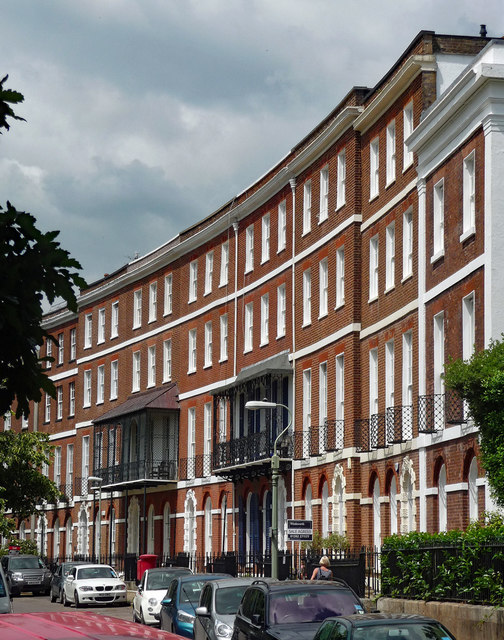
[my old chambers in Colleton Crescent, Exeter, from where I practised law at the Bar during the years 2002-2008]

Worth watching.

What a ridiculous monkeyhouse Westminster is! Look at thick-as-two-short-planks Angela Rayner, Rachel Reeves (“Rachel from Accounts”) etc, all making noise, exchanging remarks, and laughing like badly-behaved schoolchildren. Then there is stupid Liz Kendall, sitting there like a nodding dog, and about as credible.

The mainstream media milieu is a cesspit. I was just reading about some person whose name, though I had seen it somewhere, in the back of my mind, conveyed little to me. A few years younger than me (I am now 68), he has died, and even years ago was looking at least a decade or more older than me, looking at photos in the newspapers. In fact, make that 20+ years older.

Apparently, that person had, at one time, in the 1990s, been spending £4,000 a week on cocaine, and drinking 4-5 bottles of vodka every day!

You could double or treble that sum to get the same value in the money of 2025.

That tells me that such System-approved msm types are both hugely over-remunerated and totally decadent. Britain needs a thoroughgoing cultural purge even more than it needs a political purge. Hitler-level. Stalin-level. Biblical-level.

Well, there it is. Switzerland has officially lost its senses.

Didn’t Rudolf Steiner say something about how the Goetheanum (near Basel) would be devastated by war? Cannot quite remember. https://en.wikipedia.org/wiki/Goetheanum.

[The Second Goetheanum]

Late music

[painting by Volegov]

Diary Blog, 17 March 2022, including some personal reminiscences, and also some historical notes about South Africa

Afternoon music

On this day a year ago

Temps perdu

I happened to see the pdf link below, which is a tribute (a collection of eulogies) to John Lloyd, a barrister who was in my chambers when I practised in Exeter (2002-2008):

John Lloyd, who was born in 1941, died in 2017, a fact of which I was unaware until I saw the link yesterday.

I usually follow the maxim de mortuis nihil nisi bonum (“about the dead, nothing if not good“), but Lloyd did die about 5 years ago, and some matters are of historical interest.

I rather liked John Lloyd, someone who was unfailingly polite, and with whom I shared a room at Chambers, though he was rarely at his desk. I was under the impression that most of his work was done in London or at home. I believe that he had property in both London and Exeter.

Lloyd had taken on the English or Oxbridge eccentricity displayed by some affluent and financially-successful persons, of riding an ancient bicycle, in his case to Chambers, at which times he changed his “Gromyko” black wide-brimmed hat for a bike helmet.

Lloyd was one of the highest-earning members of Chambers (I believe in the £300,000+ bracket, which would be good now, let alone 15-20 years ago). His work came, I was told, mainly from Labour Party-controlled local councils in London.

I myself only encountered John Lloyd once in Court, in — I forget which— Plymouth or Exeter County Court, and in an unusual matter in which three members of Chambers were briefed for different parties in the same case; incidentally, the matter ended satisfactorily for all in the end.

Though I liked John Lloyd, I knew that he had been anti-apartheid, and had strong political views, though (like me) he rarely spoke about political matters in Chambers. I have to say that, despite quite liking him, there was some element there that had me wondering whether he was entirely trustworthy or open. Nothing concrete, just a vague sense of something hidden.

John Lloyd was diagnosed with cancer in or about 2007, but lived for another decade. I myself ceased active Bar practice at the end of 2007, though remained notionally in practice until mid/late 2008. I think that I last saw him sometime in 2007.

I was aware that John Lloyd had been dropped as prospective Labour candidate for Exeter several years before I met him, but did not know much detail, though I knew from someone at the Bar that it was connected with his having given evidence against a terrorist in a bombing case in South Africa. The local Exeter Labour Party was (quelle surprise) all in favour of the anti-white terrorism in South Africa, though by the time Lloyd was binned (mid-1990s), South Africa was already under ANC control.

The half-witted Nelson Mandela (an ex-law student who had failed his law degree three times) was 46 when convicted in 1964 of plotting to start a race war): https://en.wikipedia.org/wiki/Rivonia_Trial.

The defendants in that trial were all either Africans or Jews.

I have just now been looking at what is available about John Lloyd and South Africa at that time.

It seems that Lloyd had joined an extremist/terrorist organization after the Rivonia trial, as had one John Harris: https://en.wikipedia.org/wiki/Frederick_John_Harris; https://en.wikipedia.org/wiki/African_Resistance_Movement.

The “ARM” started to blow up electrical-power pylons etc before graduating to the operation that destroyed it and also led to convictions for most of its small membership. That operation was the planting of a bomb in a whites-only waiting room at Johannesburg Railway Station.

One old lady of 77 (or as the apologists would have it, “only” one person) was killed; many others “only” injured. One was a 12-year old girl, Glynnis Burleigh, the grand-daughter of the murdered old lady.

[Glynnis Burleigh, a young girl who was one victim of the Johannesburg Railway Station Bomb of 1964; she was badly mutilated]
[Glynnis Burleigh in 2016, still bearing scars, 52 years later]

A doctor involved in the aftermath has written: https://www.theheritageportal.co.za/article/caring-injured-after-johannesburg-station-bombing

The bomb at the railway station was mainly made of sticks of dynamite wrapped around a core consisting of cans of petrol; it seems that some phosphorus was also included. A simple but wickedly-deadly device.

It is now claimed that the bomb was “symbolic”, having been placed in a whites-only area. Tell that to, say, Glynnis Burleigh.

It is also pleaded, by (in my opinion) apologists, such as a London (I think Jewish or partly-Jewish) lawyer whose father was apparently the bomber, that “a warning was given“.

That kind of attempt to shift the blame for the death and injury caused by acts of terror will not wash. The IRA used to give warnings of that sort, as did the Jews who killed about a hundred people at the King David Hotel in Jerusalem in 1946: see https://en.wikipedia.org/wiki/King_David_Hotel_bombing; https://en.wikipedia.org/wiki/King_David_Hotel_bombing#Warnings.

You can see from Wikipedia etc that the same claims are made about the Jerusalem bombing of 1946 as about that in Johannesburg in 1964: a “warning” was given, and “the authorities may have deliberately not acted on the warning” (in order to incite hatred against the bombers). Pretty unconvincing in both cases.

As a matter of fact, the Johannesburg “warning” was telephoned to police only six minutes before the bomb exploded; the police did act on the warning but by that time the device had detonated.

https://www.politicsweb.co.za/news-and-analysis/john-harris-and-the-joburg-station-bomb-the-real-t

Incidentally, there may even have been a link between the two bombings. It seems that a leading member of the terrorist cell in South Africa was an Israeli Jew who had held senior rank in the Israeli military apparat:

The [Johannesburg Railway Station bombing] operation was planned by Lionel Schwartz, who was ARM’s most militarily experienced operative, having served as an officer in WW2 in the British army, and in the IDF in Israel’s 1948-49 Independence War. He served as a senior (Brig. General) in the IDF until he returned to SA in 1953 or 54.” [Wikipedia].

Having said that, there is no direct evidence (that I have seen) of a link (i.e. that Schwartz was also involved in the 1946 bombing).

The said Schwartz may also have been a Soviet agent, which would fit:

 “In recent years, however, it has been suggested by Eli Bardenstein in his article ‘Traitor or Liar?’ in Maariv (22 July 2003) that Lionel Schwartz, a key Soviet spy who penetrated the highest echelons of Israel’s political and intelligence establishment in the 1950s, and who was heavily involved in the Lavon affair, handed over the Israeli network to Egypt“. [Spies Against Armageddon]

There is a suspicious dearth of information online about that Lionel Schwartz Jew.

Returning to John Lloyd, he had (probably fortunately for him) been arrested a day before the bombing, as the South African authorities rolled-up the small ARM network.

It is claimed that Lloyd was “tortured”; he was certainly ill-treated, made to stand in one place for two days. If taken to an extreme, that might amount to “torture”: in the days of Stalin, the “stoyka” or “standing” was a recognized technique of the NKVD, with some prisoners having to stand (because forced into vertical oubliette-style tiny cylindrical cells and kept there for days) until they died or “confessed”.

I was made to stand on one spot. It is a devilish torture for would-be heroes. You torture yourself. I stood for two days. On the evening of the second day, a bomb exploded on the Johannesburg railway station. The police told me that 20 people had been killed. It was not until months later that I learned that, in fact, only one person had been killed.” [John Lloyd in the Independent].

https://www.independent.co.uk/voices/i-do-not-condone-terrorism-1580013.html

https://www.independent.co.uk/news/uk/home-news/bombs-and-betrayal-haunt-wouldbe-mp-1579969.html

Note the weaselling again, though; “only” one person killed (and no mention of the terrible injuries suffered by many other victims).

Whether because of his interrogation, or because he was shocked at the bombing having been carried out at all, or with such carnage, Lloyd agreed to co-operate, and eventually testified against several of his former comrades. It is also a fair conclusion that Lloyd did not want to be incarcerated with them. In return for immunity from prosecution, Lloyd turned State’s Evidence (became a prosecution witness).

The bomber, Harris, was hanged after a trial. His son, now a barrister in London, referred to his father, in a Guardian piece some 9 years ago, as an “activist“…: https://www.theguardian.com/lifeandstyle/2016/aug/13/my-activist-father-was-hanged.

Mandela, of course, morphed from being just a failed law student and failed or would-be terrorist leader into the West’s secular “saint” of the age, having mellowed in his (actually eventually quite comfortable) incarceration (in the last few years he was in a house reserved for him alone, and even had his own chef and other servants!).

John Lloyd never did become MP for Exeter. The Conservative Party made much of his early “terrorist” activities, while the Labour Party binned him because he had (as they preferred to look upon it) turned coat and “betrayed” his former “comrades”.

https://edm.parliament.uk/early-day-motion/10512/mr-john-lloyd-labour-party-candidate-for-exeter

https://www.independent.co.uk/news/uk/politics/labour-s-nec-tells-candidate-to-stand-down-1344451.html

Ben Bradshaw, a mediocre and rather dishonest person who later became a Cabinet minister (and noted expenses cheat and/or freeloader), became MP for Exeter in 1997, as well as an “ultra-loyal” Blairite, and is still sitting there: https://en.wikipedia.org/wiki/Ben_Bradshaw.

So there we are. A few reminiscences, and a few more-general thoughts.

Postscriptum: I should add that, though I did spend some time in Rhodesia and Botswana (in 1977), I have never visited South Africa (unless you count my almost-overnight plane change at Johannesburg, also in 1977: Gaborone-Johannesburg-Frankfurt). I believe that my maternal great-grandfather is buried, or memorialized, at Cape Town, though.

Tweets seen today

I agree, in that you see newspaper readers’ comments, Twitter twit comments etc to the effect of “let’s bomb Russia” or the even more brain-dead “bring it on!“. People sitting in suburban England, who apparently cannot wait for their entire world, home, family etc to be utterly destroyed by nuclear attack. “Idiots” hardly covers it…

Then add in the pseudo-machismo. “Britain can take it” etc. Yes, Britain, which will not exist except in terms of geography after a nuclear attack, can take having all its main (if not all) cities and towns destroyed, irradiated, all the people killed, or mutilated and/or mortally-irradiated, all supplies of food and water gone, all services (NHS, financial, police, fire, even sewerage) gone. As I say, “idiots” hardly even covers it.

The West is weak. Britain is very weak. Look at the Russians. Look at the Ukrainians. They both have national and national-cultural sentiment. That has been large wiped out in the UK. A high proportion of the UK population is now not really British, nor even white European.

I understood decades ago that The Economist is more or less the house journal of what one might now call the “New World Order” [“NWO”] or Western establishment.

Apparently about a third of the “Ukrainian” “refugees” are actually blacks and other non-Europeans.

I hope that it survives the present conflict intact.

Early evening music

Late music

[Levitan, landscape, 1885]

Update, 15 November 2024

I happened to notice this piece about the London barrister whose father was hanged in 1965 for having executed a terrible terror attack at Johannesburg Railway Station in 1964:

That very political set of chambers was founded, inter alia, by Cherie Blair, though I looked for her name on the website without success (and she no longer practises from there): https://en.wikipedia.org/wiki/Cherie_Blair#Legal_career.

An Unexpected Discovery

My blog, as regular readers will know, concentrates on ideas or matters of general import to society or the world. I do occasionally blog about other things, such as the less strictly legal aspects of my life at the English Bar, particularly if the story or anecdote has a humorous element or one which, to me, seems to say something about society as a whole.

When I blog about people I have known or had connection with, I usually keep them anonymous, or use initials only as identifiers. However, there are cases where the individual is either very well-known or, in my view, does not deserve the protection of anonymity.

Let us go back to December 2007, when I was beginning to have serious problems with the Revenue, problems which were not resolved until 2012. I made my last appearance in court (a truly ridiculous 3-day construction case at Central London County Court…long story, deserving a blog piece of its own some day) and left for my home in North Finistere, France (though I remained, purely nominally, a barrister in chambers, and at the practising Bar, until mid-2008).

Not long before I left for France for the last time (I had been bi-weekly commuting for 3 years via car ferry and air), a nuisance joined chambers. I had twice (successfully) opposed this barrister, one Brent McDonald, in fairly minor County Court negligence cases in the South West of England and had been frankly unimpressed by him. Though he seemed not unintelligent, he also seemed devoid of common sense: for example, insisting to a judge that a motor accident must have happened in a certain way because of the laws of kinetic energy! He was originally in the construction trade, I believe, and had a technical background. I disliked his attitude, which was very and unnecessarily confrontational. He was also a sore loser. If I am being completely honest, I thought that there was something wrong with him mentally.

That individual, I believe of Scottish origins, was, according to the senior clerk to chambers, married to an Indian (I think) woman, and they apparently had a child (in fact, if memory serves, two children). The Clerk said that he had plenty of good work, mostly legally-aided.

I was, at the time, a member of Rougemont Chambers, Exeter, which had burgeoned from a handful of people and not much work when I joined in 2002 to being a busy provincial set with a couple of dozen barristers and three clerks in 2007 (it is now merged with another set under a new name and is the largest set in Exeter and the largest in the South West outside Bristol).

The other members of chambers (it was always a surprise to me what poor judges of character many barristers are) were apparently impressed by McDonald at a reception chambers held for him, and the senior clerk was impressed by the list of solicitors supposedly willing to instruct him (and thus bring work and revenue to chambers). I abstained on accepting him into chambers, rather than voting against him, because both the Head of Chambers (who is now a Circuit Judge) and the Senior Clerk had persuaded all other members to approve him and I did not have the power to veto his acceptance.

In the first day or so, McDonald was not offensive and even remarked on how impressed he was that I was mentioned in the main legal directories (that “review” barristers and solicitors) as someone to brief on matters such as Caribbean and other offshore laws, and oil and gas questions, the latter particularly involving the Russophone jurisdictions where I had had very direct experience (including a year living in Kazakhstan).

It was not long, however, before McDonald started to buttonhole me on my political views, though only on the race question (including the Jewish Question). This was odd, because members of chambers rarely discussed anything political. McDonald was insolent and inquisitorial. To me, his attitude was unbelievable, not least because he had only just joined chambers and was in every way junior to me! Protocol is important to me. His demeanour was would-be intimidating, would-be bossy. I was fuming but courtesy also is very important to me. In fact, the bastard even remarked, half-sneeringly,  on how polite I was and how it was obvious that politeness was important to me!

McDonald effectively admitted that his antipathy toward me was based on (his kneejerk assumption about) my political views, combined with the fact that his wife and offspring (I think that he had two children) were non-European; as noted above, I believe that his wife was Indian. In the end, he grudgingly accepted that I had different views from his and we effectively agreed to avoid each other in chambers. Until he arrived, chambers had been a pleasant place. It was an object lesson in how one person can poison a whole environment very quickly.

So I left the practising Bar and my Exeter chambers and England, though not primarily (in fact, scarcely at all) because of McDonald (though his being there was certainly a disincentive to me, like the taste of a bitter piece of peel when eating a fruit).

I do not think that McDonald stayed long in those chambers before joining a larger set in Bristol, an offshoot of a London set. I noticed that he was himself now mentioned in the legal directories which he seemed to revere. They said that he “had come up through the ranks” and was well-regarded or some such.

I myself have always viewed such legal directories with skepticism, not so much because they recommended me at one time (!) but more because I had read glowing reports about people and organizations which did not chime with my direct experience of them, such as the “Emerging Markets” mini-department at Cameron McKenna (a large City of London law firm) for which I worked for 6 months in 1996-97, based for most of which time in Almaty, Kazakhstan (I later stayed on there, working with a very large American law firm).

That Cameron McKenna department was largely a Potemkin village created by an Australian woman of Russian-speaking (note speaking) origins, who would have been incapable of organizing the proverbial “piss-up in a brewery”, but who was very good at putting on an impressive front: when her department was about to be closed (when the **** hit the fan in various ways), about a year after I myself had moved on, that person not only managed to move just in time (and with a few toadies) to another large City of London law firm dealing with Russia, Kazakhstan etc, but the Times legal section and the main legal directories all (briefed by her and/or cronies, no doubt) lauded her new firm as having been “strengthened” by having this useless and devious woman and said toadies on board! (the last I heard of her, a few years ago, she had returned to the Antipodes and was an Australian trade delegate at a fairly high level, no doubt flourishing like the green bay tree…).

Anyway, returning to this McDonald character, I pretty much forgot about him for a decade, but then I started my blog and included a few reminiscences etc. So it was that I decided, recently, to see whether he was still at the Bar. To my surprise, I could not find him in the Bar Directory, or anywhere else, even by Googling. I did find some noted (i.e. appeal) cases, dating from 2008 or so. I wondered whether he had died, emigrated, even been disbarred! I drew a blank everywhere. Then I noticed that there was someone with the same surname at his last-known chambers. Not his wife at the time I knew him, because hers was a foreign, I think Indian, first name and this one was called Fran. Anyway, the Indian woman had not been at the Bar. So I thought that the surname must be co-incidence (McDonald being a fairly common name). Then, however, I noticed a few more facts.

It turned out that appeal cases from 2008 and later, proudly noted on that chambers’ website as having been done by Fran McDonald, had in fact been noted, in the law reports themselves, as having been done by Brent McDonald. I took a closer look.

The Bar Directory now has no public record for a Brent McDonald, but does now have an entry for one Lola Francesca McDonald…

Now a stranger move yet! It turns out that the barrister formerly known as Brent McDonald and now known as Fran McDonald has relocated to, of all places, the small New Zealand town of Nelson, at the top of NZ’s South Island.

What makes this move even stranger, on the face of it (and notwithstanding that Nelson seems a pleasant small town, reputedly the sunniest in New Zealand), is that McDonald (whether as Brent or Fran) was a personal injury specialist (though in Exeter he did other negligence-related and yet other work in the brief time when we were both members of Rougemont Chambers in 2007). There is, as far as I know, no personal injury legal work in New Zealand (see below for the reason for this).

The legal directories said:

“‘…rising star [Fran] McDonald continues to act on severe injury and fatal accident cases in the UK and abroad. She is very popular.’ (2012)”; and

“‘[Fran] McDonald is solely focused on personal injury and clinical negligence.’ (2014)”

(note the square brackets: looks as if Fran was still Brent in 2012 and 2014, despite the “she”; as for the Legal 500, that organization does not note McDonald’s New Zealand departure in its latest online offering: see below)

 “WORK DEPARTMENT

Personal injury; public inquiry; clinical negligence; product liability; inquests.

POSITION

Fran is a specialist barrister acting in the field of personal Injury who is recommended in both ‘Chambers & Partners’ and ‘The Legal 500’. Fran’s practice is focused on personal injury, including fatal accidents, inquests and inquiries.

The favourable references cease after 2016. The reason is a little vague (to me at least). I have no idea how long “gender reassignment” takes (or whether Brent/Fran underwent it), though, apropos of nothing much, I did once own a copy of the memoirs of April Ashley, my copy sadly abandoned in France in 2009, along with 99% of my library of 2,000 books. The April Ashley book was rare, too, the print run having been pulped.

I presume that the apparent hiatus after 2016 may have had something to do with what must be a very trying metamorphosis for anyone.

What makes the emigration to New Zealand odd is that it is clear, on the face of it, that McDonald built up a solid reputation in England in personal injury and the related clinical negligence area, but has now relocated to a country where there is effectively no personal injury or clinical negligence work, because New Zealand has a “no-fault” system, based on universal insurance, assessment of injury etc (see Notes, below).

I notice that McDonald, despite and perhaps justly boosting his/her personal injury repertoire on the London chambers’ website (to the exclusion of almost everything else), now lists as specialisms “employment law” and, even more weirdly (to my eye), nautical matters!

Fran’s main specialism in Nelson is issues relating to employment law. After completion of his exams in the new year he will resume practice over his full range of contentious interests including tort law (negligence, trespass etc), insurance, commercial/contractual disputes, professional liability, property disputes, medico-legal matters, engineering and construction and health and safety legislation.”

and

Many of his cases over the years have had a nautical theme such as claims involving distraint of containerised goods, allisions or breach of contract especially where jurisdictional/conflict of laws questions arose. Fran is equally happy to bring or defend claims. For example, he acted for UK Marines injured on the battlefield at the same time as being counsel for over 1,200 Iraqis alleging they were imprisoned, tortured or had family members murdered by UK forces.

The Nelson law firm names McDonald as Fran, as do the chambers in London (of which he/she is still, it seems, a member), but the London website refers to “she/her” whereas the New Zealand one has it as “he/his”. All very confusing… In addition, the New Zealand law firm shows McDonald as male, in a suit, shirt, tie, with short hair. The London website shows Fran as, or as if, female, with matching hair. Even more confusing…

The New Zealand law firm, Hamish Fletcher, which McDonald has joined in Nelson, has —actually not too unpleasing aesthetically, from the architectural point of view— offices on the floors above some retail outlets: Specsavers, a clothing shop and a “vape shop”, as can be seen via Google Earth.

Well, there it is. I am no psychiatrist, but it appears that the underlying motive force here is a wish for reinvention: the young man in construction or engineering becomes a barrister, marries, has children, changes sets, changes locations, changes sex, emigrates to the far side of the world and to very different circumstances, even (as it appears) metamorphosing in appearance again.

In the Russian proverb, “the soul of another is a dark wood” [чужая душа темный лес].

Does the above story tell us anything beyond the egregious McDonald’s personal odyssey? Someone seemingly rootless… is that typical of the age, typical now of UK people? I myself was once called, in jest, “the wandering Aryan”! It does reinforce my view of “legal directories”, not to mention chambers’ and law firms’ websites!

What about the “gender bender” aspect? A lady barrister I knew in London once was convinced that pollution of the water and air was leading to feminization in the males of both fish and humans (she was looking at her boyfriend at the time!). Was she wrong? I merely pose the question. When both April Ashley and (btw) a later friend of mine, Della Aleksander, had “sex change surgery” in Casablanca (April Ashley in 1960, Della Aleksander sometime in the early 1970s, I believe), such things were outrageous enough to draw down huge tabloid press interest. Now, it sometimes seems as though everyone and his dog is having a “sex change”! I do not think we can simply shrug our shoulders at all this. It may be that we are coming to the point where our whole civilization is about to experience a crisis.

Notes

https://www.barstandardsboard.org.uk/regulatory-requirements/the-barristers’-register/?ProfileID=43962

http://www.oldsquare.co.uk/our-people/profile/fran-mcdonald

http://www.legal500.com/firms/9535/offices/9534/lawyers/90812

http://www.hflaw.co.nz/our-team/fran-mcdonald/

https://www.newzealandnow.govt.nz/resources/acc%E2%80%93helping-to-meet-the-costs-of-personal-injury

https://en.wikipedia.org/wiki/Accident_Compensation_Corporation

https://en.wikipedia.org/wiki/Nelson,_New_Zealand

https://en.wikipedia.org/wiki/April_Ashley#Biographies

https://en.wikipedia.org/wiki/April_Ashley

https://ianrmillard.wordpress.com/2018/11/15/when-reality-becomes-subjective/

https://ianrmillard.wordpress.com/2019/01/26/the-tide-is-coming-in-reflections-on-the-possible-end-of-our-present-civilization-and-what-might-follow/

Extra Note

Many readers of my blog will be aware that I ceased to be even nominally a barrister in late 2016. For those who are not, and are curious as to why, please see:

https://ianrmillard.wordpress.com/2017/07/09/the-slide-of-the-english-bar-and-uk-society-continues-and-accelerates/

Update, 6 May 2019

I happened to notice that the name of the subject of the blog post no longer appears in the online list of barristers belonging to his former chambers in England.

Update, 28 May 2022

Having seen that the original blog post has had a number of hits overnight, I checked out the website of that law firm in Nelson, New Zealand. It seems that the individual in question has now reverted to “Brent”.

What an unexpected and odd world we live in.

Update, 14 June 2023

Upon looking up the individual in question (on the website of the New Zealand law firm) for the first time in over a year, it appears that the individual no longer says anything about specializing either in personal injury or “wet” shipping matters, but now gives priority to business mediation etc, and even claims to have always done that kind of work. Really?

I cannot recall him ever doing that kind of work when I had the misfortune of being acquainted with him, whatever he may now claim. I should know. I did a bit myself when in the same chambers as him, and even sat as a business mediator now and then.

Oh, well, there it is…

Update, 15 July 2024

The blog post having had quite a few recent hits, I decided to see whether there was any further or better information that I should add. Turns out that the individual in question is still “Brent”, and now sports a beard. He moved on, apparently, from his former law firm a year ago and over the past year has been associated with two other law firms in turn, both on the South Island of New Zealand. He is not, however, and as of today’s date, on the websites of either.

Judge Not, Lest Ye Be Judged…

This blog post has been triggered by my happening to have seen a couple of minor news items while idly browsing the Internet. The first reported that my old head of chambers –shall we call him M.B.?– from when I practised as a barrister in Exeter (2002-2007), has been elevated to the Bench as a Circuit Judge and is now styled His Honour Judge M.B.

The other news item was that the old (dating from 1905) Tower Bridge Magistrates’ Court and police station have been turned into “a luxury boutique hotel”. Sign of the times.

These reports have led me to muse on some of my own experiences with the judicial classes.

M.B. will probably make an effective judge. An erudite civil lawyer, I met him when I decided to stop being an employed lawyer (a situation I was in, intermittently, from 1996 through to 2002) and re-start Bar practice in England. I had been living and/or working overseas for much of those six or seven years, and in London, where at one time I was the leaseholder of property in Gray’s Inn (I lived at that time at Higher Denham, Buckinghamshire, from where I travelled in by rail from Denham Golf Club halt to Marylebone, a short journey lasting about 20 minutes).

I was in Kazakhstan for a year (1996-97) and after that also lived in or made shorter visits to a number of other countries: Egypt (where I lived for a while in Aswan, on a remote Red Sea beach under canvas, in a flat in Alexandria and in the desert oasis of Siwa); Turkey (I drove UK-Turkey-UK in 2001, which was quite an adventure at times: France, Italy, Greece, Turkey, Bulgaria, Romania, Hungary, Austria, Germany, Luxembourg, Belgium, a 4-month trip); the USA (based in Charleston, South Carolina, but I also stayed for a while in Tampa, Florida); Qatar; Liechtenstein; the Channel Islands, the Eastern Caribbean (several islands); the Cayman Islands, Minorca, Czech Republic, Northern Cyprus etc.

I remember one member of my future chambers remarking at my interview that my CV read in parts like that of James Bond. I had to point out that any resemblance between me and James Bond was purely co-incidental and very implausible (and not only because I have never belonged to any secret service!).

Still, I joined that set and in general found it OK, though at first it (and so I) had very little work. I had taken on the lease of one of the largest country houses in North Cornwall and liked the relaxed lifestyle of the Cornwall/Devon upstream Tamar River area.

As to M.B., not long after I joined the set, M.B. and I won a multi-day action in contract and trust together (though appearing for different people) at Plymouth County Court. After that, we did appear on opposite sides a couple of times during my 5 years in chambers, but he lost out despite being (arguably) a better advocate and (unarguably) a better lawyer than me.

I may as well add that, despite what some Jewish individuals claimed after I was disbarred in 2016 (about 8 years after I had left chambers and ceased Bar practice!), M.B. and the other fellow members of chambers (with one, possibly two exceptions: see below) did not want me to leave chambers, whether for political or any other reasons. Indeed, M.B. wanted me to stay on despite my having decided to resign.

In fact, I was commuting on a weekly or 2-weekly basis across the Channel to Finistere, where my wife and cats were living. This resulted in financial strain, in that I was only available for half the time, was paying out large amounts for ferries (return trip with car, luxury cabin too, about £300 return, every week or so…), hotels in the UK for 10-20 nights per month.

Putting the seal on it all, I was starting to have “discussions” with the Revenue (which only ended in 2012).

My only misgivings about M.B. as a judge would be that, firstly, he tends to stick with black-letter law; in my view, he is unwilling to bend the law to fit the justice of the case. Whether that is a strength or a weakness is a matter for debate.

Secondly, when I decided to leave chambers, I quite liked the idea of remaining as a door tenant [https://en.wikipedia.org/wiki/Door_tenant] and M.B. said that that would not be a problem and implied (indeed expressed, though in some other words) that it would be nodded through, but that the correct form would be for me to resign my tenancy first and then apply for door tenancy, though approval would “in my case” be automatic.

However, when it came to it, a couple of new tenants (I believe) cut up rough because one was married to some kind of Indian and was very hostile to (what he assumed were) my political views; I think (guessing) that a recent ex-pupil (a humourless bespectacled woman with an invisible sign round her neck saying “Politically-Correct Virtue-Signalling Christian”) may also have blackballed me.

In the event, the door tenancy would have been a waste of time because the Revenue was on my back at a cross-Channel distance. Still, that made me think that M.B. was not necessarily reliable, a thought that had occurred previously once or twice.

Now to another judge of sorts. Tower Bridge Magistrates’ Court, long before it was (quite recently) turned into a luxury boutique hotel, was for some years often presided over by one Jacqueline “Jackie” Comyns, a notoriously despotic “stipendiary magistrate” (the rank now renamed “District Judge Criminal”). Her reputation was fearsome.

I only appeared once in front of this gargoyle: I was “briefed” at 11 am to appear at 12! That was in 1993. I read the brief on the way to court. The defendant had refused to get off a defective bus and had then assaulted the conductor and gone on to smash the side window of a police car. She was pleading guilty.

At court, the case came on minutes after my arrival. The magistrate interrupted my mitigation to ask some petty question about the defendant. I did not know the answer, having not had time for a brief conference.

Instead of simply asking the defendant for the information, this ghastly frustrated prize bitch, sitting on her seat of petty power, told me venomously that Counsel had to be properly prepared when appearing in her court, and told me to go ask the defendant! I did, the pitying or amused eyes of dozens of police, court staff, members of the public on me as I traversed the unusually large courtroom and extracted the information.

I was told that that magistrate was going to be elevated to the Circuit bench in Essex, but that turned out to be wrong, because I see from the Internet that she was still dispensing justice from Thames Mags (on the other, i.e. North, side of the river from Tower Bridge Mags) as recently as 2013, the year that she retired (aged 70).

The problem of “judge-itis” (the tendency to be a despot sitting on the pedestal of power) is worse, usually, the further down the pecking order you go. It is rarely found in the higher courts.

At one time (1993-1995) I appeared on a frequent basis, at least once weekly, in the High Court. If I had a problem, it was never because the judge was reprising am-dram Nero or Caligula.

In the County Courts, the problem is occasionally encountered. HH Judge Overend, the presiding civil judge for Devon and Cornwall until 2006, was often a horrible despot when seated (at Plymouth County Court, usually), but in his case his bullying manner, and apparent tendency to make up his mind before you had finished —or even started— speaking, was mitigated by fairness and compassion for those suffering (so long as they were not Counsel!).

The barristers of the South West used to describe bruising encounters with that judge as one having been “Overended”…I have to say that on the odd occasion when he saw me outside court, he did always nod affably and even briefly smiled at times.

The magistrates’ courts are often the zoos where the wildest judicial animals roam their constricted territories. I once saw a stipendiary magistrate in London refuse bail to a defendant who was in court on a stretcher and on a drip !

Other judges have the opposite tendency, a pretty fatal one for a judge, a difficulty in deciding anything, especially if it would involve penalizing (eg imprisoning) those who break court orders. Judges whose Bar practice was entirely in civil work tend to fall victim to this; at least, that was my experience.

I have to say that I only found a few judges who were completely impossible. One was not a judge proper, i.e. the lady who presided over Tower Bridge Mags; another was one whose name escapes me now, but who sat at Uxbridge County Court 25 years ago. His connection with justice was, as far as I could see, purely formal. A horrible man. The many others, particularly on the High Court bench, might not always have seen eye to eye with me on the law or facts, but were almost always courteous in manner and impressive in their grasp.

Notes