Morning music

Vorkuta
https://en.wikipedia.org/wiki/Vorkuta
https://en.wikipedia.org/wiki/Vorkutlag
https://meduza.io/en/feature/2020/01/27/europe-s-easternmost-city
I have only ever met one person who has been to Vorkuta, and his was an involuntary visit that lasted for many years; a Pole sent there as a young man, I think in or about 1940, along with many others. I believe that he somehow survived a decade there, and was eventually repatriated to his family in Bielsko-Biala, south-west Poland. Maybe about 65 when I met him and his family in 1988, he was a bit of a tough guy, and he must indeed have been tough, in more youthful days, to survive for 10 years as a prisoner and slave-labourer in Vorkuta.
Looking at that film (above), I am again struck by the harshness and brutality that humans can inflict on each other, but also by the incredible resilience and ability to create that humans have.
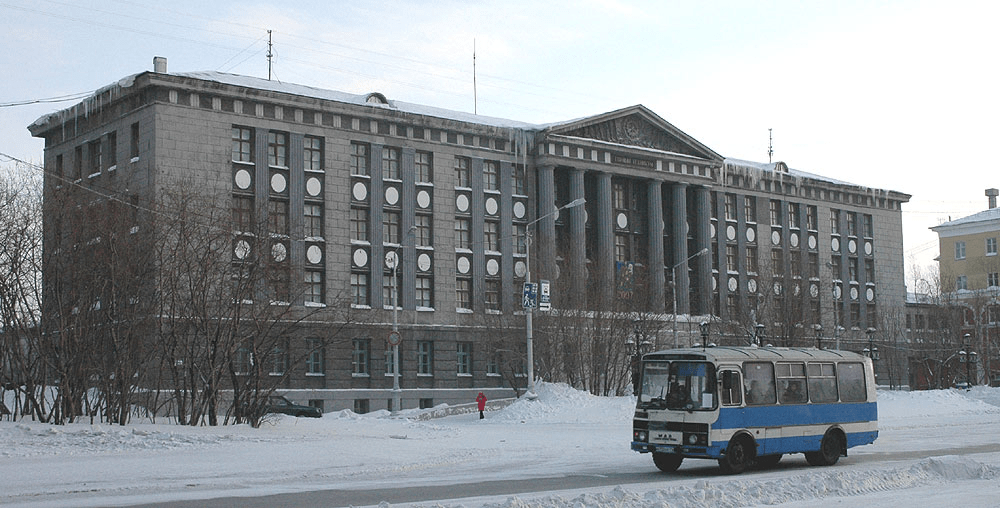
Vorkuta, like other cities in inhospitable areas and harsh climates (Magadan, Norilsk etc) which were wholly a product of the Stalinist period of the Soviet system (Vorkuta did not exist even as a hamlet until the 1930s), had at one time (1960s, 1970s, 1980s) a real city life, with a railway station, buses, an airport, a city theatre, hospitals, cinemas, sports centres, even a symphony orchestra; also, some fairly impressive-looking official buildings.
See also: https://philanthropicpeople.com/tag/book-burning/; https://www.thebarentsobserver.com/arctic-mining/coal-tycoon-buys-vorkuta-mines/106789; https://www.new-east-archive.org/features/show/11764/vorkuta-documentary-photography-russian-arctic-gulag-Roman-Demianenko-russia-z
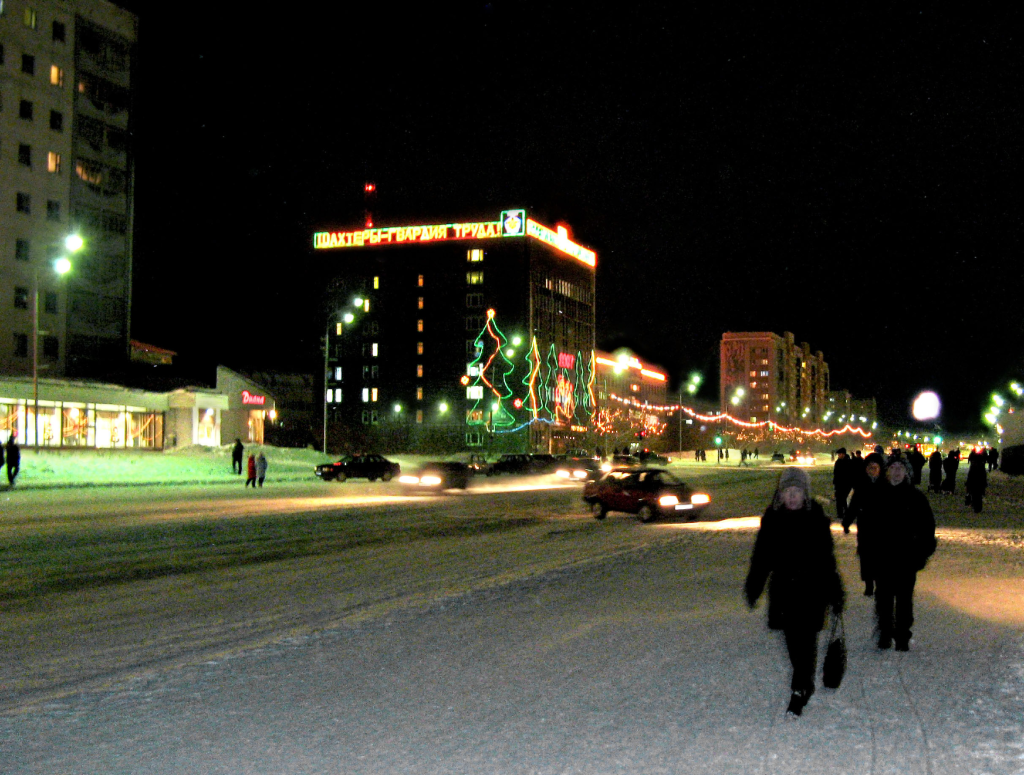
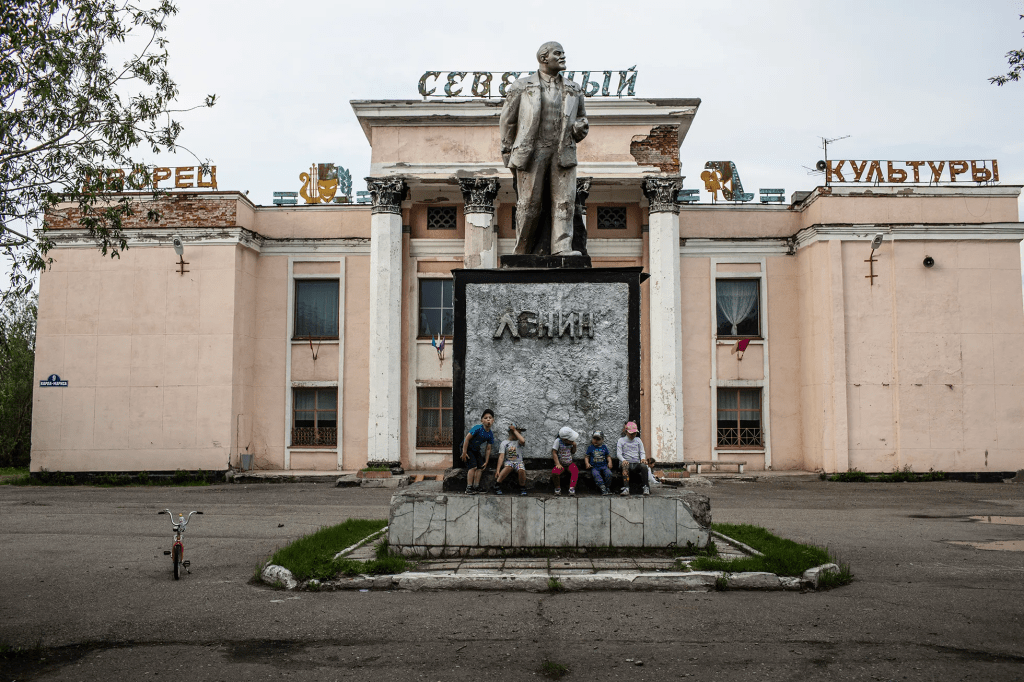
Vorkuta had, at one time, 115,000 inhabitants. The real population is now thought to be well below 50,000, perhaps as low as 30,000.
See also:
My point is that civilization is not a simple continuum. Rudolf Steiner, Valentin Tomberg etc have described human evolution as a staggered spiral. There can be breaks in the spiral. Civilizations or cultures arise, but also decay and disappear. Amazing places can be created and built out of “nothing”, but those same places can fall to pieces and disappear even from memory and/or from recorded history.
The beautiful city of St. Petersburg was created from swamp and forest by the vision, in origo, of one man, Peter the Great, and still exists, now with millions of inhabitants (it is commonly said to be the 4th or even 3rd-largest city in Europe, depending on whether Istanbul is accepted as European). On the other hand, famous Sparta left almost nothing behind it but memories become history. Troy was, for many centuries until its site was rediscovered in the 19thC, thought to be not even legendary but mythical. New York City was created from “nothing”, from the 17thC onward, and still exists, yet the huge cities which once existed in Mexico and Central America and elsewhere have either disappeared or been supplanted (as at Mexico City) by very different successors.
Vorkuta was built on brutality and suffering, but then so was Petersburg…
The world, particularly Europe but also the Middle East, North America, Russia, stands in peril from massive and probably nuclear war. The cities of the West and Centre of Europe also stand in peril from internal strife caused mainly by migration invasion by backward hordes from other parts of the world. Our present overall culture and civilization may not survive the 21st Century, not in their current forms.
We should all be thinking about these matters and about how to salvage as much as possible of our present advanced culture and civilization, should that become necessary.
Tweets seen
The Bar is riddled with traitors. I should know; until a pack of Jews procured my (wrongful and actually unlawful) disbarment in 2016, I myself was a barrister, and saw how corrupt and also stupid the whole system is.
The Bar of England and Wales is now, more or less, a dustbin.
Rare but not unprecedented. Israeli orgs, usually Shin Beth, have arrested Jews and others in the past on espionage charges; people accused of being agents of the Soviet Union, then Russia; also for Arab states.
Another Israeli war crime.
[“Why do we say that Israel was crushed by Iran’s strikes? A prominent American analyst answers! “The United States was forced to intervene to prevent Iran from destroying Israel.”
Larry Johnson, former CIA analyst: “Many people don’t realize that Israel was perhaps one or two weeks away from total defeat. Some say, ‘Oh, you’re just repeating Iranian propaganda.’ Well, then listen to me…”
“Israel has two seaports, and Iran closed them, so there was no sea traffic. Iran also destroyed two oil refineries — in Haifa and Ashdod — or disrupted their ability to produce fuel. Iran closed Israel’s only international airport.“]
So why the ceasefire? Israel will use it to regroup, resupply etc.
Russian travelogue
Looks like I missed out in a big way on my two visits (1993 and 2007) to Moscow! In some ways, at least… Still, they were business trips (mainly).
Having said that, there were huge changes visible in 2007 as compared to 1993, and it seems clear that the changes since 2007 have been at least as great.
I could do with some very cold vegetable okroshka on such a hot day as today: https://en.wikipedia.org/wiki/Okroshka.
A different side of contemporary Russia
…and only 90-100 miles from Moscow…
Good to see how quickly Nature, the forest, is recolonizing the land, though.
More tweets seen
Letting existing sick and disabled people continue to receive help, but cutting off help (income) from similar people in the near future, is “morally wrong“, in my view. That is almost unarguable, surely?
That is the MP for Normanton and Hemsworth in Yorkshire: https://en.wikipedia.org/wiki/Jon_Trickett; https://en.wikipedia.org/wiki/Normanton_and_Hemsworth_(UK_Parliament_constituency).
Trickett cannot be bullied by Labour whips. He is already 74, so unlikely to contest another general election in 4+ years’ time. Also, he got over 47% of the vote in 2024, with Reform UK second on 29%. If deselected, he could, should he so choose, stand as Independent Labour, and so either win or let in Reform, which may have a good chance anyway.
Starmer-stein is too busy complying with whatever Israel and the UK Jewish lobby want done to actually do anything positive for this country or its (real) inhabitants.
So much of the msm/entertainment industry/music industry etc is in the hands of Jewish persons, and (as the Jew-Zionist orgs constantly remind us) about 95% of Jews in the UK support Israel, support the war in Gaza, the attacks against Iran (etc).
Even the Jewish anti-Zionist jazz musician, Gilad Atzmon, was targeted and persecuted by Zionist Jews, and his shows attacked or cancelled, to the extent that he eventually had to relocate out of the UK, to Greece: https://en.wikipedia.org/wiki/Gilad_Atzmon.
https://en.wikipedia.org/wiki/Gilad_Atzmon#The_Wandering_Who?
For once, I have to agree with O’Brien. The fact is that the Jew-Zionist element in Israel, in Palestine generally, and also in countries such as the UK and USA, France, Germany etc, is out of control. “They” have grabbed both influence and direct power, and are abusing that influence and power.
https://twitter.com/Timesofgaza/status/1939767598268227797
The Kiev regime forces are ebbing away.
https://twitter.com/Alex_Oloyede2/status/1939770322313781577
Disgrace.
Russia is slowly, painfully slowly, winning by attrition. It should never have come to this, but “we are where we are”…
[“The underlying discontent among rebellious and even loyal Labour MPs stems from what many would say is a pathetically late discovery: that what’s driving so much government policy is Rachel Reeves’s fiscal rules and the absolute power of the Office for Budget Responsibility in determining whether she is breaching those rules or not. Any illusion that this isn’t the single most important driver of government decision-making was shattered today by the revealed contradiction between its establishment of a supposedly fundamental review led by disabilities minister Stephen Timms to shape new criteria for awarding Personal Independence Payments, while nonetheless sticking with the contradictory stipulation that from November next year no one will be eligible for PIP if they don’t score four points on one of PIP’s existing criteria. It is absurd and illogical to characterise Timms’s review as the face of humane reform while simultaneously saying that this new four-point rule based on existing criteria will willy-nilly come into effect next year. So what’s really going on? The work and pensions secretary’s unspoken reason for sticking to the four-point reform is that without it, and under the OBR-assessed fiscal rules, Reeves would have to fill a £5bn hole in her finances in the autumn’s budget, and not the £2.5bn hole created by Kendall’s partial welfare-reform climb down. That is a big difference when it comes to any taxes Reeves may have to raise or any spending she may have to cut. So a growing number of Labour MPs see this subservience to the OBR and the fiscal rules as just the stupidest motivation for making today’s decisions that affect the lives of the most fragile of UK citizens – decisions that will, on the government’s own calculations, shift 150,000 vulnerable people into poverty. These MPs were bitten once by the OBR dog when Reeves chose to means-test the winter fuel allowance as proof of her fealty to the OBR’s jurisdiction over her own fiscal rules. With the disability reforms, many of them now feel twice shy. They don’t ask why a Labour government respects the OBR, especially after the Truss/Kwarteng fiscal debacle caused by their disrespect for the OBR. But they do question why the Chancellor and Treasury endow the OBR with an almost mystical ability to determine which policies are sensible and why Reeves has seemingly abdicated responsibility for trying to sell the government’s initiatives to the country’s creditors independently of the OBR and fiscal rules straitjacket. So whatever the outcome of the vote tomorrow on the welfare reforms, Reeves and Starmer are now under enormous pressure – probably irresistible pressure – to lose their OBR religion.“]
That bastard Timms again…
I think that people are generally awakening to the fact(s) that this is only a Labour government in terms of label. Labour-label. In reality, a Labour Friends of Israel government (misgovernment).
Late music