Category Archives: Party Politics

The Train is Hitting the Buffers

The UK train is hitting the buffers. The train crash has been slow, long in coming, but it is now starting to happen.

Decades of decadence, mass immigration, political corruption, Zionist takeover of the legal system, cultural sickness in all mass media (fostered by Zionist infiltration at all levels) etc now result in manifestations that are becoming apparent even to the voting public.

The public has little idea, even now, of the causes, but it sees the effects: National Health Service creaking, beginning to fall to pieces; the housing market effectively closed to most of those who wish to buy a house or even an apartment; sky-high rents paid to speculative parasites by employees and others; congested roads and trains; cities full of those of alien race and culture; schools which brainwash children with “multiculti” propaganda and “holocaust” lies.

Those few (including me) who saw this coming as long ago as in the 1970s (in my case) or even 1960s, were and still are marginalized by a mass media system which is thoroughly corrupted. The same is true of the political system and, increasingly, of the professions, where to speak up at all invites expulsion: see

https://ianrmillard.wordpress.com/2017/07/09/the-slide-of-the-english-bar-and-uk-society-continues-and-accelerates/

The Zionists are behind much of this and are now trying to shut down free speech and comment across social media– as happened long ago in the mass media.

https://ianrmillard.wordpress.com/2017/07/13when-i-was-a-victim-of-a-malicious-zionist-complaint/

The question that now has to be asked is what, in the next 4-5 years, will be the political result of the slow but accelerating collapse of British society in all areas?

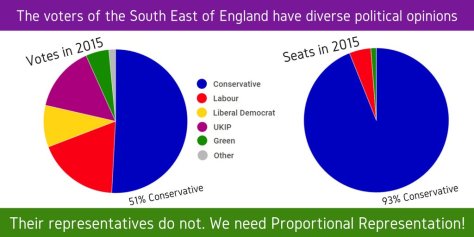
It is clear that specifically English (leaving aside Scotland, Wales and Northern Ireland) voters are now, in a semi-rigged “First Past The Post” electoral system, voting against parties rather than for them. There is little enthusiasm for any of the System parties, let alone the more or less washed-up UKIP, Liberal Democrats and Greens, but there is determination to block parties by voting tactically for the party most likely to achieve that in any given seat.

Beyond the wish to block unwanted parties and candidates, there is a general and growing dissatisfaction. Above all, the “Middle Classes” are joining the “workers” and the marginalized at the bottom.

b-cisxdiqaa7qj_-jpg-large

That can only help Labour, despite the misgivings many feel about its MPs and leaders (the obvious example being Diane Abbott). The success of the Corbyn faction and its vanguard, Momentum, may unsettle some voters, but may give rise in others to the feeling that at least Labour is fairly solid ideologically, not a chaotic mess. That is bound to play to Labour’s advantage electorally. Contrast with the Conservatives. This cartoon portrayed the way in which Theresa May achieved office by default:

CnLGOc5XYAALLJdThe next general election will probably favour Labour, though probably not enough for it to win a majority in the House of Commons. After that, one can foresee continuing mass immigration, continuing slide in public services, continuing disparity in wealth. That will be the moment when a social-national party can strike. First of all, one must exist, however.

People are Worth More than Their Opinions

Someone, possibly Auden, remarked once that “people are worth more than their opinions” (in relation to the Comintern/NKVD agents of the 1930s active in the British universities). There is something in that. On Twitter, for example, I have noticed that people bitterly divided politically will often still support, separately, such causes as animal welfare or environmental improvement. Wider than that, I am willing to see that some of those who attack my views (and, often, me personally) are, in some cases –and like me– interested in the welfare of the more downtrodden parts of the population. Sadly, most of those who attack me –and this particularly applies to the Jewish Zionists– are unwilling to see the slightest good in me or my views. I can only assume that to do so would weaken their assertion that anything connected with social nationalism (and, a fortiori, National Socialism) is irredeemably evil and without any good in it at all.

Adolf Hitler was of different mind. He accepted into the ranks of the NSDAP and SA, even into the SS, many who had been his enemies. People, in other words, who wanted a better society but who at first did not accept that National Socialism would create one.

In the Soviet Union, from 1917 onward, many who fought Bolshevism or were at least opposed to it were later shot, imprisoned or exiled as so-called “former people”, others however were allowed to stay as free as anyone could be under Sovietism. Some even became members of the CPSU and/or the officer corps of the Red Army, at least until the purges of the late 1930s. Beria’s own past was full of ambiguities. During the 1941-1945 war, the vast majority of Russians fought and struggled together (whatever one may think of that).

In the UK at present, I can see that many want positive social change and that many (sometimes the same people) want to preserve the better aspects of the existing society. These people belong to Labour (especially the Corbyn wing), the Green Party, the LibDems, UKIP, even the Conservative Party. I trust that, when a real social national movement comes into existence, these people or many of them will feel able to join with me in the rebirth of this country.

Don’t Mention the Jews!

In Fawlty Towers, Basil Fawlty has to keep reminding his wife and staff, “whatever you do, don’t mention the War” (because German guests might be offended). In contemporary Britain, that injunction has become “don’t mention the Jews!” unless, of course, in terms that stress the huge benefits which they (according to they themselves) confer upon any nation hosting them.

The latest famous figure to fall foul of the “rule” has been Nigel Farage, the former UKIP leader. In fact, what he said was hardly even controversial, surely: that the well-funded Jewish lobby has a hugely disproportionate influence over US politics. As far as I know, he did not have the courage to mention that the same is true in the UK.

Farage has been the subject of the usual Jewish-Zionist storm that breaks if anyone “mentions the Jews”. They want the money, the influence, the power, but not the “recognition ” of it by non-Jews.

In the UK at present, there are several people who face trial, possibly even imprisonment, for “mentioning the Jews”.

Naturally, one has to tread carefully for fear of being in contempt of court in circumstances where trials are upcoming.

Alison Chabloz, satirical singer, after having been attacked and trolled mercilessly for 3-4 years by Jewish Zionists, was eventually prosecuted privately by the “Campaign Against Anti-Semitism” for alleged offences under the much-criticized “bad law” of the Communications Act 2003, s.127. Faced with that coup de main, the Crown Prosecution Service, which had not prosecuted her for her songs (without getting into the legal niceties of the charge), had the choice of allowing the private prosecution to run, taking over the prosecution and dropping it, or taking it over and continuing it. The CPS decided to take over the prosecution, drop the then-existing charges (drafted by Zionist lawyers) and substitute new charges. So far the case, which started in late 2016, has not run its course. One notorious Jew-Zionist pest, who was a prosecution “witness”, has now been dropped by the CPS for being in fact “an unreliable witness” and there will now be a further court hearing on several points of law before the matter (possibly) goes to trial in January 2018 or thereafter. All because a lady sang some songs…

British nationalist Jeremy Bedford-Turner [Jez Turner] has now been committed for trial on the more serious charge of “incitement to racial hatred”, having made a brief speech in 2015 (2015!) in Whitehall, in which speech he is alleged to have mentioned the Jews…

The Crown Prosecution Service, having had the matter referred to them by the police on a complaint by the same “Campaign Against Anti-Semitism”, initially refused to prosecute Jez Turner, so the “CAA” took the CPS to the High Court on a judicial review application. In the event, the CPS caved in, presumably so as not to set a precedent. The matter was “re-examined” and prosecution initiated.

Jez Turner appeared this week in the magistrates’ court and was committed for trial in the Crown Court at Southwark.

It is not without note that we in the UK live under a government which is very much tied in with the Jewish/Zionist/Israel lobby. Theresa May and Amber Rudd are strongly pro-Israel and do not deny that fact. It seems that Theresa May is in fact half or quarter Jewish herself (on the maternal side). At least, that has been credibly suggested. She and Amber Rudd have stated that they intend to criminalize even people merely reading “far right” (social nationalist) “propaganda” (views, analysis) online! Police state dystopia…

Talking of police states and repressions instigated by Zionists, many may have read previously my own experience of early 2017:

https://ianrmillard.wordpress.com/2017/07/13/when-i-was-a-victim-of-a-malicious-zionist-complaint/

and many other people have been subjected to similar experiences in the past few years. I was disbarred after a malicious and politically-motivated complaint from, essentially, the same type of “person”, masquerading as “UK Lawyers for Israel”. See:

https://ianrmillard.wordpress.com/2017/07/09/the-slide-of-the-english-bar-and-uk-society-continues-and-accelerates/

So we see that we are being told “don’t mention the Jews!” (or else…).

Forget that! I vote for freedom– for myself, for my people, for the peoples of Europe.

Fame is Often Fleeting

[preliminary note: this is a personal rather than a political or social blog post, though it does touch on both of those aspects of life]

It is hardly original to say that fame often tends to be fleeting, but indulge me. I was thinking about this matter recently in the context of hearing about a number of persons and their life-trajectories. In particular, in the past 6-7 years I have observed the meteoric rise of a Jewish Zionist lawyer (solicitor) to fame; he rose to public prominence (after years of provincial obscurity and a slide into near-madness) on the basis of one type of notorious case, only to slowly deflate ever since. That person’s fate, still unfolding (or should that be “unravelling”?) gave rise to other, connected, thoughts.

I was on holiday in Hammamet, Tunisia [https://en.wikipedia.org/wiki/Hammamet] in 1994 when my then girlfriend and I met with a young Englishman and his girlfriend. They were both struggling or at least very junior young journalists, twenty-somethings. The young man explained that they had been in a not very pleasant hotel and so had upgraded to the one in which I was staying, the Phoenicia, one of the best in the resort, all marble and staff wearing white uniforms topped by a fez.

The young journalist said that his name was Jasper Gerard (the girlfriend’s name I forget). We had lunch and the odd drink in the succeeding days and they were in the grounds of the hotel when they noticed someone nearly get killed when his parascending canopy collapsed at altitude. Yes, that was me (I pulled too hard on one side to descend) and apparently Gerard cried out “isn’t that Ian?!” as I appeared to be about to fall, mortally wounded, to the beach. However, I survived with nothing worse than a minor story to tell.

I kept in touch with Jasper. I invited him, not long after, to dinner at Lincoln’s Inn (of which I was then a member). He attended not with the Tunisia holiday girlfriend but with a pleasant, very quiet young lady who (judging by more recent Press photos) was probably his later wife. A week or two later, in the English way, he invited me to dinner at his club, a members-only but non-traditional place in Mayfair called Green Street. The sort of place full of young or youngish people who were probably pop stars whom I would probably not have recognized even by name. At dinner, the next table was occupied by a lady and her two guests. She was, Gerard whispered, the journalist Marie Colvin, already noted but who became rather famous later on, after she lost an eye and took to wearing a dashing eye-patch. She was killed in Homs, Syria, in 2012, making Gerard’s dinner comment to the effect that connections had helped her into her job seem in retrospect even more envious than it did at the time.

After that, I did not see Jasper Gerard for nearly three years, during which time he had become the head of the Diary column in The Times. After I finished a year working in Kazakhstan, I called him and suggested a drink. He suggested lunch at El Vino, not the original wine bar but the branch at the foot of Ludgate Hill. He failed to turn up and when I called to ask whether a problem had arisen, did not even apologize but got some underling to say that “something had come up”. That was discourteous, but personal loyalty is important to me, so I agreed to a second lunch date. This time, Gerard did turn up, but the pleasant, rather hesitant young man had become a blase, vain fellow obviously very much spoiled by his career uplift and hugely full of himself. He scarcely bothered to talk, obviously found me not famous enough to waste even the lunch break on, then did not offer to pay, or even to pay half the bill, but waited until I did before saying “do you mind if I take the cash and pay, so that I can claim it back”! With such a brazen attitude, it is not surprising that the bastard later tried to be elected as an MP!

I did not meet with Jasper Gerard after that, though I noticed that he was later to be found in the Sunday Times as chief interviewer. He lasted for some years before being removed. He then became restaurant critic in The Observer for a year or two, until 2008. He was even mentioned (once) in celebrity chef Gordon Ramsay’s memoirs.

Gerard fell into obscurity after that, though he came second in the Maidstone and The Weald constituency in the 2015 General Election, standing as a LibDem (well, after all, the LibDems are now the last resort of the scoundrel!).

The last I heard of Jasper Gerard, in 2016, he had become the Head of Press for the LibDems. Whether he still is, I have no idea.; and his last tweet to the public was in 2015…

The above is just one reminiscence about, mainly, one person. I suppose that the moral of my brief story is that some people really cannot handle fame or even minor celebrity, and that obscurity often beckons.

Update, 29 December 2020

I saw that there were recently a few hits on this rather obscure blog post, so am updating it.

The Maidstone and the Weald election results: https://en.wikipedia.org/wiki/Maidstone_and_The_Weald_(UK_Parliament_constituency)#Elections_in_the_2010s.

Jasper Gerard’s 2015 vote share of 24.1%, though far below that of the 36% attained by the LibDem in 2010, was still better than that garnered by the LibDems of 2017 and 2019 (16.4% in both cases). Gerard was the last LibDem to get a second place at Maidstone and the Weald; Labour has come second since 2015: 22.1% in 2017, 18.3% in 2019.

As for Gerard himself, it turns out that his full surname is Gerard-Sharp, and that his sister is also a journalist, with a Twitter account: [https://twitter.com/LisaGerardSharp] and a personal website [https://www.lisagerardsharp.com/].

In the soup for playing down the Lord Rennard scandal (‘It’s hardly Jimmy Savile’) Liberal Democrat candidate Jasper Gerard stands accused of playing down his poshness. Colleagues at Durham University remember him as Jasper Gerard-Sharp. Once he secured the post of head of the university’s Lib Dem society he morphed into plain Jasper Sharp. But by the time he arrived at The Times as a trainee journalist, he reverted to Jasper Gerard. Keep up at the back!” [Daily Mail, in 2013] https://www.dailymail.co.uk/debate/article-2285672/Is-boastful-Vince-Cable-ready-new-challenge.html

Professionally, and politically, Jasper Gerard —or Gerard-Sharp— now seems to have vanished without trace. He may have retired early; he would now be 53, must have been extremely well-paid when he was Chief Interviewer for the Sunday Times, and there may well be some family money, despite his grammar school secondary education.

Update, 18 March 2021

I noticed that there were several hits on this old article today.

I recall seeing an interview in the Sunday Times, in 2003, written by then-Chief Interviewer Jasper Gerard. It was with, and the article about, the wife of Kevin Maxwell, the part-Jew son of MOSSAD chief European agent, millionaire Jew fraudster and later food-for-fish, “Robert Maxwell”. At the time, the Maxwells were trying to sell their expansive country house on the Thames, somewhere near Wallingford.

That is a nice part of the world, one I knew well as a child and teenager in the early/mid 1960s and in the 1970s. I remember, reading the interview, thinking “there is a horrible brash Jewish or part-Jew family living in luxury on the banks of the Thames near Wallingford, and I am scraping a modest living from the law…“. The fact that Kevin Maxwell was living off the proceeds of crime, such as the frauds perpetrated by his despicable father, made the feeling all the stronger.

Well, the wheel of life has certainly turned for Ghislaine Maxwell, “Captain Bob’s” daughter, currently resident in a 9 foot by six foot cell in a US Federal prison.

Hey! I have an idea! Jasper Gerard should go interview the declining Ghislaine before she gets bumped like Epstein, or does herself in. He could write a good (well, adequate…) article about the contrast between her present circumstances and those days long ago with her brother and family by the sweet Thames…If, that is, anyone would now publish him.

Notes

https://ianrobertmillard.org/2019/08/11/the-jew-epstein-and-prince-andrew-the-british-royal-family-has-another-scandal-maybe-its-time-to-just-get-rid-of-them/

https://www.pressgazette.co.uk/grey-cardigan-so-where-has-jasper-gerard-gone

https://www.thetimes.co.uk/article/living-maxwell-house-mtz0crcfv7q

Update, 18 May 2026

Having noticed that the blog post has had a few recent hits, I thought to add a little update.

I discovered, quite a while ago, a few years ago in fact, that Gerard had become the manager or CEO of an offshore gambling outfit based on the island of Alderney. That may or may not be the same one a local resident told me about in 2002, when I made a couple of visits to the island on legal business, and had enquired as to the crowd (about 20) of Chinese girls we drove past; all, apparently, employees of that online casino.

According to Companies House, Gerard was born in February 1968, and so is now 58.

I imagine that the kind of work he now does (assuming he is still there) must be lucrative, but in terms of public profile he is now utterly obscure.

Encounter with Two Labour Ladies

I thought to blog about an encounter, on Twitter, with two ladies of seemingly similar views, both basically pro-Corbyn Labour Party supporters.

I happened to see that a Jew-Zionist lawyer and prolific tweeter was arguing with and, as the ladies tweeted (not inaccurately), “bullying” them because they opposed Israel. I myself block the Jew in question but started to talk to both ladies.

I could see that they had become aware of abusive tweets by one or two Jewish Zionist persons, notably minor academic Ben Gidley, who works at Birkbeck and Goldsmiths colleges of London University when not tweeting malicious pro-Zionism and supposed “antifascism” and who, while having his more “respectable” academic-oriented account, @bengidley, also runs @bobfrombrockley and did run the Zionist troll account @inthesoupagain (which was permanently suspended by Twitter for its abusive character). @inthesoupagain has in fact been resurrected as @antinazisunited, in which the same garbage pumped out by “Soup” is poorly-camouflaged behind tweets about US politics and other subjects. Other Zionist accounts are now connected with these, among them @gnasherjew (which “monitors” and denounces anti-Zionist Labour members).

At that stage, it seemed clear that both ladies were unaware of my own socio-political views (even in the cartoon form in which they are usually characterized by the Zionist element).

So it was that our Twitter conversation developed. Both ladies seemed well-meaning, wanting a better Britain in a better world etc. Not unlike some of my own views in many ways. They were becoming aware of the Zionist cabal on Twitter and of its methods (trolling those opposed to Zionist control).  They opposed Israel, possibly as much or more than I do myself. However, the amiable atmosphere was clouded when the discussion turned to Jews as distinct from Zionists.

Now the Zionists usually claim that up to 97% of Jews in the UK support Israel. The devil here is in the detail. What does “support” mean in this context? General sympathy? Allegiance right or wrong? Donating money? Serving in the Israeli army? More?

In the instant case, the Jew (and Zionist) lawyer wanted effectively all Jews to be regarded as Zionists. An attack on Zionists and their behaviour was therefore “anti-Semitic”. The two Labour ladies demurred.

As for myself, though I accept that there are some Jews who are ambivalent toward or even hostile toward Israel and/or Zionist activity in the UK or elsewhere, for me this is a sterile argument. I oppose Israel while recognizing that it is no worse as a society than most if not all of the states and peoples around it. I oppose Israel because it is the centre, or a major hub at least, of a world-wide web or network. My interests lie mainly in the UK, Europe generally and in the Russophone world.

My conversation with these two ladies started to take on the character of a debate akin to the debate which once existed between the mediaeval Scholastic school of philosophers (mostly priests and monks of the Roman Catholic Church and whose views devolved largely from Aristotle) and their Platonic-oriented peers. In other words, the Group as against the Individual. Which is the more important or determinative? The two ladies would only recognize individuals, individuals who may, for instance, be Jews, but who were not to be in any way labelled or analyzed by reference to their membership of the (race, culture, religion) group of Jews generally.

My own view is that I recognize the group first, but accept that an individual may not be a typical member of that group. So a Jew can have views and behaviours which deviate from the group of Jews (or Zionist Jews) generally. In other words, I think that I give weight to both the group identity and the individual identity.

While the two Labour ladies could not agree with me completely on the above points (and, while not wishing to characterize either of them as “thick”, they did seem to struggle with the discussion and indeed with logic at times), the conversation was still on a calm level until they realized (from reading about my politically-motivated disbarment, to which I myself had directed them) that my political views are social-national, not System or near-System “Labourist”.

In other words, the two ladies’ early and continuing brainwashing (by “holocaust” propaganda, other System programming at school, on TV, in the msm generally) kicked in. They became outraged (or, more accurately, were becoming or about to become outraged) that my views were slightly or rather out of their normal ballpark.

At that point, not wishing to engage in a fruitless discussion of the Third Reich or National Socialism with people whose views on the subject(s) came from The World At War (at best) or other (even more biased) Jewish/Zionist outpourings, I decided to politely mute these ladies before they became angry or hysterical.

All the same, I found the experience interesting. Their brainwashing or indoctrination may have prevented them from straying too far from what had been pumped into them at an early age (and I doubt that a latter-day “supporter” of Stalin would have outraged them…), but they at least were able to see that there is, on Twitter and elsewhere, a Jewish-Zionist cabal which is, inter alia, determined to trash anti-Zionist Corbyn. They and a million like them are not really ideologically awake, but it’s a start.

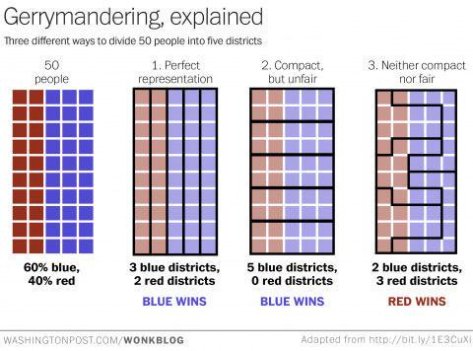
[the graphic is rather American, but still pretty good]

CponI2UUEAArtdyUpdate or Postscriptum

One of the “Labour Ladies” blocked me as soon as she understood (or, more accurately, misunderstood) my socio-political views. The other did not but left it for a day or so before tweeting the usual uneducated nonsense about how “Nazis” were (she apparently believes) “dying out”, that I should “rethink” my views and “love everybody”. I do not think that I need do more now than to close her curtains and tiptoe away…(actually, I politely replied and included a few suitable photographs with quotations to make my point; I was then blocked). Both ladies remain merely muted by me.

As for the dispute between the ladies and the Zionist, it seems that that rumbles on and may continue so to do.

Update, 11 April 2019


The Purpose of Government

In Britain, we see the two main System parties vie for public support. The Labour Party under Jeremy Corbyn was regarded, until a week or two prior to the 2017 General Election as a joke. Deadheads such as Diane Abbott and Angela Rayner were openly laughed at by millions. Many more disparaged the “anti-patriotic” political histories of Corbyn and his closest allies. The Conservative Party under Theresa May was generally regarded as a safer pair of hands, more patriotic, more electable. What changed in those final weeks and days before polling?

The Conservative Party election bubble burst when Theresa May made a policy announcement about social care for the elderly. I believe that that suddenly floodlit, for millions, what the contemporary Conservative Party is all about. Since 2010, the Conservatives (firstly as the “Con Coalition” during 2010-2015), demonized and attacked –in some cases killed– unemployed, disabled, sick, generally poor and/or marginalized people. Now, however (as I had in fact been predicting since 2010), they were going after the pensioners, but that alone  (meaning also a backlash from pensioners or those nearing pensionable age) is not the whole story.

There was once a theory of government which said that the purpose of government was, in the language of today, defence of the realm, primarily: what we now call “defence” and, by extension, “national security”. External and internal defence. That was then. Today, in advanced countries, government is expected to do a great deal more than that. It is expected to care for the people in practical ways, either providing education, policing, health services, career opportunities, social assistance etc, or laying down the conditions in which those services etc can be provided by the private enterprise sector or the “charitable” or “non-profit” third sector.

This is the reason why Labour was able, despite all its flaws, to catch up with the Conservative Party: because Labour was at least offering (promising) help to the people, in circumstances where the only other party choice, the Conservative Party, was not.

The electorate, even in Britain’s notoriously unfair First Past The Post electoral system, is now in the driving seat. The people want things and services and they will not vote for any party which does not at least promise that the people will get what they want.

Labour is presently benefiting from this wish of the people that government provides help. Tomorrow, next year, in 2020 or, especially 2022, the wish may become a demand and the party benefiting may be one which, in 2017, does not as yet exist.

They Go Like Sleepwalkers, whence Providence Dictates

Adolf Hitler once remarked that he went like a sleepwalker to wherever Providence or Fate dictated. A cynic might ask why, in that case, did Germany lose the Second World War. I have thought about this over the years, coming to the conclusion (decades ago now) that Germany’s bitter defeat saved not only Germany itself but all Central Europe and even all Europe from terminal disaster.

As is well-known, the atom bomb scientists working on the Manhattan Project (the British end being known as “Tube Alloys”), were almost all Jews who had fled from or anyway left Europe to live in the USA. Their motivation was to create a weapon which would obliterate National Socialist Germany. Japan was but an afterthought.

So focussed were the Jew atom bomb scientists on Germany’s destruction, that when it seemed possible in mathematical theory that detonation of the first bomb in the desert of the South Western USA would cause the world’s atmosphere to catch fire, destroying all life on Earth, those Jews decided to proceed. A sombre fact indeed.

Had Germany not been forced to surrender by complete military defeat, it would have seen its main cities destroyed by atom bombs. The air, water, soil of much of Central Europe would have been contaminated for decades, in fact for centuries. Seen like that, the bitter defeat and humiliating  surrender was a saving grace in the end.

Why do I bring up these facts? Because I want to make the point that agencies above the human level act on what might be seen as “purely” earthly concerns: war, politics etc.

Move now to the present UK political scene. Less than 2 years ago, Jeremy Corbyn, an eccentric and –his critics said– extremist radical, was persuaded to stand in the Labour Party leadership contest and agreed purely because he wanted to have his kind of politics at least represented. It was uncertain as to whether Corbyn would even be allowed to become a candidate, because to stand, a candidate required nomination by 15% (35) of Labour MPs. Corbyn did not have even that much support. In the end, he was nominated, not only by the few who supported him, but by a number of MPs who did not support him and who had no intention of voting for him. Reflect on that. A number of MPs who were anti-Corbyn still nominated him and without those nominations Corbyn would not even have been on the ballot. As it was, Corbyn only managed to scrape onto the list with 36 nominations (inc. his own), the last a few minutes before nominations closed.

Once on the ballot, Corbyn’s support mushroomed and he won easily, overwhelmingly. The same happened when there was a challenge to his leadership the following year. Events happened by which his opponents were wrongfooted. There seemed to be an aura of invincibility around Corbyn and his campaign. Indeed, in 2015, Conservatives were urged by Toby Young and others to join Labour under the £3 offer scheme and then vote for Corbyn, on the premise that a Corbyn leadership would sink Labour!

Mainstream media commentators seemed unable to fathom Corbyn’s appeal. Journalist Janan Ganesh, for example,  wrote that Corbyn’s election “spelled disaster” for Labour. I wonder if he wishes now that he had spiked that opinion!

Coming up to the 2017 General Election, the polls predicted Labour’s worst-ever disaster, with its MP bloc being reduced from 230 to as few as 150. Some predicted an even lower number. That general perception of Labour’s defeat persisted until about two weeks before Election Day, when the Prime Minister, Theresa May, suddenly destroyed both her own carefully-crafted public persona and her party’s chances. The bursting of the Conservative Party balloon was palpable. The polls immediately narrowed and by Election Day were showing the parties almost neck and neck. We should, again, reflect on this: Theresa May, for no reason, destroyed her own party’s campaign. For me, “the Hand of God” is shown here.

The eventual result of the General Election was a Labour MP bloc of 262, up from 230 and something few had seen coming. As for the Conservatives, though some loyalists said that “Labour lost”, that was and is not how it feels. The Conservatives lost 13 seats (317 won, down from 330) and their House of Commons majority. Corbyn’s stock rose and he is now said to be higher in public esteem than Theresa  May, while Labour is higher in the polls than the Conservatives.

Taking it as a fact, for the purposes of argument, that higher forces are protecting Corbyn, why would that be so? After all, he is some kind of agnostic, it seems, is not overtly religious or spiritual and does not on the surface seem to have anything to commend him to what Schwerin von Krosigk termed “the Angel of History”. All one can say to that is the admittedly-platitudinous comment that “God moves in mysterious ways”. There are a few ideas that come to mind: the Conservative Party may now be prevented from imposing a Jewish-Zionist repression on freedom of expression on the Internet, for one thing. It is also far less likely that the UK can get involved in Israel-instigated wars or attacks in other parts of the world.

It may be, also, that it is necessary that the UK has to have a weak System government, so as to gradually open the door to social nationalism and a completely different society down the line. I cannot say. All I can say is that it seems as if Corbyn does enjoy a degree of “divine protection” and it will be fascinating to see how that plays out in the coming months and years.

General Election Day 2017

I write in the early morning of 8 June 2017, General Election day. Within 24 hours, most results will have been counted and announced. Some will come in later in the day on the 9th.

Against almost all expectations (including my own) the election looks as if it may be close-run. Predictions from polling organizations offer everything from a hung Parliament (no overall House of Commons majority) to a solid Conservative HoC majority. However, few if any “experts” are now predicting the 100+-majority landslide that seemed almost inevitable just a few short weeks ago. What happened?

To my mind, what happened to the “Conservative landslide” is that voters suddenly woke up to Theresa May as a brittle, nervy, unhealthy (type-1 diabetes) woman who, though clever at the Westminster version of office politics  (outmanoeuvring opponents etc), is not really a national leader. Her “strong and stable” mantra played well at first against a Labour Party frontbench that was (and still is, largely) a joke, but May’s U-turns on policy damaged her and her party badly. The impression was twofold– first, that policies which impact upon almost every family in the land had not been properly thought through; secondly, that faced with public and newspaper opposition, Theresa May was willing to trim or even abandon her policies. “Strong and stable” became “weak and vacillating”. There is a third aspect: Theresa May was seen suddenly as someone who might be ruthless in stamping on such as the pensioners whose votes are so vital to the Conservative Party.

There is that “backroom person suddenly given power” thing about Theresa May. Her career outside politics was at the banks’ cheque-clearing organization, BACS, hardly exciting or cutting-edge work. In fact, as MP and minister, Theresa May did not shine and her long tenure as Home Secretary was marked by absurd initiatives and continuing mass immigration, as well as by the sacking of 20,000 police officers. Her main focus was on careerism, becoming a minister, then plotting for years to become Prime Minister.

The people around Theresa May are not impressive and had been kept in the background by the Conservative election machine. In particular, clown prince Boris Johnson was not prominent. When he did emerge, he messed up (again).

Jeremy Corbyn, on the other hand, went during the campaign from looking like a mixture of crazed radical and ineffectual duffer to looking quite reasonable and, in a word, electable, at least to many. Corbyn too was surrounded by people at best mediocre: Diane Abbott (replaced a day before the election on grounds of “ill-health” after several staggeringly-bad TV and radio interviews); Dawn Butler; Angela Rayner. All deadheads.

Corbyn had been the hate-figure of the mass media, the Jew-Zionist-Israel lobby and the Conservative Party to such a great extent that he eclipsed those around him. In the end, ironically, that may have played well for Labour. The Presidential-style campaign pitted May against Corbyn and, as May’s campaign unravelled, Corbyn’s did not and Corbyn himself began to look a lot more reasonable than May to many.

Labour has promised much. It may not be able to deliver; but the Conservatives seem to offer nothing but ever-more poverty, low pay, poor prospects, more “austerity” nonsense and repression of free speech, egged on by the Jewish Lobby which is so powerful in the Conservative Party (Theresa May herself being a member of Conservative Friends of Israel, as are 80% of Conservative Party MPs).

Few, if any, expect Labour to somehow “win” the election, either by getting a House of Commons majority (practically impossible in view of Labour’s long-term shrinkage and the dominance of the SNP in Scotland) or by becoming the largest party in the HoC. However, Labour now looks as if, far from shrinking its MP numbers from 229 to 200 or even 150 as many (including me) had thought likely, it might retain a Commons bloc (cadre?) not very much reduced from where it was after 2015. A small increase is also not now impossible.

The small Conservative majority in the House of Commons (6, but in practice more because of the non-voting of the Speaker, Sinn Fein MPs, suspended MPs etc) might as easily decrease as increase. A hung Parliament would leave the Conservatives as the largest party, almost certainly, but unable to rule except as a minority government, outvoted easily by hostile parties, notably Labour and SNP.

Could Labour form a minority government? The convention is that the largest party in the Commons has first chance to cobble together sufficient Commons support. As Bagehot put it, a government is formed when a party has “the confidence” of a majority in the Commons. If the Conservatives as largest party could not agree something with the SNP, then Labour might try, with a greater prospect of success. Labour social policies are closer to those of the SNP. The same is true in the foreign policy arena.

If the Conservatives achieve a majority greater than that presently enjoyed, then the above will be –in the American sense– moot and irrelevant. If, however, the Conservatives have no majority, then it is quite likely that Labour, even if not the largest party, will be able to form a minority government.

The only fly in that ointment is that the SNP has fewer than 60 seats in the HoC. It may well have only 40 or 45 after the election. If Labour ends up with, even, 250 (20 more than where Labour was before the election was called), that will still be far fewer than 300 even with SNP support, 326 being the necessary number. That would necessitate support from LibDems, Plaid Cymru, Northern Irish MPs etc. Difficult.

One thing is for sure: if the Conservatives lose seats, then Theresa May will have to resign. Corbyn is in a better position. His power comes from the members, who still seem to support him strongly. Moreover, the anti-Corbyn Labour MPs (many of whom are pro-Israel mouthpieces) lose either way. If Labour does reasonably well or not too badly in the election, Corbyn’s position will be upheld. On the other hand, if Labour is badly defeated in the election, the most aggressively anti-Corbyn MPs will lose their seats. They are toast either way.

Looking beyond the election, there will be a space for a new social-national movement down the line. The System parties are increasingly less capable of sorting out Britain’s problems.

Update, 5 December 2018

Looking again at what I wrote 18 months ago, the only glaring error was in assuming that Theresa May would resign if the Conservatives lost seats. They lost seats, they lost their Commons majority, but Theresa May stuck.

I underestimated the limpet quality of a backroom careerist type who had plotted for many long years to become Conservative leader and Prime Minister. She may be hopeless as a Prime Minister, but, by Jingo, she’s there and nothing short of a grenade under her bony **** is going to remove her! I suppose that she might try to hang on even after her (vulgar term) “deal” on Brexit sinks this week or next. That would have to trigger either a no-confidence vote in the Commons or the equivalent in the Conservative Party.

General Election 2017: Stoke-on-Trent North

Background

Stoke-on-Trent North constituency was established in 1950, since which time it has been a safe Labour (or Labour Co-op) seat. Only since 2015 has its status been considered to have become marginal.

For the first 29 years of the existence of the constituency, the Labour vote did not dip below 60% and was often above 70%, peaking at 75.49% at the 1953 by-election

https://en.wikipedia.org/wiki/Stoke-on-Trent_North_(UK_Parliament_constituency)#Elections.

Only in 1970 did Labour fail to secure over 60% of the vote, coming in with 59.36%. That was also the first election at which 4 candidates stood. In fact, only occasionally before the 1980s were there more than 2 candidates: in October 1974, Lab, Con, Liberal; in 1979 the Labour, Conservative and Liberal candidates were joined by one from the National Front (the NF lost their deposit, securing less than 1% of the vote).

In the 1980s, there were commonly 3 parties in contention, but from 1992 others joined the fray. There were 7 candidates in 2005, 5 in 2010 and 7 in 2015.

Joan Walley, the MP for 28 years (1987-2015) had vote shares above 50% and even 60%, peaking at 65.2% in 1997. Her final election, however, in 2010, was achieved on a lower level: 44.3%.

The MP from 2015-2017, Ruth Smeeth, was elected on a vote share of only 39.9%, the lowest Labour vote share ever in Stoke-on-Trent North. There may have been a number of causative factors: long-term decline in the Labour vote; also, the number of candidates contending (Labour, Conservative, Liberal Democrat, Green Party, UKIP and 2 Independents). The Labour candidate herself may have been another factor in the lacklustre Labour performance.

Ruth Smeeth

Ruth Smeeth is not from the West Midlands. Her origins (as far as the UK is concerned) lie in Edinburgh and London. Her Jewish mother came from a background in East London where her immediate family members in the 1930s were engaged in crime and gangsterism: the era of razor gangs and the like. They were violently opposed to the English people who supported Oswald Mosley, and were engaged in streetfighting or worse.

Ruth Smeeth has described herself as “culturally Jewish” and worked for years for the “Britain Israel Communications Centre” [BICOM], a public relations or propaganda outfit working on behalf of Israel and Zionism:

https://en.wikipedia.org/wiki/Britain_Israel_Communications_and_Research_Centre

https://en.wikipedia.org/wiki/Ruth_Smeeth#Early_life

In 2009, Bradley Manning, the American whistleblower, made available to Wikileaks a cable in which the American Embassy described Ruth Smeeth as “a source” whom the Embassy staff should “strictly protect”. It is largely a question of definition whether such a person is called “a confidential contact”, “an agent of influence”, more simply “an agent” or (brutally? unfairly?) “a spy”. The diplomatic cable simply used the words “a source”.

Despite the above, the Labour Party machine was determined to get Ruth Smeeth adopted as the candidate for Stoke-on-Trent North and she was, after an all-women shortlist was imposed on the selection procedure. Surprisingly (or perhaps not), her activity for the American and Israeli governments seems not to have barred her from becoming the candidate.

As an MP, Ruth Smeeth has taken part in some minor campaigns (see the Wikipedia article, above), but has also spent much time attacking the leadership of Jeremy Corbyn; she has been vocal (on occasion, near-hysterical) about alleged “anti-Semitism” in the Labour Party and generally.

Analysis

Labour, Conservative, Liberal Democrat and Green Party are all putting up candidates. The obvious absentee is UKIP. In 2015, Labour’s vote was 39.9%, Conservative vote 27.4%, UKIP 24.7%, the LibDems 2.9% (down from 17.7% in 2010 and 14.8% in 2005); Green Party secured a vote share of 2.8%.

The constituency voted about 60%-40% for Leave in the EU Referendum.

It would be too easy to add together the 2015 vote shares of the Conservatives and UKIP (combined, 52.1%) and assume that UKIP votes will be transferred to the Conservatives. The chances are that a high proportion will either not vote or will go elsewhere than to the Conservatives. However, we can probably guess that half of 2010 UKIP votes will be gathered in by the Conservative candidate (particularly bearing in mind Brexit etc), making a possible Conservative vote share of perhaps about 40%, possibly several points higher. Then there is the (open) question of how many 2010 Labour voters will go Conservative.

Labour is unlikely to do as well this time as it did in 2015 after five years of Conservative-led coalition government. Any persons who support Labour generally but are anti-Israel (or anti-Zionist or, indeed, “anti-Semitic”) will not vote for Ruth Smeeth and will probably either vote Green or even LibDem, or just stay home, “voting with their feet”. Likewise, any Labour members who are strongly pro-Corbyn may well decide that what they have to do is abstain or vote elsewhere, simply in order to get rid of Ruth Smeeth and then get a more suitable Labour candidate for next time.

Realistically, only Labour and Conservative have a real chance. That means that the LibDem and Green votes, even if as small as they were in 2015 (under 3% each) are of importance.

Prediction

Both Labour and Conservative candidates are likely to be in the 35%-50% range, with the Liberal Democrats and Green Party contending for the remaining 10% or 15% of votes.

I assess the likely outcome as follows: Conservative Party to win Stoke-on-Trent North for the first time over Labour, with the Greens (possibly) third and LibDems (perhaps) bringing up the rear.

Press Coverage

http://www.birminghammail.co.uk/news/midlands-news/general-election-2017-stoke-north-13066893

Bookmakers’ Odds

At time of writing, the Conservative Party is odds-on to win:

https://www.oddschecker.com/politics/british-politics/stoke-on-trent-north/winning-party

Update, 2 March 2019

Well, I was wrong in my tentative tipping of the Conservative Party to win Stoke on Trent North for the first time ever. The Labour candidate, the Jewish Zionist, Ruth Smeeth, won the seat with 50.9% of votes cast, Labour’s best result here since 2005.

https://en.wikipedia.org/wiki/Stoke-on-Trent_North_(UK_Parliament_constituency)#Elections_of_the_2010s

Under Britain’s FPTP voting system, there are no prizes for coming second, but the Conservative candidate in 2017 (same person as in 2015) achieved 45.3%, which was the best result the Conservatives had ever had in Stoke on Trent North (2015 had been 27.4%, 2010 was 23.8%, and 2005 only 20%).

Labour’s majority in 2017 was by far the smallest in the seat since it was formed, both in percentage and in absolute terms.

In retrospect, it is clear that Ruth Smeeth benefited from the Corbyn effect, ironically, despite the fact that she has been one of those most involved in Israeli-Zionist attempts to unseat him as Labour Leader. Life is rarely “fair”…

There is also the point that, arguably, speculatively, most Stoke on Trent voters were and probably still are unaware of Ruth Smeeth’s criminal family background and/or her links with secretive Israeli and other Jewish organizations (not to mention her links with the American Embassy in London).

Update, 28 May 2020

Ruth Smeeth is no longer an MP (yay!), having been unseated at the 2019 General Election by the Conservative Party candidate, Jonathan Gullis, a not-very-interesting “free market” former schoolteacher aged (now) 30.

The Conservative Party candidate got 20,974 votes (52.3%) to Ruth Smeeth’s 14,688 (36.6%). A convincing win.

The reasons for Ruth Smeeth’s defeat were probably:

  • the general move away from Labour, nationally;
  • more knowledge in the electorate in 2019 than had been the case in 2015 and 2017 about Ruth Smeeth’s secret links with American and Israeli intelligence (also about her criminal family background);
  • perhaps the realization that Ruth Smeeth is not a very nice person anyway.

Of the above, the most important was probably the national move away from Labour, and the hostility to Jeremy Corbyn. Ironically, Ruth Smeeth had herself played a major part in the Jew-Zionist attack on Corbyn and Labour since 2015. Her treachery was suitably rewarded by her being dumped by the electors of Stoke-on-Trent North.

The Self-described “Left”, “Liberals” and “Democratic Socialists”: The Fall of the Pretensions

Those who follow me on Twitter, WordPress etc will know that I never use the now-outdated terms “Right”, “Left”, “far-Right” etc. Politics is more nuanced now. There are not two monolithic ideological blocs facing each other. However, others do still use such terms, for what they are worth. Those who self-describe as “left”, as well as some “liberals” and “socialists”, have been celebrating the rigged election (rigged via propaganda and hullabaloo) of a French presidential election candidate, Macron, who should be their worst nightmare.

In Macron, we see someone who believes in the virtually untrammelled movement of money across the world. He describes French culture as non-existent, he wants to destroy most of the rights of French citizens in respect of employment, State benefits and in respect of their culture. You would think that such a person would be anathema to the so-called “left”, yet most of the latter in France supported and voted for him rather than voting for Marine le Pen, not even abstaining. Their counterparts in England applaud Macron, because he opposed Marine le Pen.

As in other political matters, the role of the Jewish Zionist element is key.

In the UK, the upcoming General Election is likely to be a “landslide by default”, with the misnamed “Conservatives” sweeping all before them as their main rivals (UKIP, Labour) implode (the LibDems being unlikely to figure except as peripheral players). Again, the self-described “left” has nothing effective to say. Its supporters prefer to laugh at the demise of UKIP (and in general the failure of non-Conservative nationalist parties) rather than offer the British people anything by way of effective opposition to the Conservative regime under Theresa May.

The Labour Party is now widely expected to achieve no more than 150 or so seats, a prediction I made a year ago. Some predict as few as 125. Labour is declining from what it was until 2010, with a self-view and image as a national or UK-wide party, to that of an English and Welsh party focussed around and supported by, mainly, some ethnic minorities and public sector workers.

The self-described “left” favours many things which most British people do not: mass immigration, open borders, globalized movement of people, of money, of employment. These are also favoured by the Conservative Party and the LibDems.

The people have been left out. They are the victims not only of the rootless cosmopolitan finance-capitalists but of those who have claimed until now to speak for the people: the “left”/”socialist”/”liberal” political parties and the trade unions tied in with the “socialist” or “social democratic” political parties. The whole journalistic milieu, pretty much, can be added to the mix, as can a good deal of the “media” world generally, including entertainers etc.

The “Left”, “liberals”, non-national “socialists” etc are now not speaking for the people of Britain (or any part of Europe). Their pretensions are exploded. They can only applaud the anointing of a completely-manufactured fake and puppet, such as Macron, just as they applaud the finance-capitalist EU (and imagine that it will somehow protect “rights”, despite “holocaust” “denial” laws, arbitrary cross-border arrest etc), just as they applaud mass immigration and just as they want open borders so that the detritus of the failing post-1945 international order can flood across Europe, destroying everything in its path.

The fall of the pretensions means that, soon enough, nothing will stand in the way of pan-European (but anti-EU) social nationalism. It will speak for the people and it will be heard.

Update, 20 July 2019

I was right about the direction of travel, though wrong about Labour’s likely performance at the 2017 General Election.

Update, 5 July 2021

The 2019 General Election confirmed the essential accuracy of my analysis. Labour has lost most of the English people; it even seems to have lost some of the Muslims, now that it is under Jewish-lobby control again.

As for Macron, he is very much on the back foot with the French people.