Category Archives: Uncategorized

How Can There Be International Large-Scale Politico-Social Change by 2022?

I have been re-reading Involuntary Journey to Siberia, by Andrei Amalrik [https://en.wikipedia.org/wiki/Andrei_Amalrik], a Soviet dissident better known for his short book Will the Soviet Union Survive Until 1984? (both works were published illegally outside the Soviet Union in 1970, a fact which resulted in a 5-year sentence of hard labour and then internal exile in Kolyma).

Leaving aside the fact that the slowly increasing repression of free speech and free political activity in the UK of 2018 is mirroring (albeit in slightly milder form) that of the Soviet Union of 1970, it occurred to me –not for the first time– how hard it is to predict, accurately, sudden or large-scale socio-political and socio-economic change.

When I read Will the Soviet Union Survive Until 1984?, which was in or about 1980 (the year Amalrik himself died, a result of his own careless driving in Spain), I thought that the thesis was possible but would take far longer, probably 20 years longer. I thought that there would be a gradual collapse. I was wrong; so was Amalrik, but only by 5 years –in reality– or by 7 years (formally). Sovietism and all other forms of old-style socialism across the world died in 1989 in real terms, though in official terms the Soviet Union coughed to a halt only in 1991. This was perhaps appropriate: the Soviet Union was established formally only in 1922, though everyone thinks of it in terms of its having been established de facto in 1917.

It should now be added that all the “experts”, “Sovietologists”, “Kremlinologists”, Foreign Office bods, SIS bods, journalistic scribblers etc (all the ones I ever heard of, anyway) laughed at Amalrik and his book. The “East-West” Cold War set-up seemed set in stone. The Soviet Union was a granite monolith. They had been brought up in it or on it, most of them, most having been born in the 1930s and 1940s: nothing would happen suddenly. They were wrong. A combination of factors brought about not only the swift collapse of Soviet power, as well as the Soviet “empire” worldwide and particularly in Europe, but also that of all forms of ordinary old-style socialism, from the CPSU through to the pre-Kinnock/Blair UK Labour Party.

Lenin thought that the revolution in Russia was upon him in 1905; he discounted the real upheaval in 1917 and very nearly missed the boat. Hitler also thought that his time had come in 1923; when it did arrive, in 1932-33, he was uncertain at times about it.

I happen to believe now that we are in a current of (about, approximately) 33-year history. 1923, 1956, 1989, 2022. If I am right, the year 2022 will bring about another huge change in economics, politics, society, the world order generally. Think of how, say, China has changed since 1989. Russia too. Even the UK has changed hugely since 1989. The finance-capitalist “reforms” under Mrs. Thatcher had not started to affect most people outside the formerly industrialized North of England, South Wales etc. The mercantilism and commercialization that has happened since 1989 has changed the UK profoundly, in most respects in a not-good way, though there have been positive changes as well.

In brief, and without pretending to be comprehensive, one can say that, in the UK since 1989, the professions have largely become businesses, that the State has, at least in part, abandoned many who need help, that the UK (especially England) has largely become a non-white society, that the Jew-Zionist influence over mass media, politics and other areas of life has become pervasive and destructive, that there has been a general coarsening of thought, of cultural life, of behaviour.

UK politics has, since 1989, gone through the changes outlined above with the following results

  • Labour has had a quarter of a century of what amounts to control by New World Order/Zionist Occupation Government NWO/ZOG types: Kinnock, Blair, Brown, before collapsing under Ed Miliband; its MPs are still mostly of that type and Jeremy Corbyn is finding it hard to completely defeat the Jew-Zionist/Israel-First lobby within his own party. The Old Labour members and MPs still exist, but only just. Few now have ever done industrial work; many have never done non-political work at all, unless one includes management consultancy, public relations, “comms”, “organizing” what remains of trade unions, pseudo-academia etc.
  • The Conservative Party is now almost devoid of real members. The average age of members is somewhere around 70 if not 75. The membership figures are now kept secret, but it seems that a party which once had 4 MILLION members (in the 1950s) now has about 20,000. A Potemkin village with no-one living there. A mirage.
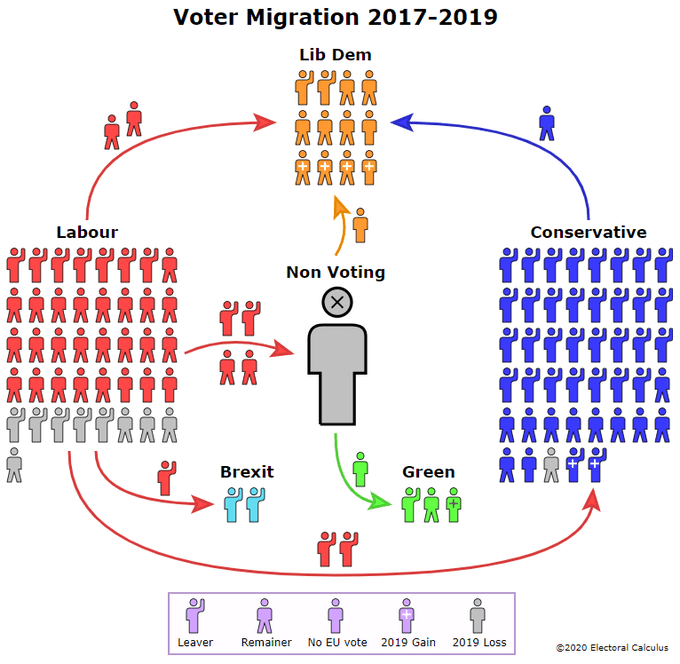
  • Other parties are even worse off. The LibDems have surely had their day except as a tactical vote for discontented voters trapped in “safe seats” occupied by parties they do not like. The graphics explain it.C3l1gk9XAAMHAwF

C64bh5XW0AIWYgy.jpg

  • UKIP was the populist answer to the gulf between governed and governing. However, the totally unjust voting system defeated it (in any case, UKIP had few answers to Britain’s real problems, was pro-ZOG/NWO, and by the time it deflated after 2014, even had non-white candidates! Some called it “kosher nationalism”). UKIP’s 2015 result said it all: 3.8 MILLION votes, 1 MP (former Conservative Douglas Carswell, an entryist, in my view).
  • Real British nationalism of a more social national type has hit rock bottom. The BNP failed in 2010 and collapsed in 2015. There are now only a handful of parties of general “nationalist” type, all of which are jokes, only one of which (Britain First) has more than 500 members.
  • The people are divided into a minority of wealthy and/or affluent who have doubled or tripled their capital over even the past decade, and the rest, many of whom are paying through the nose for poor rented places in which to live, who make rubbish money from jobs which (like their rented homes) are without security; their votes mean almost nothing, their views mean less, and they are just disposable labour units in an unfair society.

It Could Happen

An opinion poll has just been published saying that 24% of UK voters would vote for an “extremist” “far right”, “anti-Islam” and anti-mass immigration party. 38% want a real Brexit and would vote for any new party promising it (credibly, presumably). Leaving the tendentious wording aside, there we have it! The prize is right in front of us!

It could happen that

  • Brexit either happens on WTO terms, or fails to happen, causing massive discontent;
  • Russia and NATO get into actual conflict in Eastern Europe;
  • Corbyn becomes Prime Minister but with no majority; or
  • Some Conservative Party idiot-MP becomes a weak PM; and
  • The people are pushed beyond endurance on real pay, rents etc.
  • Mass immigration is not stopped or even increases.
  • Zionist exploiters are exposed even more than they have been.

In those circumstances, a credible and very radical social national party can take power and start to clear away the rubbish. 2022 and thereafter. Then we can see across Europe removal of the migration-invaders, removal of finance-capitalist parasites, a better society in Europe (inc. UK) with decent work, pay, Basic Income, animal welfare etc.

The prize is before us! 

The 20th of July

I cannot let the 20th of July pass by without a few words. On 20 July 1944, discontented officers tried to kill Adolf Hitler. Transposed (arguably pointlessly) to a British context, that would be equivalent to discontented British officers trying to kill Winston Churchill and the King (Hitler being both head of government and head of state). In fact, it is at least arguable that both the UK and mainland Europe would have been better had that happened (in 1940, when Germany offered honourable armistice between the Reich and the British Empire but was refused by Churchill and his circle). There would then have been no devastation throughout Europe, certainly in Western Europe, no carpet bombing of German and other cities (eg some French ones, largely destroyed by Allied bombing and shelling: Brest, Le Havre etc).

https://www.telegraph.co.uk/history/world-war-two/10877137/D-Day-French-torn-over-criminal-British-and-American-D-Day-bombings-of-Caen.html

Above all, Stalinism might well have been destroyed or at least contained. Sovietism would not have been allowed to invade the East and Centre of Europe.

Do not imagine that there were no British senior officers who despised and hated Churchill. Lord Alanbrooke, Chief of the Imperial General Staff and (from 1944) Field Marshal makes his distaste for Churchill’s charlatanry clear in his diary.  However, officers such as he were imbued with automatic-reflex loyalty to, not the head of government, but the King as head of state. They probably never thought of mutiny, still less assassination.

On the German side, most of the senior officers plotting against Hitler were content to do his bidding while the German forces were in the ascendant; when Germany started to fail, though, they thought in terms of surrendering on the Western Front, at the same time as holding on on the Eastern Front, thus saving Germany and much of the rest of Europe from what actually later happened, the savagery and barbarism of the Red Army engaged in wholesale murder, rape and looting, followed by the icy grip of Soviet socialism.

Those “disloyal” senior officers of the Wehrmacht (and some others, such as Canaris) were not motivated solely or even mainly by self-interest or their class-interest as aristocrats (not all were aristocrats; among the middle-class ones were Rommel and Canaris), but by a concern for what they conceived to be the ultimate focus of their loyalties– the future of the German state and German people, as well as, beyond that, European culture and civilization generally, threatened by Sovietism which, at that time, was Stalinism.

History is not black and white. National Socialism was a very fine movement overall, but not without flaw. The General Staff and other plotters likewise cannot simply be written off as “traitors” even though, from one point of view, they were. Their point of view, i.e. that Germany was losing the war on at least two fronts, was accurate to that extent. Where they went wrong was in assuming that the USA and UK (and their dependent entities, as well as hangers-on such as de Gaulle) would in fact conclude a separate peace, separate from the Soviet Union. That was pie-in-the-sky thinking. The Allies had already proclaimed, at Casablanca, that only “unconditional surrender” would be acceptable,

https://en.wikipedia.org/wiki/Casablanca_Conference

so the plotters would have had to throw themselves entirely on the mercies of the Western Allies and Stalin, were they to have eliminated Hitler. Even so, it is arguable that that might have been a better result for Germany and the rest of Europe than what actually transpired in 1945. However, that is to look with the benefit of what is now known. At the time, things must have looked very different, especially in Germany itself.

Hitler might have won out, even at the last moment, in terms of the conventional battlefield. The new jet fighters might have turned the tide, had they existed in sufficient numbers; new tanks were outclassing Soviet and Western models; above all, the East-West tension that blew up as soon as Germany was defeated in 1945 might have, in that final year, spelled the end of the alliance between the West and the Soviet Union and given Germany what is now called wriggle-room.

Having said all that, Germany would have been devastated to an even greater extent had it continued to fight after, at latest, the Summer of 1945. The Jewish scientists who created the atom bomb did so on the basis that it would be used against Germany, not, primarily, Japan. Had Germany started to defeat the Western Allies and Soviet forces on the ground and in the air in mid-1945, Berlin and other cities would have been attacked by atom bombs and destroyed; admittedly, in the case of Berlin, Hamburg etc, let alone Dresden, the difference might have been only academic:

Dresden1945

[Dresden after the UK/US bombing, 1945]

The key point is that Germany was not making atomic weapons and had no means with which to do so. It had been checkmated.

So there we have it. I cannot approve (and my approval is irrelevant either way) the actions of the backstabbers of 20 July 1944: Meine Ehre heisst Treue, but the plotters of that time were not all-“good” or all-“bad” in motive or action. As Wolfram von Eschenbach says in the introductory part of Parzival, “blame and praise alike befall when a dauntless man’s spirit is black and white mixed, like the magpie’s plumage”…

History has its own judgment. As Schiller observed, die Weltgeschichte ist das Weltgericht [“the history of the world is the judgment of the world”].

We honour the past but advance to the future.

Adolf-Hitler-1889-1945-German-statesman


Judge Not, Lest Ye Be Judged…

This blog post has been triggered by my happening to have seen a couple of minor news items while idly browsing the Internet. The first reported that my old head of chambers –shall we call him M.B.?– from when I practised as a barrister in Exeter (2002-2007), has been elevated to the Bench as a Circuit Judge and is now styled His Honour Judge M.B.

The other news item was that the old (dating from 1905) Tower Bridge Magistrates’ Court and police station have been turned into “a luxury boutique hotel”. Sign of the times.

These reports have led me to muse on some of my own experiences with the judicial classes.

M.B. will probably make an effective judge. An erudite civil lawyer, I met him when I decided to stop being an employed lawyer (a situation I was in, intermittently, from 1996 through to 2002) and re-start Bar practice in England. I had been living and/or working overseas for much of those six or seven years, and in London, where at one time I was the leaseholder of property in Gray’s Inn (I lived at that time at Higher Denham, Buckinghamshire, from where I travelled in by rail from Denham Golf Club halt to Marylebone, a short journey lasting about 20 minutes).

I was in Kazakhstan for a year (1996-97) and after that also lived in or made shorter visits to a number of other countries: Egypt (where I lived for a while in Aswan, on a remote Red Sea beach under canvas, in a flat in Alexandria and in the desert oasis of Siwa); Turkey (I drove UK-Turkey-UK in 2001, which was quite an adventure at times: France, Italy, Greece, Turkey, Bulgaria, Romania, Hungary, Austria, Germany, Luxembourg, Belgium, a 4-month trip); the USA (based in Charleston, South Carolina, but I also stayed for a while in Tampa, Florida); Qatar; Liechtenstein; the Channel Islands, the Eastern Caribbean (several islands); the Cayman Islands, Minorca, Czech Republic, Northern Cyprus etc.

I remember one member of my future chambers remarking at my interview that my CV read in parts like that of James Bond. I had to point out that any resemblance between me and James Bond was purely co-incidental and very implausible (and not only because I have never belonged to any secret service!).

Still, I joined that set and in general found it OK, though at first it (and so I) had very little work. I had taken on the lease of one of the largest country houses in North Cornwall and liked the relaxed lifestyle of the Cornwall/Devon upstream Tamar River area.

As to M.B., not long after I joined the set, M.B. and I won a multi-day action in contract and trust together (though appearing for different people) at Plymouth County Court. After that, we did appear on opposite sides a couple of times during my 5 years in chambers, but he lost out despite being (arguably) a better advocate and (unarguably) a better lawyer than me.

I may as well add that, despite what some Jewish individuals claimed after I was disbarred in 2016 (about 8 years after I had left chambers and ceased Bar practice!), M.B. and the other fellow members of chambers (with one, possibly two exceptions: see below) did not want me to leave chambers, whether for political or any other reasons. Indeed, M.B. wanted me to stay on despite my having decided to resign.

In fact, I was commuting on a weekly or 2-weekly basis across the Channel to Finistere, where my wife and cats were living. This resulted in financial strain, in that I was only available for half the time, was paying out large amounts for ferries (return trip with car, luxury cabin too, about £300 return, every week or so…), hotels in the UK for 10-20 nights per month.

Putting the seal on it all, I was starting to have “discussions” with the Revenue (which only ended in 2012).

My only misgivings about M.B. as a judge would be that, firstly, he tends to stick with black-letter law; in my view, he is unwilling to bend the law to fit the justice of the case. Whether that is a strength or a weakness is a matter for debate.

Secondly, when I decided to leave chambers, I quite liked the idea of remaining as a door tenant [https://en.wikipedia.org/wiki/Door_tenant] and M.B. said that that would not be a problem and implied (indeed expressed, though in some other words) that it would be nodded through, but that the correct form would be for me to resign my tenancy first and then apply for door tenancy, though approval would “in my case” be automatic.

However, when it came to it, a couple of new tenants (I believe) cut up rough because one was married to some kind of Indian and was very hostile to (what he assumed were) my political views; I think (guessing) that a recent ex-pupil (a humourless bespectacled woman with an invisible sign round her neck saying “Politically-Correct Virtue-Signalling Christian”) may also have blackballed me.

In the event, the door tenancy would have been a waste of time because the Revenue was on my back at a cross-Channel distance. Still, that made me think that M.B. was not necessarily reliable, a thought that had occurred previously once or twice.

Now to another judge of sorts. Tower Bridge Magistrates’ Court, long before it was (quite recently) turned into a luxury boutique hotel, was for some years often presided over by one Jacqueline “Jackie” Comyns, a notoriously despotic “stipendiary magistrate” (the rank now renamed “District Judge Criminal”). Her reputation was fearsome.

I only appeared once in front of this gargoyle: I was “briefed” at 11 am to appear at 12! That was in 1993. I read the brief on the way to court. The defendant had refused to get off a defective bus and had then assaulted the conductor and gone on to smash the side window of a police car. She was pleading guilty.

At court, the case came on minutes after my arrival. The magistrate interrupted my mitigation to ask some petty question about the defendant. I did not know the answer, having not had time for a brief conference.

Instead of simply asking the defendant for the information, this ghastly frustrated prize bitch, sitting on her seat of petty power, told me venomously that Counsel had to be properly prepared when appearing in her court, and told me to go ask the defendant! I did, the pitying or amused eyes of dozens of police, court staff, members of the public on me as I traversed the unusually large courtroom and extracted the information.

I was told that that magistrate was going to be elevated to the Circuit bench in Essex, but that turned out to be wrong, because I see from the Internet that she was still dispensing justice from Thames Mags (on the other, i.e. North, side of the river from Tower Bridge Mags) as recently as 2013, the year that she retired (aged 70).

The problem of “judge-itis” (the tendency to be a despot sitting on the pedestal of power) is worse, usually, the further down the pecking order you go. It is rarely found in the higher courts.

At one time (1993-1995) I appeared on a frequent basis, at least once weekly, in the High Court. If I had a problem, it was never because the judge was reprising am-dram Nero or Caligula.

In the County Courts, the problem is occasionally encountered. HH Judge Overend, the presiding civil judge for Devon and Cornwall until 2006, was often a horrible despot when seated (at Plymouth County Court, usually), but in his case his bullying manner, and apparent tendency to make up his mind before you had finished —or even started— speaking, was mitigated by fairness and compassion for those suffering (so long as they were not Counsel!).

The barristers of the South West used to describe bruising encounters with that judge as one having been “Overended”…I have to say that on the odd occasion when he saw me outside court, he did always nod affably and even briefly smiled at times.

The magistrates’ courts are often the zoos where the wildest judicial animals roam their constricted territories. I once saw a stipendiary magistrate in London refuse bail to a defendant who was in court on a stretcher and on a drip !

Other judges have the opposite tendency, a pretty fatal one for a judge, a difficulty in deciding anything, especially if it would involve penalizing (eg imprisoning) those who break court orders. Judges whose Bar practice was entirely in civil work tend to fall victim to this; at least, that was my experience.

I have to say that I only found a few judges who were completely impossible. One was not a judge proper, i.e. the lady who presided over Tower Bridge Mags; another was one whose name escapes me now, but who sat at Uxbridge County Court 25 years ago. His connection with justice was, as far as I could see, purely formal. A horrible man. The many others, particularly on the High Court bench, might not always have seen eye to eye with me on the law or facts, but were almost always courteous in manner and impressive in their grasp.

Notes

How Would the Safe Zone Become A Germinal Ethnostate?

I have previously blogged about various aspects of the proposed “safe zone” or zones which might become the hub of social national activity in the UK. I have explained how the “safe zone” might be created, perhaps most likely by one person, couple or family buying an estate, farm, house, business or whatever in the selected geographical area, then other people gravitating to the same part of the country.

The ideal would be an estate which might include a main house, ancillary or secondary accomodation, houses, cottages, agricultural land, perhaps a separate business such as a garden centre, hotel or whatever (which might give employment to some of those supportive of the safe zone project). For example, I once had a lease of this house in Cornwall:Polapit Tamar House

carriageentrancePolapit
drive1

That house, a mid-19thC construction, originally (certainly by 1900) had a 5,000 acre estate, which by the time I lived there (2002 and 2003) had reduced to about 100 acres, most of which was woodland inhabited by reclusive deer. My own lease included only 4 acres (gardens and woodland) and did not include the secondary accomodation such as the North and South Lodges at the ends of the (more than 1 mile long) private road or driveway, 2 detached houses, and a few flats within or over the stable block.

It can be seen that such a house would be a fine hub for the safe zone project. The original relocators could live in that house, with supporters employed on whatever land surrounded it or in the nearby town (in that case, the nearest town was about 4 miles away) and living in the secondary accomodation or elsewhere nearby.

Such a house has the space to host meetings: the photos show the exterior colonnaded entrance to, and the interior of, the ballroom, which was itself larger than the whole of my present humble home…).

t_BallroomEntrance
t_Ballroom1
t_Ballroom2

As suggested above, such rural areas sometimes have businesses available which require staff: garden centres, nurseries, motels, hotels, pubs etc; there might be scope in the nearby villages and towns too. It might not be very long before a thriving hub of social nationalism exists. Suitably-qualified people might get jobs in local schools or local government, even in the police, NHS facilities, or in the fire brigade.

Once the safe zone has progressed that far, it is likely that other land can be bought, other estates or farms. Compare it to a painting-by-numbers set: one by one, the blank bits are filled in.

Naturally, a considerable amount of money is required to start such a project. The hub (estate, farm or at least smallholding) would cost (in Devon or Cornwall) anything from £1M upward, depending partly on the acreage. Agricultural land is valued at present in the range £5,000 to £15,000 an acre, so a house with even 100 acres will probably cost at least a million pounds and quite possibly as much as five millions.

Realistically, several million pounds would be needed to initiate the safe zone project.

However, once operating, the safe zone will thrive. All supporters would “tithe”, as happens commonly in religious organizations etc. If even 100 people are sacrificing a tenth of their (net) income and even if their average income is only £30,000 a year gross (maybe £20,000 net), that still gives the project an annual income of £200,000 at a fairly early stage.

Once more than a few dozen people are involved in the project and resident in its territory, thought can be given to taking over local councils. From there, in electoral terms, the local and regional objective would be to get rid of existing System MPs and replacing them with social national candidates, whether overtly or covertly.

There is more. As the reputation of the safe zone spreads, the trickle of relocators will become a flood. At that point, the safe zone mutates into the germinal ethnostate.

Update, 29 September 2019

https://www.kn-online.de/Nachrichten/Hamburg/Voelkische-Siedler-Die-Bio-Nazis-von-nebenan

Update, 26 July 2020

Saw this… https://www.independent.co.uk/news/world/europe/neo-nazis-plot-to-win-over-small-villages-in-germany-through-settlers-10162589.html

Update, 3 May 2021

Which Way Politically After Brexit?

It seems to be a virtual certainty that, during 2019, “Brexit” will –at least in name– take place. What that means is still uncertain. It has just been revealed that Theresa May and others have been secretly working to undermine the substance of Brexit and to make it appear as if Britain has left the EU while in reality tying it ever closer.

As soon as the EU Referendum was held, when the result favoured Leave, I assumed that the ZOG/NWO cabals would attempt to subvert it. The Referendum was planned as a public relations exercise, cleverly channelled so that “the people” would rubberstamp the UK’s continuing EU membership. David Cameron (aka David Cameron-Levita) miscalculated. As punishment, he was booted out under the figleaf of resignation, and is now an obscure fringe figure in British politics.

The Theresa May government has little legitimacy. Theresa May inherited her mantle as PM, and then lost credibility during and after the 2017 General Election. She now clings to power by juggling the House of Commons votes of her own rebellious MPs and those of the Democratic Unionist Party (which latter have been, in effect, bought).

Fate now takes a hand. As with Cameron-Levita, Theresa May has few of the attributes necessary to be a Prime Minister. She has made a mess of both the Brexit negotiations and her own plot to “leave” the EU while really staying in it. As a result, she has become something close to a laughing stock with the public.

It is possible that the UK will leave, or as Remainers always say, “crash out” of the EU on the basis of World Trade Organization [WTO] rules. It is possible, though unlikely, that the UK will “leave” the EU (but in effect stay) under the “Chequers” plan of Theresa May. It is possible, though very unlikely, that not even a nominal Brexit will happen.

I do not here want to examine the possible economic consequences in detail, but to look at the political future in the short to medium term.

There has already been a backlash from the public in the 9 days since the Chequers plan was announced. In the old phrase, you can fool some of the people some of the time but you cannot fool all of the people all of the time. Was that Mark Twain? According to my brief Internet query, no. Abraham Lincoln.

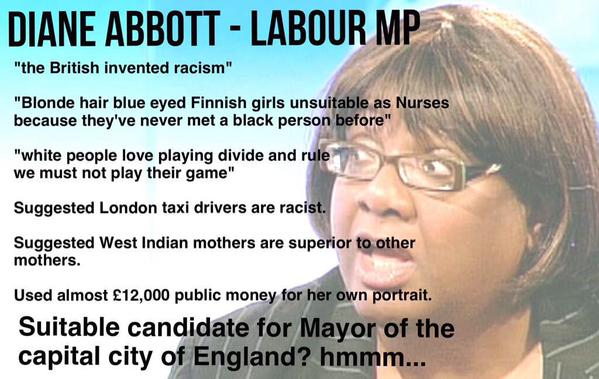
The opinion polls are already starting to move against Theresa May and the Conservatives vis a vis Labour. Labour has pulled a couple of points ahead for the first time in months. The revelation (which only burst upon the public prints yesterday) that Theresa May has been presiding over a secret plot to nullify Brexit will sink her and her party, in my opinion. So far, the Conservatives have been able to rely on the Corbyn Factor (which includes the Diane Abbott Factor etc) to put many voters off voting Labour. Now? Those people might or might not vote Labour, but many will not vote Conservative. They might abstain, they might vote Labour, they might even vote UKIP, which has experienced a rare poll boost in the past week or so.

UKIP is washed up, as I have been tweeting and blogging since 2014. However, it will still stand a small number of candidates in any general election held in 2018 or 2019 and those candidates will take the edge off the Conservative vote. The same is true of any candidate who is anti-EU.

The present weak Conservative government can surely only decline in popularity from here. As I have recently (and previously) blogged, the voters at present are mainly voting against parties rather than for them. A voter may abstain from voting Conservative or make a protest vote rather than voting Labour (or LibDem, bearing in mind that the LibDems are pro-EU).

The electoral mechanics in the UK are such that the result of any general election mirrors the “glorious uncertainty” of the racecourse. However, the present likelihood is that no party will have an overall majority, or that either Labour or Conservative will have a very small majority. That would be not dissimilar to the present situation, where in 2017 the Conservatives won 317 seats; however, a formal majority would require a party to win 326 seats but in fact (because Sinn Fein’s 7 MPs do not attend and so do not vote) 320 for a bare practical majority. Theresa May is 3 MPs short; hence the DUP arrangement.

My present feeling is that, while Labour will never be able to get a working majority in any election in the next couple of years, it could end up as (probably marginally) the largest party and so be able to form a weak minority government of some kind. This would be the best outcome for social nationalism, so long as a credible social national movement can emerge.

On the above premises, a half-cocked Brexit might lead to continuing mass immigration (including non-white immigration), economic slowdown, general malaise and administrative chaos. People will be dissatisfied, and disgusted by the System. On those premises, a real social national movement could gather strength enough to challenge the System by 2022.

A Few Thoughts About The Next Few Years In British Politics

Present Situation

I see no significant change from the situation obtaining immediately after, or even prior to, the 2017 General Election. Neither main System party has broken through to clear water with the public; both are trapped in the ice of public cynicism and/or disapproval.

Labour Party

The Labour Party may have been able to recruit hundreds of thousands of enthusiastic members and supporters in the past few years (and that is more than it was able to do under the Blair/Brown Zionist control of yesteryear), but there is no sign that it has much (if at all) broken through beyond the traditional Labour heartlands. It sits in the range 37%-42% in the opinion polls. Corbyn-Labour is ideologically-incapable of seeing or accepting that having so many “blacks and browns” in high positions (examples include Diane Abbott and Dawn Butler) is one factor killing Labour’s wider electability. Not just the fact that such people are black or whatever, but the fact that they seem so unintelligent and/or uneducated. The two mentioned were also egregious expenses freeloaders and still try to grab as much money as they can.

The attack on Labour by the Jew-Zionist element mostly goes over the head of the masses of voters, but the venom seen in the msm (put there by the Jew-Zionists and doormats thereof) may affect Labour’s electability in marginal seats. Labour is still stuck with a Parliamentary party which is mostly hostile to its leader, Corbyn. The resultant impression of division is bound to affect Labour’s vote, as does its pro-immigration stance.

Conservative Party

The Conservatives are still led, or at least headed by Theresa May, who is only there by reason of the lack of an obvious alternative leader; she was in fact only elected as Leader by default, as this cartoon shows well.

CnLGOc5XYAALLJd

There remain vast swathes of Conservative-voting Britain, especially in Southern Britain, where, however unpopular the Conservatives are, no other party is more popular. That applies a fortiori to Labour. The Cons sit around 39%-43% in the opinion polls.

UKIP

UKIP was making significant inroads into Conservative Britain before the semi-rigged First Past The Post electoral system defeated it in 2015, when it should have (under any fair system) have gathered in about 70 MPs, but in fact only got one. As I predicted even before the election, UKIP had peaked. Now, the only reason to include it in a blog post such as this is for reasons of completeness. It may be able to climb slightly higher in the opinion polls from its recent low of 3% (the latest outlier has it at 6% but the polls overall are at 3.3%); this is mere “dustbin voting” and protest voting. UKIP is now effectively finished, irrelevant.

Liberal Democrats

The Con Coalition finished the LibDems. The only bright spots for them are that some young and naive first-time voters might choose their “pick and mix” policies as attractive to them; and that some pro-EU Con voters might vote LibDem in places where the sitting Con MP is a “Brexiteer”; but the overall effect will be small. Presently in the opinion polls between 8% and 11%, which is not enough to retain more than a few MPs.

Social Nationalist Parties

There is no social-national party which can be described as even marginally credible. The two which are now most visible are very small and without wide public support. The Anne Marie Waters vehicle, For Britain, a UKIP offshoot, is a sideshow of a sideshow; a complete irrelevance. It is also a “one-trick pony”, basically an anti-Islamist group, despite attempts to present a wider policy offering. As Wikipedia puts it:

“The party fielded fifteen candidates in the 2018 local elections, with none being elected.[9] The party came last in almost all the seats it contested.”

The article continues:

“Waters contested the Lewisham East by-election, receiving 266 votes (1.2% of the total) and losing her deposit.[12]

Membership is thought to be around 200.

As for Britain First, while in some respects better run and more credible as an organization (it is said to have 1,000 members), it is ideologically suspect, having declared itself pro-Israel and pro-Jew. Like “For Britain”, Britain First seems to have anti-Islamism as its main point. Electorally, it too has been a washout: it last contested a Westminster seat in 2014, when Deputy Leader Jayda Fransen stood at the Rochester and Strood by-election:

UKIP won the by-election. Britain First finished 9th of 13 candidates, with 56 votes (0.14%), finishing below the Monster Raving Loony Party (with 151 votes, 0.38%) and above the Patriotic Socialist Party (with 33 votes, 0.08%).[53]” [Wikipedia]

Britain First also put up its leader, Paul Golding, as candidate for Mayor of London:

“On 27 September 2015, Paul Golding announced that he would stand as a candidate in the 2016 London mayoral election. He received 31,372 or 1.2% of the vote, coming eighth of twelve candidates.[55]” [Wikipedia]

The Next General Election

The next UK General Election may come as early as 2018 itself, or in 2019. It is unlikely to be later. Many will be voting against the party they dislike more or most, rather than for the party they like the most. Many may abstain and, while that will not affect seats heavily for one System party or another, it will affect marginal seats.

My present view is that the likely result will be a hung Parliament and a House of Commons possibly with Labour as the largest party, but without a majority. Labour will prove incapable of governing effectively or well and will be weak on immigration. That may then open the door to radical social nationalism.

The Future

Britain seems set for economic and social turbulence, revolving around the questions of race, culture, immigration, social standards, standards of living and issues around free speech. A credible social national movement could take off in the short-term to medium-term (2018 to 2022 and beyond), but that will require leadership, ideology, discipline and belief, as well as money and organization.


Getting Real About Repatriation: Creation of the British Ethnostate

Back in the 1970s, a slogan sometimes heard was “if they’re black, send them back!”, a reference to the removal from the UK of what might be called “the blacks and browns” who had come to the UK in increasing numbers since 1945. Indeed, the 1970s (the time perhaps most significant in my own initial political development) was the halfway point between the almost entirely white Britain of my childhood (I was born in 1956) and the Britain largely composed of non-whites which emerged in the 1980s and has carried on in ever-intensifying form to the present day.

The slogan of course referred to repatriation, a policy of groups and parties such as the National Front, and a policy which, at that time, was quite feasible, because most of the “blacks and browns” (etc) had been born outside the UK and still held their original citizenship. Increasingly, this has ceased to be the case, as the “ethnic minorities” have continued to breed prolifically within UK borders. The policy of repatriation thus became unfeasible, because the states from which the ancestors had travelled to the UK would be unwilling to accept large (in some cases huge) numbers of persons whose only connection with that state might be a grandparent or great-grand-parent.

The point is not only that a social-national government would have found it hard to implement a repatriation policy logistically, but that (real) British people found it hard to take seriously political parties which had repatriation as a major plank of policy.

The above is even more true today, when, for example, London is majority non-British and arguably majority non-white. Surveys usually give statistics only for “persons born outside the UK”, or “born to mothers born outside the UK”, whereas an ever-increasing number of persons of foreign origin (including non-whites) are born in the UK. One can see that, down the line, London could have the vast majority of its population non-white and yet the statistics might still paint a less stark (and less true) picture, because those hordes will have been born in the UK and to parents also born in the UK.

It is increasingly hard to see any political, that is electoral, success for social nationalism in British urban areas, because a high proportion, perhaps a majority, of voters are non-white. The only alternative scenario might be one of civil war in which the whites defeat the non-whites. That is a doubtful proposition both in its premise and in its outcome, at least in the cities.

We do not know what might happen in the future to make some form of resettlement of non-whites in Africa or Asia a possibility. It may be that that becomes a feasible policy for a social national government. At the present it cannot be a policy put before the public unless at least the broad outlines of the way to the outcome are drawn.

For the moment, the way forward is for social nationalists to cluster in safe zones, or areas of relative ethno-cultural purity, to create a germinal ethnostate there; then, later, to attempt a takeover of the general UK society.


Paid Bar Pupillages

There is, currently, discussion yet again at the Bar of England and Wales about whether all sets of chambers should “tax” their members in order to pay pupils (i.e. trainee barristers) a certain minimum during their year of pupillage. The figure mooted has been put by some at £25,000; others put it at £12,000, i.e. about where the present legal “minimum wage” is set. Not all barristers agree. I saw a contrary-leaning article by Jew-Zionist silk Simon Myerson QC. I expect that this is the only issue on which I would ever agree with him (I attach his views at the bottom of this blog post).

I understand that chambers are currently not forced to have pupils, but if they have them they must be paid £12,000 p.a. Apologies if that misrepresents the current position; I have little contact now with affairs at the Bar. [update: see below]

Many who know me or of me may wonder why I am bothering to write about this. After all, I ceased Bar practice in 2008, and was actually disbarred –for political reasons– in 2016, after a pack of malicious Jews cobbled together a complaint to the Bar Standards Board about my socio-political tweets. My answer to such a query would be that I have a view and the time in which to express it. Simply that. I can revisit Memory Lane, too.

The idea that all chambers must fund at least one pupil has superficial appeal to many. Poorer people of merit would be assisted etc. The problem with that is that most young (as most are) Bar pupils are not very poor anyway, and many come from families with considerable incomes and capital. In short, from affluent families. No-one forces chambers to take poor pupils rather than rich ones. In other words, chambers might be forced to pay for pupils who do not even need the money.

When I myself was looking for pupillage in the late 1980s and then early 1990s (interrupted by my going to live in the USA and travelling back and forth in those years), I had handicaps: apart from lack of money, I was, having been born in 1956, about a decade older than most candidates, and (worse) until late 1988 had a beard. That last might seem a small matter, but at least two barristers who interviewed me mentioned it…

I found that, at that time, the Bar was even less well-run than most things in the UK. We (students at the Inns of Court School of Law, at the time the only place where the Bar Finals course was offered) were told by some stuffy blue-stocking administratrix that we should write our applications by hand and preferably in ink, using a fountain pen (though CVs could be typed)! By some miracle, quill pens and parchment had been superseded. Well, I laboured to write maybe a hundred applications (though not with a fountain pen). Most went unanswered. Imagine that… that a letter written in good faith on a quite usual subject (after all, it happens at least annually that people apply to such places) will simply be ignored. Arrogant. Rude.

Of the interviews I had, a few stand out: there was one at a leading commercial set, in which interview I was interviewed by one Christian du Cann and some young woman who was obviously very junior. Du Cann was the son of perhaps the best Bar advocate I ever heard, Richard du Cann QC, who wrote one of the best books on the subject, The Art of the Advocate (highly recommended, by the way, if any Bar students are reading this). Du Cann junior was OK, even pleasant, but the young woman was unpleasant, scornful, contemptuous. Huge chip on shoulder from somewhere. I think that she felt inferior, so abused her half hour of power. Fortunately for her, I have forgotten her name.

Then there was the interview elsewhere, which obviously was not going very well, though in a low-intensity way. One barrister saw me out and made two suggestions: one, never shake hands with another barrister; two, beards are usually unacceptable.

Another interview that was (perhaps on purpose, to put one on one’s mettle) very hostile was with three then fairly well-known people, often in the newspapers: Michael Worsley QC [https://www.telegraph.co.uk/news/obituaries/12118332/Michael-Worsley-barrister-obituary.html], who died in 2016; Roy Amlot (later QC) who was often seen prosecuting IRA bombers etc (and, later, defending in huge fraud trials such as Blue Arrow), now 75 and retired from the Bar; a blonde woman smoking like a chimney (I cannot quite recall after more than a quarter-century whether that was Joanna Korner, now QC and a judge, or Ann Curnow QC, now deceased). All in a room got up to look like a cross between a country sitting-room and a study: panelling, soft-ish lighting, leather sofa etc and a couple of desks. In summary, Worsley appeared to be a stuffed shirt (very different from the figure portrayed in the Daily Telegraph obit), Amlot a funereally-serious and hugely self-important little man, and the blonde woman someone whose interview style seemed to rely on ill-bred mockery.

I did have one interview which was almost Kafka-esque. At that time, my mother and brother were both Members at Ascot (my brother also owned a racehorse at the time). One frequently-encountered fellow-member was a woman whose son happened to be a head of chambers in the Temple. The two ladies arranged an interview for me. I was loath to go for interview under such conditions, but went out of politeness.

In those pre-Internet days, it was not always easy to find out what a particular set did in detail. I went thinking that it was a general Common Law set. On my arrival, on a Friday early evening, about 1800, the members were all enjoying glasses of champagne; bottles of Bollinger were everywhere. I was given a glass. Turned out that they did this every Friday at sundown. The head of chambers, obviously talking to me because his mother had asked him to do so, was not very pleasant and asked me what I knew of family law. I replied not much, never having studied it. He said “We only do family…” End of “interview”.

In the end, I went back to the USA, though I did get a pupillage in London in the end, in 1992, unfunded and making the first six months (when you are forbidden to accept fees) a trial of strength.

In my last few years at the practising Bar, I was based in Exeter. The head of those chambers decided that we should take pupils and (a year or two later) also fund them. At least one per year. Everyone would be “taxed” for this. I think that my share was about £50 a month, something like that. I thought that absurd. Those funded were not in real need of money (as I had been when a pupil) and I saw no need for us to have pupils in chambers anyway. I was there to make a living, not to provide the English middle classes with career or CV opportunities. My Head of Chambers disagreed though. He no doubt wanted to keep in with the the Bar Council etc, and I note that he has since then (in recent years) sat as a Recorder in civil cases.

Thus it is that, for once, I find myself in agreement with Myerson QC, whose view is linked hereinbelow:

https://www.legalcheek.com/2012/02/simon-myerson-qc-12k-minimum-pupillage-award-is-fair/

Update (July 2018)

My one-time Head of Chambers has, since I penned the above, been elevated to the Bench as a Circuit Judge, I read somewhere or other. May he temper the law (of which he has an impressive grasp) with not only justice but also mercy…

Update, 23 August 2019

I saw this:

So those fortunate enough to find a pupillage at all (only about 1 in 10) will be paid the above sums per year (or pro rata— many pupils are in two different sets for the two halves of their pupillage year). Nice for them.

My objection to the above is not merely (in fact scarcely at all) that “I had to struggle; they should also struggle”, because in any case most Bar pupils are from relatively affluent (sometimes very wealthy) backgrounds. They do not really need the money.

There is another point: a Bar pupil is almost useless in the first 6 months. Barristers in chambers are therefore not only subsidizing people most of whom do not really require subsidy, but paying out for nothing (unless you regard it as akin to noblesse oblige). A Bar pupil may be helpful in terms of research etc, but the barrister who is pupilmaster has to be pretty sure of the pupil to rely on the results. In other words, the pupillage award is not quasi-pay for work done by the pupil, but a kind of de haut en bas largesse. Oh well, not my problem now!

The Pressing Need for Safe Zones in the UK and Across Europe

Background]

I have previously blogged about the need to establish at least one “safe zone” in the UK, to act as a germinal ethnostate. My writings on this topic can be read on this site (under headings such as “safe zones”, “white flight”, “prepping” etc) and on my own website (http://ianrmillard.com).

[Update, 28 January 2024: please be aware that my former website address is not now operative. The present blog is on ianrobertmillard.com].

Why do I favour one safe zone in the UK rather than many? The Russian proverb is “if you chase two hares, you won’t catch one”. It is better to have 48 people living in one English county than to have 1 person living in each of the English counties. This accords with the dictum of Clausewitz: to wit, that a secure base must be established before power can be extended beyond. It also accords with the military doctrine of the Schwerpunkt or concentration of forces [lit. heavy point or main point or emphasis].

Realistically, one cannot expect every social nationalist in the UK or even in England alone to relocate to one area (I favour South West England, for reasons about which I have already blogged). People have ties which cannot always be severed easily. However, I feel that focusing on one main safe zone will allow that zone to exercize magnetic attraction and will achieve a momentum, eventually.

Present Situation

Writing in mid-2018, it seems to me that the need for the safe zone(s) becomes ever more pressing. For several reasons. I focus on the UK, but my comments refer also to the rest of the world.

  • UK cities are going black/brown. That is a very general statement and of course there are other groups also very numerous now, such as Chinese. In broad brush terms, the phrase is all right. At any rate, white Northern Europeans are already a minority in several English towns and cities. Continuing mass immigration and the higher birth-rate of non-Europeans will ensure that few large towns and cities will be majority white European (let alone predominantly so) by 2050. What does this mean? Politically, electorally, it means that social nationalism cannot succeed even if all white Europeans were to, say, vote for a social-national party standing in any election. The numbers would not and could not be there.
  • Protection and security. At present, even the most innocuous meetings by social nationalists face annoying disruption and even prevention by reason of the activities of the mindless “antifa” groups, which groups can be described as the “useful idiots” of the Jewish-Zionist lobby. (They often in fact say that they are “anti-Zionist” as well as “anti-fascist”, but strangely seem rarely or never to attack Zionist gatherings). A safe zone will ensure that the personnel are there to protect the white European social-national community, come what may. The safe zone will also provide protection and support to those affected by the over-zealous policing now current.
  • The presence of large numbers of social nationalists in one area will enable election of local and national representatives. This is not the main driver, but will be useful.
  • Protection of children from unsuitable social pressures and brainwashing.
  • A further reason to create a safe zone is the uncertainty in the international situation. War may yet ravage Europe. Safe zones enable survival of people and ideas.

Call No Man Happy Until He is Dead

It is generally believed that the saying “call no man happy until he is dead”, attributed to Herodotus [https://en.wikipedia.org/wiki/Herodotus], was originally uttered by Solon [https://en.wikipedia.org/wiki/Solon]. Perhaps. Many believe that the saying dates back only to the 19th Century. At any rate, the saying has stood the test of time. The basis of it certainly has.

How often have we seen the spectacle of the “famous”, the wealthy, the “happy” or those we perhaps imagine should be happy, brought crashing down, often to obscurity as well as ruination? It was ruminating on this that caused me to write today. Some may think (assuming much, as many do) that I am thinking of myself, once a barrister, once living in (at various times) a Little Venice house, a penthouse apartment, a Caribbean villa, a large English country house with 26 bedrooms, but now cast down and living in extremely reduced circumstances, on a limited income etc and having to give thought to what things cost and so on.

I am sorry to disappoint those who hate me (usually without reason). My life has been one of considerable ups and downs, particularly financial. Every one of my luxurious habitations was supported, as by bookends, by relative and occasionally absolute poverty at each end. Such irregularity fosters a philosophical and perhaps stoical and/or fatalistic attitude missing in those who, having always known wealth and entitlement (or who achieved the same from humble origins) find their lives as well as livelihoods swept away by Fate. These are those who jump off buildings, massacre their families before shooting themselves etc. People with my attitude just think “tomorrow is another day”.

If even my thoughts and feelings are not truly me, in the Egoic sense, if my body is not me, then how little is my bank balance me, how little are my cars, former dwellings and (now long gone!) Rolex watches “me”? Scarcely at all; not at all.

A few examples:

  • Terry Ramsden, now completely obscure (and, presumably, broke, or maybe not: you never know with his type) but “famous” in the 1980s, and so wealthy that he could bet £500,000 each-way on his own horse at the 1986 Grand National (it came fourth; Ramsden profited by £1 million).

https://www.theguardian.com/sport/2004/apr/03/horseracing.comment3

https://en.wikipedia.org/wiki/Terry_Ramsden

  • Tara Palmer-Tomkinson, born into a wealthy family and with every possible material advantage. Judging purely from what I saw occasionally on TV, I thought her useless and brainless, but others thought quite highly of her, I am told. It was reported that she died alone, having not seen anyone for days.

https://en.wikipedia.org/wiki/Tara_Palmer-Tomkinson

  • Various national leaders: Gaddafi (killed by a mob of Libyans, who first shoved a pipe up his rear end); the Shah of Iran (deposed and everything he had worked for destroyed; died in exile); Adolf Hitler (shot himself when the forces of East and West, that is to say Sovietism and finance-capitalism, burst into his capital, having battered down by air and land everything he had built); Stalin (died surrounded by sycophantic ghouls who feared and hated him; a ghastly death, dragged down by unseen forces).

I think too of others, people I have known personally. For example, in my own class and/or year at school, there have been a variety of outcomes (to date: that is one race still not at the finishing post).

One boy became a police officer, at least one an Army officer; a third became a helicopter pilot, later Captain of the Queen’s Helicopter Flight and, later still, the personal pilot of King Hussein of Jordan (he must always have had the makings of a royal servant, having had at school the nickname “Crawler”…). I suppose several boys became office bods, accountants etc. One unacademic but amusing fellow became a banker in Switzerland, of all things; another one, actually part-(francophone)-Swiss, became a structural engineer with his own firm in Paris. Another became, eventually, a chartered surveyor who has written a series of property-conversion manuals. Several no doubt inherited their families’ businesses. A number became BBC producers etc. Some did time in prison (all for GBH, oddly: was it something in the water?) or so I heard. In fact, that last sentence is wrong, because I did read in the Daily Telegraph about one boy (an Organ Scholar, if I recall aright, who used to play the massive school organ), who became a music teacher and (hence the interest of the Press) when in his thirties was convicted of sexually assaulting one of his piano pupils.

Life is always surprising. Who knows where my next port of call will be?

Afterword [19 July 2018]

In fairness to the school I last attended,

https://www.rbcs.org.uk/

it has, since the 1970s, become rather more organized in sending its charges on their way. In fact, reading “Old Blues’ News” [https://www.rbcs.org.uk/old-blues-association/] and the other newsletters they put out about activities and careers etc is alone enough to make one fatigued, so active and driven seem the sharp-elbowed middle classes reported upon. The ranks of former pupils are now replete with quite well-known and even famous people to add to the commanders of ships and heads of economic enterprises: actors and actresses, TV people, film people, and the odd “celebrity” who is “famous” enough to be known even to me (I suppose that those “Old Blues” would include TV presenter Jeremy Kyle and MP Alok Sharma).