Morning music
Tweets seen
When outside any particular country, brutal enemies; inside any particular country, conspirators who exploit the population and try to subvert the State while, at the same time, repressing free speech.
Ukraine
https://www.newsweek.com/ukraine-kursk-breakthrough-russia-1957732
“Ukrainian paratroopers fighting in Russia’s Kursk region have “broken through” into a new, unspecified section of the Russian border, a Ukrainian brigade said Monday as battles rage on inside Russia and various parts of eastern Ukraine.
Fighters with Ukraine’s 95th Separate Airborne Assault Brigade “have broken through a section of the Russian border,” the brigade said in a post to the messaging app Telegram.
“This is the second successful operation to break through the Russian border since the start of the operation in the Kursk region of Russia,” the brigade said. The Ukrainian brigade did not specify where along the border fighters had “broken through” or when the reported operation took place.
Ukraine is more than six weeks into its surprise incursion into Kursk, which borders the country’s northeast. Kyiv said in early September that it had captured 100 settlements and around 500 square miles of territory as Moscow sluggishly attempted to fend off the advance.
In recent weeks, Western analysts have suggested that Russia has reclaimed territory south of Korenovo, which, along with the town of Sudzha to the southeast, was a focus of Ukraine’s push.
Ukrainian President Volodymyr Zelensky said this past Friday that the offensive against Kursk had pulled approximately 40,000 Russian soldiers into the area.“
[Newsweek]
I see few if any analyses in the msm as to the Kiev-regime strategic plan in relation to the Kursk incursion.
After all, Russia is not some sparsely-populated part of Africa, almost a terra nullius. It would be simply impossible, to take the thought ad absurdum, for the Kiev regime to push beyond Kursk city; and even if that were ever to happen, what then? Advance the remaining 327 miles (527 km) to Moscow? How would the Kiev regime keep its columns supplied? How could it ward off flanking attacks? Answer: it couldn’t.
Also, having (notionally) reached the Moscow region, how could a few thousands or tens of thousands of Ukrainian troops take and then control a city with an urban population of about 18M, and a metro-area population of 22M? (with many more millions in the region). Answer: they could not.
Of course, my argument is rather a straw man; the idea of the Kiev-regime forces getting even beyond the city of Kursk (and they have not even managed to get that far so far) is ridiculous. They have neither the manpower nor the resupply capability.
Incidentally, the Russian Army, overall, has an active host of about 1.5M soldiers, not including all reserves and quite-easily-mobilized others.
My main point is that Zelensky’s Kursk incursion has no strategic sense behind it. There is no point to it beyond (as I blogged when it happened, 6 weeks ago) making a public relations display to the Western states supplying the Kiev regime with money, arms, ammunition, and other materiel.
We are told that the big idea behind the Kursk incursion was to draw away Russian troops from the Donetsk front. Well, all right (and it is at least claimed that the Russians have redeployed 40,000 troops to the Kursk region, though it is unclear what proportion were from the Donetsk front), but Russian forces are still advancing strongly on the Donetsk front, even without the transferred 40,000 or however many.
As far as I can see, the Kursk incursion was strategically misconceived and achieves nothing, and would achieve nothing even were Russian troops to simply withdraw and allow the Kiev-regime forces to remain in loose occupation of the border area in that sector, or even the whole of the Kursk oblast.
Of course, Putin and his Stavka (high command) cannot do that (withdraw, in the manner of Kutuzov) because Russian public opinion would not allow it (the apparent conquest of Russian territory, unchallenged).
It is all very well to say that “Russia does not have public opinion” but even a near-autocrat such as Putin must take his people’s sensibilities into account.
The “smart move” would be to withdraw and withdraw into the Russian prostor (endless space), but that is politically impossible. The Russian forces therefore block further Kiev-regime advances in the Kursk region, while pounding the resupply route or routes to the west, inside Ukraine itself, in the border area.
On the Donetsk front, the Kiev-regime forces are falling back: https://www.slobodenpecat.mk/en/ruskata-armija-uspea-da-ja-probie-ukrainsakta-odbrana-kaj-ugledar/.
More tweets seen
The only passport worth anything would be one based on DNA.
More music
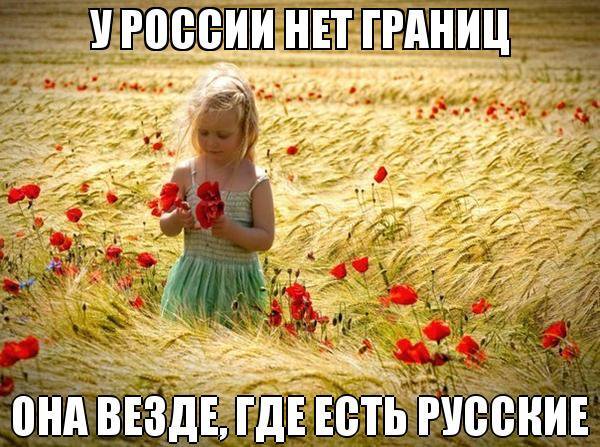
More tweets seen
The same goes for the hundreds of millions of pounds thrown away by government on Islamic and Jewish institutions and locations.
I too expected Starmer-Labour to crash and burn fairly quickly, and said so on the blog well prior to the 2024 General Election, as well as immediately following it.
Firstly, because only 4 out of 20 people voted Labour in 2024; secondly, because Labour’s “diversity”/pro-Israel/”austerity”/pro-immigration policies are all the exact opposite of what most people want; thirdly, the sheer rock-bottom quality of most Labour MPs and ministers. Lammy is only one of many such.
Starmer and his freeloading cabal are smug inside their fake “landslide” Commons majority. They think nothing can touch them for 4 years or more. That is what the “Conservative” Party MPs thought about their own situation not so long ago.
Apres— le deluge

A lot of that is because Starmer was a barrister from age 24 (having been to university for both a first degree and a post-graduate one): https://en.wikipedia.org/wiki/Keir_Starmer.
As a former barrister myself (later wrongfully and unlawfully disbarred for political reasons at the behest of the Jewish lobby), I was sometimes surprised at how naive many barristers are, especially those who (unlike me) had never done any other kind of work.
Even today, when the Bar is more “diverse” (and far less prestigious) than it used to be, it remains to some extent a cloistered bubble. Starmer spent his professional life in that bubble before swapping it for another bubble, the Westminster Bubble.
https://en.wikipedia.org/wiki/Keir_Starmer
Look at his reactions to the street protests. He immediately retreated into his comfort zone (he was DPP for several years) and started to threaten people with long sentences of imprisonment and (quite wrongly) “no bail pending trial and/or sentence”.
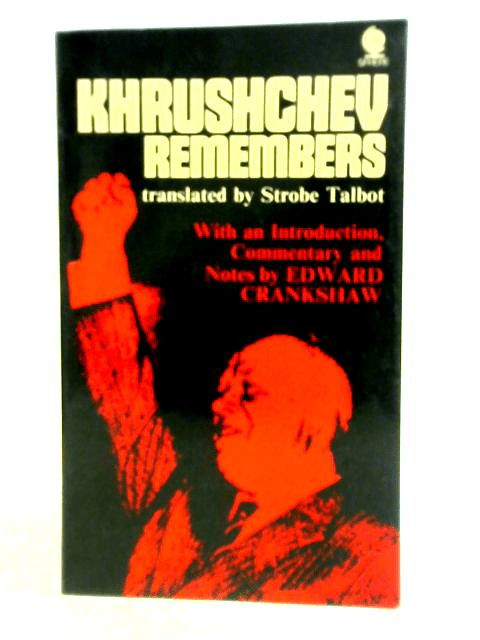
Even before GE 2024, I was warning about Starmer on the blog, noting Khrushchev’s view of Malenkov and about how to elevate the “file clerk type” to supreme power was always a mistake.
Starmer is isolated psychologically for a number of reasons. His professional Bar background. His years as DPP and, before that, as “human rights adviser” to the police and (I think, not sure) MI5 in Northern Ireland. His marriage to a part-Jewish woman, their children being brought up as if Jewish (despite being in fact only 1/4 Jewish), meaning that Starmer engages in all those Jewish ritual dinners and religious commemorations etc.
There is another point. Starmer has always had plenty of money, at least after his student days. He took letters patent as QC (now KC) at age 39. You are talking about an income, for much of his professional life, in the hundreds of thousands per year. Naturally, he finds it hard to understand or care about British pensioners trying to afford heating and other expenses.
I believe that I am correct in stating that Starmer and his wife also own a number (maybe 8) buy-to-let properties.
Starmer should never have become Prime Minister.
Another idiot who thinks that she is terribly clever. Another would-be dictator. Another member of Labour Friends of Israel…
In fact, Yvette Cooper was investigated by the police for fraud arising out of her expenses claims during the 2005-2010 Parliament, and was lucky to escape prosecution, along with her equally-moneygrasping husband, Ed Balls.
Yes. She held up a “refugees welcome” placard. She encouraged the migration-invasion of this country by blacks and browns (etc) from all the worst parts of the world.
I have blogged in the past about my own experiences: the UK police absolutely useless in doing what most people would regard as their headline job, but pathetically eager to do the bidding of the Jewish lobby in repressing free speech and freedom of expression by me and others.
Coudenhove-Kalergi Plan…
717 invaders landed yesterday, 707 the day before (etc). 1,424 in 48 hours. Each costs about £200 a day to shelter, feed, give pocket-money, provide services.
Ecce the “Lord Chancellor” and Secretary of State for Justice, Shabana Mahmood, a Pakistani woman whose entire pre-political legal career lasted 3 years, most of which time she spent as a “gopher” in a firm of solicitors…
Talking point
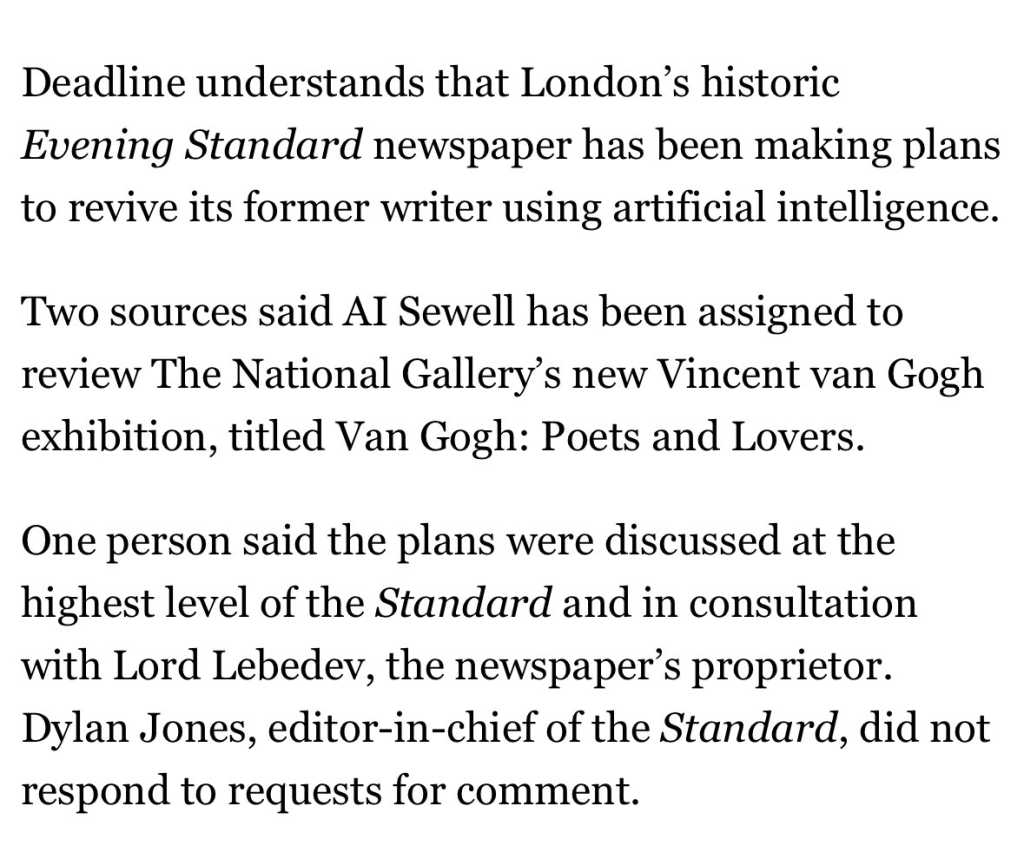
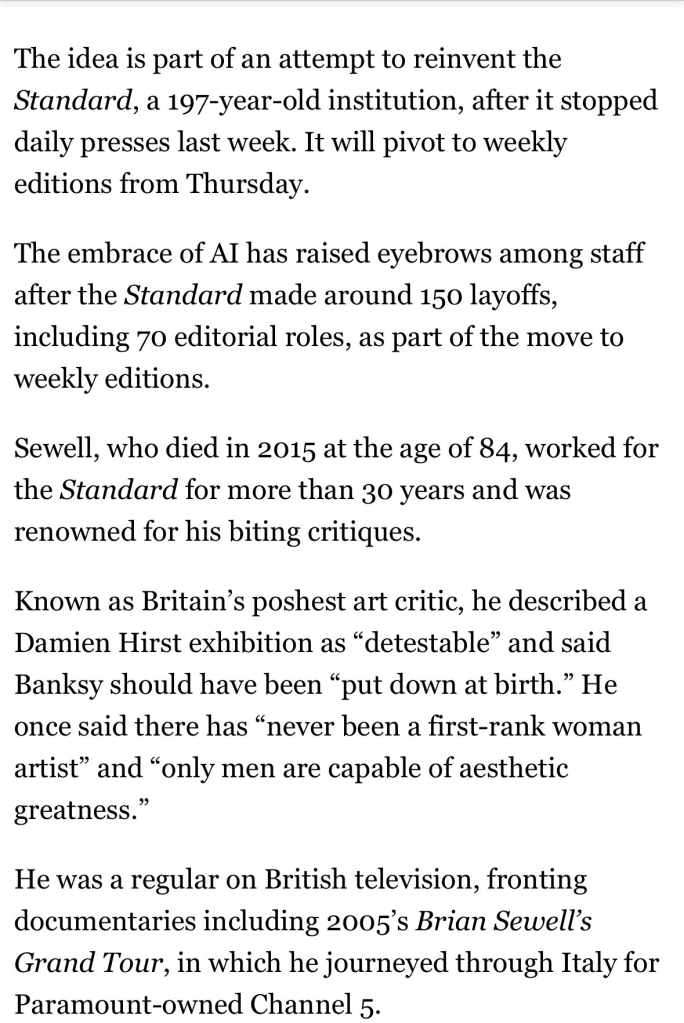
Brian Sewell was a “legend”, as people now say. Camp to the hilt, in the 1980s and 1990s he was nonetheless a kind of mascot for unlikely groups of people, especially in London, people such as taxi drivers and construction workers.
https://en.wikipedia.org/wiki/Brian_Sewell
More tweets
cf. the “holocaust” mythus…
His lies become ever more desperate as the Kiev-regime front lines crumble.
Late music

 Ian Robert Millard