Tag Archives: SIS

Diary Blog, 5 January 2020

Cambridge Analytica

What makes me laugh, if bitterly, is that so many msm characters still sort-of believe that we in the UK live in a “democracy”, even if flawed. If we are in a “democracy” at all (and it is of course a question of definition: see my brief historical analysis in Notes, below), then it is one where the democracy is little and mostly on the surface:

The release of documents began on New Year’s Day on an anonymous Twitter account, @HindsightFiles, with links to material on elections in Malaysia, Kenya and Brazil. The documents were revealed to have come from Brittany Kaiser, an ex-Cambridge Analytica employee turned whistleblower, and to be the same ones subpoenaed by Robert Mueller’s investigation into Russian interference in the 2016 presidential election.

Kaiser, who starred in the Oscar-shortlisted Netflix documentary The Great Hack, decided to go public after last month’s election in Britain. “It’s so abundantly clear our electoral systems are wide open to abuse,” she said. “I’m very fearful about what is going to happen in the US election later this year, and I think one of the few ways of protecting ourselves is to get as much information out there as possible.”

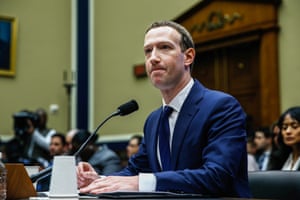
Facebook’s Mark Zuckerberg testifies to Congress after it was reported 87 million Facebook users had information harvested by Cambridge Analytica.
Pinterest
[Facebook’s Mark Zuckerberg testifies to Congress after it was reported 87 million Facebook users had information harvested by Cambridge Analytica. Photograph: Yasin Öztürk/Anadolu Agency/Getty Images]

The documents were retrieved from her email accounts and hard drives, and though she handed over some material to parliament in April 2018, she said there were thousands and thousands more pages which showed a “breadth and depth of the work” that went “way beyond what people think they know about ‘the Cambridge Analytica scandal’”.”

UK General Election 2019

The recent General Election was a prime example of the depths into which British “democracy” has fallen. The main three System parties were all headed and fronted by idiots:

  • Boris-idiot, who shows off his rote-learned ancient Greek and Latin, together with his collection of obscure words from the OED, when he wants to impress the plebs. A part-Jew public entertainer, useless at all previous jobs, sacked from most, whose previous bosses and colleagues concur in saying how useless, dishonest and unpleasant he is. Someone with no real ideas politically or ideologically;
  • Jeremy Corbyn: a long-term political self-caricature. At least he is anti-Zionist, but spoils even that by parrotting “holocaust” and “anti-fascist” nonsense, marking Jewish holidays etc. A personification of ideological cognitive dissonance, who was backed up by another idiot exhibiting similar traits, John McDonnell (who after the election result was interviewed in his garden, looking bemused and indeed like nothing more than a “grandad” who had been tipped out of his wheelchair and mugged). Corbyn’s political idea for the UK seemed to be a mixture of Labour policies 1945-1992, 1960s Cuba, 1980s Nicaragua, or the crazy Venezuela of more recent times, with a bit of (cartoon version) 1930s politics thrown in— “No Pasaran!” Spanish anti-Franco-ism, the Front Populaire, “the battle of Cable Street” etc. A joke;
  • Jo Swinson: doormat for the Jew-Zionists, who thought that she could be a Prime Minister when she was already hugely over-promoted as leader of the pathetic LibDem party, which seems to have no reason to exist anyway.

Ecce, your “democratic” choice!

Then we see that a fake pop-up “party” (Brexit Party), promoted by a con-man (Farage) siphoned off any radical nationalist votes, then unexpectedly withdrew all candidates facing Conservative Party candidates. A deliberate manipulation, probably a conspiracy. Possibly even procured by secret bribes, paid to Farage offshore. That is my honest belief, anyway.

And that is before we even consider the role played by the (basically, mainly) Jew-Zionist dominated Press, TV, radio etc. It has already been established by objective academic studies that Boris-idiot and his party were given a completely one-sided easy treatment as compared to Labour. (((They))) wanted Boris-idiot to win. He did.

Labour leadership contest

This is what our “democracy” has come to. You get someone who, like Jess Phillips, is basically uneducated, uncultured, a careerist and/or freeloader (see her MP expenses: eg she employs her husband as “Constituency Support Manager”, meaning house-husband, for which she claims £50,000 a year for his pay, plus this and that).

She does not fool many people though…

https://twitter.com/DavidRedEllis/status/1213780034554609664?s=20

https://ianrmillard.wordpress.com/2019/05/07/deadhead-mps-an-occasional-series-the-jess-phillips-story/

The selection procedures of the System parties are pathetic. Most people with any real background are filtered out if they have their own views. The ones who get in are those who, like Jess Phillips, cobble together a CV from bits and pieces, and know people. Again, look at Iain Dunce Duncan Smith and his fraudulent CV. Or women like Liz Tr[redacted] and Lucia[redacted], who can be said to have become MPs “on their backs” (if that is the accurate phrase). Then once installed, those MPs are exceptionally hard to remove, particularly if they know the right people in their local party organization.

Boris-Who? Boris-How? Boris-Where?

People are asking “where is Boris, at this time of huge tension in the Middle East?” Well, the straight answer is that he is in a £20,000 a week villa on Mustique, but the answer to the implied question is another question: who cares where the idiot is?

The people who think that Boris should be in Whitehall, leading Britain’s response to the US and Iran, are those who think that Britain is still some kind of huge international player militarily. In reality, not so. We hear a lot about how Britain “punches above its weight” because of its commercial and financial hub position, because of its (supposed) intelligence and security expertise, because of its proficient armed services, even because of the English language!

There is some truth, of course, in all of those, but to say that Britain is a huge player militarily or geopolitically is mainly wishful thinking. It is the same or similar self-delusion that leads people (often misled by scribblers making money out of it) to think that National Socialist Germany was defeated mainly by clever little people in Whitehall back-rooms thinking up terribly clever “deception” operations, running “resistance” networks in occupied Europe etc.

Well, these activities did have some peripheral effect or effects (the ones that worked at all; a notable amateur duffer was the later James Bond scribbler, Ian Fleming), but of course those operations (The Man Who Never Was, the Double-Cross System, and virtually anything attempted by the ludicrous Special Operations Executive) were, or were supposed to be, subordinated to actual military operations.

The Reich was defeated, of course, not by terribly precious people in Whitehall, White’s Club, or the Ritz bar, thinking up deception operations and directing small numbers of sociopaths (in the Maquis, the “Resistance” etc), stabbing lone Germans in the back, or blowing up cafes, but by the millions of Red Army soldiers on the Eastern Front, gradually advancing with their tanks, horses, field guns and terror, by the huge American armies, navy, air force and, though hidden, atom bombs, and by the similar millions of British and Empire soldiers, sailors and airmen, fighting on all fronts.

Britain today is not really very powerful. I regret that, but it does not help to pretend that Britain is almost a superpower. One is reminded of the speech given to the assembled Con Party Conference at 25 years ago by Michael Portillo (he is better as a TV train buff; I enjoy his shows). In fact, part of that speech was good, but he made a fool of himself by pressing into service the name of the Special Air Service:

The thing is that, yes, elite units like the SAS are superb tools of the State, but —as General Schwarzkopf said in the 1990s Gulf War— “special forces do not win wars”. They are strategic tools, to be used in “special” strategic situations, and are not much good —and indeed wasted— in ordinary battles or large scale advances.

The fact is that Boris-idiot, as notional chief of the UK, is not really a player, unless the USA wants Britain to be seen to be there as “ally”, rather than USA seen to be acting unilaterally, which of course is the reality (with Israel hiding behind the curtain).

The events of the world, whether in Iran, Iraq or elsewhere, are happening regardless of what Boris-idiot says or does. Anyway, Britain only has about 70,000 in its Army, and of those only about 50,000 are even deployable. Many are simply not fit for duty, let alone action.

The fact is that Britain is a spectator for the most part. I suppose that the British nuclear forces (on submarines) are the exception to that. It would be an extraordinary misuse of them to utilize them to attack Iran, though, in support of Trump’s adventurism and Israel’s hidden agenda.

Trump and Iran

Trump has managed to do what generations of peacemakers failed to do— unite the Iranians and Iraqis! I suppose, to be fair, Teheran’s influence over Baghdad has been growing for many years anyway.

Looking at the wider picture, in the 1970s, 1980s, Israel was menaced by anti-Israel states all around. Iran, Syria, Iraq, Jordan, UAE, Saudi Arabia, Lebanon, Egypt and other North African states, Libya in particular. Now look! Syria, Iraq both devastated, Egypt under “control”, Libya on its knees and engaged in internecine conflict, Lebanon flooded with refugees from Syria, and the Gulf Arabs almost lining up to say nice things to Israel.

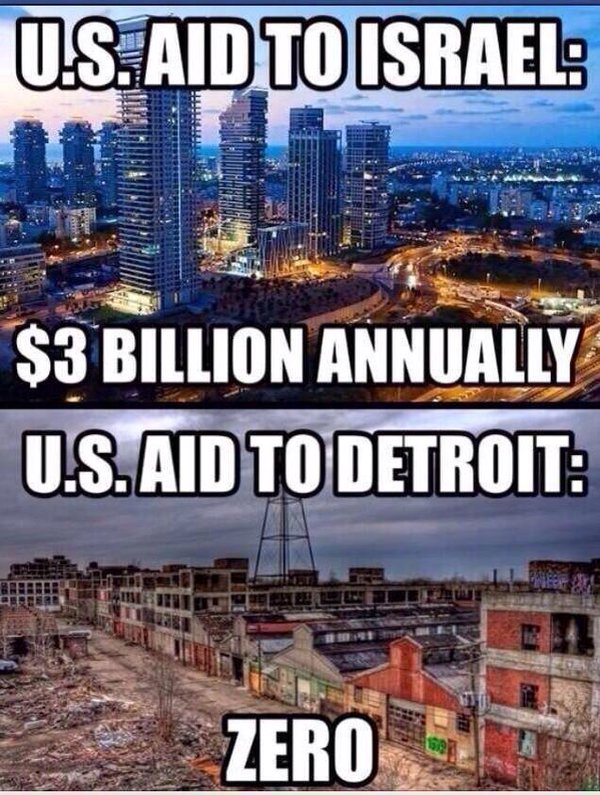
These changes did not come about by accident. Now Iran is in the gunsights of the Israelis and, more importantly, their “tail wags dog” “ally”, the United States, which subsidizes Israel, gives or sells it weapons, supports everything that Israel does or wants, yet tells its own people that the USA needs Israel, when the reality is of course the reverse!

CbV4Fu-XIAAG2mu

2300 hrs

It seems that Iran has offered USD $80M for the head of Donald Trump. About $79,999,099 more than it is worth! Tempting though…Sadly, it is about 42 years since I last fired a long-distance rifle (and if one were to enter the lists, it would be nice to have the chance to spend the bounty…).

Alison Chabloz, the persecuted singer-songwriter, is in court on Friday 10 January 2020, her appeal hearing against a relatively brief prison sentence imposed for “breach of condition” within another sentence. Good luck to her!

https://twitter.com/jarurik/status/1213567875157385216?s=20

Notes

https://ianrmillard.wordpress.com/2019/01/15/has-parliamentary-democracy-as-we-have-known-it-until-now-had-its-day-in-the-uk/

https://en.wikipedia.org/wiki/Christopher_Steele

https://uk.linkedin.com/in/chris-burrows-66106a90

https://ianrmillard.wordpress.com/2019/05/07/deadhead-mps-an-occasional-series-the-jess-phillips-story/


What Can Be Done To Create A Social-National Movement in the UK?

I was just reading a few appreciations of Paddy Ashdown, the one-time LibDem leader, who recently died. I tend to adhere to the saying de mortuis nihil nisi bonum, but when it comes to political people, kindness must sometimes give way to clarity.

In fact, I rather liked Paddy Ashdown, at least in parts (not that I ever actually met him). I certainly feel more respect for him than I ever could feel for the idiots who preceded and followed him (Thorpe, Steel, Kennedy, Campbell, Clegg etc, though I do have time for Jo Grimond, whose interesting and erudite memoirs I reviewed on Amazon years ago; Grimond was by far the best of the Liberal/LibDem leaders, to my mind).

I feel that Ashdown was a great deal more honest than most System politicians, for one thing. Also, he was an idealist, and someone willing to put a mission above his (and his family’s) comfort: not many men in their mid-thirties would leave a comfortable and perhaps promising SIS/FCO career to get involved in the hurly-burly of UK politics, particularly for something as marginal as the then Liberal Party (at the time it had only 13 Commons seats, despite having garnered nearly 20% of the popular vote in both of the two 1974 General Elections). Ashdown gave up a pleasant diplomatic/intelligence near-sinecure based in Switzerland to take ordinary jobs in the Yeovil (Somerset) area while pursuing his political mission. When his employer folded, nearly a decade later, Ashdown applied unsuccessfully for 150 jobs. When elected MP for Yeovil in 1983, he had been unemployed for 2 years and was doing unpaid volunteer work as part of a programme for the long-term unemployed.

Not that I agreed with much of Ashdown’s policy-set: Ashdown was a politician for an England which was disappearing even in the 1970s. He seems to have been sanguine about mass immigration, for one thing. I doubt that he was ever anti-Zionist in any sense (certainly not my sense). Ashdown was no intellectual and not (to my mind) a policy person. Neither was Ashdown intellectually honest in a way that might match what I still perceive to be his personal integrity (leaving aside the “Paddy Pantsdown” episode). Certainly, amid the pathetic rabble called the LibDems, Ashdown could hardly fail to be seen as a star, just as the young Bill Clinton, with his Georgetown, Oxford and Yale academic background, could not fail to shine in the intellectual backwater that is Arkansas.

Yes, much can be laughed at in Ashdown, not least his absurd sense of his own importance and weight, as when he was or tried to be (using my own parody-title for him) “the Lord High Panjandrum of the Balkans and Afghanistan”, but without at least some elevated sense of self-worth, Ashdown would never have tried to be a political leader in the first place, I suppose.

So why am I talking about Ashdown, when this blog piece is supposed to be about the creation of a social-national movement?

What caught my attention about Ashdown as politician was that he only got elected as MP in 1983, after about 8-9 years of trying; also, once he was an MP, it only took him 5 years to become the leader of his party (admittedly tiny in terms of MP numbers).

One of the precepts of the American “self-help” guru Anthony Robbins is that “most people overestimate what they can accomplish in a year and underestimate what they can achieve in ten years.” That is very true. Examples are all around in history.

Famously, Hitler joined the NSDAP as “Member no.7” in 1919. A year later, it was still of little importance even in its home city, Munich. By 1923 Hitler had attempted the Beer Hall Putsch, which went down in shambolic ignominy; by 1928, 9 years after its foundation, the NSDAP could still only raise a national vote of 2.6%. However, Hitler had built a party and beyond that, a whole volkisch movement. It only needed the right conditions in which to flourish. The Depression provided that, together with the widespread feeling against the Jewish exploitation of the German people: by 1930, the NSDAP had a vote of 18%, by 1932 of 33%, and by 1933 of nearly 44%.

Lenin’s serious revolutionary political activity could be said to have begun with the establishment of Iskra [The Spark] in 1900. Though by 1910, Lenin was still politically marginal, he was considered to be one of the leaders of the Marxist tendency, at least. However, both Bolsheviki and Mensheviki together numbered only 8,400 by 1910 (perhaps 75% of whom were under 30 years of age). Once again, though, the important point is that a party, albeit split, existed and, once the disastrous Russian participation in the European war of 1914 onward had destroyed the strength of the Tsarist government and society, that party could take over the existing uprising in 1917 and perform a coup d’etat later the same year.

Other examples? How about “Solidarity” in Poland? Founded by a small number of workers in Gdansk (former Danzig) in 1980, by 1989 it was the governing party in Poland.

UKIP was formed in 1993 and had become an organized though marginal party by 2003. UKIP never did break through. It peaked in 2014 and deflated from 2015. What stopped UKIP from taking power was not only the UK’s totally unfair First Past the Post electoral system (though that did not help). What stopped UKIP was, first, that it was and (to the extent that it still exists) is not a revolutionary, nor even radical, party/movement; also, there has been no truly “triggering” event comparable to the First World War, the Great Depression etc in the UK of the late 20th/early 21st centuries.

Even if the future for the UK and Europe is a kind of multifaceted civil war, a political party or movement must exist. It is the sine qua non. In a year, it would achieve nothing, but in ten years it could achieve everything.

Notes

https://en.wikipedia.org/wiki/Paddy_Ashdown

https://en.wikipedia.org/wiki/Jo_Grimond

https://en.wikipedia.org/wiki/De_mortuis_nil_nisi_bonum

https://www.theguardian.com/politics/2016/sep/16/paddy-ashdown-i-turned-to-my-wife-and-said-its-not-our-country-any-more

https://en.wikipedia.org/wiki/Beer_Hall_Putsch

https://en.wikipedia.org/wiki/Nazi_Party#German_Reichstag

https://www.amazon.co.uk/Jo-Grimond-Memoirs/dp/B0015L8O0G

https://en.wikipedia.org/wiki/Vladimir_Lenin

https://en.wikipedia.org/wiki/Solidarity_(Polish_trade_union)

https://en.wikipedia.org/wiki/Vladimir_Lenin#Revolutionary_activity

Further Thoughts, 28 December 2018

As to practical steps, I have blogged before about these:

  • Focus on one, two, or a very few areas of the UK at first;
  • Establishment of safe zone(s) which can develop into a germinal ethnostate;
  • “Tithing” as a way of building up operational funds.