Tag Archives: social nationalism

A Look at Some UK Political and Social Realities

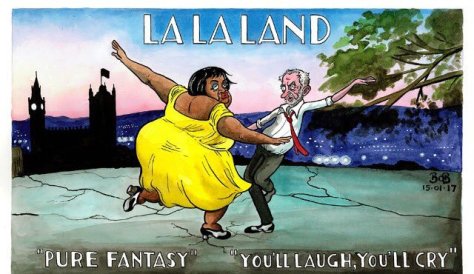
Illusion is something that many prefer to reality, as this cartoon indicates:

CeZuS7OUsAEF2Lj

They want not only their daily bread but also their daily illusion.” [Adolf Hitler, talking about many Germans during the decadent Weimar Republic of 1918-1933]

The Green Party

This blog article was prompted by a tweet that I happened to see, tweeted by one Jonathan Bartley, the “co-leader” of the Green Party.

The Green Party is so large and important now that it has to have not one but two “co-leaders”. Well, jesting aside, there must be some other reason (almost certainly something very very silly) that necessitates two leaders, the other “co-leader” being one Sian Berry.

Bartley seems to have come from an affluent background. He graduated from the LSE aged 23, thereafter floating around Westminster as researcher etc until he founded the think-tank, Ekklesia. He does not seem to have done (or have needed to do) any other work of much substance between the founding of Ekklesia in 2002 and being elected as Green Party co-leader in 2016.

Deputy Leader is 34-year-old Amelia Womack, who was elected to her party position aged 29, having never been elected to any public position (not even as local councillor); neither has she ever had a paid job of any kind, it seems. She is a candidate in the upcoming Newport West by-election:

see https://ianrmillard.wordpress.com/2019/02/28/the-newport-west-by-election/

Now the facts are (i.e. the reality is) that the Green Party of England and Wales, founded 1990, has 1 MP (out of 650), 1 member of the House of Lords (out of 781), 3 MEPs (out of 64 English/Welsh seats), 2 London Assembly members (out of 25), and 178 local councillors (out of 19,023).

The Green Party is polling at somewhere around 5% nationally (it has been as low as 2% in recent years), and only has its one MP by reason of the unusual demographics and the (in 2010, when Caroline Lucas was first elected) 4-way voting split in the constituency of Brighton Pavilion:

https://en.wikipedia.org/wiki/Brighton_Pavilion_(UK_Parliament_constituency)#Elections_in_the_2010s

In other words, the Green Party is like a tame rat on a wheel. Lots of activity and noise, but nothing really achieved. It’s not that I am opposed to all Green Party policies. I like some of its environmental policies, its support for Basic Income, its concern for animal welfare etc. There has, after all, always been connection between what are now called “green” ideals and social-nationalism. I have even blogged about it:

https://ianrmillard.wordpress.com/2016/11/17/social-nationalism-and-green-politics/

Where I cannot accompany the Green Party is in its apparent belief that open borders are good, mass immigration of inferior peoples into Europe is good, or that the EU is mostly very good for the UK.

ClVU6MSWgAAmfK6

I agree with the Greens when they say that FPTP voting is unfair on them (as on, in the past, UKIP, the BNP and the National Front, among others). Even 5% of votes should give the Greens around 30 MPs, whereas they may soon struggle to retain their one (though Caroline Lucas is a known TV face and probably will stay for a while). However, to say that UK political life is unfair is really just a pathetic bleat even if true (which it is).

At some point, reality will have to dawn on the Green Party members (surprisingly, nearly 40,000 of them). Or maybe not. I think that many Green Party members probably like their nursery politics game, which they must know in their hearts can never lead to serious results; but it makes them feel good and virtuous.

The Green Party is not about to get MPs elected or sweep the country in any way. The Green Party will simply continue as it is, a virtue-signalling pressure group pretending to be a political party. However, relatively few British people will vote for a party that supports both mass immigration and UK membership of the EU; neither will voters give credence to a party which has no one clear leader and which seems to be a refuge (even in its top-most ranks) for perpetual students and/or virtue-signalling and hugely self-deluded persons.

The Nationalist Milieu

It is often said that the plethora of food programmes on TV are a kind of “food porn” for people who rarely if ever cook. Well, the so-called “far right” (I myself never use terms such as “Left”, “Right” etc) or nationalist political tendency is rather like that: the Zionists, their “useful idiot” “antifa” offshoots, the msm too, and of course the System apparatchiki such as police, all like to say that there is a huge “danger” from “far right extremism” etc. If only! In reality, what exists at present is a mixture of hobby politics, “I’m the leader!” (of 2.5 people) parties, and politically-tinged 1970s football hooligan groups, together with System politics under nationalist camouflage (as with UKIP).

People of my vintage (b.1956), will recall (the now notorious) Gary Glitter singing “I’m the leader!” in 1973, a psychology characteristic of both “I’m the Leader!” parties and, usually, “hobby parties” (though every successful political party has to have a credible leader).

The English Democrats

I am starting with the English Democrats because they seem to me to epitomize the “hobby politics” sort of party. They claim(ed) to have over 2,000 members (2015), though I daresay that even that was a gross overestimation. I personally only ever heard of one member by name (my mother-in-law’s former neighbour), and he was a very strange man, a retired pilot aged about 70 (c.80, now). I would not be surprised if that man were fairly typical of the English Democrats’ members.

The English Democrats were founded in 2002. Their best electoral result was in the Mayoral race at Doncaster in 2009, which they won. They would also have won in 2013, had the Mayor not resigned from the English Democrats not long before the election. He still stood but as Independent and lost to Labour by only 590 votes, the EDs having put up their own candidate, who received 4,615 votes.

Police and Crime Commissioner elections have been their second best (highest vote-share just over 15%). In local elections, they have reached over 10% here and there, with their leader, Robin Tilbrook, receiving 18.2% of the vote in an election for the Epping Forest District Council. In Westminster elections, all results have been below —far below— 1% (in 2017, about a tenth of 1% in each of the seven seats contested).

The English Democrats have few policies, and those so bland that they could be espoused by several other parties, including System ones. Even the “English Parliament” idea has been mooted by System MPs occasionally.

“[Robin Tilbrook’s] party agitates for anyone living in England. His notion of Englishness is akin to American notions of “Americanness” – that you can be from any ethnic background and still wrap yourself in the flag.” [from an American newspaper interview]. So someone straight off the boat from God knows where is “English”, so long as living in England, according to that idiot! Even his professed “Euroscepticism” is very muted (and is based on the disproportionate amount of EU funding going to non-English parts of the UK).

The English Democrats are the “hobby politics” party par excellence. Mr. Tilbrook will never be blacklisted by the msm, nor targeted seriously by “antifa” or the Jewish lobby. He will never be interrogated by the police. He has in fact been invited onto TV occasionally and given a polite hearing, e.g. on BBC Daily Politics. He is even a Freeman of the City of London (awarded 2011)! Members of the EDs can write letters to the Daily Telegraph and talk at the bar of their golf clubs without let or hindrance. A waste of time worthy of P.G. Wodehouse.

For Britain Movement

I have blogged about “For Britain” previously. This party, though partly on the right track in terms of policy, is basically a one-trick pony. “You can have any colour so long as it is black!” [Henry Ford, re. the Model T car]; with “For Britain”, you can have any policy so long as it is anti-Islamism. Not that I oppose that view, but it is not enough.

For Britain is not exactly a “hobby politics” party, but it is really just a one-man or one-woman band, closely aligned with the policy-free beer-bottle throwers of the English Defence League and their one-time leader, the person usually known as Tommy Robinson.

The leader of For Britain, Irish lesbian former secretary Anne-Marie Waters (“Maria” originally), certainly has some followers, and For Britain has some members, as witness the local election campaign poster linked below, but how many is unclear. Probably fewer than 100. Quite possibly only about 50.

https://gab.com/forBritainMovement/posts/cmZhcTB0NWp1VnlVdlF1SUhEdE4yUT09

The party fielded fifteen candidates in the 2018 local elections, none being elected.[11] The party came last in almost all the seats it contested.[12] In June 2018, the party expelled one of its local election candidates after Hope Not Hate linked him to the proscribed neo-Nazi group National Action and the white nationalist group Generation Identity

[Wikipedia]

So “For Britain” (which says, pathetically, to the Jew-Zionist lobby, “look, we’re pro-Israel!” in the forlorn hope that the Jews will not hate it), sacked someone at least active enough to get up from his chair and stand as a candidate, simply because the unpleasant “Hope Not Hate” crowd fingered him!

As for Anne-Marie Waters, she herself stood in the Lewisham East by-election of 2018, receiving 266 votes (1.2% of votes cast; 7th place, behind Labour, LibDem, Con, Green, Women’s Equality and UKIP, but just ahead of Christian People, Monster Raving Loony, and 5 other minor candidates). “For Britain” is no good even as a protest vote in a by-election!

Sometimes, I wonder whether this or that group, party or movement or “leader” is not a put-up-job by the enemy, but in reality the likelihood is that these people are just deluded, indulging in near-pointless political activity. Having said that, it suits “Hope Not Hate” and the other manipulators of “antifa” idiots to have something to point at and say, “Look! Nazis/neo-Nazis/Fascists!” (etc).

Who, who would join something as one-dimensional, as limited, as “For Britain”? God knows. Not many have joined, anyway.

UKIP

Well, here we are at last out of the “hobby politics” and “I’m the Leader” areas, though plenty of UKIP members are hobby politicos. UKIP, though, is the real thing: a functioning political party, conservative-nationalist, and which at one time had two or three MPs (albeit temporary cast-offs), still has 7 MEPs (out of a possible 73), as well as 1 member of the House of Lords, 3 Welsh Assembly members (out of a possible 60) and 101 local councillors (out of a possible 20,712).

UKIP might have broken through to a measure of power in 2015 but did not, and now never will. It peaked in 2014. A succession of poor leaders (the present one is slightly better than those that followed Farage) crippled already-failing UKIP, whose membership, at one time reaching 50,000, is now somewhere below 23,000. UKIP has always been semi-tolerated by the System (inc. the Jew-Zionist lobby) and has now gone over to a basically one-trick-pony policy position which is not far from the offerings of Tommy Robinson, Anne-Marie Waters and the whole effectively pro-Jew and pro-Israel “alt-Right”/”alt-Lite” crowd (the British ones of prominence have in fact recently joined UKIP: “Prison Planet” Watson, “Count Dankula” Meechan, “Sargon of Akkad” Benjamin. All wastes of space).

To join or support UKIP now, except perhaps as a way of protesting pointlessly in an election, is just silly. It could not get one MP in 27 years (leaving aside the Conservative few who defected briefly), not even in 2015 when it was voted for by 1 out of every 8 voters! The voting system is rigged and flawed, and that suits the System parties very well.

UKIP’s vote in 2015 (nearly 4 million votes) fell to less than a seventh of that in 2017.

UKIP too is in the realm of political unreality, at least as far as elections are concerned.

How to go toward a realistic political viewpoint

The short to medium term future is uncertain and likely to bring revolutionary change to the world. I recently blogged about this:

https://ianrmillard.wordpress.com/2019/01/26/the-tide-is-coming-in-reflections-on-the-possible-end-of-our-present-civilization-and-what-might-follow/

As far as UK politics is concerned, it is clear that the major urban areas are no-go zones for nationalist parties, at least in respect of getting MPs elected. They can only be viewed as recruitment pools at present.

https://ianrmillard.wordpress.com/2019/02/04/white-flight-in-a-small-country/

https://ianrmillard.wordpress.com/2018/12/27/what-can-be-done-to-create-a-social-national-movement-in-the-uk/

To pretend that a movement or party can be founded, then play the game of System politics, is otiose. UKIP tried that —and was semi-System anyway— yet failed utterly in any attempt to gain power (though I concede that UKIP did obliquely achieve the holding of and result of the 2016 EU Referendum, which result however is now being cynically betrayed by cosmopolitan conspirators such as the Jew Letwin and the virtue-signalling hypocrite Yvette Cooper… even as I write).

https://ianrmillard.wordpress.com/2019/01/15/has-parliamentary-democracy-as-we-have-known-it-until-now-had-its-day-in-the-uk/

The fast-breeding ethnic minorities, including mixed-race elements, are collectively only a few decades away from becoming the majority in the UK. In some cities and towns, they are already the majority. That fact alone makes ordinary democratic politics a no-win situation for social-nationalism.

A social-national movement must be built from the ground up, and on a basis of reality, even if that reality looks, at present, like the sheerest fantasy.

Notes

https://www.greenparty.org.uk/people/deputy-leader-amelia-womack.html

https://en.wikipedia.org/wiki/Amelia_Womack

https://ianrmillard.wordpress.com/2019/02/28/the-newport-west-by-election/

https://en.wikipedia.org/wiki/Green_Party_of_England_and_Wales

https://en.wikipedia.org/wiki/Ekklesia_(think_tank)

https://ianrmillard.wordpress.com/2019/02/28/the-newport-west-by-election/

https://en.wikipedia.org/wiki/Brighton_Pavilion_(UK_Parliament_constituency)#Elections_in_the_2010s

https://ianrmillard.wordpress.com/2016/11/17/social-nationalism-and-green-politics/

https://en.wikipedia.org/wiki/English_Democrats

https://en.wikipedia.org/wiki/Robin_Tilbrook

https://en.wikipedia.org/wiki/Mayor_of_Doncaster#2013

https://en.wikipedia.org/wiki/For_Britain_Movement

https://www.hopenothate.org.uk/2018/09/19/britain-magnet-racists-nazis/

https://en.wikipedia.org/wiki/Lewisham_East_(UK_Parliament_constituency)#Elections_in_the_2010s

https://ianrmillard.wordpress.com/2019/03/06/what-about-the-ukip-revival/

https://ianrmillard.wordpress.com/2019/01/15/has-parliamentary-democracy-as-we-have-known-it-until-now-had-its-day-in-the-uk/

https://www.bbc.co.uk/news/uk-england-kent-39257452

https://www.newstatesman.com/politics/2014/05/whatever-happened-english-democrats

Update, 5 April 2019

Foolish people are now saying that the result of the Newport by-election (held yesterday, 4 April 2019) was a “very good result” for UKIP

In fact, UKIP came third, exactly where it was in the previous two general election contests at Newport West, and while its 8.6% of votes looks good vis-a-vis 2017 (2.5%), UKIP got 15.2% in 2015:

https://en.wikipedia.org/wiki/Newport_West_(UK_Parliament_constituency)#Elections_in_the_2010s

This was just a by-election protest vote and a pretty muted one.

The Greens came 6th, with 924 votes (3.9%).

As for “For Britain Movement”, its candidate came last out of the 11 candidates, getting 159 votes (0.7%). This party is wasting the time of its few members.

Update, 9 April 2019

The EDs are claiming that the UK is already out of the EU and have launched a judicial review application to “prove” the same. Rarely has wish so directly confronted political reality.

https://twitter.com/endtimes23/status/1115235740743548928

Update, 12 April 2019; a few thoughts about the near-future EU and local elections

The Brexit mess, so spectacularly mishandled by Theresa May and the idiotic careerists around her, may save UKIP from immediate collapse as a party, inasmuch as many British voters will want to punish the Conservative Party one way or the other. There may be a “perfect storm” for the Conservative Party, pressured on two fronts by both the Leave and Remain sides.

There will soon be elections for the European Parliament, on 23 May 2019. Recent opinion polling seems to be saying that Labour will have a landslide: initial voting intentions show Labour on 37.8% (up from 24.4% in 2016); Conservatives at 23.1% (unchanged), Brexit Party (Nigel Farage’s new party) 10%, LibDem 8%, UKIP 7.5%, Change UK (the recent Lab/Con defector MPs’ vehicle) around 4%, among others.

One has to be cautious in assuming that the above opinion poll reflects the likely outcome. The same poll seems to indicate that, after discussion, many pro-EU voters prefer Change UK (which would hit Labour and LibDem levels), while anti-EU voters may prefer either UKIP or Brexit Party.

https://en.wikipedia.org/wiki/2019_European_Parliament_election_in_the_United_Kingdom

https://www.express.co.uk/news/politics/1112942/european-elections-voting-intentions-uk-conservative-labour-brexit-party

Before the EU elections (in which the UK may not participate at all if the UK leaves the UK before 23 May), there will be local elections, on 2 May 2019. The indications are that, in those elections, Labour may also sweep the poll, with Labour benefiting not only from the “pendulum” or “see-saw” effect of elections in a system using FPTP voting, but also from abstentions by usual Con voters (or by their voting for Brexit Party or UKIP).

As far as the local elections are concerned, Labour starts the campaign with several advantages. The decade of spending cuts has finally impacted even the most true-blue Conservative areas. Labour has a army of local activists, thanks to its membership surge under Corbyn. It also has funds from the same source.

The Conservatives have few local activists now and most are beyond retirement age. The party looks tired. The Brexit mess can only be laid at the door of Theresa May and her Cabinet. The Cons will be lucky to avoid a wipeout in the areas voting on 2 May.

https://www.theguardian.com/politics/2019/apr/11/conservative-mps-may-boycott-european-election-campaign

There are also strategic factors. The Conservative Party claims 124,000 members, which seems high (average 200 members per constituency). Most are elderly. Few are active. The median age for Conservative voters has also risen, to 52. Recent polling has shown that only 16% of voters under 35 support the Cons, and only 4% of those under 25 do so.

Returning to UKIP etc, the Brexit Party will obviously have the effect of splitting the Leave/Brexit hard core.

Update, 17 April 2019

The “For Britain” “Movement” (can 50 people be a “movement”?) has posted on GAB that they are not “far right” (whatever that means) and in some ways are no more “extreme” than Margaret Thatcher and not even really “socially conservative”. Oh dear…pretty pathetic.

https://gab.com/forBritainMovement/posts/NUk1Q1haVXY3RVRCcFV2ZzZPbTR4UT09

I don’t know why I am even wasting 10 minutes of my ever-shorter lifespan examining this fake “movement” with its 50 members, especially after its recent (latest) electoral debacle at the Newport West by-election (last-placed out of 11 candidates; 159 votes, which represented 0.7% of votes cast).

https://en.wikipedia.org/wiki/2019_Newport_West_by-election#Result

Still, it confirms what I wrote in the original blog post, I suppose…

Update, 10 May 2019

Harold Wilson was right: “a week is a long time in British politics”. In the five weeks since the above article was written, at least two matters of importance have occurred

  • the local elections trashed the Conservatives (who lost over 1,300 seats), but Labour more or less stood still (losing 82 councillors), which was interpreted as failure by many;
  • Brexit Party burst into life and now has 100,000 members (by any other name).

Our Time is Coming. When it Arrives, Watch Out!

Preamble

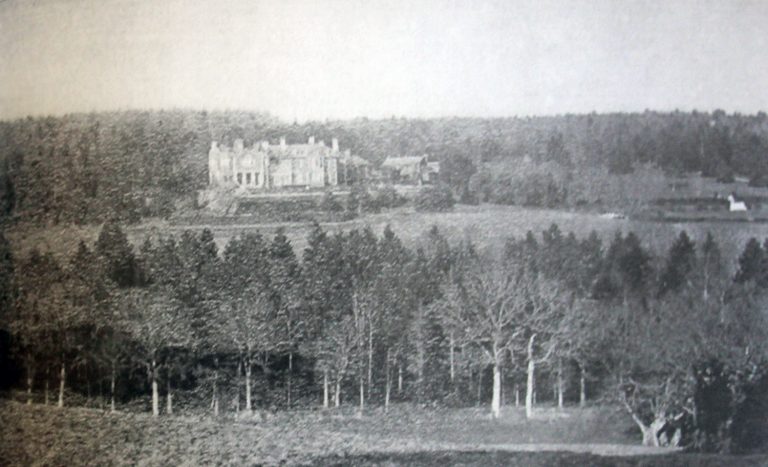
Once again, I am deflected from my slow and peaceful writing of a piece about my several years in Cornwall and Devon, and particularly those spent at Polapit Tamar [below, pictured in the 1940s], and which has an interesting history of its own,

Polapit-Tamar-in-the-1940s.-768x467

by the need to write about contemporary political events. Still, duty calls…

Social Nationalism is stalled in the UK, but waking from a dormant state…

In other blog posts, I have criticized Corbyn-Labour-supporting Aaron Bastani, Ash Sarkar etc, but Bastani is surely right in tweeting that “The space for a successful far-right party in the UK is massive.” The label “far-right” I disparage, of course, but in essence I agree with him. The difference is that he opposes the birth of such a movement, whereas I support it!

I have recently blogged about the “Independent Group” non-party, about how it will struggle even to get to a 2015-UKIP level of support (see Notes, below), both for “technical” reasons (FPTP voting, a likely even level of support nationwide, so insufficient to create a winning concentration of votes, a Schwerpunkt, in any one constituency etc) and because the voters are moving to the falsely so-called “extreme”. I examined also the Social Democrat Party of the early 1980s.

There is however also the point that Bastani raises in the tweet shown above (does he read my blog?): the fact that people generally are getting frustrated, and many angry, very angry, with smug, “centrist” MPs and MEPs complacently making hay for themselves as people struggle and, in not a few cases, literally starve to death in the UK (thanks to policies such as the “welfare” “reforms” which were imposed by political rats such as Iain Dunce Duncan Smith, Esther McVey, the Jew “lord” Freud and many others).

The roads are potholed, the trains are expensive and don’t even run much of the time, mass immigration has, taking the effect overall, trashed our European society, legal services, local services etc have been cut or destroyed, housing has not only become completely inadequate (mass immigration, millions of births to backward aliens, private profiteering) but threatens to become even less adequate.

The British people want and increasingly will want concrete results. The Westminster game of using the corrupt electoral system to win over the “moderate” voters in the 50-100 most marginal constituencies to a “same-old” pseudo-democratic con-game is seen as the rigged system that it is.

A few years down the line, the choice will be stark: European civilization and social nationalism against “multikulti” neo or pseudo-Marxism and also against Zionist-controlled private profiteering and fake “conservatism”.

When the right time comes, our society will be changed in the right way, keeping what should be preserved, creating what is new and worthwhile, but destroying the inferior with the flame of justice.

I am excited!

Notes

https://ianrmillard.wordpress.com/2019/02/19/the-independent-group-of-mps/

https://ianrmillard.wordpress.com/2019/02/20/three-blind-mice-see-how-they-run-conservative-party-mps-defect-to-the-independent-group/

https://ianrmillard.wordpress.com/2019/02/18/cabal-of-7-zionist-mps-leave-the-labour-party-good-riddance/

c64bh5xw0aiwygy

What Can Be Done To Create A Social-National Movement in the UK?

I was just reading a few appreciations of Paddy Ashdown, the one-time LibDem leader, who recently died. I tend to adhere to the saying de mortuis nihil nisi bonum, but when it comes to political people, kindness must sometimes give way to clarity.

In fact, I rather liked Paddy Ashdown, at least in parts (not that I ever actually met him). I certainly feel more respect for him than I ever could feel for the idiots who preceded and followed him (Thorpe, Steel, Kennedy, Campbell, Clegg etc, though I do have time for Jo Grimond, whose interesting and erudite memoirs I reviewed on Amazon years ago; Grimond was by far the best of the Liberal/LibDem leaders, to my mind).

I feel that Ashdown was a great deal more honest than most System politicians, for one thing. Also, he was an idealist, and someone willing to put a mission above his (and his family’s) comfort: not many men in their mid-thirties would leave a comfortable and perhaps promising SIS/FCO career to get involved in the hurly-burly of UK politics, particularly for something as marginal as the then Liberal Party (at the time it had only 13 Commons seats, despite having garnered nearly 20% of the popular vote in both of the two 1974 General Elections). Ashdown gave up a pleasant diplomatic/intelligence near-sinecure based in Switzerland to take ordinary jobs in the Yeovil (Somerset) area while pursuing his political mission. When his employer folded, nearly a decade later, Ashdown applied unsuccessfully for 150 jobs. When elected MP for Yeovil in 1983, he had been unemployed for 2 years and was doing unpaid volunteer work as part of a programme for the long-term unemployed.

Not that I agreed with much of Ashdown’s policy-set: Ashdown was a politician for an England which was disappearing even in the 1970s. He seems to have been sanguine about mass immigration, for one thing. I doubt that he was ever anti-Zionist in any sense (certainly not my sense). Ashdown was no intellectual and not (to my mind) a policy person. Neither was Ashdown intellectually honest in a way that might match what I still perceive to be his personal integrity (leaving aside the “Paddy Pantsdown” episode). Certainly, amid the pathetic rabble called the LibDems, Ashdown could hardly fail to be seen as a star, just as the young Bill Clinton, with his Georgetown, Oxford and Yale academic background, could not fail to shine in the intellectual backwater that is Arkansas.

Yes, much can be laughed at in Ashdown, not least his absurd sense of his own importance and weight, as when he was or tried to be (using my own parody-title for him) “the Lord High Panjandrum of the Balkans and Afghanistan”, but without at least some elevated sense of self-worth, Ashdown would never have tried to be a political leader in the first place, I suppose.

So why am I talking about Ashdown, when this blog piece is supposed to be about the creation of a social-national movement?

What caught my attention about Ashdown as politician was that he only got elected as MP in 1983, after about 8-9 years of trying; also, once he was an MP, it only took him 5 years to become the leader of his party (admittedly tiny in terms of MP numbers).

One of the precepts of the American “self-help” guru Anthony Robbins is that “most people overestimate what they can accomplish in a year and underestimate what they can achieve in ten years.” That is very true. Examples are all around in history.

Famously, Hitler joined the NSDAP as “Member no.7” in 1919. A year later, it was still of little importance even in its home city, Munich. By 1923 Hitler had attempted the Beer Hall Putsch, which went down in shambolic ignominy; by 1928, 9 years after its foundation, the NSDAP could still only raise a national vote of 2.6%. However, Hitler had built a party and beyond that, a whole volkisch movement. It only needed the right conditions in which to flourish. The Depression provided that, together with the widespread feeling against the Jewish exploitation of the German people: by 1930, the NSDAP had a vote of 18%, by 1932 of 33%, and by 1933 of nearly 44%.

Lenin’s serious revolutionary political activity could be said to have begun with the establishment of Iskra [The Spark] in 1900. Though by 1910, Lenin was still politically marginal, he was considered to be one of the leaders of the Marxist tendency, at least. However, both Bolsheviki and Mensheviki together numbered only 8,400 by 1910 (perhaps 75% of whom were under 30 years of age). Once again, though, the important point is that a party, albeit split, existed and, once the disastrous Russian participation in the European war of 1914 onward had destroyed the strength of the Tsarist government and society, that party could take over the existing uprising in 1917 and perform a coup d’etat later the same year.

Other examples? How about “Solidarity” in Poland? Founded by a small number of workers in Gdansk (former Danzig) in 1980, by 1989 it was the governing party in Poland.

UKIP was formed in 1993 and had become an organized though marginal party by 2003. UKIP never did break through. It peaked in 2014 and deflated from 2015. What stopped UKIP from taking power was not only the UK’s totally unfair First Past the Post electoral system (though that did not help). What stopped UKIP was, first, that it was and (to the extent that it still exists) is not a revolutionary, nor even radical, party/movement; also, there has been no truly “triggering” event comparable to the First World War, the Great Depression etc in the UK of the late 20th/early 21st centuries.

Even if the future for the UK and Europe is a kind of multifaceted civil war, a political party or movement must exist. It is the sine qua non. In a year, it would achieve nothing, but in ten years it could achieve everything.

Notes

https://en.wikipedia.org/wiki/Paddy_Ashdown

https://en.wikipedia.org/wiki/Jo_Grimond

https://en.wikipedia.org/wiki/De_mortuis_nil_nisi_bonum

https://www.theguardian.com/politics/2016/sep/16/paddy-ashdown-i-turned-to-my-wife-and-said-its-not-our-country-any-more

https://en.wikipedia.org/wiki/Beer_Hall_Putsch

https://en.wikipedia.org/wiki/Nazi_Party#German_Reichstag

https://www.amazon.co.uk/Jo-Grimond-Memoirs/dp/B0015L8O0G

https://en.wikipedia.org/wiki/Vladimir_Lenin

https://en.wikipedia.org/wiki/Solidarity_(Polish_trade_union)

https://en.wikipedia.org/wiki/Vladimir_Lenin#Revolutionary_activity

Further Thoughts, 28 December 2018

As to practical steps, I have blogged before about these:

  • Focus on one, two, or a very few areas of the UK at first;
  • Establishment of safe zone(s) which can develop into a germinal ethnostate;
  • “Tithing” as a way of building up operational funds.

Could A New Party Triumph?

We are now hearing speculation about part of the UK Labour Party splitting off and forming a new so-called “centrist” party: pro-Israel, pro-Jewish lobby, Blairite. Washed-up ex-Labour MP (still clinging on as “independent” MP for the salary, expenses, pension and gratuity rights, and freebies) John Woodcock made a doomed-to-fail plea for such a party recently.

The fact is that only those expelled from Labour or about to be will join Woodcock. Electoral reality is that Corbyn and his supporters retain and will retain the name “Labour” and all its worldly goods, including name-recognition. True, Labour has in recent decades done some very bad things, such as importing millions of blacks and browns with the deliberate aim of destroying white British (there is no other British) society. However, Labour is still living, electorally, off the hump of the creation of the NHS, and other more positive policies of the increasingly remote past.

In other words, Corbyn and his people will stand at the next general election as “Labour” and will be elected or otherwise on that basis. Even if the rebels can organize themselves into “Labour Centre” or some such in the years or, probably, months before that next general election, few if any will be elected in a contest where huge numbers of voters just look at the label: “Labour”, “Conservative” etc, even though the real or original Labour and Conservative parties disappeared decades ago.

What about some other and completely new party? In France, Macron started “his” own party, En Marche, but Macron is merely a figurehead for ZOG and the New World Order [NWO]. Rothschilds bankrolled Macron. His “pop-up” party was not a grassroots upsurge but as manufactured and marketed as sliced bread. Still, the success of En Marche in getting elected was a pointer to the fading popularity of the old System parties.

In the UK, the same frustration and anger fuelled, first, the BNP in the decade up to 2010 and then, up to 2015, the “nationalism-lite” UKIP. Only the semi-rigged British FPTP electoral system saved Labour and Conservative from a devastating UKIP upsurge. On a proportional voting basis, UKIP would not have had 1 MP in 2015 but, at minimum, 70 MPs. In fact, because voters would know that their UKIP votes were not wasted under a pr voting system, UKIP might well have received twice the number of votes that it actually did (nearly 4 million) and so would have ended up with as many as 150 MPs.

All that is water under the bridge now, but there was a recent opinion poll which indicated (though in other words) that about 38% of UK voters would be willing to vote for a generally nationalist pro-Brexit new party and that 24% would, right now, be willing to vote for an “anti-immigration” and “far right” party. I have always fought the use of the misleading “far right”, “right”, “centre”, “left”, “far left” spectrum terminology, but there it is.

It is clear to me that there is a possibility for a truly social-national party to succeed in the UK and particularly in England (and Wales too, probably). It would have to be set up on a very strict and disciplined basis, with power centralized, though an organizational structure of regions might also work. Anything too “democratic” just lets in the forces of opposition: well-funded Jewish Zionist attacks etc, leading to splits. We have seen that in the National Front, British National Party and UKIP.

The party I envisage must be financially secure through its own members, simply and clearly organized, and ideologically clear. Such a party would, in the chaotic conditions ahead, be able to position itself for a bid at national leadership.

What Way Now For The Labour Party?

Recent News in Respect of the Attack on Corbyn-Labour

The Jewish Lobby (Zionist Lobby, Israel Lobby) attacks on Corbyn and Labour become almost hysterical now that “they” see that they are probably not going to get their own way. The Zionist-drafted anti-free-speech “IHRA definition of anti-Semitism” is at least unlikely to be adopted in full by Labour. More significantly, the almost insane howling of the Jews about Corbyn and Labour is awakening huge numbers of people to the alien bloc in their midst. In many ways this is the best that social nationalists could have hoped for.

Some supposedly-influential Jews on social media are calling for “silencing” (by laws or elsehow) of “holocaust” “deniers” (people who favour free examination of historical  facts and narratives); others say that only those British people who sign up to what the Zionists say about anything and everything should be allowed to stand in elections for public office. This is a direct attack by a Jewish Zionist bloc upon the freedoms that remain to the British people. In fact, it is a declaration of war against the British people.

The sheer gall is what hits one. The British people are being put in a position where their rights, freedoms, race, culture and country are being taken away by those of an alien and repressive mindset.

A New Party?

Some Zionist Jews are now calling openly for the maybe 200 anti-Corbyn and/or pro-Zionist Labour MPs to break away and to form a new “centrist” (read pro-Israel/Jewish Lobby) party. The problems with that for them would be that:

  • At the next general election, which may yet be as early as this year, the breakaway MPs would not be able to stand for election as “Labour Party”, and that is still (arguably, surprisingly) a valuable electoral asset in much of the country;
  • Of the 200 anti-Corbyn MPs, only a tiny handful (probably 10-20) would be able to get re-elected without being covered by the Labour label. Many will have seen what happened to Simon Danczuk once Labour ditched him– he is now scratching a living here and there and living off his MP pension and gratuity (in his case fairly modest, he having only been an MP for 7 years). I doubt that many Labour MP freeloaders and expenses-blodgers will want to follow Danczuk into the black hole of obscurity and the Jobcentre…
  • To gamble that the voters of the UK will vote for a “centrist”, pro-Israel or latter-day “Blairite” party, even if it could stand 200 candidates (the money presumably coming from the you-know-whos…) is a long-shot. For one thing, official (Corbyn-)Labour will be standing its candidates and in many cases will defeat the new party. Also, there is the point that to split the vote between Labour and a new party might be to let in a third, usually the Conservative candidate.
  • When push comes to shove, I doubt that many Labour MPs will jump. Those calling for it, like John Woodcock, are already finished as Labour MPs and probably as MPs at all.

Likely Outcome

The likely outcome of events is that Corbyn-Labour will triumph over the Zionistic element. The upcoming general election will quite likely leave Labour as largest party in a hung Parliament but with no majority, and so weak. Fruitful field for social nationalism.

Which Way Politically After Brexit?

It seems to be a virtual certainty that, during 2019, “Brexit” will –at least in name– take place. What that means is still uncertain. It has just been revealed that Theresa May and others have been secretly working to undermine the substance of Brexit and to make it appear as if Britain has left the EU while in reality tying it ever closer.

As soon as the EU Referendum was held, when the result favoured Leave, I assumed that the ZOG/NWO cabals would attempt to subvert it. The Referendum was planned as a public relations exercise, cleverly channelled so that “the people” would rubberstamp the UK’s continuing EU membership. David Cameron (aka David Cameron-Levita) miscalculated. As punishment, he was booted out under the figleaf of resignation, and is now an obscure fringe figure in British politics.

The Theresa May government has little legitimacy. Theresa May inherited her mantle as PM, and then lost credibility during and after the 2017 General Election. She now clings to power by juggling the House of Commons votes of her own rebellious MPs and those of the Democratic Unionist Party (which latter have been, in effect, bought).

Fate now takes a hand. As with Cameron-Levita, Theresa May has few of the attributes necessary to be a Prime Minister. She has made a mess of both the Brexit negotiations and her own plot to “leave” the EU while really staying in it. As a result, she has become something close to a laughing stock with the public.

It is possible that the UK will leave, or as Remainers always say, “crash out” of the EU on the basis of World Trade Organization [WTO] rules. It is possible, though unlikely, that the UK will “leave” the EU (but in effect stay) under the “Chequers” plan of Theresa May. It is possible, though very unlikely, that not even a nominal Brexit will happen.

I do not here want to examine the possible economic consequences in detail, but to look at the political future in the short to medium term.

There has already been a backlash from the public in the 9 days since the Chequers plan was announced. In the old phrase, you can fool some of the people some of the time but you cannot fool all of the people all of the time. Was that Mark Twain? According to my brief Internet query, no. Abraham Lincoln.

The opinion polls are already starting to move against Theresa May and the Conservatives vis a vis Labour. Labour has pulled a couple of points ahead for the first time in months. The revelation (which only burst upon the public prints yesterday) that Theresa May has been presiding over a secret plot to nullify Brexit will sink her and her party, in my opinion. So far, the Conservatives have been able to rely on the Corbyn Factor (which includes the Diane Abbott Factor etc) to put many voters off voting Labour. Now? Those people might or might not vote Labour, but many will not vote Conservative. They might abstain, they might vote Labour, they might even vote UKIP, which has experienced a rare poll boost in the past week or so.

UKIP is washed up, as I have been tweeting and blogging since 2014. However, it will still stand a small number of candidates in any general election held in 2018 or 2019 and those candidates will take the edge off the Conservative vote. The same is true of any candidate who is anti-EU.

The present weak Conservative government can surely only decline in popularity from here. As I have recently (and previously) blogged, the voters at present are mainly voting against parties rather than for them. A voter may abstain from voting Conservative or make a protest vote rather than voting Labour (or LibDem, bearing in mind that the LibDems are pro-EU).

The electoral mechanics in the UK are such that the result of any general election mirrors the “glorious uncertainty” of the racecourse. However, the present likelihood is that no party will have an overall majority, or that either Labour or Conservative will have a very small majority. That would be not dissimilar to the present situation, where in 2017 the Conservatives won 317 seats; however, a formal majority would require a party to win 326 seats but in fact (because Sinn Fein’s 7 MPs do not attend and so do not vote) 320 for a bare practical majority. Theresa May is 3 MPs short; hence the DUP arrangement.

My present feeling is that, while Labour will never be able to get a working majority in any election in the next couple of years, it could end up as (probably marginally) the largest party and so be able to form a weak minority government of some kind. This would be the best outcome for social nationalism, so long as a credible social national movement can emerge.

On the above premises, a half-cocked Brexit might lead to continuing mass immigration (including non-white immigration), economic slowdown, general malaise and administrative chaos. People will be dissatisfied, and disgusted by the System. On those premises, a real social national movement could gather strength enough to challenge the System by 2022.

A Few Thoughts About The Next Few Years In British Politics

Present Situation

I see no significant change from the situation obtaining immediately after, or even prior to, the 2017 General Election. Neither main System party has broken through to clear water with the public; both are trapped in the ice of public cynicism and/or disapproval.

Labour Party

The Labour Party may have been able to recruit hundreds of thousands of enthusiastic members and supporters in the past few years (and that is more than it was able to do under the Blair/Brown Zionist control of yesteryear), but there is no sign that it has much (if at all) broken through beyond the traditional Labour heartlands. It sits in the range 37%-42% in the opinion polls. Corbyn-Labour is ideologically-incapable of seeing or accepting that having so many “blacks and browns” in high positions (examples include Diane Abbott and Dawn Butler) is one factor killing Labour’s wider electability. Not just the fact that such people are black or whatever, but the fact that they seem so unintelligent and/or uneducated. The two mentioned were also egregious expenses freeloaders and still try to grab as much money as they can.

The attack on Labour by the Jew-Zionist element mostly goes over the head of the masses of voters, but the venom seen in the msm (put there by the Jew-Zionists and doormats thereof) may affect Labour’s electability in marginal seats. Labour is still stuck with a Parliamentary party which is mostly hostile to its leader, Corbyn. The resultant impression of division is bound to affect Labour’s vote, as does its pro-immigration stance.

Conservative Party

The Conservatives are still led, or at least headed by Theresa May, who is only there by reason of the lack of an obvious alternative leader; she was in fact only elected as Leader by default, as this cartoon shows well.

CnLGOc5XYAALLJd

There remain vast swathes of Conservative-voting Britain, especially in Southern Britain, where, however unpopular the Conservatives are, no other party is more popular. That applies a fortiori to Labour. The Cons sit around 39%-43% in the opinion polls.

UKIP

UKIP was making significant inroads into Conservative Britain before the semi-rigged First Past The Post electoral system defeated it in 2015, when it should have (under any fair system) have gathered in about 70 MPs, but in fact only got one. As I predicted even before the election, UKIP had peaked. Now, the only reason to include it in a blog post such as this is for reasons of completeness. It may be able to climb slightly higher in the opinion polls from its recent low of 3% (the latest outlier has it at 6% but the polls overall are at 3.3%); this is mere “dustbin voting” and protest voting. UKIP is now effectively finished, irrelevant.

Liberal Democrats

The Con Coalition finished the LibDems. The only bright spots for them are that some young and naive first-time voters might choose their “pick and mix” policies as attractive to them; and that some pro-EU Con voters might vote LibDem in places where the sitting Con MP is a “Brexiteer”; but the overall effect will be small. Presently in the opinion polls between 8% and 11%, which is not enough to retain more than a few MPs.

Social Nationalist Parties

There is no social-national party which can be described as even marginally credible. The two which are now most visible are very small and without wide public support. The Anne Marie Waters vehicle, For Britain, a UKIP offshoot, is a sideshow of a sideshow; a complete irrelevance. It is also a “one-trick pony”, basically an anti-Islamist group, despite attempts to present a wider policy offering. As Wikipedia puts it:

“The party fielded fifteen candidates in the 2018 local elections, with none being elected.[9] The party came last in almost all the seats it contested.”

The article continues:

“Waters contested the Lewisham East by-election, receiving 266 votes (1.2% of the total) and losing her deposit.[12]

Membership is thought to be around 200.

As for Britain First, while in some respects better run and more credible as an organization (it is said to have 1,000 members), it is ideologically suspect, having declared itself pro-Israel and pro-Jew. Like “For Britain”, Britain First seems to have anti-Islamism as its main point. Electorally, it too has been a washout: it last contested a Westminster seat in 2014, when Deputy Leader Jayda Fransen stood at the Rochester and Strood by-election:

UKIP won the by-election. Britain First finished 9th of 13 candidates, with 56 votes (0.14%), finishing below the Monster Raving Loony Party (with 151 votes, 0.38%) and above the Patriotic Socialist Party (with 33 votes, 0.08%).[53]” [Wikipedia]

Britain First also put up its leader, Paul Golding, as candidate for Mayor of London:

“On 27 September 2015, Paul Golding announced that he would stand as a candidate in the 2016 London mayoral election. He received 31,372 or 1.2% of the vote, coming eighth of twelve candidates.[55]” [Wikipedia]

The Next General Election

The next UK General Election may come as early as 2018 itself, or in 2019. It is unlikely to be later. Many will be voting against the party they dislike more or most, rather than for the party they like the most. Many may abstain and, while that will not affect seats heavily for one System party or another, it will affect marginal seats.

My present view is that the likely result will be a hung Parliament and a House of Commons possibly with Labour as the largest party, but without a majority. Labour will prove incapable of governing effectively or well and will be weak on immigration. That may then open the door to radical social nationalism.

The Future

Britain seems set for economic and social turbulence, revolving around the questions of race, culture, immigration, social standards, standards of living and issues around free speech. A credible social national movement could take off in the short-term to medium-term (2018 to 2022 and beyond), but that will require leadership, ideology, discipline and belief, as well as money and organization.


The Pressing Need for Safe Zones in the UK and Across Europe

Background]

I have previously blogged about the need to establish at least one “safe zone” in the UK, to act as a germinal ethnostate. My writings on this topic can be read on this site (under headings such as “safe zones”, “white flight”, “prepping” etc) and on my own website (http://ianrmillard.com).

[Update, 28 January 2024: please be aware that my former website address is not now operative. The present blog is on ianrobertmillard.com].

Why do I favour one safe zone in the UK rather than many? The Russian proverb is “if you chase two hares, you won’t catch one”. It is better to have 48 people living in one English county than to have 1 person living in each of the English counties. This accords with the dictum of Clausewitz: to wit, that a secure base must be established before power can be extended beyond. It also accords with the military doctrine of the Schwerpunkt or concentration of forces [lit. heavy point or main point or emphasis].

Realistically, one cannot expect every social nationalist in the UK or even in England alone to relocate to one area (I favour South West England, for reasons about which I have already blogged). People have ties which cannot always be severed easily. However, I feel that focusing on one main safe zone will allow that zone to exercize magnetic attraction and will achieve a momentum, eventually.

Present Situation

Writing in mid-2018, it seems to me that the need for the safe zone(s) becomes ever more pressing. For several reasons. I focus on the UK, but my comments refer also to the rest of the world.

  • UK cities are going black/brown. That is a very general statement and of course there are other groups also very numerous now, such as Chinese. In broad brush terms, the phrase is all right. At any rate, white Northern Europeans are already a minority in several English towns and cities. Continuing mass immigration and the higher birth-rate of non-Europeans will ensure that few large towns and cities will be majority white European (let alone predominantly so) by 2050. What does this mean? Politically, electorally, it means that social nationalism cannot succeed even if all white Europeans were to, say, vote for a social-national party standing in any election. The numbers would not and could not be there.
  • Protection and security. At present, even the most innocuous meetings by social nationalists face annoying disruption and even prevention by reason of the activities of the mindless “antifa” groups, which groups can be described as the “useful idiots” of the Jewish-Zionist lobby. (They often in fact say that they are “anti-Zionist” as well as “anti-fascist”, but strangely seem rarely or never to attack Zionist gatherings). A safe zone will ensure that the personnel are there to protect the white European social-national community, come what may. The safe zone will also provide protection and support to those affected by the over-zealous policing now current.
  • The presence of large numbers of social nationalists in one area will enable election of local and national representatives. This is not the main driver, but will be useful.
  • Protection of children from unsuitable social pressures and brainwashing.
  • A further reason to create a safe zone is the uncertainty in the international situation. War may yet ravage Europe. Safe zones enable survival of people and ideas.

Accept No Imitations: Fake Movements

Introduction

In the past, by which I mean as far back as you want to go, but particularly the 1920s, 1930s etc, the primary method of opposing a political movement or tendency was to do so directly. Political battles on the streets, electoral contests involving propaganda and shows of strength etc; books might be written, too. One thinks perhaps of Trotsky’s book Terrorism and Communism, largely a polemic against the social-democrat Karl Kautsky. That was then. Today, while elements of the former methods still exist, new ones have come to the fore. One of these, applied particularly to (deployed against) the nationalist wing of politics, is the fake party, fake movement, fake tendency (call it what you will).

Fake Movements: example

It may be that the modern “fake movement” tactic had its genesis in the repressions of the Russian Empire in the period before the First World War. The Tsarist secret police, the Okhrana, established agents as “dissident” voices, attracting to those agents genuine dissidents. Thus society had “safety valves” and could blow off steam safely, with no danger of serious damage to the overall society or the government’s hold on the people.

There were many examples. The famous Father Gapon became one such, though it seems that, like his even more famous predecessor, Judas Iscariot, he started off as an “honest dissident” or believer in social justice. Likewise, the assassin of Stolypin was another “double agent” or double player, being both a revolutionary and an agent of the Okhrana.

Fake Movements Today: UKIP and how it was used to beat down the BNP; the Alt-Right fakery now joins with UKIP to prevent the rise of any new and real social-national party…

It is of the essence of a “fake” movement that it starts off or seems to start off as a genuine manifestation of socio-political frustration. UKIP was like that. It started life as the Anti-Federalist League, the brainchild of a lecturer at the London School of Economics, Alan Sked, whose first attempt at electioneering led to a 0.2% vote (117 votes) at Bath in 1992. UKIP itself was created in 1993. At that stage, UKIP’s membership could be fitted into one or two taxis.

By 1997, UKIP was able to field 194 candidates, yet still only achieved 0.3% of the national vote, perhaps equivalent to 1% in each seat actually contested, the same result as had been achieved in the 1994 European elections. In those 1997 contests, the Referendum Party funded by Franco-Jewish financier James Goldsmith was its main rival (beating UKIP in 163 out of 165 seats). The BNP was another rival, on the more radical, social-national side. However, the votes of all three combined would have amounted to only a few percent in any given seat.

It is at this point that an early joiner, Nigel Farage, emerges as leader. Alan Sked left UKIP, fulminating about “racism” and Farage’s meetings with BNP members etc. Farage had been the only UKIP candidate to have saved his deposit in 1997 (getting 5% at Bath, Sked’s old test-bed). Goldsmith died; most of the Referendum Party joined UKIP. “Major donors” emerged too.

In the 1999 European elections, UKIP received 6.5% of the vote; not very impressive, but enough (under the proportional voting system in use) to win 3 seats in the EU Parliament. From that time on, UKIP slowly gathered strength. In the 2001 general election, it still only had 1.5% of the national vote, but 6 of its candidates retained their deposits.

On a personal note, I missed much of UKIP’s rise. I was living out of the UK for much of 1990-1993 (mostly in the USA), again in 1996-97 (in Kazakhstan) and after I left Kazakhstan again spent much time overseas (many places, from North Cyprus to the Caribbean, the USA, the Med, the Canaries and Egypt, among others). In any case, I was not much interested in UK politics at the time. I had lunch with a girl in a pub at Romsey in Hampshire in the Spring of 2000. She told me that most of her time was spent “working on behalf of something called UKIP. Have you heard of it?” Answer no. When it was explained to me, I have to admit that I thought, secretly, that something like that had no chance. I suppose that I was both right and wrong at once.

Now, at the time when UKIP was gaining strength, after 1999, the BNP under its new leader, Nick Griffin, was also gaining strength and –in Westminster elections– doing better overall than UKIP at first. In 2001, it got over 10% of the vote in 3 constituencies (16% in one).  It is important to note here that the BNP was a genuine party, proven as such by the hatred it engendered in the “enemy” camp(s): Jewish Zionists, “antifascists” (many of whom are also Jews, though some are naive non-Jews), and the System (a wide term but certainly including existing MPs, the BBC, the journalistic swamp etc).

The anti-BNP forces were trying constantly to repeat their success in destroying the National Front in the 1970s. It lived on after the 70s, but as a shell. Internal factionalism was aided and abetted by skilled enemies. Akin to cracking marble in Carrara.

Whatever may be said of Nick Griffin (and I am neutral on the subject, though certainly more sympathetic than hostile), it cannot be denied that he gave the BNP its only chance of becoming a semi-mainstream party in the manner of the Front National in France. A strategic thinker, he managed to bring the BNP to the brink of success by 2009.

Within UKIP itself, there were social-national elements as well as what I would call conservative nationalists and others who were really Conservative Party types who, being anti-mass immigration, anti-EU etc, had defected. Two of the last sort later became UKIP’s 2 MPs, both initially elected as Conservatives: Mark Reckless, Douglas Carswell. Their kind of pseudo-“libertarian” “Conservatism” was exactly the wrong position for UKIP to take and positioned UKIP somewhere near but beyond the Conservative Party, when, to really break through, it needed to go social-national.

When the BNP imploded after the disastrous post-Question Time 2010 General Election, UKIP was able to get the votes of most of those who had previously voted BNP, if only fuelled by frustration or desperation, or “better half a loaf than none”.

UKIP beat all other UK parties at the 2014 European elections, getting 27 MEPs. OFCOM then awarded UKIP “major party” status, enabling it to get huge amounts of airtime (and people still talk about Britain’s “free” mainstream media…).

UKIP however, was unable to beat its way through the British fair-seeming (but in fact as good as rigged) “First Past the Post” electoral system at the General Election of 2015. 12.6% of national vote (nearly 4 million votes), but only 1 seat (Carswell’s, at Clacton, Essex). Meanwhile, the BNP vote had collapsed even from its 2010 level (1.9%, 563,743 votes) to effectively zero (1,667 votes).

I myself had already tweeted and blogged from 2014 that UKIP had peaked. I paid virtually no attention to the BNP, which by that time was already yesterday’s news. The 2017 election brought UKIP 1.9%, whereas the BNP bumped along with statistical zero (despite having tripled its individual votes to 4,642).

Douglas Carswell, the “libertarian” Conservative faux-nationalist resigned before UKIP’s 2017 failure to take up lucrative “work” in the City of London. His work with UKIP was done, let us put it that way. As for Farage, he reinvented himself as a touring talking head, while keeping his hand in as a “nationalist” by referring to his concerns about the “US Jewish lobby” (strangely, he failed to mention the Jew lobby in the UK or France…).

Today, in 2018, with neither main System party commanding firm support, we see the System, the Zionists in particular, “concerned” about the “resurgence” of the “far right” (i.e. worried that the British people might awaken and turn to a real alternative).

So what happens? The System “operation” revs up a little: the “Alt-Right” talking heads –who rarely if ever criticize the Jewish Zionist lobby– are now flocking to join UKIP! Milo Yan-whatever-he-is-opolous, “Prison Planet” Watson, “Sargon of Akkad”, “Count Dankula” etc…all the faux-“nationalist” fakes and fuckups are going to UKIP, have in fact gone to UKIP, have all suddenly joined as members of UKIP.

Conclusion

Naturally, all this could be co-incidence, but it is very odd that the events that I have chronicled seem to have happened at just the “right” time:

  • UKIP rising at the same time as the BNP which was, at that time, a rapidly-growing potential threat to the System;
  • Nick Griffin ambushed on BBC TV Question Time;
  • BNP marginalized in msm while UKIP was promoted as a “threat” to LibLabCon;
  • UKIP given endless msm airtime so long as it was “non-racist” (it now has quite a few non-whites as prominent members and is pro-Israel etc…);
  • Conservative Party MPs defecting to UKIP and so (in the absence of any elected UKIP MPs) bound to take leading roles in UKIP and steer it into capitalist, “libertarian” backwaters;
  • as the people look ready to follow any new credible social-national party (were one to emerge a little further down the line), suddenly dead-and-nailed-to-its-perch UKIP gets a boost from those fake “Alt-Right” figures…;
  • Former msm “radical” talking heads such as Paul Mason turn up shouting about the UKIP/Alt-Right convergence as if the SA were marching down Whitehall.

It is just all too convenient.

Still, God moves in mysterious ways. Maybe the System, in its cleverness, will score an “own goal”. After all, that’s what the Okhrana did in pre-revolutionary St. Petersburg…

Notes

https://www.independent.co.uk/news/uk/politics/ukip-alt-right-members-paul-joseph-watson-mark-meechan-carl-benjamin-a8418116.html

https://www.theguardian.com/lifeandstyle/lostinshowbiz/2018/jun/28/neil-hamilton-ukip-supergroup-supremacist-a-team-infowars-breitbart

https://www.newstatesman.com/politics/uk/2018/06/ukip-s-turn-alt-right-warning-sign-we-need-fight-back

https://archive.org/details/storymylifebyfa00gapogoog

https://en.wikipedia.org/wiki/UK_Independence_Party

https://en.wikipedia.org/wiki/British_National_Party

C64bh5XW0AIWYgyhttp://altrightnotright.com/

Society, Politics and the Mental Landscape

It has been proven that to take away the familiar and known from an individual is to disorientate that person. It is a well-practised method of breaking down a prisoner for interrogation, for example (sensory deprivation etc). A less harsh form, usually, is recruit training in armies and similar organizations. However, the same is true in societies generally. When the familiar is taken away, society suffers something akin to a nervous breakdown. The singer Morrissey has commented recently that England now is little more than a memory.

In the UK, we have seen how society was already struggling with the importation of millions of immigrants even before 1997, when the Tony Blair Zionist government (ZOG puppet government) took power. It is now a matter of record that a deliberate decision was taken by the Tony Blair government to import further millions of immigrants, mostly non-Europeans, in order to destroy Britain as it has been and to a limited extent still is; to destroy the racial and cultural roots and foundations of our country. White genocide.

That policy, spearheaded by two corrupt Jews, Phil Woolas and Barbara Roche (both now removed from Parliament), has been successful. Britain is now, at least in part, an ethno-social dustbin. The millions imported have been breeding, prolifically. Recent reports and studies estimate that the UK will become majority non-white by 2050. If one takes England alone, the date can probably be reduced to around 2040. Already, some English cities are English in name and history only or are getting that way: London is already majority non-white (native-born population: 44%), Birmingham and Manchester are rapidly following (57% and 66%), while smaller cities such as Leicester and Bradford are already, like London, mainly non-white.

The above ethno-cultural changes have destabilized the national mental landscape. The change has been accompanied by a propaganda campaign stealthily making use of “soaps” and TV advertizing. The mixed-race family is presented as the norm. Even Midsomer Murders, the archetypal Middle England comedy-drama detective series, was forced, after criticism, to put blacks and browns into the cast lists. This is (as with TV ads) not really reflective of reality but the creation of a new “reality”. Social engineering.

The wrenching apart of the accepted “mental landscape” does not end with the racial-cultural question. It is far wider. It includes the gratuitous renaming of commercial and trade union organizations. Thus the old trade unions, with their easy to understand names and functions, have become amorphous huge conglomerations with names that mean little, such as “Unison”, “Unite” etc, and have abandoned their members’ interests to pursue a politically-correct agenda involving “anti-racism”, “anti-sexism”, promotion of mass immigration etc.

In the same way that the trade unions have been corrupted, so commercial enterprises have been renamed and somehow displaced. Norwich Union insurance becomes “Aviva”, and so on.

The result of this dislocation of the mental landscape on the large scale has been the rupturing of the connection between the people as a whole and the mainstream political parties. The Conservative Party, which once had a membership in the millions, now numbers only a few tens of thousands and is still sliding. Labour, which was going the same way, has recovered under Corbyn to about 450,000, but its popular vote has not recovered. The Liberal Democrats are a very small party in terms of both members and votes. UKIP too has fallen back, in its case to almost nothing, but the fact that it briefly mushroomed into a threat to the older parties indicates that the voters are no longer anchored to System parties. However, a non-System party credible enough to come to the fore has not yet emerged.

Another symptom of the mental-landscape dislocation is seen in the notionally “nationalist” direct-action operations carried out by the “lone wolf” dissidents. The highest profile case is probably that of Thomas Mair, who killed Jo Cox MP a few years ago. In his case, the sheer dislocation suffered by society seems to have triggered a determination to make a point through forceful action.

More significantly, the lack of secure anchorings in society may lead to a volatile political milieu in which a social-national party could be formed, become popular and then move to attain power within a relatively few years.