Category Archives: Russia and Russian relations

Manchester Gorton By-Election

Introduction

Manchester Gorton, one of the most solidly Labour constituencies in the UK, was represented 1955-1967 by Konni Zilliacus, an interesting character who was acquainted with many of the most significant political figures of the 20th Century (his widow, whom I met a few times, carried on in the local Labour Party of Maida Vale, London until her death in 1999).

https://en.wikipedia.org/wiki/Konni_Zilliacus

The recent death of Gerald Kaufman MP (a famously anti-Zionist Jew, MP for the seat since 1983 and for a neighbouring seat from 1970-1983) has triggered a by-election, though the date (probably 4 May 2017) is yet to be confirmed. It follows that there is still time for candidates to be nominated (e.g. the Conservative Party has not yet selected its candidate).

At present, the candidate list includes those of Labour, Green Party, Liberal Democrat and, standing as Independent, George Galloway. UKIP may or may not stand. Previous elections in the seat have attracted a host of minor candidates: Trade Unionist and Socialist Coalition [TUSC], Pirate, Christian, Workers’ Revolutionary Party [WRP], Resolutionist Party, Socialist Labour; and going back further, Revolutionary Communist, Red Front, Natural Law, BNP (only in 1983), National Front (only in 1979) etc.

Manchester Gorton is a Labour seat, has always been Labour, right back beyond the creation of the seat in 1918 and further back to when it was called South-East Lancashire, Gorton Division: Labour won in 1906 and in 1910 (twice). This is rock-solid Labour Party territory and considered to rank as the 9th-most-Labour seat in the UK

http://www.electoralcalculus.co.uk/orderedseats.html.

The Labour vote in Manchester Gorton has only once (since 1918 anyway) fallen below 50% [1967 by-election: just below 46%] and peaked in 1945 at over 69%, though Gerald Kaufman almost equalled that in 2015, with just over 67%.

https://en.wikipedia.org/wiki/Manchester_Gorton_(UK_Parliament_constituency)#Elections_in_the_2010s.

Analysis

There is no prospect of Labour losing in Manchester Gorton. It is a question of how many voters turn out and of the margin of Labour’s inevitable win. Turnout, at one time over 70% and even over 80%, has fallen back in recent years [2015: nearly 58%]. The other points of interest will revolve around the votes garnered by UKIP (if standing), the Liberal Democrats and George Galloway.

29% of the voters of Manchester Gorton are ethnic Pakistanis. The most recent ICM polling has made clear that the Conservative Party is preferred to Labour by every standard demographic except non-whites. The Labour shortlist contained 5 candidates, all Pakistani Muslims.
The Conservative Party always came second in Manchester Gorton until 1997, since which year it has always come third and always third to the Liberal Democrats, until 2015, when the general LibDem slaughter led to their 2010 vote share of 33% collapsing to 4%, which put the LibDems only fifth (after UKIP). Since 1997, the Conservative Party vote has always been around 10%, compared to 20%+ in the 1980s and 30%+ in 1970s. In the 1967 by-election, the Conservative candidate was Winston Churchill, grandson of the former Prime Minister. Winston junior nearly won that by-election, getting 44.51% as against Labour’s 45.89%.

Interestingly enough, the 2015 Liberal Democrat rout did not help the Conservative candidate: third place and 9.7% as against 11% in 2010. Second place went to the Green Party , which got 9.8%, its previous best having been 3.1% (in 2001).

The 2015 UKIP vote was 8.2% (2010, 2.7%). Likely 2017 vote would be around 5%.

George Galloway has attacked the all-Asian Labour shortlist. This may indicate that he is hoping to attract to his banner English (i.e. white) former Labour voters who were willing to vote for Kaufman but will not vote for a Pakistani Muslim as their MP. A proposition which may be flawed. Abstention is more likely, in my opinion.

Conclusion

There is nothing much to disturb the inevitable Labour victory here.

  • The Pakistani Muslim demographic will turn out in large numbers for the Labour candidate and that alone will ensure a Labour win.
  • The Conservatives may see a small increase, no more, in vote share.
  • The same is true of the Liberal Democrats. This is an area hard hit by the spending cuts of the Con Coalition, which was propped up by 2010-2015 LibDem MPs’ votes. On the other hand, there is the “dustbin” or “catch-all” factor.
  • George Galloway will probably only get a few per cent of the vote (hard to see who would vote for him either from white or non-white communities, despite his new role as TV face on RT).
  • The Greens will have achieved a victory if they save their deposit.
  • If UKIP stand, they will be lucky to save their deposit.

In the end, turnout may be very low. The white former Labour voters may well vote with their feet and stay home and Labour will probably see both its vote numbers and vote percentage fall to some extent, but Labour has in its favour the fact that almost a third of the voters are Pakistani Muslims and that there are other non-white groups in the constituency.

Likely result:

1.Labour;

2.Liberal Democrats;

3.Conservatives;

4.Green;

5.UKIP (if standing).

Postscript, written in early 2018

In the event, a General Election was called and the by-election was cancelled. Almost all candidates standing in the constituency at the General Election were the same as had been candidates in the cancelled by-election.

https://en.wikipedia.org/wiki/Manchester_Gorton_(UK_Parliament_constituency)#Elections_in_the_2010s

The Way Forward for Social Nationalism in the UK

The talent of the strategist is to identify the decisive point and to concentrate everything on it, removing forces from secondary fronts and ignoring lesser objectives.”

Those words of Clausewitz are often taken to encapsulate the essence of strategy. How are they applied to the socio-political question in the UK (England, primarily) from the social-national point of view?

“The Decisive Point”

The “decisive point” or objective, ultimately, is the formation of a British ethnostate as an autonomous part of a Eurasian ethnostate based on the Northern European and Russian peoples. However, within the UK itself and before that, the objective must first be drawn less widely, as political power within the UK’s own borders.

The Gaining of Political Power in the UK

The sine qua non of gaining the sort of political power required is the existence of a political party. More than that, a party which is uncompromizing in its wish to entirely reform both State and society.

History is replete with examples of states which have seemed not even just powerful but actually eternal, yet which have collapsed. Ancient Rome, though perhaps not a “state” in our modern sense, is perhaps the one most embedded in the Western consciousness. More recently, the Soviet Union and its satellite states. In between those two examples (but among many others) we might cite the pre-1914 European “settlement” based on the empires and kingdoms which collapsed during and after the First World War: Germany, Austria-Hungary, Russia, the Ottoman Empire.

The main point to understand is that, in situations of crisis on the large scale, it is not the political party with the most money, erudition, developed policy or even membership that comes out on top, but the party with the most will or determination. That means the most disciplined party under the leadership of the most determined leader.

It is better to have a party consisting of only 1,000 which is tightly-disciplined and self-disciplined than one of 100,000 which is a floundering mass of contradictions. When a national crisis occurs, such as 1917-1921 in Russia or 1929-1933 in Germany (to take two obvious examples), the people instinctively turn to the party perceived to be strongest, not strongest in numbers, money, intellectuality or number of members, but strongest in the will, the will to power.

The Party

A party requires leadership, members, ideology, policy and money. Everything comes from the leadership and the membership, in symbiosis. In practical terms, this means that policy is open to free discussion, up to the point where a decision is made as to what is party policy as such. Also, it has to be understood that a party requires money as a tank or armoured car requires fuel. To have endless fundraising drives, hunts for wealthy donors etc demeans and dispirits the membership. Having a “tithing” system renders such other methods unnecessary. The members sacrifice an agreed amount of their post-tax income, such as 10%. The party organizes itself and its message to the general population using that money.

As a rule of thumb in contemporary Britain, it might be said that, on average, each member will provide something like £2,000 per year to the party. A party of even 1,000 members will therefore have an annual income of £2 million, enough to buy not only propaganda and administration but real property as a base. By way of comparison, the Conservative Party in 2017 has an income of about £3.5 million.

Elections

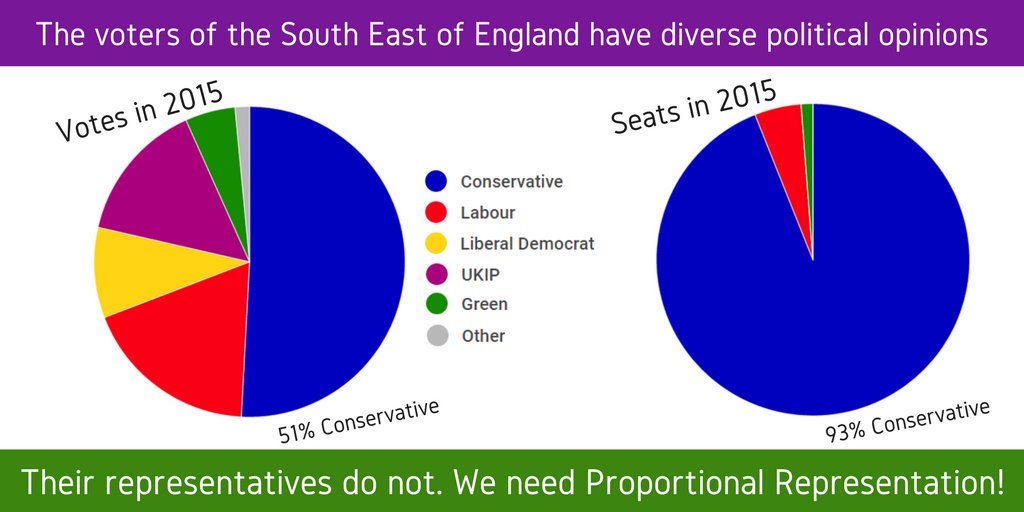
It must be understood that elections are only one way to power, but they are indispensable in England, for historical-cultural reasons. A party which cannot win elections loses credibility rapidly once that party is large. In the initial phase, no-one expects the party to win Westminster or even local council seats, but after that, it has to win and so grow, or deflate as the BNP did and as UKIP is doing now. The problem small parties have under the English electoral system is that a Westminster seat can be won only with, at a minimum, about 30% (and usually 40% or more) of votes. The insurgent party is in danger of spreading itself too thinly, in every way. UKIP’s history illustrates the point: in 2015, about 12% of votes cast (nearly 4 million), but only the one MP with which they, in effect, started. The answer is to concentrate the vote. That is done by concentrating the members and supporters of the party geographically.

Safe Zones

I have blogged previously about the creation of safe zones and especially one primary safe zone (possibly in the South West of England). If the members and supporters of the party gradually relocate into that zone or zones, many things become easier, from protection of buildings, meetings, exhibitions etc to the election of councillors and MPs. I have also blogged about the magnetic attraction such a safe zone might exercise over people in the UK as a whole.

The Decisive Time

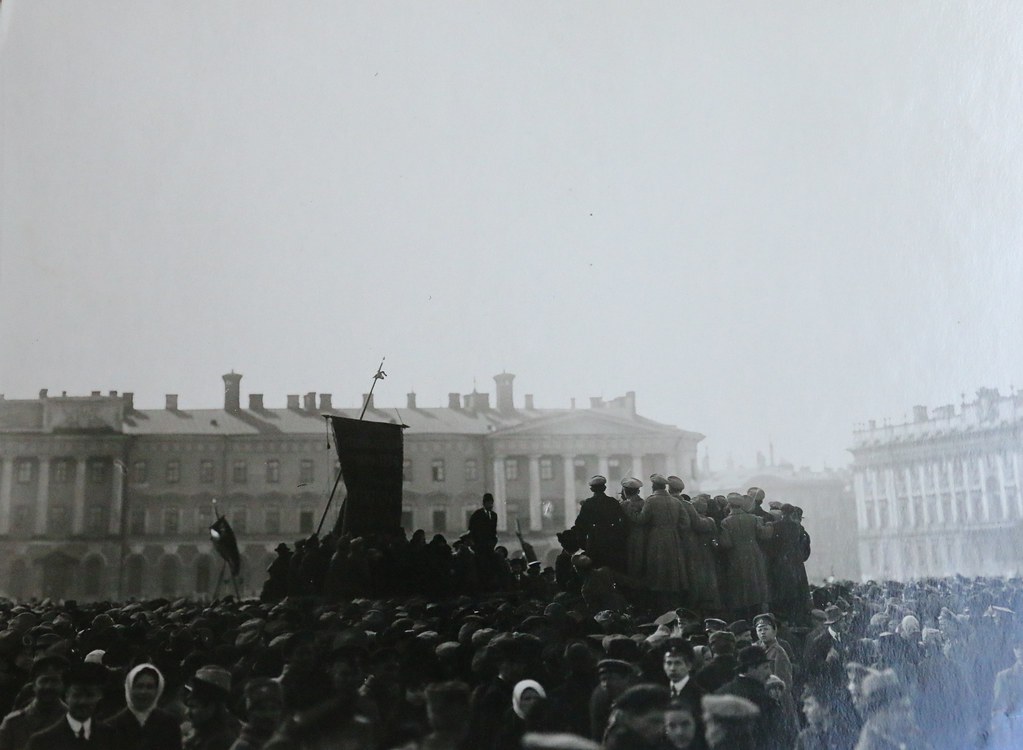
The “decisive time” cannot be predicted. In Russia, Lenin (at the time in foreign exile) thought that the 1905 uprising was “the revolution”. He was wrong. He also thought that the first (February, old-style) 1917 uprising was not “the” revolution. He was wrong again. It was.

https://en.wikipedia.org/wiki/February_Revolution

Lenin had to hurry back to Russia (arriving belatedly in April 1917, old-style) not only to try to take control (he failed in that and had to foment his own coup d’etat in October 1917) but to avoid being sidelined and so becoming an almost irrelevant footnote to history.

In Germany after 1929, Hitler likewise was not in control of events. In the end, economic near-collapse and political turmoil gave him the chance to win enough votes (33% in 1932) to form a coalition government which led on to full power in 1933, after the NSDAP achieved a higher –though still minority– popular vote (44%).

In other words, both Lenin and Hitler were the pawns of Fate while striving to be the masters of events. They had something in common though: highly-disciplined and ideologically-motivated parties behind them.

Practical Matters

At the age of 60, the last thing which is convenient for me is to form a political party. I have no need of such an activity as a hobby or absorbing interest. I am coming to the idea out of duty, out of a realization that something has to be done and out of an understanding that something can be done, if Fate concurs. I am not willing to compromize on overall ideology or on the way things are organized within such a party. I shall only establish a political party (which may become a movement) if it can be done on a serious basis. However, there is a need for a party to speak for the British people and there is a widening political vacuum in which such a party can thrive and grow.

Update 15 April 2019

In the two years since I wrote the above blog post, my view has not changed, that is

  • a political party and movement is needed;
  • there is at present no such party;
  • such a party can only be established if done on a serious basis;
  • I myself still do not have the means with which to found such a party; but
  • a political party and movement is —still— needed…

Update, 8 March 2023

All factors mentioned in the previous update remain the same.

Tipping Points in Politics and Life

We have all heard of the theatrical cliche of the actor who achieves “overnight success”, having in fact worked hard against all the odds for years. The same is often true of writers, painters and other artists. Not forgetting scientists. It was Edison who, on the failure of his (supposedly) 2,000th lightbulb experiment, is said to have said: “I have not failed. I have just discovered the 2,000th way not to invent the incandescent lightbulb.” At a later time, he of course succeeded. Many things follow the pattern: a long period of non-movement, then sudden success (or sudden failure of something, often after long stagnation).

One can call this a tipping-point, or characterize it by some other metaphor. The aircraft which suddenly fails by reason of metal fatigue, the ship which finally turns over after ice has built up on its external structure in Arctic waters, the huge empire which “suddenly” staggers and falls. On the other hand, there is that actor with his “overnight” success, that composer whose works suddenly find favour, the small political group which “suddenly” rises to prominence and power.

The Bolsheviks were a small group of societal rejects mostly living in internal or external exile, or in prison. Many were not even Russian. Jews predominated in their higher councils (despite forming only 10% of the entire membership), but there were also Georgians and others. In fact, the Bolshevik Party only had 8,400 members in 1905 and, though that increased to 46,100 by 1907, by 1910 the numbers had slipped back to about 5,000. Few would then have imagined either that the mighty Russian Empire would collapse or that the tiny faction of Bolsheviks could seize control of what was left. We know the rest: a failing war and an impoverished population, an initial attempt by others at “moderate” revolution and then a coup d’etat by one small group in one corner of a vast empire.

The lesson: a small and marginalized group, disciplined ideologically and practically, can both seize power and institute an entirely new form of society, once that tipping point or crisis point has been reached.

In post-WW1 Bavaria, Adolf Hitler became the 7th member of the German Workers’ Party [DAP], which may also have had an unknown number (estimates vary from mere dozens to as many as 15,000) of loose supporters in the beerhalls of 1919 Munich.

By 1923, this tiny and marginalized group was able to attempt the Beer Hall Putsch [aka Hitler-Ludendorff-Putsch], but it is important to note that, despite the support of Ludendorff and a few other notables, the actual number of putschists involved was small: the main march headed by Hitler was only 2,000-strong (immediately after the putsch failed, 3,000 students from the university also marched in support and to lay wreaths). Indeed, even had the putsch succeeded, Hitler would only have taken power in one city of one region within the German state as a whole.

The membership of the NSDAP grew steadily, reaching 108,000 by 1928. Electorally, however, the NSDAP was doing worse in 1928 (receiving only 2.6% of the national vote) than it had done in 1924, no doubt a reflection of the growing prosperity in the intervening years (i.e. since the infamous hyperinflation finished in 1924). Despite that poor showing, once the Great Depression started to affect Germany after 1929, the NSDAP was able to gain the trust of ever-more voters: the vote in 1932 was 37% and then 33% (in the two elections of that year), growing to 44% in 1933. Adolf Hitler then took full power, having been appointed Chancellor in 1932.

A different example: UKIP grew from a few people in a pub in 1991 to a peak in the 2012-2015 period, but has not the ideological discipline or revolutionary intent to “seize power” even by electoral means. It missed its chance and will probably not get any further. Still, its growth, in the UK context, is interesting. Its founder, Alan Sked, was a former Liberal candidate who stood as “Anti-Federalist” candidate for the seat of Bath in 1992 (i.e. after UKIP had been formed), receiving 117 votes [0.2%].

UKIP had virtually no members until the late 1990s, though by 2015 the membership had grown to nearly 50,000 (now 30,000). As for its vote share, that grew to nearly 13% by 2015, but the UK’s unfair “First Past The Post” [FPTP] electoral system meant no gains.

FPTP voting itself illustrates the “tipping point” idea, as happened in Scotland: the SNP had fairly good support for decades, but few MPs until the tipping point was reached. Now it has 50% support, but almost 100% of Westminster seats. Why was the tipping point reached? Cultural identity rising, living standards falling, entrenched Labour failing. The point was reached–and the Labour vote collapsed.

UKIP has the same problem. So long as it has only 10% or even 15% of votes, it cannot get more than one or two MPs. Were it to get to 25% support, the situation would tip and UKIP would have perhaps 100 MPs. Except that that will probably not happen…

In fact, the Bath constituency mentioned above is instructive: Alan Sked got only 117 votes (0.2%) in 1992; in 2015 the UKIP candidate received nearly 3,000 votes (over 6%), but was still only 5th (Sked came in 6th in 1992)

https://en.wikipedia.org/wiki/Bath_(UK_Parliament_constituency)#Elections_in_the_2010s

The difference between UKIP’s situation and that of the Bolsheviks or NSDAP is that UKIP has no really firm ideological or organizational structure. Even if society came to a political tipping point, UKIP might well be unable to take advantage of that.

A new and properly-run social nationalist party could take most of the votes of UKIP as well as those which formerly went to the BNP and others. That however, could only ever be a foundation for electoral success. That success itself would depend on the rising star of the new party meeting the fading star of the old parties. It is a question of timing and of Fate. The tipping point for the whole society would be key.

Seismic Shifts in the World

There are now huge changes happening in the world power structure. Russia is on a roll, strategically, at the same time as its underpinning economy is struggling.

2016 has been a successful year for Russia in the military-diplomatic realm. Its support for the Assad government of Syria has proven decisive. The rebel forces have been all but vanquished and Russia sits for now unchallenged in Syria and, thus, in the most strategic part of the Middle East and the Eastern Mediterranean.

It scarcely matters that, on paper, Russia’s economy is not prospering. Stalin built up the Soviet Union to be a world power while the Russian and other peoples under his rule suffered under socio-economic conditions that make today’s Russia look like a land of plenty in a fairy tale.

At the same time, Donald Trump’s victory in the United States is a victory for Russia and (I hope) for peace between Russia and the USA. If Russia helped to procure Trump’s election via “active measures”, then so much the better. It makes a change from the Israel lobby pulling all the strings and, even if Trump is (as he may be) entirely unsuited for the role of head of government or head of state, at least Israel-controlled warmonger Hillary Clinton was prevented from exercizing power and fomenting more war.

In the Far East, traditionally one of Russia’s weakest areas, influence is felt in the latest sayings of the president of the Philippines. American influence is waning fast  in a region where Chinese power is waxing.

As for Europe, the rise of populism and, to a lesser extent, social nationalism, plays to Russia’s strengths: tradition, white European culture and history, shared values, shared hopes for a better future (and against globalism, multiracialism, China, Zionism, Islamism, Americanism).

In France, Marine le Pen has every chance of becoming President in 2017. In Austria, the Freedom Party narrowly missed in its Presidential bid but is well ahead of all rivals and looks like winning the general election of 2018 (in theory also may be but unlikely to be in 2017). Even in Germany, the more nationalistic forces are increasing in influence.

All of the above leads to a situation in 2017-2018 in which the broadly social-nationalist agenda can be carried forward.

NATO Must Not Attack Russia

President Bush snr. proclaimed the “New World Order” [NWO] openly in 1990. The Soviet Union was not dissolved until the following year, but had in fact died in 1989, 33 years (significantly) after Khrushchev’s “Secret Speech” of 1956, which denounced Stalinism and introduced the “Thaw”.

The ruling circles of the West (variously called the Wise Men of the West, the Judaeo-Masonic conspiracy, the NWO-Zionist consensus etc) were behind the fall of the Russian Empire in February 1917 and the Bolshevik takeover in October 1917. That is not to say that they were able to control events completely. They wanted the Jew, Trotsky (L.D. Bronstein) to take over eventually from the part-Jew, Lenin (V.I. Ulyanov), but reckoned without an even more ruthless evil character, the Georgian, Stalin (J.V. Djugashvili).

Stalin’s seizure of power in the mid-1920s was not ideal from the point of view of the Western conspirators. It stabilized or froze the political situation and the decline in social and family life in Russia and its dependent territories. The Soviet regime became even more conservative during the course of the 1941-45 conflict with the German Reich. Russian Orthodox religion was allowed (under controlled conditions), national patriotism held sway. Marxism was embalmed alongside Lenin’s “waxwork”.The original plan of the Western circles had been that Marxism-Leninism would take over all of Eastern and Central Europe, as far as the Rhine. What stopped that was

  1. in Russia, Stalin’s “Socialism in One Country” policy; and
  2. in Germany, the rise of National Socialism under Adolf Hitler.

The end of the Second World War saw Europe split between East and West. Central Europe was squeezed out. Germany was divided into East and West. Berlin was symbolically divided into East and West. This was deliberate.

In time, the Sovietized “East” (including those Eastern parts of Central Europe), moved to a position which was not far from various forms of social democracy under a socialist-communist mantle. This did not suit the Western “consensus”, which therefore decided to collapse the post-1945 “international settlement”. The Soviet Union, whose citizens were more affluent than they had ever been, fell gradually into social decadence and corruption until the state was ready to have as its anointed leader a man who would sit complacently at its head and watch it implode: Gorbachev.

When George Bush senior proclaimed the New World Order, he was giving voice to the latest global plan of the ruling Western circles: to rule over a globalized world economy. Politics would be merely the instrument by which finance-capitalism would triumph, sweeping away regional, national and local economies, customs, religions and social cohesion. Only money, that is, concentrations of capital, would count.

The plan worked for several years. Socialism in all forms had died in 1989 and Russia was swept along with the finance-capitalist tide, even though the majority of Russians were poorer in most ways than they had been under late-Sovietism. When a rump of pro-Soviet parliamentarians and officers (supported by most Russians, probably) tried to take back power in 1993, the corrupt and drunken Yeltsin ordered massive and bloody assaults on the Duma and other installations. Bush snr. called that an affirmation of “democracy”.

Below the surface, Russians were tiring of their diminished country being a playground for gangsters and exploitative Jewish “oligarchs”, a place in which American companies and other carpetbaggers (again, often Jewish) could strut about, a place where Moscow schoolgirls dreamed of being, not artists, doctors, scientists or mothers, but hard-currency prostitutes. Ten years after the proclamation of the New World Order, the Russian economy having collapsed, a new President of Russia, Putin, started to rebuild Russian pride and self-confidence. At the same time, the New World Order suffered its second and equally massive blow when Islamist fanatics flew planes into the World Trade Center in New York City. That attack (whether “helped along” one way or another or not), was a sign of Islamist strength gathering worldwide.

Another decade passed. The Western circles made a huge mistake in invading Iraq and Afghanistan. Further errors were made in Libya and Syria, instigated by Israel, whose lobby of Jewish Zionists and pro-Israeli non-Jews has a stranglehold in Washington. Israel wanted to destroy or degrade the armies of all potentially harmful states, but its gain was the West’s loss.

The Western circles then decided to arm even Islamist anti-Assad forces in Syria. At the same time, the government of Ukraine, corrupt and weakened by years of Zionist infiltration, was deposed and replaced by a complete “ZOG” [“Zionist Occupation Government”]. Eastern Ukraine, in part, broke away. The NWO (mainly though not exclusively American in terms of its military reach and leadership elements) is attempting to foment war in Crimea, Eastern Ukraine, as well as in Poland, the Baltic States and in Syria.

Hillary Clinton wanted and vowed to “confront Russia in Syria”. She was a corrupt puppet of the NWO and Israel. Donald Trump’s defeat of her was divinely ordained, no matter that the man himself is unfit to be a head of state or government. The danger now is that the NWO will try to hedge him about with NWO satraps. There is still a huge danger that the NWO, via NATO, will push Russia into a war which would devastate Europe, as well as wide areas of both Russia and the USA.

All those who wish for the West to come to peaceful concord with Russia must stand up now against what amounts to a conspiracy to cause a Third World War.

A New Civilization For Eurasia

From the defeat of the German Reich in 1945, which destroyed, at least temporarily, the idea of Central Europe (and so split Europe between East and West, symbolically in Berlin itself), an international order comprising such organizations as the IMF, World Bank, United Nations Organization etc has been the skeleton of the “West”.

The “East”, meaning the Marxist-Leninist world of the Soviet Union, China and their offshoots, fell to pieces after 1989. The present necessity for both Europe/Eurasia and the world in general, is for, not the faked-up and largely Zionist-controlled “New World Order” made public by the first President Bush in 1990, but a REAL New Order which will be a synthesis of the best of the former and existing ideologies (National Socialism, “private enterprise” capitalism, socialism/communism), together with and held together by an acceptance of the general principles of Rudolf Steiner’s Threefold Social Order (cf. the works of Valentin Tomberg et al).

This will be a social order which reconciles the superficially conflicting demands of social cohesion (collectivity) and individual human rights (individuality). Spiritually, the new social matrix will accept the right of every individual to his or her own spiritual path, while protecting the right of society as a whole not to be placed under the tyranny of any particular religion.

Geographically, the new social order will be based in, though not limited to, Northern Europe and Russia/Siberia. Ethnically, the new civilization will be based on, but not limited to, those of White Northern European racial background. The important factor will be culture and not race; however, race must, for many centuries, play its important part as foundation for the new society.

I call upon all those interested in the future of Europe and the world to come together in this enterprise.