Category Archives: historical

What Is and What Might Have Been

Introduction

I was just watching one of the seemingly endless re-runs of the early 1970s historical documentary series, The World at War, and in particular the episode named Barbarossa (from Fall Barbarossa or Operation Barbarossa, named after Friedrich I, the Holy Roman Emperor of the 12th Century who led the Third Crusade against the infidels).

I of course remember watching the TV series when it first was broadcast, in 1973. Many will say that it is in many parts contaminated by what amounts to Jew-Zionist propaganda, and I do not dispute that. Others point out, in a connected critique, that every alleged wrong done by the German Reich and its forces is given great prominence, whereas the cruelties and barbarities of the Soviet regime are barely mentioned (I suppose that it could be argued that the most famous chronicles of those terrible times were not published in English until after The World at War was made: GULAG Archipelago, for one). The criticisms are valid, but one cannot write off The World At War because of those flaws.

The strength of The World at War was that many of the leading personalities on all sides, such as German, English and other general officers, admirals etc, some members of Hitler’s circle (eg Speer), and a host of lesser-ranked people, were all still alive in 1973, giving their filmed testimony weight and immediacy.

Anyway, this article is not meant to focus on The World at War alone, but to examine a couple of “what if?” situations, both in the war years of 1939-45 (for Russians and Americans, 1941-45) and at other times.

The drive to Moscow in 1941

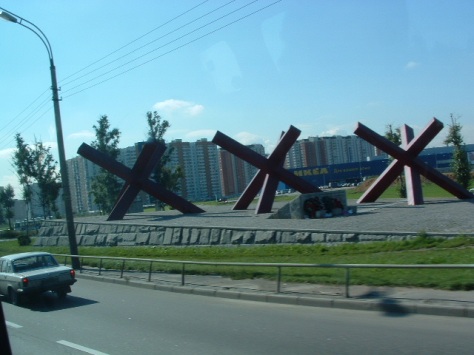
When I was first in Moscow, in 1993, my assigned driver, Pasha (an insolent loutish youth, apropos of nothing) pointed out, as we drove into the city from Sheremetyevo airport, the tank trap memorial, 23 kilometres from the Kremlin on the Leningrad Highway (Leningradskoye Shosse). The memorial marks the supposed furthest point of advance of the German forces in 1941. We drove near to the Kremlin only about 15-20 minutes later.

In 1941, the town of Khimki (now effectively a suburb of Moscow) had only just (1939) been administratively created, and was little developed. Now, hundreds of thousands live close by. Even since I drove through in 1993 there has been further development. Indeed, in the photograph below, taken in a recent year, there can be seen an IKEA warehouse. What would Stalin have had to say about that?!
tanktrapmemorial

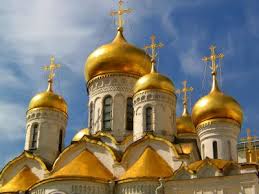
The proximity to central Moscow amazed me. Even if not true (as some say) that some German advance-reconnaissance motorcyclists advanced yet further, to a point where they could see the golden domes of the Kremlin churches, it is incredible to see how close the forces of the Reich came to capturing Moscow.
kremlin4

In 1941, flush with the victories in the West in 1940, Hitler intended to advance in Russia against 3 main objectives: Leningrad, Moscow, and also the Ukraine generally, with its huge natural resources of grain crops etc and (in the Don Basin or Donbass), coal.

Hitler at first prioritized Leningrad, followed by the Donbass, and only then Moscow. His generals disagreed, arguing that only a decisive blow against Moscow could achieve victory. There were cogent arguments for all three main objectives:

  • Leningrad: reasons based around morale (the city of the two 1917 Revolutions and in particular the second, Bolshevik, one; the city bearing the name of Lenin); also, the city without which the all-weather port of Murmansk could probably not be held. If Murmansk fell, there could be no Allied resupply of the Soviet Union except via the Soviet Far East. At that stage of the war, that alone might sink the Soviet regime;
  • Ukraine: grain supplies, coal, even oil (should German forces be able to advance beyond Ukraine; also, protection for the Romanian oilfields supplying Germany);
  • Moscow: in the highly-centralized Stalinist system of the Soviet Union, everything came from the centre. Indeed, in the earliest hours of Barbarossa, Soviet officers were heard in German intercepts begging Moscow for orders: “we are under attack; what shall we do?”…It might be that, were Moscow to fall, the Soviet Union would fall. Hitler himself had said that “all we need do is kick open the front door and the whole rotten structure will come tumbling down.”

I have to say that (of course with the knowledge of the decades since 1941) I would favour the Moscow option. Had Moscow fallen, the bubble of the regime would have burst. In a small way, the open panic of the NKVD and CPSU when they thought the Germans would soon be in Moscow, and which led to open rebelliousness on the part of ordinary Moscow inhabitants, leads me to think that a German capture of the city would have led to a rapid fall of the Soviet regime in all of European Russia and perhaps beyond.

In any case, without Moscow under Soviet control, Leningrad must surely have fallen too before very long.

Hitler thought that it was more important to defeat the Soviet armies in the field. European thinking, thinking from the constricted lands of Central and Western Europe. In the Russian space, those otherwise valid ideas become less valid. New armies can be (and were) raised from the vast areas beyond the Volga, beyond the Urals.

As for going for three objectives at once, it might, under other stars, have worked, but the cautious Russian proverb says “chase two hares and you will not catch one”…

Still, what if? What if Moscow had fallen in 1941? Without a two-front war, Germany could not have been defeated in the West. There could not have been the Normandy Landings of 1944, certainly not successfully. European Russia would have been under German control, and the wider expanses of the Soviet Union would probably have been invaded and taken by a Russian but anti-Soviet army such as the Vlasov Army, which might have been expanded to a formidable force. Also, the forces under Rommel in North Africa would have been able to have been hugely reinforced, with the heady strategic possibility that Rommel might have been able not only to take Alexandria, Cairo and the Suez Canal, but Jerusalem, Damascus and then drive up through the foothills of the Caucasus towards Baku and its oilfields, linking up with the forces of Army Group South driving South-East from Ukraine; German forces did occupy part of the Caucasus and even part of Kalmykia in 1942 (occupying Elista briefly).

Mainland Europe would, in that overall scenario, have avoided most of the destruction of 1941-1945. In time, there would no doubt have been peace made between the German Reich and the British Empire. The calamitous decolonization in Africa etc would have been avoided, at least until such time as it would not have had such terrible effects on human and animal inhabitants. There would be either no State of Israel, or one which would not be the hub of a worldwide Jew-Zionist web. The forces of Stalinism would never have invaded Eastern and Central Europe. There would have been no Korean War, no Vietnam War, no Cuban Missile Crisis, and Castro himself would have been seen as just another Latin American tinpot dictator (which is all he was anyway, once Soviet backup was removed) and unable to pose as a world “statesman” (BBC and Labour Party idiots please note).

What if? If only…

And now for something completely different…

What if…Beeching had never happened? Alternatively, what if rail lines had been closed but maintenance of track continued?

I wonder how many British people of the post-1960s age, let alone the (often vacant-seeming) “millennials”, have even heard of Dr. Beeching, his reports and his “Beeching Axe”? [see Notes, below]. In outline, then:

The first report identified 2,363 stations and 5,000 miles (8,000 km) of railway line for closure, 55% of stations and 30% of route miles, with an objective of stemming the large losses being incurred during a period of increasing competition from road transport and reducing the rail subsidies necessary to keep the network running; the second identified a small number of major routes for significant investment. The 1963 report also recommended some less well-publicised changes, including a switch to containerisation for rail freight“. [Wikipedia]

Note those figures: 2,363 rail stations to be closed! Not to mention 5,000 miles of track.

Protests resulted in the saving of some stations and lines, but the majority were closed as planned, and Beeching’s name remains associated with the mass closure of railways and the loss of many local services in the period that followed. A few of these routes have since reopened, some short sections have been preserved as heritage railways, while others have been incorporated into the National Cycle Network or used for road schemes; others now are lost to construction, have reverted to farmland, or remain derelict.” [Wikipedia]

Beeching’s reports made no recommendations about the handling of land after closures. British Rail operated a policy of disposing of land that was surplus to requirements. Many bridges, cuttings and embankments have been removed and the land sold for development. Closed station buildings on remaining lines have often been demolished or sold for housing or other purposes. Increasing pressure on land use meant that protection of closed trackbeds, as in other countries (such as the US Rail Bank scheme, which holds former railway land for possible future use) was not seen to be practical. Many redundant structures from closed lines remain, such as bridges over other lines and drainage culverts. They often require maintenance as part of the rail infrastructure while providing no benefit. Critics of Beeching argue that the lack of recommendations on the handling of closed railway property demonstrates that the report was short-sighted. On the other hand, retaining a railway on these routes, which would obviously have increased maintenance costs, might not have earned enough to justify that greater cost. As demand for rail has grown since the 1990s, the failure to preserve the routes of closed lines (such as the one between Bedford and Cambridge, which was closed despite Beeching recommending its retention) has been criticized.” [Wikipedia]

The above long extracts from Wikipedia lay out the facts quite well. What is missing is perspective. The postwar period in the UK, particularly in the 1960s and 1970s, was one of almost wholesale destruction of old buildings, streets, villages, towns and cities. In fact, postwar redevelopment changed London a great deal more than the oft-cited depredations of the Luftwaffe (most of which bomb damage was concentrated on the Thames dock areas and nearby areas which suffered collateral damage). Naturally, demolitions are sometimes inevitable and sometimes an improvement [see Notes, below], but much that was valuable has gone.

In fact, the 5,000 miles of track closures earmarked by Beeching were in addition to about 3,318 miles of railway track closed between 1948 and 1962 and also a further 1,300 miles of passenger railway between 1923 and 1939! Over 9,000 miles of track!

So “what if”? What if, for example, the rail track had been maintained? That way, were (as now are) different ideas, new technical ideas, possible (eg robot trains, no-staff trains, small ultralight trains, trains made with lighter materials, trains using solar power etc), those tracks could be the basis for new transport links and could be further linked with new track.

The expense of a railway is mostly in the staff pay, pensions etc; after that, the cost of actually running trains (fuel etc); after that, maintenance of trains, track, bridges, tunnels etc. The core maintenance can be relatively little. In the USA, this is the policy (see Wikipedia in Notes, below). Political policy which is also a national insurance policy.

Not that the trekking ways, cycleways and nature walks which often have replaced the old railways are not useful too, but most rail track destroyed has been simply ploughed over, built over or abandoned. Pity.

Notes

https://londonist.com/london/history/lost-london-buildings-destroyed-in-the-21st-century

https://www.amazon.co.uk/Lost-London-1870-1945-Philip-Davies/dp/0955794986

https://www.timeout.com/london/art/12-amazing-photos-of-londons-lost-landmarks

https://en.wikipedia.org/wiki/Beeching_cuts

https://en.wikipedia.org/wiki/Kalmykia#World_War_II

https://en.wikipedia.org/wiki/Elista

https://en.wikipedia.org/wiki/Baku

https://en.wikipedia.org/wiki/Erwin_Rommel#North_Africa_1941%E2%80%931943

https://en.wikipedia.org/wiki/Russian_Liberation_Army

https://en.wikipedia.org/wiki/Khimki#Khimki_in_the_Battle_of_Moscow

https://en.wikipedia.org/wiki/Frederick_I,_Holy_Roman_Emperor

https://en.wikipedia.org/wiki/The_Gulag_Archipelago

https://en.wikipedia.org/wiki/The_World_at_War
Can The Conservatives Win A General Election? (or are they doomed?)

We are where we are, in the now-ubiquitous phrase. The prime-ministerial chair once occupied by the likes of Pitt, the 1st Duke of Wellington, Gladstone, Lloyd George, Churchill, Attlee, Harold Wilson, Margaret Thatcher etc is now occupied by a public entertainer of mixed ethnic and cultural origins, born in New York City, brought up partly in the USA and Belgium, and until recently a dual passport-holder. A rootless cosmopolitan playing out a performance as an “upper-class” “Englishman” caricature. Am-dram Churchill. Poundland Churchill.

Boris Johnson, Boris-idiot, Boris the clown. More to the immediate point, Boris without a majority, soon. As a child of eight years, Boris Johnson wanted to be “world king” and has for decades schemed and cheated and lied in order to get to the nearest position (outside the monarch’s own ambit) that England allows: the rank of Prime Minister. However, he has not become “King of the World”, but “King for a Day”, the traditional role, in the Revels, of the Jester or Fool (“…for who but a Fool would be King for a Day?”).

The Conservative Party elected Boris Johnson its leader. Conservative MPs voted to reduce the field to two. Conservative Party members, some 140,000 of them, voted and 66% of them, about 92,000, preferred Boris Johnson. It is not my purpose of this article to rail more than en passant against the absurdity that allows a prime minister to resign and for her successor to be, in effect, elected by 92,000 (mostly very elderly, mostly rather well-off financially) Conservative Party members (out of about 50 million voters generally). This article is for the purpose of examining electoral chances.

First of all, we have the Brexit chaos. I favoured Leave. I still favour Brexit. However, the whole process was criminally mishandled by the Conservative government of Theresa May.

How will Brexit affect a general election? I assume that the House of Commons will not allow a WTO or “no deal” Brexit, and so any general election that is then called will see Boris Johnson parking his tanks on the lawn of Brexit Party and trying to go all out for, effectively, the Leave vote of 2016. There are dangers for the Conservative Party in that.

Brexit is not the only issue in a general election. Some more affluent voters may vote Conservative for tax or other reasons even if they oppose Brexit. Also, many in the population will never vote Conservative even if they favour Brexit. Many despise Boris Johnson and will never vote Conservative as long as he is the leader. This is, if chess, three-dimensional chess.

However, now that the Conservatives under Johnson present themselves as the “Leave”/Brexit party, it can be assumed that a sizeable number of former Conservative voters who favour staying in the EU will migrate, at least temporarily, to the only significant Remain-supporting party, the LibDems. Where else can they go? It might be argued that many Conservative MPs favour Remain, and that those MPs will receive a special vote based on that. Don’t count on it. The label is the primary motor, and if Conservative means Leave, many Remain voters will leave…the Conservative Party.

If the next general election is called without the UK having left the EU, or having left on terms dictated by the EU (Brexit In Name Only), then Brexit Party will be waiting to snap up the hard-core Brexit vote.

Brexit Party intends, at present, to contest all 650 seats. Its mere presence ensures that dozens, maybe even beyond a hundred, Conservative MPs will lose their seats, in some cases to Brexit Party, but in more cases to the LibDems or Labour.

There has been talk of a Conservative/Brexit Party electoral pact, but that carries the danger of gifting the Brexit Party a bloc of seats. which might challenge the Conservative Party more strongly later.

Labour, though now called by msm commentators a Remain party, is more nuanced. Corbyn’s fence-sitting tactic, though much criticized, is all that he can do in a circumstance where Labour-held seats were more often (about 60%) Leave-voting, though most Labour voters voted Remain (because, as I blogged recently, Labour votes are increasingly concentrated in fewer and fewer seats).

It may be, anyway, that Labour voters have concerns other than, or as well as, Brexit: low pay, the Conservative attacks on the social welfare and benefits system, the burgeoning crime and disorder problem etc.

The composition of the Boris-idiot Cabinet and government will not attract many former Labour, LibDem or floating voters.

My conclusion is that the Boris Johnson government may struggle to attract the votes of more than 30% nationwide. Recent opinion polls have put the Conservatives at anywhere between 23% and 30%. Labour has been between 18% and 28%. LibDems around 16%-20% and Brexit Party 14%-20%.

If the Conservatives continue to lean towards Brexit strongly, they risk losing many of their pro-EU voters to the LibDems, but if they try to fence-sit or move more towards Remain, many of their previous voters will vote for Brexit Party or stay at home.

There is also the Boris Factor, but we see that, even though there has been a “Boris Bounce”, its effect has been slight. The Conservatives are still polling at or below 30% (as is Labour). Indeed, it could be argued that, for many former Conservative voters, especially in marginal seats, Boris-idiot is not an attraction but a turn-off. I concede that that is a guess, but it is at least an educated one.

I have fed various recent opinion poll results into the Electoral Calculus calculator [see Notes, below], and it is quite hard to come up with a Conservative majority in the Commons. Most results show a hung Parliament with either Lab or Con as largest party. Only one showed a Conservative majority (of one vote). In several cases, both main System parties were as many as 80 MPs short of a majority.

Now we all know that the “glorious uncertainty” of the Turf is carried over to the field of battle of British elections. It is hard to predict elections in Britain and “a week is a long time in British politics”, as Harold Wilson said. Also, Electoral Calculus is a fairly rough guide. Having said that, it seems clear that, at least in the short term, the Conservatives are on the back foot here. Any gamble to increase the Conservative majority in the Commons may well backfire, as in 2017. That would mean the end of The Clown as Prime Minister, but would also mean something of a political and even Constitutional crisis.

These should be fertile days for social nationalism, but we are as yet not even in the game…

Notes

https://www.electoralcalculus.co.uk/userpoll.html

Afterthought, 29 July 2019

David Cameron-Levita as Prime Minister always made sure that the interests of pensioners were prioritized, in particular by introducing the “Triple Lock” on State pensions. Pensions have been one of several issues taking greater prominence over the years by reason of the increasing average age of the population of the UK.

https://en.wikipedia.org/wiki/State_Pension_(United_Kingdom)#Pensions_Act_2007

There were clear practical political reasons for this policy. Support for the Labour Party at elections is fairly even across the half-dozen usual age groups, whereas support for the Conservative Party is concentrated among the old and middle-aged: just under 50% of all Conservative votes are those of persons aged over 65 years. Hardly any young people intend to vote Conservative (in the 18-24 age group, below 4%).

The loyalty of the over 65s has been reinforced by pensioner-friendly policies. There are signs now that the Conservatives intend to, in the oft-seen phrase, “throw the pensioners under a bus”. In 2017 Phillip Hammond wanted to remove part of the Triple Lock, but the DUP insisted on its retention in part-payment for DUP “confidence and supply” support in the Commons.

The Conservative Party is already getting some flak from the elderly for the BBC’s announcement that free TV licences will be withdrawn for those of 75+ years. There are rumblings about bus passes for pensioners. Overall, it is clear that the free market crazies now in the ascendant under Boris-idiot want to target the elderly as they have already done the disabled, sick, unemployed etc.

The Labour Party is now the party of the blacks and browns, those dependent on State benefits, and of the public service workers. The Conservative Party is now the party of the rich, the affluent, the buy-to-let parasites and the like, and (many of) the elderly. If the elderly who are not particularly well-off desert the Conservatives, the Conservative Party is in big trouble, because only about 10%-15% of UK voters can really be described as rich or even affluent, certainly no more than 20%. In 2017, the Conservative vote amounted to 42.4% of votes cast. If half or more of those votes suddenly disappear, the Conservative Party is quite likely to disappear with them.

Further Notes

https://www.ipe.com/countries/uk/peers-call-for-removal-of-triple-lock-on-uk-state-pension/www.ipe.com/countries/uk/peers-call-for-removal-of-triple-lock-on-uk-state-pension/10030786.fullarticle

https://www.theguardian.com/money/2017/apr/27/pensions-triple-lock-questions-answered

https://www.conservativehome.com/platform/2019/04/james-kanagasooriam-the-left-right-age-gap-is-even-worse-for-the-conservatives-than-you-think.html

https://www.mirror.co.uk/news/politics/bbc-over-75s-licence-fee-18335538

Update, 3 February 2023

Well, we all now know that, in December 2019, Boris Johnson and the Conservative Party won a supposed “landslide” at the General Election. In fact, the Conservative Party vote was only 43.6% of votes cast, but Labour’s vote fell to 32.1%, and that decided the matter.

Key was the decision of Nigel Farage to stab in the back his own candidates and supporters by withdrawing Brexit Party from serious contention. That was the key act that ensured a Johnson/Conservative win.

Brexit Party ended up with 2% of the vote nationwide. Had Farage and Brexit Party gone all out to win from the start, Brexit Party might have got 15%, which though giving Brexit Party few if any seats, would have tipped the balance back to hung Parliament territory.

Other factors were the elderly and late middle-age voters sticking with the Conservative Party, and the relentless and mainly Jewish anti-Corbyn campaign in the msm, which helped to crush Labour’s chances.

The 20th of July 2019: thoughts

derfuhrer

Today is the 75th anniversary of the attempt made to assassinate Adolf Hitler at his headquarters in East Prussia, the Wolfsschanze (Wolf’s Lair), now situated within the borders of post-1945 Poland.

I blogged last year about matters around the event and around those times more generally:

https://ianrmillard.wordpress.com/2018/07/20/the-20th-of-july/

What is there to add? Perhaps a reminder that human manifestations on this Earth do not last forever. The film, below, shows what the sprawling headquarters of 1944 is like today: as abandoned and lost as the cities of the Aztecs or the Mayans.

On the other hand, the devastated cities of the Germany of 1944 and 1945 are today thriving governmental, commercial, cultural and residential centres, with populations again in the hundreds of thousands or even millions.

dresden1945

[above, Dresden in 1945]

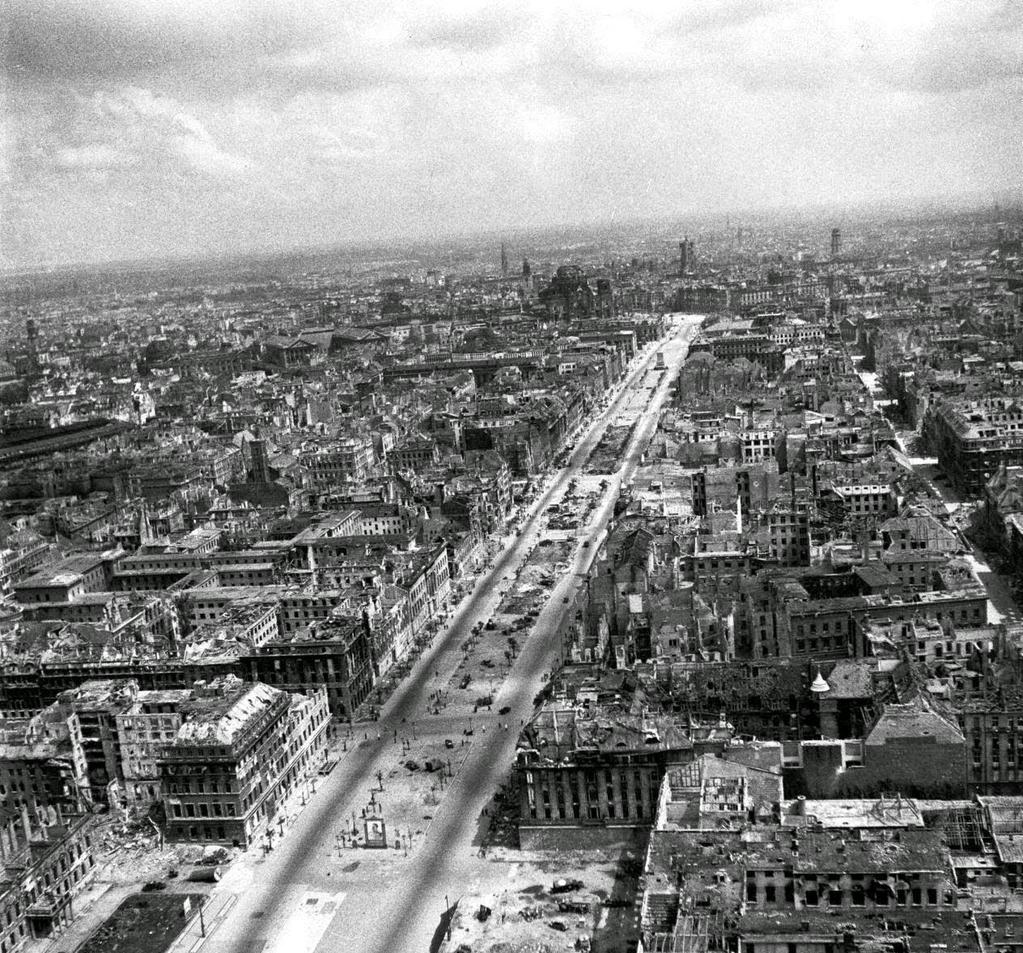
Berlin1945

[above, Berlin in 1945; area shown is the Unter den Linden boulevard in central Berlin]

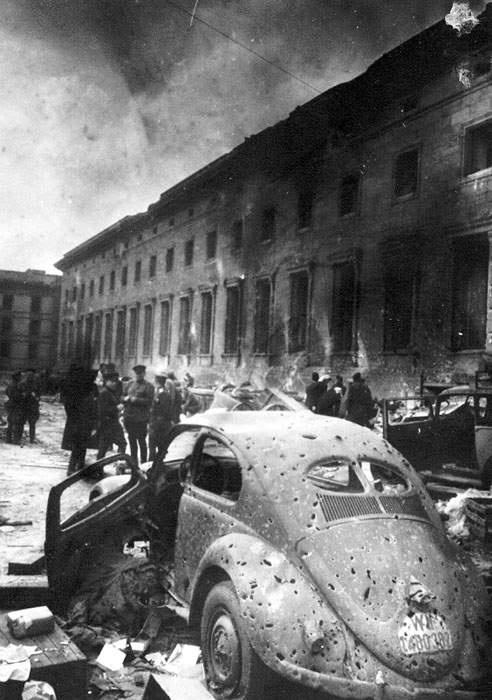
Berlin1945Reichkanzlerei

[above, Berlin in 1945; area shown is the Reichskanzlei or Reich Chancellery]

The above photographs show the devastation resulting from war. Today, those same areas are prosperous, busy, thronged with inhabitants. Some of the old has been replaced, some kept, adapted to contemporary usage.

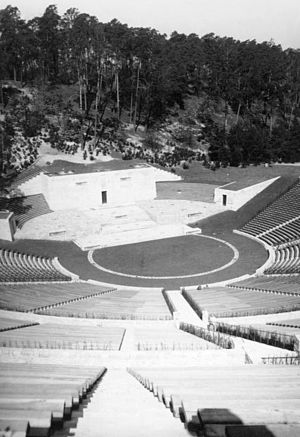
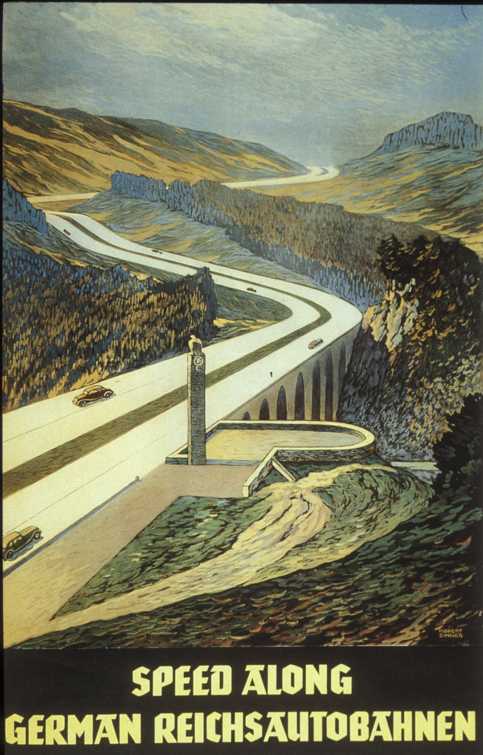
The same is true of ideas. Both the practical and the spiritual-cultural achievements of National Socialism were huge, enormous, particularly when it is considered that they were achieved within only 6 years of peace, the years 1933-1939. SIX YEARS!

3396AD3500000578-3561575-Hitler_had_lived_in_Munich_just_before_World_War_I_and_remained_-a-1_1461778976380

DietrichEckartBuhne

an-automobile-on-the-sweeping-curves-everett

autobahn

VW3

Nuremberg_Aerial_Kongresshalle

ShockBlast-Hugo_Jaeger-other-678798

Bundesarchiv_Bild_183-K1216-501,_Berlin,_Neue_Reichskanzlei,_MarmorgalerieChancellery3Chancellery2

We do not need to copy or indeed defend everything that was done by, or in the name of, the Reich. Indeed, many of the flaws of the Reich, or supposed flaws, existed and in fact were even more glaring in both the West and the Soviet Union of the 1930s. The Zeitgeist streamed over the world as a whole, like the jetstream.

In 2019, we honour what was good in the Reich, what worked for the German people and the peoples of all Europe. The rest, we do not need. Times move on. Some challenges remain; others, newly emerged, have to be faced for the first time.

2EFE92D300000578-0-image-a-16_1449088809263

AAxAlnt

5babfaf29952f.jpeg

CMjWdLLWoAAhfeI

C09oNwoWIAAVO_x

BqhtYX6IcAA_3Lk.jpg large

bdm-girls-riding-out-through-the-woods

BpkHifIIgAAYhu3

We honour the past and stand ready to create the future.

Notes

https://en.wikipedia.org/wiki/Wolf%27s_Lair

https://en.wikipedia.org/wiki/Gier%C5%82o%C5%BC,_K%C4%99trzyn_County

https://en.wikipedia.org/wiki/East_Prussia

https://en.wikipedia.org/wiki/K%C4%99trzyn

https://ianrmillard.wordpress.com/2019/01/26/the-tide-is-coming-in-reflections-on-the-possible-end-of-our-present-civilization-and-what-might-follow/

A Few Thoughts About 6 June 1944 and also (mainly) About 6 June 2019

Foreword

Well, here we are on 6 June 2019. Peterborough by-election day, but also the 75th commemoration of the Normandy Landings, aka D-Day. There has been wall-to-wall coverage on BBC News, ITV News and Sky News.

Preamble

This is not the place in which to discuss whether the Second World War could have been avoided (on the Western Front, in Western Europe generally; I think that it could have been). This is not the place in which to discuss whether the British Empire and the German Reich could have concluded an honourable armistice after the Fall of France (I think that they might have done; Germany made about ten separate offers).

It is important to note that these anniversaries are made use of by the Jewish Zionist element. Which is partly why they are pushed so hard on TV. Another chance to remind the masses about “the Nazis”, about how bad they supposedly were, and about how “necessary” it was to declare war on Germany, and eventually to defeat “the Nazis” (and so, Germany).

My own father was too young to be in the armed forces for much of WW2, though he was, near the end of the war, recruited by lot as a “Bevin Boy” (he was born and brought up in County Durham), and worked both in coal mining and later a shipyard (after the war, he became a professional footballer). Ironically, that service, far from the front lines of the war, killed him about 70 years later (via exposure to asbestos in a shipyard).

My maternal grandfather served as a soldier throughout WW2 and was both at Dunkirk and, rather later, in Burma.

Overview of my outlook re. the Second World War

My view of the war, even leaving aside my general sympathy with National Socialism in terms of ideology and aspiration, is that, on the Western Front, it need not have happened and should not have happened. I believe the same about the First World War, incidentally.

More

Born in 1956, I was brought up, as people were then, with “the War” as a constant backdrop. My grandfather talked scarcely at all about his war service with the British Expeditionary Force in 1939-40, or with the Army in Burma for much of the rest of the war, though it affected his health. He did give the odd bit of advice when I, aged maybe 7 or 8, was laying out my little Airfix plastic soldiers (various armies, but including, I think, German, British Eighth Army, Japanese and US Marines). I remember a couple of his comments, such as that patrolling soldiers should always be following one another in a line if in jungle, never abreast.

Had my grandfather not already been in uniform by reason of having been in the Territorial Army in 1939, he might never have served actively in the war at all, being at the time 38 or 39 years old (the usual cut-off age was 41). That’s Fate…

As mentioned above, people of my age who were brought up in the 1950s and 1960s always had “the War” there, around, like the woodsmoke and burning leaf smell of autumn in those days. The Germans were regarded by children of my age as honourable enemies (unlike the Japanese) and not some force of malign and almost cosmic evil, as the Jews try to make out now.

The Jewish “holocaust” propaganda and historical distortion that is now pervasive had not then really started in a big way. Also, the unspoken narrative was that Britain had suffered and struggled and “won the war”. The —in fact, overwhelming— input of the USA and the Soviet Union was popularly regarded (not only by children) as being at best no more (even taken together!) than that of the UK.

Churchill (as myth) hung over the scene like a Mount Rushmore presidential sculpture or —with apology to Jane Russell— like a thundercloud, only equalled by the leader of the “German hordes”, Hitler.

In the early 1960s, my grandparents never missed All Our Yesterdays (https://en.wikipedia.org/wiki/All_Our_Yesterdays_(TV_series) and I usually watched it with them.

The UK at that time (1960s) was still basically homogenous racially, certainly outside London or some port cities. In places like Reading, where I was born, and on the edge of which I lived until age 10 (my family was then in Sydney for 3 years), there were few blacks and browns (in fact, barring a family of Anglo-Indians whom we knew, there were almost none). The only black I recall seeing in England in the early/mid 1960s was the NHS consultant at the Royal Berkshire Hospital in Reading who treated me for hearing impairment at age 7 or 8. He was from somewhere in the Caribbean. The country was then still a nation. The various war anniversaries were just part of the landscape, along with Trooping of the Colour, the Royal Tournament (https://en.wikipedia.org/wiki/Royal_Tournament), the University Boat Race, Ascot, the Queen etc.

Today

Today, the UK is split and fissured racially, ethnically, economically, ideologically. It is scarcely a nation at all.

Today, with the “D-Day” ceremonies, the old Establishment or old Britain had its day in the sun: the unthinking royalists, the BBC and other msm, the remnants of the British armed forces (both of WW2 vintage and from today’s depleted armed services).

Though today’s ceremonies were in similar format to those of the past, there was, despite the wall-to-wall BBC/ITV/Sky news coverage, an end of the season feel. I wondered how many millions were really watching the seemingly endless TV.

I very much doubt that any but a tiny percentage of the ethnic minorities watched the shows today. Fewer will have understood the background even in the cartoon form presented by the TV people (Good v. Evil etc).

I would be prepared to bet that less than 1% of the population under 25 years of age watched more than a minute or two of the news coverage about the ceremonies in England and France. Same applies to most persons of non-European origin.

What we see here are two UKs: there is

  • the official, Establishment UK, together with the msm and the Jewish Zionist element (who latch onto anything “Second World War” as an opportunity to re-demonize National Socialist Germany); and the few now very elderly people who were at least in their teens in 1944; and there is also
  • the real UK, which is vastly more numerous and mostly has no interest in what happened in 1944.

In fact, it occurs to me that that division (between those who regard today’s ceremonies as hugely important, and those who regard them as of no interest or importance) reflects the change in UK society, and also that in UK politics. There is a chasm between what, say, the BBC or Sky think important, and what the bulk of the public think. A difference of orientation, of what is in the emotional life and which will eventually change political life.

Notes

https://en.wikipedia.org/wiki/Bevin_Boys

https://en.wikipedia.org/wiki/British_Expeditionary_Force_(World_War_II)

https://en.wikipedia.org/wiki/Sword_Beach

https://en.wikipedia.org/wiki/Normandy_landings

https://www.theguardian.com/world/2008/aug/31/secondworldwar.nationalarchives

https://www.telegraph.co.uk/history/10336126/Nazis-offered-to-leave-western-Europe-in-exchange-for-free-hand-to-attack-USSR.html

https://en.wikipedia.org/wiki/May_1940_War_Cabinet_Crisis

https://en.wikipedia.org/wiki/Churchill,_Hitler_and_the_Unnecessary_War

https://www.upi.com/Archives/1940/07/19/Hitler-offers-Britain-peace-or-destruction/6824181303557/

https://www.dailymail.co.uk/news/article-2433733/How-Nazis-offered-peace-treaty-World-War-II-meant-selling-Russians.html

Update and further thoughts, 8 June 2019

As I write, Trooping of the Colour, held today, is not trending on Twitter (not that Twitter is the world) anything like as much as the Michael Gove cocaine scandal. Point made, I think. These events (Trooping of the Colour, WW2/WW1 anniversaries etc) have some significance for the elderly, perhaps to some extent for those who (like me, aged 62) prefer not to think of themselves as elderly quite yet; for some (a minority) of white (i.e. real) British/English people, but not at all for the “broad masses” and certainly not, speaking in group terms, for the ethnic minorities.

Yet the System is still trying to interest the people in such things. Look at this tweet by Tom Newton Dunn of the Sun “newspaper” [below]: May Bank Holiday changed date next year.

The fact is, that moving a one-day holiday to a different date is not going to have much if any impact on the public, whatever amount of “news coverage” (propaganda) is pumped out. It just does not now have much emotional impact on most people in the UK, not even those of (real) British origin (and let’s not pretend that the Africans, West Indians, Pakistanis, Chinese etc in the UK are somehow at one with the descendants of the Huguenots or those of long-ago Viking/Norman origin etc…).

As the Second World War recedes in memory and time, these commemorations become ever less relevant. The Jewish Zionist element has latched onto them in a parasitic way, as a method of pursuing its anti-Third Reich, anti-anti-Semitism message, along with pushing the “holocaust” fable and industry. It has less resonance with every year that passes, though.

It is the measure of the national self delusion still abroad that the question as to whether “D-Day” could be mounted today, in 2019 [see tweet below], could ever be asked!

https://www.thesun.co.uk/news/9232117/tobias-ellwood-calls-for-defence-budget-increase/

“Struggle” to mount D-Day again?! Ha ha!

Tobias Ellwood MP [Con, Bournemouth East] may have reached the exalted rank of Army captain (Royal Greenjackets), but either is ignorant of history, strategy and geopolitics, or (far more likely) is talking in this manner in order to boost the MOD budget. He cannot seriously imagine that Britain could ever mount another Normandy Landings operation! In fairness to Ellwood, he does write:

But we must not kid ourselves. Pressures on the defence budget since the end of the Cold War have left us with one deployable division of 35,000 personnel who could not fight a sustained campaign without allied support.” [The Sun]

In fact, Britain on its own would have been unable to do “D-Day” even in 1944 without huge American, Canadian (etc) assistance. The very first day, ie “D-Day” itself,  airborne soldiers (mainly British, American, and Canadian) numbering 24,000 were dropped into battle. Behind them, the rest of the 150,000-strong assault force.

https://en.wikipedia.org/wiki/Normandy_landings

That of course was not the entirety of Allied forces, which numbered in the millions across the world. The total of engaged participants on all sides has been estimated at 100 millions.

https://en.wikipedia.org/wiki/Allies_of_World_War_II

Britain now (as Ellwood writes) has 1 deployable brigade of 35,000. That, leaving aside rear echelon and headquarters contingents of every kind, is pretty much the usable British Army now, though official figures state 81,500 regulars and 27,000 reserves (former TA):

https://en.wikipedia.org/wiki/British_Army#Modern_army

Compare the figures: in 1945, over 3 million (in the Army alone, not including other arms); in 1980, just before the Falklands campaign, 222,000 (mostly regulars, at that); even in 2010, 155,000. Now the Army (regular and reserves) numbers about 108,000 officially and probably greatly fewer in reality. The Army, Navy, Air Force are losing 2,000 men and women a year.

Then there is the lift capacity, by air and sea. Hugely depleted.

The fact is that the UK could not even repeat the Falklands re-invasion today, the British Task Force fleet then consisting of 127 ships, including 43 Royal Navy vessels (the last figure not being the whole of the Royal Navy by any means). Today, the Navy only claims about 74 ships worldwide, and only 31 of those are large combat vessels and submarines (the rest are small vessels such as minesweepers, patrol launches etc).

In 1939, the Navy had over 1,400 ships. That figure did not include supply ships. “By the end of the [Second World] war the Royal Navy comprised over 4,800 ships, and was the second largest fleet in the world” [Wikipedia].

https://en.wikipedia.org/wiki/Royal_Navy#1939%E2%80%931945

https://en.wikipedia.org/wiki/Falklands_War#British_Task_Force

I get the impression that there is a sizeable and entirely ignorant part of the British public (and it seems to include Gavin Williamson MP, until recently Defence Secretary!)…

https://ianrmillard.wordpress.com/2019/05/02/deadhead-mps-an-occasional-series-the-gavin-williamson-story/

…which actually believes that the UK could “take on” Russia, or China, or both! I see tweets urging British intervention in Syria, for example. Even in the (madly stupid) British bombing of Libya some years ago, the UK was dependent on French and Italian help.

These delusions have political consequences.

Update, 11 June 2019

Point proven? [see tweet below]. Note how this Bengali woman, Ash Sarkar, persists in saying “we” and “us” and “our” [British], just because she was born in the UK (assuming that she was)… talk about “cultural appropriation”!

and see: https://ianrmillard.wordpress.com/2019/01/01/disordered-and-infantile-people/

Update, 21 July 2019

Well, the Iranians have seized British-registered ships in the Gulf of Hormuz. Bad boys. Oh, wait…turns out that not one of the officers and crew are British, and anyway this is tit-for-tat because the British seized an Iranian ship at Gibraltar “on suspicion” that it might be breaking the sanctions regime imposed basically by the USA. In fact, this whole incident was caused at root by that idiot Trump having torn up the agreement with the Iranians re. uranium enrichment. Looks like “perfidious Albion” has been superseded by “unreliable Yankee-Doodle”…

The relevant point here is that the UK Foreign Secretary (Jeremy Hunt) is talking about “consequences” for Iran, but in reality all that the UK can do is rattle sabres a little and freeze funds in the City of London. Britain cannot do much in terms of gunboat diplomacy for a very cogent reason— Britain has few gunboats.

Last Word Before the 2019 EU Elections

The last Brexit Party rally before the poll has taken place, at Olympia in West London:

https://www.dailymail.co.uk/news/article-7055483/Brexit-Partys-EU-election-success-topple-Corbyn-vows-Farage.html

3,000 people paid £2.50 to hear Nigel Farage speak. How many System politicians can get 3,000 to hear them speak? In fact, few would even get an audience of 300. Maybe 30, but only if entry were gratis. In fact, many of those listening to Farage had also paid a voluntary £25 donation to Brexit Party (read the report).

The size of the rally was not quite as impressive as those of Mosley in the 1930s, but you can’t have everything!

On 16 July 1939, Mosley addressed 30,000 at Earl’s Court in West London.

Returning to our contemporary political reality, here are the latest opinion poll readings:

Note the variation between the YouGov and ComRes polls. There is usually variation, but not such wide variation. The YouGov poll is the more recent, relying on polling done in the past 3 days (19-21 May). It shows Brexit Party at 37%. The Conservatives have slumped to a miserable 5th place, on merely 7%! This is incredible! As for Labour, it has been overtaken by the LibDems.

Obviously, EU elections are not the same as Westminster ones, but I think that we are seeing more here than the sort of EU election surge that we have seen before with both UKIP and to a lesser extent and long ago (in 1989) the Green Party.

Anecdotal evidence is always suspect, but then so are “statistics”. I concede that I meet few people these days, but everyone that I do meet, or encounter, or hear, is voting Brexit Party in the EU election.

I am inclined to believe that, with only a day to go, Brexit Party is still, even now when it is polling around 37%, being underestimated. I should not be surprised were Brexit Party to top 40% on Thursday.

It is clear that the most fixated Remainers are gravitating to the LibDems, with most of the rest voting Labour. The new party, Change UK, has sunk like a stone and I shall be surprised if it gets a vote of 5% (as polling indicates). Its “rallies” have all been tiny meetings, with audience numbers often in single figures. Even its main London meeting audience (disregarding journalists) only numbered about 40.

MSM scribblers and the Twitterati wastes of space are now discussing as to whether the EU elections constitute a kind of referendum on UK EU membership. How can it be, when the Labour, Conservative and even Green parties are internally split?

It is clear to me that the EU election in the UK will be dominated by Brexit Party candidates. What is really significant is that Brexit Party doing really well will give it a launching pad for Westminster.

The important poll will be the Peterborough by-election on 6 June. If Brexit Party can win that, it will be on its way.

https://ianrmillard.wordpress.com/2019/05/09/notes-from-the-peterborough-by-election/

People are angry about what has happened in and to this country over decades, since 1989 particularly. Finally they have realized that the guilty parties are literally that, the political parties (and their own apathy, but let’s not look in the mirror…). The Conservatives, having destroyed so much over the past decade, are the primary target for the wrath of the people, including that of many who until recently were themselves voting Conservative.

Brexit and its betrayal has finally crystallized the feelings of disappointment and treachery.

The Conservatives are facing a perfect storm in the EU elections:

  • the pathetic Prime Minister, Theresa May;
  • the mediocre or poor level of most other leading Conservative MPs;
  • Brexit, fake Brexit, and betrayal of the popular decision in the 2016 Referendum;
  • the rise of Brexit Party to near 40% in vote-share and perhaps, on the day, beyond;
  • the defection of Conservative pro-EU/Remain voters to the LibDems

The real crisis for the Conservative Party will come after the EU elections. The Peterborough by-election was noted above. The Conservative Party is rated by the bookmakers as no better than a 20/1 shot for that by-election. Incredible when one considers that from 2005-2017, Peterborough had a Conservative MP who was beaten in 2017 by only 607 votes (1.3%). Even when Peterborough had Labour MPs in the 1990s, 1980s etc, the Conservatives were always closely second-placed.

Then there is the Conservative Party membership, officially 124,000 but most of those are people in the sixties, seventies, eighties or even nineties. The active membership may be no more than a few thousand. This is important for several reasons: lack of canvassers etc, lack of subscriptions, but also the fact that, once Theresa May goes, if MPs cannot elect a new Conservative leader outright, the top 2 in the MPs ballots will go for general membership vote. Who will the aged Conservative membership pick? Will their chosen leader be in any way acceptable to the British public as a whole? That seems doubtful.

What an odd system, when a Prime Minister can resign and then be replaced by some new leader, chosen by about 150 Conservative MPs or —at most— by maybe 60,000 aged Conservative Party members, and who then becomes Prime Minister automatically, with no obligation to call a general election until 2022!

People in the UK are outgrowing both the present political/electoral system and the existing System parties.

Notes

https://en.wikipedia.org/wiki/Oswald_Mosley

https://ianrmillard.wordpress.com/2019/05/09/notes-from-the-peterborough-by-election/

https://en.wikipedia.org/wiki/Peterborough_(UK_Parliament_constituency)#Elections_in_the_2010s

https://ianrmillard.wordpress.com/2019/05/12/what-is-brexit-party-why-does-it-exist-what-are-its-chances/

Latest

Brexit Party now (22 May 2019 at 1800 hrs) at 38% for EU elections (acc. to Opinium)

Meanwhile, Panelbase has a new poll re. Westminster elections: Labour on 31%, Conservatives way behind on 21%, Brexit Party on 19%.

Using Electoral Calculus [ https://www.electoralcalculus.co.uk/userpoll.html ], that Panelbase poll indicates that a general election held now would produce the following result: Brexit Party bloc of 19 seats. Labour majority of 44 seats. Conservative loss of 132 seats, including those of Amber Rudd, Nicky Morgan, Justine Greening, Stephen Crabb, Boris Johnson, Grant Shapps etc. Happy time! (except for the Labour majority, but the Cons have to be stamped on now; should have happened long ago)

u-boatnight1

Update, 23 May 2019

Election day, 1800 hrs. I happened to see an interesting Twitter thread analysis from a journalist. From a couple of days ago. Read the whole thread.

Update, 27 July 2019

It will be be seen above that the videos of Mosley’s massive 1939 rally in London are now “not available” because YouTube (aka, for many, “JewTube”) has closed the account. This is part of a huge censorship campaign now spreading across the Internet. (((They))) are behind it. It is a covert censorship, banning and barring operation to close down free speech in the UK and across the Western world. It affects, inter alia, YouTube, Twitter, Facebook, Amazon; many others too.

CZpdYWeW0AQXGc_

In view of the duty to fight the evil noted, I have posted, below, other links.

https://www.oswaldmosley.com/

http://www.freepdf.info/index.php?post/Mosley-Oswald-My-life

https://en.wikipedia.org/wiki/My_Life_(Oswald_Mosley_autobiography)

This is also interesting

Is the World “Running Out of Time”?

Extinction Rebellion, David Attenborough, and the debate

In the past days, the “Extinction Rebellion” troops have brought Central London to a halt. I am interested in the protest, not because of its own puerile idea that it will actually accomplish anything, but for other reasons: interesting how limited the official (police) reaction was at first, before millions of Londoners started to get angry at their daily life being disrupted; interesting how the protests have dovetailed with more Establishment propaganda (and I use the term purely neutrally), such as the David Attenborough film trailed below; interesting too how easily the London streets were “taken over”.

https://twitter.com/BBC/status/1118853372302561280

The BBC has fired both barrels on this. Some of the msm has followed.

My thoughts

I should say immediately and in brief what is my own view of climate change.

I think that there is little doubt that climate change is happening. In particular, the Earth may well be warming. It has both warmed and cooled in the past, both in periods of geological time and in the relatively short time that humans have been on the Earth. In fact, we know from written records and necessary implications that there has been a considerable variation even in the last few hundred years, over the past 1,000 years, over the past 2,000 (etc).

In the times of the Vikings, Greenland was exactly that, albeit briefly, and in the 11th and 12th centuries had farms, homesteads etc, as recent archaeological discoveries have confirmed. The “Mediaeval Warm Period”, c.950-c.1250 AD also meant that vines could be grown successfully in Britain. It is said to have been the warmest period in Europe since the “Roman Warm Period” (c.250 BC to c.400 AD), which of course covers both much of the time of the ancient Greek or Hellenistic Period and then the flowering of both the Roman Republic and the Roman Empire.

More recently, there was the “Little Ice Age”, which is rather elastic: c.1300 AD to the second half of the 19thC , but within those 550+ years, three colder periods, especially the one starting in 1650, famous for ice fairs on the Thames, skating on ponds in the Low Countries (as shown in Old Master paintings) etc. There is a good representation of the former in the 1947 film Wicked Lady [see Notes below; the Thames ice fair scene starts just before 00:59:05 and ends at about 01:03:05].

It is noteworthy, by the way, that the warmer periods of Europe’s history have been the more prosperous and the more peaceful too, overall, though not without exceptions.

Obviously, human beings cannot tolerate temperatures too cold or too hot. We require temperate or relatively temperate climatic conditions.

Let us say (i.e. assume) that the orthodox scientists are correct and that there is “climate change” amounting to “global warming”. Then we move to causation: what is causing the warming? The scientific establishment has established a dogma which says that human activities, specifically emissions of carbon, are the predominant causes. Dissident scientists etc point to sunspots or other causes.

Let us further say/assume that the more-officially-approved scientists are right and that human activity is the cause of the putative climate change/global warming. What can be done? There consensus breaks down.

The huge new economies of Asia do not want to stop polluting if that means that industrial output slows, because in India that would mean destitution for untold millions, and in China would mean, very likely, economic collapse and political revolution.

In fact, China at least is doing much in terms of reducing “emissions” (assuming that therein lies the problem) but here we come up against the real cause of most of the environmental problems of the world today: too many people, and too many farm animals to feed carnivorous populations, as well as too much energy used to warm or cool those enormous populations, the world population having grown about 20 times larger since the start of our age (the 5th Post-Atlantean Age) around 1400 AD.

I blogged not too long ago about the overall problem facing the world:

https://ianrmillard.wordpress.com/2019/01/26/the-tide-is-coming-in-reflections-on-the-possible-end-of-our-present-civilization-and-what-might-follow/

The obvious answer to the present or upcoming world crisis, which crisis includes, but not exclusively, mass extinction of creatures, “emissions” (assuming that they are of the importance the scientific establishment thinks), spoliation of land and oceans, is a huge reduction of the human population of the Earth. The main question, apart from whether it will happen, is by what method it could (will?) happen.

From the sublime to the ridiculous…

So we come back to “Extinction Rebellion” and their London protest. I am sure that most of them are well-meaning, even if totally and laughably up their own a***s, in the contemporary phrase. Many of these people are all too easy to ridicule. Emma Thompson, with or without her designer non-European adoptee, flew in (no doubt First Class) from LA to protest about people like her flying all over the place for trivial reasons; maybe it is thought OK if you are a millionairess and actress who lives in houses and villas in Hampstead, Bute (Scottish Highlands), Ibiza or France, when not in Beverly Hills or Bel-Air.

The reaction to the poseurs has been vitriolic in places:

https://twitter.com/theusapost21/status/1119227782440071168

https://twitter.com/JackFie26823626/status/1119227297402429446

However, “useful idiots” support the protest (and Emma Thompson), as appears from the tweet of “Geri the Gerbil”, below :

“Geri the Gerbil” seems to assume that the Extinction Rebellion protests will actually accomplish anything re. “climate change”. No, let alone “save the planet”! Obviously they change nothing at all.

Here’s another one (see below) defending Emma Thompson, while urging people to sell their second homes and stop holidaying overseas (mixed message? Emma Thompson has about 4 or 5 luxury homes, including 2 or 3 overseas, and flies frequently, sometimes on private jets…). Maybe the clue is in the “Costa del Sol” part of the tweet by tweeter “Caroline” , i.e. it’s OK for a wealthy and terminally politically correct theatrical like Emma Thompson to fly all over the world, have half a dozen houses in several different countries etc, but woe betide you plebs from having a tiny concrete villa on a Spanish costa and taking an EasyJet there a couple of times a year! Shades of Emily Thornberry’s “White Van Man” gaffe, perhaps.

I might respect Emma Thompson more if she just said “it would be better to have a tenth of the present world population” (I might even agree with that, especially if those left were mainly European) or “international flights and second, third or fourth homes are OK for a few rich people like me, but not for the million…”

Well, I cannot reproduce the full range of idiocy on display here, but here are just a couple of other deluded fools anyway:

https://twitter.com/CoCoAwareness/status/1119224816308051968

And what about this one (below), one Natasha Cox? She loves London being closed down because the atmosphere is lovely, there is no traffic, and there is dancing! She is evidently not an economic scientist! Where does one even start with such people?! Smiling and being well-meaning are both good, but not nearly enough…

Time for serious people to tip-toe away…

What interests me is that the Extinction Rebellion mobs were at first not stopped by the police: some police “officers” even danced with some of the protestors. I wonder what would happen if a few thousand social nationalists took over Central London. Would the police be so easygoing? I think not. Is it a class thing, because so many of the protestors seem to have come from rural or suburban enclaves where some no doubt live in comfort on their trust funds or buy-to-let incomes? The police are now belatedly getting a little tougher:

Another point that interested me, watching some self-righteous fellow on TV news today explaining why this direct action protest was the right method, was his assertion that MPs, society etc had to be forced to do what the protestors would like to see. Whatever one may think of their views (and I am not completely out of sympathy with them —social nationalism has always been quite “green”:

see https://ianrmillard.wordpress.com/2016/11/17/social-nationalism-and-green-politics/ )

the fact is that this protest has a quite strong sub-terroristic edge under the surface “non-violent civil disobedience” stuff. If ten thousand (?) people are willing to shut down Central London “peacefully”, it may be that 1% of them, say 100, might be willing to do some very non-peaceful things. I merely pose the question.

Conclusion

The Extinction Rebellion protests will not change or expedite government policy, will not convince many not already convinced, and might cause others to be even more resistant to the environmental movement, which has some excellent aspects but which is terribly confused.

It is clear that only a mass sweeping away of the world population can accomplish the rescue of the planet and its life.

Notes

https://en.wikipedia.org/wiki/Vikings

https://en.wikipedia.org/wiki/Viking_expansion#Greenland

https://en.wikipedia.org/wiki/Medieval_Warm_Period

https://en.wikipedia.org/wiki/Roman_Warm_Period

https://en.wikipedia.org/wiki/Little_Ice_Age

https://ianrmillard.wordpress.com/2019/01/26/the-tide-is-coming-in-reflections-on-the-possible-end-of-our-present-civilization-and-what-might-follow/

https://www.dailymail.co.uk/news/article-6991969/Humans-risk-wiping-ONE-MILLION-natural-species-Earths-life-support-reaches-breaking-point.html

Update, 21 April 2019

https://www.dailymail.co.uk/news/article-6944245/Climate-change-protesters-millionaire-father-wanted-chop-trees.html?ns_mchannel=rss&ico=taboola_feed

Alternative “world is getting colder” exposition:

Letting Off Steam About Libel

My attention was caught by this news report:

https://twitter.com/jimwaterson/status/1118518659830505472

Now many who read my blog will know that I was, in the 1991-2008 period, at various times a practising barrister (in England) and an employed barrister (mostly overseas). Defamation was not one of my specialisms. I would have liked it to have been. It is an interesting and lucrative field, often involving interesting and/or famous people, though certainly not demanding the highest legal skills or intellectual gifts (contrary to the general public belief).

I did a few cases of libel while at the Bar, though all were advisory; none reached a substantive court hearing. I did advise, pro bono (unpaid), and when only a student, on a libel matter the result of which made the front pages of the more serious newspapers: Flegon v. Solzhenitsyn [1987].

Unable (as a mere student) to appear before the judge and civil jury (all defamation cases then had a jury), I nonetheless attended court most days, sometimes all day, wrote (mostly ignored) instructions and good advice for the plaintiff (now dumbed-down to “claimant”), and advised generally on tactics etc (also mostly ignored). I was told by another attendee that once, I having told Flegon’s assistant to give Flegon a note while he, Flegon, was (speaking very loosely) “cross-examining” a witness, I bowed myself out of [High] Court, only for the judge to demand of Flegon, as soon as I had gone, “to see that note that you have just been given”. Apparently, the judge read the note and told Flegon (who was proving a massive pain to the judge in various ways) to “listen to the good advice that you have been given, Mr. Flegon”! My first commendation by the Bench!

The Daily Telegraph said, when Flegon died (16 years later, in 2003):

His remarkable success at repeatedly getting manuscripts out of the Soviet Union led to the widespread view that he must have had contacts in the KGB; but in 1987 he won £10,000 libel damages in the High Court from Solzhenitsyn over an allegation to that effect in the Russian version of The Oak and Calf. Unable to afford a barrister’s fees, Flegon conducted his case himself, in faltering English.

Well, returning from the past to the present, we often see people, usually on Twitter, either talking about suing this or that person (often another “tweeter”) or expressing an opinion on defamation cases before the courts.

The average Joe has no idea about legal matters, and yet many opine about the law and practice of defamation, perhaps because it tends to attract msm publicity. For example, the tweet below betrays no hint that the tweeter knows that people have never been allowed to get legal aid for matters of defamation.

Despite having been expelled from Twitter, I read the tweets of others, particularly those whom I consider “persons of interest”. Often, en passant, I see tweets by various idiots either threatening others with legal action or recommending that others sue —often named— other parties in defamation. Few seem to understand either the relevant law (which has changed somewhat in recent years) or the practical aspects.

In the Kezia Dugdale case reported today, the Scottish judge decided that the words written were defamatory, but that the defendant, Ms. Dugdale, had a defence (that of fair comment). By the way, note that that defence has now been replaced, in England and Wales, by a defence of “honest opinion”, but this case was heard in Scotland under Scottish law.

Now the claimant in that Kezia Dugdale case, a Mr. Campbell, obviously does not understand the law, having tweeted only today that the law or legal system is, in effect, asinine because the judge decided that the words were defamatory and yet had decided against him! Like many many others on Twitter etc, the said Mr. Campbell does not seem to understand that even if words are defamatory on their face or by implication, the defendant might yet have one or more of the available defences.

Time and again on Twitter (I am not on Facebook) I see people, innocent of any useful legal knowledge, claiming that words which are not defamatory anyway are defamatory, or (where the words might be defamatory) ignoring the available defences.

Prominent among the above are Jews on Twitter, who often invoke the name of “Mark Lewis Lawyer” (the Jew-Zionist lawyer who recently fled to Israel after being found guilty of professional misconduct: see Notes, below). In fact, his publicized defamation cases were all (the ones I saw anyway) very simple and straightforward, requiring little real legal expertise. My honest opinion is that he is a copper-bottomed self-publicizing poseur.

Take a look at the above paragraph. It might or might not be considered in part “defamatory” (or it might be considered as a whole or in part a “mere vulgar insult”, which would not be actionable in any event). Also, even if the statements above, or some or one, were to be considered defamatory, I have defences open to me should the supposed “top defamation specialist” reach out from his mobility scooter or wheelchair in Israel to sue me (he has so far not done so in respect of any of the rather many blog posts which I have written about him in the past months). I have the defences of, inter alia, “Truth”, “Honest Opinion”, and “Publication on a matter of public interest” available to me.

There again, the armchair lawyers of Twitter rarely consider other factors, chief amongst which is whether the defendant has any funds. If not, large sums (in some cases, hundreds of thousands of pounds) might be expended in pursuit of a defendant who (like me) would simply declare bankruptcy if faced with a money judgment. Bankruptcy in England is now little more than an inconvenience lasting for a year (in most cases) for someone without capital (whether in cash or real or other property) or income. There are few advantages to being broke (as I now am and, incidentally, as “Mark Lewis Lawyer” now is); one of them, though, is the useful one of being effectively “unsueable”.

There are other factors, but this is a blog post, not a legal treatise.

It is usually the case that the best advice that can be given to a potential litigant in defamation is “don’t”! Three examples:

  • Oscar Wilde. Wilde need not have brought the libel action which eventually led to his disgrace, imprisonment, exile and early death;
  • David Irving. A fine and persecuted (by the Jew lobby) historian, but not a lawyer. Need not have brought the case against Deborah Lipstadt, an American Jew-Zionist academic supported and funded by the worldwide Jewish/Zionist lobby. Insisted on appearing for himself. Said to have lost £2M in costs to the other side, at least on paper. He also, more importantly, had his books removed from large bookshop chains; some were even pulped. Large publishers dropped him;
  • Count Nikolai Tolstoy. The only one of the three whom I have ever met (once). The only one of these three who was the defendant (there was also a co-defendant in his case). He lost, but eventually paid only £57,000 of the £1.5M awarded against him initially; he paid the £57,000 years later and only after the death of the plaintiff, Lord Aldington.

So, Twitter armchair lawyers and the perpetually outraged: don’t put your daughter on the stage, never wear brown in town and stop threatening libel suits against people, even if you can get lawyers you can rely upon…

Notes

https://ru.wikipedia.org/wiki/%D0%A4%D0%BB%D0%B5%D0%B3%D0%BE%D0%BD,_%D0%90%D0%BB%D0%B5%D0%BA

https://www.dworskibooks.com/index.php?route=information/news&news_id=3

https://www.telegraph.co.uk/news/obituaries/1430648/Alec-Flegon.html

https://www.scotsman.com/news/kezia-dugdale-this-case-was-never-about-the-definition-of-homophobia-1-4909617

https://www.heraldscotland.com/news/17580304.kezia-dugdale-releases-statement-after-winning-defamation-case/

https://en.wikipedia.org/wiki/Oscar_Wilde#Wilde_v._Queensberry

https://en.wikipedia.org/wiki/David_Irving#Libel_suit

https://en.wikipedia.org/wiki/Nikolai_Tolstoy#Controversy

https://www.amazon.co.uk/Books-David-Irving/s?rh=n%3A266239%2Cp_27%3ADavid+Irving

http://www.legislation.gov.uk/ukpga/2013/26/section/3/enacted

http://www.legislation.gov.uk/ukpga/2013/26/crossheading/defences/enacted

Blog Posts About “Mark Lewis Lawyer”

https://ianrmillard.wordpress.com/2019/01/11/update-re-mark-lewis-lawyer-questions-are-raised/

https://ianrmillard.wordpress.com/2018/12/22/mark-lewis-lawyer-latest-update/

https://ianrmillard.wordpress.com/2018/12/20/self-publicizing-supposed-top-lawyer-mark-lewis-full-transcript-of-disciplinary-hearing-judgment-now-released-by-tribunal/

https://ianrmillard.wordpress.com/2018/12/19/the-latest-revelations-about-zionist-supposed-top-lawyer-mark-lewis/

https://ianrmillard.wordpress.com/2018/12/13/more-details-about-mark-lewis-lawyer-and-his-abusive-social-media-presence/

https://ianrmillard.wordpress.com/2018/12/11/mark-lewis-lawyer-disciplinary-case-now-updated-to-11-december-2018/

https://ianrmillard.wordpress.com/2018/11/23/mark-lewis-lawyer-tries-to-have-part-of-the-case-against-him-thrown-out/


The Burning of Notre Dame de Paris: is it symbolic?

Notre Dame, which as I write is still ablaze, is of course at the very heart of Paris and, metaphorically, France too. One could point to other buildings in that latter regard, perhaps the Sainte-Chapelle, the Sacre-Coeur, the Cathedral at Rheims, or even that of Chartres, but Notre-Dame symbolizes Paris, or did, until the secular landmark of the Eiffel Tower was constructed.

Like millions of visitors to Paris, I have been inside Notre-Dame a couple of times (as I have the Sainte-Chapelle, and the Sacre-Coeur with its unique atmosphere and where a Mass is continuously performed, 24 hours a day).

Sometimes, the burning of, e.g., a great building, is considered a symbolic event, marking a great change. One thinks of the Burning of Rome, the later Sack of Rome, the destruction of the great ancient Library of Alexandria, the Great Fire of London etc. In more modern times there was the deliberate burning of both the First Goetheanum in Switzerland (see Notes, below) and the Reichstag in Berlin.

Other catastrophic events can be —or be seen as— historically, politically or socially significant. When the Herald of Free Enterprise sank, in 1987, the very name made me wonder whether the era of “Thatcherism” was drawing to a close. It was. On a smaller scale, there was even speculation, at the time of the Marchioness disaster of 1989, as to the sociological meaning of it, if any (because so many well-heeled families in London, it was said, knew or were acquainted with one or more of the 51 people drowned and/or others on board).

Are these events causally connected in some way with the movement of history, or is it that human beings, having perhaps a premonition of coming events, attach meaning to large fires and other disasters? Was the fire at Windsor Castle in 1992 somehow connected with the events that hit the British Royal Family in 1992 and in the years after the Queen’s annus horribilis? It was certainly the case that, after hundreds were crushed to death at Khodinka Field while celebrating the crowning of Nikolai II in 1896, the “simple people” thought it a bad omen. Were they wrong?

France is facing an existential crisis still not fully accepted as such by most. The influx of Algerians, Tunisians and black Africans since the 1960s became a flood, a disastrous flood, many years ago.

France and particularly Paris is now under siege from those of non-European descent, some of which may have been born and (semi) educated in France, but who are, except in language (and sometimes even in that way) alien.

An extremely high proportion of the population of France (at least 30%) is now non-European, and that situation is worsening. At the same time, there is a pushback by the (real) French via the Gilets Jaunes movement and via support for Marine le Pen.

“President” Macron, a complete puppet of the Jewish lobby and New World Order, has instituted a “Zionist Occupation Government” in France via his pop-up “party” (facade), En Marche, which consists of random people from nowhere who were recruited almost overnight, thanks to funding from secretive sources.

Macron’s expressed policies are to ruin the French way of life and French society, and to put in its place a globalized bastard-American culture. His secret policies (the policies of those behind Macron) are no doubt worse yet. He has allowed yet more hordes of non-Europeans to flood into France. Paris itself has become a poubelle (dustbin) compared to what it was only a few decades ago.

I hope that some of Notre Dame can be saved. I wonder whether France can be, and what it might take to do it.

Notes

https://en.wikipedia.org/wiki/Notre-Dame_de_Paris

https://en.wikipedia.org/wiki/Sacr%C3%A9-C%C5%93ur,_Paris

https://en.wikipedia.org/wiki/Sainte-Chapelle

https://en.wikipedia.org/wiki/Goetheanum#First_Goetheanum

https://en.wikipedia.org/wiki/MS_Herald_of_Free_Enterprise

https://en.wikipedia.org/wiki/Marchioness_disaster

https://en.wikipedia.org/wiki/1992_Windsor_Castle_fire

https://en.wikipedia.org/wiki/Khodynka_Field#Khodynka_Tragedy

https://en.wikipedia.org/wiki/Demographics_of_France#Ethnic_groups

Update, 17 April 2019

Jews “have nothing to mourn“, says at least one Jew…

France is in state of shock, the Christian world is outraged while muslims are rejoicing on social media. Jews have northing [sic] to mourn.”

http://www.israelnationalnews.com/Articles/Article.aspx/23744

Addendum, 18 April 2019

Blood will stream over Europe until the nations become aware of the frightful madness which drives them in circles. And then, struck by celestial music and made gentle, they approach their former altars all together, hear about the works of peace, and hold a great celebration of peace with fervent tears before the smoking altars” [Novalis]

https://en.wikipedia.org/wiki/Novalis

https://en.wikiquote.org/wiki/Novalis

Mass Hysteria

I was just reading the blog of some Mancunian of whom I was unaware until today. I found his blog interesting despite his (to my mind, rather silly) pro-EU and (evident from his Twitter output) pro-immigration views.

His blog tells of how he and his family were immune from the mass hysteria all around after the death of Princess Diana. I found that interesting, partly because it echoes what I heard from people who were in London when it happened, in 1997 (the actual death was on 31 August 1997). I heard tales of pubs full of blubbing drinkers (days after the actual death), people who did not smile or even look normal in the streets, crowds treating Harrods department store (owned by Mohammed Fayed, the father of the last of Diana’s known lovers, Dodi Fayed) as if it were a shrine, taking flowers there etc.

In fact, I had seen the evidence of that last, because I had been to Harrods to buy a raincoat. I myself was not in England at the time of what I call the Diana Death Hysteria. I was then living in Almaty, Kazakhstan. Only about 70 English/British people lived in Almaty in 1997 (I know that because I had quite close contact with the small British Embassy and in fact visited the Embassy fairly frequently).

I did not have satellite TV and was unaware of the fact that Diana had died until 2 days later, when a colleague told me about it on Monday morning (the death having occurred on the weekend). I was later told that I was pretty much the only British person who had not gone to the Embassy to sign a book of condolence opened by the staff there.

On my return to London a few weeks later, I needed to buy a raincoat (it scarcely ever rains heavily in Almaty), so headed to Harrods in a taxi. When we approached the store, I noticed what seemed to be piles of trash outside Harrods, piled against crowd barriers. I asked the driver what that rubbish was doing there (to me it was reminiscent of the scenes seen during the 1979 “Winter of Discontent”, when rubbish went uncollected) but the driver replied, “that isn’t rubbish, Sir, it’s flower tributes for Princess Diana”. Well…

The phenomenon of mass hysteria or collective grief and/or jubilation has tended to pass me by. I also missed the mass celebrations for the Queen’s Silver Jubilee in 1977 because, again, I was at the time overseas and incommunicado (in Rhodesia). Those who experienced either or both have found it hard to explain what exactly happened to (other) people (I can only assume that my own connections and associates are a hard-bitten lot!).

I am no psychologist (or psychiatrist) but have some tentative theories, revolving around emotional triggers in the population. I have wondered whether such mass emotionalism could be harnessed for the public good in future. In the past, a usually more restrained type of emotionalism bound the British people together. In the 20th Century, that involved devices such as the Union flag, shared “experiences” (even if in reality never actually experienced by many of those emotionally affected), such as the two World Wars, the Poppy Day commemorations, noted historical events and people (such as Nelson, Trafalgar, Wellington and Waterloo, Richard the Lionheart, Florence Nightingale, Robin Hood), music such as “For those in peril on the sea“, the National Anthem, “There’ll Always Be An England” etc. A patriotic and historical pastiche, certainly, neither comprehensive nor even particularly accurate in parts, but true enough and simple enough to bind a people together.

Today, the UK population is so fragmented in terms of race, ethnicity, language, age, (what passes for) “ideology”, culture, even sexual orientation or display, that it is hard to imagine them coming together in collective grief (false or otherwise) or jubilation today. I suppose that some would point to football or cricket games, the Olympics etc, but these are minority interests, despite the large number interested.

If one talks to people, or watches the often incredibly ignorant TV quiz contestants, it is realized that many (and by no means always the “blacks and browns”) know next to nothing of British history, literature, music, or even basic geography. Their world is not even a post-1945 one, but a post-2000 one of X-Factor persons, “soaps”, “celebrities” of whom I at least have never heard, music which is either banal or simply noise.

It may be that the Diana mood of 1997 was an elegiac lament for a Britain —or more accurately an England— which was on the point of disappearing (and now has disappeared).

The blog post which I have been reading:

https://heterocephalusgabler.wordpress.com/2019/04/04/this-is-hysterical/

Almaty when I lived there


Music

The New Zealand Attack and Related Matters

Introduction

I have thought for a week or so before writing this. As one would expect, there has been an outpouring of virtue-signalling (accompanied by State repression or threats thereof) not seen since the Anders Breivik event in Norway eight years ago. I wanted to write not only about the Christchurch shooting itself, and about the perpetrator, but also about surrounding events and the overall context. I also want to examine the moral and ethical aspects.

Firearms

There are many mass shootings in the world. The USA alone seems to have one on a weekly if not daily basis (and those are only the ones which are reported heavily). The anti-gun lobby focusses on ease of access in the USA, New Zealand etc. Obviously, if a disturbed (or other) person cannot acquire firearms, then he cannot shoot people; he can, however, stab them, blow them up, drive at them etc.

Firearms events have more victims, usually. Having said that, one could say “ban cars, because some people misuse them”, to which the answer would no doubt come, “people need cars, they don’t need guns”. Well, true, though still arguable. It all depends on where society decides to draw the line. In the UK, since the late 1990s, it has been almost impossible to own lawfully-held firearms (except shotguns and, in some cases, certain types of hunting rifle). That was not always the case.

“Members of the public may own sporting rifles and shotguns, subject to licensing, but handguns were effectively banned after the Dunblane school massacre in 1996 with the exception of Northern Ireland. Dunblane was the UK’s first and only school shooting. There has been one spree killing since Dunblane, the Cumbria shootings in June 2010, which involved a shotgun and a .22 calibre rifle, both legally-held. Prior to Dunblane though, there had only been one mass shooting carried out by a civilian in the entire history of Great Britain, which took place in Hungerford on 19 August 1987.” [Wikipedia]

Note that. In the entire history of Great Britain there have only been three mass shootings, yet the government took the opportunity to ban most firearms (at which time there had only been two such events in British history), and did so with the apparent agreement of a majority, probably high, of the general public, most of whom know nothing about firearms, have never so much as seen one (other than on TV), and who were stampeded by the publicity around the 1996 Dunblane school murders.

At one time, there was little regulation of firearms in the UK:

Following the assassination of William of Orange in 1584 with a concealed wheellock pistol, Queen Elizabeth I, fearing assassination by Roman Catholics, banned possession of wheellock pistols in England near a royal palace in 1594.[73] There were growing concerns in the 16th century over the use of guns and crossbows. Four acts were imposed to restrict their use in England and Wales.[74]

The Bill of Rights restated the ancient rights of the people to bear arms by reinstating the right of Protestants to have arms after they had been illegally disarmed by James II. It follows closely the Declaration of Rights made in Parliament in February 1689.[75] The Bill of Rights text declares that “That the Subjects which are Protestants may have Arms for their Defence suitable to their Conditions and as allowed by Law”.” [Wikipedia]

British common law applied to the UK and Australia, and until 1791 to the colonies in North America that became the United States. The right to keep and bear arms had originated in England during the reign of Henry II with the 1181 Assize of Arms, and developed as part of common law.”

Starting in 1903, there were restrictions placed on purchase of certain firearms (mainly pistols), subsequent Acts of 1920, 1937, 1968 and 1988 tightening the law in other respects too.

It is worth noting that, following the two 1997 Acts, which effectively banned private possession of handguns (pistols and revolvers) and required surrender of thus-affected weapons, 57,000 people (0.1% of the population) handed in 162,000 weapons and 700 tons of ammunition! In other words, one maniac with a few weapons became the trigger (so to speak) for a law which affected at least 57,000 people all of whom had held and used their weapons peacefully until then!

I personally was not affected by the ban, though I was at one time (mid 1970s/mid 1980s) a member of the Kensington Rifle and Pistol Club in London. In the UK and/or other countries, I have fired a variety of weapons, including the 7.62 R-1 automatic/semi-auto rifle (there was a switch on the side), semi-automatic pistols including the 9mm Browning Hi-Power and numerous others in .32 and .22 calibre, and also revolvers such as the Colt .32, .38 and .357 Magnum, and have handled (overseas and mostly long ago, again in the 1970s and 1980s) others, such as the famous Uzi submachinegun and some Warsaw Pact automatic weapons. Despite that, I am not in fact particularly interested in firearms  (or any weapons) and, even in the unlikely event of the 1997 Acts being repealed, would probably not bother to join a gun club. As far as shotguns are concerned, I have used them in Ireland and in England (in England only for clay pigeon, because I disapprove of shooting birds and animals for sport or “fun”). I myself have never privately owned any firearm.

I doubt that many people now even know that there used to be public ranges in England, where for a small fee, people could take their own weapons and fire them. I went once (in 1976) to the one at Dartford (Kent), quite near what was then a (disused?) mental hospital. Now the area is probably either a housing development or perhaps might be the present Dartford Clay Shooting Club, which (I just saw on Google) seems to be at or near the same location (it is not an area that I know, though).

Most British people have never fired nor even seen a firearm and that does tend to colour their reaction.

In the USA, things are of course very different. The old English Common Law right to bear arms is written into the U.S. Constitution, though muddied by the famous words about “a well-regulated militia” etc. Leaving aside the legal and quasi-theological arguments revolving around that Amendment, it always seemed to me when I lived there (in New Jersey) that it was odd for many American states to require people to have a licence to own or at least drive a car, but not a pistol, shotgun or something even more dangerous.

In the UK, people tend to say, “look at the USA: easy ownership of guns and a massacre every week!”, but that has to be set against the fact that tens and probably hundreds of millions of Americans own firearms. Probably the vast majority have never received even the most basic training. True, there are huge numbers of crimes committed with firearms in the USA, but simply banning guns (as in some other countries) is a simplistic solution which might leave American citizens helpless. Societies differ. I met an American lady, a blonde with startlingly blue eyes, in the Caribbean. She said that she had a large silver-plated semi-automatic pistol (I forget the marque), which she kept under her pillow. I never got to see it, by the way!

As far as New Zealand is concerned, its gun ownership laws were lax compared to the UK or even Australia, but huge numbers of New Zealanders (about 5% of the population, 250,000 out of 5 million) own at least one weapon. New Zealand is a country about 10% larger than the UK but with only about 5 million inhabitants. Much of the country is rural. There had never been a massacre there such as the one recently perpetrated in Christchurch by Brenton Tarrant.

First impressions, Muslims in the UK and NZ, the history, the demographics

When the Christchurch attack happened and the news organizations started to report, my first surprise was to hear that New Zealand has 50,000 Muslims living there! That figure may seem small, but is still 1% of the whole population.

In the UK, there were at one time effectively no Muslims, though trade with Muslim lands, evidenced by coins, goes back at least as far as the time of King Offa in the 8th Century. All the same, there were only a few Muslims in England, mostly diplomats, traders etc, for centuries, e.g. in the Tudor and Stuart periods (15th-17thC), until sailors from British India (mostly Bengal) known as lascars started to spend time in ports such as London, Bristol, Liverpool etc in the 19thC. There may have been 10,000 at any one time, but few were permanent residents. The Sherlock Holmes stories by Arthur Conan Doyle occasionally mention lascars, not infrequently preceded by words such as “rascally”.

The first small mosque in England was built in Woking (Surrey) in 1889 (it’s still there, quite near the railway station), having been built there adjunct to an Islamic burial ground. The first mosque in London only appeared in 1924. By 2007, there had been established 1,500 mosques in the UK! Now, in 2019, the figure is even greater: 1,750 [BBC statistic]. 250 more mosques in little more than a decade…

[please see addendum at foot of this blog post]

As to the population figures, England and Wales had 50,000 Muslims in 1961. That was then around 0.1% of the whole population. A decade later, in 1971, there were 226,000, a quadrupling, then by 1981, 553,000; 1991, 950,000. Doubling every decade at that point. Then 1.6 million in 2001; 2.7 million by 2011 and, a mere three years later in 2014, well over 3 million.

The present number of UK-based Muslims is not officially known but is around 3.5 million.

So in the UK, 50,000 Muslims became (via immigration and births) 3.5 million within little more than half a century. New Zealand has 50,000 now. New Zealand has different immigration and other factors as compared to the UK, but will New Zealand, a land of only 5 million people now, have a population of Muslims alone of 3.5 million by, say, 2075 or 2100? It cannot be dismissed out of hand. At that point, the Muslims would be already dominant even if the general NZ population will by then have grown to, say, 10 million (twice its present level). Yes, that projected third of the population could in fact be the dominant bloc. A laser is powerful because its light is concentrated and disciplined, not diffuse.

The intention of the shooter

It seems that the perpetrator of the massacre had been travelling, perhaps using inherited monies, for 7 years. Information given out by the msm indicates that Tarrant was “radicalized” not while a member of some group or party, but by events witnessed while travelling around Europe and, finally, in New Zealand itself.

The manifesto of Brenton Tarrant, The Great Replacement,  will not be reproduced here. It is found with ease on the Internet, via Google or the like. I do not want to give anyone hostile the excuse to say that, by posting it on here, I am somehow “encouraging” terrorism or political violence. It does seem very repressive that major Internet platforms have been pressured to remove his manifesto, and have acquiesced.

Reading that manifesto, the motivation of Brenton Tarrant seems to be almost impersonal on the face of it. It has elements of sacrifice and self-sacrifice. It shows determination (he has that in common with Breivik). As to education or erudition, I do not think that he lays claim to much, but there is intelligence manifest in the document. He has learned (whatever might be said about that) from his travels.

Politically, Brenton Tarrant describes himself as an “ethno-nationalist”. He also says (the manifesto is mostly written in Q & A format):

“Were/are you a nazi?

No, actual nazis do not exist.They haven’t been a political or social force anywhere in the world for more than 60 years.”

That is a good point. As Hitler said, “National Socialism is not for export.” Hitler also remarked to his last secretary, Traudl Junge, and others, in 1945, that German National Socialism was finished, but that something with the same essential core might emerge “in a “hundred years” and then “take hold of the world with the force of a religion”. Well, here we are in 2019, 100 years after the founding of the NSDAP, though of course we are only 74 years from the end of the Reich.

Tarrant also describes himself as an “eco-fascist” as well as writing that he is at one with many of the policies expounded by Oswald Mosley. A word of explanation might be useful here. I knew someone who was at one time quite well acquainted with Mosley. She always said that he was basically an intellectual who saw himself as a “man of action” (“Action” was also the name of Mosley’s newspaper). Mosley of course was also a “man of action”, who had flown in the First World War (where he was a fellow-officer of the aforesaid lady’s husband in the Royal Flying Corps), but he, arguably, made too much of sports, fencing, physical fitness generally, as a politician. That was the Zeitgeist of the 1930s though, not only in Germany and Italy but in the UK, where lidos and indoor public swimming pools etc proliferated.

Mosley was once described as someone who could have been a great prime minister of the UK, for either [System] party. He was unwilling to accept mass unemployment, so resigned from the Labour Party (under which he was a government minister).

Mosley is now remembered, in the public mind, in the “cartoon” version put out by a largely Jewish mass media: the sneering Fascist demagogue in his black uniform. As with all important lies, of course, there was a kernel of truth in that.

As to Tarrant’s “eco-fascism”, there has always been linkage between “green” politics, environmentalism etc, and social nationalism. See:

https://ianrmillard.wordpress.com/2016/11/17/social-nationalism-and-green-politics/

In fact, the author Henry Williamson, who wrote Tarka the Otter, combined Englishness, support for Mosley and support for German National Socialism with being an early environmentalist and, in essence, “green” activist:

https://en.wikipedia.org/wiki/Henry_Williamson

Tarrant declares in his manifesto that he will not kill NZ police. He kept to that and allowed himself to be captured. He also makes the following point:

Were/are you a supporter of Brexit?

Yes, though not for an official policy made. The truth is that eventually people must face the fact that it wasn’t a damn thing to do with the economy.That it was the British people firing back at mass immigration, cultural displacement and globalism, and that’s a great and wonderful thing.”

Amen to that.

He adds, re. Marine le Pen’s party in France:

Were/are you a supporter of Front National?

No,they’re a party of milquetoast civic nationalist boomers, completely incapable of creating real change and with no actual viable plan to save their nation.

Rather oddly, Tarrant says that one Candace Owens https://en.wikipedia.org/wiki/Candace_Owens#Political_views was a major influence. I had to look up her details. I myself see nothing of any real interest there, but this blog post is about the New Zealand attack and its author, not me.

As to the psychology of Brenton Tarrant, hard to say. True, he shares some characteristics with other “rampage killers”, being marginalized by society, not having a solid career or place in society, not having a solid marriage or other relationship either. He seems to be sane and in fact makes some very good if obvious points in his manifesto. No doubt the New Zealand state’s psychiatrists will find suitable labels to attach…

The reaction of the New Zealand state, msm and public

Once the initial shock of the massacre ebbed, there was a wave of sympathy for the victims, especially in New Zealand itself. Looking at the TV news, one can see how warm-hearted the New Zealanders are, though it is all too easy to see a crowd of a few hundred and assume that it represents a whole country. The New Zealanders have proven that they have a heart. It is far more doubtful as to whether they have a head. Like Australia, New Zealand has gone from being an entirely white European society (albeit grafted onto an existing “native” one) to a developing multikulti mess, but the extent of that is probably slight enough in terms of numbers and percentages (so far) that most New Zealanders are unaware of it. I cannot say.

The New Zealand Prime Minister, Jacinda Ardern, immediately started virtue-signalling on an epic scale, wearing Arab dress and insisting that even women police officers did the same. It was rather chilling to see an armed policewoman carrying her automatic rifle and wearing the Arab hijab. Reminiscent of the ISIS barbarians.

Stray thoughts

Many of those who virtue-signalled like mad about the people shot in New Zealand scarcely noticed, I think, the many killed recently by American or British bombers when the ISIS barbarians were under attack. The ISIS fighters had to take their chances, perhaps their camp-followers too, but what about uninvolved civilians? What about small children also killed by the assaults on towns such as Raqqa?

Then take another example: the Second World War bombings (on both sides, though the Allied bombing was far worse, in Germany, both in terms of numbers killed and in terms of intensity). In Japan, the populations of Hiroshima and Nagasaki may have supported the war effort, may also have been related to soldiers or whatever, but were themselves not combatants. Their children even less so.

dresden1945

[above, Dresden 1945]

To attribute blame becomes difficult. That is why human beings cling to the conventional. Many will have seen The Night of the Generals, which is based around questions like that: in the midst of a massive war, where thousands are being killed monthly or weekly, and where the Wehrmacht resistance to Hitler is in the background (with its premise that Hitler must die for the greater good…), an investigation is launched into the murder of a prostitute.

If conventional morality says that it is justified for a state to kill civilians and even civilian children for some larger end result, then perhaps the same argument could be used by an individual who massacres civilians whom he regards as either “the enemy” or “collateral damage” to achieve some larger end? The moral question which looked so clear superficially becomes opaque.

For me, the NZ shooting was unpleasant, unnecessary and possibly counter-productive. Tarrant obviously disagrees with that conclusion. All one can say is that the large-scale movements of population will continue until someone says or enough people say NO.

Notes

https://en.wikipedia.org/wiki/Firearms_policy_in_the_United_Kingdom

https://www.breitbart.com/europe/2019/03/22/new-zealand-broadcasts-islamic-call-to-prayer-nationwide-pm-dons-hijab/

https://gab.com/PeterSweden/posts/TXFoWHRLOGhmWVN3UXA2OUFjUU1Ndz09

https://www.dailymail.co.uk/news/article-6841483/Dubai-building-lit-image-Jacinda-Ardern.html

https://en.wikipedia.org/wiki/Dunblane_massacre

https://en.wikipedia.org/wiki/Cumbria_shootings

https://en.wikipedia.org/wiki/Hungerford_massacre

https://en.wikipedia.org/wiki/List_of_rampage_killers

https://en.wikipedia.org/wiki/Christchurch_mosque_shootings

https://en.wikipedia.org/wiki/Islam_in_the_United_Kingdom

https://en.wikipedia.org/wiki/Oswald_Mosley

https://www.oswaldmosley.com/

https://ianrmillard.wordpress.com/2016/11/17/social-nationalism-and-green-politics/

https://en.wikipedia.org/wiki/Henry_Williamson

https://en.wikipedia.org/wiki/The_Night_of_the_Generals

https://gab.com/Gallagizzy/posts/aUZzNHc3Yk9LK1FpNUpXaDhaajZJQT09

https://www.memri.org/reports/ahmed-bhamji-chairman-new-zealand-mosque-hosted-new-zealand-prime-minister-ardern-mossad

https://twitter.com/MarkACollett/status/1122379604063395845

Update, 4 January 2025: I happened to see the tweets below