Category Archives: Russia and Russian relations

There Should Have Been An Honourable Peace in 1939 or 1940

The Background

September the 9th, 2018. 79 years and 8 days since the famous German attack on the Polish radio station at then Gleiwitz; 79 years and 6 days since Britain (and so the entire British Empire) and France declared war on Germany; about 78 and a bit years since the German defeat of France, since the British retreat from Dunkirk; 78 years since the air Battle of Britain.

What weakens the usual System-history narrative about the history of those times is the a priori assumption or, if you like, a Grundnorm [basic underlying concept or belief, often unquestioned or deliberately made impossible to question], that the declaration of war by Britain and France was unquestionably both “the right thing to do” and unavoidable.

The typical, conventional System view, as displayed above, is of course grounded on an even deeper-held belief or Grundnorm, that is that the German government of Adolf Hitler and the NSDAP was so evil that it had to be destroyed. That view (at the time and really until the 1970s at least –talking about British attitudes–) was based on the opinion that Germany was again trying, for the second or third time in memory, and as a continental power, to take over mainland Europe. More recently, the more Jewish-influenced attitude has held sway, because of the Jewish control or veto over the worlds of publishing, academia, politics, msm etc in the West: that Germany had to be confronted and defeated because of its policy re. Jews.

The whole “Germany had to be defeated because of the ‘holocaust'” nonsense is of quite recent date. Not often (i.e. never) mentioned to the brainwashed masses or to their equally brainwashed offspring in British schools, is the fact that not one of the world leaders or the most important military leaders (e.g. Churchill) made any mention of “extermination programmes” or “gas chambers” in their spoken remarks or post-war written memoirs. The Jewish-Zionist element has taken control of the historical narrative and completely twisted it. That is why “they” hate any historical revisionism. They present a weight of mutually-quoting fakery as if it were a weight of evidence. In any case, even the Zionist propagandists do not claim any German “extermination plan” or programme for the Jews  until 1941.

Returning to war and peace in 1939-40, we see that the big picture shows a world far more than today split between European empires. The British Empire ruled between a quarter and a third of the world. Most of the rest (leaving aside the Soviet Union, the USA and China) was ruled by other Europeans: empires of the French, Spanish, Italian, Dutch, Belgians. The depredations of the early imperial days had begun to give way to the idea of stewardship. The native peoples were beginning to be looked after, the wildlife the same. All that (which became so positive in the 1950s) was ruined by the Second World War and its aftermath. Decolonization, globalist finance-capitalism etc have been disastrous for the peoples and environment of Africa, South America, Asia.

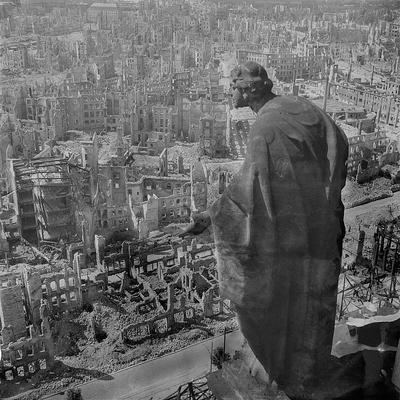
In Europe too, we see how disastrous was the decision to go to war in 1939. Immense destruction, huge loss of life (some estimates say 80 million), cruelties, hardship etc. Also massive economic dislocation.

We often hear half-baked nonsense about how “the war” stimulated inventions and technological progress. Most of this is either not true or is at best half-true. In both Europe and USA, huge strides were being made in the 1930s. What the war did was to change priorities: planes built for speed rather than comfort, housing built on a utilitarian rather than an aesthetic basis etc.

In the UK, much nonsense is talked about the Welfare State in this regard. In fact, social housing (which had existed in limited forms for centuries) was being created on quite a large scale in the UK of the 1930s, particularly in and around London. As for the NHS etc, that was already being prepared in studies etc, though the war may have concentrated minds and so on.

The Phoney War

The Phoney War, also called the Bore War and (in Germany) Sitzkrieg, lasted from September 1939 to April 1940. At that point, few people, even in the armed services of either side (meaning UK/Germany) had been killed. Any bitterness or venom (mainly on the British side and stirred up by relentless propaganda) was small compared to what existed later. There could, after Dunkirk, have been an honourable peace, an armistice. Germany could then have turned its full attention to destroying Stalin’s regime the following year. The Russian people would eventually have come to a concordat with the German Reich. Only the Jewish commissars etc would ultimately have lost out.

Conclusion

Britain lost out hugely by going along with Churchill’s ridiculous adventurism. Terrible loss and turmoil during the years of war, 10 years of “austerity” after the war ended. The perceived “need” (in fact a conspiracy) to import blacks and browns in the 1950s and thereafter in order to make up for those killed and injured in that wholly unnecessary war. Slow poisoning of the folk.

Britain and France declared war on Germany, ostensibly, to protect the independence of Poland. It never happened. Poland was split between the German Reich and the Soviet Union at first, later taken entirely by the Reich, then later still taken entirely by the Soviet Union. Instead of one or two weeks of war, Poland was strafed by 6 years of it. Only since 1989 has Poland regained anything like full political sovereignty. When I myself visited Poland on several occasions in the late 1980s, one still met older Poles who might mention those worthless guarantees of 1939.

Had an honourable peace been found in 1939 or 1940, the British Empire would have wound down more gradually, as would the other European empires. There would not have been so much war and misery across the world, the American cultural death-impulse would not have been so powerful and destructive; also, the environment would not have suffered anything like as badly. Above all, Europe would be fully European and have a fully-European future.

The Latest Turn of the Screw

Today, a collection of System MPs in a Select Committee of the House of Commons decided that the Internet in the UK is too free, despite the increasing censorship seen (I myself having fairly recently been expelled from Twitter). They want new laws to force the platforms such as Twitter, Facebook etc to somehow prevent “fake news” and the “wrong” kind of opinions being seen or heard. They are animated by the election of Donald Trump and by the Leave vote in the EU Referendum which occurred in the UK. Oh, and they want to stop “interference by foreign countries” in UK politics…

I can see why one Californian film mogul referred to a similar delegation of British MPs that he met (about 20 or so years ago) as “yawningly dull Little Englanders”. These MPs seem to think that they can pass laws in their little Parliament of fools which will control the Internet. In reality, the USA will not pass such laws, most of them anyway, because of a thing called the US Constitution. The EU might, in its little Parliaments or in its completely undemocratic Brussels version, or by Commission decree, pass such laws, but I doubt it.

As for “foreign interference”, they mean Russia, mainly, but not a word is said about the pervading and continuing Israeli interference in UK politics. Only one documentary (on Channel 4, about 8 years ago) examined the Jewish Israel lobby in the UK. Al Jazeera TV did another recently, only for paid Israel drones in Westminster to laugh it off.

We do not have a “fake news problem” (unless is meant by that the msm). We have another problem, which might be called a “Zionists in the woodwork” problem.

The System MPs would love the Internet to be (even more) muzzled. They love it when honest people cannot put forward social-national views. They are mostly now enemies of the British people.

Notes

What Do People Need?

On rereading Andrei Amalrik’s Involuntary Journey To Siberia of 1970, all sorts of impressions were received, most not at all new: the lack of freedom in the Soviet Union, the Kafka-esque Soviet legal system, the primitive life lived by Russian kolkozhniki (collective farm inhabitants) in Siberia etc.

However, at the end of the book, the author’s sentence for being a “social parasite” (5 years internal exile –2.5 years of which to be hard labour on a collective farm or elsewhere–) is quashed on appeal, Amalrik returns to Moscow with the wife whom he in fact married in Moscow and during his exile (because he was allowed compassionate leave from the collective farm or kolkhoz to visit his unwell father). He applies to the housing people in his district and, after some difficulty when he has to share with others, is given a flat with a decent bathroom and telephone.

Now, we are often told and quite rightly that Soviet people generally lived poorly, had to share, in many cases, their accommodation by living in communal flats or kommunalki (usually large flats expropriated from affluent persons during and after the Revolution of 1917 and the subsequent Civil War, though in fact some such shared apartments pre-dated Bolshevism), sharing kitchens and bathrooms etc and given, at best,one room per person (it was usually worked out, in theory, at so many square metres per person or family).

All of the above is true, but when one looks at the situation in 2018 Britain, many are not much better off, and some are worse off. Would a prisoner released from incarceration in the UK be given a flat, even a small one? The most he could expect would be B&B accommodation of a markedly poor sort, and to be put on a local authority waiting list, probably behind a horde of “refugees”, “asylum-seekers” and other riff-raff.

In fact, look at how many British people with full-time jobs live! Many in shared houses and flats, or in bedsit rooms. No better off than Soviet citizens! How many “hardworking” (the label of the past few years) people are living in not very nice shared accommodation in the UK, living off pot noodles and the like?

To go off at a tangent, this “hardworking” thing has become a joke: for example, school students all deserve (increasingly meaningless) “A” “grades” in exams because “they have all worked so hard”. Doesn’t matter if they are thick as two short planks and know only force-fed “facts” (often incorrect, as in the case of “holocaust” “history” etc). They are “hardworking” and so are the “deserving” academic poor. They therefore “deserve” to attend a “uni” where they will also “work hard” to “achieve” an almost meaningless “degree” (an equally-meaningless “First”, in half the cases) before –for many–getting a minimum wage (or not much better) job…

The above thoughts should impel us to think about what people need in a basic way, about what should, arguably, be the State-provided or guaranteed minimum.

Ideally, everyone should live in a decent house or flat, free of worries, with pleasant neighbours if any, while doing work which benefits society. That of course is a counsel of perfection, but that fact should not stop us from aiming at a higher and better form of living for all citizens.

For me, everyone should at least have a home, preferably one where there is reasonable space, reasonable peace, reasonable access to green gardens or wider Nature. Living space should be regarded as a human right, not as a way for buy to let parasites to make profits from the need of others. Everyone should have access to telephone and Internet. Everyone should have access to cheap or free public transport, at least in the local area and arguably within a 20-mile radius of home. Everyone should have (up to a determined cap) free water, electricity, heating. Beyond that, everyone should also have a “basic income”, even if only (in today’s money) £20 a week.

We can move to a society where the basics are provided. When people have the basics, they can work to get more, or to improve aspects of society in other ways.

Notes

https://en.wikipedia.org/wiki/Basic_income

https://en.wikipedia.org/wiki/Andrei_Amalrik

https://en.wikipedia.org/wiki/Communal_apartment

https://www.amazon.co.uk/Involuntary-Journey-Siberia-Andrei-Amalrik/dp/0156453932#customerReviews

https://www.amazon.co.uk/s/ref=dp_byline_sr_book_1?ie=UTF8&text=Andrei+Amalrik&search-alias=books-uk&field-author=Andrei+Amalrik&sort=relevancerank


Leadership, Dictatorship and The Need For Effective Government

Dix5gSdWkAAinaz

A woman journalist or opinion-writer of whom I had not previously heard, one Clare Foges, has suggested in an article in The Times that the leaders of the UK and Western Europe might learn from political “strongmen” (she cites an eclectic mixture: Trump, Erdogan, Putin, Duterte).

About the Writer

Having not previously heard of the writer, I did a quick Internet search. The surname suggests a Jewish origin, and someone of the same name posted this online in 2000:

https://www.ancestry.co.uk/boards/localities.ceeurope.austria.Prov.vienna/167.588/mb.ashx.

It seems that Clare Foges wrote speeches for David Cameron-Levita and others prior to the 2010 election and immediately after it. She has also written at least one book for small children.

Having now read a little about her, I should say that she seems to have some intelligence, though perhaps not enough, or not enough knowledge, for the matters she discusses in print. Her understanding of society and politics seems shallow. She gave an interview to the Evening Standard in 2015. In it, she proposes, inter alia, better pay (!) for MPs, who “give up well-paid careers” etc. Ha ha! She really should take a look at the collection of misfits, also-rans and chancers who comprise many (not all, admittedly) of the more recent MPs!

https://www.standard.co.uk/lifestyle/london-life/clare-foges-the-woman-who-put-words-in-david-camerons-mouth-10437029.html.

Indeed, in 2017 she herself wanted to become an MP, for the fairly safe Conservative seat of the Isle of Wight, but withdrew after having been shortlisted:

https://www.conservativehome.com/parliament/2017/05/exclusive-foges-joins-fox-in-withdrawing-from-isle-of-wight-selection.html.

In fact, the then-incumbent MP had hardly “given up a well-paid career”, having been a geography teacher in comprehensive schools for most of his life:

https://en.wikipedia.org/wiki/Andrew_Turner_(politician)#Early_life_and_career

and that MP (also an expenses freeloader…) then “stepped down” after having “become a laughing stock” by reason of his quasi-matrimonial situation:

https://www.telegraph.co.uk/news/politics/conservative/11334299/MP-battling-to-save-seat-in-toxic-Tory-rebellion-after-fiancee-moves-in-with-his-aide.html.

In short, my provisional view is that the writer of the article is, at 37 or 38, someone who for whatever reason has fallen between the cracks, who might have become something in the political realm, even perhaps an MP (and after all, her background as pr/”comms” “intern”, sometime children’s book writer, “Conservative” speechwriter, amateur poetess and (?) professional scribbler on politico-social issues is no worse than that of many “Conservative” or “Labour” MPs, and better than some) but has not.

The Issues Raised

What are we to make of this article suggesting that the UK needs leadership informed by “strongmen”? Duterte is the Philippines leader who has presided over a campaign of extra-judicial killing of drug gangsters etc. Erdogan is the political-Muslim Turkish dictator (by any other name) who is dismantling the legacy of Kemal Ataturk. Putin and Trump are too well-known to need any introduction even to those who take little interest in politics.

The main issue, surely, is that government must govern. It must be effective. Ideally, there will be checks and balances: law, due process, civil rights, property rights (within reason); however, in the end, a useless government has no right to exist.

Political leaders (including dictators) emerge for reasons. In broad brush terms, Putin emerged because Russia under Yeltsin had become a chaotic mess. Pensioners and other poor people were starving or dying from cold or lack of food, by the million. Public sector workers were being paid almost nothing. Jew carpetbaggers had flocked to Russia like a cloud of locusts (or vultures) and were stealing and cheating everything, pretty much. “Russian” Jew “oligarchs” ruled from “behind the throne” and had tricked their way into “ownership” of vast oilfields, diamond and gold mines, heavy industries. Putin began to claw back some of that. Pensioners who had been getting (USD) $5 a month under Yeltsin, now (2018) get $400. People are at least paid for work. Chechen and other gangsters have been stamped on and many killed or imprisoned. Russia has flourished compared to the 1990s.

Erdogan is someone for whom I myself have little sympathy, not least because I value the legacy of Kemal Ataturk. However, Erdogan has improved the lot of the poor, we read, while the economy has improved under his rule.

Trump likewise seems an egregious person generally, and even more egregious as a leader of a government and as a head of state. However, his rise (fuelled by his own huge fortune, of course) was not based on nothing. Many people in the USA are living in poverty. I read that 40% of Americans now require US governmental foodstamps! Many jobs (as, increasingly, in the UK and elsewhere) are “McJobs”, precarious and badly-paid. The drug epidemic is out of control. Illegal immigration had run wild since the 1980s. Whether Trump can deal with these problems and others,  with the “separation of powers” American system, is doubtful, but the dispossessed and marginalized, among others, voted for him to try.

The Missing Leaders

Clare Foges cited Trump, Putin etc, but not the controversial leaders of the 20th Century: Stalin, Hitler, Mussolini, Mao etc. They all took harsh measures but also did a huge amount that was positive. Hitler in particular saved Germany from degradation, removed Jew exploiters from the economy, the professions, the mass media; built autobahns (the first in the world); created air and airship travel routes; vastly improved animal welfare; planned new and better cities and national parks; put Germany to work and (for the first time) gave workers rights such as decent breaks at work, Baltic and other holidays in Germany, and also foreign holidays including cruises. Decent homes were built on a huge scale.

3396AD3500000578-3561575-Hitler_had_lived_in_Munich_just_before_World_War_I_and_remained_-a-1_1461778976380.jpg

an-automobile-on-the-sweeping-curves-everett

Chancellery2DietrichEckartBuhneVW3

Britain could do worse than follow Hitler’s lead, introducing some updated and English/British form of social nationalism.

Stalin was far harsher as a leader and as an individual than Hitler or Mussolini, though Mao might be considered far worse (but of course he was non-European). Stalin however (like Hitler) was put back domestically by war. Stalin did recreate the industrial sector, which was booming before the First World War but which Bolshevism all but wiped out as a thriving economic sector. Stalin’s major mistake (apart from his cruelties and brutalities etc) was to allow the agricultural sector to be ruined via Collectivization, the legacy of which is only now being very slowly erased.

Mussolini did a huge amount for Italy. His posturing on balconies etc is what people now think of when his name is mentioned, but he eliminated the Mafia (until the Americans caused its revival after 1943, releasing the imprisoned leaders and followers), started to get rid of the terrible urban slums (unfortunately more were created as a result of the Anglo-American invasion of 1943); Mussolini also created an advanced scientific and industrial sector, mainly in the North. Famously, he also greatly improved the railways, and “made the trains run on time” (both truth and metaphor). Now, the wartime propaganda of the Western Allies and Stalin is all that most people outside Italy know– Mussolini as clown. Ironic that a real clown (the leader of the Five Star Movement) is now a major political figure in Italy!

https://en.wikipedia.org/wiki/Beppe_Grillo.

Britain 2018

The UK has been pretty much left to rot since 2010. The Blair government, though repressive and in the pocket of the Jewish-Zionist lobby, tried to modernize infrastructure generally. New buildings were constructed: hospitals, libraries, schools. Credit where due.

The David Cameron-Levita-Schlumberger government of idiots was not only the most pro-Jewish/Zionist government Britain has ever had, (until Theresa May became Prime Minister), but also the least-effective of modern times (again, until that of Theresa May?). It not only failed to do anything new and decent, but also failed to maintain that which already existed, in every sector, from libraries and schools to the air force and navy.

The lesson surely is that government must be effective. If it is not, the State stands in peril. The people eventually demand action. They are beginning to demand it now.

The article by Clare Foges is, it seems to me, a sign of the times, or a straw in the wind. The political times in Britain are a changin’…

Notes

http://www.bbc.co.uk/programmes/profiles/3tMvnMp3DFW3z99Zvc7WC3T/clare-foges

https://www.standard.co.uk/lifestyle/london-life/clare-foges-the-woman-who-put-words-in-david-camerons-mouth-10437029.html

A critical article from the New Statesman:

https://www.newstatesman.com/politics/elections/2018/07/sorry-clare-foges-dictatorship-isn-t-just-character-flaw-it-s-crime

Another critique of her views:

https://www.property118.com/clare-foges-anti-landlord-the-times/comment-page-4/

She was desperate to become an MP but no-one wanted her:

https://www.telegraph.co.uk/women/womens-politics/11436355/Sir-Malcolm-Rifkind-resigns-Kensingtons-next-MP-might-be-this-woman.html

Another Clare Foges article. She seems to be very much of her time, meaning 2010-2015, as in this Cameroonesque piece of sort-of social Darwinism. I think that Clare Foges can be written off as a serious commentator.

https://www.thetimes.co.uk/article/put-feckless-patients-at-the-back-of-nhs-queue-5hnlqqstg

https://www.dailymail.co.uk/news/article-2267901/Clare-Foges-The-raven-haired-poet-ice-cream-seller-wrote-PMs-big-speech.html

Further thoughts, 6 December 2018

According to the Daily Mail, Clare Foges is “a devout Christian”. She may still be of part-Jewish ancestry (see above). My other query about the “devout Christian” bit is how does a “devout Christian” want to put IVF couples ahead of people needing NHS treatment for serious conditions just because they drink, smoke etc? Is that “Christian”? Even evil Iain Dunce Duncan Smith is said to be “devoutly Christian”…Yeah, right!

In the end, I suppose that it scarcely matters whether Clare Foges is this or that…and I just noticed that her Daily Mail bio was written by the egregious Andrew Pierce, so we can probably discount it…

Incredibly, she is appointed OBE!

https://www.huffingtonpost.co.uk/entry/labour-blocks-david-cameron-speechwriter-claire-foges-from-joining-party-to-oust-jeremy-corbyn_uk_58d90195e4b03787d35a3d08?guccounter=1&guce_referrer_us=aHR0cHM6Ly93d3cuZ29vZ2xlLmNvLnVrLw&guce_referrer_cs=Y57ohgKaElO9EWmxBHKC1w

Looking at her photos and her behaviour, I think that she is probably at least partly-Jewish.

Her Twitter comments (read the thread):

https://twitter.com/ClareFoges/status/985813260824989696

She has not tweeted since April 2018.

She writes in The Times, but also as freelance pr person…

http://www.finelinelondon.com/

She has certainly written columns in The Times [of London] several times, but is not on that newspaper’s list of its 29 “key” columnists. I have just taken a look on the Internet, and not seen anything online written by her as Times columnist in the past months (since August 2018), though her Linked-In profile avers that she is still a Times columnist. I did see a piece from November 2018 published in The Sun “newspaper”.

https://uk.linkedin.com/in/clare-foges-906a4676

Update, 9 November 2020

I have just seen that Clare Foges has been writing a column for The Times about once per week in recent months. I had not noticed, never now reading that newspaper (does anyone?I suppose some still do).

How Can There Be International Large-Scale Politico-Social Change by 2022?

I have been re-reading Involuntary Journey to Siberia, by Andrei Amalrik [https://en.wikipedia.org/wiki/Andrei_Amalrik], a Soviet dissident better known for his short book Will the Soviet Union Survive Until 1984? (both works were published illegally outside the Soviet Union in 1970, a fact which resulted in a 5-year sentence of hard labour and then internal exile in Kolyma).

Leaving aside the fact that the slowly increasing repression of free speech and free political activity in the UK of 2018 is mirroring (albeit in slightly milder form) that of the Soviet Union of 1970, it occurred to me –not for the first time– how hard it is to predict, accurately, sudden or large-scale socio-political and socio-economic change.

When I read Will the Soviet Union Survive Until 1984?, which was in or about 1980 (the year Amalrik himself died, a result of his own careless driving in Spain), I thought that the thesis was possible but would take far longer, probably 20 years longer. I thought that there would be a gradual collapse. I was wrong; so was Amalrik, but only by 5 years –in reality– or by 7 years (formally). Sovietism and all other forms of old-style socialism across the world died in 1989 in real terms, though in official terms the Soviet Union coughed to a halt only in 1991. This was perhaps appropriate: the Soviet Union was established formally only in 1922, though everyone thinks of it in terms of its having been established de facto in 1917.

It should now be added that all the “experts”, “Sovietologists”, “Kremlinologists”, Foreign Office bods, SIS bods, journalistic scribblers etc (all the ones I ever heard of, anyway) laughed at Amalrik and his book. The “East-West” Cold War set-up seemed set in stone. The Soviet Union was a granite monolith. They had been brought up in it or on it, most of them, most having been born in the 1930s and 1940s: nothing would happen suddenly. They were wrong. A combination of factors brought about not only the swift collapse of Soviet power, as well as the Soviet “empire” worldwide and particularly in Europe, but also that of all forms of ordinary old-style socialism, from the CPSU through to the pre-Kinnock/Blair UK Labour Party.

Lenin thought that the revolution in Russia was upon him in 1905; he discounted the real upheaval in 1917 and very nearly missed the boat. Hitler also thought that his time had come in 1923; when it did arrive, in 1932-33, he was uncertain at times about it.

I happen to believe now that we are in a current of (about, approximately) 33-year history. 1923, 1956, 1989, 2022. If I am right, the year 2022 will bring about another huge change in economics, politics, society, the world order generally. Think of how, say, China has changed since 1989. Russia too. Even the UK has changed hugely since 1989. The finance-capitalist “reforms” under Mrs. Thatcher had not started to affect most people outside the formerly industrialized North of England, South Wales etc. The mercantilism and commercialization that has happened since 1989 has changed the UK profoundly, in most respects in a not-good way, though there have been positive changes as well.

In brief, and without pretending to be comprehensive, one can say that, in the UK since 1989, the professions have largely become businesses, that the State has, at least in part, abandoned many who need help, that the UK (especially England) has largely become a non-white society, that the Jew-Zionist influence over mass media, politics and other areas of life has become pervasive and destructive, that there has been a general coarsening of thought, of cultural life, of behaviour.

UK politics has, since 1989, gone through the changes outlined above with the following results

  • Labour has had a quarter of a century of what amounts to control by New World Order/Zionist Occupation Government NWO/ZOG types: Kinnock, Blair, Brown, before collapsing under Ed Miliband; its MPs are still mostly of that type and Jeremy Corbyn is finding it hard to completely defeat the Jew-Zionist/Israel-First lobby within his own party. The Old Labour members and MPs still exist, but only just. Few now have ever done industrial work; many have never done non-political work at all, unless one includes management consultancy, public relations, “comms”, “organizing” what remains of trade unions, pseudo-academia etc.
  • The Conservative Party is now almost devoid of real members. The average age of members is somewhere around 70 if not 75. The membership figures are now kept secret, but it seems that a party which once had 4 MILLION members (in the 1950s) now has about 20,000. A Potemkin village with no-one living there. A mirage.
  • Other parties are even worse off. The LibDems have surely had their day except as a tactical vote for discontented voters trapped in “safe seats” occupied by parties they do not like. The graphics explain it.C3l1gk9XAAMHAwF

C64bh5XW0AIWYgy.jpg

  • UKIP was the populist answer to the gulf between governed and governing. However, the totally unjust voting system defeated it (in any case, UKIP had few answers to Britain’s real problems, was pro-ZOG/NWO, and by the time it deflated after 2014, even had non-white candidates! Some called it “kosher nationalism”). UKIP’s 2015 result said it all: 3.8 MILLION votes, 1 MP (former Conservative Douglas Carswell, an entryist, in my view).
  • Real British nationalism of a more social national type has hit rock bottom. The BNP failed in 2010 and collapsed in 2015. There are now only a handful of parties of general “nationalist” type, all of which are jokes, only one of which (Britain First) has more than 500 members.
  • The people are divided into a minority of wealthy and/or affluent who have doubled or tripled their capital over even the past decade, and the rest, many of whom are paying through the nose for poor rented places in which to live, who make rubbish money from jobs which (like their rented homes) are without security; their votes mean almost nothing, their views mean less, and they are just disposable labour units in an unfair society.

It Could Happen

An opinion poll has just been published saying that 24% of UK voters would vote for an “extremist” “far right”, “anti-Islam” and anti-mass immigration party. 38% want a real Brexit and would vote for any new party promising it (credibly, presumably). Leaving the tendentious wording aside, there we have it! The prize is right in front of us!

It could happen that

  • Brexit either happens on WTO terms, or fails to happen, causing massive discontent;
  • Russia and NATO get into actual conflict in Eastern Europe;
  • Corbyn becomes Prime Minister but with no majority; or
  • Some Conservative Party idiot-MP becomes a weak PM; and
  • The people are pushed beyond endurance on real pay, rents etc.
  • Mass immigration is not stopped or even increases.
  • Zionist exploiters are exposed even more than they have been.

In those circumstances, a credible and very radical social national party can take power and start to clear away the rubbish. 2022 and thereafter. Then we can see across Europe removal of the migration-invaders, removal of finance-capitalist parasites, a better society in Europe (inc. UK) with decent work, pay, Basic Income, animal welfare etc.

The prize is before us! 

Reply to David Dimbleby

I have just now watched a BBC TV show, Putin’s Russia with David Dimbleby. In the programme, Dimbleby goes around Moscow interviewing a variety of people and asking their opinion of V.V. Putin. He started off by interviewing a lady who has had, I think, 10 children, thus ensuring her a medal, significant State financial benefits and a title which is different from but in essence the same as the old Stalin-era one, Mother Heroine of the Soviet Union. Fairly predictable opening gambit.

Dimbleby interviewed a number of dissidents: Yevgenia Albats, a fairly obvious Jewess and anti-Putin journalist; then another woman, who was arrested for 5 minutes, then released without charge, for going to the Duma (Parliament) with a satirical cardboard cutout of a pro-Putin politician accused informally of sexual offences. Hardly Stalinist repression: the same could happen in the UK. Finally, he interviewed an anti-Putin think-tank personage, who says that, while there probably was government interference in the recent Russian Presidential election, Putin would have won anyway. The dissident political figurehead Navalny was mentioned by Dimbleby. Navalny’s poll ratings have usually been well below 20% and his electoral showing as Presidential candidate was about 1%.

On the pro-Putin side, Dimbleby interviewed a smoothly duplicitous Russian Orthodox prelate who would not have been out of place in the Roman Catholic Curia c.1600. It should come as no surprise that the Russian Orthodox Church supports the Russian state. After all, the slogan of late-Tsarist official Pobedonostsev was Orthodoxy, Autocracy, Nationality [Православиесамодержавиенародность]. The Russian Orthodox Church Church (that is, the small part not repressed during the Jewish-dominated years of the Revolution, Civil War, 1920s New Economic Policy and 1930s Stalinism) supported Stalin –or pretended to– during the 1940s, though ignorant peasant Khrushchev again repressed the Church during the late 1950s, the “Thaw”, a period otherwise thought of as “liberal”.

Dimbleby also visited a class of children being taught weapons handling and maintenance, mixed with some patriotism and religion, an ironic twist on non-urban America. Dimbleby went on to talk with others: one ultra-nationalist whose interview was short and not-so-sweet; a group of young people, all Putin supporters. However, his most telling interview was with an Englishman working for RT, who was comfortable with his job and role.

It was pretty irritating to see Dimbleby, mouthpiece of the BBC, which is itself a mouthpiece for the UK Government and (like the UK government) riddled with Jew-Zionists, criticize lack of journalistic and individual liberty in Russia. He himself was party to the planned ambush of (arguably, naive) Nick Griffin on BBC TV Question Time, which (again, arguably) finished off the BNP, until then on a roll. Dimbleby was scathing about what happens in Russia to those who say the “wrong” things. Perhaps he missed the several recent criminal trials in the UK of anti-Zionist dissidents such as Jez Turner of The London Forum (sentenced to 1 year’s imprisonment for making a speech partly about Jews), or Alison Chabloz, convicted of singing satirical songs about the “holocaust” scam and the Jewish fraudsters who make money out of it. Ironically, Alison Chabloz is in court in London tomorrow, for sentence. The last two people named have also had their Youtube channels taken down. Alison Chabloz has also (like me) been expelled from Twitter. “Long live freedom”…

Anyone who was in Russia or the Russophone area in the 1990s (I was: a week in Moscow in 1993, a year in Almaty, Kazakhstan, in 1996-97) knows that, at that time, Russia was a wreck of a state, looted by (mainly) Jews. People starved by the million, especially the elderly. Yeltsin was a corrupt puppet. Putin may not be the perfect philosopher-king, and he does have both personal and ideological flaws, but his rule was and still is necessary.

Postscript

Dimbleby also criticized the lack of an independent judiciary in Russia. I was unable to compare that to the English system, in particular to the Alison Chabloz case, in which the defendant, a satirical singer-songwriter persecuted by the Jewish-Zionist lobby, was in court for –in effect– singing songs, because the matter was still before the court. Now that she has been sentenced, I can mention the fact that, at first, she was before the Chief Magistrate for London, one Emma Arbuthnot. The latter is married to a Conservative Party MP who, like 80% of such, is a member of Conservative Friends of Israel; the couple have been on all-expenses-paid trips to Israel. Alison Chabloz, via her lawyers, objected to Mrs Arbuthnot presiding, and she recused herself (stepped down from the case). Arguably better than Russia, but not much.

What’s in a Name?

Religious and occult literature is replete with learned disquisitions about the sacred power of the Name. We see that, in Genesis, the Bible itself starts with the words “In the beginning was the Word, and the Word was with God, and the Word was God.” In the New Testament, this theme is continued. Jesus Christ renamed some people who had “come over to him”, such as Peter. Others, later, renamed themselves, to mark their “ideological” or spiritual transformation, as when Saul became Paul after his experience on the road to Damascus.

In Rome, Octavius becomes the Emperor Augustus or Caesar Augustus eventually (the style Augustus Princeps was bestowed upon him by the Senate of Rome in 27 B.C., when he was 35).

In early mediaeval Spain, Rodrigo Díaz de Vivar is given the name El Cid (from the Arabic for “lord”, sidi) to crown his mission. Likewise, in the Christian monastic tradition, the postulant chooses or is given a new name, often one referencing a deceased saint. The same is true of religious leaders such as bishops, metropolitans, popes etc. Gandhi is called Mahatma Gandhi, same surname but elevated by the new forename.

In literature, we see that the hero who fights perceived evil, particularly if doing so covertly, takes a new name, a nom de guerre: the Scarlet Pimpernel was an early example, followed by many another, right up to the “superheroes” of the 20th and 21st centuries: Superman, Batman, Spiderman etc.

In the field of espionage too, we see that sometimes a secret agent who becomes a known character is given or takes a name: the White Rabbit, the Welshman etc. Mata Hari…

Politically, the same applies: the anarchist Bruno Traven (itself a pseudonym) was known in early 1920s Germany as der Ziegelbrenner (“the Brickburner”). Better known were the noms de guerre of the Bolshevik leadership: Lenin (V.I Ulyanov), from the river Lena; Stalin (I.V. –or JV– Djugashvili), from “steel”, Trotsky (L.D. Bronstein), a Russification or Polonization of the original Jewish (Yiddish/German-style) name. In fact, most Bolshevik leaders took on longlasting pseudonyms, in a macabre aping of those old religious orders: Scriabin became Molotov (from molot, “hammer”), though he was a rare real ethnic Russian. Most of the Bolsheviks who changed name did so partly to disguise their otherwise all-too-obvious Jewish identity. Having said that, the new names of the leaders also often spelled out the new strong self-image: “Steel”, “Hammer” etc. [Stalin and Molotov were among the few non-Jews].

Though German National Socialists were not generally given to changing name and in fact disapproved on principle, some did so temporarily, while on the run or on special missions. Hitler himself used the nom de guerre “Wolf”, Herr Wolf”, and “Herr Doktor Wolf” while evading State agents in Munich after the failure of the Beer Hall Putsch of 1923. Hitler himself did often say that it was fortuitous that his name was Hitler and not, as it perhaps might have been, Schicklgruber

[https://en.wikipedia.org/wiki/Adolf_Hitler#Ancestry].

“Heil Sch…!” you get my meaning. Names are important. Many a showbusiness personality has achieved fame and fortune only after changing name. Beyond even that, the use of “transformational vocabulary” can change, with the name, the sense, the sense of mission or purpose. Thus, the U.S. combined operation “Desert Shield” of 1990 became “Desert Storm” of 1991, as defence turned to attack.

The use of a particular name for a political party or group can energize it and make it stand out: En Marche!, le Front National, the Angry Brigade, Leave and so on.

An allied aspect is that of the Invocation, a word or form of words designed to link the material with the spiritual, to send up prayer or supplication, and to bring down power to the Earth. “Heil!” is an obvious example. “Heil Hitler!” which eventually (in just a few years) replaced the likes of “Good day” and “goodbye” in, at least official, Germany. Hitler’s speeches are often very well-written, erudite, informed, but the power of Hitler’s oratory was not founded on its content, but on something above and beyond content. Yet that still required words as a basis.

When we consider how to pull the UK and Europe out of the mess into which it is sliding, we must consider the sacred power of the Word and use it.

Notes

https://en.wikipedia.org/wiki/Trotsky_(surname)

Taking the Whole Package

This evening, I watched a show called something like “The Real Marigold Hotel”, in which four elderly once-“celebrities” went to a country (in this case, Cuba) in order to see what facilities might be available for retired people. As such, as a “documentary”, it was very superficial and lacking depth, though entertaining. What interested me was the society in general.

The Cuba –actually just Havana– shown (and I have never been there, though I am quite well acquainted with its history of the past century and, in the manner of Sarah Palin, have glimpsed it from the air and from the sea) was in fact largely the stereotype: old American cars in pastel pink and blue, decrepit but charming colonial mansions, palm trees etc.

The old people went to cultural classes and talked to Cubans in parks. It struck me anew that any society is a package: Cuba has some culture (both European and its own mixture incorporating the Caribbean and African, as well as that of the USA.

The Havana shown was one where the parks were (on the face of it) safe to visit, the people well-educated (one or two Cubans carefully making the point that their good education had been free, as were the classes available to the elderly).

Most people know that the Cuban healthcare system is also very good, both in relative and absolute terms. On the other hand, and as the TV programme noted, the Internet is tightly controlled, requires a card (no doubt traceable..) and is mostly only available in “wi-fi” areas such as certain parks; not so many have home Internet connection.

It is perhaps pointless to reiterate what most of us know in terms of the Cuban police state (which –in all the documentary films I have ever seen– is so pervasive that it is invisible: you never see the hand of the State in plain sight, though it is there all right).

So there you have the Cuban package: low crime rate (supposedly), no obvious disorder, at least some rather polite, cultured citizens, good education and healthcare etc (one Cuban did say that it was better before the supportive Soviet Union collapsed), as well as a certain charm.

As against that, a socialist state which controls the news and Internet tightly, imprisons dissidents for years (not to mention the large number who, in the late 1950s and 1960s, were just shot); a socialized economy which (leaving aside the effect of American embargo) was and largely is hopelessly inefficient at providing consumer goods. Travel restrictions, too.

Let us take a different case. The German Reich in the 1930s was intolerant of dissidents too, though it was far more tolerant than was the Soviet Union under Stalin or, indeed, Cuba under Fidel.

The National Socialist state imprisoned some dissidents or placed them in concentration camps such as Dachau (though few now know that many served short sentences, such as 3 months, there, and were not there indefinitely). Others were encouraged or more or less forced out of the country. There was a generally militarized ethos. How could a state both German and quasi-socialist be anything else?

In the Reich, there was state interference in culture (though, again, far less than, say, in the Soviet Union). Consumer production was given a lower priority than rearmament (“Guns Before Butter”), though large projects for the benefit of the people were also pushed into the foreground: the Autobahnen; the VW “people’s car”; the 1936 Olympics; a huge programme of educational and cultural events; the Kraft durch Freude [“Strength through Joy”] programme of Canary Islands cruises and Baltic beach holidays for the people (at a time when, in the UK, most people who had a holiday at all were corralled into poky Blackpool guest houses…); better nutrition for young people, too.

The National Socialist Reich was hugely beneficial for most Germans, certainly compared to what existed in the Weimar period. The Reich solved the inflation problem, the unemployment problem, the decadence problem and, yes, what it termed “the Jewish question”.

In the UK at the same time, there was greater ostensible “freedom”: elections every 5 years, the freedom to eat daily at the Ritz or at the Savoy Grill (if one had the funds..), no obvious book censorship (though, behind the scenes, there was much, not least via the Jewish element, even then). There was official theatre and cinema censorship (via the Lord Chamberlain’s office) and there was also, of course, grinding poverty (especially outside the South East), and a very repressive justice and prison system; not to mention the pervasive class system and its inequities.

No state, no political system is “perfect”. All have flaws, and all (most, at least) have benefits (though what might be the benefits of living in, say, North Korea or the Congo might be disputed). The aim can only be to do the best with what is available at the material time. We take everything as a package, as a whole.

People are Worth More than Their Opinions

Someone, possibly Auden, remarked once that “people are worth more than their opinions” (in relation to the Comintern/NKVD agents of the 1930s active in the British universities). There is something in that. On Twitter, for example, I have noticed that people bitterly divided politically will often still support, separately, such causes as animal welfare or environmental improvement. Wider than that, I am willing to see that some of those who attack my views (and, often, me personally) are, in some cases –and like me– interested in the welfare of the more downtrodden parts of the population. Sadly, most of those who attack me –and this particularly applies to the Jewish Zionists– are unwilling to see the slightest good in me or my views. I can only assume that to do so would weaken their assertion that anything connected with social nationalism (and, a fortiori, National Socialism) is irredeemably evil and without any good in it at all.

Adolf Hitler was of different mind. He accepted into the ranks of the NSDAP and SA, even into the SS, many who had been his enemies. People, in other words, who wanted a better society but who at first did not accept that National Socialism would create one.

In the Soviet Union, from 1917 onward, many who fought Bolshevism or were at least opposed to it were later shot, imprisoned or exiled as so-called “former people”, others however were allowed to stay as free as anyone could be under Sovietism. Some even became members of the CPSU and/or the officer corps of the Red Army, at least until the purges of the late 1930s. Beria’s own past was full of ambiguities. During the 1941-1945 war, the vast majority of Russians fought and struggled together (whatever one may think of that).

In the UK at present, I can see that many want positive social change and that many (sometimes the same people) want to preserve the better aspects of the existing society. These people belong to Labour (especially the Corbyn wing), the Green Party, the LibDems, UKIP, even the Conservative Party. I trust that, when a real social national movement comes into existence, these people or many of them will feel able to join with me in the rebirth of this country.

The Right Attitude to Race and Culture

Race and culture are among the hottest topics of the moment. From the migration-invasion of Europe to the American wave of the alt-right, to the elections in European states, there is a ferment which will not calm. As social-nationalists, standing first and foremost on the racial-cultural front line, we must be clear where we stand in terms of attitude.

It disturbs me when I see unpleasant and too-general remarks made even about the basest of race-types. We must never forget that, as Adolf Hitler himself said in another context, “there is the individual, but beyond the individual is the race.” The individual comes out of a race; he is made by it, formed by it, is in most cases brought up and educated by it and by the nation which is part of the race. However, the individual can transcend the race-group (equally, can descend from it). German National Socialism itself recognized this reality when it granted a relatively small number of persons, who were not Aryan, the status of “honorary Aryan” or Ehrenarierhttps://en.wikipedia.org/wiki/Honorary_Aryan

We today, even those of us who are social-national in political orientation, are yet not  National Socialists in the same sense as those who fought for European humanity in the 1920s, 1930s and 1940s. We today have our own path forward. At the same time, to put it in Biblical language, we “honour our father and our mother” and that means that we honour National Socialism as the ground from which we sprang.

Leon Degrelle, the political leader, front-line fighter and thinker, had this to say on the subject after National Socialism in its original phase had passed into history:

becwoaeccaazenq

There is no need for social nationalists to utter insults at blacks, Jews or members of other groups, except where that is justified and/or where it makes a political or social point. I do not want to concentrate on the American socio-political situation. I am not American, have not lived or worked there for many years and am focussed on Europe and Russia. However, we have to recognize that American society is very different from our European society. American society has had a relatively recent history of slavery, of genocide (the American Indians, aka Native Americans), of a civil war in which 3% of the population died, of the resistance to the social consequences of that war in the South, that resistance being, in part, the Ku Klux Klan, and so on.

American politics has become far more bitter, far more polarized, particularly in language, than is generally the case in Europe. There is also the point that there is a far wider spectrum of education and culture in the USA than pertains in most parts of Europe, or even Russia.

For me, it is natural to regard the non-European races as distinct and as having their own paths to the future, while equally recognizing the necessity (for all races) for the leading role of European humanity. For some Americans, this is perhaps less obvious and those other races seen as purely enemy contingents.

Social nationalists must take every opportunity to refute the lie (often though not always made by Jewish Zionists) that we base our political philosophy on “hate”. We ourselves know that that is not so, but often the public is bamboozled by the Jewish Zionists into believing the lie. For example, we wish not to be ruled or owned or influenced by the Jewish Zionist element, but that is, if you like, “defensive” in nature.

Our attitude to race and culture is one of recognition of evolution and involution. Our European race is generally still evolving, as is the “Russian”, “Slavonic” or “Slavic” race which (important point) will not come into its plenitude for another 1,500 years. Other races in this world are stagnant or are degenerating. The prime motive force behind social nationalism is to evolve the race and nation to higher levels and to destroy any threats to that evolution. This is a positive, not a negative, political world-view.

In the future, European and Euro-Slavic humanity will have powers of soul, of mind, which today would be regarded as magical. This is the point to which we as a people have been striving.

When we see the sacred Swastika, we must understand it to be a symbol of evolution, of our evolution.

TorchSwastika