Tag Archives: Rudolf Steiner

Has Parliamentary “Democracy” (as we have known it until now) Had Its Day in the UK?

Preamble

The Brexit argument in the UK has brought to the fore divisions and truths which, until recently, had been covered up by a “politically correct” or bien-pensant “consensus” in the (largely Jew-Zionist-controlled or strongly influenced) mass media and political milieux.

Anyone who imagines that “Brexit” is just about the UK’s membership of the EU is indulging in hobby-politics and joke-politics and/or exhibiting very poor political judgment. I have blogged about this on previous occasions, eg:

https://ianrmillard.wordpress.com/2018/12/02/brexit-is-to-some-extent-only-a-metaphor-what-could-it-mean/

UKIP is the joke party and hobby-politics party of the UK, effectively a one-trick-pony, obsessed with the EU and EU immigration but not hitting hard on non-EU immigration and only peripherally touching on other issues. However, those voters who grasped at the UKIP straw up to 2015 were voting to a large extent not for Nigel Farage as Prime Minister, not for UKIP’s clown MEPs as UK ministers, not even simply to get Britain out of the increasingly sinister EU matrix, but as a protest and shout of anger against a whole host of issues, not all of which are connected directly to the UK membership of the EU.

What Is Democracy Anyway?

“Democracy” is one of those terms which is rather imprecise and commonly misused (another is “holocaust”, usually and deliberately misused and distorted by Jew-Zionists and others as “the Holocaust”, the definite article and the capital letter supposedly differentiating any misfortunes visited on Jews in the Second World War from similar misfortunes visited on non-Jews throughout history).

In ancient Greece (for example Athens, the home of the idea of “democracy”), we see that only the relative few had full political rights.  In the 4thC BC, Attica had about 300,000 inhabitants (in the state as a whole, not just the “urbanized” polis of Athens itself). Out of that population, only about 100,000 were citizens. Out of that 100,000, only 30,000, being adult male citizens who had completed military service or similarly accepted service, were allowed to vote or to participate in political life. Women, slaves, freed slaves, children and metics (foreigners resident in Attica) were not allowed to vote etc. In other words, out of 300,000 inhabitants, only about 30,000, 10% of the whole, played a significant political role.

UK Democracy: the expansion of the electorate

In more modern times and in England/UK, we see that, though a kind of representative Parliament existed from the 13thC AD, the electorate (using the term broadly) widened over the centuries. At the time of the first great Reform Act (1832), the population of England and Wales (excluding Scotland) was about 12 million, out of which only 200,000 in counties and perhaps 20,000 more in boroughs had voting rights (see Notes, below), about 2% of the whole population (nb. population estimates of that era are not very accurate: some estimates say 400,000 in toto, so perhaps 4% of all inhabitants could vote), a far smaller percentage than in Periclean Athens! In France, the percentage with voting rights was even smaller, but was expanded hugely when universal suffrage was introduced in 1848.

The percentage expansion of the electorate in Scotland in the 1830s was far greater than applied in England and Wales. Some historians use the term “revolutionary”. I wonder whether that has perhaps had a lasting effect on Scottish socio-political attitudes down the line, even to the present day. Just a stray thought…

Further expansion of the electorate in the UK (as a whole, not just England and Wales) in the 19thC meant that, by 1912, there were 7.7 million voters, a figure that increased to 21.4 million following the Representation of the People Act 1918, which extended the franchise to most women of 30+ years, as well as to almost all men of 21+. Of course, the actual population had also increased very greatly, from 27 million in 1850 to 42 million in 1918.

In 1928, women 21-29 also gained the vote, increasing the number eligible to vote to about 27 million.

Changes in the Post-1945 era: where are we now?

UK voting qualifications have not changed substantially since 1928, except that, since 1948, university graduates have no longer had two potential votes, and the minimum voting age is now (and since 1970) 18.

There are now about 65 million inhabitants in the UK (some put the figure higher, by reason of undocumented, unregistered “illegals” etc).

Does “democracy” mean that all inhabitants of the state must be enfranchised?

The South African Example

We have seen that, in ancient Athens, only male citizens who had completed military service could vote. In “apartheid” South Africa, there was a fully-functioning democracy limited however to those of European (white) origin.

There had, prior to 1910, been non-racial forms of limited democracy in Cape Province, limited by reference to property etc. From 1910-1961, the vote was granted to all white men in South Africa, to mixed-race men in Cape Province, and to black men in Cape Province and Natal. Only white men could become Senators or MPs. White women were allowed the vote in 1930 and could serve as MPs or Senators. Blacks and “coloureds” (mixed-race) were barred from holding those offices. In 1960, the black franchise was terminated; the mixed-race franchise followed in 1968. Later, in 1984, an attempt was made to re-enfranchise the mixed-race population and to enfranchise, on a limited basis, the Indian population.

In 1992, a small majority of (white-only) voters endorsed, by referendum, the end of the apartheid system, after which South Africa adopted a different system, under which all person of 18+ years can vote or be elected. In practice, however, this led to what is effectively a one-party, typically-African state, shambolic and corrupt. The African National Congress (ANC) operates what is effectively an elected dictatorship. In the most recent election (2014), its vote declined, but it still holds 249 out of 400 seats (on 62% of the popular vote).

Under this “new” (post-1994) “democracy”, the white population of the country is under siege from both crime (racially-based) and/or (connected) “political” attack, such as the robbery, rape and murder of whites, particularly in the rural areas. Neither are the (mainly black) poor of South Africa helped by the “elected dictatorship”. Indeed, in some respects they are worse off than they were under apartheid. The “infamous” pass laws may have restricted the blacks, but also restricted crime, which has become epidemic.

The USA

The USA is supposedly a “democracy”, but in practice any Presidential candidate has to be a multi-millionaire or billionaire, or have the support of such, simply to be seen as a credible candidate, or to be able to buy TV ads (this is about the same thing, in practice). If elected, he will find that to do anything effective requires that he be not opposed by either the Congress or the Supreme Court. This rarely happens. In most cases, the separation of powers prevents anything effective, let alone radical, being implemented.

The UK

c64bh5xw0aiwygy

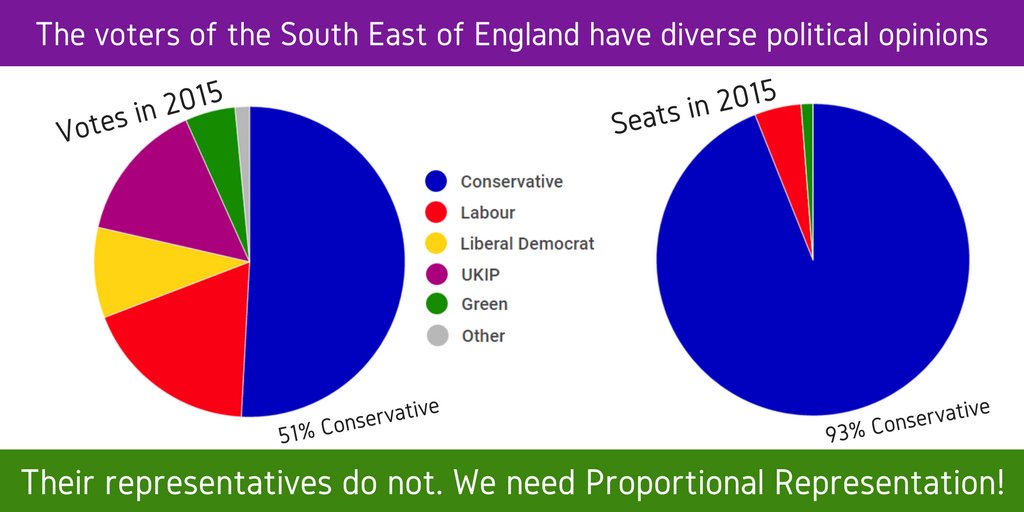
In the UK, there is “democracy” (we think). Almost everyone can vote, almost everyone can be a candidate. Yet there are impediments: the powerful Jewish-Zionist lobby (special-interest group), the entrenched First Past The Post (FPTP) voting system, the need for finance, and the way in which boundaries are deliberately sliced up to provide a semblance of “fairness”, but in fact to favour 2-party or sometimes 3-party “stability” over real reflection of popular opinion. There is also the fact that “main party” (System) candidates are usually carefully selected to exclude anyone with even mild social-national views. The “choice” is then put before the electorate (together with the minor candidates who almost invariably have no chance at all).

Another important aspect is that, since the Tony Blair government passed its restrictive laws, political parties have to be registered, can be fined (eg for refusing membership to certain types of person, or certain racial or national groups), and can even be “de-registered”, thus barring them from standing candidates in elections. Democracy?

Here is an example from the General Election of 2015.

C3l1gk9XAAMHAwF

Brexit

The Brexit vote has exposed the sham or part-sham of British democracy. David Cameron-Levita thought that the 2016 Referendum would be easy to “manage”. He had, after all, “managed” two previous referenda: the Scottish Independence referendum and the AV-voting referendum. Third time, he miscalculated. The people, on the FPTP basis, voted about 52% to 48% for Leave. This was a shock to the System. Immediately, the Remain leaders started to demand “No Brexit”, and for a second Referendum, which would (once the voters had been exposed to enough fear propaganda) come to a different result, and/or for Parliament (most MPs being “Remain”) to just ignore the 2016 Referendum result which (they said) had been procured by fraud, lies, or post-KGB Russian trickery…

The fact is that, leaving aside the “sheeple”, the hard core of anti-Brexit Remain consists of

  • the affluent/wealthy metropolitan self-styled “elite”;
  • the big business people;
  • the Jews (most of them);
  • those who have done well financially in the 2010-2019 period;
  • the brainwashed under-30s, mostly from not-poor backgrounds, who imagine that not being in the EU somehow prevents them from getting (for most of them, non-existent) jobs in the EU, or that they will even not be allowed to travel after Brexit!
  • Those shallow little nobodies (again, mostly young or would-be young urban-dwellers) who think that it is old, unfashionable and “gammon” (white Northern European British) to support Leave or indeed to have any pride in England’s history, race and culture;
  • Almost all of those working in the msm.

These groups have become ever more severe and open in their hatred of Leave supporters. There are now open calls for the rights of, in particular, voters over the age of, perhaps, 60, to be restricted, for older people to be disenfranchised, especially if white, (real) British, or “racist” (i.e. people who see their land and culture being swamped and destroyed).

Here, for example, we see an almost archetypal Remain whiner, the broadcaster Jeremy Vine, 53, who is paid over £700,000 a year by the BBC and maybe as much as £100,000 p.a. from elsewhere (despite having been awarded only a mediocre 2:2 in English at university and then been –in my opinion– a markedly mediocre Press/radio/TV journalist).

Here’s another idiotic statement by Vine, though on an unrelated topic:

https://www.devonlive.com/news/devon-news/carol-vorderman-defends-devon-girl-2429731

We see from examples around the world, eg South Africa, or Zimbabwe (etc) that one-man one-vote “democracy” can lead to elected dictatorship. In the UK, it has become increasingly clear that the Parliamentary democracy in place does not reflect the views of the bulk of the population, and certainly not the bulk of the white real British population, those with whose future I concern myself.

Leave may “only” have won the EU Referendum by 52%-48%, but there are nuances here: the assassination of pro-Remain MP Jo Cox, only a week before the referendum certainly had an effect, and is thought to have changed the outcome by as much as 10 points (at the time of her death, Leave was 10 points ahead of Remain in some polls); particularly as much was made of supposed secondary culpability of Leave propaganda for the attack. The referendum outcome might easily have been 60% or even 65% for Leave.

There is also the point that most “blacks and browns” and other ethnic minority voters (eg Jews) voted Remain if they voted at all. Most Scots voted Remain too (no doubt because they have a faux-nationalist SNP as a comfort blanket). Take away those Remain blocs and it might be that about 60% of white English and Welsh voters voted Leave, which might have been 70% without the Jo Cox matter.

Alternatives to Parliament Deciding Everything

I favour the Rudolf Steiner concept of the “Threefold Social Order”. As I paraphrase it, and in the contemporary UK context,

  • it means that an elected Parliament decides matters properly within the political sphere or “sphere of rights”;
  • it means that Parliament (and government) does not run the economy or economic enterprises (though it can regulate it and them); likewise, economic forces and personalities cannot rule the political sphere and/or “sphere of rights”;
  • it means that the State (or economic forces) cannot rule over the proper ambit of the sphere of spirit, culture, religion, medicine, education.

This obviously moves on from the conventional “Parliament rules supreme” idea, developed in the UK since the time of Cromwell.

We can see that Parliament in the UK is no longer fit for purpose. Those currently elected have only a limited mandate. Greater freedom and a more efficient as well as a more just society depend on proper integration of the three basic spheres: political, economic, spiritual/cultural.

There is no necessity for everyone to vote. Voting should be for citizens who are resident and who are of suitable age (I favour 21 years, at minimum). Foreigners, offspring of foreigners, persons who are mainly of non-European origin etc should not be allowed a vote.

Brexit and the future

People voted for Brexit for many reasons and fundamentally out of a lack of satisfaction with the existing way of life in the UK. That urge for something better may be the basis for social-national reform or even revolution. The British people will no more allow themselves to be treated as helots.

Notes

https://en.wikipedia.org/wiki/Athenian_democracy

https://en.wikipedia.org/wiki/Parliament_of_the_United_Kingdom

https://en.wikipedia.org/wiki/Reform_Act_1832

https://en.wikipedia.org/wiki/Representation_of_the_People_Act_1918

https://en.wikipedia.org/wiki/1929_United_Kingdom_general_election

https://en.wikipedia.org/wiki/University_constituency#United_Kingdom

https://en.wikipedia.org/wiki/Politics_of_South_Africa

https://en.wikipedia.org/wiki/Parliament_of_South_Africa

https://en.wikipedia.org/wiki/26th_South_African_Parliament

http://search.electoralcommission.org.uk/Search/Registrations?currentPage=1&rows=30&sort=RegulatedEntityName&order=asc&open=filter&et=pp&et=ppm&register=gb&regStatus=registered&optCols=EntityStatusName

https://www.electoralcommission.org.uk/i-am-a/party-or-campaigner/guidance-for-political-parties

http://www.brugesgroup.com/blog/the-british-road-to-dirty-war-analysis-by-david-betz-mlr-smith-1

Update, 25 March 2021

Well, it seems that I spoke too soon in saying that the British people will no longer allow themselves to be treated like helots! The “panicdemic”, weaponized for the purpose, has (or the moment at least) put both the British people and “democracy” back in the box. Still, “the night is young”, I suppose. “Tomorrow is another day”…

How We Can Be Ready To Rebuild European Culture and Civilization

The former BNP leader, Nick Griffin, has of late been making the point that ordinary political action is a waste of time for social nationalists anywhere in Western Europe, because the “blacks and browns” etc are too numerous, thus making electoral success unlikely. That is certainly the case, at least superficially, in the UK. The non-white population of the UK is now over 10%, though concentrated in the cities, some of the cities, some neighbourhoods of those cities. In a few towns and cities, the non-white population is in excess of 50% of the population as a whole. It can probably be said that, once the non-white population exceeds –arguably– 20% of the UK population as a whole, the possibility of peaceful transition to social nationalism has disappeared, and the possibility of triumph through the ballot-box has disappeared.

Nick Griffin’s solution to the above problem seems to be, if I have not misunderstood his position, that white Northern Europeans (and also East and Central Europeans etc) should have more children! Griffin places the family in the forefront.

I have no quarrel with what I take to be Griffin’s position, except that it is too simplistic. The migration-invasion is gathering pace, and by that I mean not only the rusty tankers and open boats crossing the Mediterranean, but also the “lawful” immigration taking place in various ways. Huge numbers of non-Europeans are now being born across Europe. The European population, as matters stand, is unable to keep up with the pace of invasion and occupation. In addition, the simple biological-demographical imperative, though crucial, does not stand alone.

Merely having a white population is insufficient. I agree in principle with the dictum “race is the root, culture is the flower”: having a white Northern European population is the sine qua non; but at the same time , having that population is the starting point, not the end-point. We must have an advanced society too. That does not occur automatically and pre-supposes, in our present age, political power in the hands of only white Northern Europeans. Thus we come full circle.

It was in facing, intellectually, the above-delineated dilemma, that I understood that the main answer in the short term and medium term is for the social national element to cluster in “safe zones”. It is already happening in Germany. In the safe zone (though nowhere is completely safe under the NWO/ZOG dystopian police state), forces can be gathered.

Europe is approaching a crisis-point. By 2022, that point will have been reached. Depending on events, the population of the continent after 2022 may be only a small fraction of what it now is. Remember that 60% of Europe’s present population (and that means about 70% or more of its truly European population) is descended from, it has been revealed, only one so-called “Bronze Age king”! (see Notes below). It may well be that, perhaps as long ago as 5,000 years before today, though perhaps as recently as 2,500 years before the present day, a mere handful of people created families, then clans, tribes, nations and finally national states in Europe.

Rudolf Steiner, toward the end of his life [d. 1925] predicted, in answers to questioners, that in the 21st Century, Europe would be devastated. One lady asked whether she might be reincarnated with him in the Europe of that time. His answer was “only if you are willing to walk with me across Europe, across broken glass.”

Those who imagine that the answer to the present difficulties of the UK and Europe generally lies in forming a political party and then somehow achieving political power in the “acceptable” way, are very mistaken. A political movement must form, yes, and “all roads lead to Rome”, but in the end we may face the necessity of establishing a new Europe out of chaos. In such a scenario, we should be faced also with iron necessities. Beyond the harshness, though, lies a new land and a new society based on the latter-day or post-Aryan, or European. In that realm, only the blood counts. The couples who produce European children now are contributing to the founding of a new and, in time, better civilization.

Notes

https://en.wikipedia.org/wiki/Bronze_Age

https://www.telegraph.co.uk/science/2016/04/25/half-of-british-men-descended-from-one-bronze-age-king/

https://www.kn-online.de/Nachrichten/Hamburg/Voelkische-Siedler-Die-Bio-Nazis-von-nebenan

CFfvYYCXIAAkryu

Update, 3 December 2023

Well, 2022 and now 2023 have come and almost gone, and no major war has as yet affected the western and central parts of Europe, though parts of eastern Europe are now at war. What will 2024 and 2025 bring?

See also: https://ianrobertmillard.org/2019/01/26/the-tide-is-coming-in-reflections-on-the-possible-end-of-our-present-civilization-and-what-might-follow/.

Where Are The Limits Of Religious Freedom?

One of the pillars of a future “Threefold Social Order” society will be religious freedom. Such freedom is also said to be a pillar of our existing “Western” model of society.

“We” supposedly all agree with that ideal, meaning of course “we” white Northern Europeans. Of course, once one gets away from Northern Europe and its wider offshoots in North America, Australasia etc, that consensus ends. In the Middle East, much of Africa, South Asia etc, freedom of religion either does not exist, or exists only as a fragile plant.

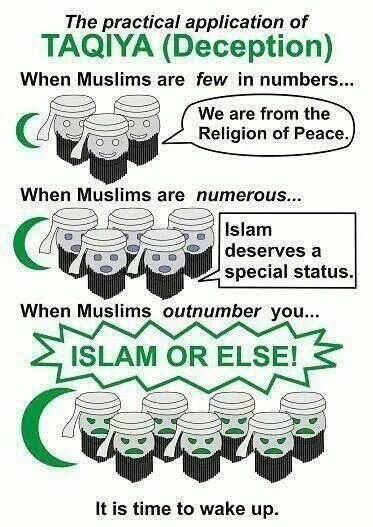
In Europe, we see that the migration-invasion, and the societal takeover via a high birth rate of, in particular, Muslims, is threatening our fond belief that we have and always will have religious freedom. The pendulum is swinging. Whereas in the Middle Ages, Roman Catholic Christians repressed other religious communities and launched crusades to conquer Muslim lands (a simplification, of course, but let’s leave that aside), today the Muslims are invading Europe, not as armies (as happened several times in the past) but as migrant-invaders (immigrants, “refugees”, “asylum-seekers”, and as babies born in Europe…). If this continues unabated, we can expect to see more attempts to shut down religious freedom for non-Muslims, as shown in this cartoon:

CX9ZsZOWEAAky2e

This process can be seen in the UK. There have in fact been Muslims in the UK for a long time, at least in small numbers. An Islamic centre and cemetery was established on the edge of Woking, Surrey, in the 19thC (it can be seen just before trains enter Woking Station, on the Southern or lefthand side as the train travels from London). However, the political or societal strength has grown in more recent years, along with the numbers.

In the 1970s, the Muslim element rarely displayed itself politically. I myself recall that posters on the Underground in 1976 or 1977, advertizing the Libyan-funded film “Mohammed, Messenger of God” were often defaced, always with the same words: “Islam forbids representations”. That vandalism, along with “community” representation to the UK authorities and the film distributors, resulted in the film being renamed “The Message”.

Now, 40 or so years later, times have moved on. Despite the Muslim population of the UK only being between 5% and 6% (officially), there has been a gradual infiltration (I do not say that it has been particularly organized) into mainstream political parties, in areas where Muslim numbers are significant: parts of the North of England, the Midlands, smaller areas within London and elsewhere. The influence of Sharia law and courts has grown; the Church of England has shown itself craven (as indeed it is when confronted by the aggressive Jewish-Zionist element). In some cases, Christians wishing to display their faith, e.g. by wearing crosses etc, have been given the choice of not doing so or being dismissed.

I repeat, officially the Muslim population of the UK stands at little more than 5% (about 5.1%) so far, but a high birth rate may propel that to 10% in the short term and later to…who knows? What will then be its influence and power?

As to the Jews, in numbers they are small, somewhere between 250,000 to 280,000, though there are also very large numbers of part-Jews, many of whom have little or no day to day connection with Jewish religious practices. Their influence and power comes not from crude numbers, but from concentration in and control of key strategic areas: finance, law, politics, mainstream media and, now, large Internet organizations.

Christians and Muslims accept persons of any race into their communities, at least in principle. Both Christians and Muslims have traditionally accepted it as an article of faith that persons of other religions should be “converted”, whereas Jews do not seek converts (though some modern branches do accept small numbers, e.g. after marriage to Jews). Judaism, therefore, has never launched “crusades” or the like. The Jews do not aim to make the world Jewish, only to be the major influencing, controlling and profiting element in or over the world.

The modern Christian world of the post-Enlightenment has, in principle, accepted that people can be Christian, Muslim or Jew (or whatever else) freely. That is easy enough when it comes to beliefs, ideas, even public worship in particular buildings, though (as mentioned above) it took Europe a long time even to accept those aspects. Much of the world does not go that far.

Where things become more difficult is when the religious practice of a community contravenes the law or morality of the society as a whole. Halal slaughter, kosher slaughter, which revolt the sensibilities of thinking non-Muslims and non-Jews. Male and female genital mutilation by Muslims and Jews. The cries (now electrically amplified) of the muezzin from the minaret of the mosque. These are cases where, in my view, the demands of the society to prevent cruelty, the wish of Europeans not to hear constant mosque noise in their neighbourhood must prevail over the practices of both the Jews and the Muslims.

To take an extreme case: there were societies in the past, Aztecs, Incas, even Europeans of ancient Europe, who engaged in ritual sacrifice of humans. Would we accept such practices today just because “it is part of their religion”? I think not.

There have been problems in the recent past in relation to other religions: the Jehovah’s Witnesses, with their unwillingness to save the lives of their children via blood transfusion; the mental and sometimes physical cruelty to children of some small “Christian” sects such as the Plymouth Brethren; the contrived scam that is Scientology (the British government of the 1960s fought a long battle to suppress Scientology, because of its perceived cultic and controlling behaviour). There could be other examples given.

It might be said that even mainstream Christian religions have done very evil things, e.g. the sex scandals in the Roman Catholic Church, though those involved acts not sanctioned or encouraged by the religion as such.

In the end, society, meaning the political element, must draw the line between the zone where religion holds sway and the zone where group or community religious practice must give way before the general secular law which should protect people and animals.

Free Speech: Individuality and Collectivity

Rudolf Steiner often spoke of the ever-increasing individualism in our age (that period which he named the “Fifth Post-Atlantean Age”, which started around 1400 AD and is due to run until about 3500 AD). This is an inevitable continuing process and will bring many benefits if people are guided by conscience. However, if people are not guided by individual conscience, the forces of the individual will tear apart society.

Against the forces of individualism stands “society”, which encompasses law, unwritten “laws” of convention and expectation and also the powers of the State (which holds itself out as the concrete expression of the people as a whole).

Society is, of course, a good thing. In proper measure, it makes possible and supports such aspects of life as law, public order, organized help for the sick, disabled, elderly, poor etc. It is a structure which supports the family, too. It also provides, via the State,  the structure for defence against outside forces (hostile states, natural calamities etc). However, if taken too far, society and/or the State becomes oppression, involving the repression of individual liberty in various ways (most obviously, perhaps, suppression of free speech or other freedom of expression).

Society restricts freedom of speech. It is hard to imagine a society beyond the most primitive or germinal in which complete freedom of speech exists (eg spoken or written threats against the person). On the other hand, when society (the State, or perhaps a religious or political cult) prevents individual expression, reasonable restriction becomes unreasonable repression. One thinks, perhaps, of the more extreme socialist states of the 20th Century, such as the Soviet Union under Lenin and Stalin, China under Mao Tse-Tung, Albania under Enver Hoxha, Cuba under Fidel Castro. The same was true of anti-socialist tyrannies such as Nicaragua under Somoza.

Particular emergency conditions may lead to a temporary tightening of what is regarded as acceptable free speech. In the Second World War, the various combatants restricted free speech considerably. In the UK, those who spoke out against the war or government policy faced both prosecution (State) and persecution (society generally). Even the USA, with its famous Constitutional safeguards, clamped down on freedom of expression.

As in other fields of life, we can see that the tension between the demands of the individual qua individual and those of the collective results in what amounts to a compromise. It is a question of either where society (in practice, usually the State, but possibly a smaller community such as a town or even a family) decides where the line is drawn, or where the individual draws the line, based on conscience or preference and regardless of where the State and/or society has drawn it.

Most people, most of the time, obey the dictates of the collective. Were that not so, law could not exist except as a facade with nothing behind it (cf. Stalin’s Russia etc); neither could the State or its power, in the end. On the other hand, the individual must always obey conscience and it therefore becomes vital to distinguish between individual conscience and individual wilfulness or egoism. No outside force can decide what is conscience and what is wilfulness or egoism. The individual, the individual human soul, is the only judge or arbiter here. Where the individual and the collective collide, the results can range from martyrdom of the individual to reform or even revolution affecting the collective.

Where do I myself, as both individual and citizen (i.e. part of the collective) draw the line? For me, freedom of expression about social, political and historical matters should be absolute. Other forms of expression (eg threats, libels, fraudulent misrepresentations) can be (and commonly are) restricted to a greater or lesser extent.

It follows from the above that I prefer the approach taken in the United States to that of most EU states (including the UK). Restrictions on freedom of expression are often imposed for or from outwardly “good” motives, but rapidly become a slippery slope with evil results. The road to Hell is paved with good intentions.

Notes

  1.  http://www.cps.gov.uk/legal/a_to_c/communications_sent_via_social_media/
  2. https://en.wikipedia.org/wiki/English_defamation_law
  3. https://en.wikipedia.org/wiki/First_Amendment_to_the_United_States_Constitution