
Once again I restart my General Election blog because the previous two are now both long and inconvenient to read. Starting in the evening of 11 November 2019.
Previous blogs:
https://ianrmillard.wordpress.com/2019/11/01/general-election-2019-daily-updated-blog/
https://ianrmillard.wordpress.com/2019/11/06/general-election-2019-daily-updated-blog-no-2/
This translates (using Electoral Calculus) to a Conservative Party majority somewhere around 14. Is this just an outlier, or the first poll showing a break in the wave of opinion poll predictions of massive Conservative majorities (some of 150 or more)? We shall see.
The latest round fired in the Brexit Party war was this, in The Independent, from Labour MP Phil Wilson:
A hard-hitting polemic. Gritty Northern lad turned MP, Phil, against effete Southern carpetbagger Nigel. Except, as so often in UK politics, the details get in the way.
https://en.wikipedia.org/wiki/Phil_Wilson_(British_politician)
True, Phil Wilson was born the son of a miner in Co. Durham. He has lived in the constituency he represents for much of his life. However, “Wilson later worked as a gambling lobbyist for the Gala Coral Group in the lead up to the passing of the 2005 Gambling Act, and as a director at London based public affairs consultancy Fellows’ Associates.” [Wikipedia].
A lobbyist for a giant bookmaker? A director of a public relations firm based in London? That’s not very gritty and Northern…Almost like working for “the man, the very fat man, that waters the workers’ beer”…
“Wilson is known for being one of the “Famous Five”, a group of local Labour
Party members who helped a young Tony Blair get selected as the Labour candidate for Sedgefield for the 1983 election.[3] He subsequently worked for Tony Blair in his constituency office, the Labour Party and a PR company.” [Wikipedia]
It gets worse:
“In his 2017 general election voter leaflet, Wilson stated he was not a supporter of Labour leader Jeremy Corbyn, and suggested Labour would not win the election.[11] He had supported Owen Smith in the failed attempt to replace Jeremy Corbyn in the 2016 Labour Party (UK) leadership election
[Wikipedia]
Phil Wilson supports remaining in the EU, wants to ignore the 2016 Referendum by holding another one, and is (quelle surprise) a member of Labour Friends of Israel…
I have heard nothing from Phil Wilson against either the Jewish lobby or the migration-invasion of Britain by blacks, browns and others.
Of course, he is right about Farage, but Wilson and his MP cronies (and those in his public relations/Blairite circles) should muse on why it is that people in places like Sedgefield turn to snake-oil salesmen like Farage? Might it be that they are sick of “Labour” MPs who are all tied up with Jewish and/or London public relations and gambling interests yet pretend to be hardy Northern proletarians at election time? “Labour” MPs who turned a blind eye to the invasion of the UK by racially and culturally inferior peoples? Who turned a deaf ear to the many girl victims of Pakistani Muslim “grooming” etc?
Voters in places like Sedgefield (and the rest of the country) have no social-national party to support, so some of them turn to obvious fakes like Farage and Brexit Party, because those voters are sick of fakes like Blair, his (((enablers))) and fake “Labour”.
From the Sky News politics juju man, Lewis Goodall:
A good example of reasoning which may or may not be correct, but which is not logically inevitably so. There may be other motivators. All the same, it is remarkable that Farage is willing to take the word of the biggest fraud seen in UK politics for decades, Boris-Idiot. A con-man conned?
Interesting shot across the bows by Remain partisan and ex-Con and ex-Cabinet minister, Nick Boles
https://twitter.com/NickBoles/status/1193917423868665857?s=20
and Katie Hopkins, who was at first ecstatic at the Brexit Party “pact” (unilateral surrender), now rows back a bit, while still loving it. I don’t rate her political nous very highly but she is cunning.
https://twitter.com/KTHopkins/status/1193943568878100481?s=20
Other tweets:
https://twitter.com/GuitarMoog/status/1193936012801654787?s=20
Tactical voting, the pathetic, inadequate but only alternative for voters when the electoral system and political milieu is as broken as it is…
“Wolfie”, who used to retweet me before the Jews had me expelled from Twitter:
and it seems that Farage is operating a political Ponzi scheme:
https://twitter.com/Atmosferaprego/status/1193936224559476738?s=20
As I blogged earlier today, when I heard about Farage’s extraordinary U-turn, this finishes Brexit Party. Right here and now. Finished. Killed stone dead.
In other news, “the times they are a’changin’…”
https://www.somersetlive.co.uk/news/somerset-news/people-who-started-caravan-fires-3515159
and continuing with the real Britain outside the Brexit bubble(s):
Will this, below, be in the Sun “newspaper”? I doubt it.
Update, 12 November 2019
For me, there are two main stories today, both of which can be seen via the latest opinion polls. The most recent (but still taken before the latest Farage/Brexit Party shambles):
- Labour starting to catch up with the Conservative Party;
- Brexit Party sinking
In fact, those figures would still give the “Conservatives” (they really should get a more honest label) a Commons majority of about 56, because 39% is high anyway, and because the LibDems and Brexit Party look like taking fewer Con votes. However, the direction of travel of Labour is clearly upward.
I really think that Farage’s latest slippery tactic, standing down 317 candidates to help the “Conservatives”, has mortally wounded Brexit Party. In fact, I think that it has killed it stone dead. The same may be true of the reputation of Nigel Farage.
Brexit Party was at 8% in the latest poll, taken before the latest Farage action. I doubt whether, across the board, Brexit Party will get a vote share of more than 5% on 12 December, polling day, and very much doubt that it can get even 1 MP, though Tice might have a chance as a protest candidate in Hartlepool.
I think that most Brexit Party candidates are going to lose their deposits. It now appears that all potential Brexit Party candidates, 3,000 of them, had to stump up £100 each to apply. After Farage’s unilateral surrender to the “Conservatives”, this money will not be refunded! As far as I know, the electoral deposits payable to the electoral authorities by Brexit Party candidates have not been paid yet, so Farage (who is the major shareholder in the private company that owns Brexit Party) has just decided to keep those monies, amounting to £300,000 (minus the £150,000 in deposits —£500 each— which will be paid to allow the remaining 300+ candidates to stand). Unless I have missed something, that means that Farage and Brexit Party have in effect just “stolen” £150,000 from their own most fervent supporters!
As to Labour, its policies may now be working through to public consciousness. Some are popular in principle, such as those to do with rail, water, other utilities. The “Conservatives” may say that they are “unaffordable”, but many of their own policies, such as the “welfare” “reforms” of Dunce Duncan Smith have cost unbelievable amounts of money (instead of saving money), all so that the poor can be terrorized.
Corbyn is never going to be flavour of the month with the public, but the screams of the msm (the Jewish press, really) are becoming so shrill and absurd that few take them seriously. Corbyn as Stalin (per Boris-Idiot)? No-one believes that. Corbyn as Trotsky or Lenin? Just ridiculous. I think that that card has now been played and has little more traction in it.
We may be looking at a narrowing of the gap between Conservative and Labour, with Brexit Party all but dropping out and the LibDems either losing support or concentrating it in a relatively small number of seats in the South where they have a good chance against the Conservatives.
I may be wrong, but at present feel that the “Conservatives” are about to be squeezed on two fronts. As we know, a two-front war is hard to win! Who said that?…
YouGov has now come out with a poll taken since Farage threw his party under a bus:
It rather proves my blog point of, originally, some months ago, to the effect that Farage is not a very good politician despite his gifts of oratory etc. That does not preclude the possibility that Farage is doing what I call a Mikhail Tal.
[https://en.wikipedia.org/wiki/Mikhail_Tal#Notable_games: “Tal vs. Vasily Smyslov, Yugoslavia Candidates’ Tournament 1959, Caro–Kann Defence (B10), 1–0.[29] A daring piece sacrifice to win a brilliancy prize.”
Tal was a Soviet chess grandmaster and World Champion. One of his famous games showed him sacrifice almost all his pieces in order to place the few remaining ones in a winning position, having of course plotted it all out in advance. The question then would be: what, for Farage, *is* a winning position? Not for “Brexit Party”, which, like all pawns, “exists to be sacrificed” (in the words of Wilhelm Steinitz), but for Farage?
Those figures would give the “Conservatives” a Commons majority of perhaps 156…which would be an “elected” dictatorship. We might be in “V for Vengeance” territory. If the General Election itself mirrored that opinion poll, Labour would be left with only 155 MPs, a loss of 107.
“[Farage] told ITV’s Good Morning Britain: “I made a big, generous offer to the Conservative Party yesterday [Monday]. I gifted them a couple of dozen seats.”
Mr Farage later criticised the Tories for not reciprocating his move by standing aside in some Labour areas where the Brexit Party could challenge the incumbent.
He told the BBC: “I would have expected, having put country before party, to perhaps have got something back from the Conservatives.
“But no, nothing is good enough for them.”
He added: “It is clear to me it is not a Leave majority they want in Parliament, it is just a Tory one.””
[BBC News https://www.bbc.co.uk/news/election-2019-50387254]
Is Farage really that naive? Why should the Cons stand down anywhere, now that Brexit Party has unilaterally stood down 317 candidates?!
Has Boris just driven his steamroller through Farage’s croquet game?
In fact, under electoral law, Farage/Brexit Party still have about 50 hours (until 1600 hrs, 14 November 2019) in which to officially declare or withdraw candidates. Why does Farage not belay his last order and allow the 317 stood-down candidates to stand anyway, to spite Boris-Idiot? Farage now knows that Boris has no intention of playing the game. Boris is carrying a machine-gun onto the grouse moor.
Commentary on the election betting market:
Update, 13 November 2019
Perhaps not directly an election story, but not irrelevant either: Jew business leech presently polluting the air of the UK tells struggling nurse that she should get a second job or start an online business!
Nurses and all NHS staff must be paid reasonably well. While we are on the subject of the NHS, we must change this absurd system that has been allowed to grow up, whereby parking has to be paid for. When you visit a hospital in most countries, you do not pay to park! Hospitals should be funded out of taxation (if public, as most are in the UK). That should be even more the case when the hospital staff park! Plan hospitals properly, with adequate and free parking!
Another opinion poll:
Out of sync with most other recent polls. An outlier, if you like. However, this is the second poll (from 2 polling companies) which goes against the orthodoxy of the past weeks (that the Conservatives are about to win hugely). On this Survation polling, the Conservative Party would actually be 1 MP short of a majority, so better off than a month or two ago, but far from trampling over all other parties.
My sense is that this General Election is not yet cut and dried.
The George Monbiot article, below, is a good example of how out of touch so many Guardian-reading chattering-class twitterati are. Everyone with any sense knows that there is a serious problem in the UK, especially in England, with both Roma-type Gypsies and the faux-Gypsies also referred to as Irish “tinkers” or, in today’s politically-correct nonsense-term, “travellers”. To ignore that fact, or, worse, to actually support these anti-social elements, plays into the hands of would-be dictators like Priti Patel.
When politicians such as Corbyn (living in Islington) “support” thieves, scavengers and despoilers of the green and pleasant land (what little is left of it), they place themselves against the British people. The British people notice, and vote accordingly.
George Monbiot himself lives rather comfortably, mostly in Oxford…
[https://en.wikipedia.org/wiki/George_Monbiot]
Boris-Idiot went to the flood-affected areas with a mop, in a typically ham-fisted attempt to entertain the people. Now he orders 100 soldiers to go (to be filmed for TV news). Someone who merely poses as PM.
Talking of floods, the Mayor of Venice seems to be another political idiot, saying that the bad flooding there is “obviously a result of climate change”. Poor sap obviously cannot think. The flooding is the worst for 50+ years, i.e. there was flooding as bad or worse back in 1966…In fact, St, Mark’s Basilica has been flooded, as it now is again, 6 times in 1,200 years, so there was such flooding as bad in Venice hundreds of years ago, even 1,000 years ago!
There is a danger that we as a society retreat to a “belief”-society which ignores facts, eschews logic as well as intellectual freedom, and prefers “belief”, officially-approved “belief”, officially-enforced “belief”:
“Climate change” caused by human “emissions”, “holocaust” a-history involving “gas chambers” gassing millions of Jews from 1942-1944, and so on. The Aral Sea, in a film by Al Gore, gone by reason of “global warming” (in reality, because Soviet authorities diverted its feeder streams and rivers to cotton production) etc. There are innumerable other examples. Fake history, fake news, fake science. Our times…
Farage now says that he might vote “Conservative”!
Boris Johnson offers Farage a pact that the Cons will put up paper candidates only in 40 Labour-held seats, if Brexit Party stand down their remaining candidates (about 250). So far refused, with (as I write) only 17 hours to go before the deadline (1600 hrs, 14 November 2019).
https://www.telegraph.co.uk/politics/2019/11/13/tories-offer-nigel-farage-eleventh-hour-deal/
Farage has pretty much killed Brexit Party by standing down 317 candidates for no reciprocation by the Conservative Party. It’s pathetic.
Update, 14 November 2019
Farage seems (on the face of it) to have only now woken up to what I have been blogging about for months: that Boris Johnson and his cronies are not really interested in Brexit but want a Commons majority for other and very sinister ends. They weaponized Brexit in the attempt to maximize a Commons majority, but Brexit is not the end for them, merely the means to get a higher number of votes in the General Election, and so a greater number of MPs.
“Nigel Farage has ruled out standing down more Brexit Party candidates as the deadline day for nominations arrives.
It comes after Mr Farage was warned that votes for his party would hand the keys of Number 10 to Labour leader Jeremy Corbyn, with Boris Johnson claiming that a Conservative government is the only way to “get Brexit done”.
Speaking on Radio 4’s Today Programme, the Brexit Party [leader] said: “What I’ve realised is that the Conservatives want a Conservative majority in Parliament, not a Brexit majority in Parliament.”” [Evening Standard https://www.standard.co.uk/news/politics/general-election-2019-live-nigel-farage-urged-to-pull-more-brexit-party-candidates-as-deadline-day-a4286751.html]
Farage still has time, in theory, to re-stand the 317 candidates he stood down recently. As I write, there remain just under 4 hours before the deadline. However, many of his betrayed candidates now despise him and his pop-up “party” and would probably not agree anyway.
It may be that Brexit Party standing in Labour-held seats will now redound to Labour’s benefit, in that even if Brexit Party only gets a few percent, the votes will be from voters who would otherwise vote Conservative. It might save Labour’s bacon in many Northern seats.
Labour’s election messages so far are mixed, ineffective and not grabbing the voters (is my sense, anyway), and the wall-to-wall anti-Corbyn bias of the Jewish-influenced UK msm just intensifies that.
Labour’s immigration policy is turning voters off, but it may be that most people already were turned off by it, and so cannot be turned off “double”, so to speak. In any case, people know that the Conservatives themselves have been pathetic on the migration-invasion question.
Having said the above, I sense that Brexit is perhaps just beginning to take a back seat as domestic policy issues come to the fore: the floods in Northern England, the emergency services, the NHS etc. Labour’s strong suits.
Meanwhile, Jo Swinson, doormatting (as usual) for the Jewish-Zionist lobby:
Jo Swinson is pathetic:
- The “IHRA” is basically a Jewish-Zionist front; Blair was one of its early supporters;
- The “International Holocaust Remembrance Alliance” only has 31 states (out of about 200) as members;
- only 6 out of those 31 states have formally endorsed or adopted the “definition” referred to by Jo Swinson;
- “On 1 January 2015, Professor David Feldman stated in a Sub-Report for the Parliamentary Committee Against Antisemitism that the definition had “largely has fallen out of favour” due to criticisms received.[45][46]” [Wikipedia]
- In the UK, only extremist Zionist organizations, and doormats such as Jo Swinson, Eric Pickles and that little pissant Robert Jenrick, have promoted the so-called “definition”;
- “In October 2019, University College London required speakers at a book launch to agree to additional guidelines relating to discussing antisemitism, even though that was not the subject of the book“…in other words, the “definition” is merely a tool via which Jewish-Zionist extremists attempt to close down the freedom of expression of host peoples.
- Jo Swinson is no more than semi-literate. A “definition” is “of” something, not “on” something; and “which all candidates are being asked to sign this Election“? Ha ha!
See: https://en.wikipedia.org/wiki/Working_Definition_of_Antisemitism
Another reason never to vote LibDem!
Here’s another: Jo Swinson is longing to get into another Con-LibDem coalition. She loved the 2010-2015 Con Coalition, in which she was a PUS (junior Government appointee) and voted for all of the terrible measures against the poorer people of the UK.
“Jo Swinson, the Liberal Democrat leader, has said she would sooner push the UK into another general election than put Labour leader Jeremy Corbyn into Downing Street in the event of a hung parliament. Ms Swinson, who could hold the balance of power if no party wins a House of Commons majority in the December 12 election, rejected the possibility of the anti-Brexit Lib Dems entering a parliamentary pact with Mr Corbyn.” [Financial Times]
https://www.ft.com/content/454c1ed0-060b-11ea-9afa-d9e2401fa7ca
There it is: vote LibDem, get Con…
And, quelle surprise…Robert Largan, the “Conservative” candidate at High Peak, Derbyshire (who lives, it seems, in Fulham, London, and works as an accountant for Marks & Spencer), has signed that same fake “definition”! Wouldn’t you know it?!
Largan seems to specialize in negative attacks on the present Labour MP for High Peak, Ruth George, as well as on anyone who tweets support for her. See below.
—and notice Largan’s supporter there, “Happy”/”@lcfcsingh”, presumably an Indian and Conservative Party member, from Leicester (Largan seems to have to bus-in supporters, he seems to have very few locally), who plays the (more usually) Jew-Zionist card, trying to intimidate the anti-Conservative tweeter, “David”, by threatening him with the UK police acting as a Poundland KGB : “just reported your tweet. Expect a knock at the door.” Ha ha! Yeah, right…A sign of the times, though.
(though “David” is misinformed if he imagines that “denying” a so-called “holocaust” “is a crime”. It is not, not in the UK).
Some locals appear to despise Largan, who would no doubt be more at home in some chi-chi Fulham (or Soho?…) bar.
A reader of this blog just sent me this:
https://en.wikipedia.org/wiki/Antisemitism_in_the_UK_Conservative_Party
Back to the General Election mainstream
Taking a step back, and looking at the big picture, where is Labour, meaning in general, beyond this General Election? Where is the Conservative Party? Where are the LibDems? I leave out “Brexit Party”, which has just been sacrificed by its progenitor.
I have often blogged about how Labour is now the party, almost exclusively, of the ethnic minorities (except Jews and now perhaps the wealthier Indians) and/or those who directly benefit from public funds (public service workers, NHS employees, State benefit recipients). There are of course other groups and individuals, but those are the core voters, added to which may be the minority of younger voters (under 35s) who actually bother to vote.
The Labour core vote is no more than 30% of the whole, nationally. That, with Labour’s connected propensity to stack up votes in a relatively small number of safe seats, makes it hard for Labour to get a Commons majority. Ever.
The “Centrists” (non-socialist, pro-Israel) in Labour look back wistfully at the 1997-2010 Blair “appeal to all demographics” years of huge Labour majorities in the Commons (crazed Gordon Brown being a tacked-on afterthought). That was then. Times have changed. The Labour Party’s deliberate encouragement of mass immigration (migration-invasion), blind eye turned to the mass rape of young English, Welsh and Scottish girls by (mainly) Pakistani Muslims, not to mention Labour’s sycophancy towards the ultra-wealthy and its toleration of zero-hours contracts, PFI scams etc, have over years alienated the voters.
It is worth remembering that the voters rejected “Centrist” Brown and then Ed Miliband, after which the (Jewish-controlled/influenced) newspapers and TV kept saying, in effect “Labour elected the wrong Jew brother” (i.e. not David Miliband). The UK msm is pathetic.
I just noticed that there have been a few hits today on this, that I wrote about 2.5 years ago: https://ianrmillard.wordpress.com/2017/06/08/general-election-day-2017/
Corbyn is not Labour’s only problem, though his image is one problem. Labour’s main problem (with apologies to those who have read my words time and again) is one of identity. The industrial proletariat no longer exists, replaced (alongside much of the “middle class”) by the “precariat“, volatile and angry but also disorganized and unfocussed.
Those scribblers like Owen Jones who try to label that “precariat” as “working class” are just wilfully missing the point. The “working class” of Owen Jones is a conflation of (a relatively small) “new proletariat”, a “lumpenproletariat wearing sports gear” and the “precariat”. That is why most people just laugh when post-Marxists like Jones try to call these surging, uncontrolled, msm-brainwashed masses, with their adulation of 15-minutes-of-fame “celebrity” (and that covers the waterfront from The Only Way Is Essex, Premier League footballers, pop music, even Harry and the Royal Mulatta) , “working class”.
…and Labour (whose MPs are very different from their voters) not only has little to say to those masses but in many instances has proven to have been their enemy, certainly since 1997, arguably since the 1980s and the days of that old humbug Michael Foot.
Below: I thought that Labour activists were all young now? Not in Edinburgh, it seems. It looks like a convention for Age UK!
One has to ask where Labour support is going to come from. The “blacks and browns”?Labour is not “national”(ist), and until Corbyn took over had also thrown away its “socialist” credentials. Its time may be running out. Which brings us to the Conservative Party.
The problem that the now-misnamed Conservative Party has is one of demographics. The average Conservative Party voter is a person of about 60-80 years of age, with many well beyond that. There are few young or even 35/50 y-o voters. The core Conservative vote consists of fairly affluent or wealthy persons of middle age or old age. Racial questions are not key, though most Conservative voters are white. The wealthy of non-white populations are believed to favour the Conservative Party, and 90%+ of Jews vote Conservative now, but the numbers are small in absolute terms.
The core Conservative vote is no more, as with Labour, than 25%-30% nationally. The battleground is for the remaining voters and particularly the extra 10%-15% and in swing or marginal seats, which are the only ones that usually matter.
The best argument that the Conservative Party now has is the exact reverse of Labour’s best argument: Con is not Lab; Lab is not Con. We are talking negatives. Voters are really voting negatively, against the party they hate the most.
Other Conservative Party policies are not likely to inspire: the Cons have been in charge for nearly 10 years, have talked a semi-good game on immigration but have failed miserably. As for Brexit, the pathetic lack of real progress has not changed. We are still in the throes of trying to leave (but not really leave).
When it comes to the economy, too, while the Cons sold their pathetic “austerity” nonsense to the masses via the msm from 2010, somehow persuading them that the unemployed, disabled and others on State benefits were responsible for the UK’s poor performance, the reality is —slowly— dawning: “austerity” (suffered only by the poor and fairly poor) actually held back the UK economy. Other countries (except semi-banana states like Greece) have done better by boosting their economies, not paring back everywhere. Well, if you will trust a stupid part-Jew trustafarian cokehead like George Osborne with the economy, what do you expect?
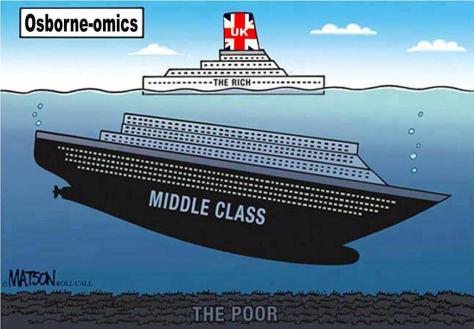
The Conservatives are doomed, but not quite yet. It is hard to see them forming the government in, say, 2025 or 2030. As far as this general election is concerned, though, they are riding high because of the near-collapse of Labour. All the same, as we enter the last 4 weeks of this short election campaign, there is still all to play for. I do not yet regard the predicted massive Conservative victory (predicted by most, still) as inevitable, though it is clear that Labour is in serious trouble.
The LibDems have what the marketers call a “unique selling point” in that they are the sole hard-Remain party. Will that be enough? The withdrawal of Brexit Party from contesting Con-held seats will deprive the LibDems of a number of potential wins. The LibDems are languishing on around 15% nationally.
I begin to wonder whether the LibDems are going to slump. They may take a certain number, a small number, of seats, but I see no large breakthrough. At present, thanks to defections, they have (or had until the campaign started) 21 MPs; 12 from 2017, 9 defectors. I cannot see them having more than 20 after 12 December. They may even drop back to below a dozen. I may be wrong, but that is my feeling.
So with Con, Lab and LibDem all losing traction, what next? No country can be without a future, unless it is destroyed totally. It may have an unpleasant future, though, if the right choices are not made. Importation of inferior peoples— wrong choice. Maladministration to save money or kow-tow to special interest groups— wrong choice. Prioritization of quantity over quality in education— wrong choice. And so on.
Britain needs a social-national party and movement.
Update, 15 November 2019
The System parties now vie with each other in offering the voters “goodies”. For my money, the eyecatching offer today was that from Labour: free broadband for everyone. The other parties may say that it is “unaffordable” but that is just negative white noise. This is a potential gamechanger. In fact, I myself suggested this years ago. My idea was Basic Income, free local transport, free internet and utilities (all to a predetermined set maximum amount). Labour is catching up with me now; 5-10 years late, but better late than never.
The Conservatives are offering to reinstitute a few of the rail lines closed in the 1960s. Not a bad idea, but some mentioned (eg the Varsity Line
https://en.wikipedia.org/wiki/Varsity_Line) are already in train (so to speak).
[Flanders and Swann, The Slow Train]
Brexit Party: well and truly washed-up. You heard it here first. The Guardian (like Labour) has taken its time in catching up with me, but here it is:
Brutal.
Returning to the parties that are really playing in this election, my sense, this cold morning, is that a new phase of the election campaign has started, a new front has opened up. Perhaps several new fronts.
The election campaign has so far been almost entirely about Brexit. I speculated, weeks ago, that there were other issues important to people. Now the narrative has (again) caught up with me. Whether it was the flooding in the North, the news about stresses on the NHS, or just that all three System parties are now talking about those other issues in society, there is a palpable change of atmosphere. Brexit is taking a back seat. That has to play more to Labour’s advantage.
The Conservatives and the Jewish-influenced msm are talking much about Labour’s supposed “anti-Semitism”, but I feel that that is “caviar to the general” and will not resonate much with most voters.
I shall be interested to see whether Labour makes up any ground in the next few opinion polls. My guess is that it will. If it does not, Labour really is facing a crisis bigger than any in recent history.
LibDems. Brexit.
The assumption has been made by many msm commentators and also by me to some extent, that the LibDems will get a boost by being the only unalloyed Remain party of any significance in this election. I still think that that is so, but the effect may well be limited.
As we know, less than 50% of UK voters voted Remain in 2016. If you leave out Northern Ireland and Scotland, the proportion was smaller in England and Wales. The figure now seems not much changed. Recent polls said that about 40% of the voters say that Brexit is the most important issue in this election. So, it is arguable that those
- favouring Remain,
- who also think that Brexit is the most important issue
might add up to around a fifth to a quarter of the electorate. Probably no more than a fifth. That might give the LibDems 20% of votes, as a maximum. Not enough for a breakthrough, but respectable, especially looking at the 4.9% the LibDems scored in 2015 and the 3.9% they received in 2017.
However, that 40%, the”most important issue” figure, comes from a poll taken some weeks ago. If that is now 30%, the LibDems may have a ceiling of 15%. For the LibDems everything now depends on getting in a large hard-core Remain vote. Failing that, the LibDems will slip below 10%, possibly below 5%, and the 2015-2017 decline will continue to LibDem oblivion.
Blind spot?
System scribbler Dan Hodges waxes indignant about supposed Russian interference in UK elections. Should he not cast his eyes toward the proven interference in UK elections and politics by Israel and its agents?
Newspaper comment:
https://www.mirror.co.uk/news/politics/general-election-brexit-party-candidates-20890815
Polling: