Not news to me, and not news to readers of this blog, I think, but that clip should be shown or shared far and wide, because many people are still ignorant of the facts described.
I see no sign that the System political parties have any serious intention of stopping the migration invasion. As for Reform UK, it is in the pocket of the Israel/Zionist/Jewish lobby and so would be, as a government, unwilling to do more than 5% of what will need to be done.
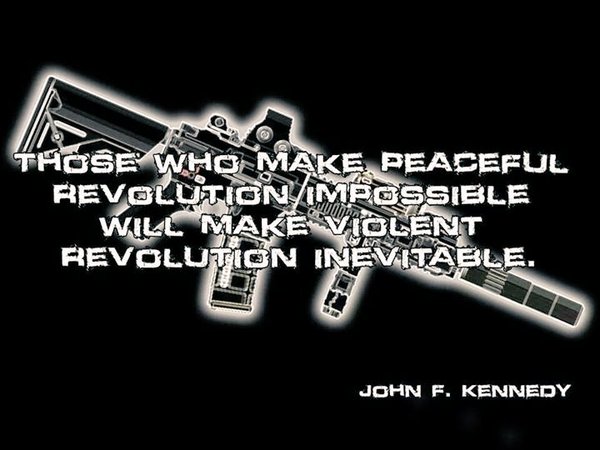
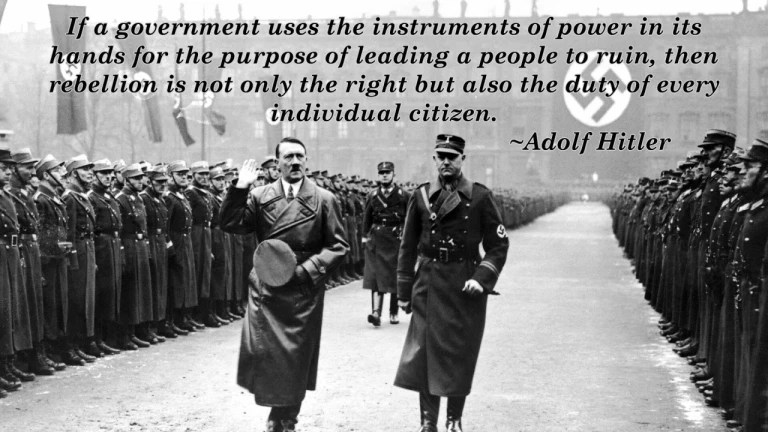
Britain is sliding towards a very likely war, not a “civil war” in the traditional sense but a multiform civil/social/cultural/racial war.
Talking points
“A revolution without firing squads is not worth much” [Lenin]
Salus populi suprema lex esto (“the welfare of the people is the highest law“) [Cicero]
The “Russian” Revolution (in fact two revolutions, both in 1917, and basically Jewish-led or manipulated) was however not the result of Jewish exiles scribbling pamphlets and books in Zurich and London and Brussels but, in its origins, an outcome of the volcanic anger of the Russian masses, particularly in the large cities.
Even Lenin did not recognize the Revolution for what it was when it happened; he scurried back to Russia to try to take control of a situation already in existence.
In Britain, we see the System political and msm set-up behaving as though the post-1945 (or post-1832) socio-political way of doing things will simply go on and on, but the ground is moving under the feet of the MPs and the msm scribblers and talking heads.
More tweets seen
🚨KEIR STARMER GIVES £100 MILLION TO COUNCILS SPECIFICALLY TO BUILD HOMES FOR ILLEGAL MIGRANTS
The British public who pay for this won't see a penny of it. The UK is at tipping point This cannot go on pic.twitter.com/JByCgXUk9P
A school teacher lost their battle with cancer, and the entire high school, students and staff alike stood together to give a heartfelt guard of honour. 🥺❤️🩹 pic.twitter.com/oztP8tUMHw
— Restoring Your Faith in Humanity (@HumanityChad) January 1, 2026
Impressive.
Mass immigration is like a hydra. You think you have dealt with the problem but then many more problems pop up.
The Israeli tail continues to wag the American dog.
The US is “pretty much ruled now by a small group of billionaire oligarchs. I think they're in charge,” says retired US Army Colonel Douglas Macgregor. pic.twitter.com/2dBAbzoIbO
We WILL be making bonfires 1000x the size of this one day considering every single bookshop selling new books all across the west is literally just shelves and shelves of anti-White bile, transgender nonsense, gay nonsense and books praising our own destruction. pic.twitter.com/D1nw3Femys
“The UK is already a place where a schoolteacher is still in hiding after upsetting Muslims because he taught their children about free speech. What does Labour think will happen when its emboldens Muslims to cry “racist!” at every turn?” https://t.co/3SQR9eoAu0
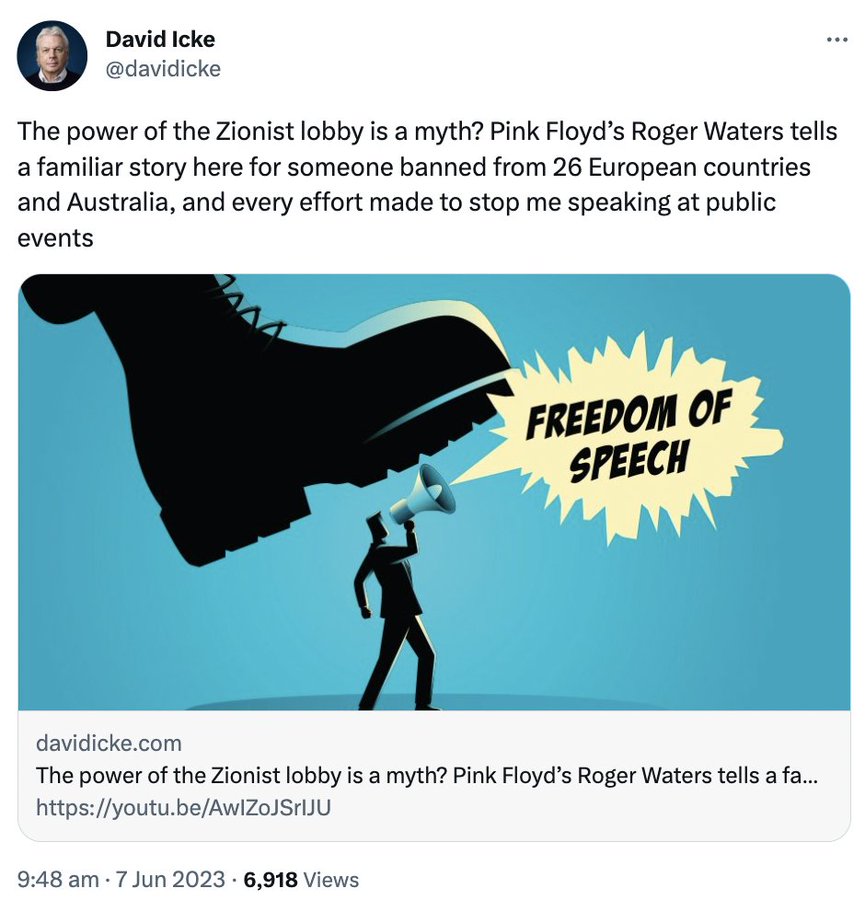
No argument. Having said that, the biggest threat to free speech and freedom of expression in the UK comes from the Jew-Zionist Israel-lobby element. Goodwin never mentions that. Neither does Toby Young, nor the “Free Speech Union”.
🇵🇱 Polish PM Donald Tusk urges Europe to be brave like Poland, saying the country’s secure eastern border and most modern army make it a model for the continent pic.twitter.com/v2aTK0vr2B
North Korea intensified its rhetoric regarding the Middle East, declaring that any new Israeli attack on Iran would be considered a direct threat to Asian security. A spokesperson for the North Korean Foreign Ministry warned that a war on Tehran is "no longer a local matter" but… pic.twitter.com/RO46YpYgyQ
Her vlog is artless yet somehow compelling, like the books of Derek Tangye (writer, sometime journalist and columnist, sometime MI5 officer: https://en.wikipedia.org/wiki/Derek_Tangye).
More tweets
Robert Gates, former CIA Director and U.S. Secretary of Defense: NATO expansion was “recklessly ignoring what the Russians considered their own vital national interests… When Russia was weak in the 1990s and beyond, we did not take Russian interests seriously. We did a poor job… pic.twitter.com/bioR7HVF6a
At the moment, Russian "shakhedi" are attacking Kyiv at very low altitudes so that they won't be detected by radars, – according to local blogs. pic.twitter.com/i8AVeV5bdR
Just imagine…that ridiculous bimbo is Vice-President of the European Union!
Absolutely pathetic.
The mayor of the Chinese city of Haikou, who amassed about 4.5 billion dollars during his "career", and in whose apartments 13.5 tons of gold and 23 tons of cash were found, was sentenced to death. pic.twitter.com/XmQ0Fz8FNX
“Tim Montgomerie’s leap from the Tory ship to Reform UK? Now this is a statement. Thirty-three years of loyalty to the Conservatives, yet even he’s had enough of the dithering, U-turns, and wet centrism. Reform UK is becoming the island for those sick of the Westminster circus, a home for patriots tired of compromise and careerists. The Tories should be terrified—if stalwarts like Montgomerie are walking away, what does that say about the state of the party? Reform UK isn’t just nibbling at the edges anymore; it’s carving out a proper movement for common-sense politics and sovereignty. Watch this space, lads. The political realignment is only just beginning.”
Naturally, for anyone social-national, Reform UK is only a step forward, rather than any giant leap. Many of its expressed policies are wrong, and many of its candidates non-European. It is also pro-Israel etc.
Reform, however, may help to kill off the System parties over the next few years.
As for Tim Montgomerie, I have of course never had any time for him. He supported the fake “compassionate Conservatism” of David Cameron-Levita and George Osborne (both part-Jew) and the cruelties inflicted on so many by their policies, and by “welfare” (social security) “reformers” Iain Dunce Duncan Smith, the Jew “Lord” Freud etc.
Still, Montgomerie’s defection is an interesting commentary on the possible upcoming demise of the Conservative Party.
Reform UK is polling at around 20%. It has been there before, just about, but fell back to score only 14.29% at GE 2024. In my opinion, though, the fact that Reform UK was able to have 5 MPs elected (in contradistinction to other small parties of the past half-century and more) is more important than appears superficially.
To look at Reform UK’s underwhelming (in themselves and in terms of numbers) 5 MPs and say (as many Labour Party partisans, pro-EU drones etc, have done, expressly) “ha ha! You lost!“, totally misses the point.
For any small political party, under the UK electoral system, to get even one MP elected is huge; to get 5 elected at once is, well, massive.
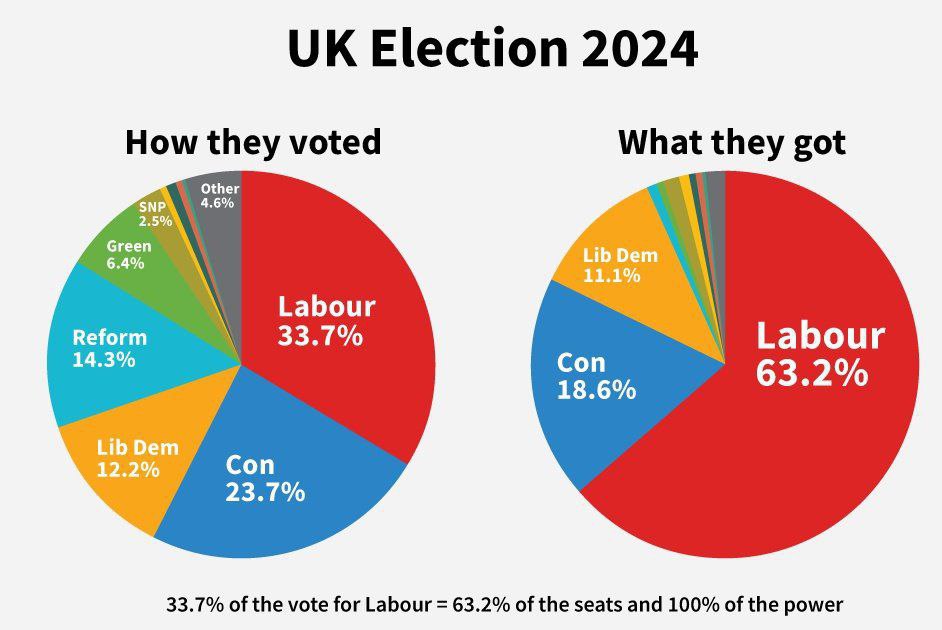
That especially applies once one realizes that it was only the FPTP voting system, which since the 1960s has gradually ceased to reflect the real levels of political opinion in the country, which prevented Reform UK having about 93 MPs (14.29% of 650).
Under a (full) proportional representation system, Reform UK would have been awarded 93 MPs, the LibDems 79, the Conservative Party 154, and Labour 219, on the voting numbers at GE 2024.
In reality, were the voting system proportional, many more voters might have voted for Reform UK anyway, because not put off doing so by the perception that not voting Lab, Con, or LibDem is “a wasted vote”.
As can be seen from the graphic above, the present system of voting in England (particularly) is skewed against the smaller parties. Not Reform UK alone; the Green Party, under a fully-proportionate system, would have been awarded, at GE 2024, 42 MPs (6.39% of 650) instead of the 3 who were actually elected. Even George Galloway’s Workers’ Party would have 5 seats.
Some proportional-voting systems have a “threshold”, 1%, 5% etc, below which a party gets no seats.
We now have a Labour government which was voted for by a third (33.7%) of the actually-voting electorate, and by a mere 20% of the eligible electorate. It has only marginal legitimacy.
Having said all that, we are where we are. At present, the main two System parties still stand opposed to reform of the electoral process.
The SNP was founded in 1934, but only had its first MP elected in 1945, in a by-election, and he lost his seat only 3 months later. The next SNP MP won her seat in another by-election, in 1967, but lost it in 1970, though another SNP candidate won in another seat. At that time, there were 71 MPs holding Scottish constituencies.
The SNP did well in 1974, getting 11 MPs at one of the two general elections, but fell back to 2 in 1979. Throughout the 1980s, 1990s, and 2000s, the SNP increased its support but even in 2010 had only 6 MPs out of the 59 then available in Scotland.
Then, in 2015, the SNP had its electoral miracle, based on a “Conservative” Party government at Westminster supported by relatively few Scottish voters, and on a Labour Party which had been supreme in Scotland since 1945, increasingly so since 1964 and then in the early 21stC, but which was perceived as being useless (particularly so in the Blair/Brown years (when Labour was in power at Westminster) and thereafter, when Scottish Labour was headed by the egregiously poor Jim Murphy [https://en.wikipedia.org/wiki/Jim_Murphy]. Murphy had been an unsuccessful university student for 11 years, and never did graduate, but became a Labour MP at the relatively early age of 29.
In 2015, Scottish Labour lost 41 of its 41 Westminster seats, while the SNP held or gained 56 (out of 59).
How does that relate to Reform UK in 2024 and perhaps 2029?
We have seen how the SNP took over a decade to get 1 MP, and 40 years to get a cadre of MPs, and how the SNP only surged to power 81 years after its foundation.
Reform UK, dating from only 2021, is however the same, in effect, as its previous persona as Brexit Party, founded in 2018, and a lineal descendant from UKIP (though that still exists as a small rump), founded in 1993.
Reform UK is now aiming to do in England, as well as in the UK as a whole, what the SNP did in Scotland in 2015, i.e. catch the wave of popular support. For Farage, Tice etc, there has to be that FPTP tipping point, the point at which the illogical, unfair etc FPTP system, instead of impeding Reform, starts to work in its favour.
Reform’s slightly underwhelming result at GE 2024 was purely the result of its support (and votes) being spread so thinly. Reform had considerably more actual votes than the LibDems, but few concentrations of votes. Where the concentration was dense enough, Reform got MPs.
The msm commentators, and the Labour and Conservative Party partisans, have not fully taken on board why Labour won so many MPs, and so won the election.
Labour won because the Conservative Party lost. Trite, yes, but the point is that —as can be seen from the percentage voting for Labour, only 33.7%— rather few people actually voted Labour, and most of those who did, did so in a wholly negative way, i.e. because in this or that particular constituency, the fight was perceived as being only between Lab and Con, or Lab and SNP in Scotland, and people desperately wanted rid of 14 years of “Conservative” misgovernment.
What, then happens when Labour, Starmer-Labour, Labour Friends of Israel Labour, is hated and despised as much as the Conservative Party was 5 months ago? Well, actually, that has already happened, but of course Labour is going nowhere, insulated from dissent, protest, and even riot by its very large majority (presently 156: see https://www.instituteforgovernment.org.uk/explainer/government-majority).
It has taken Starmer only 5 months to put Labour down where the Cons were, in popular estimation, after many years, arguably 14 years.
If the voting patterns of several years continue, i.e. people voting against rather than for candidates and parties, then I think it entirely possible that, in voting against Labour, Reform might be the receptacle for those “anti” votes, more than the Conservative Party. In fact, I can see at least the possibility that both Lab and Con will slump, Lab to maybe 200 seats, and Con to somewhere below 100. If that were to happen, there would be about 350 seats going to others, in England maybe 250. Reform could be the main beneficiary of that.
It may be speculative to suggest that the next general election could see Reform UK as the party with the most Commons seats, but it is now not impossible.
How many seats could Reform get? I do not know. Anywhere from 50 to 200, if they continue to gather support. Reform came second in 98 seats at GE 2024; on the other hand, UKIP came second in 120 seats in 2015.
The only gamechanger I could see for the Cons would be if “Boris” Johnson were to come back into direct politics, take one of the few “safe” Con seats left, depose the Nigerian woman, Kemi Badenoch, then appeal to the public, “cosplaying” his favourite role as an am-dram Winston Churchill.
As regular readers know, I myself despise Johnson, and hold him in utter contempt. However, many voters do not. Stupid, maybe, but we must look at the realities. In fact, Johnson is not terribly popular with the voters; just more popular than Kemi Badenoch ever will be.
I have often wondered why Johnson was not granted a life peerage. He could have had one, had he wished. There is only one answer— he wanted to keep his options open. Were he to return as Con leader, he could not do worse than Sunak (or Badenoch) electorally, in my view. A “Boris” general election might steal much of Reform’s thunder. The Cons might even become the largest party again. Hateful to me (as is Starmer-Labour) but it might just happen.
At GE 2024, parties and individuals other than LibLabCon got a record 30.4%. That means that, already, if taken with the 40.2% of eligible voters who did not vote, 70.6% of people did not vote for the so-called “three main parties”.
In the early 1980s (when I took A Levels, studying for a few months alone in order to be able to get onto a law degree course, having dropped out of school a decade before, at age 16, in 1973), about 8% of candidates were awarded a Grade A. By 2009, that had grown to nearly 27%, despite the increase in the number of candidates.
In 2009, the concerns about grade inflation resulted in a new category being established, the A*. Look at the statistics. From 2009, about 8% were getting A* grades, but the ordinary A grades were, from 2009, running at around 18% or more. B and C grades were inflating even more.
As with the currency, grade inflation simply means that, in the end, the piece of paper becomes almost worthless.
Israeli war crimes— Genocide in Gaza
“My name is Amos Goldberg. I am an Israeli Professor of Holocaust Studies. For nearly 30 years I have researched and taught the Holocaust, genocide and state violence.
And I want to tell whoever is willing to listen that what’s happening now in Gaza is a genocide.
““My name is Amos Goldberg. I am an Israeli Professor of Holocaust Studies. For nearly 30 years I have researched and taught the Holocaust, genocide and state violence. And I want to tell whoever is willing to listen that what’s happening now in Gaza is a genocide. A year ago when October 7th happened, like all Israelis I was in shock. It was a war crime and a crime against humanity. 1200 people – more than 800 of them civilians – were killed in one day. Children and the elderly were among those taken hostage. Communities were destroyed. It was outrageous, traumatizing, personal. Like most Israelis, I know people who were killed, who lost loved ones or whose loved ones were taken hostage. But immediately afterwards came Israel’s response and within weeks thousands of civilians were killed in Gaza. It took me some time to digest what was unfolding before my eyes. It was agonizing to confront that reality. I was reluctant to call it a genocide. But if you read Raphael Lemkin – the Jewish-Polish legal scholar who coined the term ‘genocide’ and was the major driving force behind the 1948 United Nations Genocide Convention – what is happening in Gaza now is exactly what he had in mind when he spoke about genocide. It does not need to look like the Holocaust to be a genocide. Each genocide looks different and not all involve killing of millions or the entire group. The United Nations Genocide Convention explicitly asserts that genocide is the act of deliberately destroying a group in whole or in part. Those are the words. But there does need to be a clear intent. And indeed, there are clear indications of intent to destroy Gaza: Israel’s leaders – including the prime minister and the minister of defence – and many high-ranking military officers, media personalities, rabbis, as well as ordinary soldiers were very open about what they wanted to achieve. There were countless documented incitements to turn the whole of Gaza into rubble and claims that there are no innocent people living there. A radical atmosphere of dehumanization of the Palestinians prevails in Israeli society to an extent that I can’t remember in my 58 years of living here. Now that vision has been enacted. Tens of thousands of innocent children, women and men have been killed. Over a hundred thousand were wounded. There is a near total destruction of infrastructure, intentional starvation and blocking of humanitarian aid. There are mass graves and reliable testimony of summary executions. Children that were shot by snipers. All the universities and almost all hospitals are gone. Almost all the population is displaced. There have been numerous bombings of civilians in so-called ‘safe zones’. Gaza does not exist anymore. It is completely destroyed. Thus, the outcome fits perfectly with the stated intentions of Israel’s leadership. Lemkin – that scholar who coined the term ‘genocide’ – described two phases of a genocide. The first is the destruction of the annihilated group and the second is what he called ‘imposition of the national pattern’ of the perpetrator. We are now witnessing the second phase as Israel prepares ethnically cleansed areas for Israeli settlements. And therefore, I have come to the conclusion that this is exactly what a genocide looks like. We don’t teach about genocides in order to realize it retrospectively. We teach about it in order to prevent it and to stop it. But like in every other case of genocide in history right now we have mass denial. Both here in Israel and around the world. But reality cannot be denied. So yes, it is a genocide. And once you come to this conclusion you cannot remain silent.” – Statement to Led By Donkeys, December 2024 – Photo: Parliament Square, London, 8.40am, 4th December 2024.“
Powerful.
That statement certainly puts the UK and US-based Jew-Zionist “human rights” lawyers in their place, the ones constantly tweeting about how what has been happening in Gaza is supposedly not a genocide because… [how many angels can dance on the head of a pin?].
More tweets seen
🚨 NEW: Keir Starmer BLASTS Kemi Badenoch for being the ‘cheerleader’ of mass migration
'She was the cheerleader, she was the one urging on the removal of the caps for work visas… she championed it, she advocated it, record number of immigration!’ pic.twitter.com/JfOa2d8HCr
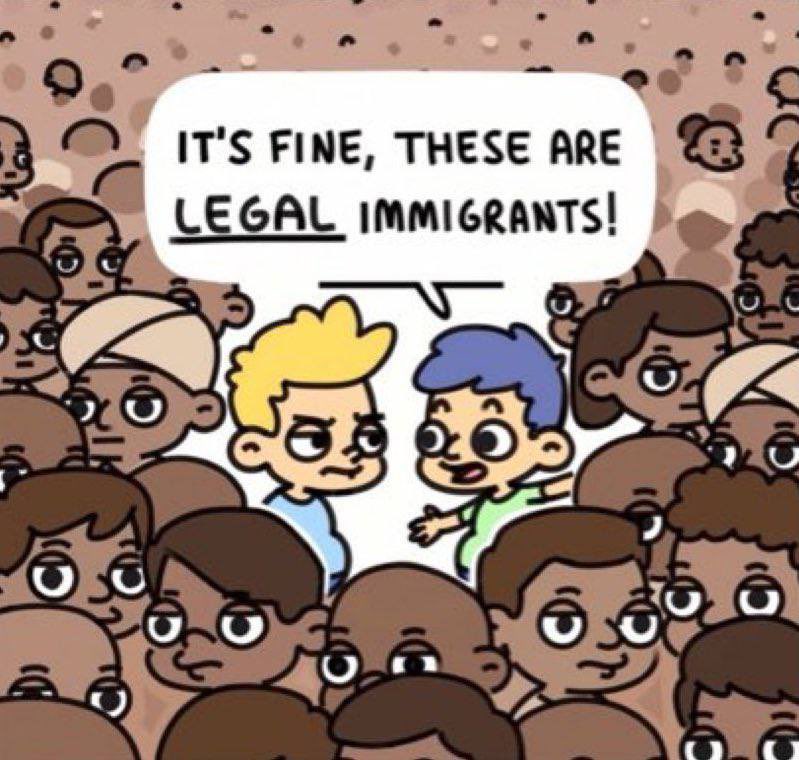
What really matters politically, though, is not the Westminster Bubble blame-game but what is actually happening on the streets. A million or more invaders every year (last year 1.2M) (yes, one or two hundred thousand leave, as do about a hundred thousand disenchanted Brits), and a steep slide in terms of public services, a decent society, crime, incomes, housing provision, and much else.
If things go on as they now are, there will be either a quietly-British form of social-national revolution somewhere or somewhen down the line, or (and/or) a kind of civil war mixed with a social war and a race war. A confused mixed picture, though, not a sharply-delineated and two-sided one.
In contemporary Britain, the truth is “inflammatory“…
I argued, in my long-ago talk at the London Forum in 2017, that people charged with such essentially political offences should never plead guilty.
Pleading guilty is understandable in ordinary criminal cases, in that it reduces the sentence where the evidence is overwhelming, but I consider it the duty of social-national and other nationalist defendants to plead not guilty. To plead guilty is to validate the prosecution. Also, in a jury case especially, you never know your luck.
I followed my own advice in my 2023 free speech trial.
Yes, I was still convicted, after a process that started, from my point of view, in February or March 2023, and ended with my sentencing hearing on 14 March 2024, but my “9-month community order” (probation, by any other word) ends in about a week, technically, and in reality finished in mid-September 2024; my “community order” sentence of “15 rehabilitation days” turned out to be half a dozen or so meetings ranging in duration from about 30 minutes to a couple of hours each.
Would I have been handed down a more lenient sentence had I pleaded guilty? I doubt it.
People at the Spectator Awards used to laugh at @Nigel_Farage. Last night, I sat in the room as he warned them Reform will cause an earthquake at the next election. There was total silence because everybody knows it could happen.
It does not even much matter that Reform UK would probably be poor at governing. The main thing is to smash the “two main parties” scam, and—to intrude a metaphor from the world of chess— to open up the board.
Happened to catch 10 mins of a TV jaunt around the Caribbean, presented by Clive Myrie. Needless to say, the black TV presenter focussed, when in Jamaica and Barbados, mainly on slavery, “reparations” for slavery, and on “racism” etc.
There was an amusing moment when Myrie met relatives in what I took to be their not unpleasant large villa, set amid a profusion of flowering plants. One of them mentioned how Myrie’s father had, after having moved to the UK, encountered “racism, not like you today“, but Myrie demurred. He obviously has that chip on the shoulder, despite being paid hundreds of thousands a year by the BBC and (as, co-incidentally, I just saw in the Guardian) large extra amounts moonlighting as well: https://www.theguardian.com/media/2024/dec/04/clive-myrie-apologises-for-failing-to-declare-at-least-145000-in-outside-earnings-bbc.
“Boy, 15, walks free from court despite battering David Quigley, 69, who was left with a brain bleed and died three weeks later.“
Britain in 2023.
How long will it be before British people generally understand that we are in the opening stages of a multiform civil war? Not a race war, as such, and not just a traditional civil war based on ideology, but a hybrid type, encompassing both of those and also social aspects.
One aspect that is relatively new is that it is precisely the wealthy and powerful parts of society that are encouraging the incipient chaos, so that they can profit by that chaos and then impose a “multicultural” police state. The “Covid” “panicdemic” was a test run for that.
Coudenhove-Kalergi Plan.
Tweets seen
Weirdo people on here that stick up for a thief like Jack Monroe and go for people who actually campaign and provide content, must be socks coz no one if that fucking stupid 😂😂😂😂
— Sharon From Corrie’s Taser (@SharonTaser) July 19, 2023
I agree with that.
The “grifter”/fraudster “Jack Monroe” set up dozens, possibly hundreds, of Twitter “sock accounts” many years ago, and has continued to do so. Some look like genuine accounts with a few even having a couple of hundred Twitter “followers”. They praise “Jack Monroe”, her non-existent “activism”, and her ghastly “recipes” such as mixing tinned peaches with chickpeas and curry powder to make a kind of pseudo-Indian dinner. Mahashma Gandhi?
The aim of “Jack Monroe” is to try to keep her name appearing online for something other than cheating the less-intelligent members of the public out of their money.
Incidentally, as of today, 397 utter mugs are still sending “Jack Monroe” a total of thousands of pounds each month, via Patreon.
The reason why there are such concerted and coordinated attacks on @GBNEWS presenters is because in two years a brand new channel has managed to completely overthrow the cozy narrative which has been peddled by the morally superior establishment media for decades, and they are…
My provisional view is that the System set up GB News as “controlled opposition”, meaning that it was supposed to act as a safety valve by blowing off steam (public anger) at various issues, but (crucially) avoiding “antisemitism”. Look at who set it up as first Chairman— Andrew Neil.
Having said that, I think that it has spiralled out of System control to some extent. That is what happens. Look at Father Gapon in the St. Petersburg of 1905. The fake “resistance” sometimes mutates into real resistance.
The public were supposed to be bamboozled by GB News, but by some quasi-divine grace, the just anger of the public has, to some limited extent, taken over GB News presenters and agendas.
Rachel Reeves: member and vice-Chair, Labour Friends of Israel, supporter of the Auschwitz-Birkenau Foundation (connected with the contrived “holocaust” farrago), wrote part of an Israeli propaganda book etc. Family income (herself and husband) of around half a million pounds a year. Suspected of being part-Jewish.
Still think that any “Labour”-label government under Starmer, Rachel Reeves, and Yvette Cooper is going to be any better than the present fake “Conservative” shambles? 99% the same.
Rachel Reeves reminds me of the worst kind of HR/personnel figure. Or the toxic non-profit head who smiles as she questions your commitment to the work.
Every time they ask Rachel Reeves, School Dinner Thief to find some money, as if it isn’t the whole job of being the Chancellor, she’s unable to. Are we confident she has the ideas and lateral thinking to be the Chancellor
For a start, tax transnational enterprises trading here but domiciled elsewhere.
Then take away Zelensky’s ricebowl— stop sending billions in money, arms, and the rest to the Jew-Zionist regime in Kiev.
Then stop importing useless non-whites. Then get rid of the ones already here.
Then remove the hundreds of thousands of fake “refugees” from Ukraine who are here. Few are genuine refugees, and few are without money.
Then stop wasting money on useless projects such as HS2.
Start with the above, then keep going.
Disadvantaged children are growing up without books of their very own. Without books that they can love and cherish. And without a favourite bedtime story that they want to read again and again. Become a BookTrust Friend and help us reach more children with the magic of reading.
“On Friday 17 December 2010 it was announced that the government would cut its entire £13 million annual grant to BookTrust’s English bookgifting schemes. The schemes, including Bookstart, Booktime and Booked Up, provided more than two million packs of books to English children annually.”
[Wikipedia]
The priorities of the part-Jews, David Cameron-Levita and George Osborne…
the new bill will make any difference, he twice refused to give a direct answer.
It's all meaningless. Numbers are far greater than Rwanda agreement and no other country deal in sight. They will continue being housed in whatever can be found. As you say, no disincentive.
We have the highest acceptance rates in Europe by percentage. We need to redefine the meaning of refugee in a way fir for the 21st century. The current ridiculous definition means almost anyone from the third World is eligible. This is madness. Britain in full.
The government are letting them in and helping them to take over. This is population replacement AKA kalergi plan – which was called a conspiracy theory by government. Note most conspiracy theories have been shown to be correct post covid aka the great re set
— Graham Orwell Powell (@grahamj62980760) July 19, 2023
Until removed or otherwise dealt with, the migrant-invaders should be prevented from breeding, both among themselves and with members of the indigenous population.
Hot weather
Just saw a weather report. Apparently, parts of Sicily are now the hottest they have been since…1957. So not quite unprecedentedly hot. I suppose people will say that that proves nothing. I wonder.
More tweets
I'm sure the well known poverty cosplaying grifter, Jack Monroe, could spare some time out of her "120hour working week" to either help out or even raise awareness…
Via @Survation, On 30 June-5 July, Changes w/ 2019 General Election.
— British Electoral Politics (@electpoliticsuk) July 19, 2023
A couple of weeks old now. If that is still so in 2024, we could be seeing the end of the Conservative Party as a major political force. That would leave a vacuum…and Nature abhors a vacuum, as we know…
More tweets
Should banks be allowed to remove customers who have personal or political beliefs that don't align with the bank's values?
Another sign that the expected or possible Labour government from some date in 2024 will be, if heavily successful at the General Election, an “elected dictatorship” even worse than that of Blair/Brown.
Jo Coburn: “Was the NHS underfunded before the pandemic?”
— David Morgan 🏴 #StayFree (@david_r_morgan) March 24, 2023
We haven’t even begun to scratch the surface of understanding the sheer evil that permeates this world..
— David Morgan 🏴 #StayFree (@david_r_morgan) March 23, 2023
Perceptive, from someone as young as that.
On the other hand, do not forget that there is also good in this world, and that, in the Russian proverb, “the world is not without kind people“.
They don’t care how much debt they rack up because they have no intention of paying it back.
The global financial system is on the verge of collapse and it’s the average working person that will be left to pick up the pieces while the rich get richer.
— David Morgan 🏴 #StayFree (@david_r_morgan) March 22, 2023
Eddie Izzard says trans people will get through ‘tough times’ as he blames right-wing for ‘stirring things up’ – in short, Eddie is annoyed that many people aren’t just immediately submitting abjectly to his demands | The Independent https://t.co/DkT0XwQP8D
I'm so sick of people like Eddie Izzard trying to slander pple for knowing the difference between men and wmn. No matter the political beliefs, this topic affect so many groups: women, gay/lesbian, parents, teenagers, did they really think we would all just step back, insane.
Why is it so many of these gender activists say they want an open debate but then immediately vilify & condemn anybody with an opposing view worthy of debate as a transphobe. To have a debate you need to allow the opposing viewpoint to be openly discussed https://t.co/Ay9UQaQMfp
The whole thing, the “trans nonsense”, has mushroomed from being a situation, or problem, affecting a tiny handful of people, to now being an absurd fad supposedly affecting millions and, also, a way in which the transnational conspiracy can close down free speech in a specific area and generally.
It has become a building block of the “New World Order” [NWO], as can be seen by the way in which trans nonsense propaganda has been used against, inter alia, Russia and Putin.
As for Eddie Izzard, another very negative factor in British society.
✍️ 'We may be too British to protest, but an unfair rise in the pension age calls for resistance' | Writes @sambrodbeck
All very good, but most people in the UK have nowhere in which to grow their own food, not even a small garden. A half-acre garden is a relative rarity. Still, a worthwhile enquiry.
That “Boris” Johnson could become an MP was ridiculous, that he could become a Cabinet minister was almost unbelievable, and that he could become Prime Minister was a disgrace. The whole present Parliamentary system is a bad joke.
As for Nadine Dorries, what can one say? A stupid “ho” with a brain the size of a pea, but not so stupid that she could not tear the **** out of her Parliamentary expenses; she even gave her daughters non-jobs using her expenses: £60,000 a year for one of them alone.
More tweets
"Russian forces attacked northern and southern stretches of the front in Ukraine’s eastern Donbas region on Friday, pressing on with their offensive despite assertions from Kyiv that Moscow’s assault was flagging near the city of Bakhmut."https://t.co/Kw3lG6sLqx
The more I look at the way the “West” is going, that is in the USA, Canada, Australia, New Zealand, Ireland, UK etc, the more it seems to me that, somewhere not far down the line, a kind of civil war, a kind of culture war, a kind of race war, a kind of (new-style) class war, all mixed together, is almost inevitable.
Stop being so tolerant and non-judgmental. It's been an absolute disaster.









 Ian Robert Millard