Tag Archives: wildlife protection

Diary Blog, 24 October 2025

Morning music

Britain needs a real Border Force, not the present Border Farce which actually ferries migrant invaders into the UK!

Of course, the old East German force called the Grenzpolizei (Border Police) had a dual role, as much aimed at keeping the working-age population of the DDR in as keeping smugglers, spies etc out

I have to say that the Grenzpolizei, on the couple of occasions when I encountered them, were both amiable and alarmingly efficient, for example when I and my driver were processed through a small crossing-point (we were the only car, in fact the only vehicle travelling West, in an hour spent there). They (politely, efficiently) emptied the contents of the car (a Volvo estate or station-wagon), then partially dismantled the car, taking out, entirely, various parts, including the seats (they did put it all together again later).

Tweets seen

Google “Coudenhove-Kalergi Plan”…

While many who are hostile to Reform will be crowing because Plaid Cymru won that by-election, in big-picture terms the second place for Reform is far more significant.

Plaid only does well in a few places in Wales, and makes no pretence of being a UK-wide party. It has 4 MPs at Westminster (out of 32 Welsh seats), 2 peers (out of 828), and 14 Senedd members (out of 60).

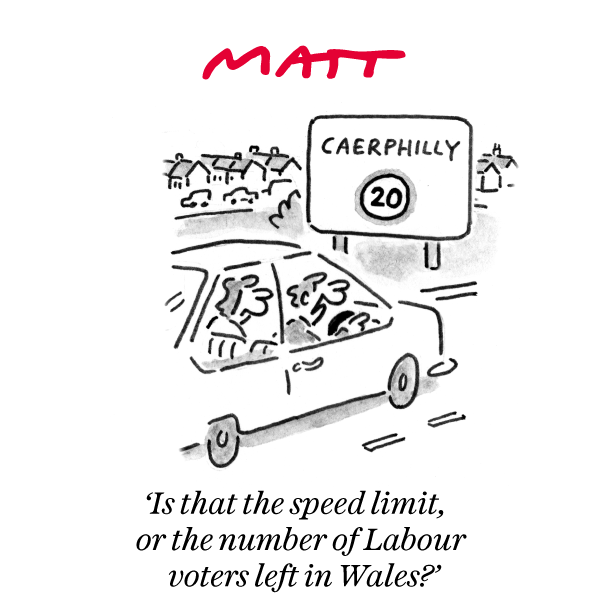
Reform has just captured 36% of the votes at the Caerphilly by-election, more than impressive from a standing start and for a party basically perceived as English.

The main System parties have been trashed by the voters who bothered to vote (turnout was just over 50%): Labour, the previous holders of the seat, fell from 45.9% to a mere 11%. The Conservative party fell far too, from 17.3% to a mere 2%. Reform’s 35% this time can be compared to its previous result (2.2%, though some sources say 1.7%; no matter).

This has huge implications for both local and Westminster elections in England, of course.

Reform has achieved this level of support not because people love it, its policies, or its leader, Farage, but because people now hate and despise both main System parties. The SNP suddenly became pre-eminent in Scotland in 2015 not because many Scots loved or much-supported it, but because the Labour and other parties’ votes collapsed.

More tweets seen

Think about it. Labour support overall is running at about 15%-25%, say 20% or thereabouts. Britain is now 20% non-white; Muslims are about 8% or maybe 10% of the population. Until recently, almost all voted Labour. Hardly any white English voters, in particular, now intend to vote Labour.

[“Agreed but think it’s somewhat dangerous to think a regional election is massively impactful to nation elections. Plaid Cymru won’t have candidates in the nation outside of Wales and that’s where the prize is. That said, the result is a big win for PC but isn’t the massive loss for Reform. 37% where they have never stood a Parliamentary candidate before is a good show. Long way to go in this story yet and Labour, and Tories, will not be happy as the narrative is they are a busted flush and the electorate will vote for anyone other than them.”]

Dan Hodges trying to spin the Caerphilly result as not terribly good for Reform UK, despite their vote having increased from around 2% to 36%! Look at Labour— 11%. Or Conservative Party— 2%.

Another way to look on the Caerphilly result might be to say that, if Reform can get a 36% result in a core part of Wales, what will it be getting in much of England.

I have no quarrel with that, but Dan Hodges is trying to stem the tide with words.

It may well be that Reform cannot get more, overall, than 35% or even a few points below that (in that poll, 29%). What Hodges does not seem to want to say, though, is that a party which gets even 29% in a general election can very easily still be the party that gets a plurality of votes and a plurality of Commons seats, maybe even a majority of seats.

On the figures above, Reform would still get about 370 Commons seats, and a solid majority. Labour might get 89 seats, the LibDems 69, the SNP 45, Cons about 21, and Greens 18.

Conservative Party would be only the fifth-largest party in the Commons.

Yes, but the idea that voters who dislike Reform will vote tactically on a big enough scale to stop the Reform deluge is very doubtful. Dent the juggernaut, yes, stop it, no. Some of the results might be unpredictable.

If Hodges says that Caerphilly was bad for Farage and Reform, how much worse was it for Starmer and Labour, or Badenoch and the Con Party?
As previously blogged, neither side should be directly targeting civilians.
A horrible tribe, wherever they are in the world.

Israeli doctors have been proven to have no ethics. Example? When the corrupt Nigerian former government minister, Dikko, was kidnapped in London in 1984, it turned out that the Israelis had made a deal with the anti-Dikko Nigerian government to kidnap him and fly him to Nigeria. MOSSAD was tasked with the operation.

Dikko was to be sedated by a leading Israeli anaesthetist recruited by MOSSAD pro hac vice. In the end, Dikko was lucky; the Israelis less lucky: https://en.wikipedia.org/wiki/Dikko_affair (and note that that Wikipedia page is one of the many vandalized by Jews connected with the so-called “Campaign Against Antisemitism” or “CAA”. All reference to MOSSAD, and almost all reference to Israel, has been expunged by the Zionist Jew vandals).

[“A caribou mother cradles her newborn protectively in the Arctic National Wildlife Refuge. This has been their territory since the late Pleistocene, but today the Trump Administration announced plans to auction off these treasured lands to oil and gas leasing. This means the entire 1.56 million-acre coastal plain of the Arctic National Wildlife Refuge will be opened to: airstrips, roads, thumper trucks, drilling rigs, noise, pollution and pipelines — destruction of one of the last refuges for wildlife on Earth.“]

Were I in government, or indeed the government, he would be “shot while trying to escape“. Job done.

How about tackling the problem of Israeli “proxies”, and the Israeli “Fifth Column” in the UK?

Peter Kellner is the YouGov pollster.

So without tactical anti-Reform voting, an overall 25% vote for Reform UK would give Reform 200+ votes, maybe 250. With tactical voting, Reform might get “only” 150-200…

The System drones are getting desperate. Even 150 MPs is massive for a party which presently has half a dozen. Also, from where does the “25%” come? Reform is currently far higher in the polls and was, recently, as high as 36%.

The fact is that the “Overton Window” is moving fast now. The Lab and Con System parties are dying. Reform, though underwhelming, is a symptom of the (mainly) white, mainly English voters losing patience.

If Reform forms a government but then fails to do “the necessary”, real social nationalism can take the reins, with the support of enough people to take power. The NSDAP in Germany had only 2.6% of the national vote in 1928, but by 1932 had 33%, and Hitler was able to take over the rulership of the country.

Starmer-stein’s Labour Friends of Israel regime is in trouble…
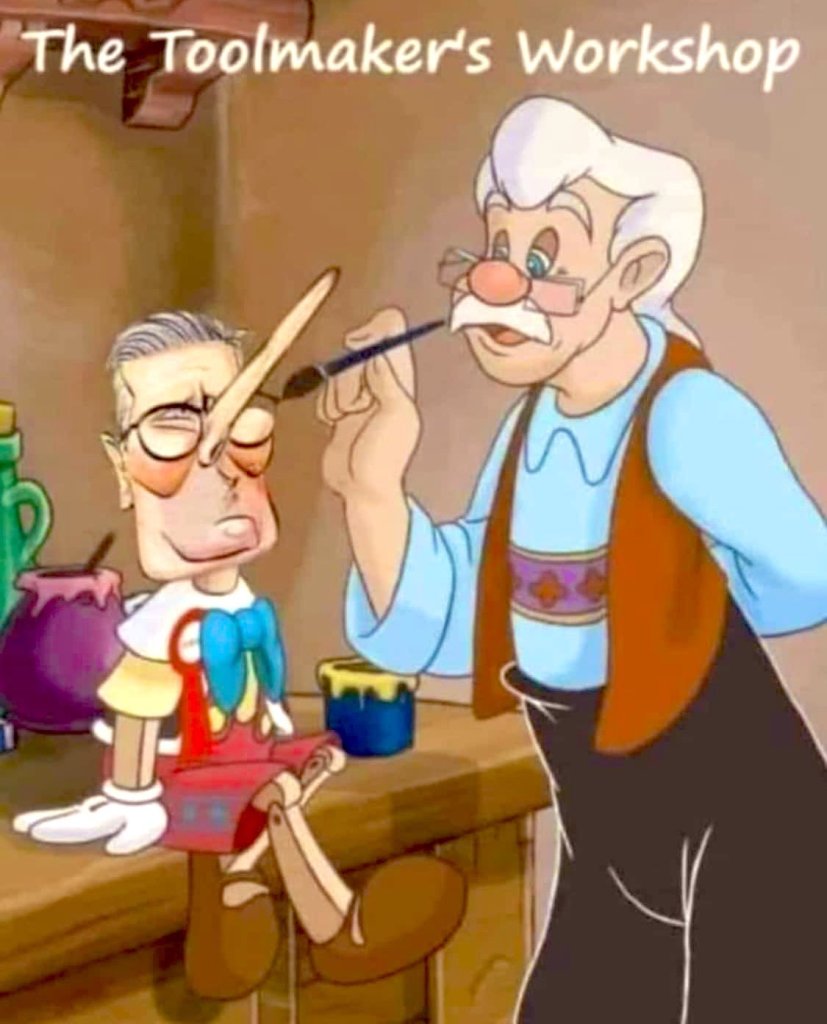
If fake Labour can lose about three-quarters (in fact, more than 3/4) of their previous vote in formerly rock-solid Caerphilly, in South Wales, where Labour votes were once said to be “weighed not counted“, the fall in support in most parts of England must surely be as much or more, arguende. If so, then the number of Labour MPs in or after 2029 would surely be somewhere around 75.

Likewise, but even more striking, the Con vote in Caerphilly was around one-eighth of its previous level. Were that to happen in England and at a general election, the number of Con MPs would be around 15.

Late tweets

What a pity. I like France, and enjoyed my 4 years living in Finistere (and commuting every couple of weeks to the UK). I should be sorry to see France, including Finistere (which has a major submarine base on the Crozon Peninsula) all but annihilated by nuclear attack.

Zelensky will be eliminated, sooner or later.

Starmer-stein? Only about 10% of white English/British people now vote Labour. Politically, both Starmer and Labour are washed up, together with the Conservative Party.

Bravo! Quite right. Reform, for me, exists to destroy the old System parties. Once that is done, stand aside for social-national upsurge.

Late music

[skaters at Gorky Park, Moscow]

Diary Blog, 12 January 2023, with thoughts about the NHS, and NHS strikes

Afternoon music

[painting by Jack Vettriano]

On this day a year ago

NHS

As blogged previously, I am all in favour of the NHS principle of “free at point of use”, but the fact is that the NHS, as it is (i.e. not in theory), is simply not working. Not working properly, and scarcely working at all.

It may well be that more money is required, but even now the NHS consumes nearly half the governmental budget (I see 44% as the proportion).

It may well be that nurses should be paid more. What about doctors? I see that GPs are mostly paid over £100,000 a year, some over £200,000, and for a service that is now lamentably poor.

As for hospital doctors, though the most junior (in the first year) receive only about £32,000 p.a., that rises rapidly to over £50,000 and, for consultants and surgeons, well over £100,000.

Ambulancemen (paramedics), (and women), get more than nurses, and do (from what I have seen) a very good job indeed.

As said, nurses and paramedics have a case for wanting more pay, but I cannot see it as morally correct for them to strike, leaving patients without care, even with some kind of skeleton service still running.

As for the NHS generally, it plainly needs to be changed to a service that genuinely puts patients first.

In the past decade, I have seen enough (though not as patient) to convince me that the maladministration in the NHS has to be rooted out. I should say that that is the main problem, not the staff as such, and not money as such.

Few people would want the UK to have an American-style health service, though it also has merits, which I saw when my first wife (an employee of the U.S. Federal Government) needed urgent surgery— and had it within a day or so of being admitted to hospital, and she was admitted the same day that she experienced pain bad enough to seek help. In the UK, that surgery would probably have taken weeks if not months to organize.

Likewise, I recall that my first wife was advised, on another occasion, to get a scan, and was given a choice of five hospitals within a 20-mile radius of home. The same year (1990 or 1991), King’s College Hospital in South London, a major UK teaching hospital, had to have a public appeal to buy a scanning machine, and that appeal ran for several years.

Again, the wife of a friend of mine in New Jersey was paralyzed after a woman driving a car in a supermarket parking lot (at only 5-10 mph) drove into her bicycle. Thanks to being heavily insured, my friend’s wife was able to stay at the Kessler Rehabilitation Center, where the Superman actor, Christopher Reeve, spent time a few years later [https://en.wikipedia.org/wiki/Christopher_Reeve#Hospitalization]. An excellent “facility”, as Americans say, and in heavily-wooded and peaceful grounds.

Still, the American system, under which about 40%-50% of the population are uninsured or under-insured, is unjust, and not what we in the UK would like to see.

There are, however, alternatives. The French system, for example (which I have also seen a little) seems to be far better than the NHS and, to take just example, has done away with “wards”— patients almost all have their own rooms, or shared rooms, and have done for about 40 years.

A friend in Brittany when I myself lived there (pre-2010) suffered from a heart condition and had already been treated by the NHS. On seeing the French specialist for the first time (taken the 50-mile journey to Brest and 50 miles back by taxi, at State expense, incidentally, rather than having had to drive himself), he was asked what medication he was presently prescribed, and replied. The French consultant raised his eyebrows and said “I think that we can do a little better than that“…

We are often unaware to what extent the NHS rations healthcare; the more advanced techniques and drugs available elsewhere are often not available on the NHS.

What we need is to keep the “free at point of use” principle, but ring-fence an “NHS tax” from income tax, so that those monies are usable solely for and by the NHS, not diverted to “aid” for the Jew Zelensky’s dictatorship, not diverted to other projects or services etc.

Also necessary (to some extent), along with better administration, is attitudinal change in some staff.

Tweets seen

I recall seeing that idiot in the hat shouting through a megaphone, in Whitehall, when I was last in London: https://ianrobertmillard.org/2022/06/30/diary-blog-30-june-2022-including-impressions-of-a-trip-to-dystopian-london/.

If they really received the full ration (call me a cynic…).

What use is SIS/MI6 when it has neither the will nor the capability to bump off Shamima Begum and her sort? Especially when it also failed, inter alia, to predict the fall of the Shah of Iran, failed to predict the Falklands invasion, failed to predict the fall of socialism (inc. the Soviet Union) etc.

It’s “FERBER“, not “FABER“…(get it right…).

American. Don’t know if lawful in the UK. If lawful, should not be.

Some suggestion that the Ferber website was hacked some time ago. May or may not be true.

The wildlife emergency in the UK must become a government priority.

From the newspapers

https://www.dailymail.co.uk/news/article-11627311/NHS-offers-remote-GP-job-85-hour-amid-claim-doctors-want-patients.html

The NHS has been accused of ‘wanting less and less’ to do with patients after it advertised a series of remote-only GP roles for £85 an hour.

The work from home job offers general practitioners a three-month contract with the chance ‘to provide online digital consultations’ via video or phone calls to patients, with pay of just under £3,000 a week or almost £13,000 a month.

It comes amid mounting evidence that ‘telemedicine’, while convenient for doctors, can be ‘disastrous’ for some patients.”

[Daily Mail]

https://www.dailymail.co.uk/health/article-11626977/NHS-emergency-care-crisis-laid-bare-999-response-times-worst-ever.html

More tweets

“Jack Monroe”

Probably because the virtue-signalling Guardian readers, while pleased to have a copy of one or two “Jack Monroe” books prominently displayed on a kitchen bookshelf, are certainly not going to actually make, let alone eat, her swill.

I shall look forward to that. All the online “grifters” should be rooted out. Ausrotten!

More tweets

Late tweets

Seems to be a genuine and worthwhile cause: https://www.gofundme.com/f/depher-cost-of-living-support-uk?qid=a6d81c76d0fb2349f78e7a06652165a6

Late music

[Scottish Highlands: a 19thC baronial-style lodge]

Rewilding and Reafforestation of Parts of the UK

An extract from an article of 2013 by George Monbiot:

“You could argue that an intensification of farming is a response to rising population pressure: the need to produce more food has caused greater damage to wildlife. But this is where the madness kicks in: much of the habitat destruction for which farm policies are responsible has little or nothing to do with producing food.

The uplands of Britain are astonishingly unproductive. For example, 76% of the land in Wales is devoted to livestock farming, mostly to produce meat. But, astonishingly, by value Wales imports seven times as much meat as it exports. Six thousand years of nutrient stripping and erosion have left our hills so infertile that their productivity is miniscule. Even relatively small numbers of livestock can now keep the hills denuded.

Without subsidies, almost all hill-farming would cease. That’s not something I’m calling for, but I do believe it’s time we began to challenge the system and its outcomes. Among them is a policy that’s almost comically irrational and destructive.

The major funding that farmers receive is called the single farm payment, which is money given by European taxpayers to people who own land. These people receive a certain amount (usually around £200 or £300), for every hectare they own. To receive it, they must keep the land in what is called “Good Agricultural and Environmental Condition” (GAEC). It’s a term straight out of 1984.

Among the compulsory standards in the GAEC rules is “avoiding the encroachment of unwanted vegetation on agricultural land”. What this means is that if farmers want their money they must stop wild plants from returning. They don’t have to produce anything: to keep animals or to grow crops there. They merely have to prevent more than a handful of trees or shrubs from surviving, which they can do by towing cutting gear over the land.

If they want to expand the area eligible for this subsidy, and therefore make more money, they must get their tractors out and start clearing vegetation. From my kayak in Cardigan Bay I have often watched a sight that Neolithic fishermen would have witnessed: towers of smoke rising from the hills as the farmers burn tracts of gorse and trees in order to claim more public money. The single farm payment is a perfectly designed scheme for maximum ecological destruction.

[Why Britain’s Barren Uplands Have Farming Subsidies To Blame, George Monbiot, The Guardian]

https://www.theguardian.com/environment/georgemonbiot/2013/may/22/britain-uplands-farming-subsidies

George Monbiot is quite right about subsidized farming. In relation to the upland and hill areas [relatively similar areas, but often taken to be different in terms of specific UK farming conditions: https://www.nationalsheep.org.uk/know-your-sheep/uk-sheep-farming/], the farming lobby will say that the land there is only suitable for sheep, so if the UK wants to produce food at a maximized level, then sheep farming is essential and can only exist if subsidized.

There are various aspects to all this, most of which are addressed in the George Monbiot article (above). The upland/hill areas are not very productive (generally, the higher they are above sea level, the less productive); they can support food animals other than sheep, in principle (deer, highland cattle, game birds etc) if not denuded of vegetation; the upland and hill farmers are only surviving by reason of a fairly generous (they might disagree) but environmentally-mad subsidy system.

In broad terms, the single farm payment gives the farmer on average about £150 an acre (2019 value), so a small farmer (and most UK upland and hill farms are small), who has about 200 acres, will get about £30,000 in subsidy (leaving aside the various official or other definitions of what constitutes a “subsidy”— see Notes, below). The actual net profit from farming itself on such a farm comes to something like £3,000, maybe even less. It’s minimal. Some farmers have only 100 acres, thus reducing their subsidy-income to maybe £15,000 and their real farming income to as little as £1,500.

The conclusion, surely, is that subsidies should be eliminated. They are disastrous for wildlife, give the country little in terms of food production and in fact give the already-wealthy farmers on the more favoured lowlands the bulk of the money (a large estate of say 10,000 acres might receive as much as £1,500,000 a year in EU subsidy). However, this article is about rewilding and reafforestation, not an overview of the whole agricultural sector.

There are UK and EU “subsidies” or grants for such activities as tree planting, but these are far less generous than the ones given for (nominal or actual) farming.

It seems harsh, on the face of it, that small farmers should face having to give up their way of life (in some cases, a way of life that has generations of history and custom behind it), but they will have been preceded after all by those working in other sectors, including coal mining, steel production etc, and now retail work. Why should huge amounts of public money be provided to farmers just because they bleat that without the money they cannot survive and would have to get other work?

The irony is that most farmers vote “Conservative” and are among those most ready to talk about “welfare” “scroungers” etc! It often seems to me that farmers generally want it both ways, to receive money from public funds merely as an entitlement for being holders of land (either freeholders or tenants), but on the other hand want no official interference with how they farm, because they run private businesses!

It has long been accepted that the farming lobby, and especially the National Farmers’ Union (NFU) is one of the most effective lobby groups in UK politics at national level.

Alternative uses for marginal land

After WW1, the UK was almost denuded of forest, having only 5% cover. The government set up the Forestry Commission in 1919 to address the domestic timber shortage, rather than for aesthetic or environmental reasons. Thus were born the typical blocks of forest seen in Northern England, Scotland, Wales: mostly Norway Spruce and Sitka Spruce. Though better than nothing, such coniferous reafforestation does not do much for wildlife, though the trees themselves can be, if not cut, longlasting (a Norway Spruce in Sweden may be the oldest —though regenerated— tree on Earth, dating back nearly 10,000 years).

The forest cover in the UK has increased markedly since 1919, to about 13% of land. The Forestry Commission itself and its now-devolved Scottish equivalent manage nearly 2 million acres of forest and, in some areas, have replanted with broadleaf trees which will encourage a greater biodiversity.

In addition, there have been a few large-scale initiatives formulated and put into action. There are a number of “community forests” (some created from bits and pieces of land) not all in public ownership but all of which have some public access: https://en.wikipedia.org/wiki/Community_forests_in_England

The Heart of England Forest (mostly in Warwickshire) is one superb initiative, the vision of one man, the late Felix Dennis [https://en.wikipedia.org/wiki/Felix_Dennis].

https://en.wikipedia.org/wiki/Heart_of_England_Forest

https://www.heartofenglandforest.com/

Another new wooded belt is the National Forest, planted in a number of linked areas North East of Birmingham:

https://en.wikipedia.org/wiki/The_National_Forest_(England)

https://www.nationalforest.org/

In addition, some very large and altruistic landowners, such as a Dane who owns over 220,000 acres in Scotland alone (over a dozen Highland estates), have exciting plans both for reafforestation and for wildlife recovery, even to the extent of importing wolves, lynx, bears, beavers etc.

https://www.bbc.co.uk/news/uk-scotland-47803110

https://www.theguardian.com/uk-news/2019/mar/21/danish-billionaires-anders-and-anne-holch-povlsen-say-plan-is-to-restore-scottish-highlands

https://www.telegraph.co.uk/news/2019/06/28/revealed-billionaire-philanthropists-rewilding-scottish-highlands/

https://alladale.com/

There are many smaller projects around, such as the wood created by Brian May, the Queen guitarist, in Dorset, being planted and growing on land May bought as a gift in trust, and which was originally going to be a housing estate (nb. were Britain not flooded with unwanted immigrants and their offspring, it would not be thought “necessary” to build on beautiful areas of countryside).

http://www.bereregis.org/brian-may-woodland.htm

Brian May Woodland – Image(1)

Brian May Woodland – Plan

Forests are not a waste of land…

George Monbiot has written about how upland forests and woods (or even areas of smaller vegetation such as bushes) delay the passage of rainwater to lower levels, protecting those lower levels from destructive floodwater.

Wild areas can provide food for people. Not just game animals, birds and fish (if permitted and/or in time of dire necessity), but mushrooms, fruits, wild vegetables etc.

Forests not only have amenity and aesthetic value, but are havens for wildlife of all types. In particular, the parts of the country that are relatively marginal for farming should be far more heavily wooded than they are. Animals, birds, fish, insects all thrive, given half a chance.

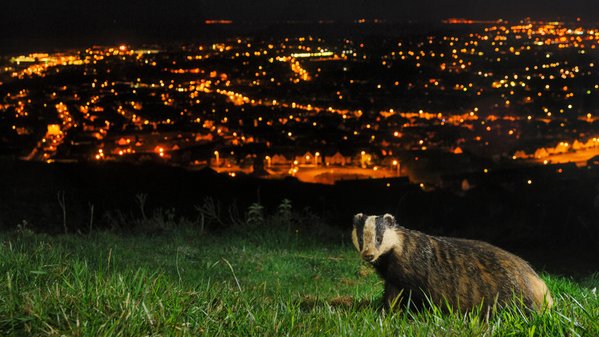
Badgerurban

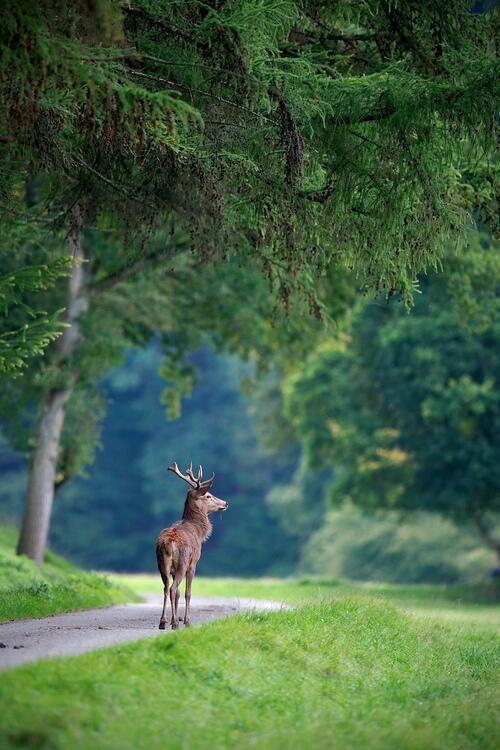
Cz5ru01XgAAAIn2

There are huge areas of the UK suitable for rewilding and/or re-afforestation. Not only in Scotland. Wales is especially blessed with upland and hill areas suitable for such projects. There are parts of England also suitable, such as the South West peninsula, within which there are areas where the population is surprisingly sparse, such as the Hartland Peninsula in West Devon, on the Atlantic coast. It is true also of the moors of Devon and Cornwall, but they tend at present to be under National Park or other restrictive control.

Rewilding and reafforestation are not inimical to the livelihoods of existing local people, who can derive benefit via catering to tourists, managed and sustainable forestry, wildlife protection jobs etc; whereas the present land use often benefits only small groups of farmers and landowners (via subsidies, and/or via the use of land for commercial driven shoots).

Rewilding is not just a matter of afforestation. Other types of landscape can also be rewilded: marshes, river estuaries etc. However, the forest is the key, whether it be managed forest or forest left to grow completely wild.

Bt7iAkdIEAAWIHV.jpg large

Notes

https://fullfact.org/economy/farming-subsidies-uk/

https://en.wikipedia.org/wiki/Agriculture_in_the_United_Kingdom

https://en.wikipedia.org/wiki/Forestry_in_the_United_Kingdom

https://www.forestresearch.gov.uk/tools-and-resources/statistics/statistics-by-topic/woodland-statistics/

https://en.wikipedia.org/wiki/Forestry_Commission

https://en.wikipedia.org/wiki/Heart_of_England_Forest

https://en.wikipedia.org/wiki/Spruce

https://en.wikipedia.org/wiki/Old_Tjikko

https://en.wikipedia.org/wiki/Felix_Dennis

https://www.nationalforest.org/

https://www.bbc.co.uk/news/uk-scotland-47803110

https://www.theguardian.com/uk-news/2019/mar/21/danish-billionaires-anders-and-anne-holch-povlsen-say-plan-is-to-restore-scottish-highlands

https://www.telegraph.co.uk/news/2019/06/28/revealed-billionaire-philanthropists-rewilding-scottish-highlands/

https://alladale.com/

http://www.bereregis.org/brian-may-woodland.htm

https://www.rewildingbritain.org.uk/

https://www.theguardian.com/environment/2019/may/21/rewild-quarter-uk-fight-climate-crisis-campaigners-urge

https://www.theguardian.com/environment/2015/jul/15/rewilding-britain-launches-with-the-aim-of-restoring-uks-lost-wildlife-and-habitats

https://www.rewildingbritain.org.uk/rewilding/rewilding-projects/

Swastikatree

Update, 7 November 2019

https://www.telegraph.co.uk/news/2019/11/07/farmland-birds-see-decline-55-per-cent-last-50-years-defra-reveals/

Update, 25 December 2019

https://www.telegraph.co.uk/news/2019/12/24/britains-ancient-wetlands-peat-bogs-must-restored-protect-thousands/