Perhaps Liz Truss should strap the mummified carcass of Madame Thatcher to a tank, and send it out to vanquish the enemy, as was done with El Cid on his horse at the end of the eponymous film!
Today in Glasgow – what the mainstream news won't show. The turnout was massive. There was more footage but Twitter won't let it load. Thousands out. pic.twitter.com/RUoH10zVYV
We in Europe must not fight these people, but join with them to create a better world against the plans of both the NWO and China.
Rather topical…
More tweets
What a shocker that none of the MSM/tabloids have seen fit to lead with the National protests (mirrored in many cities across Europe) against the unethical coercion of employees under threat of losing their jobs under abhorrent no jab no job policy. Katie Price got more exposure!
Russia has deployed troops near the Ukraine border, triggering the worst security crisis to emerge between Moscow and the West since the Cold War — in pictures https://t.co/4Nv4CwSsHBpic.twitter.com/Cic7atr6FA
“A general without troops is naked indeed“… The effective size of UK forces is very small now. The rest is embarrassingly hollow political posturing by pygmies such as Boris-idiot and Liz Truss. Farcical.
❗️Debunking @StateDept "facts" on Russian disinformation on Ukraine.
"Fact" 7: NATO is a defensive alliance.
👉Reality: The alliance has discredited itself with the operation against Yugoslavia, the invasion of Iraq and Afghanistan by @NATO members. pic.twitter.com/0E0sSFp3cv
“We’ve spent two years being dictated to by the sort of insufferable jobsworths who delight in telling others how to live their lives. This pandemic has been a gift to the invisible high-vis jacket wearers of the world.” https://t.co/xDt1g3h93f
That was especially apparent in 2020. I myself had one —brief— argument with a bloody ch…I mean Chinese…student of some kind, and stormed out of at least one shop where the assistant, for once in her miserable life, had the power to order the customer around (she thought).
“Will be able to use a personal digital identity wallet” OR “Will HAVE TO use a personal digital identity wallet' ? https://t.co/oVKGkUmwv3
Those tweets are still behind the curve. There will probably be no need for outright compulsion. It will just be made increasingly hard to live on anything beyond a down-and-out level without the “digital passport”, which will before too long be in the form of an implanted microchip.
Think how most people in the UK and other advanced countries now live. It is not compulsory to have personal Internet access, or debit/credit cards, or a mobile telephone. It is just that life is increasingly difficult without them.
I recall, years ago, circa 2007, asking whether I might pay for a business hotel (already booked by card) because I had a superfluity of cash at the time, and being told I could use cash, but only if I both showed ID and paid a deposit (I think £100 or £50) in cash upfront. Now? Maybe cash is not even accepted; I rarely, practically never, stay in hotels these days (15 years ago, I probably spent about half of the month in hotels).
That is how the microchipped population will be created, not by force but by guile, and because convenience will trump freedom.
Can’t believe there are people on here still claiming Covid harms children. Paediatric ICUs are full of infants with all respiratory viruses EXCEPT Covid. Lockdown had a disastrous effect on immature immune systems
Yes, mere weeks ago even the egregious “Covid criminal”, Professor Ferguson, was still being respectfully listened to by BBC drones as he predicted hundreds of thousands of dying (from Omicron, Delta etc) patients would swamp the NHS. In fact, the hospitals are half-empty in many areas.
The last known photograph of Tsesarevich Alexei and Grand Duchess Olga, the only son and eldest daughter of Tzar Nicholas II on the steamship 'Rus' during their journey from Tobolsk to Yaketerinburg in 1918
Strange to think that that boy, aged 13 in the photo, would eventually have been Tsar of all the Russias, had both he and Tsarism itself survived the brutal onslaught of Bolshevism. He was murdered just before his 14th birthday.
Jean Bugatti engineer and designer who was the eldest son of Ettore Bugatti the founder of the car manufacturer of the same name. Here standing with a Bugatti Royale, only 7 were built. Photo 1932
Well, I have once again beaten political journalist John Rentoul. This week, he scored 6/10, but I trumped that with 7/10. I did not know the answers to questions 4 and 6, and I hit the post on question 5 (I chose a neighbouring county), so disallowed that too; that left me with 7.
…and the Jewish hypocrites (in Israel, in the USA, in the UK etc) have the gall to whine about what happened here and there in the Second World War…
…and while we are on the subject of hypocrisy…
"In and from"? You weasel. How about urging your armaments client, Saudi, to stop bombing the bejaysus out of them? Jesus, Mary, Joseph and all the saints……!!!
— CrémantCommunarde #BeAPeacemonger ☮️ (@0Calamity) January 22, 2022
Imagine…Britain has a Minister of State, no less, whose degree was in “Hospitality Management”…Increasingly, I feel that there is just nothing left of Britain’s institutions but facades behind which are crumbling and rat-infested ruins.
For decades, Israel denied the massacre at Tantura in 1948. Now, the soldiers who committed the heinous acts of ethnic cleansing are confirming what Palestinians have said all along: villagers were systematically slaughtered. https://t.co/haAO36N360
How is that different from the alleged shootings of Jews by German forces and, more often, Baltic, Ukrainian and other volunteers and auxiliaries, in Eastern Europe during 1939-42?
Haifa University took the degree back from the MA student who wrote about the Tantura massacre in the ethnic cleansing of Palestine in 1948; Benny Morris wrote about the lack of credibility of oral history based on victims' testimonies… now it turns out the victims were right https://t.co/W3nDvlaozE
This photograph of Palestinians commemorating the Tantura massacre in 1947 while israelis relax on the beach is the perfect encapsulation of what israel was built on and what it continues to be pic.twitter.com/QKidzn187U
…imagine the scream the Jew-Zionist lobby would raise if people in the UK engaged in family recreational activities anywhere near the Jews’ endless “holocaust” “remembrance” photo-opportunities, even in England where no such massacres ever took place, not in the past 700+ years anyway.
Through oral history recordings and well-presented research, TANTURA lays out how atrocities were committed by Israeli forces during the founding of the state in 1948. Long suppressed, this is a difficult and vital record that challenges Israel’s founding myth about itself. 4.5/5 pic.twitter.com/JmA7eAwyoT
As if the Tantura massacre by the Zionist terrorists was any kind secret. This will only be a revelation to Nakba deniers. The whole of “Israel” is built over Palestinian mass graves and the ruins of hundreds of towns and villages. https://t.co/e6EAzIQOLe
Germany was devastated during the 1941-1945 period of history; it does not want that to happen, and even worse, a second time. (True, Estonia suffered greatly as well…).
Here's a time-lapse of all of the United Kingdom to #Ukraine weapons airlift flights from the morning of the 17th of January to this very minute on the 19th of January 2022. The UK has no intention of letting Ukraine fall. pic.twitter.com/p4DcNv25mt
Who pays for propaganda-journalism of that type? As for the ludicrous conclusion that “the UK has no intention of letting Ukraine fall“, it will take more than a few tweets by Liz Truss, a few remarks by Boris-idiot, and a few planes filled with weapons, to ensure that. How many such flights were sent to the equally-useless and corrupt Afghan government in Kabul?
I wonder whether Biden might accept any Russian offer to decide the matter by a referendum of the people of Eastern Ukraine? I suppose not, because 90% would want to separate from Ukraine and, in some way, cohere with Russia.
Putin will, in these last days, still try to “win without war”, in the words of Sun-Tzu, but as every day passes, more arms and ammo are flown into Ukraine by the USA, UK and others. That obviously makes a swift invasion, at least into Eastern Ukraine, more likely.
Very interesting thread on the true cost of living……..makes you think https://t.co/tW40ZOdSXj
Boris Johnson is a symptom of a much broader problem in British politics – which can only be fixed with new policies, and – almost certainly – new parties and a new electoral system https://t.co/4XUQ8YGAZ8
Rory Stewart – #PartyGate should be the last nail in Boris Johnson's coffin… Johnson was manifestly unsuited to be Prime Minister from the beginning, & it's very, very disturbing that a great country, like Britain, should have chosen somebody so unsuitable for the role. pic.twitter.com/sZK1PDoyJD
Almost all correct from Rory Stewart, but is he correct in saying that Britain is still “a great country”? I think not. Not now. It could be, though, that under the right ideology and the right leadership, Britain could rise again, if it changed some demographics and some habits.
Rory Stewart, in 2007, in order to gain more space for his growing staff, Stewart orchestrated the eviction on an impoverished Afghan family with ten children. https://t.co/wNLuGdoNeZ
Of course, Stewart is no longer an MP, and so could not, as things stand, be a Conservative Party leadership candidate.
Scoop: Some European nations worried that punishing Russia with deep sanctions over Ukraine could cause Putin to cut off gas supplies in middle of winter. Biden officials seeking help from Qatar, leading LNG exporter in world, sources tell me & @annmarie.https://t.co/SfHLMbSoFl
I would rather trust Putin and Russia any day rather than those Qatari bastards.
Look at Twitter. Every well-connected American msm Jew is anti-Putin, anti-Russia: David Frum, Ben Shapiro etc.
Wow! Russian late-night breaking news Putin sanctions bill submitted in Congress targeting various financial institutions, sanctions against many including Putin, and my favorite.. disclosure of Putin and his inner circle's assets publicly. Plus lots morehttps://t.co/9Dm0VjmIw6
Actually frightening, not just because the author explicitly commends what he calls the “brownification” of Europe, but also because he thinks that the population of the world is not really very high, whereas the truth is that the natural world is now breaking under the strain of numbers, most of which hordes are non-white.
When was it that the journalistic trade in London became almost entirely Jewish? I suppose sometime in the 1980s or 1990s. Certainly, looking at what was once “Fleet Street”, that trade has become so and, today, almost every newspaper scribbler, at least in the national Press, seems to be Jewish, or at least partly so.
Late tweets seen
Americans were asked to fill in a blank map of Europe.
I wonder what percentage of Americans want war with Russia over Ukraine or Eastern Ukraine? Whatever the answer to that, I imagine that the figure drops towards zero if those polled are told that war with Russia means a nuclear attack near to their own homes.
In that year-ago blog post, I saw a few things that now make me laugh all over again, like the very true assertion, contained in a tweet from one of the huge number of Twitter accounts now closed down by the online censors: “Leftism is when you think the best way to stick it to your boss is to ensure he has an unending supply of cheap imported labor..”
Quite. In a nutshell. That Twitter account was American, but it applies just as well here in the UK. Those (eg the “refugees welcome” dimwits) who think that you can have unlimited or almost unlimited mass immigration, yet still have a high-income, high-skilled economy (and also a properly-funded Welfare State), are just completely wrongheaded.
I myself never use “Right”, Left” terminology in any sense which confers legitimacy upon it.
The only extra point to add (and only necessary because there is so much deliberate misinformation around, especially on Twitter) is that many of the migrant-invaders entering the UK will never enter the UK workforce as such, because they not only have no usable skills, meaning skills useful in an advanced economy, but also either speak no English at all, or only at the most basic level (and in many cases never will).
In other words, mass immigration creates a huge drag on the society and economy; you could even call it a millstone around our collective neck.
Of course, the self-describing “Left” have pretty much given up any struggle to create a better society. They have no ideology (beyond vague “anti-racism”, “anti-sexism” etc) which might underpin such a struggle. Socialism in the old sense more or less died in and after 1989, the last significant year of the 1956-1989 ~33-year cycle. What is left is effectively worthless, a farrago of mixed-up nonsense, not only ideologically vague, but practically confused.
The above example about mass immigration is just one example of the confusion. Another is about free speech online. The virtue-signallers of the self-describing “Left” almost all celebrate the removal of social-national Twitter accounts such as mine (rubbed out in 2018 after a conspiracy by a pack of Zionist Jews); the same virtue-signallers celebrate equally the removal of Twitter accounts belonging to so-called “alt-Right” figures such as Katie Hopkins, and those of dissidents such as David Icke.
The “online fora” (Twitter, Facebook, Amazon, ebay etc) are of course all run and actually owned by hugely wealthy companies (and individuals, mostly Jews), but the self-describing “Left” has nothing to say about all that, still less any plan to change the structure; for them, all that matters is that “fascists” (those with whom they disagree) are removed from having any online “platform” (where they might enjoy freedom of expression).
They just do not see that what has happened is that they, and those like them, are now contained in a big gilded cage, where they can squawk endlessly about “racism”, “sexism” etc while having not the slightest real impact on the world.
The same kind of dissonance as over immigration is seen in the attitude of the same people about Palestine, Israel, and the Jewish situation in the world. They (most of them) oppose Israel as a state, and go halfway toward such ideas as “BDS” (economic boycotts of Israel, and avoidance of Israeli products etc), but the majority of them are still brainwashed by the whole “holocaust” farrago, and almost all of them no doubt think that the disastrous and destructive war against the German Reich was A Very Good Thing. Few would see a problem in the fact that exploitative Jewish control of economies, legal systems, political systems permeates what might be called “the Western world”, our world.
Even when they see fraudulent Jewish exploiters such as Philip Green, Robert Maxwell, Jeffrey Epstein and others, those self-describing “Left” people see only finance-capitalists…
As Goethe put it in Faust, and from the mouth of Mephistopheles, “the good folk do not see the Devil, even when he sits on their shoulder.” The “Leftists” see only the part of the narrative that fits in with their pre-1989 ideology.
You saw all of the above in the UK Labour Party’s Corbyn and McDonnell double-act: Corbyn with his skeletal “ideology” composed of elements taken, half-baked, from 20thC history, such as the so-called “Battle of Cable Street”, selected and half-understood bits from the Spanish Civil War (“!No Pasaran” etc), anti-Israel support for Palestine, yet at the same time his lip-service to the “holocaust” farrago, and of course “anti-fascism”. As clunky as a Trabant.
Both “sides” of the Labour Party offer nothing to the British people (though neither does this shambolic “Conservative” government, of course).
Unusual travelogue
That YouTube account, though slightly irritating at times, is usually quite interesting. The subtitles are rubbish, but you don’t need to know Russian: mostly English commentary.
As for BAM (Baikal-Amur-Mainline), it was once said, by dissidents, that every Soviet generation had its large and, they claimed, not very useful, engineering project: inter alia, the White Sea Canal, the Turk-Sib railway, the Virgin Lands scheme, and BAM. True, but some of those are at least not useless, and some are also very impressive.
“Thought for the day”
“If you can keep your head when all about you Are losing theirs and blaming it on you, If you can trust yourself when all men doubt you, But make allowance for their doubting too; If you can wait and not be tired by waiting, Or being lied about, don’t deal in lies, Or being hated, don’t give way to hating, And yet don’t look too good, nor talk too wise:
If you can dream—and not make dreams your master; If you can think—and not make thoughts your aim; If you can meet with Triumph and Disaster And treat those two impostors just the same; If you can bear to hear the truth you’ve spoken Twisted by knaves to make a trap for fools, Or watch the things you gave your life to, broken, And stoop and build ’em up with worn-out tools:
If you can make one heap of all your winnings And risk it on one turn of pitch-and-toss, And lose, and start again at your beginnings And never breathe a word about your loss; If you can force your heart and nerve and sinew To serve your turn long after they are gone, And so hold on when there is nothing in you Except the Will which says to them: ‘Hold on!’
If you can talk with crowds and keep your virtue, Or walk with Kings—nor lose the common touch, If neither foes nor loving friends can hurt you, If all men count with you, but none too much; If you can fill the unforgiving minute With sixty seconds’ worth of distance run, Yours is the Earth and everything that’s in it, And—which is more—you’ll be a Man, my son!“
[Kipling, If]
[“If you can meet with Triumph and Disaster And treat those two impostors just the same…”]
Our public health establishment has no explanation for the historically unprecedented 40% rise in all-cause mortality over the past year, most of which is not due to Covid.
Thread- the knepp castle estate in the United Kingdom and how simple ecology can truly be. The Knepp castle estate is a section of land that once was farmed traditionally, but has since been turned to one of Britain’s most promising rewilding project. (1) pic.twitter.com/8qeD4cQxJ4
Something really worth reading in the Grauniad today. Well done, that man!#SaveOurSwifts "‘I feel I’ve made a mark’: the man who built homes for 60,000 swifts | Birds | The Guardian" https://t.co/GjZetm4s7X
Only social nationalism has even a chance of saving anything worthwhile in Britain, but there is no social-national party worthy of the name, let alone any social-national movement.
Friendly reminder world: Canadians cannot leave their own country if they don't have the C19 vaxx nor can they travel domestically by plane, train or boat.
Being arrested right now! Christine Massey, biostatistician, FOI researcher & activist showing to the world that over 160 health institutions explicitly state they don't have any record of an isolated/purified coronavirus. https://t.co/DNwYCkVoPSpic.twitter.com/hVMElVWxOO
— EXiT the Germ Theory Prison #novirus (@ExitEUbefree) January 20, 2022
Austria passes their Enabling Act as the Parliament approves compulsory vaccines.
The measure went through by 137 to 33. It was supported by the political class, except ironically by the "far right."
If the State, controlled secretly by inner ruling circles and cabals, turns against the people, then the people have the inherent right to fight back, using whatever methods are expedient.
For “the welfare of the people is the highest law” [Cicero].
A few more thoughts about Ukraine
Any Russian incursion into Eastern Ukraine would have been bloodless, but will now not be, partly because the corrupt Kiev regime will probably try to resist, despite the vast bulk of the Eastern Ukraine population favouring Russia.
The arms and money (and “advisers”) from the UK and —mainly— USA being sent to Ukraine contain the seeds of a wider conflict, because any large-scale resistance by the Kiev government will probably result in retaliation against it by Russian forces. That might include massive attack on Kiev itself. Whether that will result in American direct involvement remains to be seen, though I doubt that the USA has the will to fight Russia directly, on the ground.
Eastern Ukraine was part of the Russo-Slavonic polity for over a thousand years. It was under Muscovite control for hundreds of years. The present corrupt, and basically Jew-dominated, Ukraine, has only been around for 29-30 years as a (failed) state. See https://en.wikipedia.org/wiki/Eastern_Ukraine.
Without interference from outside, Eastern Ukraine would fall under Russian control as willingly as Austria joined with the German Reich in 1938.
As for the USA, does it have the will to put its own safety on the line for the Kiev regime? I doubt it. Biden’s recent statement was a nod and wink to Russia that this will not cause a superpower conflict (if Russia still counts as a superpower…perhaps not, but near enough!).
Yes, the USA probably does have many times the military-destructive power of Russia, but the fact is that Russia could still annihilate most if not all American cities if it so chose, albeit at a like cost. You can only wipe out a city once, no matter how many and how powerful are your nuclear weapons.
As for political leadership, Biden seems to have some form of dementia. If he had to resign, the government of the USA would be, at least nominally, in the hands of part-black, part-Indian, part (small part) Irish, Kamala Harris, but one can assume that the “deep state”, i.e. the secret cabals and ruling circles, would continue to pull the strings. NWO, if you like, and “ZOG”.
Russia looks like it is about to make a big move on the geopolitical chessboard.
Late tweets seen
The liberal #globalelite are moving fast to switch from covid to carbon as their BS excuse for taxing & controlling the swinish multitude. The resistance to lockdowns & coerced vaccination must be ready to switch to fighting their #climatecommunism tyrannyhttps://t.co/eupw1BnLec
Yes, the “panicdemic” has only partly succeeded in corralling the public worldwide, and only partly in the UK as well. Suddenly, “Covid” “restrictions” are going to be stood down, only weeks after the latest scam propaganda over “Omicron”, and how hundreds of thousands would be filling NHS hospitals. All lies.
However, the repressive laws will mostly still be there, ready to be used and indeed repurposed, any time that the “secret state” decides.
Absolutely typical. “They” are very often bullies who, however, when people stand up against them, suddenly present themselves as the whining Jewish “victims”.
Anyway, there it is; she has bitten the hand that fed her for 29 years, and can now pocket £100,000 extra.
"Entire BBC channels will have to be axed – why have BBC2 and BBC4?" "BBC can't have any advertising as it would hit ITV" "Subscription for radio won't work" "A household tax would be fine" (which is what Europe uses) Michael Grade on #r4today
To a large extent, Grade’s views about the BBC are wrongheaded. While I think that the time has indeed come for the BBC licence fee (tax) to go, I do not think that the BBC should simply be left to sink or swim in the commercial media world.
Grade apparently wants the BBC to get rid of BBC2 and BBC Four television, presumably to save money. To echo Margaret Thatcher, “No! No! No!” Completely wrong. BBC2 and BBC Four are the best bits of BBC TV, the bits worth keeping and, though only after reforms are executed, the bits worth subsidizing.
The obvious way to subsidize the BBC is through direct government subsidy. Critics say that that would mean the BBC becoming a government mouthpiece. Hardy ha ha. What has it been for the past ~20 years (and certainly very arguably, since the 1920s)?
We do not say that, for example, the courts cannot do their job properly and (reasonably) impartially because they are funded directly, that is from central funds.
The licence fee system is both unfair and inefficient, with large collection (and enforcement) costs. It comes down to us from the era prior to the Second World War, during that war, and immediately subsequent to it, an era when people had to have a licence to own, among other things, a radio, or a dog.
What that means to me is that both commercial and populist considerations have to take second or third place. The BBC, as or if a public service broadcaster, must have the confidence to ignore the siren voices of “is it popular?” or “is it competing with commercial mass media?“. The whole point of subsidizing the BBC is that it has no need to compete with ITV, or Sky, and no need to pander to the tastes of the uncultured.
The BBC went wrong a long long time ago. In the 1960s. The pandering to mass sports interest by coverage such as Grandstand was part of that, as was the commissioning of most BBC comedy and variety shows, and the later focus on popular dramas, and what we now term “soaps” (from the American “soap operas” sponsored by detergent companies, shows such as The Guiding Light).
Generally, it can be said that, especially during the 1970s and thereafter, there was the impetus to compete for notional “ratings” with ITV and, later —after the 1980s— Sky. Pointless and unnecessary.
My solution for the current BBC question would be to keep BBC News, BBC2 and BBC Four, though all reformed, and with a far higher cultural level on BBC2. No newsreaders (or others) getting anything over £200,000 a year in gross pay, at absolute maximum. A focus on arts, sciences, current affairs, and historical subjects.
As for radio, keep only Radio 3, Radio 4, and the BBC World Service (and return that last to its pre-1990 glory days); Radio 3 to reverse its current dumbing-down tendency, and Radio 4 to be thoroughly purged of its now-pervasive Jewish influence, suburban “wokery”, and general hostility to white Northern European life and culture.
Subsidize the above channels; get rid of, or sell off, the rest. Also, sack most of the present on-camera (and radio presenter) staff. Start with useless overpaid drones such as Gary Lineker. Lord Reith would spin in his grave to see some ignorant big-mouth of that sort paid a million a year to shoot the breeze about football (the new “opiate of the masses”).
Amusing note:
In researching for the above piece about the BBC, I happened to see something about John Logie Baird, generally considered the inventor of television (though there are also others with good claims, including Germans, Americans, Japanese and Russians: https://en.wikipedia.org/wiki/Mechanical_television#Television_demonstrations). What amused me was this:
“Soon after arriving in London, looking for publicity, [John Logie] Baird visited the Daily Express newspaper to promote his invention [television]. The news editor was terrified and he was quoted by one of his staff as saying: “For God’s sake, go down to reception and get rid of a lunatic who’s down there. He says he’s got a machine for seeing by wireless! Watch him—he may have a razor on him.” [Wikipedia https://en.wikipedia.org/wiki/John_Logie_Baird].
True [addendum: the already-removed tweet showed Angela Rayner], but then look at the present crowd: Priti Patel, Liz Truss etc…
Come to that, look at the part-Jew, part-Levantine, chancer and bad joke presently masquerading as Prime Minister…The fact is that the whole Westminster political milieu and system is broken.
If Keir Starmer becomes Prime Minister, absolutely nothing will change, and the general decline in everything will just continue.
Savile, like others such as the Jews Greville Janner and Leon Brittan, seems to have been protected by the Jewish/Israel lobby. Savile himself as good as admitted it in a TV interview I saw not very long before his death. He said or implied that he was part-Jew (which may or may not have been true, almost certainly not), and that he had somehow helped the Israeli Embassy with confidential matters (who knows?).
Starmer, of course, is married to a Jewish woman lawyer, and their children are being brought up as if fully-Jewish. He is a member of Labour Friends of Israel.
I have no idea whether the above allegations in respect of Starmer’s role in the Savile scandal indicate that Starmer deliberately tried to protect Savile (he may have been simply incompetent, or just mistaken). Still, the matter should be investigated, if it has not already been.
“If a Minister lies to Parliament do you believe they should resign?”
Justice Secretary Dominic Raab – “it probably depends on the context”
I find it hard to believe Dominic Raab is deputy PM. He's incredibly dense, a very ordinary man who wouldn't go far in civilian life. #skynews#kayburley
Don’t blame Raab, as such. Blame the system that put him there. Blame a system that puts idiots like Michael Fabricant, Boris Johnson, Angela Rayner, Diane Abbott, Nadine Dorries, and hundreds like them, into Parliament. Not to mention the untermenschen such as Fiona Onasanya (now binned and on the dole, but others are still there).
My 9 year old's teacher asked all the kids in his class today for a show of hands on who is planning on getting the vaccine. He has asolutely no right to address young kids on their covid vaccination plans. He will be hearing from me tomorrow!
Why didn't the msm get all agitated about Bojo openly flouting all the rules with his bestest globalist buddies at the G7 meeting last summer? pic.twitter.com/GV8CG24EOl
Is anyone in the msm going to question the tyrannical measures, imposed by the globalist state machine, that caused all of this? https://t.co/EURznH2rwr
As for trade unions, like most institutions and organizations in Britain now, all but useless. Completely taken over by Common Purpose careerists and other enemies of the people.
I think most people are only watching the Australian Open to see how many athletes drop from heart attacks on the court. What are we at two now and a ballboy? But it's normal.. Right?
Good grief. The BBC is so replete with “licence”-payers’ money that it pays a scarecrow-on-a-stick nearly £300,000 a year to “work” only half the week…
Rome planned and built a network of roads with a technology and extent that no other civilization had ever done. Crossing plains, overcoming mountain ranges and mountains, rising on embankments or dismantling rock as much as necessary to make their way to their destination. pic.twitter.com/Fr35CnDo6t
Here come the doctors and brain surgeons of the future. The hardworking chaps who will pay your pension. They only want the best for you. #Dover Celebrate #diversitypic.twitter.com/JYHjoIqa2F
Drunken Churchill, in 1940, made the famous “we shall fight on the beaches” speech, in which he said:
” We shall go on to the end. We shall fight in France, we shall fight on the seas and oceans, we shall fight with growing confidence and growing strength in the air, we shall defend our island, whatever the cost may be. We shall fight on the beaches, we shall fight on the landing grounds, we shall fight in the fields and in the streets, we shall fight in the hills; we shall never surrender…”
…but of course could never have imagined that, 81 years on, most of the British people are more interested in football, TV talent shows, and dance competitions, than in “defending their island”.
Indeed, a significant minority of deluded persons actually welcome the invasion of Britain by hordes who, at best, will be useless, and at worst a mortal danger both to UK citizens and to the national heredity.
Ultimately, you can see what element is behind this warmongering in the USA and UK— the same “element” that was behind the two world wars. “They” play on existing tensions for strategic profit.
🚨| BREAKING: The MHRA has confirmed the UK has recorded 5 times more Deaths in 12 months due to C-19 jabs than it has Deaths due to every other Vacc1ne combined in 21 years, and Twatter doesn’t want you to find out…https://t.co/uNfh3yEj6D
Was reading the above article on the Royal Family and UK monarchy by scribbler A.N. Wilson.
Long ago now, I reviewed a book by A.N. Wilson on Amazon UK, where I was about 40th most popular reviewer (out of millions). Later, around 2012, the Jew-Zionist lobby had me barred from reviewing on Amazon UK (and on the separate American site…so much for “free speech” in the occupied USA…). All my reviews were then hidden from the public, and remain so.
One of the reviews effectively lost was the one about a book on British history in the 20th century, by A.N. Wilson. My view had been that his book was a really good read, but at the same time riddled with historical inaccuracies, absurd conclusions, and simple spelling mistakes. This article is similar in some respects.
Look at this:
“…we should not take the durability of the institution for granted.
At the end of World War I, when Russia, Germany, Austria and many other European nations were replacing their monarchs with forms of government in every way more tyrannical and bloody, George V, our king, once quietly remarked: ‘I’m going to have to work hard to keep my job.’
He and his wife, Queen Mary, did indeed work to develop the concept of constitutional monarchy.
Far from endangering parliamentary democracy, it strengthened it. Witha monarch as head of state, there is continuity and stability — it is no accident we remained a democracy when countries without kings or emperors ended up with leaders such as Hitler, Stalin, Mussolini and Franco.”
Well, let’s see. “At the end of WW1...” etc: In 1917, the rule of Nikolai II in Russia was replaced by that of the Provisional Government under Prince Lvov and Alexander Kerensky. It was not “tyrannical” or “bloody“, but was chaotic and unable to rule. Indeed, one could argue that the previous years of Nikolai’s rule, at least since the 1905 uprising, had been at times both tyrannical and bloody, especially if the Russian participation in WW1 is placed on the scales.
True, the Bolshevik government, which replaced the Provisional government later in 1917, was certainly bloody and, in the lay sense, tyrannical, and that was so even under Lenin, certainly later yet under Stalin.
Germany after WW1 was not a tyranny. The Weimar Republic was decadent, badly-run, verged on disorder at times, and was quite illiberal towards those who, like Hitler, were German nationalists, but it cannot really be called either tyrannical or bloody. Neither was the government of Hitler, in its 6 years of relative peace (1933-1939). It was dictatorial; it was not tyrannical. There is a difference. As for “bloody”, not so, overall.
Austria did become a kind of dictatorship, but only after 1933, under Dollfuss and, subsequently, Schuschnigg, but for the preceding 14 years had been a constitutional democracy: https://en.wikipedia.org/wiki/First_Austrian_Republic.
What about Wilson’s contention that ” He [George V of England] and his wife, Queen Mary, did indeed work to develop the concept of constitutional monarchy.” True up to a point. Wilson’s phrasing is awkward. The “concept of constitutional monarchy” had been developing in England and the UK for centuries, certainly since the English Civil War and the century following (17th/18th centuries).
Moreover, the same process was happening across Europe; certainly that was so in the 19th Century. It was not confined to the UK by any means.
As for Italy, Mussolini was dictatorial, though not officially a dictator (though he presented himself as such). Some who were (thankfully) repressed under his rule (notably the Mafia and other criminals, and Stalinist Communists) would say (wrongly) that he was a tyrant, but Italy remained a constitutional monarchy right the way through Mussolini’s rule, a fact that Wilson either does not know or fails to mention.
“An Allied invasion of Sicily began in July 1943, leading to the collapse of the Fascist regime and the fall of Mussolini on 25 July. Mussolini was deposed and arrested by order of King Victor Emmanuel III in co-operation with the majority of the members of the Grand Council of Fascism, which passed a motion of no confidence. On 8 September, Italy signed the Armistice of Cassibile, ending its war with the Allies.” [Wikipedia].
In fact, Italy only ceased to be a monarchy in 1946, following a mass referendum.
So Wilson seems once again to need either a history lesson or a lesson in how to express himself. Having said that, I certainly agree with most of his criticism, in the article, of Harry (“the Royal Cuck”), Meghan Markle (“the Royal Mulatta”), Andrew Windsor, and others, such as the horrible and entitled (mostly in both senses) moneygrubbing “younger members of the Royal Family”.
I believe that A.N. Wilson was once a regular guest of the Queen at table, at Windsor Castle, but was (sometime in the 1980s, or maybe a little later) cold-shouldered after he wrote a piece in the Evening Standard about what he had heard at dinner.
I stick with my view, held for nearly two years now, that much of the Covid madness has been a very-large-scale psychological experiment in mass conditioning, designed to result, down the line, in an almost robotic and very Pavlovian response to the orders of the System.
Remember the early/mid 2020 “social distancing”, with lines of shoppers obediently x-metres or feet away from each other, only moving forward on the orders of deadhead supermarket “marshals”? Then there has been the facemask nonsense, as noted in the tweet. Also, the almost-useless and often dangerous “vaccines” and “boosters”, and the equally-useless mass “testing” for “the virus”.
Somewhere not far down the line, there will be the microchipping of the population . Those refusing to be microchipped will be, pretty much, social outcasts, unable to travel internationally or even within the UK (or wherever), all but unable to access services, all but unable to buy food or car fuel (as cash is phased out). Already, I read, many under-24 people are accustomed to using cards for almost all purchases, and use cash as little as once or twice per month. They will be easily persuaded to be microchipped. The microchipping will come in “not with a bang but a whimper”, and few will see the dangers and implications; even fewer will resist.
🏘️Postcode snobbery is nothing new in the central London housing market – but now it is rife in the countryside, too.
These are the 54 most desirable rural locations in Britain 🧵👇
“We must secure the existence of our people and a future for white children”— 14 words…
It may be, that not very far in the future, the societies of Western and Central Europe will fall into complete decadence, their economies ruined, their legal and political systems ineffective and scarcely operational. A kind of Dark Age may be coming. If so, what really matters is to be prepared to seed a new pan-European civilization and culture, which can eliminate evil and disorder, so that a better future, and far future, will be able to exist.
I posted the above film clip out of amusement, really. I (quite genuinely) wonder why idiots like that speaker, and her tiny and lumpenproletarian audience, waste time on demonstrations like that. Still, there it is.
A long time ago, in the 1980s, I was —very unusually— coming out of the Circle Line station at King’s Cross. It was a a summer afternoon. There was, just before the stairs leading to the street, a bank of public telephones. I happened to notice that there was a small black diary or notebook on the floor. I picked it up and looked at it, thinking that I might post it back to the owner, or hand it in to the police.
Said diary turned out to belong to someone at an address nearby, so I walked there. Why not? I was in no hurry, and I like to help people if I can.
I soon arrived at the flat where the diary’s owner lived, 1930s social housing. I (dressed in a pinstripe suit, and sporting a silk tie) knocked at the door. A strange, rather red-faced and intense young woman opened the door, but only about 6 inches. I explained that I had found the diary and where. She looked very suspicious; taking the diary, she shut the door without a word of thanks! I suppose that when the (1980s version) of the “woke” revolution (was going to come), courtesy, or indeed simple politeness, and gratitude, would be unnecessary…
Perhaps the odd young woman thought that I was a member of MI5 or Special Branch who had stolen her diary to get intelligence, and/or was wanting to get to know her or even recruit her. Or did she imagine that I wanted to rape her (or whatever)? God knows. Stupid creature. As often said, “no good deed goes unpunished”…
Did the young woman use the public telephones to avoid any telephone tap on her own telephone? Or did she simply not have a telephone in the flat? Mobile telephones were effectively unknown then, of course.
I wonder where said young woman is now? Probably a member of the Labour Party (Corbyn faction), and/or a local Labour councillor, now aged 60+ and with decades of silly militancy behind her. Or did she fall by the wayside en route to the post-Marxist promised land, marry some accountant or solicitor, and acquire a suburban house, and a holiday home in some place unaffected by the collapse of white England? Who knows?
I believe in public service broadcasting, but the BBC has not been that, in any serious way, for years, for many years.
I believe in the original dictum of Lord Reith: “inform, educate, and entertain” in that order of priority.
The major strategic mistake the BBC made, at least 50 years ago, was to compete with ITV (and commercial radio) for “ratings”, i.e. cheap popularity. The whole point of having the licence fee (meaning a tax on owning a TV) was, or should have been, to create a TV and radio service which concentrated on relatively “high-minded” stuff. Instead of that, the BBC established Radio 1 and, on TV, dumbed down, first of all, BBC1 TV and then BBC2 TV.
The dumbing-down continued, particularly from the 1980s. In the 1990s and thereafter, the BBC television output gradually declined in quality, and the new efforts were generally poor. BBC Three television was markedly rubbish (it was eventually put online-only), though one bright spot was the new BBC Four, which is now (now that BBC 2 TV is so poor) the only decent BBC TV station, the only one with any intellectual pretension.
As for radio, the World Service was reduced from something really worthwhile in the 1970s and 1980s to very poor in terms of quality through the 1990s, and by 2010 to rock-bottom.
The process continues. On radio, it is noticeable that the dumbing-down continues; Radio 3 output is sometimes close to some of that on Radio 2 these days.
I therefore welcome the announcement that the BBC licence fee (tax) is going to be abolished. I welcome it on principle, and also because, these days, something like the BBC, a huge and bloated corporation run by and staffed by, largely, an in-group, almost all thinking the same way (and mostly the wrong way), is totally anachronistic.
Turn on your TV. How many channels are there? 100? More. Yes, mostly rubbish, but many not, or not completely. Do the few BBC ones really offer anything different from the rest? I say no. Ads? The BBC may not have paid advertising, but it advertises its own shows all the time, which is equally irritating.
Now we have the Internet as well. There is just no justification for subsidizing what the BBC, most of the time, now does.
At one time, almost every country in the world, even the tiniest, had its own “national airline” or “flagcarrier”. That was basically an outcome of international conditions that, by the 1980s, had already been superseded by new norms that better reflected reality. The BBC, as it now is, has no place of significance in the world, and no right to be subsidized by a punitive tax.
I also look forward, of course, to the overpaid BBC drones and “celebrities” having their rice-bowls taken away, but that is a secondary, though pleasant, thought.
More late tweets
I hate to break this to you but the SARS-coV-2 virus has never been isolated anywhere in the world and the reason is it’s computer generated as are the variants. Let that sink in
I shall blog in detail later, when the candidates have been declared. For the moment, it is possible to sketch only outlines.
Birmingham Erdington is considered a safe Labour seat, though not quite rock-solid now. The last non-Labour candidate was elected in 1936 (Conservative Party).
The lowest Labour vote since 1983 was recorded in 2010 (41.8%). However, that vote increased to 45.6% in 2015, then 58% in 2017, before slipping back a little to 50.3% in 2019. Dromey was first elected in 2010.
As for the Conservative Party vote-share, its high-water mark was back in 1931 (68.1%). It was closest to success (since the pre-WW2 era) in 1983, when Labour, with 39.8%, narrowly beat the Conservative candidate (39.2%), a majority of only 231 votes.
During the Blair era, the Conservative vote slumped well below 30%, but has recovered since: 32.6 % in 2010, 30.8% in 2015, 38.4% in 2017, and 40.1% in 2019.
In 2019, Brexit Party put up a candidate who scored 4.1%. While one cannot say that that 4.1% would otherwise have voted Con, it is more likely than not, putting the Conservatives maybe within a couple of points of Labour. However, recent opinion polling has shown that Conservative Party support, nationwide, has been sliding.
The potential level for any social-national candidate is hard to gauge, but in view of the fact that there presently exists no credible social-national party in the UK, my assessment of the likelihood even of a saved deposit for any candidate of that type is low. The BNP achieved 5.1% and a saved deposit in 2010, and achieved that, moreover, despite the existence of both UKIP (2.4%) and National Front (0.6%) candidates. Had only the BNP stood, then it is possible that its vote might have totalled over 8%, and —who knows?— even over 10%. Still modest, of course.
UKIP, not social-national but somewhat (conservative-) nationalist, achieved a creditable third place on 17.4% of the votes cast in 2015.
This is not Liberal Democrat territory. The LibDems have lost their deposit in every election since 2010 (16.2%).
I imagine that the by-election will attract a host of minor and joke candidates.
In years past, there would been little point in blogging about a by-election such as this. However, this time it is worth speculating about, and then seeing the result. The interest lies in seeing whether former Labour voters’ apathy, and/or dislike of Keir Starmer and/or Labour generally (with its pro-mass immigration stance and “Covid” obsession) can result in a great upset.
Labour is sliding fast in the affections of the voters, but so is the Conservative Party, which talks big on immigration yet not only does nothing to stop it but is actually inviting millions of Hong Kong Chinese to live here, is inviting tens of thousands of Afghans to live here, and has done absolutely nothing to prevent the cross-Channel migration-invasion.
This looks like being a straight Conservative-Labour fight. I cannot see the LibDems mounting a successful third-party bid. At the moment, I should say that Labour are still favourites, but only just. I do not rule out an upset.
[Update, 8 January 2023: In the end, Labour won easily, with 55.8% of the vote, the candidate being Paulette Hamilton, a West Indian one-time nurse: https://en.wikipedia.org/wiki/Paulette_Hamilton. The Conservative Party candidate got 36.3%.
The remaining 10 candidates all received under 3%, the highest being the Trade Union and Socialist Coalition [TUSC] candidate, Dave Nellist (a former Labour MP), with 2.1%.
Only 27% of eligible voters turned out (in an area that voted 63% for Leave in the Brexit Referendum), meaning that the West Indian ex-nurse who won did so on the votes of only about 15% of all potential voters. A real social-national party, if it existed, would win a seat like that].
Labour Party in the Cold War
I am reading Against the Cold War; the nature and traditions of pro-Soviet sentiment in the British Labour Party 1945-89, by one Darren G. Lilleker.
A fairly interesting book-length study (a doctoral thesis), but I have already found flaws in the bit I have read so far, such as:
“Lee, identified as Will Owen, was solely interested in financial reward. According to [Josef] Frolik he demanded free holidays and money and in return passed information of the “highest importance.,… This description of Owen seems somewhat dubious, Owen was not party to important information, and the fact that he was acquitted from a treason charge on the 9th May 1970 substantiates these doubts.”
Well, Owen was tried at the Bailey, true, but not on a charge of treason (in the strict legal sense). The charge was one of “communicating secrets” contrary to the Official Secrets Act.
A basic error like that is not one that I should expect to see in the thesis of a Ph.D. candidate, frankly. There are already noticed one or two similar errors. Also, one is acquitted of (or maybe on) a charge, not “from“. Also, it is claimed, in the thesis, that the MP John Stonehouse was engaging in homosexual behaviour (which laid him open to blackmail by Czech Intelligence, though his main motivation for spying was financial).
The money aspect, yes, but is the other true, or not? Wikipedia mentions nothing of it [https://en.wikipedia.org/wiki/John_Stonehouse]. There have been two books on Stonehouse published in the past year; neither (judging from reviews) mentions the “gay” allegations.
Still, I am continuing to read Lilleker’s thesis, which I am finding interesting, overall.
“Intensive care doctor tells Sajid Javid: this is why I’m refusing the Covid vaccine“
“Steve James, of King’s College Hospital, said Health Secretary didn’t seem to agree that he had immunity from being ‘antibody’ positive.”
“Mr James told the PA news agency he did not believe Covid-19 was causing “very significant problems” for young people, adding that his patients in the ICU had been “extremely overweight” with multiple other co-morbidities.“
Cummings, about whom I blogged a few times, is making himself look silly now. As to Boris-idiot, it is hard to think that he could be made to look sillier…(actually, thinking about it, the same could be said of Cummings).
I should like to believe that the British public would do better, but I do wonder…in the new multikulti “British” land, ignorance is bliss, quite often.
By 52% to 23% Britons say it was the wrong outcome to find the four people accused of criminal damage for pulling down the statue of Edward Colston not guiltyhttps://t.co/25EJ0beyLOpic.twitter.com/pRHBayiyFk
My guess? Most of the jury was composed of a mixture of blacks, other non-Europeans, and persons of a generally Labour Party bent. There was no need for a majority direction from the trial judge, so either all jurors voted for acquittal, or most did and the few preferring conviction changed their minds and went along with that.
Let’s be brutally honest… if there really was a global health pandemic, and the Australian government were genuinely ‘terrified’ about it… there wouldn’t even be any tennis tournaments going on there in the first place!
Of course, I saw through Boris Johnson long ago, about 20 years ago. Unfortunately, I am forced by Fate to be merely (at least so far) a private citizen-blogger. Frankly, and if I myself say it that shouldn’t, I would be a far better head of government than Boris Johnson. Admittedly, many people might echo my words, and with justice.
More music
Kazakhstan
I was not intending to blog about the present upheaval in Kazakhstan. It is —tempus fugit!— now 24 years since I lived there (I was there for a year), and I have already blogged about some aspects of my own time there, en passant, several times. However, a few words…
Kazakhstan, when I went there, was all but unknown to the UK public. Even educated members of the Bar whom I knew asked “where exactly is that?” when I said that I would be living there.
Despite being the 9th-largest state in the world, more than 11x the size of the whole UK, Kazakhstan was almost invisible to most British people. That is less true today, though most people still know little about it.
At one time, from the 1920s to the early 1990s, Kazakhstan’s population was 20%-45% Russian, peaking at well over 40% in the 1970s. Even when I was there (1996-97), Russians were over 30% of the population, and probably more in the then capital and largest city, Almaty, where I lived.
By reason of Stalin’s mass deportations from other areas of the Soviet Union, there were numerous other ethnic groups in Kazakhstan up until the 1990s (they are still there but in far smaller numbers): Volga Germans, Jews, Ukrainians, Crimean Tartars, Turks and Koreans (former residents of Soviet areas bordering those countries) etc. See https://en.wikipedia.org/wiki/Kazakhstan#Demographics.
In the 1990s, Russians started to leave, as “Kazakhization” proceeded. Jews left for Israel. Germans left for Germany. Kazakhstan is now about 65%-70% Kazakh.
Russians were the backbone of Kazakhstan as a civilized and advanced country. The Kazakhs I myself met were (mostly) very pleasant, tolerant people, but badly-led and, after all, basically non-European. Before the late 19th Century, Kazakhs were still all nomadic. Most of them still were as late as the 1930s.
Russia gave the Kazakhs everything modern, from roads and rail, and medical services, and cities, to nuclear poison and labour camps…a mixed picture…
Kazakhstan was once called, informally —and dangerously—, Kazekstan, “zek” being a slang term for a prisoner.
The Russians, in the 19thC, established a fort at a place in the foothills of the Tien Shan mountains, a place they called Verny. There was founded a small town, later called Alma-Ata (“Father of Apples” in Kazakh). When I lived there, there were still a few small apple orchards in the hills within the city limits rapidly being developed into residential and office neighbourhoods.
Alma-Ata became (I have no idea why) “Almaty”, a name both Russians and Kazakhs found odd and somehow funny (they told me).
The few at the top after 1991 effectively stole everything, something that was obvious to me when I lived there. The “elected” dictator, Nazarbaev (resigned recently), was, even in 1996, said (by Fortune magazine) to be the 5th-wealthiest individual on Earth. The oil and gas and other riches under the ground went mainly to him and then to his clan, family, friends and contacts (and to Western oil, gas, and mining companies). Nazarbaev was the first Kazakh leader (even in Soviet times) who had no descent from Genghiz Khan; he was never fully accepted by many Kazakhs.
The Soviet government had tried, in the late 1980s, to install a non-Kazakh, a Russian, as leader. Riots killed hundreds.
I am sorry to see the bloodshed in Kazakhstan, but the country needs a new start.
Look who’s talking! US forces came to the UK by invitation in 1942, but never left! There are still strategically-significant American forces in the UK, not only air force contingents and actual US air bases, but Navy and Army, as well as smaller forces such as NSA, CIA and even US Coastguard (in London, of all places! I once talked with one of their officers).
(When the USA seized the gold reserves of the defeated state of Iraq).
🔻 💬Ambassador Anatoly Antonov to @Newsweek: 1⃣. @NATO's expansion eastwards is against the common and collectively agreed principle of indivisible security in #Europe. The transatlantic bloc itself is a rudiment of the Cold War. pic.twitter.com/OGiYrGKpYm
💬 One of the most important holidays, #Christmas, has a special moral significance. It unites people with high spiritual ideals, fills our hearts with joy.
🙏 I wish everybody good health, success and happiness.
That is mainly because Europe, particularly Western Europe, is infested.
All “influencers” are a detriment to society man. Sack off all of them. Even the term “influencer” is so fucking narcissistic. World would be a much better place without them. #mollymaehttps://t.co/BLzx6Ojqxs
I have no idea who that rather unattractive airhead is, but the frightening thing is that idiots like that do actually speak for at least a significant minority of the UK population, and that fact is one reason why the secret cabals and ruling circles are not finding it too difficult to drag this country into a future which is already beginning to look like a dystopian nightmare.
I never chose it… I never chose it!
“I never had a choice” [Nietzsche, Also Sprach Zarathustra]
**Breaking News**@MaajidNawaz will no longer present his programme on @LBC.
It seems LBC are not keen on presenters having an opinion.
What I'm seeing with #Omicron. 1) Everyone will be exposed in next few weeks. 2) Almost everyone gets a mild form of common cold. Trivial hospitalization. Trivial oxygenation needed. 3) Omicron replaces Delta. 4) Omicron acts as a natural vaccine, Herd immunity. 4) End pandemic.
Whatever happens (or is said to have happened) with “Omicron”, the “panicdemic” narrative will continue to be pushed. The endgame has nothing to do with public heath, and certainly nothing to do with any supposed huge “danger” to the public, or the world. It is all to do with the next stage in the conspiracy— the microchipping of effectively the entire population of the world.
Stray thought
Looking at the film (from 1974, though the music dates from 1959), no-one in that film could have imagined that the DDR/East Germany would pass into history only 15 years (officially 16) later. Even when I spent a couple of days in the DDR in 1988, the regime seemed to be in full control, though there was to me a strange feeling about the place (I was in the seemingly almost depopulated Southwest and Southeast), a feeling that —despite all the trappings of a state— this was a kind of facade. I suppose that the feeling might be summed up as “where are all the people?”…
We imagine that a set-up like the UK will go on almost forever, and certainly not disappear or be radically changed within a few years. I’m not so sure of that.
People who live in glass houses should not throw stones, and I myself could certainly benefit from some weight loss, but truth is truth…
‘Migrants 'are staying in four-star hotel rooms at £125-a-night on the taxpayer' as Britons struggle to afford spiralling energy bills amid cost of living chaos’ https://t.co/0clDybKTN5
…and just in the past day or so I have seen one newspaper report about a working nurse forced to sleep in her car because she is “not a housing priority“, and another about an elderly Englishman who froze to death in a doorway because the local council would not help him, yet all stops are pulled out for these backward, useless untermenschen, who are invaders.
Même si Macron veut les emmerder, des manifestants anti-vax défilent à Paris.
If by chance there's a journalist out there who made a New Year Resolution to report just one really inconvenient truth, here it is….https://t.co/3DsapynyGm
Exactly right. The medium-term endgame, maybe in 2022 or 2023, maybe slightly later, will be to demand that everyone in “advanced” countries gets microchipped, not only as a “Covid passport” but supposedly to protect financial information, because debit cards and credit cards will slowly be replaced by the implanted chip. The same with medical information on the individual. Then will come police records and actual passports etc.
Naturally, anyone deemed “racist”, “anti-Semitic” (that most of all) etc will have those “facts” recorded on the chip (or may even not be chipped, thus excluding them from society). A fine police state tool, useful for barring “unpersons” from professions, jobs etc, most of all barring them from politics and other opinion-forming activity.
It is already happening, though less efficiently, using more basic methods, in the msm, mainstream politics, and the higher-profile professions and occupations, such as the Bar, as well as in the Diplomatic Service, SIS, MI5 etc.
In short, the individual will be totally identifiable, checkable and (once synchronized with 5G etc) trackable 24/7, worldwide.
The global fake “biosecurity” police state will then come into being.
Anyone not part of “the only game in town” will be (in fact, certainly in the UK, already is) marginalized, and later will be starved, made homeless and/or then criminalized and probably incarcerated in (though they will be called something else) concentration camps .
There may be ways of fighting this evil but not, primarily, via ordinary political activity, and certainly not by tweeting, blogging etc. That is, at best, preparatory.
More tweets
Our people should come first, these others don't belong here and should return home. pic.twitter.com/z6zsPNHPbh
Marx said that “the point is not to understand the world but to change it“, a very limited but not entirely incorrect viewpoint. We now have many people who think that the most important thing is to be able to express views publicly, by which is usually meant online. I sympathize, and have myself suffered from the repression against free speech (unlawfully disbarred, expelled from Twitter etc), but the mere expression of views cannot be a substitute for real action for a better and/or completely different society.
#Antifa rioter @JasonRCharter, who was arrested by the FBI in 2020 over his role in trying to topple statues in the US capital, pleaded guilty last year in federal court. Like for other left-wing extremists, the federal government has recommended he be sentenced to no prison time pic.twitter.com/MazzjI9LJR
I think that it has become worse in past decades. There is now, certainly in the UK, an unofficial or semi-official canon to which a journalist who wants to have a job must subscribe: pro-Jew, probably/mostly pro-Israel, “anti-racist” (apart from pro-Israel), pro the “BLM” nonsense (tweak a little for Daily Mail etc readership), pro-facemask nonsense, believing most of the official “Covid” propaganda line and that of the “holocaust” farrago; and so on.
Tweeting or blogging will not stop evil bastards of that sort.
We are slowly being conditioned to Susan Michie's "masks forever" world. Dubious levels of protection and a huge reduction in the level of human interaction. Sick idea.
The cupola of Cathedral of Saint Isaac's in St Petersburg. Built between 1818 and 1858, by the French-born architect Auguste Montferrand. pic.twitter.com/EzitNXf3KN
Hard to know which is the most shocking, the way in which an elderly person was treated, or the incompetence which meant that the police not only went to the wrong address but also mistook a house for a flat, and then also mistook a white man of 80 years of age for a black man in his thirties!
The police are fortunate that most people who commit crimes are not very intelligent; if they were, the success rate for the police would be even lower than it is.
Update, same day: I happened to see the tweets now appended below, which cover the incident in more detail:
Incidentally, the police sending their victim a £30 bill for securing the door they themselves had damaged is contemptuous and rather Kafka-esque.
Hard to believe the attitude…it reminded me of a news report I saw decades ago: a helicopter was used in a prison escape, I think from Gartree prison in Leicestershire (a top-security place then, where Professor Hugh Hambleton [https://en.wikipedia.org/wiki/Hugh_Hambleton] and other high-profile prisoners were held).
When the police recaptured one notorious criminal, they beat and kicked the **** out of him. Appearing in the local mags court, one charge against him was escaping from the prison, but the other was “criminal damage to a police boot” (with his head and face! True; this actually happened; at least, it was reported in at least one newspaper).
I am not by nature “anti-police”, they being a necessary evil in a modern society, but the police in the UK are now rather disturbing, often uninterested in real or “ordinary” crime, yet focussed on things like malicious complaints made by dishonest Jews about comments made about current affairs on social media.
Also, the police seem to be alternately far too lenient on things such as anti-social street behaviour, yet sometimes, as above, absurdly heavy-handed.
The police should take a look at where they are, and on their priorities.
Music not well-known to the public, especially outside the former Soviet Union (and maybe also inside it, now), but beautiful; it should not be forgotten.
More music
Town planning and architecture
Quite interesting American overview of Soviet town planning, focussing mainly on residential units:
Another town planning video:
If there is something missing from that video, it is that cities are for people, and it is the nature of the population that determines whether a city is a pleasant or unpleasant place in which to live. The same city can be a centre of culture and science, or just a human zoo, depending on the nature of its inhabitants.
“Emmanuel Macron says he wants to ‘p*** off’ the unvaccinated in foul-mouthed rant vowing to ban them from public places including restaurants, cinemas and coffee shops from next week” [Daily Mail]
“I won’t send (the unvaccinated) to prison, I won’t vaccinate by force. So we need to tell them, from Jan. 15, you won’t be able to go to the restaurant anymore, you won’t be able to down one, won’t be able to have a coffee, go to the theatre, the cinema.” [Daily Mail]
Exactly what I was saying earlier in today’s blog. Those resisting the System (which is presently using the Covid “panicdemic” as excuse) will be gradually reduced to the status of a marginalized and bullied underclass. Fight now or fight later…
Friends of Israel and it’s Jewish support in the Labour Party worked to remove a Democratic leader , Corbyn,is that acceptable? The term Antisemitism was used hundreds of times more in media than the word racism, or mental health , or poverty, so I ask which is more important 🤔
I would like to thank Twitter for not pandering to #Zionists groups tried to block my account,Epstein, Maxwell, jews who ran a under age sex ring , FACT, and I call for investigation into Friends of Israel influences in lobby for Israel, what’s to hide, it’s a Democracy
Unfortunately, Twitter did listen to (and obey) the Jew-Zionist claque re. me; I was expelled in 2018. Having said that, I had already woken up to the fact that Twitter is of limited utility in socio-political terms and is, to a large extent, a waste of time.
Nikki is sleeping in a car she borrowed from her nephew and has been forced to wash and brush her teeth in supermarket toilets
Understandably, Nikki has spent almost a fortnight in a state of high anxiety and misery pic.twitter.com/O7x9M8pS5J
With nowhere to go on Christmas Eve, Nikki again slept in the car by New Brighton Promenade, where she awoke on Christmas morning pic.twitter.com/kMgplvrxW6
What kind of society allows (forces) a nurse actually employed in a hospital to sleep in her car along with her animal companions, while at the same time putting large numbers of unwanted non-European migrant-invaders —who will never be of the slightest use to the British people, quite the contrary— into 4* hotels, sheltering them, feeding them, giving them spending money, and even providing them with computers and mobile telephones? It is mad, just mad.
Not completely wrong; Colston did trade in slaves and/or directly profited by that. He was, however, also a merchant generally, and a philanthropist on a large scale. https://en.wikipedia.org/wiki/Edward_Colston
These days, everyone in history (or politics) has to be a hero (often fake) or villain (often exaggerated).
As for “GB News”, I have not seen it even once, but it is obviously more “controlled opposition”.
Anyway, if you pull down the Colston statue, why do you leave standing those to most British monarchs and other major figures from about 1500 to 1800?
I suppose it is just a matter of time before a crazed multiracial mob of near-zombies destroys all of our history, race, and culture. Or will the British people awake at the last moment?
Late music
“The stars in their courses fight on the side of the just” [Chinese proverb]
So here we start the significant year 2022, the first such year since 1989.
1956 (starting the 33 years following) saw, inter alia, the end, or the beginning of the end, not only of Stalinism (via Khrushchev’s Secret Speech), but also of Sovietism itself; that process came to its fulfilment in 1989.
1956 also saw the emergence of Arab and Muslim oil power (after the Suez Crisis), as well as the start of the growth of Israeli regional power. The start —in significant terms— of the USA/Soviet “space race” too. On a less global scale, my own birth.
1989 saw the open proclamation by President Bush (snr) of the New World Order [NWO]; also the collapse, or the start of the final collapse, of socialism (in all forms) worldwide. Also, the emergence of China as a true world power, and the start of the destruction by the USA [NWO] and Israel of the Arab/Muslim oil bloc, and so its post-1956 stranglehold over the West.
2022 seems to be about to witness the installation of a worldwide biosecurity police state, which may include the microchipping of the entire population of the planet (thus the ability to control and track —and then target— anyone at the will of the NWO, 24/7).
This seems to be co-inciding with the implementation of the Coudenhove-Kalergi Plan (“white genocide” if you like, meaning the elimination of the European peoples as truly European, racially), and that includes the flooding of all Europe, but particularly Western and Central Europe, by blacks and browns (migrant invaders).
Something similar is occurring in North America and Australasia. TV programs, films, ads, books, magazine stories. all promoting race-mixing and fake “diversity”, via which white people will be (they think) “cancelled”. The “BLM” nonsense is part of that, but only part.
How far the above mainly-evil plans can succeed is open to question; the 1989 plan only worked in part, partly because Russia regrouped and to some extent freed itself again from Jewish takeover, and partly because the Islamist surge, including the attack on the World Trade Center in New York in 2001 (which triggered a limited financial collapse, worsened the dotcom bubble bursting etc), blunted the complete takeover of the Arab/Muslim states, though only at the cost of destruction of almost all of them (as powers).
God’s Will be done. If we want a different kind of future, we may have to fight for it. I hope to play my part, despite now being 65.
Many favour Blair being put on trial before a people’s court, with execution the likely next stop. I personally would settle for Tony and Cherie, and their offspring, to be subject to expropriation of all their monies, properties and other valuable items, hitting those moneygrubbers where it really hurts, with both Tony and Cherie then both forced to dig canals or something of the sort; either unpaid or on minimum wage. I am, naturally, more merciful than the mob…
As I said would happen, a Tory-directed Brexit was always going to replace Poles & Hungarians with Indians & Africans. The wishes of the people count for nothing when capitalists & their puppets make the rules. Yet another Tory #Immigration betrayal.https://t.co/rBUFcIQGqp
In all the tidal wave of MSM coverage of the Maxwell case & verdict, the complete absence of the M-word is a stunning – though all too predictable – omission.#Mossadpic.twitter.com/WUnV7Q7CEE
#Rotherham grooming: South Yorkshire Police not recording ethnicity. Illogical that they don’t – it’s a characteristic, much as a limp, tattoo or hair colour when you’re creating an offender profile. https://t.co/nXgPiPtujx
Well, on this the first quiz day of 2022, I scored yet another victory over political journalist John Rentoul, who managed only a pitiful 2/10. Hard to believe that he scored only 2 out of those 10 questions. Still, there it is, and I do always commend his honesty (re. the quiz results); perhaps he was hung-over after celebrating the knighthood given to his idol, Blair.
As for me, I scored 7/10. I did not know the answers to questions 3, 4, and 8.
Andrew Windsor? Give up his titles? He will never do that voluntarily. After all, without being a “prince” etc, without the titles, Andrew would just be a complete nobody, unlike the other royals…oh, no…wait…
Ha ha! I recall seeing a road in Crystal Palace once and long ago— Jews Walk. I have no idea whether that has fallen foul of the “woke” tsunami.
Ah…looking at the wonderful Internet, it seems not:
“...it is generally agreed that it came from David Ximenes, who planted the road with elms. It was replanted with chestnut trees in the 1850s. David Ximenes was son of Sir Moses Ximenes, scion of an old Spanish Jewish family that had fled from the Inquisition. Like Disraeli’s father, Sir Moses disagreed with the committee of Bevis Marks synagogue and converted to Christianity. Like Disraeli, David Ximenes was still regarded as Jewish by the public, hence the road’s name.” See https://sydenham.org.uk/forum/viewtopic.php?t=432.
“As a postscript to the above. David Ximenes lived at Sheenewood, a large house in Westwood Hill opposite Jews Walk. The elm tree walk would have led to his front door, so to speak.“
“Jews Walk was named after two Jewish brothers who lived in Westwood, a large house on the edge of Sydenham Common, where the Shenewood (my preferred spelling, as it is named after a wood owned by Shene Priory) estate now stands. In about 1769 the brothers obtained permission from Lord Dartmouth, the Lord of the Manor, to create a tree-lined walk across the common from what is now Kirkdale to their house. This walk became known as “the Jews’ walk”. When Sydenham Common was enclosed in the early 19th century the name was retained. By at least 1854 the residents of Jews Walk felt that such a name was not appropriate (undertones of anti-Semitism) and they began referring to the street as “The Grove”. In 1878 the Metropolitan Board of Works, a London-wide body amongst whose responsibilities was making sense of house numbers and street names, was petitioned to officially rename Jews Walk to “The Grove”. To their credit the MBW refused to change the name and “Jews Walk”, one of the oldest street-names in Sydenham, survived. However, the Congregational Church continued to be known as the Church in the Grove.” [Sydenham Town Forum]
Whether it be called Christmas or Yuletide, the essence is the same.
No more wars within the European family and, now that Sovietism has perished under its own weight, no more wars with Russia or the Russian people.
Tweets seen
We need a proper public conversation about just how INSANE the rules in the first lockdown were to make sure it never, ever happens again. Let's start it on Twitter. I'll get the ball rolling: I was stopped by police when I sat down by myself on the grass after a run
Yes, I now no longer assume that any constable I see: a) understands any given law, b) has the intention of minimising disruption to members of the public.
Impressive that the police managed to turn a number of law and order Tories off them…
Quite right. In my several interactions with the UK police since I became more active politically online —in the past decade— I have come to realize, rather to my surprise, that the British police (often all-too-easily misled by the Jew-Zionist element) quite often have no idea, or proper idea, of the laws of this country, or of the liberties that still exist under those laws. As for knowledge of history, geopolitics, race and culture generally, forget it!
The worst cruelty was not letting people be with their loved ones as they died – simply no words for this totalitarian cruelty
…and almost all the “civil rights” types, the (often Jew) “human rights” lawyers, the usual suspects of those and other sorts, as well as those working on TV, radio, or in the (again, supposed) “free Press” etc, backed the police state measures! Apart from those (such as me) not, or only peripherally, in the public eye, almost all of the self-proclaimed or supposed defenders of rights, “democracy”, decency, “freedom” etc went the same way, and became, almost overnight, sycophants of the police state. Or were they in reality always puppets of the System?
There have been a few well-known public figures or personalities who, in the past nearly 2 years of “Covid” socio-political madness and repression, have stood up for both liberty and the proper rule of law (law, not mere laws, in a “society under law” rather than a society merely “with laws”; even North Korea and Stalin’s regime have or had laws…).
There have been some others, less erudite but perhaps more able to engage the mass audience; people such as, recently, Maajid Nawaz [
The monks who hammered a wooden stake into the mouth of the philosopher Giordano Bruno (in 1600, following long investigation, incarceration, and trial by the Inquisition), did so apparently believing that they were doing something good (because their cruel “measures” were done in order to prevent Bruno from further blaspheming and so further imperilling his soul). See https://en.wikipedia.org/wiki/Giordano_Bruno; and https://en.wikipedia.org/wiki/Giordano_Bruno#Imprisonment,_trial_and_execution,_1593%E2%80%931600. (Bruno was then hung naked upside down and burned at the stake).
People often do very wicked and/or cruel things either in the belief that they are not wicked, or because the measures taken are believed to be necessary in order to support a greater good, or to protect society, or an institution of society.
The execution of Giordano Bruno was 500+ years ago, but (to give only a few examples of the syndrome), electric shock therapy is still practised widely today; abuse of psychiatry for reasons of socio-political control did not stop with the Soviet Union and the Serbsky Institute [https://en.wikipedia.org/wiki/Serbsky_Center] (Google, eg “Tavistock Institute” and “Tavistock Clinic”); and torture for allegedly “good” reasons has been practised even within the past couple of decades by the USA and other supposedly advanced states, as well as by the obvious examples such as Israel, Saudi Arabia and other Arab and/or Muslim states, North Korea etc.
“Prison Planet” Watson
I do not rate very highly, from the ideological or socio-political point of view, vlogger Paul Joseph Watson (for one thing, he never says anything critical of the Jew-Zionist cabals, or Israel, and never defends those under attack by those elements for dissidence, people such as Alison Chabloz, Jez Turner, Ian Millard…etc), but credit where due…
More tweets seen
Interesting, seems a Chris Whitty advert for boosters in the Cinema showing the SpiderMan film 🍿provoked a reaction!
The main reason people are still wearing facemasks in shops etc is because, at heart, British people are very law-abiding, at least usually and…when they think they are being watched…
Perspective. Hospital beds occupied by Covid patients (around 5%) have been at roughly the same levels since the beginning of September. pic.twitter.com/XFEopuZhbI
Ukraine, as a fake “state” in the past few decades, is basically now, in terms of its set-up since 2014 especially, a Jewish-Zionist capture. The most important players in Ukraine, politically and economically, are Jews. The mass of Ukrainians are not of particularly high culture, and are easily fooled, ruled, and exploited, and they certainly have been…
For Britain, as part of NATO, to get into conflict with Russia about Eastern Ukraine, the eastern part of a territory inextricably linked to Russia for over 1,100 years, is absurd, and might lead to terrible consequences in the UK, should actual (strategic/continental) war result from all of this.
I would say “get Boris out!“, but most of those tweeting to that effect want Jewish-lobby puppet and false alternative Keir Starmer in Downing Street, together with Yvette Cooper, Rachel Reeves, and the rest. Nein danke!
There is no true democracy, or anything approaching it, in the UK.
They may not have had the technical resources of today but, at their best, they could really make films back then.
I think that I may have blogged en passant in the past about how I saw Bette Davis a few years before her death, when she was on the (I think) South Bank Show with Andrei Tarkovsky and maybe someone else as well; filmed at the South Bank Centre in London. That was about 4 years before her death. Sometime in the mid-1980s. In fact, despite her age, she outlived Tarkovsky, who died only a year or so later (1986), aged only 54. Tarkovsky had been only about 5 or 6 years old in 1938 when Jezebel was released.
The public were kept back (mostly not allowed into the building at all). Even inside, there was tight control. I was there just to meet someone else but I was introduced by a third party to the (British) chief of Bette Davis’s security (there was a whole expert team guarding her) and he said that I could stand there next to him as she came through with her “lady in waiting” and a couple of other people. An almost fossilized —and rather imperial— figure, aware of her status, rather like the last Queen of Naples.
It was amazing to see how various unwanted people, mainly autograph-hunters, kept trying to get to her, only to be expertly and diplomatically (though firmly) blocked by the guard team. One fellow even swung down (literally) from an external concrete stairway as a small side door was opened! He too was stopped, autograph book and pen in hand, and still tried to persuade the dinner-jacketed guard to let him through! All the while, the guard chief and I stood about 12 feet away, and Bette Davis + small entourage closer yet. Interesting to see. The chief of security remarked to me, as she passed by, something like “there goesa living legend“. A bit of a cliche, of course, but true.
I should say that Europe, including the UK, would be better if it had only a tenth of its present population, if that population consisted of ethnic Europeans with the right attitudes— traditional, yet willing to march into the future.
Political journalist John Rentoul needs to aim higher. This week he scored 6/10, but I beat him yet again, with 7/10. I nearly scored 8/10, but hit the post (one year out) on question 6; I also did not know (had no idea about) the answers to questions 4 and 9.
[update: the now-deleted tweet referred to the fact that the craven and stupid offspring of a 91-y-o man had refused to visit him at Christmas because (yes you guessed it) “Covid”…]
[the said 91-y-o neighbour of the tweeter “Bobby”, and companion animal]
If the Soviet Union still existed, and if it still had any idea of invading [Western Europe and] the UK, now would most certainly be the time to do it.
The sturdy, resilient British of the past, who faced off the Spanish Armada, Napoleon, so many other foes, and (whatever one might think of the perceived necessity for that) the German Reich, not to mention the Soviet Union itself in the Cold War, are now just a rabble of snivelling, fearful, facemask-wearing serfs.
The elite divisions of the Soviet armed forces, if they still existed, would be able to roll over the present British rabble without any resistance whatever, and that includes the tiny parts of our Army, Royal Navy and Royal Air Force that still function.
It might even be a good thing, to be frank.
It is a terrible thing to be compelled by truth and objectivity to have to despise your own people and nation, or at least a great many of those people. As Nietzsche said “the great despisers are also the great reverers” [from Also Sprach Zarathustra].
A classic example of the present pathology. I was in Waitrose the other day, and saw an old couple (old even by comparison with me —65—), the old lady wearing a perspex helmet and visor like a worker at a laboratory for infectious diseases. Not too scared to go shopping though, rather than ordering online! I also saw several idiots walking around outside, sporting their (probably germ-filled) rag masks.
He makes some good points. Amusing too, in a very dry way.
Incidentally, while we are on the “blacks with everything” topic, I happened to see an episode or two of a not-bad detective series called Vienna Blood [Wiener Blut], set in Imperial Vienna in the late 19th or early 20thC; the same name as a waltz by Johann Strauss the Younger. https://en.wikipedia.org/wiki/Vienna_Blood_(TV_series)
One of the main characters, the main one really, is a young Jewish doctor, who is a Freudian psychiatrist, or “alienist” as people used to say (though not in the series).
Apart from the Jewish doctor-investigator, there were a few other unexpected sights: the woman in charge of police forensic science and records is Chinese! I have no idea whether there might have been some miniscule possibility that a Chinese woman might have worked for the Vienna police at that time. Unlikely, I suspect.
As to actual blacks, yes, there were a couple, inevitably, in a street crowd. Again, unlikely in the real Vienna of that time, but I suppose you never know. Of course, they are in the TV show for the usual propaganda reasons, Coudenhove-Kalergi Plan reasons, i.e. to normalize (for the young, mainly) their being in Europe at all.
The locations were good; I recognized a couple of them.
As for myself, I doubt whether I have driven when over, certainly seriously over, the limit more than a relatively few times: a few times in the Caribbean (I nearly drove off a cliff once), maybe once in the former Soviet Union (but that was off-road), once in Hungary by Lake Balaton (long story…), and a few times (over a period of 20 years; I only had a licence from age 42) in the UK; thinking back, though, I was not “drunk” as such, but probably would have failed a breath test. The two or three times in question were around 2007. These days I drink very little even when not driving, and would certainly not drink (even a couple of drinks) and drive.
I am not sure how vigilant the police are now in respect of the above. I have been breathalyzed once only, about 20 years ago, when driving from Hereford to the South Coast in the early hours of the morning. The police (in Wiltshire) were very polite, and it turned out that my reading was zero, so they let me go on my way.
All the people calling the #londonprotest#COVIDIOTS the idiots are actually those that blindly listen to a corrupt government.. it’s about hospitalisations & protecting the NHS, but hospitalisations are lower than last month. So why restrictions and threats of #lockdownuk
Intel from a journalist who has just witnessed a staged attack on the police by a group of non protesters who came to help the press get the picture they want. It was done so the papers can deflect from the real protesters. They came, created a fake story and left. DISGUSTING
I write a good deal about the facemask nonsense, because it is the most visible symbol of fealty and indeed subservience to the emergent biosecurity police state.
I have made the same comment a few times on the blog. The DDR (East Germany) was ahead of the politically-correct curve in some ways: feminism, legalized abortion, and (officially) “anti-racist”. There was also quite a strong Communist Jew cabal there as well.
Looking again at those videos, the symbolism is not only quasi-Masonic, but a synthesis of symbology from both the Soviet Union and the 1933-1945 German Reich (note the marching soldiers, and the kissing of the “Blutfahne” flag by (the equivalent of) a Komsomol girl.
As I have mentioned here before, I spent a couple of days in the DDR in 1988. Interesting. A facade of a state, somehow lacking reality. At times, it was like being in a 1960s episode of The Avengers.
Not that the DDR was all bad (and the Bundesrepublik had —and has— its own problems), but it was certainly not all good! I recall how, on exit from the DDR (I had entered from the East, from notionally-socialist Poland) the car was literally dismantled in part, the seats and other parts actually taken out for search and inspection. The border guards did reassemble everything, though! A process that took over an hour altogether, despite there being no other car or truck crossing then, at what was a little-used crossing-point. You have to be a little suspicious about a country so keen to prevent its citizens from escaping…
The border had a number of layers, including guarded stop-points, raked sand, barbed-wire, mined strips, watch-towers etc. Once through about a mile of no-man’s-land, you came to the border of the Bundesrepublik (West Germany). One uniformed guard in a little sentry-box, and a 1 minute stop and passport check.
— NinnyD 🇬🇧❤️🇺🇸 Waiting~4~the Revolution (@ninnyd101) December 18, 2021
@adamjoh04282263 It is perfectly possible to take precautions of the kind you think effective, without using the force of law, as Sweden has shown. 'Lockdown' is a term from US penitentiaries, describing harsh disciplinary action against convicts. https://t.co/Sd5wA8uD9t
Even? Now @dpjhodges you have found out that those who want to shut down our society don't see the vaccine as any reason to restrain themselves, yet you attack *me*? . As I told you, this was always an argument about proportion. They don't have any sense of proportion. https://t.co/pbTAb77EWR


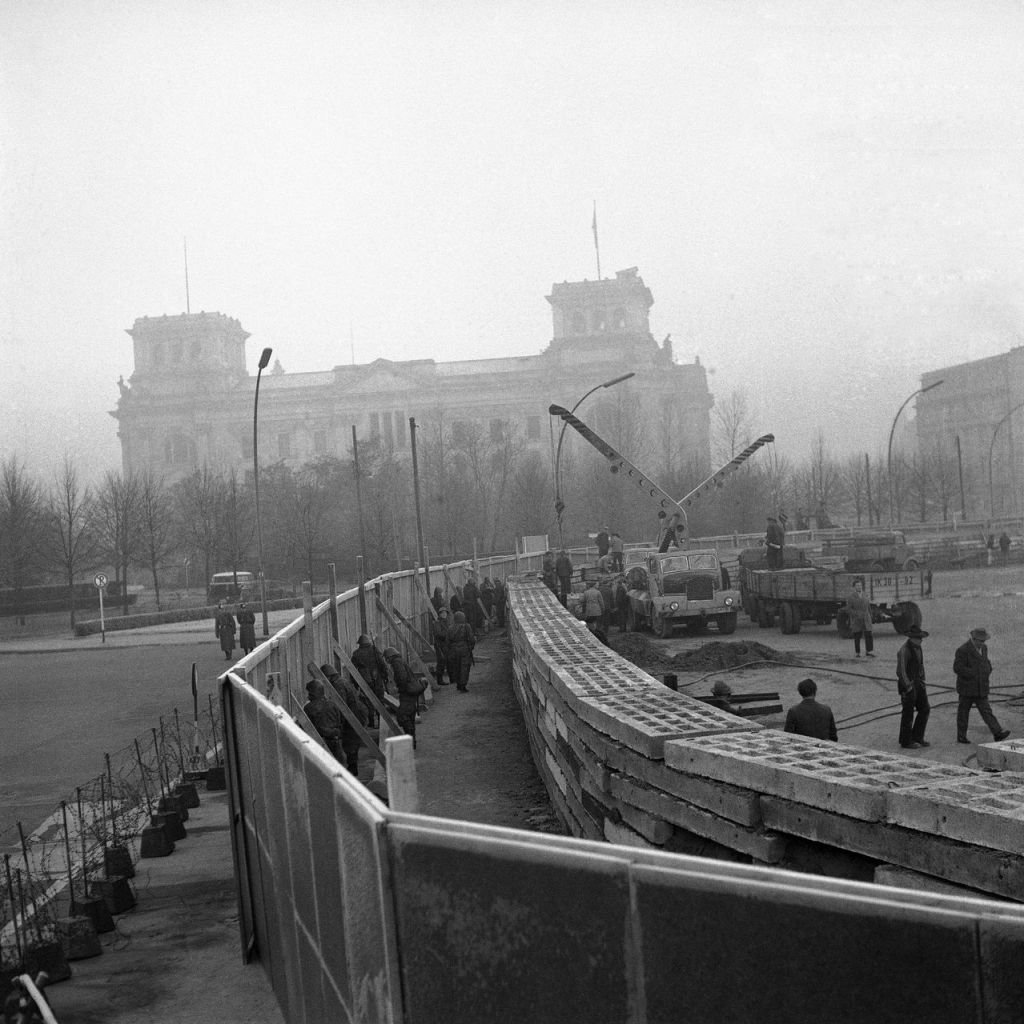


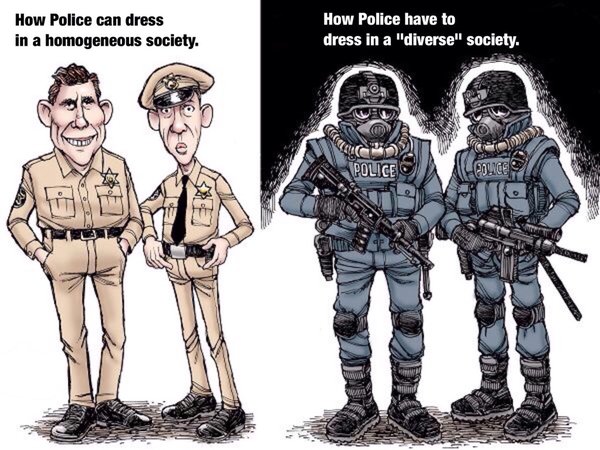

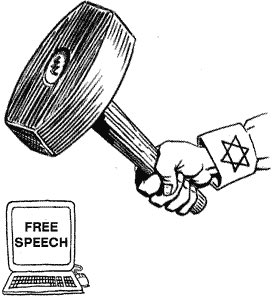


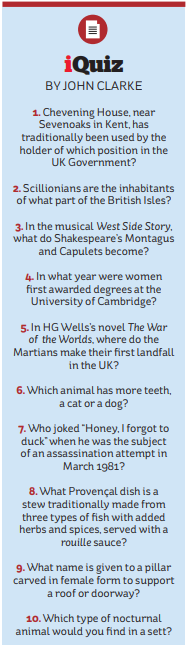


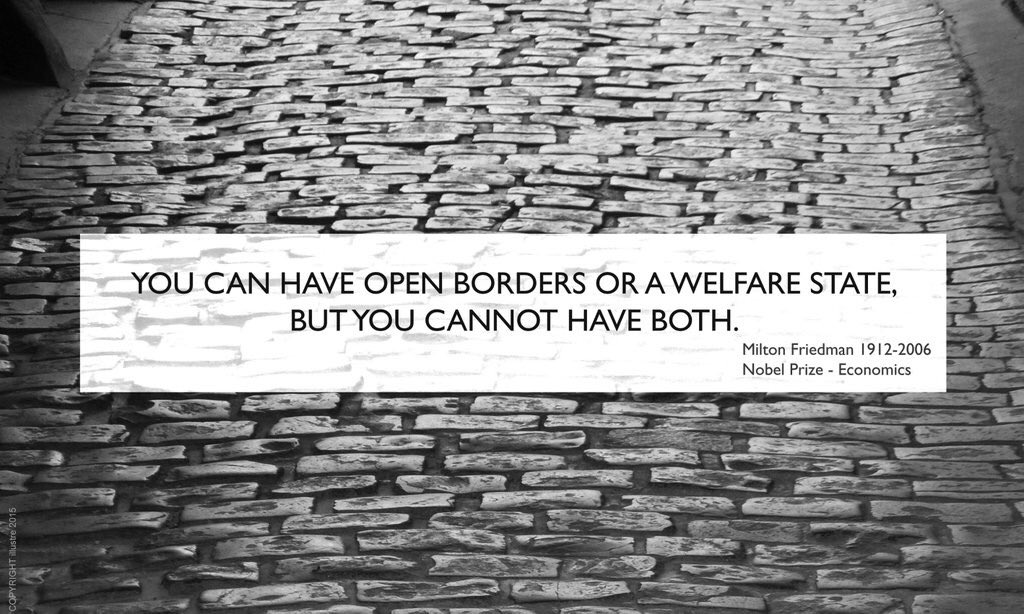
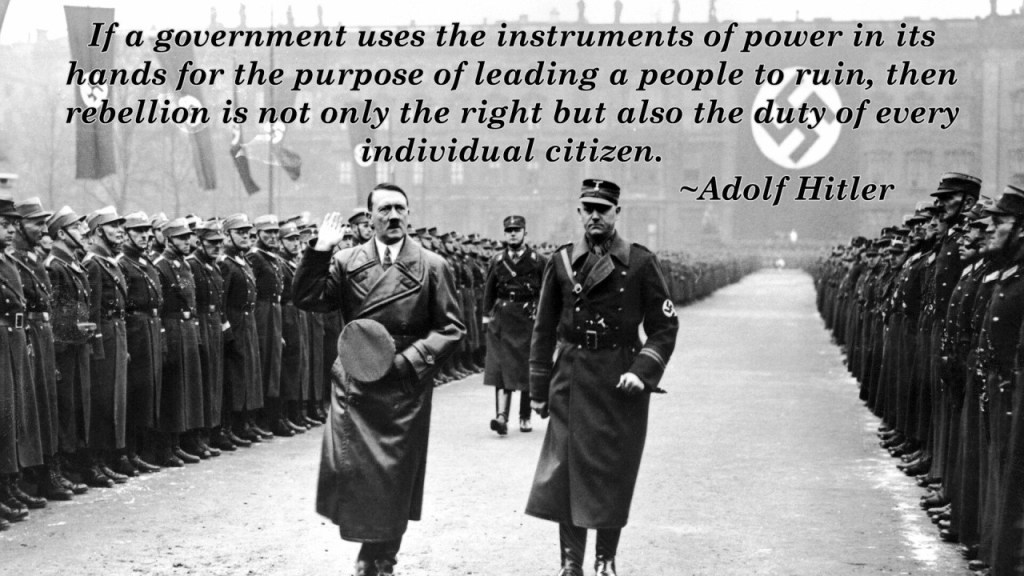


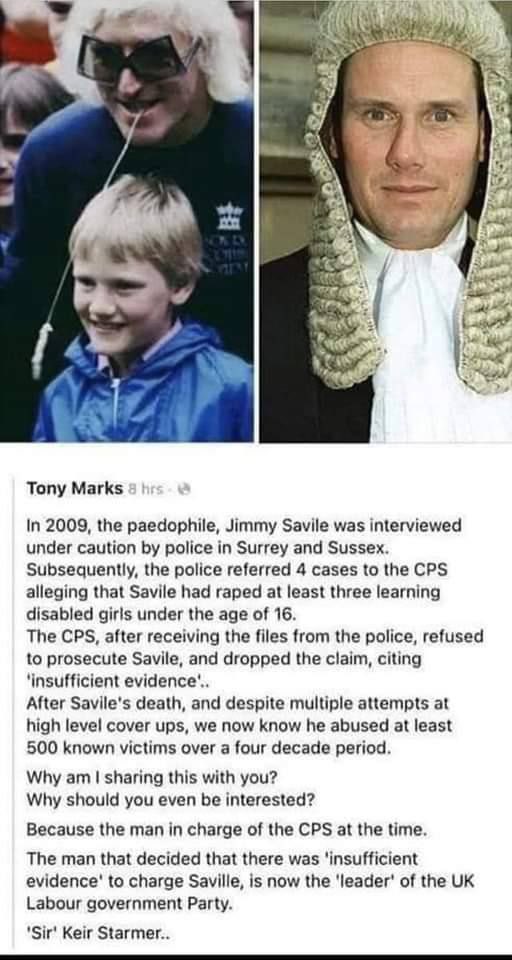
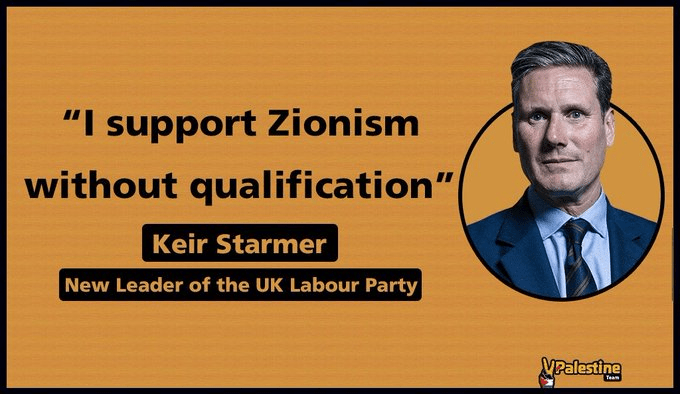





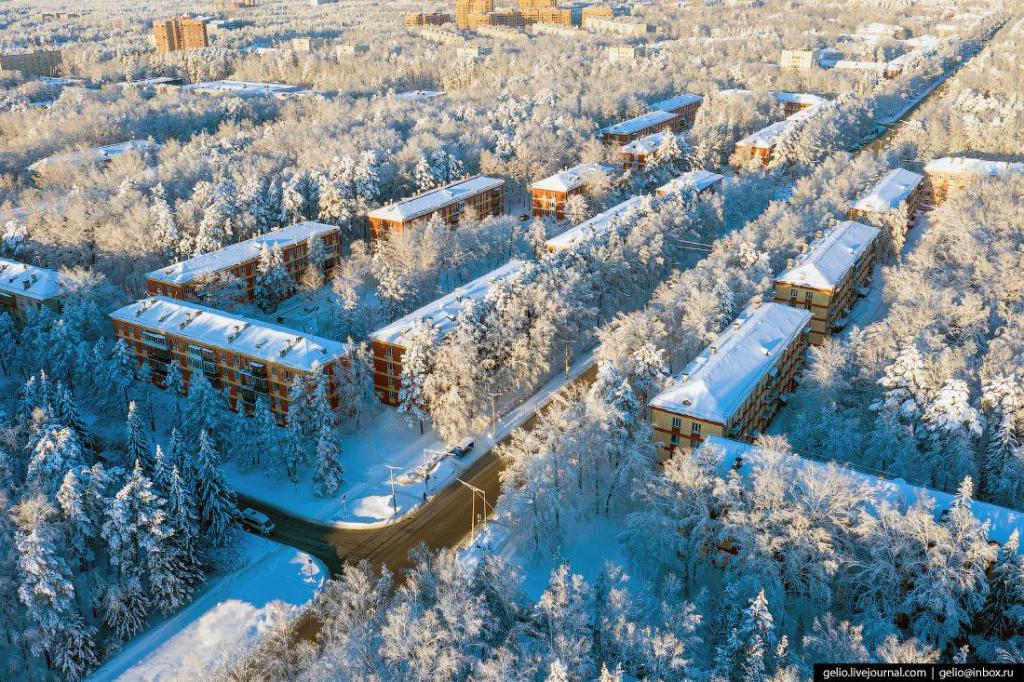
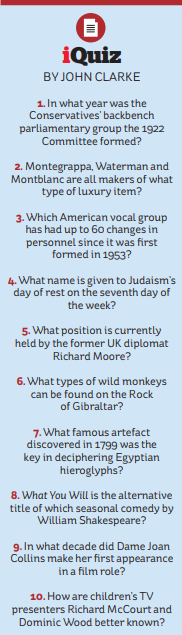
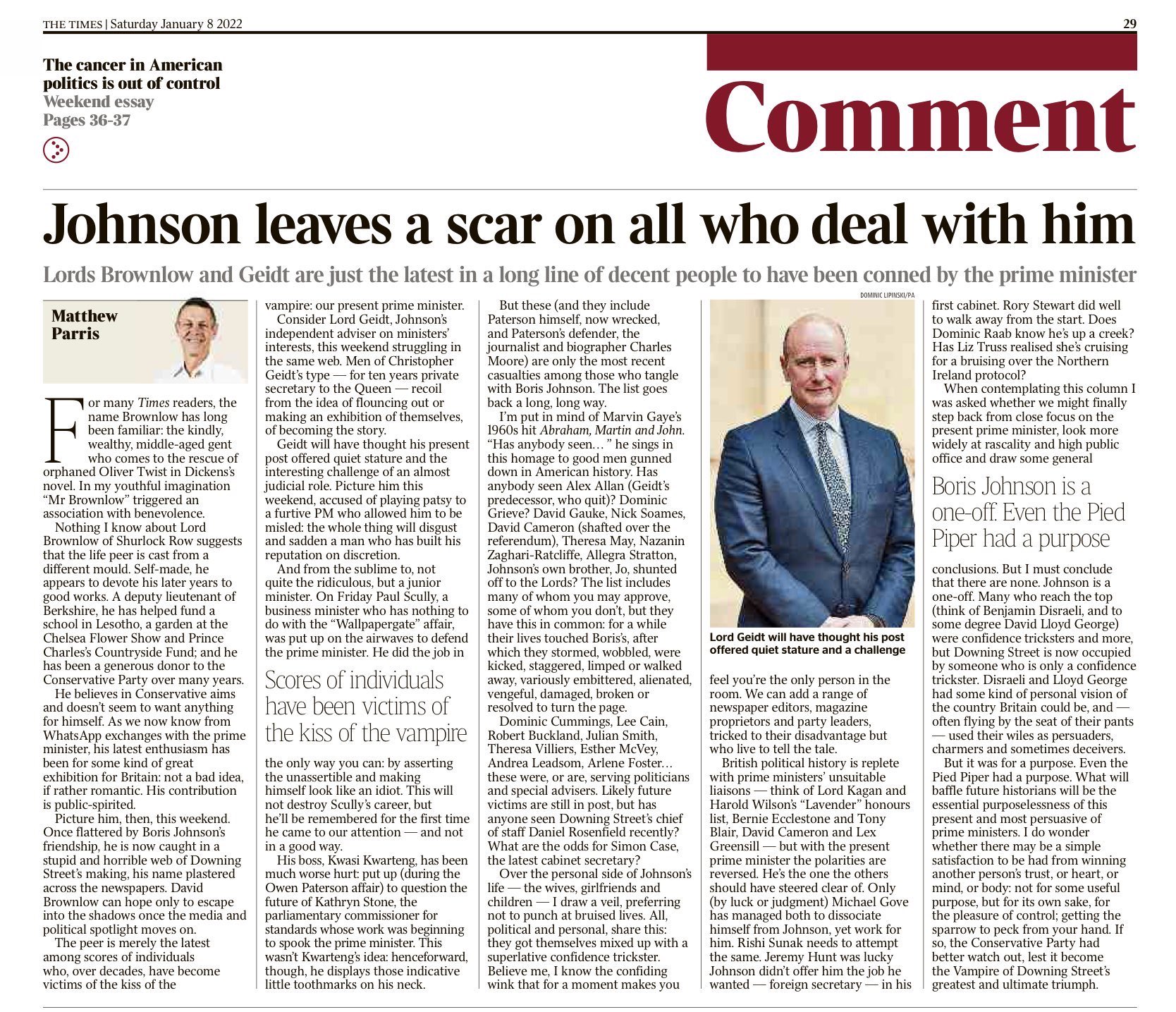


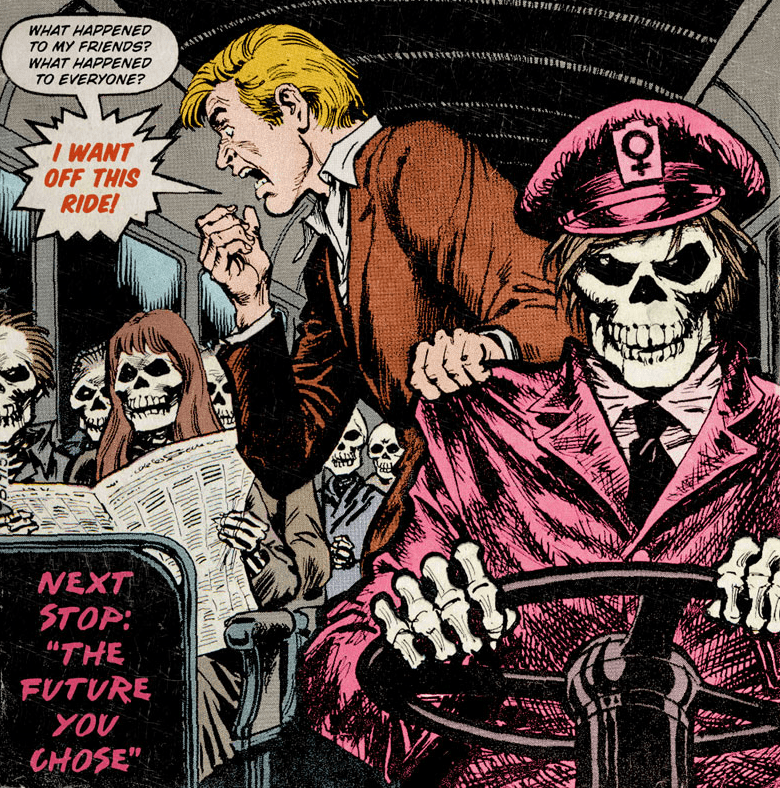

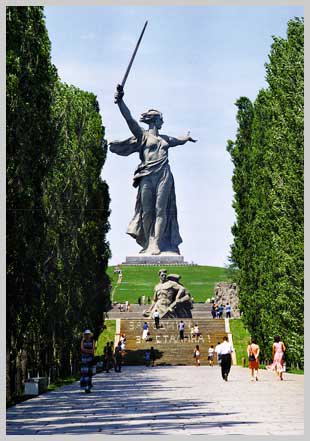


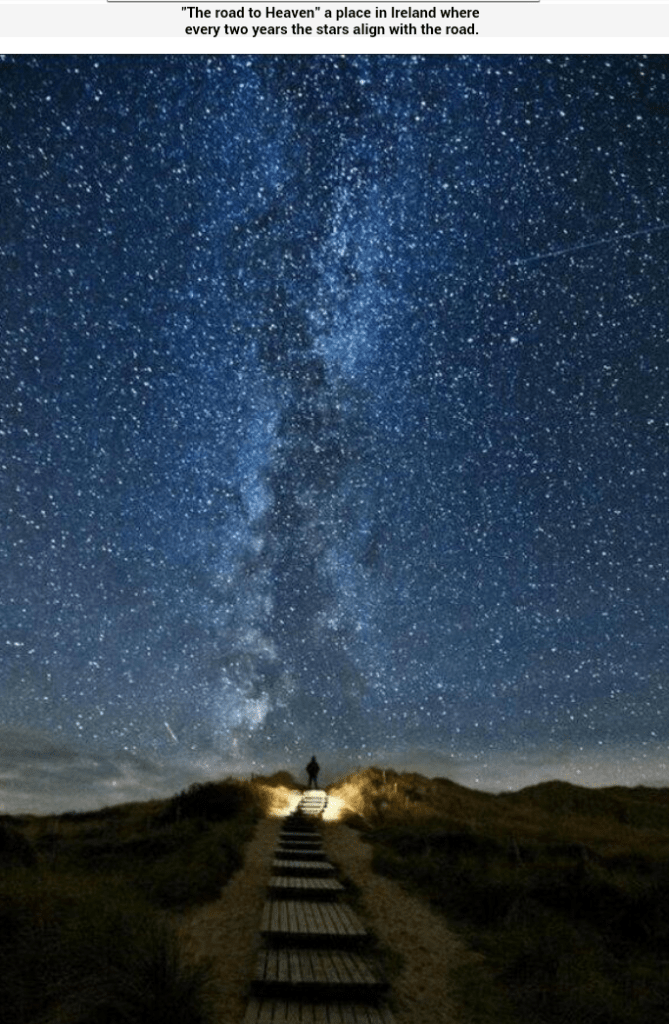

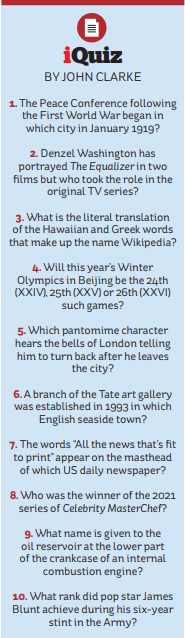

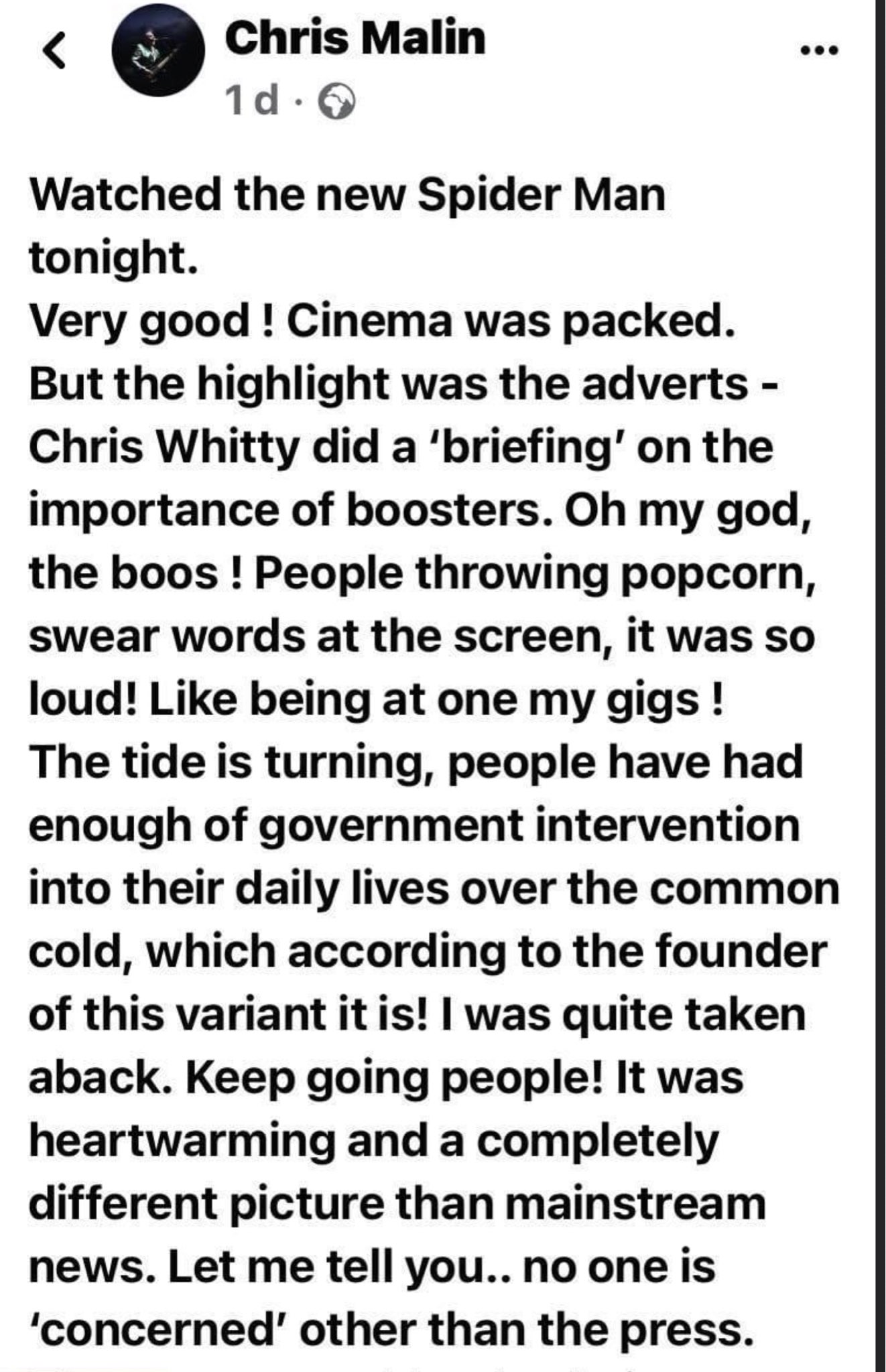

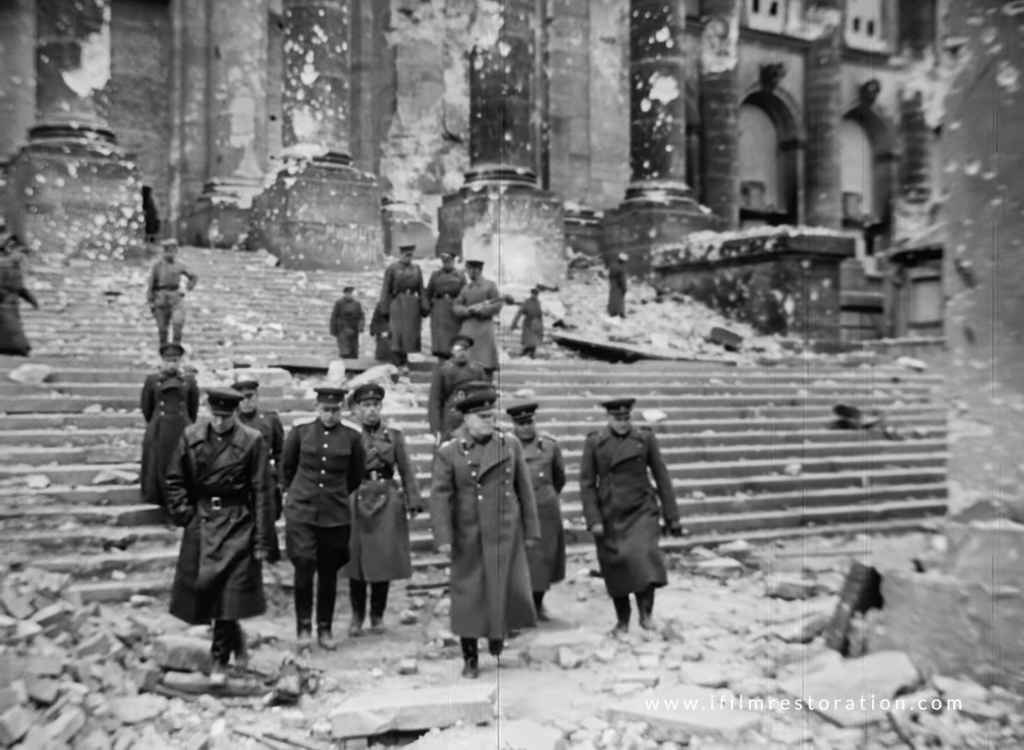
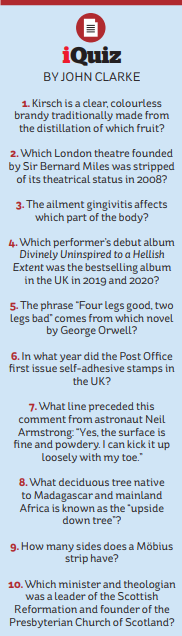



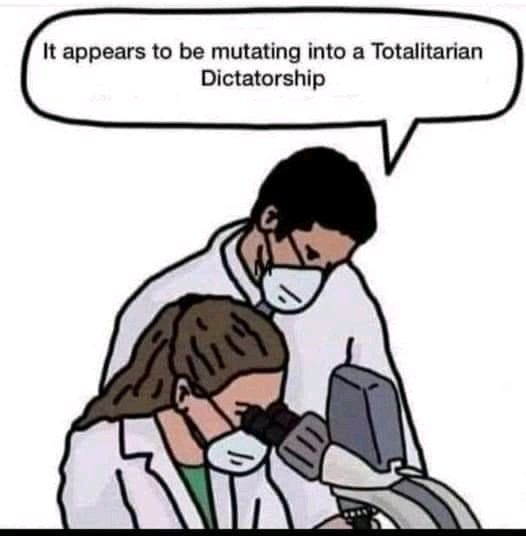
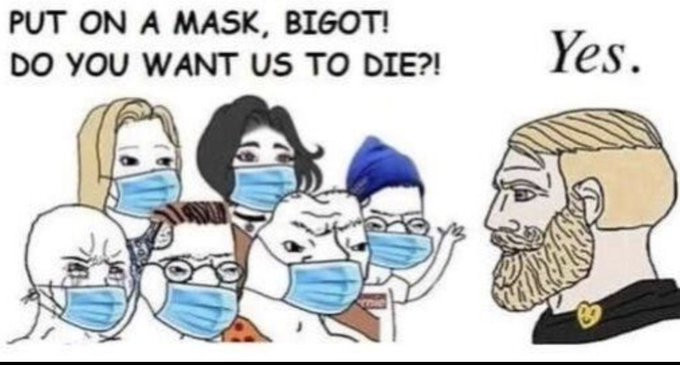
 Ian Robert Millard