
Tag Archives: railways

Diary Blog, 8 November 2025

Morning music

Saturday quiz
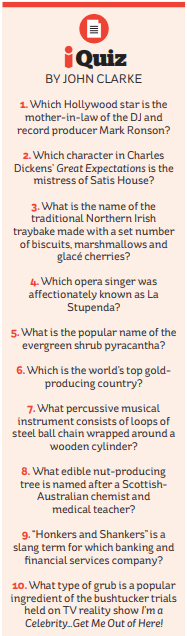
Well, only 4/10 this week, but still enough to beat (again) political journalist John Rentoul, who scored only 2/10. I knew the answers to questions 2, 8, 9, and 10. I might also have got question 4, had I thought for longer, but there it is.

We in Europe must regain the self-confidence to proclaim that, yes, there is a hierarchy of cultures, a hierarchy of religions, and a hierarchy of races as well, and that our Western white European cultures stand objectively higher than those of Africa, Asia etc.

Some cultures, some races, are relatively superior; others are relatively inferior.
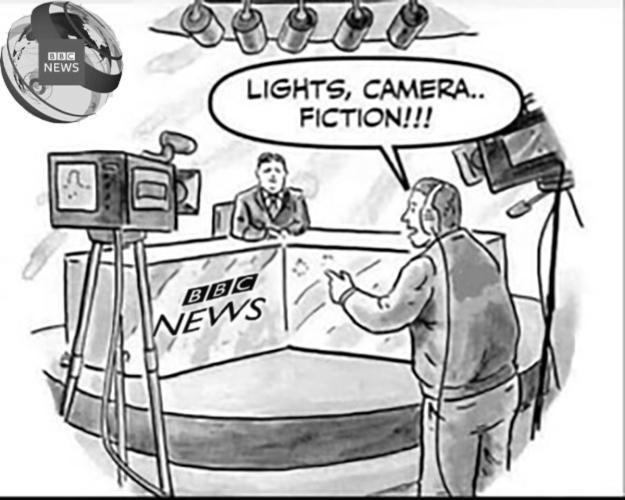
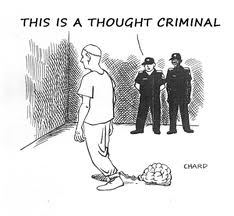
Britain has gradually become a kind of disguised police state or repression-of-opinions state, and malicious special-interest groups (such as the notorious “Campaign Against Antisemitism” or “CAA”) have been taking advantage of bad laws passed in the past 50 years, but particularly the past 25 under the Blair-Brown governments but also by the government of Theresa May, another politician totally in the Jew-Zionist/Israel pocket (and a likely half-Jewess herself).
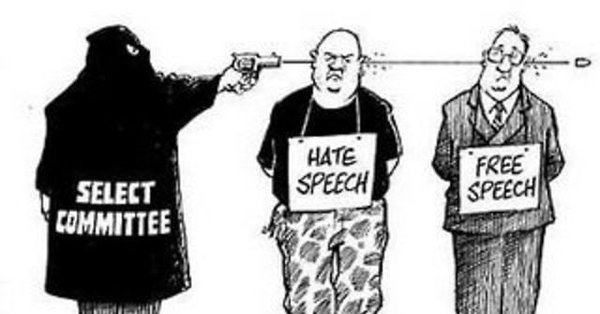
I am not a football supporter. I had to look up the name Joey Barton to be sure that he was somehow connected to football (think I had vaguely heard the name), and I had certainly no idea who were Lucy Ward and Eni Aluko; never heard of either of them (I do know, of course, who that ghastly over-paid msm creature Jeremy Vine is).

https://www.theguardian.com/football/2025/nov/07/joey-barton-guilty-sending-offensive-posts-social-media

Having now read the “grossly offensive” posts (“offensive” being OK, “grossly offensive” not OK…and there is no legal distinction save as to consequences, and no usable definition or method of separating the two), I personally find a few rather silly, but that is no reason for someone to be hauled before a Crown Court.

What we have here, in my opinion, is a mass media class, over-paid, over-privileged, unwilling to accept criticism. If any of them want to punish defamatory or otherwise wrongful statements about them, the laws of libel (etc) are there to help them. Civil law, not criminal.

I should be interested to know the composition of the jury. I dare say that, had this been an American trial (which could never happen anyway, by reason of the U.S. Constitutional free speech protections), there would be a jury selection process enabling the defence lawyers to object to, for example, blacks, women, certain football supporters, people who are fans of the “victims” etc. None of that happens now in England.

Maybe Dan Hodges is unaware of my experiences in this regard (despite my prosecution/persecution having been covered by the BBC, Sky News, Daily Mail etc…)

Nothing that a dozen rounds from the policewoman’s or policewomen’s pistol(s) would not solve.

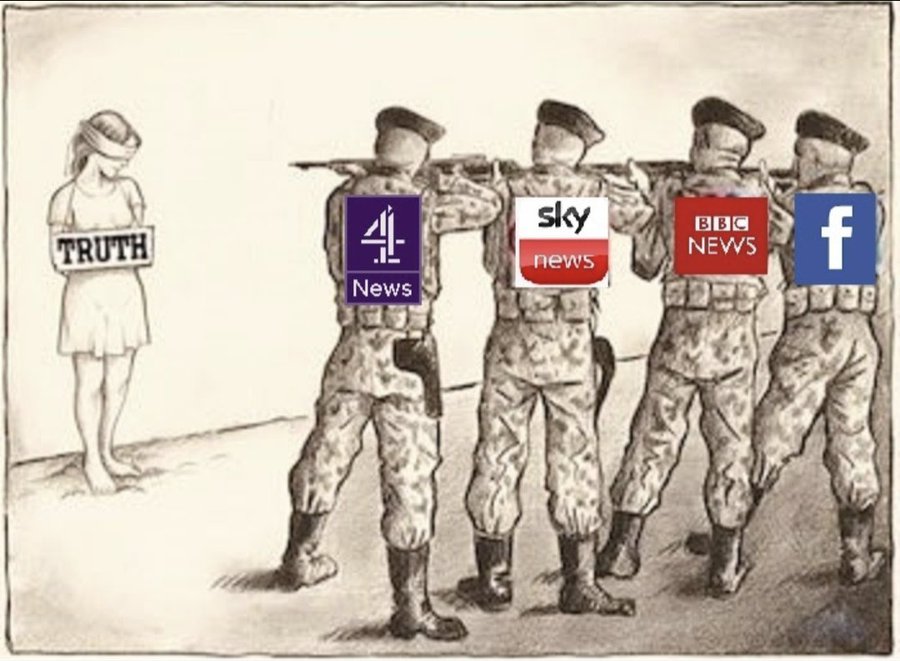
Put it up against a wall. Wall. Squad. End.

Legal note: English judges have repeatedly underlined the fact that so-called “holocaust” “denial” is not a crime in the UK; neither is “antisemitism”, as such.

[persecuted satirist and singer-songwriter, Alison Chabloz, at the piano]

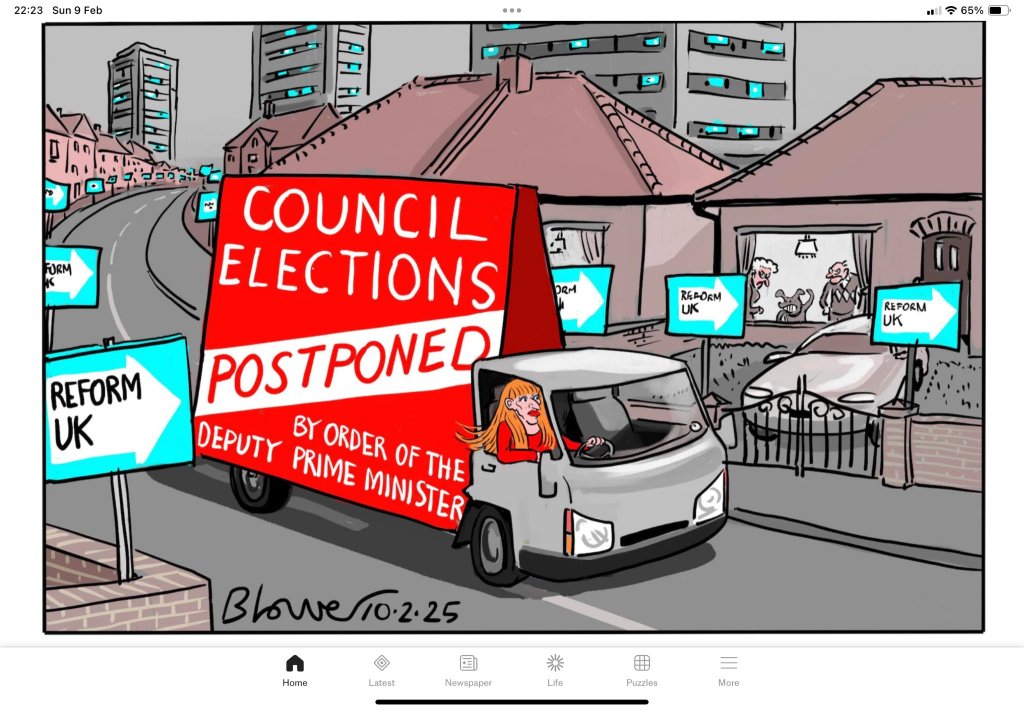
Yes, Reform UK is underwhelming, but I hope that voters next May all vote Reform in order to stamp on the “two main ” (System) parties that have brought England to its knees in the gutter.

Don’t forget which groups have always favoured the invasion. In particular, one group…

If only…
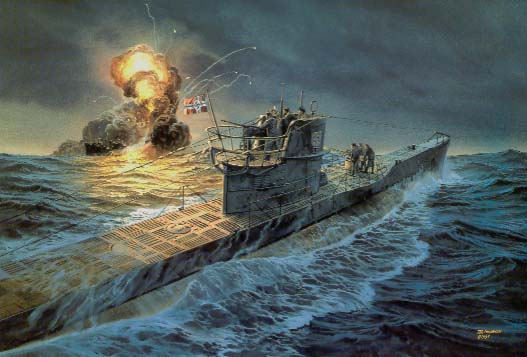
Wouldn’t it be great?…
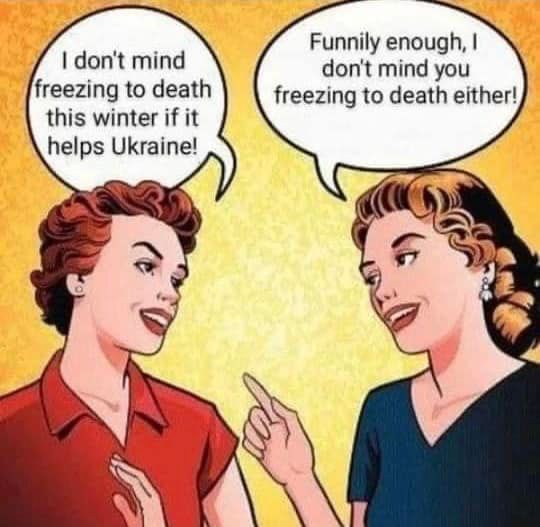
More tweets

Those tweets refer to a case in libel being brought by one Raffi Berg, a BBC Jew journalist, against the faux-revolutionary writer and Guardian journalist, Owen Jones.

https://www.thejc.com/news/uk/owen-jones-sued-libel-bbc-editor-raffi-berg-lh5xhn9p

https://www.linkedin.com/in/raffi-berg-221476194/

There have been numerous allegations by various people that the said Berg has worked alongside or had considerable connection to both MOSSAD and the CIA. Does not seem unlikely, but I myself have no idea whether any such allegations are actually true.

Much material from the blog, and about the egregious Lewis, can be found via the blog search box, by typing in “Mark Lewis” or”Mark Lewis Lawyer”.

The madness of this country (and much of the “Western” world) in 2025

I was just reading the Wikipedia entry for Great Expectations, the novel by Dickens. At the end of the Wikipedia piece, there is noted a show by Eddie Izzard based on part of the novel. However, it is described as a “one-woman” show by “her“. Izzard is of course male…

The Wikipedia entry for Izzard also plays along with the fantasy or falsity: see https://en.wikipedia.org/wiki/Eddie_Izzard.

It occurs to me that this constant drip-drip of lies posing as the truth is having a very bad effect on this country. Another example, long-running, has been the 1940s “holocaust” farrago, “gas chambers” etc etc.

See also:

Talking point
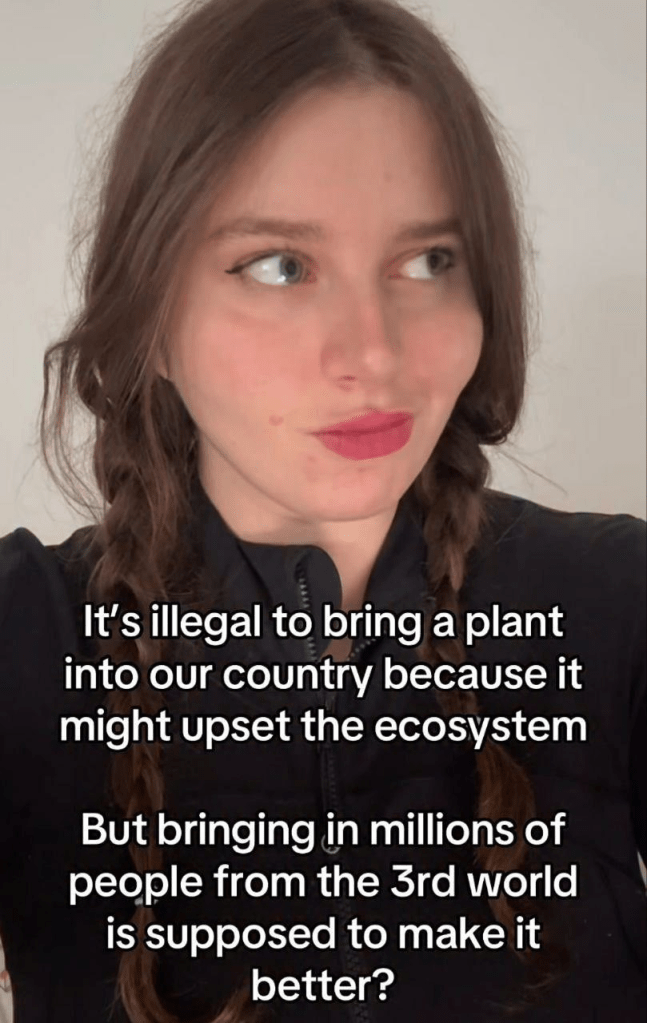
More tweets seen

Yes. The bimbo on the Good Morning Britain sofa, whoever she is, simply and patronisingly “humoured” him, and quickly closed him down before he said anything to the nationwide audience that might be really critical of the sick, decadent, multikulti Britain that now exists.

Yes. That is a very partial view. Fresh vegetables and fruits, when available, were unrationed. Some vegetables were abundant and actually had to be promoted by ads; potato, carrot etc. Fresh fish was unrationed (though in short supply), and bread was unrationed until after the war. Beer was unrationed, when available.

Eating out, for those who could afford it, avoided the rationing regime: https://en.wikipedia.org/wiki/Rationing_in_the_United_Kingdom#Restaurants.

Naturally, the people who lived on country estates were best-placed to weather rationing. Game birds, and fish, were unrationed, and people living on a country estate would have ready access to eggs and other foodstuffs (and of course could grow fruits and vegetables in kitchen gardens or fields). Such people would also often have extensive wine cellars, so would have been able to drink French (and German!) wines bought before 1940.

I recall that the Cornish country house of which I had a lease (about 22 or so years ago) had quite large wine cellars (unstocked when I was there) which brought to mind the horror film adaptations of the works of Edgar Allan Poe:
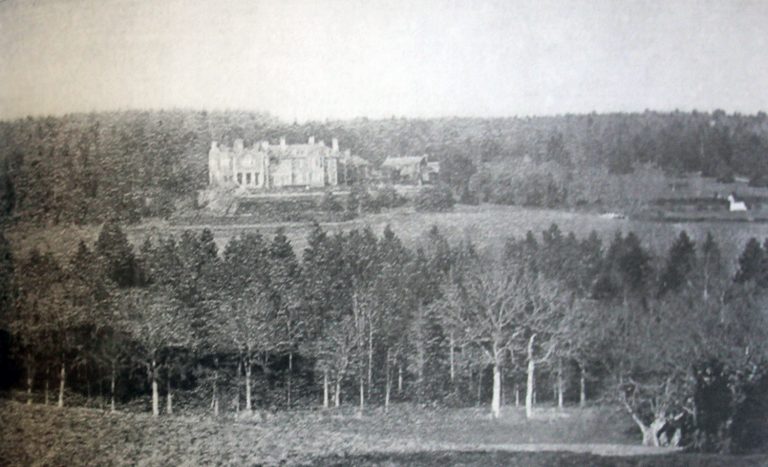
That house also had, at the time of WW2, kitchen gardens, greenhouses etc.

Nuts, berries etc would also have been available.

The big shortage would have been butter (olive oil was all but unknown to most British people in the 1930s and 1940s and anyway unavailable). Sugar was another big shortage, of course.

https://en.wikipedia.org/wiki/Rationing_in_the_United_Kingdom

Those hardened idiots will simply hunker down into their comfort zone. Corbyn is the archetype.

In the USA, it was once said (1960s/1970s) that “a conservative is a liberal who just got mugged“. Maybe the UK’s 2025-onwards equivalent will be “a social-nationalist woman may be a former ‘antiracist’ woman with a placard supporting ‘refugees’ but who got robbed, or raped, or both, by a non-white migrant-invader“.

Oh…and actually English/British, not requiring a passport to prove his nationality…

…and not regarding it as his job to snoop upon, “monitor”, or control the opinions and published views of the British people.

Nadia Whittome MP

Happened to see an MP, not previously known to me, on a TV news show. A kind of half-caste (I now see, from Wikipedia, of mostly Indian origins), and in favour of unlimited mass immigration.

Jesus H. Christ! I know that the general level of MPs now (not only Labour ones) is staggeringly low but, well…there it is.

https://en.wikipedia.org/wiki/Nadia_Whittome

https://en.wikipedia.org/wiki/Nottingham_East_(UK_Parliament_constituency)#Elections_in_the_2020s

Late tweets

[“The Founding Fathers of the United States restricted citizenship to “free white persons” in the Naturalisation Act of 1790, which was signed into law by George Washington. This law meant that those of Anglo-Saxon stock and of European backgrounds such as Germans could become citizens. For example the same Congress had German-born Speaker Frederick Muhlenberg and John Jay who praised “one united people” in Federalist No. 2, his own blood was French Huguenot. Whilst Jefferson admired Anglo-Saxon law, he invited German settlers to Virginia. Franklin griped about “Palatine Boors” flooding Pennsylvania, but then backed the very act that let them naturalise. The 1790 census?? 19% German, 10% Scotch-Irish, Dutch in NY, French in SC. Whilst zero state constitutions demanded Anglo-Saxon descent, it was preferable. The main requirement was being of European stock. So the evidence provided here proves the United States was never meant to be a “melting pot”, that term was created by the jew Israel Zangwill in 1908. For a matter of fact prior to his assassination Abraham Lincoln intended to have the black slaves sent to either Liberia or Central America. This was due to them not fitting in with the ethnic makeup of the American people. It is insane to claim the U.S. was meant to be a “multi racial” society. The Founding Fathers and many presidents up until at least Abraham Lincoln intend for the United States to a ethnically Anglo-Saxon and European nation. I repeat again, it was never meant to be a “melting pot” and never should have been like it is today.”]
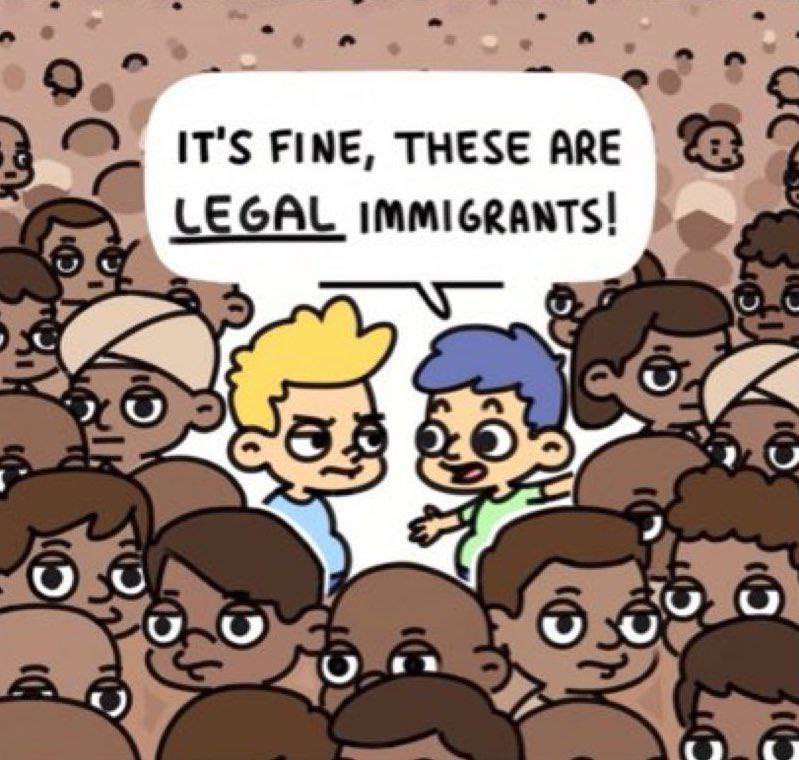
Quite. No point in “stopping boats” if they then all come in “legally”…

[“The Republican Party has betrayed the interests of its voters, literally going crazy over Israel. Seriously. What’s the deal? This country has a population of 9 million, zero resources, zero values. Understand correctly, I have nothing against Israel, but, damn… We have 350 million of our own citizens, we are the number one country in the world, yet all the congressmen from morning till night keep talking to us about Israel. What the hell? Who did Trump meet first after winning the election? Bibi. And then again with Bibi. And then again. And suddenly all the attention of the administration and the American government focused on Iran. War with Iran? Seriously? Netanyahu: “We want to change the regime in Iran. At least I want to. In Iran, and at the same time in Iraq!”. – How many Americans has Iran killed in your lifetime? Zero. Really, zero. And how many of your acquaintances have died from drug overdoses? Quite a few. Maybe one of your relatives, some nephew, died that way. It pisses me off that our leadership spends all their time and all my money for the benefit of another country.“}

Late music

Diary Blog, 4 August 2025

Morning music

[Sally Hewlett Taylor, Walking Across London Bridge in the Rain]

Ukrainians are starting to revolt against Zelensky’s brutal, corrupt, and shambolic Jew-Zionist regime

https://www.dailymail.co.uk/news/article-14966973/Are-Ukrainians-turning-Zelensky-Multiple-casualties-reported-civilians-attack-draft-officer-bats-metal-pipes-Mykolaiv-Oblast.html

“Multiple casualties have been reported after Ukrainian officials alleged that a group of bat and pipe-wielding civilians attacked a draft officer. 

Officials said the incident took place at 2pm local time in the small village of Buzke in Mykolaiv Oblast. 

They said that the civilians, who have not yet been identified, were ‘armed with bats and metal pipes’ and ‘damaged a vehicle and inflicted bodily injuries on a soldier.

Cops are now investigating the incident, and warned dissidents that insulting the ‘honour and dignity’ of soldiers, as well as threatening violence against them, was punishable by up to five years in prison. 

It added that bringing harm to soldiers could result in up to 12 years imprisonment. 

From the start of Russia’s invasion of Ukraine, Zelensky faced an uphill battle with his countrymen, who resisted the enforced conscription into the country’s military.

Just two days ago protesters in the Ukrainian city of Vinnytsia broke into a stadium where roughly 100 men were being held by military enlistment officers. 

Cops arrested several demonstrators.

[Daily Mail]

“Recruitment” (by press-gang) into the Kiev-regime army is a death sentence. They are losing a thousand or more per day on the front-line. Naturally, people try to avoid or evade.

Incidentally, “Mikolaiv” is the Ukrainian version of the original Russian name, Nikolayev. The name is from St. Nicholas.

“As of 2017, 63% of the population spoke Russian at home, 7% Ukrainian, and 28% spoke both Ukrainian and Russian equally.[50]

According to a survey conducted by the International Republican Institute in April-May 2023, 30% of the city’s population spoke Ukrainian at home, and 61% spoke Russian.[52]

[Wikipedia]

https://en.wikipedia.org/wiki/Mykolaiv

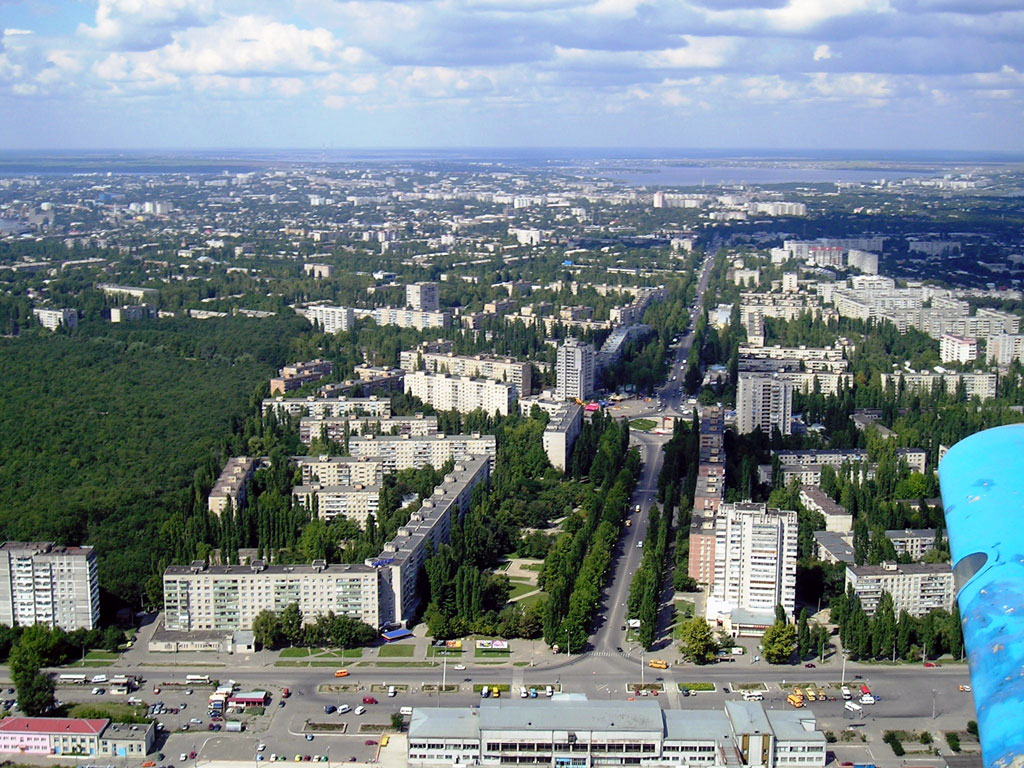
[aerial view of Nikolayev/”Mikolaiv” before hostilities broke out]

Tweets seen

Jess Phillips may be the most disgusting MP in the current Commons.

See also:

There is a problem which is not confined to the Middle East. A worldwide problem. It has to be dealt with. Let’s just leave it there for now.

Angela Rayner once more makes a fool of herself

[“You know Ange, I’ll be a bit concerned how life will be for you and all Labour MP’s once you’re out of office. I would envisage a rather bumpy road considering you’re a major player in the destruction of this once beautiful land.“]

I like almost all the responses on Twitter/X to thick-as-two-short-planks Angela Rayner and her ostensible espousal of some of the worst untermenschen in this country. I especially like that last tweeter’s response.

I wonder whether any lone hero… well, let’s leave it there.

Destruction of Britain’s allotments is more than just a retrograde step, it is state-instigated vandalism and violence against something beautiful and worthwhile, and against a cherished part of our history.

We often see, mostly online, statements such as “the System parties, especially Labour, are traitors” etc. Hyperbole, maybe, but when you look at what this government is doing, treason really is the only word that fits, alongside evil, treacherous, enemies, criminals and the like.

The Angela Rayner type think that they can do anything to trash our country, and that they will get away with it, and then make personal money or career opportunities out of it etc.

The same goes for “unused” land owned by railways etc. A haven for wildlife, for land animals, birds, and insects.

First, Farage, Reform UK etc. Then, after that, real social nationalism.

[“Brazil has become the first country in the world to abandon the International Holocaust Remembrance Alliance. Blaming financial and legal constraints, Brazil’s Government is reportedly withdrawing from the organisation in a move that is really more about sending a signal about where the current Government stands on Jews and the Jewish state. The move will undoubtedly be welcomed by antisemites the world over.“]

For once, that pack of malicious, perjuring Jew-Zionists, the so-called “Campaign Against Antisemitism”, a volunteer arm of the Israeli Embassy in London (though several are paid) is in agreement with me. I do indeed welcome the Brazilian announcement.

In fact, the so-called “international definition” is not legally binding, and has only been adopted by about a fifth, if that, of the states in the world.

https://en.wikipedia.org/wiki/IHRA_definition_of_antisemitism

Well done, Brazil. May many others follow in your footsteps.

Bravo!

[“Old or new Israeli’s won’t change the fact they all are citizens of a state that was build on Palestinian blood. The world is waking up, in 10 or 20 years or less my family will be able to go back in claim their in land in West Jerusalem. It’s not just the government its the society, it’s not just the people in that region that see’s the truth, the world now is starting to wake up. Everything in the west that was thought to the people for over a 100 years was a lie and now people are finding out the truth about history.”]

The video is remarkable. On the one hand, and on the video, the chiefs or former chiefs of major Israeli security and intelligence organizations. On the other hand, Netanyahu, his Cabinet of lunatics and/or zealots, a minority (probably) of the Israeli civilians, and those outside Israel who are pushing for even more bloodshed, destruction, starvation, sadistic treatment of Palestinian Arabs, and genocide.

Who are those outside Israel who are pushing for the war to continue? Major Jew-Zionist orgs in the USA, UK etc (such as the so-called “Campaign Against Antisemitism” in the UK), and connected small groups of individuals here and there. Ugly, dead-eyed Jew-Zionists in places such as Brighton, North London, and New York, as well as wealthy and fanatical Jewish business types with American, British, French and other politicians in their pocket.

As noted in the video, the power not represented clearly is the Israeli Army or IDF. This is the foremost power in Israel, not least because it permeates the society: most Israelis are compelled to serve in it for a while and are also liable for reserve service later. So far, the Israeli Army has not refused to continue the war.

Exactly as I have been predicting for 2+ years on the blog. Labour will secretly approve most asylum claims, secretly move the migrant-invaders from hotels to social or other housing (pushing aside British people) , and approve from outside the UK in France etc most new claims, then be able to claim that Labour has “solved” the problem, or the main problem, while in fact making it even worse. Millions more yet of non-whites flooding in. Oh, and of course a tiny number of migrant-runners will be arrested, imprisoned etc, thus allowing Starmer-stein, Angela Rayner, and Yvette Cooper to claim that they have “smashed the gangs”, surely one of the least honest “policies” (slogans) ever pushed by any UK government.

How horrible. I have to admit, I have never had much time for Danish society or Danes (though I also concede that I have never actually been there).

If this is happening now, in 2025, imagine the huge wave of discontent that will be around in 2029. Reform UK will probably benefit, but my feeling is that many by then will want to take direct action against “the overall situation”, including against MPs of the main System parties. We shall see.

Late cartoon

Late music

By request from a blog reader…

Diary Blog, 16 February 2025

Afternoon music

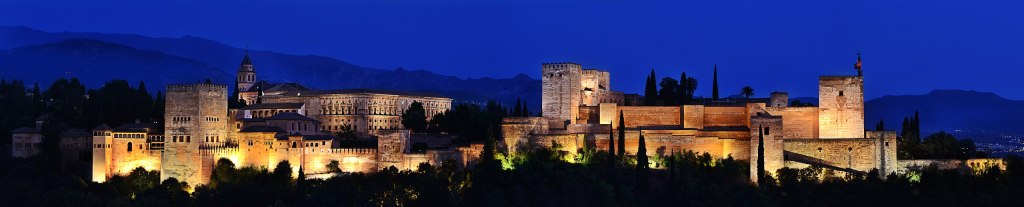
[Alhambra— panorama]

Migration-invasion news

https://www.dailymail.co.uk/news/article-14401525/Syrian-man-stabs-boy-death-wounds-four-knife-rampage-Austrian-town.html

A 14-year-old boy has been knifed to death after a Syrian refugee randomly stabbed passersby in the Austrian city of Villach today, leaving four others injured.”

[Daily Mail]

Get rid of them. Get rid of them out of Austria. Get rid of them out of the UK. Get rid of them out of Europe.

Tweets seen

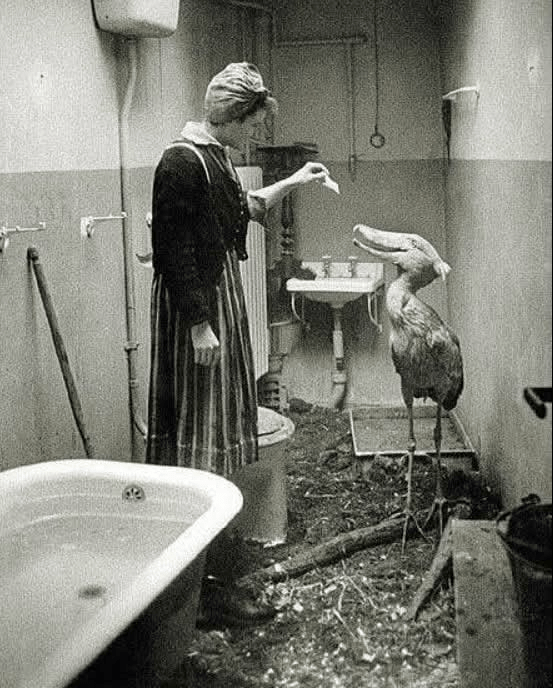
In 1943, amid the devastating final years of World War II, the Berlin Zoo was heavily bombed, leaving much of the zoo in ruins and many of its animals in grave danger. Among the survivors was a Shoe-billed stork, an unusual and majestic bird recognized for its unique, shoe-shaped bill and stately demeanor. With the zoo’s facilities destroyed, the stork found an unlikely refuge in a nurse’s bathroom, a small but safe haven where it was cared for during the chaos of war. The nurse’s bathroom became a sanctuary for the bird, symbolizing the compassion and determination of those who worked to protect the zoo’s animals despite the dire circumstances. The stork’s survival depended on the care it received in this improvised setting, where it was fed and tended to with limited resources. This poignant scene of a wild, exotic bird in a domestic, human space emphasized the extraordinary lengths people went to preserve life during a time when destruction seemed all-encompassing. The survival of the Shoe-billed stork and its temporary shelter in the nurse’s bathroom became a powerful symbol of resilience and hope amidst the horrors of war. While much of the zoo was destroyed and many animals were lost, stories like this highlight the small acts of care and humanity that endured even in the darkest hours. The stork’s journey is a testament to the enduring bond between humans and animals and serves as a reminder of the fragments of hope that can emerge even in times of overwhelming devastation.

Thus proving, yet again, that “Boris”-idiot never does his homework…(and always talks rubbish)…

Stray thought

Though I cannot claim huge numbers of readers on any one day, or most days, the blog does have hits from almost all of the states and territories of the world, even places such as Antarctica, Greenland, Burkina Faso etc.

Today, so far, UK, USA (those two by far the bulk of hits), but also Canada, Kazakhstan, Russia, and New Zealand.

Are they all supporters? Probably not. Enemies also snoop on the blog, but no matter— “one human soul is a big audience“.

More tweets seen

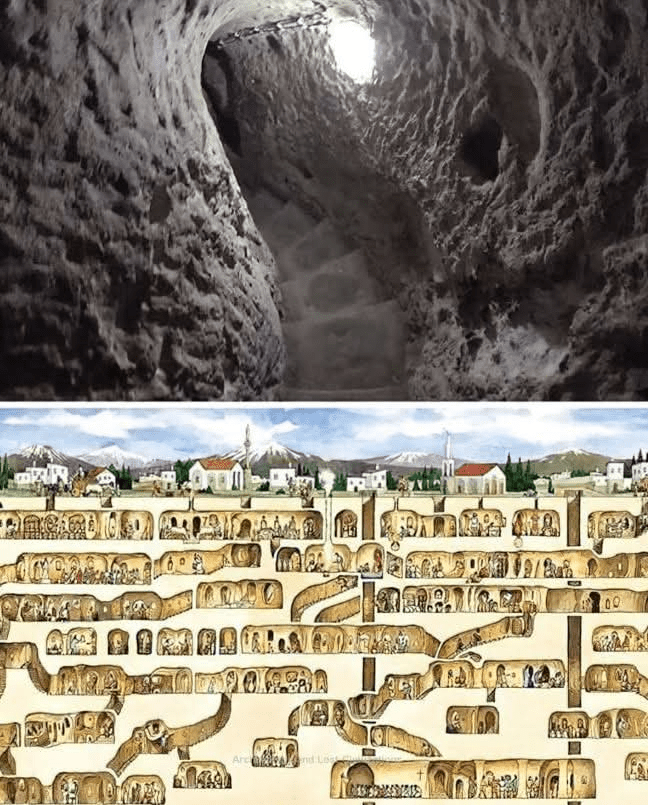
The subterranean city of Derinkuyu, located in Cappadocia region of Türkiye, an extraordinary historical site with the capacity to house an estimated 20,000 to 60,000 people, including their livestock and supplies. Its discovery occurred unexpectedly in 1963 when a homeowner accidentally broke through a wall in his basement, unveiling an ancient and intricate underground structure hidden for centuries. Derinkuyu is an impressive multi-level complex, descending over 200 feet below the surface and consisting of at least 18 levels, though only a portion of it has been fully excavated. The city features an array of functional spaces, including living quarters, kitchens, storage areas, wine and oil presses, stables, and even chapels and schools. Ventilation shafts and a sophisticated water system ensured the city’s inhabitants could survive underground for extended periods. Defensive mechanisms, such as heavy stone doors that could be rolled into place, protected the city from invaders. Historians and archaeologists believe Derinkuyu was initially constructed by the Phrygians or Hittites in the early centuries BCE, though it was later expanded and used by various groups, including early Christians, as a refuge from persecution or attacks. Its design reflects the ingenuity and resilience of the civilizations that relied on such cities for survival during times of conflict or environmental challenges. The discovery of Derinkuyu has spurred interest in Cappadocia’s extensive network of underground cities, many of which remain unexplored. These ancient marvels continue to captivate researchers and visitors alike, shedding light on the innovative ways humans adapted to their environment and safeguarded their communities.

Recruits to the castle-convents scattered across Teutonic territory primarily hailed from Germanic regions such as Franconia, Thuringia, the Rhine, and other German territories. These knights, often aristocrats but also comprising lower-ranking members, were stationed in commanderies housing anywhere from 10 to 80 individuals. Similar to other military orders, recruits pledged monastic vows of poverty, chastity, and obedience. Joining offered prospects of spiritual rewards, adventure, career advancement, and even basic amenities like regular meals and shelter. While German settlers were permitted entry, they typically served as priests or half-brethren. Each castle-convent also accommodated local crossbowmen, as well as non-combatants like servants and craftsmen. Although officially international, the order predominantly drew recruits from German lands. Membership numbers varied, influenced by battles and territorial shifts. For instance, Prussia counted 700 members in 1379 AD, 400 in 1450 AD, 160 in 1513 AD, and 55 in 1525 AD. The total knightly roster likely never exceeded around 1,300. The order’s revenue stemmed from wartime spoils, captured territories, trade, land rents, and donations in cash, goods, or land. Some brethren paid an entry fee, while taxes on local populations were imposed in Teutonic territories by the 15th century AD. As recruitment challenges grew, the order increasingly relied on mercenaries, necessitating financial support. Commanderies not only offered training, residences, and retirement options but also extended aid to local communities through hospices, hospitals, schools, and cemeteries. Additionally, the order constructed churches, providing ongoing maintenance and fostering artistic endeavors for embellishment.

I once knew a German lady from East Prussia, one of whose several historically-distinguished ancestors was a Grand Master of the Teutonic Knights in the Middle Ages.

The Lion Man – An Ice Age Masterpiece : The Lion Man is a masterpiece. Sculpted with great originality, virtuosity and technical skill from mammoth ivory, this 40,000 year-old image is 31cm tall. It has the head of a cave lion with a partly human body. He stands upright, perhaps on tiptoes, legs apart and arms to the sides of a slender, cat-like body with strong shoulders like the hips and thighs of a lion. His gaze, like his stance, is powerful and directed at the viewer. The details of his face show he is attentive, he is watching and he is listening. He is powerful, mysterious and from a world beyond ordinary nature. He is the oldest known representation of a being that does not exist in physical form but symbolises ideas about the supernatural.

Found in a cave in what is now southern Germany in 1939, the Lion Man makes sense as part of a story that might now be called a myth. The wear on his body caused by handling suggests that he was passed around and rubbed as part of a narrative or ritual that would explain his appearance and meaning. It is impossible to know what that story was about or whether he was deity, an avatar to the spirit world, part of a creation story or a human whose experiences on a journey through the cosmos to communicate with spirits caused this transformation. Obviously, the story involved humans and animals. Lion Man is made from a mammoth tusk, the largest animal in the environment of that time and depicts the fiercest predator, a lion, now extinct, that was about 30 centimetres taller than a modern African lion and had no mane. Distinct from other animals through their use of tools and fire, humans were nonetheless dependent on some animals for food while needing to protect themselves from predators. Perhaps this hybrid helped people to come to terms with their place in nature on a deeper, religious level or in some way to transcend or reshape it.

Archaeological discoveries in other caves in this region include small sculptures as shown in the British Museum’s 2013 exhibition Ice Age art: arrival of the modern mind. They were found in caves with large quantities of stone tools and animal bones that indicate people lived in the shelter of the daylight areas of these sites for repeated periods of time.

Stadel Cave, where the Lion Man was found, is different. It faces north and does not get the sun. It is cold and the density of debris accumulated by human activities is much less than at other sites. This was not a good place to live. Lion Man was found in a dark inner chamber, carefully put away in the darkness with only a few perforated arctic fox teeth and a cache of reindeer antlers nearby. These characteristics suggest that Stadel Cave was only used occasionally as a place where people would come together around a fire to share a particular understanding of the world articulated through beliefs, symbolised in sculpture and acted out in rituals.

Lion Man is the oldest known evidence for religious beliefs and Stadel Cave suggests that believing and belonging have a deep history crucial to human societies and originating long before writing. In 2017, UNESCO acknowledged Stadel Cave and other Swabian localities as World Heritage Sites of importance to all humanity and now Ulm Museum has loaned this important sculpture to the British Museum for the exhibition.”

The candidate for Chancellor of Germany Alice Weidel has called for the restoration of relations and economic ties with Russia The election program of Alternative for Germany includes points about the need to lift sanctions on Russia to allow free trade. Additionally, according to members of the AfD, it is necessary to repair the Nord Stream pipeline, which supplied Russian gas to Europe. “We want to end the sanctions policy, which primarily harms our country,” Weidel said. She reminded that just two years ago, Germany was buying cheap natural gas from Russia through Nord Stream, but now the country has “the highest energy prices in the world.”

The AfD is not fully social-national but is still clearly the best choice for German voters at present. Deutschland erwache!

I thought, when he was not nominated (plainly at his own request) for a fake peerage that Johnson, aka “Boris”-idiot, had it in mind to stand for leader again.

Were Johnson to get some sympathetic Con MP to stand down in his favour, Johnson might well win a safe-seat by-election.

Why would any MP do that? In return for a promise of getting a peerage later. That would not require Johnson to be Prime Minister, because the Leader of the Opposition also has peerage-nomination rights.

Johnson would then have to wait (probably) until November 2025 before at least 15% of Con MPs send in letters of no-confidence in “Carpetbagger Kemi” Badenoch. That means 18 MPs, as matters stand. That would happen. Con MPs know that Kemi Badenoch is a total turn-off for most voters, sure to lose the next general election and, thus, a number of seats.

Then, all Johnson would need would be a small number of MPs (in the 2024 leadership election, the number was 10 MPs) to nominate him as a candidate (quite likely possible).

Opinion polls of 2024 Con-voting people show that Johnson is far more popular (despite his evident unfitness to hold office, despite his total incompetence) than Kemi Badenoch.

I may even place a bet on “Boris” to be next Con Party leader. The odds, though, are not too generous, below 5/1. Maybe I shall lose my money elsewhere…

https://www.betfair.com/exchange/plus/politics/market/1.235470805.

As Matt Goodwin says, though, Johnson was disastrous as PM (and, before that, as Foreign Secretary), and at present the Con Party is hovering around or below 20% in the opinion polls.

Quelle surprise…Stella Creasy cannot spell “supersedes“. Ignorant woman.

Nearly every other day I learn that someone I know in Wiltshire, in Westminster or in my wider Conservatiive network has left the party – and about half the time they join Reform too. Today two have jumped. Give it time, say Tory diehards but even under new leadership the Conservative Party simply isn’t healing or recovering. Its decline is continuing. I am not finding Reform membership easy but don’t regret my move nor leaving a party that is now so divided and adrift. It’s sad to watch.

I don’t know one lifetime Tory that still supports them personally, i wont ever vote for them again. They’re bad coalition where no meaningful policy happens, migration we had since Cameron was mostly low skill we are paying 70 yr high tax to subside that migration . Waste is massive, they were funding most of the things they said they didn’t support. to be honest Tim looking at the state of this country I’m wondering did they do anything in 14 years, everything in England is broken, GPS, dentists, NHS, councils, police, judiciary, child services, mental health services, prisons, social care, we have gone backward and it’s frightening to watch.

Semi-literate, but surely accurate.

It has been forecast in the past and not quite happened, but I truly feel that the once-great Conservative Party is now finally going the same way as the old 19thC/20thC Liberal Party. Terminal decline.

The Con vote in (?) 2029 (and assuming that a nuclear war has not happened by then anyway) may be as low as 15%.

That could see the Con Party reduced to 20 MPs (if Con 15%, Lab 25%, Reform 30%, LibDems 15%, Greens 10%): see https://www.electoralcalculus.co.uk/userpoll.html.

It would also mean Reform UK getting 330 Commons seats, an overall majority, and thus being able to form the next Government of the UK. If that then ended badly, social nationalism could finally arise. God mote it be.

Late news and tweets

https://www.bbc.co.uk/news/articles/cx2pddvwgg8o

Lord Walney has called for more action to protect the public from “the menace of extreme protestors”, after his role as the government’s independent adviser on political violence was scrapped.

[BBC]

Ha ha. Good news.

Translation: “useless sex pest, depressive case, and puppet of the Israel lobby “Lord” Walney (aka John Woodcock) has been sacked.”

The bastard is also an egregious moneygrubber, taking money from lobby groups and oil, gas, and armaments interests. Evil little bastard.

See also:

Other Israel-lobby puppets and useless types, including notorious ex-MP “Lord” Ian Austin, and notably cultureless and useless ex-MP and one-time Culture Secretary Ed Vaizey (now “Lord” Vaizey), have been tweeting in support of said bastard. Many others feel differently, though.

(((Because)))…

I nearly missed Woodcock/Walney’s sacking. That would have been a pity. I now feel quite cheered-up (after the pathos of having watched the film of Doctor Zhivago).

Late thought

Earlier today, I caught literally the last 30-60 seconds of an interview (I think on Sky News) with, I also think, a junior Labour minister whose name I did not get. What a typically smug, pleased-with-himself bastard! A System political drone with, in the short piece I saw, nothing to say beyond the sort of bland propaganda soundbites all too common over the past 25 years.

No wonder the British people are turning off from System parties and politicians. Reform UK is but the next step on the road, not the ultimate destination. Anger and frustration is growing.

Late music

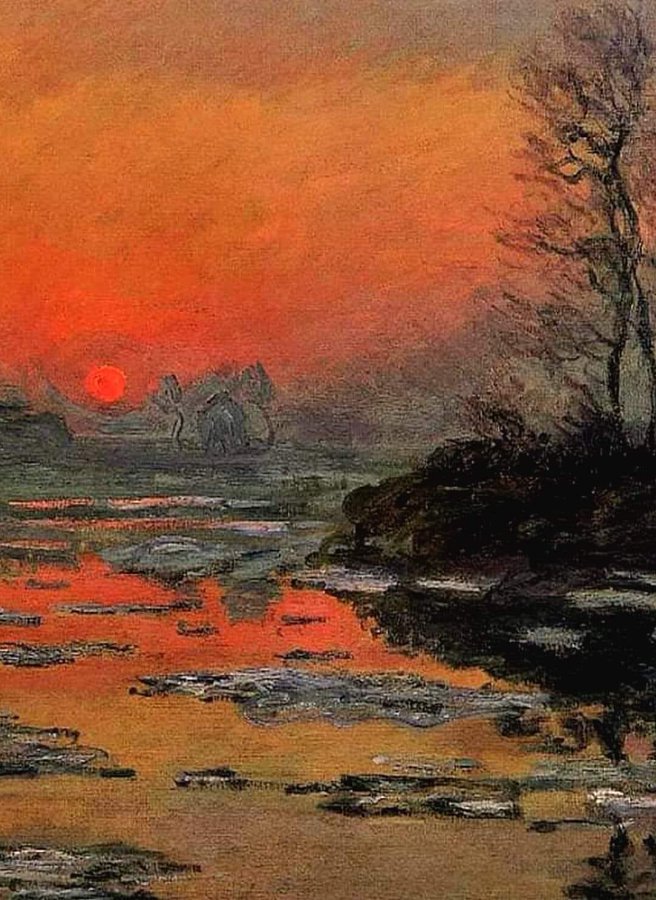
[Monet, Sunset on the Seine in Winter]

Diary Blog, 2 August 2022

Morning music

On this day a year ago

Tweets seen

Even a stopped clock is right once or twice a day (depending on whether analogue or digital).

Lenient sentencing

https://www.mirror.co.uk/news/uk-news/mum-caught-cctv-glassing-teacher-27630498?int_source=nba

Yet another example of what is now almost ubiquitous— a defendant being given a pathetically weak sentence (in this case, a suspended term of imprisonment plus a fine and a couple of add-ons) despite having deliberately pushed a glass into a woman’s face, leaving her traumatized and with permanent scars.

The courts have to get a lot tougher on crimes of violence.

More tweets

Life (existence?) in a multikulti society.

This episode shows (confirms) that Liz Truss is completely idiotic, has no real idea even now how the British state is run, and has no serious ideas, ideas that are thought out properly.

I doubt that her evident incompetence will much affect her chances of taking over the Conservative Party leadership, though. After all, the same people (Conservative Party members) elected Boris-idiot as their leader a few years ago; he also was incompetent and had no serious ideas.

Late tweets

The UK is in the same position, more or less. Only a small minority of the “blacks and browns” are really of any use whatever. Many, perhaps a majority, while not being very criminal or dangerous, are basically useless, and are a dead weight, a millstone round the neck of the British people. Another minority are actively criminal and/or terroristic.

Looks like a reasonably good neighbourhood. Surely children should not be selling drinks on the street? I suppose it is part of the mercantile ethos ingrained in many Americans.

The cleansing power of death in human society. The great equalizer…

Late music

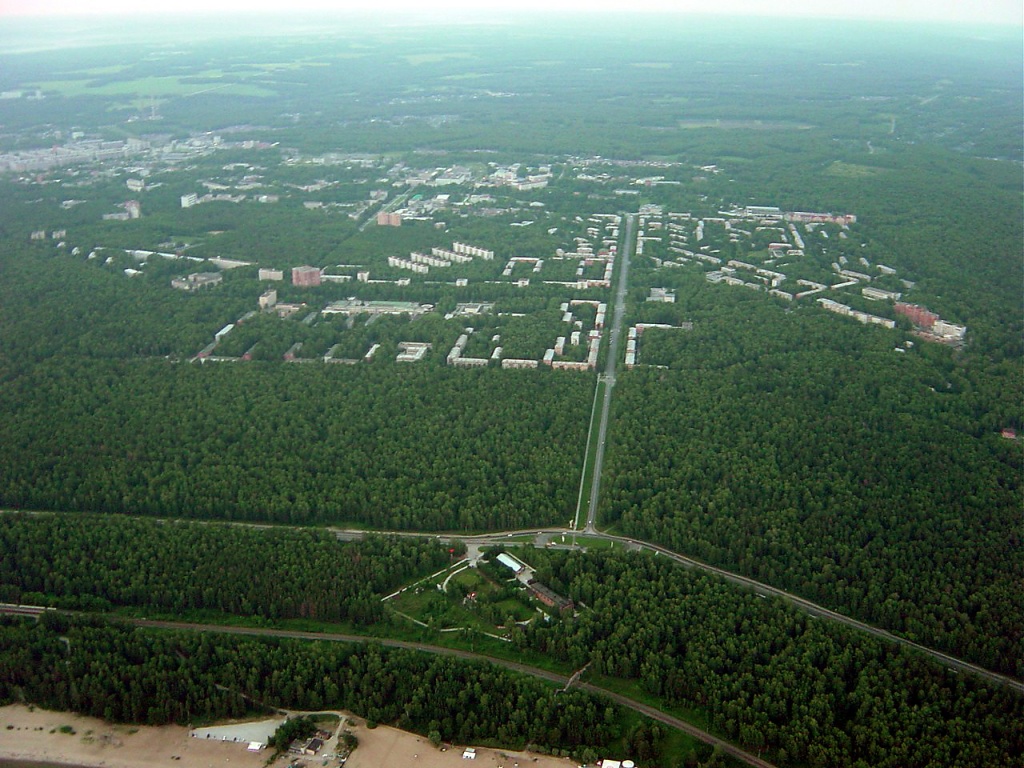
[aerial view of Akademgorodok, near Novosibirsk, in summer]

What Is and What Might Have Been

Introduction

I was just watching one of the seemingly endless re-runs of the early 1970s historical documentary series, The World at War, and in particular the episode named Barbarossa (from Fall Barbarossa or Operation Barbarossa, named after Friedrich I, the Holy Roman Emperor of the 12th Century who led the Third Crusade against the infidels).

I of course remember watching the TV series when it first was broadcast, in 1973. Many will say that it is in many parts contaminated by what amounts to Jew-Zionist propaganda, and I do not dispute that. Others point out, in a connected critique, that every alleged wrong done by the German Reich and its forces is given great prominence, whereas the cruelties and barbarities of the Soviet regime are barely mentioned (I suppose that it could be argued that the most famous chronicles of those terrible times were not published in English until after The World at War was made: GULAG Archipelago, for one). The criticisms are valid, but one cannot write off The World At War because of those flaws.

The strength of The World at War was that many of the leading personalities on all sides, such as German, English and other general officers, admirals etc, some members of Hitler’s circle (eg Speer), and a host of lesser-ranked people, were all still alive in 1973, giving their filmed testimony weight and immediacy.

Anyway, this article is not meant to focus on The World at War alone, but to examine a couple of “what if?” situations, both in the war years of 1939-45 (for Russians and Americans, 1941-45) and at other times.

The drive to Moscow in 1941

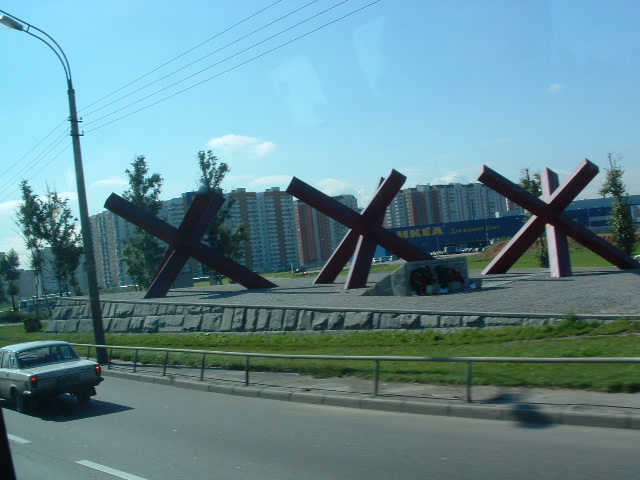
When I was first in Moscow, in 1993, my assigned driver, Pasha (an insolent loutish youth, apropos of nothing) pointed out, as we drove into the city from Sheremetyevo airport, the tank trap memorial, 23 kilometres from the Kremlin on the Leningrad Highway (Leningradskoye Shosse). The memorial marks the supposed furthest point of advance of the German forces in 1941. We drove near to the Kremlin only about 15-20 minutes later.

In 1941, the town of Khimki (now effectively a suburb of Moscow) had only just (1939) been administratively created, and was little developed. Now, hundreds of thousands live close by. Even since I drove through in 1993 there has been further development. Indeed, in the photograph below, taken in a recent year, there can be seen an IKEA warehouse. What would Stalin have had to say about that?!

tanktrapmemorial

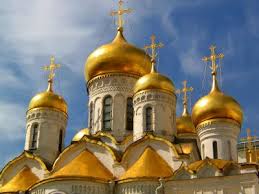
The proximity to central Moscow amazed me. Even if not true (as some say) that some German advance-reconnaissance motorcyclists advanced yet further, to a point where they could see the golden domes of the Kremlin churches, it is incredible to see how close the forces of the Reich came to capturing Moscow.

kremlin4

In 1941, flush with the victories in the West in 1940, Hitler intended to advance in Russia against 3 main objectives: Leningrad, Moscow, and also the Ukraine generally, with its huge natural resources of grain crops etc and (in the Don Basin or Donbass), coal.

Hitler at first prioritized Leningrad, followed by the Donbass, and only then Moscow. His generals disagreed, arguing that only a decisive blow against Moscow could achieve victory. There were cogent arguments for all three main objectives:

  • Leningrad: reasons based around morale (the city of the two 1917 Revolutions and in particular the second, Bolshevik, one; the city bearing the name of Lenin); also, the city without which the all-weather port of Murmansk could probably not be held. If Murmansk fell, there could be no Allied resupply of the Soviet Union except via the Soviet Far East. At that stage of the war, that alone might sink the Soviet regime;
  • Ukraine: grain supplies, coal, even oil (should German forces be able to advance beyond Ukraine; also, protection for the Romanian oilfields supplying Germany);
  • Moscow: in the highly-centralized Stalinist system of the Soviet Union, everything came from the centre. Indeed, in the earliest hours of Barbarossa, Soviet officers were heard in German intercepts begging Moscow for orders: “we are under attack; what shall we do?”…It might be that, were Moscow to fall, the Soviet Union would fall. Hitler himself had said that “all we need do is kick open the front door and the whole rotten structure will come tumbling down.”

I have to say that (of course with the knowledge of the decades since 1941) I would favour the Moscow option. Had Moscow fallen, the bubble of the regime would have burst. In a small way, the open panic of the NKVD and CPSU when they thought the Germans would soon be in Moscow, and which led to open rebelliousness on the part of ordinary Moscow inhabitants, leads me to think that a German capture of the city would have led to a rapid fall of the Soviet regime in all of European Russia and perhaps beyond.

In any case, without Moscow under Soviet control, Leningrad must surely have fallen too before very long.

Hitler thought that it was more important to defeat the Soviet armies in the field. European thinking, thinking from the constricted lands of Central and Western Europe. In the Russian space, those otherwise valid ideas become less valid. New armies can be (and were) raised from the vast areas beyond the Volga, beyond the Urals.

As for going for three objectives at once, it might, under other stars, have worked, but the cautious Russian proverb says “chase two hares and you will not catch one”…

Still, what if? What if Moscow had fallen in 1941? Without a two-front war, Germany could not have been defeated in the West. There could not have been the Normandy Landings of 1944, certainly not successfully. European Russia would have been under German control, and the wider expanses of the Soviet Union would probably have been invaded and taken by a Russian but anti-Soviet army such as the Vlasov Army, which might have been expanded to a formidable force. Also, the forces under Rommel in North Africa would have been able to have been hugely reinforced, with the heady strategic possibility that Rommel might have been able not only to take Alexandria, Cairo and the Suez Canal, but Jerusalem, Damascus and then drive up through the foothills of the Caucasus towards Baku and its oilfields, linking up with the forces of Army Group South driving South-East from Ukraine; German forces did occupy part of the Caucasus and even part of Kalmykia in 1942 (occupying Elista briefly).

Mainland Europe would, in that overall scenario, have avoided most of the destruction of 1941-1945. In time, there would no doubt have been peace made between the German Reich and the British Empire. The calamitous decolonization in Africa etc would have been avoided, at least until such time as it would not have had such terrible effects on human and animal inhabitants. There would be either no State of Israel, or one which would not be the hub of a worldwide Jew-Zionist web. The forces of Stalinism would never have invaded Eastern and Central Europe. There would have been no Korean War, no Vietnam War, no Cuban Missile Crisis, and Castro himself would have been seen as just another Latin American tinpot dictator (which is all he was anyway, once Soviet backup was removed) and unable to pose as a world “statesman” (BBC and Labour Party idiots please note).

What if? If only…

And now for something completely different…

What if…Beeching had never happened? Alternatively, what if rail lines had been closed but maintenance of track continued?

I wonder how many British people of the post-1960s age, let alone the (often vacant-seeming) “millennials”, have even heard of Dr. Beeching, his reports and his “Beeching Axe”? [see Notes, below]. In outline, then:

The first report identified 2,363 stations and 5,000 miles (8,000 km) of railway line for closure, 55% of stations and 30% of route miles, with an objective of stemming the large losses being incurred during a period of increasing competition from road transport and reducing the rail subsidies necessary to keep the network running; the second identified a small number of major routes for significant investment. The 1963 report also recommended some less well-publicised changes, including a switch to containerisation for rail freight“. [Wikipedia]

Note those figures: 2,363 rail stations to be closed! Not to mention 5,000 miles of track.

Protests resulted in the saving of some stations and lines, but the majority were closed as planned, and Beeching’s name remains associated with the mass closure of railways and the loss of many local services in the period that followed. A few of these routes have since reopened, some short sections have been preserved as heritage railways, while others have been incorporated into the National Cycle Network or used for road schemes; others now are lost to construction, have reverted to farmland, or remain derelict.” [Wikipedia]

Beeching’s reports made no recommendations about the handling of land after closures. British Rail operated a policy of disposing of land that was surplus to requirements. Many bridges, cuttings and embankments have been removed and the land sold for development. Closed station buildings on remaining lines have often been demolished or sold for housing or other purposes. Increasing pressure on land use meant that protection of closed trackbeds, as in other countries (such as the US Rail Bank scheme, which holds former railway land for possible future use) was not seen to be practical. Many redundant structures from closed lines remain, such as bridges over other lines and drainage culverts. They often require maintenance as part of the rail infrastructure while providing no benefit. Critics of Beeching argue that the lack of recommendations on the handling of closed railway property demonstrates that the report was short-sighted. On the other hand, retaining a railway on these routes, which would obviously have increased maintenance costs, might not have earned enough to justify that greater cost. As demand for rail has grown since the 1990s, the failure to preserve the routes of closed lines (such as the one between Bedford and Cambridge, which was closed despite Beeching recommending its retention) has been criticized.” [Wikipedia]

The above long extracts from Wikipedia lay out the facts quite well. What is missing is perspective. The postwar period in the UK, particularly in the 1960s and 1970s, was one of almost wholesale destruction of old buildings, streets, villages, towns and cities. In fact, postwar redevelopment changed London a great deal more than the oft-cited depredations of the Luftwaffe (most of which bomb damage was concentrated on the Thames dock areas and nearby areas which suffered collateral damage). Naturally, demolitions are sometimes inevitable and sometimes an improvement [see Notes, below], but much that was valuable has gone.

In fact, the 5,000 miles of track closures earmarked by Beeching were in addition to about 3,318 miles of railway track closed between 1948 and 1962 and also a further 1,300 miles of passenger railway between 1923 and 1939! Over 9,000 miles of track!

So “what if”? What if, for example, the rail track had been maintained? That way, were (as now are) different ideas, new technical ideas, possible (eg robot trains, no-staff trains, small ultralight trains, trains made with lighter materials, trains using solar power etc), those tracks could be the basis for new transport links and could be further linked with new track.

The expense of a railway is mostly in the staff pay, pensions etc; after that, the cost of actually running trains (fuel etc); after that, maintenance of trains, track, bridges, tunnels etc. The core maintenance can be relatively little. In the USA, this is the policy (see Wikipedia in Notes, below). Political policy which is also a national insurance policy.

Not that the trekking ways, cycleways and nature walks which often have replaced the old railways are not useful too, but most rail track destroyed has been simply ploughed over, built over or abandoned. Pity.

Notes

https://londonist.com/london/history/lost-london-buildings-destroyed-in-the-21st-century

https://www.amazon.co.uk/Lost-London-1870-1945-Philip-Davies/dp/0955794986

https://www.timeout.com/london/art/12-amazing-photos-of-londons-lost-landmarks

https://en.wikipedia.org/wiki/Beeching_cuts

https://en.wikipedia.org/wiki/Kalmykia#World_War_II

https://en.wikipedia.org/wiki/Elista

https://en.wikipedia.org/wiki/Baku

https://en.wikipedia.org/wiki/Erwin_Rommel#North_Africa_1941%E2%80%931943

https://en.wikipedia.org/wiki/Russian_Liberation_Army

https://en.wikipedia.org/wiki/Khimki#Khimki_in_the_Battle_of_Moscow

https://en.wikipedia.org/wiki/Frederick_I,_Holy_Roman_Emperor

https://en.wikipedia.org/wiki/The_Gulag_Archipelago

https://en.wikipedia.org/wiki/The_World_at_War

The General Shape of a Future Society

We should be aiming at a society which contains the good from the present (and, therefore, past) while being oriented toward the future. Humanity is a work in progress. Society is a work in progress.

The basic template for a future society, even in the short-term, can be found in the Threefold Social Order concept:

https://en.wikipedia.org/wiki/Social_threefolding

This is not some castle in the air. Many of the concepts within the overall concept of the Threefold Social Order are already part of UK society to a greater or lesser extent: religious freedom, freedom of thought, equal treatment under the law, the separation of the economic, political/legal and spiritual spheres or realms. Even since, say, 1989 (when old-style socialism died), there has come about a greater acceptance that, for example, the State should not monopolize education, that the State should not directly run business enterprises etc. There have been retrograde aspects too, though: increasing actual slavery, a huge increase in quasi-slavery or economic serfdom (including “welfare-to work” schemes, as well as diminution of employee rights and workplace conditions), the “National Curriculum” in State-run schools etc.

Necessary Changes and Structure

First of all, the migration invasion must be halted and a plan developed to remove as many non-Europeans as possible from the UK and Europe. There can be no decent future for UK citizens unless at least most are of British/European origin and culture. As Milton Friedman said, also, “You can have open borders or you can have a welfare state, but you cannot have both.” The Labour Corbynists have not all, by any means, awoken to this truth.

Special-interest groups, notably the Jewish Zionists, must not be allowed disproportionate influence or power. That applies to politics (eg Westminster seats), the Press and other mainstream media, professions, the ownership of business enterprises.

All citizens should receive a “Basic Income”. Robotics and computerization are advancing to the point where perhaps a third of the jobs in the UK might go. The choice will either be Basic Income or Iain Dunce Duncan Smith-style DWP snooping, bullying and serfdom, i.e. forced “make work” projects run by carpetbagging companies, validating payment of what is now often called “welfare” (social security).

The State will not run business enterprises, in general. However, it may be that the security of the State and of society requires the State to run or at least tightly to regulate some enterprises: railways, water supply, electricity supply. Having said that, technology may lessen those cases, as in individual electrical power generation via solar, wind, hydro.

Private business should not run what are, properly, State functions: prisons, the armed forces, social security provision overall.

There must be freedom of expression on political, social, historical matters.

The State can organize or fund some things without actually owning or, on ground level, running them: a UK-wide wildlife grid (possibly composed of land owned largely by non-State owners) is one example.

There is a necessity for improvement in several everyday areas: housing must be built or rebuilt to give everyone a decent home and garden space. No-one should own several and certainly not dozens or hundreds of dwelling-homes. There must be a minimum per-person amount of space within every new house or flat, a higher level than usually found at present.

Local transport should be free of charge.

Higher education should regain its credibility: standards must be improved. Grants can be given to the best students, but others may have to do without and perhaps not go to university. The corollary is that a university degree should not be necessary for most, perhaps all, occupations. Other means of selection can be worked out.

There should be huge expansion of branch rail lines using light, ultralight, narrow-gauge etc trains, mostly operated by robots.

A grid of new wide canals should be dug, for leisure, environmental and business use (freight and passengers).

The airship or Zeppelin can now come into its own as a UK-wide passenger-carrying form of transport. The tops of some high office buildings in cities such as London can become passenger hubs (while commuting exists as a lifestyle).

A New Society Needs New People

The aim must be to create a new people for the future. People create society; society creates people. It is symbiotic. This can be a “virtuous circle”: a highly-educated, highly-cultured people, which in turn will result in society being improved over time and so again. This is something worth struggling and fighting for.

Robotics Might Save the Railways

The rail system in the UK is a mess. Start from basics: rail travel, when it started (in England, in the world) in the 19th century, was a fast expanding private enterprise system of competing lines. These lines (companies) solidified into an efficient cartel by the time of the First World War. During the war itself, the railways were under State control (and until 1921). The Railways Act 1923 put the de facto private cartel on a statutory basis, with four large railway companies running virtually all passenger and freight services. Profitability waned with the coming of cars and road freight so that, by the time of nationalization in 1948, losses threatened. This became reality in 1955, when British Rail recorded its first operating loss.

The “modernization” plans adopted from 1955 culminated in the Beeching Report of 1963 and the subsequent and consequent closures of lines, services and stations. More than a third of passenger services were closed down. The closures of railway stations were even more dramatic: out of 7,000 stations, more than 4,000 were shut.

The 1990s privatization was carried out in a manner so poorly-conceived that only free-market ideologues who knew little of the realities of how to run a railroad could ever have decided upon it. I do not propose to delve into the detail here (and I myself am no expert anyway), except to say that there seems to be a good case for re-nationalization, possibly on a low-compensation or even an expropriation basis.

What of the future? We see that, all over the world, even in the UK, that driverless train transport, indeed driverless transport generally, is becoming common. Many British people will have travelled on limited forms of automated transport such as the Docklands Light Railway or the monorail at Gatwick Airport which connects the main terminal with another. It would be possible to run many more light rail and ultralight rail services on new branch lines, connecting with existing mainline stations and lines. Indeed, computerized and robotized ultralight narrow-gauge trains could run from towns, villages and suburbs not presently connected to rail, such lines terminating at an existing railway station. A whole huge new web of public transport could come into operation in this manner, eventually becoming more dense even than the railway system that existed before the 1960s. At the extremities, such lines could be narrow-gauge and the trains very small, perhaps single carriage. The expense, though considerable, would be worthwhile, knitting together a country which has become dislocated.

Road transport will be the dominant mode for the foreseeable future, but if an enhanced branch line network can take even 10% of passenger journeys off the roads, the cost of the new system will perhaps have been justified on that basis alone.