Category Archives: historical

Where Are The Limits Of Religious Freedom?

One of the pillars of a future “Threefold Social Order” society will be religious freedom. Such freedom is also said to be a pillar of our existing “Western” model of society.

“We” supposedly all agree with that ideal, meaning of course “we” white Northern Europeans. Of course, once one gets away from Northern Europe and its wider offshoots in North America, Australasia etc, that consensus ends. In the Middle East, much of Africa, South Asia etc, freedom of religion either does not exist, or exists only as a fragile plant.

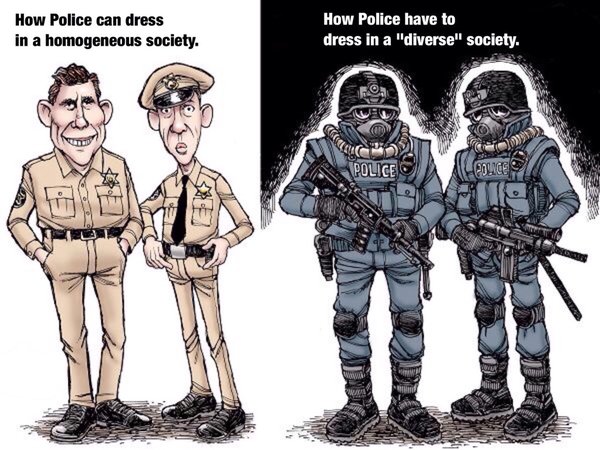
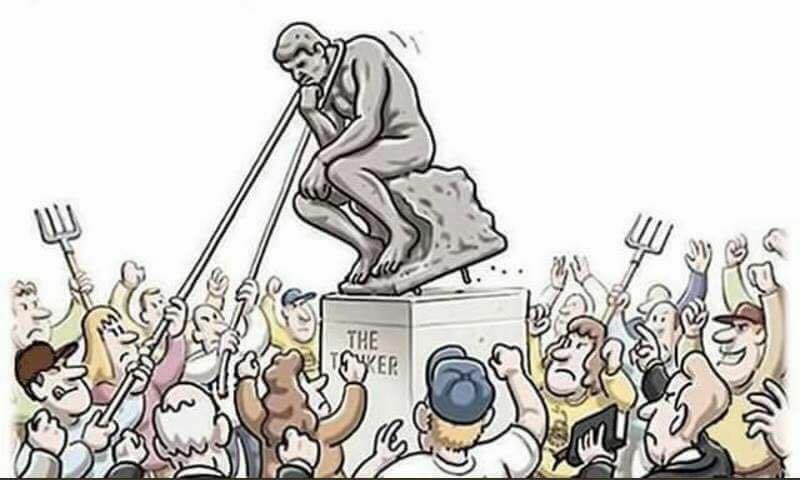
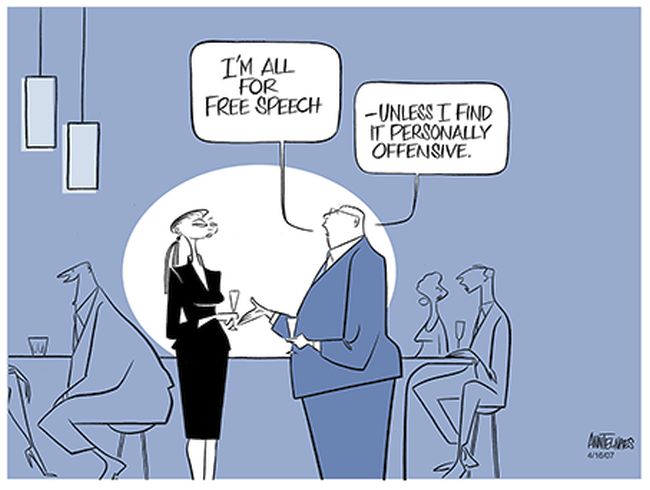
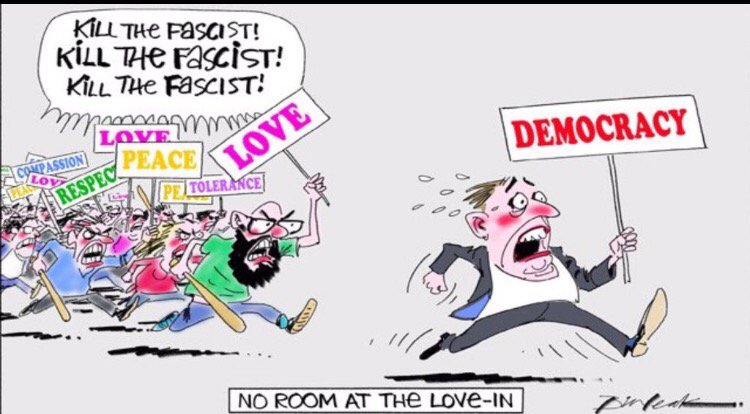
In Europe, we see that the migration-invasion, and the societal takeover via a high birth rate of, in particular, Muslims, is threatening our fond belief that we have and always will have religious freedom. The pendulum is swinging. Whereas in the Middle Ages, Roman Catholic Christians repressed other religious communities and launched crusades to conquer Muslim lands (a simplification, of course, but let’s leave that aside), today the Muslims are invading Europe, not as armies (as happened several times in the past) but as migrant-invaders (immigrants, “refugees”, “asylum-seekers”, and as babies born in Europe…). If this continues unabated, we can expect to see more attempts to shut down religious freedom for non-Muslims, as shown in this cartoon:

CX9ZsZOWEAAky2e

This process can be seen in the UK. There have in fact been Muslims in the UK for a long time, at least in small numbers. An Islamic centre and cemetery was established on the edge of Woking, Surrey, in the 19thC (it can be seen just before trains enter Woking Station, on the Southern or lefthand side as the train travels from London). However, the political or societal strength has grown in more recent years, along with the numbers.

In the 1970s, the Muslim element rarely displayed itself politically. I myself recall that posters on the Underground in 1976 or 1977, advertizing the Libyan-funded film “Mohammed, Messenger of God” were often defaced, always with the same words: “Islam forbids representations”. That vandalism, along with “community” representation to the UK authorities and the film distributors, resulted in the film being renamed “The Message”.

Now, 40 or so years later, times have moved on. Despite the Muslim population of the UK only being between 5% and 6% (officially), there has been a gradual infiltration (I do not say that it has been particularly organized) into mainstream political parties, in areas where Muslim numbers are significant: parts of the North of England, the Midlands, smaller areas within London and elsewhere. The influence of Sharia law and courts has grown; the Church of England has shown itself craven (as indeed it is when confronted by the aggressive Jewish-Zionist element). In some cases, Christians wishing to display their faith, e.g. by wearing crosses etc, have been given the choice of not doing so or being dismissed.

I repeat, officially the Muslim population of the UK stands at little more than 5% (about 5.1%) so far, but a high birth rate may propel that to 10% in the short term and later to…who knows? What will then be its influence and power?

As to the Jews, in numbers they are small, somewhere between 250,000 to 280,000, though there are also very large numbers of part-Jews, many of whom have little or no day to day connection with Jewish religious practices. Their influence and power comes not from crude numbers, but from concentration in and control of key strategic areas: finance, law, politics, mainstream media and, now, large Internet organizations.

Christians and Muslims accept persons of any race into their communities, at least in principle. Both Christians and Muslims have traditionally accepted it as an article of faith that persons of other religions should be “converted”, whereas Jews do not seek converts (though some modern branches do accept small numbers, e.g. after marriage to Jews). Judaism, therefore, has never launched “crusades” or the like. The Jews do not aim to make the world Jewish, only to be the major influencing, controlling and profiting element in or over the world.

The modern Christian world of the post-Enlightenment has, in principle, accepted that people can be Christian, Muslim or Jew (or whatever else) freely. That is easy enough when it comes to beliefs, ideas, even public worship in particular buildings, though (as mentioned above) it took Europe a long time even to accept those aspects. Much of the world does not go that far.

Where things become more difficult is when the religious practice of a community contravenes the law or morality of the society as a whole. Halal slaughter, kosher slaughter, which revolt the sensibilities of thinking non-Muslims and non-Jews. Male and female genital mutilation by Muslims and Jews. The cries (now electrically amplified) of the muezzin from the minaret of the mosque. These are cases where, in my view, the demands of the society to prevent cruelty, the wish of Europeans not to hear constant mosque noise in their neighbourhood must prevail over the practices of both the Jews and the Muslims.

To take an extreme case: there were societies in the past, Aztecs, Incas, even Europeans of ancient Europe, who engaged in ritual sacrifice of humans. Would we accept such practices today just because “it is part of their religion”? I think not.

There have been problems in the recent past in relation to other religions: the Jehovah’s Witnesses, with their unwillingness to save the lives of their children via blood transfusion; the mental and sometimes physical cruelty to children of some small “Christian” sects such as the Plymouth Brethren; the contrived scam that is Scientology (the British government of the 1960s fought a long battle to suppress Scientology, because of its perceived cultic and controlling behaviour). There could be other examples given.

It might be said that even mainstream Christian religions have done very evil things, e.g. the sex scandals in the Roman Catholic Church, though those involved acts not sanctioned or encouraged by the religion as such.

In the end, society, meaning the political element, must draw the line between the zone where religion holds sway and the zone where group or community religious practice must give way before the general secular law which should protect people and animals.

Their Last Throw of the Dice

The Jewish lobby (aka Israel lobby, Zionist lobby etc) have been pulling out all the stops to trash Corbyn, to make him resign or to surround him by Labour MPs, officials, NEC members, “advisers” etc who can restrain him, control him and maybe depose him.

The lobby has been gunning for Corbyn since he was first elected as Labour leader. I have previously blogged about that in some detail. “They” failed to prevent Corbyn’s election, then failed again (to prevent his re-election). In between, the lobby has applied maximum pressure on Corbyn himself, in order to try to force a resignation. They have also tried to remove key Corbyn supporters. The latest attempt to topple him even had the head of Labour group Momentum [https://en.wikipedia.org/wiki/Momentum_(organisation)], Jon Lansman [https://en.wikipedia.org/wiki/Jon_Lansman], a Jew, reduce support for Corbyn in the key area of supposed “anti-Semitism”. Momentum itself is actually controlled by a private company ultimately controlled by Lansman:

http://www.dailymail.co.uk/news/article-5002774/How-ex-public-schoolboy-Jon-Lansman-hijacking-Labour.html.

In addition, John McDonnell MP, ambiguous if not favourable to Jews, and an ambitious man who (for the first time) is within sight of a ministerial and possibly prime ministerial role, has been prevailed upon to pressure Corbyn in person. He is, arguably, Corbyn’s closest ally in the House of Commons.

The most recent manufactured storm around Corbyn and Labour has been set in motion after Labour refused to adopt the so-called “international definition of anti-Semitism” promoted by a Zionist body called the “IHRA” (which tries to ban all critical examination of the “holocaust” narrative and fakery thereof). In fact, though 30-40 (ZOG-occupied) states have adopted the definition, 155-165 have not (there is dispute about the numbers).

The storm now raging as I write has been a revelation even to me, as I realized anew how deeply the Zionists have burrowed into the structure of the UK, especially in the fields of politics, law and the mass media. Not every journalist-scribbler, editor, msm CEO, lawyer, TV/radio talking head etc is a Jew; it just seems very like it…

At time of writing, it seems that Corbyn is going to tough it out, seem to give in in part, while actually withdrawing from the fray so that the Jew-Zionists have nothing against which to press. Corbyn must have studied Sun-Tzu!

This is surely the last throw of the dice for the Jewish Zionist lobby trying to unseat Corbyn. The assault this time has been frenzied. The reason is clear: Labour recently was ahead of the Conservatives in the polls, though it is at time of writing in second place again by reason of the contrived msm storm. Labour has every chance of at least forming a minority government after the next general election. If that happens, Corbyn will be Prime Minister and the Zionists (for the first time since at least 1989) will not control or very strongly influence the British Government politically. This is their last throw.

Notes etc

https://www.express.co.uk/news/politics/881317/momentum-leader-jon-lansman-jeremy-corbyn-money-investment-firm-property-market-mcdonalds

https://en.wikipedia.org/wiki/Sun_Tzu

https://en.wikipedia.org/wiki/The_Art_of_War

Update, 13 October 2021

Looking back at this post after three years, I see that my basic analysis was correct, even though I was wrong in predicting that a 2018 or 2019 general election would result in a minority Labour government. That would have happened had a few connected events not intervened.

Brexit Party was formed, gained huge support initially, could have stormed to power had a destined leader been its leader, but failed because it did not become social-national and simply stayed as quasi-Conservative. Its leader, snake-oil salesman Farage, then stabbed Brexit Party in the back in 2019 by standing down most candidates, thus almost guaranteeing a Conservative Party win. The rest is history.

As for Labour, of course Corbyn was deposed by what amounts to a Jewish lobby operation, probably assisted by Israeli organs of intelligence and security. The new-ish Keir Starmer Labour Party is suffused with pro-Israel MPs; Starmer himself is married to a Jewish woman, and their children are being brought up as if fully-Jewish.

What Do People Need?

On rereading Andrei Amalrik’s Involuntary Journey To Siberia of 1970, all sorts of impressions were received, most not at all new: the lack of freedom in the Soviet Union, the Kafka-esque Soviet legal system, the primitive life lived by Russian kolkozhniki (collective farm inhabitants) in Siberia etc.

However, at the end of the book, the author’s sentence for being a “social parasite” (5 years internal exile –2.5 years of which to be hard labour on a collective farm or elsewhere–) is quashed on appeal, Amalrik returns to Moscow with the wife whom he in fact married in Moscow and during his exile (because he was allowed compassionate leave from the collective farm or kolkhoz to visit his unwell father). He applies to the housing people in his district and, after some difficulty when he has to share with others, is given a flat with a decent bathroom and telephone.

Now, we are often told and quite rightly that Soviet people generally lived poorly, had to share, in many cases, their accommodation by living in communal flats or kommunalki (usually large flats expropriated from affluent persons during and after the Revolution of 1917 and the subsequent Civil War, though in fact some such shared apartments pre-dated Bolshevism), sharing kitchens and bathrooms etc and given, at best,one room per person (it was usually worked out, in theory, at so many square metres per person or family).

All of the above is true, but when one looks at the situation in 2018 Britain, many are not much better off, and some are worse off. Would a prisoner released from incarceration in the UK be given a flat, even a small one? The most he could expect would be B&B accommodation of a markedly poor sort, and to be put on a local authority waiting list, probably behind a horde of “refugees”, “asylum-seekers” and other riff-raff.

In fact, look at how many British people with full-time jobs live! Many in shared houses and flats, or in bedsit rooms. No better off than Soviet citizens! How many “hardworking” (the label of the past few years) people are living in not very nice shared accommodation in the UK, living off pot noodles and the like?

To go off at a tangent, this “hardworking” thing has become a joke: for example, school students all deserve (increasingly meaningless) “A” “grades” in exams because “they have all worked so hard”. Doesn’t matter if they are thick as two short planks and know only force-fed “facts” (often incorrect, as in the case of “holocaust” “history” etc). They are “hardworking” and so are the “deserving” academic poor. They therefore “deserve” to attend a “uni” where they will also “work hard” to “achieve” an almost meaningless “degree” (an equally-meaningless “First”, in half the cases) before –for many–getting a minimum wage (or not much better) job…

The above thoughts should impel us to think about what people need in a basic way, about what should, arguably, be the State-provided or guaranteed minimum.

Ideally, everyone should live in a decent house or flat, free of worries, with pleasant neighbours if any, while doing work which benefits society. That of course is a counsel of perfection, but that fact should not stop us from aiming at a higher and better form of living for all citizens.

For me, everyone should at least have a home, preferably one where there is reasonable space, reasonable peace, reasonable access to green gardens or wider Nature. Living space should be regarded as a human right, not as a way for buy to let parasites to make profits from the need of others. Everyone should have access to telephone and Internet. Everyone should have access to cheap or free public transport, at least in the local area and arguably within a 20-mile radius of home. Everyone should have (up to a determined cap) free water, electricity, heating. Beyond that, everyone should also have a “basic income”, even if only (in today’s money) £20 a week.

We can move to a society where the basics are provided. When people have the basics, they can work to get more, or to improve aspects of society in other ways.

Notes

https://en.wikipedia.org/wiki/Basic_income

https://en.wikipedia.org/wiki/Andrei_Amalrik

https://en.wikipedia.org/wiki/Communal_apartment

https://www.amazon.co.uk/Involuntary-Journey-Siberia-Andrei-Amalrik/dp/0156453932#customerReviews

https://www.amazon.co.uk/s/ref=dp_byline_sr_book_1?ie=UTF8&text=Andrei+Amalrik&search-alias=books-uk&field-author=Andrei+Amalrik&sort=relevancerank


The 20th of July

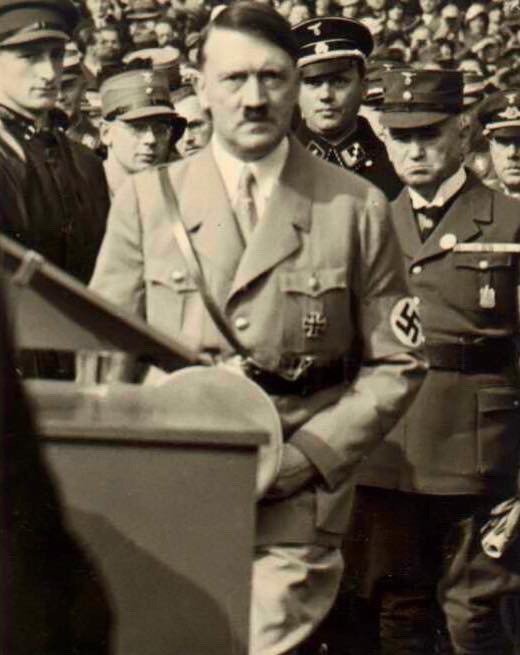
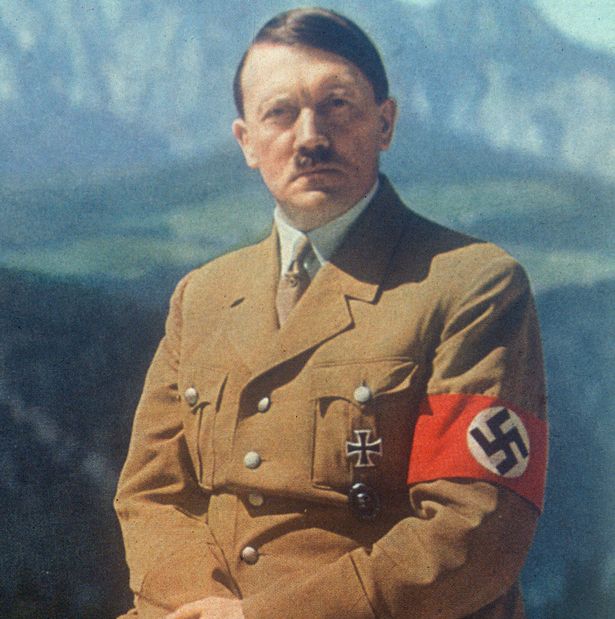
I cannot let the 20th of July pass by without a few words. On 20 July 1944, discontented officers tried to kill Adolf Hitler. Transposed (arguably pointlessly) to a British context, that would be equivalent to discontented British officers trying to kill Winston Churchill and the King (Hitler being both head of government and head of state). In fact, it is at least arguable that both the UK and mainland Europe would have been better had that happened (in 1940, when Germany offered honourable armistice between the Reich and the British Empire but was refused by Churchill and his circle). There would then have been no devastation throughout Europe, certainly in Western Europe, no carpet bombing of German and other cities (eg some French ones, largely destroyed by Allied bombing and shelling: Brest, Le Havre etc).

https://www.telegraph.co.uk/history/world-war-two/10877137/D-Day-French-torn-over-criminal-British-and-American-D-Day-bombings-of-Caen.html

Above all, Stalinism might well have been destroyed or at least contained. Sovietism would not have been allowed to invade the East and Centre of Europe.

Do not imagine that there were no British senior officers who despised and hated Churchill. Lord Alanbrooke, Chief of the Imperial General Staff and (from 1944) Field Marshal makes his distaste for Churchill’s charlatanry clear in his diary.  However, officers such as he were imbued with automatic-reflex loyalty to, not the head of government, but the King as head of state. They probably never thought of mutiny, still less assassination.

On the German side, most of the senior officers plotting against Hitler were content to do his bidding while the German forces were in the ascendant; when Germany started to fail, though, they thought in terms of surrendering on the Western Front, at the same time as holding on on the Eastern Front, thus saving Germany and much of the rest of Europe from what actually later happened, the savagery and barbarism of the Red Army engaged in wholesale murder, rape and looting, followed by the icy grip of Soviet socialism.

Those “disloyal” senior officers of the Wehrmacht (and some others, such as Canaris) were not motivated solely or even mainly by self-interest or their class-interest as aristocrats (not all were aristocrats; among the middle-class ones were Rommel and Canaris), but by a concern for what they conceived to be the ultimate focus of their loyalties– the future of the German state and German people, as well as, beyond that, European culture and civilization generally, threatened by Sovietism which, at that time, was Stalinism.

History is not black and white. National Socialism was a very fine movement overall, but not without flaw. The General Staff and other plotters likewise cannot simply be written off as “traitors” even though, from one point of view, they were. Their point of view, i.e. that Germany was losing the war on at least two fronts, was accurate to that extent. Where they went wrong was in assuming that the USA and UK (and their dependent entities, as well as hangers-on such as de Gaulle) would in fact conclude a separate peace, separate from the Soviet Union. That was pie-in-the-sky thinking. The Allies had already proclaimed, at Casablanca, that only “unconditional surrender” would be acceptable,

https://en.wikipedia.org/wiki/Casablanca_Conference

so the plotters would have had to throw themselves entirely on the mercies of the Western Allies and Stalin, were they to have eliminated Hitler. Even so, it is arguable that that might have been a better result for Germany and the rest of Europe than what actually transpired in 1945. However, that is to look with the benefit of what is now known. At the time, things must have looked very different, especially in Germany itself.

Hitler might have won out, even at the last moment, in terms of the conventional battlefield. The new jet fighters might have turned the tide, had they existed in sufficient numbers; new tanks were outclassing Soviet and Western models; above all, the East-West tension that blew up as soon as Germany was defeated in 1945 might have, in that final year, spelled the end of the alliance between the West and the Soviet Union and given Germany what is now called wriggle-room.

Having said all that, Germany would have been devastated to an even greater extent had it continued to fight after, at latest, the Summer of 1945. The Jewish scientists who created the atom bomb did so on the basis that it would be used against Germany, not, primarily, Japan. Had Germany started to defeat the Western Allies and Soviet forces on the ground and in the air in mid-1945, Berlin and other cities would have been attacked by atom bombs and destroyed; admittedly, in the case of Berlin, Hamburg etc, let alone Dresden, the difference might have been only academic:

Dresden1945

[Dresden after the UK/US bombing, 1945]

The key point is that Germany was not making atomic weapons and had no means with which to do so. It had been checkmated.

So there we have it. I cannot approve (and my approval is irrelevant either way) the actions of the backstabbers of 20 July 1944: Meine Ehre heisst Treue, but the plotters of that time were not all-“good” or all-“bad” in motive or action. As Wolfram von Eschenbach says in the introductory part of Parzival, “blame and praise alike befall when a dauntless man’s spirit is black and white mixed, like the magpie’s plumage”…

History has its own judgment. As Schiller observed, die Weltgeschichte ist das Weltgericht [“the history of the world is the judgment of the world”].

We honour the past but advance to the future.

Adolf-Hitler-1889-1945-German-statesman


Call No Man Happy Until He is Dead

It is generally believed that the saying “call no man happy until he is dead”, attributed to Herodotus [https://en.wikipedia.org/wiki/Herodotus], was originally uttered by Solon [https://en.wikipedia.org/wiki/Solon]. Perhaps. Many believe that the saying dates back only to the 19th Century. At any rate, the saying has stood the test of time. The basis of it certainly has.

How often have we seen the spectacle of the “famous”, the wealthy, the “happy” or those we perhaps imagine should be happy, brought crashing down, often to obscurity as well as ruination? It was ruminating on this that caused me to write today. Some may think (assuming much, as many do) that I am thinking of myself, once a barrister, once living in (at various times) a Little Venice house, a penthouse apartment, a Caribbean villa, a large English country house with 26 bedrooms, but now cast down and living in extremely reduced circumstances, on a limited income etc and having to give thought to what things cost and so on.

I am sorry to disappoint those who hate me (usually without reason). My life has been one of considerable ups and downs, particularly financial. Every one of my luxurious habitations was supported, as by bookends, by relative and occasionally absolute poverty at each end. Such irregularity fosters a philosophical and perhaps stoical and/or fatalistic attitude missing in those who, having always known wealth and entitlement (or who achieved the same from humble origins) find their lives as well as livelihoods swept away by Fate. These are those who jump off buildings, massacre their families before shooting themselves etc. People with my attitude just think “tomorrow is another day”.

If even my thoughts and feelings are not truly me, in the Egoic sense, if my body is not me, then how little is my bank balance me, how little are my cars, former dwellings and (now long gone!) Rolex watches “me”? Scarcely at all; not at all.

A few examples:

  • Terry Ramsden, now completely obscure (and, presumably, broke, or maybe not: you never know with his type) but “famous” in the 1980s, and so wealthy that he could bet £500,000 each-way on his own horse at the 1986 Grand National (it came fourth; Ramsden profited by £1 million).

https://www.theguardian.com/sport/2004/apr/03/horseracing.comment3

https://en.wikipedia.org/wiki/Terry_Ramsden

  • Tara Palmer-Tomkinson, born into a wealthy family and with every possible material advantage. Judging purely from what I saw occasionally on TV, I thought her useless and brainless, but others thought quite highly of her, I am told. It was reported that she died alone, having not seen anyone for days.

https://en.wikipedia.org/wiki/Tara_Palmer-Tomkinson

  • Various national leaders: Gaddafi (killed by a mob of Libyans, who first shoved a pipe up his rear end); the Shah of Iran (deposed and everything he had worked for destroyed; died in exile); Adolf Hitler (shot himself when the forces of East and West, that is to say Sovietism and finance-capitalism, burst into his capital, having battered down by air and land everything he had built); Stalin (died surrounded by sycophantic ghouls who feared and hated him; a ghastly death, dragged down by unseen forces).

I think too of others, people I have known personally. For example, in my own class and/or year at school, there have been a variety of outcomes (to date: that is one race still not at the finishing post).

One boy became a police officer, at least one an Army officer; a third became a helicopter pilot, later Captain of the Queen’s Helicopter Flight and, later still, the personal pilot of King Hussein of Jordan (he must always have had the makings of a royal servant, having had at school the nickname “Crawler”…). I suppose several boys became office bods, accountants etc. One unacademic but amusing fellow became a banker in Switzerland, of all things; another one, actually part-(francophone)-Swiss, became a structural engineer with his own firm in Paris. Another became, eventually, a chartered surveyor who has written a series of property-conversion manuals. Several no doubt inherited their families’ businesses. A number became BBC producers etc. Some did time in prison (all for GBH, oddly: was it something in the water?) or so I heard. In fact, that last sentence is wrong, because I did read in the Daily Telegraph about one boy (an Organ Scholar, if I recall aright, who used to play the massive school organ), who became a music teacher and (hence the interest of the Press) when in his thirties was convicted of sexually assaulting one of his piano pupils.
Life is always surprising. Who knows where my next port of call will be?

Afterword [19 July 2018]

In fairness to the school I last attended,

https://www.rbcs.org.uk/

it has, since the 1970s, become rather more organized in sending its charges on their way. In fact, reading “Old Blues’ News” [https://www.rbcs.org.uk/old-blues-association/] and the other newsletters they put out about activities and careers etc is alone enough to make one fatigued, so active and driven seem the sharp-elbowed middle classes reported upon. The ranks of former pupils are now replete with quite well-known and even famous people to add to the commanders of ships and heads of economic enterprises: actors and actresses, TV people, film people, and the odd “celebrity” who is “famous” enough to be known even to me (I suppose that those “Old Blues” would include TV presenter Jeremy Kyle and MP Alok Sharma).
Fake News, Fake History and Fake Memories: the UK in the 1970s etc
The Story

I went to school on the train endless strikes waiting on cold platforms for hours. Then returned home to a house with power cuts no heating hot food it was a nightmare for at least 10 years“— who can guess on what the lady I quote was, in a semi-literate fashion, commenting? The Second World War? Surely not: that only lasted for 6 years. The Siege of Leningrad? No, that lasted for a shorter period yet— 2 years, 4 months. What, then? In fact the lady in question was commenting, in the online Daily Mail, on the UK railways and, in the wider sense, on the UK generally in the 1970s.

Well, it certainly sounds like it was awful. The problem with that, though, is that it is in fact not true. The trains in England (where I lived; Wales and Scotland were similar) were not subject to “endless” strikes (though there were certainly far more than is now the case) and the station platforms were no colder than they are now. What about “power cuts”, “no heating [or] hot food”?

The Reality

The “Three Day Week” only lasted for 3 months (January-March 1974) and only commercial users of electricity were cut off or required to cease using electrical power. Most domestic users were unaffected. Newspaper printing, supermarkets and hospitals were also exempt. In other words, if the lady quoted at top is not simply making up her story of hardship (or failing to remember accurately), the reasons must lie elsewhere. Maybe her parents failed to pay their electricity bill! Only joking…In fact, two years before that, there had been announced (on 16 February 1972) a rolling programme of area outages (including domestic users) but peace broke out 2-3 days later (midday on 19 February 1972) so, again, few domestic users were affected, though a minority had seen limited outages earlier, in early February.

There was, also, the “Winter of Discontent”, which occurred in the winter of 1978-79, but in fact (in its acute phase) was only effective in January and early February 1979. In reality, we are talking about weeks rather than months. Neither domestic nor commercial users of electricity lost power; gas and coal users were likewise unaffected.

So there we have it: the lady commenting on these matters at top seems to be a victim of selective amnesia when she regards a decade of her childhood as having been an awful ten years without rail travel, heating, lighting etc. The “decade” in question turns out to have been affected for about 2-4 months out of 120…

In fact, the amnesiac lady is not alone. Time and again we read about how the UK spent much of the 1970s in the dark, in the cold, without public transport, without food, rubbish uncollected and dead bodies unburied. It’s nonsense, but many really believe it, even those who were there, which is worrying…I should add that I myself was there, having been born in 1956; by the way, those “dead bodies unburied” did exist briefly (for a few days) in the winter of 1978-79, but only in two or three small areas of Liverpool and Manchester. Less noxious rubbish did pile up, but not for very long and not everywhere.

This fake history, that the 1970s were a decade of “socialist” chaos and dislocation, is quite entrenched now. This canard has wings! The various “Conservative” newspapers in the UK repeat it as an article of faith.

Other Fake Memories

No, I am not going to blog, here anyway, about the “holocaust” scammers and delusionals. I want to focus on a few other things. One persistent idea (which I have even seen said and written by journalists and TV talking heads older than me) is that Britain had no decent food until about 20 years ago! It’s just nonsense! Another is that life was harder for people in the 1960s, 1970s, 1980s than it now is. More nonsense. In, say, the 1970s, people mostly had secure jobs, which paid enough to live on; there were no such things as foodbanks; social security was far better overall, the disabled and unemployed were not bullied by DWP jobsworths; the mass immigration which is making the UK (especially parts of England) into a human zoo had not really begun to snowball; workers had fixed hours, which included decent lunch breaks of 1 hour (often interpreted generously); there was no such thing (for most employees) as being on call after hours, in the evenings or on weekends and holidays. In addition, it was far easier (for anyone qualified) to access higher education.

Conclusion

There is a wave of unreality around. I have a –perhaps idiosyncratic– theory that the various kinds of lies or lying fake “facts” that people are often now expected to believe (“holocaust” fakery, the idea that races and peoples are all somehow “equal”, the idea that National Socialism was “evil” etc) have affected the general sense of truth in society, so that many cannot detect lies, and indeed often lie to themselves as well as others about recent history and even about their own experiences.

Notes:

https://en.wikipedia.org/wiki/Three-Day_Week

http://news.bbc.co.uk/onthisday/hi/dates/stories/february/16/newsid_2757000/2757099.stm

https://en.wikipedia.org/wiki/Winter_of_Discontent


Reply to David Dimbleby

I have just now watched a BBC TV show, Putin’s Russia with David Dimbleby. In the programme, Dimbleby goes around Moscow interviewing a variety of people and asking their opinion of V.V. Putin. He started off by interviewing a lady who has had, I think, 10 children, thus ensuring her a medal, significant State financial benefits and a title which is different from but in essence the same as the old Stalin-era one, Mother Heroine of the Soviet Union. Fairly predictable opening gambit.

Dimbleby interviewed a number of dissidents: Yevgenia Albats, a fairly obvious Jewess and anti-Putin journalist; then another woman, who was arrested for 5 minutes, then released without charge, for going to the Duma (Parliament) with a satirical cardboard cutout of a pro-Putin politician accused informally of sexual offences. Hardly Stalinist repression: the same could happen in the UK. Finally, he interviewed an anti-Putin think-tank personage, who says that, while there probably was government interference in the recent Russian Presidential election, Putin would have won anyway. The dissident political figurehead Navalny was mentioned by Dimbleby. Navalny’s poll ratings have usually been well below 20% and his electoral showing as Presidential candidate was about 1%.

On the pro-Putin side, Dimbleby interviewed a smoothly duplicitous Russian Orthodox prelate who would not have been out of place in the Roman Catholic Curia c.1600. It should come as no surprise that the Russian Orthodox Church supports the Russian state. After all, the slogan of late-Tsarist official Pobedonostsev was Orthodoxy, Autocracy, Nationality [Православиесамодержавиенародность]. The Russian Orthodox Church Church (that is, the small part not repressed during the Jewish-dominated years of the Revolution, Civil War, 1920s New Economic Policy and 1930s Stalinism) supported Stalin –or pretended to– during the 1940s, though ignorant peasant Khrushchev again repressed the Church during the late 1950s, the “Thaw”, a period otherwise thought of as “liberal”.

Dimbleby also visited a class of children being taught weapons handling and maintenance, mixed with some patriotism and religion, an ironic twist on non-urban America. Dimbleby went on to talk with others: one ultra-nationalist whose interview was short and not-so-sweet; a group of young people, all Putin supporters. However, his most telling interview was with an Englishman working for RT, who was comfortable with his job and role.

It was pretty irritating to see Dimbleby, mouthpiece of the BBC, which is itself a mouthpiece for the UK Government and (like the UK government) riddled with Jew-Zionists, criticize lack of journalistic and individual liberty in Russia. He himself was party to the planned ambush of (arguably, naive) Nick Griffin on BBC TV Question Time, which (again, arguably) finished off the BNP, until then on a roll. Dimbleby was scathing about what happens in Russia to those who say the “wrong” things. Perhaps he missed the several recent criminal trials in the UK of anti-Zionist dissidents such as Jez Turner of The London Forum (sentenced to 1 year’s imprisonment for making a speech partly about Jews), or Alison Chabloz, convicted of singing satirical songs about the “holocaust” scam and the Jewish fraudsters who make money out of it. Ironically, Alison Chabloz is in court in London tomorrow, for sentence. The last two people named have also had their Youtube channels taken down. Alison Chabloz has also (like me) been expelled from Twitter. “Long live freedom”…

Anyone who was in Russia or the Russophone area in the 1990s (I was: a week in Moscow in 1993, a year in Almaty, Kazakhstan, in 1996-97) knows that, at that time, Russia was a wreck of a state, looted by (mainly) Jews. People starved by the million, especially the elderly. Yeltsin was a corrupt puppet. Putin may not be the perfect philosopher-king, and he does have both personal and ideological flaws, but his rule was and still is necessary.

Postscript

Dimbleby also criticized the lack of an independent judiciary in Russia. I was unable to compare that to the English system, in particular to the Alison Chabloz case, in which the defendant, a satirical singer-songwriter persecuted by the Jewish-Zionist lobby, was in court for –in effect– singing songs, because the matter was still before the court. Now that she has been sentenced, I can mention the fact that, at first, she was before the Chief Magistrate for London, one Emma Arbuthnot. The latter is married to a Conservative Party MP who, like 80% of such, is a member of Conservative Friends of Israel; the couple have been on all-expenses-paid trips to Israel. Alison Chabloz, via her lawyers, objected to Mrs Arbuthnot presiding, and she recused herself (stepped down from the case). Arguably better than Russia, but not much.

The Political Situation, Social Nationalism and the “Alt-Right”

Preliminary

I write in a condition of profound dissatisfaction with the situation on the broadly nationalist wing of British, European and world politics. Yesterday, someone whom I have only met twice but who has made a favourable impression on me, Jez Turner [Jeremy Bedford-Turner] of the London Forum, was found guilty of incitement to racial hatred under the Public Order Act 1986 after a Crown Court trial, being then sentenced to 12 months imprisonment, meaning that he will be incarcerated for nearly 6 months, all for making a harmless speech about Jews.

Also yesterday, the latest hearing in the Alison Chabloz case took place, legal argument prior to the judgment, which is expected on 25 May.  Most reading this will know that Alison Chabloz is being prosecuted, in effect, for singing songs.

https://alisonchabloz.wordpress.com/

As with the Turner case, that of Alison Chabloz has been promoted by the malicious Jew-Zionist group calling itself the “Campaign Against Anti-Semitism” or “CAA”, which organization has previously (and unsuccessfully) tried to have others, including me (and David Icke, and Al Jazeera TV etc…) prosecuted:

https://ianrmillard.wordpress.com/2017/07/13/when-i-was-a-victim-of-a-malicious-zionist-complaint/

The outcome of the Alison Chabloz trial is of huge importance not only for the future of free speech in terms of socio-political expression, but also in terms of artistic expression. A “guilty” verdict (from the single magistrate) would chill lampooning, making fun of politicians and events and, frankly, would cause the UK to become something pretty close to a police state.

Nick Griffin’s Booklet

I have no particular animus against Nick Griffin (whom I have never met). He did well, alongside Andrew Brons, to get the BNP into the position where it could get two MEPs (Griffin and Brons) elected in 2009, but in my view he underestimated the sheer dishonesty (and determination) of those who opposed him and the BNP. He also seems to have thought that soft-pedalling on the “holocaust” revisionism would mean that the Jew-Zionist element would lay off a little. That was naive, as was assuming that he was invited onto BBC Question Time just like many another guest, when the object of the exercise was to ambush him and trash him and, via him, the BNP.  Having said that, Griffin was one of the outstanding people in a party not over-endowed with the well-educated and reasonably credible.

I mention Griffin here because I was sent, yesterday, a pdf version of a booklet by him:

http://altrightnotright.com/

I found the contents disturbing and challenging. I agreed readily with some of them, indeed the majority; with others, particularly the attack on Jez Turner, I disagreed, though I concede that I am in no special position in terms of inside knowledge.

Griffin’s main arguments against many of the “alt-Right” personalities and entities struck a chord with me. I have from the start been suspicious of any and all “nationalists” who are pro-Israel, loudly “anti-Nazi” (though Griffin himself is guilty of a certain amount of that latter) or who somehow find a way of squaring the circle and reconciling being a “white nationalist” with support for Israel. This pathology is particularly seen in the USA, where it is not seen as odd to be a “nationalist”, a pro-Israel blockhead (“holocaust” belief and all…) and a kind of anti-government “rebel” all in one, mixed in with a bit of Bible study and membership of the National Rifle Association.

Griffin correctly points out the Zionist/System infiltration into nationalism in Europe too: Front National, Geert Wilders etc. In the UK, we have seen the so-called “nationalism” of UKIP and smaller offshoots, of which the one now promoted most widely is the “For Britain” party, headed by an Irish lesbian ex-secretary called Anne Marie Waters. To paraphrase-quote a general in the film Lawrence of Arabia, For Britain is a sideshow of a sideshow, a one-trick pony “party” which has no prospect of mass appeal or electoral success.

Many see the promotion of so-called “kosher nationalists” as a way of diverting the nationalist torrent. My problem with that analysis is that, so far at least, there is no nationalist torrent (in the UK). That may change, but at present the single great fact of British nationalism or, as I prefer, social nationalism, is that its support in the wider population is minimal. Again, that may change: in 1928, the NSDAP received only 2.6% of the national vote in Germany, lower than it had managed several years before; however, by 1932 that vote had become 33% and in 1933 (by which time Hitler was already Chancellor) 44%. In the UK, there have been governments –with working majorities in the House of Commons– which have been elected on less than 30% of the popular vote.

The Alt-Right

I have had no personal contact with the “Alt-Right”, unless there is included my February 2017 talk to the London Forum (which was on YouTube until that organization caved in to Jewish-Zionist pressure and removed the London Forum YouTube channel in its entirety…”long live freedom”…). I find myself in sympathy with much of what Nick Griffin says in his booklet about odd young men with odd lifestyles, swinging (if such be the bon mot) between braindead “libertarianism” and a (sort-of) white nationalism mixed with pro-Israel sympathies. These people set off alarm bells for me. I find it telling that such people are all in favour of “free speech” until it comes to those such as Jez Turner and Alison Chabloz (and me) who are hated by the Jewish Zionists. We are, at best, ignored, even when on trial or in other peril. Big alarm bells…

The Answer

The answer, for me, is straightforward in principle but complex and difficult to put into effect:

  1. A political organization must exist. Voters cannot vote for a party that does not exist. It may be that such a party faces insuperable obstacles in a rigged system, but it must exist. At present, no such party exists;
  2. The social national population must cluster in one or more “safe zone” areas of the UK. I have blogged fairly extensively about this on WordPress.

The present situation is intolerable: Jew-Zionists and “anti-fascists” (often the same) try to shut down even the limited free speech that exists now in the UK. Meanwhile, the major cities are going black-brown, with births to those populations outpacing those to the white northern Europeans. A new way forward must be found.

What’s in a Name?

Religious and occult literature is replete with learned disquisitions about the sacred power of the Name. We see that, in Genesis, the Bible itself starts with the words “In the beginning was the Word, and the Word was with God, and the Word was God.” In the New Testament, this theme is continued. Jesus Christ renamed some people who had “come over to him”, such as Peter. Others, later, renamed themselves, to mark their “ideological” or spiritual transformation, as when Saul became Paul after his experience on the road to Damascus.

In Rome, Octavius becomes the Emperor Augustus or Caesar Augustus eventually (the style Augustus Princeps was bestowed upon him by the Senate of Rome in 27 B.C., when he was 35).

In early mediaeval Spain, Rodrigo Díaz de Vivar is given the name El Cid (from the Arabic for “lord”, sidi) to crown his mission. Likewise, in the Christian monastic tradition, the postulant chooses or is given a new name, often one referencing a deceased saint. The same is true of religious leaders such as bishops, metropolitans, popes etc. Gandhi is called Mahatma Gandhi, same surname but elevated by the new forename.

In literature, we see that the hero who fights perceived evil, particularly if doing so covertly, takes a new name, a nom de guerre: the Scarlet Pimpernel was an early example, followed by many another, right up to the “superheroes” of the 20th and 21st centuries: Superman, Batman, Spiderman etc.

In the field of espionage too, we see that sometimes a secret agent who becomes a known character is given or takes a name: the White Rabbit, the Welshman etc. Mata Hari…

Politically, the same applies: the anarchist Bruno Traven (itself a pseudonym) was known in early 1920s Germany as der Ziegelbrenner (“the Brickburner”). Better known were the noms de guerre of the Bolshevik leadership: Lenin (V.I Ulyanov), from the river Lena; Stalin (I.V. –or JV– Djugashvili), from “steel”, Trotsky (L.D. Bronstein), a Russification or Polonization of the original Jewish (Yiddish/German-style) name. In fact, most Bolshevik leaders took on longlasting pseudonyms, in a macabre aping of those old religious orders: Scriabin became Molotov (from molot, “hammer”), though he was a rare real ethnic Russian. Most of the Bolsheviks who changed name did so partly to disguise their otherwise all-too-obvious Jewish identity. Having said that, the new names of the leaders also often spelled out the new strong self-image: “Steel”, “Hammer” etc. [Stalin and Molotov were among the few non-Jews].

Though German National Socialists were not generally given to changing name and in fact disapproved on principle, some did so temporarily, while on the run or on special missions. Hitler himself used the nom de guerre “Wolf”, Herr Wolf”, and “Herr Doktor Wolf” while evading State agents in Munich after the failure of the Beer Hall Putsch of 1923. Hitler himself did often say that it was fortuitous that his name was Hitler and not, as it perhaps might have been, Schicklgruber

[https://en.wikipedia.org/wiki/Adolf_Hitler#Ancestry].

“Heil Sch…!” you get my meaning. Names are important. Many a showbusiness personality has achieved fame and fortune only after changing name. Beyond even that, the use of “transformational vocabulary” can change, with the name, the sense, the sense of mission or purpose. Thus, the U.S. combined operation “Desert Shield” of 1990 became “Desert Storm” of 1991, as defence turned to attack.

The use of a particular name for a political party or group can energize it and make it stand out: En Marche!, le Front National, the Angry Brigade, Leave and so on.

An allied aspect is that of the Invocation, a word or form of words designed to link the material with the spiritual, to send up prayer or supplication, and to bring down power to the Earth. “Heil!” is an obvious example. “Heil Hitler!” which eventually (in just a few years) replaced the likes of “Good day” and “goodbye” in, at least official, Germany. Hitler’s speeches are often very well-written, erudite, informed, but the power of Hitler’s oratory was not founded on its content, but on something above and beyond content. Yet that still required words as a basis.

When we consider how to pull the UK and Europe out of the mess into which it is sliding, we must consider the sacred power of the Word and use it.

Notes

https://en.wikipedia.org/wiki/Trotsky_(surname)

Taking the Whole Package

This evening, I watched a show called something like “The Real Marigold Hotel”, in which four elderly once-“celebrities” went to a country (in this case, Cuba) in order to see what facilities might be available for retired people. As such, as a “documentary”, it was very superficial and lacking depth, though entertaining. What interested me was the society in general.

The Cuba –actually just Havana– shown (and I have never been there, though I am quite well acquainted with its history of the past century and, in the manner of Sarah Palin, have glimpsed it from the air and from the sea) was in fact largely the stereotype: old American cars in pastel pink and blue, decrepit but charming colonial mansions, palm trees etc.

The old people went to cultural classes and talked to Cubans in parks. It struck me anew that any society is a package: Cuba has some culture (both European and its own mixture incorporating the Caribbean and African, as well as that of the USA.

The Havana shown was one where the parks were (on the face of it) safe to visit, the people well-educated (one or two Cubans carefully making the point that their good education had been free, as were the classes available to the elderly).

Most people know that the Cuban healthcare system is also very good, both in relative and absolute terms. On the other hand, and as the TV programme noted, the Internet is tightly controlled, requires a card (no doubt traceable..) and is mostly only available in “wi-fi” areas such as certain parks; not so many have home Internet connection.

It is perhaps pointless to reiterate what most of us know in terms of the Cuban police state (which –in all the documentary films I have ever seen– is so pervasive that it is invisible: you never see the hand of the State in plain sight, though it is there all right).

So there you have the Cuban package: low crime rate (supposedly), no obvious disorder, at least some rather polite, cultured citizens, good education and healthcare etc (one Cuban did say that it was better before the supportive Soviet Union collapsed), as well as a certain charm.

As against that, a socialist state which controls the news and Internet tightly, imprisons dissidents for years (not to mention the large number who, in the late 1950s and 1960s, were just shot); a socialized economy which (leaving aside the effect of American embargo) was and largely is hopelessly inefficient at providing consumer goods. Travel restrictions, too.

Let us take a different case. The German Reich in the 1930s was intolerant of dissidents too, though it was far more tolerant than was the Soviet Union under Stalin or, indeed, Cuba under Fidel.

The National Socialist state imprisoned some dissidents or placed them in concentration camps such as Dachau (though few now know that many served short sentences, such as 3 months, there, and were not there indefinitely). Others were encouraged or more or less forced out of the country. There was a generally militarized ethos. How could a state both German and quasi-socialist be anything else?

In the Reich, there was state interference in culture (though, again, far less than, say, in the Soviet Union). Consumer production was given a lower priority than rearmament (“Guns Before Butter”), though large projects for the benefit of the people were also pushed into the foreground: the Autobahnen; the VW “people’s car”; the 1936 Olympics; a huge programme of educational and cultural events; the Kraft durch Freude [“Strength through Joy”] programme of Canary Islands cruises and Baltic beach holidays for the people (at a time when, in the UK, most people who had a holiday at all were corralled into poky Blackpool guest houses…); better nutrition for young people, too.

The National Socialist Reich was hugely beneficial for most Germans, certainly compared to what existed in the Weimar period. The Reich solved the inflation problem, the unemployment problem, the decadence problem and, yes, what it termed “the Jewish question”.

In the UK at the same time, there was greater ostensible “freedom”: elections every 5 years, the freedom to eat daily at the Ritz or at the Savoy Grill (if one had the funds..), no obvious book censorship (though, behind the scenes, there was much, not least via the Jewish element, even then). There was official theatre and cinema censorship (via the Lord Chamberlain’s office) and there was also, of course, grinding poverty (especially outside the South East), and a very repressive justice and prison system; not to mention the pervasive class system and its inequities.

No state, no political system is “perfect”. All have flaws, and all (most, at least) have benefits (though what might be the benefits of living in, say, North Korea or the Congo might be disputed). The aim can only be to do the best with what is available at the material time. We take everything as a package, as a whole.